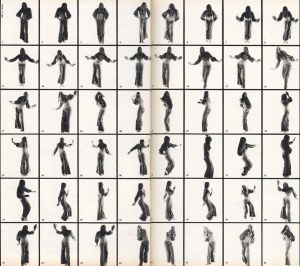
 A brilliant dancing feature from Honey magazine, December 1969
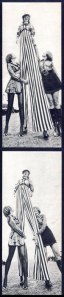
Boo-ga-loo-ing, as Marsha Hunt says, is emotional. You can dance if you feel good and know what you’re doing but, if you feel nervous and inhibited, you’ll just look that way. Around Christmas there are always a lot of parties and you want to look groovy. You want to look hip-with-it, not all gawky. So, to make you feel kind & confident, we’ve devised a special Flick Book. It’s the latest dancing and it’s really simple. All you have to do is cut out each picture carefully. Pile them high starting with no. 1 at the bottom and bulldog clip ’em together. Then flick the pages and see how it’s done.
Pretty Flick Coleby [sic] is the young choreographer and lead dancer of Pan’s People — six girls and sometimes two men — who dance on “Top of the Pops” and other pace-setting programmes. They are easily the best group around, so Flick’s advice is really hot.
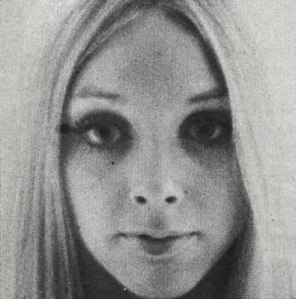 “When you’re dancing, bypass your head, by-pass your mind and dance from your middle. The minute you start to concentrate on the effect you are making, you are not ‘sent’. You look uptight and stiff.”
Probably the biggest give-away, explained Flick, is keeping your head straight. Let your head relax and move with your body. It won’t fall off. Also, be aware of the expression on your face.
“Don’t look like a dancing machine; have some expression.” Flick suggests practising in front of a mirror at home.
“It’s essential to know what you look like,” she says. “Once you know exactly what happens — when you move your arm in a particular movement, you will feel more confident. You can’t make a fool of yourself.” Flick was cool about clothes.
“Wear as little as possible. Remember it’s hot dancing. If you’ve got good legs, wear a short, short skirt; if you’ve got a good midriff, wear it bare. Make the most of what you’ve got and wear something that flatters you. Fringes on things will accentuate your movement, and so will a belt with a big buckle hung on the hips. Don’t wear something dark; try to swing in something light, or sequined, so you show up and don’t just melt into the shadows. Shoes with a clumpy heel are good, but boots support your ankles. Listen to lots of pop. It helps if you know a record. You’re prepared. You know what’s going to happen next. You can relax land enjoy it.” Above all, Flick says, “Don’t fling your arms around. Keep it neat and tidy. Keep it close. You want to look good, not pretentious.”
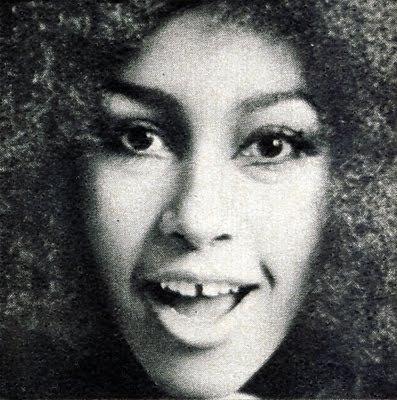
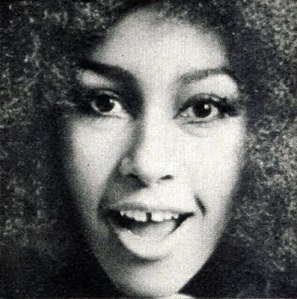 Marsha Hunt is a sensational dancer. “I got recognition because of my appearance,” she says. “You see, my hair floats around like candyfloss when I move.” It looks quite fantastic, but apparently taxi-cab drivers don’t think so. They drive straight past, pretending not to see her. “I guess my hair is a bit awesome,” she went on. Still, her promoters don’t agree. They reckon it’s very valuable; they even tried to insure it with Lloyds. Marsha says that her style of dancing is entirely emotional, not contrived at all, so she doesn’t quite know how to tell anyone else how to do it. She just knows that if the music is going in a particular direction she wants her body to go too. But exercises are important.
“People just aren’t aware of the different parts of their bodies. If you ask them to move their hands, they move their fingers. If you ask them to move their hips, sure, they move their hips, but their bodies too. You must be aware of your whole body and the only way is with exercises. I do them every day but I’m not religious about it. Maybe I can’t get it together one day.
Still, if I miss one day a week, in thirty years” time my body will be much healthier than someone who has never done any. I always do my exercises to the same record, You Can’t Always Get What You Want. (That song title sums up a little of Marsha’s philosophy. “I think ‘hope’ is a waste of energy,” she says.). “And I always dance to music I know. Then I know what to say with my body. I can express the lyrics. Otherwise it’s just boo-ga-loo-ing around to sound. But of course my kinds dancing is very egotistic. I am on the stage trying to project something. It’s unnecessary in a club to do such big movements.”

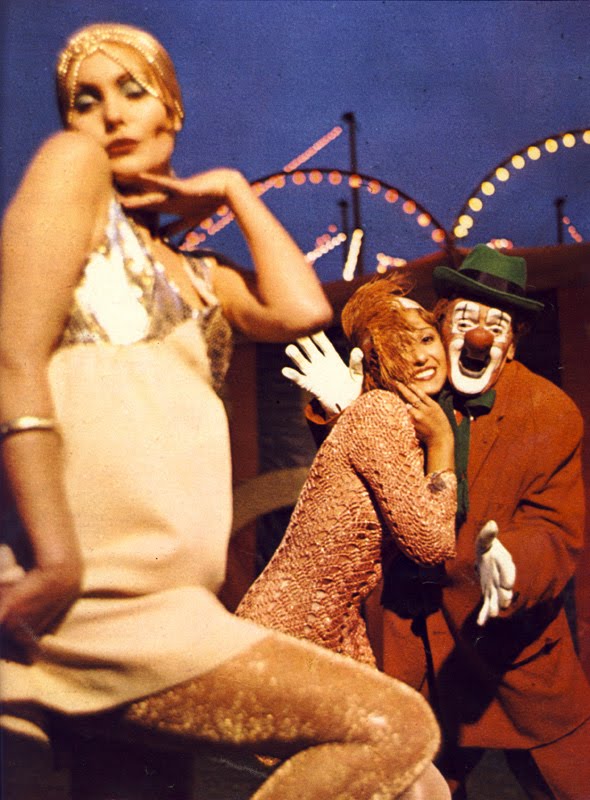
 Left: Janice Wainwright at Simon Massey / Right: Kadix
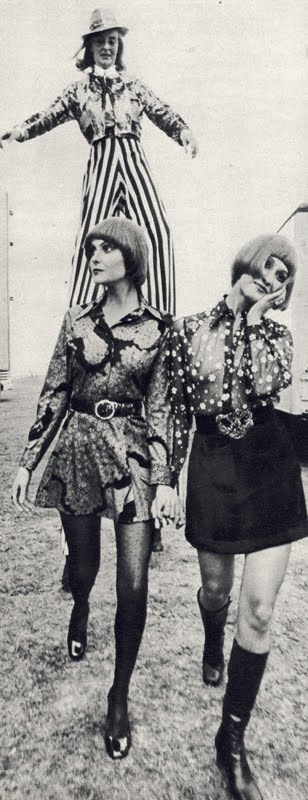
 Left: John Marks / Right: Clobber
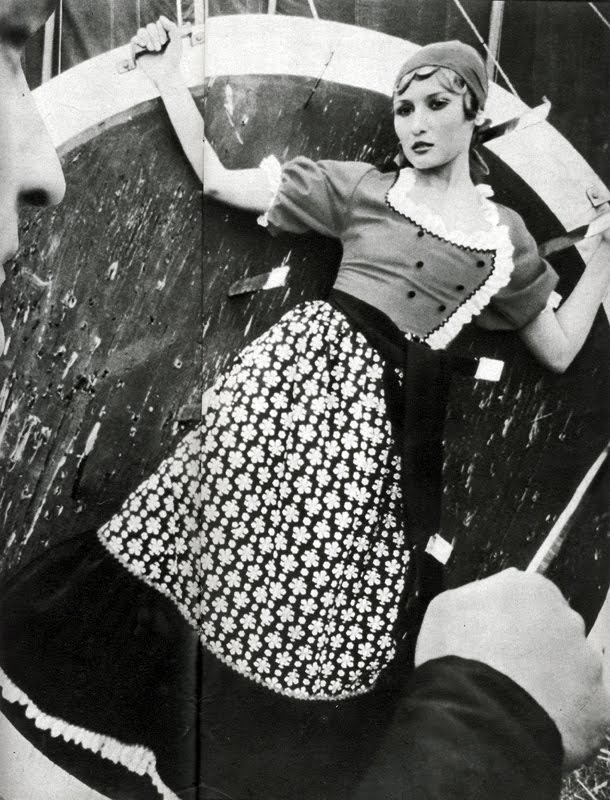
 Left: Louis Caring / Right: Lizzy Carr
 Angela Gore
 Above, below and cover:- Left: Janice Wainwright for Simon Massey / Right: Marlborough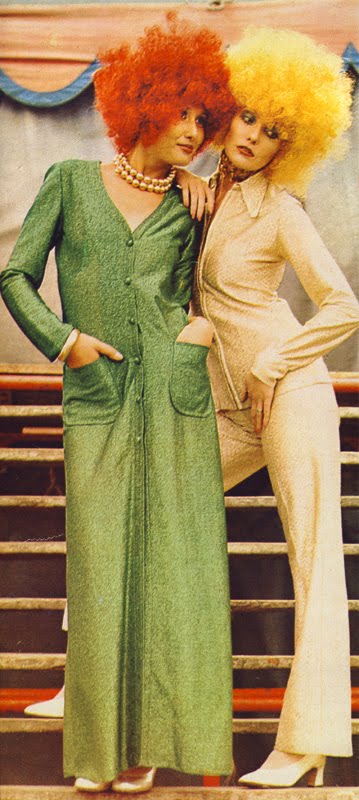
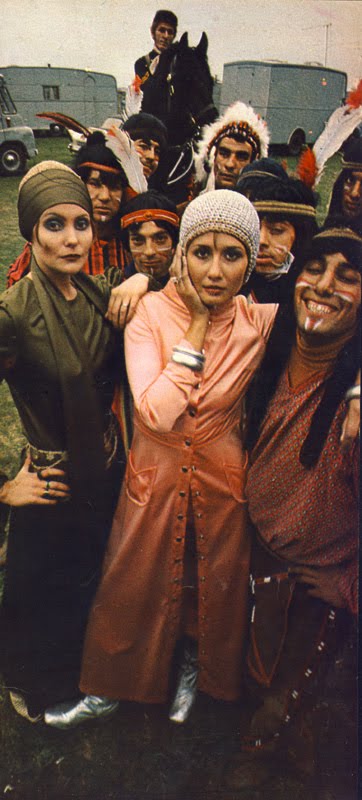 Both: Janice Wainwright at Simon Massey
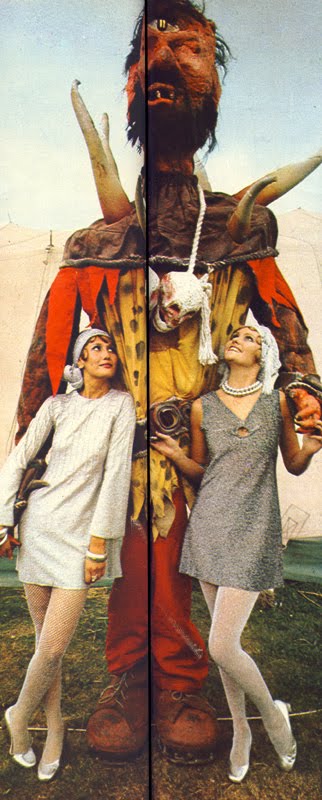 Left: Angela at London Town / Right: Dolly Day
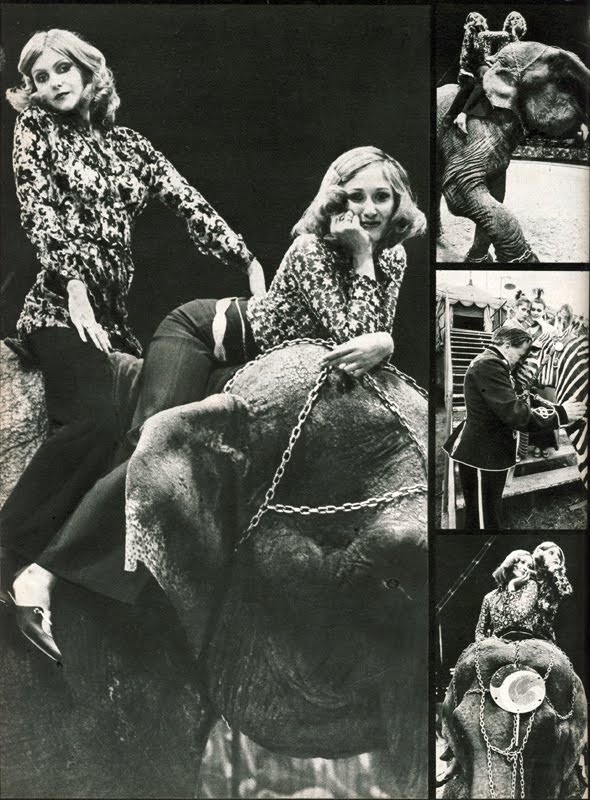 Left: Lizzy Carr / Right: Shirt by John Craig, trousers by Gordon King
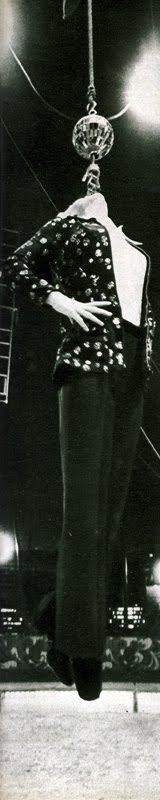 Marlborough
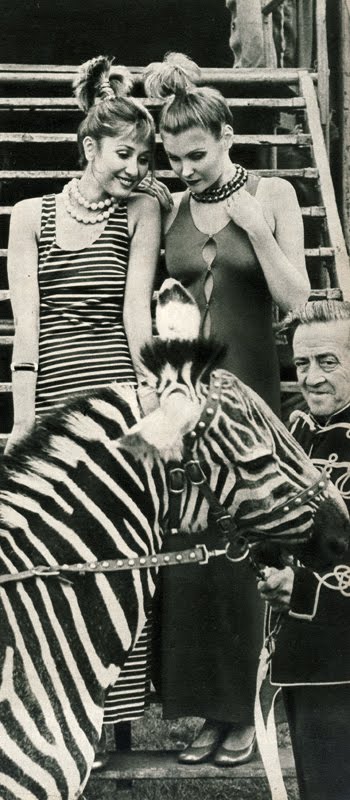 Left: Paul Sebastian at Gordon King / Right: Pourelle
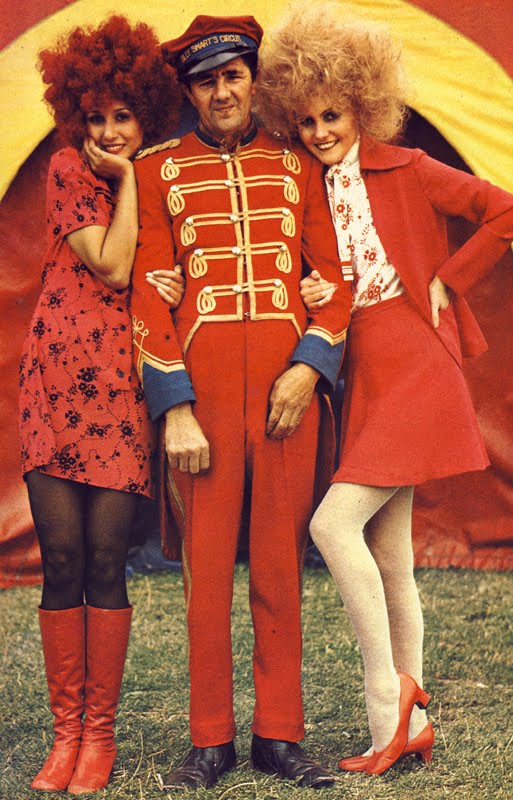 Both by Radley
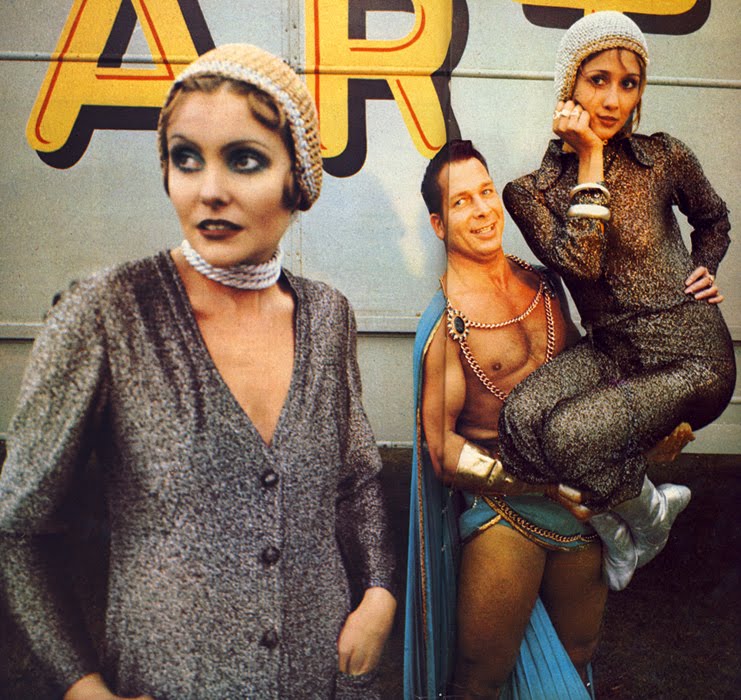
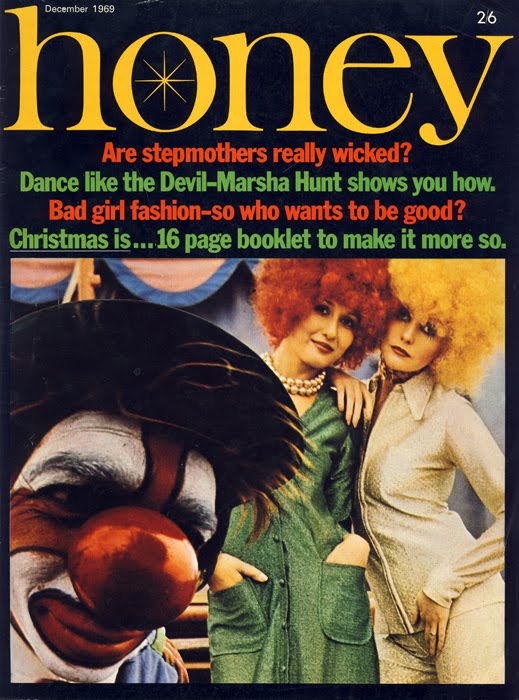 Photos by Roy A. Giles taken at Billy Smart’s Circus





 Liz Eggleston