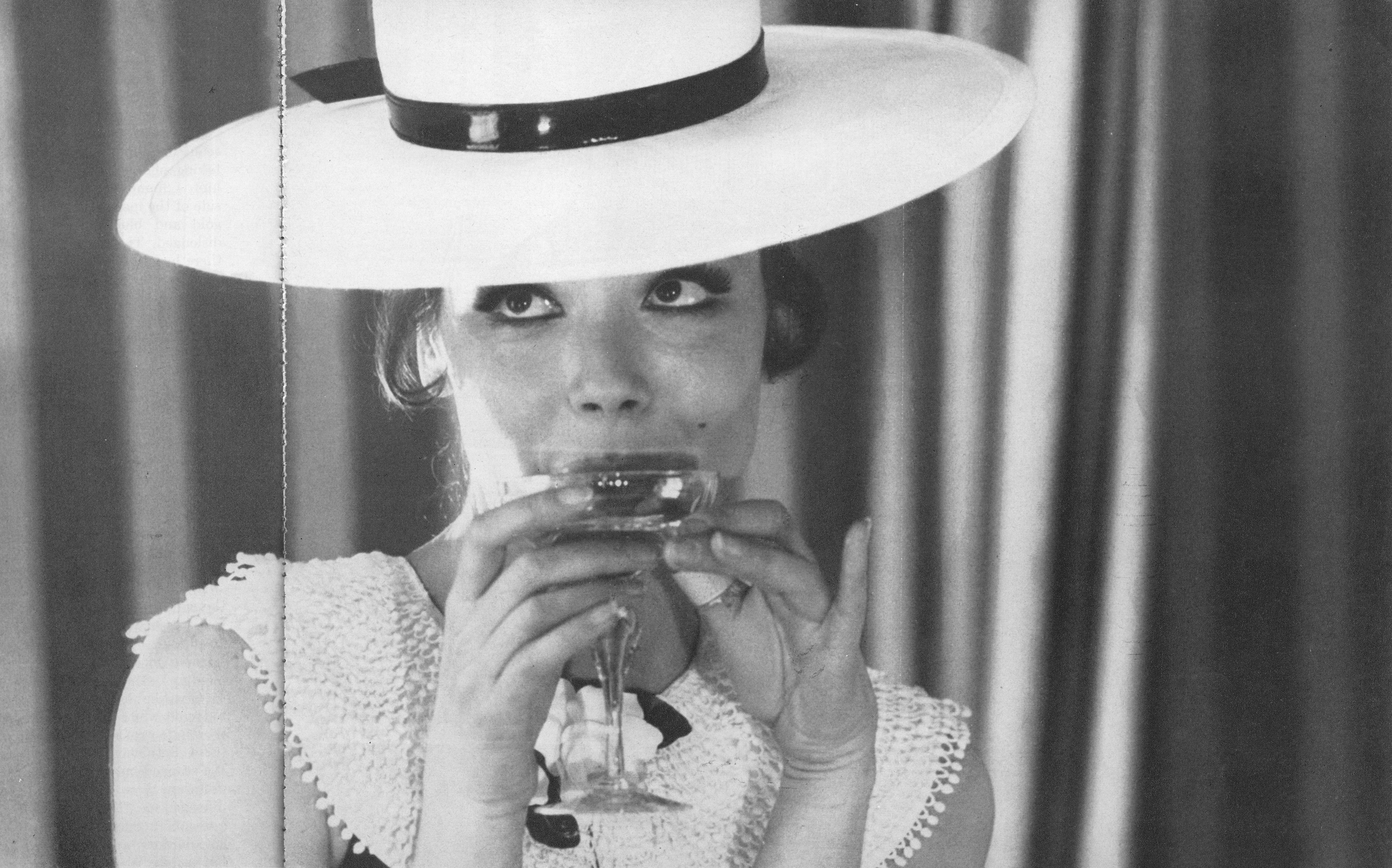
The Flirt: She has a flower-like quality, fair and pretty with an innocent air. Without regard to her maturing years, she plays the part of a child. Her dresses are innocent and fluffy. She wears bows in her hair and her man sees her as his good angel. He feels she is his pure heroine. He wants to shelter her. She smiles a lot. She smiles mostly at important and rich men. She be-guiles them into givirig her compli-ments — also the spotlight. Bewitched, her man doesn’t realise his friends find her dull. Her education is nil, her contribution to conversation non-existent. Her knowledge has been limited to an intense study of her personal appearance. Her important man has an important engagement. She does everything to delay him. She is maddeningly self-centred. She cries a lot if rebuffed, or if she doesn’t get her way. She wants all the attention. Skilfully, she keeps him unaware of a lack of reality in their love-making. She is too tender for passion. Her real interest lies elsewhere. Her desire and satisfaction is bound up, not in tender concern for him, but for his bank account. Hat by Simone Mirman.
Masques are not new. The Greeks used them in their classical theatre to represent various stereotyped parts such as ‘The Happy Lover’, ‘The Jealous Wife’ and ‘The Benign Father’. Today, most people assume personae to hide their real personalities, though the very characteristics they try to keep hidden, are often quite obvious to others. What is more, it is easy for people to become identified with their masque to the point that it is difficult for them to discard it. The basic reason for assuming a masque is to play a role and, hopefully, to make oneself more attractive than one actually is. It doesn’t always work.
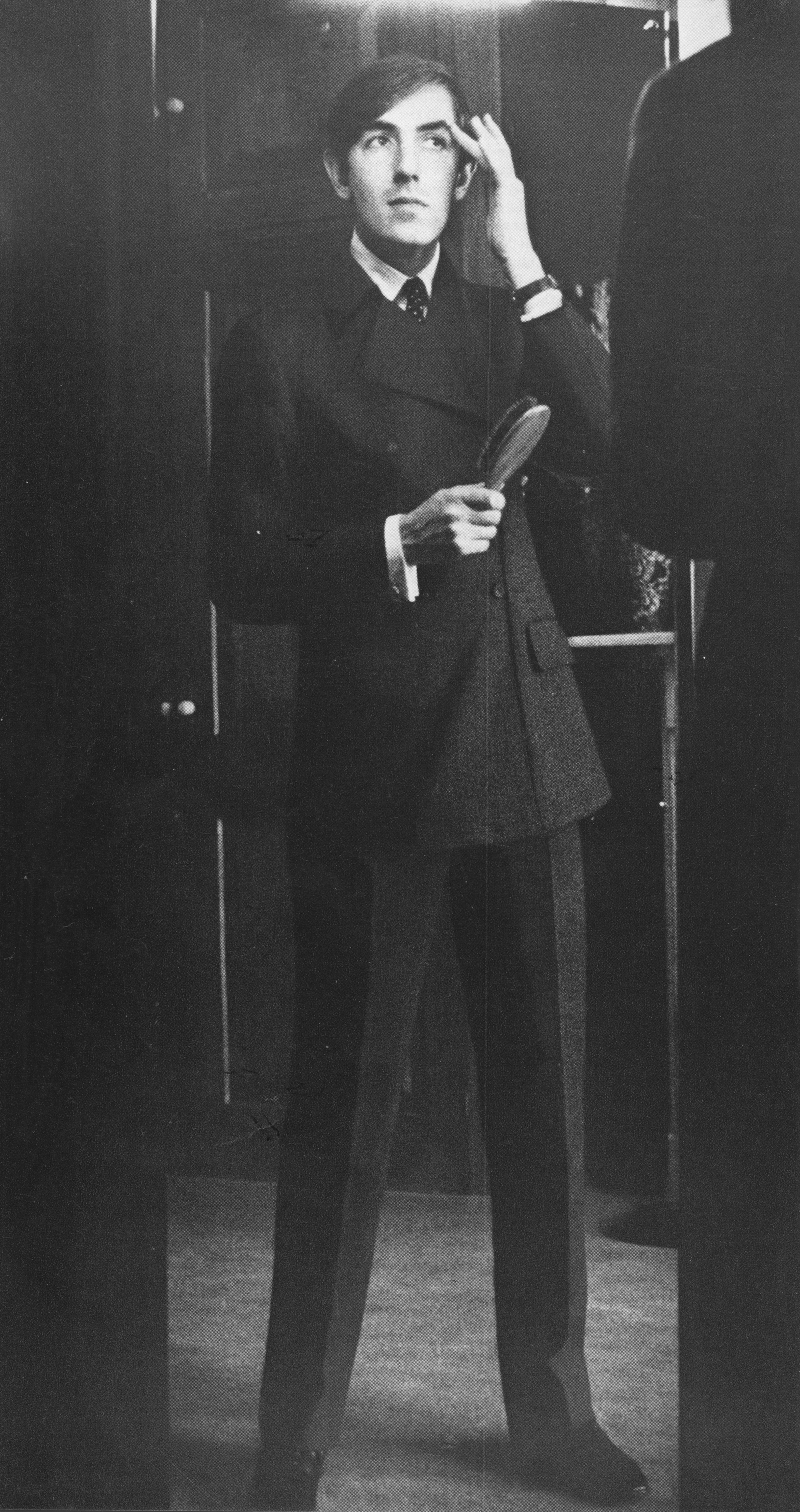
Played by Diana Rigg and Peter Cook
Written by Adelle Donen
Photographed by Stanley Donen
Scanned from Queen, 5th July 1967.
I have been on something of a break from here and social media recently, for personal reasons, but had always planned to post this on Diana Rigg’s birthday so here I am, back a little earlier than intended.
When I found this copy of Queen magazine, appropriate because Diana was and will always be my Queen, I couldn’t believe that I hadn’t seen most of the images before – especially as they were taken by one of my favourite film directors. There’s always a part of me that wants to keep things like this to myself, but the bigger part wants to share the beauty with everyone. So I hope you enjoy!
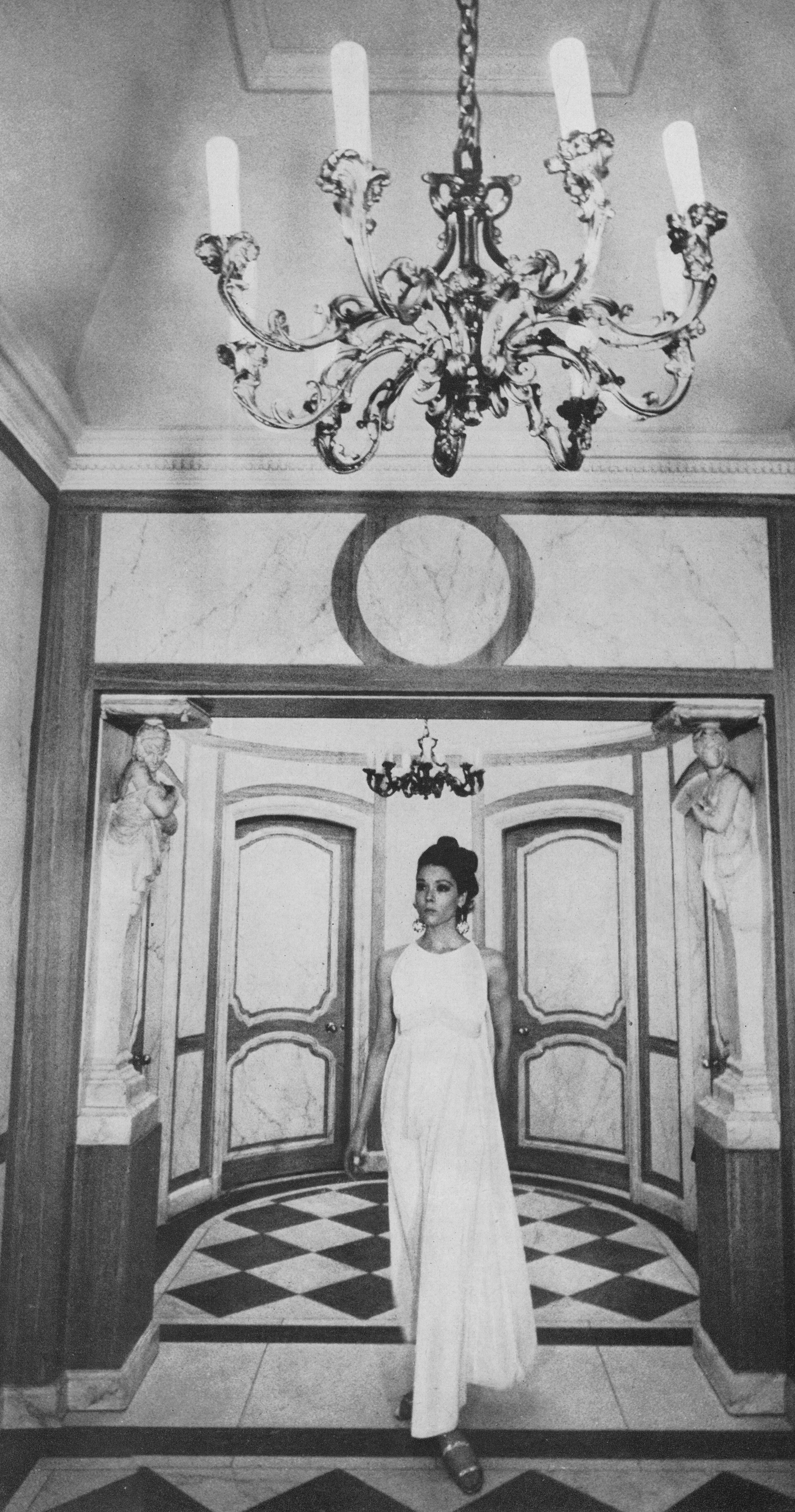
The Goddess: Her beauty captures the admiration of men. She is aloof, which captures their imaginations as well. Stripped of ancient gods, men long to find modern symbols. For some she is Aphrodite, the sexiest of them all. Others see her as purity. She is mysterious. The poor girl has to keep quiet. She does not dare expose her pedestrian qualities. She retreats be-hind a nondescript personality. She may or may not have much in the upper storey, but she has twigged the fact that she will always get in free, as long as she does nothing but exist. Gorgeous girls do not have to do much to enhance their looks, so they have to learn little about style, unlike their less fortunate sisters. She dare not change, and remains locked up behind her lovely iron mask. She uses what judgement she has to choose the plushiest suitor. He is swindled. He has married a statue. She has learned how to get what she wants and not give anything. She is frightened and frigid. Dress by Jean Varon.
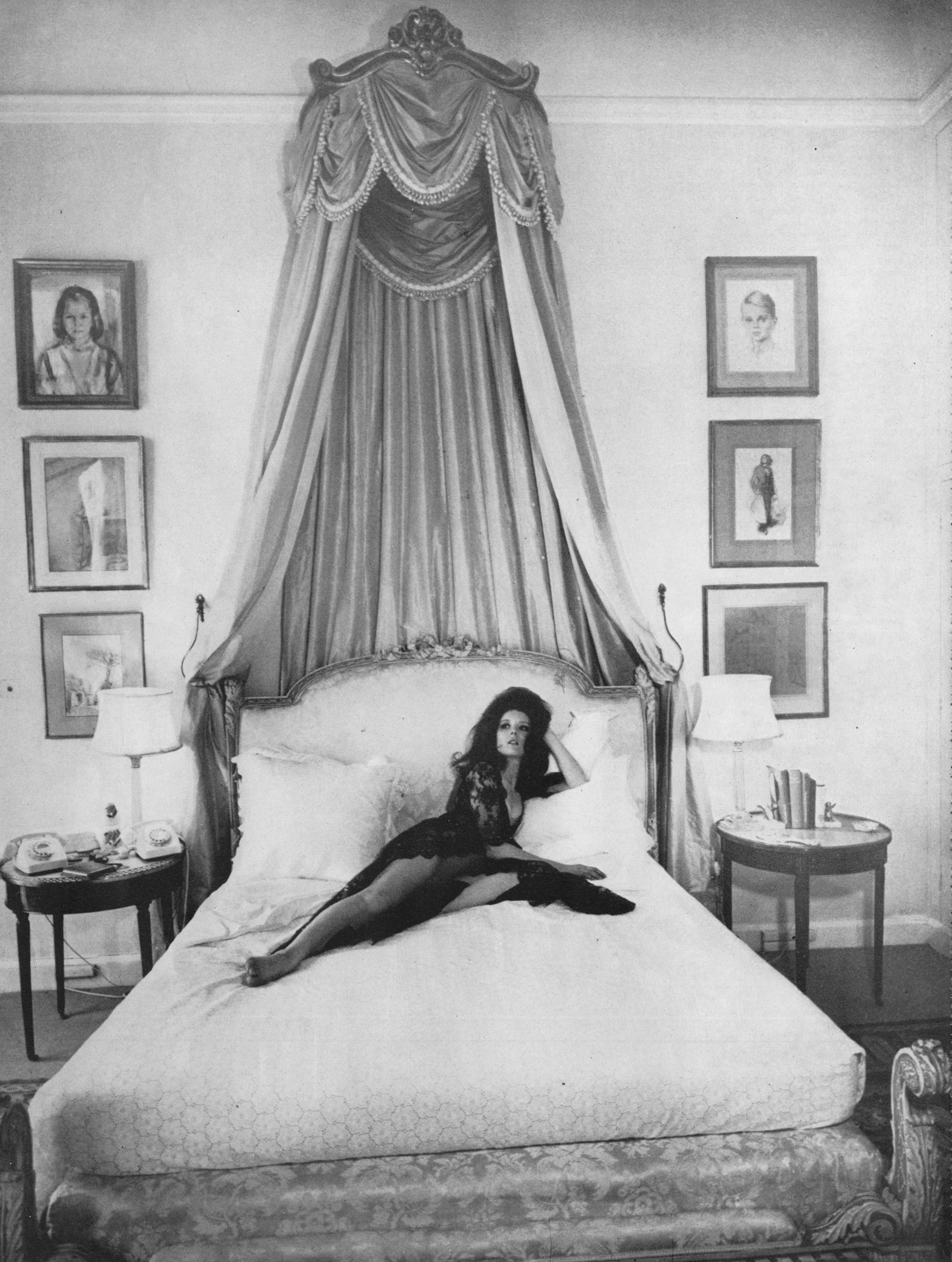
The Femme Fatale: She is dark, full-blooded and passionate. When she enters a room she has a brooding air. She is convinced she is irresistible to men; that she alone among women can experience real love (be it ever so exhausting). It is easy to see her idea of herself behind her slinky siren ap-pearance, but this can be agonising to the plain matron who would be ridiculous acting this part. She has an air of assurance with men, snaky and confidential. She doesn’t bother with women. Surprisingly, a man may accept her idea of herself and find her dramatisation agreeable. It flatters him. Then the fun begins. With all stops out, she throws her emotions at him. She is emotion itself — hysterical, furious, desperate. There is no moderation. She is devouring, unremitting. If the man survives, he may feel relief at having such a torrential release of his feeling. Or he may be frightened — and run. The whole play is usually brief and limited because of its intensity. The amount of unreality is prddigious. It is of these women that Kipling said: ‘The female of the species is deadlier than the male’. Dress by Jean Varon.
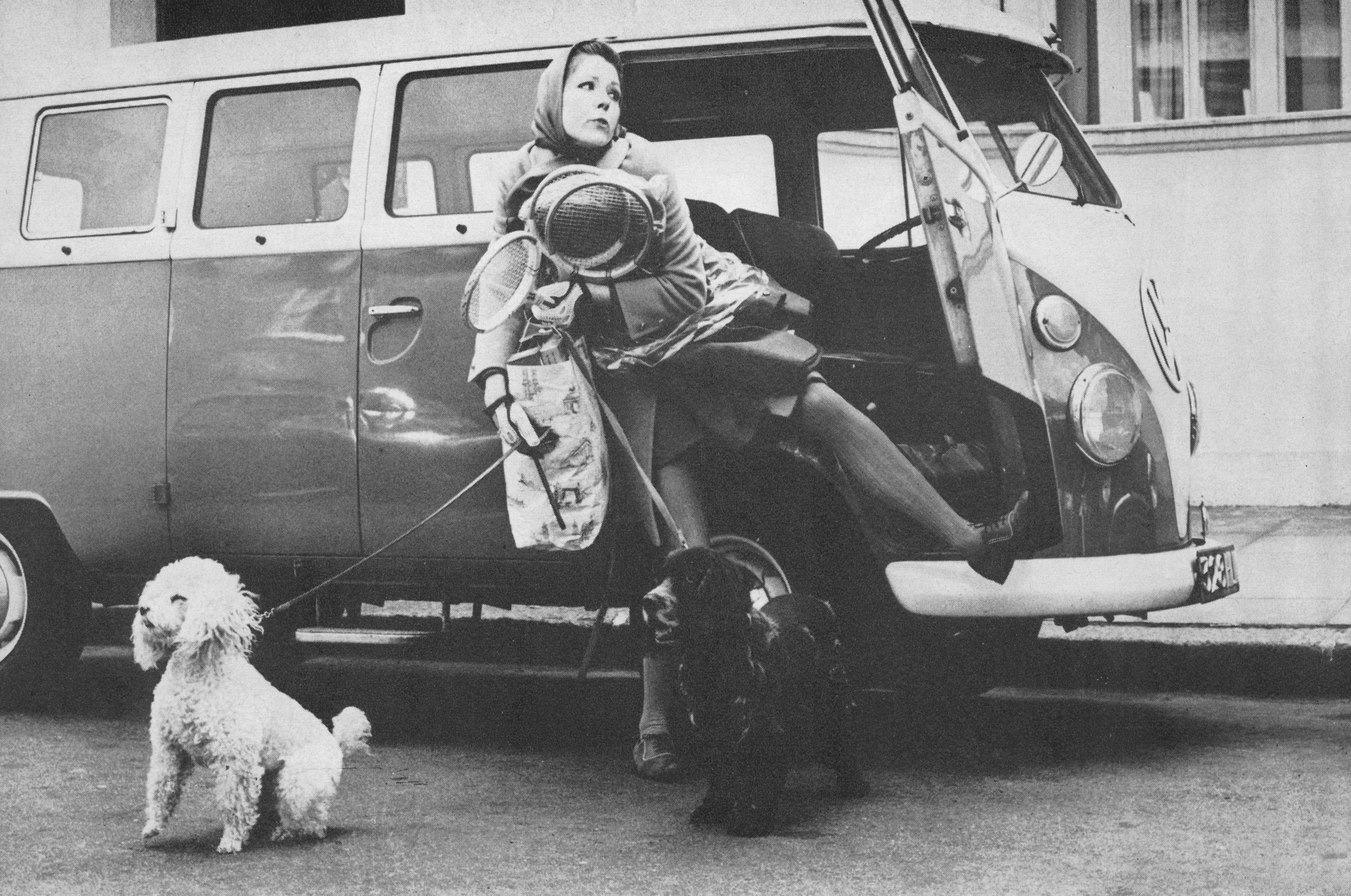
The Perfect Mother Awash with sentimentality, she is all concern and sacrifice for her children. She is a good sport. She is athletic with her sons, and like a big sister to her daughters. She has become one of the children — with corresponding loss of adult objectivity. There is no nonsense in her clothes.They are classic and tailored, with no frills. Having abdicated, she has given up competing with attractive women and denigrates their frivolousness. Her desires and ambitions are fastened onto her offspring — whether suitable or not. She enjoys every vicarious mo-ment of their successes. She is very busy — ali those duties to fulfil and amusements to organize for the family. Her husband has found that his business keeps him away from home a lot. He does not much enjoy going to bed with his ‘Girl Guide’ wife. She blames him vituperatively for his defection. She is jealous and possessive. He is trapped by her tricky appeals to his loyalty. What he and the children need is a woman around the house.
The No-Good Guy: He is attractive and sexy. Women by the dozen have found him so. That makes him irresistible. He is cool, a little sinister and . . . dan-gerous. A sharp dresser on the far-out side. He probably has an eye-catching car. He gets his kicks from furore and anything that adds to it is welcome. He has a fine understanding of his own problems, and says that he is ‘walled-up inside himself’. He tells you: `It’s a challenge to you to break through.’ He is misunderstood and lonely. He has had a tough time (he means to keep it that way). He says he wants to find the right woman. He warns you that no woman alive can love him. You mean to try and he means you to try. As soon as you are hooked, he tortures you. He is unreliable. He double-deals. He exploits your feelings. In any situation possible, he grabs the centre of the stage. He creates a lot of drama over everything. You wonder if there is anyone behind that wall. And what’s more you finally have the audacity to complain. He then points out to you how true it is that no one can love him. He’s sad. He’s sadistic.
The Intellectual Stands on a pedestal. He is admired for his ‘dedication and self-sacrifice’ to the good of mankind. Vague about details and delightfully unaware of his appearance — although seeming to follow a curious fashion of his own which he refers to as ‘comfort-able’ — the intellectual usually wears stained pullovers, corduroys and jackets with worn elbows. His eyes have that middle-distance look, of mere practical matters having yielded to things of the spirit. He is, of course, unaware of problems near to home. In his zeal and tireless work to improve the human condition, the intellectual is inspiring, provided no one comes close enough to him to expect an im-provement in himself. For all his intelligence, he is disarmingly vulnerable. Women long to devote themselves to him — look after him and see that he eats his meals. . . Fuzzy thinking flatters them that they too are pur-suing lofty ideals. They yearn to serve faithfully at the altar of truth, and are satisfied just to admire his high-minded goings on. But the intellectual is blind about females. His occasional dash for a curvy, but empty-headed blonde is humiliating to the would-be intellectual soul mate, especially when she sees him being led around by the nose. Basically he belongs in his ivory tower … without women.
The Charming Boy: He is neat, well-mannered and lovable, playing the perennial juvenile lead. He oozes good fellowship. He picks up the bill. He ex-pands in his own popularity. He is modest about himself, but never lets an opportunity pass to further his career, social or professional. He is impeccable in his appearance — on the conservative side. He sends flowers and thank-you notes. He is sweet. He ap-preciates you more than anyone ever has. You believe in him. Before you know it, you are working for him. He is Chairman of the Board to promote himself. You are pressed into service. He looks after himself like a baby. Why shouldn’t you? Behind that coy, guileless exterior is ruthless ambition. You are an accessory in his search for power. Things run smoothly as long as you donate your all. If you have needs — forget them. The perfection of his image, and his rise to eminence, cannot be interrupted. This boy is, in short, a fraud.




 Liz Eggleston