Who’s Wearing What: Penelope Tree

british boutique movement, david bailey, Foale and Tuffin, mary quant, ossie clark, penelope tree, petticoat magazine, sixties

I adore Penelope Tree; her hair, make-up, style, the fact that she still looks amazing (without having had surgery…at least that’s what it looks like), the fact that she survived being with Bailey, the fact she doesn’t feel the need to whore herself around for fame and fortune…..

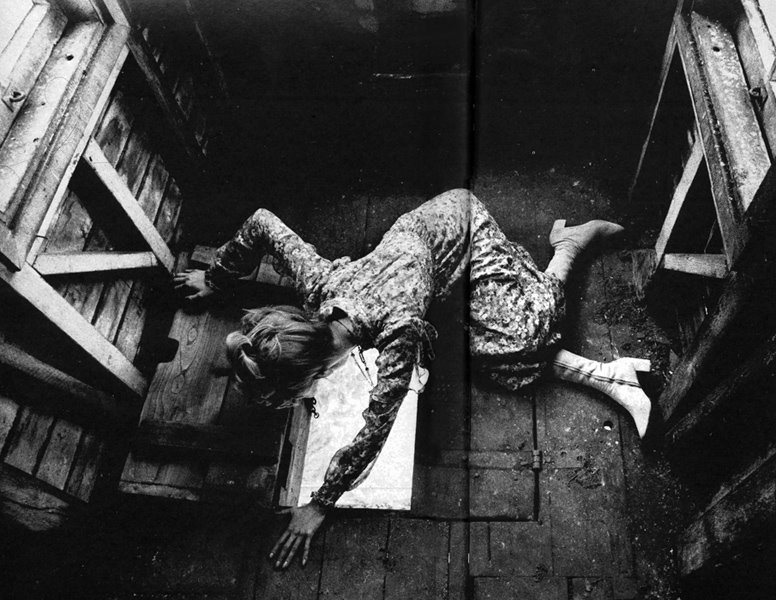
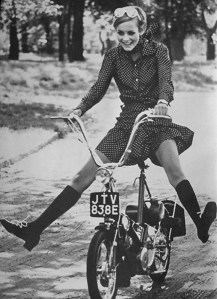
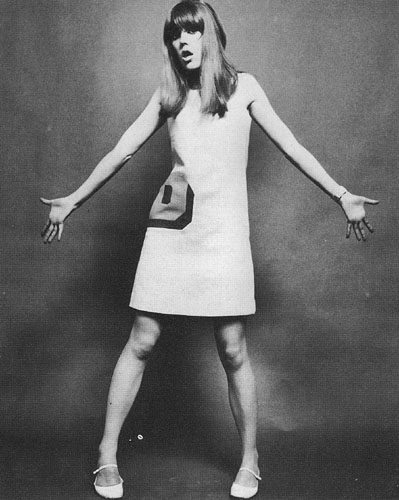
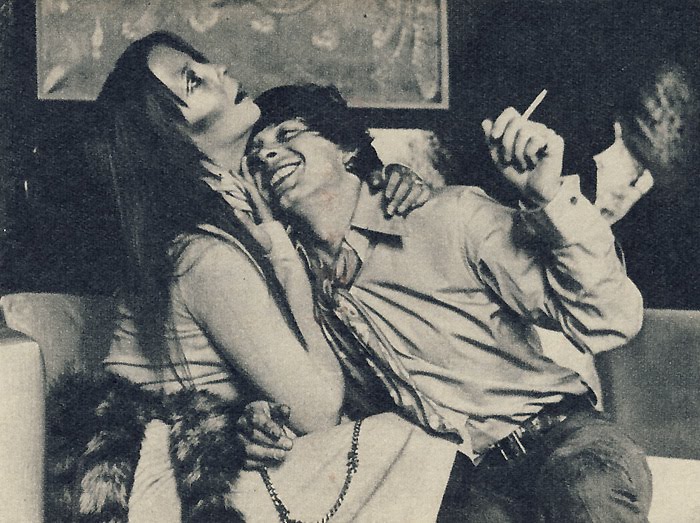
I particularly love this article from the June 14th 1969 issue of Petticoat magazine.

In New York Penelope Tree is a top fashion model. You can’t open American Vogue or Harpers without seeing her dripping furs, jewellery. In England she’s more well-known for being Bailey’s Bird. What sort of clothes does she wear to please herself?

I got off to a good start by losing my pencil, every time I delived in my bag to find it I got butted in the bottom by Smudge, Penelope’s enormous English sheep dog. “And he’s still only a puppy,” she said apologetically, whacking him. I gave up looking, and she handed me a pencil. We sat either end of a vast black leather Chesterfield, surrounded by ‘naive’ paintings, Mickey Mouse and stone sculptures of sorts.

“I go six months without ever buying clothes, because I hate it more than anything else. I think I’m going to get all paranoic in the shop, specially Department Stores, I think I’m going to throw-up or something. I’ve been buying clothes for myself since I was 12 years old and it still gets me. When I do see something I like, I usually buy a lot. This dress, I bought at Maryon about a year ago. I liked it so much I bought three.”

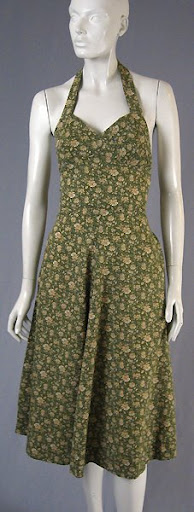
She was wearing a full-length, green cotton dress, sprigged with tiny daisies, topped with a short black velvet vest, “a bit from a Tuffin and Foale trouser suit, I think” and thick brown brogue boots.

Apart from looking very individual and super, she looked as if she’d just stepped out of a trail-blazing Western film. “I refuse to spend a lot of money on clothes, I’d rather spend it on paintings. I haven’t got much money; you know I don’t earn any money in this country at all, and anyway clothes aren’t made well enough. The most I’ve ever spent on one garment is an Ossie Clark Snakeskin coat.”

“To the ground?” I queried.

“Oh yes, short clothes look terrible now, one is always inhibited about the way one sits, walks and runs down the street. I like to forget about what I’m wearing, not worrying about – are my knickers showing. It’s all right if you don’t worry, but I’ve been conditioned to worry about it.”

I sat there worrying if my knickers were showing, and feeling very butch in my short skirt.

With that, David Bailey walked in, bumping into a bounding Smudge, who rushed over to give a friendly lick.

“Bailey do you know Suzie?” Penelope introduced us and we exchanged sickly smiles. I always feel about two year old, being called Suzie, and surnames only always have a ‘God’ like ring to them. Bailey put on a record and we all listened in silence to Brute Force and his four letter word song. “That’s why it can’t be released,” Bailey explained.

I broke the magic by asking Penelope if she liked French clothes. “I hate French clothes, I hate the principle of the couturier. I used to love Yves St. Laurent clothes, only he started giving out this black thing and being in mourning for Vietnam. I think it’s the most hypocritical thing I’ve ever heard of, he doesn’t do anything about Vietnam, but make money out of it. Black’s okay if you have a figure problem. English clothes were wonderful five years ago, now they’re terrible and very expensive. Ossie Clark is the only revolutionary now, he makes pretty clothes, only they’re not particularly well made.”

“Can I quote that?” I interjected.

“Oh yes, I’ve told him so. Marshall McLuham says: ‘Fashion is a product of mass media, presenting ourselves as a showcase’. I think clothes just need to be comfortable. My wardrobe’s full of bits and pieces, I hate to throw anything away, I always think they’ll go with something. I really only wear about five things.”

I’d read she wore masses of make-up, literally painting it on every morning, but she hardly had any on.

“Oh sometimes I wear gobbs and gobbs, it just depends how depressed I feel in the morning. I think Mary Quant is best, but really best of all is stolen make-up, not stolen really but borrowed. Somebody else’s is always better than yours.

“I’m always amazed that all the individual, successful people ‘do their own thing.'” Penelope even cuts her own hair…”unless someone offers to trim it while I’m modelling”. I asked her why she wasn’t modelling in this country and she mumbled something about the tax man and then said: “I’m giving it up, I don’t want to hang about and become a has been.” Then she added much to my surprise: “I’m not in great demand. I started to write a book, then realised in the middle I didn’t really know what I was talking about; it was on the subject of Hinduism. I might go into films.”

With that Mary Quant, Alexander Plunket-Green, Bailey and Smudge came in and it looked like my interview was ended. We wandered down to the basement and spent half an hour searching for a picture of her. “Bailey hardly ever photographs me unless it’s work!” Sue Steward
The Icing on the Cake (or, The Bow on the Butt)

butt bows, mary quant, mod, sixties, website listings

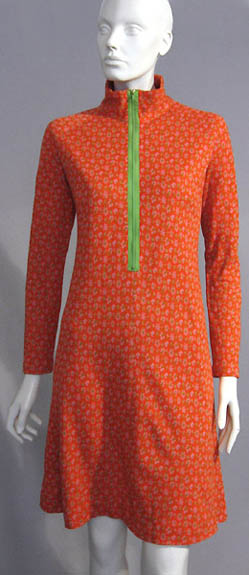
Ahhhhh….you have to love a butt bow. I was rather surprised to see a butt bow on a Sixties Mary Quant mini dress, but surprised in a good ‘oooh, the girl done good’ kinda way. It’s an adorable dress anyway (and perfect attire for a mod french maid) but that’s just the icing on the cake; the bow on the butt. Anyway, it’s a new listing over at Vintage-a-Peel – please do check it out!

The Mill on the Floss: Helmut Newton does Alice Pollock

1960s, alice pollock, bill gibb, british boutique movement, mary quant, ossie clark, quorum, zandra rhodes

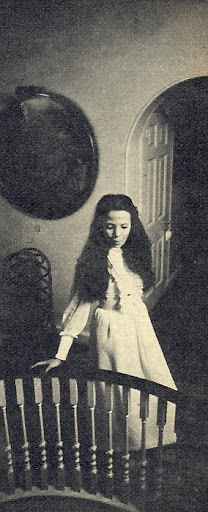
I must admit that I don’t have a great many copies of Queen magazine in my possession. But a conversation about Alice Pollock the other day reminded me that I have one, frankly awesome, copy from 1969 with an entire fashion spread dedicated to Pollock’s clothes – photographed by Helmut Newton. It’s entitled The Mill on the Floss.

When the London rat-race is too much for you…you can retire to the calm and order of the country and gaze peacefully, restfully, into the depths of a mill-race. Ideal wardrobe for mill-racing – catch of floaty granny-dresses from Quorum. (Yes we do mean that long; we are rather serious about this.) Wear your granny-dresses with suede boots; after all, the climb through the mill may be rugged.

It’s funny really, how few Pollock pieces turn up nowadays. And the ones which do are usually the more Ossie-esque. I’ve had a few, all blouses I might add, and currently only own one labelled piece. But this spread shows you a bit more of her range, beyond pretty crepe blouses. Apparently her knitwear was extraordinary, and one person described it as possibly superior to Bill Gibb. Which is high praise indeed.

She had less of a defined style than Ossie, but her clothes were, by all accounts, exceedingly wearable and feminine. Less aggressively sexual, which is why it’s so interesting to see them photographed by someone like Helmut Newton.


It made me wonder if a lot of female designers in the Sixties had that problem, and why so few (aside from the idiosyncratic Zandra Rhodes, and master self-publicist Mary Quant) have remained in the public consciousness since the Sixties and Seventies. My own favourites at least, it would seem. The male designers were often the biggest drama queens, and have ensured their notoriety continues to this day. Whether through the strength of their designs, their lifestyles or just a knack for self-publicity. I’m sure there are countless exceptions to this rule, but it’s been occupying my mind today.

Anyway, enjoy the Pollocks! I for one wish I could be running around a mill, in the countryside, in Quorum clothes right now.

A Cavalcade of Goodies

alice pollock, biba, Gina Fratini, hardy amies, lee bender, louis caring, mary quant, website listings

..on the website this week are:

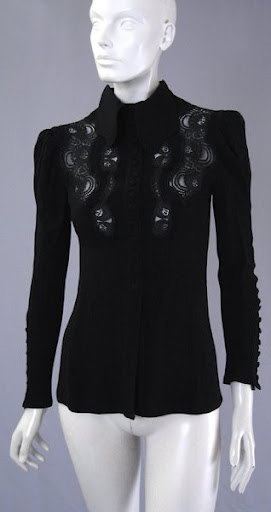
A stunning black moss crepe blouse by the fabulous Alice Pollock


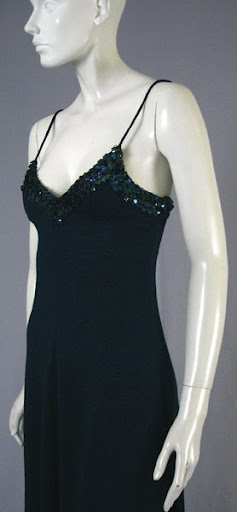
A jersey and sequin confection by Biba

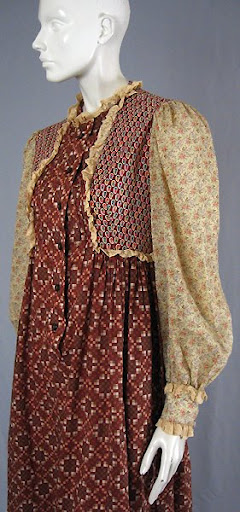
An adorable smock dress by Gina Fratini

A gorgeous little floral mini dress by Louis Caring

A very rare early Jean Muir piece

A gorgeous couture Hardy Amies grey silk dress

A fabulously forties-styled dress by Mary Quant’s Ginger Group

and finally, a superb print culotte dress by Lee Bender


Not all of them have got their patented flowery Miss Peelpants descriptions yet, but I’m working on it! I was getting so many emails about the ‘coming soon’ pieces, I thought I ought to just get them measured and up there! Please don’t hesitate to ask if you need a flowery description IMMEDIATELY. It’s what I’m here for…..

Doctor Who Girls: The Sixties

1960s, british boutique movement, doctor who, doctor who companion fashion, john bates, mary quant, ossie clark, zandra rhodes

Some of you may or may not know of my slight….slight obsession with vintage Doctor Who. Yes indeed, coupled with my love of Blakes 7, The Avengers and Sapphire and Steel I think that gives me fairly impressive geek credentials, no? A lot of it is childhood nostalgia, particularly in the Eighties series which I grew up with but also for the occasional Seventies story which my brother would acquire via third generation videotapes recorded from Australian TV, but even the episodes I didn’t grow up watching hold a magical quality for me. Not least because The Doctor was always adept at finding himself aided by a gorgeous companion wearing seriously groovy gear from her own time. Even the few exceptions to this (Leela – Warrior Princess and Romana – Time Lady) look very much ‘of’ the time in which the stories were made.

So I’ll start by introducing you all to the notable young ‘Who girls of the Swinging Sixties.

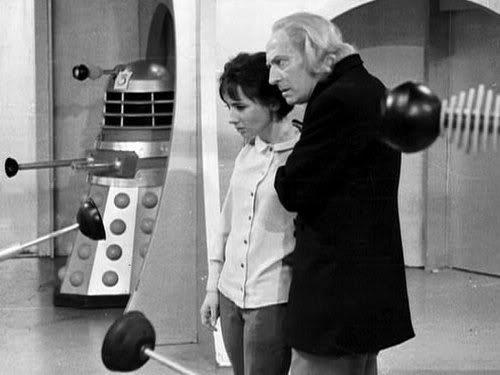
It began with the Queen of the Ankle Twist, Susan (Right: Carole Ann Ford 1963-65) and her Mary Quant outfits. Susan was The Doctor’s granddaughter and a schoolgirl of exceptional talents. The actors often wore their own clothes due to budget limitations and Carole Ann Ford has said that a lot of her gear was Mary Quant. The show began in 1963 and in many ways is an interesting time capsule for the dramatically changing fashions of the time and I think Carole was the archetypal Quant girl with her elfin hair and boyish figure. The clothes were fairly simple, little jumpers and cropped trousers or pinafore dresses and roll neck sweaters.

Her immediate successor was a young girl from the future named Vicki (Left: found on the planet Dido, I kid ye not!), played by Maureen O’Brien (1965), who somehow seems to have found the off-screen Tardis boutique and was usually dressed in a similar manner to Susan. Nothing extraordinary, just your very average girl about town for the time. Although it was 1965 and the advent of the mini skirt, her hemlines remained very modest as you can see in the picture to the left.

The ridiculously named Dodo (Jackie Lane 1966) was the next gal Billy Hartnell ‘picked up’, running straight into the Tardis from Swinging Sixties London of 1966. Yes indeed, Dodo was conceived as a trendy young thing designed to appeal to the more fashionable young audience. Sadly, she didn’t last long and remains something of a joke to most serious Who fans, but she wore some very groovy little numbers (as we can see on the right from The Celestial Toymaker [Sorry, I had to have a picture of the divine Peter Purves in his youth *licks lips*] she’s working the op-art look!) and deserved more of a send-off than the disappearing act she manages in The War Machines….

…..Which itself introduced us to Polly. Ahhhh, now that’s more like it! Polly (Anneke Wills 1966-67) was a modern London girl with long legs, long blonde hair and big dolly girl eyes. Her introduction was possibly the first time that there was a bit of a something for the dads, with her mini skirts and beauty she was more sexy and womanly than any of her predecessors had ever been. She was also, unfortunately, ill-used mainly for tea-making (Polly put the kettle on?) and screaming in her brief tenure in the Tardis and sadly most of her episodes have been wiped/burned (a fate which has befallen most of the Sixties girls to some degree or another). Polly was the companion who eased the viewers into the regeneration of Hartnell to Patrick Troughton, but eventually left him to return to her own time.

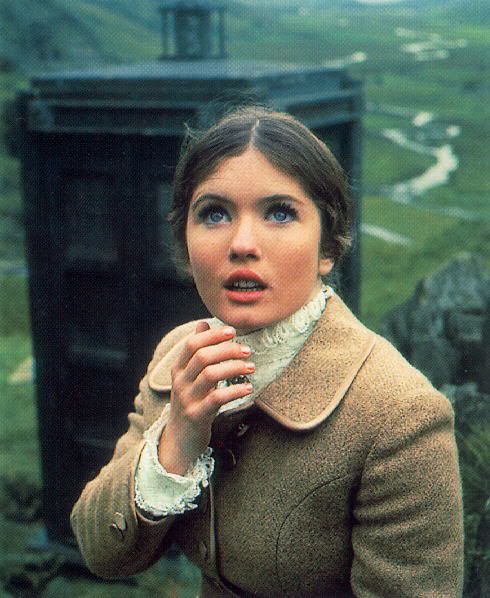
High Priestess of the Piercing Scream, Deborah Watling, entered the Tardis as Victorian orphan and Dalek survivor, Victoria (1967-68). Her transition from crinoline to mini skirt was swift and amusing but fairly inevitable. And she really went for it, from the modest little dress she dons in Tomb of the Cybermen to the super micro hippy girl mini dress she is happily traipsing around in by The Web of Fear, via a gorgeous tweed jacket and knickerbocker ensemble in The Abominable Snowmen. Victoria gets a hard time for her girlishness and screaming (utilised to defeat a monster in her departure story Fury from the Deep) but I think her portrayal of a fish out of water is very poignant and she would certainly benefit from having more stories in existence today.

Finally we come to Zoe (Wendy Padbury 1968-69) who, in contrast to Victoria, was a brainbox girl from the future. Zoe has achieved legend status mainly from her infamous silver catsuit in The Mind Robber and the arse contained within it, but she was also known for running around the universe in some eye-wateringly short mini skirts. The maxi was beginning to creep in by this point, out in the real world, but Doctor Who would not embrace the long skirt for a good while yet.

My favourite Zoe outfit is a toss up between the [what looks like a John Bates] mini dress from The Dominators and what may well be a Celia-print Ossie Clark ensemble from The Invasion. [They mention shopping at Quorum in the commentary for this episode, but her friend is wearing a fantastic Zandra Rhodes lipstick print Fulham Road Clothes Shop ensemble so it’s perfectly possible Zoe’s is as well, I just can’t see it clearly enough to tell!]

Zoe was sent back to her own time and her memory wiped, let’s just hope she managed to keep some of her outfits!

Marit Allen RIP

1960s, Foale and Tuffin, john bates, marit allen, mary quant, ossie clark, Vogue

I can’t find any information online about it, but a friend has told me that the wonderful Marit Allen has passed away. The name might be meaningless to most of you, but she was instrumental in the careers of people like John Bates and Ossie Clark.

She worked as the ‘Young Ideas’ editor at Vogue in the mid-Sixties and her youthful approach to the clothes, styling and photographs ensured that the designs popular out on the street became widely appreciated through exposure in Vogue. She championed the young Bates, thus enabling him to continue creating the designs he had been struggling to get noticed with. Young Ideas also featured Ossie Clark’s work in the same summer that he graduated from the RCA and started working for Quorum, so Marit was certainly a visionary and true talent-spotter!

She accumulated a vast archive of pieces from the British Boutique Movement, including her wedding suit which was a Bates design, and this collection filled many gaps in the V&A’s Sixties Exhibition last year. I was ridiculously proud that my handful of pieces were being exhibited alongside hers.

She later developed a career in costume design, being designer for films like Brokeback Mountain and Thunderbirds (amongst many others).

I also had the very, VERY great pleasure of meeting her in January at a study day linked with the Sixties exhibition at the V&A. In retrospect, she was possibly the person I was the most excited about hearing speak and then meeting. And bearing in mind that Barbara Hulanicki and Foale & Tuffin were also in attendance, well that’s saying something about my respect for Marit.

It was so lovely to hear her talk about her experiences and views on the era, with photographs and thoughts on the designers. I had begun to think that the day would pass by with no mention of John Bates’ contribution to British fashion but, as in the Boutique book by Marnie Fogg, Marit sought to emphasize his talent and defend his forgotten claim to have been the first designer to really ‘do’ the mini skirt. And with Mary Quant herself in attendance, it was a brave move. The talk was only too brief, most frustrating that it was curtailed to keep the timing of the day and give Mary Quant more time to witter on about her make-up range and how she ‘invented’ the duvet cover (I kid ye not). I wanted to listen to Marit forever, and to see all her photos and hear all her experiences.

Thankfully I summoned up the courage to speak with her afterwards. I somehow found myself turning around to face her, and realised this was my big chance. We chatted a little about Bates, I told her about my collection and how grateful I was that she had mentioned him (we agreed he was a very underrated talent) and about how unlikely it was that such a boom time in British fashion would ever happen again. Mainly due to the cost of clothing production and shop rental in London.

Now, even more than before, I’m so glad I had those brief few moments speaking with her. I am so in awe of her talent and vision and, in a week where we’ve also lost the wondrous TV producer Verity Lambert, the world is a much gloomier place without these pioneering women.

Above and Right: Two photos from Marit’s Young Ideas section of Vogue. John Bates designs from 1965 above and Twiggy in Foale and Tuffin from 1967 on the right.

Foale and Tuffin

1960s, barbara hulanicki, british boutique movement, carnaby street, Foale and Tuffin, gerald mccann, john bates, mary quant, personal collection, yves saint laurent

What baffles me is the inverse ratio between the rarity of Foale and Tuffin, and the prices they command. I think Marion Foale and Sally Tuffin were arguably a greater talent than Mary Quant. And they certainly knew when to call it quits and draw back gracefully from the fashion world (they both ‘retired’ in 1973 to spend more time with their families). Licensing? They wouldn’t have dreamed of it. Yes, MQ, I’m looking at you in your waterproof poncho – don’t think I can’t see you! 😉

Their early work was vibrant, youthful, fun and always exquisitely tailored. They originated trouser suits for women (yet another creative theft by Yves Saint Laurent ensured they rarely get credited for this – more rantings on him some other time…), used the ‘op art’ trend in a quirky way (rather like my other passion, John Bates) and helped build the Carnaby Street image – the driving force behind the emergence of Britain as a world leader in fashion.

They moved easily into the softer look of the late 60s and early 70s, continuing to favour Liberty prints and did all sorts of lovely frilled and flared things. In retrospect, their decision to quit in 1973 seems really rather intelligent. The mid-late 70s saw the crash and burn phenomenon of so many designers, Ossie Clark and Barbara Hulanicki at Biba being the most notable casualties. So they got out at the right time.

Their work is fairly rare. Goodness only knows why, you can hardly miss the label! They were a popular fixture in Vogue and a big part of the Youthquake British Invasion of the USA in 1965.

Two Foales from my private collection. 1963 and 1965 respectively.

However, in recent months (after loudly bemoaning the non-existence of ANY F&T pieces in my personal collection) I seem to have accumulated a nice little collection of their work. I still sit here, look at the frocks and think; “How the HECK did I manage that?”. I have my limits as to how much I will pay for pieces for my collection, it’s just that the prices have been shockingly low for what they are. Even the recent Kerry Taylor auctions sale for Sothebys sold two Foale and Tuffin frocks (early 70s) for the opening bid of £100. I recall one of the major US auction houses sold two Foales not that long ago for a similar price.

So, while I can’t complain on a personal level that the prices aren’t really reflecting the rarity and beauty of their work – it does seem utterly wrong. Mary Quant’s work is fairly cheap these days – especially considering her cultural importance. But F&T didn’t license their names to death. So in reality, they should be making a whole lot more.

Just a little rant. I feel much the same way about Gerald McCann. I guess I’ll just have to keep collecting these labels rather than selling them! *sigh*