
 Stirling Cooper
New listings! Oh yes….
 Miss Novell
 John Bates for Jean Varon
 Ossie Clark
 Louis Caring
 John Bates for Jean Varon
 Victor Costa
 Act III
 Simon Ellis
Stirling Cooper
New listings! Oh yes….
Miss Novell
John Bates for Jean VaronOssie ClarkLouis Caring
John Bates for Jean Varon
Victor Costa
Act IIISimon Ellis
 Clothes by Foale and Tuffin
Delicious nursery rhyme themed spread from Vogue, April 1970. Photographed by Elisabeth Novick. I have included the strange nursery rhymes they have mangled created. Even though I think they’re a load of tosh. Why so literal, anonymous Vogue writer? Why not just use the originals and leave something to the imagination?
The photos are pretty incredible though, which makes it all worthwhile….
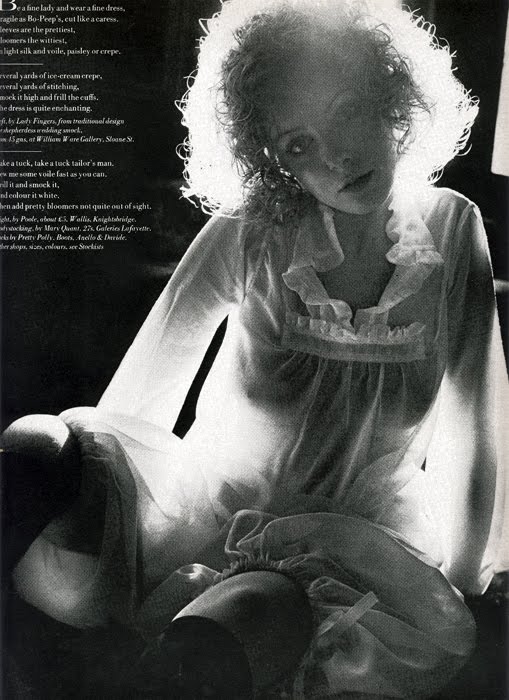 Clothes by Poole
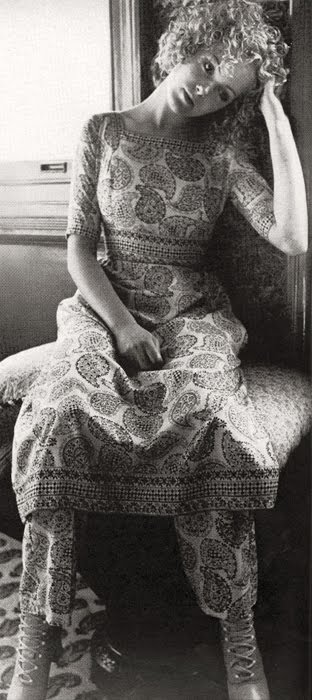 Clothes by John Bates for Jean Varon
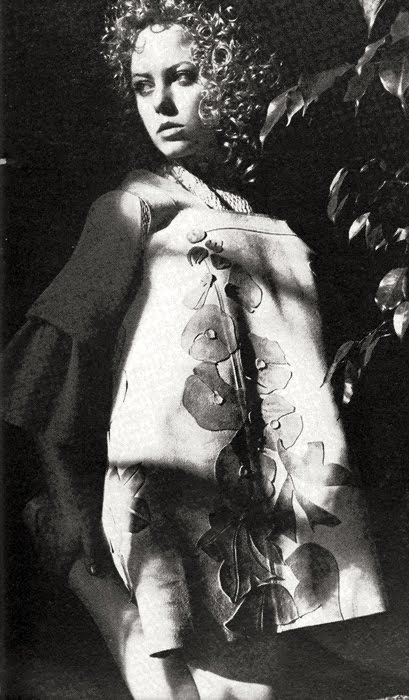 Clothes by Francis Vaughan
Mary Mary silk and suede
How does this garden grow?
With smocking green
And pinafore
And hollyhocks all in a row.
 Clothes by Lady Fingers
Several yards of ice-cream crepe,
Several yards of stitching,
Smock it high and frill the cuffs.
The dress is quite enchanting.
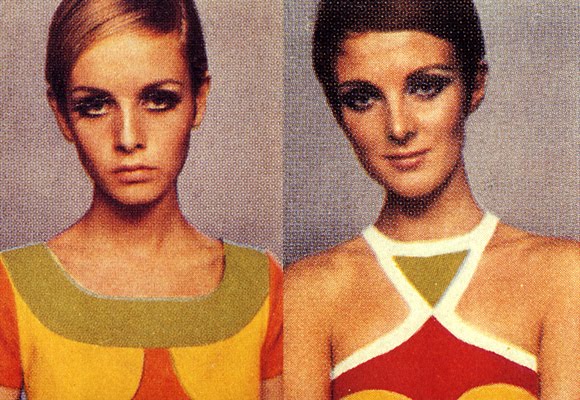 You may (or may not…where have you been hiding??) know of my love for the work of John Bates. He’s a pretty important designer to me, and [via The Avengers and subsequent research] is a big part of why I have gone down this career path. I’ve met him twice and he has also, more recently, completely unwittingly and indirectly changed another part of my life. For which I’m very grateful, and which he will have no idea about.
Senti will be witness to the fact that I nearly fainted when I read what he had written in my copy of Richard Lester’s book about him. I had been wearing an early red chiffon Varon to the launch, and he wrote ‘Love the red chiffon and it fits perfectly!’. Perhaps that wouldn’t affect other, normal, people in the same way. But it was like a slice of heaven for me.
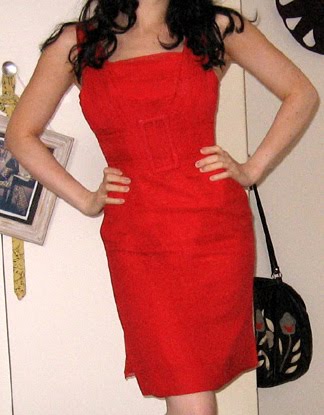 Lousy photo of a great dress.
Anyhoo. I don’t post a lot about my personal collection these days. To be honest with you, I’ve let go of a few things here and there. Other things need re-photographing. And several are still sitting in a no man’s land of ‘maybe I ought to sell this, really’. Hence I removed those sections from the website before I relaunched and haven’t reinstated them yet.
I am still trying to thin down the Bates collection. Which is hard. You can’t even imagine how much so. It’s easier to sell an Ossie, frankly, because I know I can get a fair market value for it. But Bates is still very ‘all over the place’ and I don’t want to gamble with such gorgeous frocks.
My plan is to have a comprehensive mid-Sixties array of his work. The varied, inspirational designs of his early years. Plus a decent selection of everything from then on, but minimalised greatly from what it has been. If I was having any doubts about this idea, they were swiftly removed by my most recent acquisition.
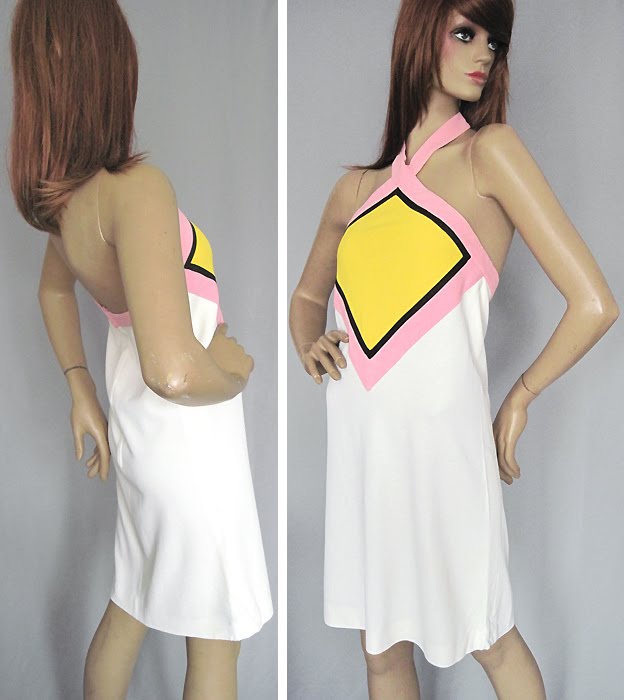 The really good, really early and representative Bateses don’t turn up very often. And you often forget that, for example, you’ve personally never seen an example of his panelled crepe work turn up. Or a dress with laced panels (which I also acquired last year, and need to photograph, sorry!). I’m very lucky to own a PVC example, and a dress with foil trim – those are pretty scarce as well. I love this dress. Passionately. I can’t find a direct photographed example, but it’s got to be from the same year as the Twiggy and Grace Coddington photos (below and at the top of the post).
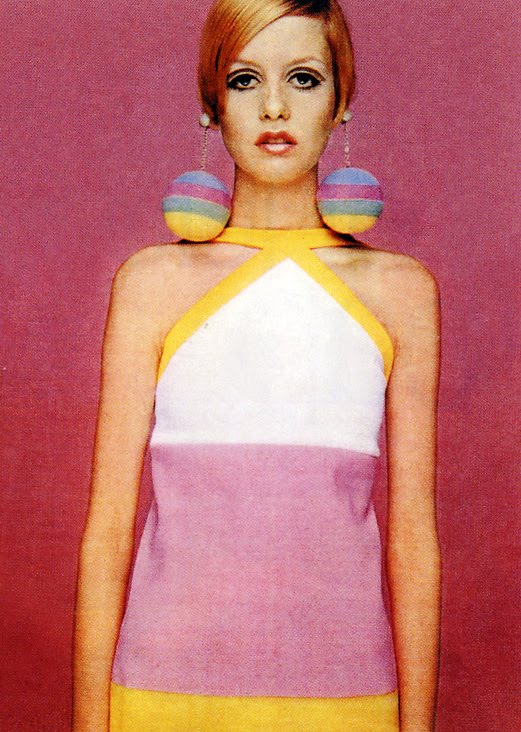 Yes indeed. This dress makes me very happy.
Woohoo! Finally. As many as the Great British Weather will allow right now (*shakes fist at dreary grey skies*)…..enjoy!

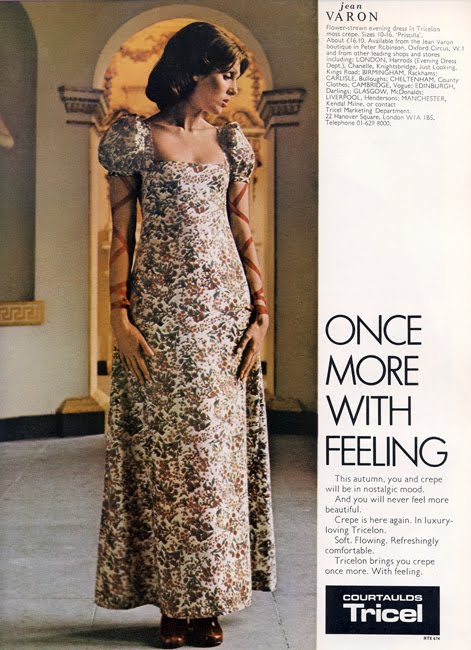
I promise, if you send me this Varon dress, I will be a good girl. Never wear underwear with my Ossies, never hang my John Bates dresses next to anything Mary Quant, never mix Bus Stop and Biba and, most importantly of all, I will wear this dress everywhere I possibly can. Cos it’s just too perfect for words.
Thank you, vintage Gods.
Yours Hopefully in Tricel,
Miss Peelpants xx
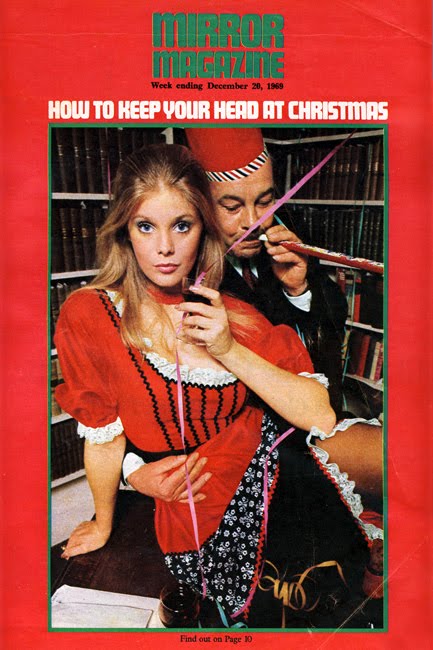 Well for a start, you might not want to be wearing sexy Varon dresses (see below) around the office letch. It makes me awfully glad I don’t have to deal with any office letches any more, but also a bit sad that I don’t have an office party to wear a weird vintage frock to; there’s something quite hilariously naff about the whole concept of such events and I think it would deserve a hilariously naff dress.
The article itself is a rather dull look at how alcohol affects you and how to survive a hangover (and no, they don’t have the answer) so I won’t bother to type it up, but I loved the accompanying photos and thought they deserved a post….
Mirror Magazine (December 20th 1969)
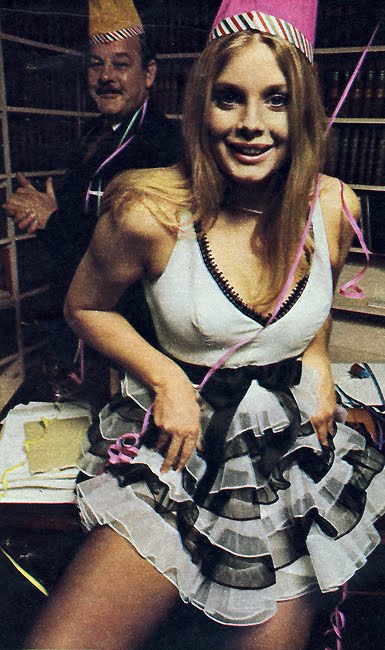

Dress by Miss Polly
I’m not a particular fan of Britt Ekland for the most part, but I am rather fond of this autumnal shoot she did for Vogue (by Patrick ‘Yeah Baby’ Lichfield). It’s so rare to have such a lovely feeling of space in fashion photos. You’re looking at the frocks, no doubt about it, but you’re also taking in the atmosphere of the location. The clothes are perfectly dreamy and her hair is completely and utterly covetable, in each and every shot. I worship this crimping.

Dress by Miss Bellville

And why do I not own this John Bates for Jean Varon dress? How has this happened? Something is clearly very wrong with the world...

Dress by Marrian McDonnell
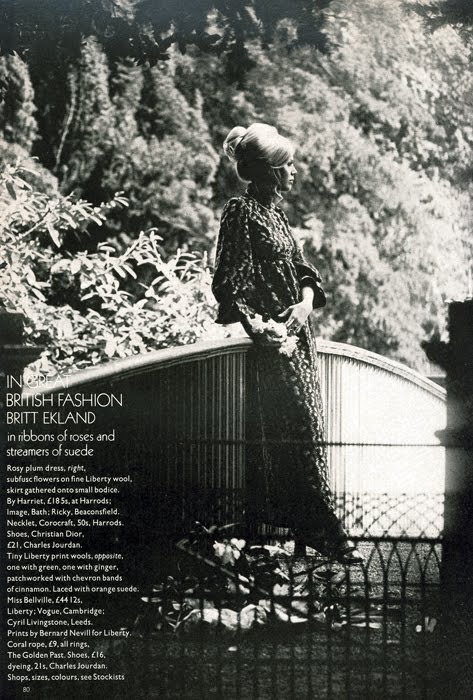
Dress by Harriet
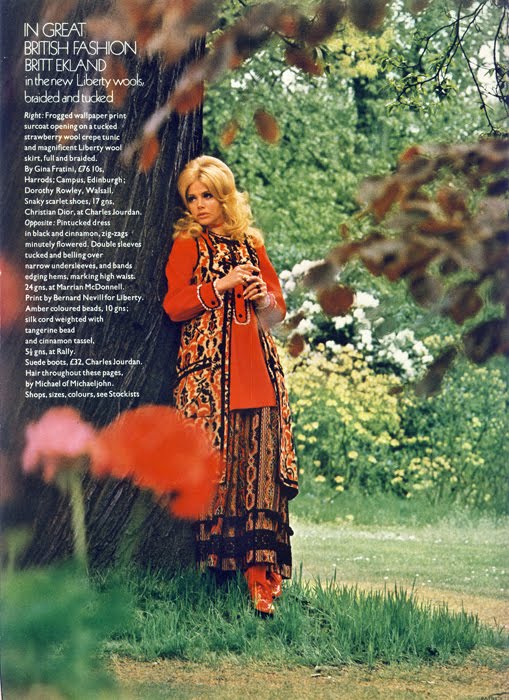
Outfit by Gina Fratini
 For various tedious reasons, I’ve been a bit quiet on the old website listing front in the past month. But I’m feeling much perkier now, more inspired and oh boy have I got a lot of goodies (just listed, and in the works…). Watch out world!
Right now I’ve just listed an incredible John Bates for Jean Varon dress (1973, just check out the original advert from Vogue), a chocolate brown rayon crepe Lee Bender for Bus Stop beauty, a Dove Clothing Company deep cobalt blue cord maxi dress (perfect for walking through wintry landscapes), a super romantic cream damask Clobber (a.k.a Jeff Banks) dress with flutter sleeves and trailing ribbons….and finally, a slinky blue Cathy McGowan dress with the most gorgeous sleeves and pleated front detail. Yeah, Cathy McGowan….that’s pretty darned rare!


 I will hopefully be back to normal blog programming soon, lots to share as always, but I’m in a ‘listing zone’ right now so I’m making the most of my prolificacy. Enjoy! There’s Foale and Tuffin, Jeff Banks, Jean Varon, Lulu and a superb unlabelled 1930s crepe bolero…..scrummy!!!


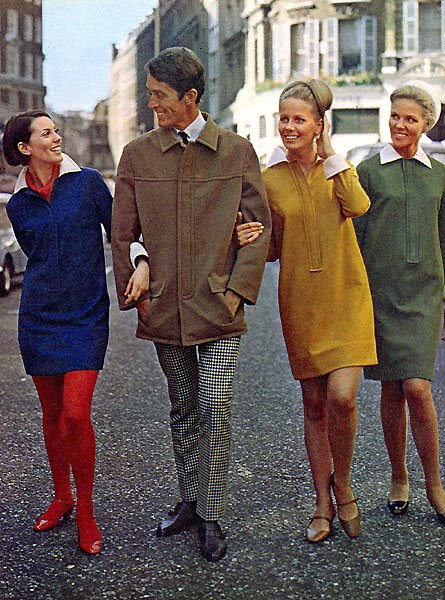
“Women are often dishonest – dishonest with themselves. They refuse to see themselves as they really are!” John Bates, the 27 year-old dress designer, doesn’t believe in mincing words. “And they might fool themselves,” he goes on, “but they don’t fool anyone else. I’m all for people trying to minimize their bad points, but sometimes women disguise faults which could be eradicated altogether, if they got down to some hard dieting and exercise.”
John feels that with so much good inexpensive, wholesale fashion, a girl has to concentrate on her face and figure. “Fashion is a challenge and I think it’s a challenge women need. Nowadays, with so many people buying the same clothes, a girl has to decide how best to present it so that she gives her wardrobe an individual stamp.”
Despite his vested interest in fashion – he is the designer for fashion house Jean Varon and recently designed Diana Rigg’s Avengers wardrobe – John doesn’t think one should follow it slavishly. “Study it to see what’s in it for you. I’m always hearing complaints that current fashion is directed at just one type, but that’s nonsense.
“I have three different types of girl to model my designs. Look at this design.” He showed me a short fly-fronted dress. “It’s classic really. Worn a little longer, maybe in a different colour, it would be ideal for the older woman. And to prove his point, we took the photograph left, of a simple dress from his collection adapted and worn by three women of different ages.
“Appearance is not all-important – there has to be something else – but it is quite important. Like all men, when I first meet a girl, I react to her appearance. It’s only after the physical impressions that you listen to what she has to say. So it is important to be attractive as well as interesting.”
And what makes a woman interesting? “Constant change,” says John emphatically. “When you’ve found your style, don’t stick to it or you’ll find yourseld in a rut. Don’t be ‘dated’ by fashion or make-up. Be bold. Try different styles as they come in – you’ll be surprised how much suits you. And don’t let it stop there. Change the furniture around; try new dishes on the family. It’s the secret of keeping interested – and interesting!”
And if you’re going to be bold, leave your husband at home when you go shopping is John’s advice. “He’ll insist on your playing safe – Englishmen are dreadfully conservative – and then he’ll spend an entire evening gazing at a girl in the outfit you might have bought if you’d shopped alone.”
John feels that English women have a rough deal. “Seventy per cent. of their problems would be solved if only Englishmen were more appreciative. They just don’t care; so who can wonder if the womne don’t care of give up? I blame segregated education and clubs.
“Englishmen will drool at the mention of a French woman and never look at their own. Yet English women are the best in the world. They have the best figures, skins and colouring, and a marvellous sense of humour. French girls are marvellous only because their men tell them they are.”
Rejecting emigration as an answer to the problem, what did John suggest?
“She must rebel. She must ignore any lack of interest from her man and make the changes she wants, dress to please herself, say what she thinks. Do be subtle about this. Express your opinions pleasantly and watch your timing. But a woman can get her own way if she goes the right way about it.”
John says that women must remember that they are people.
“That’s why I think that they shouhld carry on with their jobs after they are married. This ensures that they are still part of the human race – it keeps them bright and interested. It’s terrible for them to be cut off from the outside world and plunged into domesticity. And thre’s no reason why babies should stop them; if a woman finds babies aren’t enough to keep her occupied and happy, she should use nurseries…work to pay an au pair girl, if necessary.”
Not that John wants to see women imitate men; he just wants us to drop the age-old idea of the battle of the sexes and get down to enjoying life, and he thinks women can achieve this.
He enjoys working with women. “They’ll always have a go at trying to achieve the effect you want,” he explains. “Men approach problems in a different way. They’re apt to apply a slide-rule and, if you suggest trying something slightly different, they’ll insist it can’t be done. But women don’t approach things like that, and what might seem illogical to a mere man, actually works in practice. In fact, very often I don’t see their reasoning at all.


 Liz Eggleston
