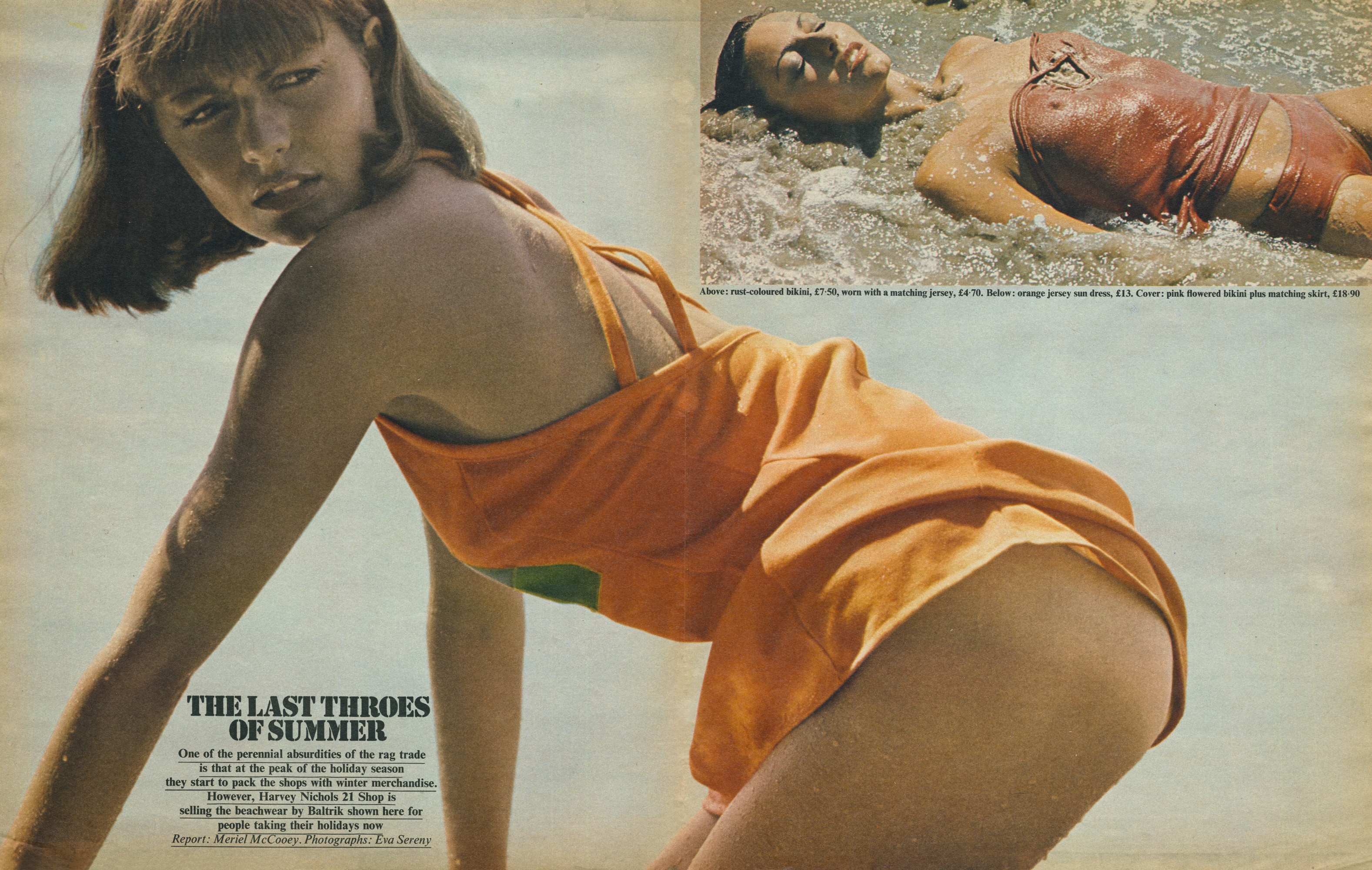
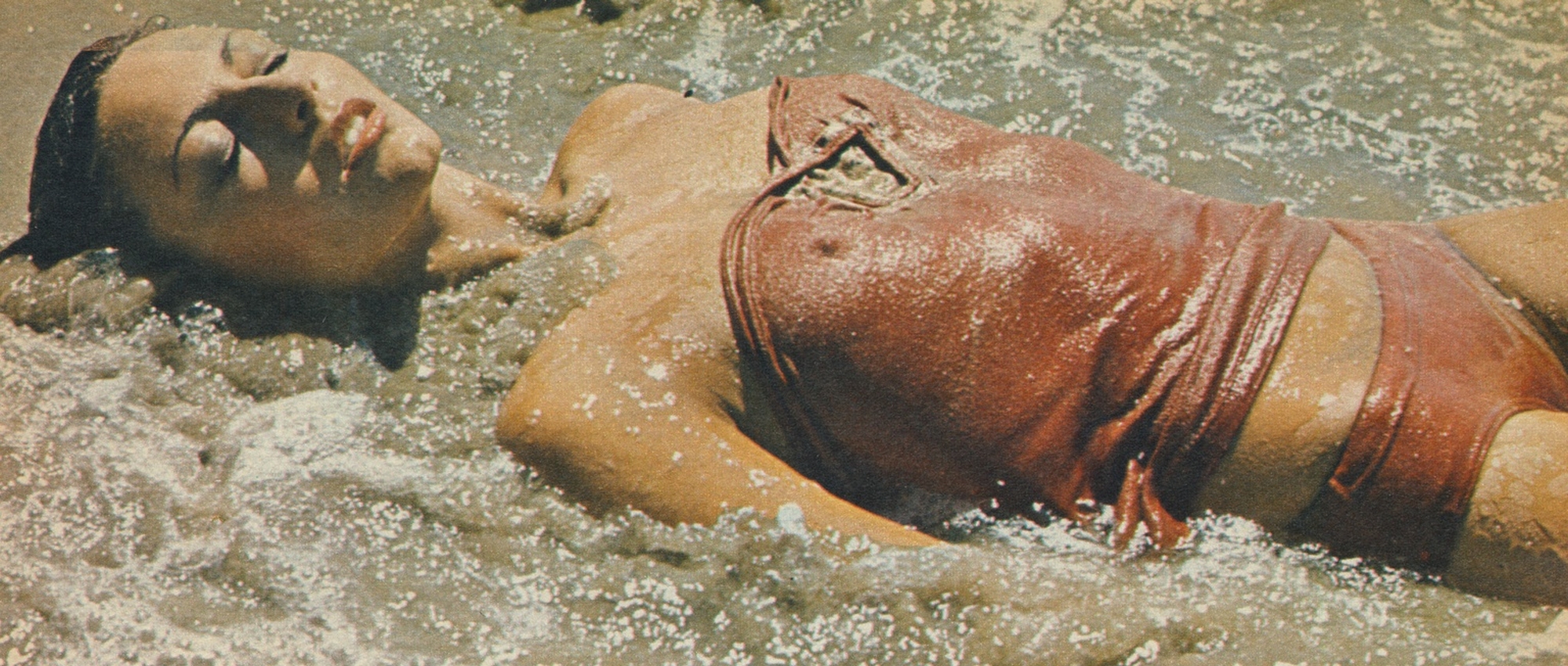
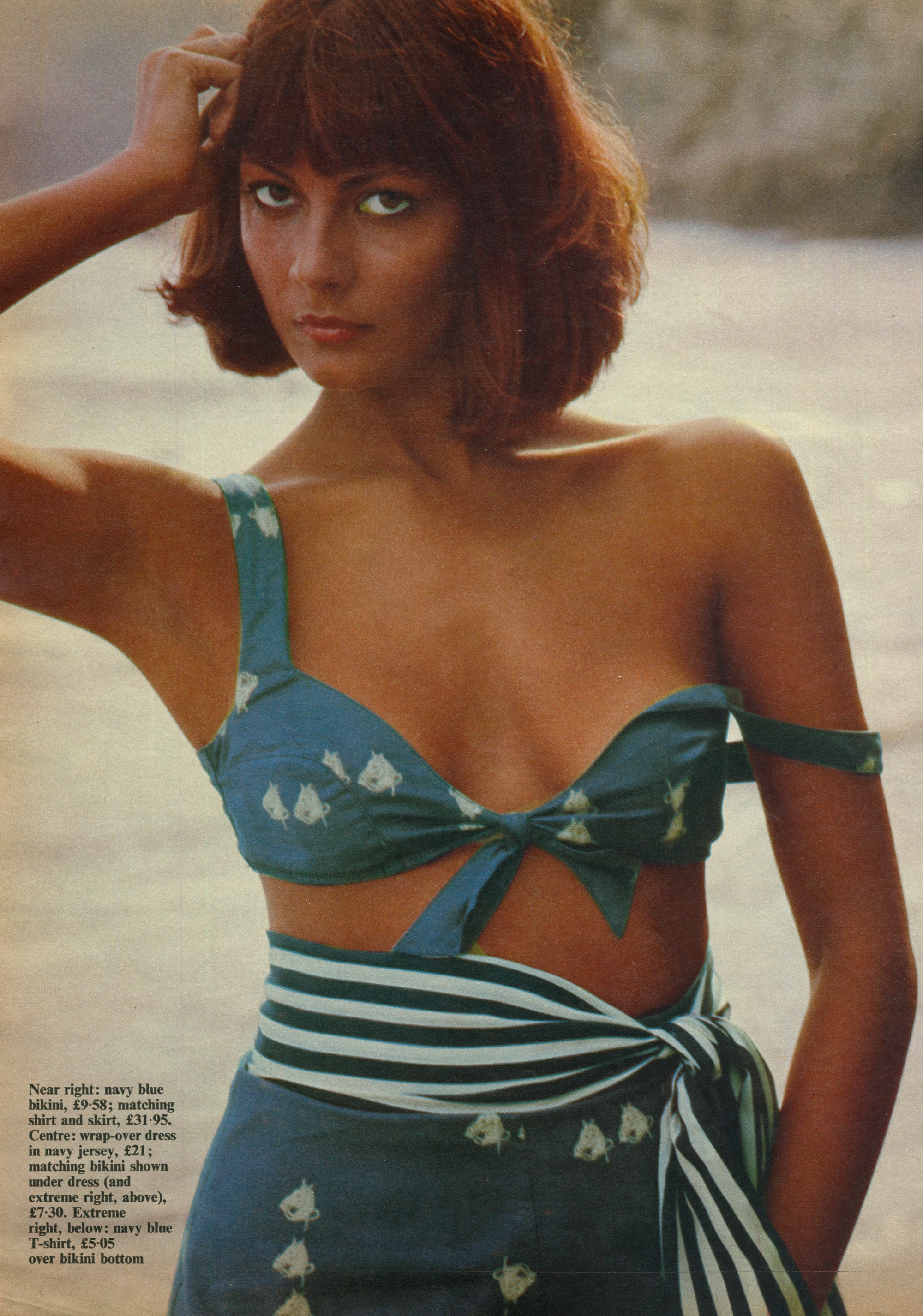
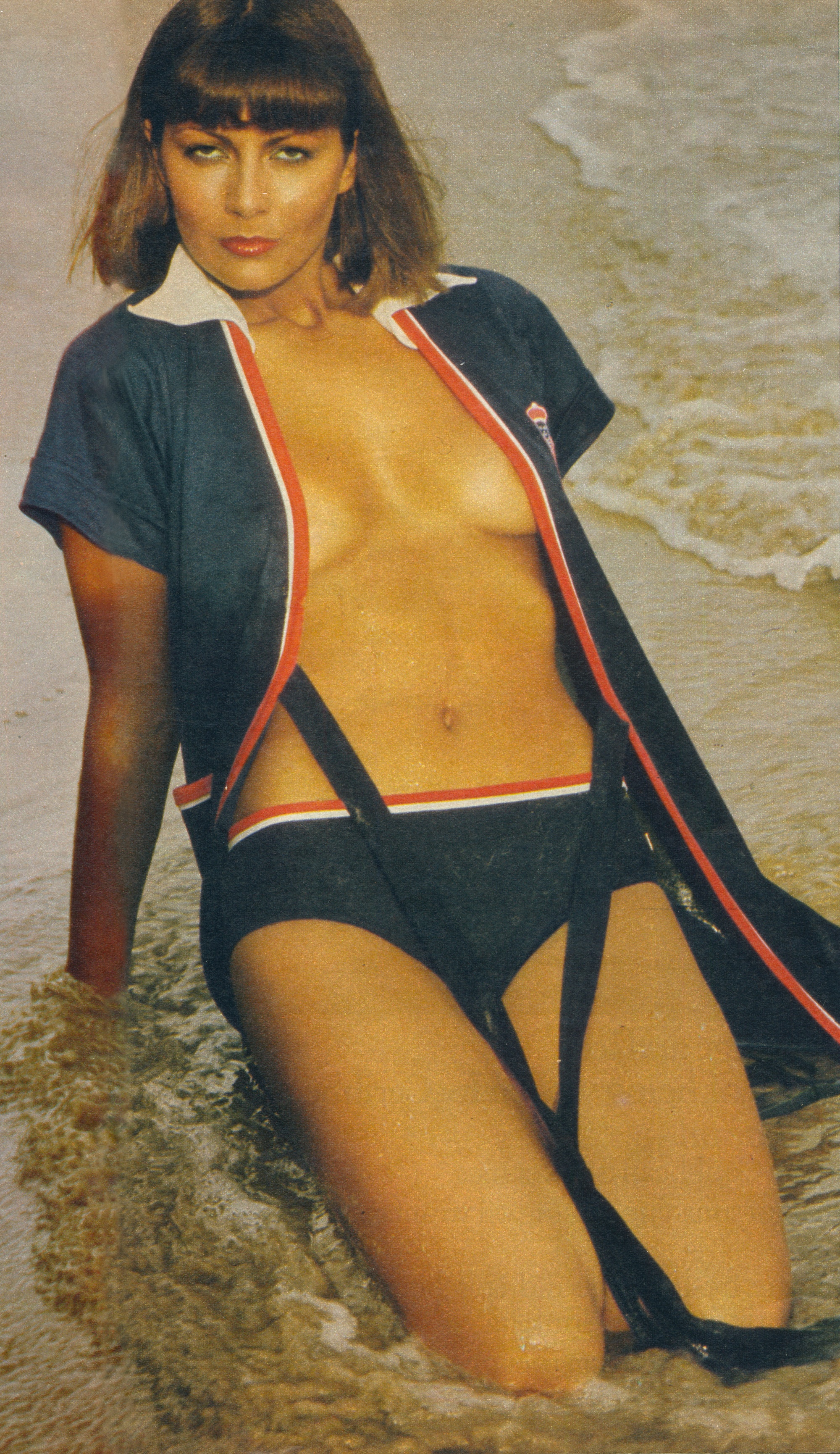
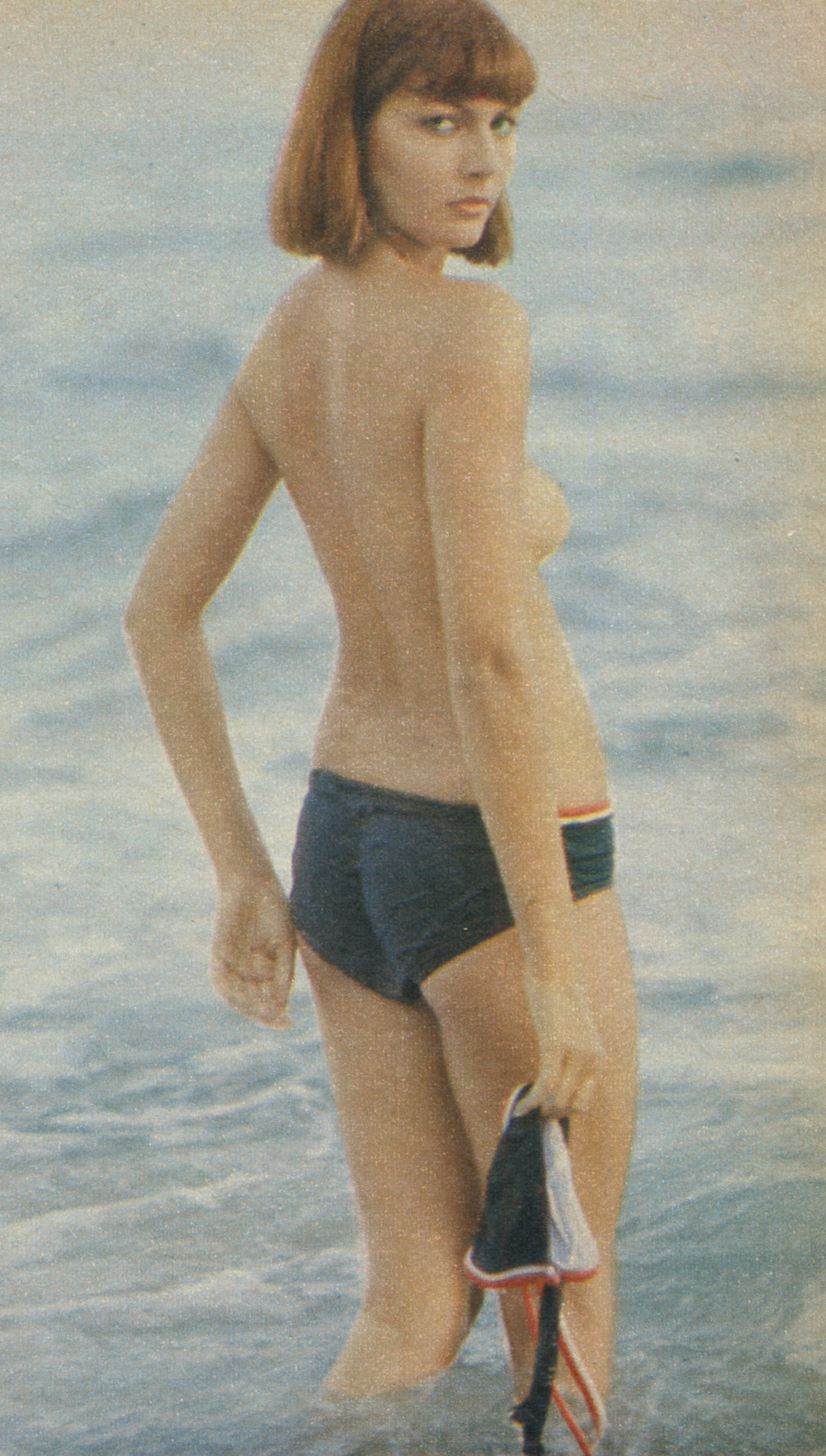
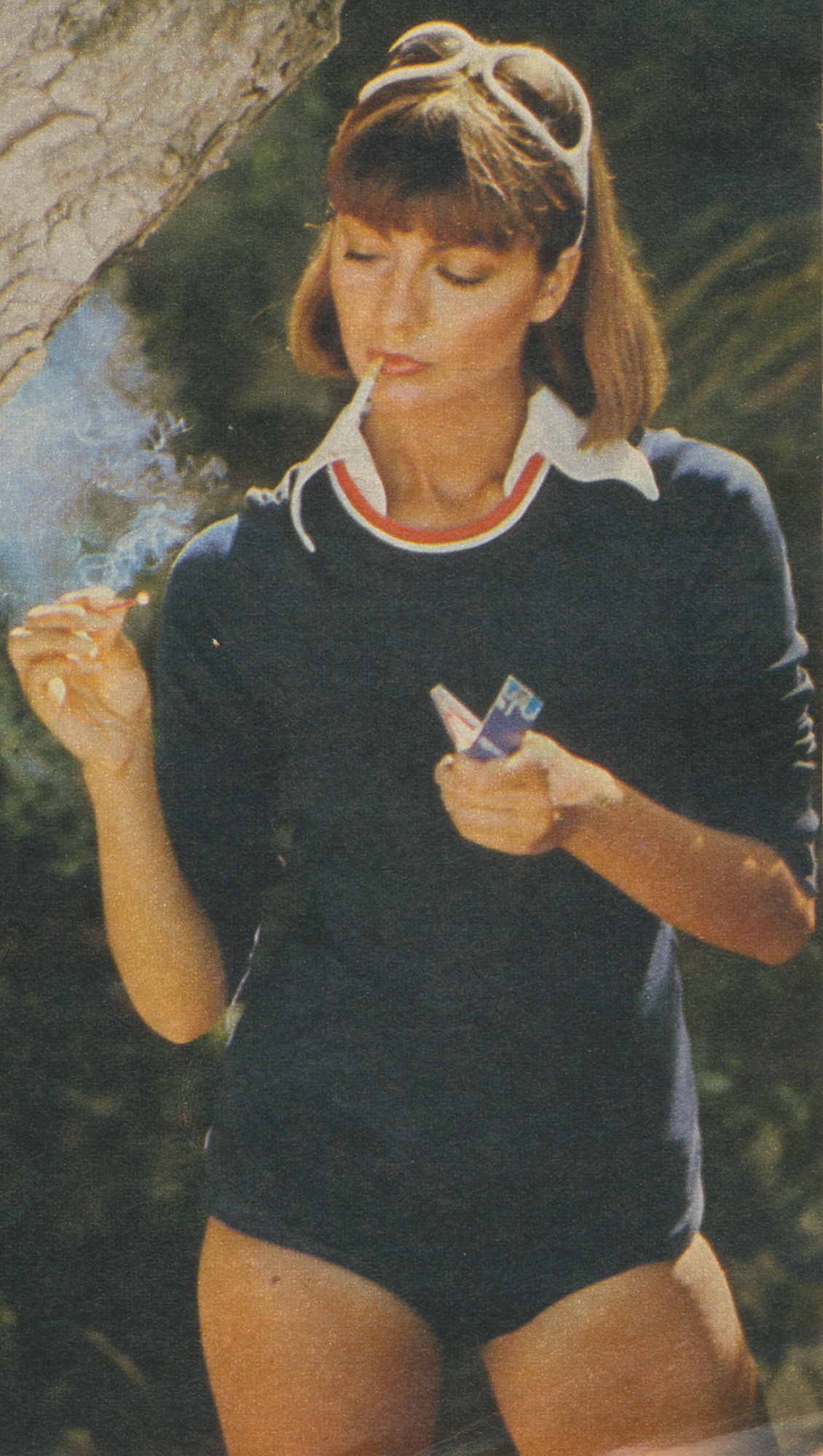
One of the perennial absurdities of the rag trade is that at the peak of the holiday season they start to pack the shops with winter merchandise. However, Harvey Nichols 21 Shop is selling the beachwear by Baltrik shown here for people taking their holidays now.
Photographed by Eva Sereny.
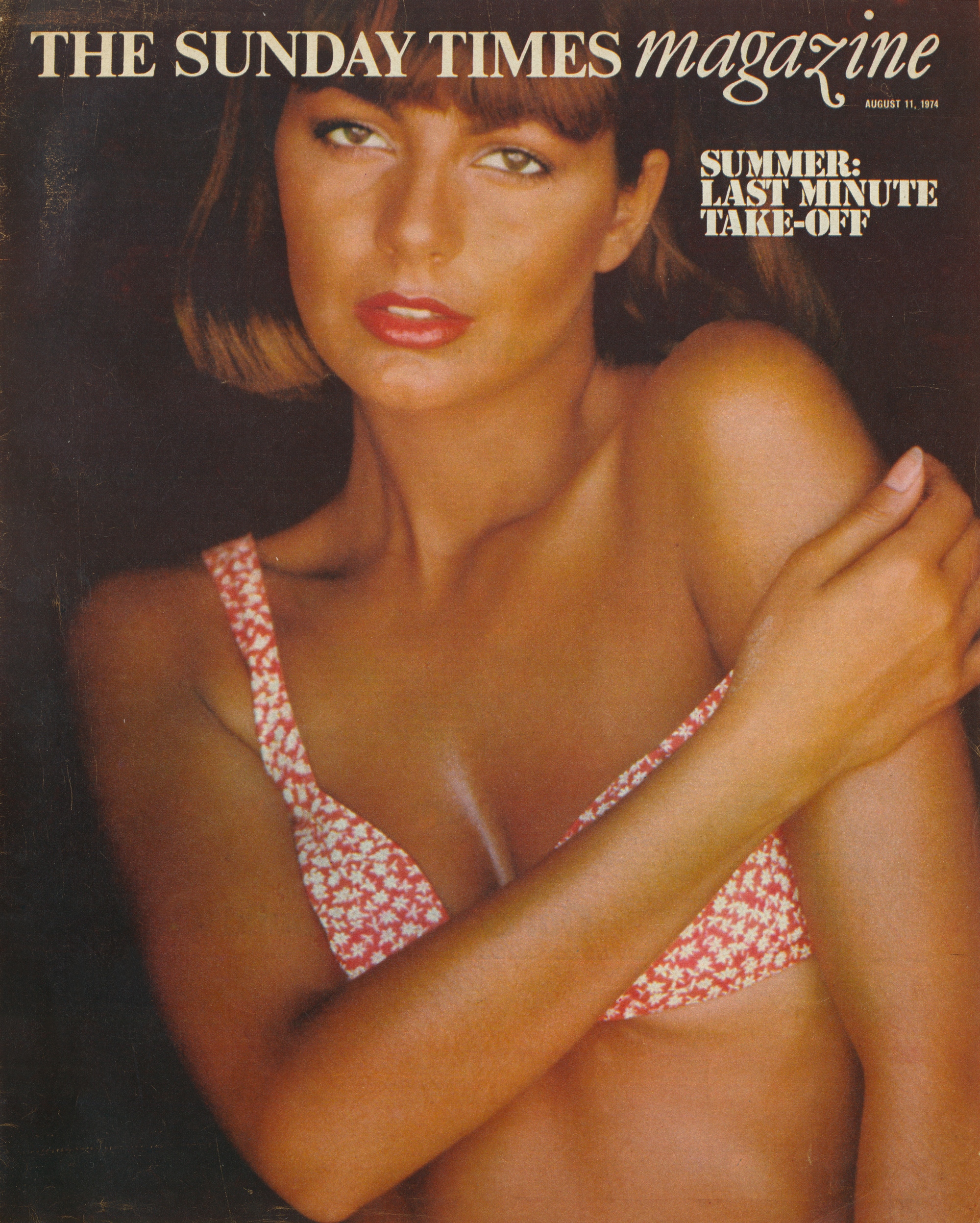
Scanned from The Sunday Times Magazine, 11th August 1974.
So lovely and rare to see a swimwear shoot by a woman photographer. The difference is subtle but I feel like there’s more candid and sensitive approach. Perhaps it’s just because Eva Sereny is one of my favourite photographers.
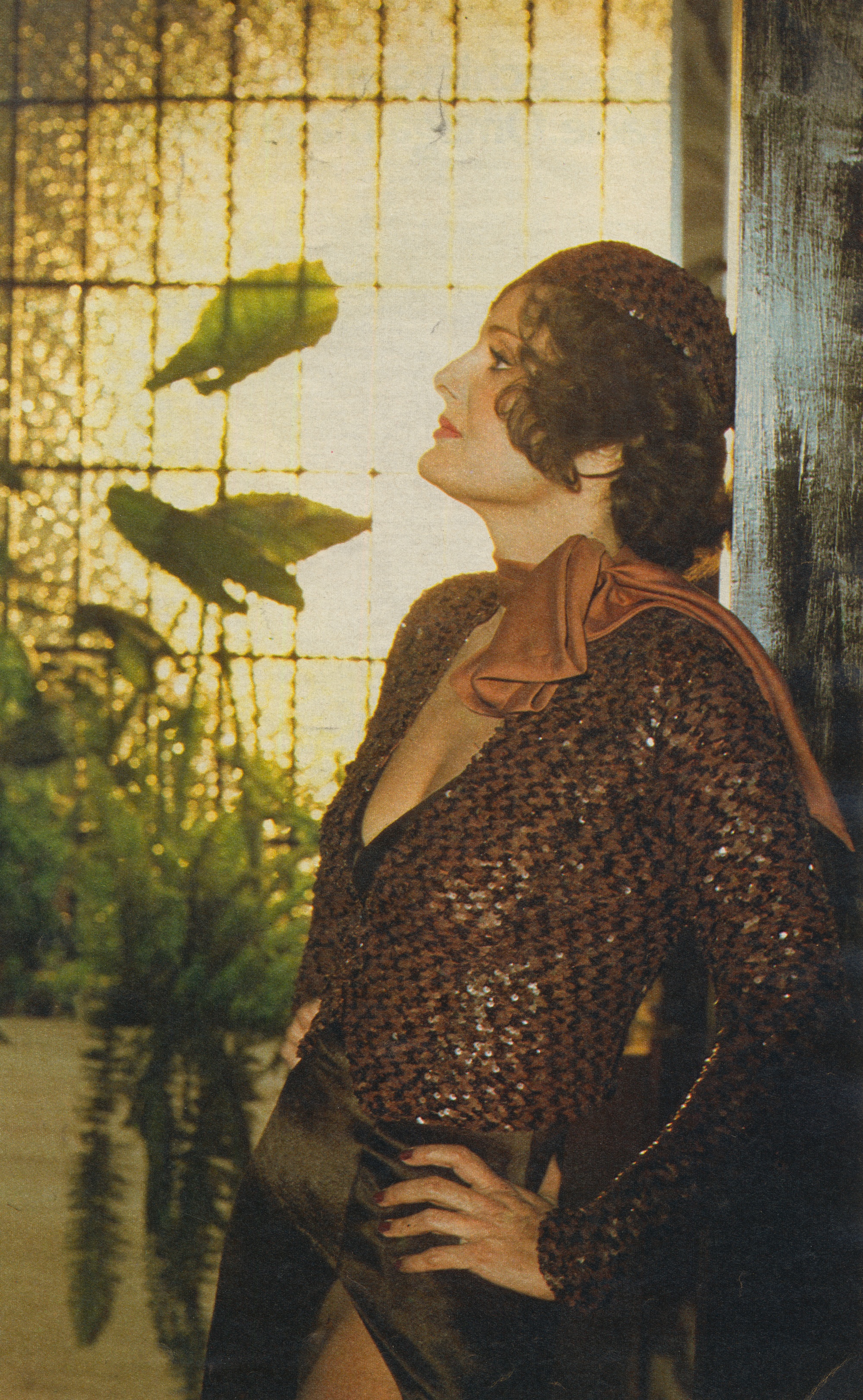
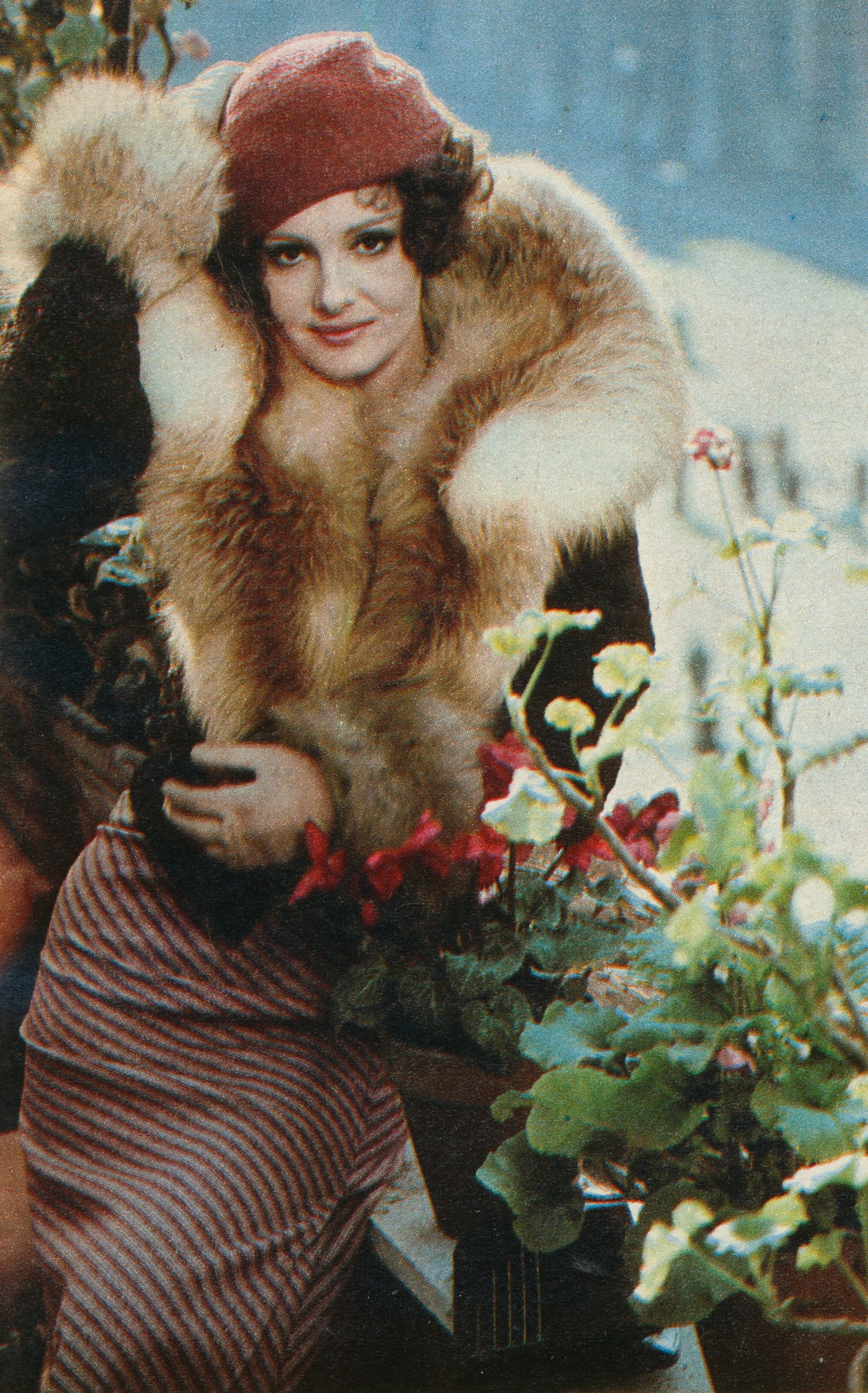
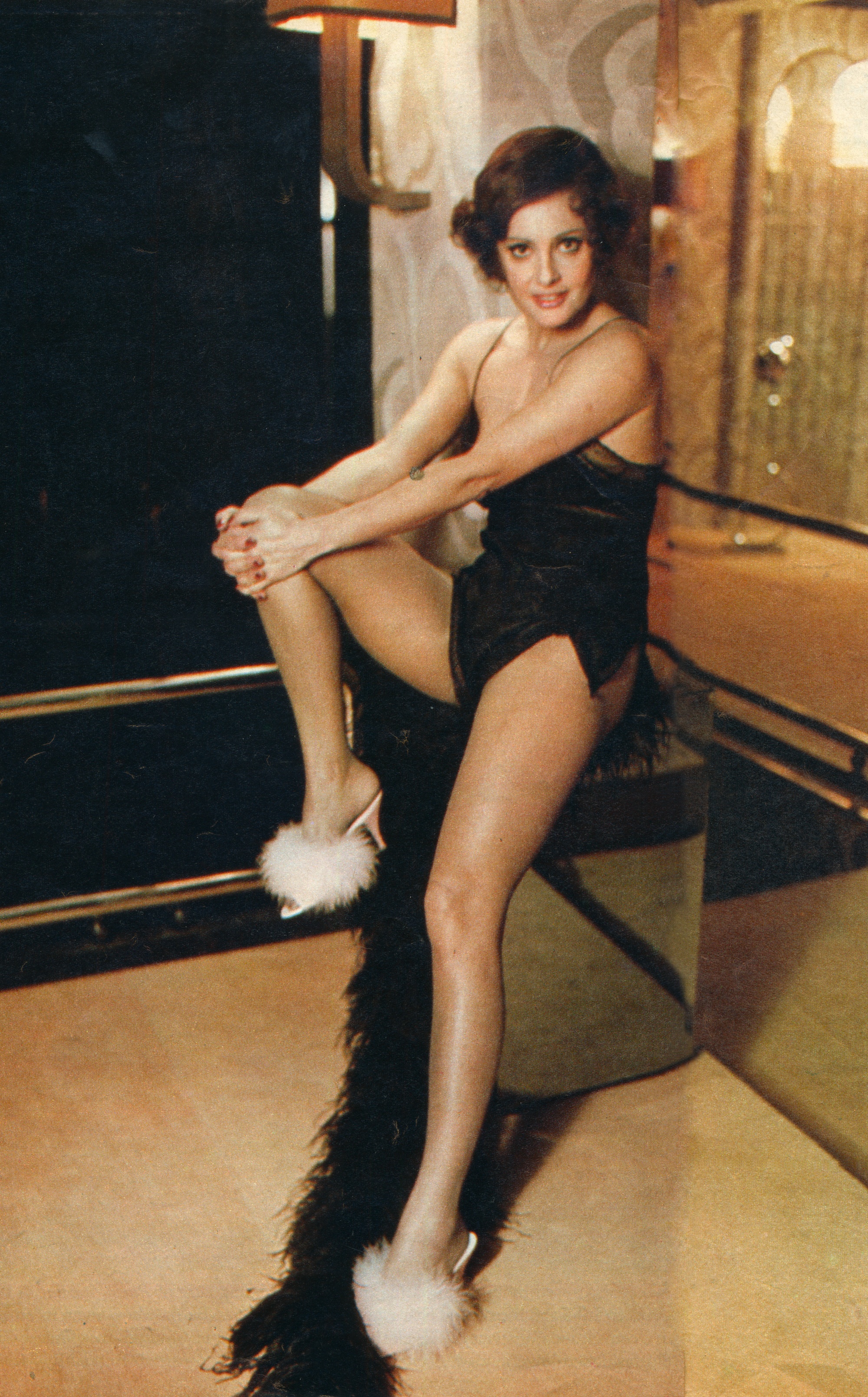
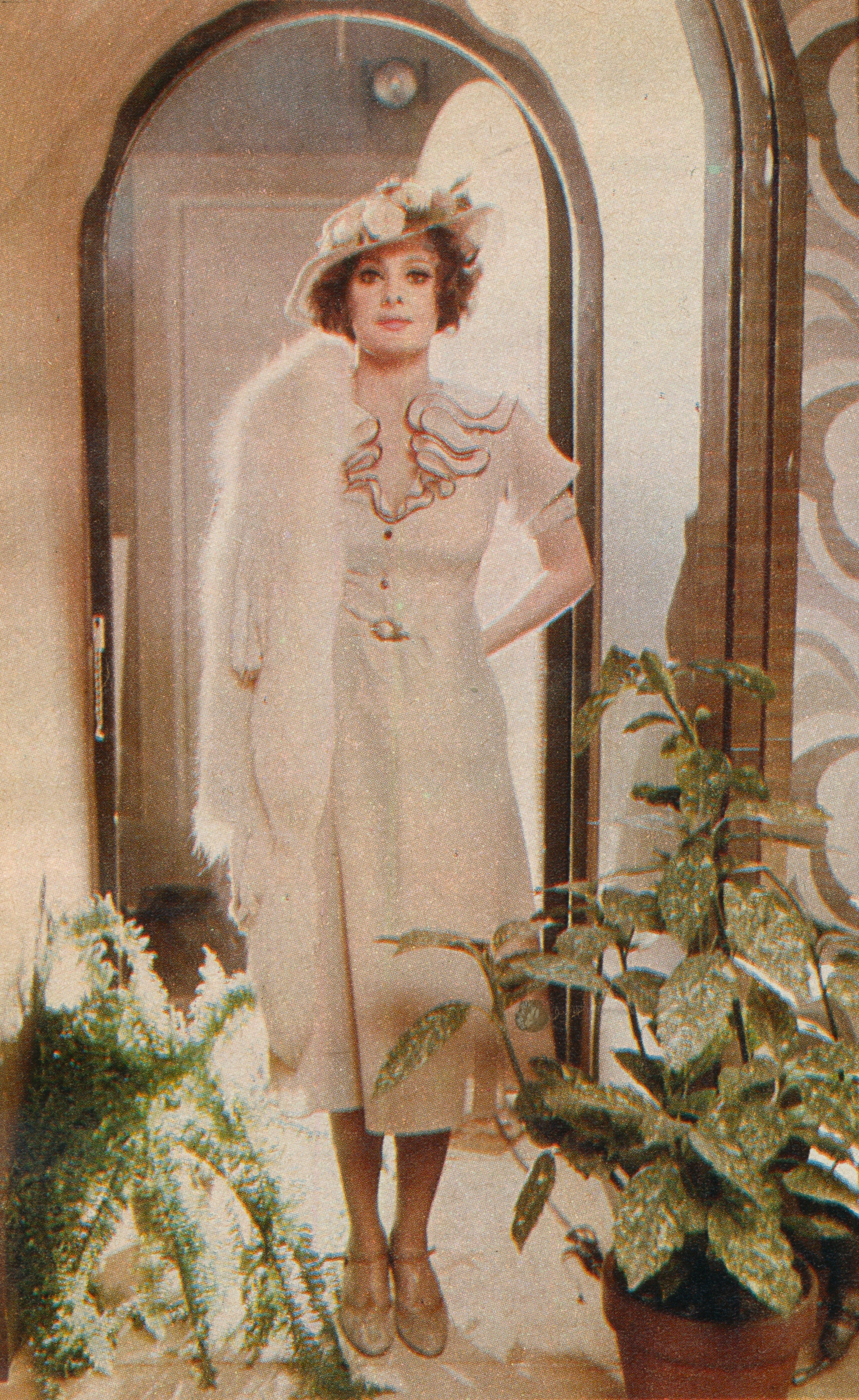
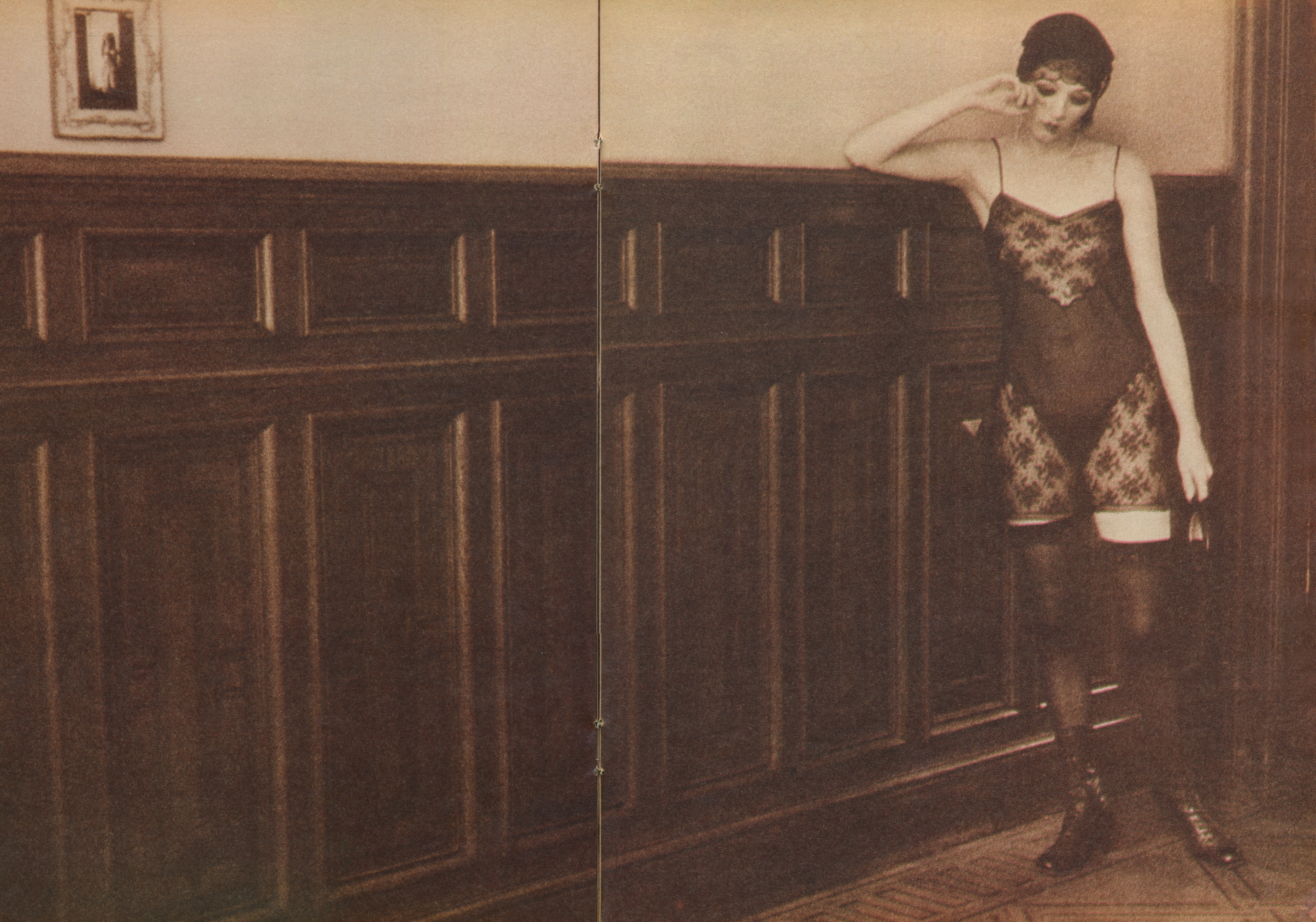
Italian film star Rossana Podesta returns to the screen, after an absence of two years caused by illness, as Lilia the shapely leading lady of Paolo, il caldo, a study in eroticism written by Vitaliani Brancati. The film, which is set in the Twenties and Thirties, traces the relationship between Lilia and the central character, Paolo – a Sicilian Baron whose main interest in life is women. Before eventually ending her love affair with the sensual Sicilian, Lilia manages to slip through an enticing selection of seductive clothes, until she settles down to a conventional marriage. The clothes, by Tirelli of Rome, one of Italy’s largest theatrical costumiers, are modern interpretations of Twenties and Thirties styles; there are chunky furs, cream coloured foxes, flat berets, apache-type scarves, and saucy old-fashioned lingerie made from satins, laces, ribbons and ostrich fronds.
Photographed by Tazio Secchiaroli.
Scanned from The Sunday Times Magazine, May 13th 1973.
Bronzed sequinned and lame plunged-necked evening blouse with a side-split skirt; a matching beret and a sugar-coloured silk scarf.
A striped dress in beige and brown wool under a dark brown jacket with a red fox collar and cuffs.
Black cami-knickers cut high at the sides to lengthen the look of the legs.
Cream roses, a dress of silk organza, and a luxurious stole of creamy fox furs.
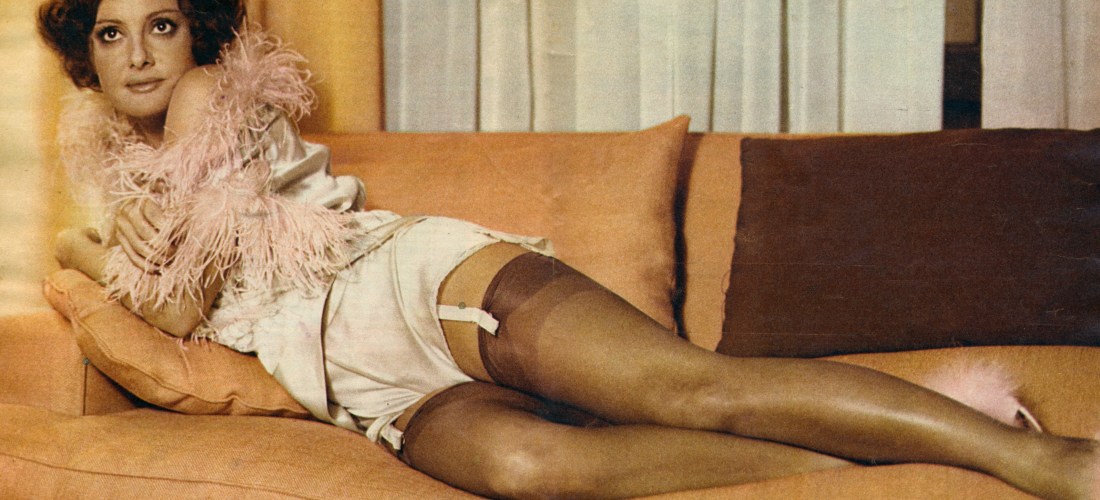
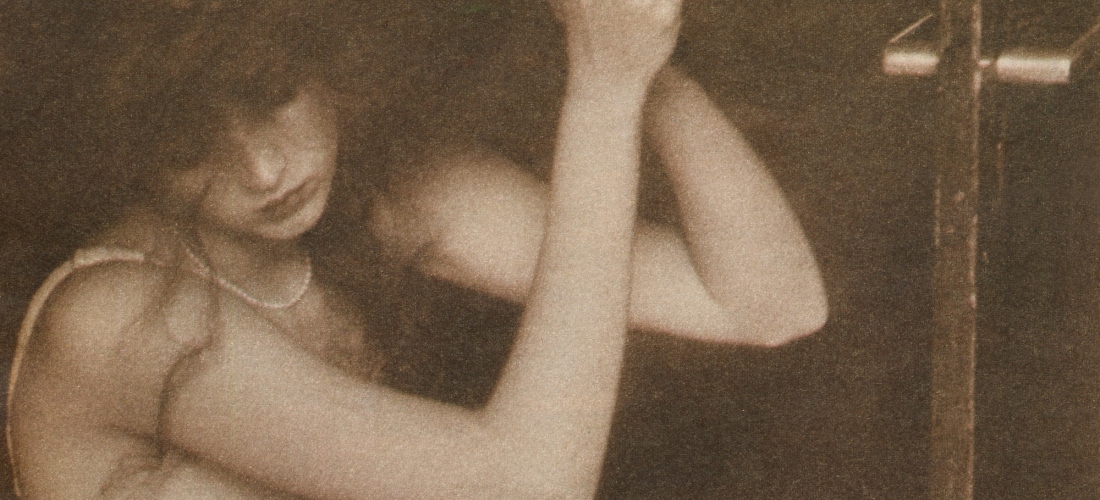
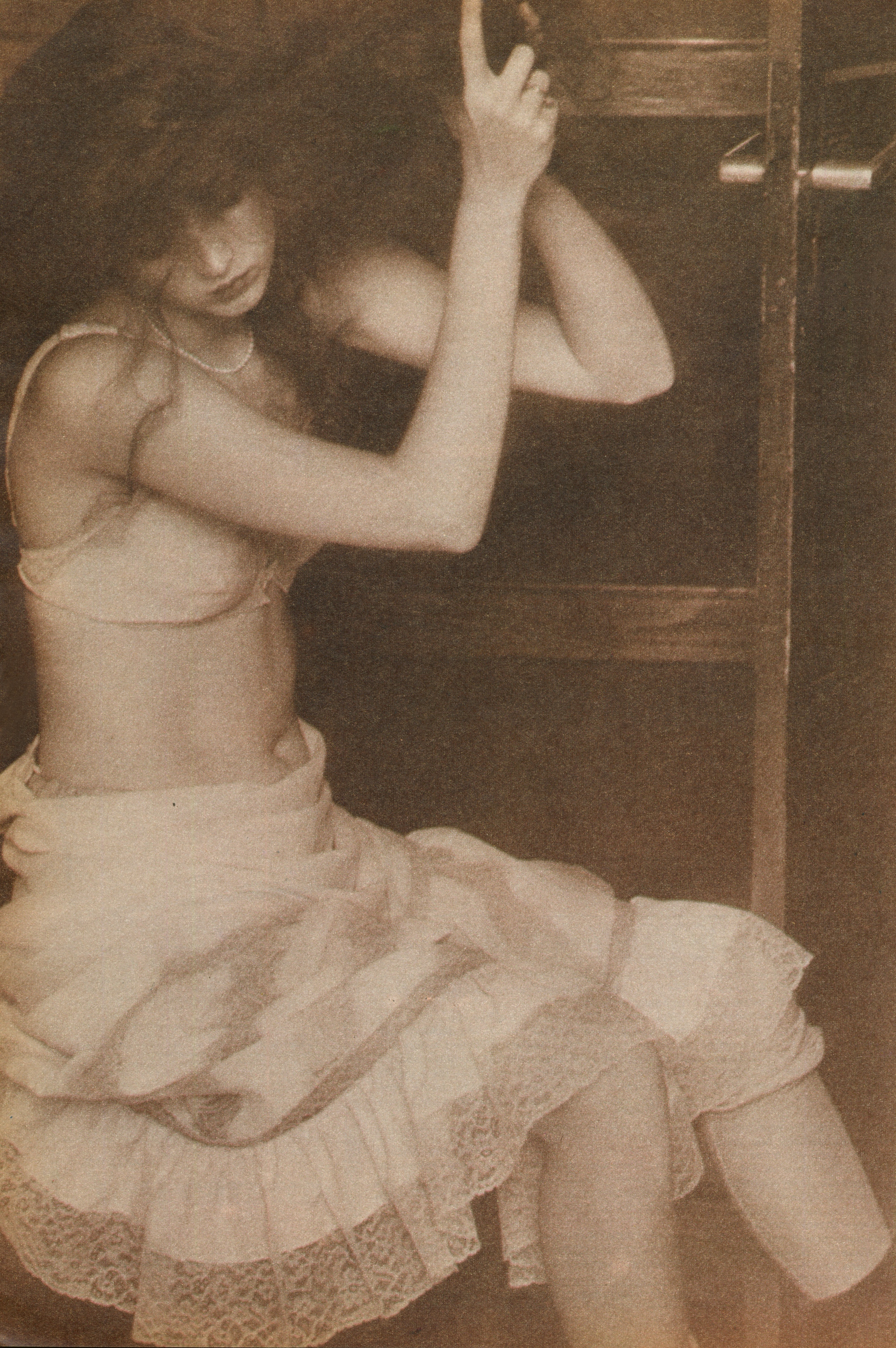
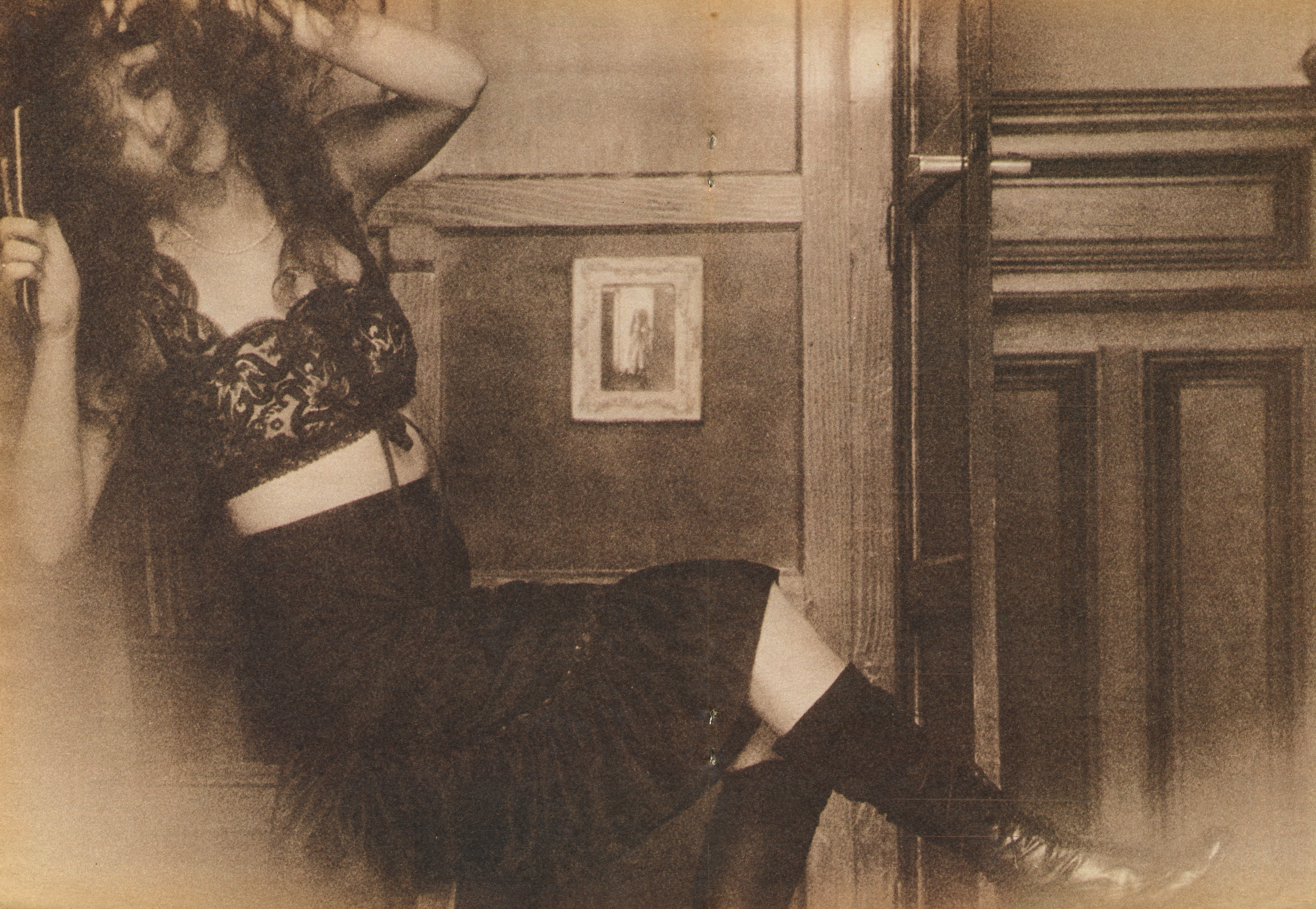
Some of the sexiest women in films are buying underwear like this. It is wildly expensive (the items cost from about £16 to £90), but Liliane Dreyfus, who designed it for Vog, Paris, says that her customers don’t seem to mind the price; with pay-cheques like the ones that Brigitte Bardot, Ursula Andress, Juliette Greco and Jackie Bissett pick up, why should they? On these pages her silk, satin and lace concoctions are worn by Aurore Clement, one of the new stars of Louis Malle‘s most recent — and some say finest — film, Lacombe Lucien. If you have the money and are still interested, they are available to order from Harrods.
Styling and words by Meriel McCooey.
Photographed by Sacha.
Scanned from The Sunday Times Magazine, March 31st 1974.
Long beige slip in lace and crepe, £19.50; soft-lined crepe bra, £5.40.
It is not often that they auction old knickers at Christies, but earlier this year the celebrated wardrobe of Heather Firbank went under the hammer, and an integral part of the collection was her exquisite underwear. Heather Firbank, sister of the novelist Ronald Firbank, was famous for her unique, occasionally eccentric clothes, and though most of them now belong to the Victoria and Albert Museum, the highest bid for the underclothes came from the lingerie manufacturer Janet Reger and her husband Peter. They made copies of the pieces they bought, and tomorrow they will be on sale from Bottom Drawer, 33 Southwick Street, London W.2, and by mail order. They are expensive, certainly, but unfortunately the luxury of Twenties underwear no longer comes at Twenties prices.All accessories are from Maria Cavallo‘s shop Dignetts, at Antiquarius, King’s Road, London S.W.3.
Model is Linda Dagenais.
Words and styling by Meriel McCooey.
Photographed by Sarah Moon.
Scanned from Sunday Times Magazine, November 17th 1974.
Oyster satin cami-slip, £25.00.
Black lace slip, £19-50; black lace camisole top, £28.50
Original cami-knickers from Heather Firbank collection (also shown on cover). The seam-for-seam copy costs £19-50.
Satin dresses, £8 from Let It Rock, 430 King’s Road, London SW3. Suede shoes with crepe heels, £17.75 (with green dress) and £17.50 (with black dress), both by Zapata, 49 Old Church Street, London SW3. Screaming Lord Sutch dresses by Let It Rock: 12in.-bottomed jean drains, £2.50; Lurex shirt, £3.95; waistcoat, £3.95. Full skirt and off-the-shoulder blouse (right), £8 and £5 from Alkasura, King’s Road, London SW3. Fifties stilettos and wide belt, £2 and £2.40; silver heart locket, £4.10.
If fashion revivals keep accelerating at the current rate, last year’s hot-pants are going to be a cult by the end of the decade. Who would have dreamed that a Fifties teenager’s wardrobe would be back in fashion by his late twenties? In 1958 Teddy Boys were practically extinct now crowds of Teds and Rockers cram the Fishmongers Arms at Wood Green to hear rock groups like Screaming Lord Sutch and the Houseshakers (above). There are now an estimated 20,000 revivalist Teddy Boys in England, and the drainpipe-trouser trade is booming. These pictures show some of the clothes that you’ve only just managed to forget.
A new and influential shop in the King’s Road is run by an original Ted called Malcolm McLaren. Walking into Let It Rock is like walking into a flashback from the Fifties. James Dean and Elvis posters line the walls; period showcases are filled with hair-cream, plastic combs and sweetheart lockets; the juke-box belts out some of the best rock ever recorded, and the clothes on sale would be a credit to Gene Vincent, Presley, Eddie Cochran or anyone else who made the recordings. Boxes of 45s and old fan magazines litter the floor next to genuine valve radios with a three-month guarantee.
Designers like Stirling Cooper and Mr Freedom have been manufacturing Fifties-inspired clothes for some time, but Let It Rock is the only shop selling the real thing. This particular revival is so premature that there is still a large amount of the original stock around; dirndl skirts, stiletto-heeled winkle-pickers, cotton sweaters and plastic jewellery, not to mention 12in. drainpipe trousers and jeans, bootlace ties, luminous socks and blue suede shoes. This is the only place where Teds can buy off-the-peg ‘drapes’ — their mid-thigh Edwardian velvet-trimmed jackets. The phenomenon of Let It Rock is that it is situated in the heart of Chelsea, which Teds regard as ‘enemy territory’; now they’re selling to the newly converted ‘natives’.
The clothes in Let It Rock are inspired by two groups, the Teddy Boys (and girls) and Rockers (and birds). According to McLaren, Teds like the updated rock styles, whereas the Rockers, especially the girls, prefer ‘strong’ ideas like the characteristic shaggy mohair sweater-dresses and winklepicker boots. ‘Chelsea people’ go more for the authentic stuff . . . if you endorse a revival, you might as well get the real thing Fashion can thank the Fifties for some of the most unglamorous and unflattering clothes we ever knew. That is what makes their unmodified rebirth so difficult to understand.
I’m not sure I can say much more about Vivienne Westwood’s body of work which hasn’t already been said. I always think the best quality in a designer is idiosyncrasy, and Westwood had that by the truckload. Her work didn’t stagnate, but it often referenced her own past and continued to translate the wider cultural past into her own language – and yet never tried to be anybody else. Given my magazine collection covers mainly the Sixties and Seventies, I thought it best to celebrate her by doing what I do best, which is trying to go back and show you the starting point for the things we just take for granted decades later. The origins of what she’s best known for are ultimately in the Teddy Boy revival of the early Seventies and her work for ‘Let It Rock’ with Malcolm McLaren, and this captures that early spark – despite the fact that they don’t mention her at all.
I’ve also been meaning to scan this for a while so, now seemed like a good time. I mean, Pat Cleveland and Screaming Lord Sutch photographed by Hans Feurer? What more could you ask for?
Report by Valerie Wade.
Photographed by Hans Feurer.
Scanned from The Sunday Times Magazine, May 14th 1972.
Top left : short fringed dress, £7, from Let It Rock. Bottom left: short mohair dress, £12. Black winklepicker boots, £12. Centre top: V-necked cotton sweater in Fifties fabric, £2; genuine pearlised belt, £2.50; all from Let It Rock. Above: black jean drains, £2.50, and luminous socks, 30p; both from Let It Rock. Off-the-shoulder sweater, £3.95, Stirling Cooper Shop, Peter Robinson, Oxford Street, Vl. Tartan shoes, £16.50, Zapata, 49 Old Clurch Street, SW3. Right: crepe skirt, £6, Let. It Rock. Scarf, 35p, at Woolworth’s
Main image: Crepe-de-chine two-piece, £20. Shoes by Zapata, 49 Old Church St, London SW3
One thing that designer Antony Price really understands is pattern cutting : “I can think of a shape and create an optical illusion — people’s figures don’t change, clothes make figures.” Price, who designed all these clothes, wants women now to start looking artificially female, but “in a sumptuous way — this time it’s bosoms, hips and tiny waists”. He admits to being influenced by the Fifties and his ex-showgirl sister who lives in Miami and looks like his idol Jayne Mansfield. “The Fifties were less extreme, taste was incorporated into everything.” He wants shoes tall and dangerous like his own cowboy boots, but insists that his clothes (available direct or mail order from Che Guevara, 23 Kensington High St, W8) are comfortable. “What’s more comfortable than swimming costume tops?”
So, so good. Model, designer and photographer are the most perfect combination. It even has Manolo Blahnik shoes for good measure.
Model is Gala Mitchell.
Story by Valerie Wade.
Photographed by Karl Stoecker
Scanned from The Sunday Times Magazine, February 13th 1972.
Shiny one-piece outfit, £18. Shoes, Zapata.
Flocked nylon cocktail dress, £20.
Cotton suit that owes its shape totally to the cut, £18.
Batman Cire dress/cape, £20. Six inch boots, £25.
Deep V-necked ruched nylon dress, £12.99. 5-inch silver shoes, £18.
For those who fancy a smooth summer Suliman have made their entire collection in pure Chinese silk. It is a man-and-wife firm, Sam Suliman designing the fabrics – the abstract patterns are hand-painted – and June the clothes. Sam finds this silk perfect for his luminous, sultry colours, which he uses in 15 variations. Everything is hand-washable and available in sizes 8-12 direct and by mail order from Suliman, 48 Maddox Street, London WI , and from Emma Somerset, 5 Police Street, Manchester.
Styled by Valerie Wade
Photographed by Sacha.
Scanned from The Sunday Times Magazine, 28th May 1972.
Plain quilted jacket with hand-painted oval yoke, £17.50.
Identically shaped gypsy shirts, £12.50 each, worn with short quilted waistcoats, £9.50 each.
Flimsy blouse with an elasticated waistband, £10.50, made of one of a variety of hand-painted fabrics also used for gypsy blouses, long skirts, dresses, baggy pants and quilted jackets. Worn with plain skirt, £9.50.
Superb advert for the MG Midget, photographed in front of The Great Gear Market at 85 Kings Road. Some of the best photos of boutiques have popped up, inadvertently, in adverts. From my archive there is Che Guevara in an Opel advert and Quorum for cigarettes.
Scanned from The Sunday Times Magazine, 7th May 1972.
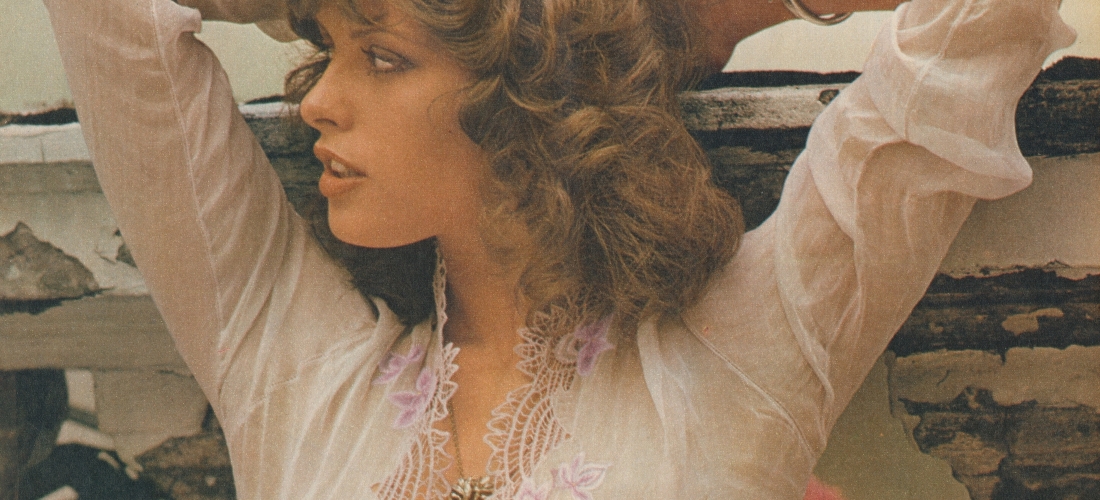
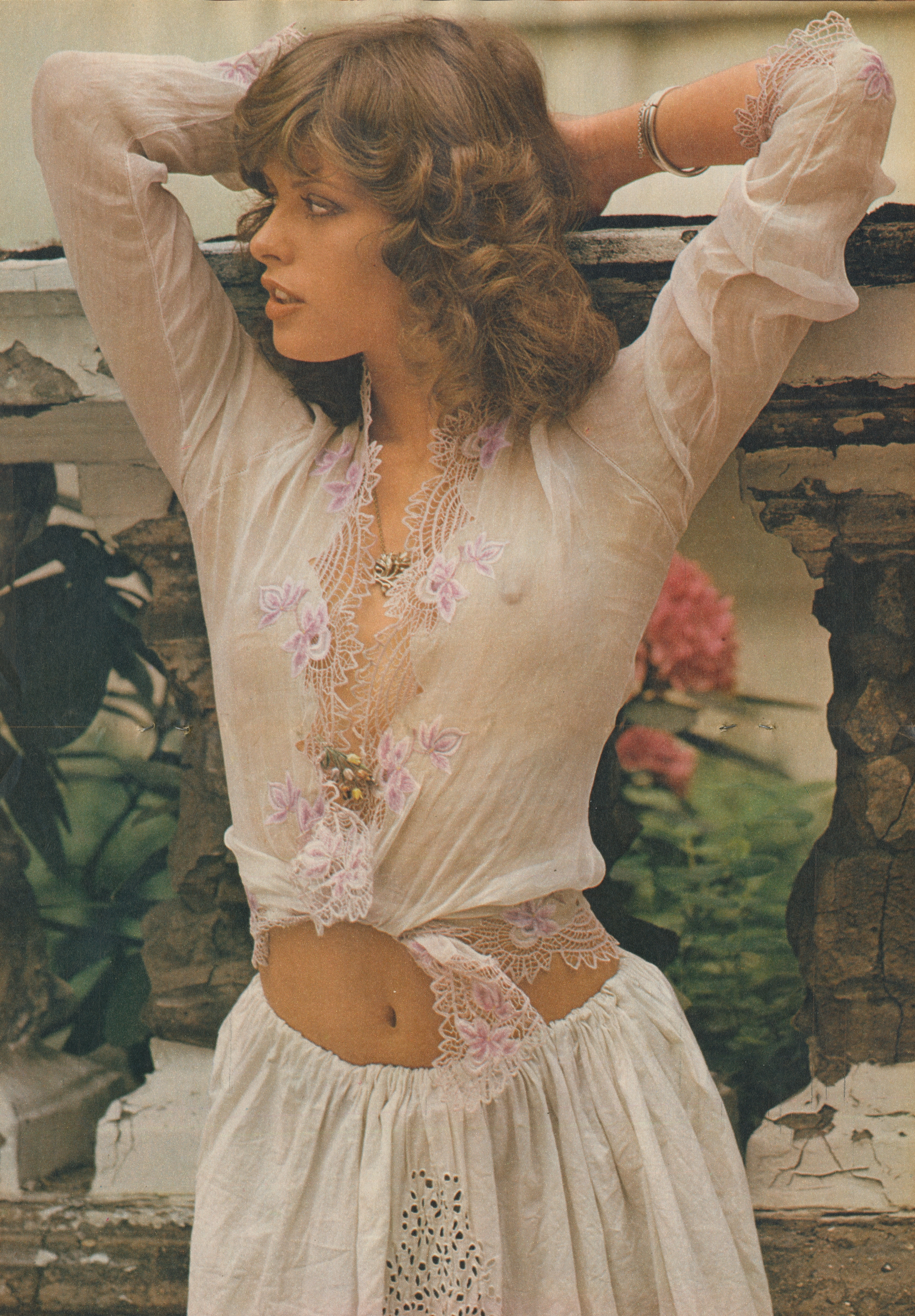
White kebaya with violet lace trim, £15, from a selection between £12-50 and £30 at Forbidden Fruit, 325 Kings Road. Broderie anglaise skirt, £8, from Vern Lambert, Chelsea Market.
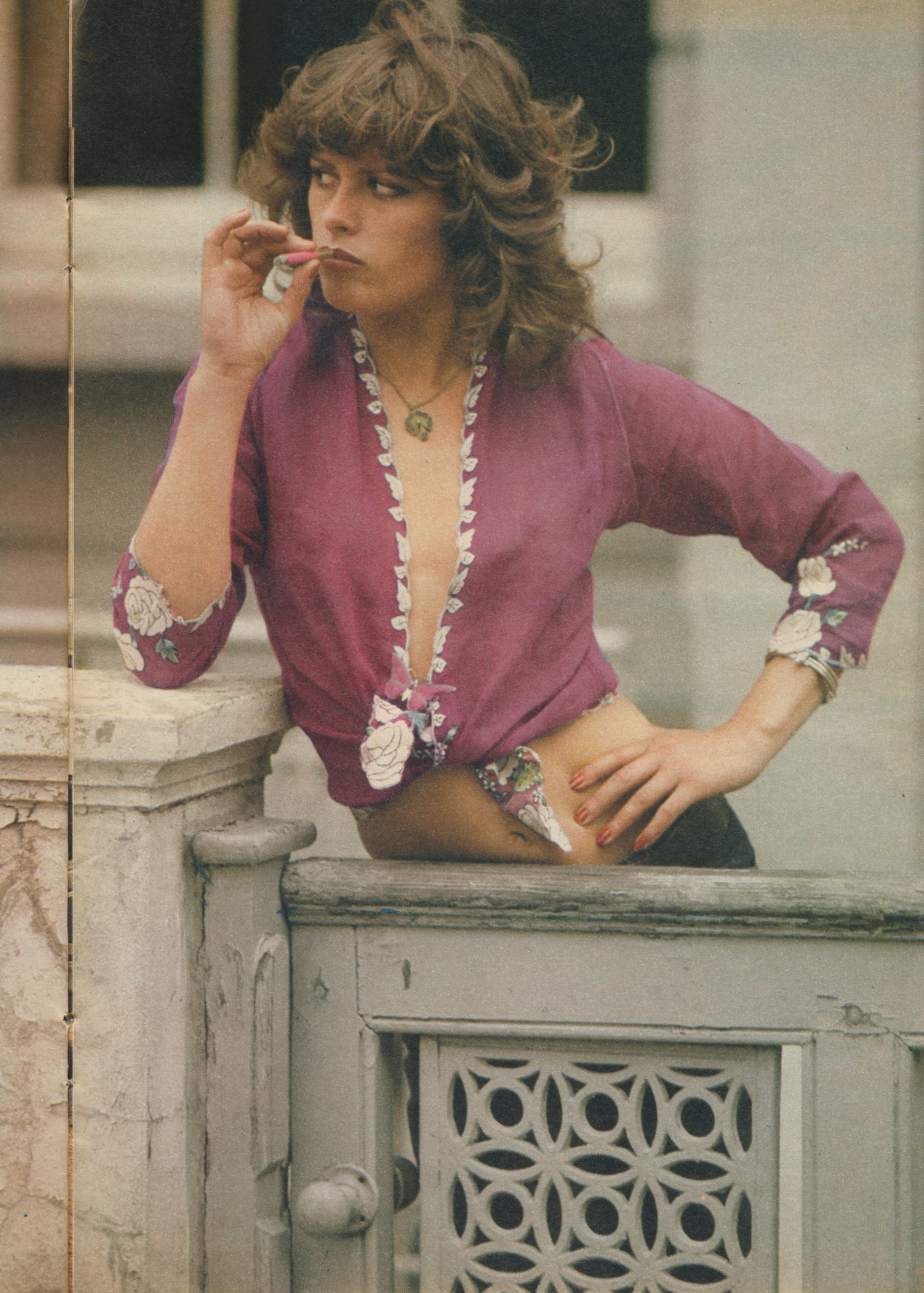
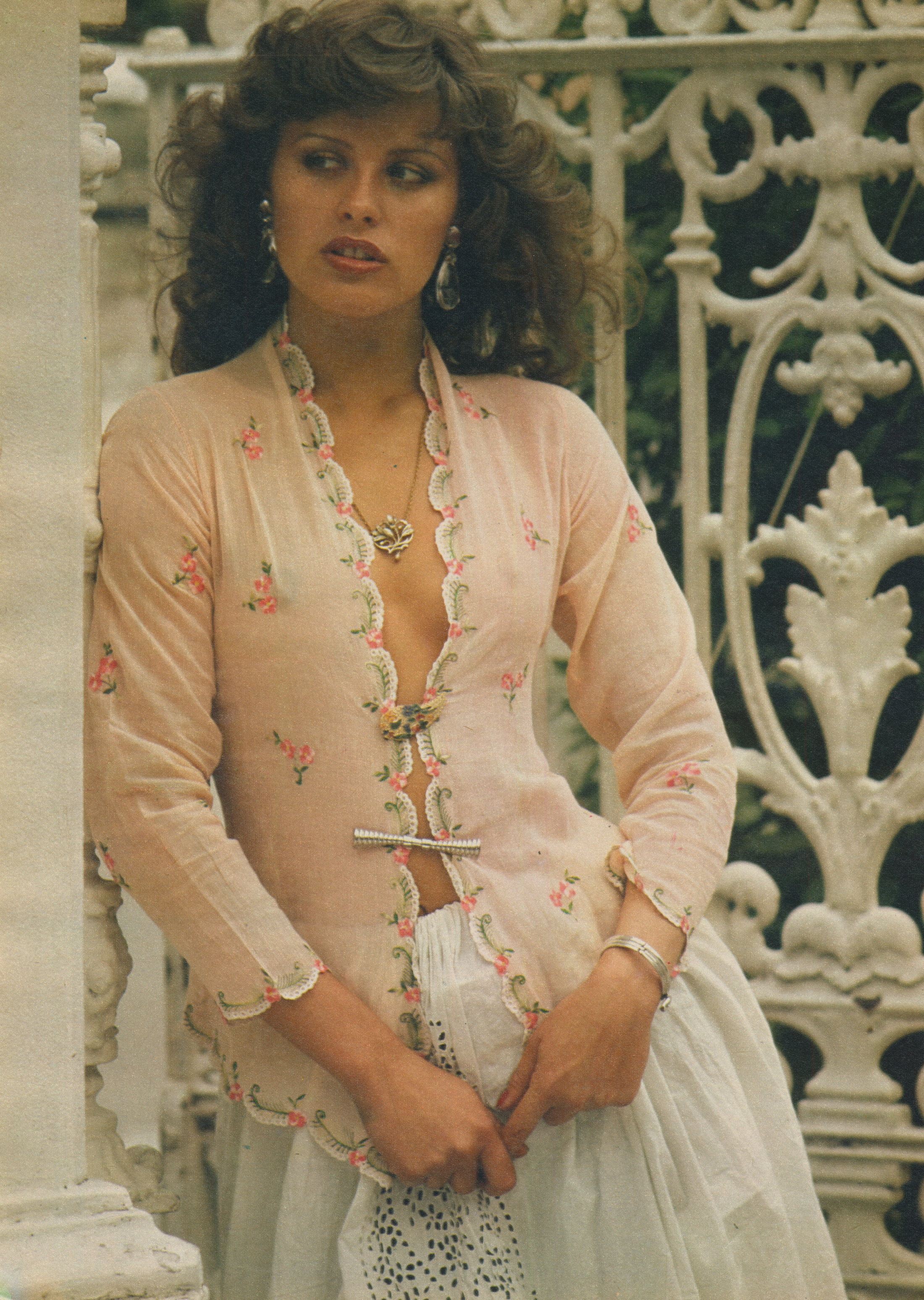
A kebaya is the traditional organdie blouse which Malay and Indonesian women wear over their sarong. It is lavishly embroidered and trimmed with lace. No two are alike. Now available here, selling from £12.50 for plainer ones to £30 for the most elaborate, they provide summer’s latest exotic look. Worn with old jeans or peasanty skirts, pinned together with antique clasps, the kebaya is the sexiest thing in town.
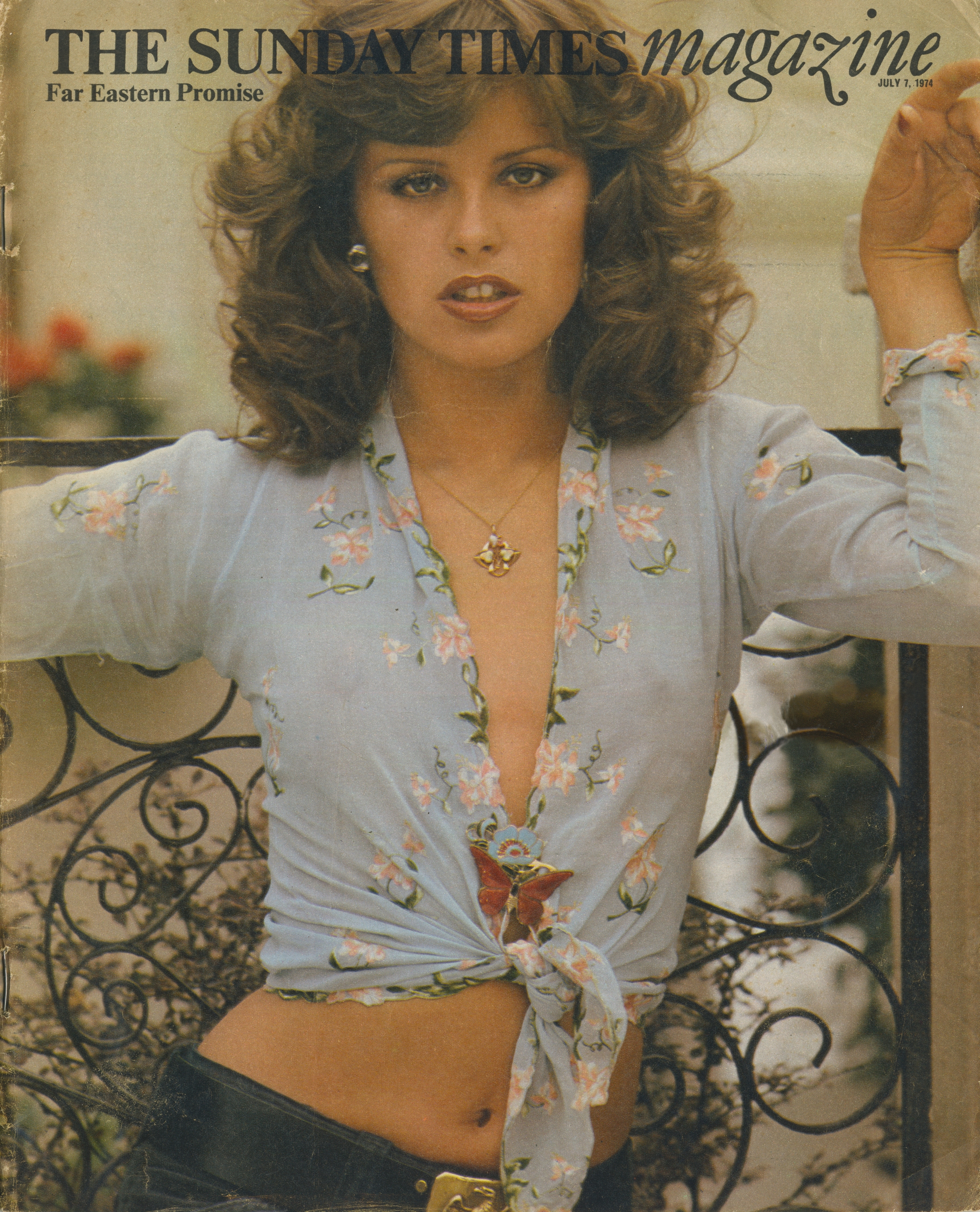
Model is Uschi Obermaier.
Report by Michael Roberts.
Photographed by Willie Christie.
Scanned from The Sunday Times Magazine, July 7th 1974.
Blue/pink embroidered kebaya, £18, from a selection priced between £18 and £30 at Ritva, 8 Hollywood Road, London S. W.10. Art Nouveau jewellery from The Purple Shop, Antiquarius, Kings Road, London S. W.3.
Floral-embroidered kebayas, £20, from a selection between £18 and £30 at Ritva. Deco clasps, £1 ; broderie anglaise skirt, £8, all from Vern Lambert. Pendants and butterfly brooch from The Purple Shop.
Floral-embroidered kebaya, £20, from a selection between £18 and £30 at Ritva. Deco clasps, £1 ; broderie anglaise skirt, £8, all from Vern Lambert. Pendants and butterfly brooch from The Purple Shop.







 Liz Eggleston