The 16th is a very ordinary suburb of Paris. In it are many grey, ordinary blocks of flats. Taking the lift to Irina Ionesco’s apartment, where she lives with her daughter, model Eva, it seems very small and cramped, but there is nothing unusual about it. Can this really be the home of Rumanian-born Irina Ionesco, one of France’s most exotic and famous photographers? Is this really where she has produced her best work during the last 15 years?
This apartment contains two distinct worlds. The real world of cups of tea and chatting about the weather, and the fantasy world of Irina Ionesco’s dreams. The largest room in the flat has been turned into a studio. Not the sort of studio usually constructed by professional photographers, however, but a boudoir crammed full of curios. It has the atmosphere of an Arabian tent, or perhaps a Turkish harem. The whole room is black — the walls and ceiling — and there are shutters over the windows.
Inside the room everything takes place in darkness, to the exclusion of the everyday world. What is behind the shutters of this room? ‘Nothing, a very neutral scene. A drab, brick garden I have no wish to see.’

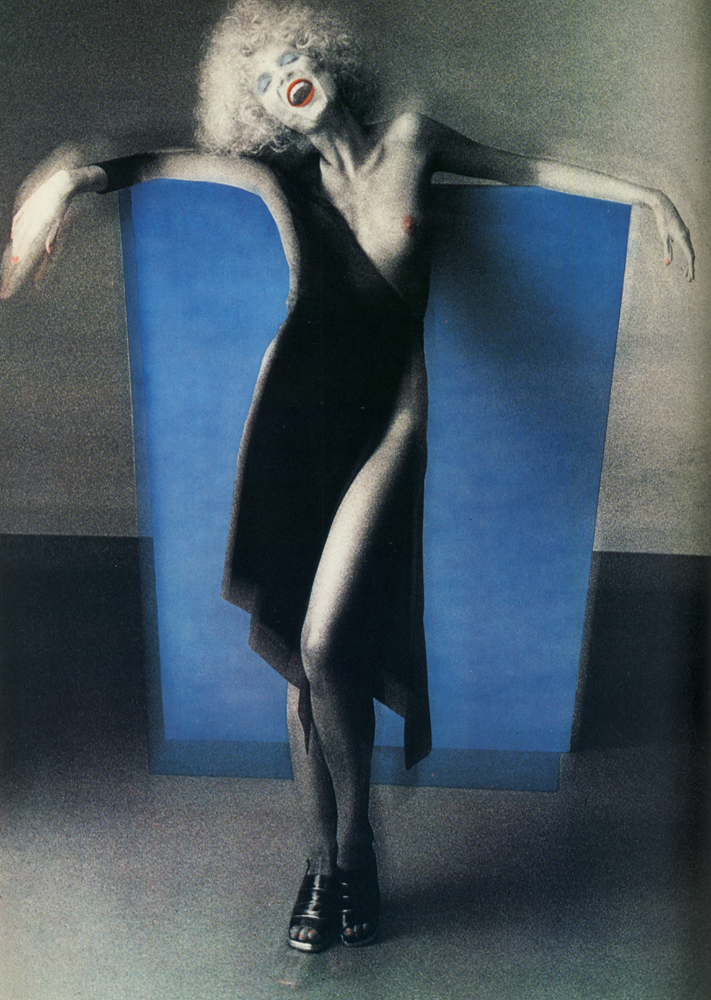
The room is decorated with shawls, canopies of lace, and other delicate fabrics. The atmosphere is so characteristic of her photography and all the objects in the room are used in her picture-making. ‘None of them are of any great value,’ says Irina, ‘all that matters to me about accessories is the shape, what they remind me of. Even if the price or quality of something is modest, I’m interested in transforming it into something marvellous through the magic of the lens. I have often been called “the Queen of Rags”, which I don’t much like though it isn’t exactly derogatory, though it is a fact that you can do a lot with rags. Everything depends on vision — this is what enthralls me. What I like to do is find a girl who is ugly and make her into something unique. It’s a constant process, or else it wouldn’t work. Few people see in a dirty rag anything but a dirty rag, whereas I can visualize what it can become, a piece of frippery perhaps a hundred years old…’
The ‘magic of the lens’ is what makes Irina Ionesco’s photographs so interesting. However, her work does not depend on any great technical expertise. Though she has experimented with solarisation, she uses little by way of lighting and no technical trickery to achieve her effects. In fact, she is self-taught, having started photography purely by accident. After moving to Paris at the age of 16, she took up painting and became quite successful. Some galleries became interested in her work and collectors started to buy it. ‘Then,’ she says, ‘I changed my way of working, and people were astonished. I was criticized. I lost my collectors. I had an exhibition that was a flop. I decided to stop painting. Then, quite by chance, I bought a camera. I bought a 35mm reflex with a 50mm lens and some filters, and brought it back here, not having any idea how to use it. I was even less interested in the technical side then than I am now, but I did acquire some rudimentary knowledge.’

She learned by experiment, but her aim was not so much to create with the camera as to record the scenes that were enacted in her private theatre, this private world of dreams. She does not photograph models, she photographs people she knows. ‘I do not always choose them,’ she says, ‘sometimes they come to me. There’s always been the possibility of dialogue.’ However, her most frequent model has been her daughter Eva, who knows her best.
‘What happens is that I start working, usually in the evening because my imagination only comes to life at night, and I begin to arrange the elements for a photograph. The mood of the picture develops slowly. The model and I talk, and eventually I get the moment which I think has captured the mood. It’s a very precious moment because the model has to be completely inside the situation. Five minutes either way and you can be outside it. You have to be patient.
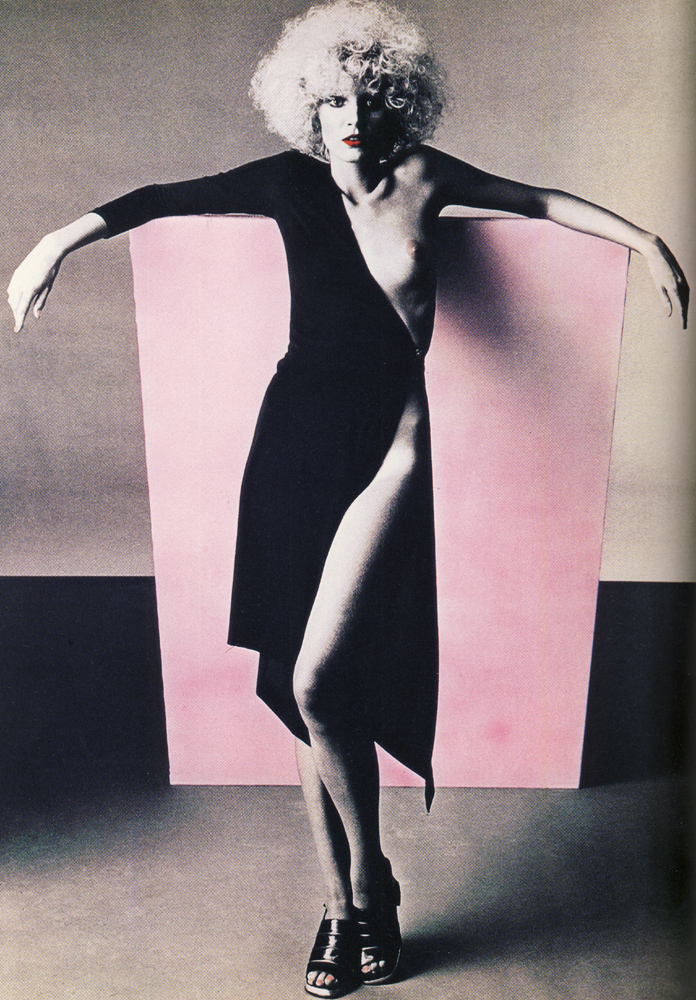
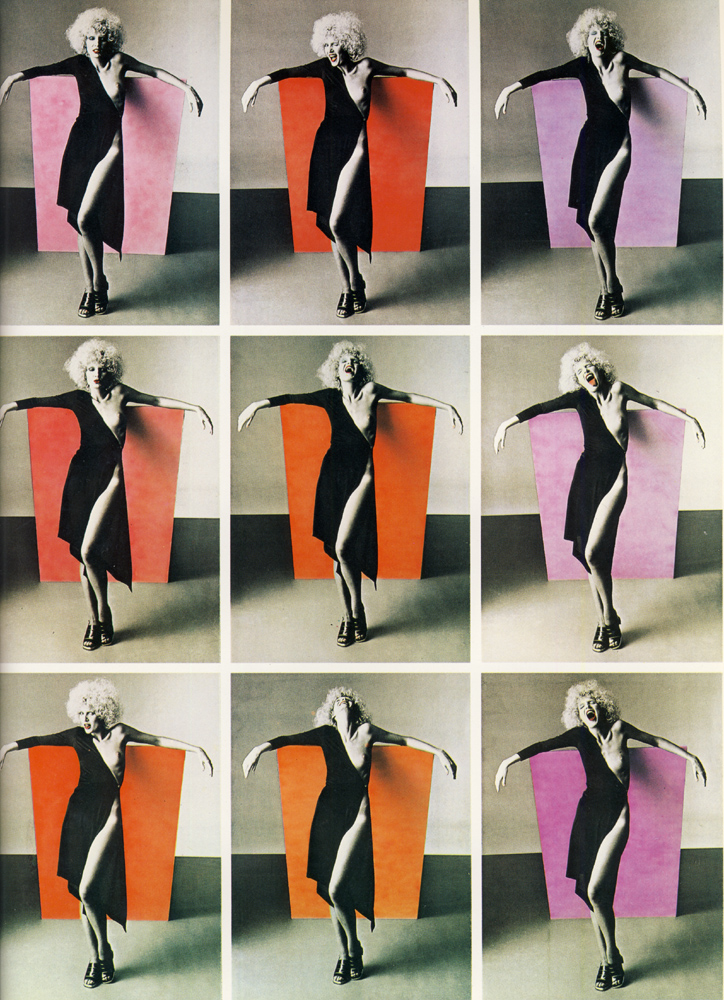
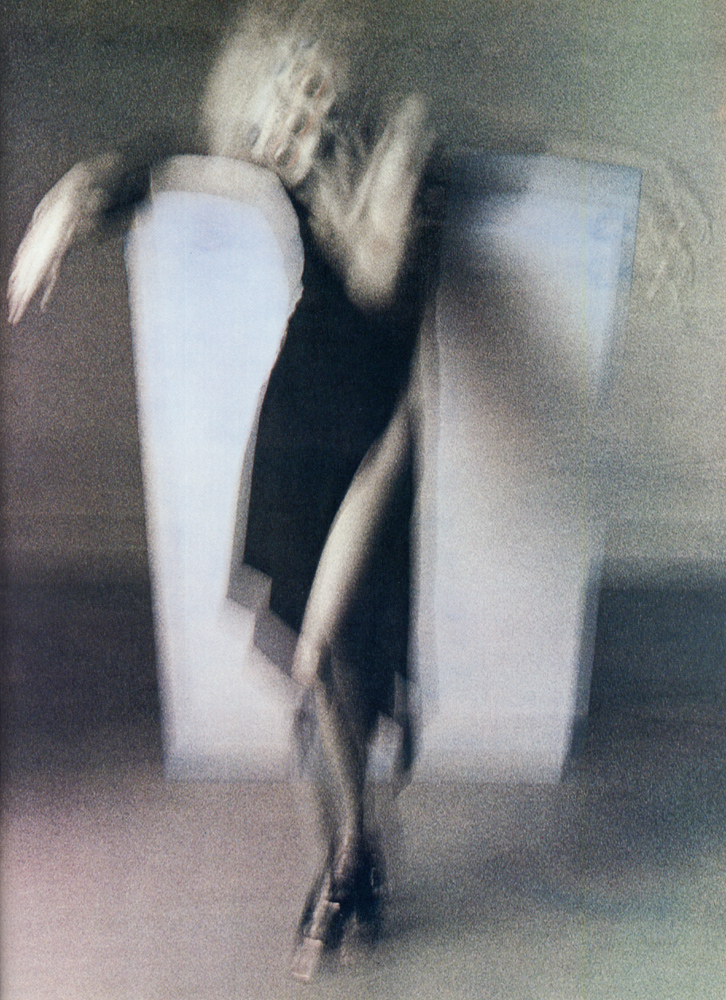
‘I understand that in more luxurious surroundings I could do many things which weren’t obvious at the start, but it is good to work economically, to have a sense of values: to have only one light, one camera and lens, one pencil to write a beautiful poem, one box of paints for a magnificent work.’ Until recently, these deliberate limitations have included ‘one film’ – black and white Tri-X. She has said that ‘black and white is far more metaphysical,’ and avoided colour in her dream world, ‘no doubt because reality is co1oured,’ she admits. Now she has started to experiment with colour, but without leaving her dream world.
She says each photograph is ‘like an autobiographical poem.’ This suggests that she photographs her daughter and certain girls because she can impose her personality on them. The mood she creates is also personal. ‘Maybe it is myself all the time. The model can become my mirror and indeed people often think that the model in the photograph is myself as I was ten years ago.’
But her pictures of women, with their pallid complexions and statuesque poses, often suggest death. ‘Yes. I didn’t set out to do this — it happened. It is more than death, it is mainly the waiting. It is an image of loneliness. Loneliness and death are almost the same thing.’
Interview and photos taken from ‘How to Photograph Women’ by Dixons.










 Liz Eggleston