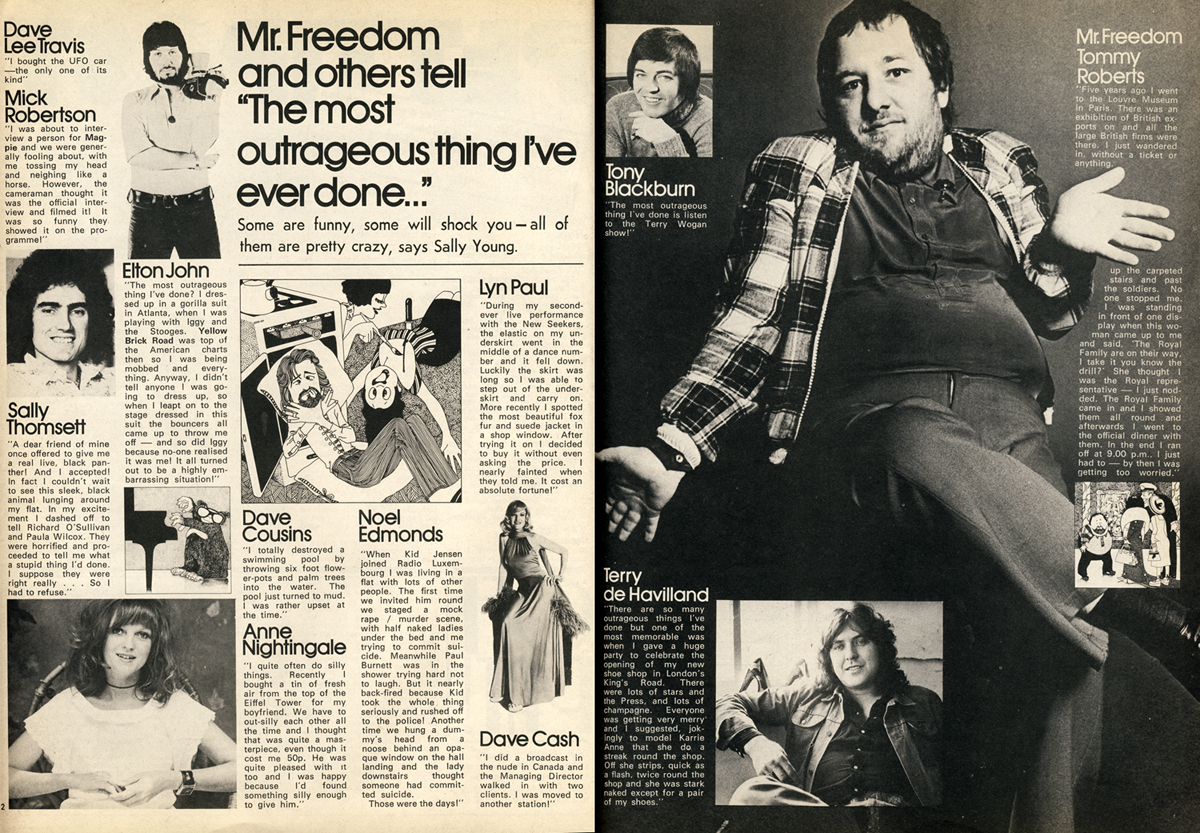
Mr Freedom and others tell "The most outrageous thing I’ve ever done…"

1970s, anne nightingale, elton john, man about the house, mr freedom, petticoat magazine, terry de havilland, Tommy Roberts

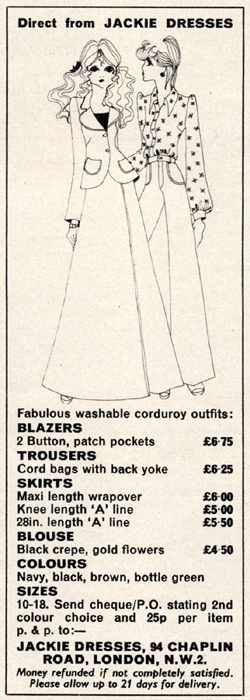
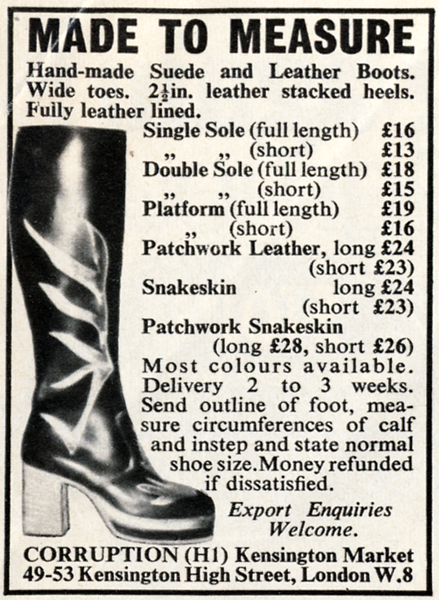
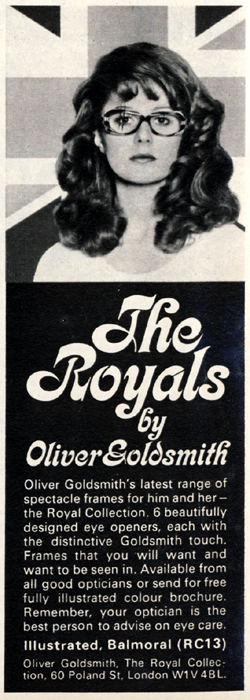
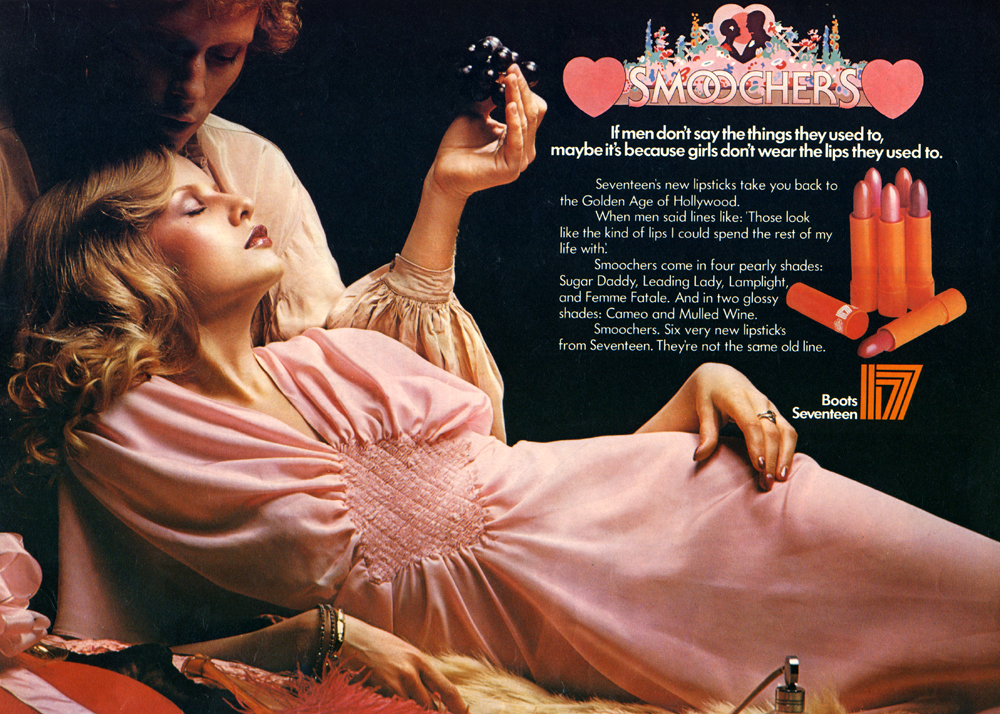
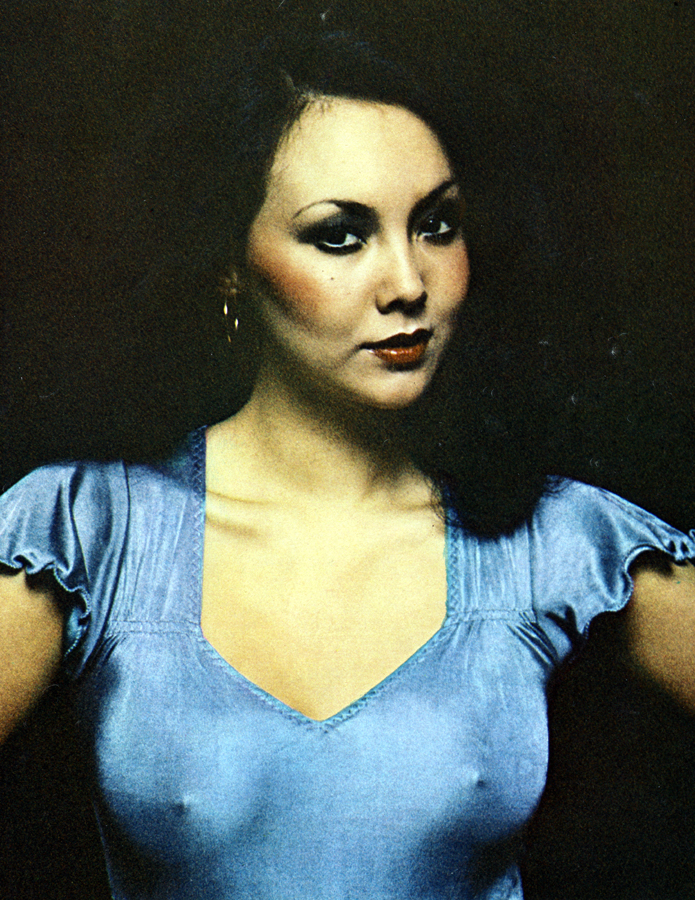
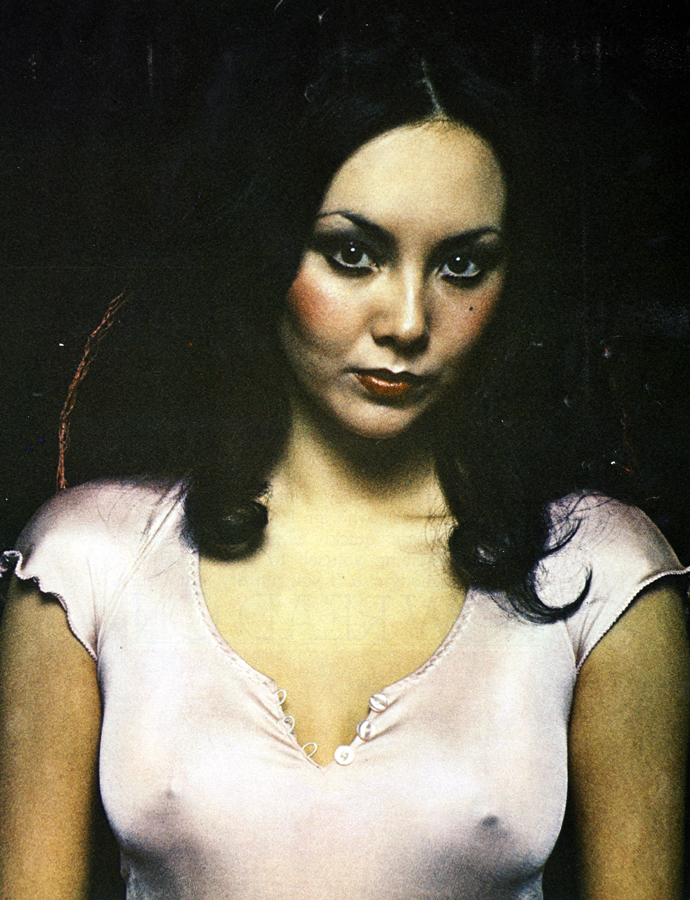
Sheer brilliance! Scanned from Petticoat, November 1974.

Mensday: A Real Man

1960s, haute naffness, Mensday, menswear, Vintage Adverts

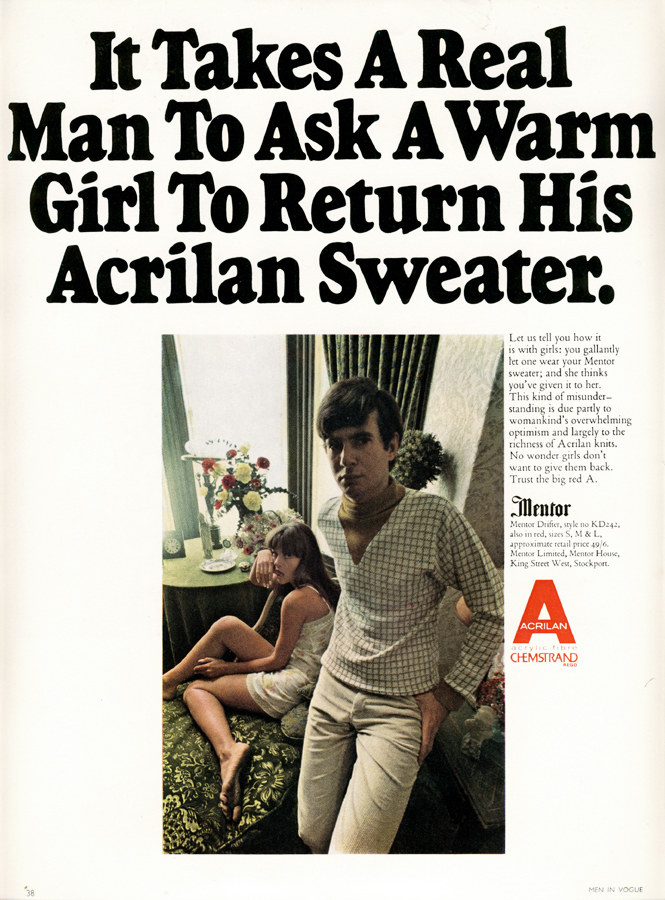
It Takes A Real Man To Ask A Warm Girl To Return His Acrilan Sweater.

I think someone favours his Acrilan sweater over a bit of how’s your father, because I’m sure he won’t be getting any more there…

Scanned from Men in Vogue, November 1966.


Icons? Or clichés?

audrey hepburn, brigitte bardot, cherry gillespie, Françoise Hardy, jo grant, man about the house, miss peelpants's rants, pan's people

All coincidences are intriguing, even if they are not all serendipitous. A few weeks back, Mr Brownwindsor and I went to the NFT to see Annie Hall. I was curious to see it anyway, as a relative newcomer to the world of Woody Allen, but I was also intrigued by the iconic status of Diane Keaton’s androgynous style statements (which, according to the accompanying literature, were entirely her own and perfectly preserved by Allen, against the costume designer’s better judgement.).

I emerged in my seemingly perpetual state of “mixed feelings”. I enjoyed the film, no doubt about it, and I was as entranced by the character and appearance of Annie as much as any others who have seen that film, before and since. But I am a contrary so-and-so (indeed, my middle name is Mary!) and I could not shake the sensation of ennui. I am bored of conventional style icons. I wholeheartedly resent the fact that so many are appropriated by the media, the fashion press and, these days, by the blogging community.

Beautiful as Audrey may have been, as sensuous as Brigitte patently was, as unnervingly cool as Françoise Hardy always will be, I am tipping over into boredom when I look at them now. Even the obscure ones aren’t so obscure any more.

The same goes for Keaton’s Annie Hall style. Barely an Autumn season goes by without several half-witted fashion editors conceiving an ‘Annie Hall’ editorial. Two weeks ago, You Magazine gave the world the least convincing Emma Peel-influenced spread I have ever seen in my life. And I have seen a fair few. I actually laughed, out loud.

Afterwards, we wandered into the South Bank branch of Foyles. As if to prove my point, there I found a book which, frankly, made me want to hate it just from the cover. I cannot even remember the title it was so dull (and I didn’t recognise the author) – something about fashion icons and getting their style. It did not disappoint me. Page upon page giving flimsy advice on how to pull off various looks, each section led by an ‘icon’.

For a Deborah Harry rock chick-look, you will need to wear smudgy eyeliner and tousle your hair. For a Brigitte Bardot bombshell-look, you will need to wear eyeliner and tousle your hair. For a Françoise Hardy yéyé-look you will need to….. Need I continue?

The laugh-out-loud moment came for me when I saw the section containing Stevie Nicks and Kate Bush. How to be a ‘free spirit’. Seriously? If you need to read a book which tells you how to dress, make-up or style your hair like a free spirit, then you really are not one. Defeating. Entire. Object.

Everyone should feel free, especially in personal expression through appearance. People should never feel like they are compelled to stick with one style forever. If you want to change your look every day, good for you. But if you need to read a book which shows pictures of Kate Moss in the ‘free spirit’ section, alongside the genuine article, then there is something seriously wrong with how you are approaching your personal style, and vintage clothing.

For surely the joy of personal style, and the development thereof, is just that. Personal. Learning what works for you, not what works for the women you admire. Those women were not trying to look like someone, they worked hard to find their own image.

I find I pick obscure ‘icons’ for my own purposes. Both deliberately and subconsciously. A smattering of Chrissie from Man About The House here, a dash of Noosha Fox there, a hybrid of Pan’s People and a snifter of Jo Grant. But I don’t look like any of them, and really I just want to look like me. Liz. I would feel repelled if I saw a Youtube tutorial on how to achieve Noosha’s make-up, or Cherry’s enormous hair. I look and learn, or don’t.

I wish all authors the best of luck, but I also wish that they would take the remarkable opportunity they have and do something different with it. Something unique. Something thought-provoking. The kind of waffle I was reading in that book was worthy of a second-rate fashion blogger, not a published author.

I rarely write long posts these days. Partly time, partly energy and partly because I am not always convinced that the world needs yet another person giving their opinion about style. These days, I try to share the quirky, unseen images which so excite me. The thrill of a new-old copy of an obscure magazine; the bizarre, experimental photography, the unusual looking models, the daft adverts for naff clothes which I openly covet, the beauty of illustrations…

So here is my first proper ‘post’ for a while. I hope people can feel proud of their true selves, comfortable in their skin and not behind the mask of someone else.

Incidentally, for an authentic Pan’s People look, you will need to wear smudgy eyeliner and tousle your hair. Oh…


Inspirational Illustrations: A Love Story

1970s, Illustrations, jean max perramon, nova magazine

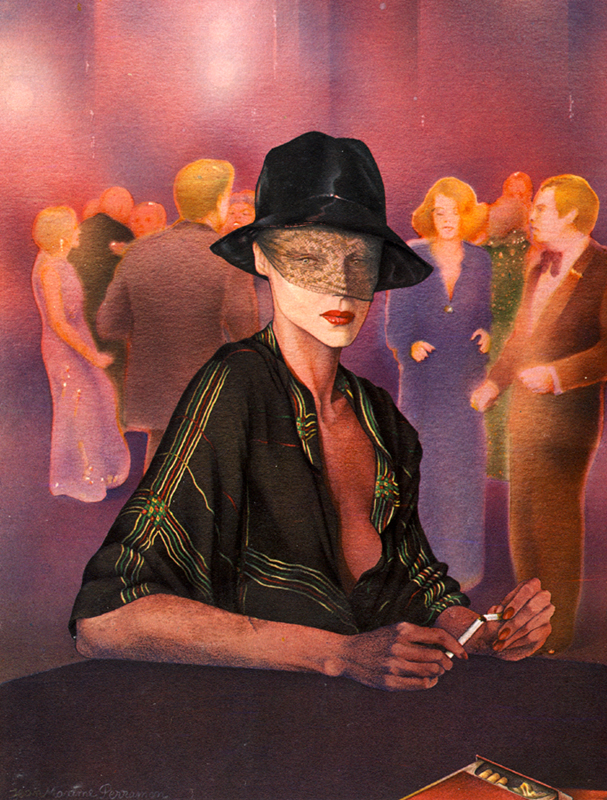
Illustration by Jean Max Perramon. Scanned from Nova, March 1975.

Sometimes you find a beautiful image like this, google the artist and find out wondrous things about them. Sometimes you find nothing. Sometimes, you find something deeply sad.


If I use a vintage stamp, and the oldest postbox I can find…

1970s, oliver goldsmith, platforms, Vintage Adverts

…can I please send off for these goodies?

Images scanned by Miss Peelpants 

1970

1974

1972


Inspirational Illustrations: All this grief to be fashionable

1970s, Illustrations, ken laidlaw, petticoat magazine, platforms

Illustration by Ken Laidlaw. Scanned from Petticoat, January 1973.

Vintage Adverts: Smoochers

Make-up, petticoat magazine, seventies fashion, Vintage Adverts

Smoochers from Boots Seventeen. Scanned from Petticoat, November 1974.

Mad orange lipstick packaging, names like Smoochers and Sugar Daddy, men in puffy sleeved shirts….make-up advertising just ain’t what it used to be!

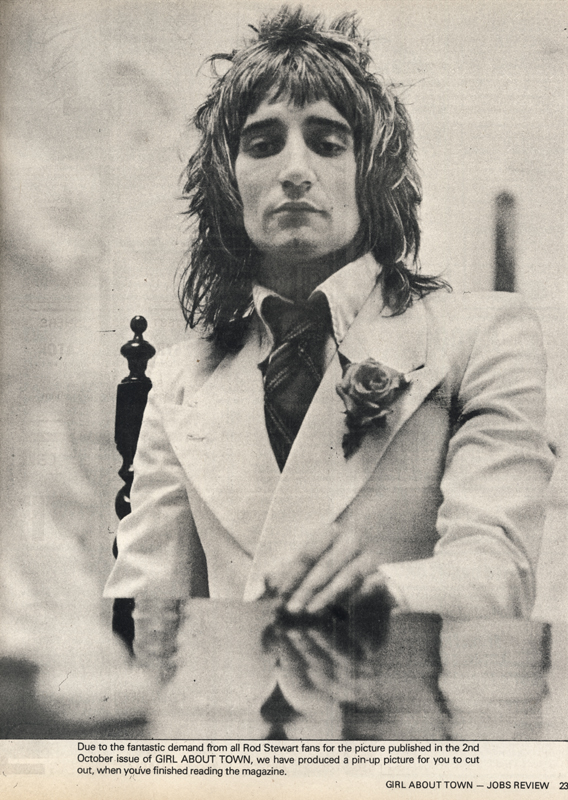
Rod Stewart, October 1973

girl about town, rod stewart, seventies fashion

Happy Birthday Rod! Scanned from Girl About Town, October 1973. A free jobs listings magazine for women, I cannot take the credit for the ‘score’ – it was given to me by Mr Brownwindsor this Christmas! Ah, how scarily well he knows my bizarre reading habits…

I’m happy to find that its former owner was no fan of Rod the Mod and left the pin-up in tact. I will certainly be sharing some of the brilliant job listings in further posts.

"It hasn’t got boobs or anything".

david bowie, glam rock, mick ronson, petticoat magazine, the who

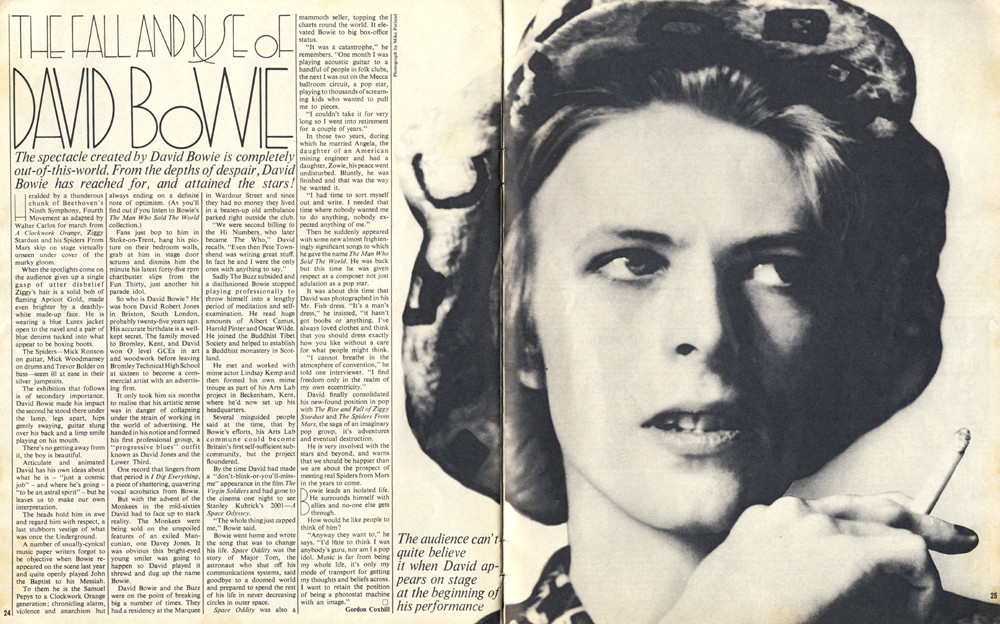
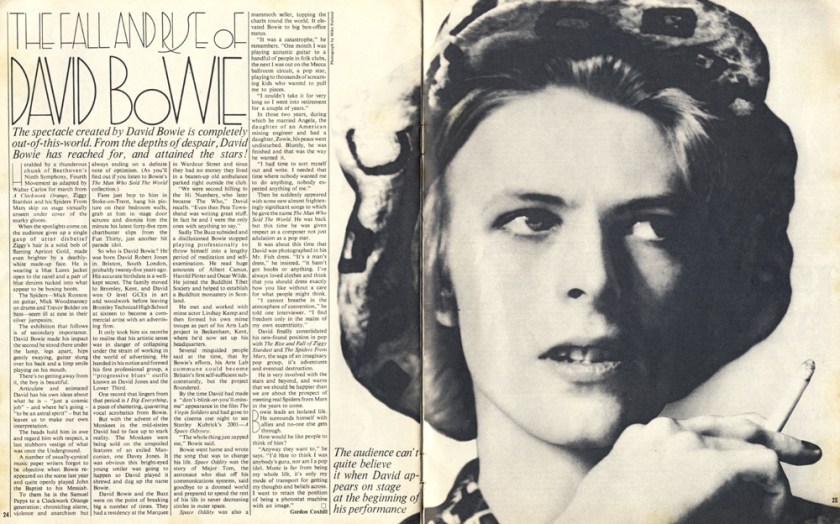
So very quotable (see post title and also: “I cannot breathe in the atmosphere of convention,” he told one interviewer. “I find freedom only in the realm of my own eccentricity.”), it is hard to believe that David Bowie is actually allowed to age at all. But he reaches the very elegant and refined vintage of 65 today and I would like to wish him many, many returns of the day. So, in his honour, here is an interview from Petticoat Magazine, January 1973…

~~~

Heralded by a thunderous chunk of Beethoven’s Ninth Symphony, Fourth Movement as adapted by Walter Carlos for march from A Clockwork Orange, Ziggy Stardust and his Spiders From Mars skip on stage virtually unseen under cover of the murky gloom.

When the spotlights come on the audience gives up a single gasp of utter disbelief Ziggy’s hair is a solid bob of flaming Apricot Gold, made even brighter by a deathly-white made-up face. He is wearing a blue Lurex jacket open to the navel and a pair of blue denims tucked into what , appear to be boxing boots.

The Spiders—Mick Ronson on guitar, Mick Woodmansey on drums and Trevor Bolder on bass—seem ill at ease in their silver jumpsuits.

The exhibition that follows is of secondary importance. David Bowie made his impact the second he stood there under the lamp, legs apart, hips gently swaying, guitar slung over his back and a limp smile playing on his mouth.

There`s no getting away from it, the boy is beautiful.

Articulate and animated David has his own ideas about what he is — “just a cosmic job” — and where he’s going — “to be an astral spirit” — but he leaves us to make our own interpretation.

The heads hold him in awe and regard him with respect, a last stubborn vestige of what was once the Underground.

A number of usually-cynical music paper writers forgot to be objective when Bowie re-appeared on the scene last year and quite openly played John the Baptist to his Messiah.

To them he is the Samuel Pepys to a Clockwork Orange generation; chronicling alarm, violence and anarchism but always ending on a definite note of optimism. (As you’ll find out if you listen to Bowie’s The Man Who Sold The World collection.)

Fans just bop to him in Stoke-on-Trent, hang his picture on their bedroom walls, grab at him in stage door scrums and dismiss him the minute his latest forty-five rpm chartbuster slips from the Fun Thirty, just another hit parade idol.

So who is David Bowie? He was born David Robert Jones in Brixton, South London, probably twenty-five years ago. His accurate birthdate is a well- kept secret. The family moved to Bromley, Kent, and David won O level GCEs in art and woodwork before leaving Bromley Technical High School at sixteen to become a com- mercial artist with an advertising firm.

It only took him six months to realise that his artistic sense‘was in danger of collapsing under the strain of working in the world of advertising. He handed in his notice and formed his first professional group, a “progressive blues” outfit known as David Jones and the Lower Third.

One record that lingers from that period is I Dig Everything, a piece of shattering, quavering vocal acrobatics from Bowie. But with the advent of the Monkees in the mid-sixties David had to face up to stark reality. The Monkees were being sold on the unspoiled features of an exiled Mancunian, one Davey Jones. It was obvious this bright-eyed, young smiler was going to happen so David played it shrewd and dug up the name   Bowie.

David Bowie and the Buzz were on the point of breaking big a number of times. They had a residency at the Marquee in Wardour Street and since they had no money they lived in a beaten-up old ambulance parked right outside the club.

“We were second billing to the Hi Numbers who later became The Who,” David recalls. “Even then Pete Townshend was writing great stuff. In fact he and I were the only ones with anything to say.”

Sadly The Buzz subsided and a disillusioned Bowie stopped playing professionally to throw himself into a lengthy period of meditation and self-examination. He read huge amounts of Albert Camus, Harold Pinter and Oscar Wilde. He joined the Buddhist Tibet Society and helped to establish a Buddhist monastery in Scotland.

He met and worked with mime actor Lindsay Kemp and then formed his own mime troupe as part of his Arts Lab project in Beckenham, Kent, where he’d now set up his headquarters.

Several misguided people said at the time, that by Bowie’s efforts, his Arts Lab commune could become Britain’s first self-sufficient sub- community, but the project floundered.

By the time David had made a “don’t-blink-or-you’ll-miss- me” appearance in the film The Virgin Soldiers and had gone to the cinema one night to see Stanley Kubrick’s 200l-A Space Odyssey.

“The whole thing just zapped me,” Bowie said. Bowie went home and wrote the song that was to change his life. Space Oddity was the story of Major Tom, the astronaut who shut off his communications systems, said goodbye to a doomed world and prepared to spend the rest of his life in never decreasing circles in outer space. Space Oddity was also a mammoth seller, topping thei charts round the world. It elevated Bowie to big box-office status.

“It was a catastrophe,” he remembers. “One month I was playing acoustic guitar to ah handful of people in folk clubs, the next I was out on the Mecca   ballroom circuit, a pop star; playing to thousands of scream- i ing kids who wanted to pull me to pieces.

“I couldn’t take it for very long so I went into retirement for a couple of years.” In those two years, during which he married Angela, the daughter of an American mining engineer and had a daughter [sic], Zowie, his peace went undisturbed. Bluntly, he was finished and that was the way he wanted it.

“I had time to sort myself out and write. I needed that time where nobody wanted me to do anything, nobody expected anything of me.”

Then he suddenly appeared with some new almost frighteningly significant songs to which he gave the name The Man Who Sold The World. He was back but this time he was given respect as a composer not just adulation as a pop star.

It was about this time that David was photographed in his Mr. Fish dress. “It’s a man’s dress,” he insisted, “it hasn’t got boobs or anything. I`ve always loved clothes and think that you should dress exactly how you like without a care for what people might think.

“I cannot breathe in the atmosphere of convention,” he told one interviewer. “I find freedom only in the realm of my own eccentricity.”

David finally consolidated his new-found position in pop with The Rise and Fall Of Ziggy Stardust and The Spiders From Mars, the saga of an imaginary pop group, it’s adventures and eventual destruction.

He is very involved with the stars and beyond, and warns that we should be happier than we are about the prospect of meeting real Spiders from Mars in the years to come.

Bowie leads an isolated life. He surrounds himself with allies and no-one else gets through.

How would he like people to think of him?

“Anyway they want to,” he says. “I’d hate to think I was anybody`s guru, nor am I a pop , idol. Music is far from being my whole life, it’s only my mode of transport for getting my thoughts and beliefs across. I want to retain the position of being a photostat machine with an image.”

Gordon Coxhill

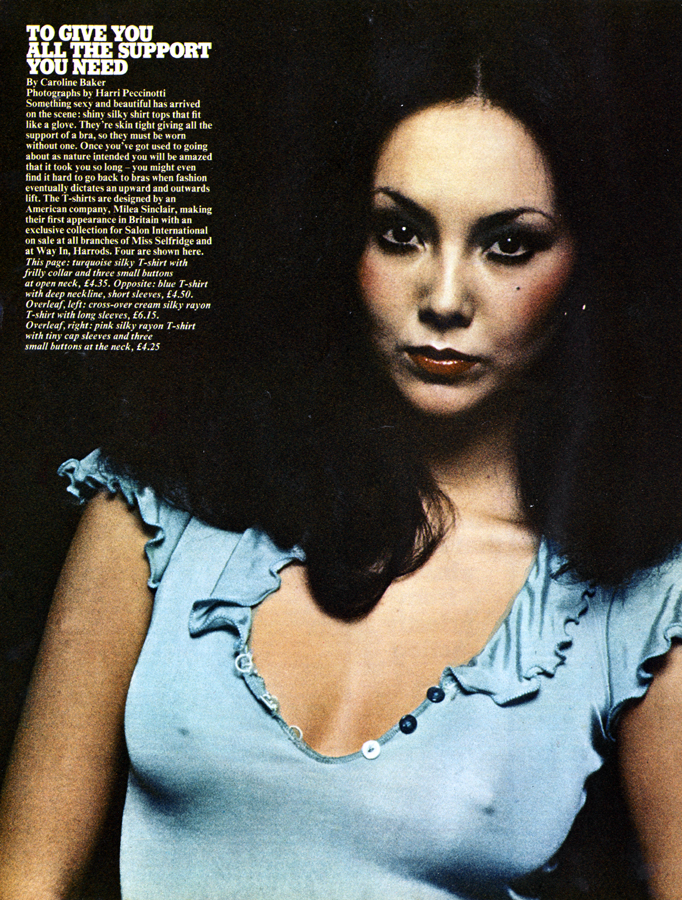
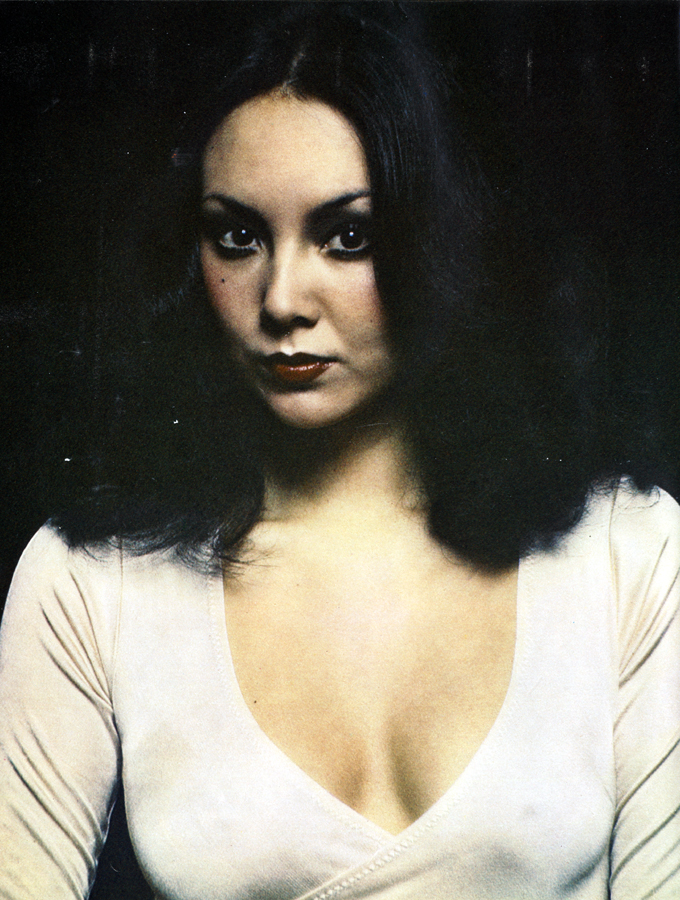
All the support you need

caroline baker, Harri Peccinotti, marie helvin, mild sauce, nova magazine, seventies fashion

Some sizzling photos of Marie Helvin. Scanned from Nova, March 1975. Photos by Harri Peccinotti.

Images scanned by Miss Peelpants