
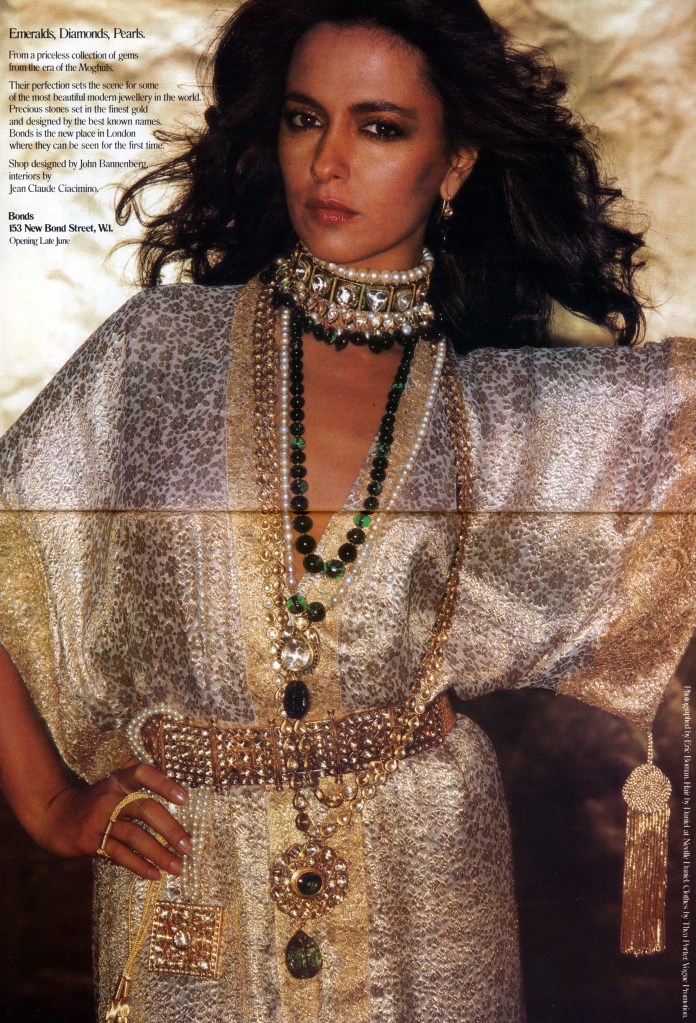
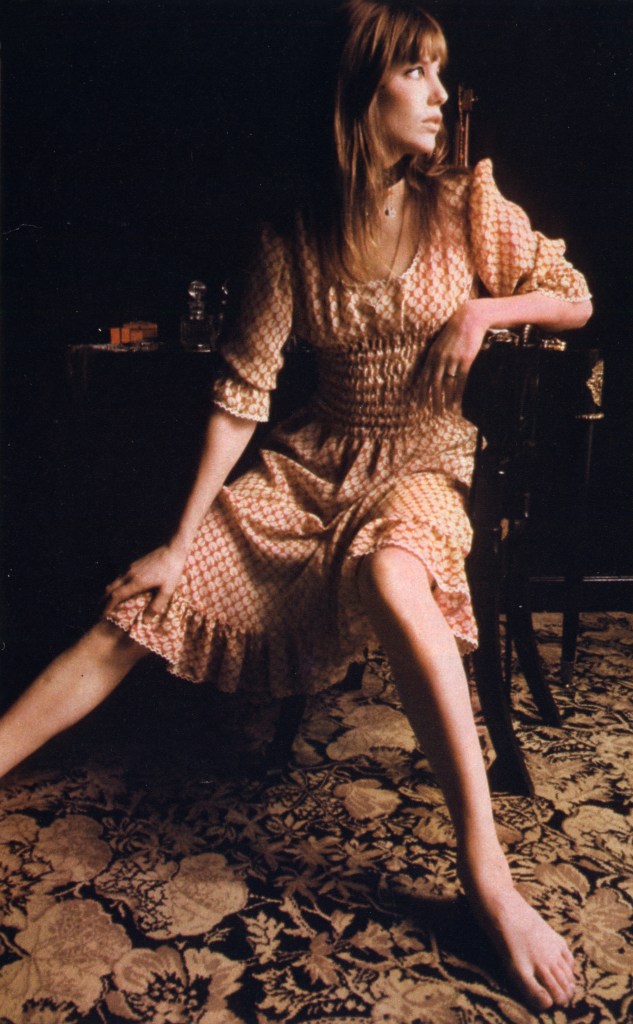
Advert for Bonds of New Bond Street. Hair by Daniel at Neville Daniel.
Clothes by Thea Porter.
Photographed by Eric Boman.
Scanned from Vogue, June 1978.
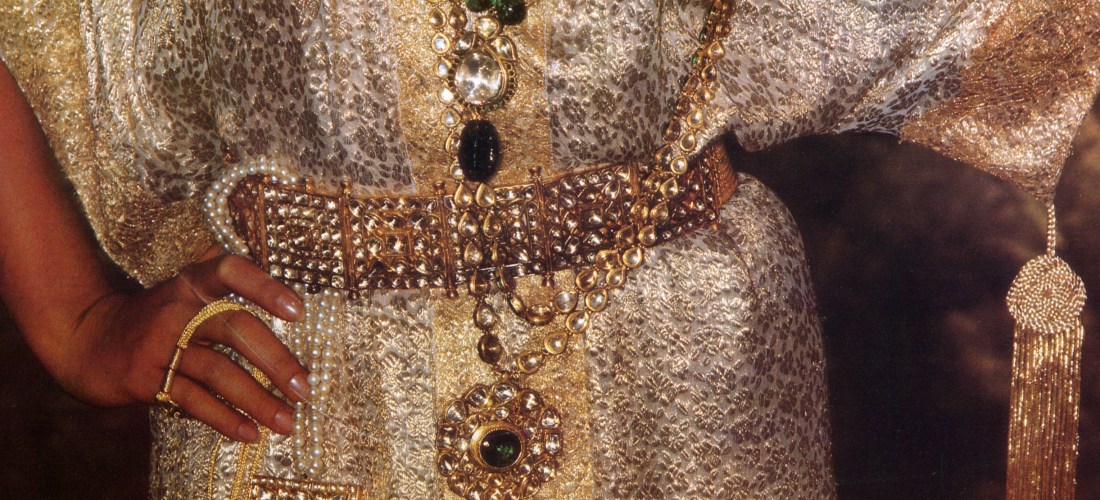
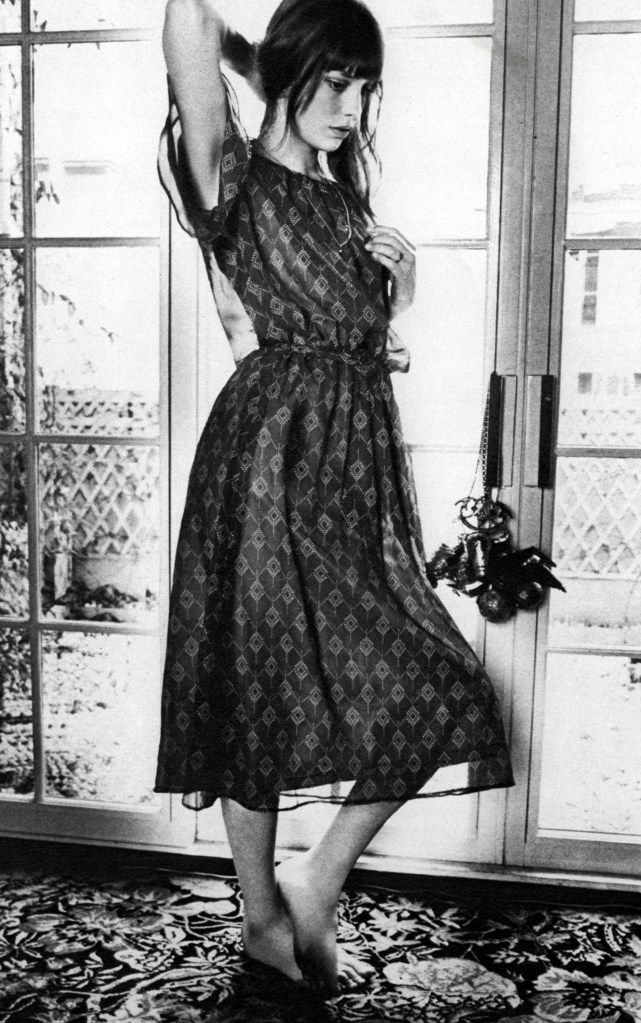
Advert for Bonds of New Bond Street. Hair by Daniel at Neville Daniel.
Clothes by Thea Porter.
Photographed by Eric Boman.
Scanned from Vogue, June 1978.
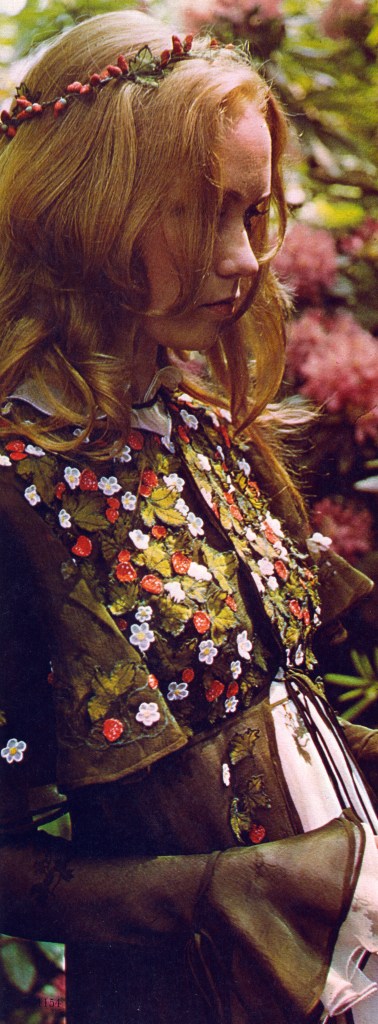
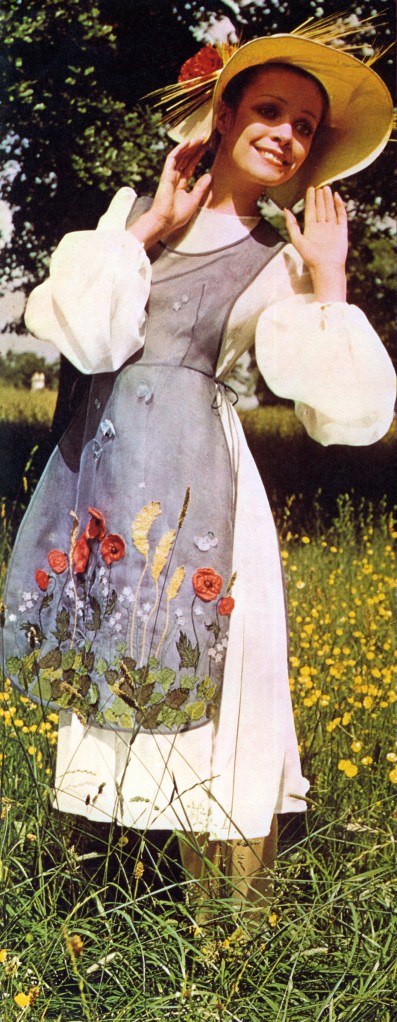
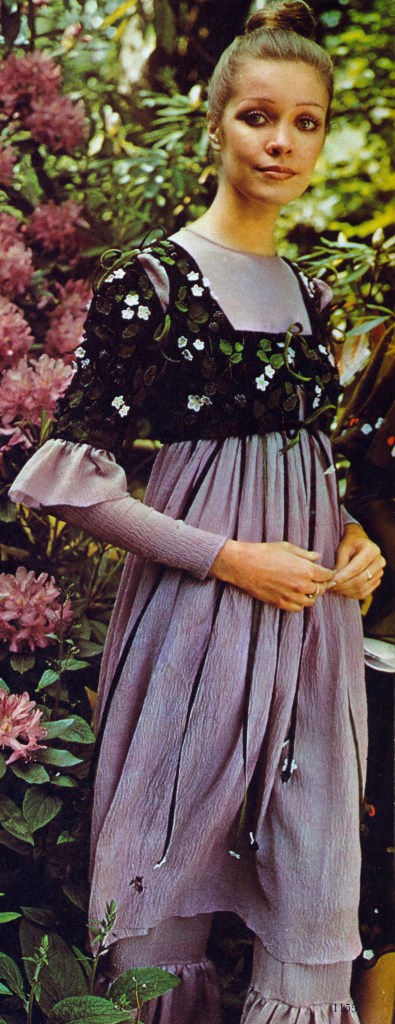
Romantic in concept and evocative of another age, the embroidered clothes illustrated on these pages were designed and made by Angela Salmon, while a design student at London’s St Martin’s School of Art, for her final diploma exhibition. Although painstaking embroideryis not commercially viable in the ready-made clothing industry, it is comforting to know that students of design continue to produce exquisite work such as this, adapting traditional techniques to modern design concepts. The lilac silk and black velvet dress, worn with pantaloons, has flowers and leaves of machine embroidered organza applied to the bodice with realistic-looking plastic blackberries to complete the motif. The caped coat-dress, made of olive-coloured chiffon, is worn over a strawberry printed chiffon dress. Strawberry flowers, leaves and fruit motifs, made of matt satin and machine embroidered organza, are applied with some of the edges lying free of the background fabric. The blue and white ensemble consists of a blue organza apron worn over a full-sleeved chiffon dress. The designer has chosen field flowers for her inspiration—poppies, buttercups, speedwell and wheat heads—embroidered and applied to the background fabric. Surface embroidery has been added to enrich the design.
Photographed by G Murrell.
Scanned from Golden Hands Magazine, Part 58 Vol 4. (1972)
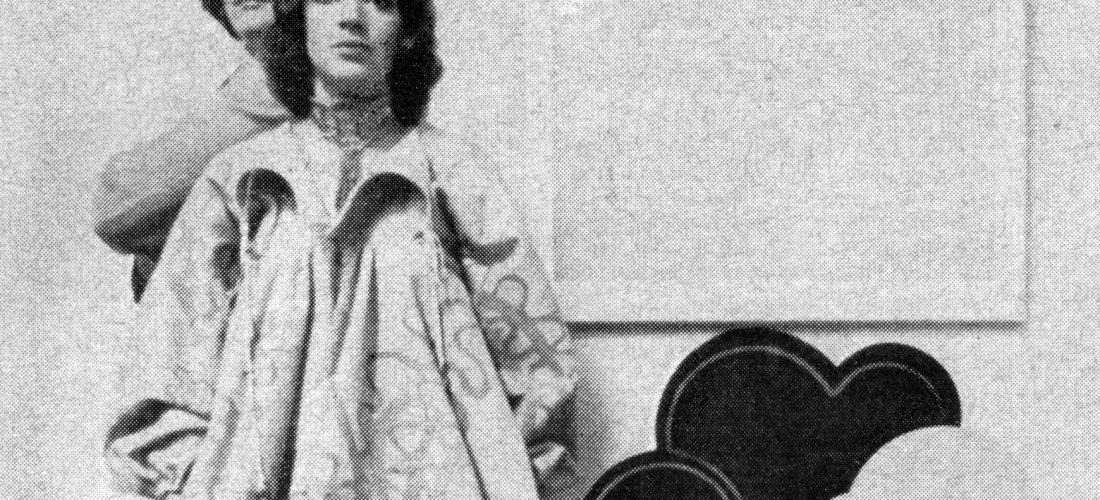
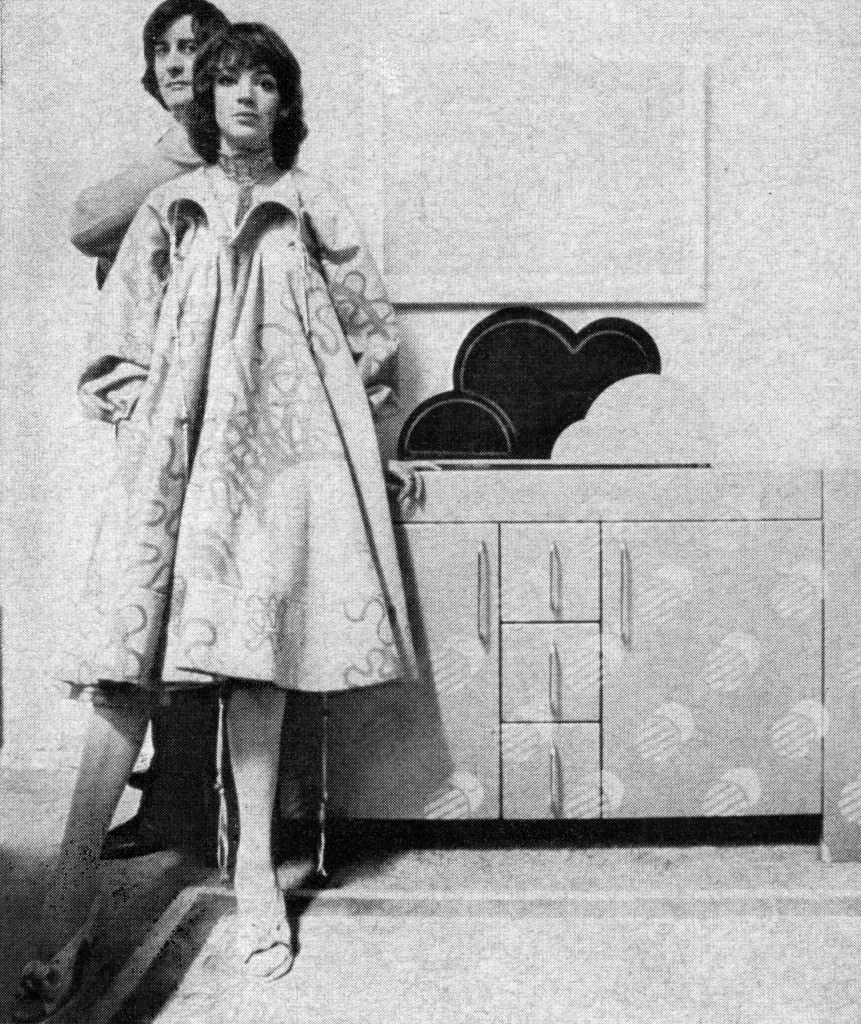
Chester Jones is design director of Colefax & Fowler. He makes furniture of extraordinary craftsmanship, all dependent on handmade techniques, reminiscent of thirties’ decorative skill. Here, with his wife, Sandy, his chest-professionally sprayed silver, bolted together, stencilled in patterns of pinks and blues. Neon cloud scuplture. Gentle pattern carpet made by V’soske. Walls stippled beige on white by hand, stencilled simply, oil paint through heavy paper. Ceiling in silver gilt rubbed by hand. Sandy’s dress is by Zandra Rhodes.
Photographed by Ruan O’Lochlainn.
Scanned from Vogue, July 1970.
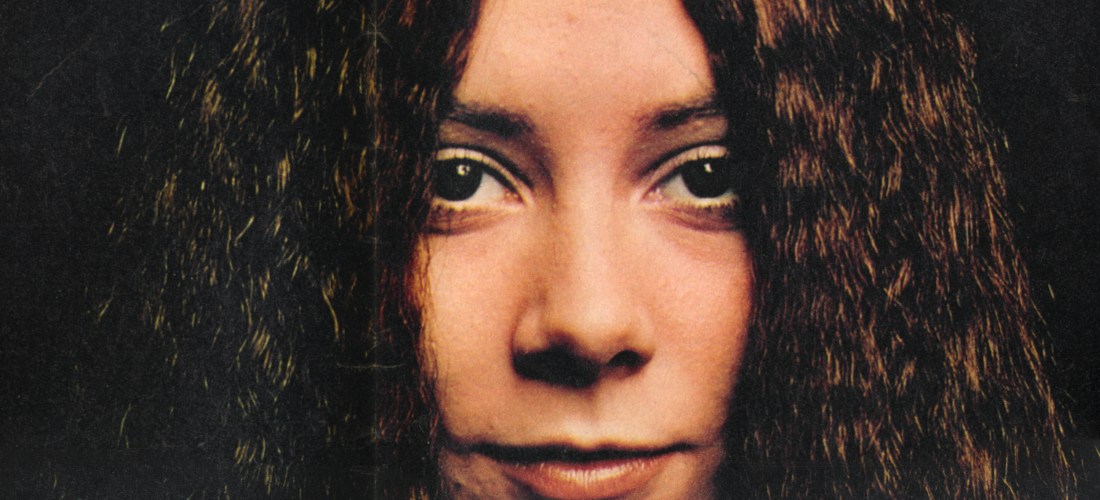
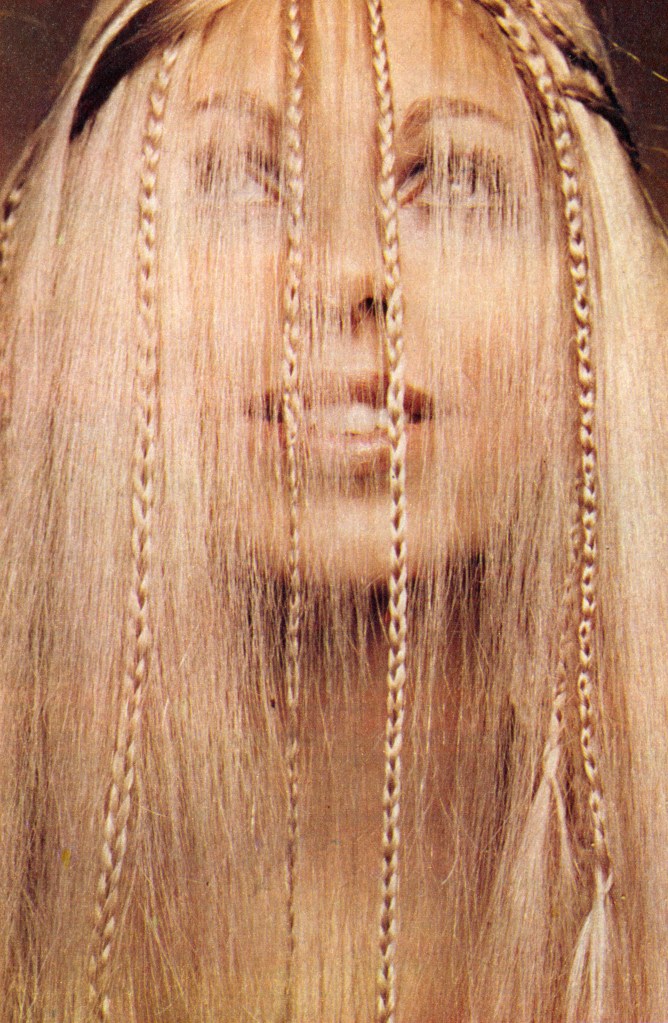
Hairdressers are laying down their scissors saying: “We want to feel hair again – short hair is out”. If you’re growing your hair, you’re in ‘cos long hair is romantic and flattering. These styles show you what we mean.
Photographed by Chris Holland.
Scanned from Petticoat, 9th May 1970
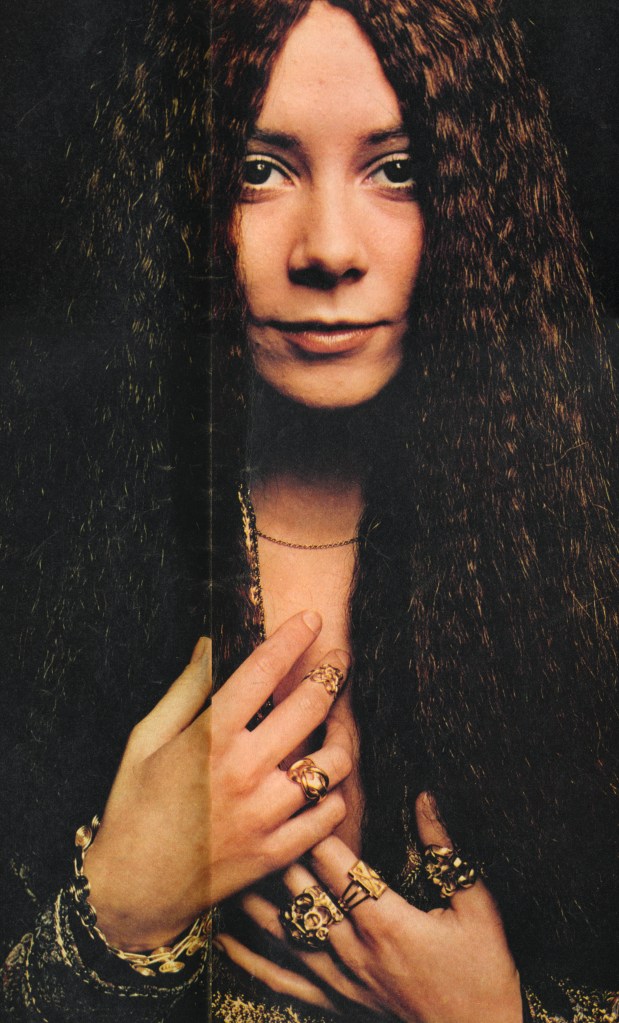
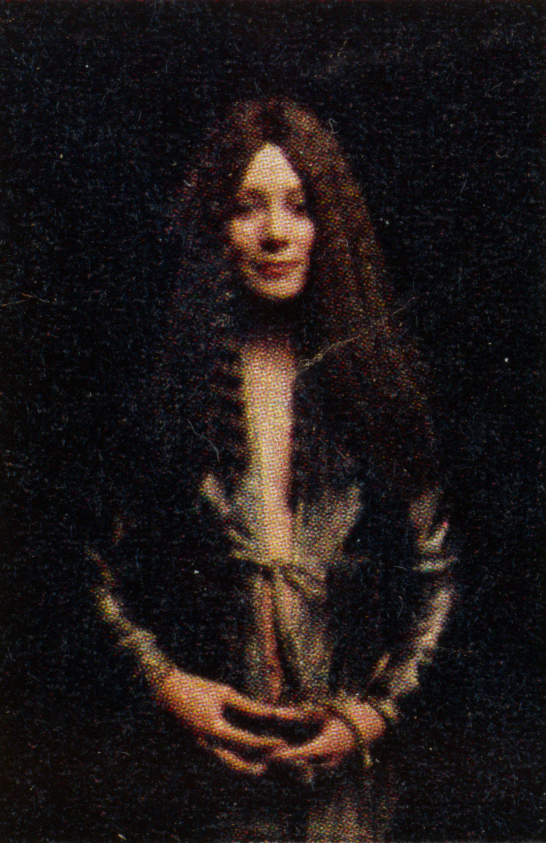
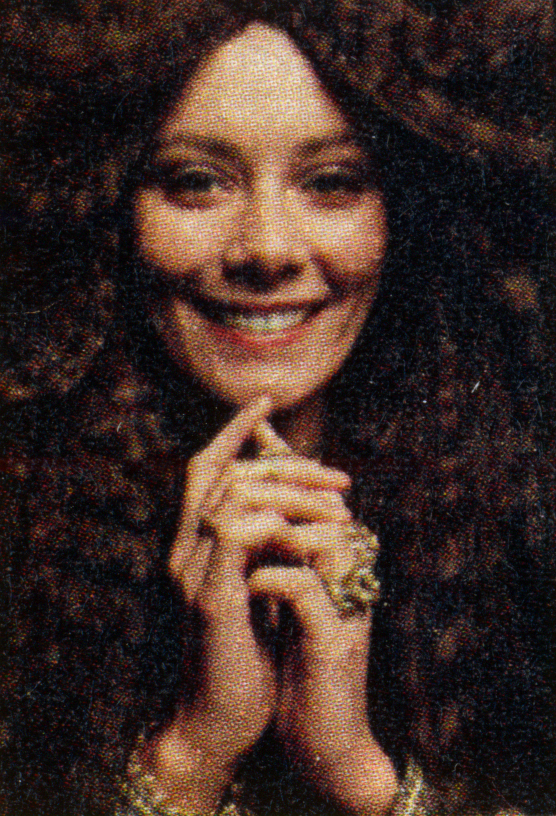
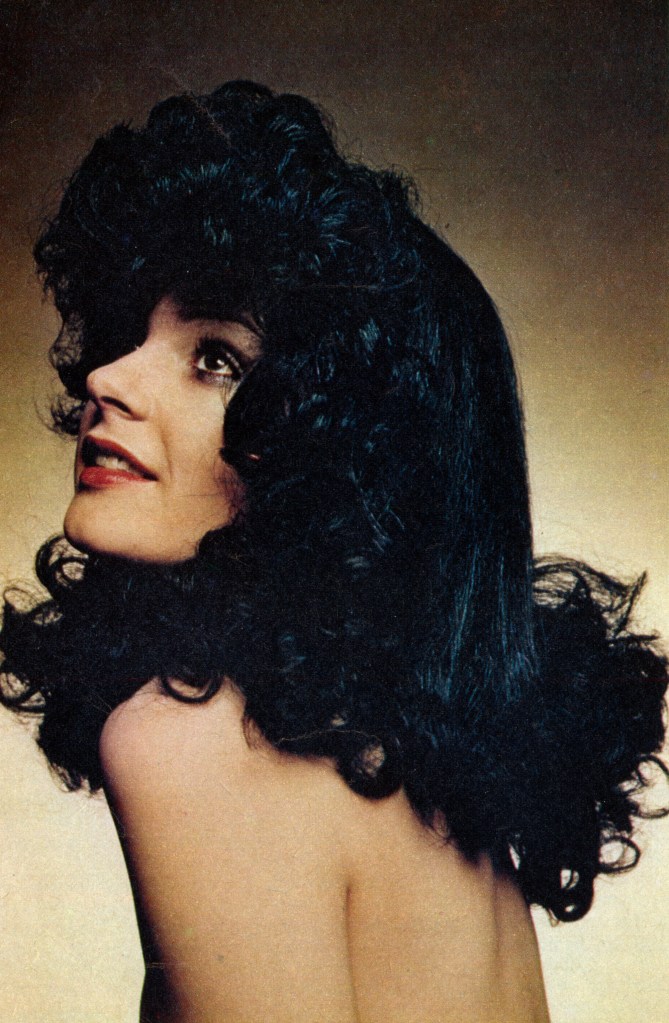
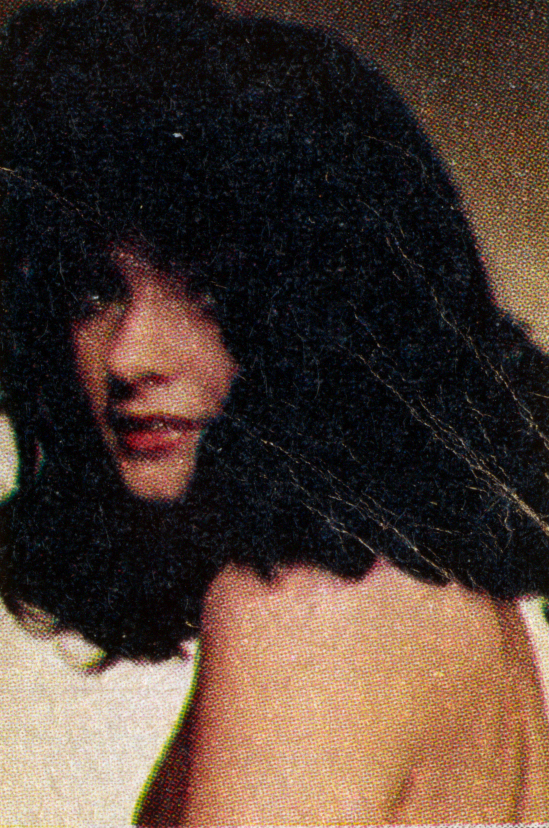
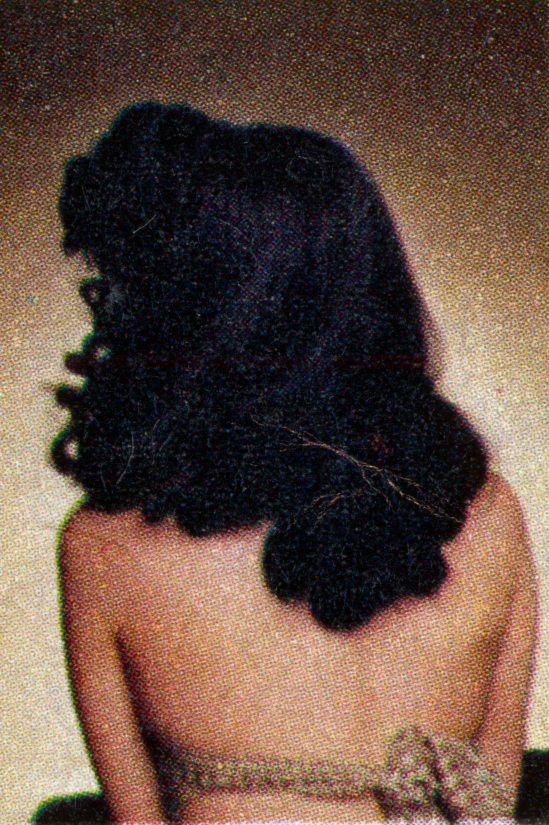


Photographed by Monty Coles.
Scanned from Honey, May 1975.


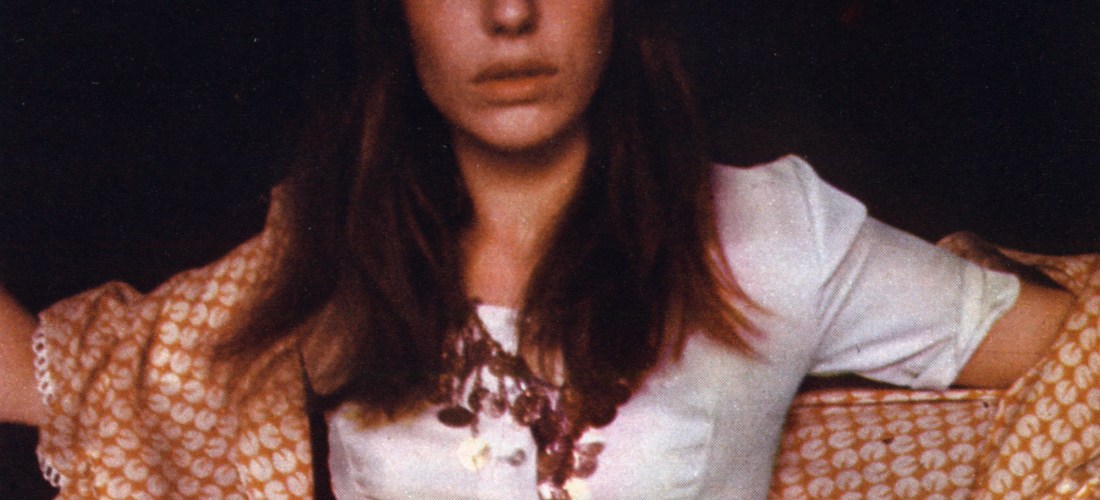
It looks as if England has lost Jane Birkin forever … she is firmly entrenched in Paris with baby Kate, nanny and the lovely Serge Gainsbourg, living in sombre luxury in their newly acquired house. The interior is stark and dramatic, every room is decorated in black and white, with white doors and black marble floors or carpet. The furniture is also black and white—there’s a big black shiny piano in the lounge, and a black mink cover adorns the bed which is raised off the floor on a black perspex dais. Weekends are usually spent at a quiet retreat in the country, making a sharp contrast to the busy social life that they lead during the week. Since Jane landed in France she has never stopped working. Film after film has been completed and the success of the record she made with Serge, which was also written and composed by him, Je T’Aime … Moi Non Plus, has led to an LP also written by Serge. Her life is chaotic and busy, it seems as if the telephone never stops ringing. People phone her every day with offers of interviews and films, the next of which is still a closely guarded secret. It was whilst she was making her first film in France, Slogan, that she met and fell in lovewith Serge, an event which seems to have altered her life but through it all she remains the same—a waif of a girl, tall and lanky, in pullover and jeans, serving tea out of her treasured English teapot. Her wardrobe is noticeably small, consisting mainly of casual clothes like pullovers, T-shirts and jeans; with the occasional gipsy-type dress reserved for the evening and worn with gold chains, loop earrings and gipsy belts. She acquires most of her clothes by chance buying, rarely by intentionally setting out on a spending spree. Usually she just spots something she likes in a shop window and ends up by going in and buying it. In London she shops mainly at Countdown, Foale and Tuffin, and Quorum. She buys her jewellery from the Chelsea Antique Market. In Paris she favours the more trendy designers like Mia and Vicky or Jean Bourquin. Jane is perfectly happy spending hours hunting about in antique shops for interesting little knick-knacks, like the 18th-century doll’s house which she gave to her Serge for Christmas.
Photographed by Michael Berkofsky.
Scanned from 19 Magazine, May 1970.
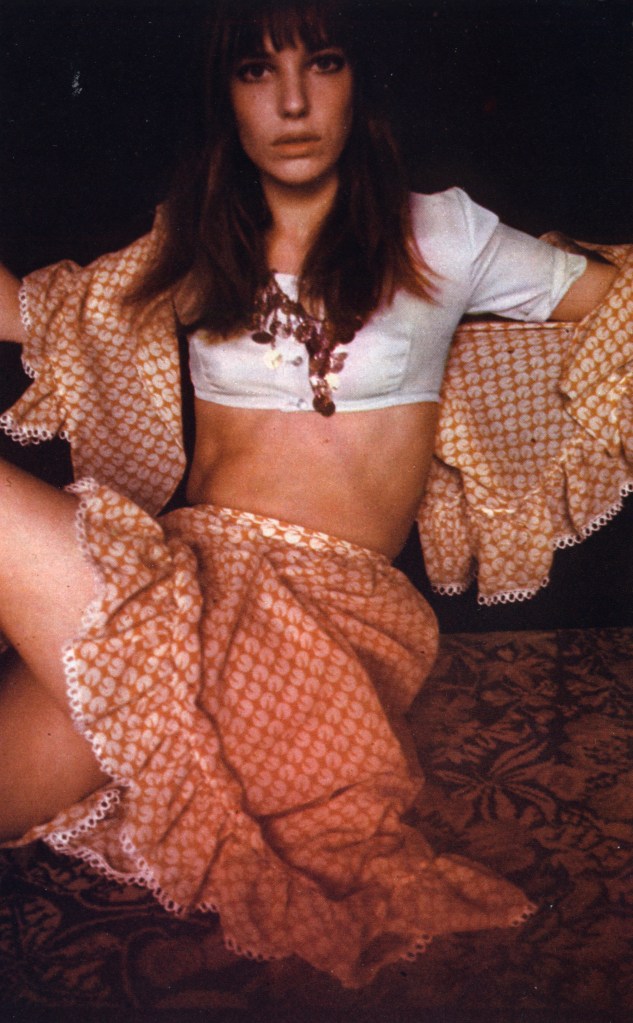
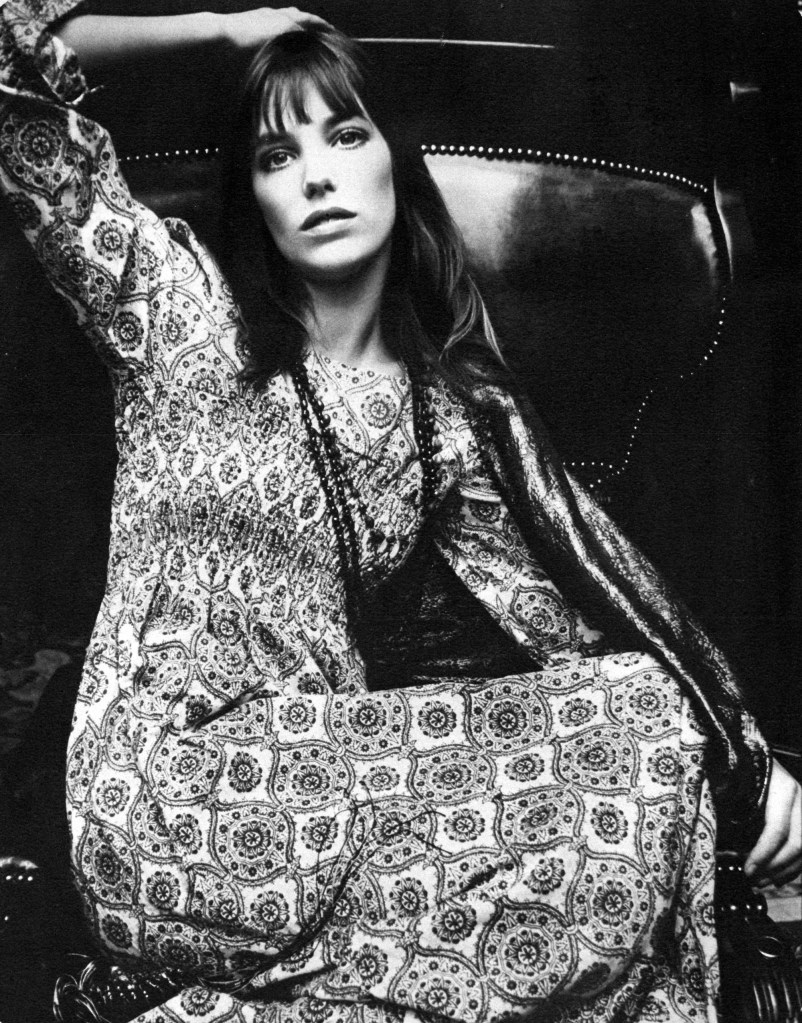
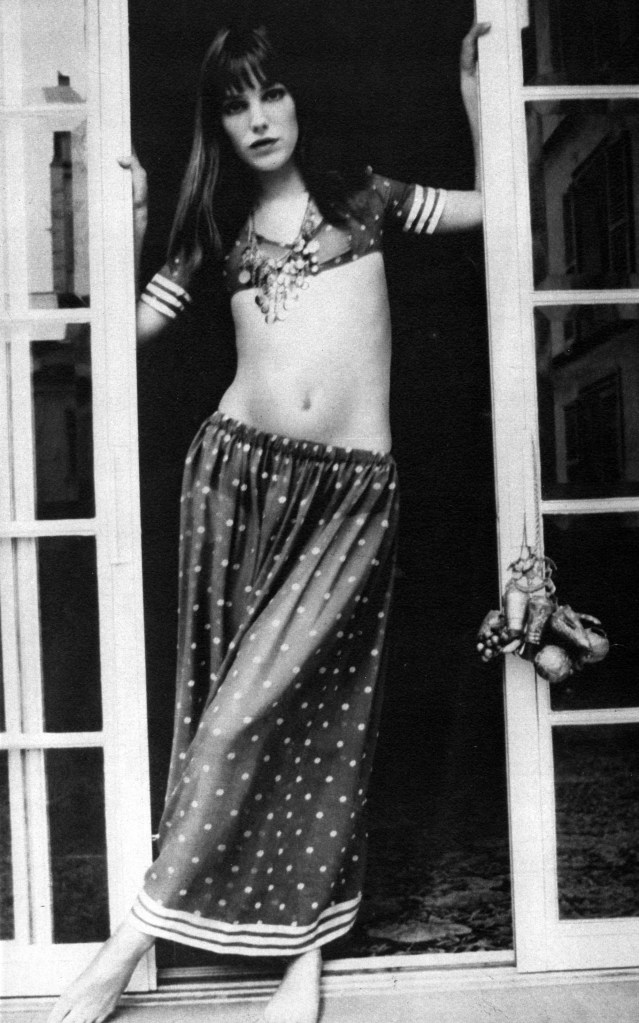
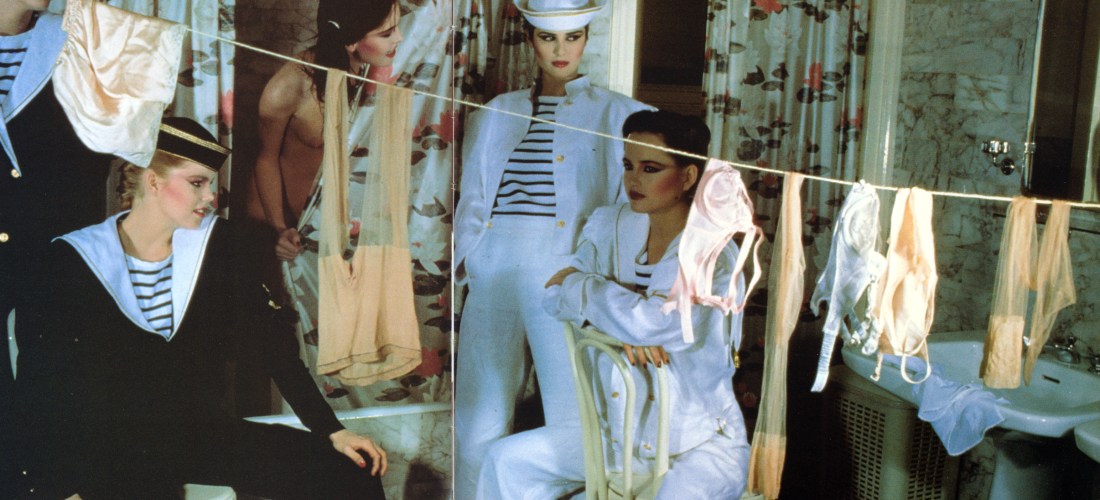
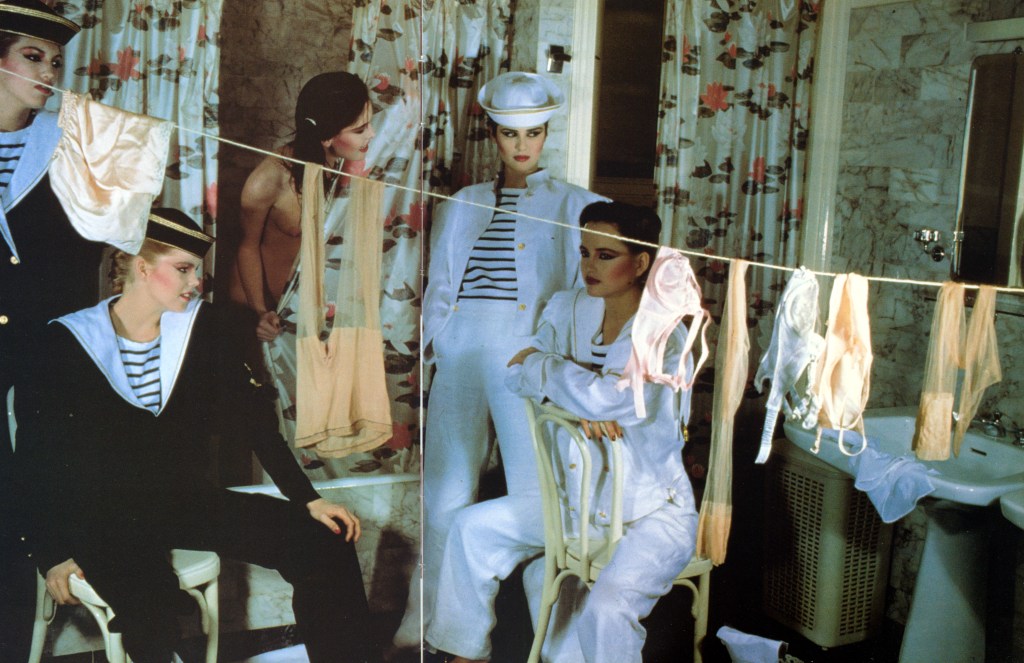
Photographed by Guy Bourdin.
Scanned from Lingerie in Vogue (1981) by Christina Probert.
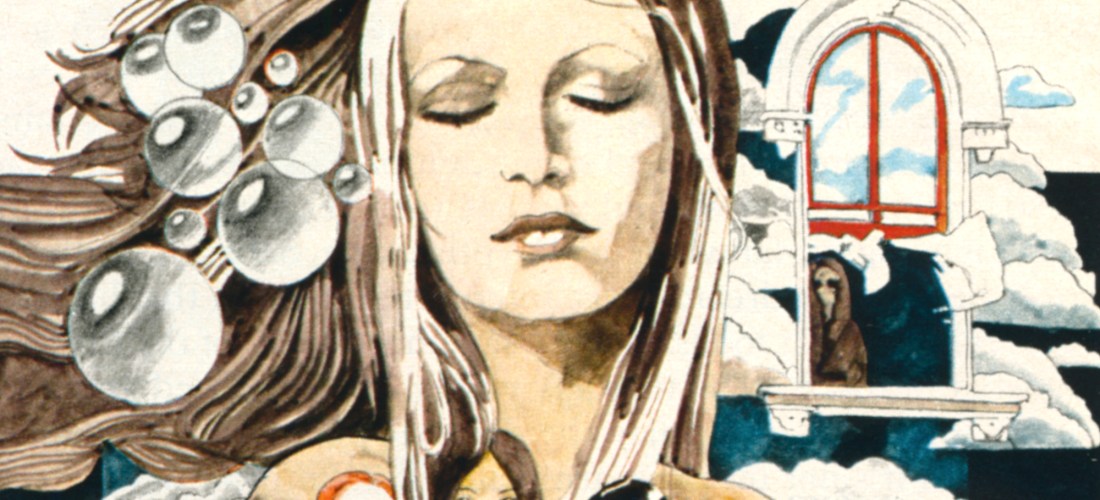
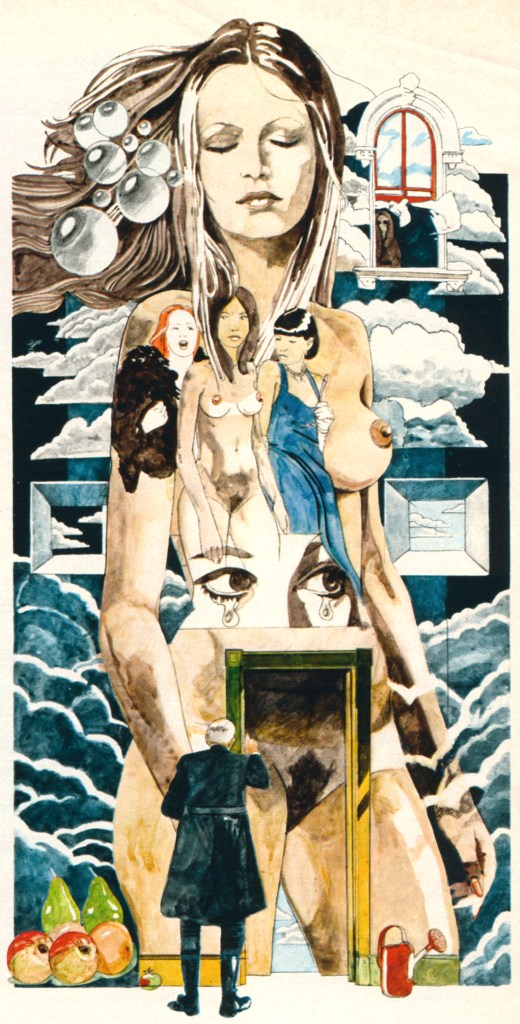
Illustration by John Walsh.
Scanned from Cosmopolitan, July 1975.
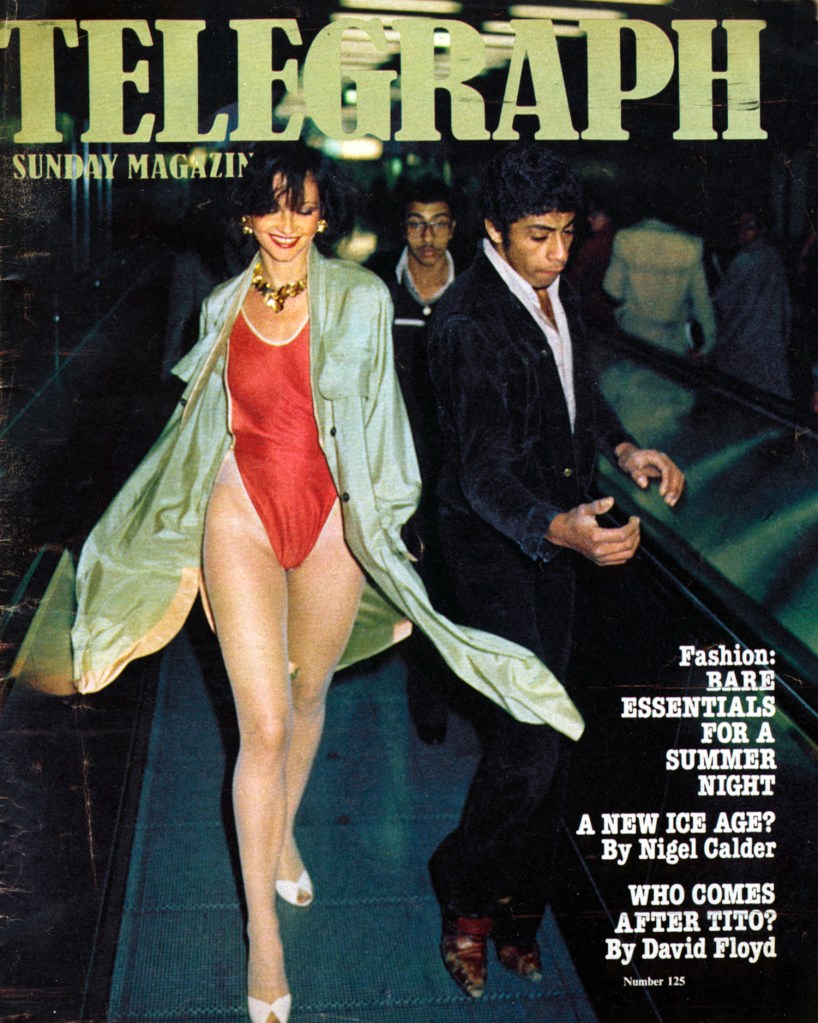
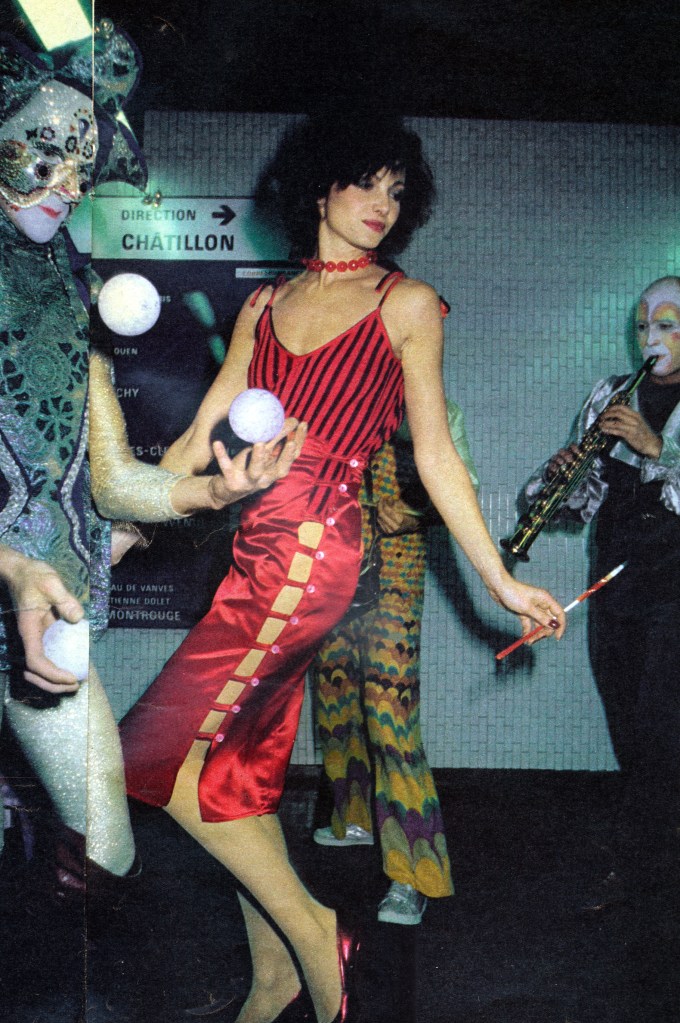
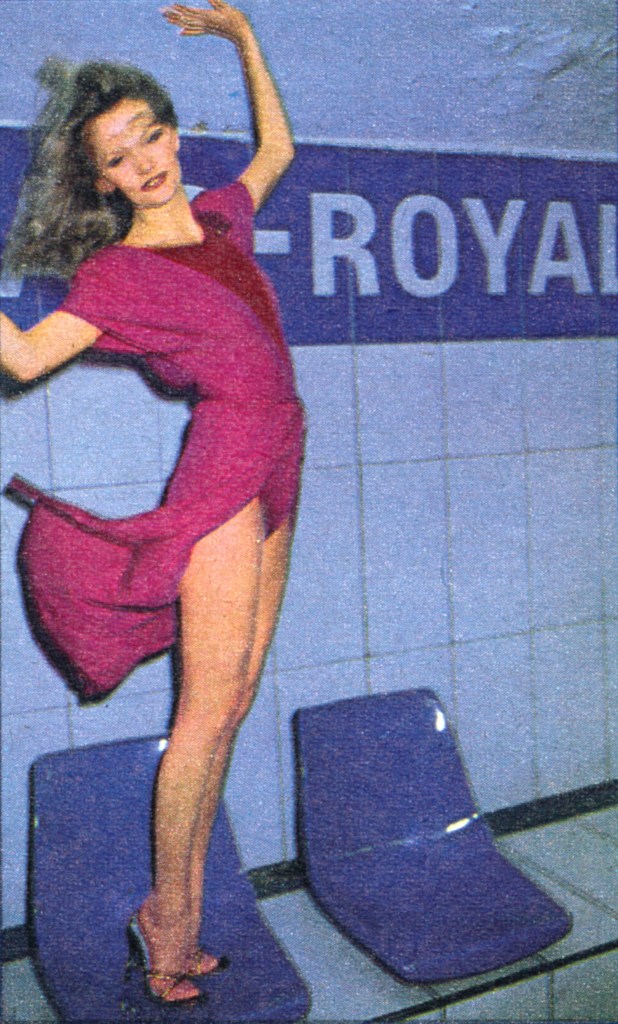
Would you dare to wear it? The body suit is what top designers have dreamed up for dancing this summer – to be worn with the barest excuse of a skirt, or a floating piece of chiffon. Norman Parkinson photographed some of the most exciting ideas in the modernised Paris Metro.
I would never have thought of sweltering on the Paris Metro as some kind of ‘normal’ experience I would aspire to, but here we are.
Shoes from Charles Jourdan and Walkers.
Fashion Editor Penny Knowles.
Photographed by Norman Parkinson.
Scanned from The Telegraph Magazine, Number 125 (February) 1979.
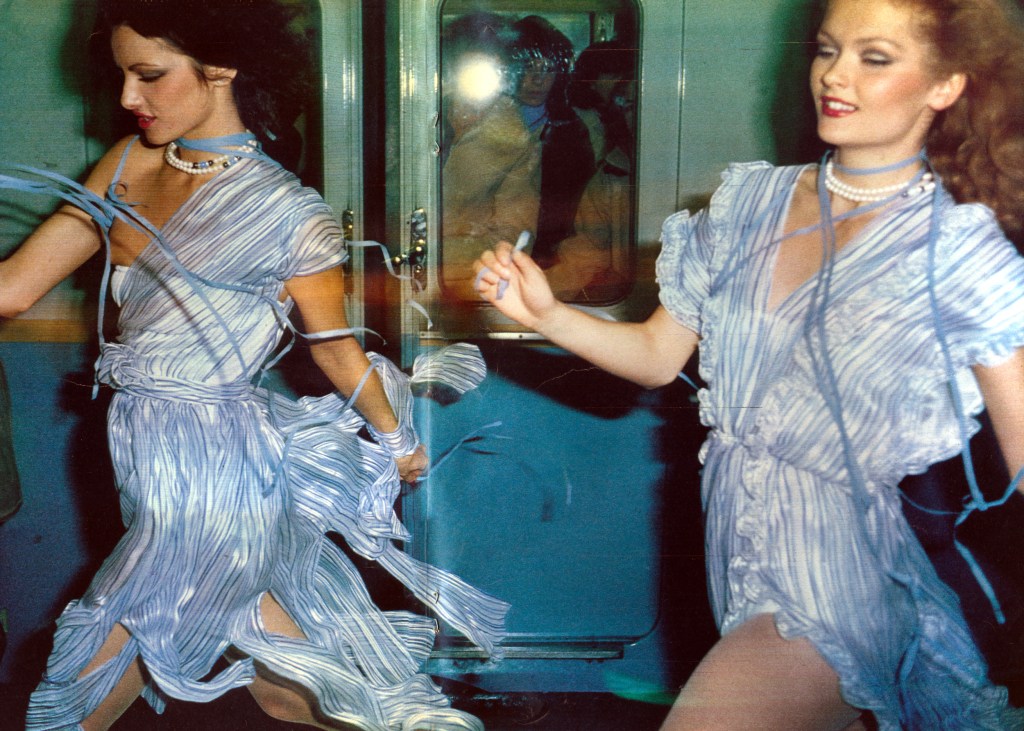
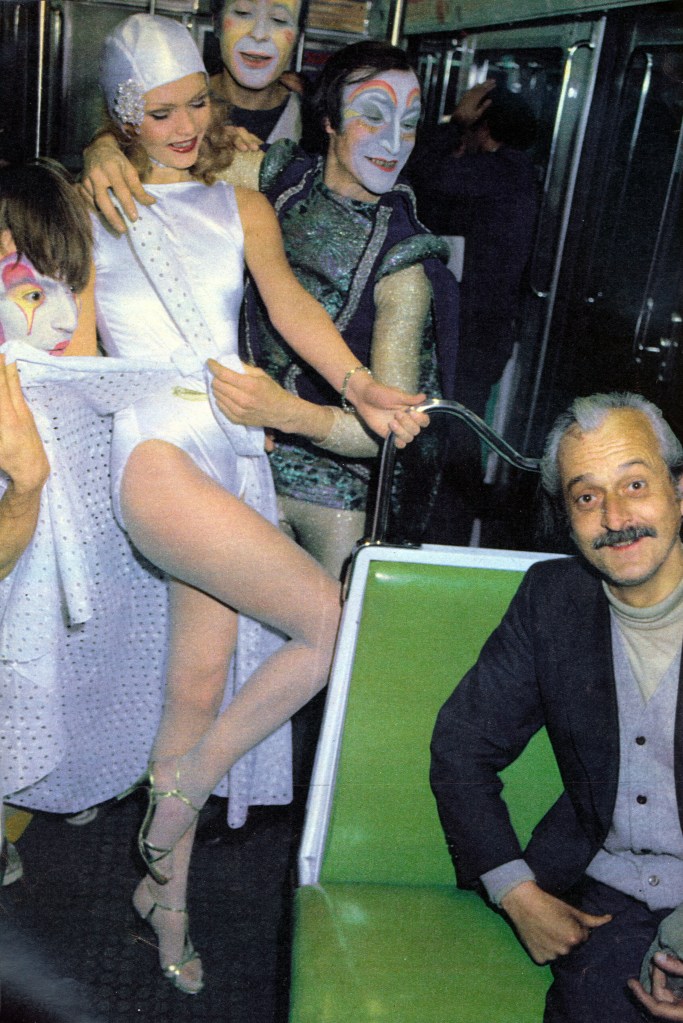
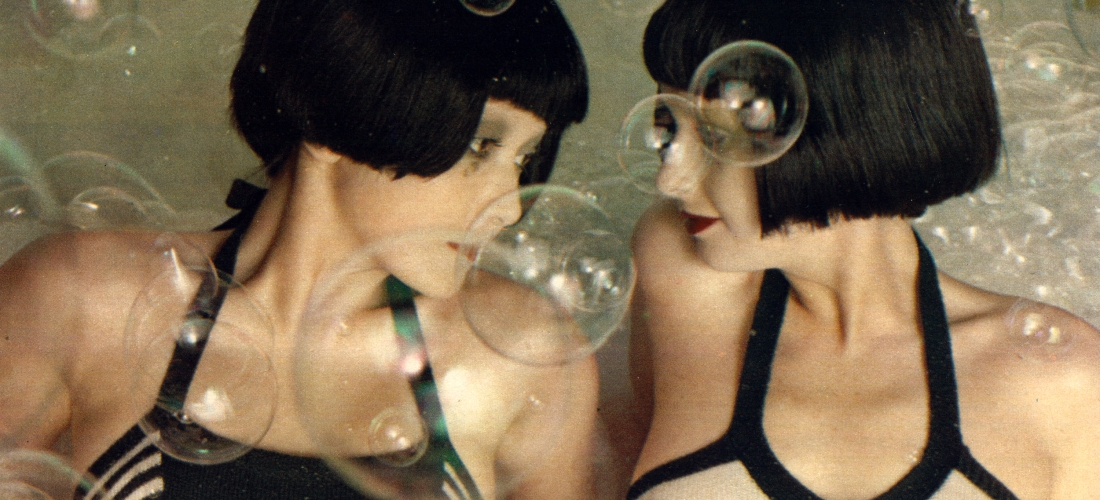
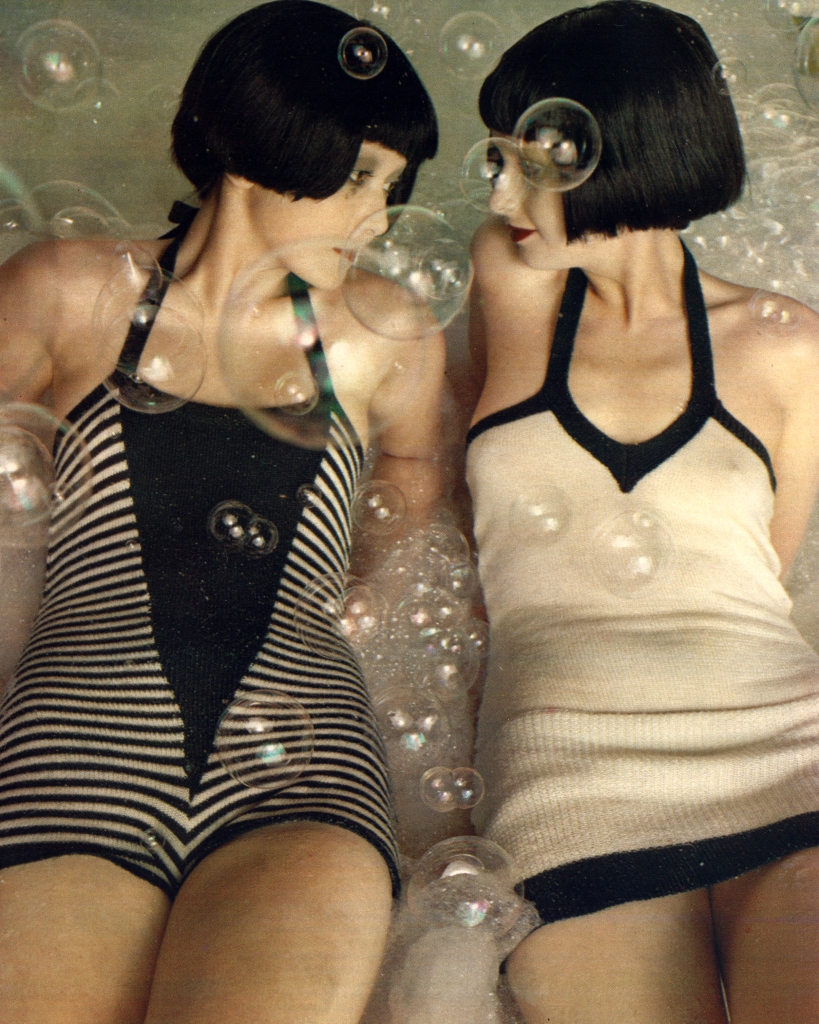
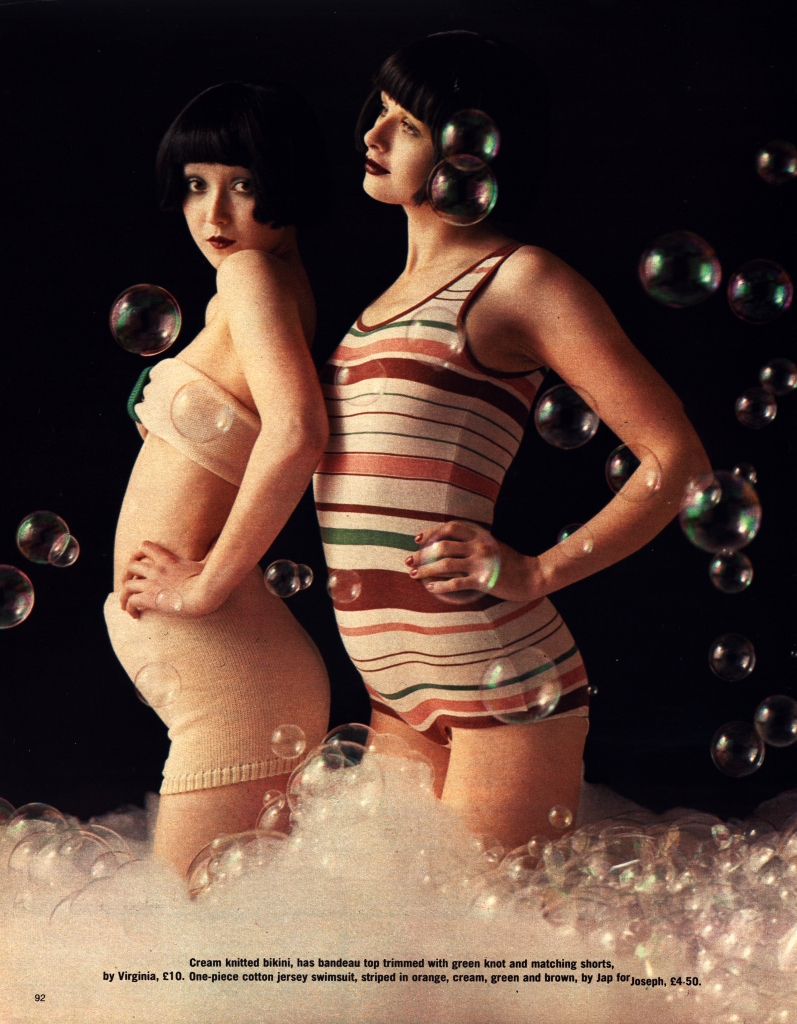
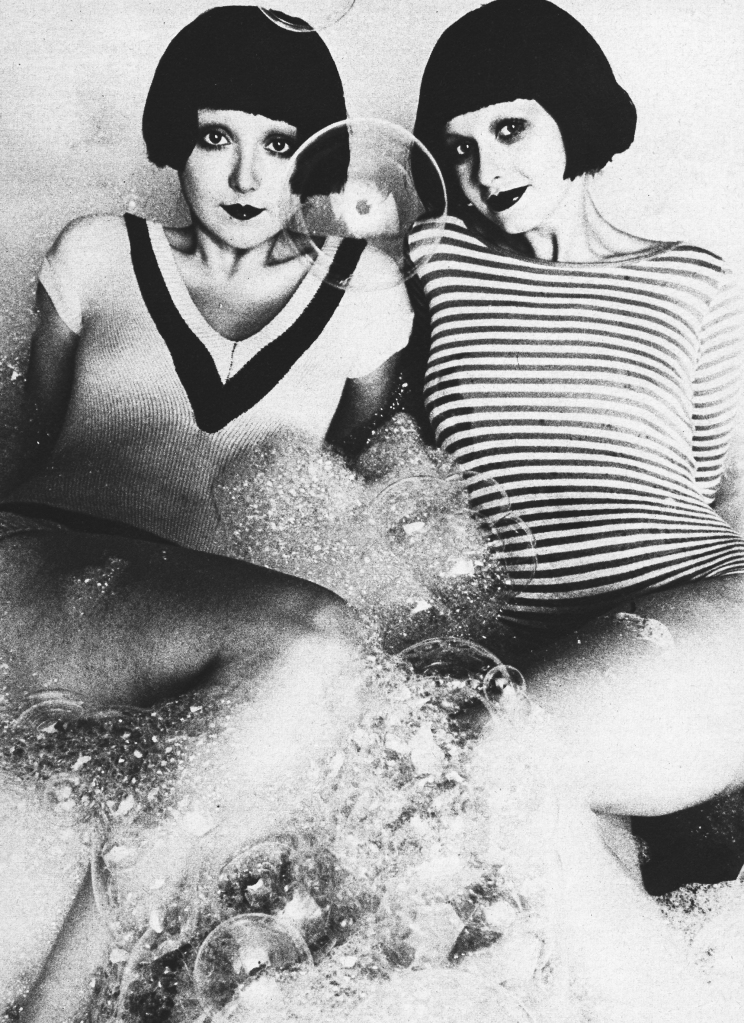
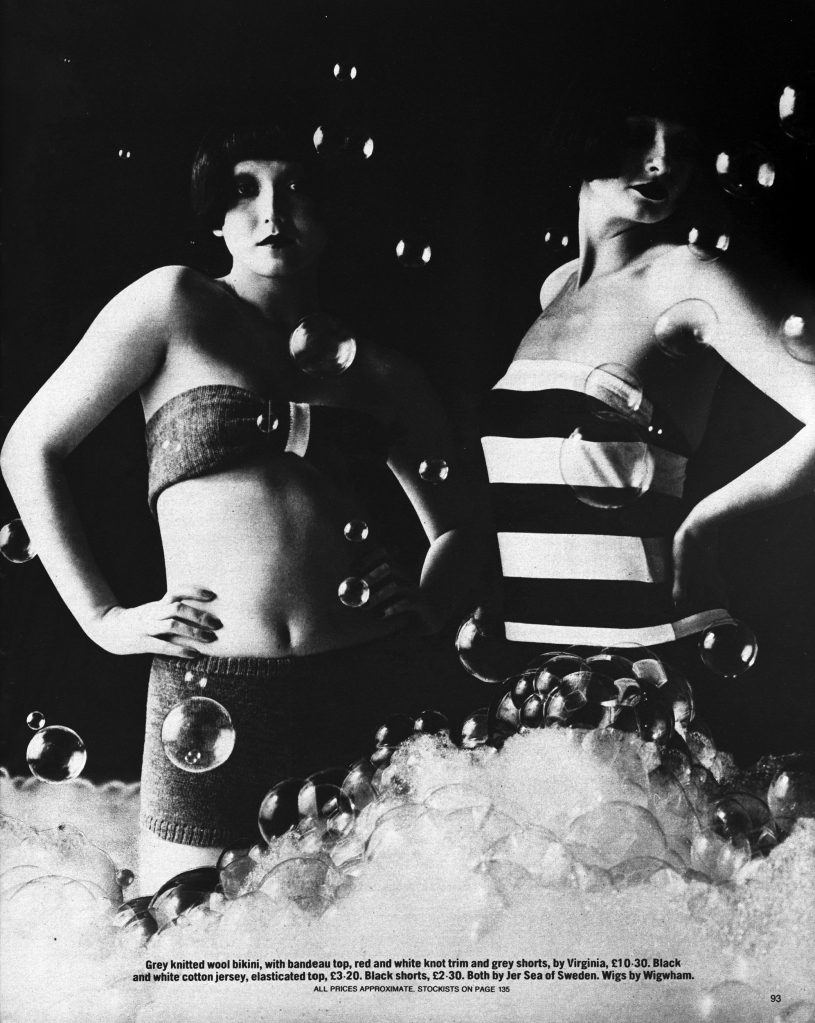
When it’s not a swimsuit but a playsuit that you want; when you’re not splashing, but lounging prettily under a beach brolly; if you have no wish to get wet, but still want to remain in the swim, these are definitely for you. But just make sure that you don’t get thrown in at the deep end!
Another work of genius by James Wedge, which I wonder might have been somewhat inspired by The Dolly Sisters? Modelled by Vivienne Lynn and another model I don’t recognise.
Wigs by Wigwham.
Photographed by James Wedge.
Scanned from 19 Magazine, July 1973.
 Liz Eggleston