
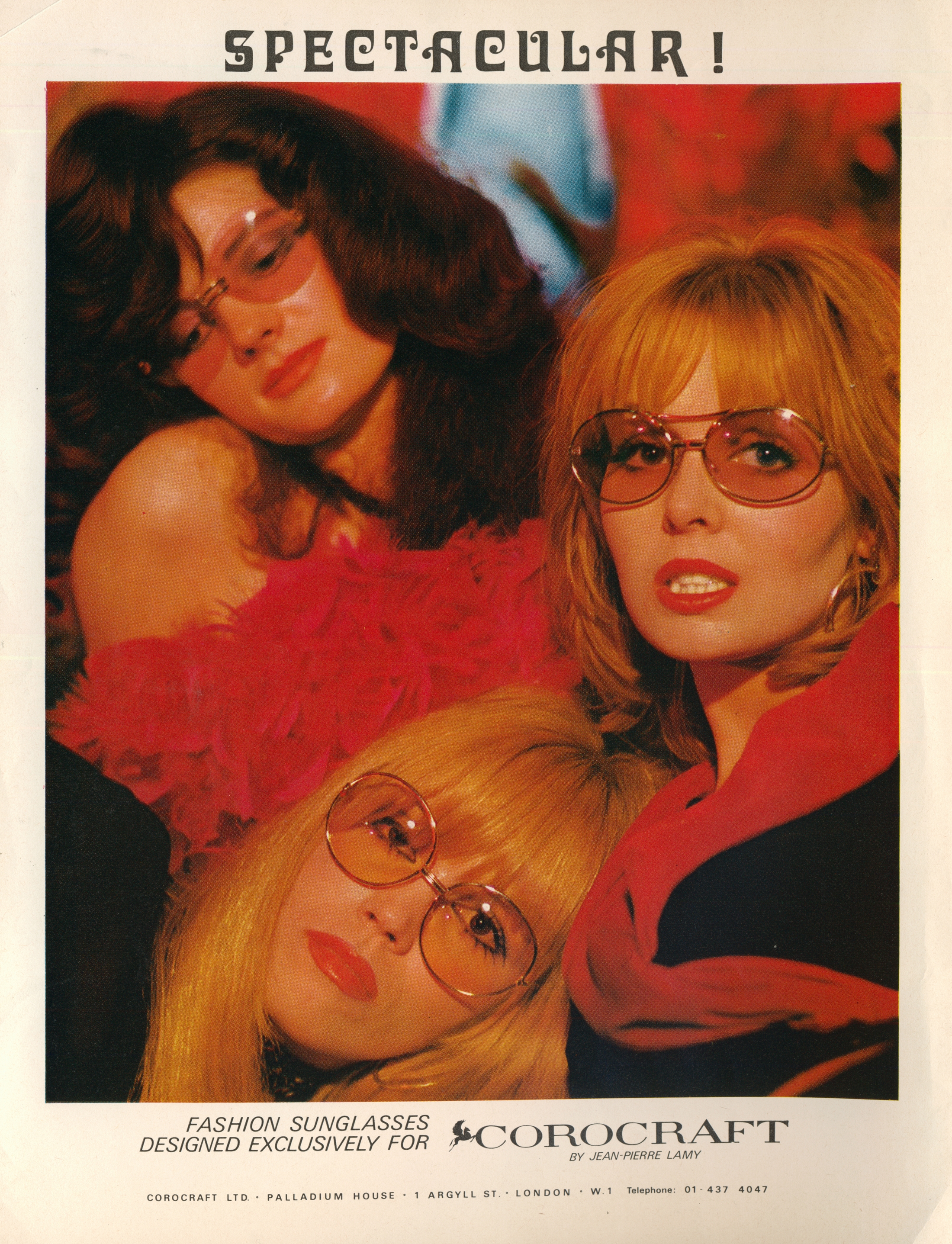
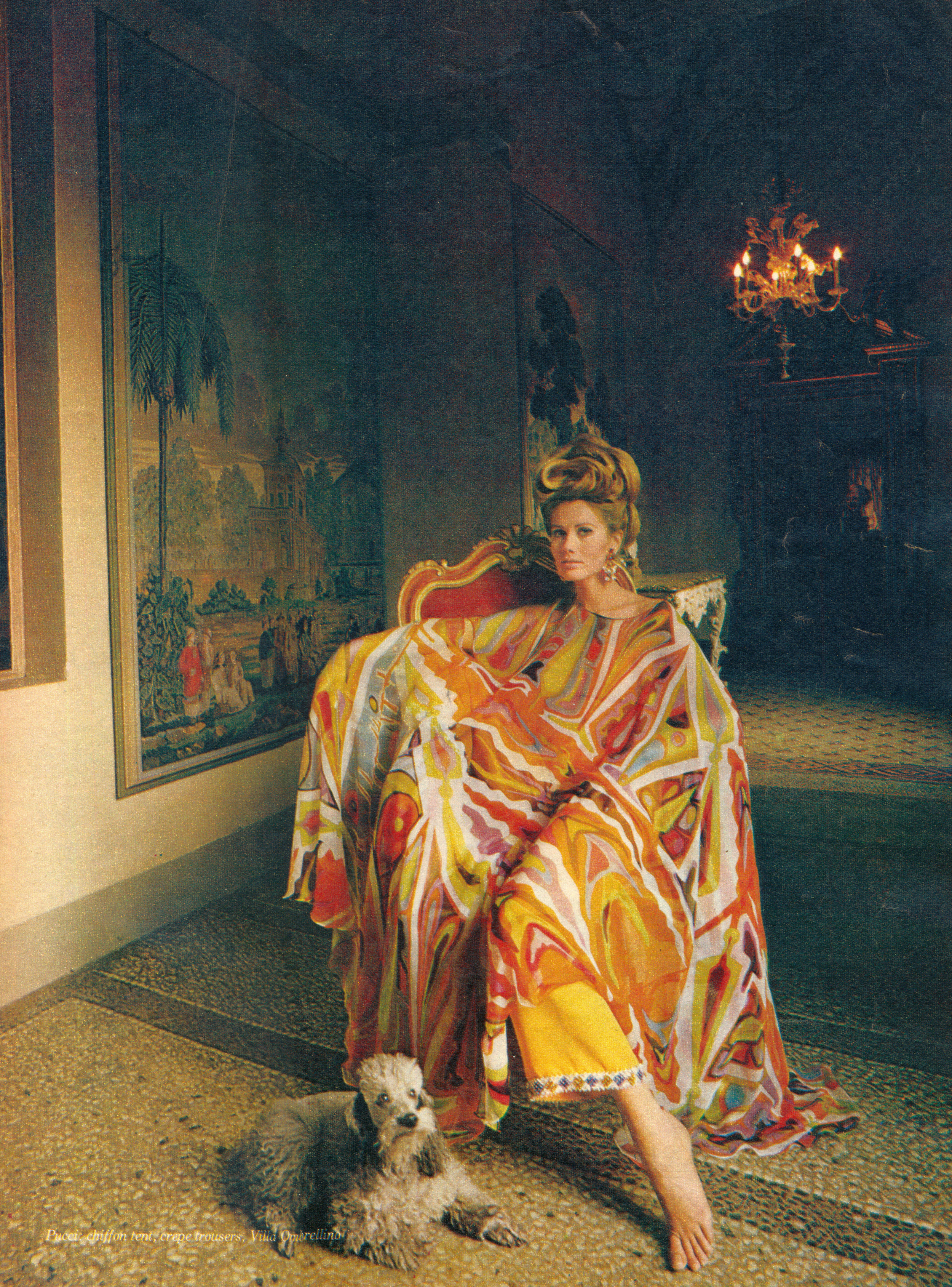
Spectacular is certainly how I would describe this triumvirate of iconic models: Gala Mitchell, Kari-Ann Muller and Amanda Lear.
Scanned from Vogue, December 1968.
Spectacular is certainly how I would describe this triumvirate of iconic models: Gala Mitchell, Kari-Ann Muller and Amanda Lear.
Scanned from Vogue, December 1968.
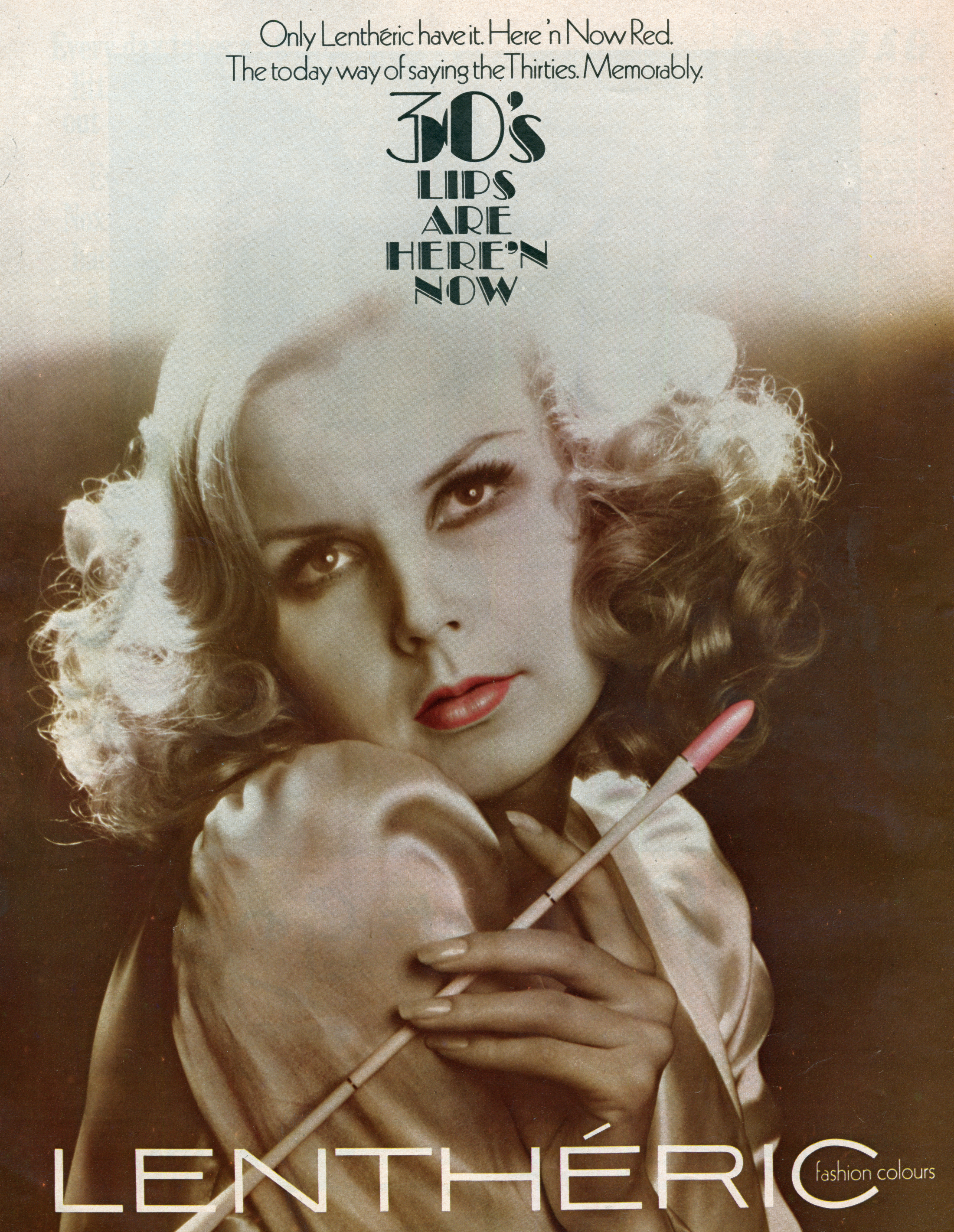
Scanned from 19 Magazine, August 1968.
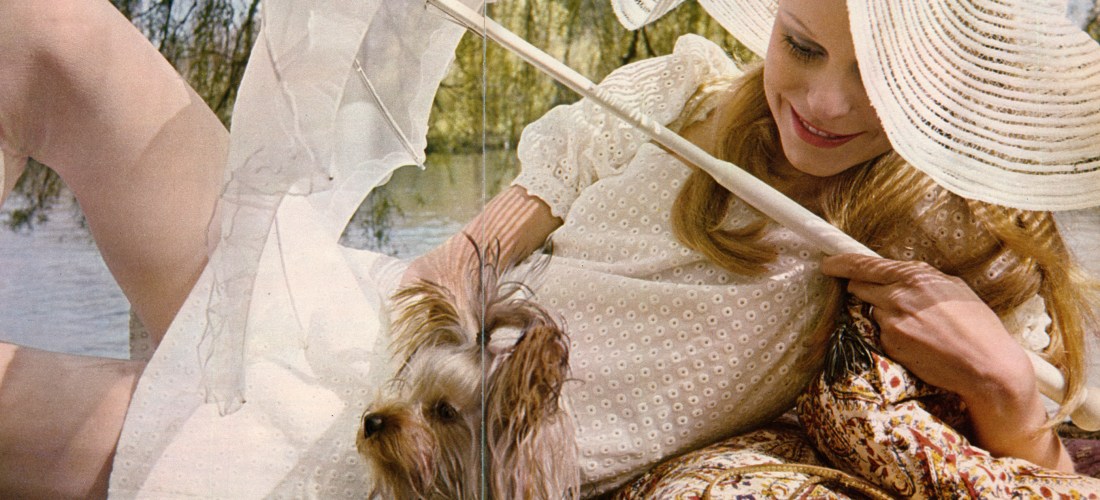
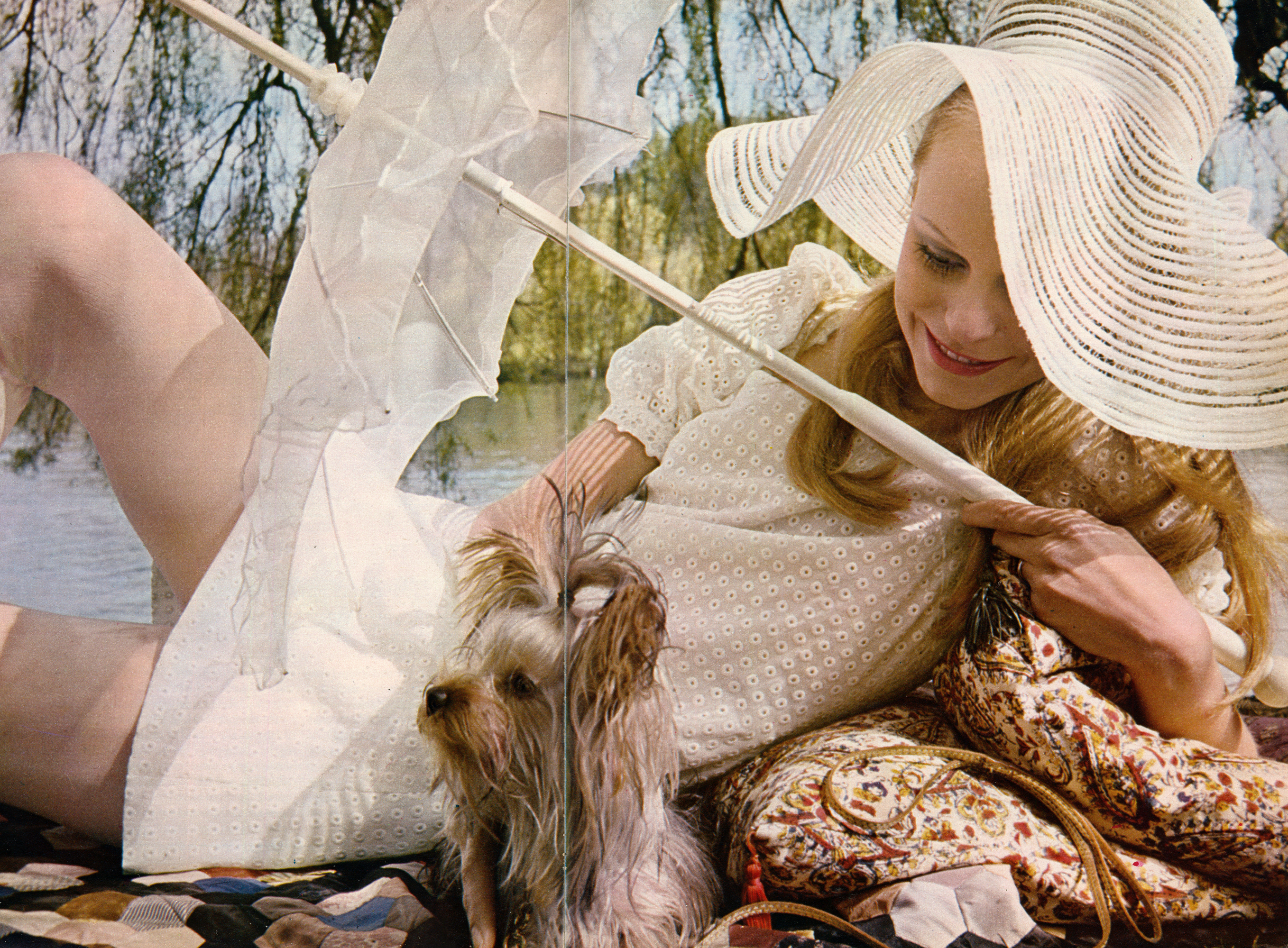
For a Sunday by the river . . . just looking your prettiest. Snowy-white dress in broderie Anglais with a wide, square neckline, puff sleeves -a very demure air about it. By Simon Ellis, 72gns. Wide-brimmed hat in fine white straw by Otto Lucas, 88s. White organza parasol, to order from Harrods, 6 2 gns. White tights by Mary Quant, 18s : 11d. Paisley cushions and old-fashioned quilt from Cornucopia. More prettiness how-to : Almay’s range of hypo-allergenic make-up, specially formulated for difficult skins that usually don’t like any make-up at all. Soft Ivory Liquid Make-up, matching powder. Eye Shadow Aqua, Charcoal Brown Mascara; Pink Pecan Colour Moist Lipstick, And, a summertime scent, Mademoiselle Ricci by Nina Ricci.
Photographed by Gershon
Scanned from Vanity Fair, July 1968.

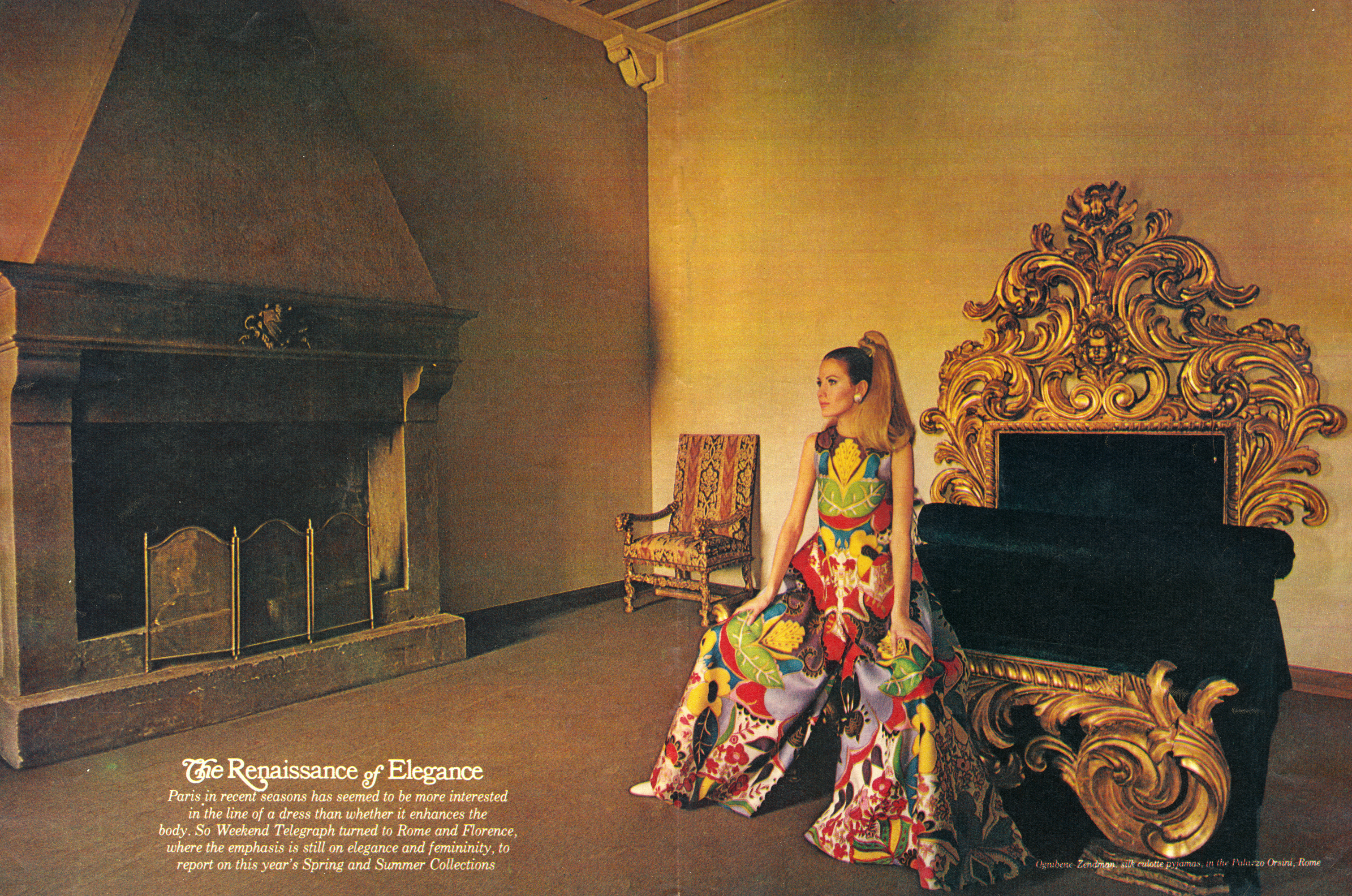
Paris in recent seasons has seemed to be more interested in the line of a dress than whether it enhances the body. So Weekend Telegraph turned to Rome and Florence, where the emphasis is still on elegance and femininity, to report on this year’s Spring and Summer Collections.
Fashion by Cherry Twiss.
Photographed by Robert Freson.
Scanned from The Weekend Telegraph Magazine, February 24th 1967.


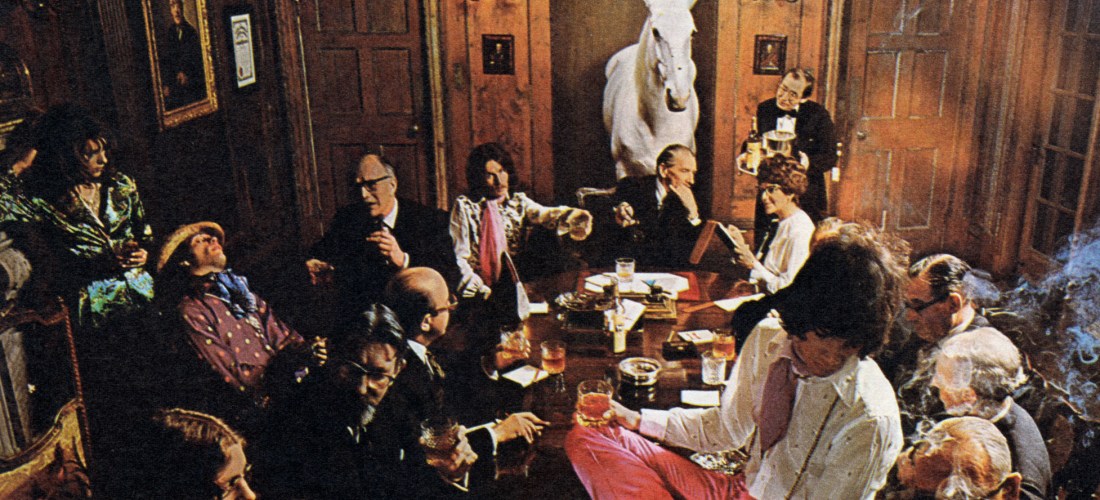
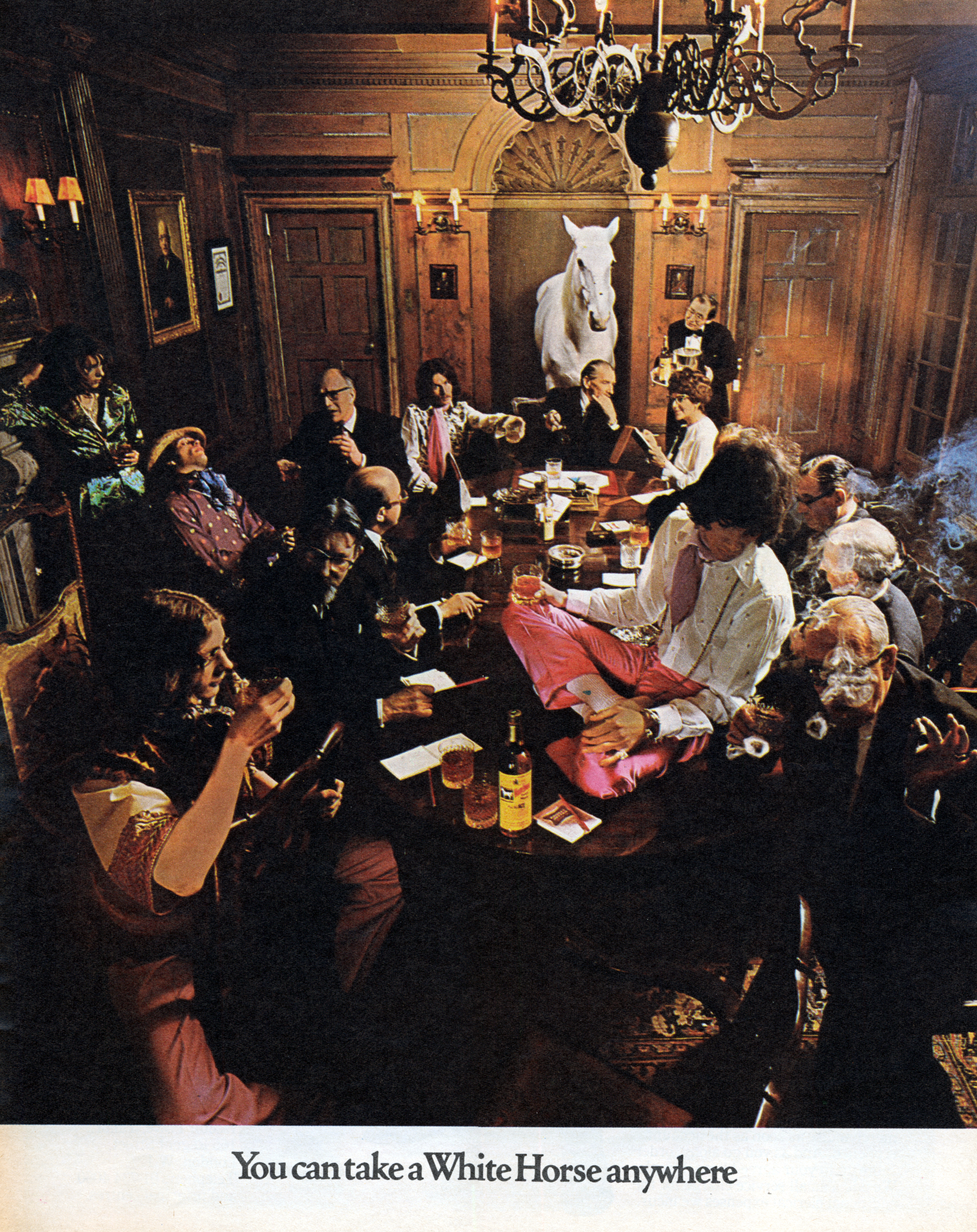
Make mine a double and I’ll take the green jacket on the left as well please!
Advert for White Horse whiskey.
Scanned from The Observer Magazine, 20th April 1969.
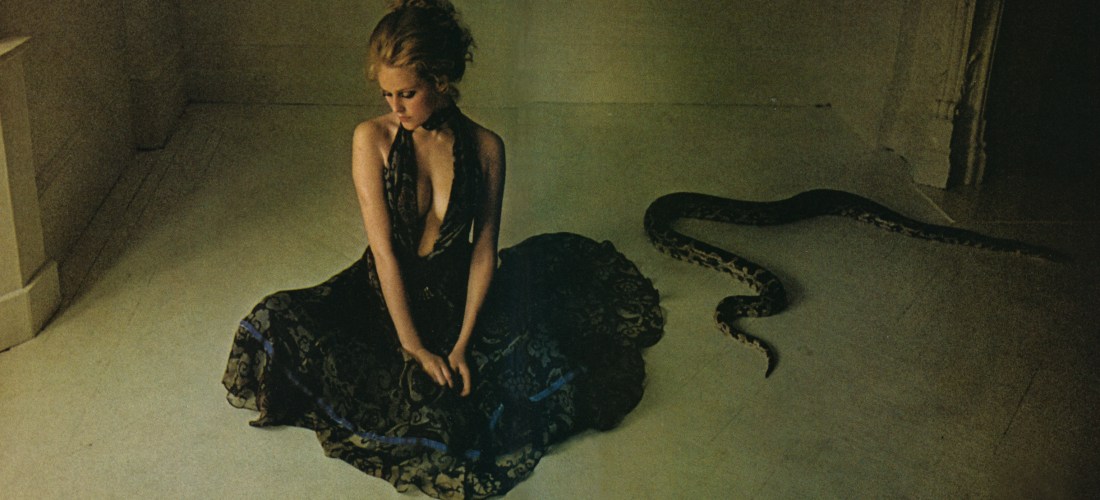
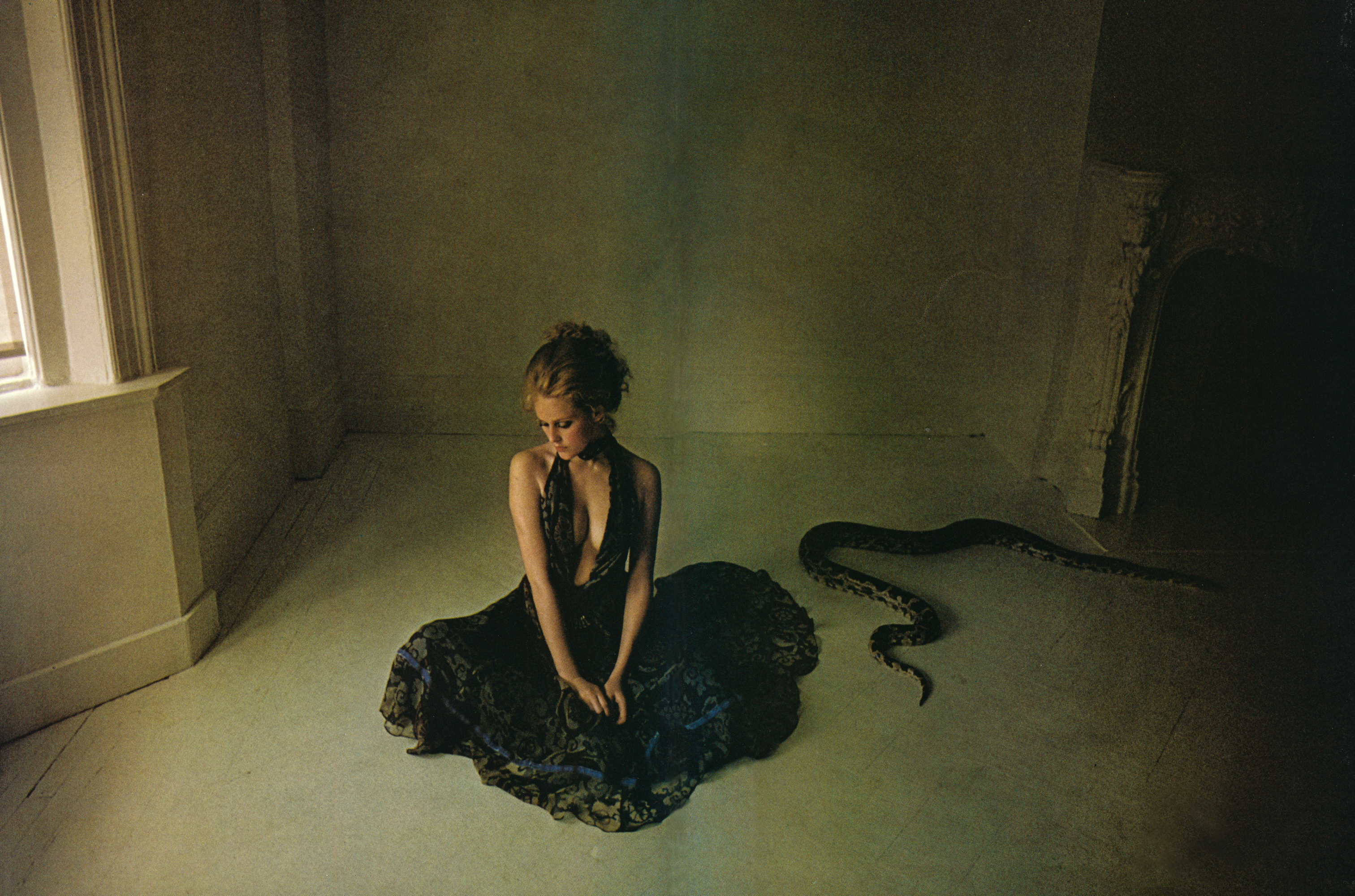
“You love your boyfriend and he’s left you. You’re alone in a big city and an empty apartment.” Kane had not yet picked up his camera, but Margrit Ramme was working on the sadness. She was also scared of the snake. The editors of Queen magazine had asked for an entire issue to be called “Art Kane’s New York,” including fashions, and he had said all right—but don’t expect to see laughing girls running down Fifth Avenue. He had just divorced his second wife, had not yet met Jean Pagliuso or photographed Larry Rivers, and felt fairly bitter.
If you want to call it Art Kane’s New York, he told Queen, you’ll have to accept pictures showing that the place right now is kind of empty for me. Righto, they said.
He left the studio and rummaged around for real-life locations. He had found the apartment on Gramercy Park, and decided to shoot the fashions there before the furniture came in. Truth is, he wasn’t motivated entirely by a desire to display his mood. Not only does training as an art director make him look for a theme when he has space for an essay, as against a bunch of random shots that just present the merchandise; Art Kane loves almost more than anything else to tell a story.
He also loves snakes. The first boy scout in the Bronx to get a Reptile Study merit badge, he kept 32 of them at home despite a mother who tried to make him flush the first one down the toilet.
This story would reflect the dilemma of a lovely woman—always beautifully dressed, of course—searching for a man, for identity, for something. A snake would be not only an obvious male symbol but also a reminder of a Garden of Eden to start it off. Since Kane had given, his collection to the Bronx Zoo when he was drafted, he called All-Tame Animals, a pro-vider of non-human performers in New York. They referred him to a snake owner in one of the city’s residential hotels, asking that he be discreet; she would be evicted if the manage-ment discovered that she kept a boa constrictor and a python in her room. So Kane was Uncle Joe when he called to ask about Cousin Bea: “She must be a really big girl by now. Oh, six feet six, that sounds good.” And Patricia? “Over eight feet tall? My goodness.” He went over to see them. Their owner showed him the boa in her bathtub and pulled the python out of a closet. “Terrific,” he said. “Bring them up to my place at 10 o’clock tomorrow.”
When she arrived with the snakes in a laundry bag, Kane was moving white window shades up and down, studying the way they filtered the natural light he would use all day. Morning light came softly through the west-facing windows of the living room. He arranged the python, then stood back to peer through a Nikon. Moving forward, back, left, right, he kept the model close to the center of the frame. He was using a 24mm lens, not only for depth of field that would keep the picture sharp from front to back but also to make objects near the edges seem to lean away, focusing attention on the center.
“Okay, Margrit, you’re unhappy, unaware, the two of you can never really come together. . . .” Bracketing—one shot at a normal exposure, one above, one below—he redesigned the picture as he moved. “That’s it, keep it, keep it,” he told her when he liked what was happening. “Now, hold every pose for three clicks and then change … Beautiful. Now keep that until I say stop. I want to explore this until we’ve eaten it up.”
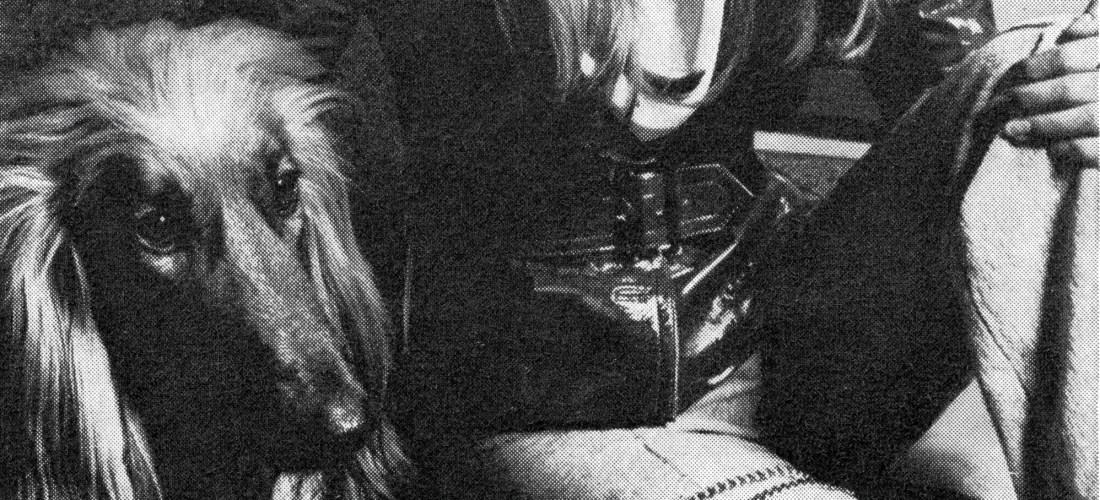
Ninety minutes later he had eaten up the male-female situation (above) and moved to the bedroom (below) to set up an identity problem. A second model had arrived. “You’re clothed and you’re naked,” Kane said, “you’re really the same woman, trying to figure out who you are.” This time he wanted to stretch the image more alarmingly toward the edges, so he put on the 21mm lens that he had used to shock the editors of Vogue on his first fashion assignment.
Images originally published in Queen magazine .
(date not given but looks circa 1969/70 to me, especially given Queen merged with Harpers Bazaar in 1970).
Clothes are uncredited here but both look like Thea Porter to me.
Photographed by Art Kane.
Scanned from Art Kane: The Persuasive Image, 1975.
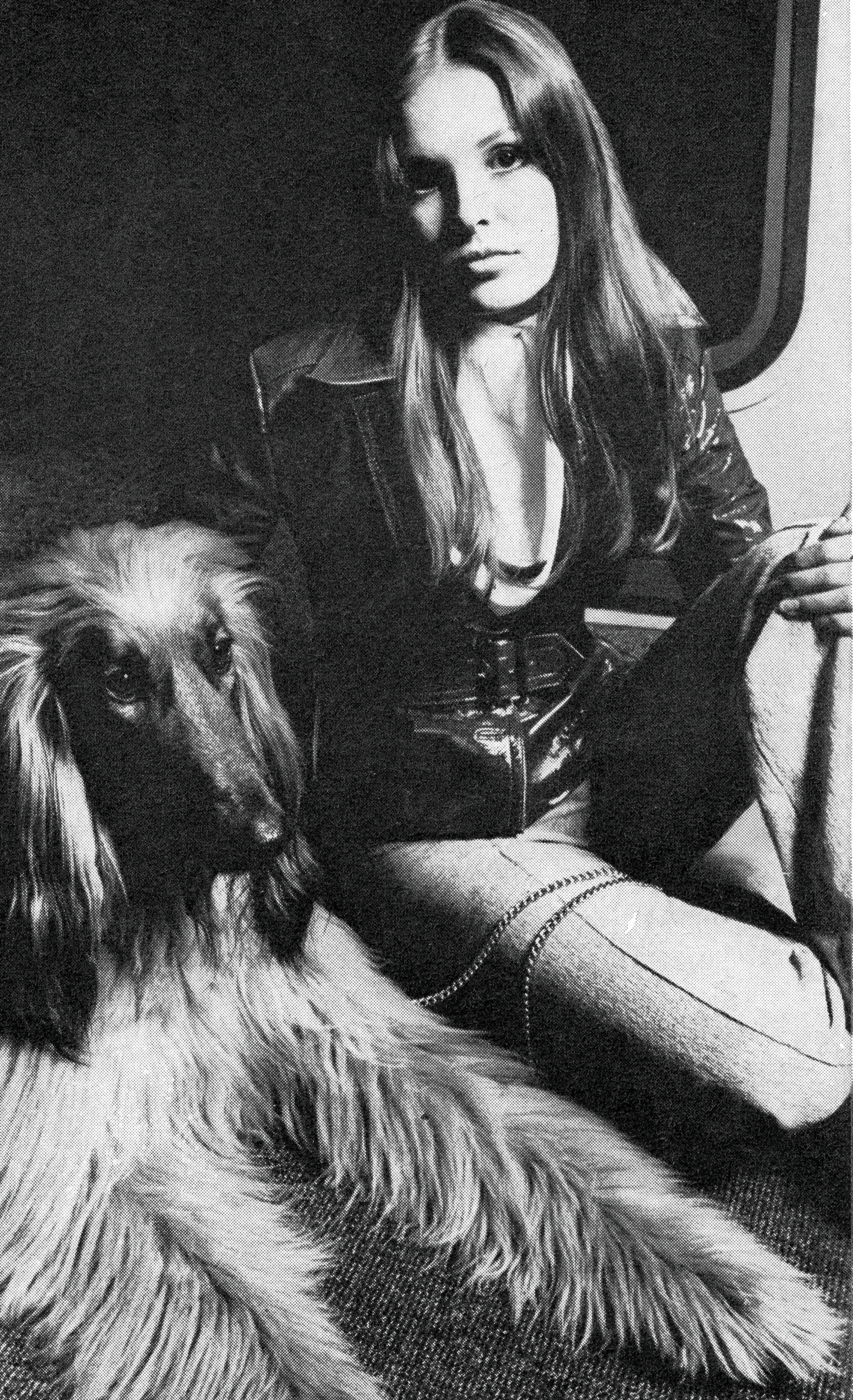
Victoria Tennant, an Afghan hound and a jacket of real patent leather, caramel brown and shiny. She is a drama student at the Central School. The jacket, 39 gns, was made with wide lapels and a belt, by a new boutique, Kenneth Vard, 90 Marylebone High Street, W.1, who makes anything in any colour and any suede or leather.
Photographed by Patrick Lichfield.
Scanned from Vogue, May 1969.
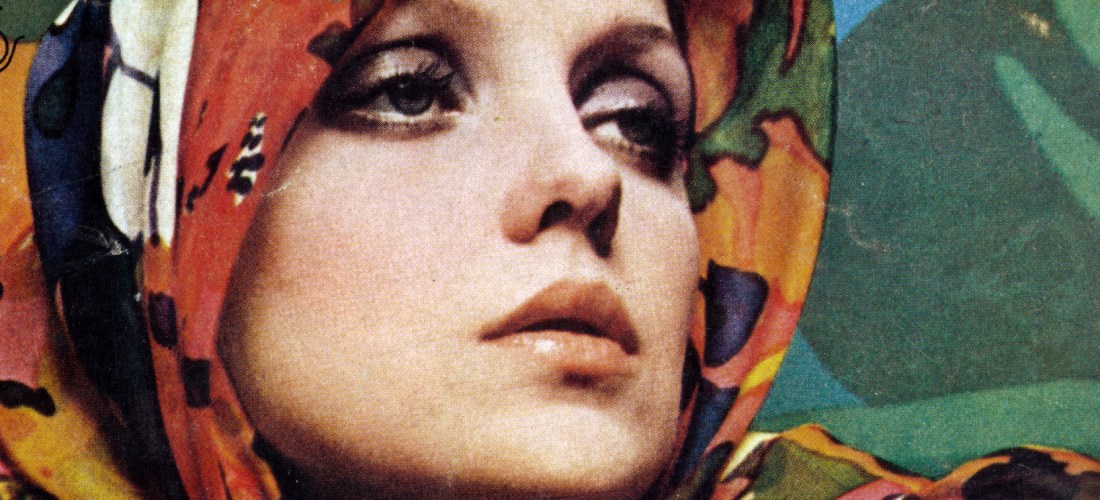
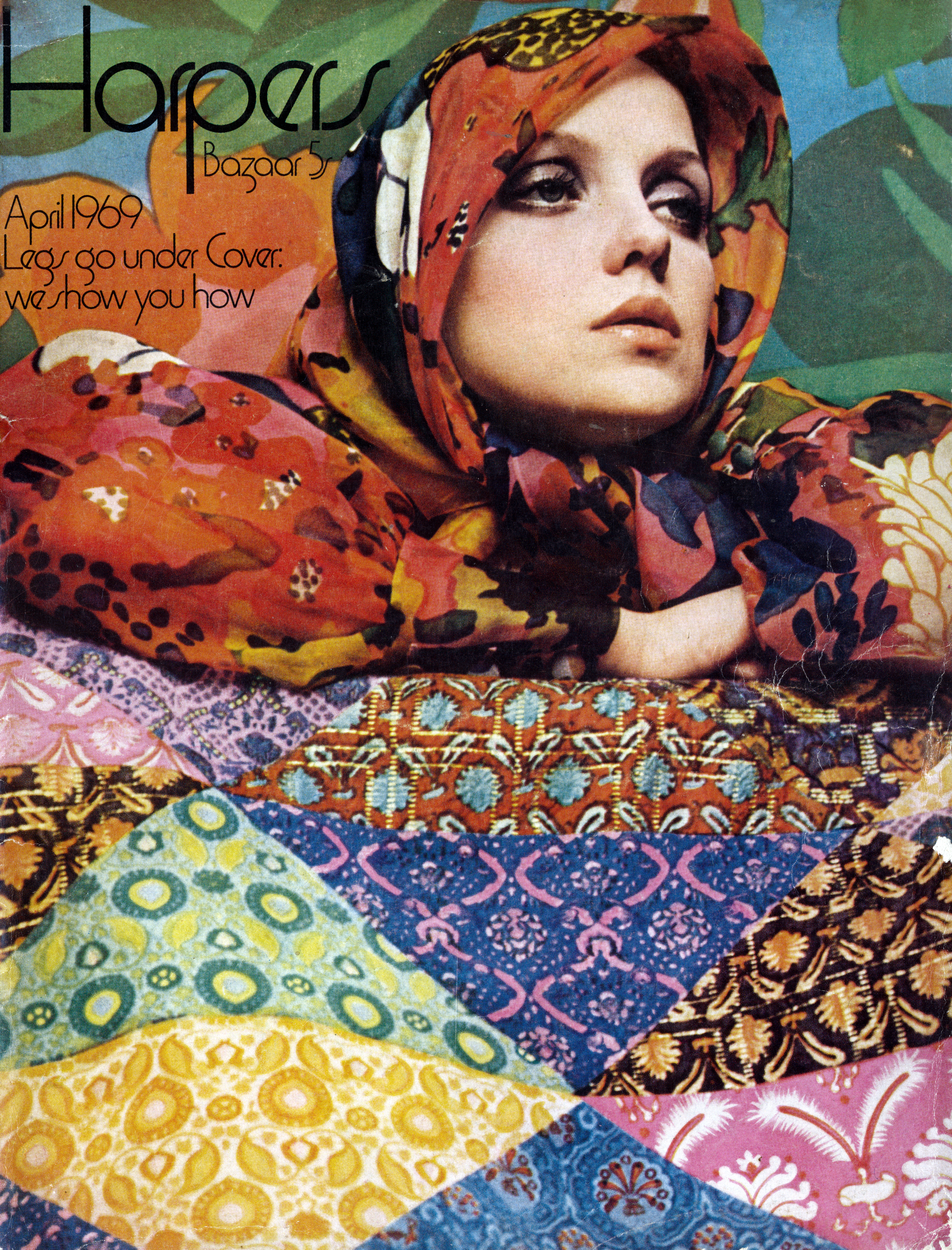
Happy International Women’s Day! Here is one of my favourite covers, from the glorious Harpers Bazaar (before they merged with Queen and lost this lovely deco typeface, that 5s makes me swoon for some reason) and by one of my favourite photographers, Sarah Moon.
Photographed by Sarah Moon.
Scanned from Harpers Bazaar, April 1969.
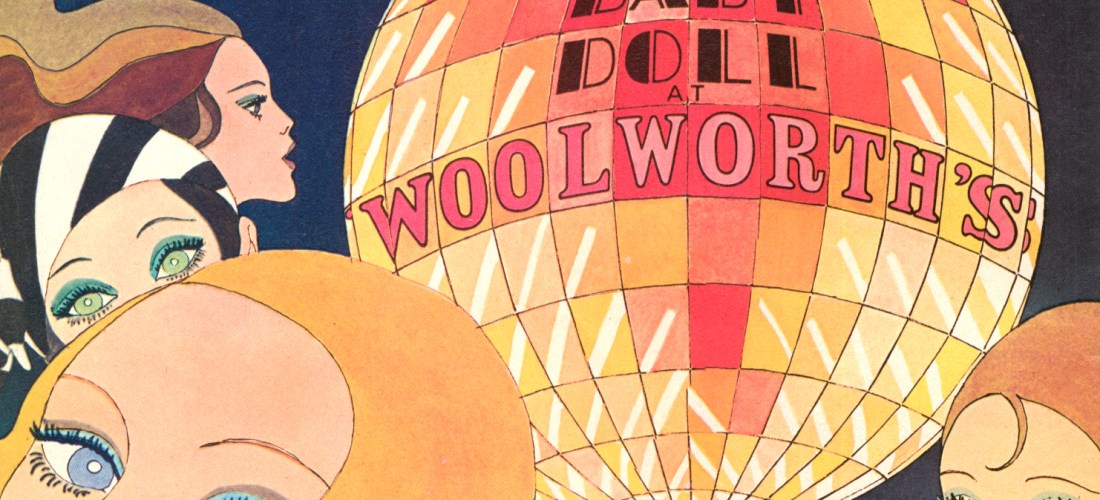
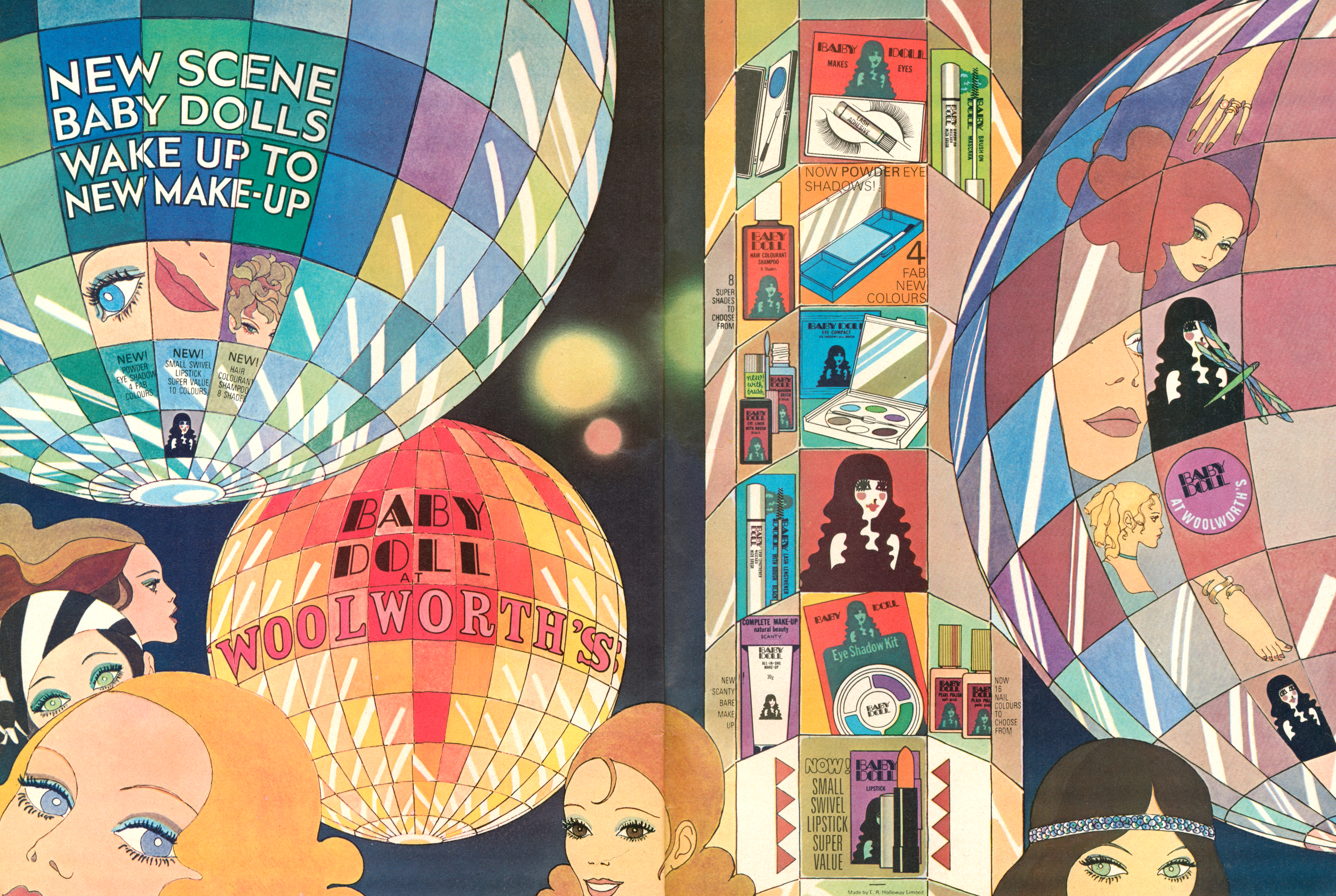
“Wake up to new make-up”
There is always wonder and joy when I find another of these Woolworths Baby Doll make-up adverts. But there is also always eternal frustration that I don’t know who illustrated them.
Scanned from Rave magazine, July 1969.


Naturally mouse hair is usually limp so it needs extra life, extra lift, extra bounce. All this can be achieved by very, very fine highlighting. Keep away from obvious streaks, let your hair look instead as if it’s just come out of the sun. An expert will know exactly which colours to choose for you, exactly the right depth and contrast of highlighting. You can have water-rinse streaks or permanent; you can have your own hair coloured, or your hairpiece. The subtly streaked hair, left, is controlled at the top, combed into waves, then frizzed into a soft cloud at the shoulders. The make-up has the same romantic, pre-Raphaelite look with Orlane’s Satilane beige no. 4 with brush-on rouge no. 3. Eyes: cream pearl shadow in Bleu Perle, Bleu Marine roll-on mascara. Lipstick: beige-pink Paprika. Necklace: an eagle from the Purple Shop, Chelsea Antique Market. Hair colour, here, and in the picture, above, by Daniel, styling by Leonard, both from the House of Leonard.
Modelled by Charlotte Martin.
Photographed by Barry Lategan.
Scanned from Beauty in Vogue, 1969.

 Liz Eggleston