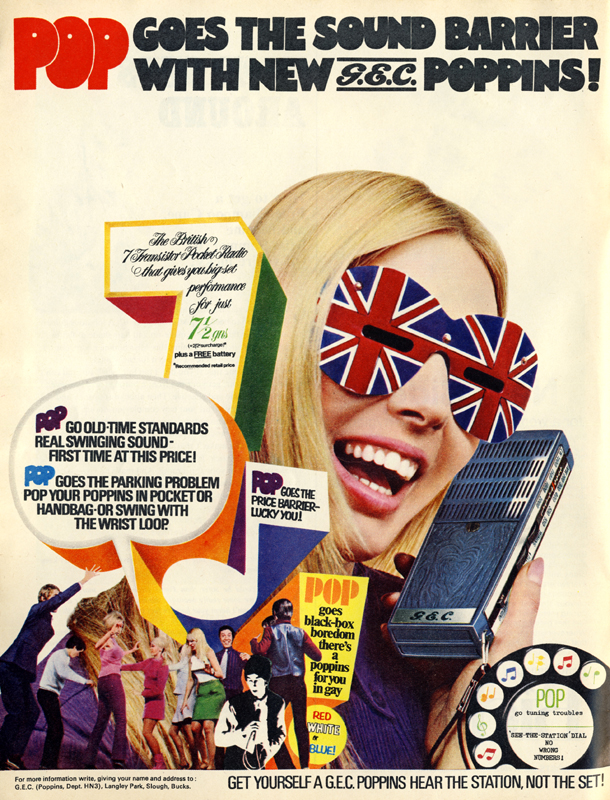
Vintage Adverts: Pop Goes the Sound Barrier

1960s, pop art, Vintage Adverts

G.E.C Poppins Advert, 1967

Inspirational Illustrations: Magpie Eye

1960s, Barbara Hanrahan, Honey Magazine, Illustrations, psychedelia, The Beatles

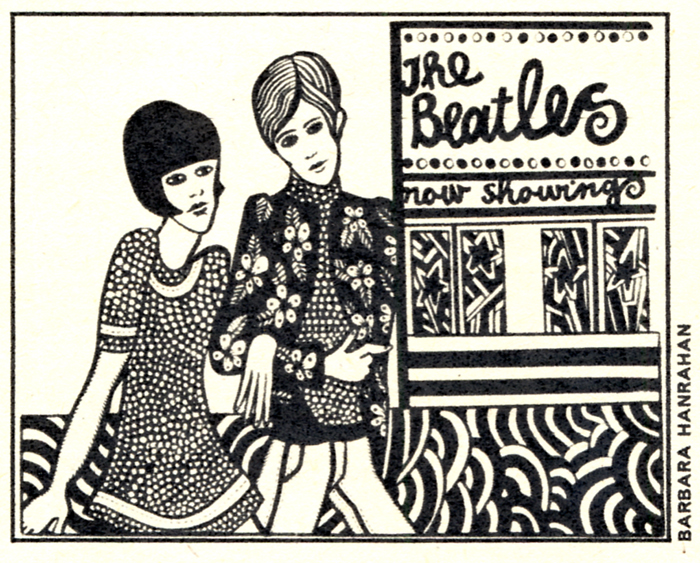
Illustrating ‘Magpie Eye’ in Honey, July 1967. Illustrations by Barbara Hanrahan.

Bagged!

1970s, aristos, art of bags, biba, british boutique movement, chelsea girl, countdown, crowthers, irvine sellars, jean varon, john bates, just looking, king's road, laura ashley, mr freedom, ravel, stop the shop, take 6

Aristos © John Hendy

I couldn’t resist following ‘Tagged!’ with ‘Bagged!’. The art of the carrier bag seems even less appreciated than the art of the hang tag, despite its importance in the history of advertising and consumerism.

On Simon Hendy’s incredible website “My Dad’s Photos“, Simon has scanned a mountain of original photos that his father took across six years of fashionable (and not so fashionable) people on the King’s Road in the late Sixties and early Seventies. It is truly a delight to sift your way through them. They are a true time capsule of ‘real’ people wearing ‘real’ clothes in a period where photo opportunities were frequently engineered and crafted (as brilliant as Frank Habicht’s ‘In The Sixties’ is, it’s a very well-crafted form of ‘candid’ photography). I will definitely post about them again, not least because I recognise so many bits of clothing from designers I love.

However, today’s post is about the carrier bag. For, as I was sifting through and starting to get a bit dizzy with the amazingness of it all, I started to notice the bags people were carrying. Biba, Aristos, Stop the Shop, Crowthers… These are truly ephemeral items. How many people bother to keep a plastic bag? You might, if you were lucky, have wrapped something up in one and plonked it in your loft for the past forty years. But these examples are few and far between. The iconic design of the original Biba bags has ensured that they are the most regularly found on eBay, but few of any other kind have slipped through the net.

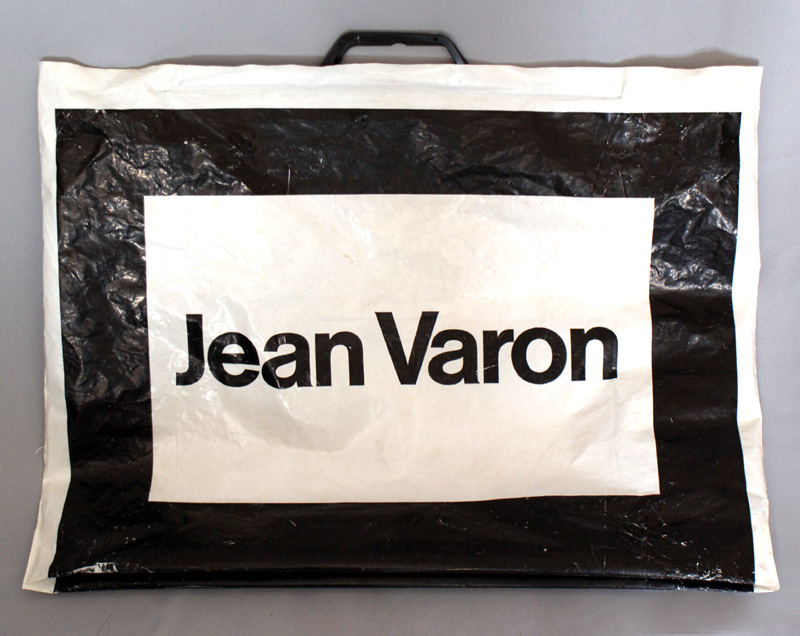
I did, however, find a ‘Jean Varon’ bag on eBay very recently, which has now taken its place in my collection of weird and wonderful ephemera.

Simon has kindly allowed me to link to his photos from my blog. I know it’s hard to keep such things under control in this age of tumblr etc, but I would appreciate if you would also ask him if you would like to repost his images somewhere else. He has spent many hours scanning these photos, photos which (unlike magazine scans) would not be available otherwise – from anyone else. Thank you!

Unidentified (possibly Mr Freedom at the back?) © John Hendy

Selfridges © John Hendy

Mates by Irvine Sellars © John Hendy

Guys and Dolls and C&A © John Hendy

Unknown © John Hendy

Fancy That © John Hendy

Chelsea Girl © John Hendy

Crowthers © John Hendy

Just Looking © John Hendy

Kids in Gear © John Hendy

Take 6 © John Hendy

Countdown © John Hendy

Ravel © John Hendy

Unknown (Mantra?) © John Hendy

Strides © John Hendy

Stop the Shop © John Hendy

Laura Ashley © John Hendy

Inspirational Images: Crowning Glory

1970s, hair, john swannell, pre-raphaelite, Vogue

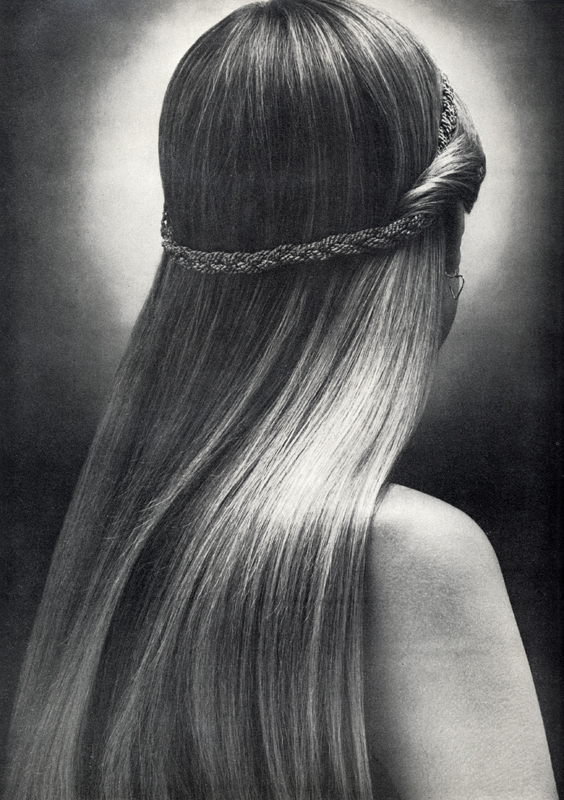
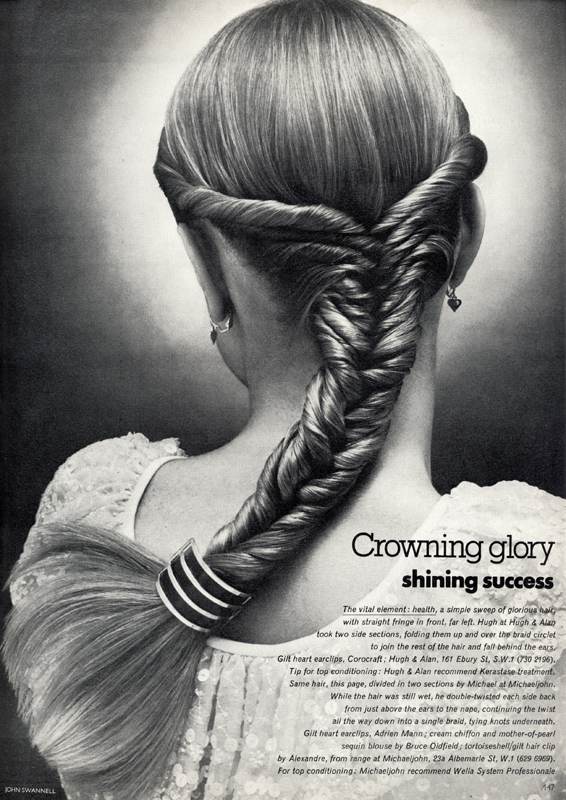
Photos by John Swannell. Vogue, December 1977. Scanned by Miss Peelpants.

Mild Sauce: Pop in Effigy – A Wife and Two Dollies

allen jones, art, feminism, fetishism, mild sauce, norman parkinson, Vogue

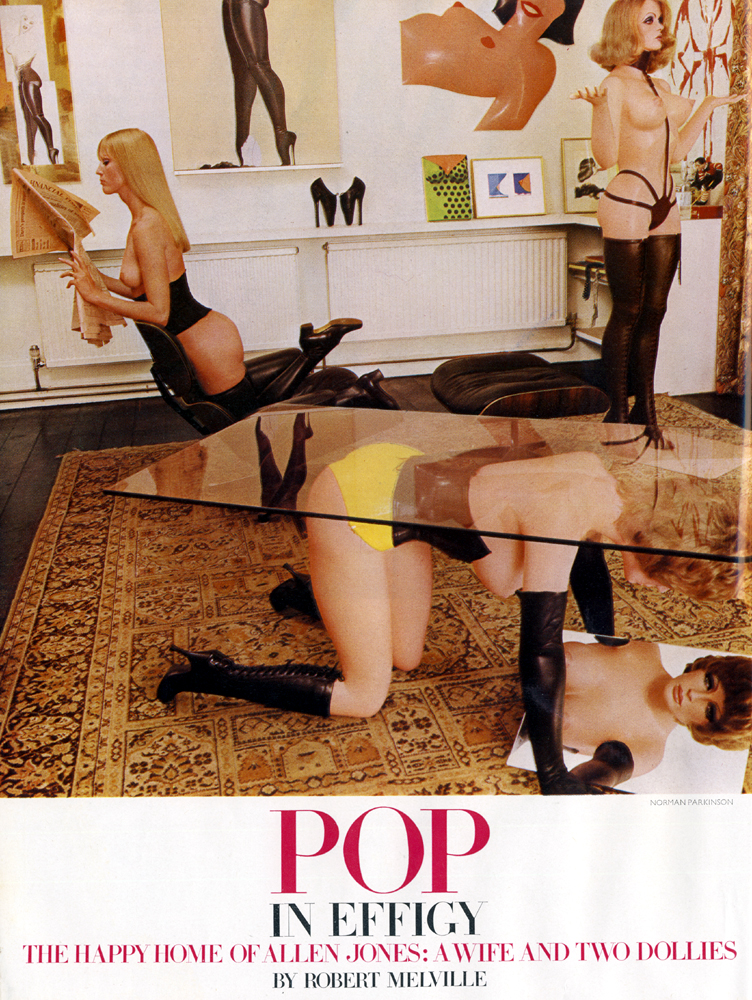
There are times when Allen Jones makes a highly plausible bid to be taken for a fetishist. His paintings of shoes with impossibly high heels are in the realm of phantasy and can only be worn by the phantom of sex appeal that slips them on in the mind’s eye, but they are more likely to be rhinoceros horn to rouse and sustain. Even his paintings of legs, conspicuously shape-conscious though they are, could have been devised to celebrate the stockings. But the true fetishist places his faith on inanimate objects or parts of the body as far away as possible from the sexual zones, and although Jones rarely paints the whole figure, his euphoric images of the cleavage and the crotch are evidence enough that he is far from being at the mercy of symbolic displacements. Until recently, he could probably be described as an aficionado of the choice view, but suddenly all the evocative fragments have come together in three life-size effigies of girls which look so breathtakingly real that when I first saw them  in the artist’s flat I felt that I shouldn’t have entered the room without knocking.

They are made for instant recognition and maximum confrontation. They turn into works of art by rapid but clear-cut stages. Twice over, they are not what they seem. At first they are blindingly girls. Then they are brilliant imitations of girls, cool and arrogant but incapable of lifting a finger against close and impertinent inspection. Finally, inpection makes it clear that their proportions are not human. They are not imitations. They bring to a kind of perfection a convention that has arisen on art’s difficult road back to a humanist figuration.

They present a strong case for the artist as director. Everyone who knows Allen Jones’s paintings will agree that the effigies disclose his formal preoccupations at every turn: but he has not actually made them. It all started on one of his trips to the States, when someone mentioned that there were people in London who were making fabulous life-size dolls. Back in London, he went to see one of these dolls, a likeness of Carroll Baker that had been commissioned by a film director. Only the head had been specially modelled; the body was that of a conventional shop window dummy. The visit brought up the name of Dik Beech, a commercial sculptor who works as a freelance in close association with a company named Gems Wax Models, which makes the moulds and casts for Madame Tussaud`s. Beech brought great professionalism and the neutrality of a craftsman to the task of turning Jones’s drawings and specitications into three-dimensional figures. They were then cast in fibreglass by Gems Wax Models, and sprayed and rubbed down and sprayed again to give them an impeccably smooth, flesh-tinted finish. At this point they were taken over by Lucina della Rocca and entirely repainted by hand. She works for Tussaud’s, and she brought the surfaces of the casts to life with imperceptible nuances of tone. They were now looking the picture of decadent health. The eyes too are painted, and the faces have been given a bold but not exaggerated make·up. Other experts were called in. The leather accessories, including the strap-work on the standing figure, were made by John Sutcliffe of Atomage. The Lurex pants of the girl on her hands and knees were made by Zandra Rhodes and required three fittings. The wigs are by Beyond the Fringe. The gloves, bought at Weiss of Shaftesbury Avenue, are the only accessories that didn’t have to be specially designed.

The figure on hands and knees gazing into a mirror has been designed so that the back of her head and her rear are exactly the same height, to support the clear glass panel which has been made and fixed by Design Animations. It turns her into an anthropomorphic table. Her pose perhaps suggests an undignified obedience, but she can he freed from her glass plate to occupy an easy chair; her arms then stretch out in a striking “hands-off” gesture calculated to send one to the opposite side of the room. It’s indicative of the artist’s purely visual interest in the gear that he was not aware that the strap running from the standing girl’s collar to her G-string would be at the back on a real girl, to compel her to stand up straight: it seems to confirm one’s impression that the girls come from a strip-joint not of this world.
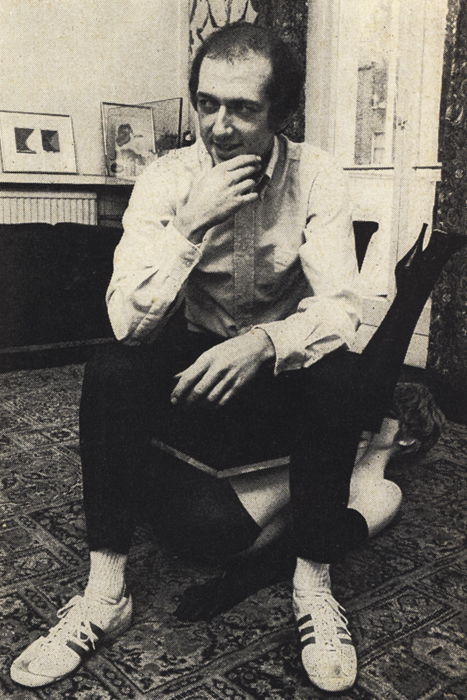
Allen Jones at home, above: his wife and two dollies, opposite. His three life-size effigies, each in an edition of six, will be on show in New York from January 6 at Richard Feigen; in Cologne from mid-January at Gallery Rudolph Zwirner; in London from January 23 at Tooth’s, 31 Bruton St, WC1.

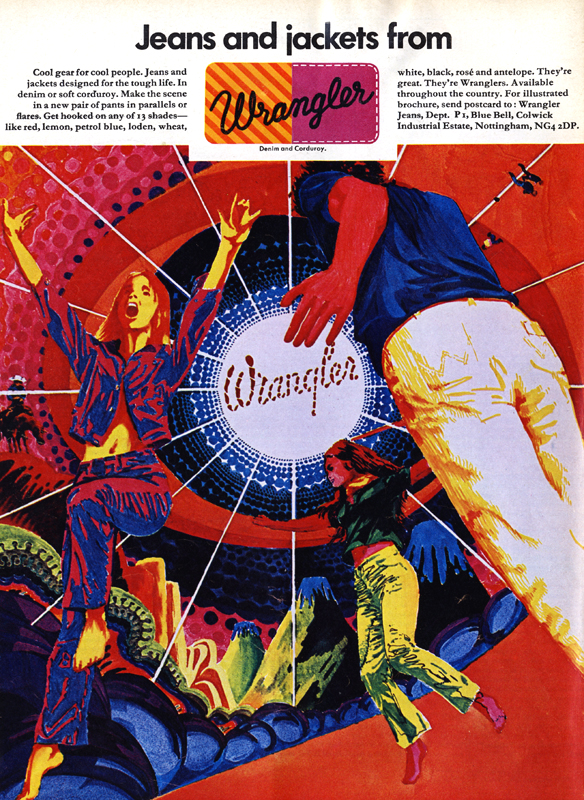
Vintage Adverts: Wrangler Psychedelia

1970s, jeans, psychedelia, Vintage Adverts, wrangler

Scanned from Petticoat, April 1970

Inspirational Illustrations: What You’ll Be Into

19 magazine, 1920s, art deco, dorothee bis, Illustrations, jap, karl lagerfeld, michael roberts, seventies fashion

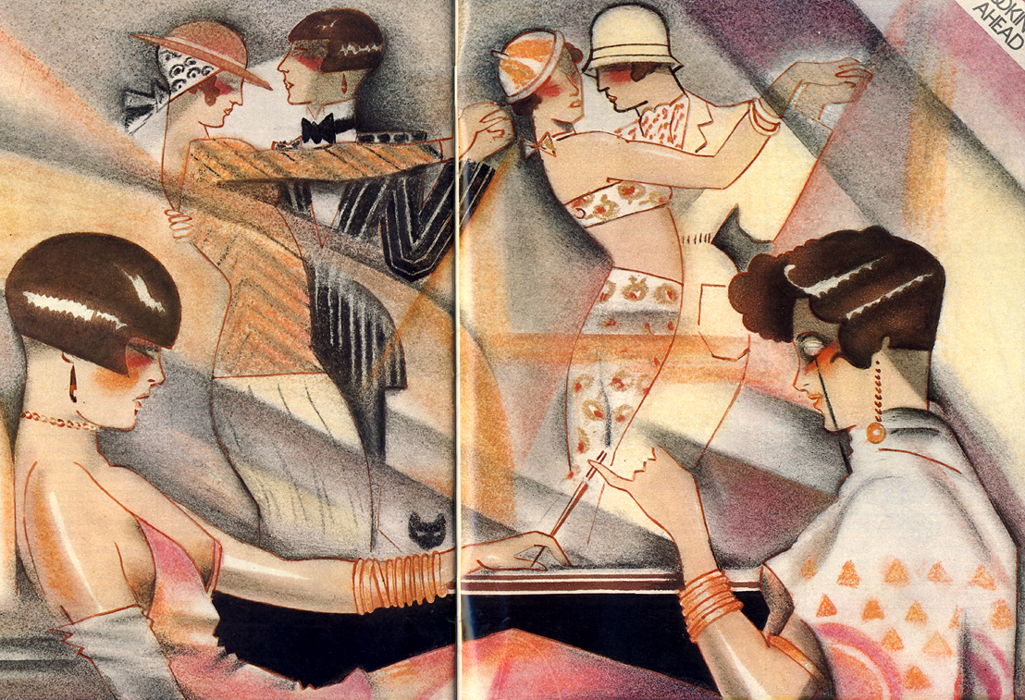
Illustration by Michael Roberts. 19 Magazine, January 1973.
. . . in 1973. Life is beautiful, the girls are beautiful, the clothes are beautiful. In fact, life, 1973-style, is a cabaret and here we present the cabaret-girls, with a few tips – picked up at the Paris fashion shows – on how to dress the part without using up too much money 

LEFT TO RIGHT: Martine in a chemise dress inspired by Roland Chakkal at Mendes. Make one yourself from a ‘Twenties‘ slip. She amuses herself by.toying with her cigarette holder (held just for show), while listening to the jangling of her nine A bangles. Her drop-earrings glitter, her tight bead choker sparkles and one arm is snug in its elbow-length glove. 

Janine tangos giddily with her partner. but nevertheless looks chic in a little soup-plate hat, perched jauntily over a printed scarf inspired by Karl Lagerfeld at Chloe. Thrown into a state of ecstasy by the Jap Collection, she has naturally teamed a long striped jumper with a neat box-pleated skirt.

Her partner, in pinstriped suit (inspired by designer Dorothée Bis), white-wing collar and bow tie (available in father`s top drawer), wears drop-earrings as a concession to femininity. 

Neatly fandangoing into the spotlight – Katherine and Margaret. Katherine’s favourite designer is Karl Lagerfeld at Chloe. How right then for her to be attired in printed bra top and skirt. But paradox, paradox. She also fell in love with the stripey pixie hat seen at Dorothee Bis. Happily, she’s thrown caution to the wind and wears them together. 

Margaret looks soulful. That is the only way one can look in an eye-shading, pull-on hat, all the rage for lovers of designer Emmanuelle Khanh

Zizi, as always, simply had to be different. A monocle. Only she could get away with this, but the rest of her accessories should be simple to copy.

Legendary Beauty

alice pollock, bus stop, celia birtwell, fashion mouse, janice wainwright, john kelly, ossie clark, pre-raphaelite, quorum, seventies fashion, simon massey, vanity fair, wightwick manor

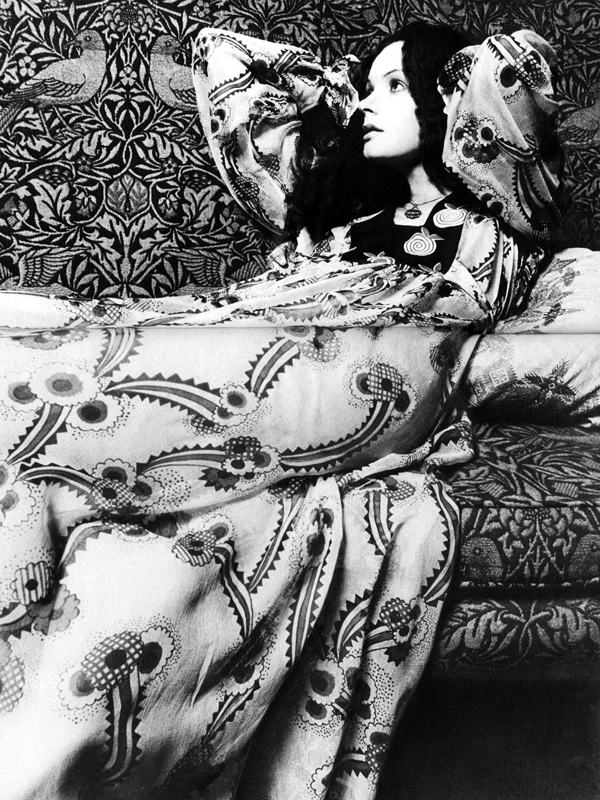
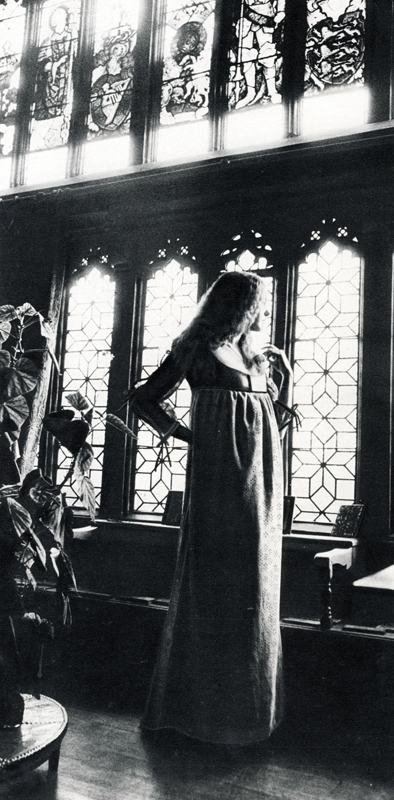
By Alice Pollock at Quorum*, 19gns. The settee is covered in the original William Morris Bird Design.

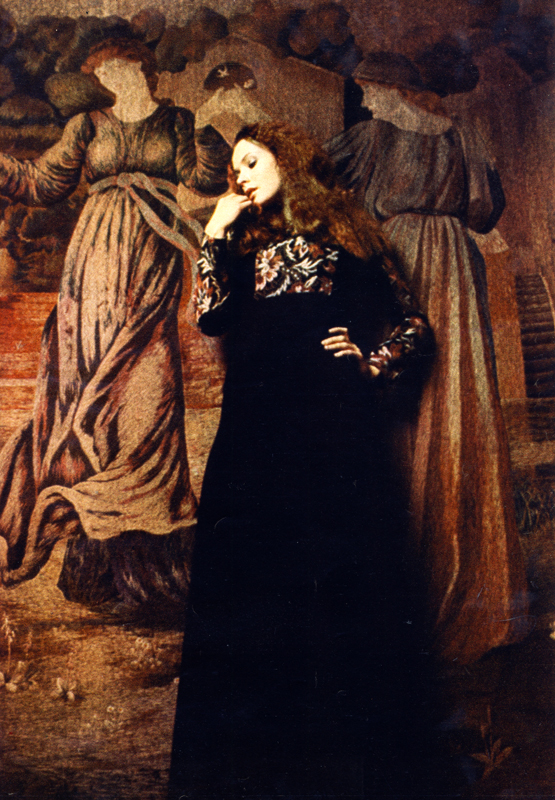
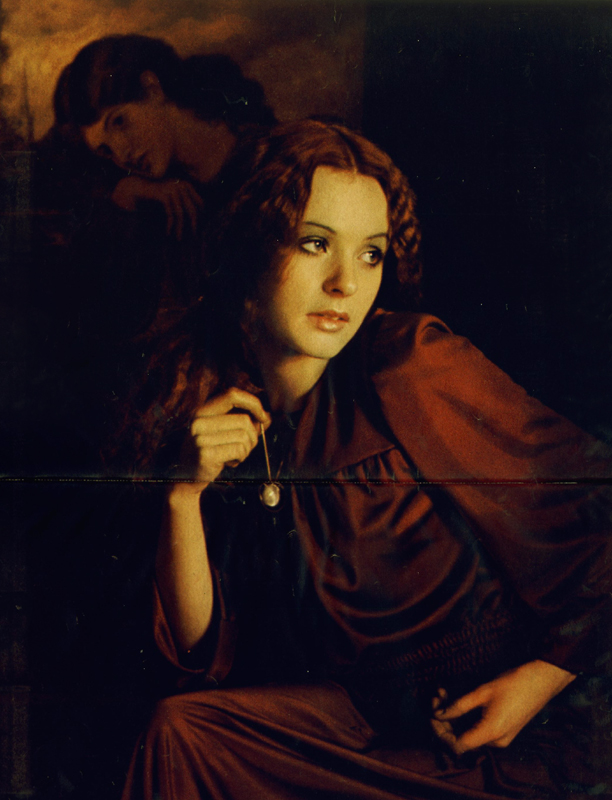
There’s a marvellously romantic feeling about the Pre-Raphaelite look. It starts with your hair…soft, natural, framing your face in a ripple of tiny waves. It touches your skin…pale, delicate, un-made-up looking. It colours your clothes…crepe, chiffons and satins in rich hues. Start wearing this great, romantic look today – who knows, he might just start being very romantic to you!

Scanned from Vanity Fair, May 1970. Photographed by John Kelly at Wightwick Manor.

*This is a misattribution, the dress is actually an Ossie.

Dress by Simon Massey, £15. Photographed against a Burne Jones tapestry.

Dress by Fashion Mouse, £22. Photographed against the Kempe stained glass windows.

Dress by Bus Stop, £5. Photographed against a painting by Rossetti pupil Treffry Dunn.

Barbara Hulanicki: Art Deco W14

art deco, art nouveau, barbara hulanicki, biba, interior design, James Mortimer, seventies fashion, Vogue
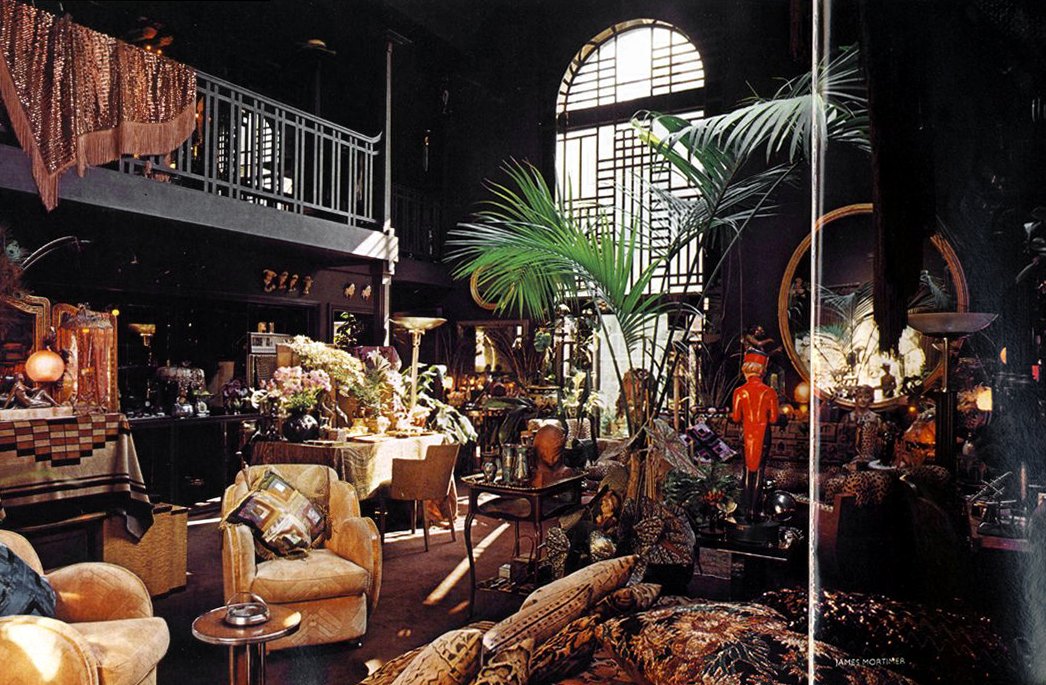
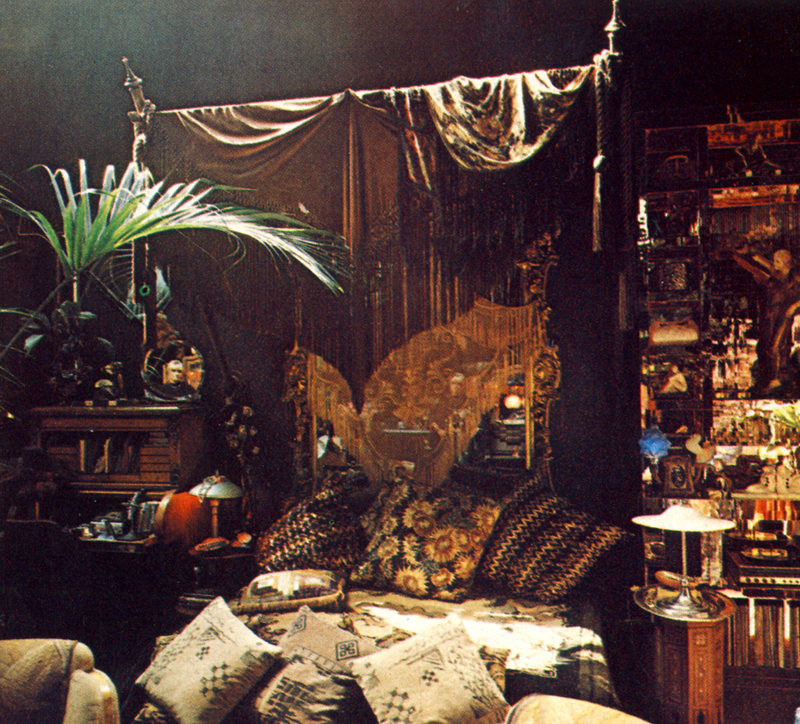
A section of the studio. Beneath the gallery one discovers a sink, kettle. cooker below a thirties’ Grecian frieze. Art Deco chairs in peach moquette. Screen, with beaded shawl. purple plastic  grapes behind a delicate nasturtium-leaf lamp hung with beaded fringe
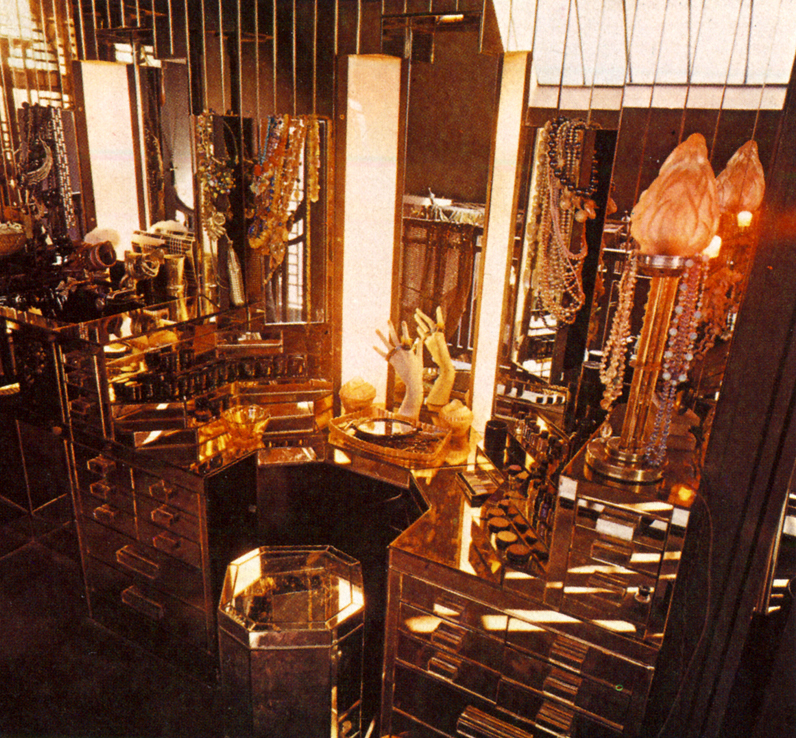
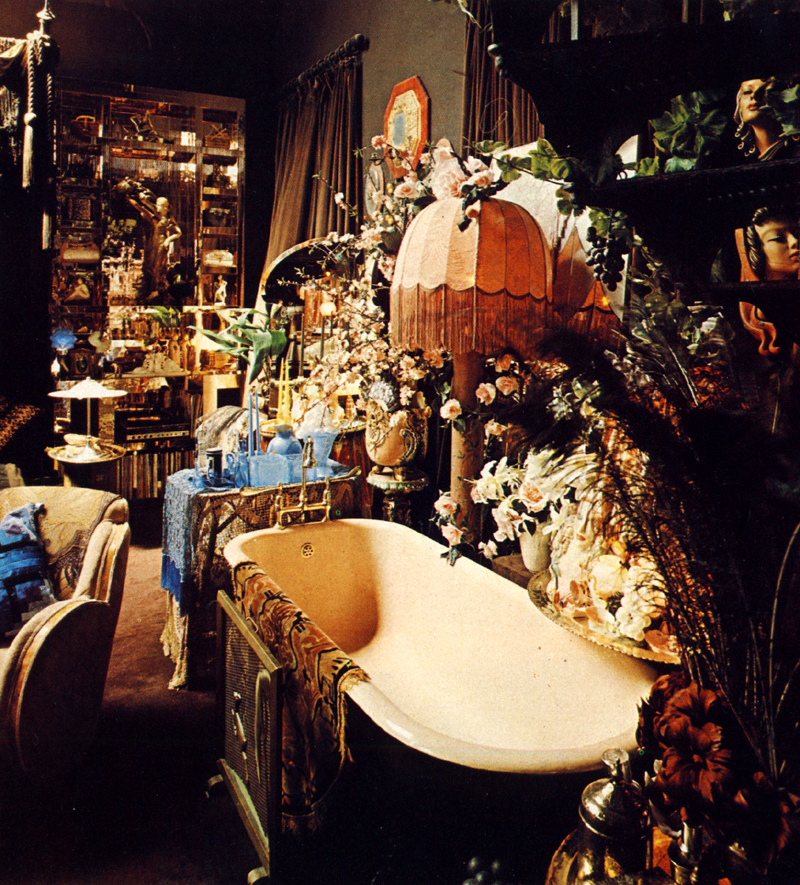
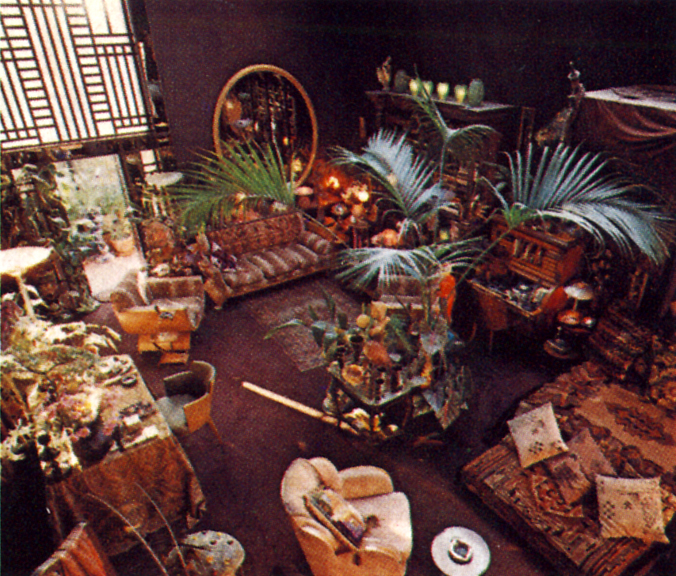
Barbara Hulanicki at home in one cavernous studio which she found three years ago and filled with Art Deco from floor to ceiling. Walls, ceiling, stairs, all painted a rich matt brown, merge into the shadowy interior; angles and lines are softened and blurred. Colours, not walls, mark out living areas, a different shade for each section of space. Light is filtered through the brown-tinted glass of the high, patterned perpendicular window and a long fanlight in the roof. A brown spiral staircase, leafy with plastic twisting plants, leads to a long gallery which forms the dressing-rooms. Everywhere, an endlessly intricate arrangement of colour, pattern, space; a deep, dark brown jungle of the ornamental, the exotic, the glittering.

Photos by James Mortimer. Vogue, October 1975.
The dressing-room. Shades of peach and deepest brown, Creamy lighting from bulbs set behind opaque glass. Peach mirrors hung with beads, the dressing table, a darker shade of smoked peach, made up of tiny individual drawers. Stool topped with smoked peach glass.
The bath, a riot of peach and plastic flowers. Ornate brass taps, Art Deco screen. Brilliant blue glass, candlesticks and pearly plastic grapes.
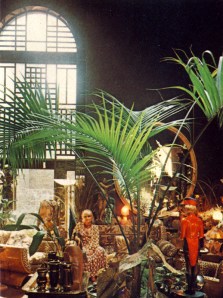
Barbara Hulanicki in the sitting-room, the window open to reveal a jungle of climbing plants outside. In the background, a collection of Art Deco glass below the enormous mirror, at least six feet in diameter. Everywhere lamps, small, fringed or mushroom-topped on long, slender stems: everywhere figures, ferns, flowers. In foreground, a set of black/silver/turquoise vases and modelled head on decorated brass tray and glass-sided table: replica of a twenties’ cigarette girl, now bearing a tray of jewellery.
Looking down from the gallery into the studio, arranged into its separate “rooms”
The bed, above, hung with shawls, scattered with sequinned brocaded cushions. Barbara Hulanicki reflected in the bedside mirror on the writing desk and in the centre of the mirrored bed-head. On the right, a peach mirror flex set of shelves, with photographs, figures, eight Art Deco plastic handbags.

Pop Pop Pop

1960s, fulham road clothes shop, jean varon, john bates, lloyd johnson, mr freedom, pop art, seventies fashion, sylvia ayton, zandra rhodes

John Bates for Jean Varon crepe panelled dress

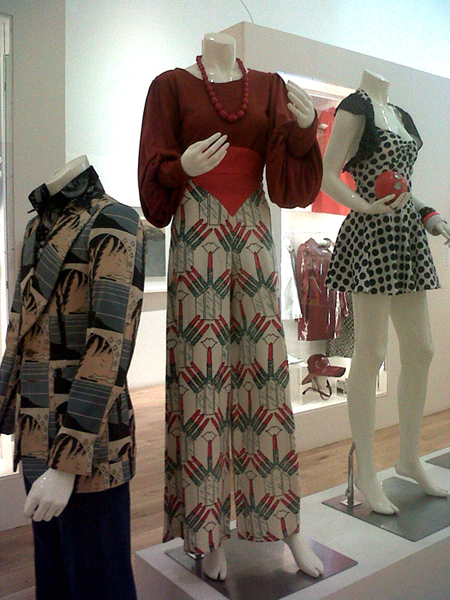
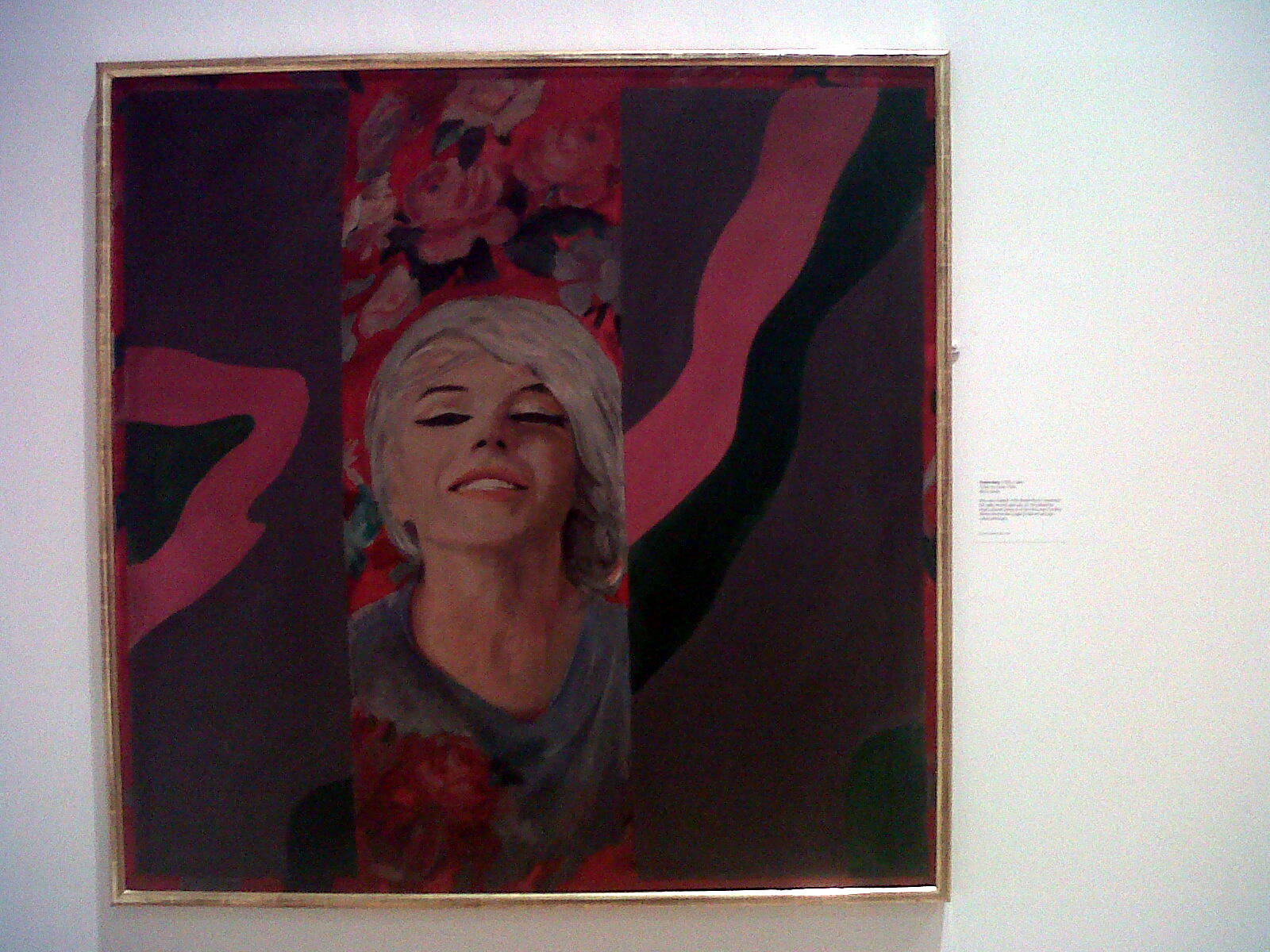
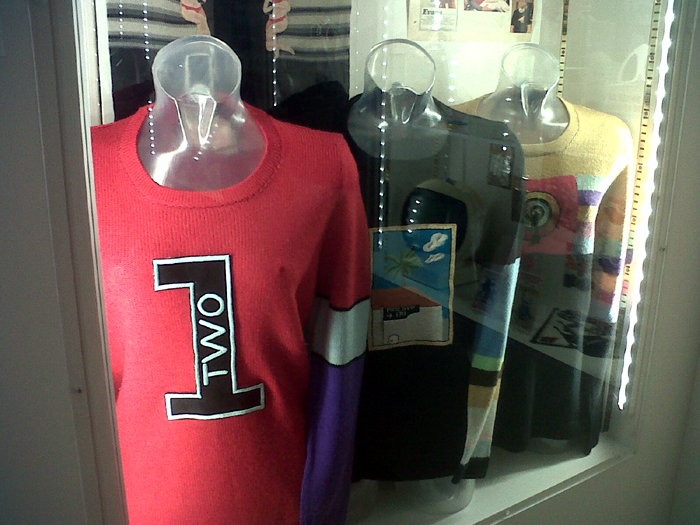
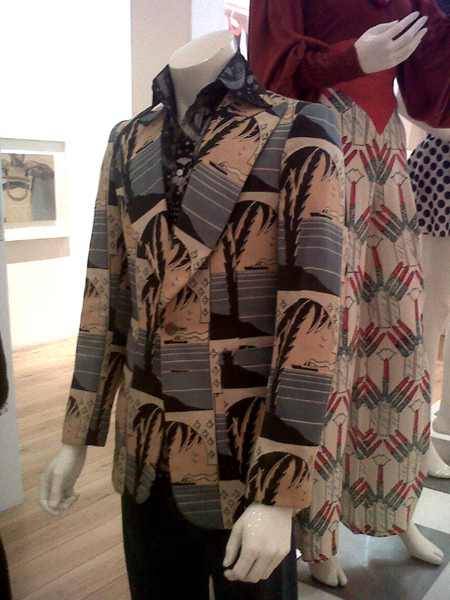
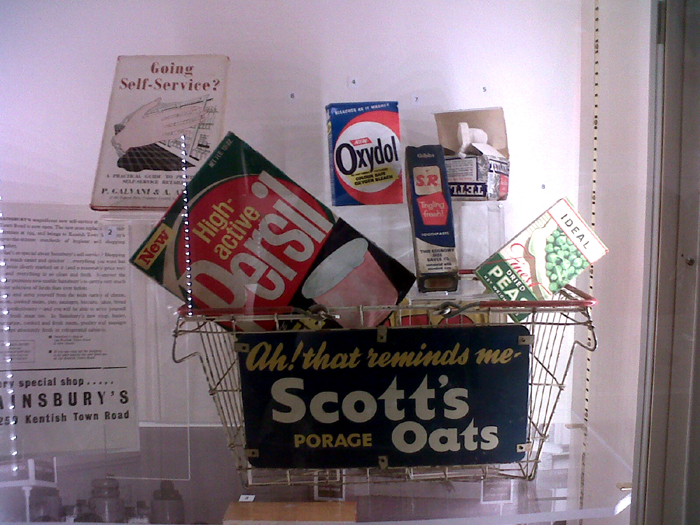
I have finally found a moment to blog about the Pop Art exhibition at The Lightbox in Woking, which is only open for a short while longer. The Lightbox is a tremendous space; airy and light, quiet and tranquil, and it has been transformed (briefly) into a repository of incredible Pop Art paintings, sculptures and….things. The ‘things’ are what I’m most interested in; as the exhibition draws you into the central space in the gallery, you are shown the influence of Pop Art on everything from clothes, to homewares, right down to the groceries you could buy from Sainsbury’s in the Sixties.

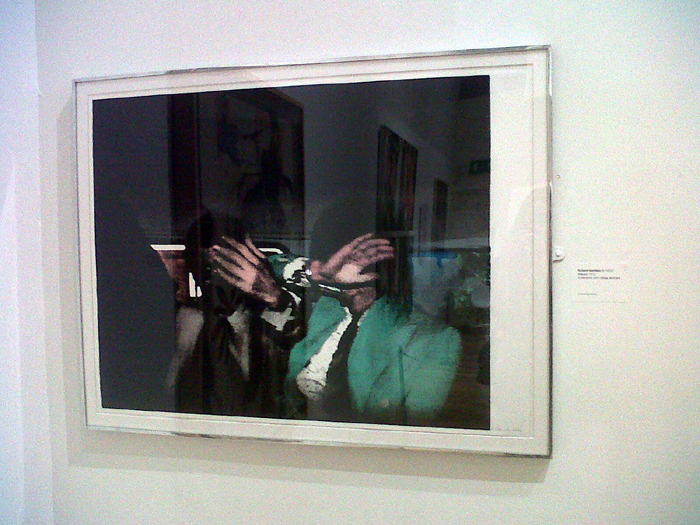
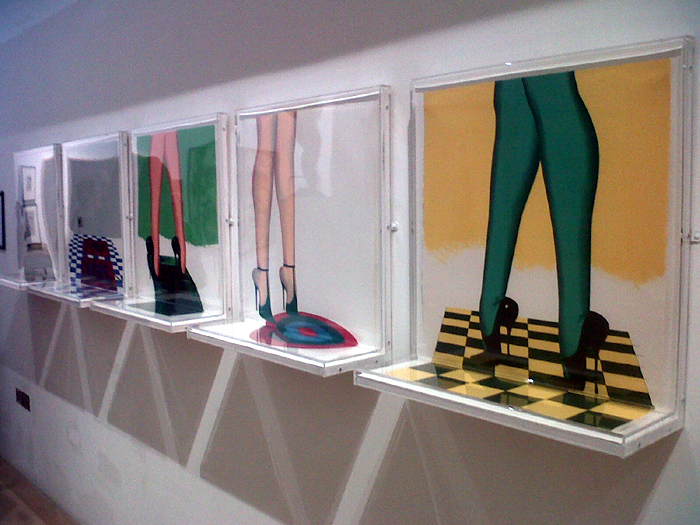
The fabulous Katherine Higgins has co-curated Pop Art, and very kindly got in touch with me about loaning some pieces. Well now, I can’t resist an exhibition and I can’t resist a good rummage in my personal collection and so I delivered four pieces (and a bonus extra which I just happened to have on me at the time). The fourth and final has only just been put on display this very day, and so I do hope you are able to go along to The Lightbox and have a look. It really is an incredible collection of works by some undeniably iconic British Pop artists; including Pauline Boty, Allen Jones, Peter Blake and, now rather poignantly, Richard Hamilton.

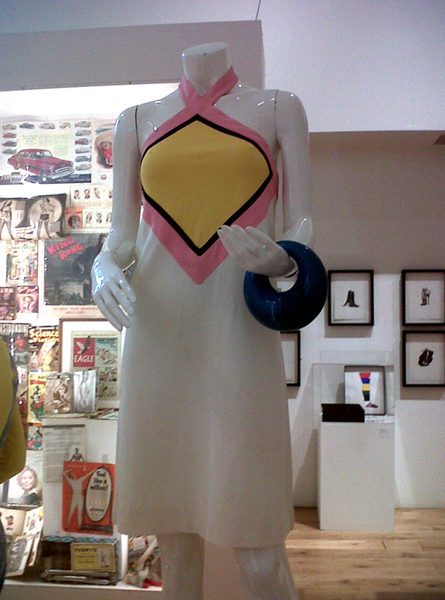
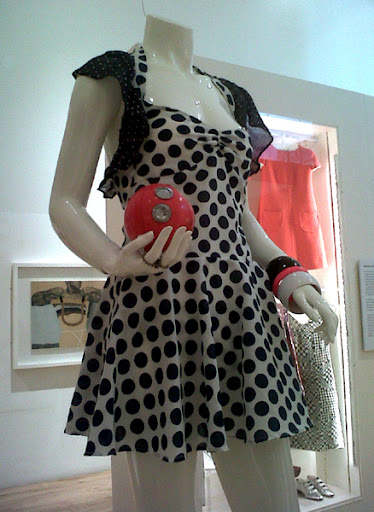
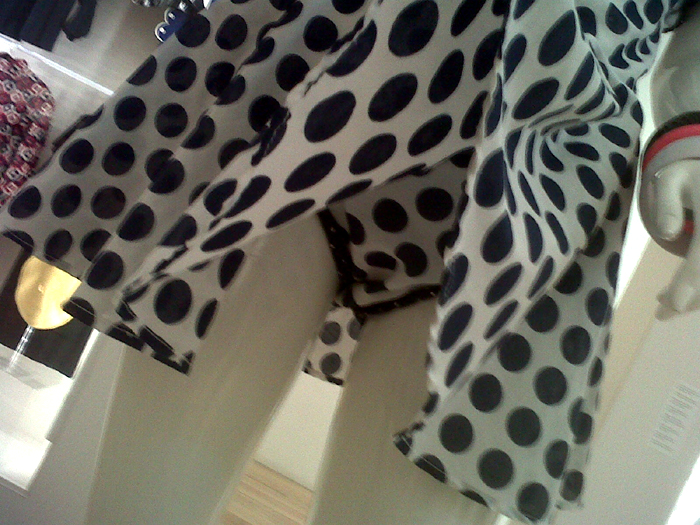
Mr Freedom halter neck skater outfit with hidden surprise...

Saucy! (I'm allowed to do this because it's mine, but you might get told off!)

Fulham Road Clothes Shop trousers with Zandra Rhodes lipstick print (please note the perfect pattern placement on the crotch)

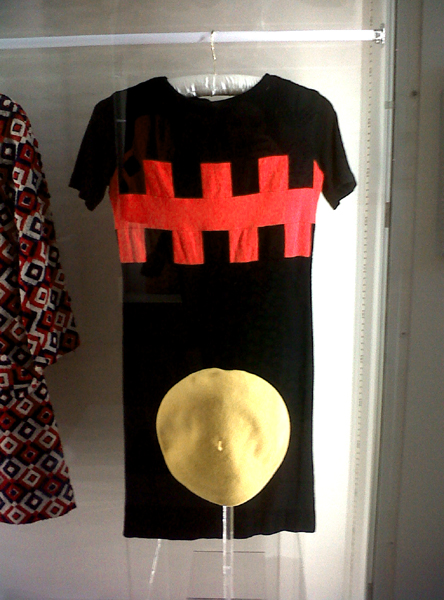
Foale and Tuffin 'Chrysler' mini dress c.1966

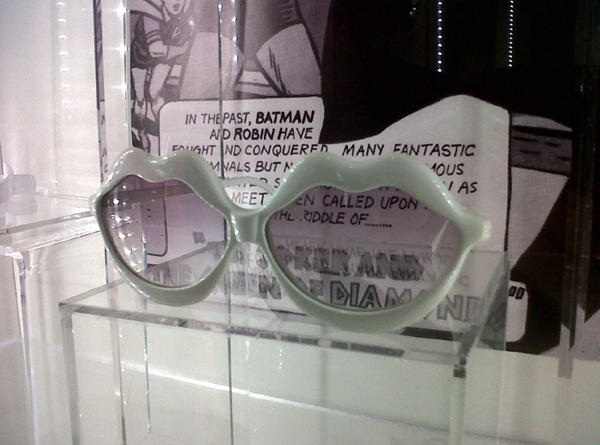
Last minute addition: Original plastic lip sunglasses

There are some covetable clothes (as well as mine, of course), including the legendary Mr Freedom baseball suit, several Ritva sweaters, a superb Lloyd Johnson jacket and the most adorable novelty print Mr Freedom dungarees loaned by Jan De Villeneuve. Who, I’m afraid, has now been scuppered in her alphabetical superiority because of my earlier omission. Sorry Jan!


Pauline Boty

Richard Hamilton: 'Swingeing London'

Sweaters by Ritva

Jacket by Lloyd Johnson

Allen Jones

Grocery packaging