
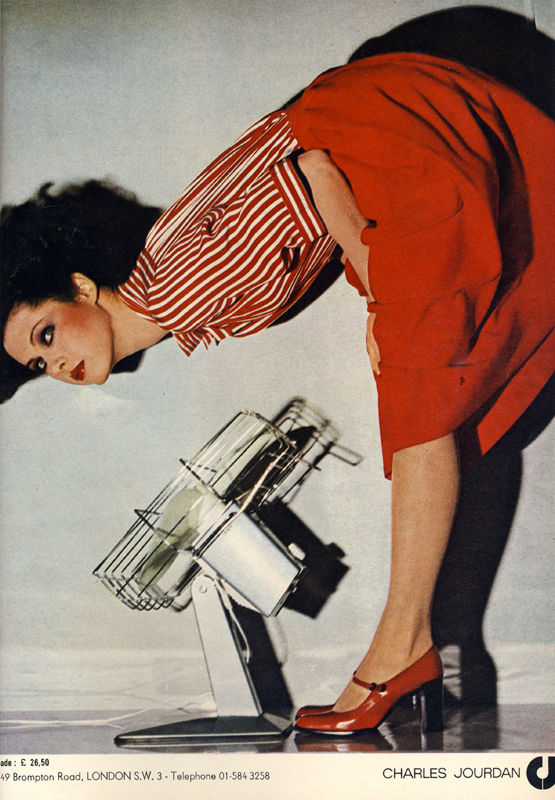
Advert for Charles Jourdan shoes. Photographed by Guy Bourdin, 1974.
Advert for Charles Jourdan shoes. Photographed by Guy Bourdin, 1974.
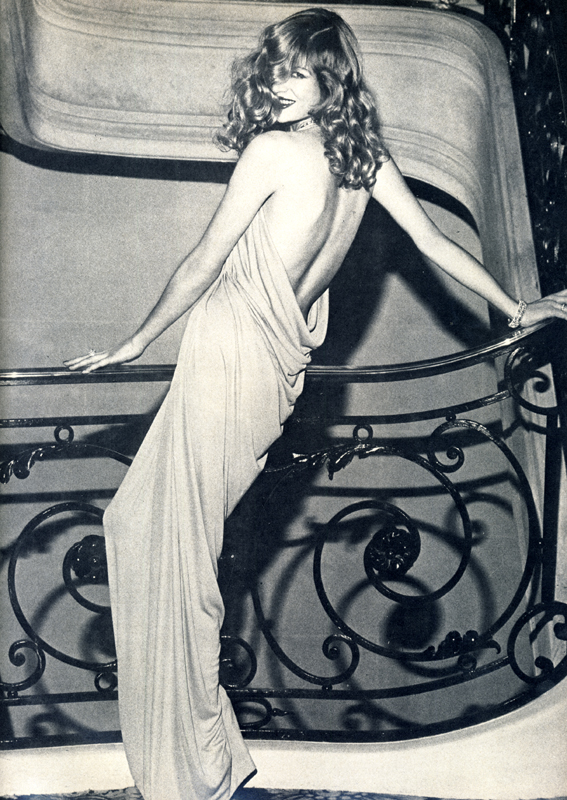
Knockout, bareback dresses, draped and slung.
Above, dress by Yuki. Below, dress by Benny Ong.
Photos by Francois Lamy. Harpers and Queen, May 1976.
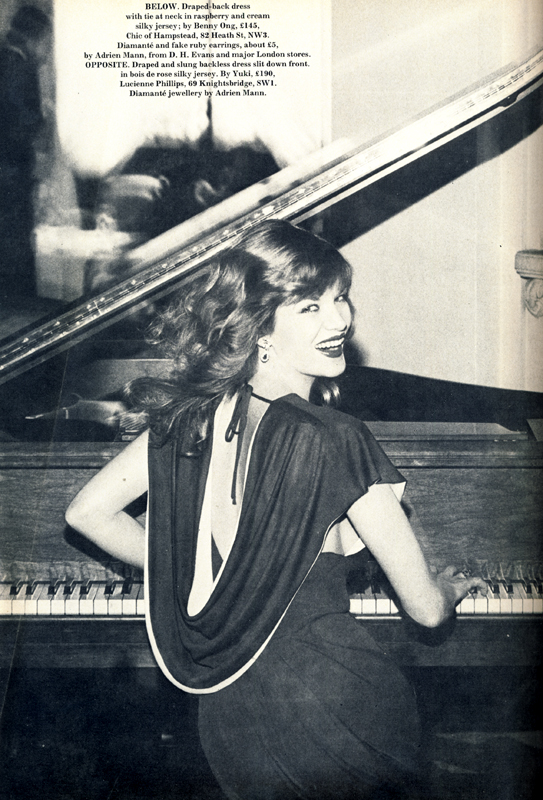
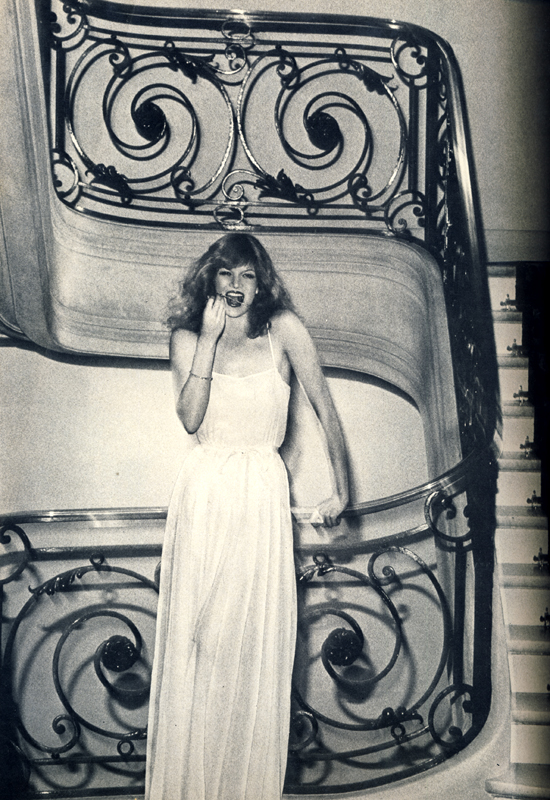
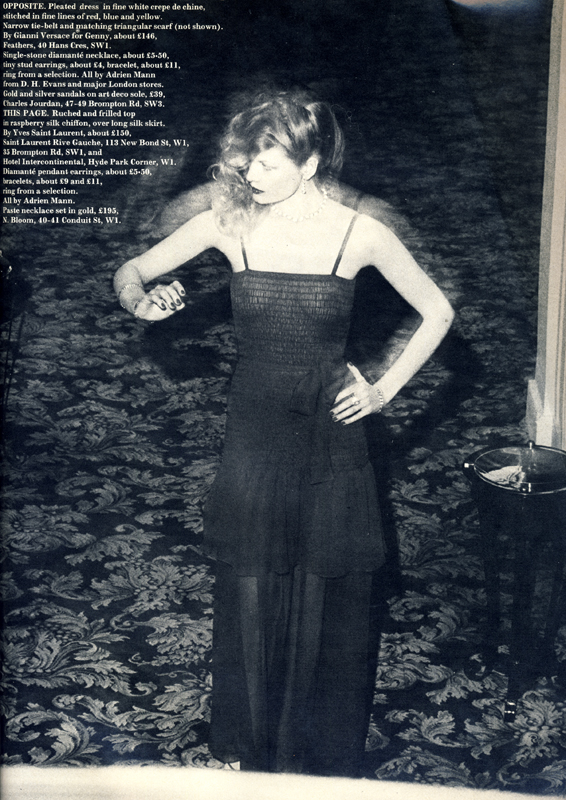
Body-hugging dresses on tiny straps.
Above, dress by Gianni Versace for Genny. Below, dress by Yves Saint Laurent.
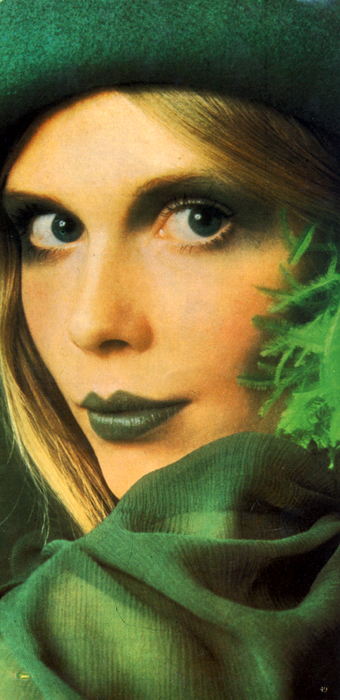
Green says Biba. Photo by Caroline Arber.
All the top beauty talent is currently colour-crazy – and we’re very much for it; it’s a fabulous enlivener of the grey winter scene. Your party look could be a variant of any of the gloriously off-beat ideas you see here – and anyone who considers green lips unnatural might dwell, briefly, on the knock-you-down naturalness of bright plum or orange ones.
Vanity Fair, December 1971
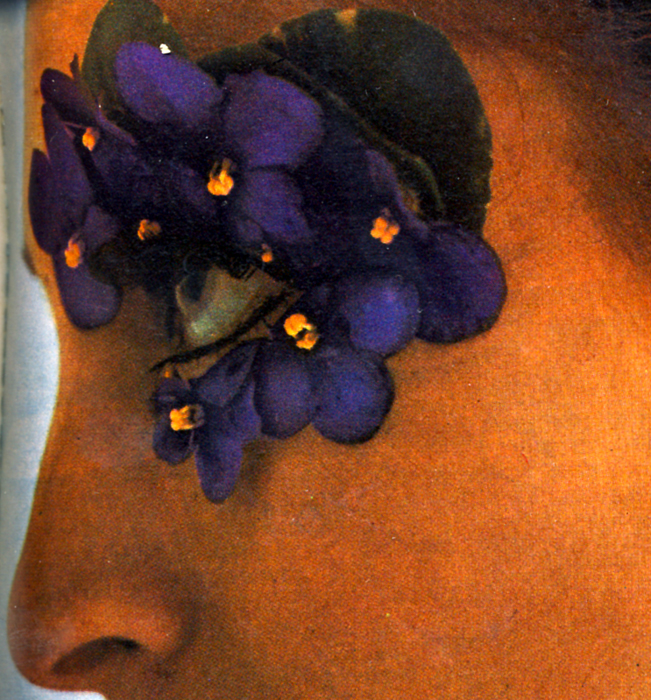
Violet says Pablo – Elizabeth Arden’s ebullient young creative director.
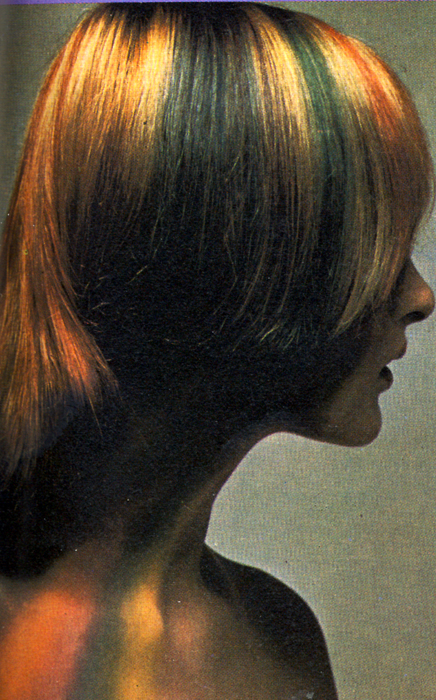
Rainbow hair says Michael at Crimpers. Photo by Steve Hiett.
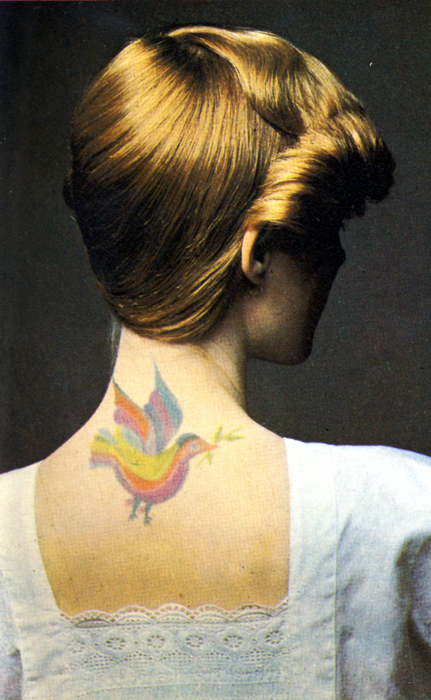
Any colours you like says Vanity Fair, using Mary Quant’s crayons. Photo by Didier Duval.
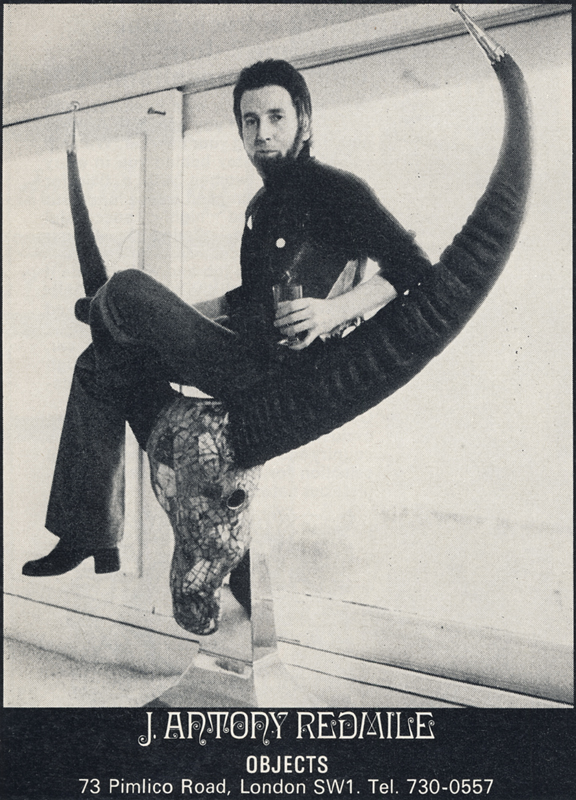
Would you buy ‘objects’ from this man? Is this the worst advert of all time, or the best? My answers would be ‘yes, indeed’ and ‘the latter’, but clearly my taste cannot be trusted where the Seventies are concerned (judging by a few snarky comments I’ve had regarding my blog over the past year…). J. Antony Redmile, I like your style (but not your beard).
Scanned from Harpers and Queen, October 1974.

This is actually one of my most favourite things in the whole world right now. When I found it the other day, I texted Mr Brownwindsor to gloat that I had found the best LP ever. I still stand by that statement, although with adjustment to the best LP cover ever. Because the songs contained swing from sublime to ridiculous; from Roxy Music to Phil Collins, from The Teardrop Explodes to Bucks Fizz.
I love the haute Eightiesness; the hair, the bacofoil clothes, the clumsy crotch shots, the make-up, the headbands! Absolutely the best £1 I’ve ever spent.
(for the uninitiated, Legs and Co were Flick Colby‘s follow up to Pan’s People and Ruby Flipper…)
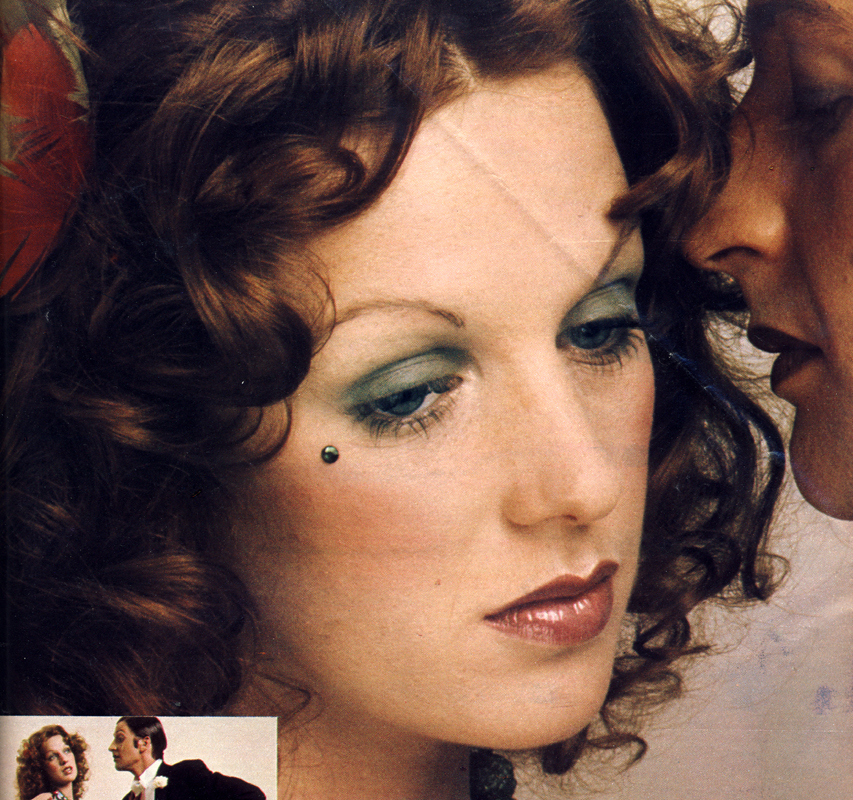
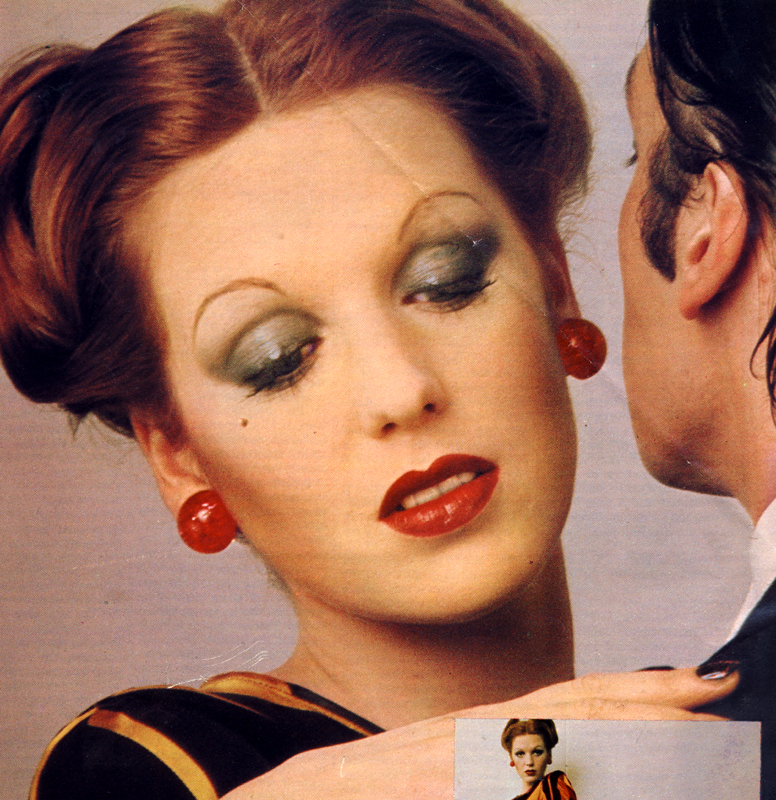
The intricacies of the make-up details and advice don’t particularly interest me in this article, but the photographs are simply incredible. Apologies for the creasing, sometimes things (and people) get a little crumpled over the years.
Honey, December 1972. Photos by Alain Vivier
Just an Old-Fashioned Girl
Old rose printed satin halter dress by Van der Fransen, £10. Shawl from Chelsea Antique Market. Shoes by Leicester, £10.99
Fifties Fan
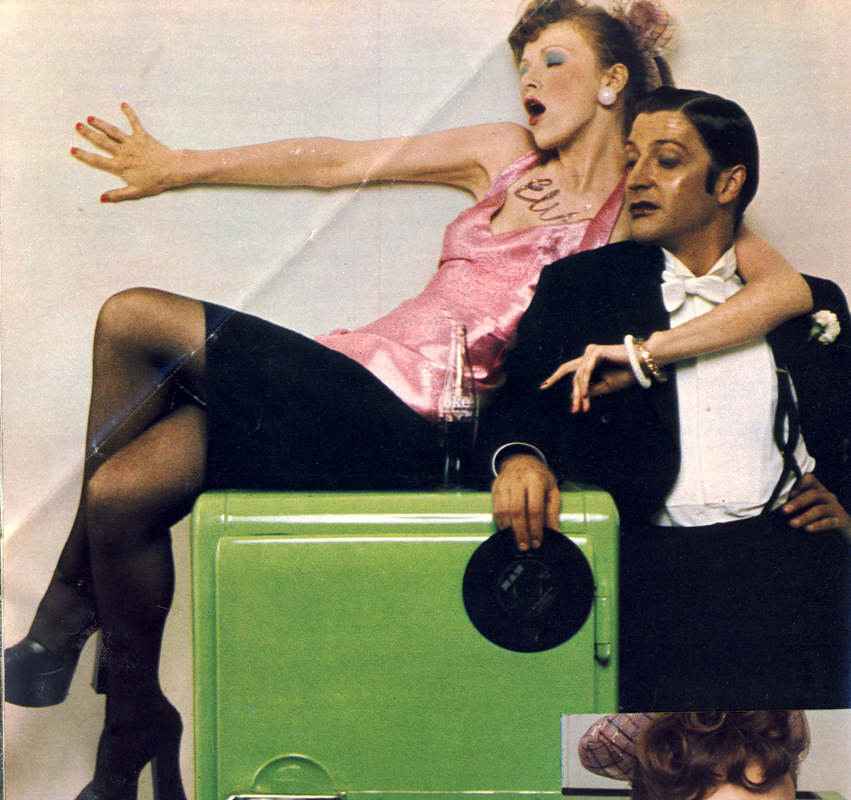
Shimmering lurex ‘cigarette girl’ halter top with pussy bow and pencil slim taffeta skirt from Crowthers, £10.95. Shoes by Sacha, £12.99.
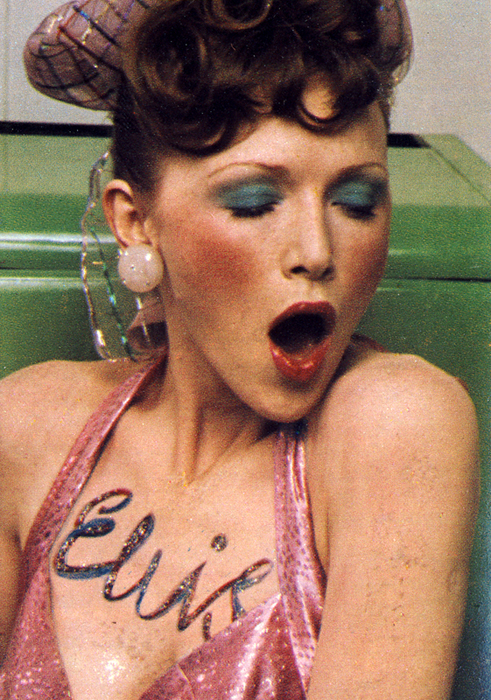
Instant Heiress
Jersey and candy stripe satin dress by Gillian Richard, £8.75 from Pinocchio. Shoes by Leicester shoes, £9.99.
Pretty Little Thing
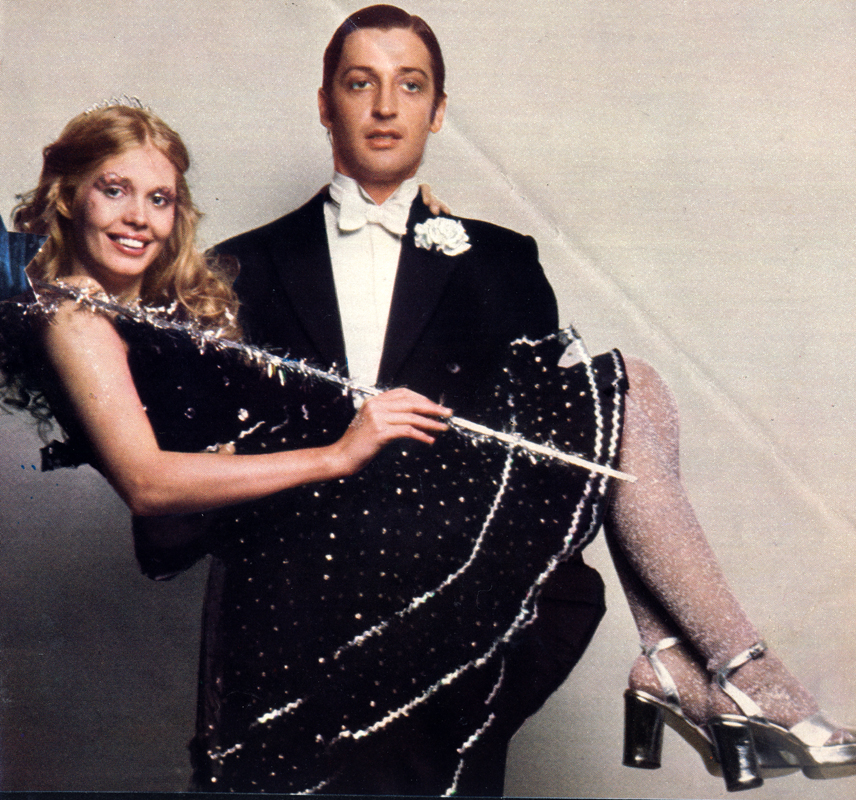
Frothy net and taffeta skirt with tightly ruched stone-studded strapless top by Miss Mouse, £10.50 and £7.
The Lady is a Vamp
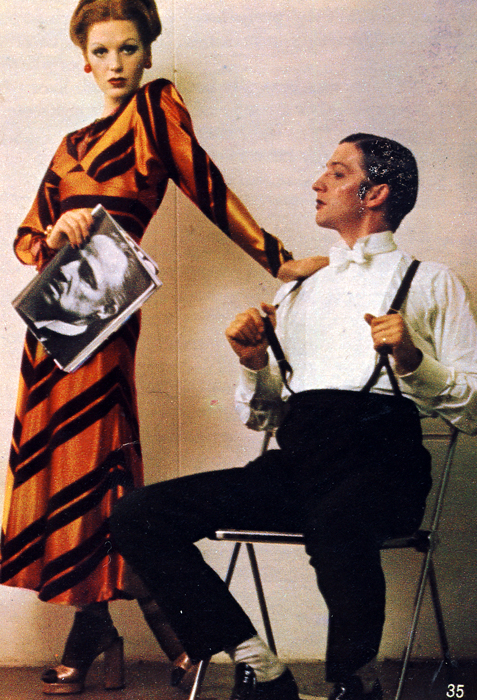
Tiger striped satin dress, £12.50 from Biba. Shoes by Sacha, £12.99.
Little Girl Lost
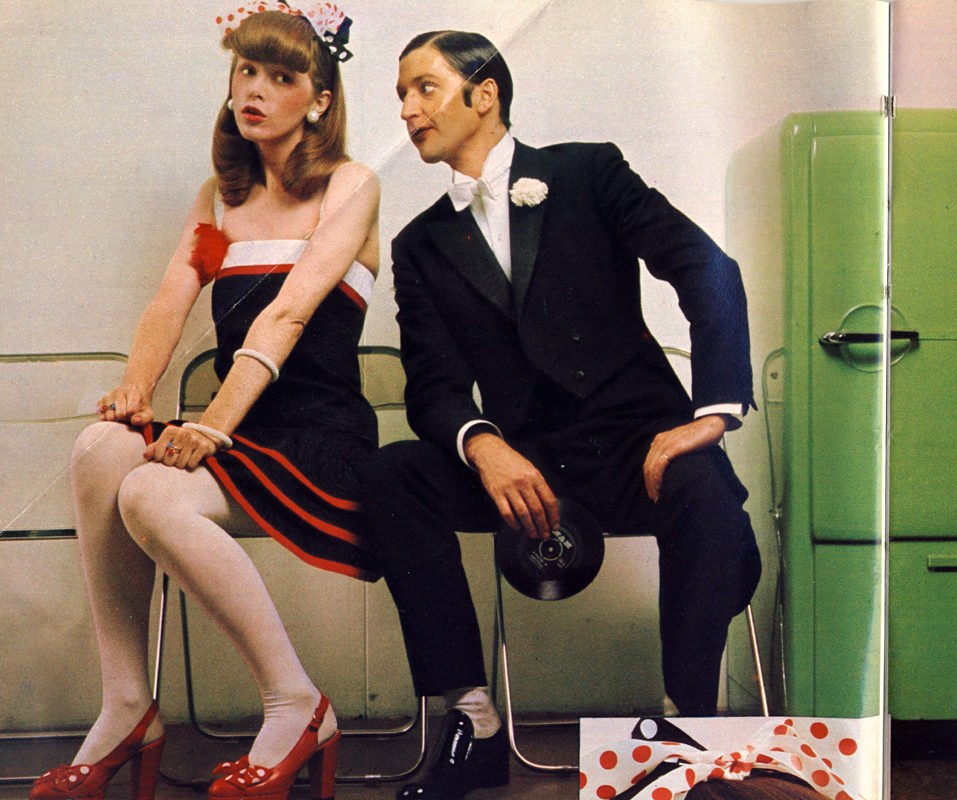
Short moire dress by Simon Massey, £12.75.Spotted bow fronted shoes by Samm, £7.95.
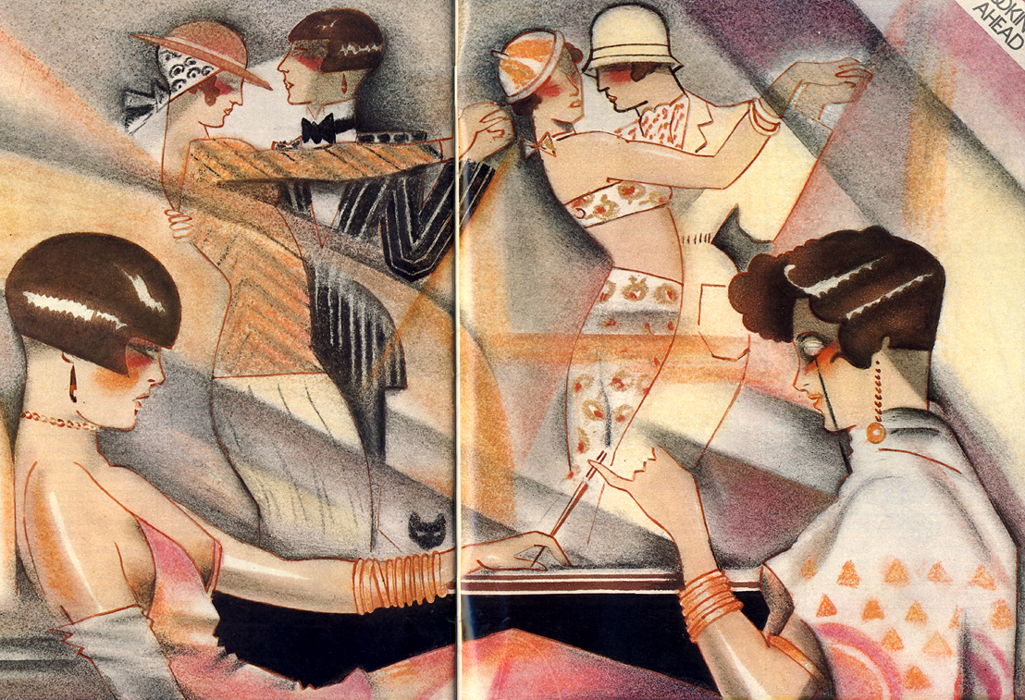
Illustration by Michael Roberts. 19 Magazine, January 1973.
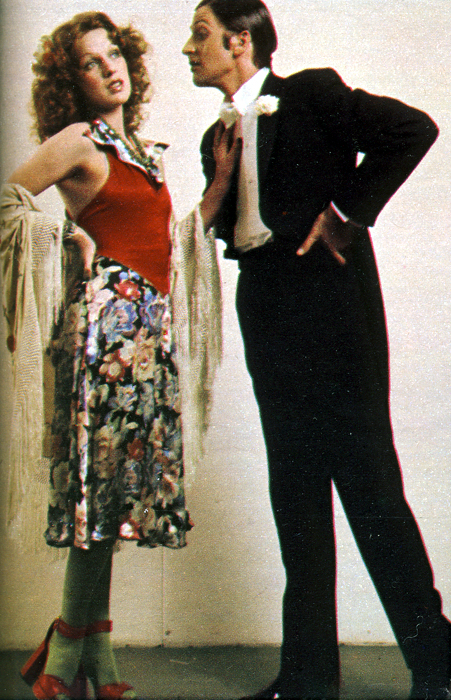
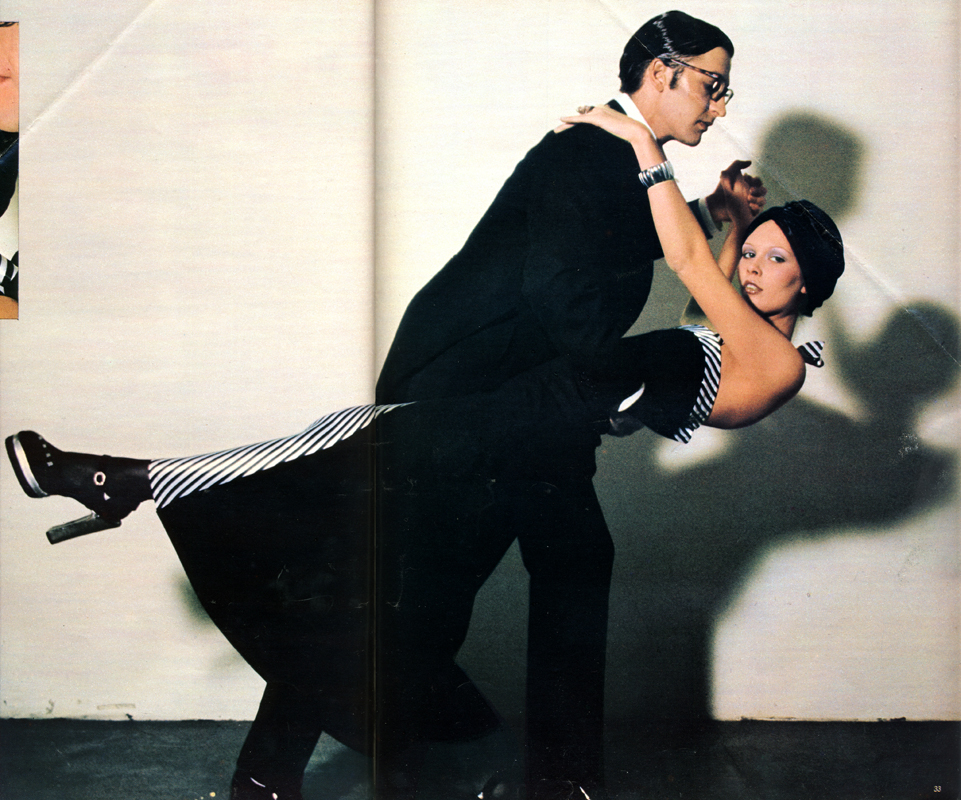
. . . in 1973. Life is beautiful, the girls are beautiful, the clothes are beautiful. In fact, life, 1973-style, is a cabaret and here we present the cabaret-girls, with a few tips – picked up at the Paris fashion shows – on how to dress the part without using up too much money
LEFT TO RIGHT: Martine in a chemise dress inspired by Roland Chakkal at Mendes. Make one yourself from a ‘Twenties‘ slip. She amuses herself by.toying with her cigarette holder (held just for show), while listening to the jangling of her nine A bangles. Her drop-earrings glitter, her tight bead choker sparkles and one arm is snug in its elbow-length glove.
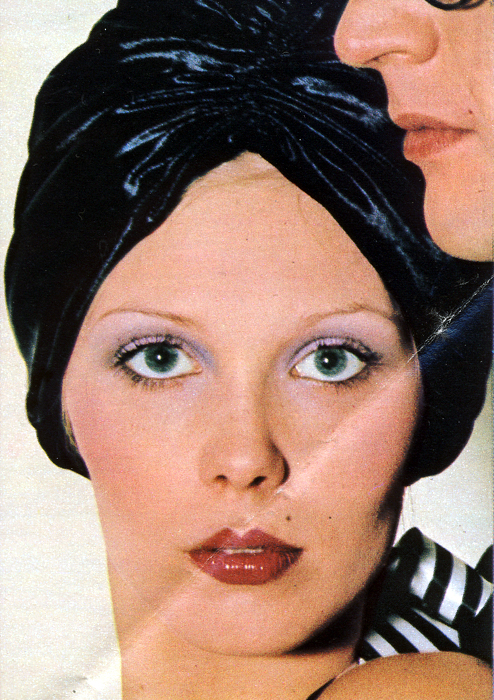
Janine tangos giddily with her partner. but nevertheless looks chic in a little soup-plate hat, perched jauntily over a printed scarf inspired by Karl Lagerfeld at Chloe. Thrown into a state of ecstasy by the Jap Collection, she has naturally teamed a long striped jumper with a neat box-pleated skirt.
Her partner, in pinstriped suit (inspired by designer Dorothée Bis), white-wing collar and bow tie (available in father`s top drawer), wears drop-earrings as a concession to femininity.
Neatly fandangoing into the spotlight – Katherine and Margaret. Katherine’s favourite designer is Karl Lagerfeld at Chloe. How right then for her to be attired in printed bra top and skirt. But paradox, paradox. She also fell in love with the stripey pixie hat seen at Dorothee Bis. Happily, she’s thrown caution to the wind and wears them together.
Margaret looks soulful. That is the only way one can look in an eye-shading, pull-on hat, all the rage for lovers of designer Emmanuelle Khanh
Zizi, as always, simply had to be different. A monocle. Only she could get away with this, but the rest of her accessories should be simple to copy.
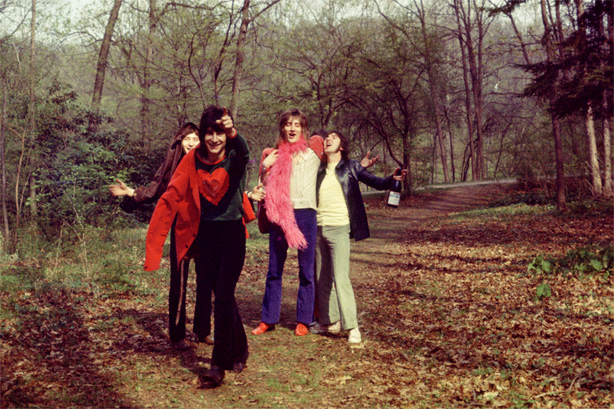
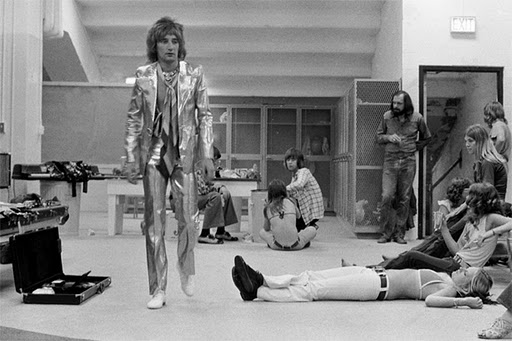
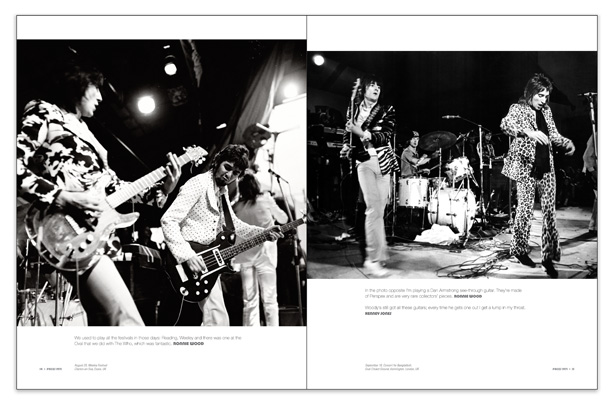
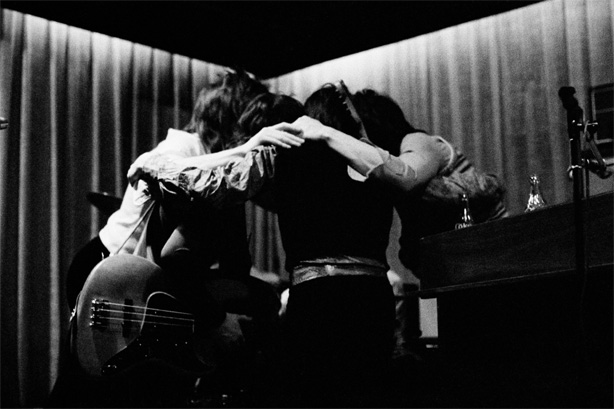
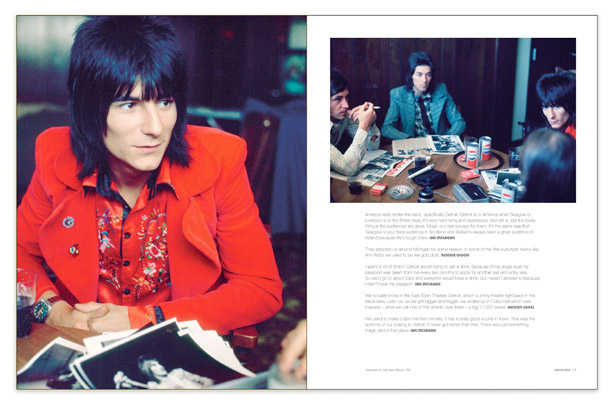
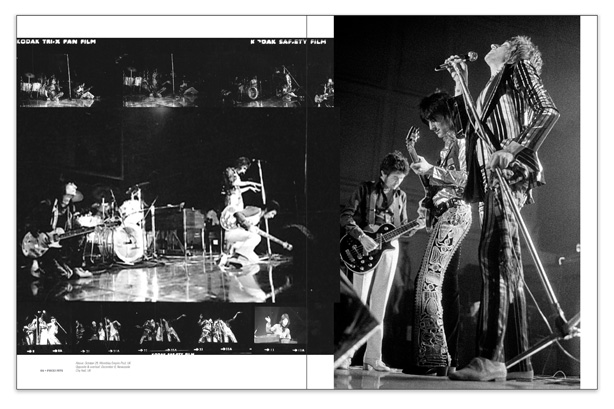
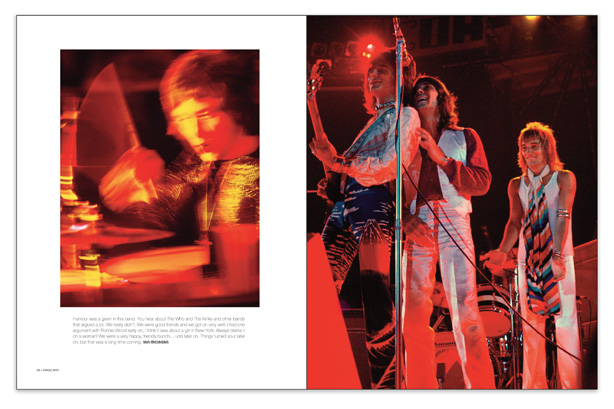
Ok, so this can’t possibly be a proper book review, because I don’t own the book. The reason I don’t own it, is because it costs £345. It’s £345 well spent, if you have the money, in my opinion. But it’s still £345. You pay for superior materials, lush production and great exclusivity; it’s bound (ha!) to hold/increase its value. It also contains a lustworthy amount of photos of rockstars in beautiful clothes.
I did, however, get to see a preview at the launch, at Genesis HQ in Guildford, on Tuesday night. Once the crowds had cleared somewhat, the feather-headed pseudo-mods had drifted away, I had spotted Peter Blake (again!! It’s the Zandra Rhodes effect; you start feeling bored of seeing them everywhere!) and gobbled up as many canapés as I could find, I carefully flicked through the book and tried to take some lousy phone shots of the photos up on the walls. I was in heaven. Men in satin. Men in flares. Men in feather boas. Men in platforms….
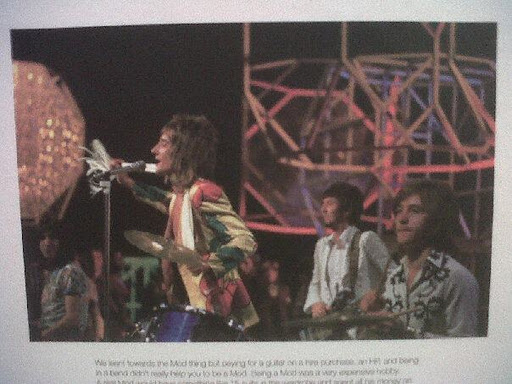
Rod in an Alkasura cherry jacket.
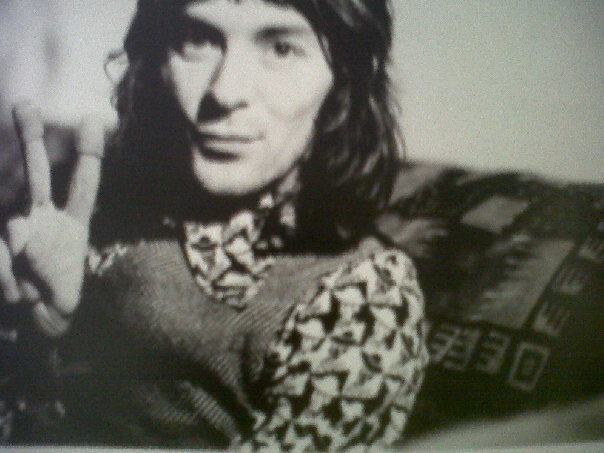
The "Bus Stop" blouse.
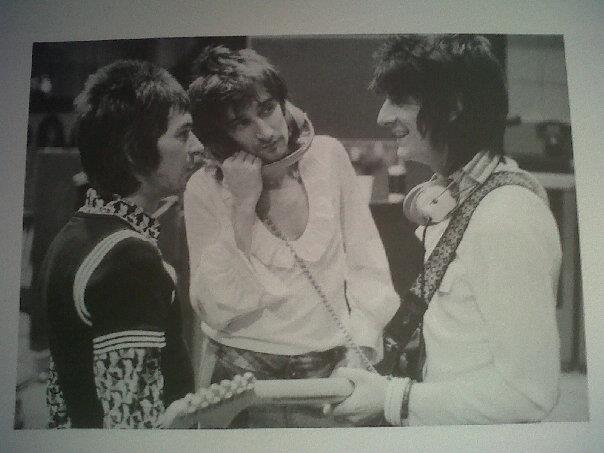
Men in blouses. Fantastic.
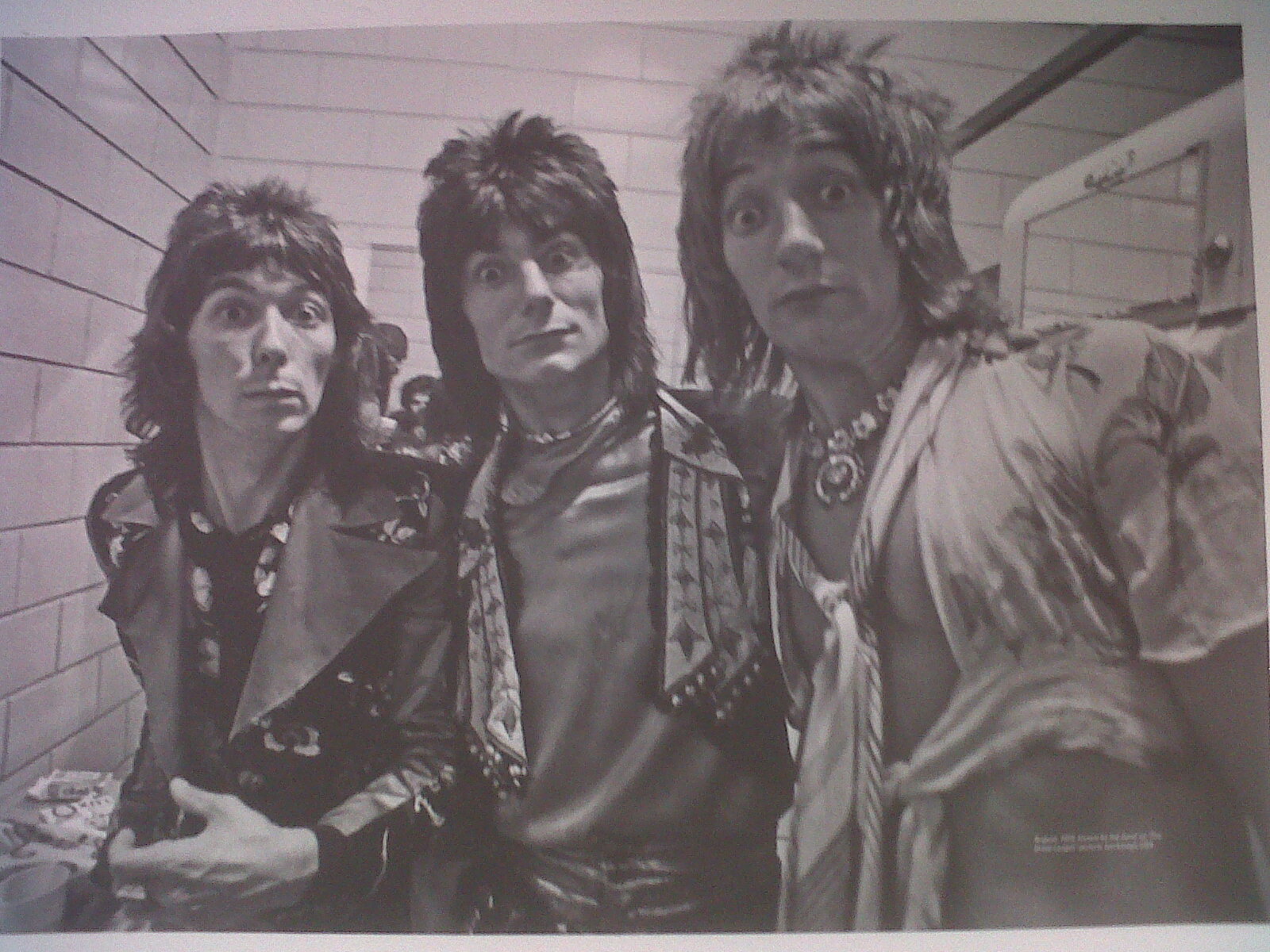
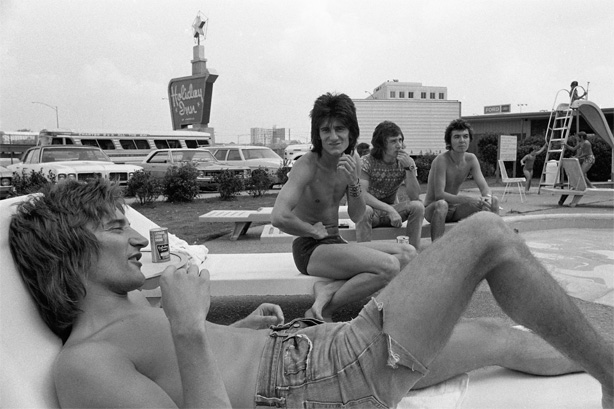
Funny Faces
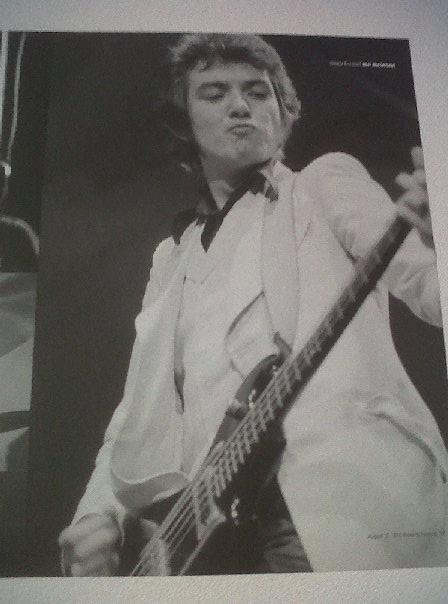
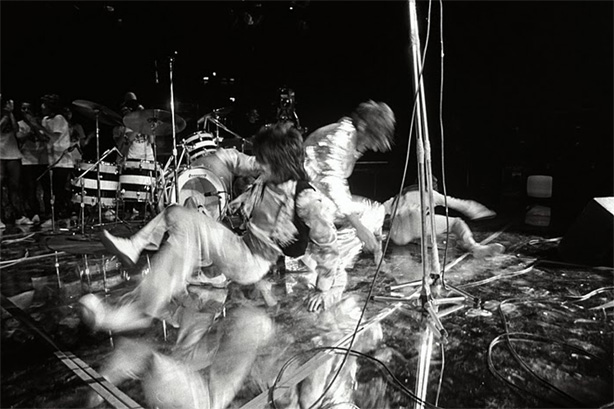
Plonk!
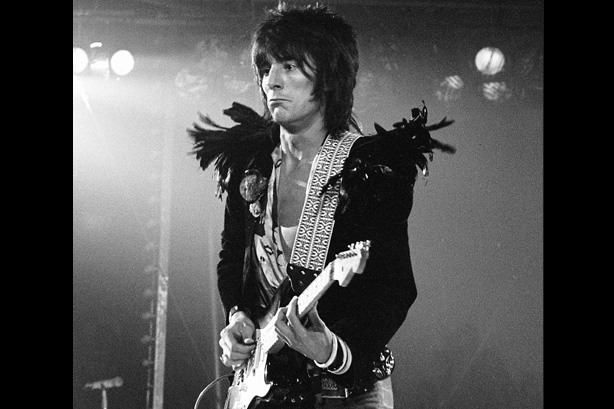
Personally I’m a Ronnie Lane kinda girl. Rod Stewart is fine in this period, and he wears some of the most brilliantly bonkers gear out of all of them. Ronnie Wood is tolerable, but he doesn’t float my boat. Ian McLagan has instantly gained major points in my book for being seen wearing a Bus Stop Forties-lady print blouse throughout the book. And Kenney Jones is….there. But put them all together, and it’s just magical. The photos are largely unseen; vivid, candid and energetic.
I’ll just have to keep hoping for that windfall so I can buy the damn thing! The Faces: 1969-75 is available here:
http://www.genesis-publications.com/faces/default.htm

Mensday isn’t just for the men, you know. Sometimes there’s a little something for the laydeez…

Ian McShane. Cosmopolitan, June 1973. Photo by David Steen.
For Ian McShane, there’s nothing remarkable in being photographed sprawling across a bed. He’s spent much of his career doing just that, but instead of a dachshund, his bedmates have included lovely ladies like Ava Gardner, Raquel Welch, Dyan Cannon and Gayle Hunnicut. And if you take a leisurely tour round that muscular torso and inspect those what-are-you-waiting-for eyes, you’ll understand why he’s picked for all those torrid love parts.
Despite those Latin features, thirty-one year old Ian was born in Blackburn. His father, Harry McShane, played for Manchester United and Ian grew up expecting to be a footballer until somewhere his ambitions changed direction and he went to RADA. Immediately afterwards he was given the lead in a film called The Wild and the Willing and since then his career has advanced steadily if not spectacularly. He’s appeared several times in the West End theatre, acted in, on average, one television play a year and taken major parts in about eight films including Sitting Target, If it’s Tuesday it Must be Belgium and The Last of Sheila, co-starring Raquel Welch and Dyan Cannon, which should be released in the late summer.
His performances have been consistently praised and there’s little doubt that, if he chose, Ian could turn out twice as many films. He admits, however, that he doesn’t like working too much. “The good thing about making a bit of bread is that you can do what you want to. I hate the thought of work for work’s sake.”
Instead, Ian likes to play the dilettante . . . commuting between pub and home, reading, listening to music, playing squash and football. He lives in an elegant Edwardian house in Roehampton, South London, with his wife Ruth, an ex-model from Manchester, their three year old daughter Katie and Nicky, seven, Ruth’s son by a previous marriage. Their two dogs, Morrie, a neurotic dachshund (that’s him preserving discretion in our photograph) and Wolfie, an extrovert, over-sexed mongrel, are regarded as third and fourth children.
Perhaps because his first wife, Susan Farmer, was an actress, Ian displays an almost total disenchantment with the breed. “I don’t like them very much, I don ’t know why they do it. An actor I can understand . . . but an actress is quite a different species. They’re too aware of what they are . . . always discussing how they should do the part, actresses are very full of that.”
He’s still recovering from tussles on location for The Last of Sheila where, according to Ian, the leading ladies were continually jockeying for first place. “It was all right when they were in front of the camera. The problems were about extraneous things like who took the longest , to get their lip gloss on. He describes his first encounter with Dyan Cannon. She, chewing gum, sizing him up quizzically: “What’s your name ‘?” “Ian McShane.” Chew. Chew. “You married‘?” “Yes.” Chew. Chew. “Got any kids ‘?” “‘Yes.” Chew. Chew. “See ya.”
His black list includes Elsa Martinelli (“an Italian spaghetti”), Senta Berger and Virna Lisi who all came in as guest artistes on one of his films and “were terribly blase about their roles. I suppose they had a right to be. But you feel that terrible anger, you think ‘how dare you come on this set for two days messing about’.” Yet, if you accuse Ian of being too hard on women, his wife immediately defends him. “He’s the most easy-going, tolerant man, not even grouchy when he’s out of work.”
He admits he has enjoyed working with some actresses, notably Ava Gardner, “A knockout, totally larger than life”, and Gayle Hunnicutt, “A lovely lady and a very good actress”. As for those passionate love clinches: “They’re very clinical because it’s all worked out beforehand. My most pleasurable ones were with Ava Gardner on Tam Lin—that was a big laugh. But these scenes are always enjoyable. After all it’s just acting.”
Many actors would shudder at that word “just”. But Ian, although he takes his acting seriously enough, has kept a rare sense of propor- tion. His real life—driving his 1957 blue Rolls, taking his wife to gambling clubs (“She plays roulette, I stick to the fruit machines”), or doing nothing in particular at home—takes a high priority.
He’s delighted, though, about his next film. He plays Bramwell in Bramwell Bronte, a part he has wanted for several years. “I have a lot of naive confidence. I always hope that the next one will be the best film, the best people, the nicest wine. It’s very important that you should have a lovely time when you’re working.”
Having a lovely time seems to be a pretty good ambition and it’s nice to talk to an actor who isn ’t all tortured anguish. On screen, Ian McShane can be brutal, arrogant or passionate to order, but look again at that impudent half-smile and you’ll find the humour and animal warmth that make him such a huggable Libran.
When you collect and devour as many vintage magazines as I do, there are a few important life lessons you begin to realise. The first is that regardless of what they may say, all photos now are airbrushed. You can tell this because all photos in vintage magazines are not airbrushed. People have blemishes and bumps, you either re-shot the entire editorial or you put it in, warts and all. The second is that people’s major life problems and desires are no different now to how they were then. There might be a little more of a whiff of old-fashioned values, but, ultimately, people just want a rewarding job, sizzling sex life and somewhere nice to live.
A more interesting and less generic lesson is this: Not everyone who has a large magazine feature about them and their talent is guaranteed any level of success. Surely most people are somewhat susceptible to that green-eyed monster, when they see a rival (or, worse, someone they’ve never heard of) featured heavily in a magazine article about ‘up and coming’ talents or ‘renowned authorities’. You wish nothing but success for fellow human beings, naturally, but you may wonder why you have been overlooked or fear you have missed some vital step on the road to becoming a major player in your chosen field.
But the number of magazines I read, which feature ‘up and coming’ new fashion designers who even I have never heard of (me, boutique-geek, not the foggiest….), is astonishing. This particular article from 19 Magazine is one of the most striking. The incredible photo, the incredible clothes, the fact that they are the main feature in an article which also covers Wendy Dagworthy. Tell me, who on earth has ever heard of Preston and Saunders? I’ve googled, and googled. Unless I’m missing something, there’s nary a trace of them anywhere.
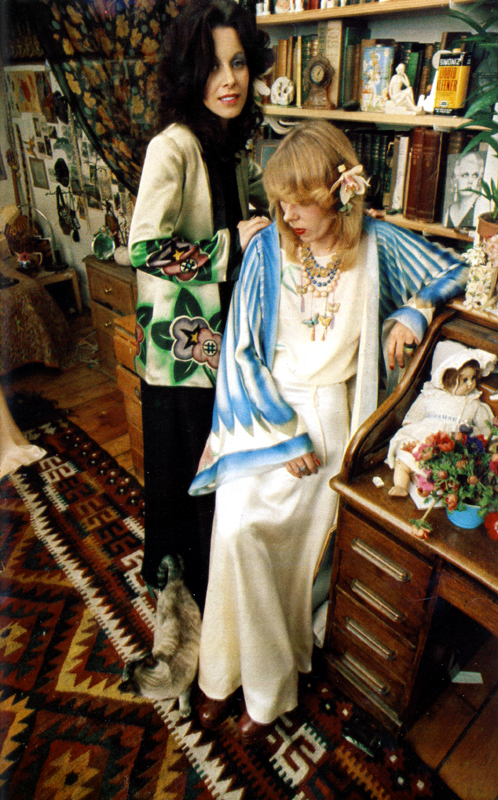
Laverne Preston wears a hand-sprayed and beaded jacket with print designed by Jane Wealands. Sue Saunders in her hand-sprayed Egyptian printed kimono.
Which is a shame. Clearly they had talent. But what happened to them? Where are the Preston and Saunders clothes? Why is this the only reference in any magazine I’ve ever seen?
I must admit, I’m really hoping that either will google themselves and find me. I really want to know what happened to them! I also think this is a very good quote, and remains an important point to make in 2011.
Laverne Preston and Sue Saunders have just formed Preston & Saunders with no capital at all. They’ve been offered backing, but it’s a case of once bitten, twice shy.
Of the designers we interviewed, we found that Laverne had the most ‘experiences’.
“l’ve lost thousands of pounds . . . people I’ve done collections for that have made a fortune out of me, and, of course, names! I’ve made two companies complete, you know, names, and earned very little money out of it for myself.
So we decided to eliminate such people. That’s why we really don’t want backing, a few thousands, yes, but not real backing. Once you get that, you make a name for the company, you get masses of Press, you get a story for them—and then, that’s it. “I had four years at art college, a year in Paris making tea, before I became a designer for Maggy Rouff under an architect called Serge Matta. This had the biggest influence ever on my designing because he was so pure and I was very into architects, anyway.
“Then I went to Kiki Byrne, Young Jaeger, Consortium, C&A Modes and, finally, Maudie Moon, which was great fun. I then decided to give up the whole rag trade, buy antiques, study embroidery, etc. I tra- velled all over England looking at different handicrafts.
“After this, I worked again for another company and was nearly had up for assault—I blackened an eye—so I left, called Sue and said, `Why don’t we get together. because I can’t keep blackening people’s eyes’, and that was it.”
Sue Saunders has had gentler experiences. She spent eight years at art colleges, start- ing in the provinces and end· ing up at The Royal College of Art. then she taught silk-screen printing in the graphics department of East Ham College of Technology for two years, and freelanced.
“I started up the printing studio with a company called Luckies, which used to do pop furniture. It went bust so I got out of that. Then I met Jane Wealands, whom I was with at college, and we set up OK. Textiles, which was just short runs of our designs, We could not get them into production as nobody wanted to buy that sort of thing. We started off wanting to do furnishing fabric, but it ended up with most of our designs being used for things like men’s shirting.
“We did lovely stuff for Johnson & Johnson and Alkasura, and have done jackets for Rod Stewart and Marc Bolan and people like that. It was at that time that I met Laverne. “Jane wanted to go into graphics and I was left on my own. I wanted to do something worthwhile and design for an end product. I had no control over the things I sold – what they were used for.
“They were usually men’s things and I thought it would be nice to do things for ladies for a change. It also gave me an outlet for my sprayed fabrics, which are hand··sprayed with spray guns, as well as printed. I would much rather do one-off things than produce yards and yards of fabric.
“I can do any print I want, but I do change things for Laverne if it doesn’t fit the pattern of the garment. The kimono I’m wearing (it had a beautiful Egyptian print) was done for my boyfriend, Jeffrey Mitchell. He’s just got a new band called Hollywood, and I guess we’ll be doing things for them. It’s nice to do special things for people. This is specially for Jeffrey, because he’s into Egyptian things and so am I.”
Did she think that art colleges helped one to get jobs in a practical sense?
“No, I don’t think they do. They are good in that they give you some time to be able to learn certain things and be able to experiment. One can’t do that once out of college and into a set-up like ours. College gave me the opportunity to do mad, inflatable things which I wouldn’t be interested in doing now. I’ve got it out of my system. I think students should spend a month a year working for a commercial company and then go back to reassess their thinking.”
Preston. & Saunders will be a fairly expensive label to start with. They have done a range to sell exclusively at Elle shops, and all the garments will be a mixture of tamber beading, hand embroidery and hand-padded flowers in relief on velvet.
Laverne adds: “The more money we earn, the more staff we can employ, and the prices will come down. I don’t want to use factories. All they want to do is shove through an order for 800 garments at a time. “There are masses of women at home who have children and can’t go out to work because of them, and this gives them a chance to do something interesting.
“There is no reason why we can’t do hand embroidery just because we’re living in 1974. I always wear antique clothes and love anything with embroidery or texture. One of the reasons I went into this is because the really beautiful antique clothes are completely out-priced.”
 Liz Eggleston