Barbara Hulanicki: Art Deco W14

art deco, art nouveau, barbara hulanicki, biba, interior design, James Mortimer, seventies fashion, Vogue
A section of the studio. Beneath the gallery one discovers a sink, kettle. cooker below a thirties’ Grecian frieze. Art Deco chairs in peach moquette. Screen, with beaded shawl. purple plastic  grapes behind a delicate nasturtium-leaf lamp hung with beaded fringe
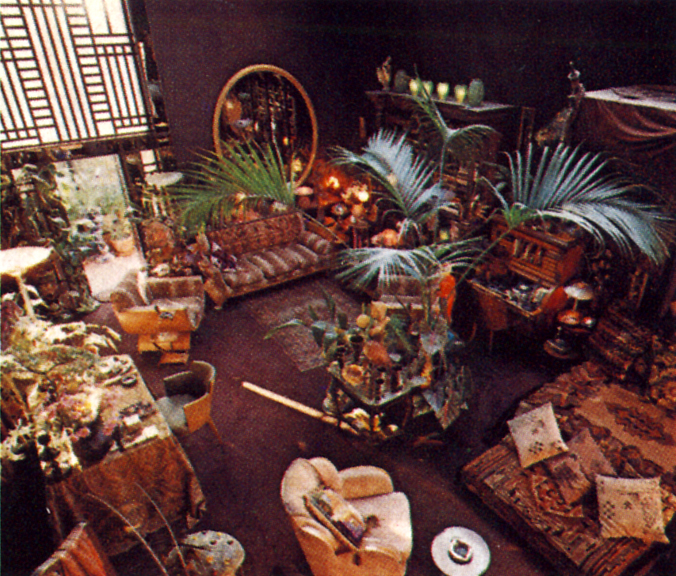
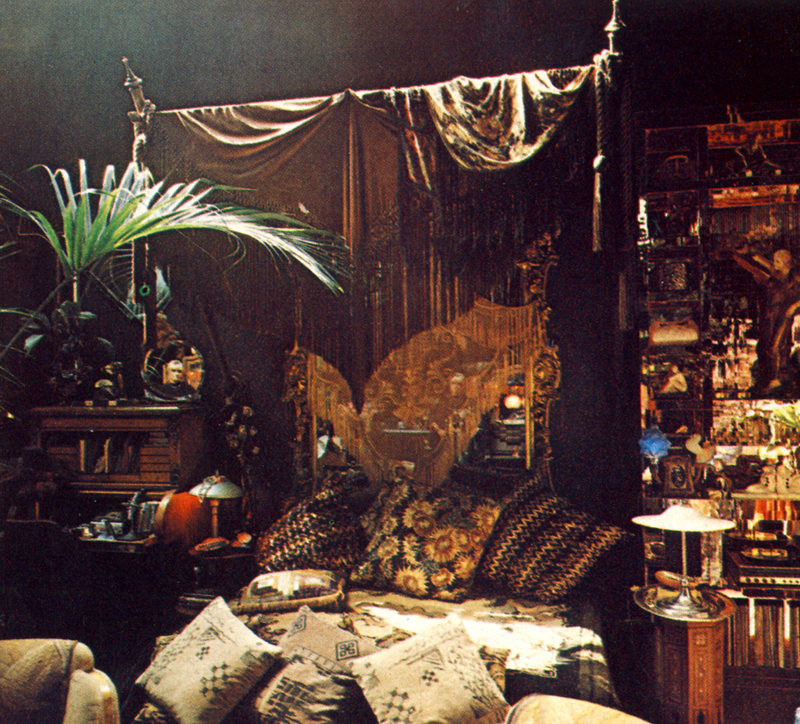
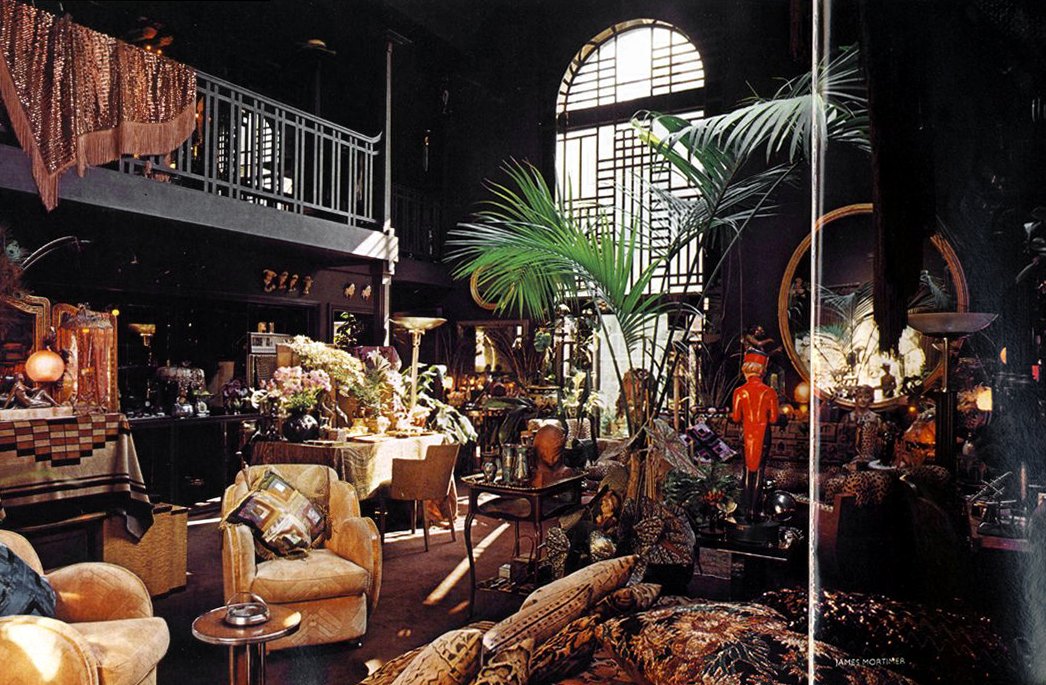
Barbara Hulanicki at home in one cavernous studio which she found three years ago and filled with Art Deco from floor to ceiling. Walls, ceiling, stairs, all painted a rich matt brown, merge into the shadowy interior; angles and lines are softened and blurred. Colours, not walls, mark out living areas, a different shade for each section of space. Light is filtered through the brown-tinted glass of the high, patterned perpendicular window and a long fanlight in the roof. A brown spiral staircase, leafy with plastic twisting plants, leads to a long gallery which forms the dressing-rooms. Everywhere, an endlessly intricate arrangement of colour, pattern, space; a deep, dark brown jungle of the ornamental, the exotic, the glittering.

Photos by James Mortimer. Vogue, October 1975.
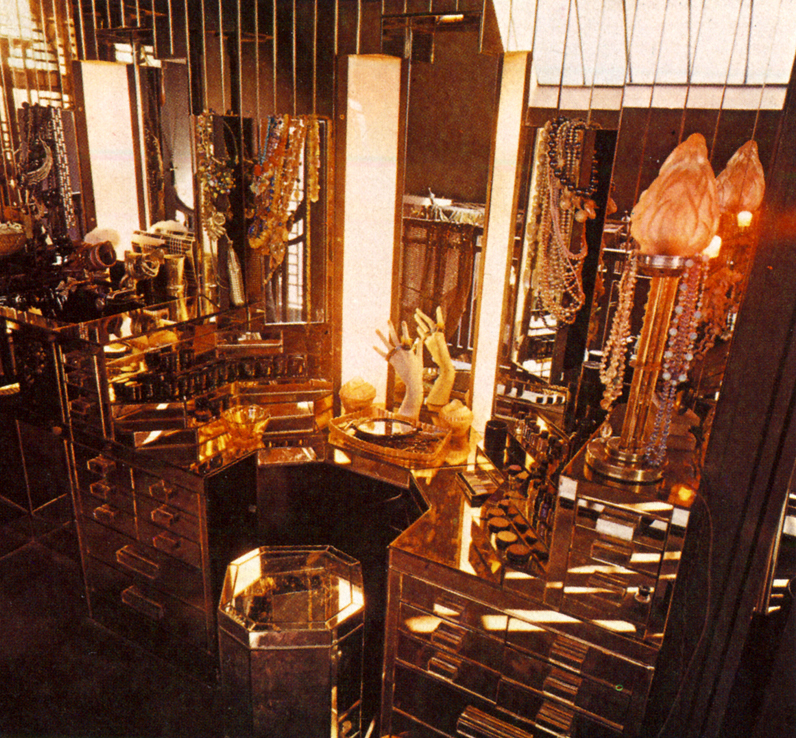
The dressing-room. Shades of peach and deepest brown, Creamy lighting from bulbs set behind opaque glass. Peach mirrors hung with beads, the dressing table, a darker shade of smoked peach, made up of tiny individual drawers. Stool topped with smoked peach glass.
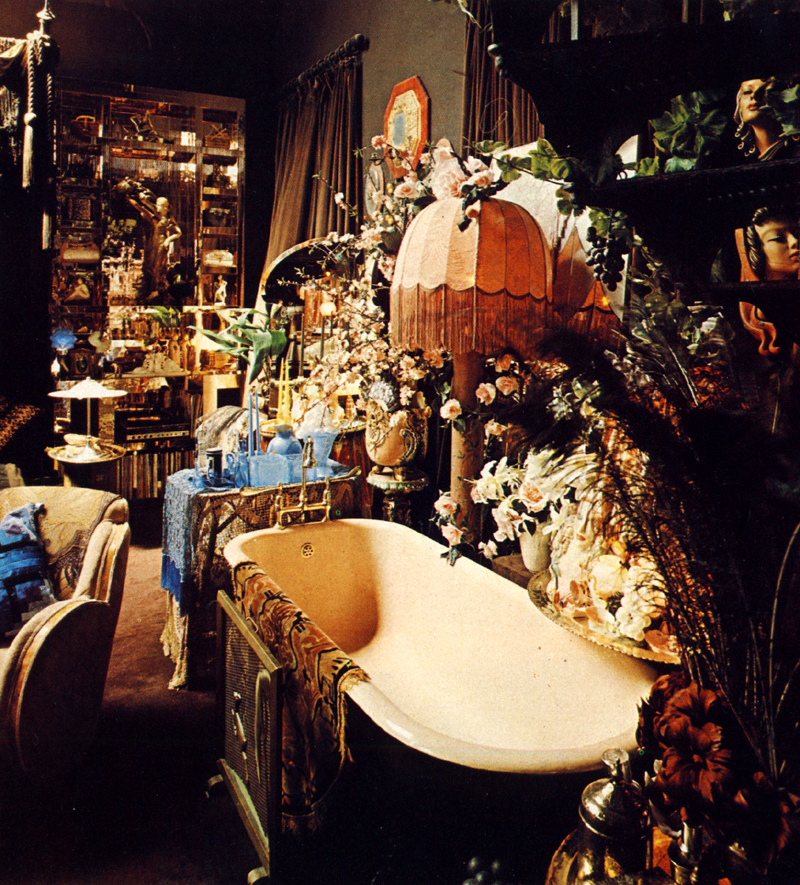
The bath, a riot of peach and plastic flowers. Ornate brass taps, Art Deco screen. Brilliant blue glass, candlesticks and pearly plastic grapes.
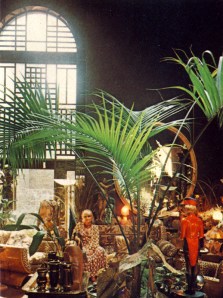
Barbara Hulanicki in the sitting-room, the window open to reveal a jungle of climbing plants outside. In the background, a collection of Art Deco glass below the enormous mirror, at least six feet in diameter. Everywhere lamps, small, fringed or mushroom-topped on long, slender stems: everywhere figures, ferns, flowers. In foreground, a set of black/silver/turquoise vases and modelled head on decorated brass tray and glass-sided table: replica of a twenties’ cigarette girl, now bearing a tray of jewellery.
Looking down from the gallery into the studio, arranged into its separate “rooms”
The bed, above, hung with shawls, scattered with sequinned brocaded cushions. Barbara Hulanicki reflected in the bedside mirror on the writing desk and in the centre of the mirrored bed-head. On the right, a peach mirror flex set of shelves, with photographs, figures, eight Art Deco plastic handbags.

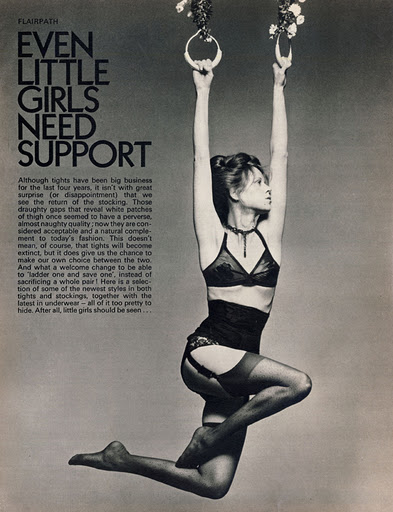
Mild Sauce: Even little girls need support

1970s, charnos, flair magazine, janet reger, margit brandt, mild sauce, Tony Moussoulides, underwear

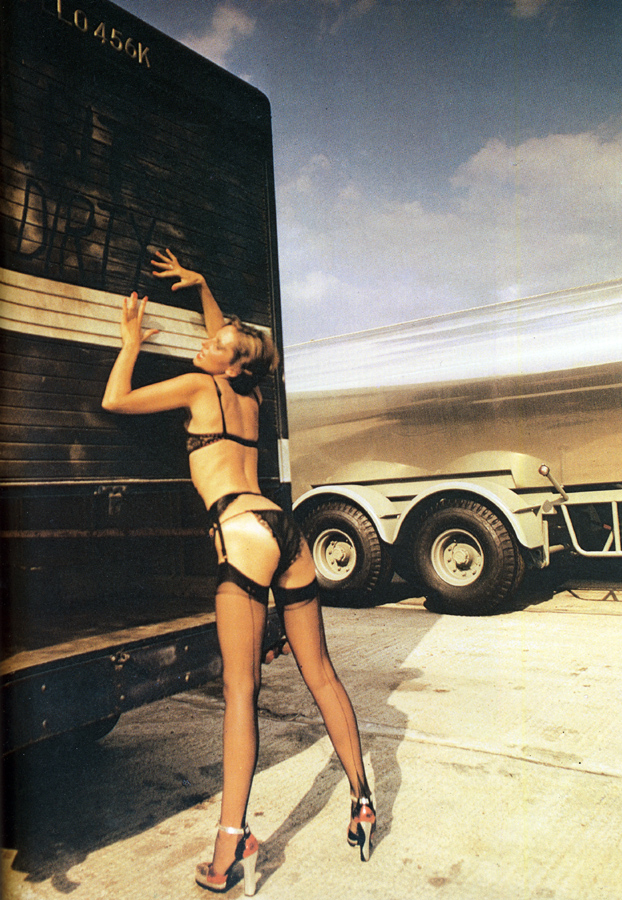
Margit Brandt for Femilet. Stockings by Charnos. Suspender belt by Rosy of Paris.

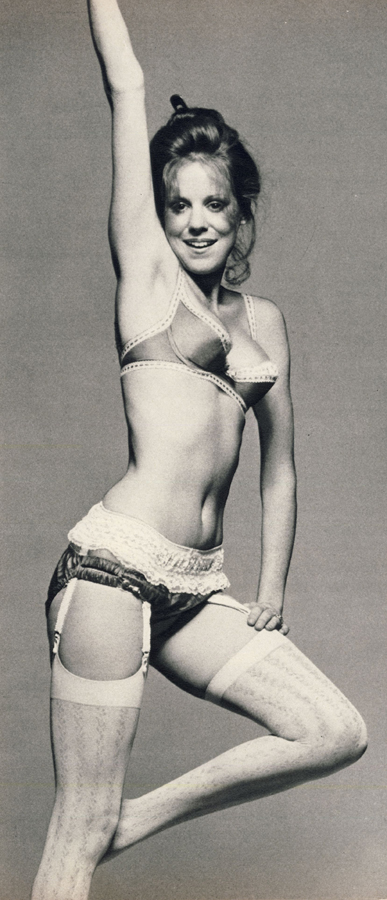
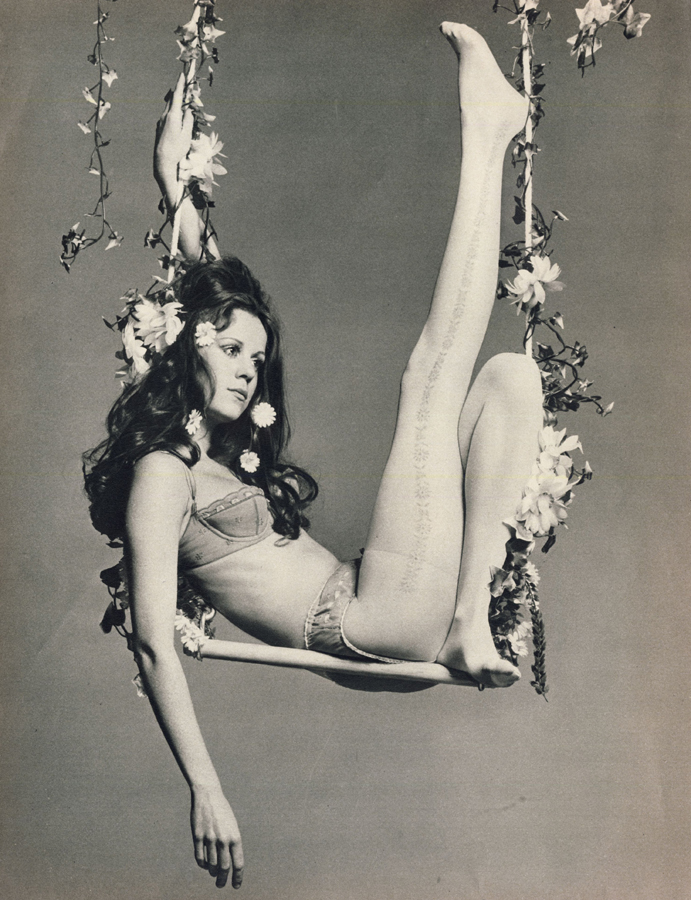
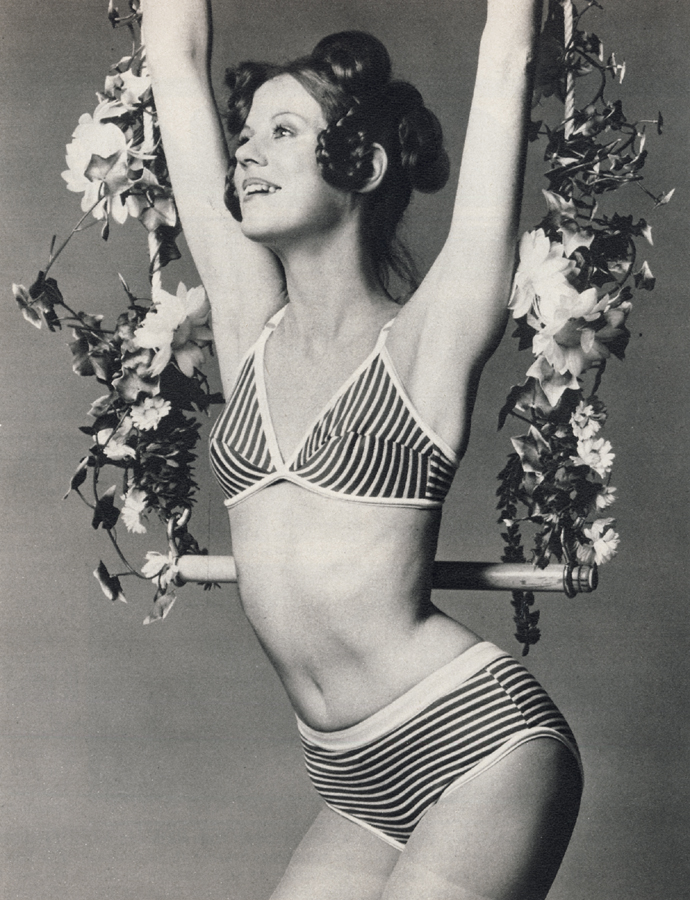
Ignoring the slightly dodgy undertones in the title of this fashion spread, it demonstrates why I love the Seventies look so much. I’m a petite girl, with petite curves, and while I’m perfectly capable of going braless, I love bras. Sadly, very few styles appeal to me. I honestly wish I could go shopping in Janet Reger, in the early Seventies.

Photographs by Tony Moussoulides. Flair Magazine, January 1971.

Janet Reger. Stockings by Mary Quant.

Janet Reger. Tights by Wolsey.

Abecita. Tights by Mary Quant.

Inspirational Images: Pre-Raphaelite hair

barbara daly, barry lategan, hair, leonard, Make-up, seventies fashion, Vogue
 
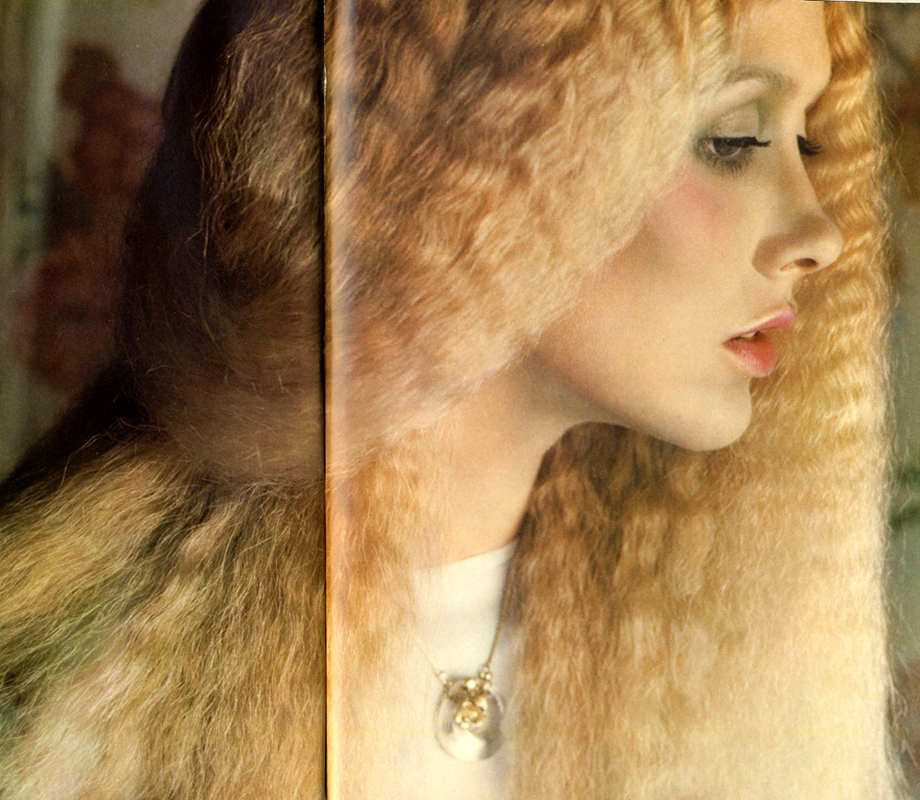
Photographed by Barry Lategan. Hair by John at Leonard. Make-up by Barbara Daly.
Vogue, February 1975

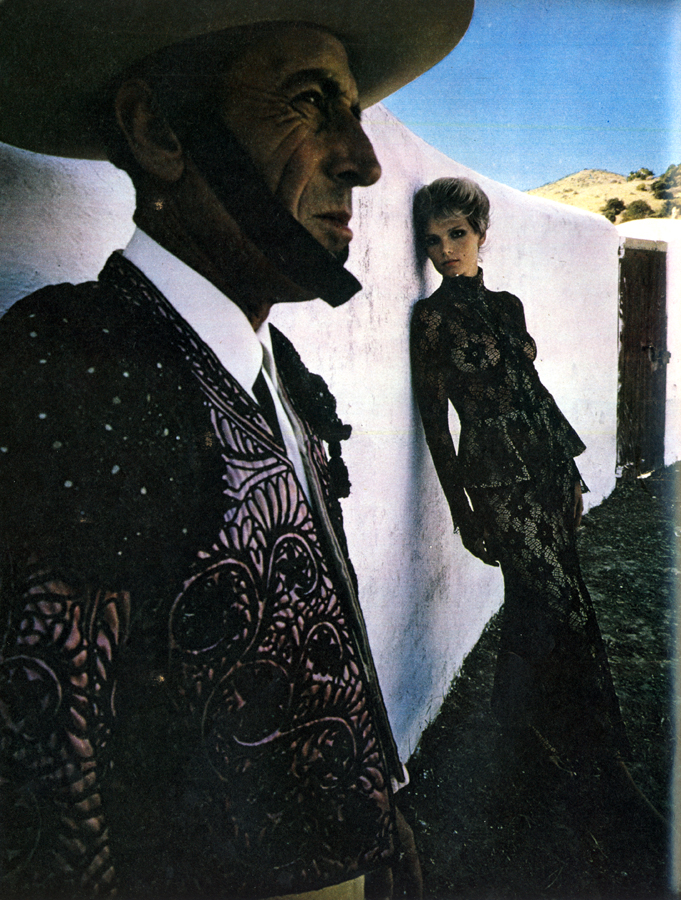
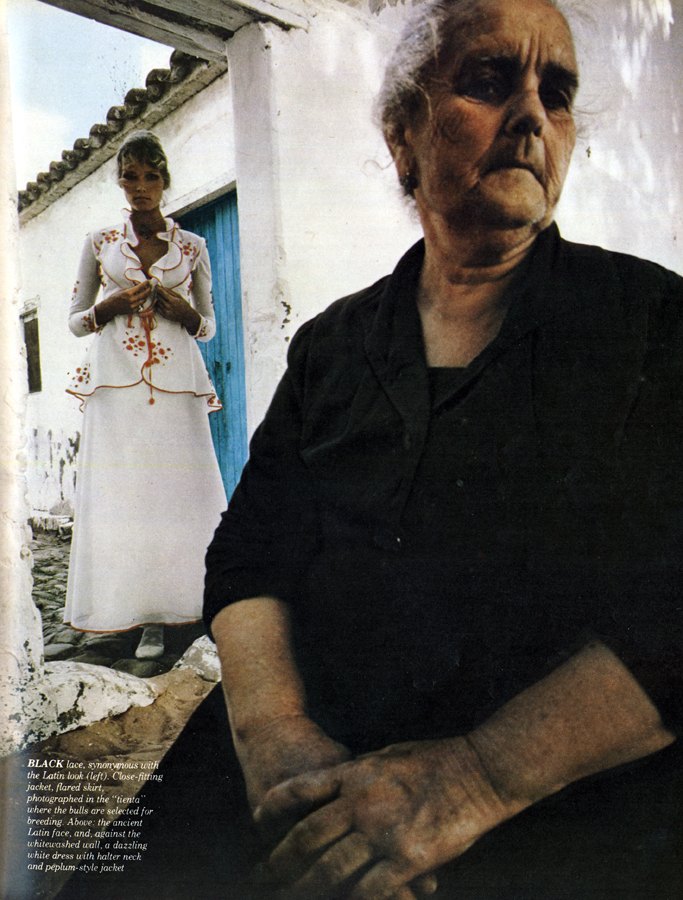
The Latin Look in English Clothes

1960s, barbara hulanicki, Barbara Hulanicki, biba, cherry twiss, jean varon, jean-loup sieff, john bates, marrian mcdonnell, ossie clark, quorum, telegraph magazine

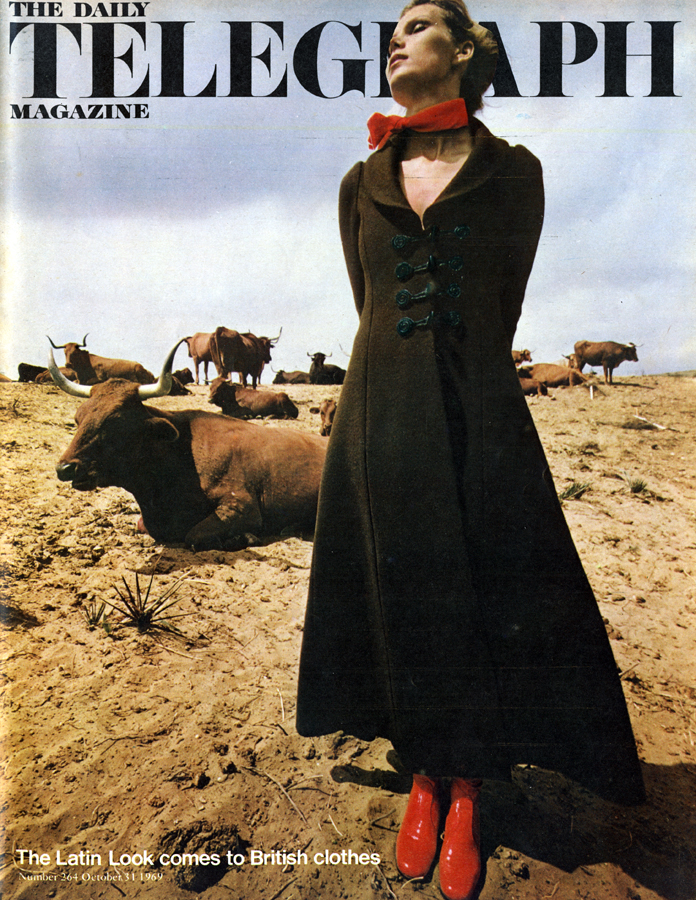
Coat by Biba

Scanned from The Telegraph Magazine, October 1969.
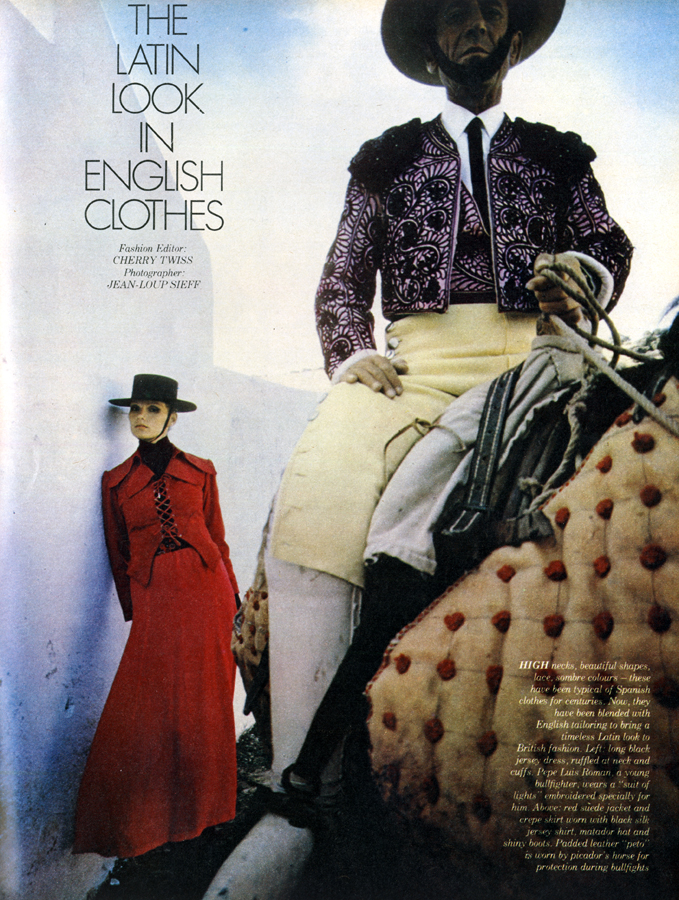
Photographed by Jean-Loup Sieff. Edited by Cherry Twiss.

Top and skirt by Ossie Clark for Quorum

Top and skirt by Biba

Dress by Jean Varon

Dress by Jane Walker at the Royal College of Art

Skirt and waistcoat by Marrian McDonnell

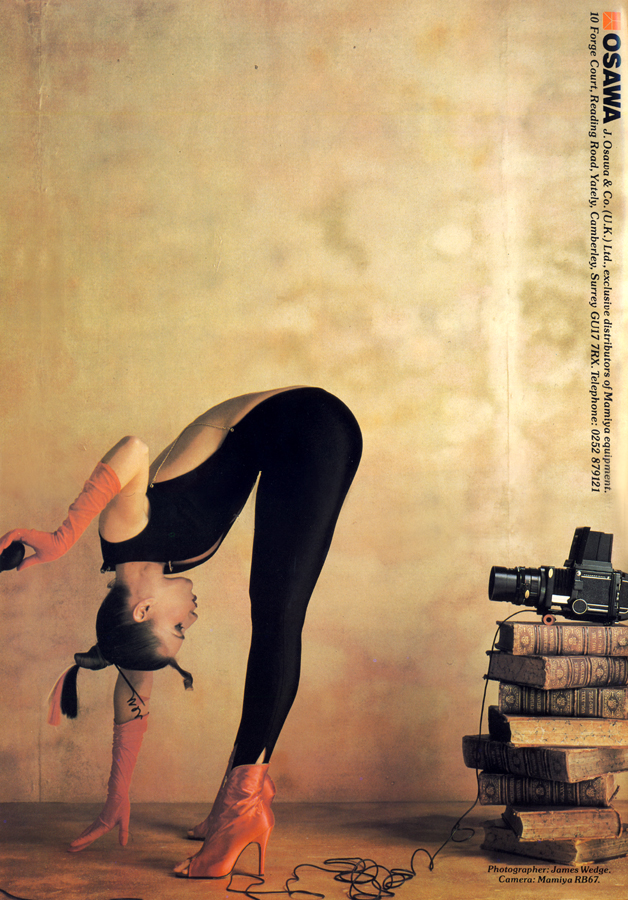
Inspirational Images: Portrait of a self-portrait

1970s, Hot Shoe, james wedge, terry de havilland

Photo by James Wedge. Scanned from Hot Shoe magazine, November 1979.

The boots are by Terry De Havilland. How do I know? Because I have a pair in blue which I will be selling on Vintage-a-Peel very soon!

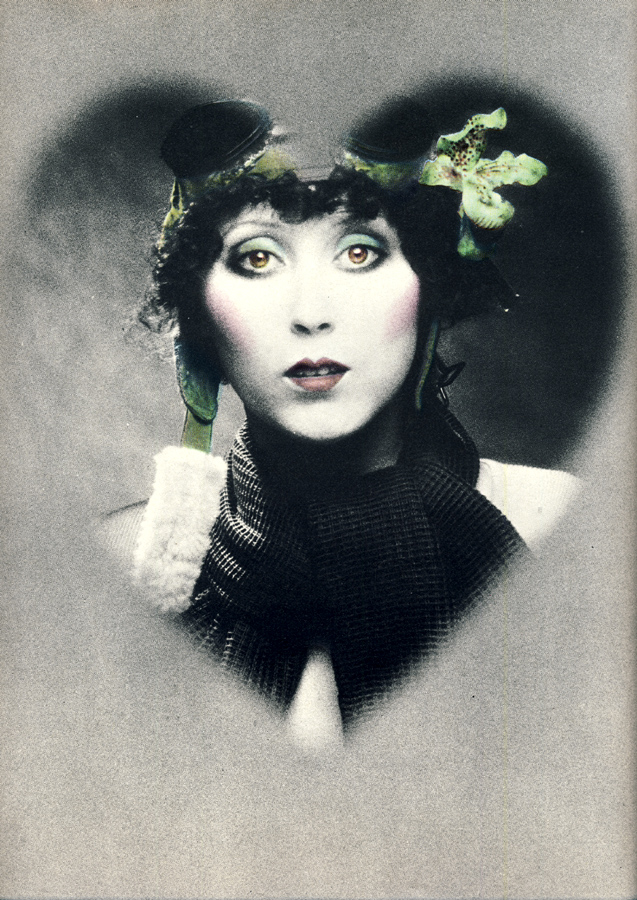
Inspirational Images: Moon Heart

Inspirational Images, Sarah Moon, seventies fashion, Vogue

Simply beautiful photo by Sarah Moon from Vogue, June 1974.

Mild Sauce: Tip toes

1970s, john thornton, mild sauce, platforms, shoes, stockings, terry de havilland

Shoes by Terry de Havilland

I would kill for those heels in the above photo. Both photos are by John Thornton and scanned from Masterpieces of Erotic Photography. I seem to spend a lot of time on my tip-toes, either forced on me by high-heels or just naturally. People think it’s funny, cute or weird, depending on who they are…

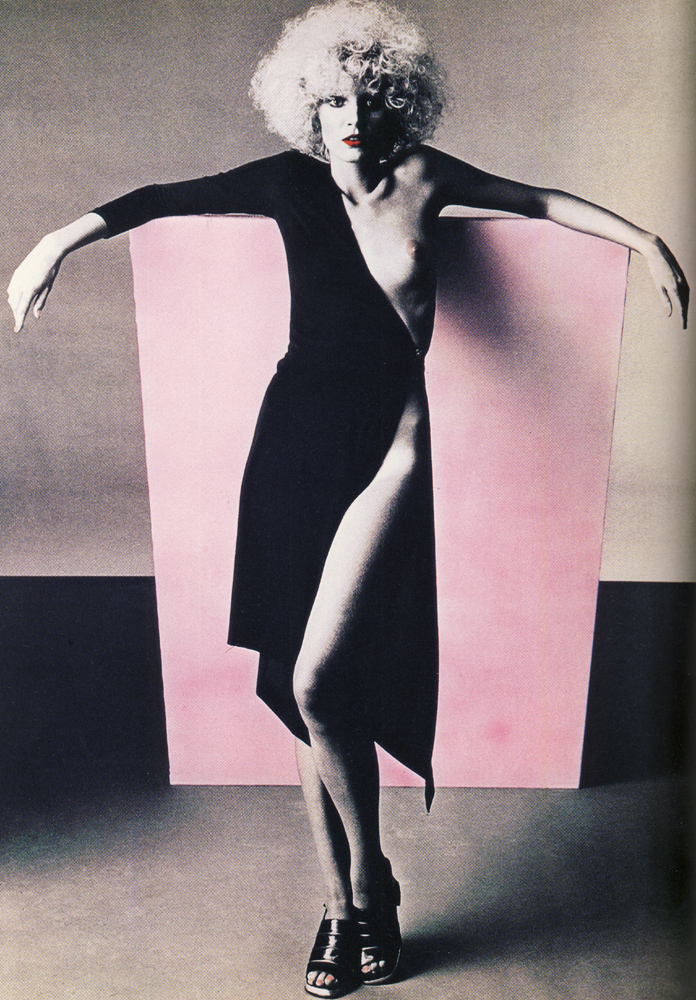
Inspirational Images: The Passion by Oliviero Toscani

1970s, hand tinting, Inspirational Images, james wedge, mild sauce, Toscani

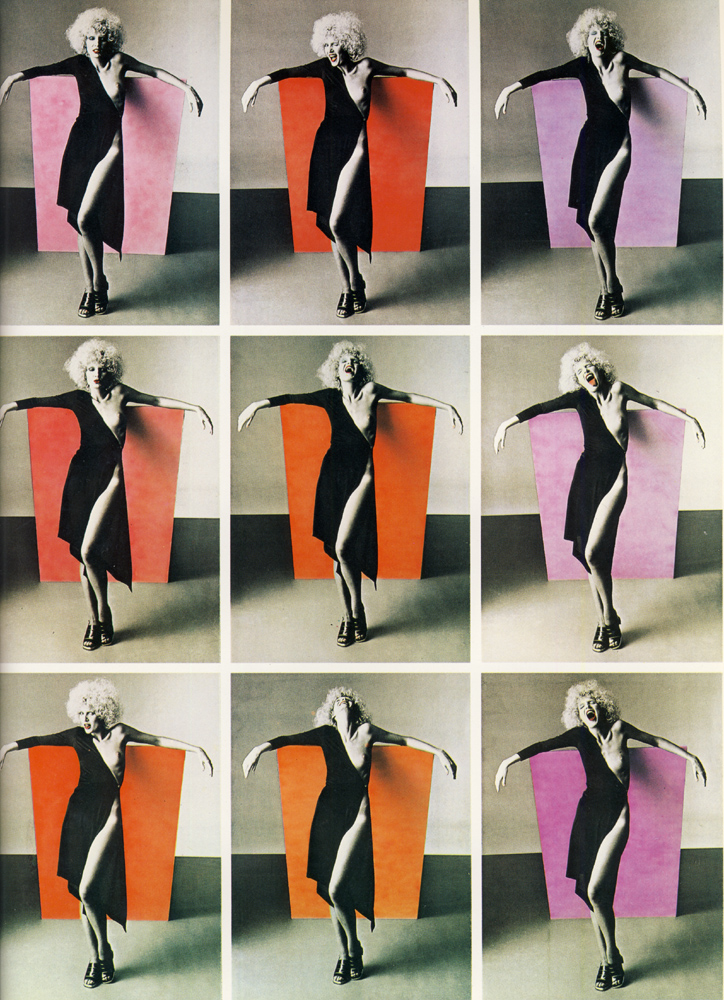
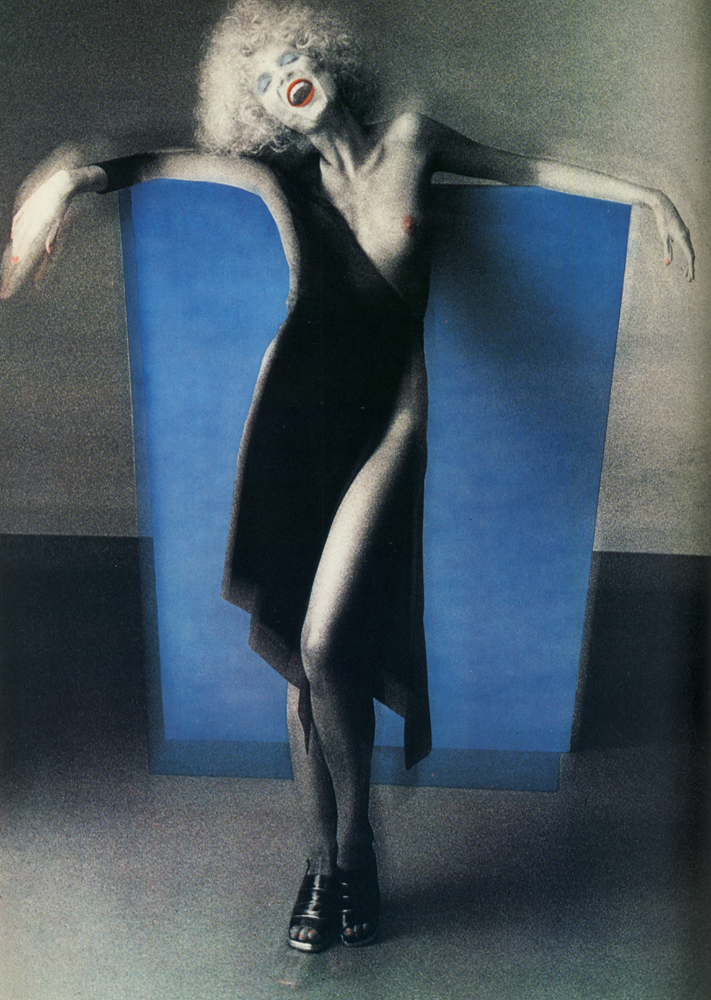
Scanned from Masterpieces of Erotic Photography. I assumed it was a James Wedge set when I first flicked through the book!

Irina Ionesco

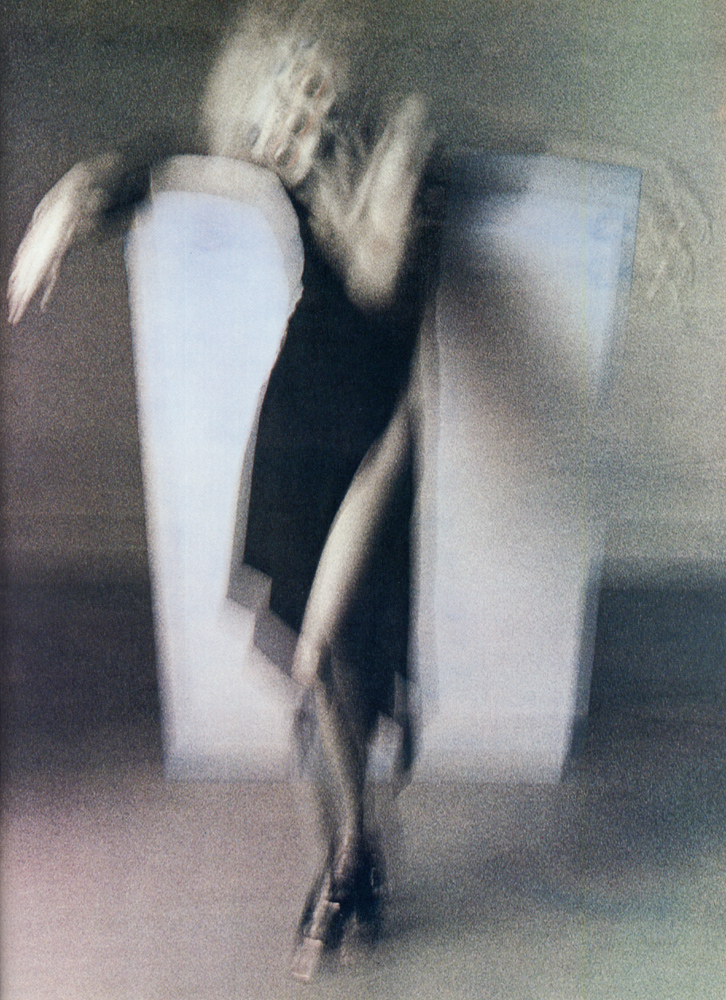
irina ionesco, Photographers, seventies fashion
The 16th is a very ordinary suburb of Paris. In it are many grey, ordinary blocks of flats. Taking the lift to Irina Ionesco’s apartment, where she lives with her daughter, model Eva, it seems very small and cramped, but there is nothing unusual about it. Can this really be the home of Rumanian-born Irina Ionesco, one of France’s most exotic and famous photographers? Is this really where she has produced her best work during the last 15 years?

Irina Ionesco (wearing that Biba dress!)
This apartment contains two distinct worlds. The real world of cups of tea and chatting about the weather, and the fantasy world of Irina Ionesco’s dreams. The largest room in the flat has been turned into a studio. Not the sort of studio usually constructed by professional photographers, however, but a boudoir crammed full of curios. It has the atmosphere of an Arabian tent, or perhaps a Turkish harem. The whole room is black — the walls and ceiling — and there are shutters over the windows.
Inside the room everything takes place in darkness, to the exclusion of the everyday world. What is behind the shutters of this room? ‘Nothing, a very neutral scene. A drab, brick garden I have no wish to see.’
The room is decorated with shawls, canopies of lace, and other delicate fabrics. The atmosphere is so characteristic of her photography and all the objects in the room are used in her picture-making. ‘None of them are of any great value,’ says Irina, ‘all that matters to me about accessories is the shape, what they remind me of. Even if the price or quality of something is modest, I’m interested in transforming it into something marvellous through the magic of the lens. I have often been called “the Queen of Rags”, which I don’t much like though it isn’t exactly derogatory, though it is a fact that you can do a lot with rags. Everything depends on vision — this is what enthralls me. What I like to do is find a girl who is ugly and make her into something unique. It’s a constant process, or else it wouldn’t work. Few people see in a dirty rag anything but a dirty rag, whereas I can visualize what it can become, a piece of frippery perhaps a hundred years old…’
The ‘magic of the lens’ is what makes Irina Ionesco’s photographs so interesting. However, her work does not depend on any great technical expertise. Though she has experimented with solarisation, she uses little by way of lighting and no technical trickery to achieve her effects. In fact, she is self-taught, having started photography purely by accident. After moving to Paris at the age of 16, she took up painting and became quite successful. Some galleries became interested in her work and collectors started to buy it. ‘Then,’ she says, ‘I changed my way of working, and people were astonished. I was criticized. I lost my collectors. I had an exhibition that was a flop. I decided to stop painting. Then, quite by chance, I bought a camera. I bought a 35mm reflex with a 50mm lens and some filters, and brought it back here, not having any idea how to use it. I was even less interested in the technical side then than I am now, but I did acquire some rudimentary knowledge.’
She learned by experiment, but her aim was not so much to create with the camera as to record the scenes that were enacted in her private theatre, this private world of dreams. She does not photograph models, she photographs people she knows. ‘I do not always choose them,’ she says, ‘sometimes they come to me. There’s always been the possibility of dialogue.’ However, her most frequent model has been her daughter Eva, who knows her best.
‘What happens is that I start working, usually in the evening because my imagination only comes to life at night, and I begin to arrange the elements for a photograph. The mood of the picture develops slowly. The model and I talk, and eventually I get the moment which I think has captured the mood. It’s a very precious moment because the model has to be completely inside the situation. Five minutes either way and you can be outside it. You have to be patient.
‘I understand that in more luxurious surroundings I could do many things which weren’t obvious at the start, but it is good to work economically, to have a sense of values: to have only one light, one camera and lens, one pencil to write a beautiful poem, one box of paints for a magnificent work.’ Until recently, these deliberate limitations have included ‘one film’ – black and white Tri-X. She has said that ‘black and white is far more metaphysical,’ and avoided colour in her dream world, ‘no doubt because reality is co1oured,’ she admits. Now she has started to experiment with colour, but without leaving her dream world.
She says each photograph is ‘like an autobiographical poem.’ This suggests that she photographs her daughter and certain girls because she can impose her personality on them. The mood she creates is also personal. ‘Maybe it is myself all the time. The model can become my mirror and indeed people often think that the model in the photograph is myself as I was ten years ago.’ 
But her pictures of women, with their pallid complexions and statuesque poses, often suggest death. ‘Yes. I didn’t set out to do this — it happened. It is more than death, it is mainly the waiting. It is an image of loneliness. Loneliness and death are almost the same thing.’
Interview and photos taken from ‘How to Photograph Women’ by Dixons.

Duffy and Squiffy

bloggers, brian duffy, christine keeler, grace coddington, ossie clark, wendyB

Since returning from Paris, I’ve managed to do considerably less work than I ought to have done. However, it has been in the name of enjoyable vintage-related shenanigans so I don’t mind too much. I am working on new listings now, so I will let you know when they go up!

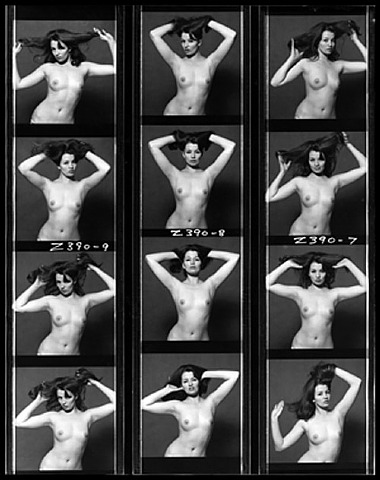
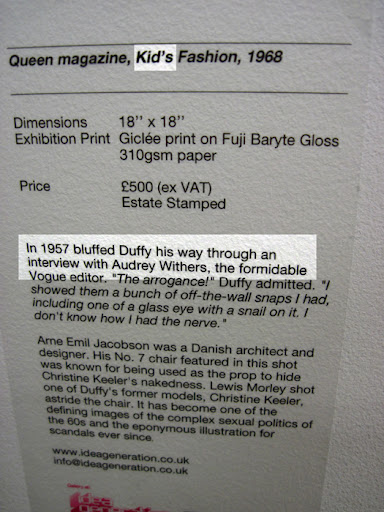
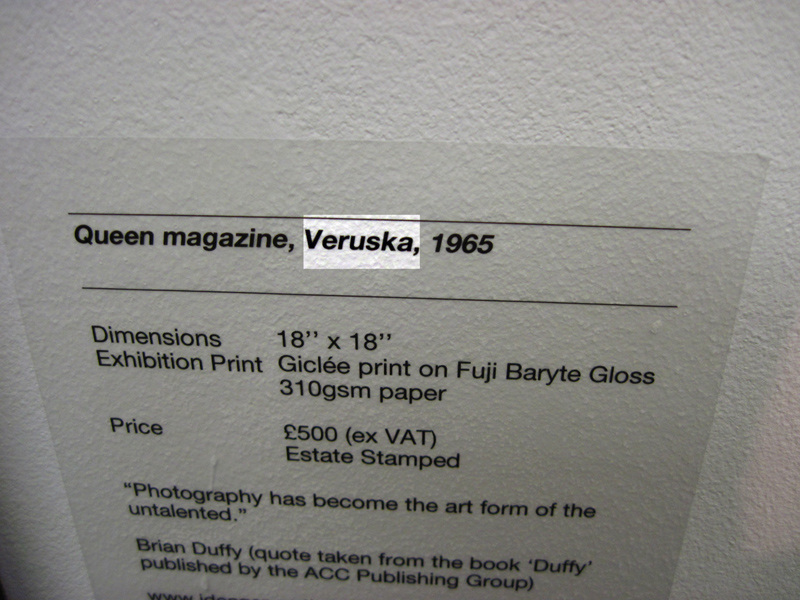
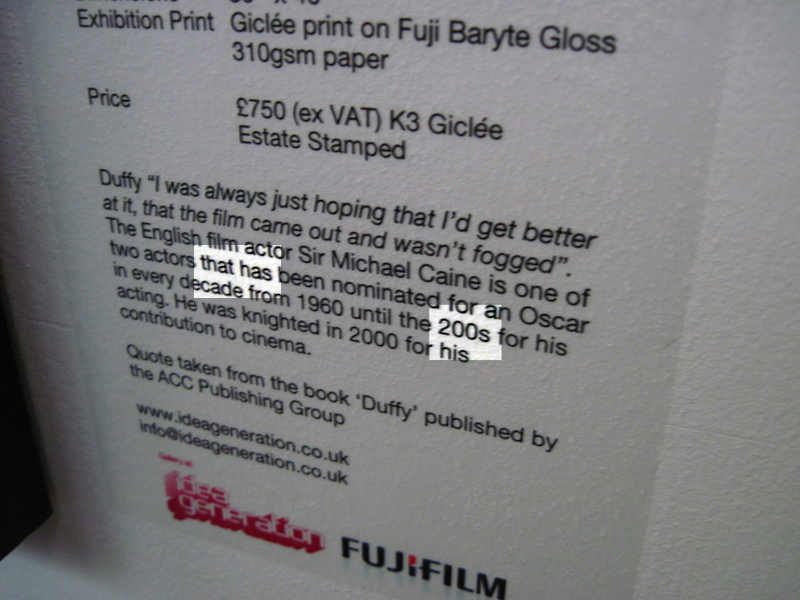
On Thursday night, I was at the launch of the new Brian Duffy book (published by ACC) which I will be reviewing (or salivating over, if you know me at all) soon. Idea Generation gallery in Shoreditch are having an exhibition and sale of Duffy prints, which are all superb. I particularly adore the picture of Grace Coddington with her boobs out, and Christine Keeler….also with her boobs out. A pattern is emerging, methinks.
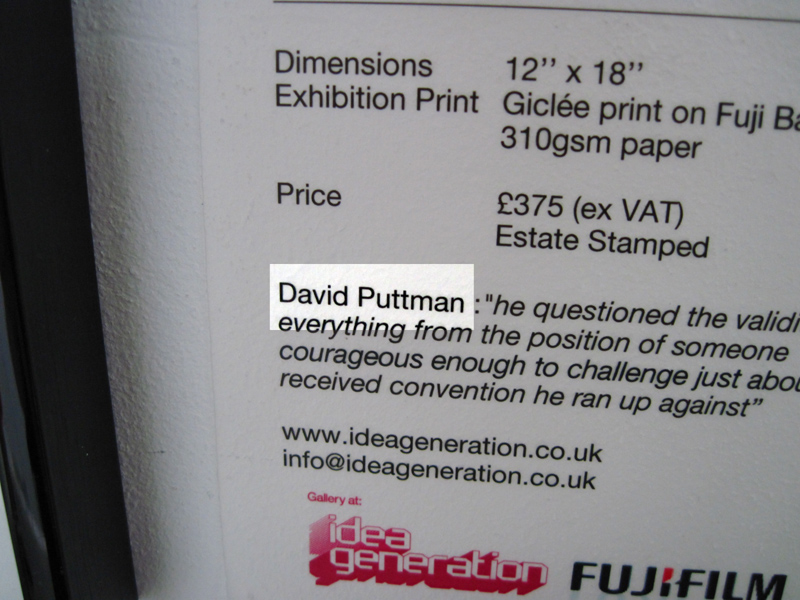
Talking of boobs…. As lovely as these photos are, I have seen them all before. This meant that I was a smidge distracted by the howling, and I really do mean that, typos on the captions beside each image. It brought out my worst side, Miss Pedantpants, and here is my gallery of shame (I’ve highlighted the worst offenders…). The book doesn’t have these typos, I hasten to add, so the Idea Generation lot really need to buck their Ideas up. It’s not a professional look. Unless they really do have Yoda writing for them…
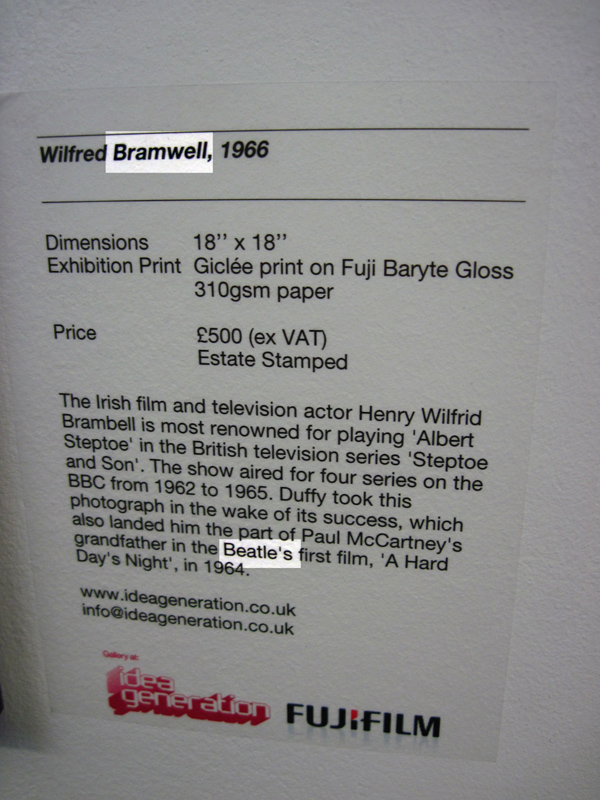
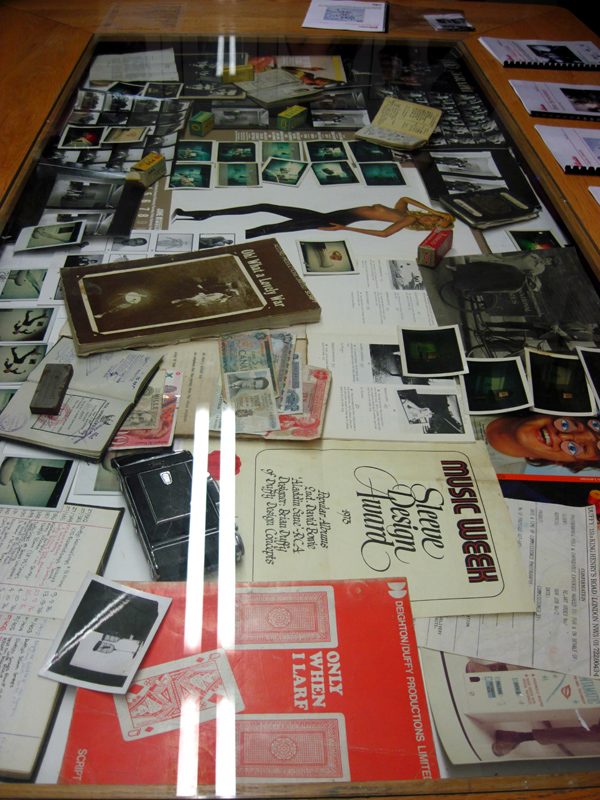
Pedantry aside, it was a great evening. The photos are well worth having a gander at, even if you can’t afford to buy a print, and it’s a lovely, airy exhibition space. I would recommend peeking into the smaller side room, since there’s a glass covered table full of Duffy ephemera and smaller, less well-known photos on the walls.

We also ended up having a little chat with Brian’s younger brother (why on earth am I so terrible with people’s names? Shameful. He was a dude!) who was genuinely lovely and happy to talk about his big brother. I was unusually sober, unusually for such an event, due to the fact that only beer was on offer. A state which was not achieved when I attended the 4th Annual Transatlantic Blogger meet-up on Saturday.

Ahem.

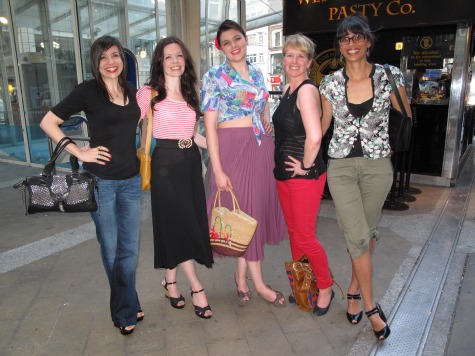
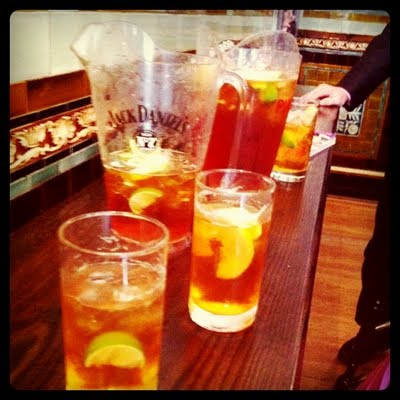
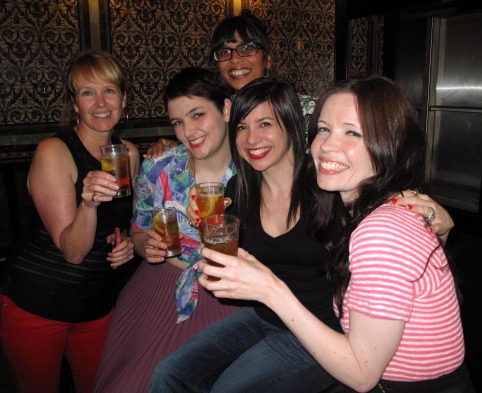
It’s become tradition to meet, eat and drink [Pimm’s] when the gorgeous WendyB visits London in the Summer. It’s also my tradition to forget my camera and rely on other people’s photos afterwards, so thank you to Wendy and Kate for providing me with a few shots to share (if you haven’t already seen them on their blogs!).

It was as lovely as always to see gorgeous laydeez Kate, Margaret and Sharon Rose, and an absolute joy to finally meet the legendary MrB. Needless to say, conversation came around to recent newspaper events, and there was much gossip, advice and a valuable and hilarious education in blunt euphemisms from the brilliant Kate.

I was wearing an Ossie Clark crepe skirt and a pink and yellow knitted top by Erica Budd. I’ve seen Erica Budd as a name in my Petticoat and Honey magazines for years now, but never possessed or even seen one. So I was chuffed to find that particular beauty. The Ossie is an absolute staple of mine, and the shoes are the most insanely comfortable wedges (comfortable given the 5 inch heel anyways…) from Marks and Spencer. I realise I lose cred for them being M&S, but they look and feel good so I don’t give a hoot! But I did have a hoot on Saturday (even if I did pay for it with a Pimm’s headache) so thank you ladies!