
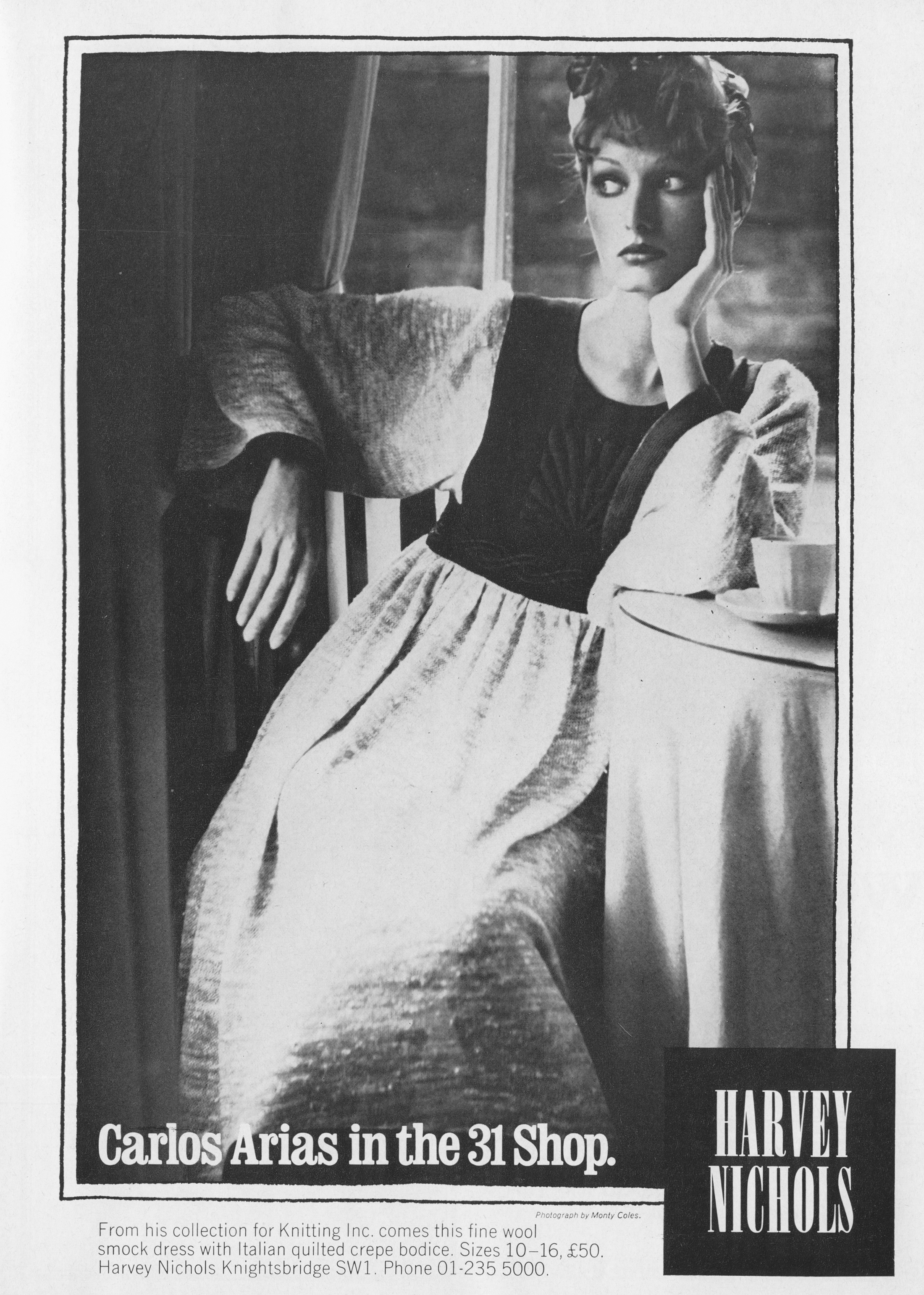
Photographed by Monty Coles.
Scanned from Vogue, September 15th 1971.
Photographed by Monty Coles.
Scanned from Vogue, September 15th 1971.
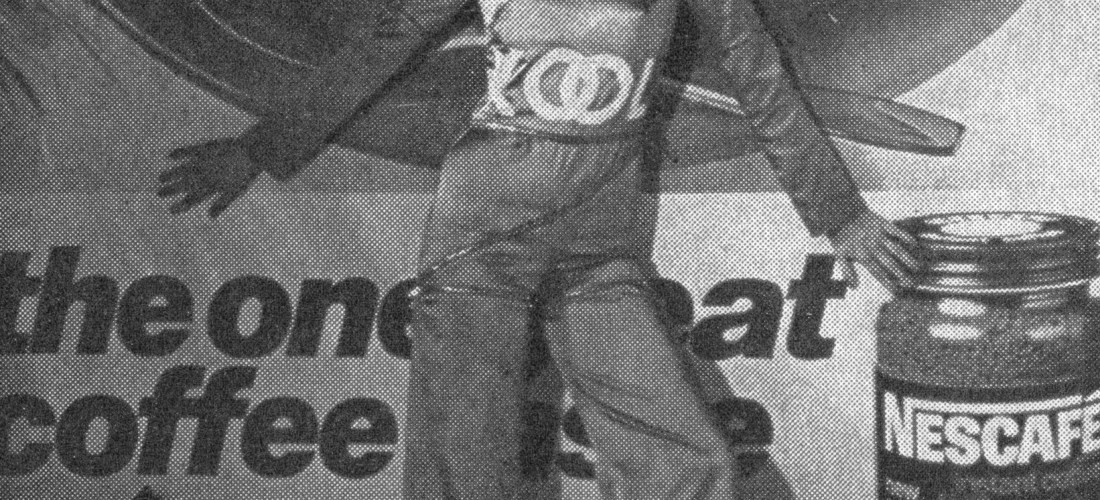
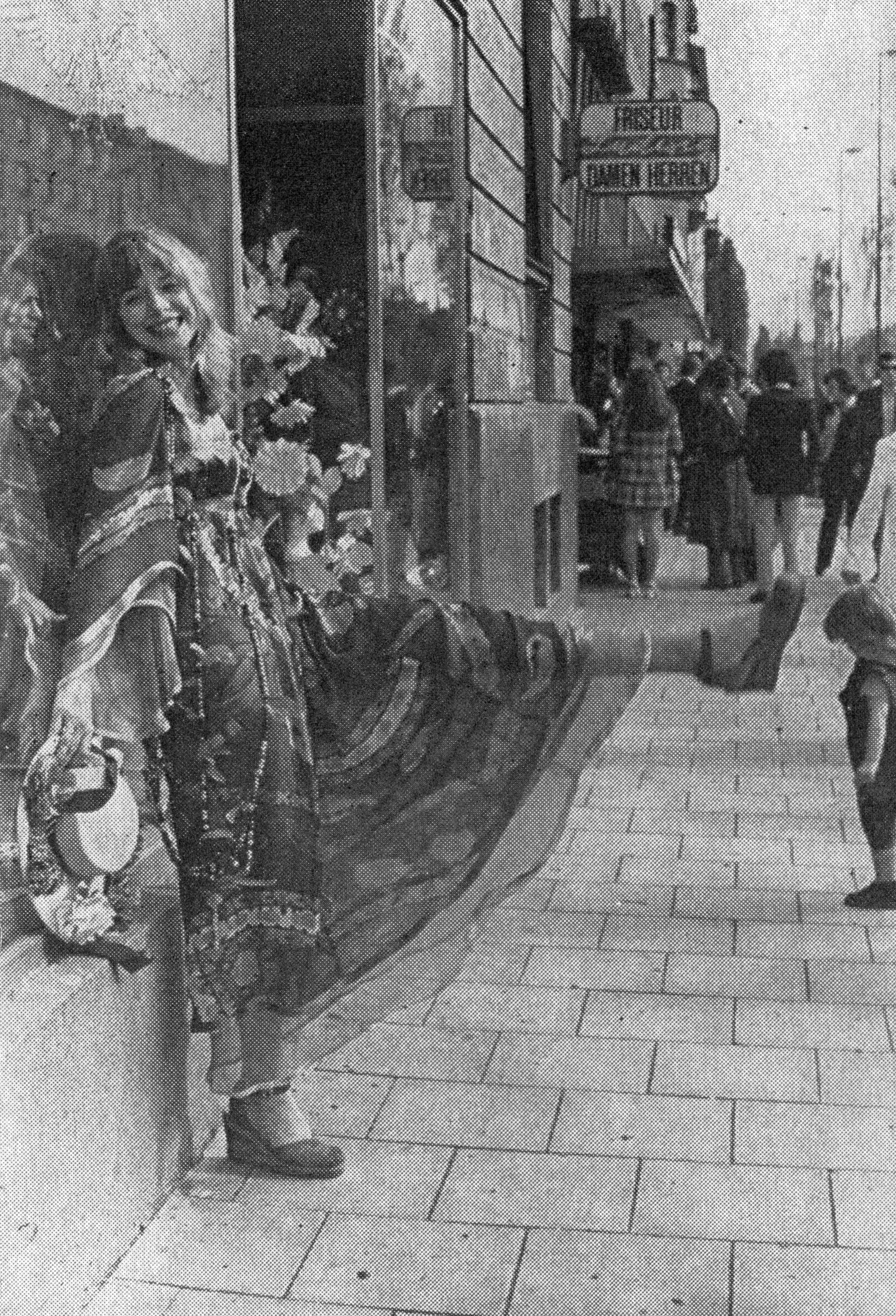
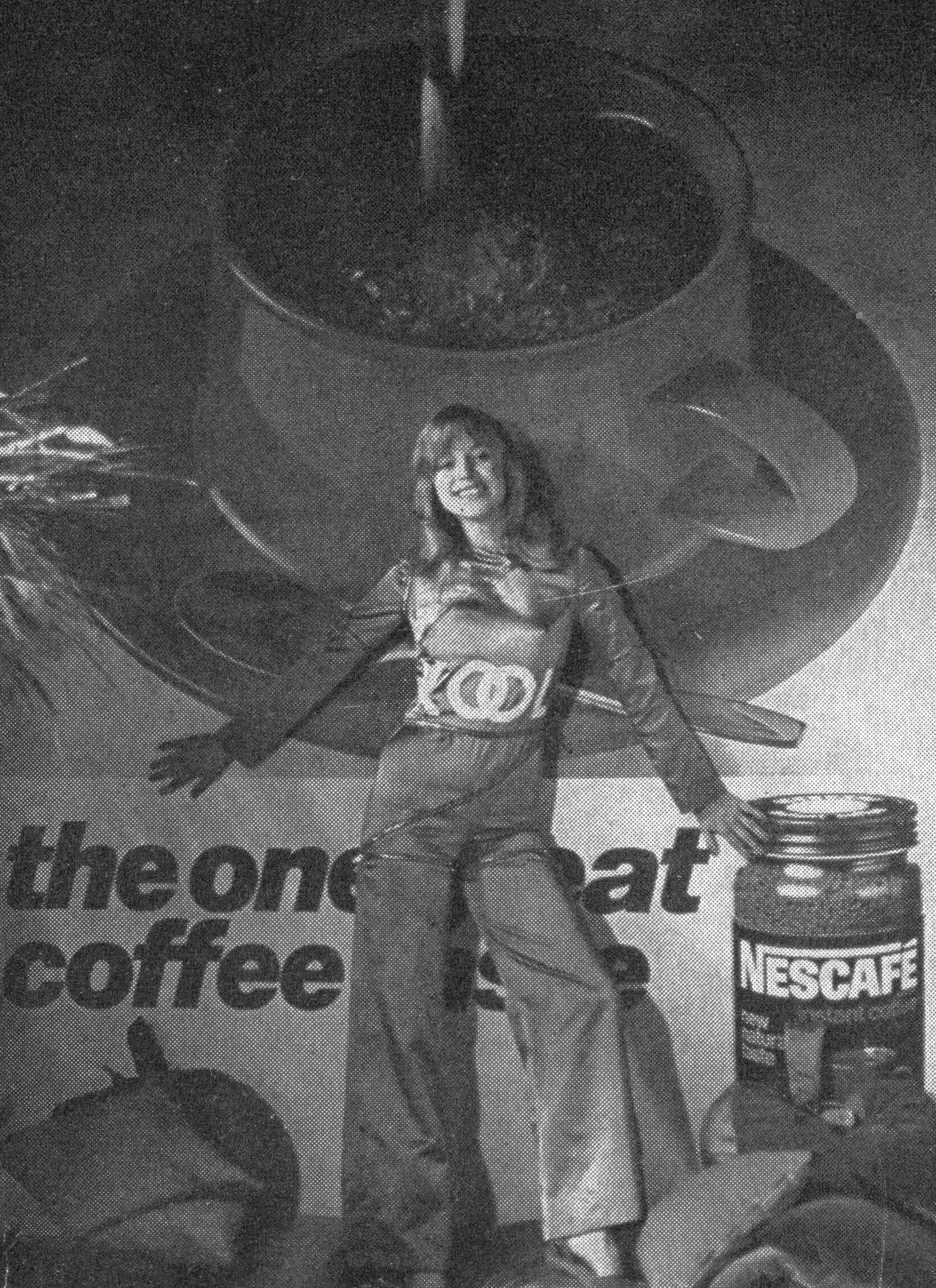
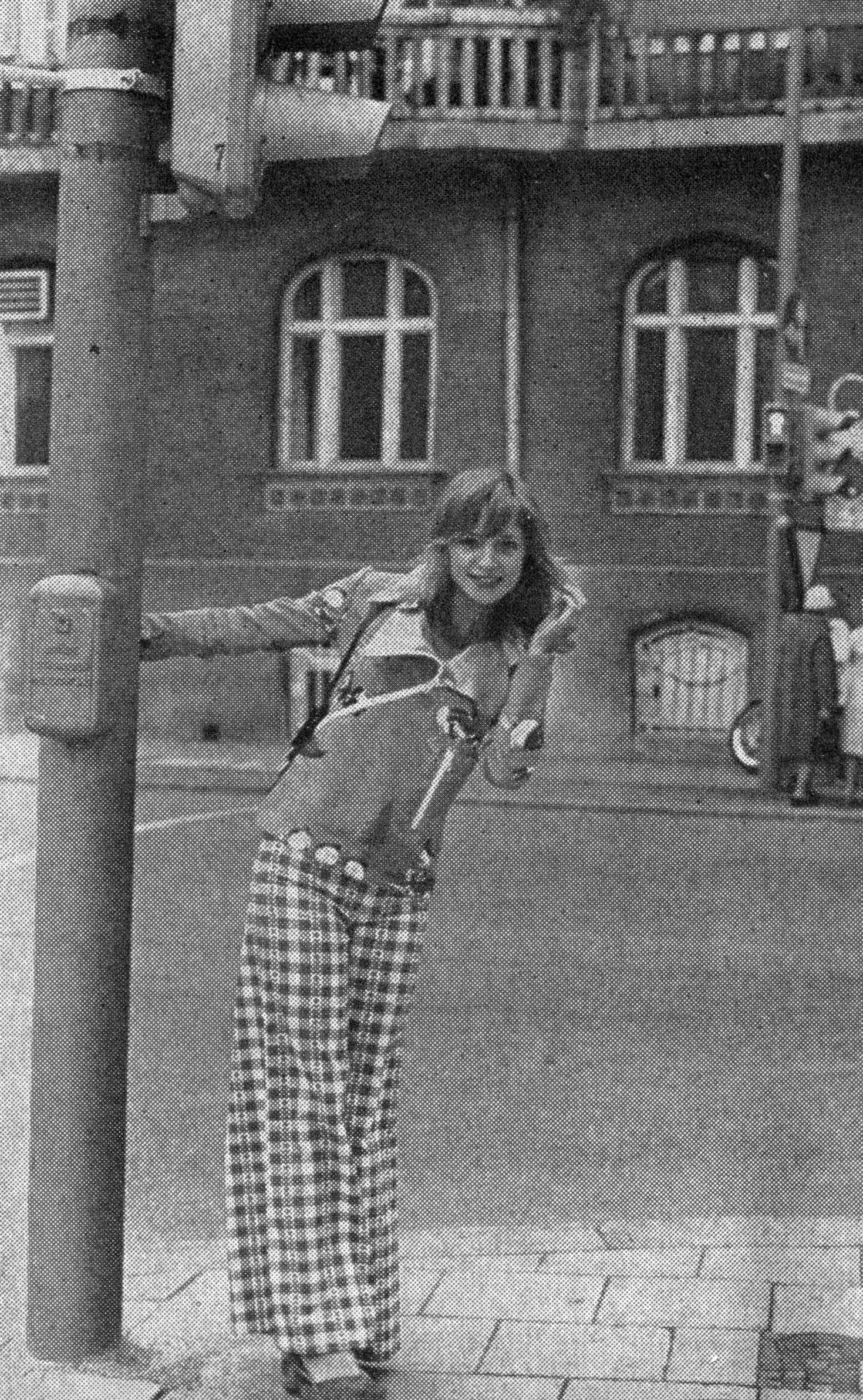
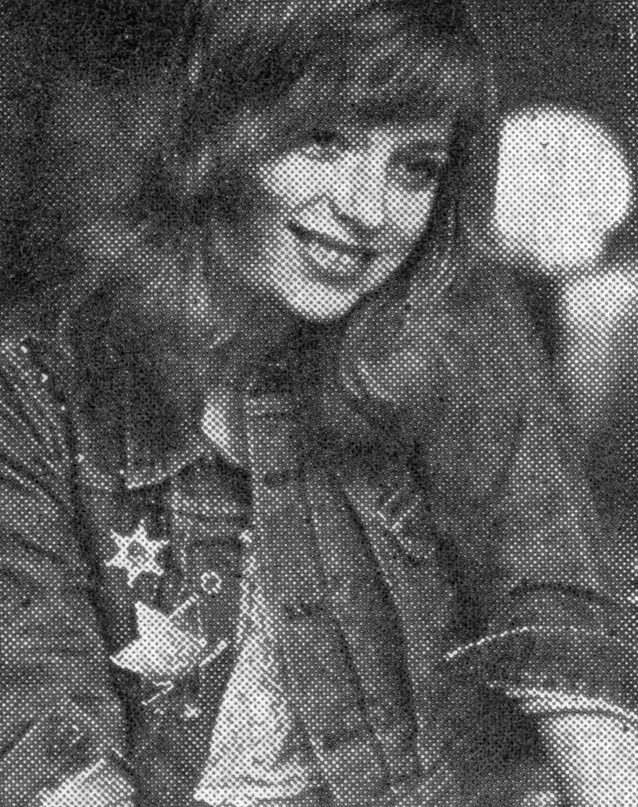
German actress Sylvie Winters (sic) seems to be the new mood of Munich. She buys her clothes from Sweetheart, Leopoldstrasse 54, in the Schwabing/Chelsea district. Sweetheart is run by its two designers; amongst wall-sized posters and giant-sized carrot tins they sell fantasy chiffons and pop satin zip suits.
Sounds like the German version of Mr Freedom! It’s always fascinating to see how far and wide the boutique trend had spread, I just wish there were more photos of the interior.
Photographed by Pat York.
Scanned from Vogue (‘Vogue’s Own Boutique’), September 1971.
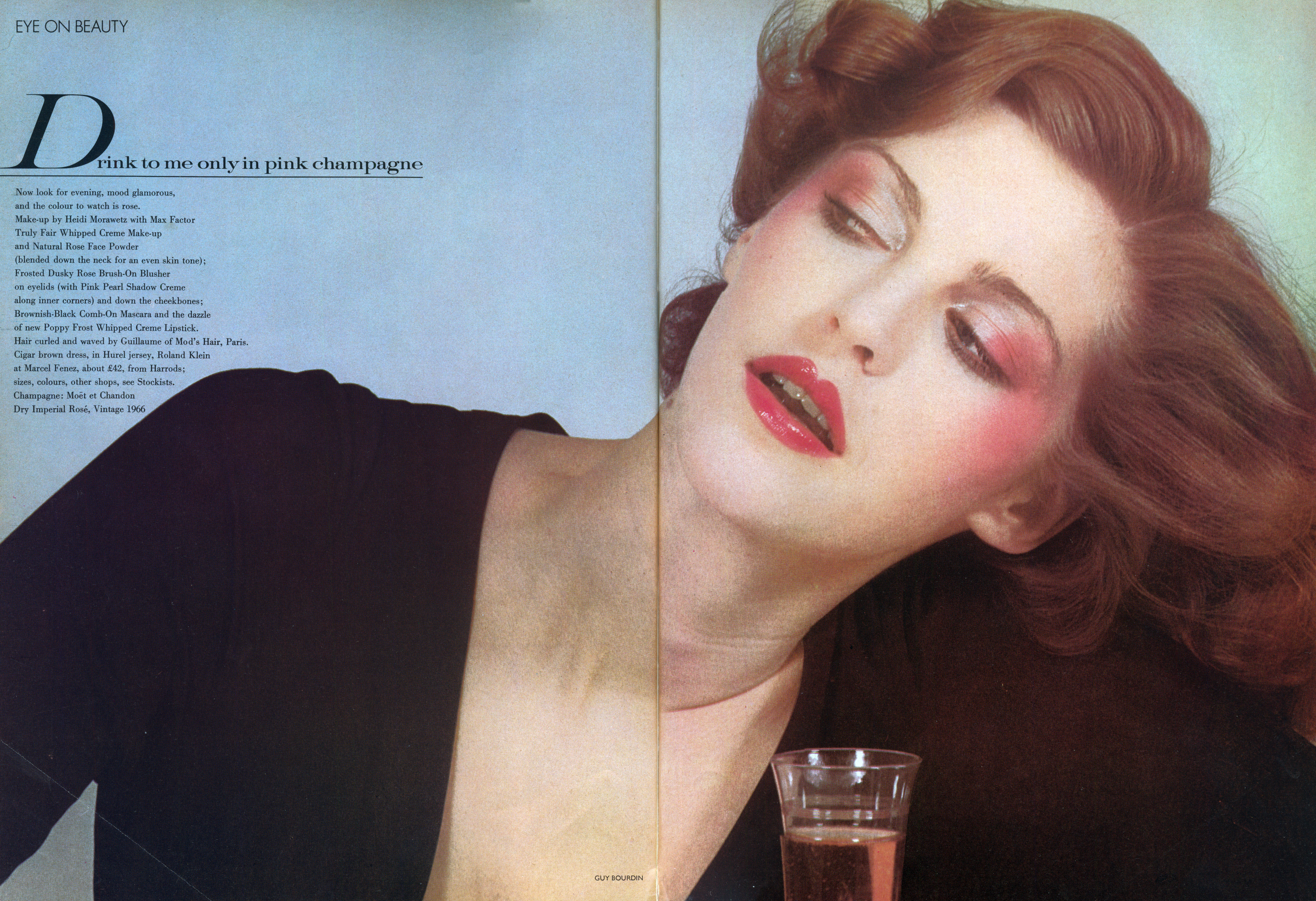
Photographed by Guy Bourdin.
Scanned from Vogue, September 15th 1973.
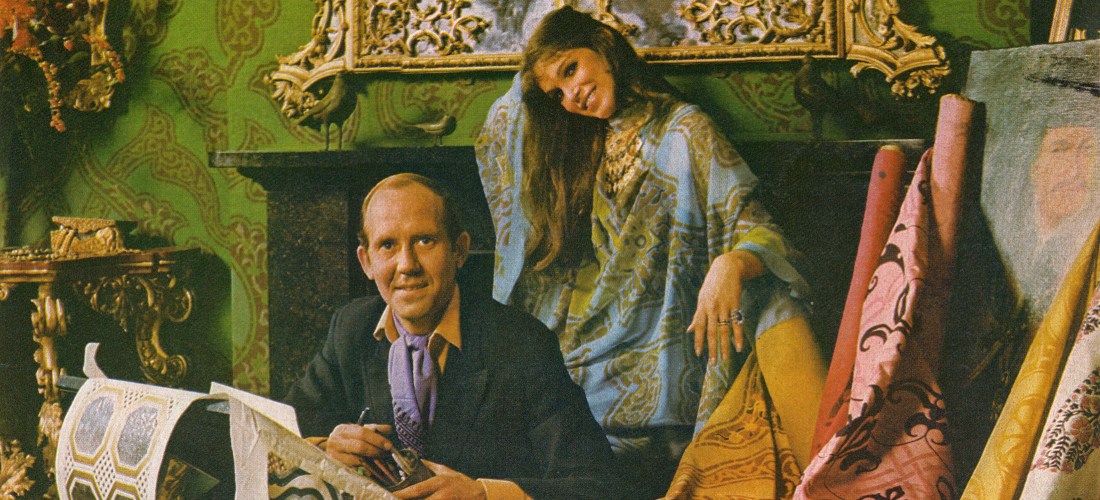
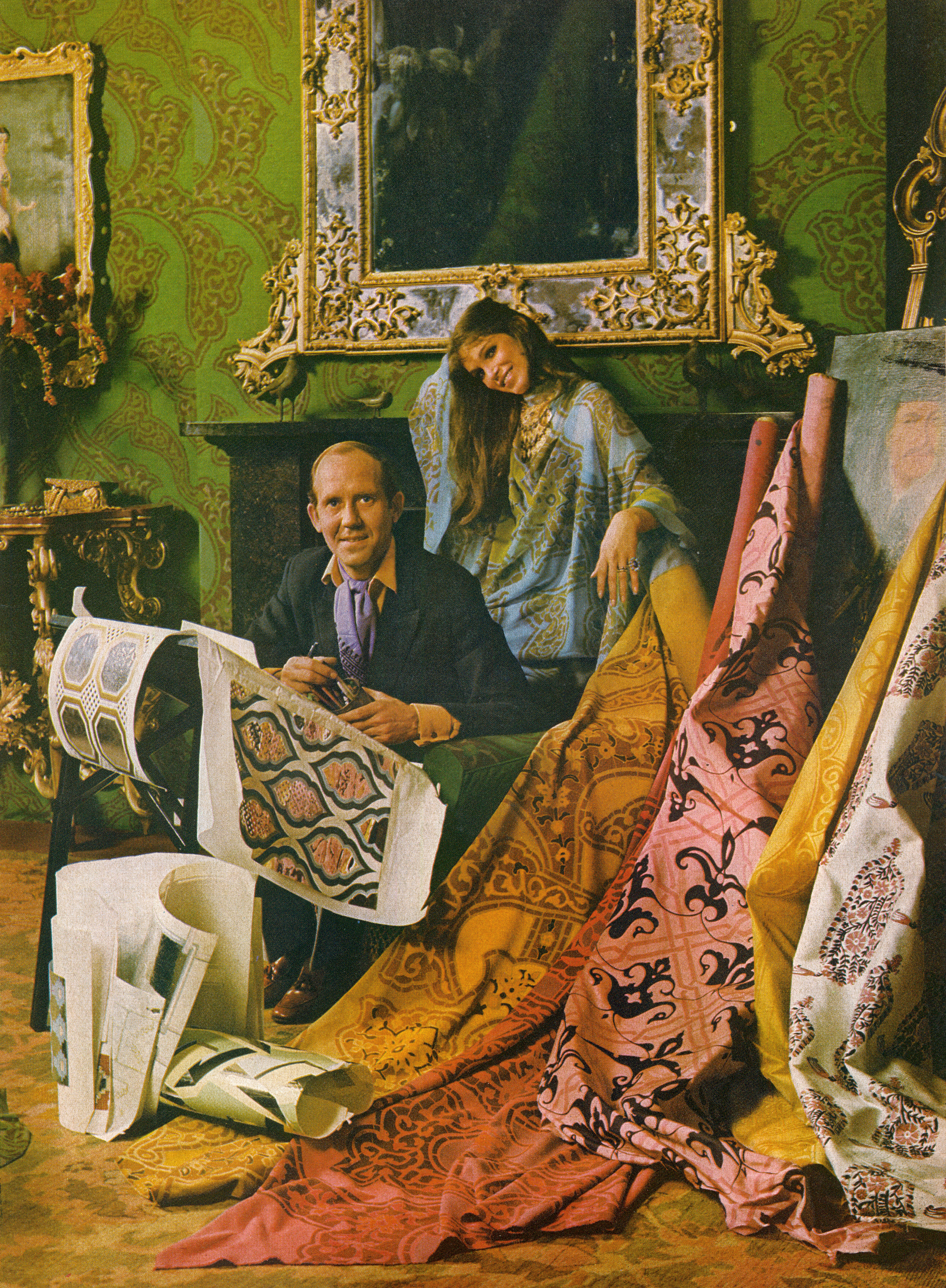
Michael Szell is the Hungarian fabric designer who is introducing Iran to London via a new collection of designs, taken up by Thea Porter for her romantic and ravishing evening dresses. His own bedroom, opposite, is in rich emerald, turquoise and brown arabesqued linen, cool and grand by day but rich and warm by electric light, with 18th-century Eng-lish paintings and mirrors. His drawing-room, below, is turquoise with brilliant Persian prayer mats colouring the walls, 18th-century English botanical china, and a mixed forest of hyacinth and growing orchids, later bluebells and orchids. Iran runs through Michael Szell’s life like a thread. He began to visit friends and connections there while he was still a child, used every possible holiday to get there while he studied economics at Aberystwyth University, and later when he worked with Sir Nicholas Sekers. His love for Persian ceramics, buildings and woven carpets developed into a passion for early Islamic art in its formal, random, asymmetric period before it came to represent life in the 19th-century : a passion culminating in his opening his own furnishing fabric showrooms at 47 Sloane Avenue. He began selling silk signature scarves to Henri Bendel of New York in 1969 and has just produced his new Persian collection of fabrics. Thea Porter asked him to print his designs onto silk chiffon for her and made them in flowing evening dresses with yards of floating sleeve and skirt.
For the coronation of the Shahanshah and the Empress of Iran, Michael Szell designed curtains, chair-fabrics and an entire state banquet for the Golestan Palace. He has been asked again to help with the decorations for the great October celebrations—the twenty-fifth centenary of the founding of the Persian Empire. He will contribute designs for the interiors of houses and for some of the 500 tents that are planned, with their own marble bathrooms, for the royal and distinguished guests who will take part in the celebrations at Persepolis, the ruined city and ancient capital.
Mr Szell has also been asked to provide the fabrics for all the palace sets in the new Universal film Mary, Queen of Scots, starring Vanessa Redgrave as Mary and Glenda Jackson as Elizabeth. He has an unrealised ambition to produce an absolutely modern collection of very cheap fabrics “from chair covers to plastic shower curtains”.
Model is Ann Turkel.
Photographed by Henry Clarke.
Scanned from Vogue, July 1971.
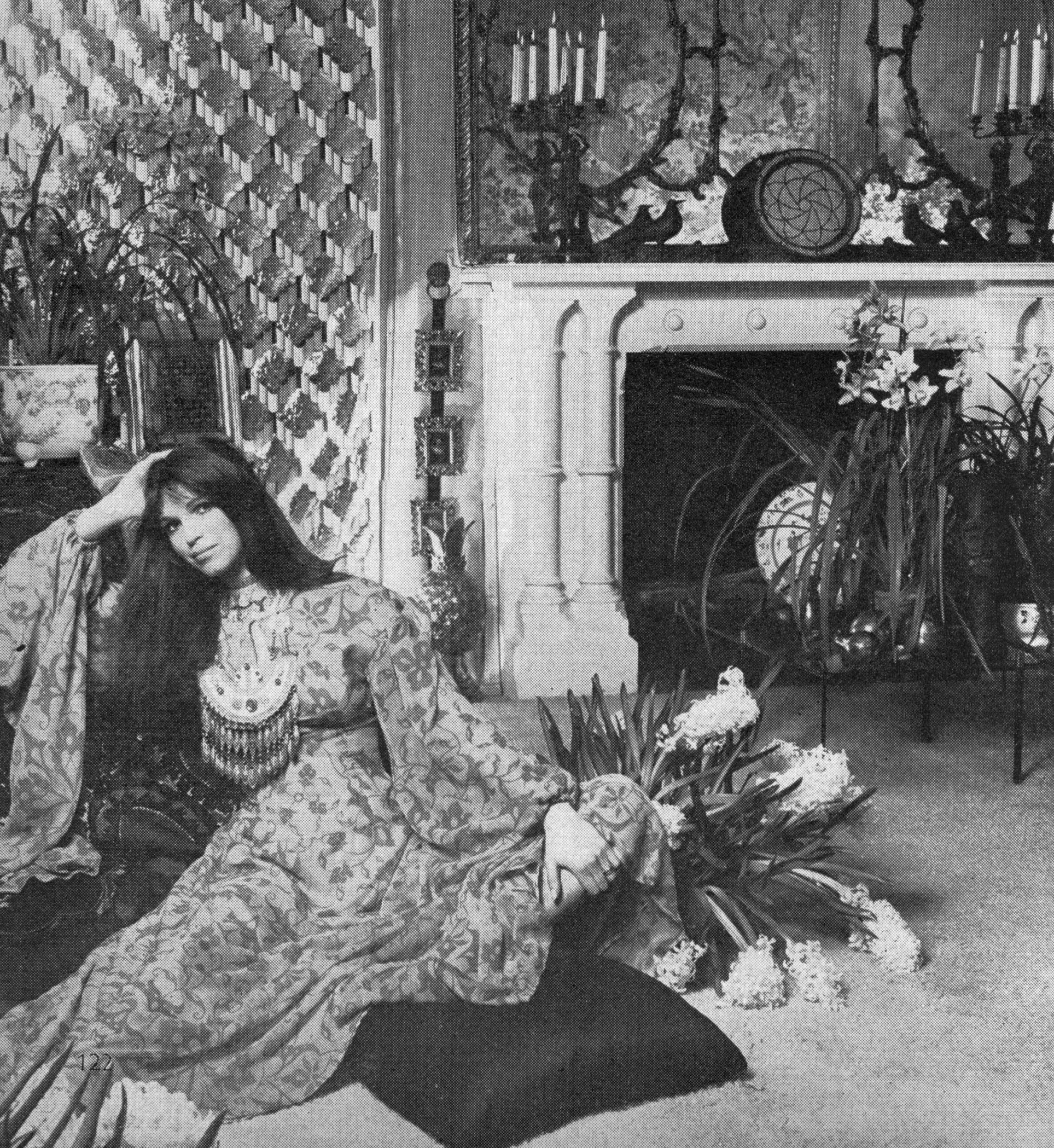
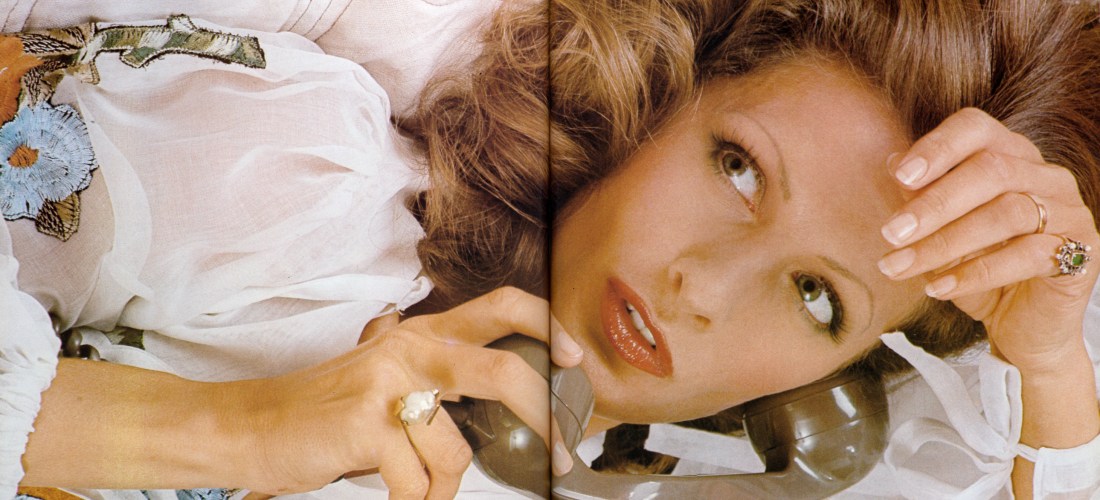
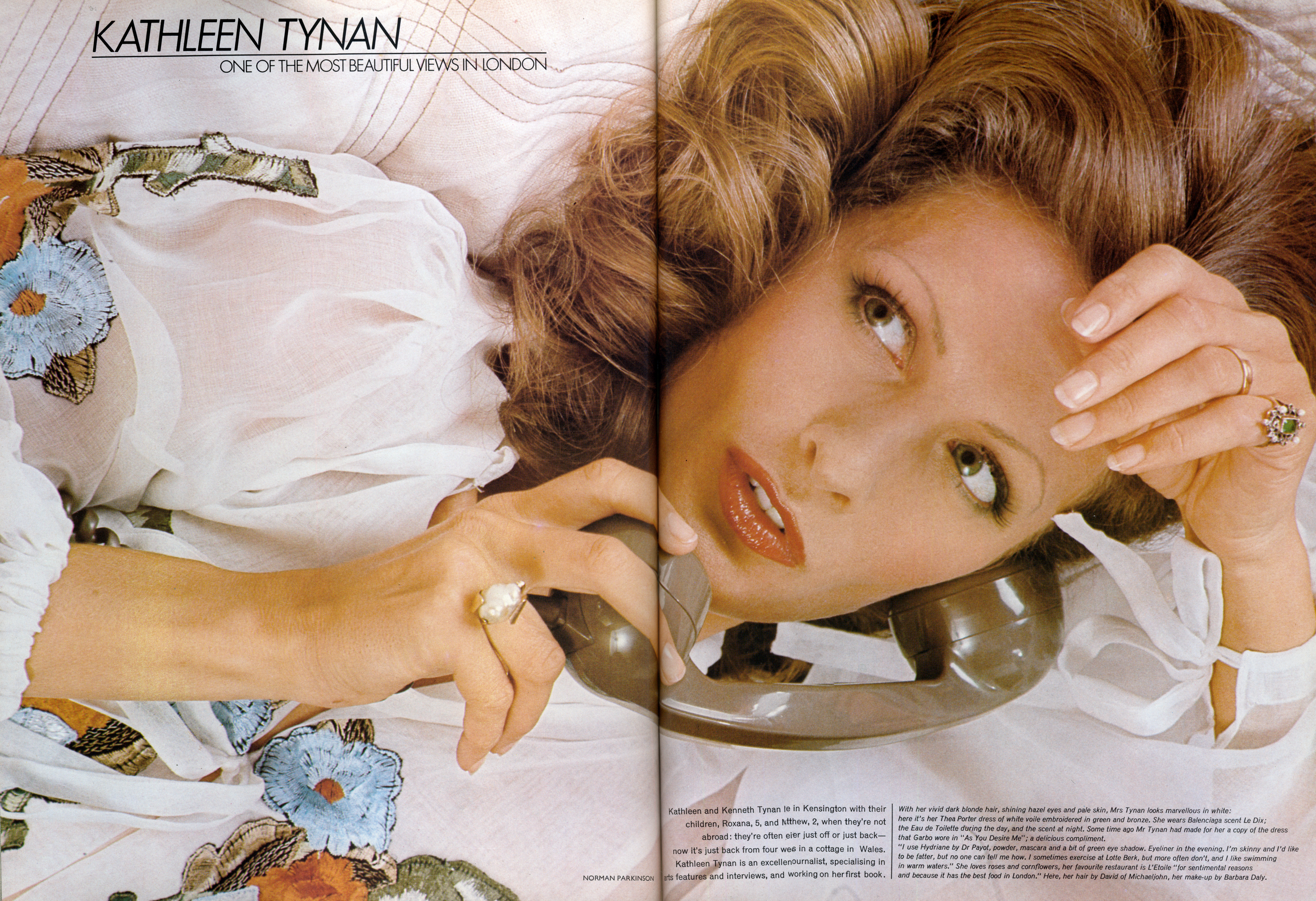
Kathleen and Kenneth Tynan live in Kensington with their children, Roxana, 5, and Matthew, 2, when they’re not abroad: they’re often either just off or just back – now it’s just back from four weeks in a cottage in Wales. Kathleen Tynan is an excellent journalist, specialising in arts features and interviews, and is working on her first book.
Photographed by Norman Parkinson.
Scanned from Beauty in Vogue, 1973.
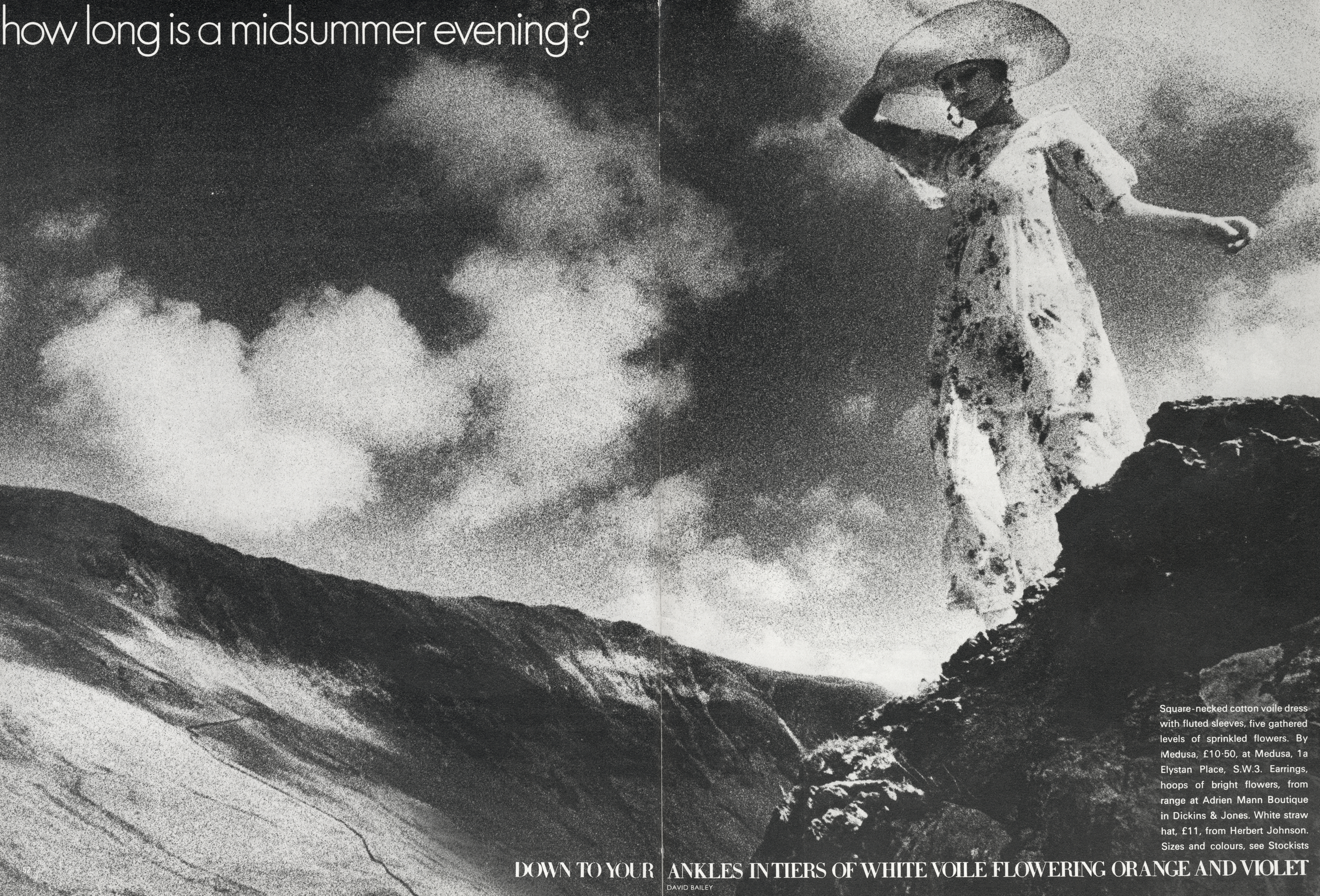
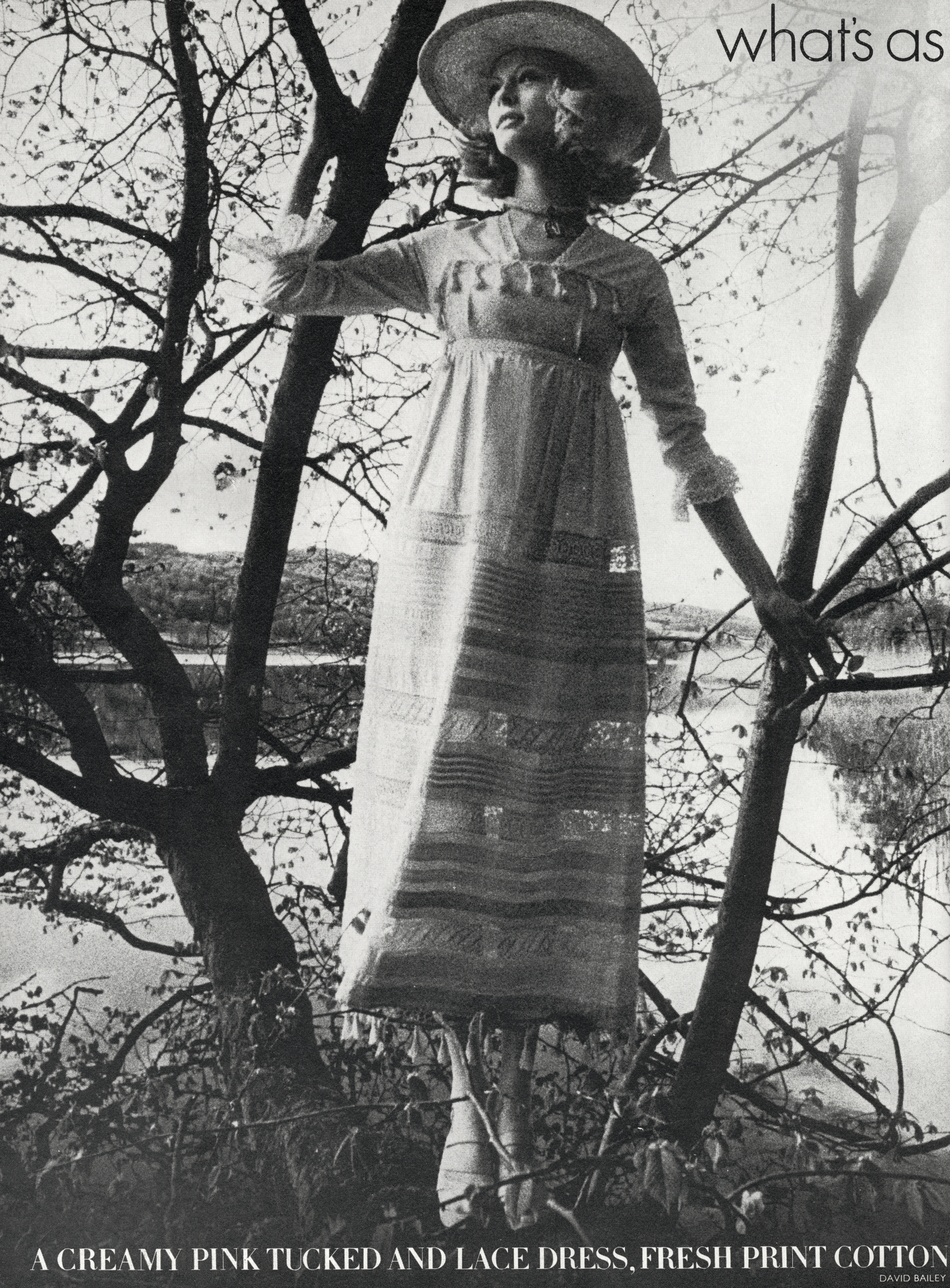
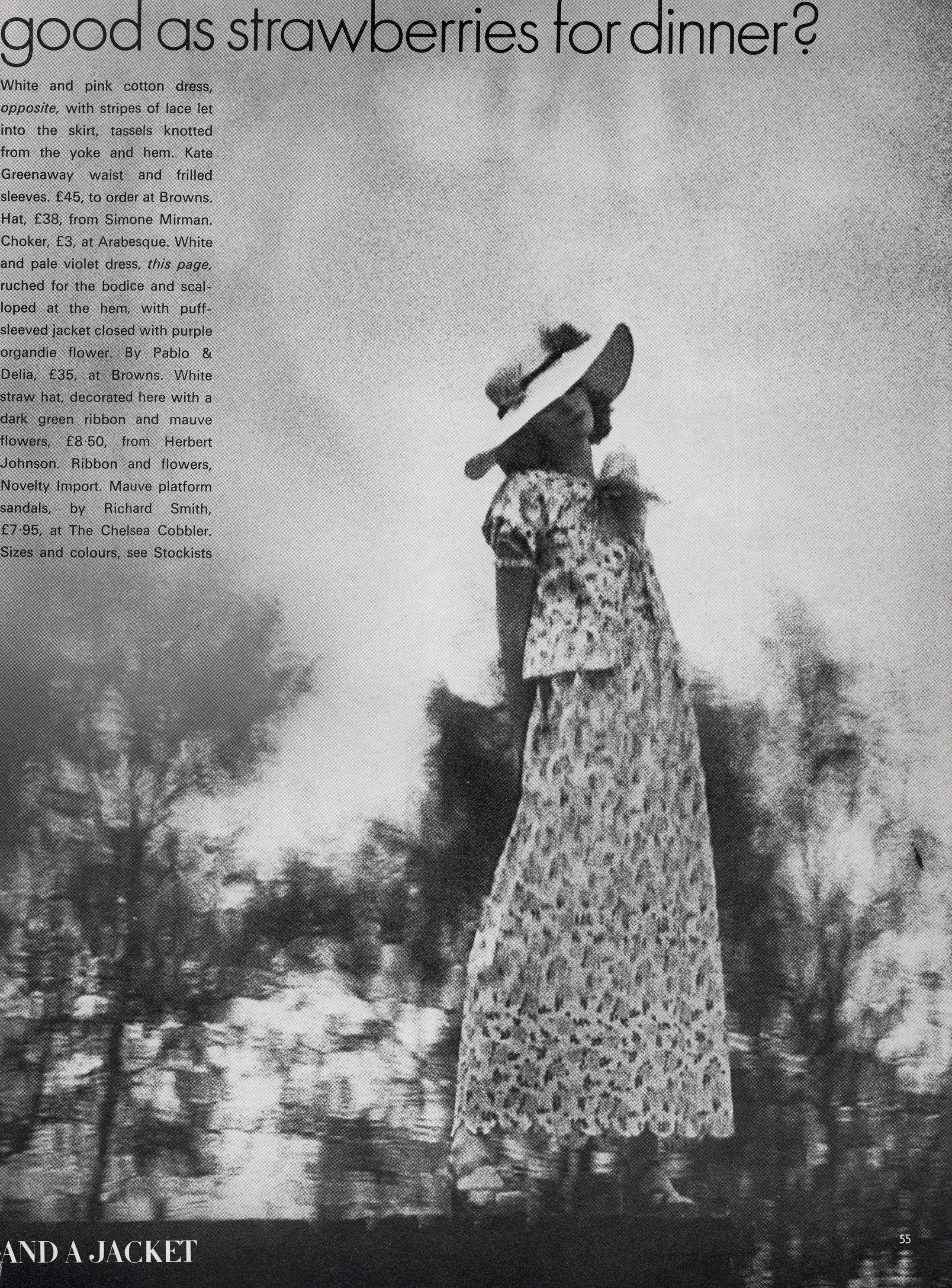
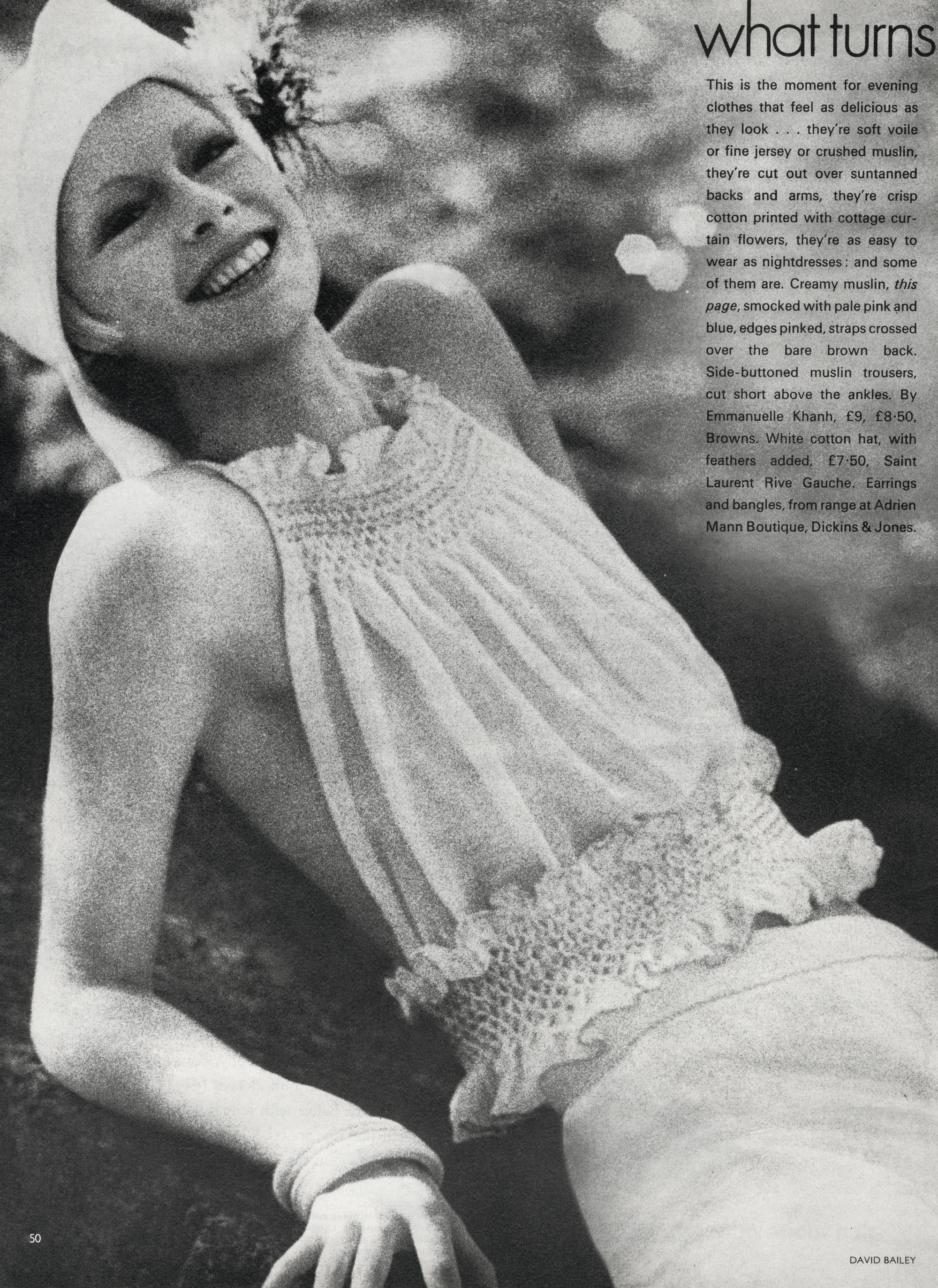
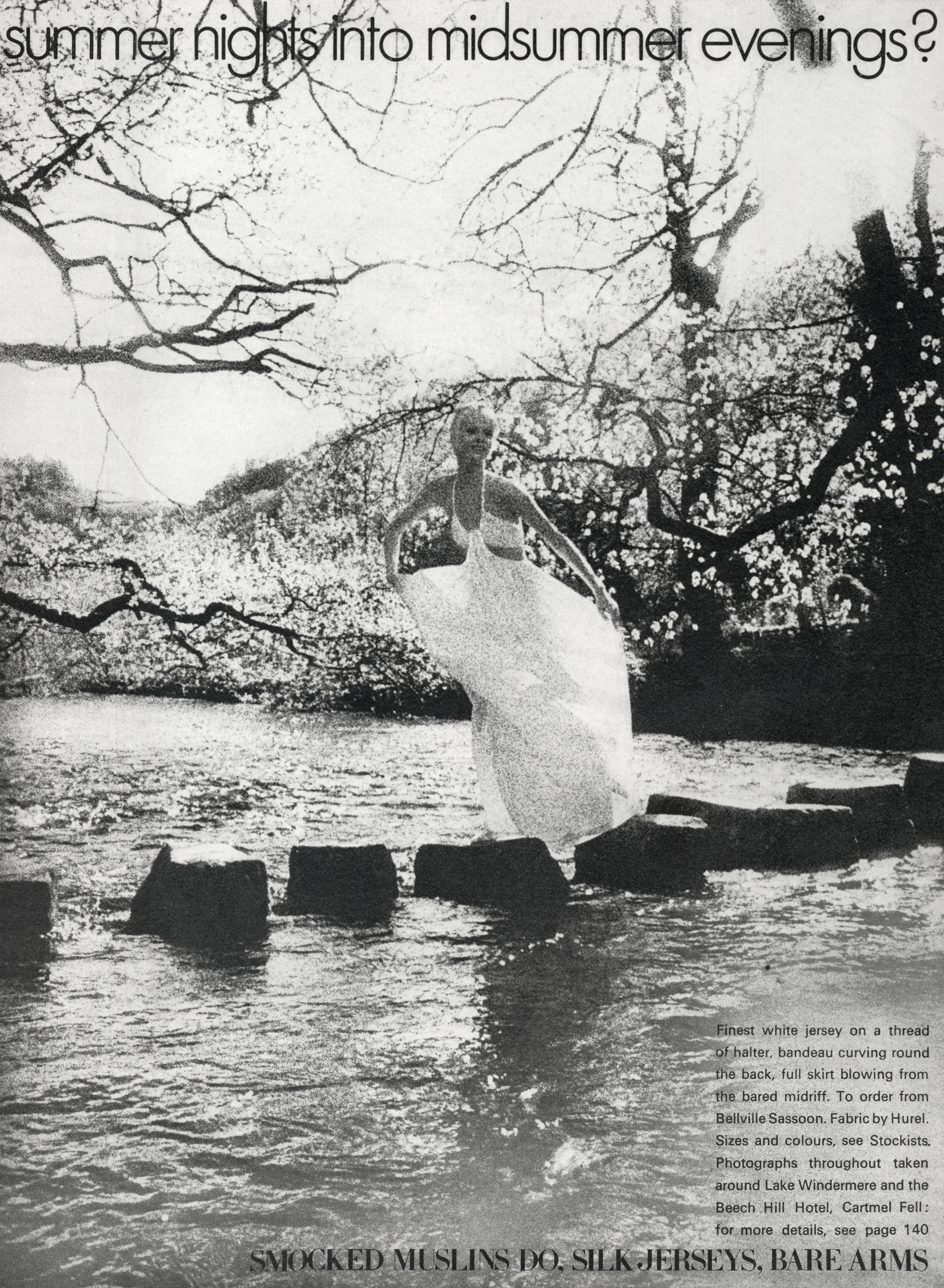
This is the moment for evening clothes that feel as delicious as they look… they’re soft voile or fine jersey or crushed muslin, they’re cut out over suntanned backs and arms, they’re crisp cotton printed with cottage curtain flowers, they’re as easy to wear as nightdresses: and some of them are.
Photographed at Lake Windermere and the Beech Hill Hotel, Cartmel Fell.
Photographed by David Bailey.
Scanned from Vogue, July 1972.
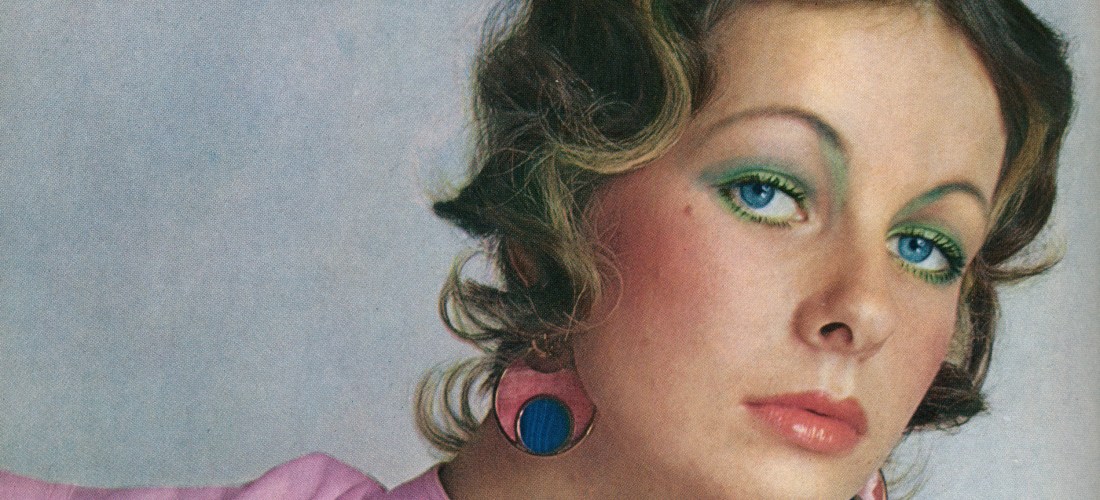
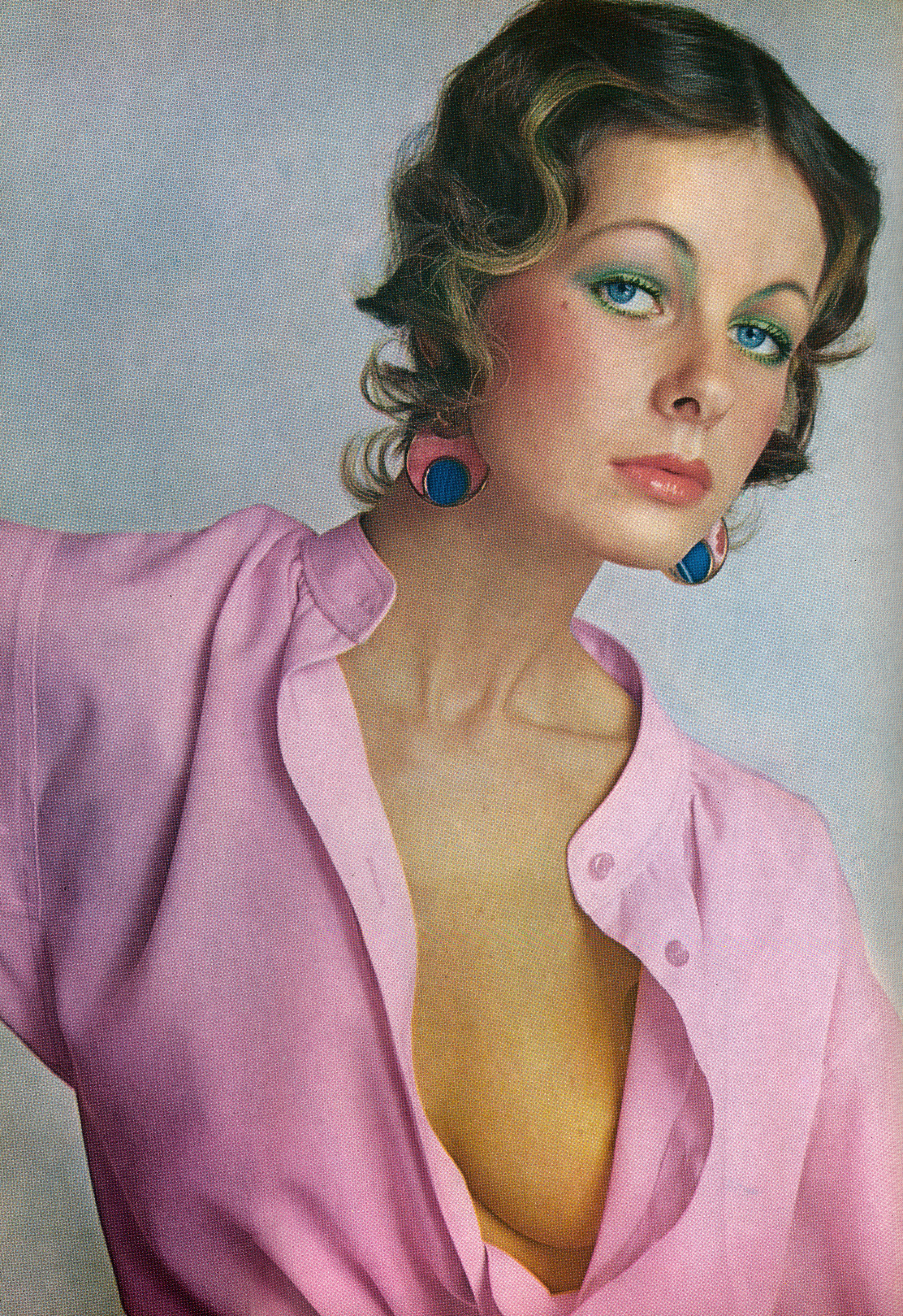
Hair by Ara Gallant, featuring an innovative ‘long-short’ haircut, styled here in a centre-parted frame of soft waves and tendrils.
Model is Susan Forrestal. Make-up by Ultima 11.
Over-sized shirt by Halston. Earrings by Bulgari-Danaos.
Photographed by Avedon.
Scanned from Beauty in Vogue, 1973.
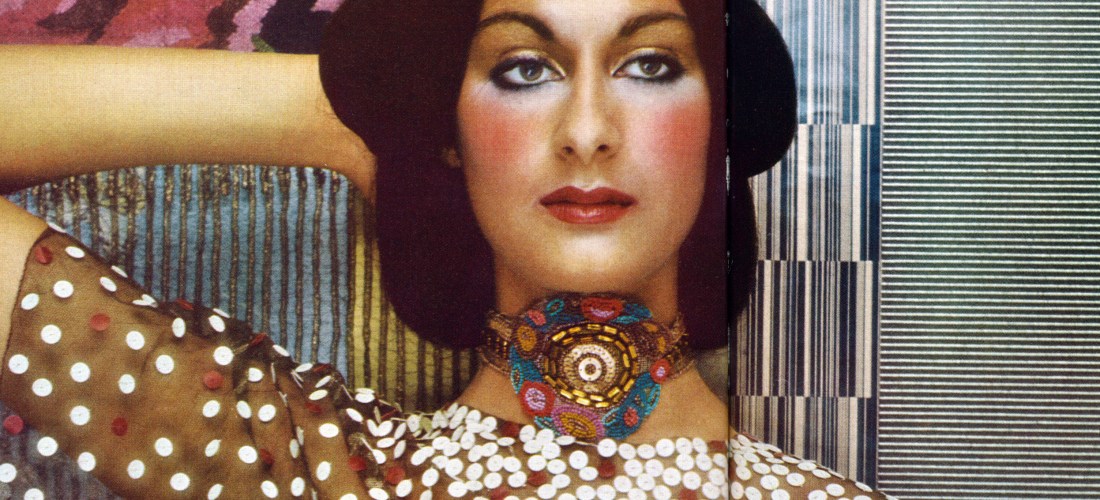
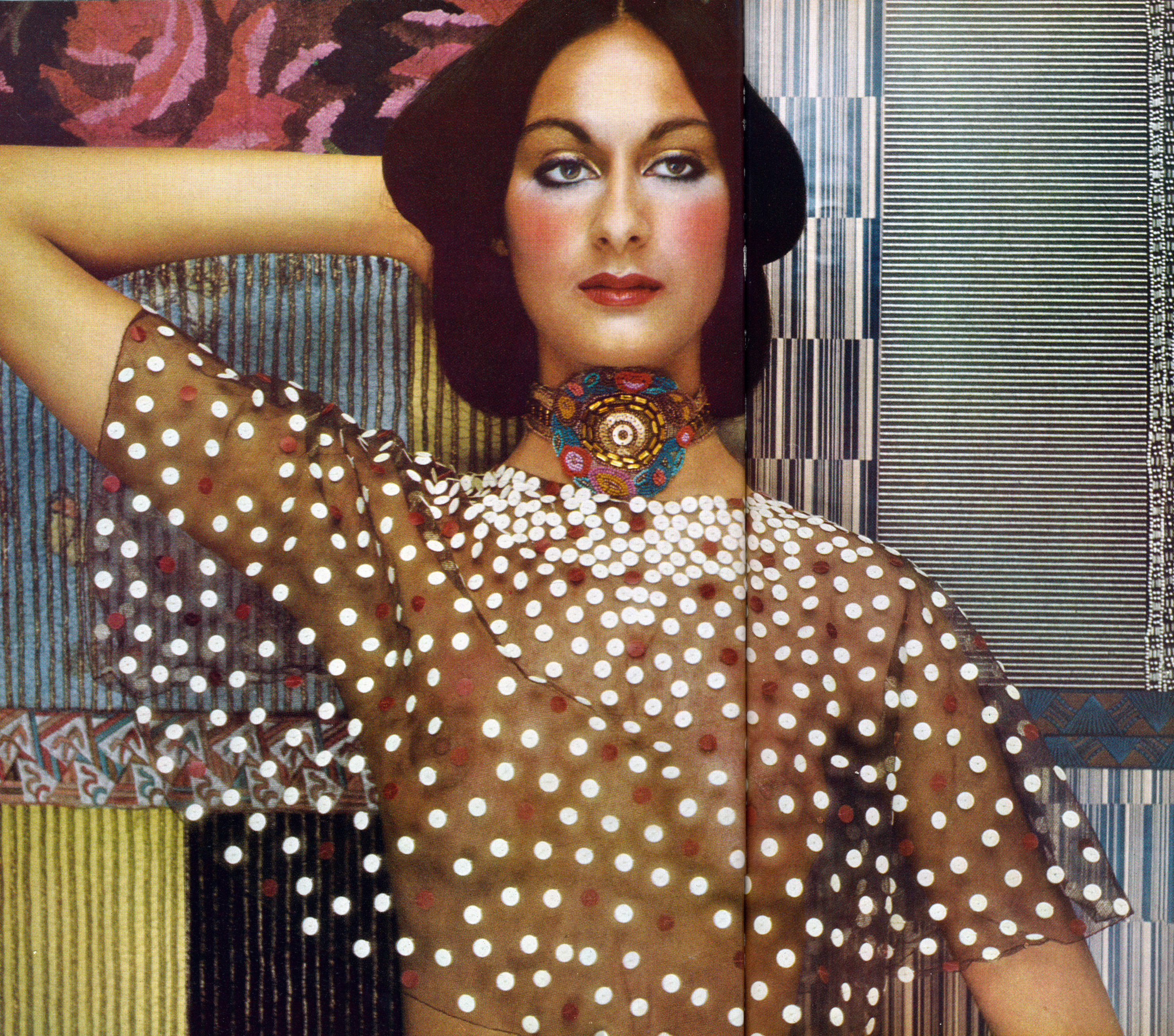
The most beautiful, painterly composition and harmony between model, background, accessories and make-up. Sadly there’s no credit given for the beautiful choker or chiffon cape.
Edited to add model is Chandrika Angadi.
Hair by Oliver at Leonard.
Photographed by Barry Lategan.
Scanned from Beauty in Vogue, 1970/71.


Fashion constantly starts afresh and now it has travelled far back into the imagination, retuned to the basics of craft and design. Grass roots is the mood for this summer and the look is handwoven, hand painted, handknitted, handstitched. Here is how appliqué was recreated and a shepherd’s smock came in from the fields. How lace came to be painted with butterflies and sewn onto tartan, how knitting grew into something remarkably new.
Illustrations by Antonio
Scanned from Vogue, July 1970.


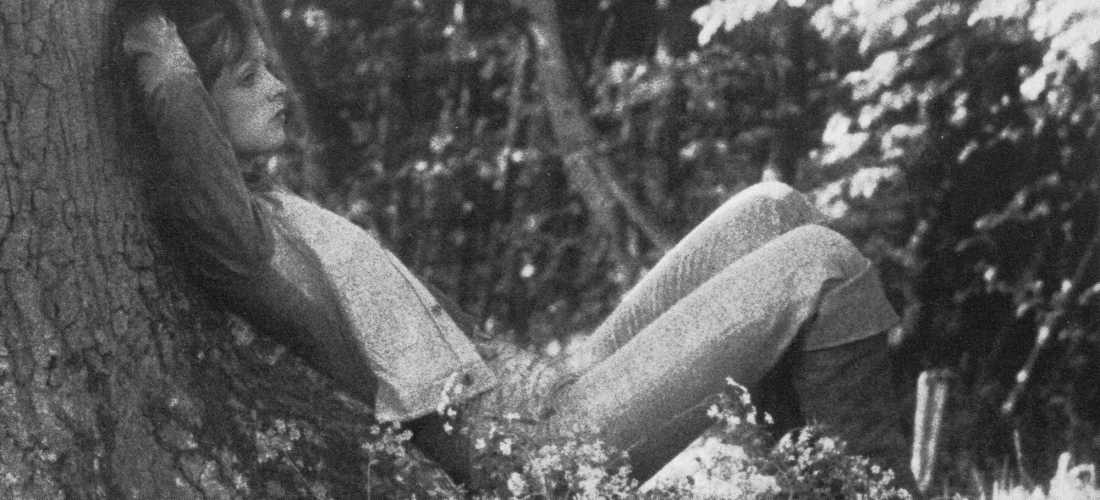
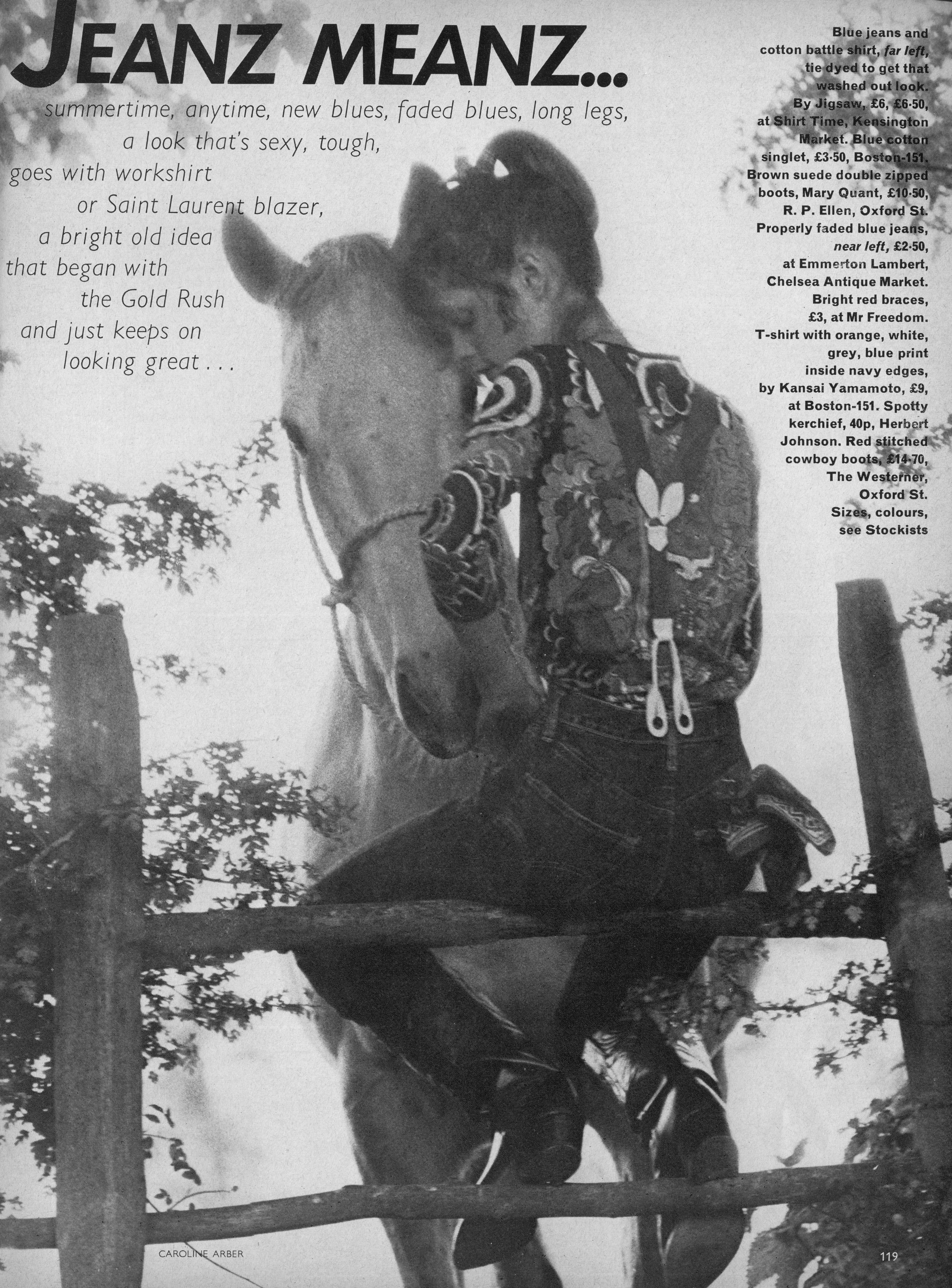
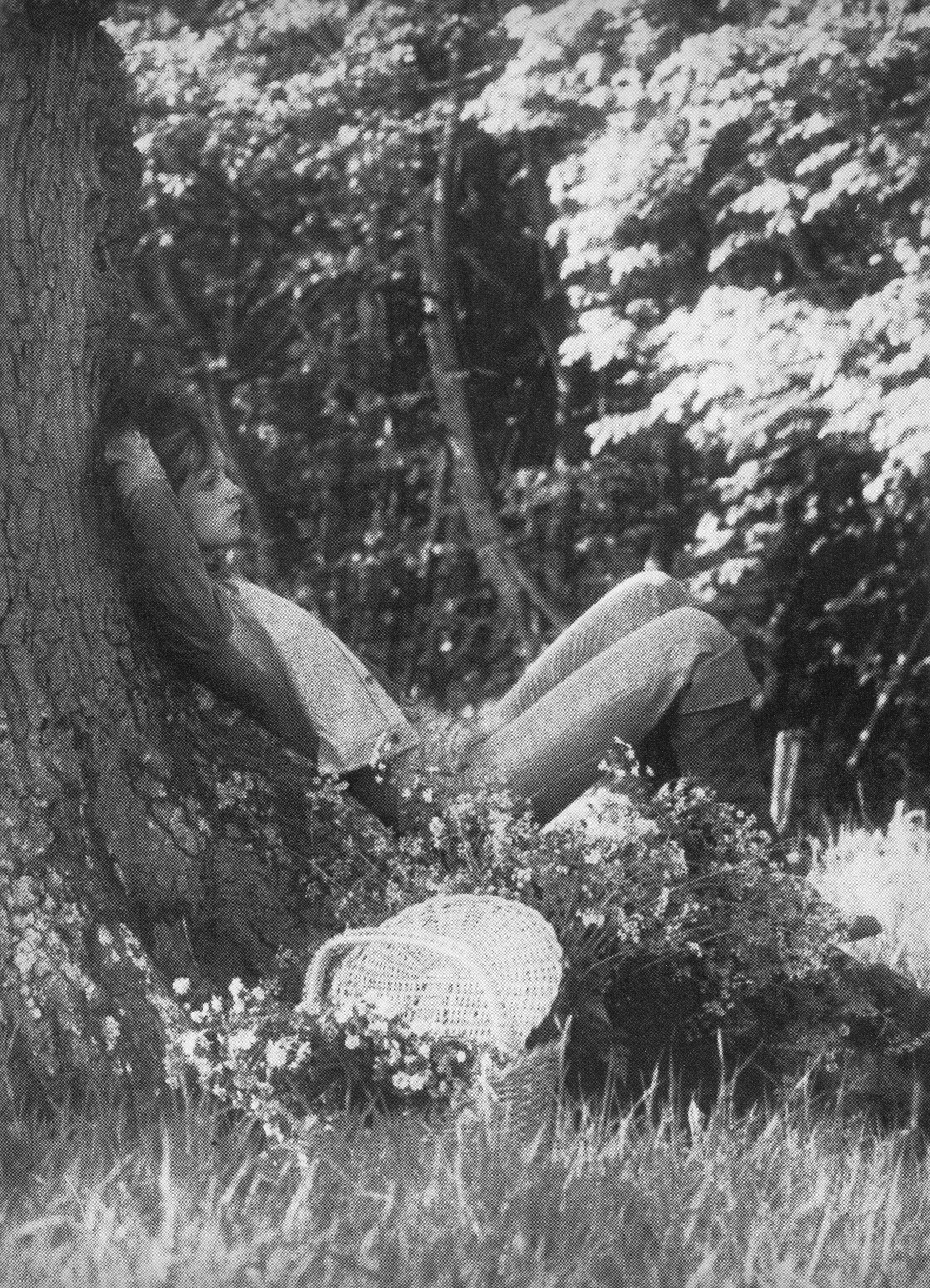
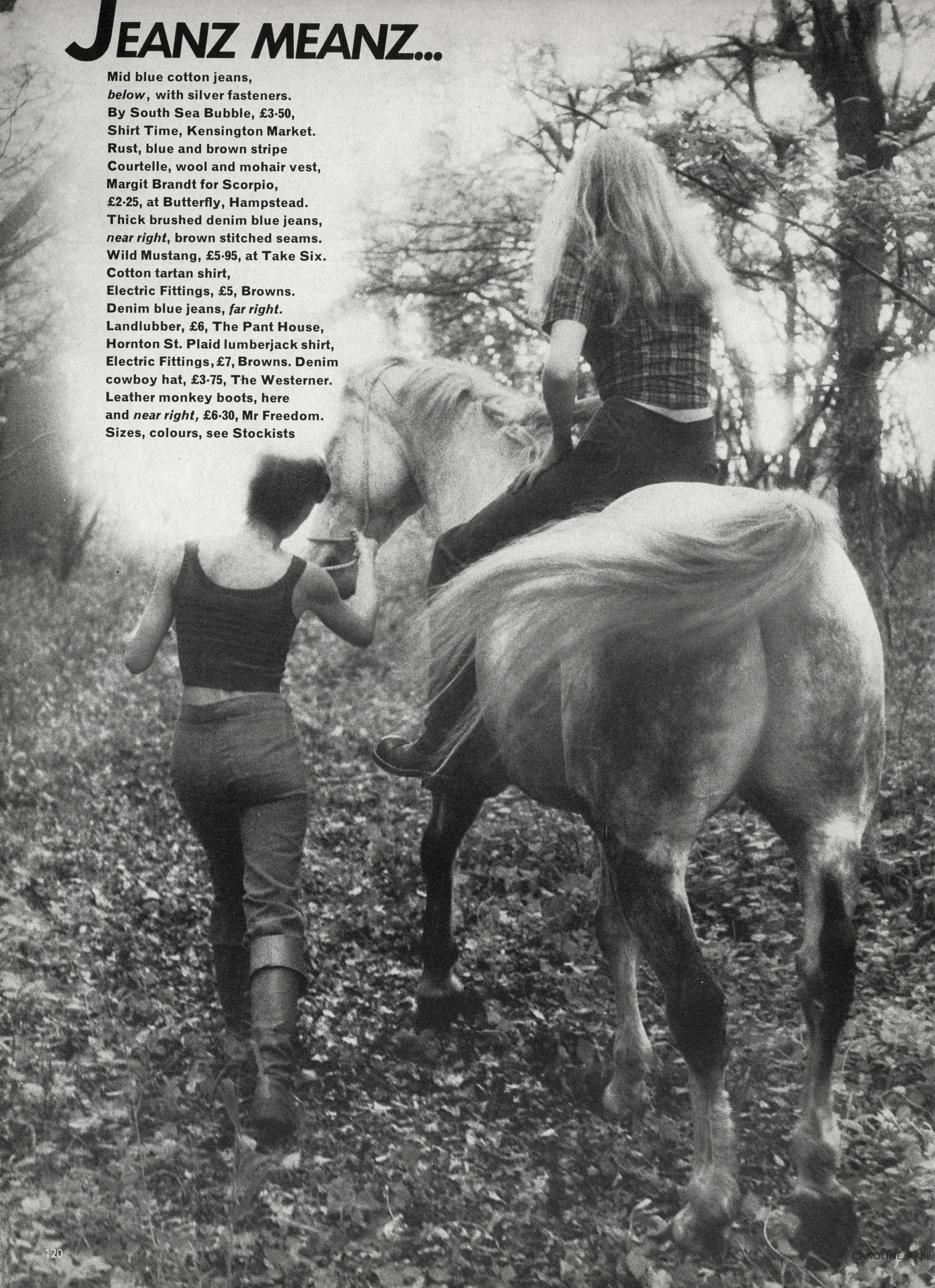
Jeanz Meanz summertime, anytime, new blues, faded blues, long legs, a look that’s sexy, tough, goes with workshirt or Saint Laurent blazer, a bright old idea that began with the Gold Rush and just keeps on looking great…
Photographed by Caroline Arber.
Scanned from Vogue, July 1971.
 Liz Eggleston