The New Avenger in Lee Bender

annacat, bus stop, chelsea girl, harold ingram, jean varon, joanna lumley, lee bender, murray arbeid, norman hartnell, polly peck, terry de havilland, the avengers, website listings

I have just listed some stunning new pieces over at Vintage-a-Peel, but the real star of the show has got to be this incredible Lee Bender for Bus Stop skirt and halter top set. For it is identical to the one worn by Joanna Lumley in a photocall for The New Avengers in 1976. Deliciously bright and saucy, and the one thing which might distract the world from your pudding-bowl haircut!

Photos and links to other newly listed items follow underneath…

Late Sixties cord jacket (click to view listing)

Murray Arbeid 1980s turquoise cocktail dress (click to view listing)

Terry de Havilland 1970s gold glitter shoes (click to view listing)

Norman Hartnell early 1960s chiffon and soutache evening gown (click to view listing)

Annacat 1960s blue velvet jacket (click to view listing)

Harold Ingram 1970s knitted top (click to view listing)

Polly Peck 1960s white cotton blouse (click to view listing)

Chelsea Girl 1970s stripe jumper (click to view listing)

Tom Bowker for Jean Varon 1970s silver lamé top (click to view listing)

Inspirational Illustrations: Painted Pin-ups by James Wedge

1970s, hand tinting, Inspirational Images, james wedge, miss selfridge, pin ups, swimwear

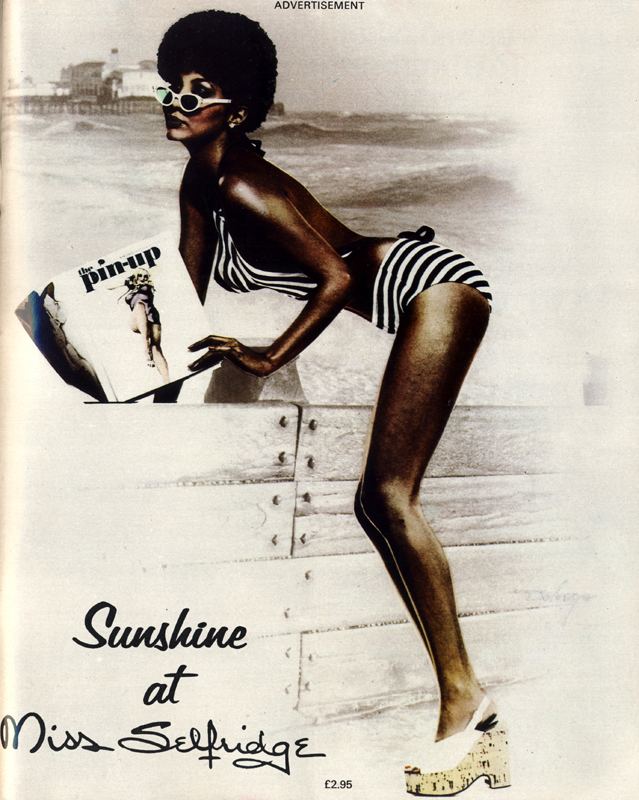
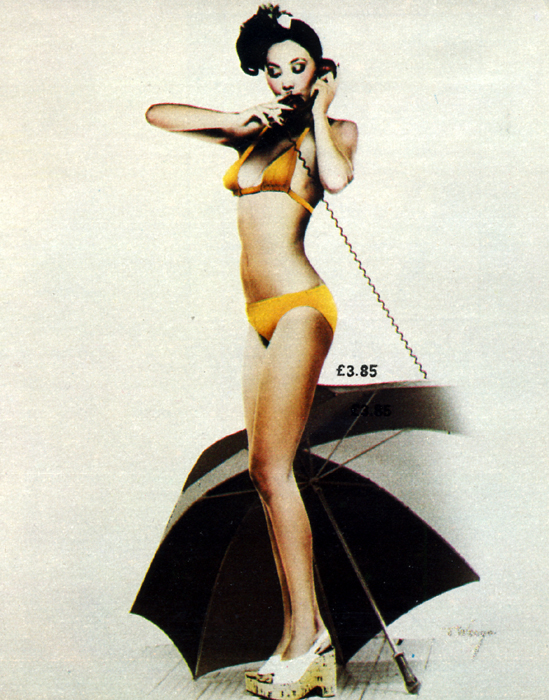
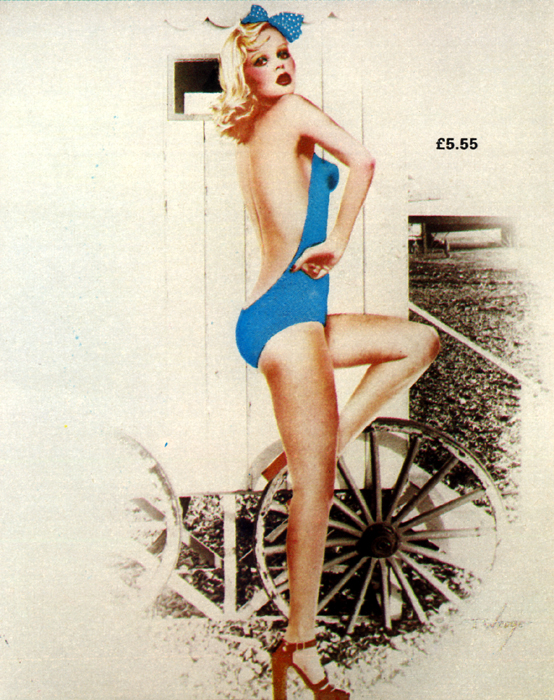
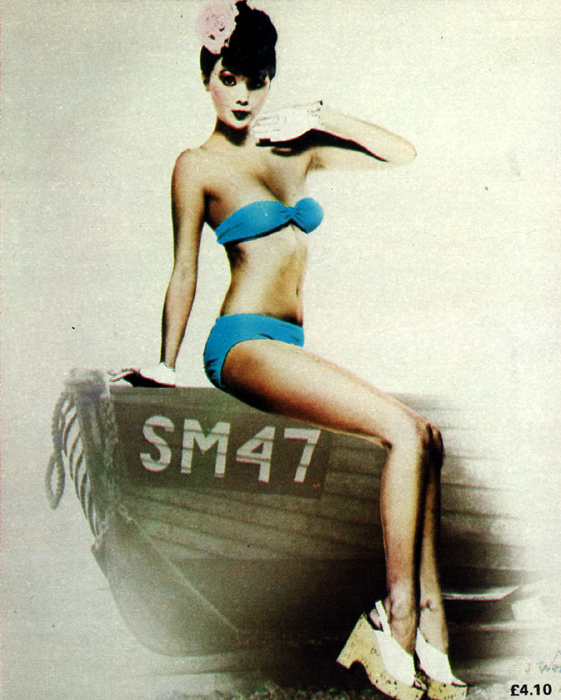
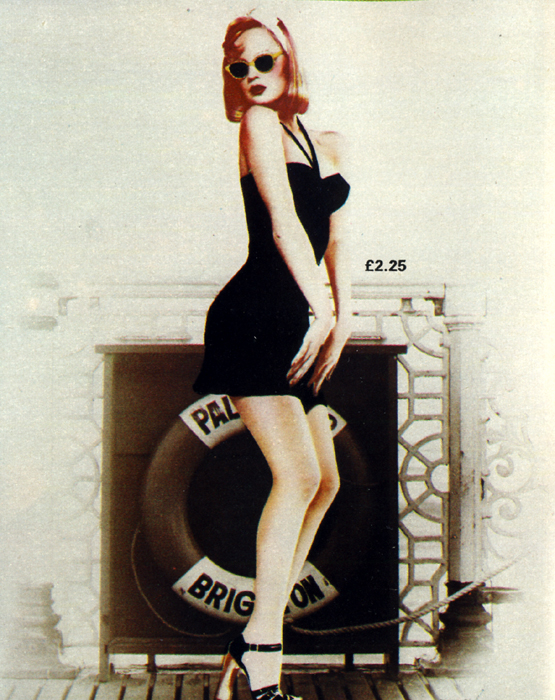
What is this mysterious alchemy that makes James Wedge’s version of the pin-up cliché somehow completely wonderful to my eyes? I think the hand-tinting is a nod to the fictitious nature of the pin-up, completely revelling in its own artifice and utilizing its superficiality to create something fresh – despite its inherently retrospective origins. Also, it doesn’t involve Photoshop. Modern photographers need to take serious note.

Advertisement for Miss Selfridge, photographed and tinted by James Wedge.

19 Magazine, May 1974. Scanned by Miss Peelpants.


Inspirational Images: Knickerbockers Glorious

1970s, gauchos, harold ingram, Honey Magazine, mary quant, morgan rank, mr freedom

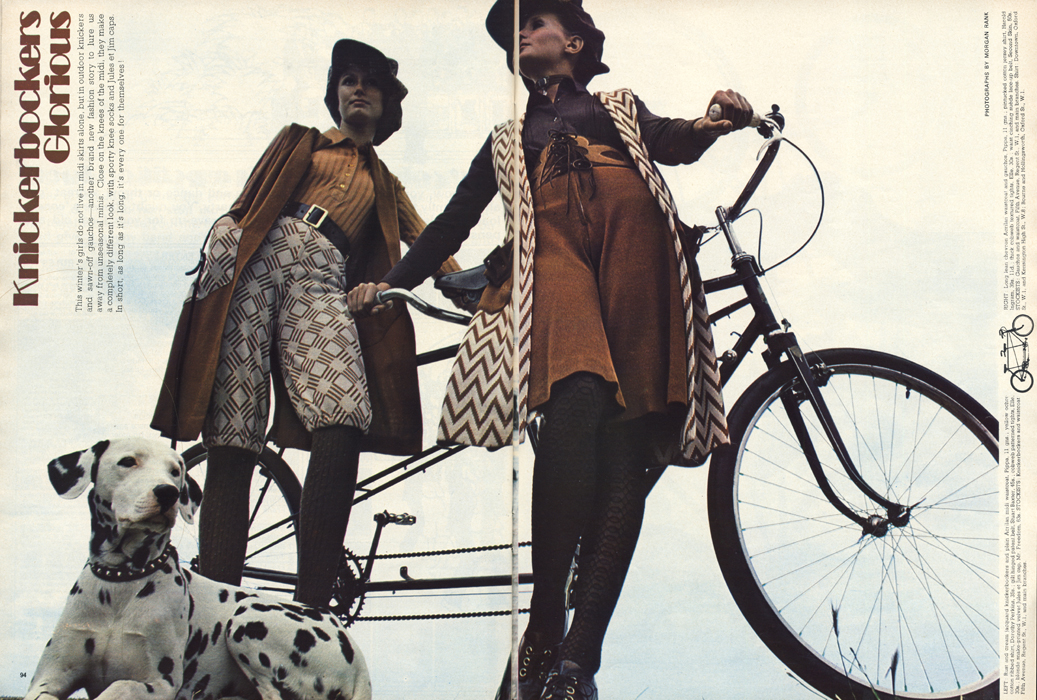
Left: Knickerbockers and midi waistcoat by Pippa. Gilt hinged patent belt by Stuart Baxter. Snake printed Jules et Jim cap by Mr Freedom. Right: Waistcoat and gauchos by Pippa. Belt by Second Skin. Shirt by Harold Ingram.

Gaucho trousers are one of those styles that ‘the powers that be’, i.e people you don’t want to be listening to, like to say can be ‘pulled off’ by very few people. Well, I’ve been happily strutting around in a gorgeous pair of tomato red linen gauchos from Wallis, circa 1970, for a while now and I can safely say that they are one of my most favourite items of clothing. Ever. Because of their bold, clashy kind of shade of red, I’ve been mainly teaming with a plain black top, black tights and my chestnut brown brogues. So I was delighted to see these two photos from a spread in Honey (the rest are knickerbockers, I have no knickerbockers yet. This makes me sad.) where some super hot gauchos are teamed with, yes, leather brogues. I’m so 1970, and I don’t even try.

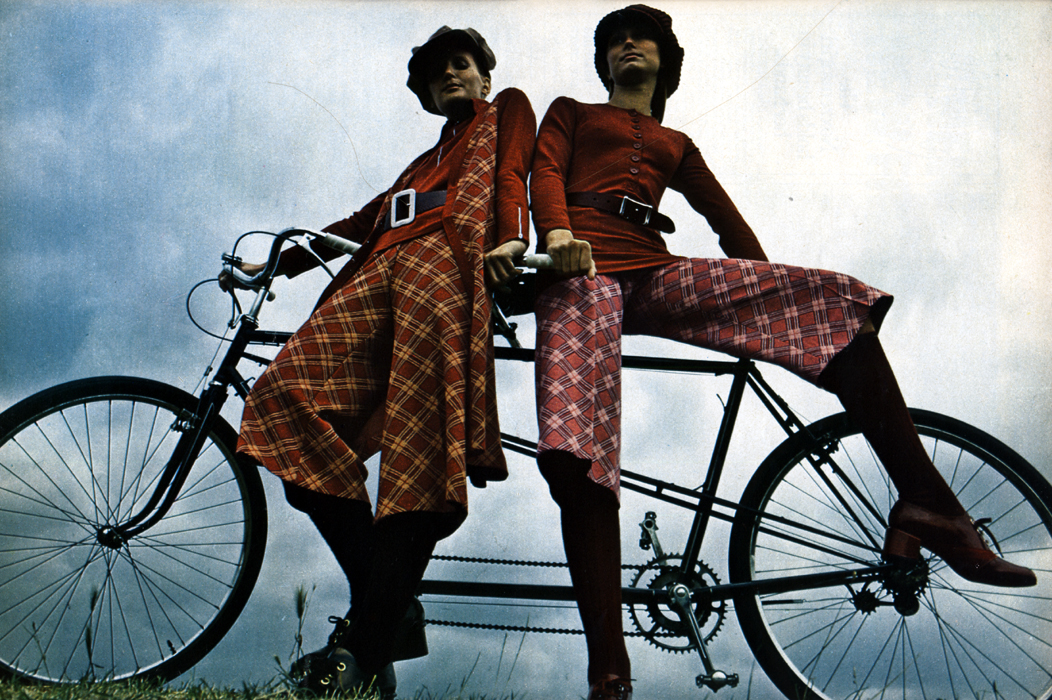
Of course, because I’m so 1970, my outfit post pictures are, errr, stuck on a roll of film which I haven’t finished yet. And, errr, then I’ve got to have them developed. So, enjoy Morgan Rank’s pictures of the photogenic ladies wearing the gauchos and brogues.

Photos by Morgan Rank. Scanned by Miss Peelpants from Honey Magazine, October 1970.

Left: Midi waistcoat and matching gauchos by Jon Elliott. Brogues from Lilley and Skinner. Baker boy cap from Mr Freedom. Right: Tunic top and gauchos by Sujon. Cap from Herbet Johnson. Lace-up granny shoes by Mary Quant.

Inspirational Images: Brighton Belles

1970s, brighton, cosmopolitan, janet reger, mitzi lorenz, underwear


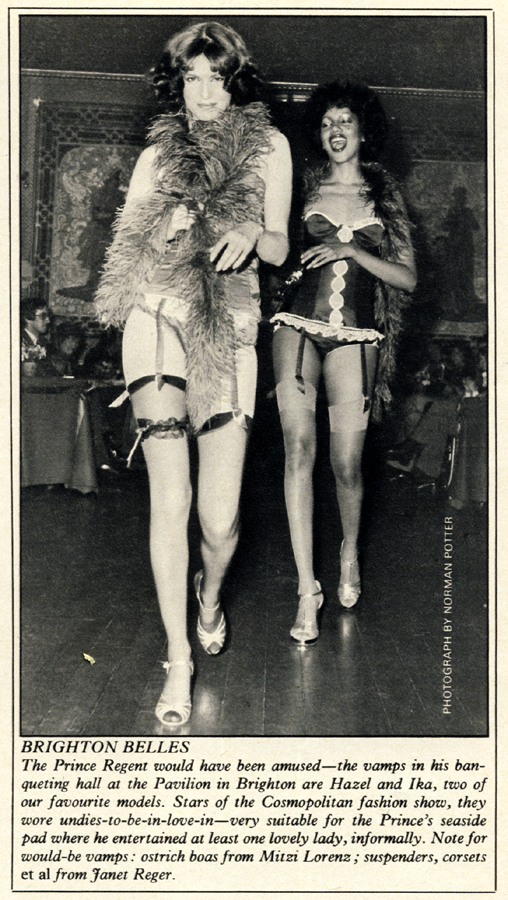
Cosmopolitan, August 1974. Scanned by Miss Peelpants.

Mild Sauce: Pop in Effigy – A Wife and Two Dollies

allen jones, art, feminism, fetishism, mild sauce, norman parkinson, Vogue

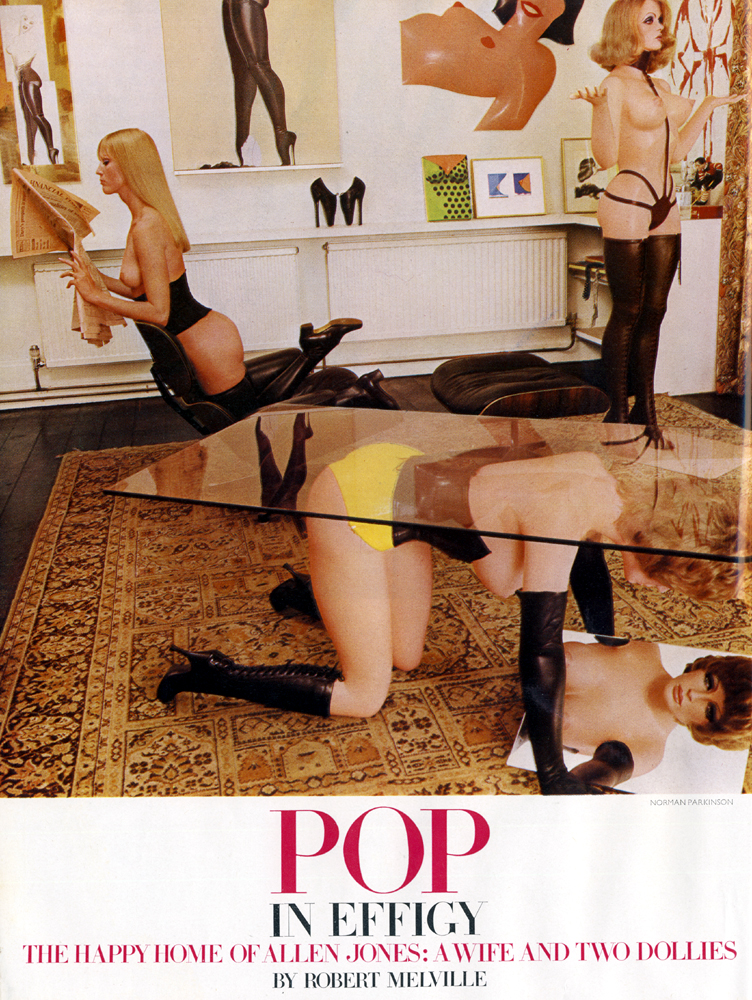
There are times when Allen Jones makes a highly plausible bid to be taken for a fetishist. His paintings of shoes with impossibly high heels are in the realm of phantasy and can only be worn by the phantom of sex appeal that slips them on in the mind’s eye, but they are more likely to be rhinoceros horn to rouse and sustain. Even his paintings of legs, conspicuously shape-conscious though they are, could have been devised to celebrate the stockings. But the true fetishist places his faith on inanimate objects or parts of the body as far away as possible from the sexual zones, and although Jones rarely paints the whole figure, his euphoric images of the cleavage and the crotch are evidence enough that he is far from being at the mercy of symbolic displacements. Until recently, he could probably be described as an aficionado of the choice view, but suddenly all the evocative fragments have come together in three life-size effigies of girls which look so breathtakingly real that when I first saw them  in the artist’s flat I felt that I shouldn’t have entered the room without knocking.

They are made for instant recognition and maximum confrontation. They turn into works of art by rapid but clear-cut stages. Twice over, they are not what they seem. At first they are blindingly girls. Then they are brilliant imitations of girls, cool and arrogant but incapable of lifting a finger against close and impertinent inspection. Finally, inpection makes it clear that their proportions are not human. They are not imitations. They bring to a kind of perfection a convention that has arisen on art’s difficult road back to a humanist figuration.

They present a strong case for the artist as director. Everyone who knows Allen Jones’s paintings will agree that the effigies disclose his formal preoccupations at every turn: but he has not actually made them. It all started on one of his trips to the States, when someone mentioned that there were people in London who were making fabulous life-size dolls. Back in London, he went to see one of these dolls, a likeness of Carroll Baker that had been commissioned by a film director. Only the head had been specially modelled; the body was that of a conventional shop window dummy. The visit brought up the name of Dik Beech, a commercial sculptor who works as a freelance in close association with a company named Gems Wax Models, which makes the moulds and casts for Madame Tussaud`s. Beech brought great professionalism and the neutrality of a craftsman to the task of turning Jones’s drawings and specitications into three-dimensional figures. They were then cast in fibreglass by Gems Wax Models, and sprayed and rubbed down and sprayed again to give them an impeccably smooth, flesh-tinted finish. At this point they were taken over by Lucina della Rocca and entirely repainted by hand. She works for Tussaud’s, and she brought the surfaces of the casts to life with imperceptible nuances of tone. They were now looking the picture of decadent health. The eyes too are painted, and the faces have been given a bold but not exaggerated make·up. Other experts were called in. The leather accessories, including the strap-work on the standing figure, were made by John Sutcliffe of Atomage. The Lurex pants of the girl on her hands and knees were made by Zandra Rhodes and required three fittings. The wigs are by Beyond the Fringe. The gloves, bought at Weiss of Shaftesbury Avenue, are the only accessories that didn’t have to be specially designed.

The figure on hands and knees gazing into a mirror has been designed so that the back of her head and her rear are exactly the same height, to support the clear glass panel which has been made and fixed by Design Animations. It turns her into an anthropomorphic table. Her pose perhaps suggests an undignified obedience, but she can he freed from her glass plate to occupy an easy chair; her arms then stretch out in a striking “hands-off” gesture calculated to send one to the opposite side of the room. It’s indicative of the artist’s purely visual interest in the gear that he was not aware that the strap running from the standing girl’s collar to her G-string would be at the back on a real girl, to compel her to stand up straight: it seems to confirm one’s impression that the girls come from a strip-joint not of this world.
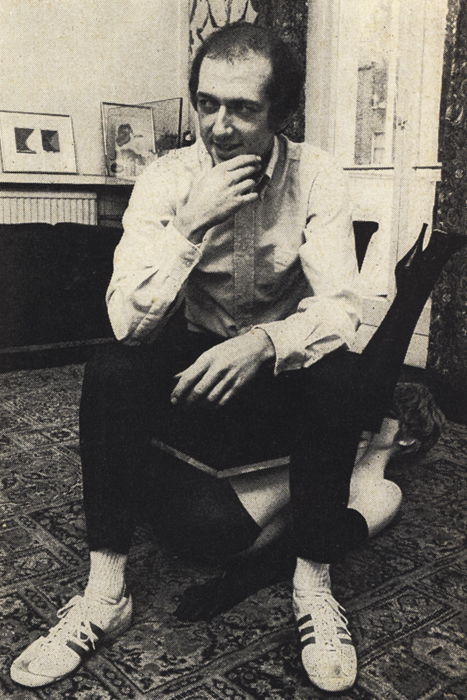
Allen Jones at home, above: his wife and two dollies, opposite. His three life-size effigies, each in an edition of six, will be on show in New York from January 6 at Richard Feigen; in Cologne from mid-January at Gallery Rudolph Zwirner; in London from January 23 at Tooth’s, 31 Bruton St, WC1.

Vintage Adverts: Miss Levi’s, 1974

1970s, cosmopolitan, flares, jeans, levis, Vintage Adverts

Scanned from Cosmopolitan, June 1974

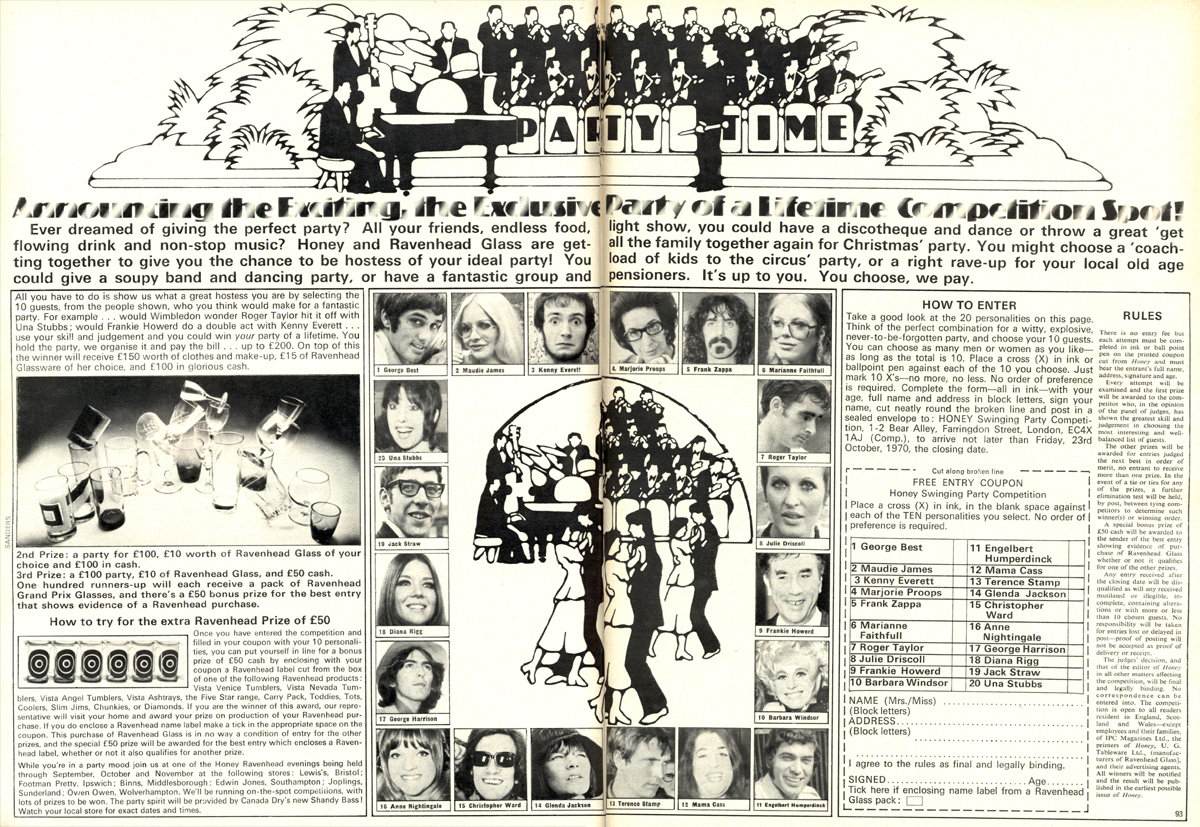
Party Time: Which ten would you pick?

anne nightingale, diana rigg, frank zappa, george harrison, Honey Magazine, kenny everett, marianne faithfull, terence stamp

Scanned from Cosmopolitan, June 1974

Which ten would I pick for my dinner party? Diana Rigg and George Harrison for beauty, wit and talent. Frank Zappa and Kenny Everett, to see what on earth would go on between the two of them and to see whether they could crack a smile from Terence Stamp. Una Stubbs seems like she’d be awfully good fun, and Marjorie Proops could probably help dear Marianne Faithfull quite a bit. Anne Nightingale could ensure the music selection was perfect, and finally I’d have Engelbert Humperdink there – purely for washing-up and general dogsbody purposes.

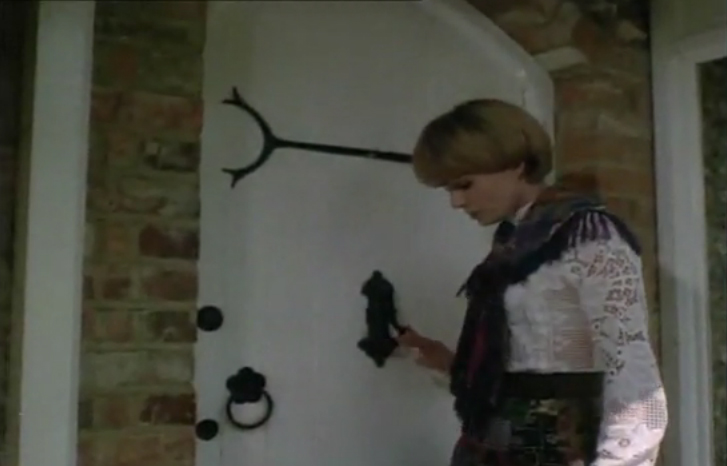
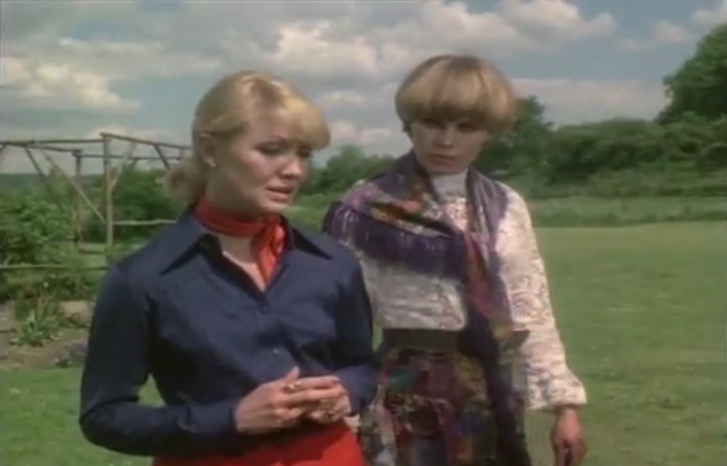
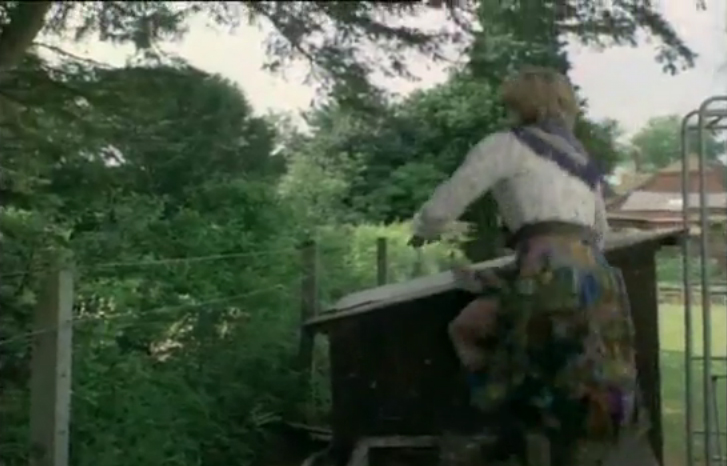
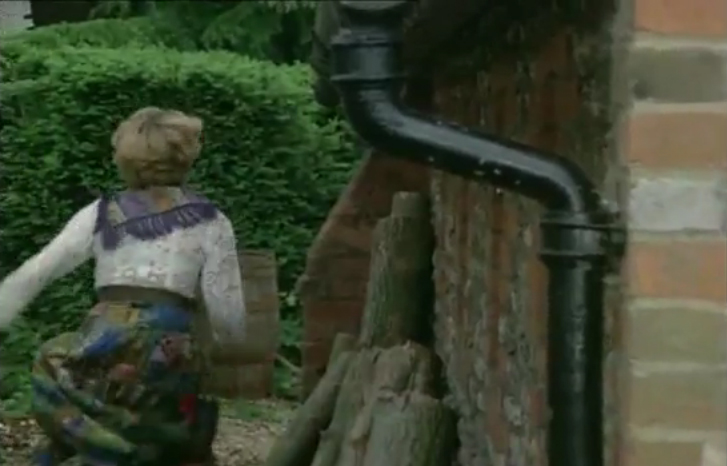
Joanna Lumley in Catherine Buckley, The New Avengers 1976

1970s, catherine buckley, joanna lumley, the avengers


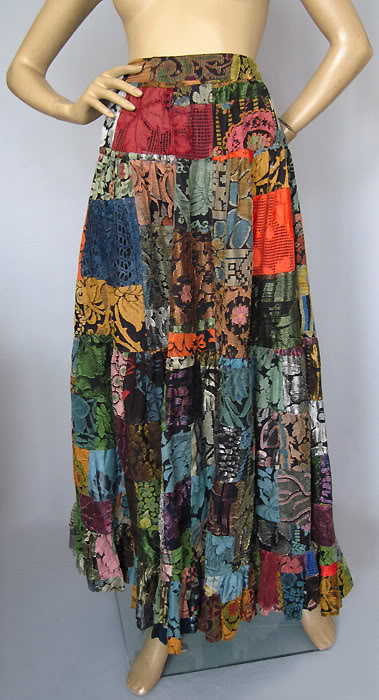
It’s of the greatest frustration to me that nobody has yet bought this beautiful skirt by Catherine Buckley. Made from antique fabrics, patchworked into a maxi skirt, it is a key piece of this designer’s work and a beautiful garment to behold.

I knew she had designed clothes for Joanna Lumley as Purdey in The New Avengers, but it had been so long since I watched the episodes, I didn’t remember many individual outfits. Even so, it was highly unlikely that the super-active Purdey would have been wearing a patchwork maxi skirt. Or so I thought. Seems Ms Buckley designed a split midi version for the episode ‘House of Cards’ which Joanna wears to perfection in an action sequence.

Here are some stills, and here is a link to the skirt. Buckley’s work is rare enough, and these patchwork pieces even rarer.

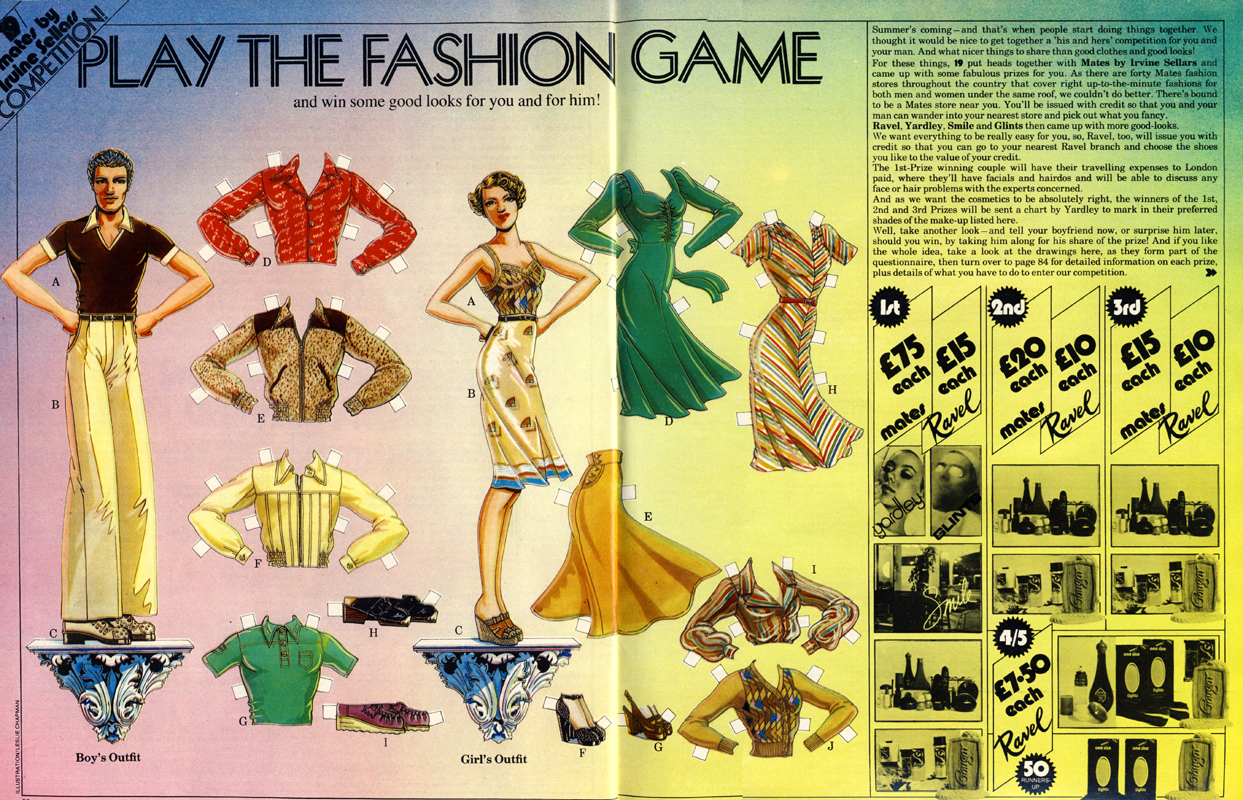
Inspirational Illustrations: Play the Fashion Game

19 magazine, 1970s, Illustrations, irvine sellars, leslie chapman, paper dolls, ravel

I fear I may be thirty-eight years too late to enter this competition, but I definitely wouldn’t say no to a wardrobe full of Irvine Sellars gear! Let me know if any of you are crazy enough to print this out and make actual paper dolls (and please send photos…).

Illustrations by Leslie Chapman. Scanned from 19 Magazine, May 1974.

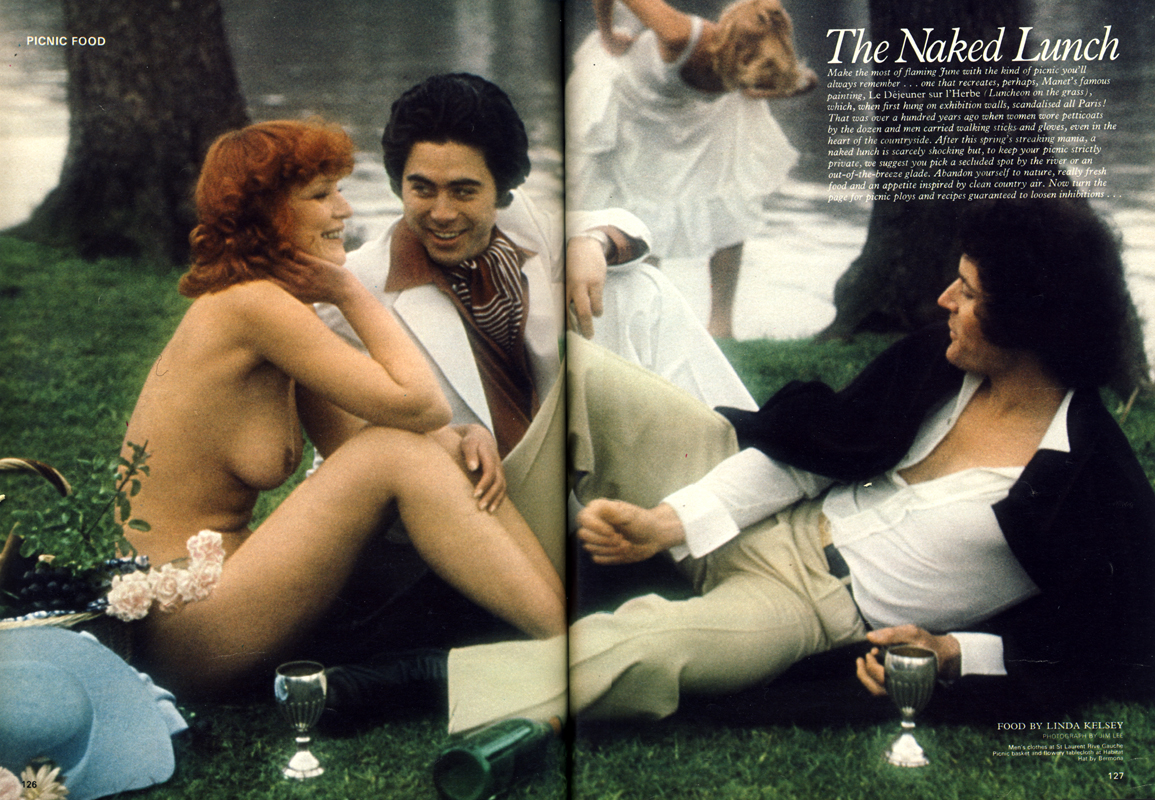
Mild Sauce: The Naked Lunch

1970s, cosmopolitan, jim lee, Le déjeuner sur l'herbe, mild sauce

Jim Lee’s version of Le déjeuner sur l’herbe for Cosmopolitan, June 1974.