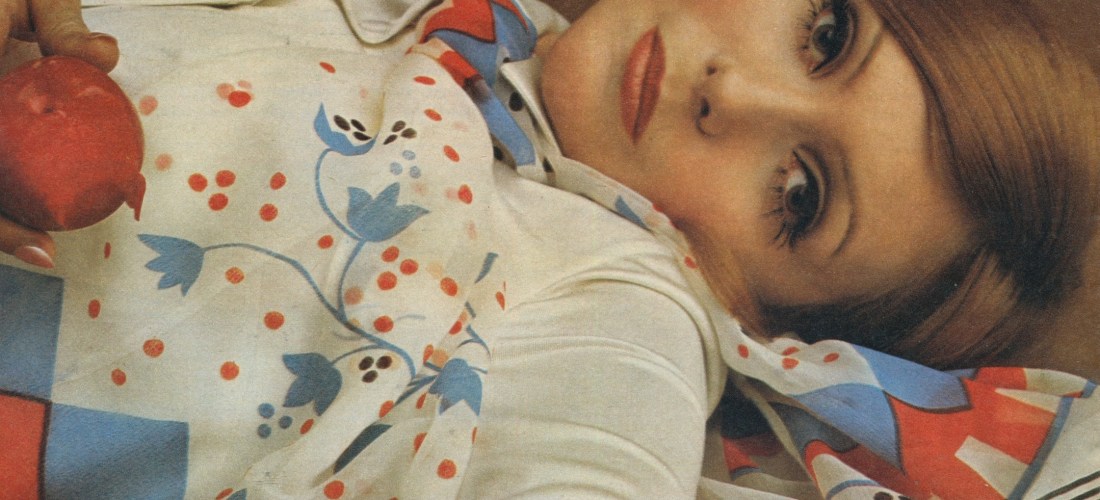
Long chiffon scarf designed by Celia Birtwell, 2 gn., from the Vidal Sassoon Shop, 44 Sloane Street, W1; Quorum, 52 Radnor Walk, SW3. White Tricel tricot blouse, part of set, by Mary Quant’s Ginger Group, 13 gn., with contrast trousers and jerkin, from Bazaar, Knightsbridge, SW1.
Scarves, instead of being dismissed as last year’s fashion gimmick, are being perpetuated as this year’s most important accessory. Still the simplest way to wear a scarf is to flip a long one casually college-style around the neck. As long as it’s not literally a college scarf this somehow adds enough chic to whatever you wear, without making you look fussily overdressed. There are dozens of different ways to tie a scarf. Smart French girls are tying scarves around their waists, twisted in with chain belts or beads. Marc Bohan at Dior makes headscarves tied pirate-style look young and chic, and shows scarves tied like a man’s tie. Although large squares will still be in demand to wear on the head or folded up as cravats, the big fashion in scarves is still for long ones, preferably fringed. Men will have to accept with a good grace that they have lost their long-established monopoly of fringed silk scarves. Until now almost the only places to find them were men’s departments, antique market stalls or somebody’s attic. (Shawls are the latest craze from jumble sales.) But shopping for scarves is easier this spring, with stocks at last in every shape and size. Hair by Valerie at Cheveux, 15 Abingdon Road, London W8.
Fashion by Liz Smith.
Photographed by Steve Hiett.
Scanned from The Observer Magazine, March 1969.
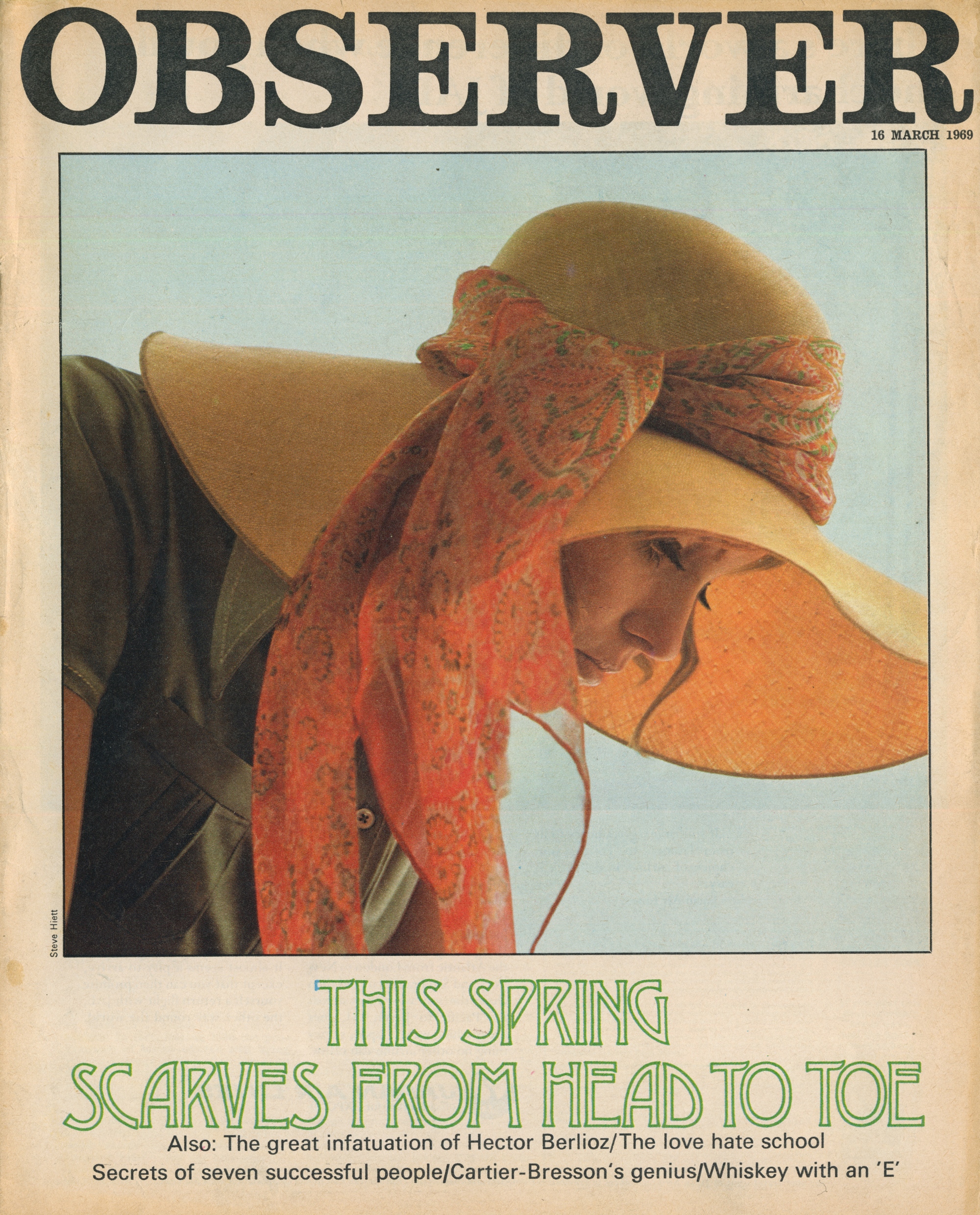
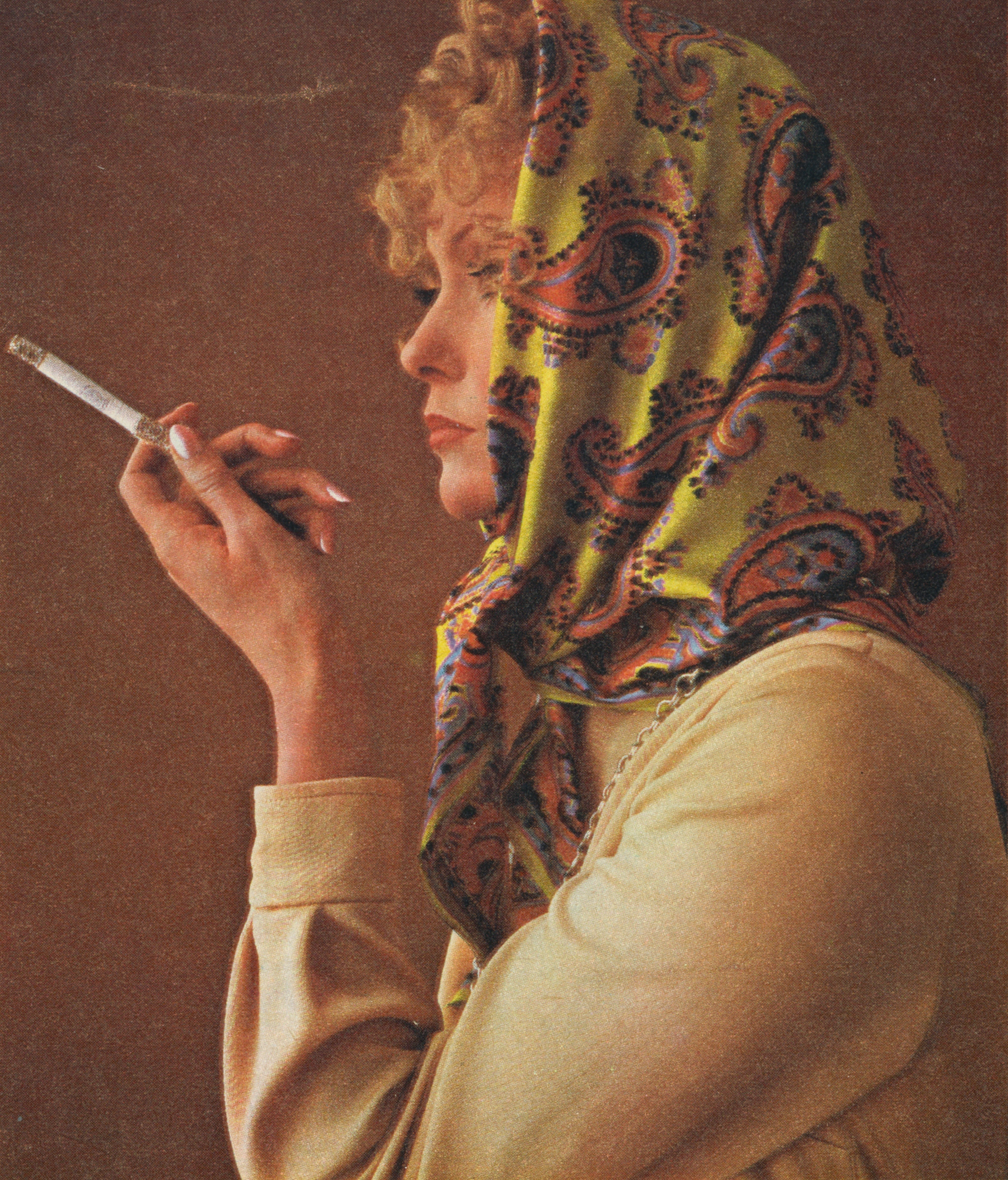
Paisley printed chiffon square, 63s., from Liberty, Regent Street, W1. Hat by Edward Mann, 49s. 11d., in a variety of colours. Tricel jersey tunic shirt (with trousers), by Jinty, 8 gn.
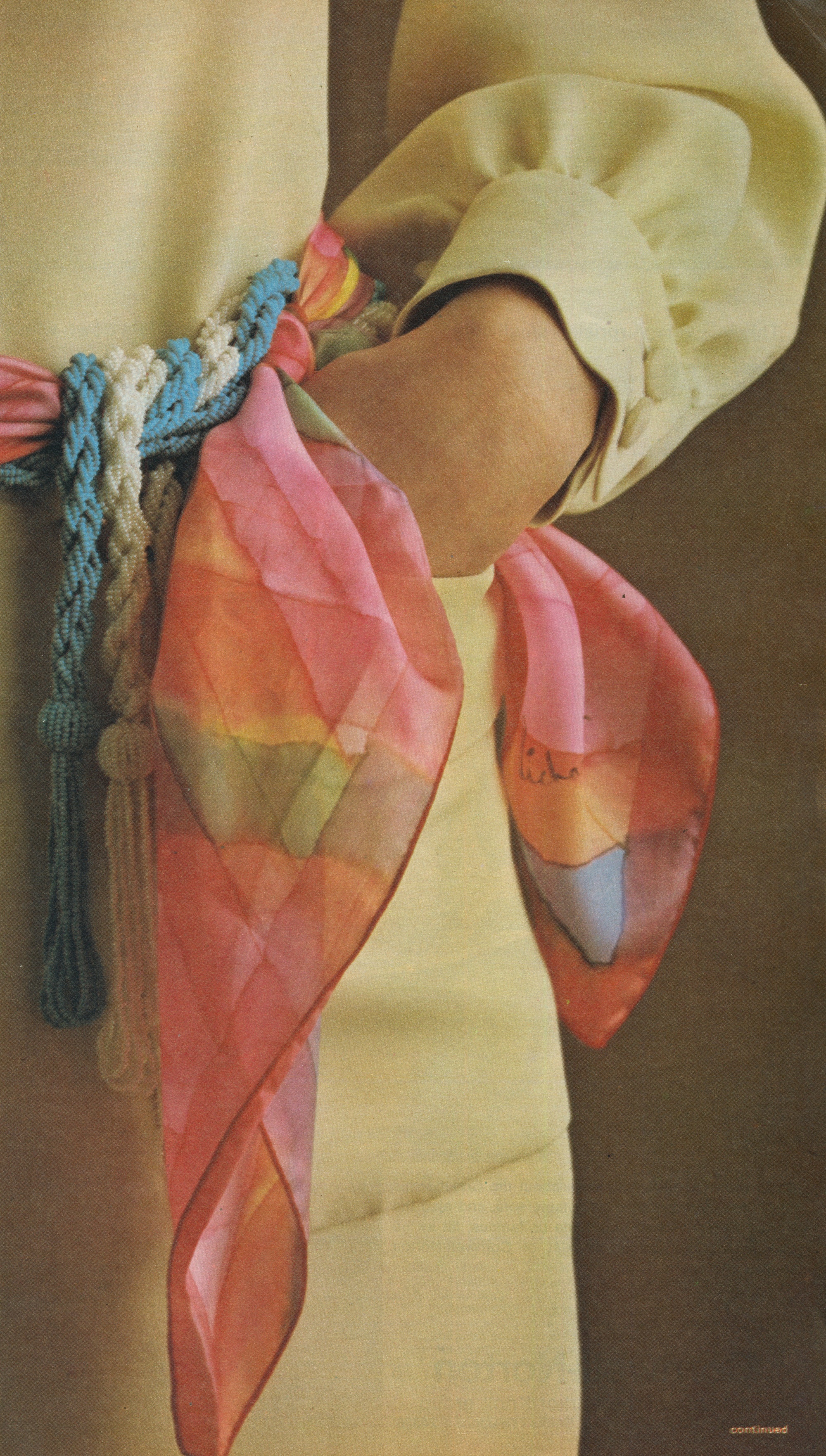
Tied around the waist a filmy silk square by Richard Allen, 75s., from Fenwick, 63 New Bond Street, WI. Pearl and turquoise twisted bead belts with tassel ends, by Adrien Mann, 30s. each, from Harrods; Kendal Milne, Manchester. Beige crepe shirtsleeved jumpsuit £41 10s., from Jaeger, Brompton Road, Sloane Street, Baker Street and a number of provincial branches.
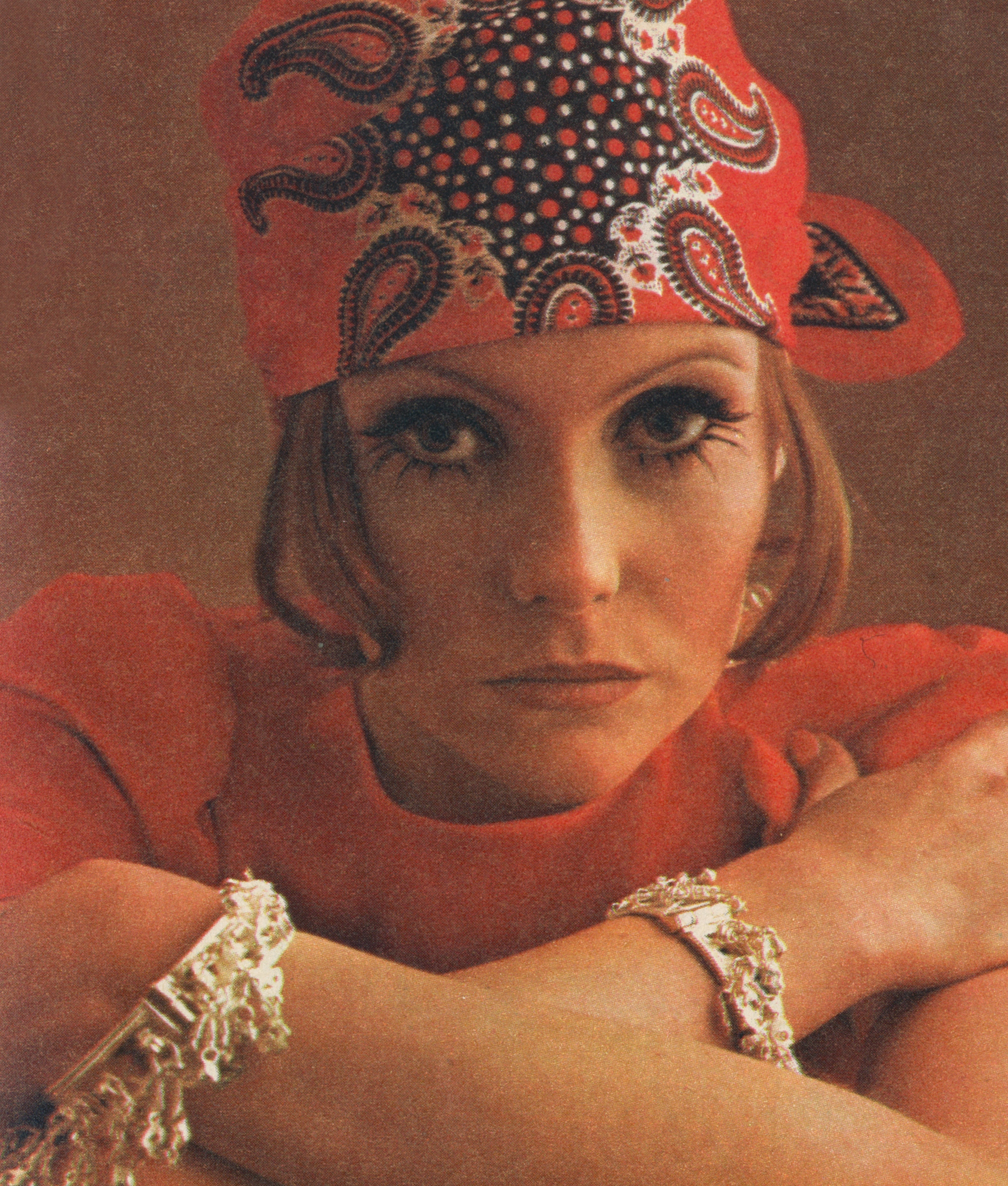
Pirate-style cotton handker-chief, 17s. 6d. from Liberty. Silver brooch on shoulder, 30s., silver bracelets, £1 7s. 6d. each; all from Indiacraft, Marble Arch, W1. Tricel jersey dress by Mary Quant’s Ginger Group, £5 19s. 6d., from Bazaar.
Indian silk scarf, 36 in. square, £1 11s. 6d., from Indiacraft, Silver chain, 18s. 6d. from Fenwick. Cigarette holder from Tunisia. Tunic dress in Lancola jersey by Marlborough, 11 gn., with trousers, from Peter Robinson.
Extra long silk scarf looks good tied as a sash, also in black, £2 2s. 6d., from Biba, 19-22 Kensington Church Street, W8, and by post. Rayon chiffon smock dress, by Polly Peck, 13 gn.
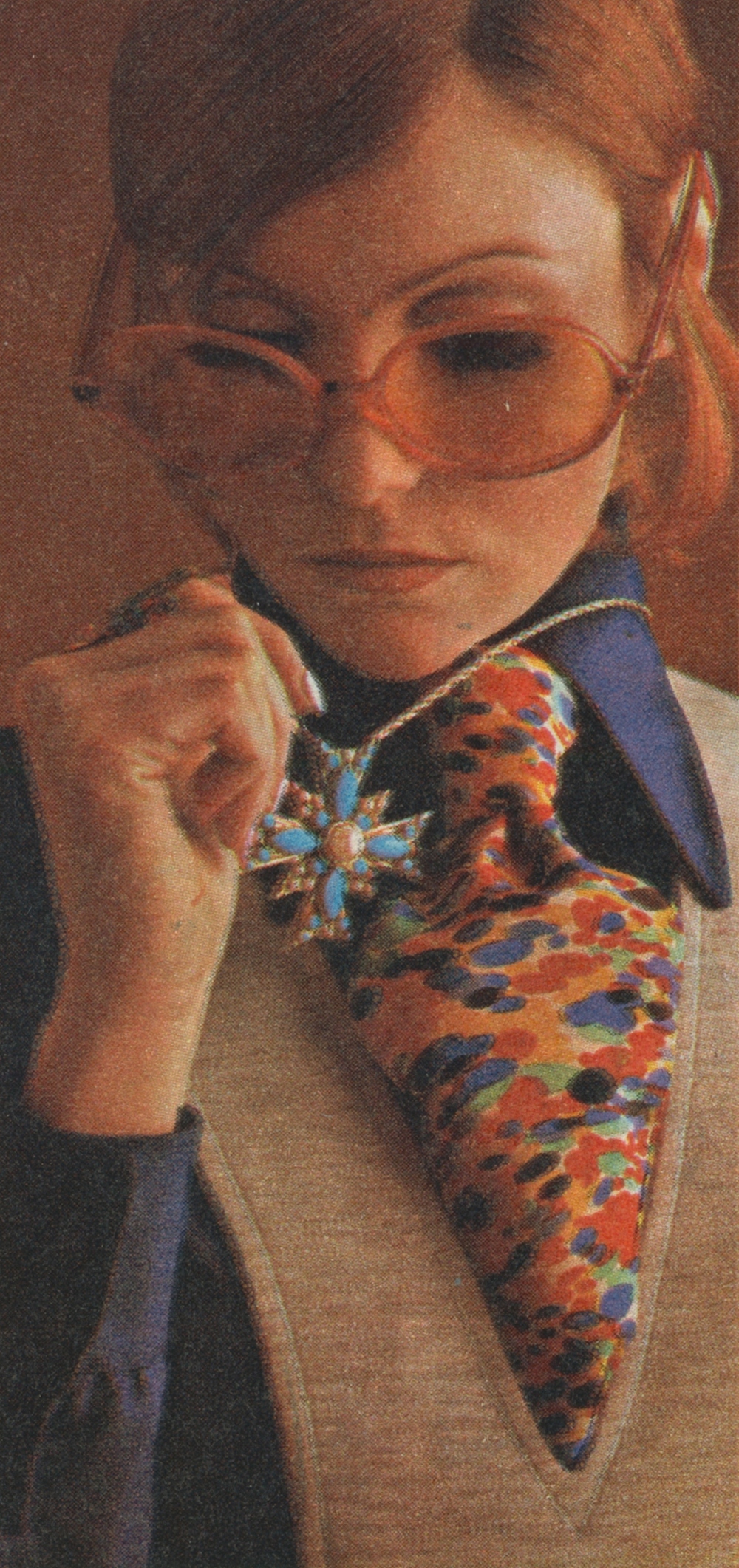
Square scarf tied like a tie, silk crepe de chine, 7 gn. yard, 36 in. wide, from Liberty. Dacron and cotton blouse, also in white, pale blue, brown, lagoon and pink, £5, from all Young Jaeger branches. Courtelle Neospun jersey pinafore-topped trousers designed by Janice Wainwright for Simon Massey, £8 18s. 6d. Maltese cross on chain by Adrien Mann, 25s. Tibetan bird ring £1 10s. from Indiacraft. Sunglasses by Corocraft, 25s.
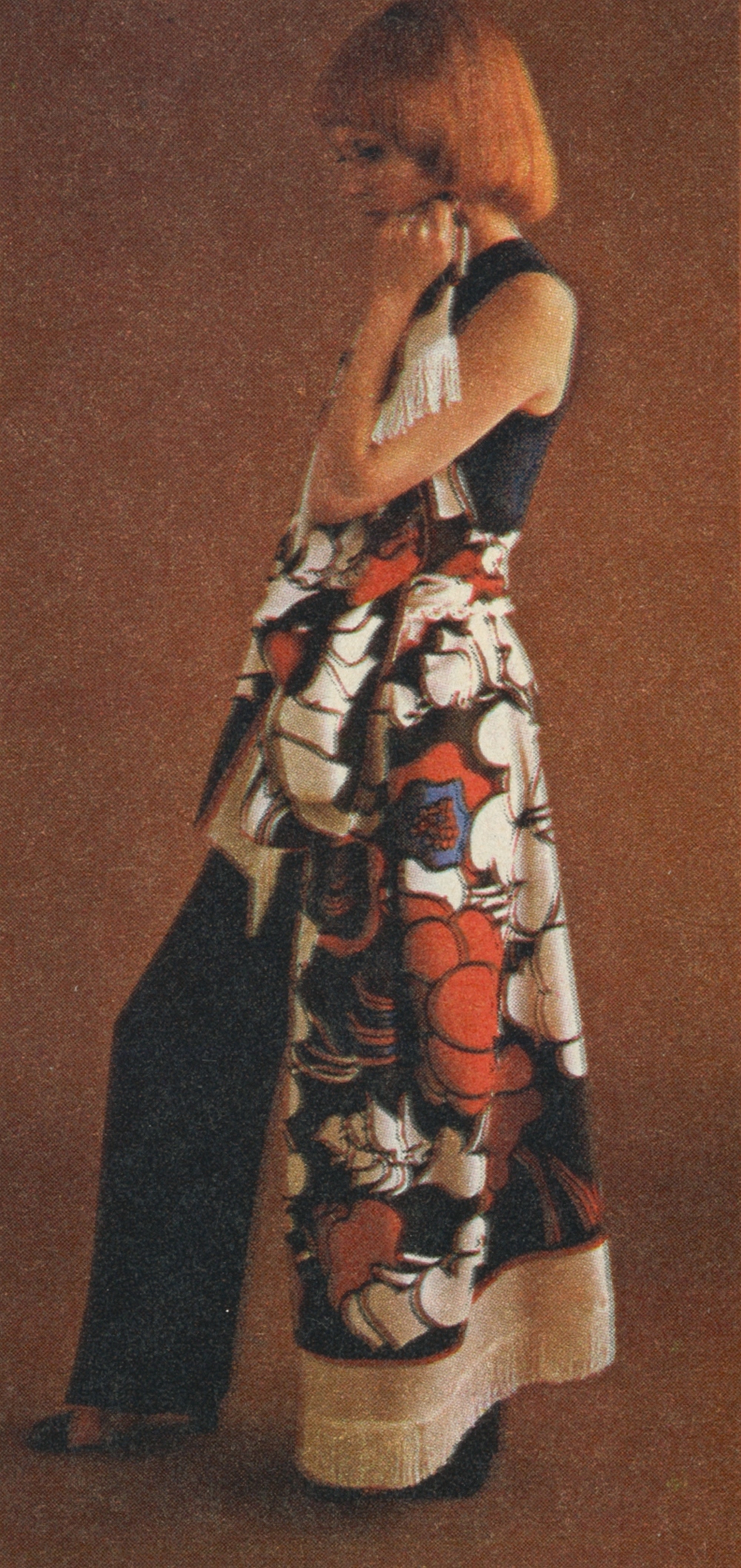
Silk stole to wear as a sash, by Richard Allen, £7 17s. 6d., from Fenwick. Simple round-necked sleeve-less jumpsuit zipping up the back, in linen-look rayon, navy, beige, thyme or caramel, £14 10s., from Jaeger, London, and all provincial shops. Red and navy slingback shoes, 79s. 11d., from Dolcis. White plastic chain belt by Adrien Mann, £1. Page-boy wig, £21 15s., from Beyond The Fringe, 59 Brook Street, London
Now there’s hardware and haberdashery, furnishings and fabrics, cosmetics and mens-wear, all carrying the Biba label. Their brave transition from dolly boutique to department store was made last week when Biba opened in Kensington High Street. Although a baby store compared with neighbouring Barker’s, Biba does boast marble floors, a carved gallery from the old St Paul’s school, and a commissionaire at the huge glass doors.
Faithful customers can still find among the familiar palm fronds clothes to wear themselves or put on their children, but everything is on a much bigger scale. Colour-matched underwear and tights are on sale in a special conservatory-style department, and there’s a complete range of Biba makeup and cosmetics, and many more accessories.
But what’s really new, are the clothes for men, and the things for the house.
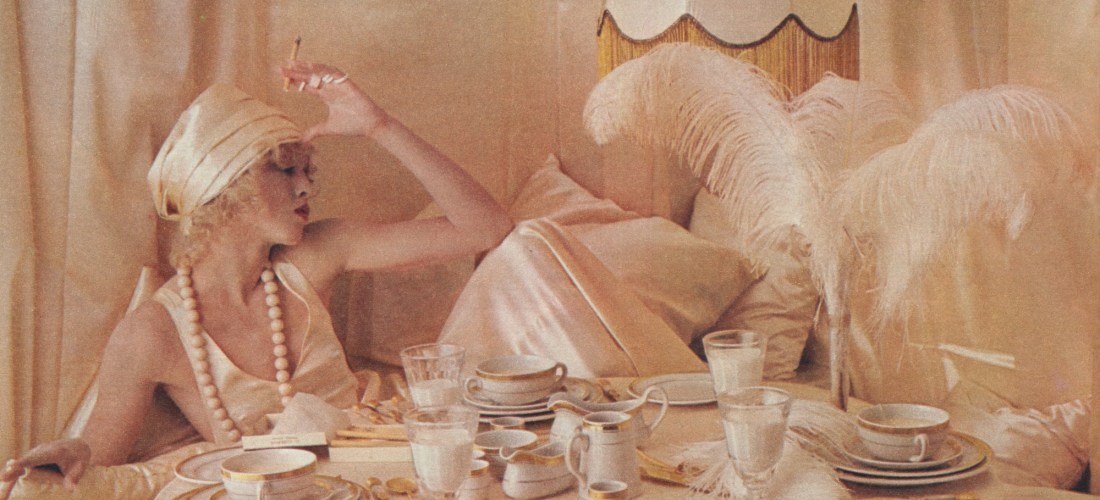
There’s nothing simple or austere about a Biba home life. The girl whose idea of some-thing comfortable to wear around the house is a slinky satin dress chooses a plush back-ground and hardware that’s softly elegant. Cutlery is rich-looking in gilt and mother of pearl, or silver and ebony. China is white and gold, glasses are chunky goblets. Specially printed wallpapers and furnishing fabrics, plain satins, felts, braids and trimmings, have carefully matched emulsion paints, lamp-shades and cushions, all in a range of 15 colours. Biba are selling the raw materials so that you can make what you want of them. The clue to their own style is Art Nouveau, but the way you choose to use them will be your own.
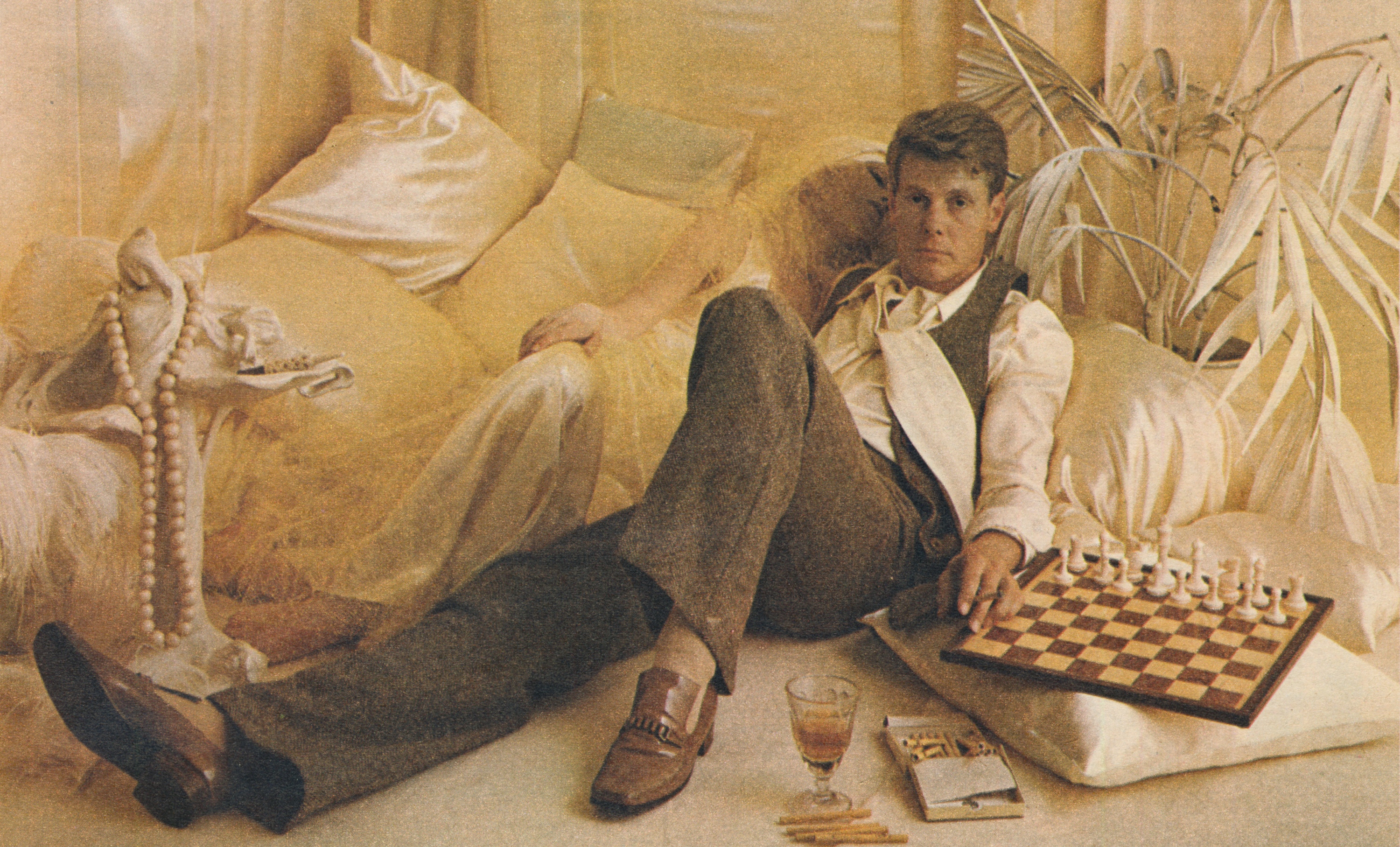
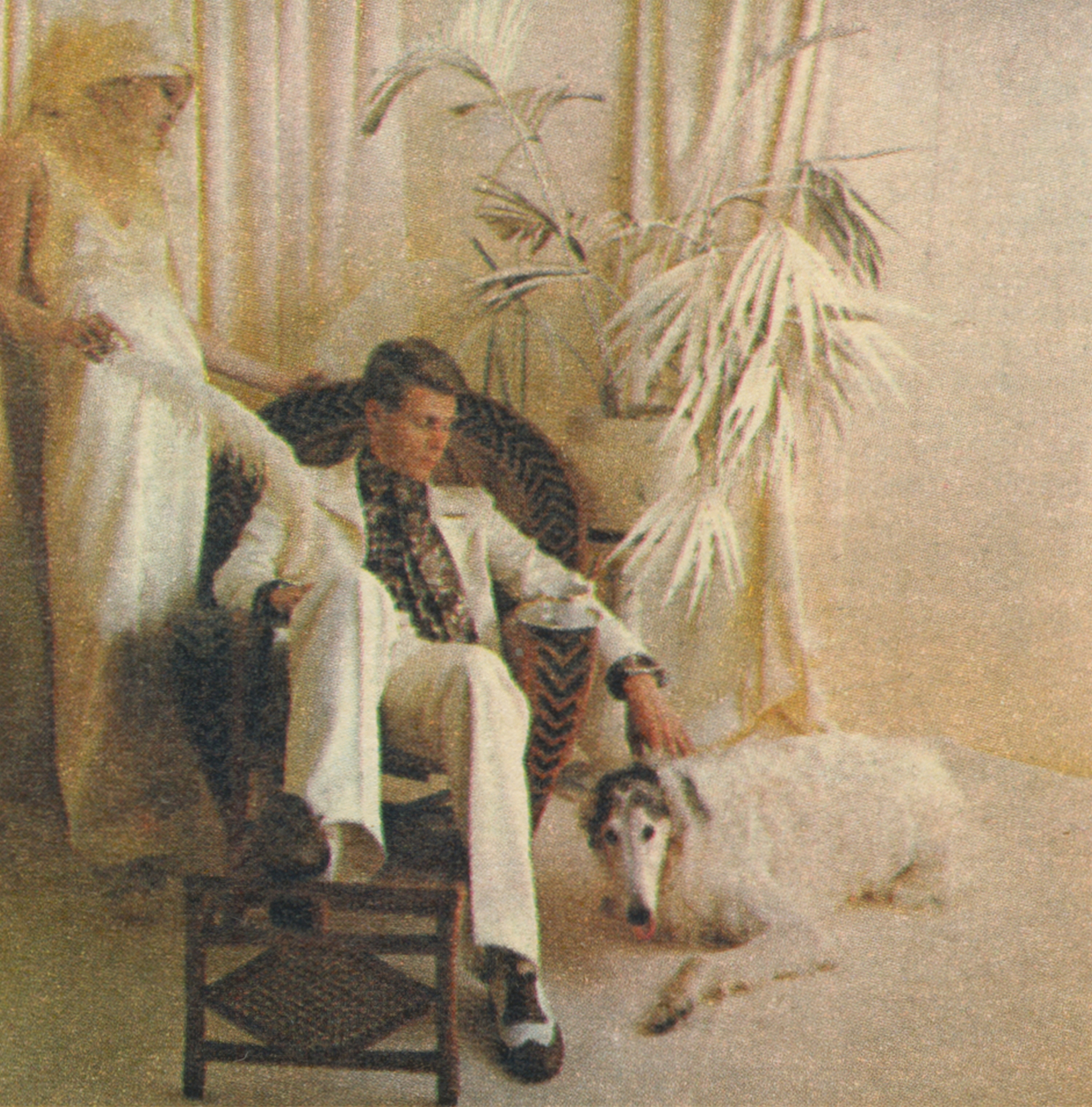
Biba men’s clothes are worn in these pictures by James Fox, who can currently be seen in ‘Isadora’ and whose new film, ‘Performance’, in which he co-stars with Mick Jagger, comes out next month.
Mr Fox is long and slender and can have little problem kitting himself out elegantly, but the clothes he wears here, plus others by Biba in velvets and tweeds, all come in a size range bigger than most. So fatter men can have fun with clothes too, and at a reasonable price.
By Liz Smith.
Photographed by Steve Hiett.
Scanned from The Observer Magazine, 21st September 1969.
Biba 3 is definitely the Biba I’m most captivated by, I think possibly because it was edged out so quickly by the much bigger (and more Deco) Big Biba and yet was, I think, the perfect encapsulation of the aesthetic and the first time the ‘department store’ ideal was manifested. Basically, I wish there were more photos so I do try and scan them when I find them! It’s also nice to see the menswear getting a bit of attention for once.
Pure wool herringbene tweed trousers cut to curve over the foot 6gn.; matching buttoned jerkin, £5 10s. Pure silk shirt and tie, 6gn. Art Nouveau statue, £7 10s.; necklace, 34s.; veiling, 2s. a yd. Marbled patent shoes, 12gn., from the Chelsea Cobbler, 33 Sackville Street, W1. Vanilla coloured Imperial Russian cigarettes by Sobranie, 11s. 3d. for 25. Carved ivory cigar holder, £21 ; ivory chess men, part of a set, £80; both from W. Barrett, 9 Old Bond Street, W1.
White worsted wool jacket with safari pockets and belt, 15gn.; matching trousers shaped over the foot, 8gn. Brown and cream printed rayon shirt, 5gn.; matching tie, 39s. 6d. Co-respondent shoes, £5 15s. from Anello & Davide, 30 Drury Lane, London, WC2. Teacup, 5s. 6d.; saucer, 3s. 3d.,2) All Biba prices here are approximate.
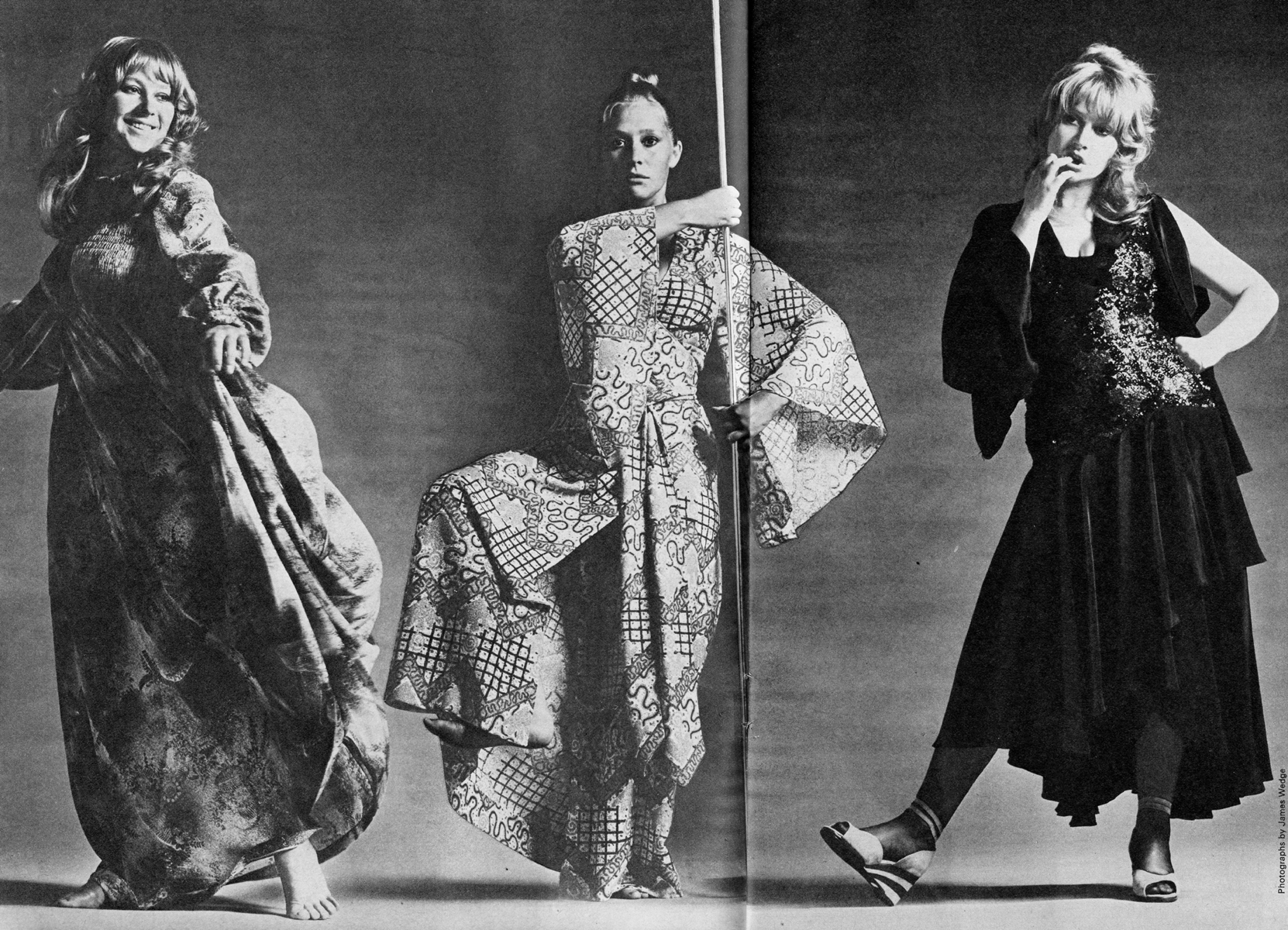
Far Left. Printed Italian voile dress with smocked bodice and medieval sleeves, grey/blue, 8-14, Gina -Fratini, £49, from Harrods ; Chic, Hampstead, NW3 ; Sheila Worth, Kendal Street, W2. Centre. Wraparound kimono in Lurex printed with Zandra Rhodes design, pink/lilac/silver or green/ orange/gold, 10-16, Hildebrand, £23, from Harrods, Knightsbridge, SW1 ; Kendal Milne, Manchester : Strava-ganza, Harrogate. Right. Crepe de chine dress, se-quinned bodice, black only, 10 and 12, by Alice Pollock, £62.50, from Fifth Avenue, King’s Road, SW3 ; or enquiries to Quorum, 6 Burnsall Street, SW3. Suede wedge-soled sandals, 3-8, f5.99, from branches of Sacha.
Clothes currently in fashion are of such contradictory styles that they seem to demand of the wearer a talent for acting beyond the capacity of most women. It takes a skilled actress to switch easily from cool Japanese geisha girl to 1940s tart and remember which part she’s playing. Helen Mirren, associate member of the Royal Shakespeare Company, shows how it’s done, with a toss of her head, a quick change in facial expression, a swivel of hip and heel. The dresses she wears here all have sleeves that require dramatic gestures : medieval pointed sleeves, kimono sleeves, and sleeves slashed from the shoulder. You don’t have to be an actress to wear these dresses, but it does help.
Photographed by James Wedge.
Scanned by Miss Peelpants from The Observer Magazine, 11th July 1971.
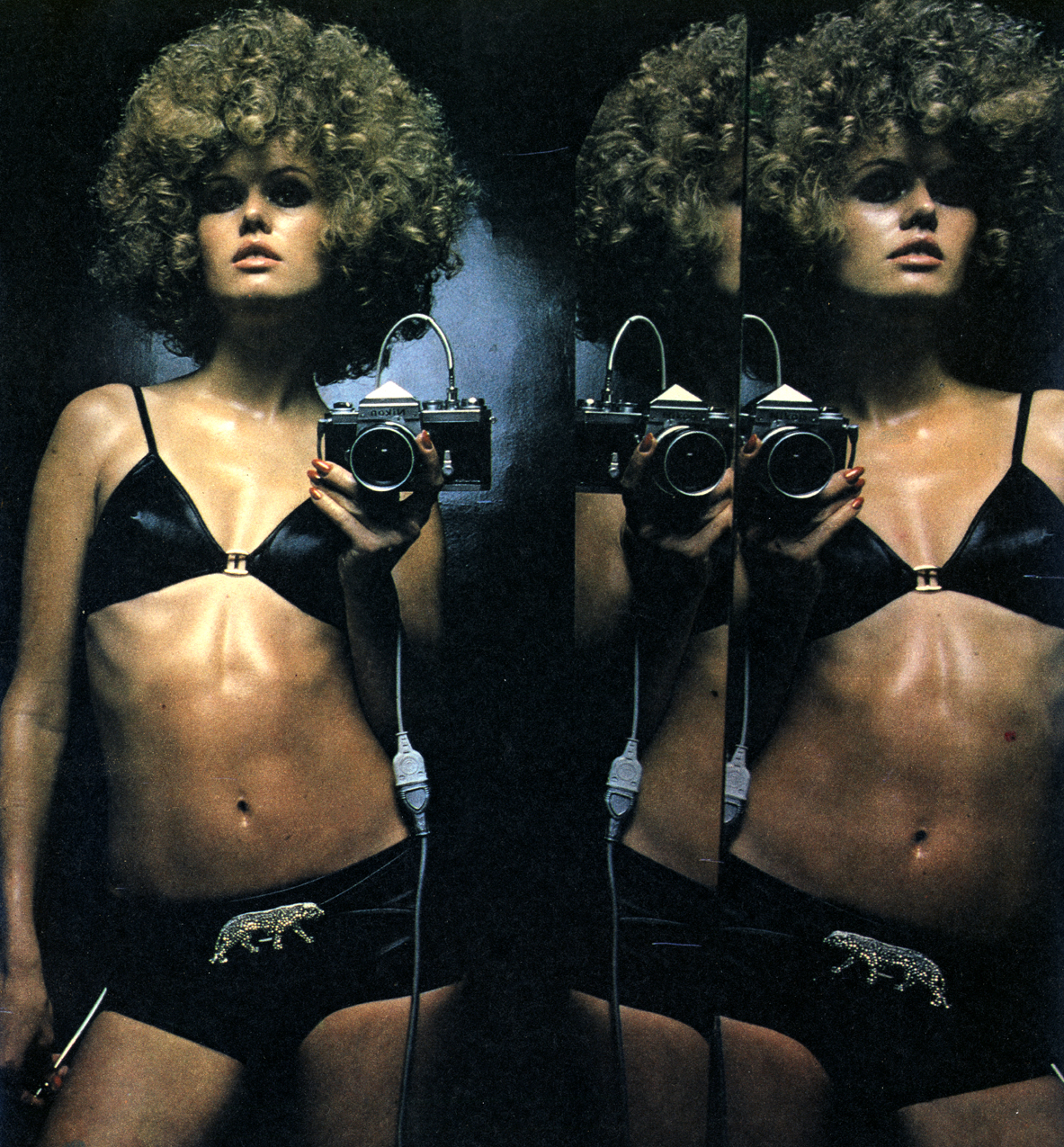
Wet-look cire bikini, also in red, with gilt link on bra top and belt of pants, 59s., from main branches of C & A. Paste tiger brooch from the Paris flea market.
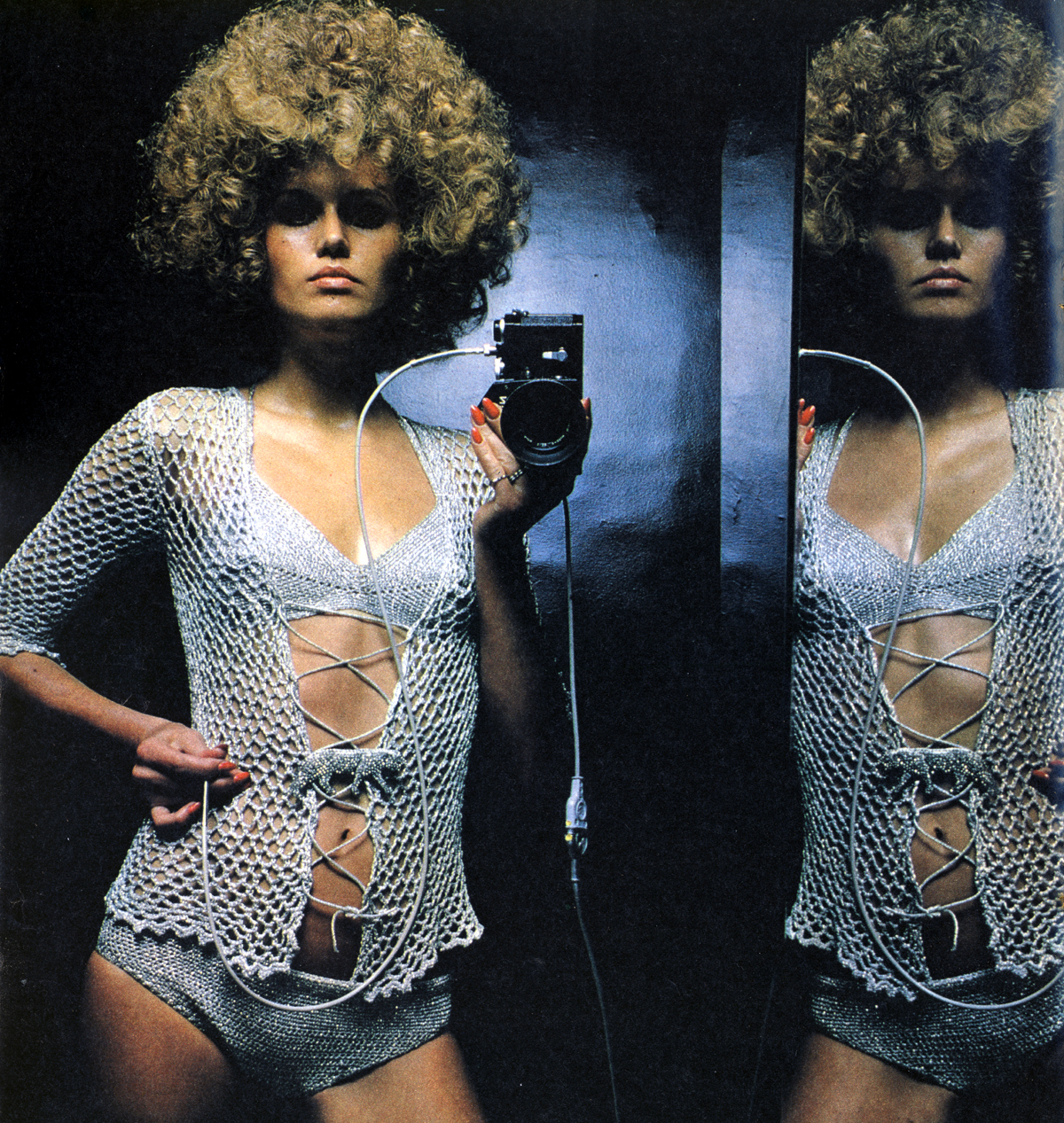
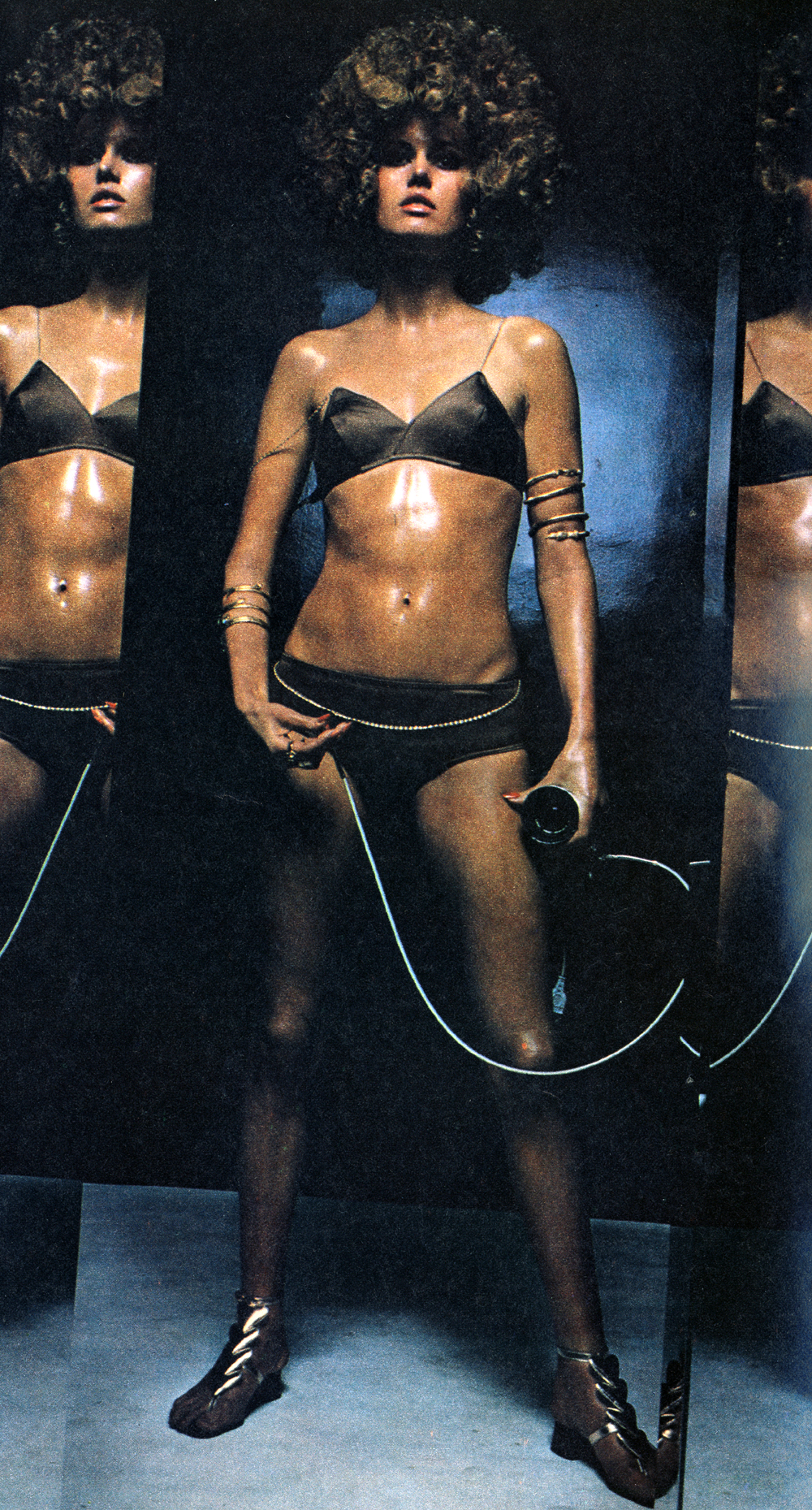
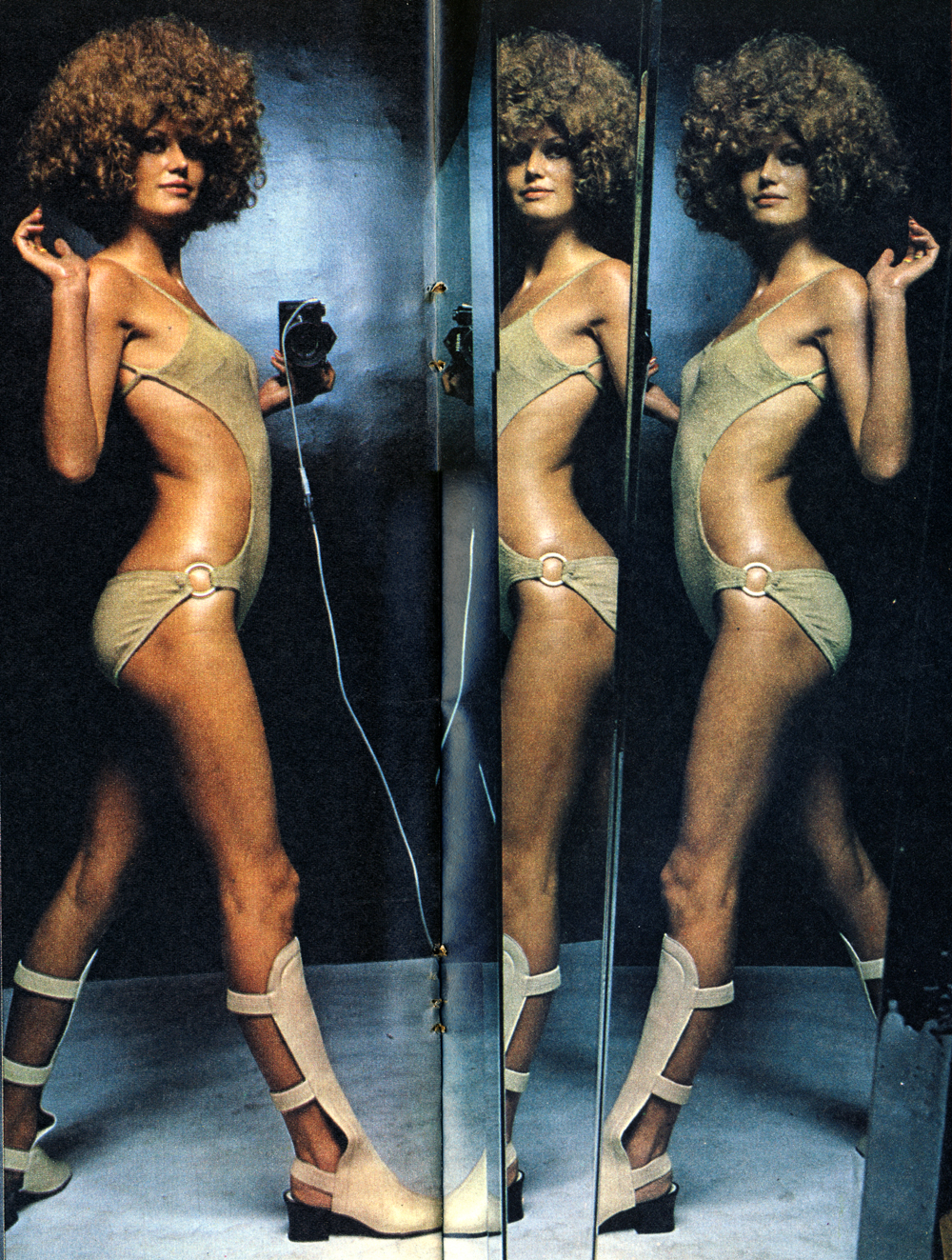
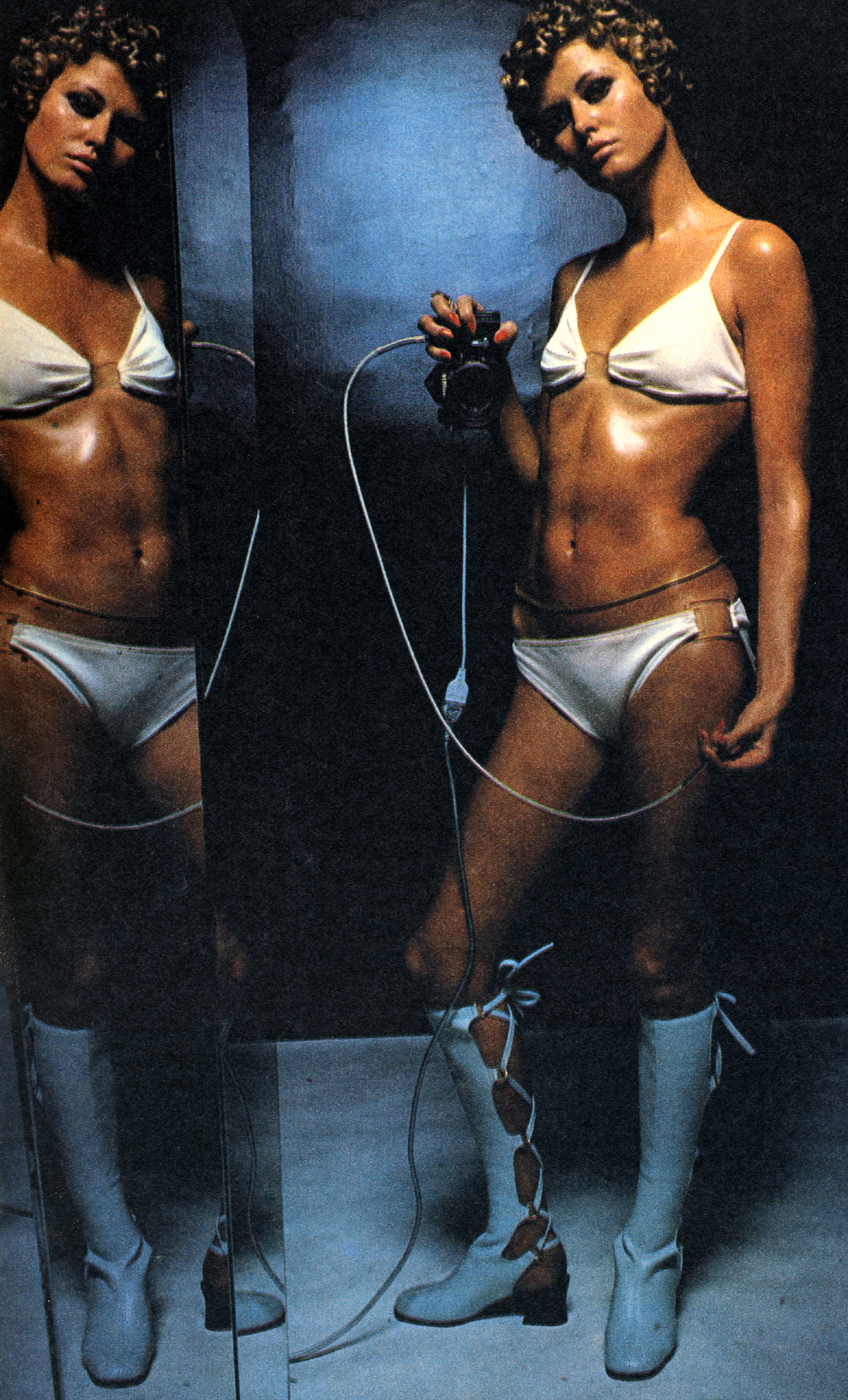
Pause for reflection before you buy your swimsuit for this summer. If you’re going to be in the picture, you must get your exposure right : make it the most your shape will take. Because this is a narcissistic year. More girl, less swimsuit. Bikinis will be back with us again this summer — and they’ll be barer than ever. But the fabrics, not to be outshone, are glistening wet-look cires, metallic golds and silvers. And as adornments for the bare body, there is simple animal jewellery —snake bracelets, stalking-tiger brooches, that sort of simple thing.
Hair by Didier at Jean-Louis David, Paris.
Photographed by Helmut Newton.
Scanned by Miss Peelpants from The Observer Magazine, April 1969.
Silver crochet bikini (also in other colours), £5 15s. 6d.; all cobweb crochet jacket, £5 15s. 6d.; both by Clobber, from Miss Selfridge, Oxford Street, W1 ; Just Looking, Kings Road, SW3; J. T. Parrish, Newcastle; Contrary, Burton Square, Manchester ; Silver cord lacing up jacket, 5d. yd. from John Lewis, Oxford Street, W1. Paste tiger brooch from the Paris flea market.
Tobacco-brown bikini with fine chain straps and belt, by Tiktiner, £10 15s., from the Summer House at Simpsons, Piccadilly, W1. Gold leather sandals fastening above the ankle, f7 17s. 6d. from Elliotts, 76 New Bond Street, W1, and Kings Road and Knightsbridge branches. Snake brace-lets, 42s., frog ring, 12s. 6d.; by Corocraft, from Marrian-McDonnell, 45 South Molton Street, W1, and 80 Sloane Avenue, SW3; Kendal Milne, Manchester.
Barely one-piece swimsuit, cut away at the back like a bikini, in sand-coloured towelling, and in other colours too, by Jersea, £4 15s., from Harrods, Knightsbridge, SW1 ; Lynette Claire, Kensington High Street, W8; Marshall & Snelgrove, 24-30 New Street, Birmingham; Darling & Co., Bath ; Impact, Salisbury. Gladiator boots, by Mary Quant, 89s. 11d., from Lilley & Skinner.
White Nylon Helanca and Antron bikini with clear perspex links, by Ruben Torres for Tweka, 5gn., also in lilac, black, pink, turquoise or gold, from D. H. Evans, Oxford Street, W1 ; Lady Jane, Carnaby Street, W1 ; Birn & Son, Southend-on-Sea ; Rackhams, Birmingham; Reid & Todd, Glasgow. Summery boots laced up the back by Mary Quant, 89s. 11d., from Lilley & Skinner, 360 Oxford Street, W1. Gilt snake chain around waist, by Corocraft, 2gn., from Way In, Knightsbridge, SW1 ; Kendal Milne, Manchester.
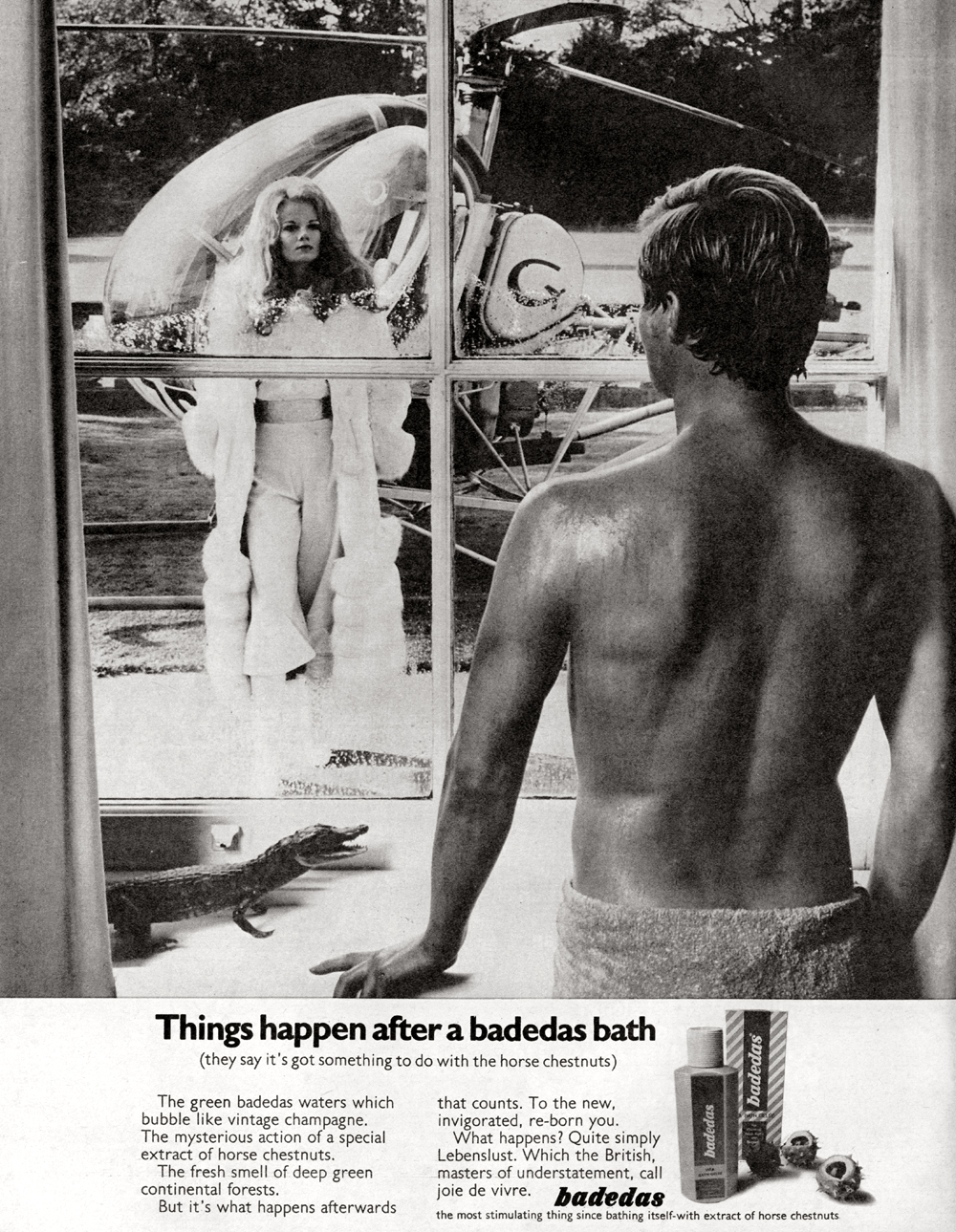
I’ve always been a fan of the Badedas advert madness, so I’m enjoying the equal opportunities vibe in this particular one… Plus, I very much need her entire look.
Scanned by Miss Peelpants from The Observer Magazine, April 1969.
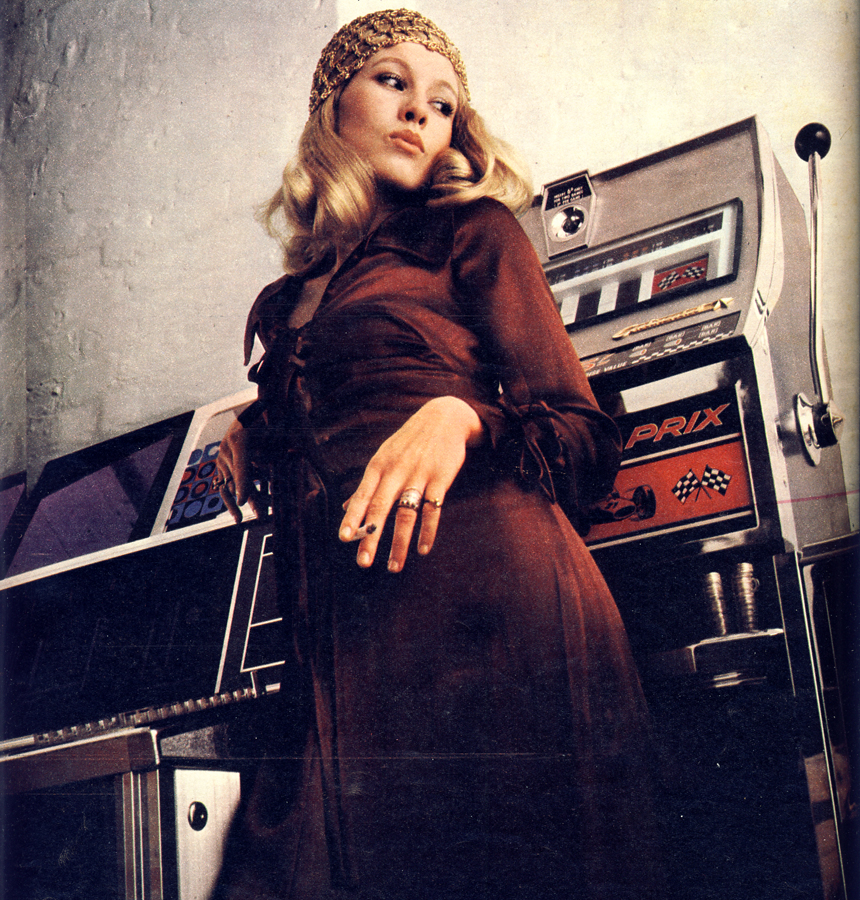
Rich brown satin dress slashed to the waist by Lee Bender for Bus Stop
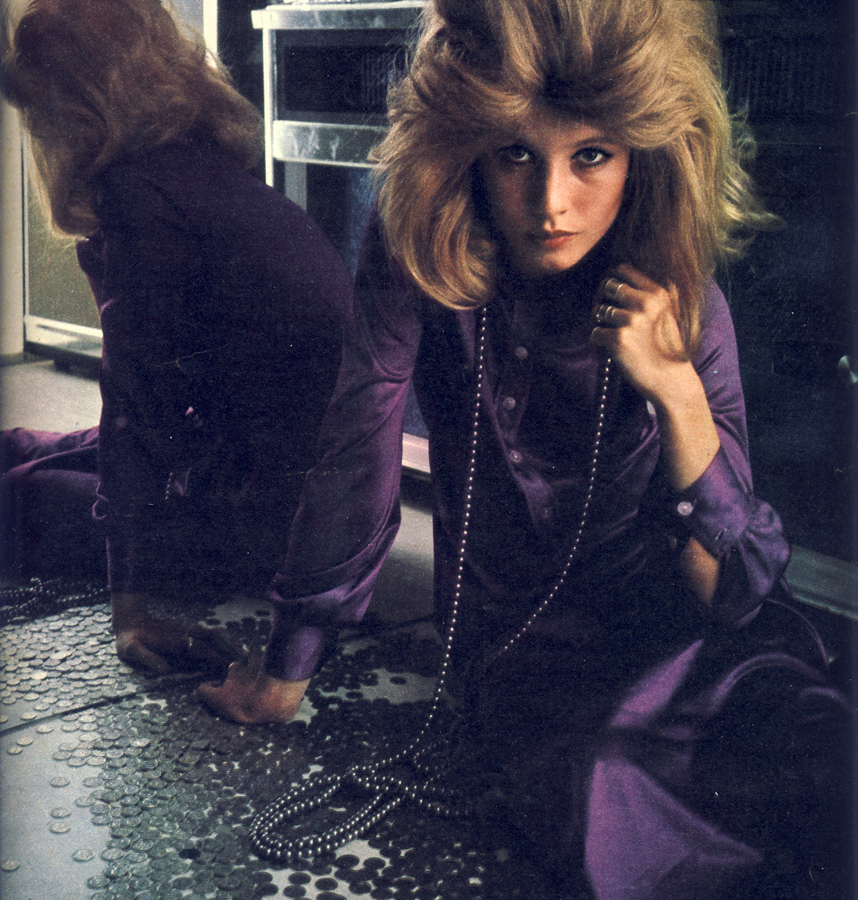
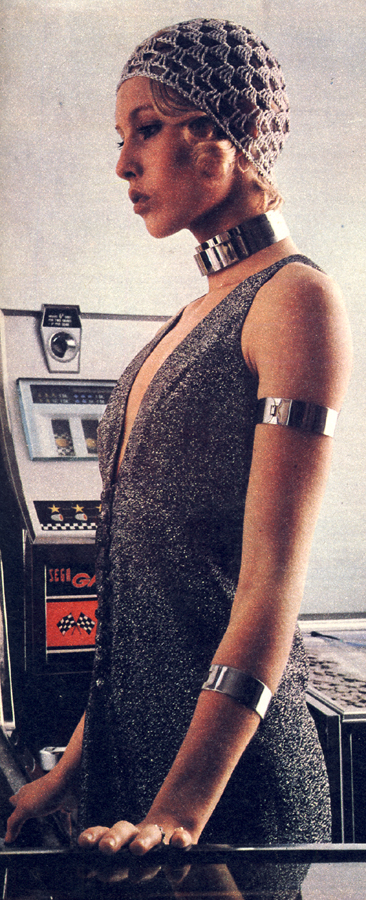
An expensive dress bought to wear just for evenings can spoil your party fun. You’ll worry about spilt wine and cigarette burns while you’re engaged in unarmed combat with the crowd. You don’t want to pay a lot for something you and your friends might tire of after just one round of parties. So find yourself a dress that’s memorable like the four shown on these pages, in shiny satin, cire, Tricel, jersey or sparkling Lurex, and if its life is hort, it might break your heart but not your bank. So buy your glitter cheaply, and spend your sixpences on having fun.
Photographed by Steve Hiett.
Scanned by Miss Peelpants from The Observer Magazine, 7th December 1969
Purple tricel jersey shirtdress shimmying to ankle length by Clobber. Smoky grey pearl rope, 10 feet long, from Paris House.
Lurex jersey dress, memorably low-cut, by Janice Wainwright for Simon Massey. Pale silver crochet hat from Ritva.
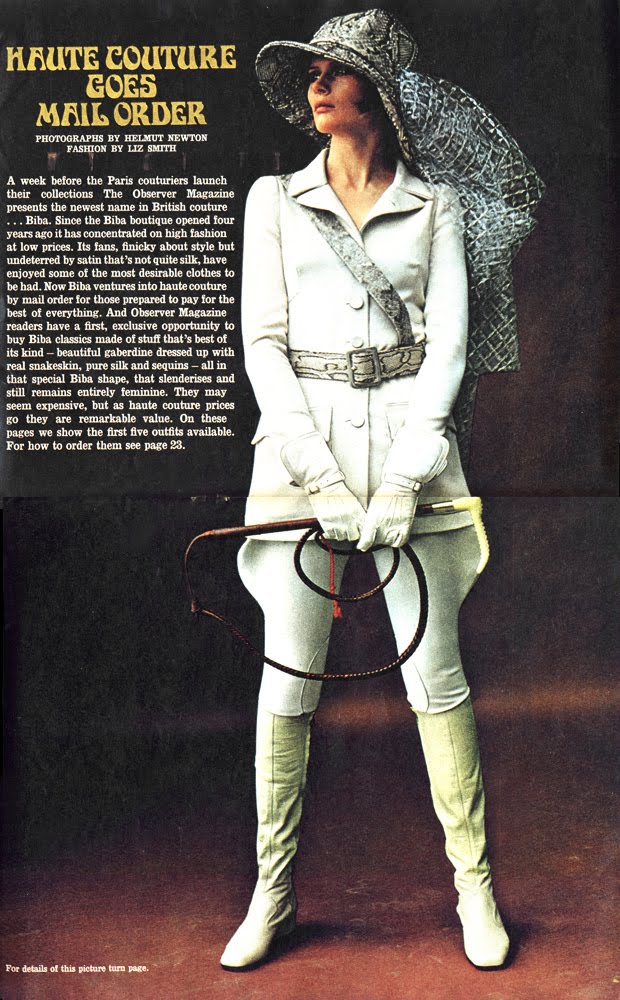
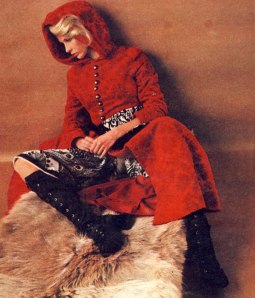
Safari jacket, 80 gn with jodphurs, 75 gn with skirt. Hat (without veil) 22 gn. Sam Browne belt, 20 gn.
It’s a funny old world. One of the main reasons the regular Biba relaunches have failed so dismally, each time since 1975, has been the price issue. Barbara Hulanicki, whether you agree with her or not, has always had a firm belief in affordable, fast fashion. £200 for a middling quality dress, as seen in the most recent attempts to reignite the brand, is simply not acceptable in an age of fast, cheap fashion and quirky high-end designers with real personality and bite. To whom are they appealing? I’m afraid I judge people who buy House of Fraser Biba. I just can’t help myself. So there can be little or no cachet to buying that gear, from either Biba geeks or fashion freaks. And the quality isn’t good enough to be seen alongside the likes of Jaegar and Hobbs for the ‘medium’ level appeal.
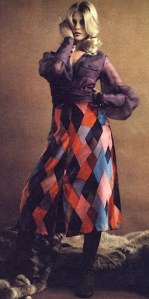
Trousers and cardigan, 60 gn. Blouse 25 gn. Hat, 25 gn.
Biba was cheap, cheerful, young and undeniably cool. Nothing has come close. Primark has the prices, Topshop supposedly has the cool and youth, but none of them have the quality or uniqueness of their oft-copied ancestor. Yes, I said quality. Biba might have had a reputation for badly-made clothes but it simply wasn’t true. It was an assumption, based on the price. And fair enough, it wasn’t couture-quality, but it was no worse than anything being produced by Saint Laurent for his Rive Gauche, Ossie Clark and other British Boutique designers of the era. Certainly a cut above anything being made by many big name designers, these days.
My vintage Bibas are beautifully well-made. They couldn’t have survived forty-odd years otherwise. A seam might have deteriorated here, a small moth-hole appeared there, and perhaps a zip has busted after a particularly raucous night out. But I’ve seen Paris couture from a mere ten years earlier in a far sorrier state than that.
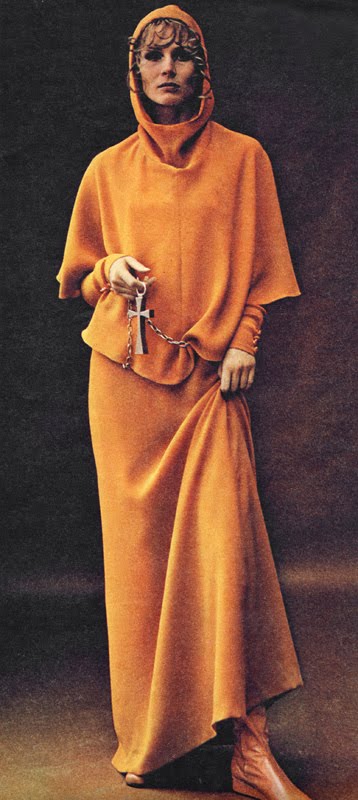
Dress, 100gn. Hat, 10gn.
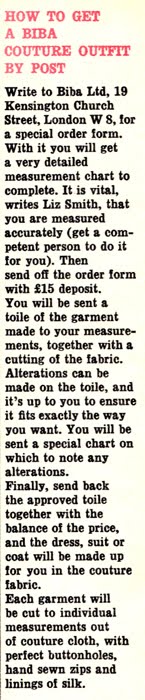
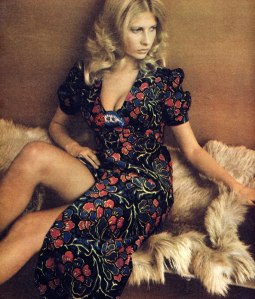
So if shop-floor Bibas are still doing the trick after four decades, can you imagine what a couture Biba must have been like? And if Barbara was baulking at a higher-than-usual price tag for a voluminous jersey dress (which I own) and feared it wouldn’t sell (it sold out), then what on earth was she thinking about offering a coat for 120 guineas?
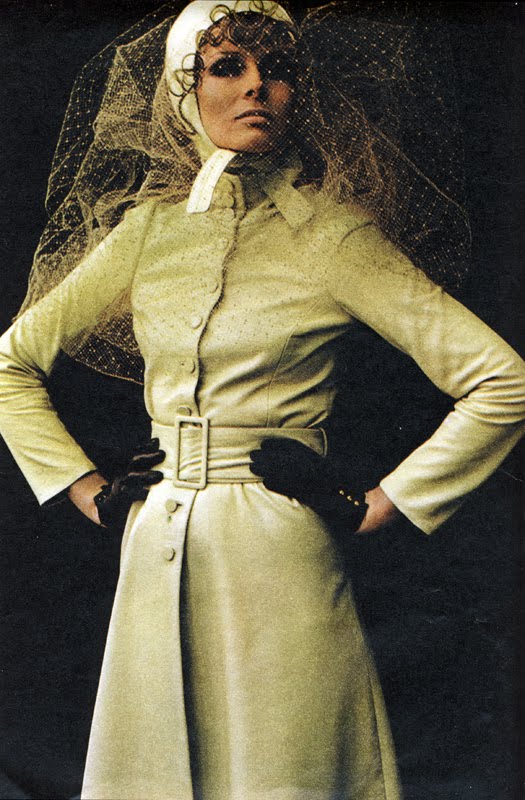
Coat, 120 gn. Helmet (without veil), 14 gn.
I had heard vague things about Biba couture over the years, but I’m not entirely sure I’ve ever seen anything like this article before. I do so wish I could see some Biba couture pieces now. The original owners must have remembered they were such, so I would hope that the provenance would be forever attached to the piece as it passed from careful owner to careful owner.
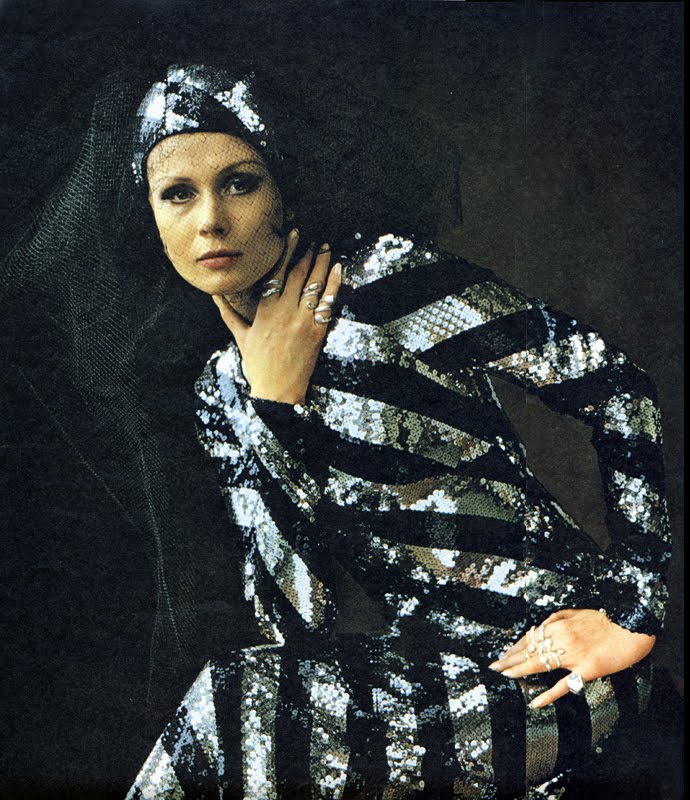
Dress, 110 gn.
Dreamy. And certainly not hindered by some incredible photos by the legendary Helmut Newton and footwear by The Chelsea Cobbler.
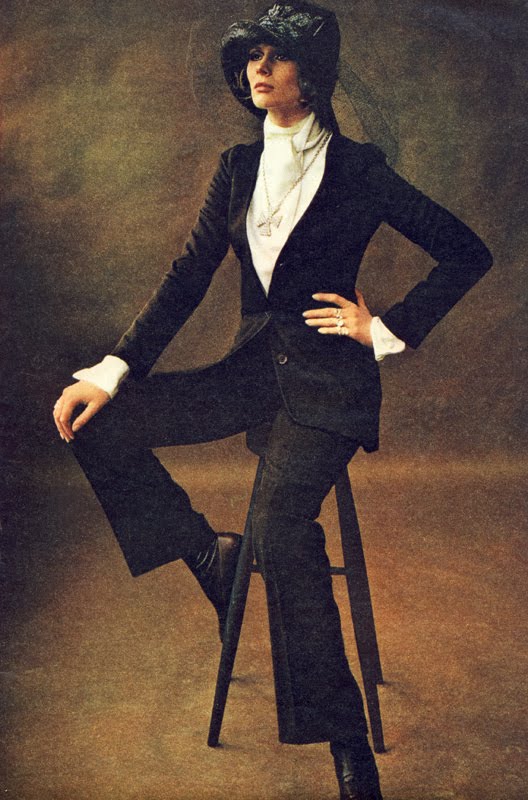
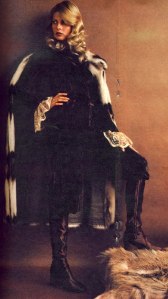
Coat by Elgee. Gaucho pants by Thea Porter. Boots by Sacha.
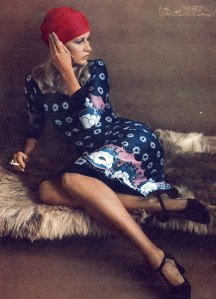
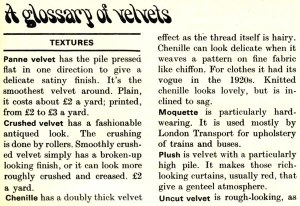
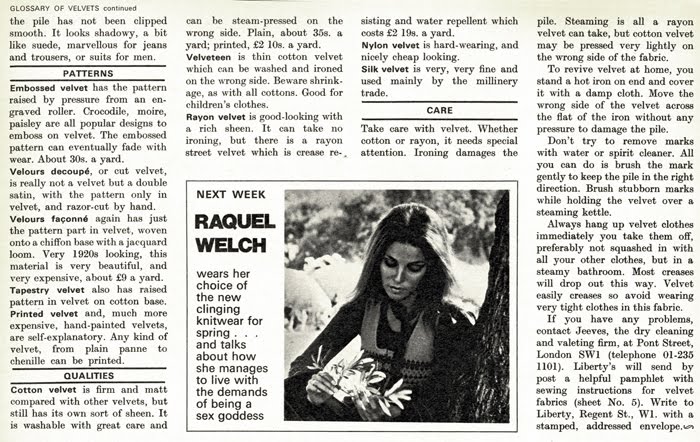
I cry at everything. Songs on the radio. Films. Commercials. Nice things people say, do and write. My new niece. I’m the soppiest softie you could ever meet. And despite looking longingly at skimpier clothes and hoping for an improvement in the weather, I still love wrapping myself up in the softest velvets. I’m a complete sucker for textures which match my mood, and velvet is definitely protecting me from the horrors of the outside world right now. I adore this velvet-obsessed spread (entitled Velvet: The soft touch) from The Observer Magazine from December 1970. Photos by Steve Hiett.
I’ve got an incredible velvet Antony Price dress to be photographed and listed in the next week or so (along with lots of other goodies) but until then, I’ve still got an amazing velvet Forbidden Fruit dress and a Lee Bender for Bus Stop for sale in case you need a fix…




 Liz Eggleston
