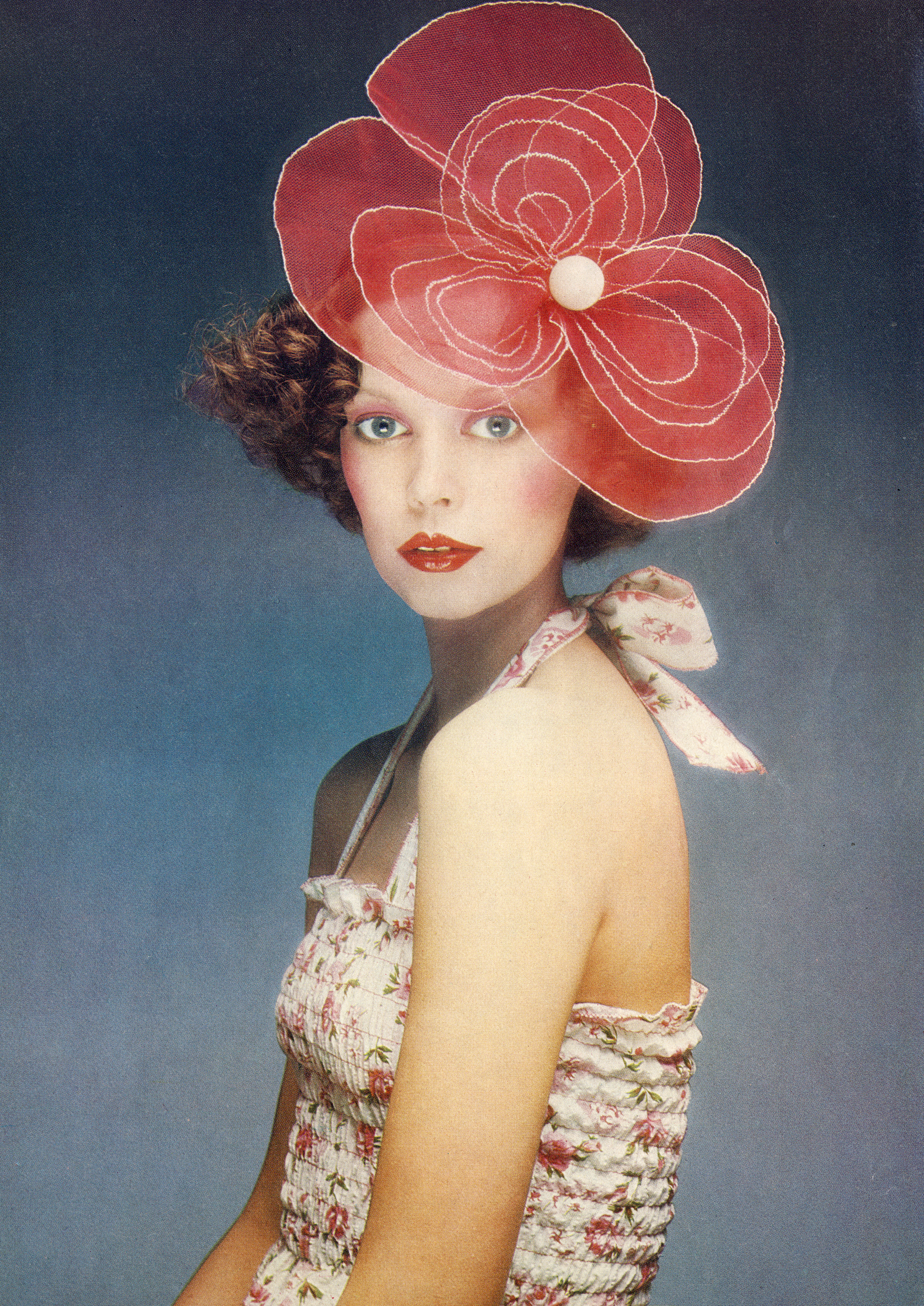
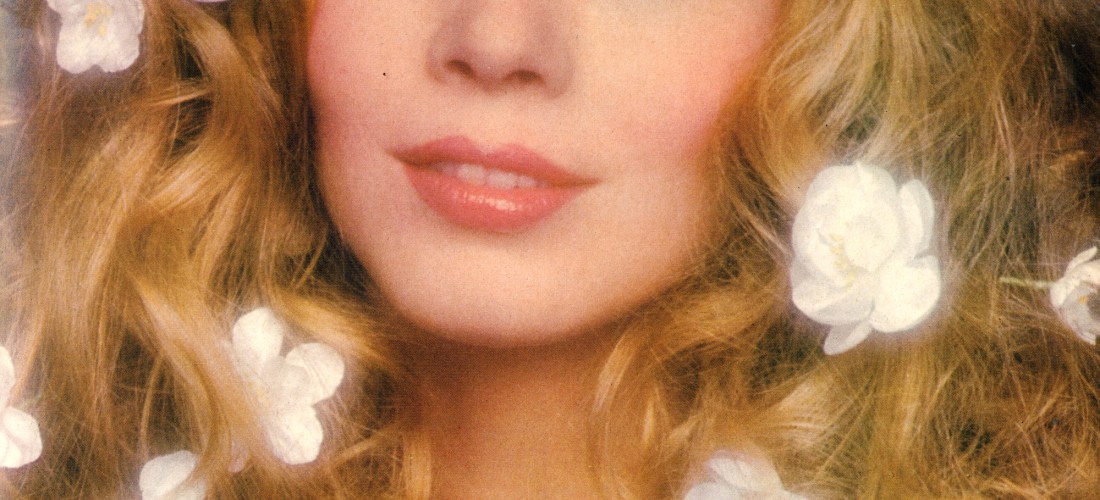
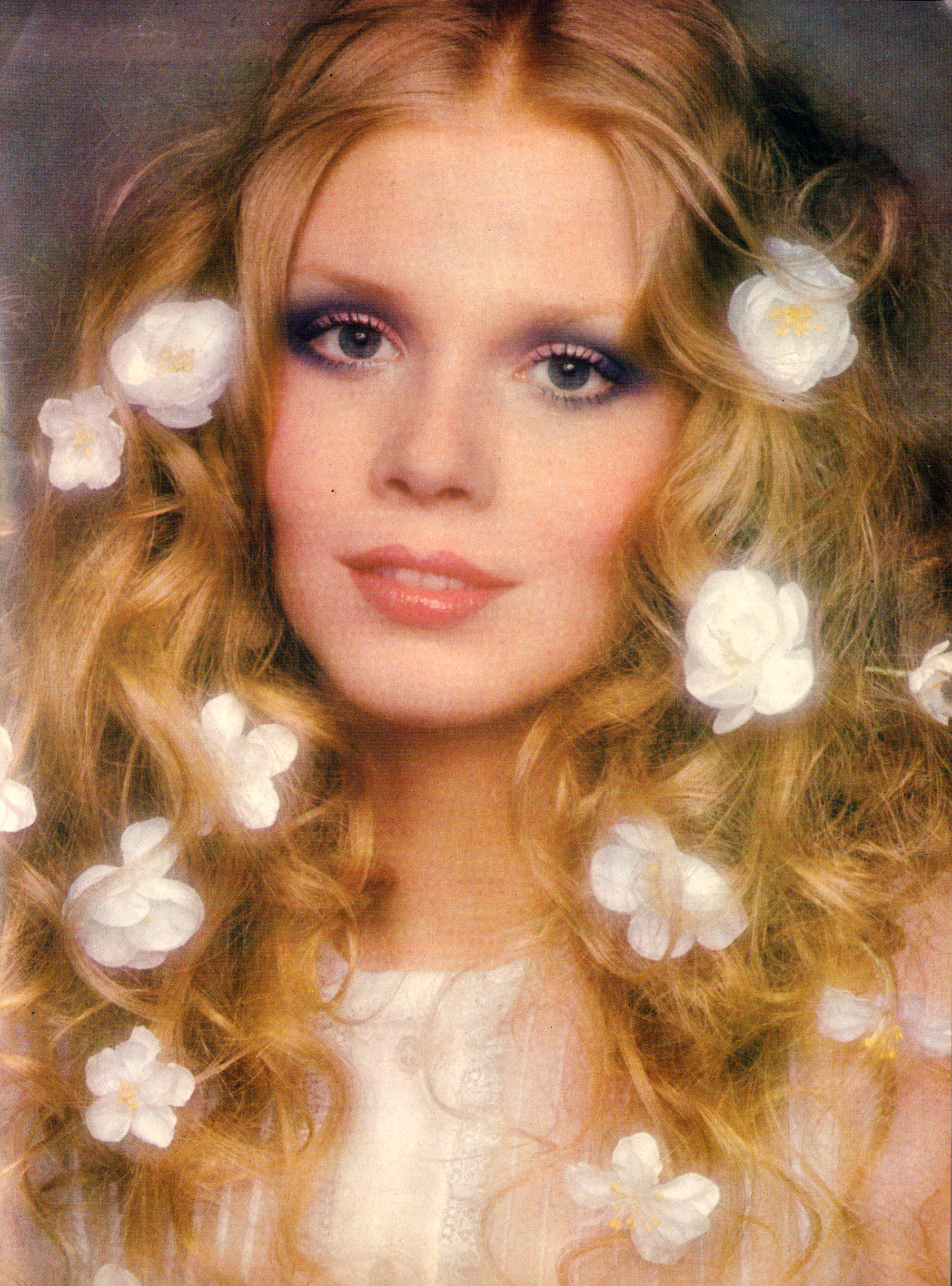
Take a flower for your hair, gather up a halter top, now dust on the glamour…
First flower, airy petals of summer pink net, outlined in white stitching, round white button for stamens. By Pablo and Delia, to order at Browns. Ruched halter top, flower printed seersucker, also by Pablo and Delia.
Make-up by Barbara Daly. Hair by John at Leonard. Model is Mouche.
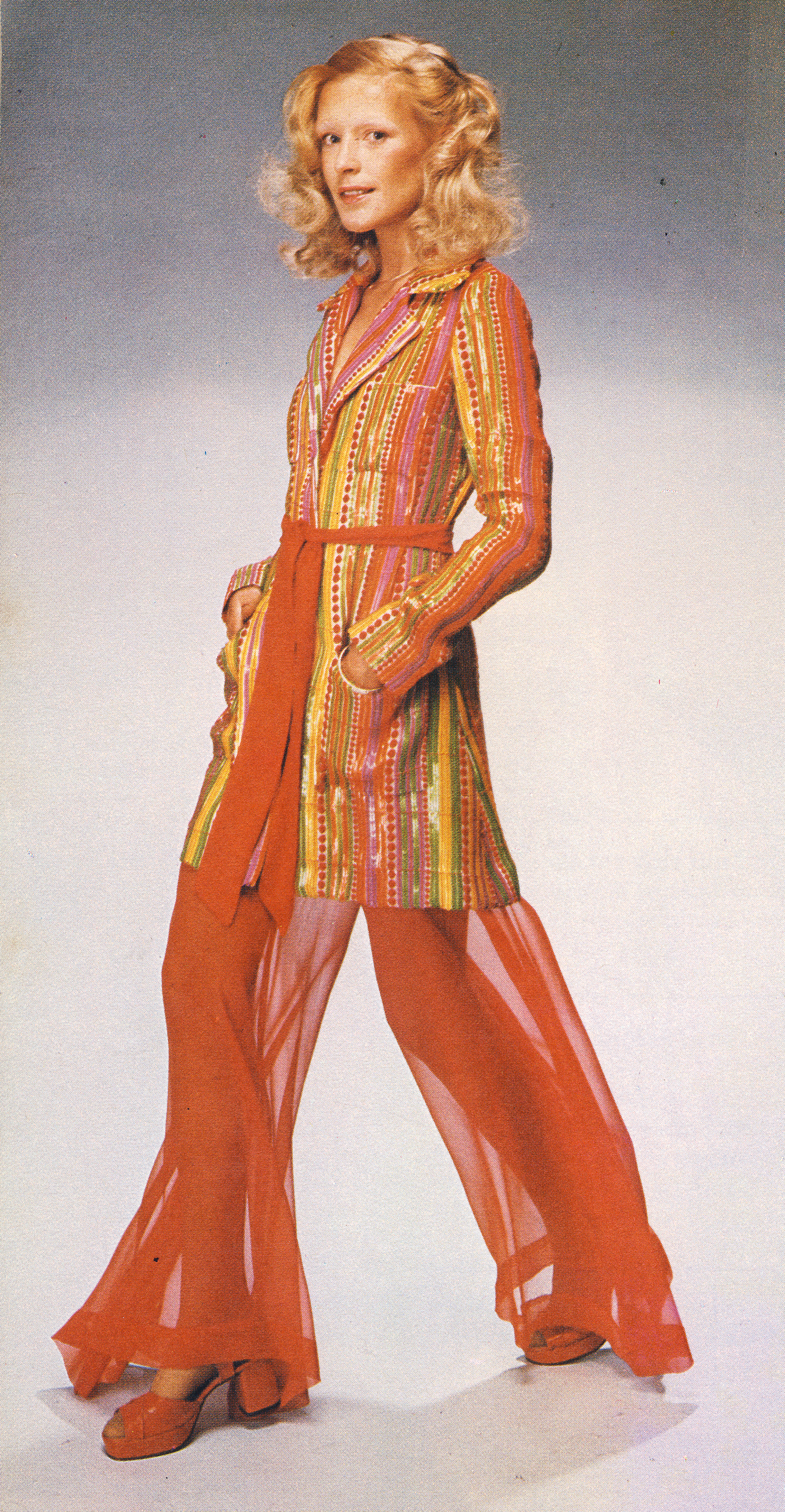
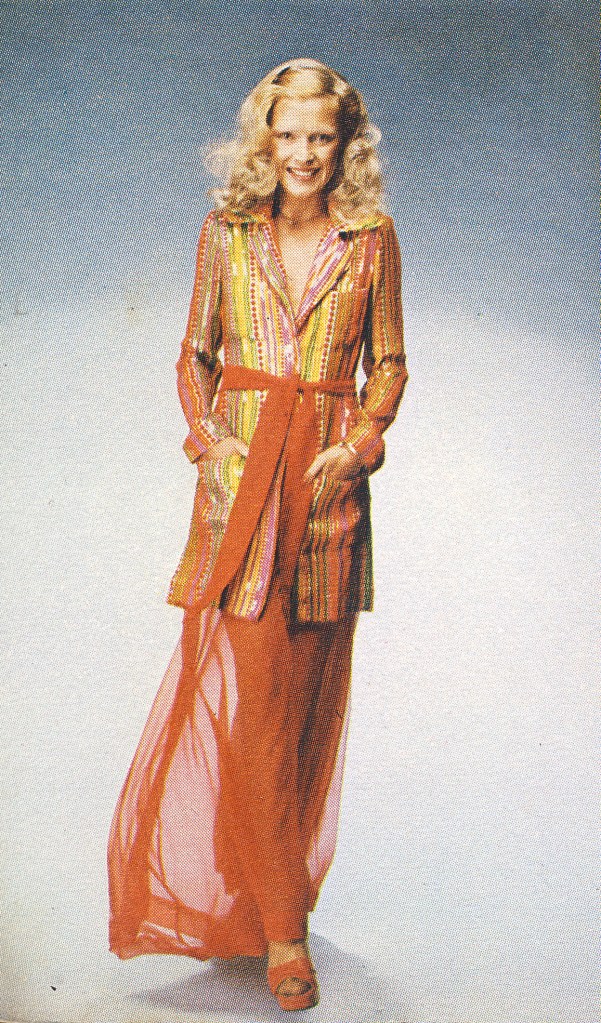
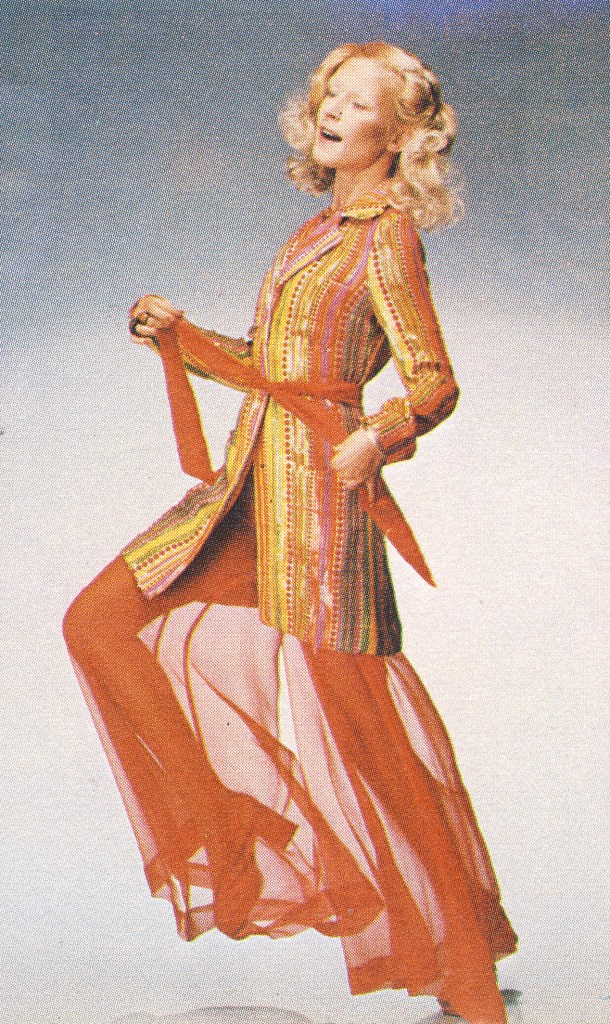
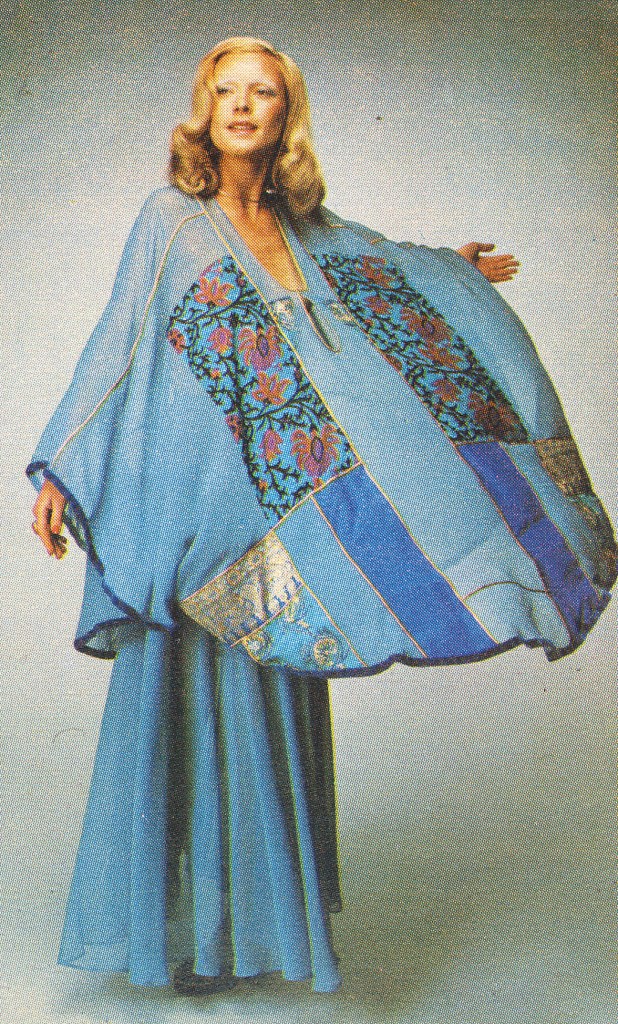
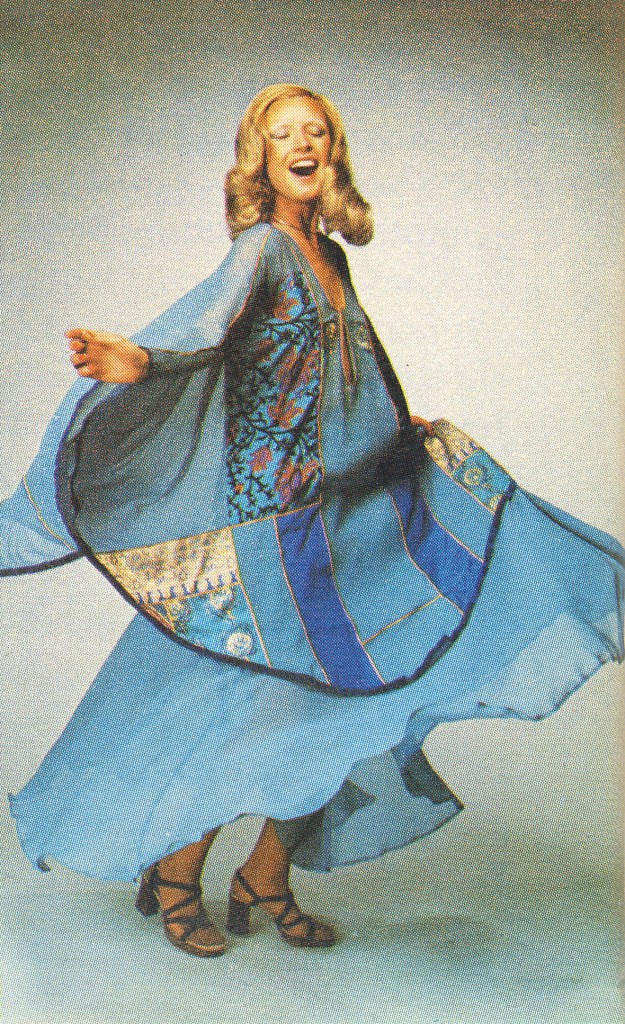
Thea Porter describes the women she designs for as “thirtyish, tall and slim,” but she laughingly adds that “I design clothes that I know will suit me too, so they do just as well for short, fat people.” Whatever their shape, Thea Porter’s customers live a high-society, jet-set life. Their clothes must be dramatic, brilliant and packable, and Thea Porter designs are exactly what they need; the clothes are among the most coveted in the world. How did Thea break into the rarefied atmosphere of high-fashion design?
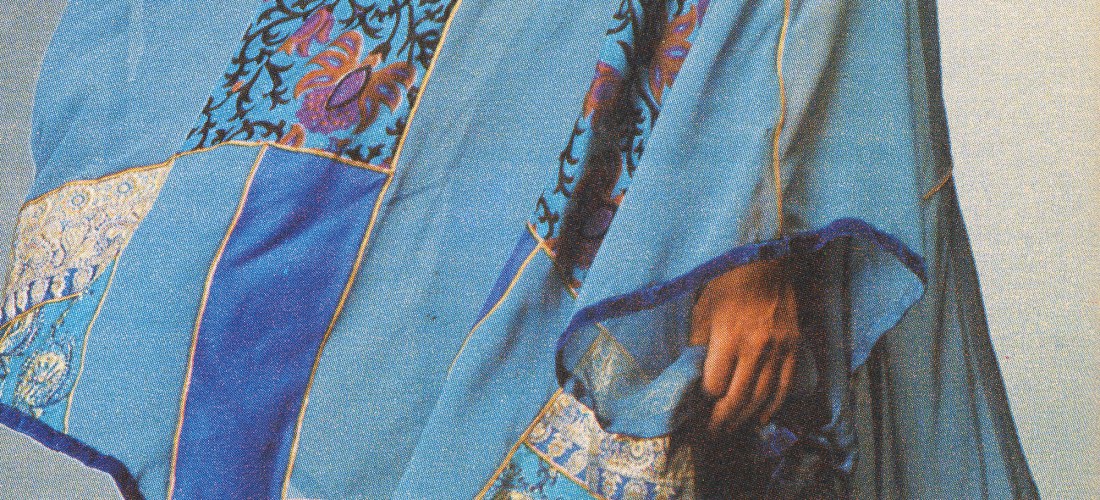
In 1965, Thea and a couple of friends launched an interior decorating service. “we started the fashion for enormous cushions, and we were just beginning to make a name for ourselves,”‘ Thea reminisced, “when I happened to bring back an antique caftan from overseas. I wanted to use the material in a decorat-ing scheme. Suddenly caftans came in to vogue but the only ones you could get from abroad were either minute or voluminous. So, with the help of a dressmaker, I started making caftans from lovely old fabrics. Then a photo-graph of Fenella Fielding wearing one of my caftans appeared in the Daily Express. More people began wanting them and eventually I decided to bring out a collection which I showed in a Kensington restaurant. I was still mainly a decorator but from then on things started snowballing. I had designed some jackets with masses and masses of braid which the Beatles bought, for instance. At the end of 1967, I took the plunge and started the shop in Greek Street.”
Without any formal training, Thea Porter became a dress designer. She knows nothing of cutting and sewing, and recalls her only attempt at dress-making as a child when she succeeded in cutting through her own skirt! An assistant takes all her designs to the pattern and cutting stage. The import-ant thing, to Thea, is the designing. She describes her philosophy quite simply. Using her hands to emphasise, she explains “you know how a line of poetry sounds right, as if it has been waiting for someone to write it down. That’s how it must be with a dress. It must be a complete entity and nothing must jar —unless clashing colours are an intrinsic part of the design. The shape, colour and fabric should be in perfect harmony. I put together every detail of the dress myself — down to the last button.”
Thea finds that she designs best away from her Soho shop, and works in spurts according to her mood, but she finds it difficult to describe the sources of her inspiration. “My two absolute standards are that I must like the dress myself, and every season I try to bring out five good shape’s. The collections are different every time. It can take me three weeks to do a collection — or three months. Some-times I get my inspiration from a fabric. Sometimes I do a sketch and then choose a fabric. I often buy fabrics without having the least idea of what I shall do with them.”
“I don’t use a method that you could describe”, she continues thoughtfully. “There are so many influences. For example I got the idea for a nautical theme when I was leafing through a book on Victorian painters. To be a designer I think you need a broad culture — certainly my knowledge of the East has shaped my creative thinking. A conventional art course would have been a waste of time for me.”
Thea Porter specialises in glamorous evening clothes and if there is a theme running through her creations, it is that the materials are almost invariably soft, flimsy and graceful and chosen to reveal the contours of the body. She buys them from all over the world: from India, Italy, Switzerland, France and England. She designs some fabrics herself. “I do a sketch, give it to a textile designer to translate, we work out the colours and we have it made up.” Expensive? “Very,” she agrees.
The tiny Thea Porter shop in Greek Street, London, is full of the exotic feeling she translates so expertly into her clothes. Amid the display of dia-phanous dresses, rolls of richly coloured fabrics are heaped on shelves and piled several deep against the wall in glorious disarray. From a battered cardboard box, a profusion of braids and ribbons tumble like wild flowers. A litter of photos, sketches and other paraphernalia are pinned around her desk. The casual atmosphere is typical of Thea Porter’s spontaneous approach to designing. There is, however, nothing at all naive about her ideas and plans for the future.
Until recently, Thea, was thinking on two planes, Britain and America. “The main difference between the two markets is that American women have such perfect figures and they like waisted clothes with plunging necklines.” Now she is working in yet another dimension — ready-to-wear. Not content with this, she is already planning new outlets. “I would like to do wedding clothes, children’s wear and lingerie. But there would always have to be lots of evening dresses. A woman feels different in the evening, more relaxed and prettier.”
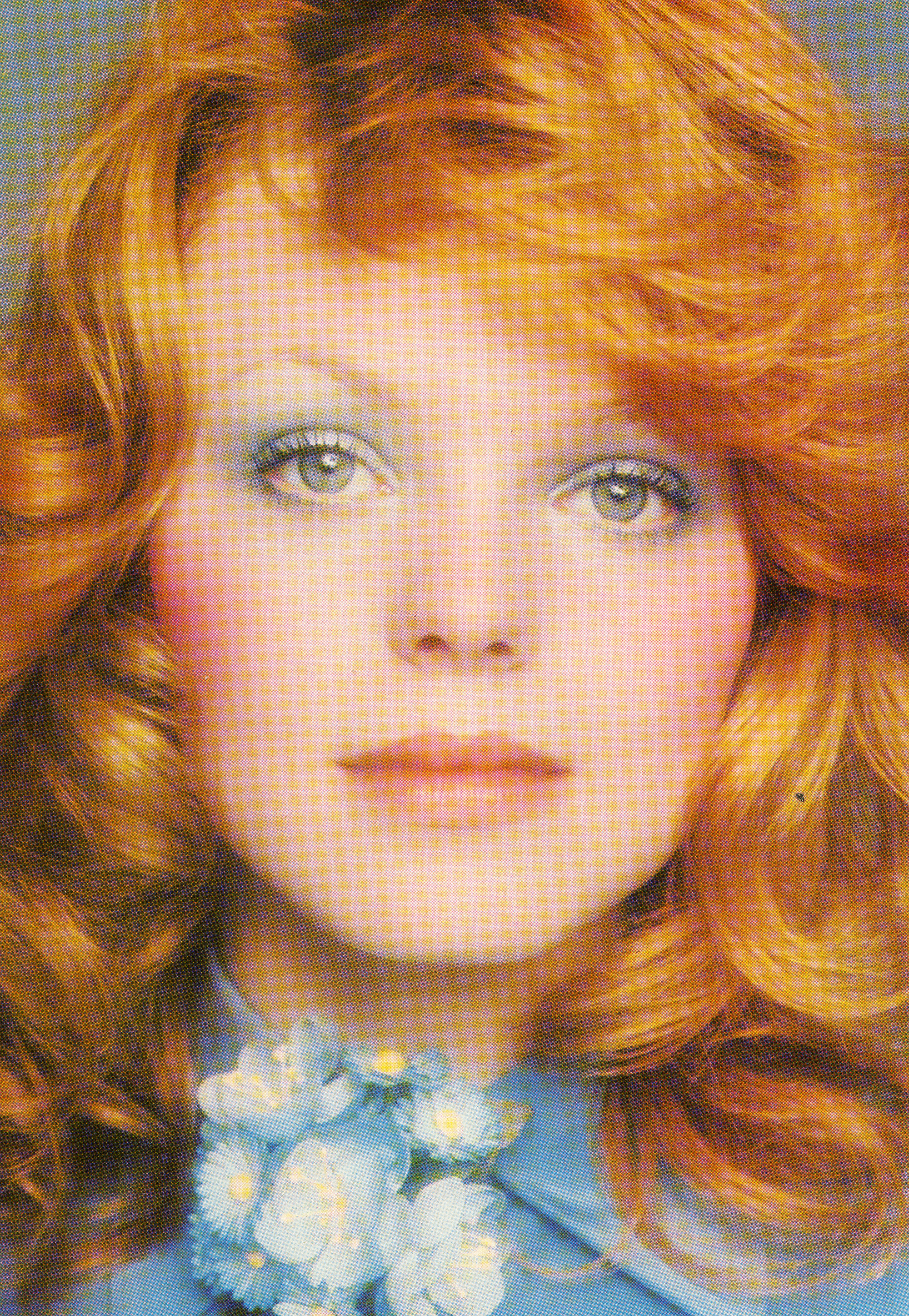
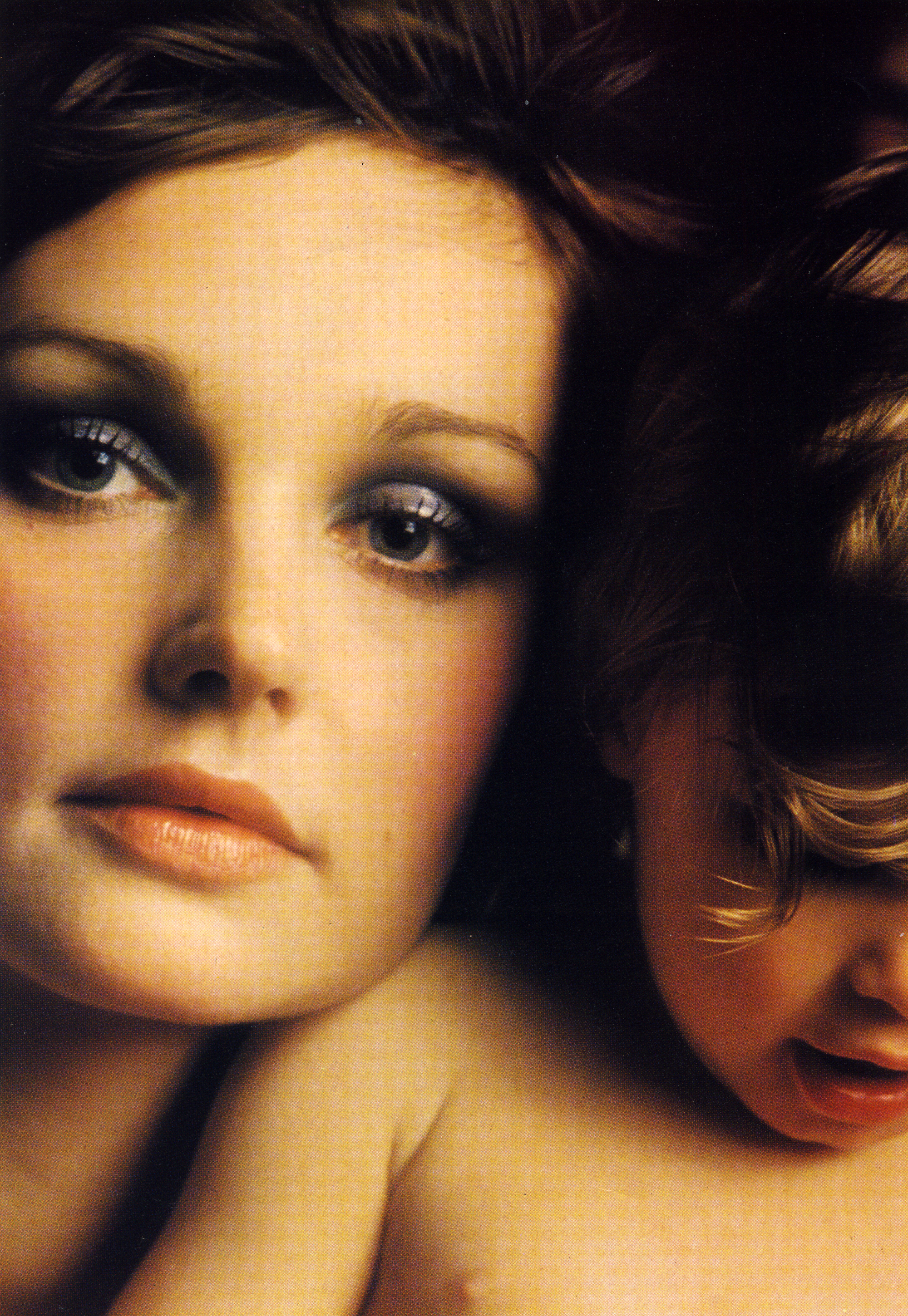
Monday’s Child is Fair of Face. Blue flowers from Novelty Imports. Blue silk blouse by Sujon.
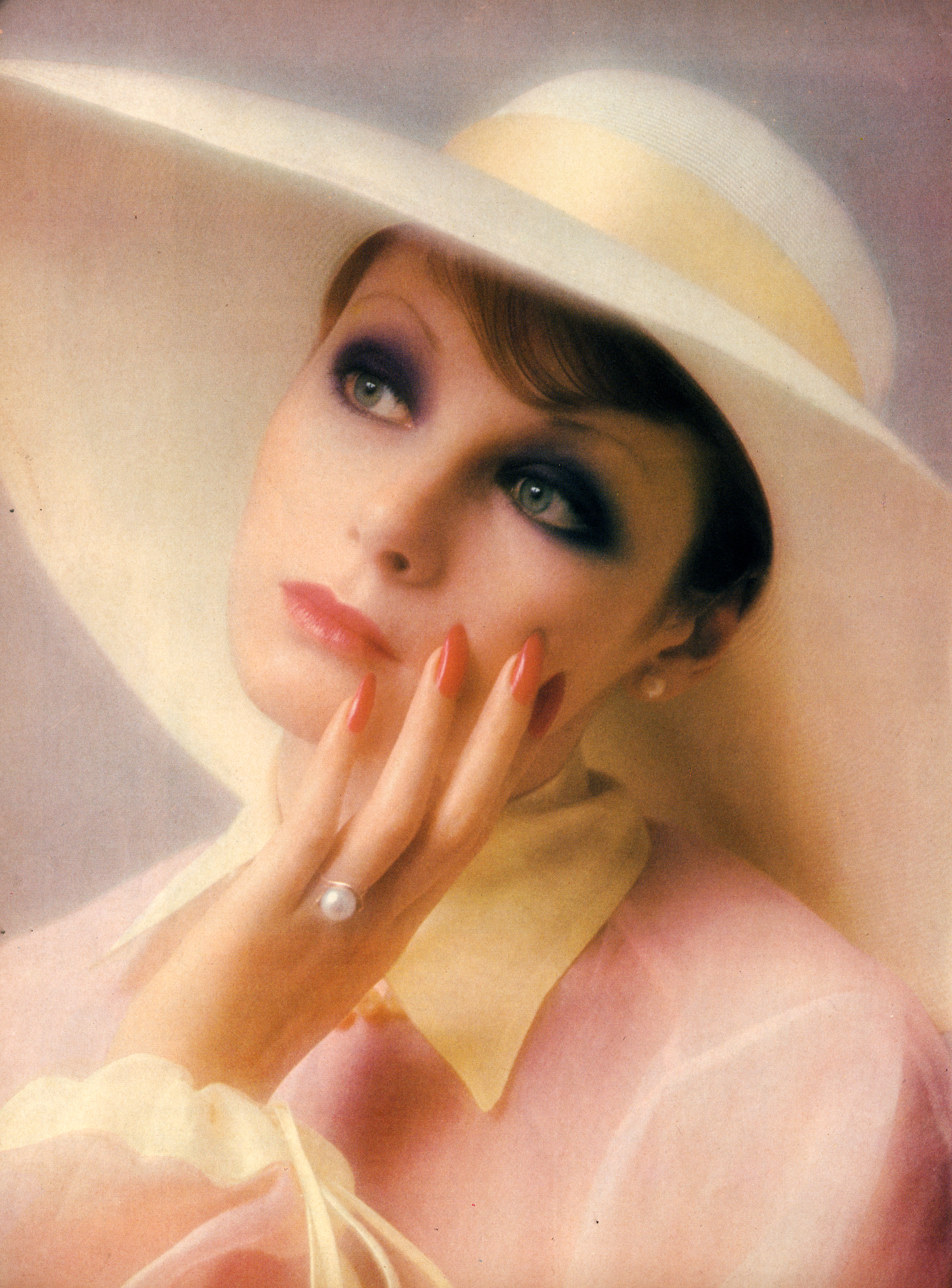
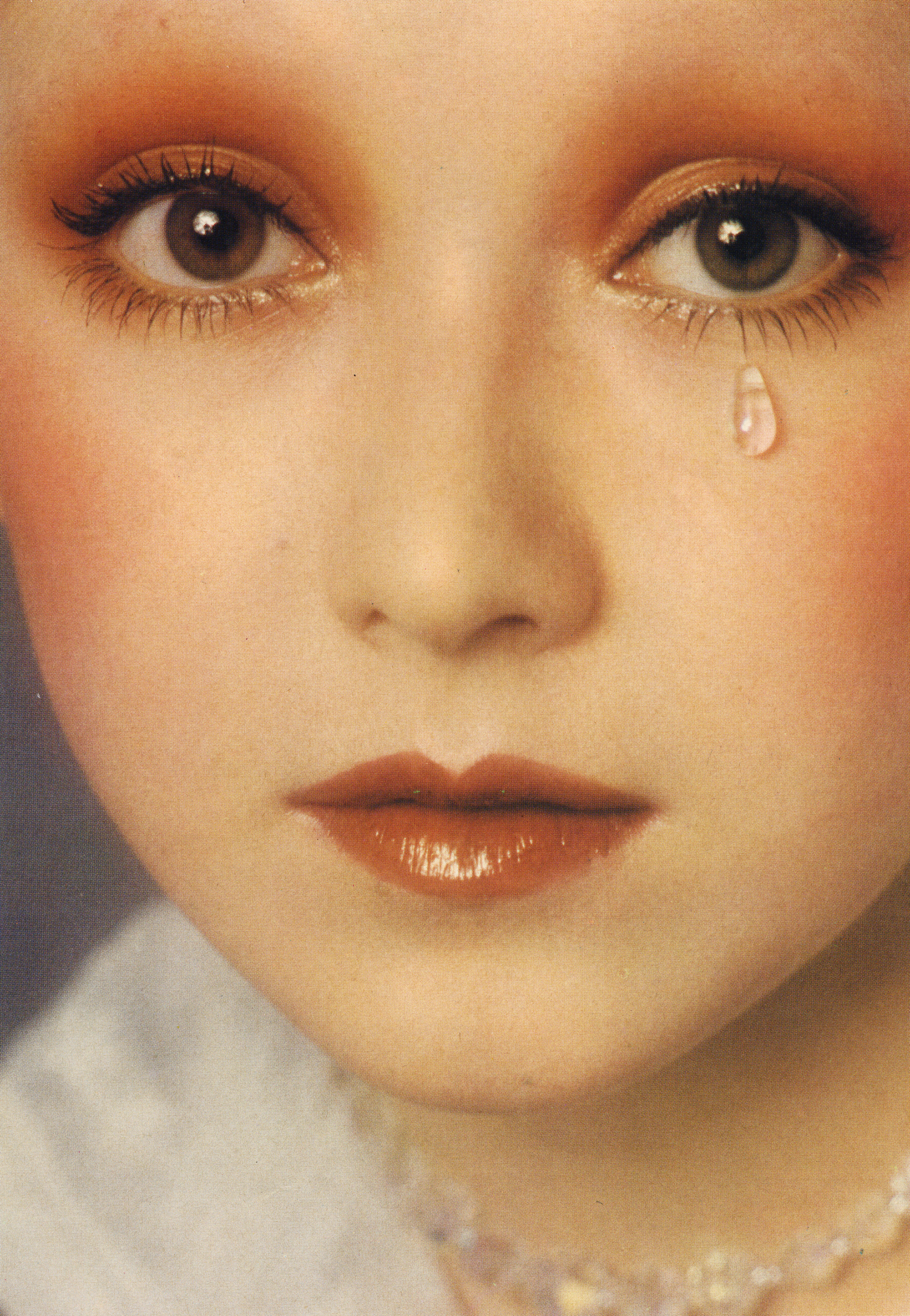
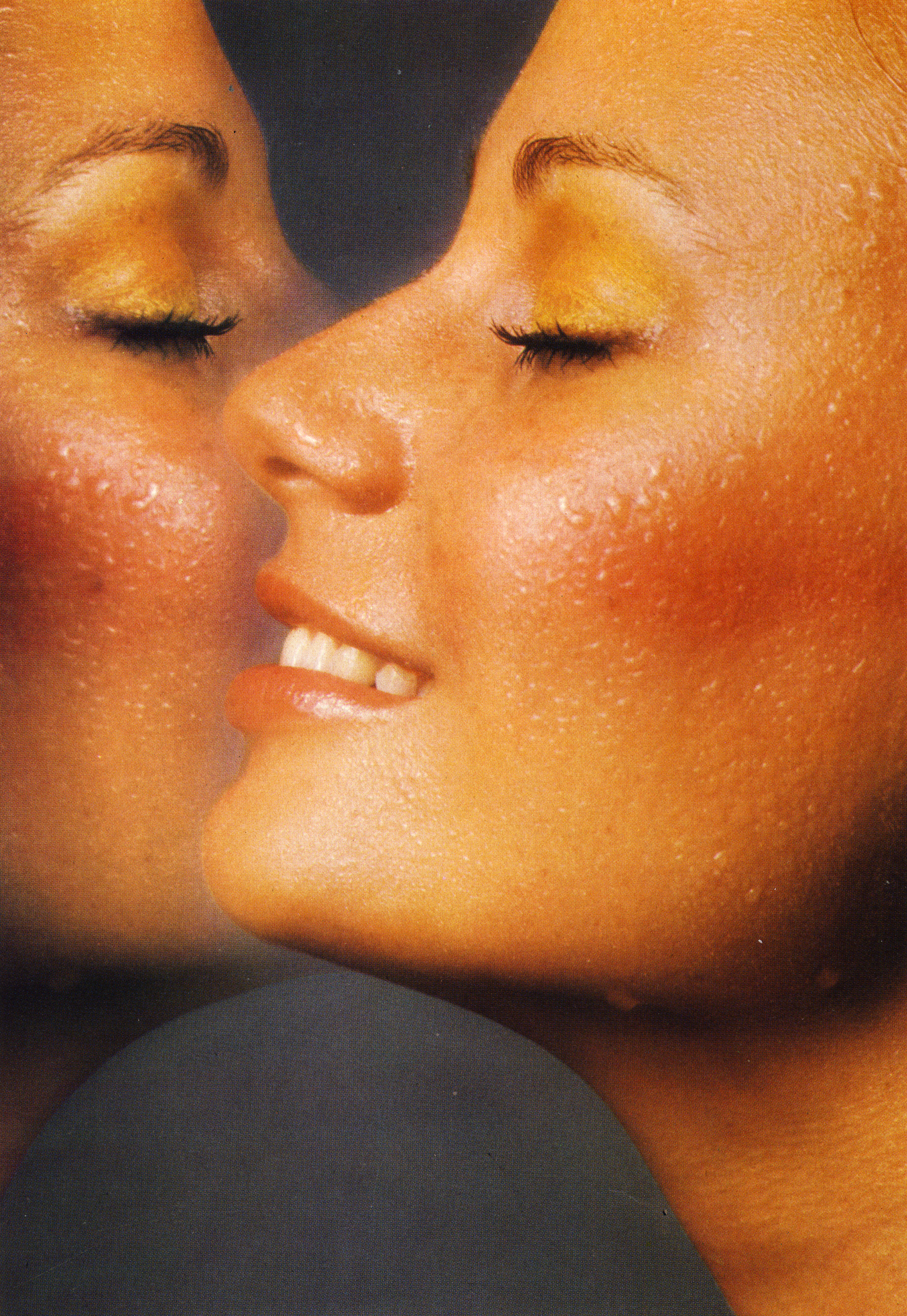
A stunningly styled and photographed advertisement feature for Boots No7 cosmetics, based around the ‘Monday’s Child’ nursery rhyme (although they’ve muddled up Friday and Saturday as far as I remember it). As a Tuesday’s child, I’m pretty happy with my lot although never sure how graceful I am. Which one are you? I particularly love Vivienne Lynn’s mournful Wednesday’s Child.
Photographed by Barry Lategan.
Scanned from Vogue, June 1972.
Tuesday’s Child is Full of Grace. Pink voile blouse by Plainclothes. Hat by Herbert Johnson. Wednesday’s Child is Full of Woe. Thursday’s Child has Far to Go Friday’s Child works hard for her living. Saturday’s Child is Loving and Giving.And the child that is born on the Sabbath Day is Bonny and Blithe, Good and Gay. White smock top by Gina Fratini.
After the explosion of hot pants and vulgar satin knickers, shorts are still with us, but they’ve emerged neater and brighter – put together with layered vests and skimpy sweaters, legs that go on forever and bright vampy shoes or clogs. It’s the only way to be cool this summer.
Photographed by Richard Selby.
Scanned from Honey, June 1971
Far left: T-shirt by Maudie Moon. Clingy crepe shorts by Simon Massey. Thigh high socks by Mr Freedom. Left: Banlon bomber jacket and plain fluted shorts by Jeff Banks. Tights by Quant. Right: Banlon vest, shorts and shirt all by John Marks. Tights by Quant. Shoes by Ravel. Far right: Banlon vest with plain black shorts by John Marks. Banlon shirt by Jeff Banks. Tights by Quant. Shoes by Elliotts.Far left: Striped cotton knit sweater and plain shorts by Zeekit by Crochetta. Stripy socks by Echo. Lavender suede shoes by Dolcis. Left: Halter neck knit sweater and shorts by Zeekit by Crochetta. Socks by Quant. Clogs by Russell & Bromley. Right: Stripy ribbed vest by Shar-Cleod. Scarlet jersey shorts by Stirling Cooper. Socks by Sunarama. Snakeskin wedge shoes by Terry de Havilland. Far right: Skinny sweater and matching mini vest by Syndica. Linen shorts by Friends. Socks by Quant. Red clogs by Wardle and Williams.Left to right: Striped skinny rib sweater by Janine at Harold Ingram. Yellow shorts by Copper Coin. Vest and red pepper shorts with green patch pockets both by Peter London. Rainbow acrylic vest by Peter London. Yellow jersey shorts by Stirling Cooper. Woollen football vest by Van der Fransen. Cherry red shirt by Littlewoods. Red Orlon shorts by Syndica.
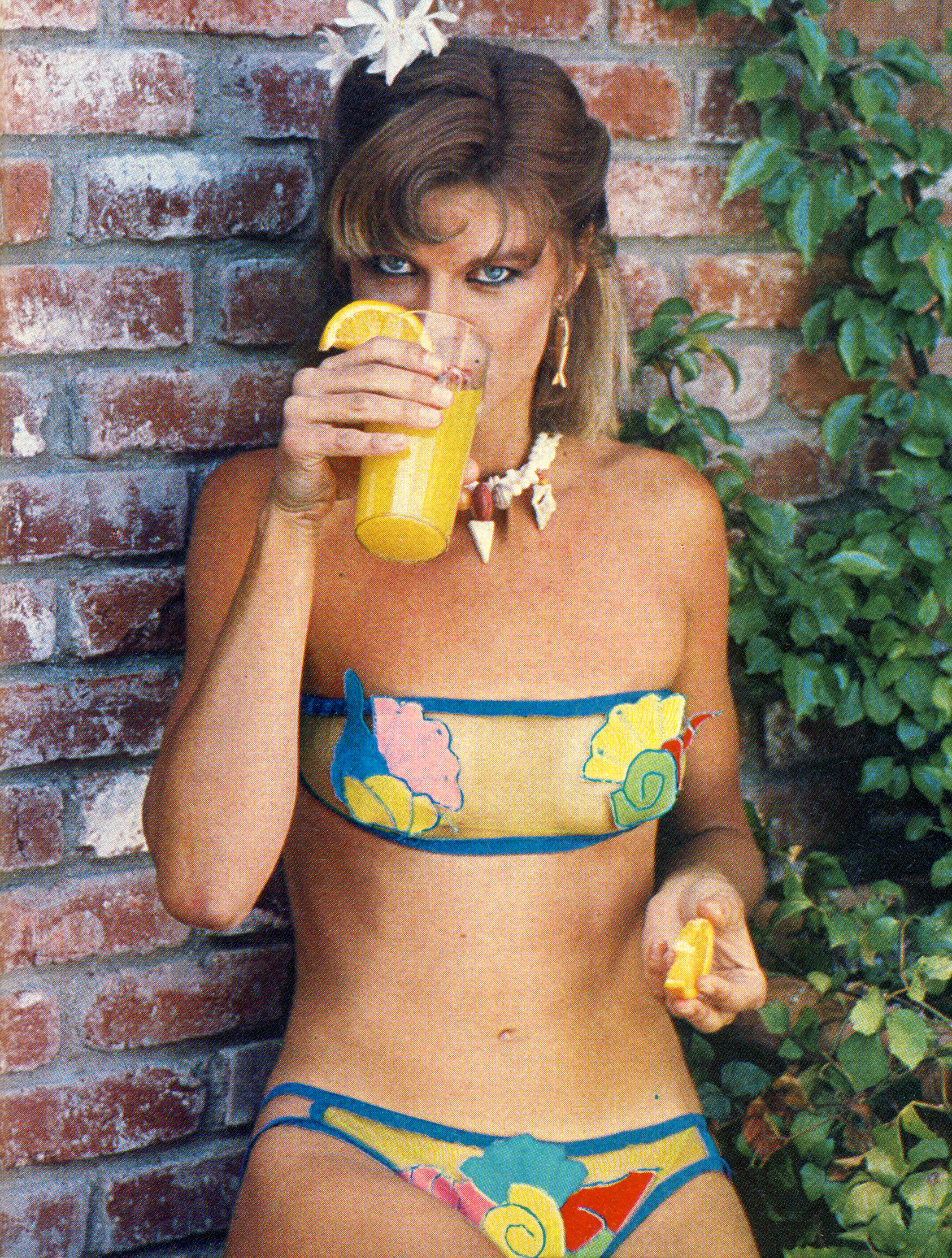
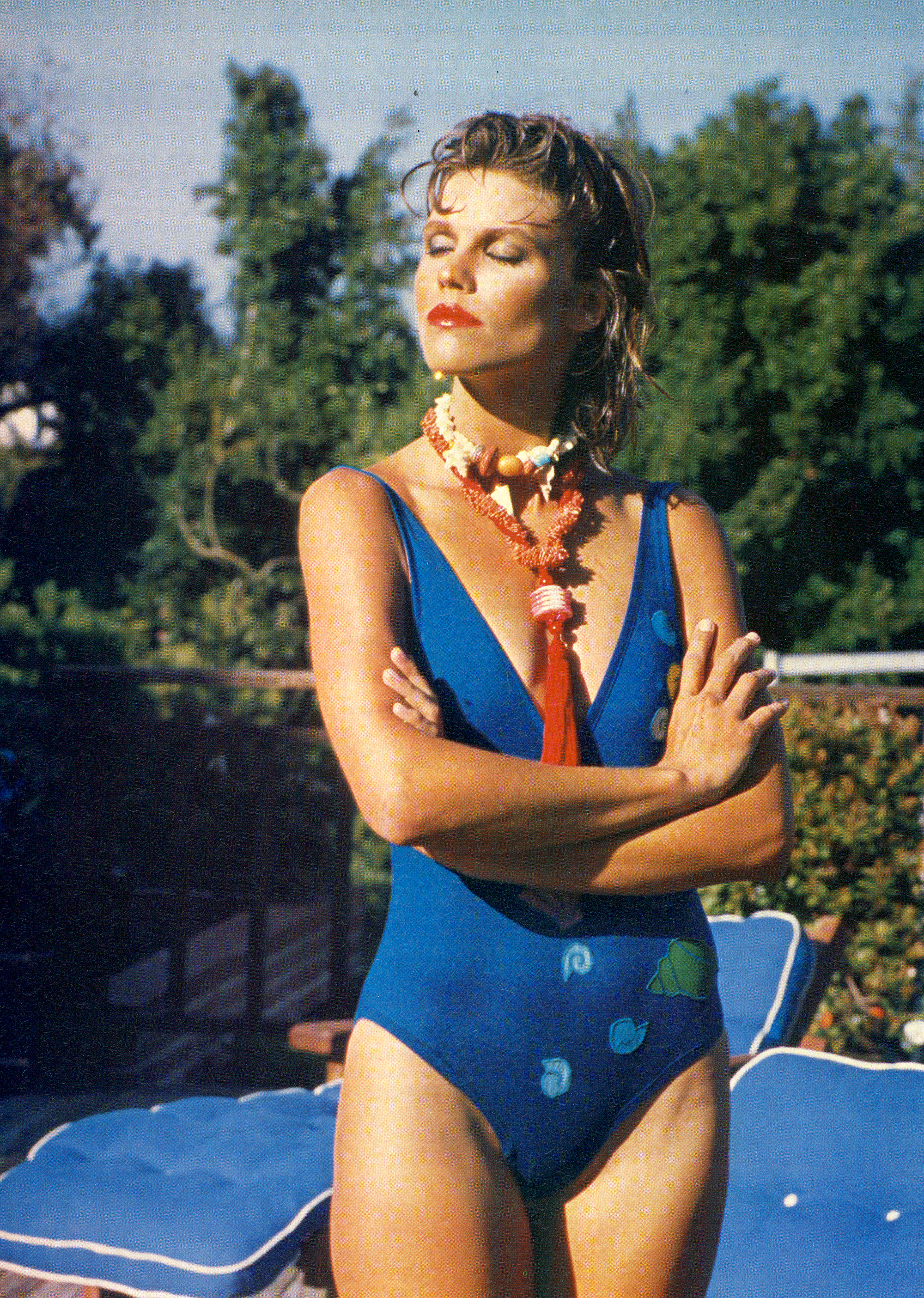
Turquoise and yellow net bikini by Susan Backhouse. Bone and shell necklaces from Bombacha. Fish earring by Nicholas Adams.
I told you there was a lot of swimwear in this issue, didn’t I? I’m amazed by these Susan Backhouse pieces. I’ve only ever had one piece by her which is an incredible, voluminous cotton skirt in the style of Vivienne Westwood, so I’m boggling at these skimpy, pop-art inspired swimsuits and bikinis.
Photographed by Elizabeth Huxley. Hair and make-up by Colin Booker.
Scanned from 19 Magazine, July 1979.
Blue one-piece with shell applique by Susan Backhouse. Bone necklace from Bombacha.Pale blue and pink shell shaped bikini by Susan Backhouse. Fish earring by Nicholas Adams. Bone necklaces from Bombacha.Yellow costume with star fish applique by Susan Backhouse. Bone and shell necklaces from Bombacha.Turquoise bikini with star fish motif by Susan Backhouse. Blue earrings by Adrien Mann. Necklace by Nicholas Adams.
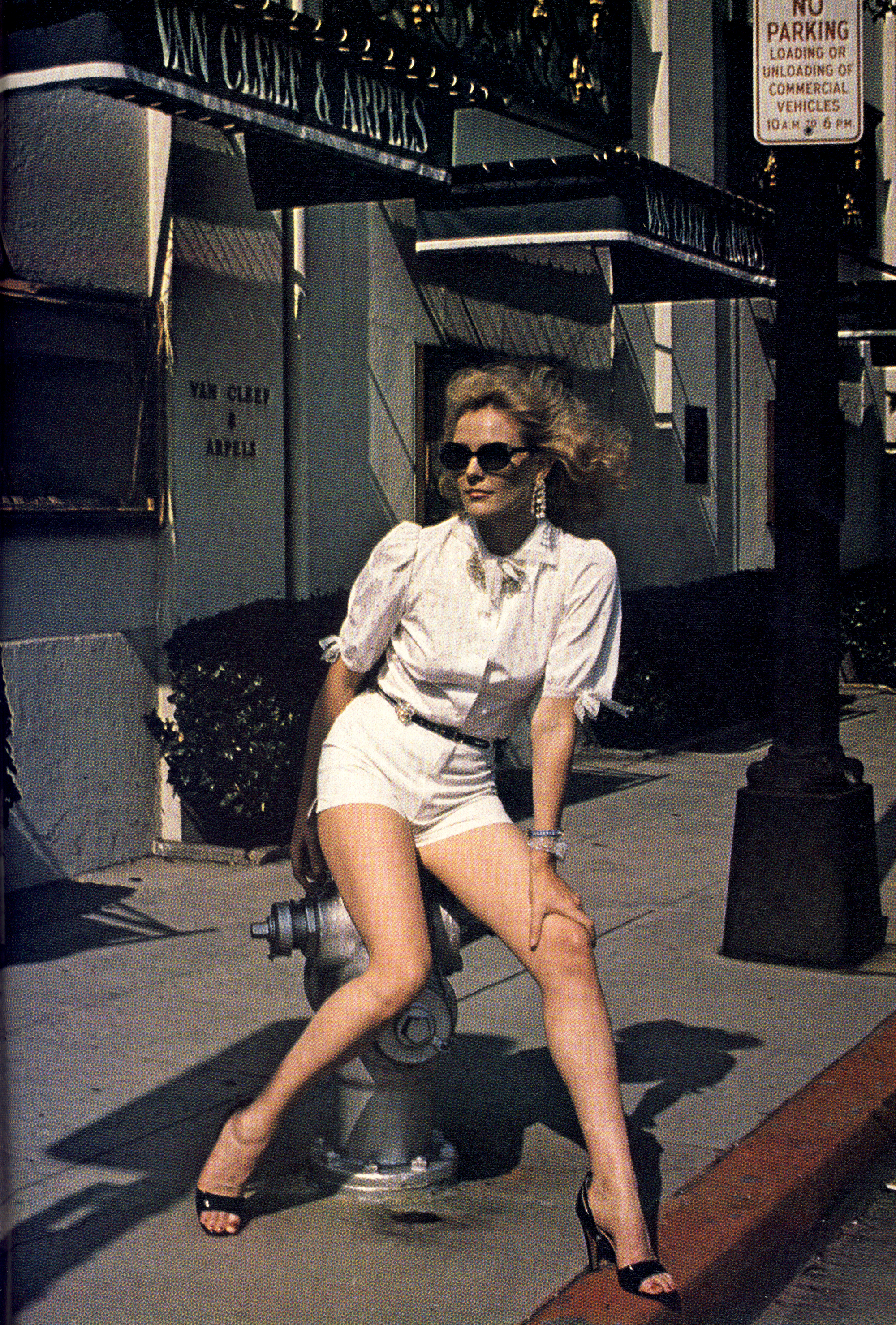
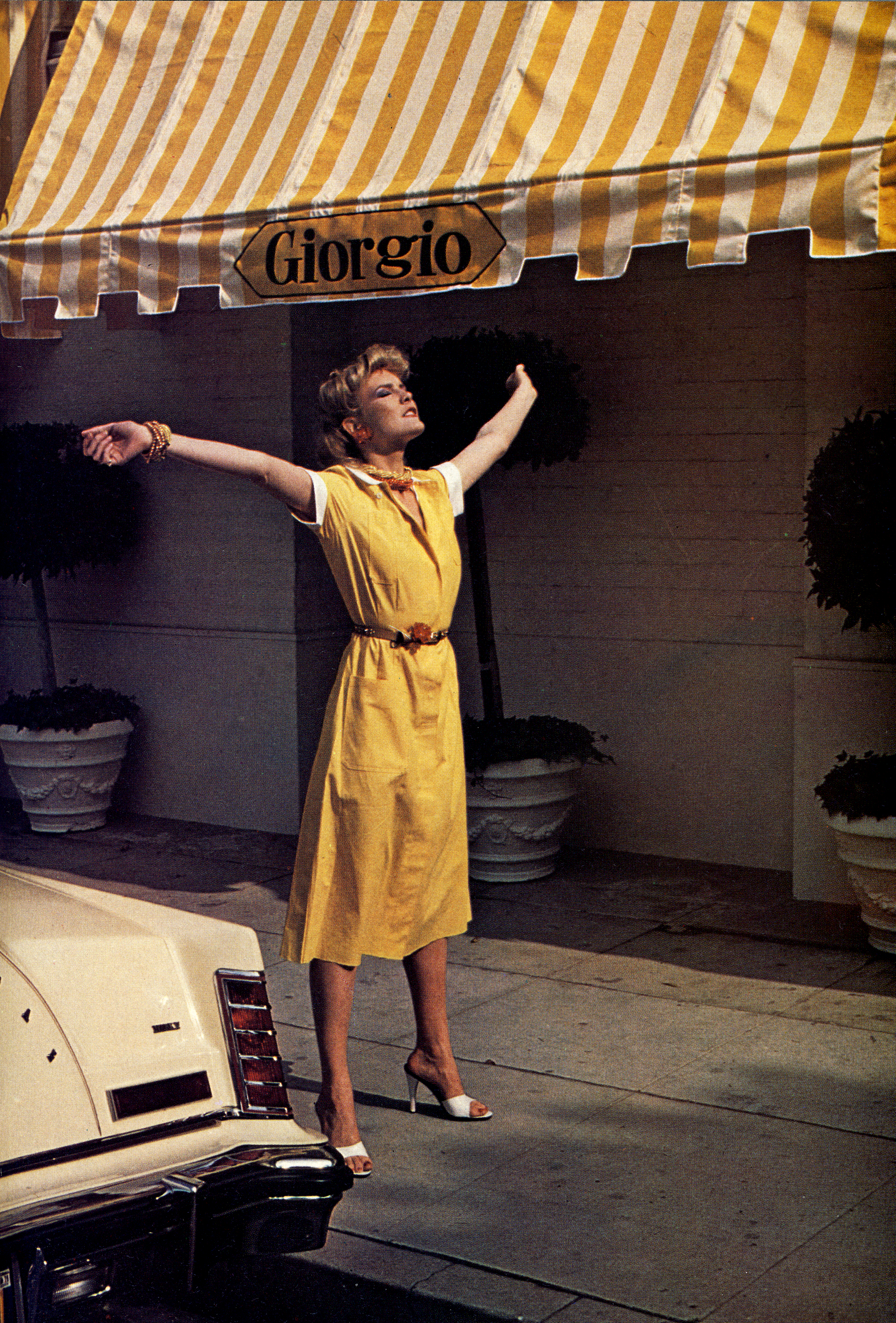
Blouse by Sue Barnes for Coopers. Shorts by British Home Stores. Black sandals by Ravel. Glasses by Primetta.
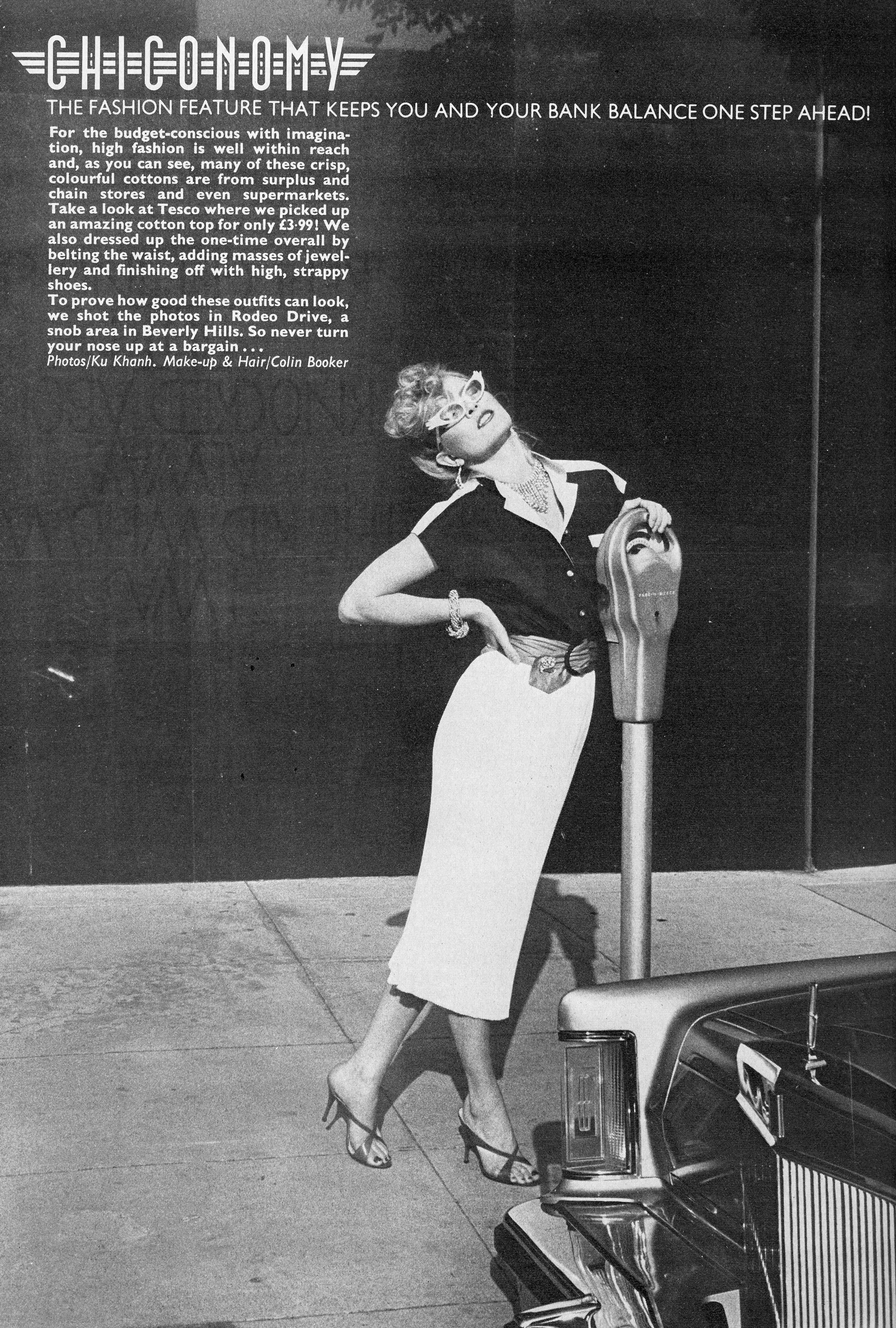
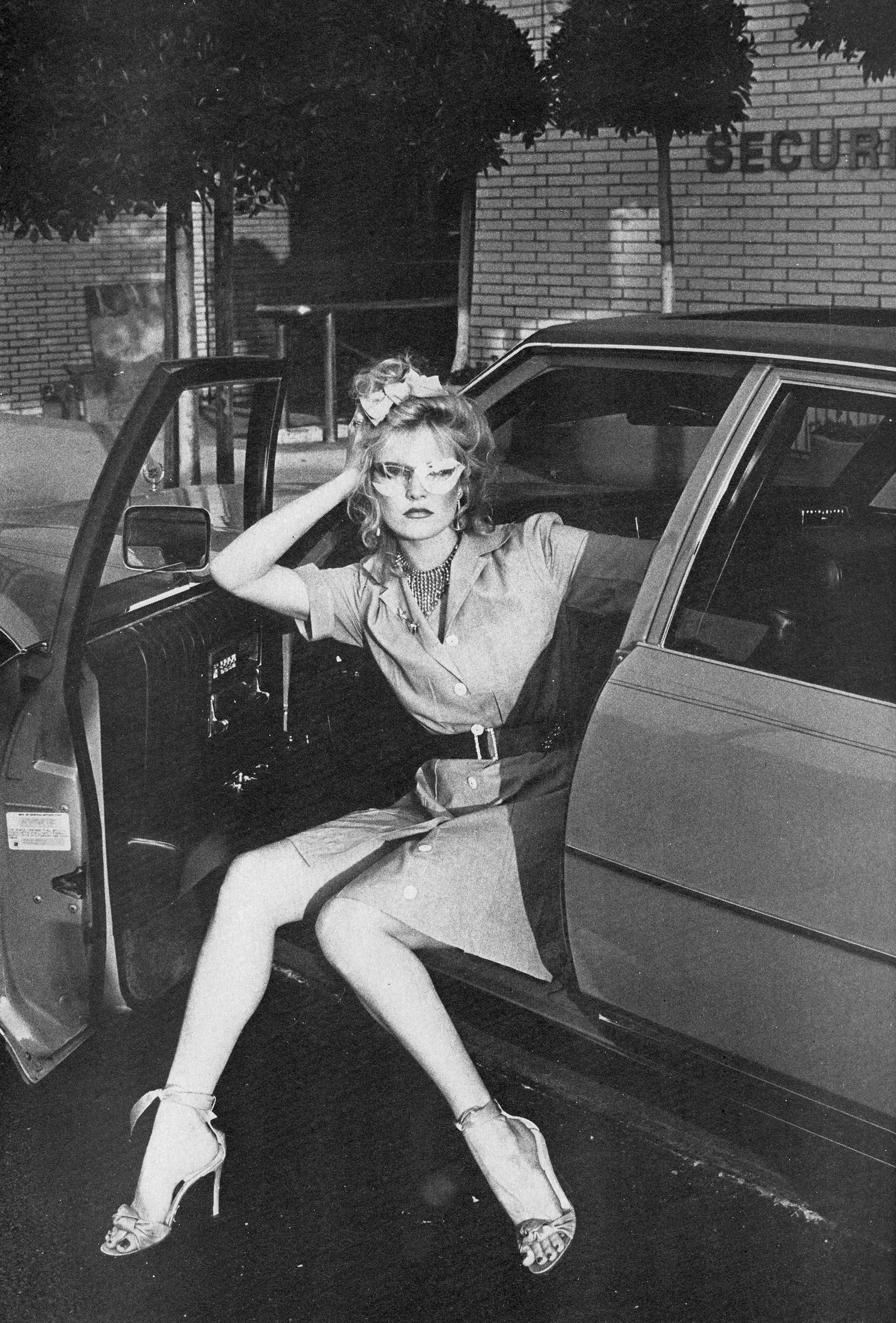
For the budget-conscious with imagination, high fashion is well within reach and, as you can see, many of these crisp, colourful cottons are from surplus and chain stores and even supermarkets. Take a look at Tesco where we picked up an amazing cotton top for only £3.99! We also dressed up the one-time overall by belting the waist, adding masses of jewellery and finishing off with high, strappy shoes.
To prove how good these outfits can look, we shot the photos in Rodeo Drive, a snob area in Beverly Hills. So never turn your nose up at a bargain.
Photographed by Ku Khanh. Hair and make-up by Colin Booker.
Scanned from 19 Magazine, July 1979
Overall from Laurence Corner. Mules by Russell & Bromley. Earrings from Swanky Modes. Belt by Trimfit. Brooch on belt from Swanky Modes.Navy blouse by Tesco. White pleated skirt by Pret-a-Porter. Blue sandals by Ivory. Glasses from Bombacha. Earrings and necklace from Ace. Pearl bracelet from Joseph. Belt by Trimfit. Brooch by Nicholas Adams.Lilac overall from Laurence Corner. Lilac strappy sandals by Ivory. Glasses by Primetta. Earrings and necklace from Ace. Satin belt by Trimfit.







 Liz Eggleston