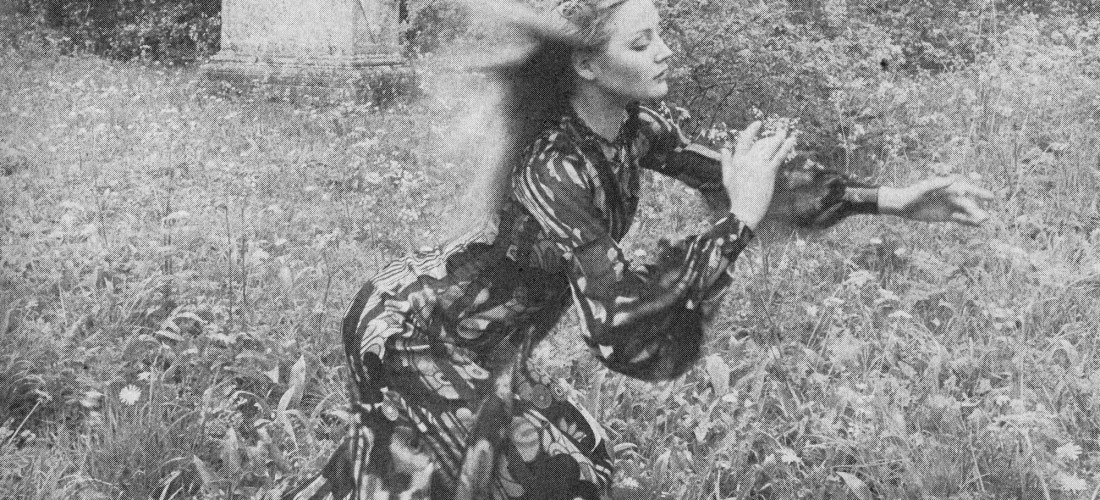
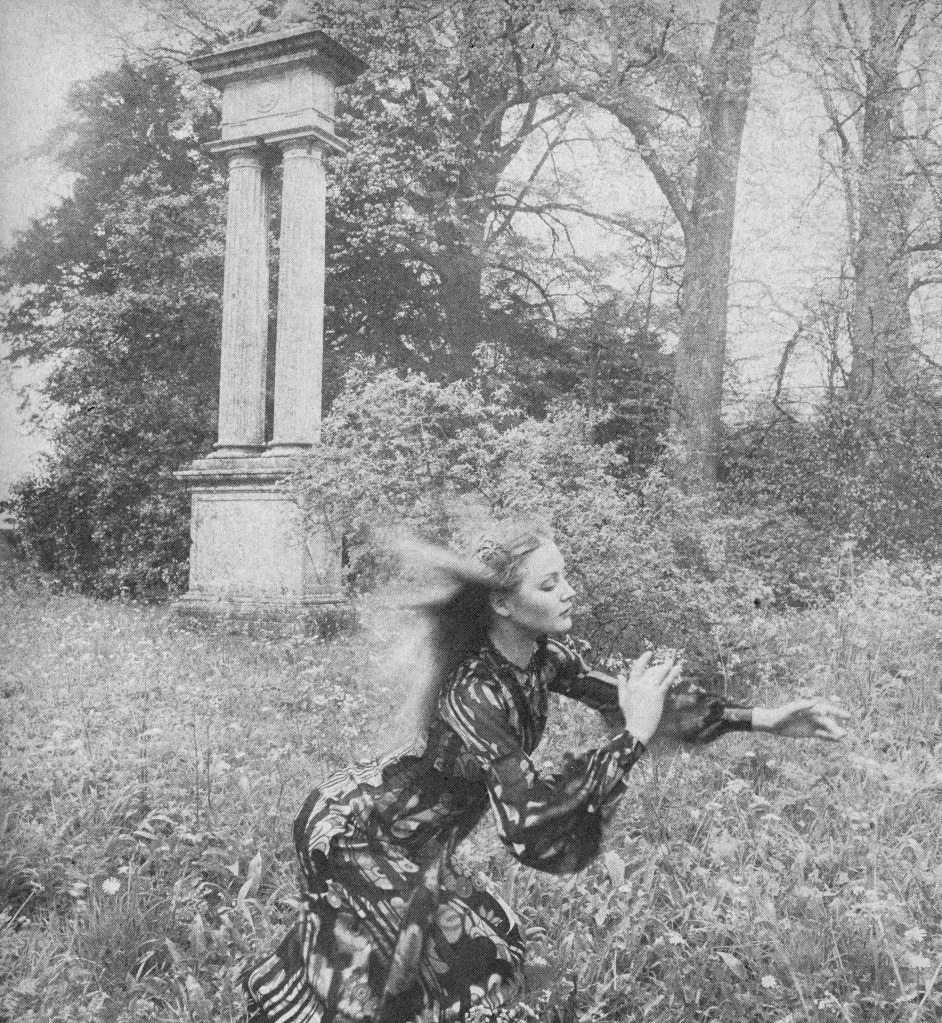
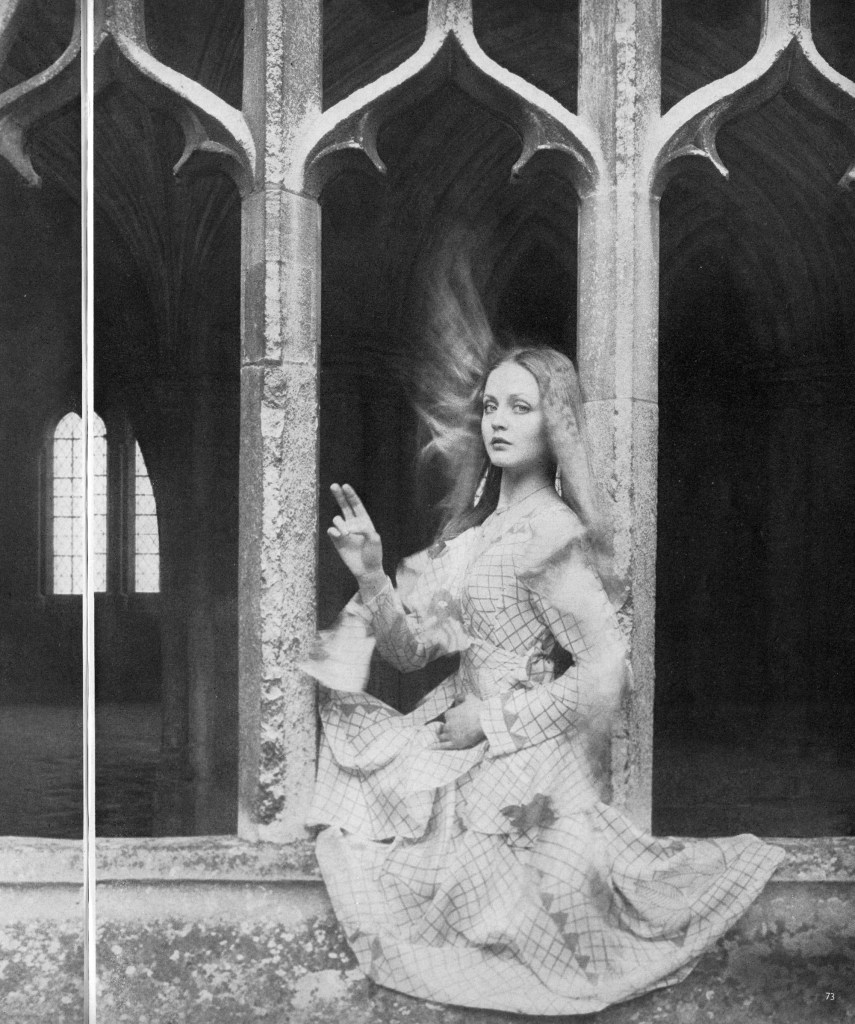
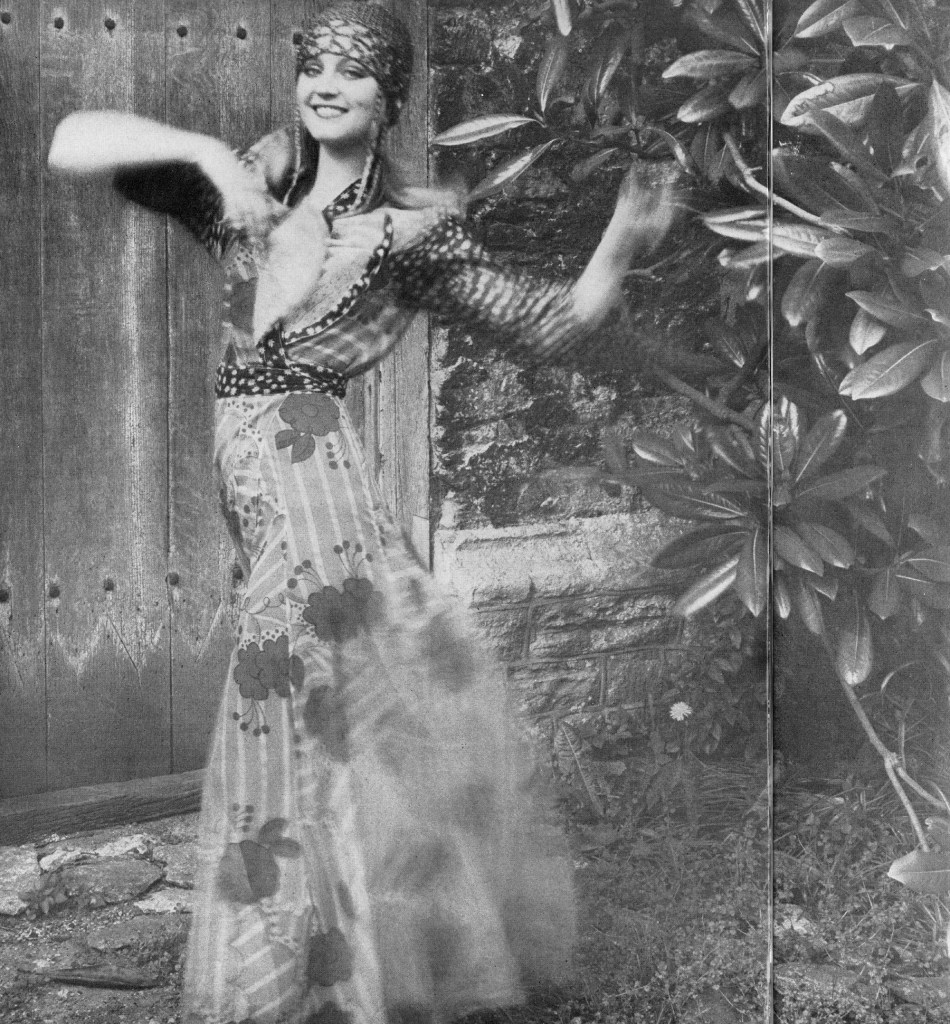
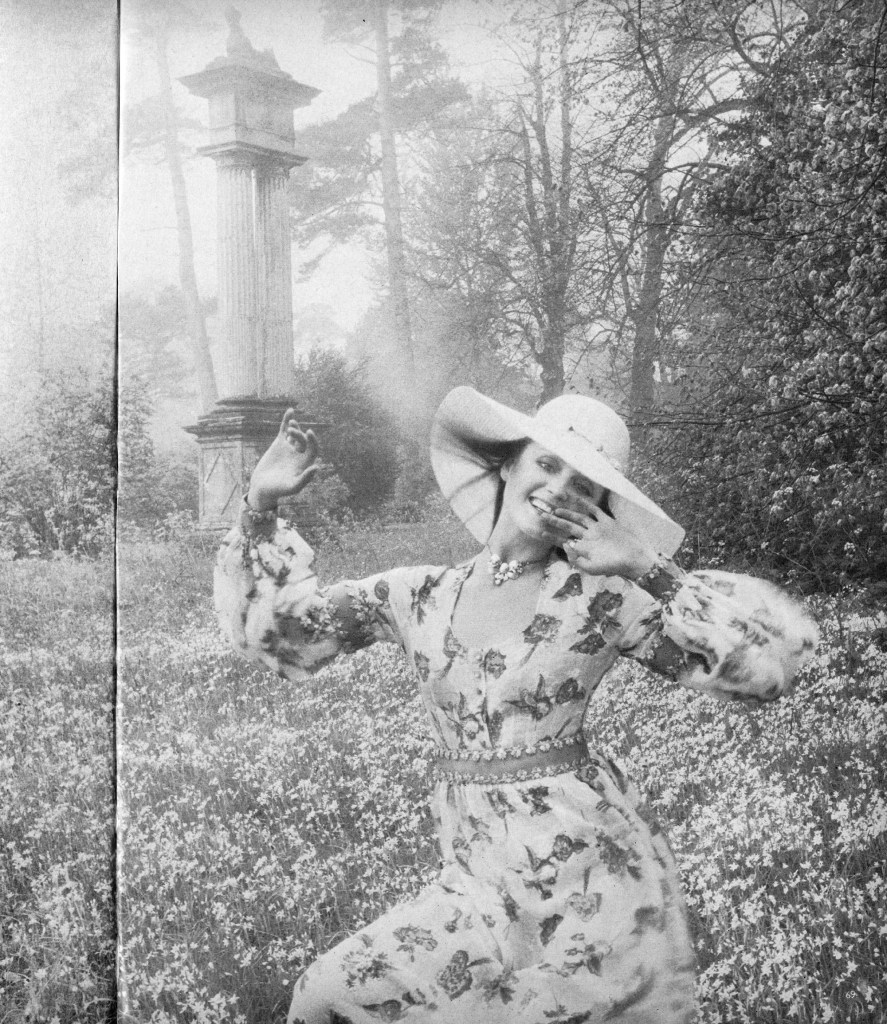
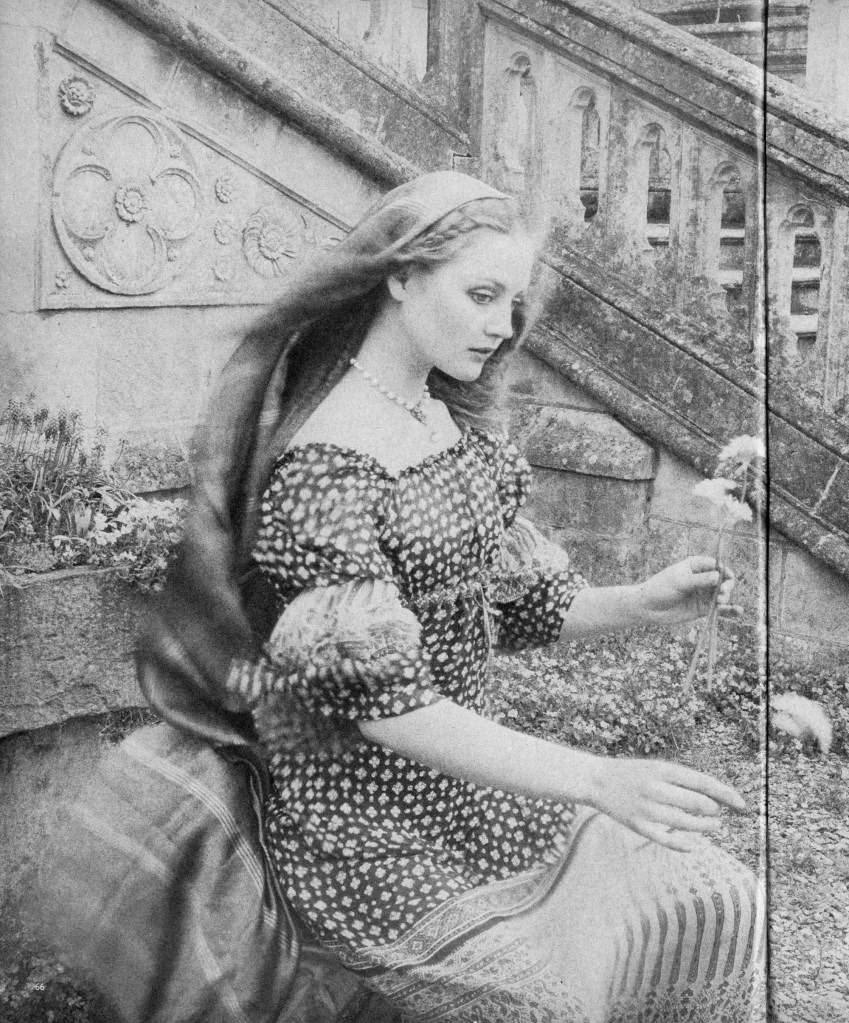
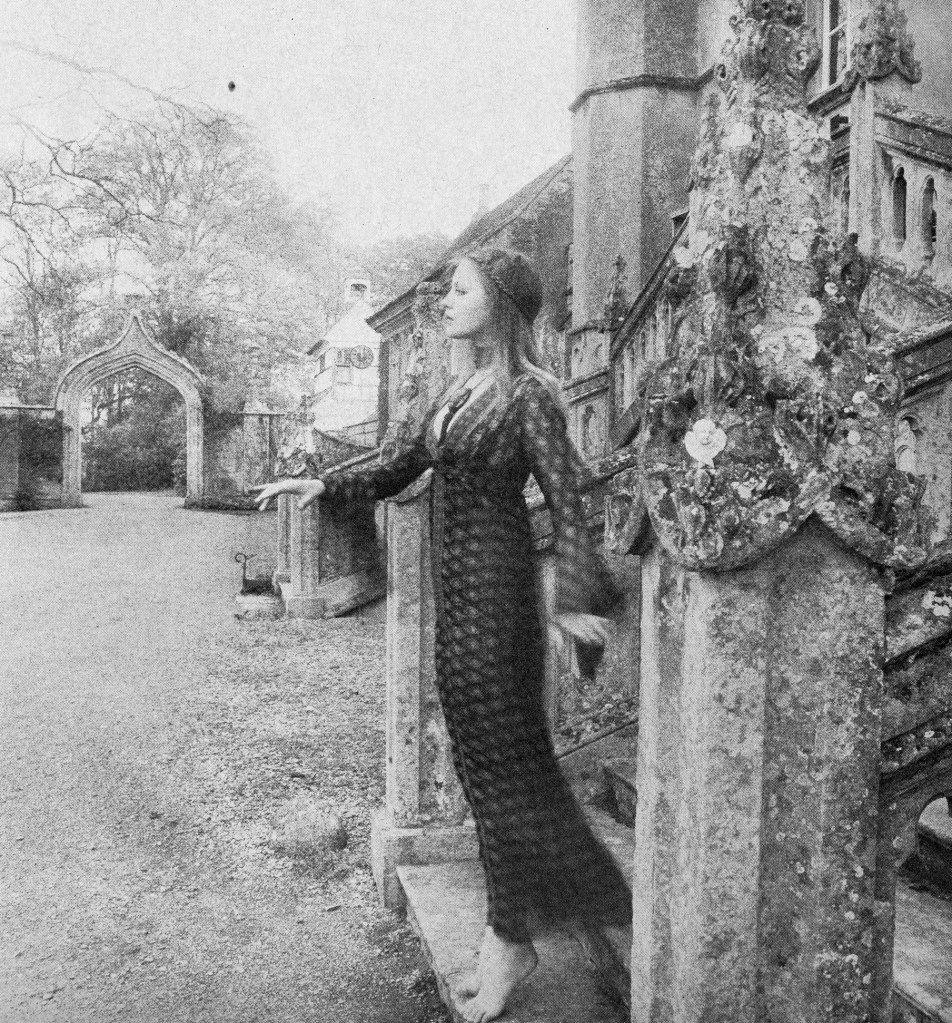
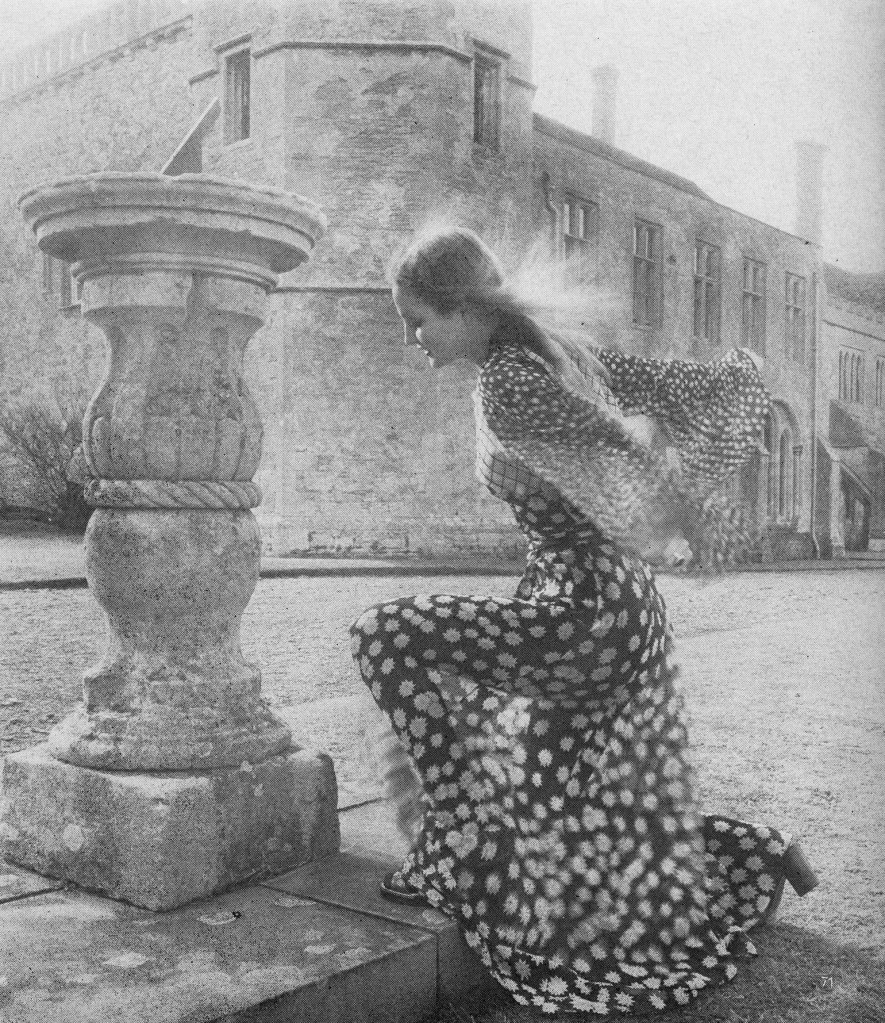
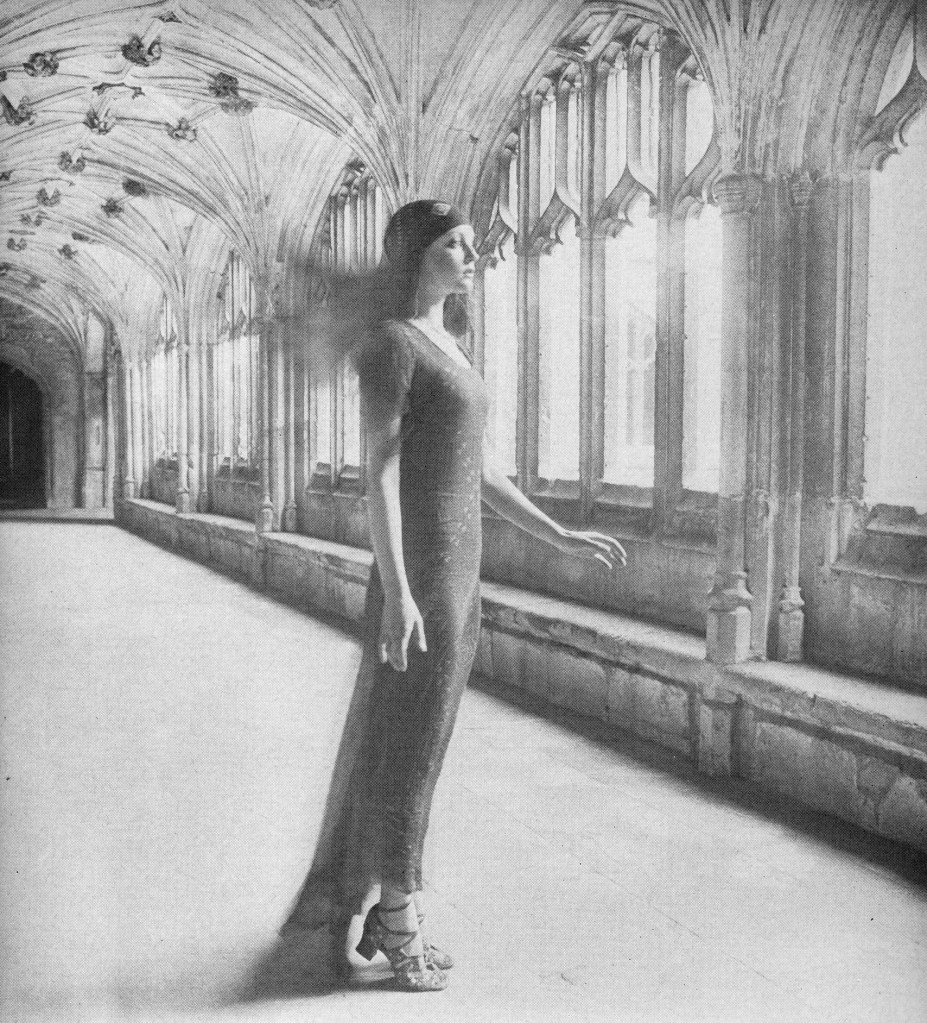
Following Gaudi’s thought “to be original, return to the origin”, following it down to Lacock Abbey in Wiltshire where William Fox Talbot invented the camera, Norman Parkinson photographed eight dresses conjured from pure air and gauze.
This is like an album where every song is a certified banger. From the model, to the frocks, to the photographer, to the photographer he’s referencing, everything is flawless. Except that I don’t own all these dresses.
Photographed by Norman Parkinson.
Modelled by Ingrid Boulting.
Photographed at Lacock Abbey.
Scanned from Vogue, July 1970.
Silk gauze in pale straw with green and mauve. By Ossie Clark, Celia Birtwell print, about 25gns.
Silk chiffon dress in Celia Birtwell print by Ossie Clark, £40. Cap at Herbert Johnson.
Flower garden dress of crisp muslin. By Gerald McCann, £16 5s. 6d.
Black printed Indian cotton dress 10gns at Suliman.
Blackberry on black Indian cotton dress by Gerald McCann, £16 5s. 6d.
Silk chiffon dress in Celia Birtwell print by Ossie Clark, £40.
Fish finned cotton dress by Emmanuelle Khanh, about £30 to order.
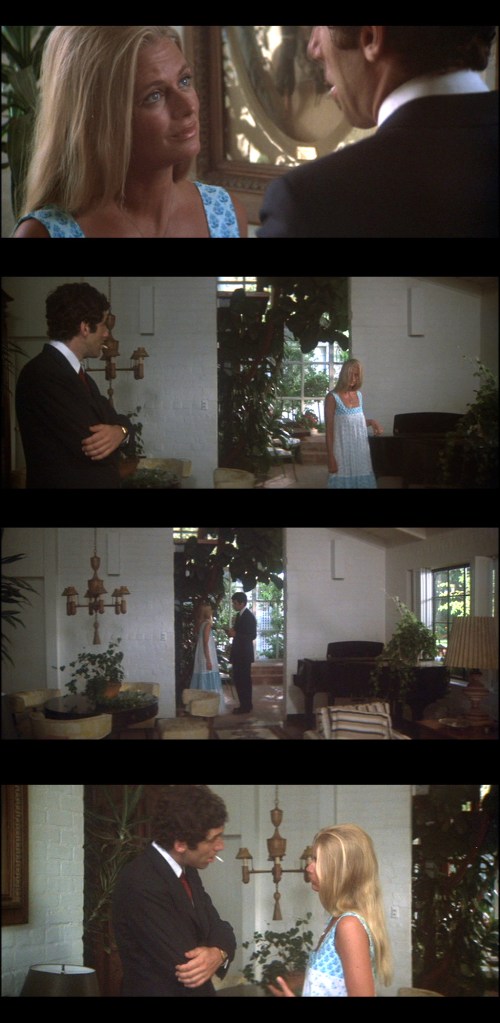
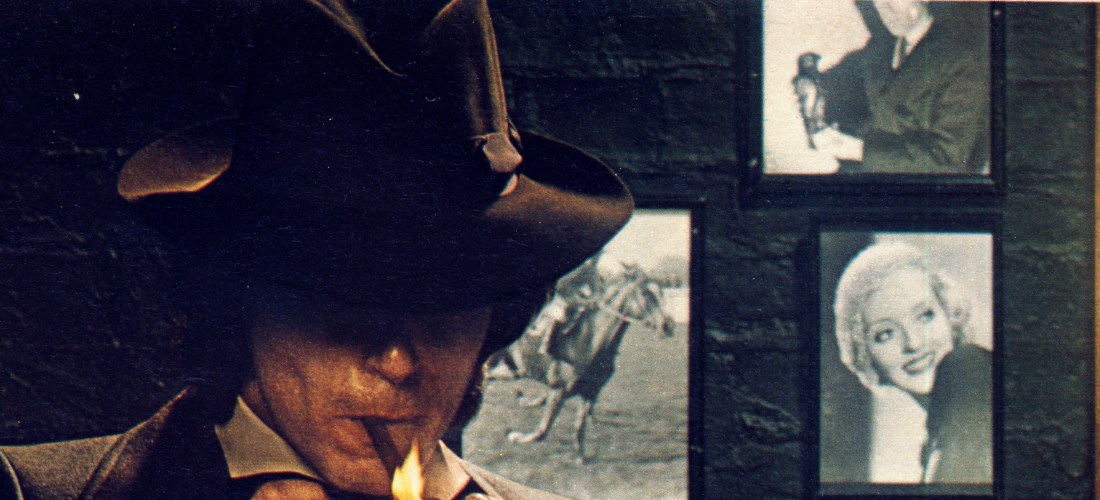
Quite apart from Elliott Gould being a very worthy successor to Humphrey Bogart as Philip Marlowe, and the faded-but-magnificent Art Deco buildings which feature throughout, Robert Altman’s The Long Goodbye (1973) is also well worth watching for Nina van Pallandt’s wardrobe.
First appearing in what looks like Laura Ashley:
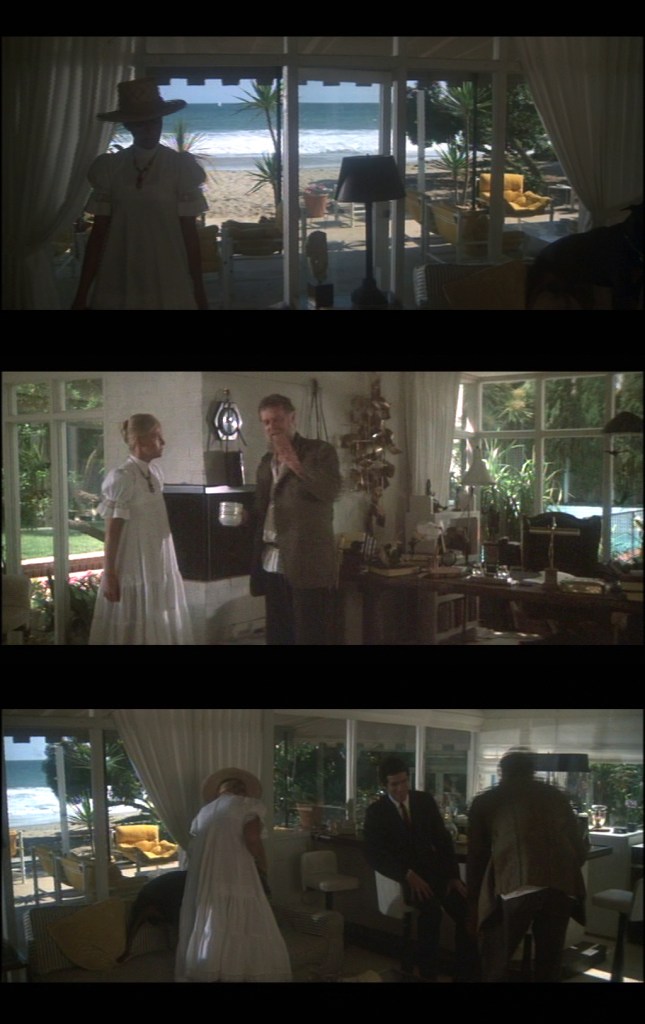
Then a less identifiable dress of a similar ‘peasant’ style but rather less traditionally English in the use of pattern and colour (possibly by Mexicana, Georgia Charuhas or a similar brand):
You can see more clearly in this publicity shot that the bands of lace are transparent:
Then Laura Ashley again:
Slightly clearer albeit black and white in this publicity shot:
By this point, I started wondering if this wardrobe was perhaps that of the actress rather than of the character. Nina van Pallandt was a successful Danish singer (with husband Frederik van Pallandt, they were known as ‘Nina and Frederik’) and would have spent a great deal of time in London. It otherwise seemed a bit odd that she was wearing clearly British-made clothes, albeit in a style which wouldn’t seem too dramatically out of place in early 1970s California. It certainly sets her apart from the few other women in the film, including Marlowe’s doped up neighbours (who are rarely clothed at all), and gives her a dreamy, other-worldly quality.
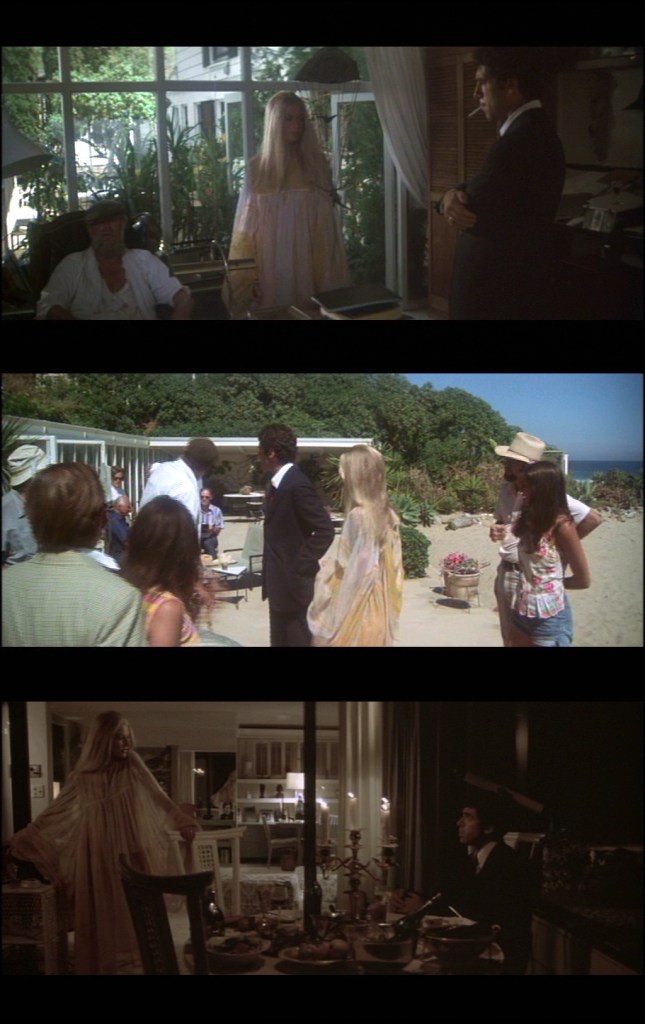
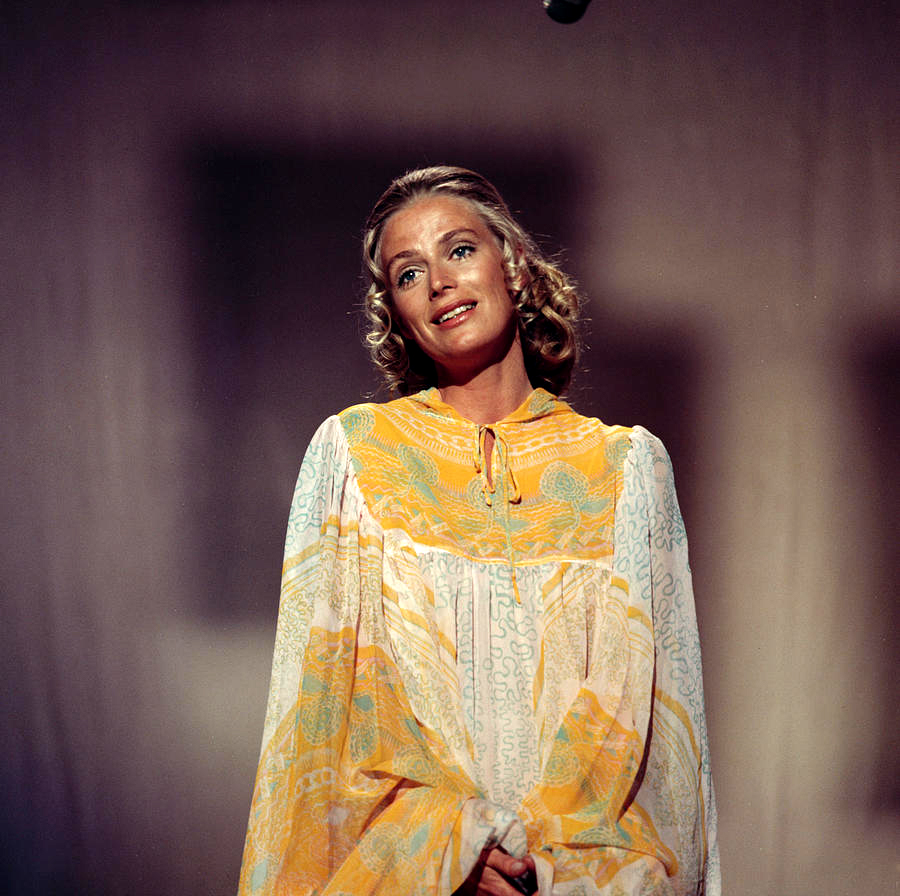
Then, as if by magic, she then appears in the most spectacular Zandra Rhodes gown. A gown which will, I’m afraid to say, eventually end up soaked through with sea water and very likely ruined.
Again, a proper publicity shot provides a clearer view of the classic Zandra squiggle print:
Afterwards, still pondering this, I hunted around for film stills and eventually came across this photo of Nina wearing the exact same dress in an earlier television performance. Bingo! I don’t know if it was just a small budget or a fussy leading lady, but I can only presume the entire wardrobe of her character was her own. One of those little things which seems to satisfy a curiosity in me, and I feel the need to share with the world.
Photograph by David Redfern.
I think this might be a piece from Zandra’s earliest collection as the hood and sleeve style is very reminiscent of this piece worn by Natalie Wood in 1970. I hope it was able to be rescued from its salty fate and is still out there somewhere.
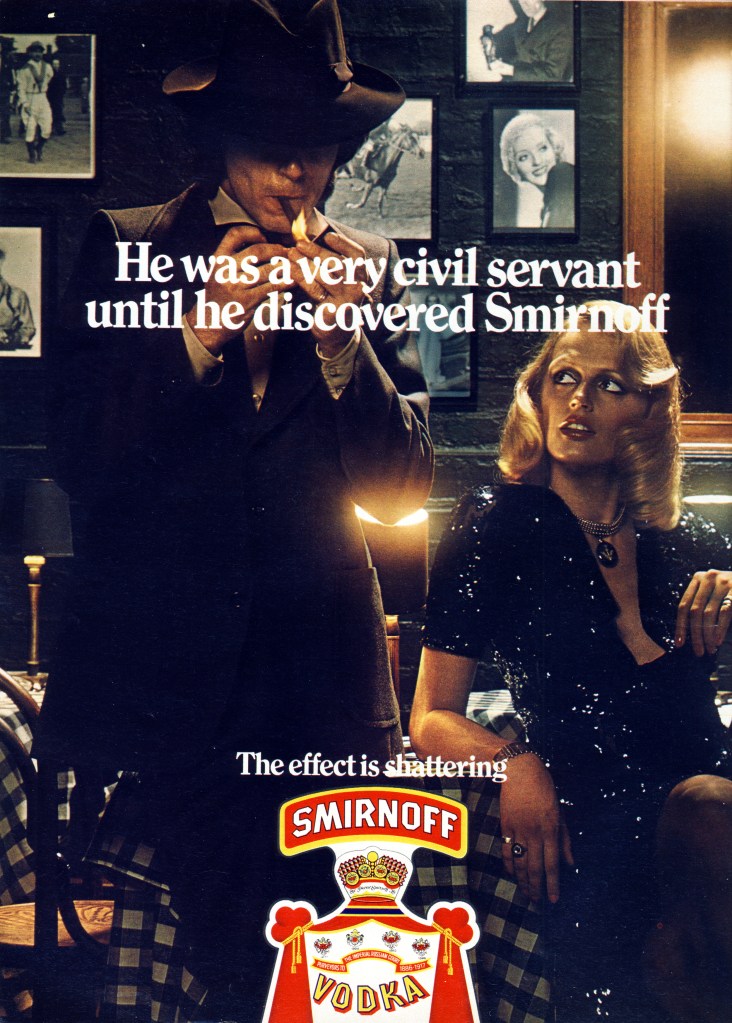
Thought I’d treat you all to my new favourite in the legendary series of Smirnoff adverts. As today is my birthday, and we’re still in lockdown, a recreation of this will have to take place at home tonight rather than on holiday as I’d hoped. Cheers!
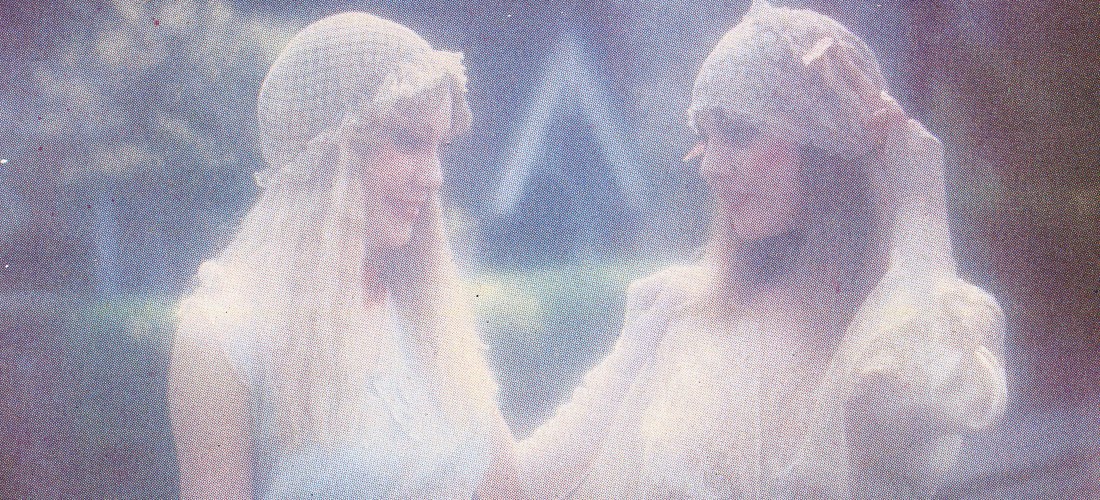
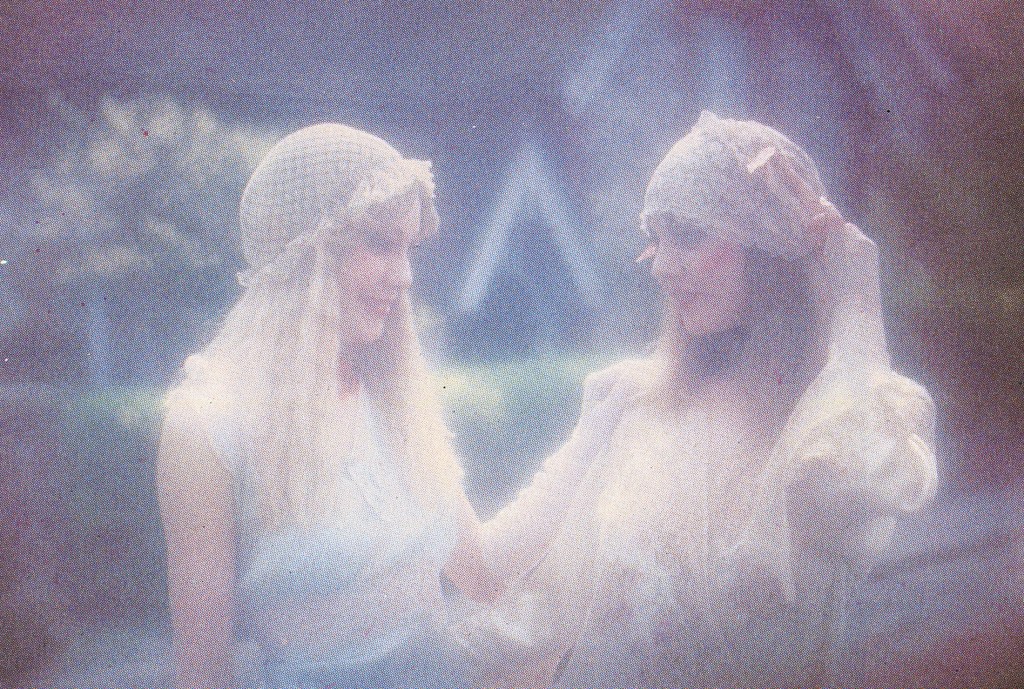
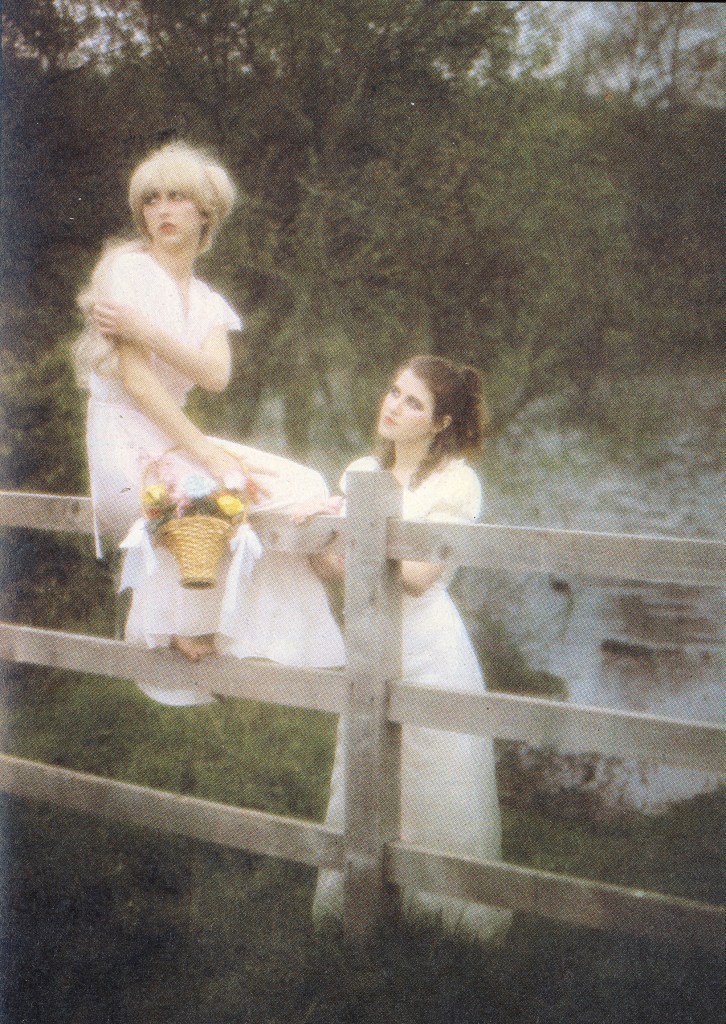
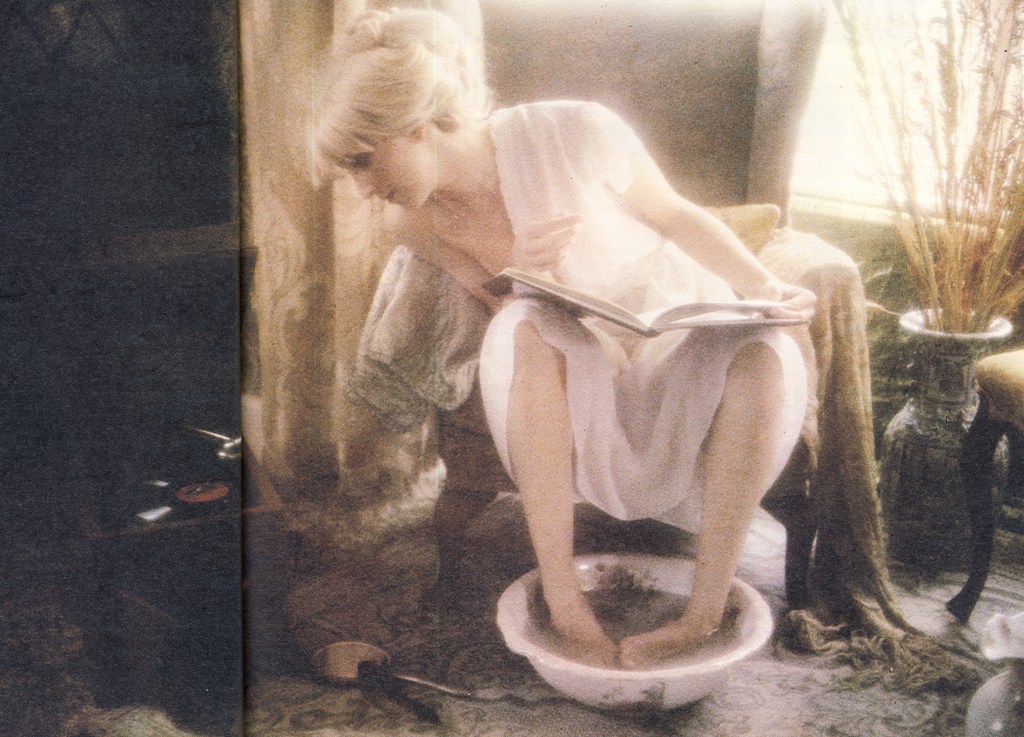
Imagine the location of Brig-a-doon as your backdrop, or the intimacy of a private country cottage as your studio with the prospect of photographing a selection of 20 beautiful English maidens. All this in your own time and, on top of this, making a profitable career out of such a desirable assignment.
The pursuit of a playboy or the pleasurable hobby of a titled aristocrat perhaps? In fact, it’s the dream of a qualified engineer with no professional training in photography. Canadian John Xavier has achieved such a desirable vocation…
Gradually he found he was marketing more of his own work and selling numerous pictures to a variety of men’s magazines. More recently he has been involved in the production of his first book. Entitled Every inch a lady, it is a photographic tribute to five of his most remarkable models...
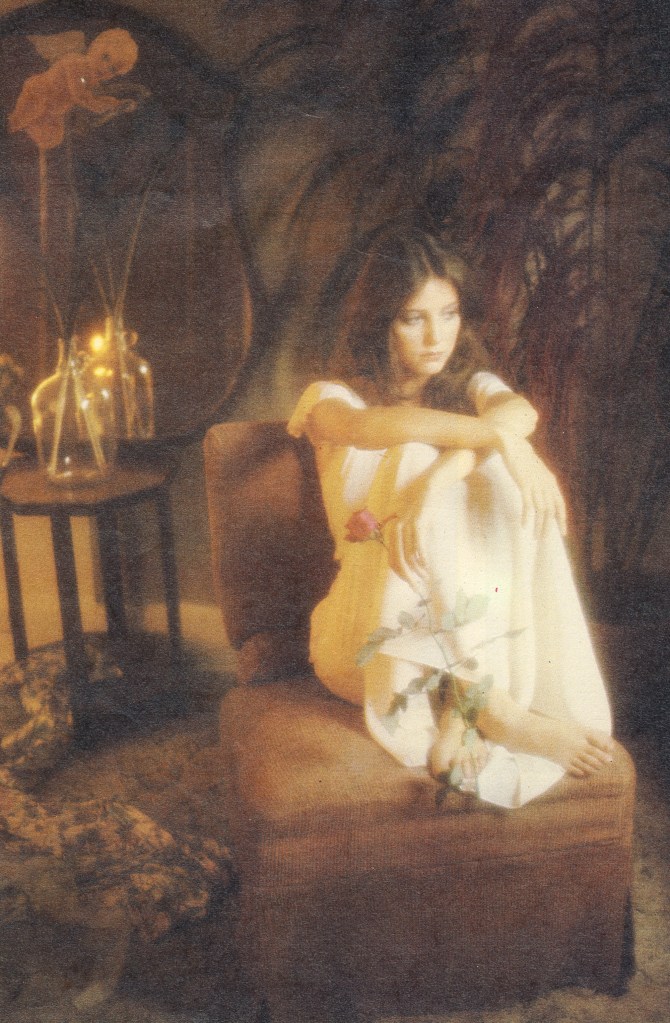
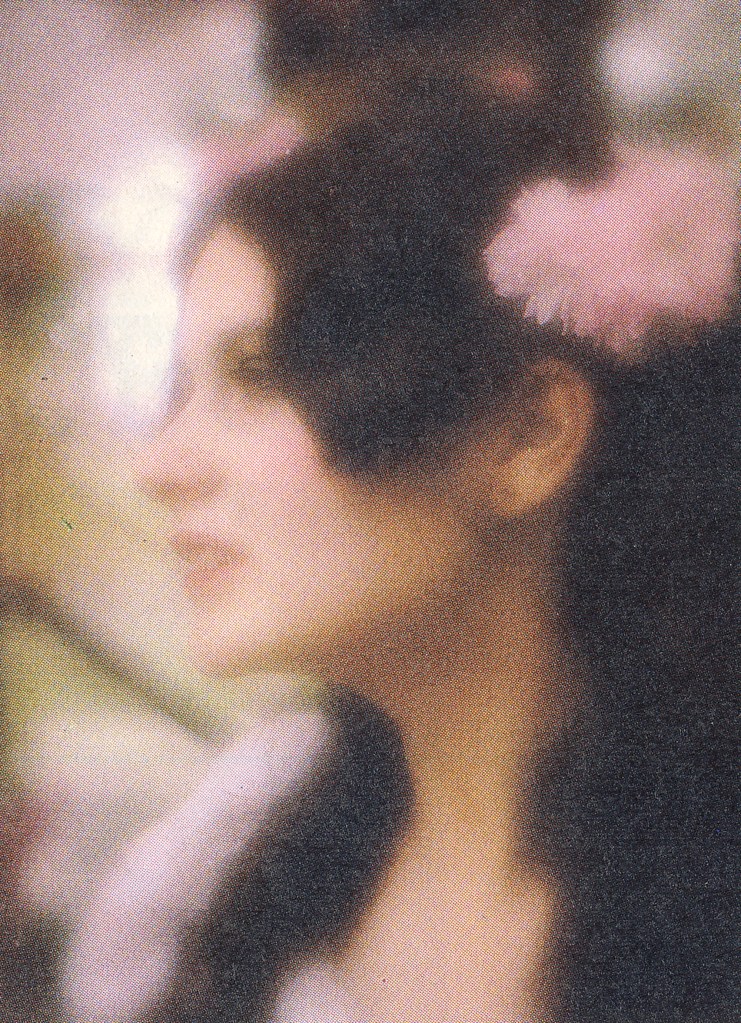
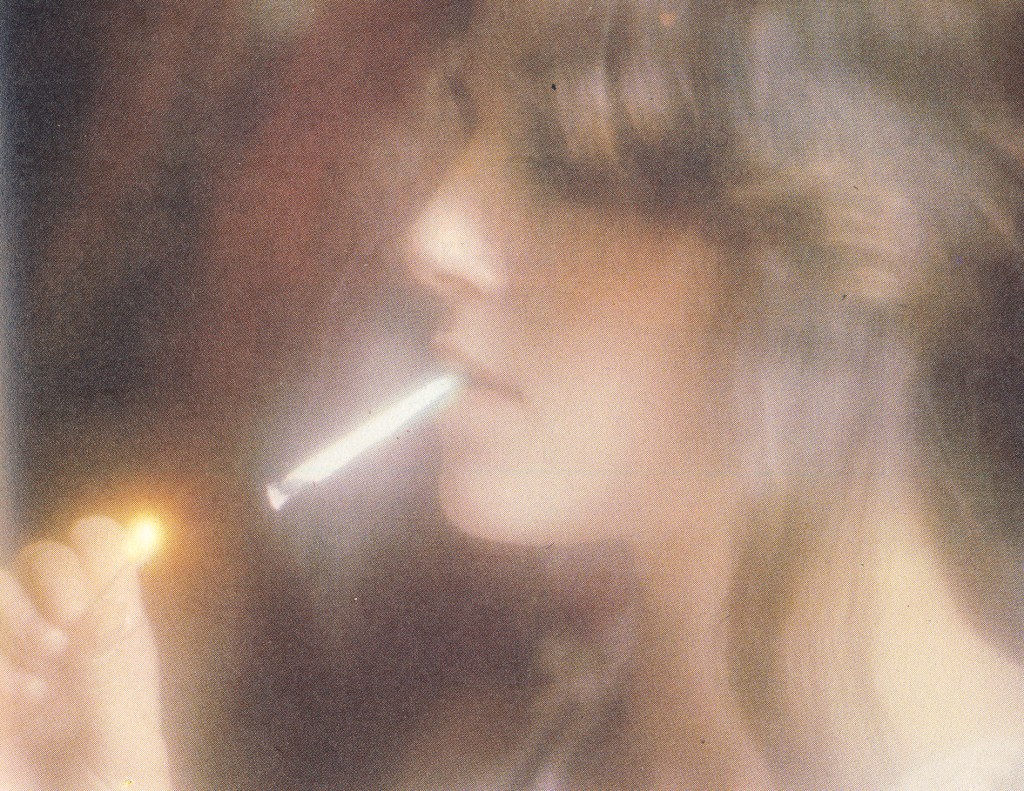
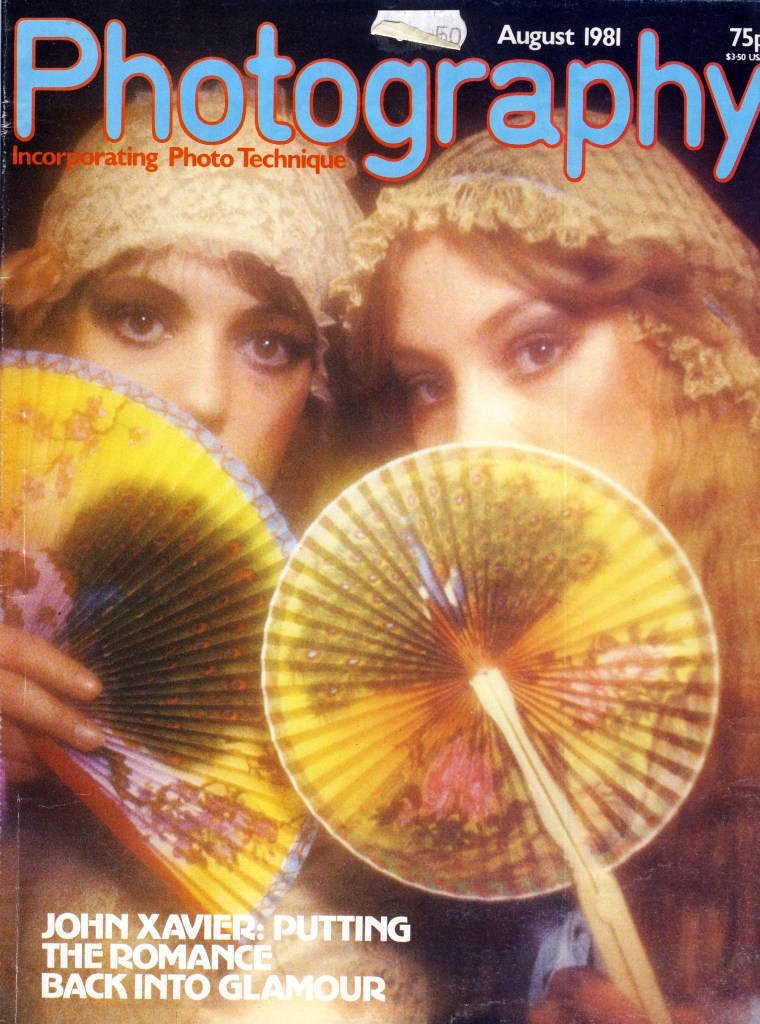
I must admit to having a major soft spot for late Seventies/early Eighties vaseline-smeared David Hamilton-esque photography. The more over-the-top romantic and saucy the better. This superb set of photos were printed in one of those ubiquitous photography magazines of the time, accompanying an article about John Xavier. I think one of the models might possibly be Sylvestra le Touzel but I can barely see through the Vaseline I’m afraid.
Long creamy cotton dress by Foale and Tuffin. Blue cotton paisley blouse and skirt by Foale and Tuffin. Embroidered woollen belt around head by Rosie Nice in Kensington Market.
Sunny Spain conjured up visions of hot summer days in picturesque surroundings, ideal settings for 19’s summer fashions. And we had a fantastic oppotunity when 4S Travel arranged a trip to Malaga and Torremolinos. We flew BUA Super Jet to stay at the Hotel Al Andalus, within easy reach of the mountains overlooking the Costa del Sol. Here we discovered quaint villages, sun-drenched and white-washed, their customs and dress crystallised in the past. No cars to be seen, only mules and donkeys. Our clothes echoed the feel of these places – colours stark black and white, brightened with touches of gayer hues, clean hot printed cottons, soft peasant blouses, sandals, light fishnet shawls, casual sun hats. The garments are easy to take care of, and enhance a tan – midi skirts that button to above the knee and give alluring glimpses of brown thigh, and large brightly printed squares of fabric which can be used as shawls, or skirts tied at the side.
Making me yearn for a proper holiday. The closest I’ll get is looking at this editorial whilst sitting on the balcony, trying to avoid all humans for the time being. I hope it brightens your day as well…
Blonde model is Willy van Rooy.
Photographed by John Bishop.
Scanned from 19 Magazine, July 1970.
Black velour towelling dress by Lee Bender for Bus Stop. Shawl by J. C. Brosseau from Feathers. Green and red snakeskin shoes by Terry de Havilland from Jolly Boy in Kensington Market. Belt bought locally.
Black and white cototn printed skirt and top by Tony Berkeley. Shawl from J. C. Brosseau. Shoes by Sacha.
White cotton skirt, blouse and bolero all by Annie for Rosie Nice in Kensington Market. Bright red and green dress by Foale and Tuffin. Black fishnet shawls by J. C. Brosseau from Feathers.
White towelling hat by Bermona. Dress by Sujon. Shoes from Ravel.
Dress by Tony Berkeley. White patent shoes by Sacha.
Dusty pink skirt and blouse by Ian Batten. Brown felt hat by J. C. Brosseau from Feathers.
Both outfits by Tony Berkeley. Both pairs of shoes by Ravel.
Dress by Foale and Tuffin. Snakeskin shoes by Terry de Havilland at Jolly Boy. Belt bought locally.
White midi skirt by Lee Bender for Bus Stop. Red and white silk rayon blouse by Annie for Rosie Nice. Mock snakeskin shoes by Dolcis.
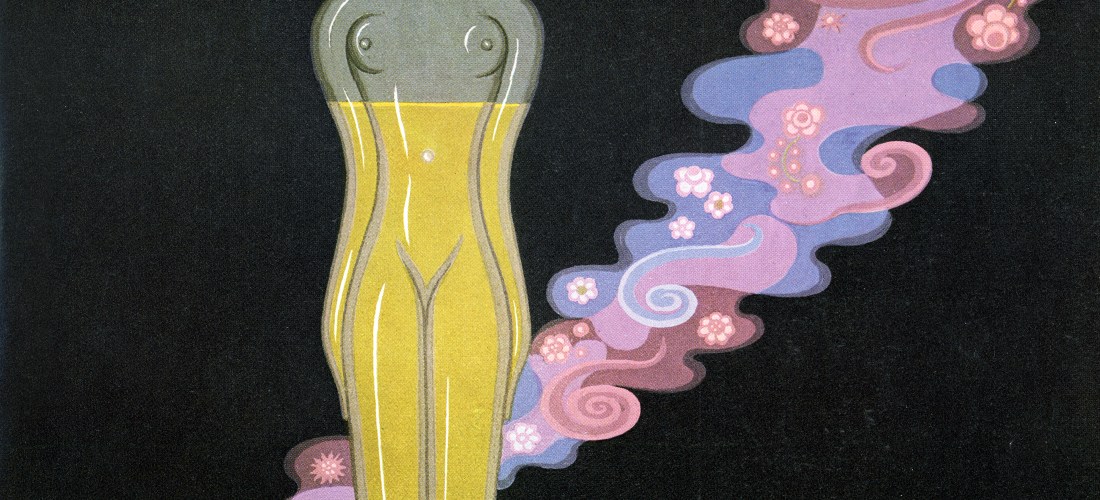
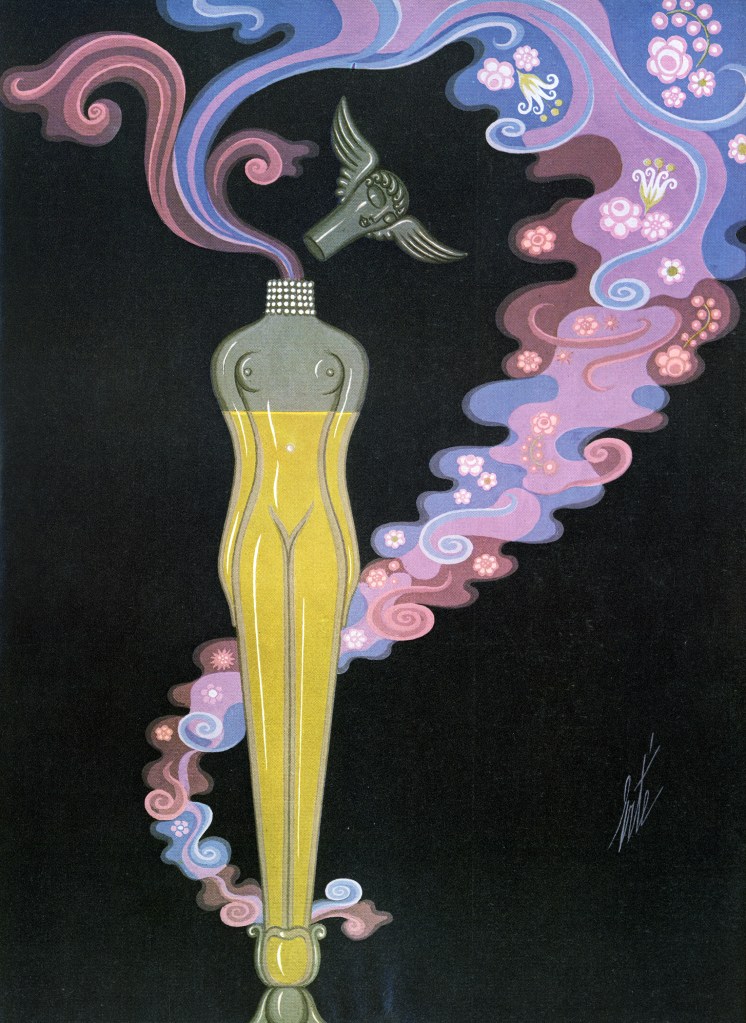
We asked Erté to draw for us his notion of the essence of scent, its evocative powers, and its sensations. The picture arrived with a note ‘Enclosed my design ‘Un parfum à perdre la tête‘ “. Every bottle must lose its head, for you to lose yours.
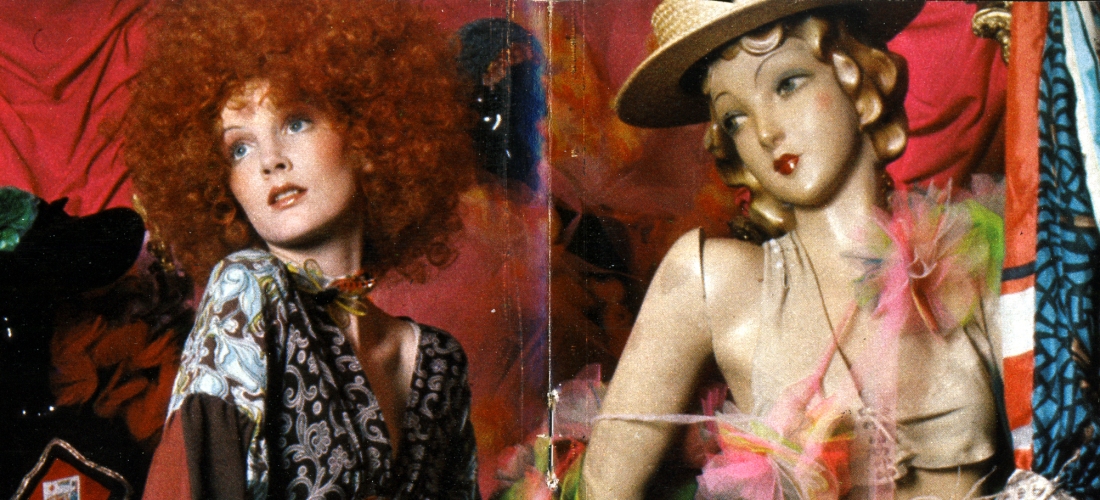
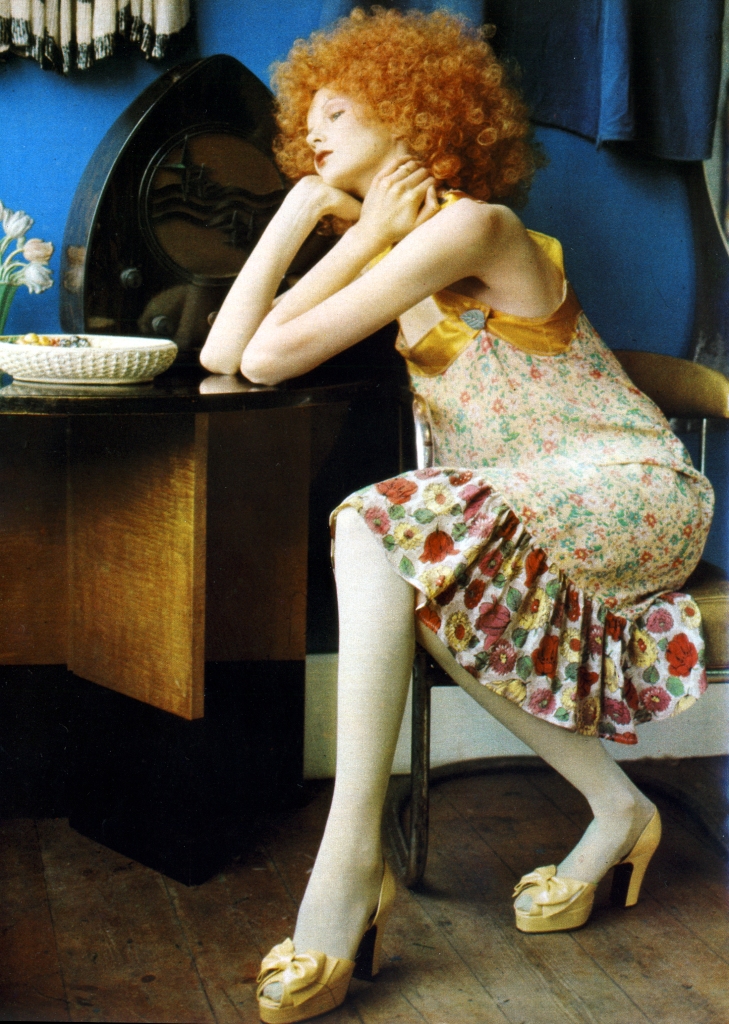
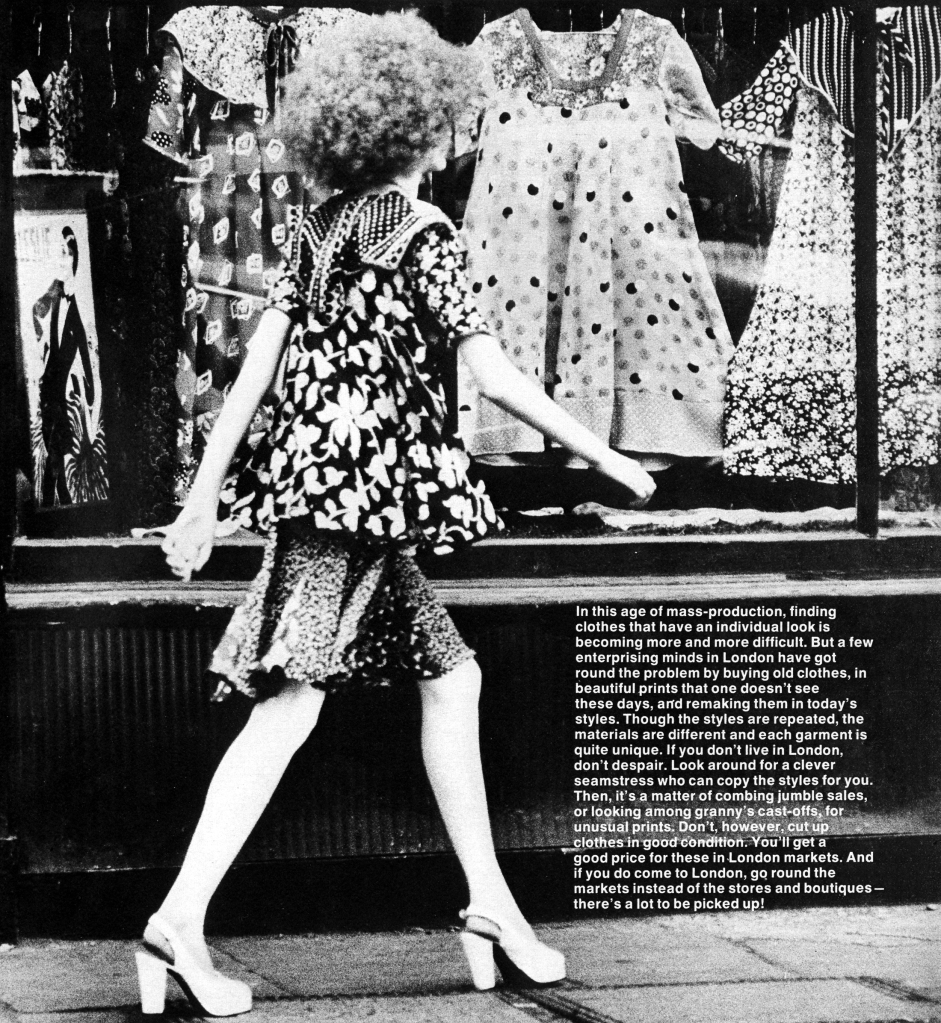
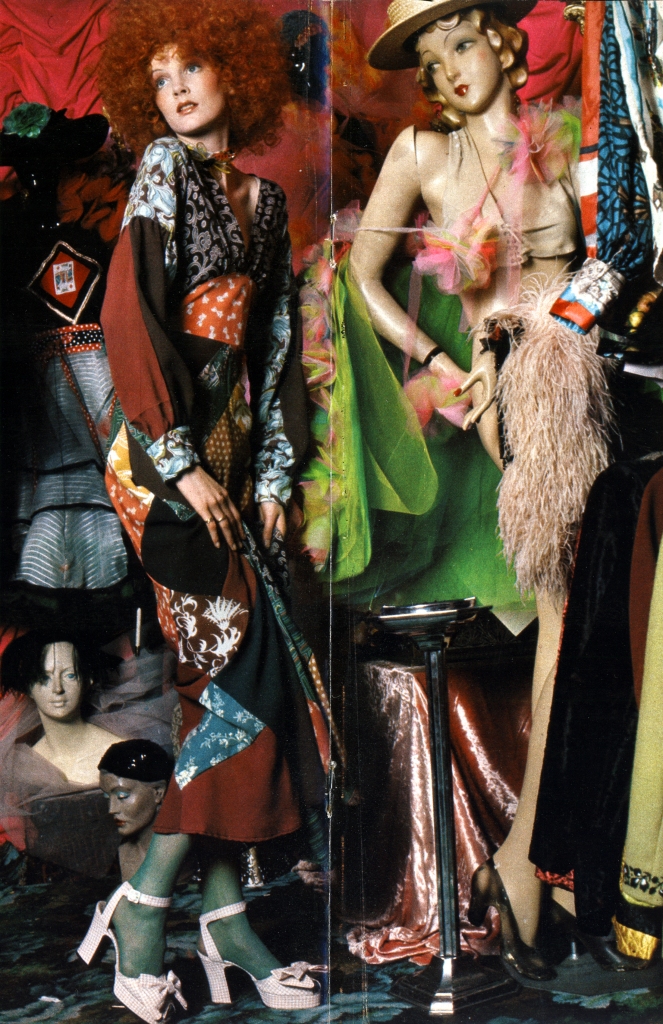
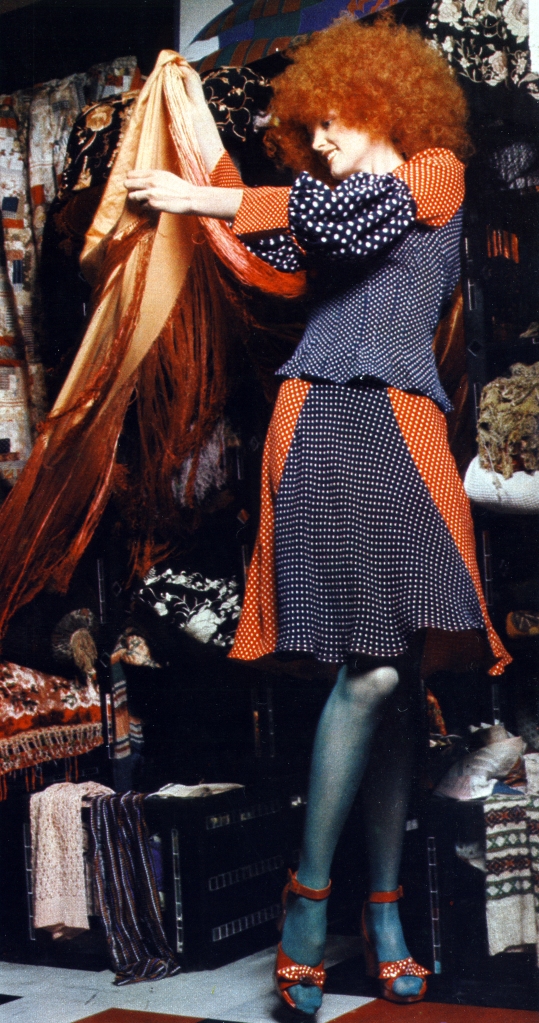
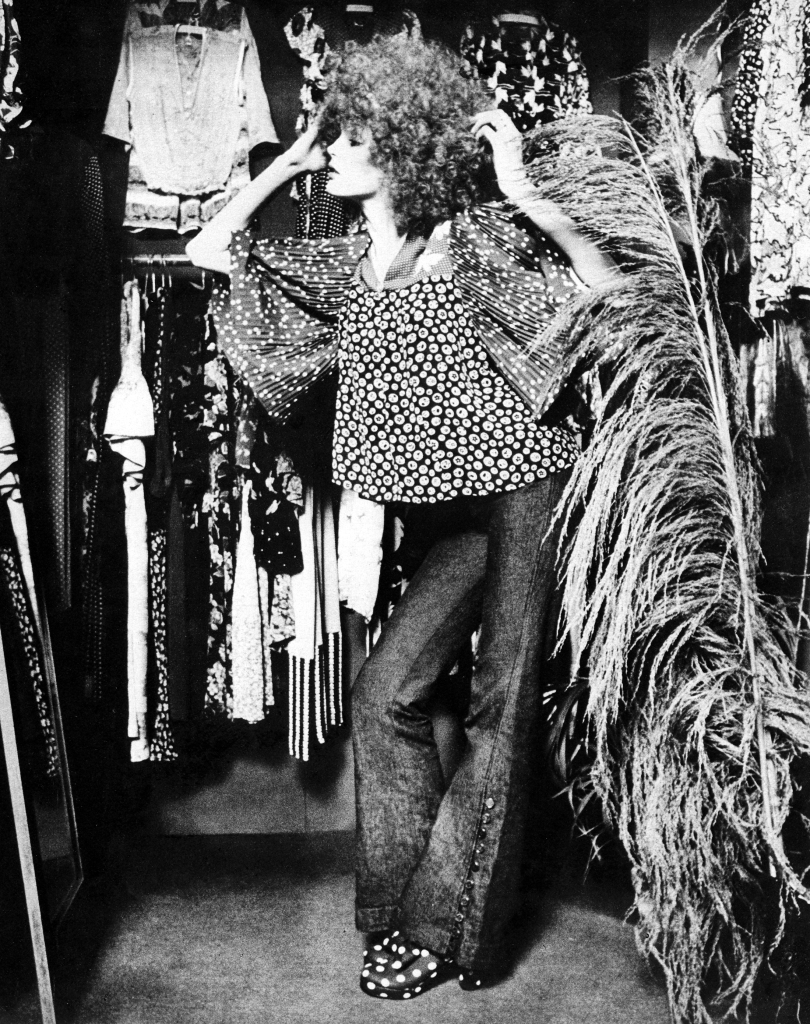
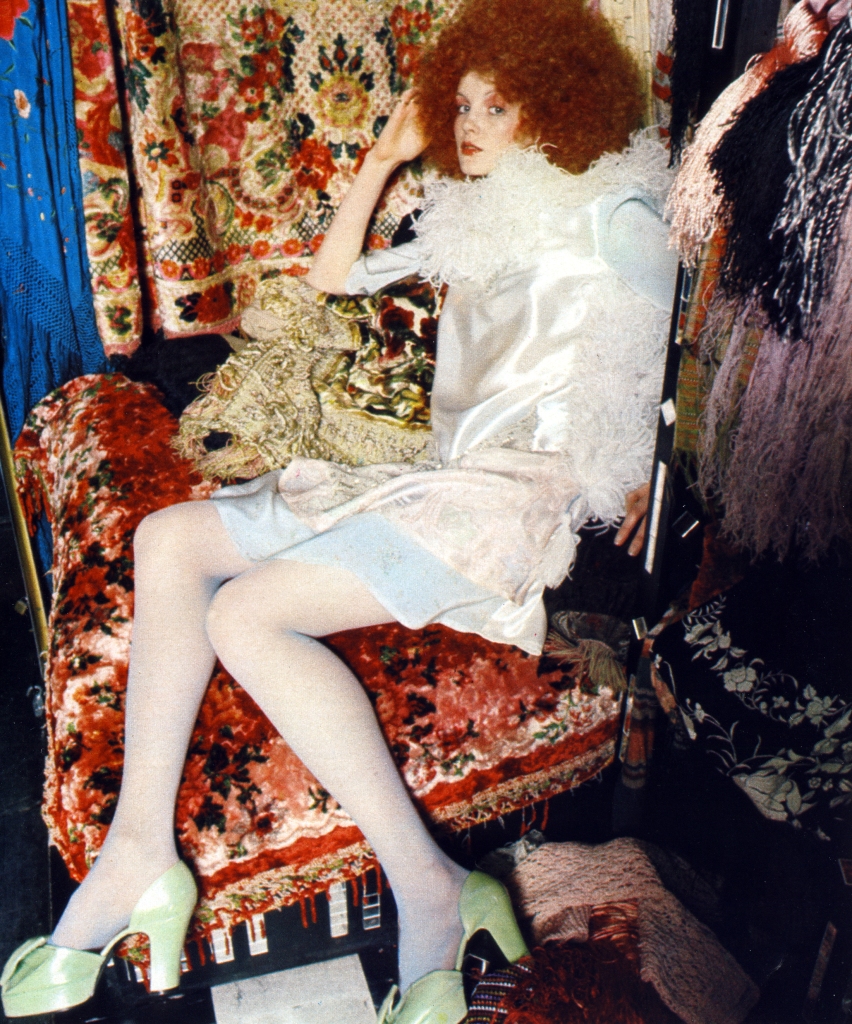
In this age of mass-production, finding clothes that have an individual look is becoming more and more difficult. But a few enterprising minds in London have got round the problem by buying old clothes, in beautiful prints that one doesn’t see these days, and remaking them in today’s styles. Though the styles are repeated, the materials are different and each garment is quite unique. If you don’t live in London, don’t despair. Look around for a clever seamstress who can copy the styles for you. Then, it’s a matter of combing jumble sales, or looking among granny’s cast-offs, for unusual prints. Don’t, however, cut up clothes in good condition. You’ll get a good price for these in London markets. And if you do come to London, go round the markets instead of the stores and boutiques – there’s a lot to be picked up!
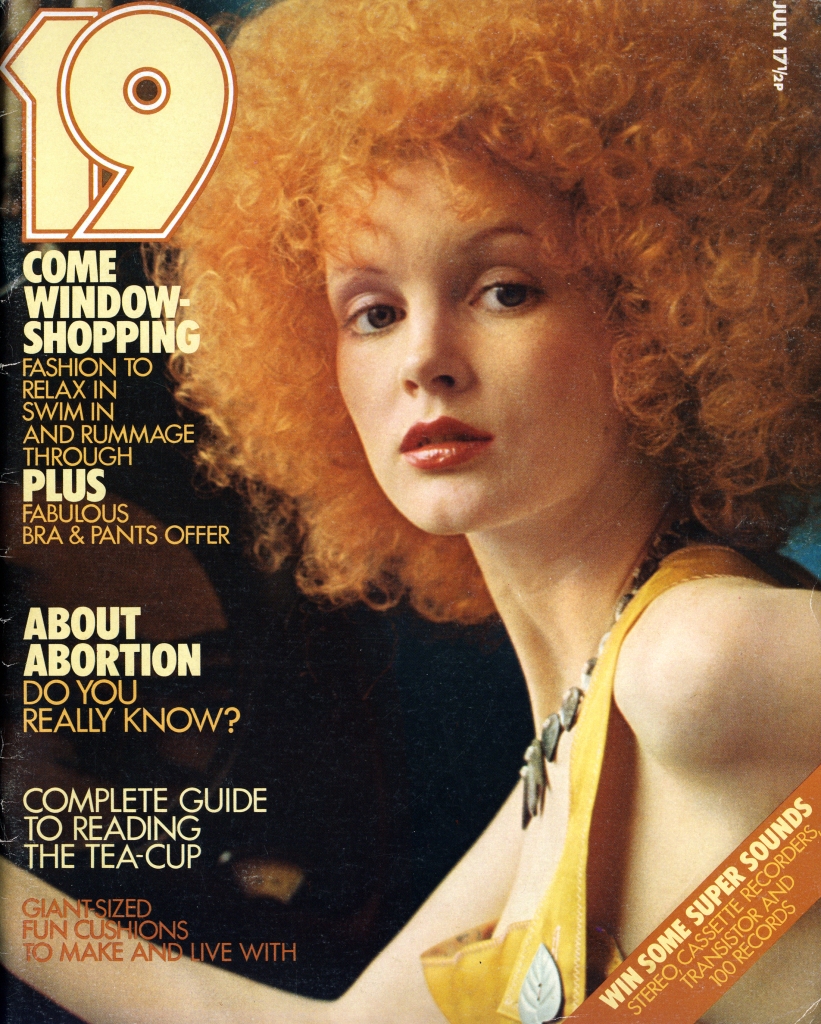
An extraordinarily styled and photographed editorial featuring Van der Fransen, Emmerton and Lambert and Essences, all of whom were trailblazers in the world of vintage and recycled fashion.
This shoot also manages to answer two of my most frequently asked questions: what is your favourite editorial and what do you think the future of fashion will be. The former is probably a moveable feast, although this one is definitely up there with my other favourite, but the latter is still something I believe strongly. Especially in a post-pandemic landscape, I am not sure (and definitely hopeful) that we will ever see the same levels of mass production post-2020. Not for want of desire by the high street shops, but because people have maybe recognised that, actually, they don’t need armfuls of cheap synthetic, single-use garments. Perhaps the aesthetics and principles of these recyclers of the Sixties and Seventies will finally be adopted as our default? We could stop producing new clothes and fabrics right now and probably never reach the end of the piles of recyclable materials. And that’s not even taking wearable vintage garments into account. Do you feel your shopping habits have changed permanently?
Red wig by Robert at Ricci Burns.
Photographed by Christian Larroque.
Scanned from 19 Magazine, July 1972.
Beautiful old sun dress in rayon crepe and silk from Van der Fransen. Tights and shoes from Biba.
Navy and white smock in various prints of rayon crepe and skirt both by Van der Fransen. Tights and shoes by Biba.
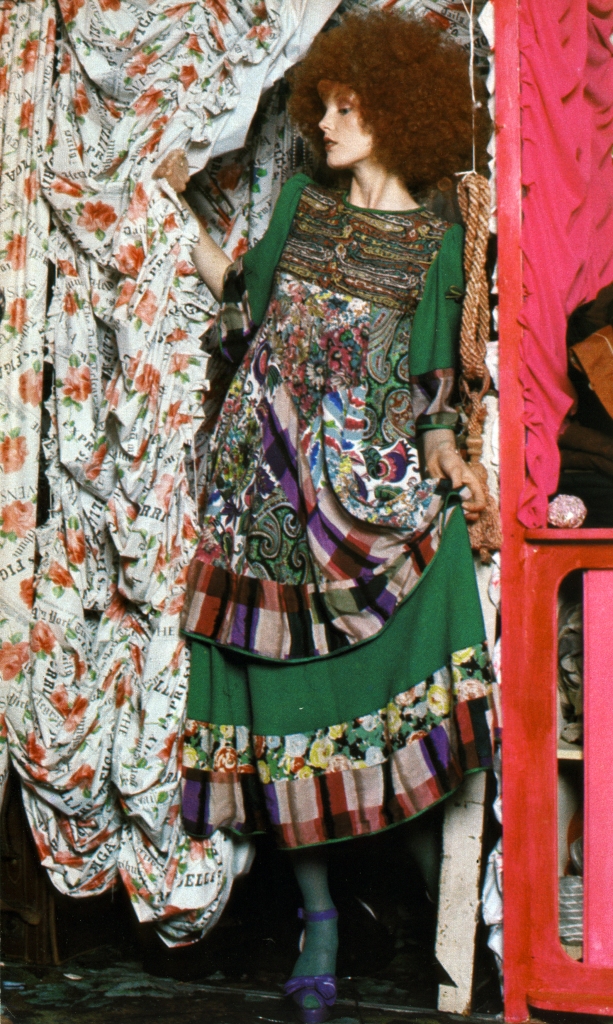
Intricate patchwork dress and long skirt from Emmerton and Lambert. Green tights and mauve shoes from Biba.
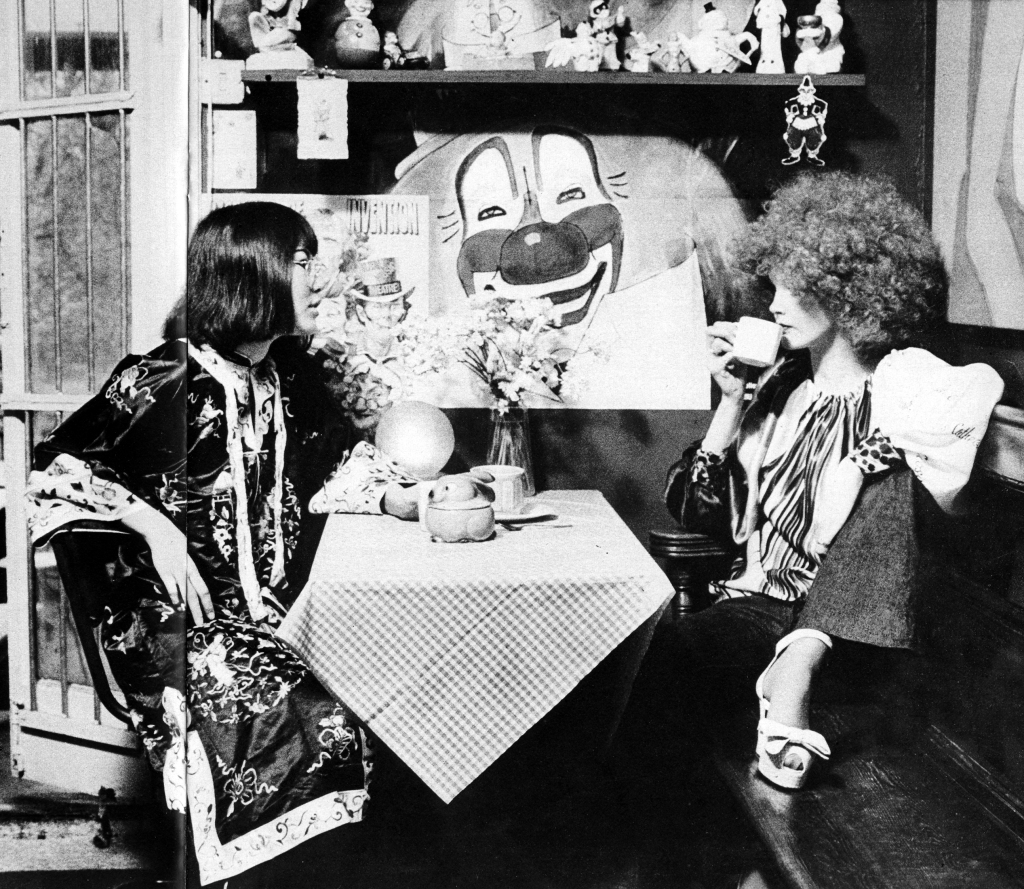
Jenny Kee of Emmerton and Lambert at Chelsea Antique Market, wearing a Chinese kimono and trousers from a selection at Emmerton and Lambert. Model wears a blouse made up of old scarves in satin and silk from a selection at Emmerton and Lambert. Gingham shoes from Biba. Photographed at The Terrace Cafe, Chelsea Antique Market.
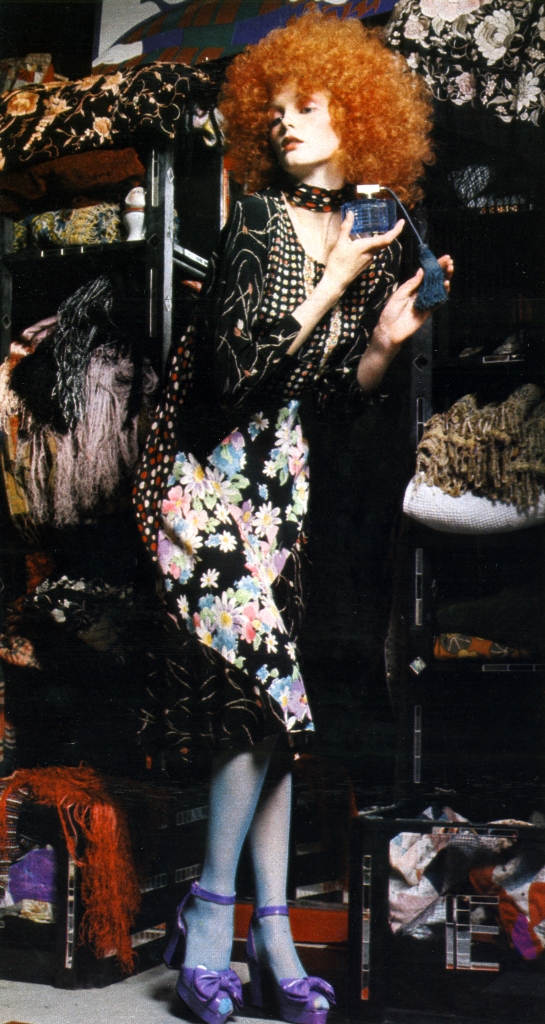
Slinky cross cut dress in various printed crepes and crepes de Chine from Essences. Blue tights and mauve shoes both from Biba. Scarf from Essences.
Patchwork dress of old printed fabrics from a selection at Emmerton and Lambert. Tights and gingham shoes from Biba. Plastic dragonfly at neck from Susan Marsh.
Spotted two piece from Essences. Tights from Biba. Shoes from Sacha. Lovely old shawl from Essences.
Navy blue and white print smock with contrasting sleeves by MEE Designs. Jeans from Browns. Clogs by Sacha. Photographed at MEE Designs at Antiquarius.
White satin Twenties style dress by MEE Designs at Antiquarius. Tights and shoes from Biba.











 Liz Eggleston