
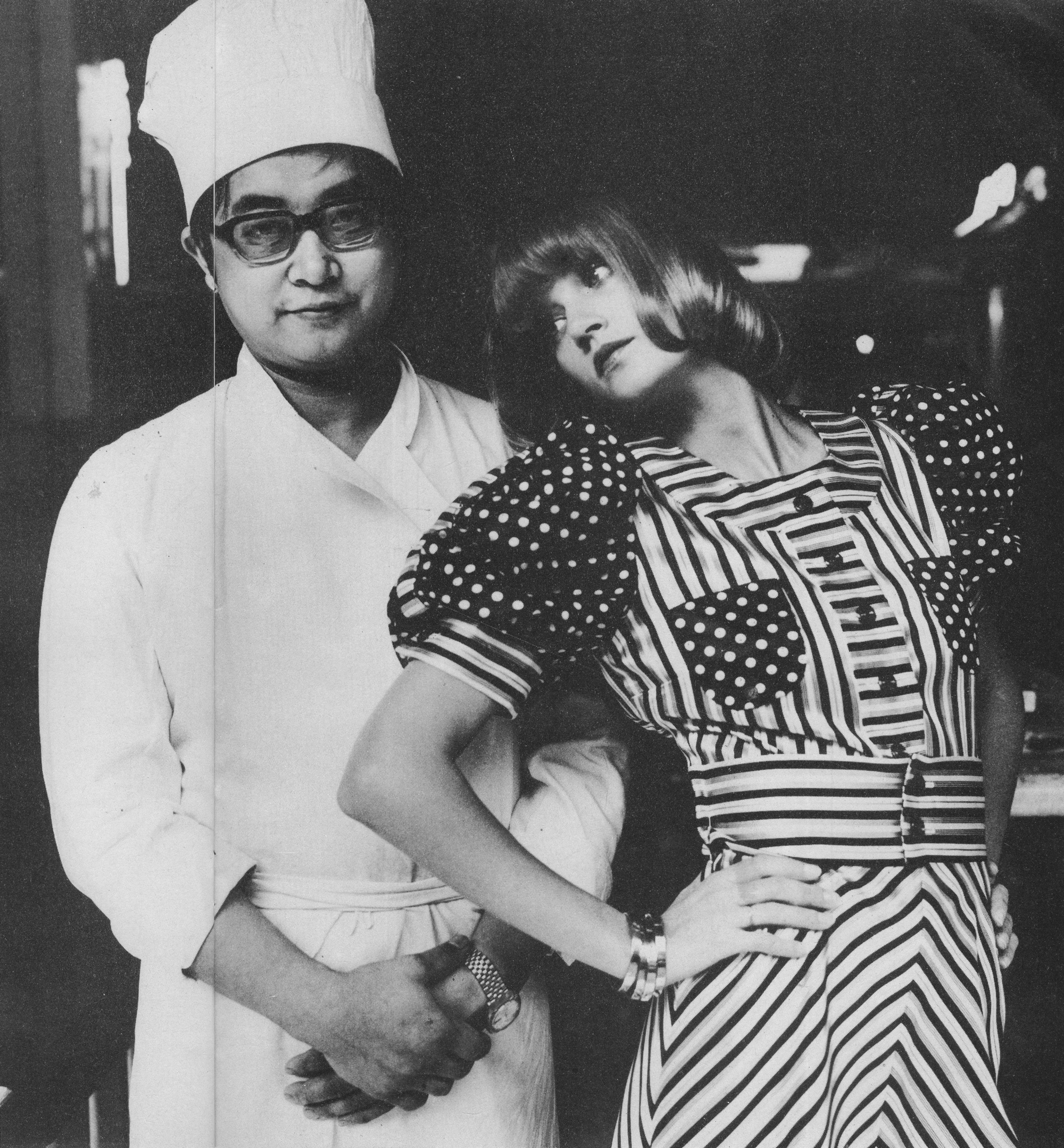
The Winter successor to Summer’s spots.
Photographed by Karl Stoecker.
Scanned from Over 21, August 1972.
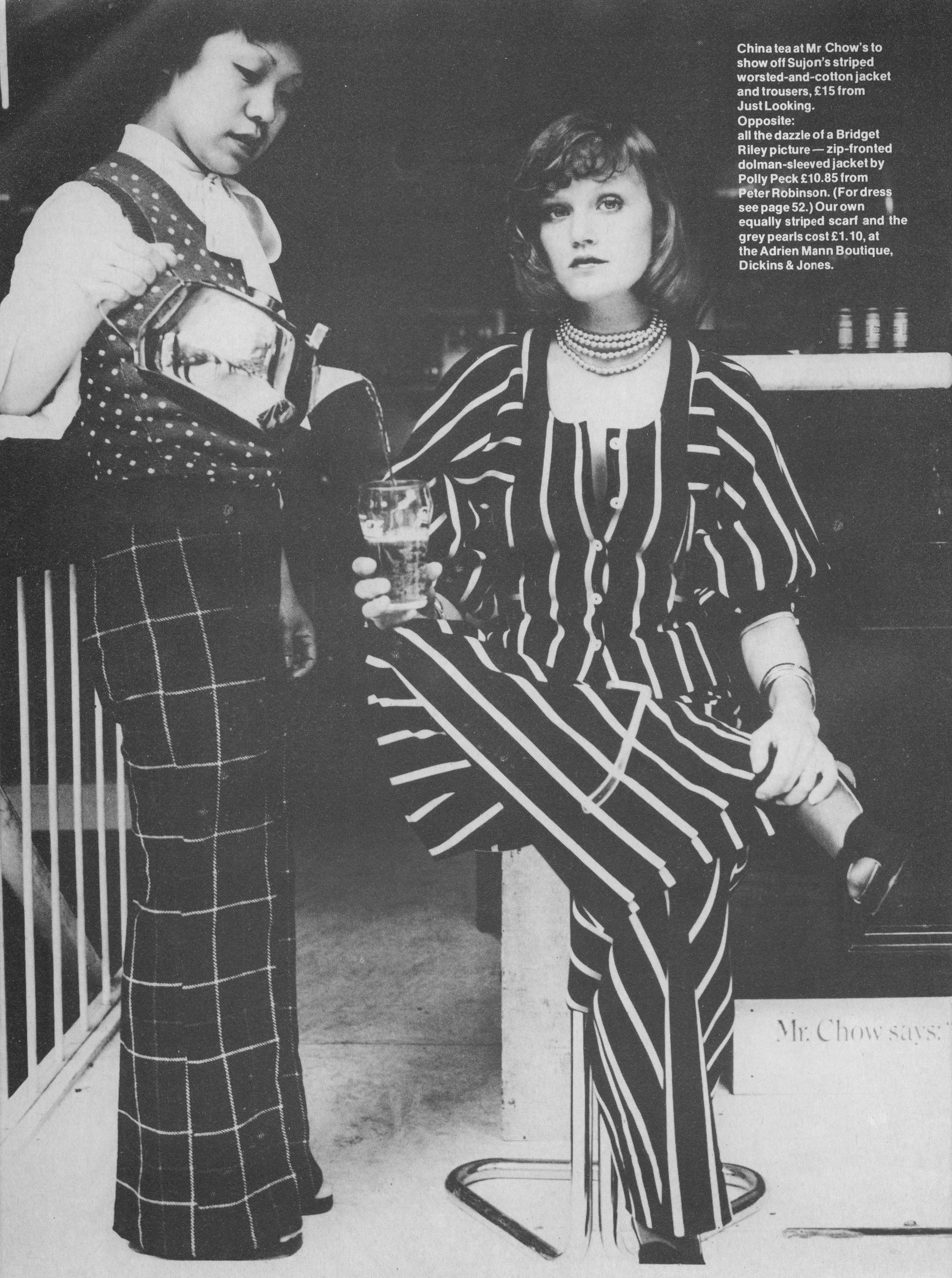
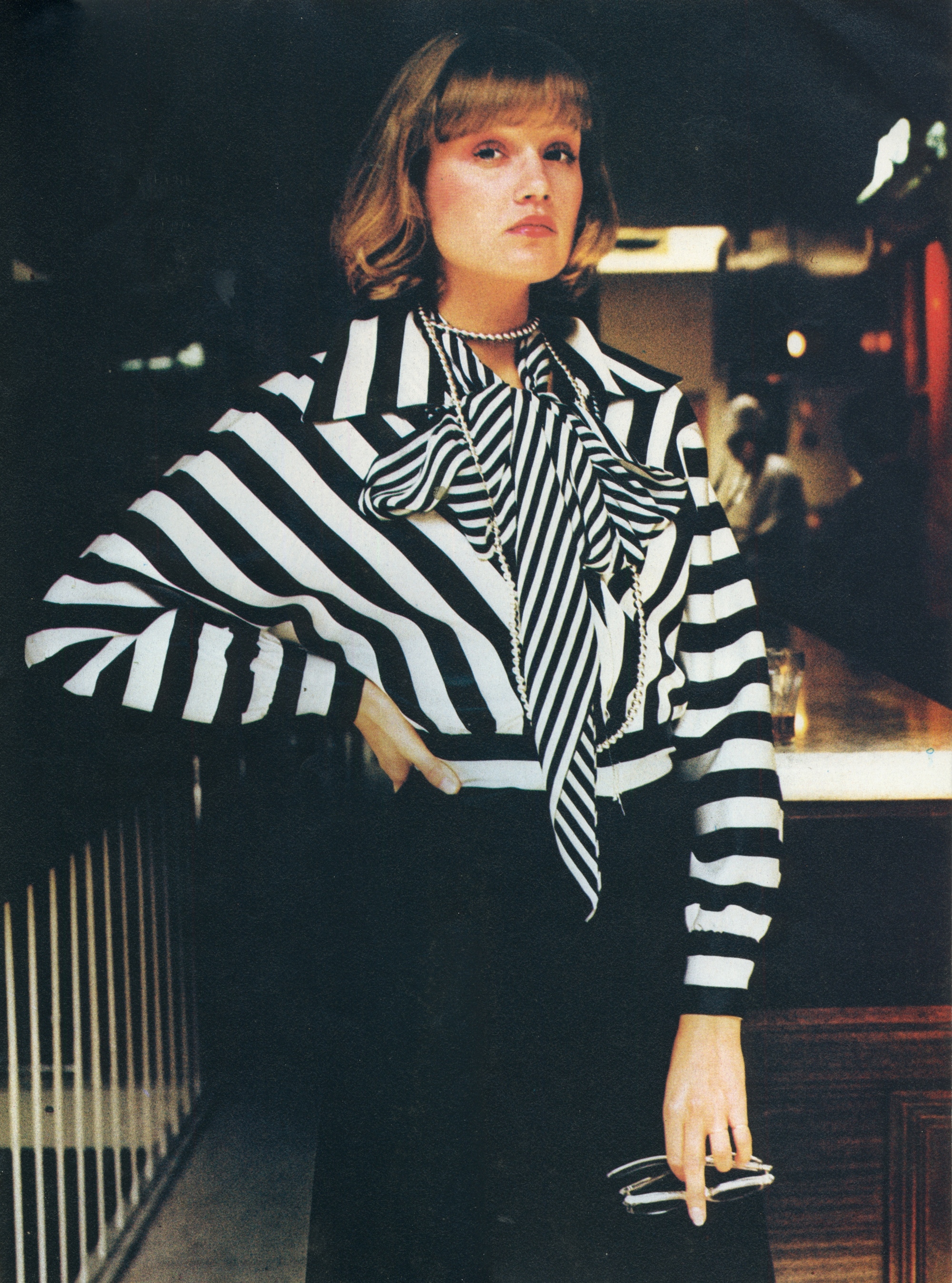
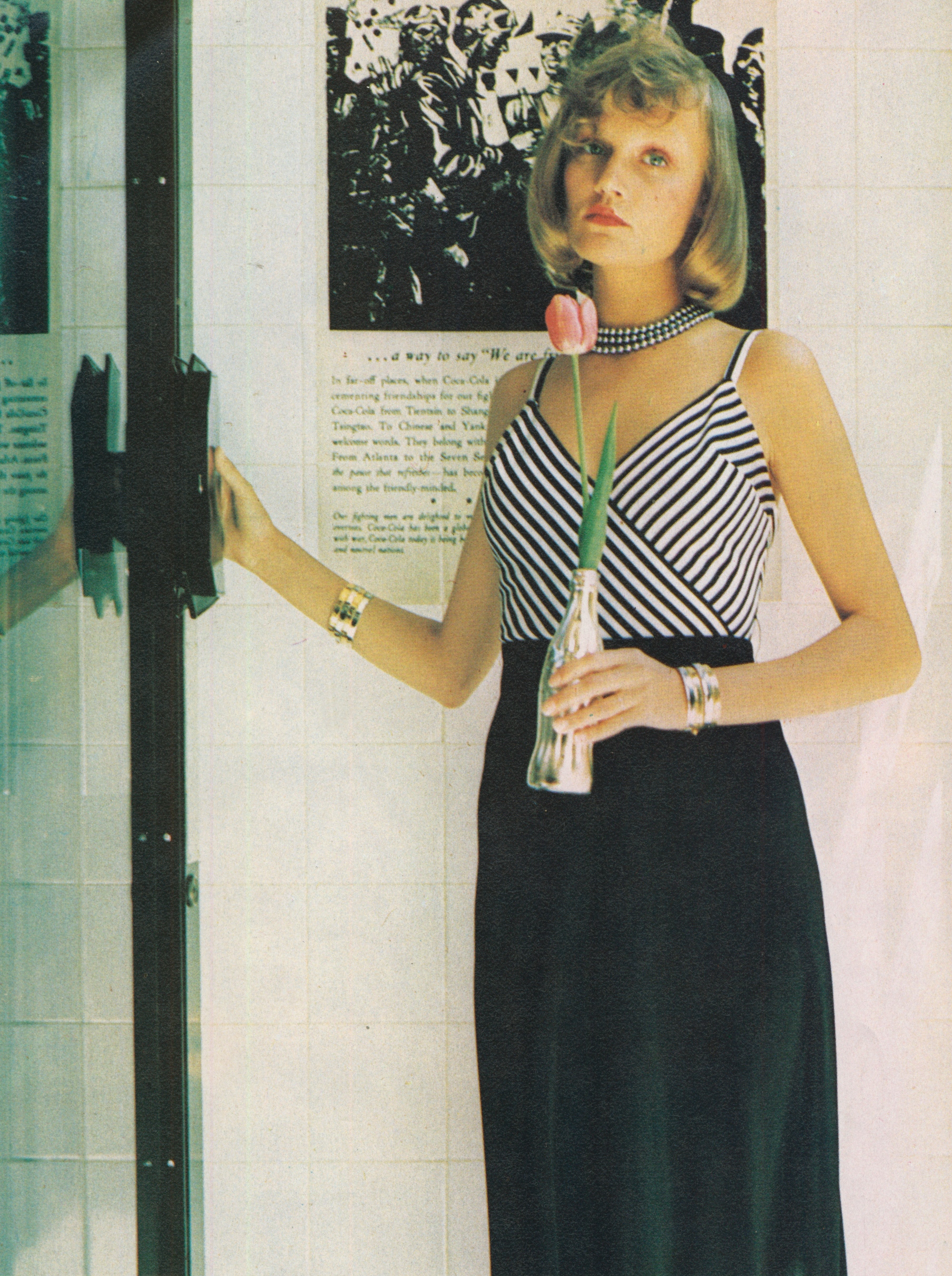

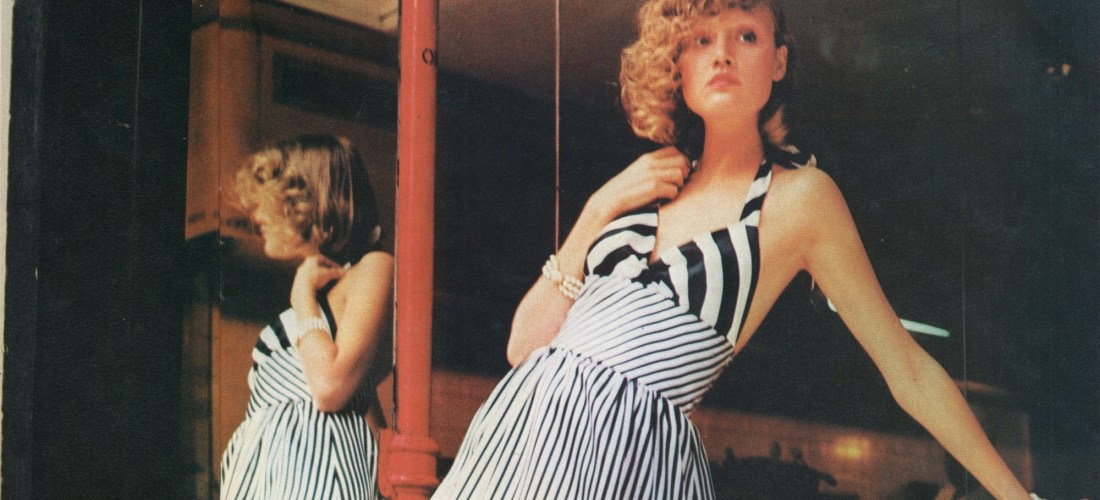
The Winter successor to Summer’s spots.
Photographed by Karl Stoecker.
Scanned from Over 21, August 1972.
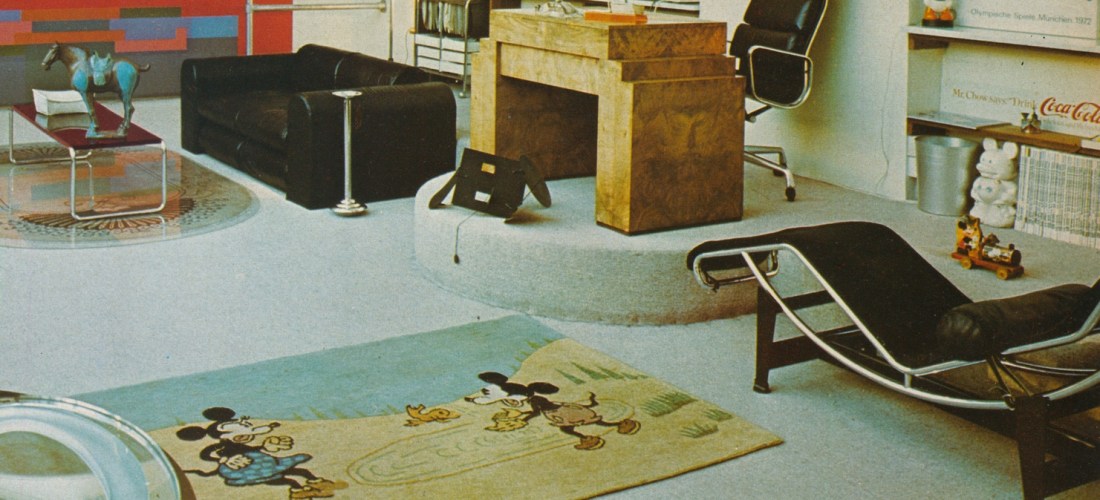
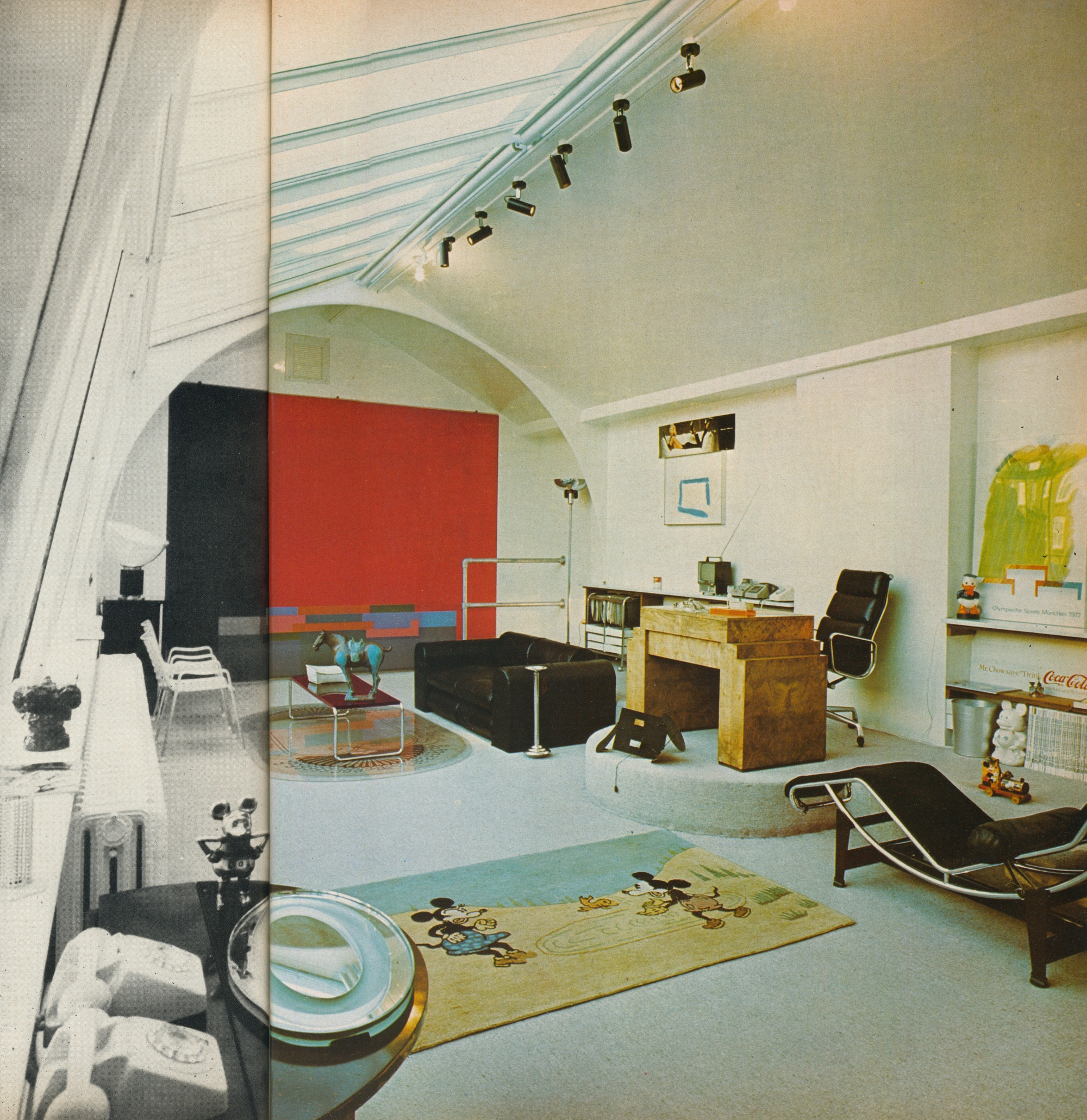
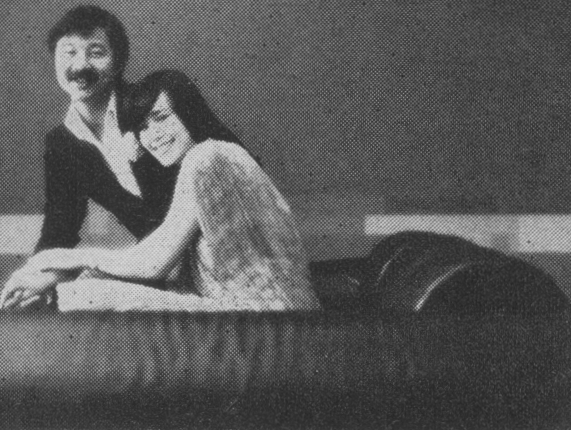
Mickey Mouse is an obsession of Michael Chow, figuring five times, in cast iron, in Chinese rug work, in china, in tin, and even in abstract—Oldenberg’s sculpture in front of the desk. Michael, who runs five restaurants and one club in London, and is opening a restaurant in Los Angeles, is a compulsive collector. His office in a studio flat in Knightsbridge contains a splendid Art Deco desk on a platform, an Art Nouveau rug, two Richard Smiths, and a Robyn Denny, all bathed in Mozart and Bach, with windows opening on to a flower-filled verandah. “It’s a thinking office more than a working office. I sit at the desk and toss a coin for where I’ll go to lunch.” Michael and Tina Lutz were married recently. Tina is wearing an orchid pink mushroom pleat Fortuny bought at a Christie’s sale.
“It’s a photograph dress, not a wearing dress,” says Michael Chow. “And that reminds me of a story. This man sold a thousand tins of sardines, and the buyer rang him up and said, ‘I’ve just eaten one of your sardines. It was disgusting,’ and this man said, `You fool, they weren’t eating sardines, they were buying and selling sardines.’ “
Photographed by Barry Lategan.
Scanned from Vogue, October 15th 1973.
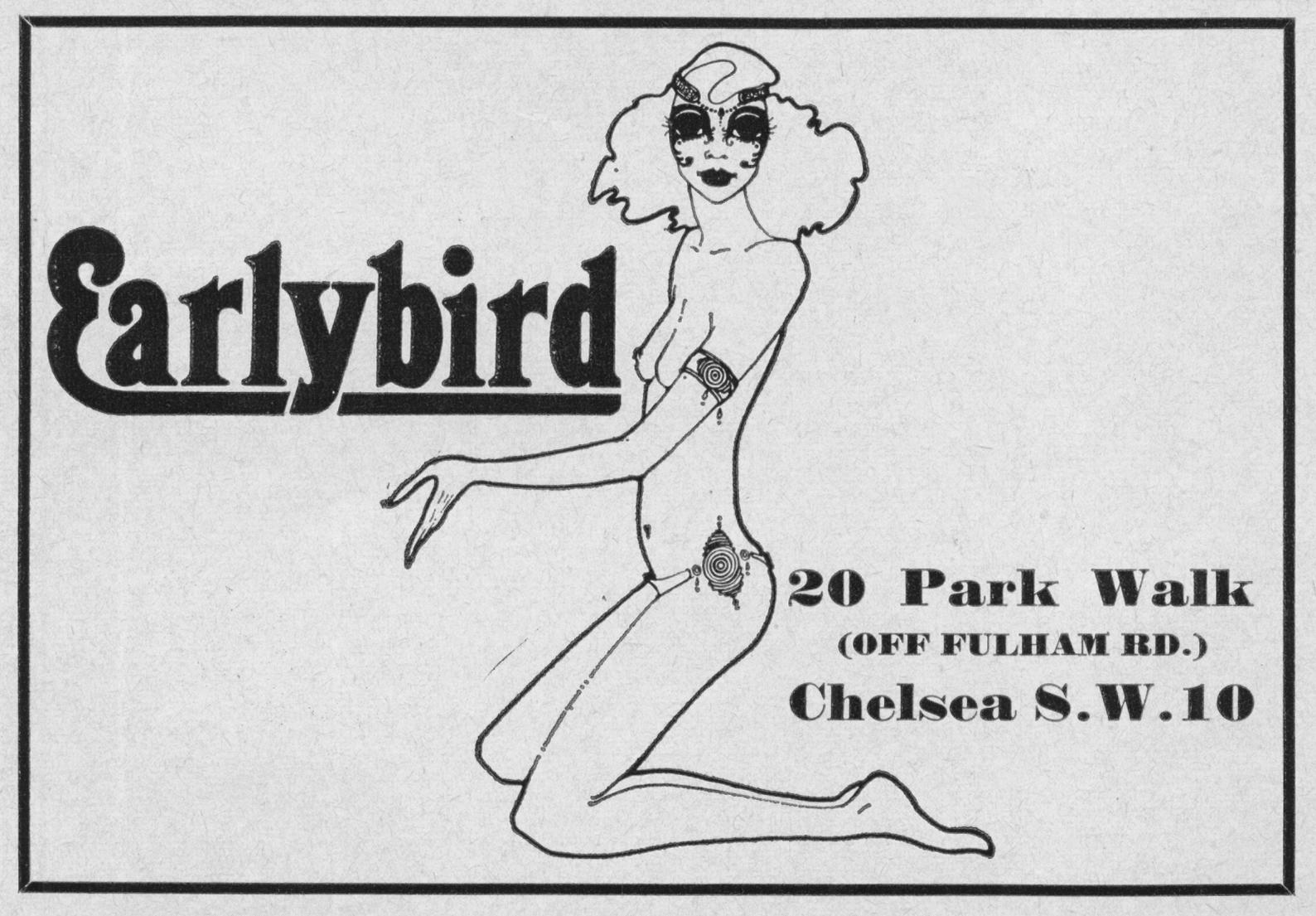
The only Earlybird pieces I have encountered don’t really warrant such a sexy illustration, but it’s always nice to flesh out a lesser known boutique label when you can! The advert accompanies a feature on boutiques in the Fulham Road, with a lovely lengthy description of both Laura Ashley and Boston-151 amongst others.
You can begin on the outskirts of Brompton Village, just past Habitat, with the best of fashion, then move on for miles—literally—past spaghetti, spaghetti, hamburgers, junk and tortoises, the Chelsea Supporters’ Club and Fulham Broadway, until you arrive at Pollyanna’s excellent children’s clothes, 660; The East & West Superette, at 694, continental groceries; Fulham Surplus Stores, 686, bargains like army surplus arctic fleecy coat linings at £5.
Clothes you really want to own: Laura Ashley, 157, a big barn of remarkably low-priced things—Jacqui Smale’s demure print dresses, fine white tucked camisole petticoats, or nightdresses, shirts, print and plain velveteen and corduroy in colours of cloudy blue, dull purple, faded rose made into baggy knickerbockers, capes, shirts.
Boston-151, 151, is Gundrun Boston’s new beautiful clothes place, “filled with all the things I’d like to buy and never can find”. The functional chic workshop design is by Michael Chow. big lacquered tin central changing room, black mirror, clothes easy to look at and get at, a sewing lady sewing away instead of window dressing. Watch for: incredible hand-sewn clothes by Carlos Arias, his peasant print silk and cotton shirts, panne velvet ones too with tasselled ribbons, Mohammedan bloomers and boleros, soft dishcloth crochet dresses inset with Ibiza embroidery. These have clinging tops and flowing skirts and you tie yourself in (he practically never uses zips). There are Turkish mixed prints of marvellous cut, caftans made from rare Edwardian and Twenties fabrics. Kaffe Fassett’s macrame work, wool and string chokers and belts, old stones, ivory elephants threaded in,
hours of work. Boston & Kaffe’s subtle patterned knits, kimonos, sweaters, skirts; Chloe and Jean Muir. Lillian Delevoryas’ picture patchworked clothes. Linen shepherd smocks and jackets with velvet binding. Crochet cloche hats and ties where almost every stitch changes colour. Sexy seamless sweaters. Missoni knitted things from Milan, T-shirts, skirts and trousers so light you can wear several at once, and Kaffe Fassett evolves their colour schemes so you can imagine how lovely they are. Classic tailored trousers. Brown string butchers’ bags. Linen duffle bags stencilled with Boston-151 and made up in the workshops at Wormwood Scrubs. Valerie Goad, 185-7, has grown. She has 30 designs and more of best dresses, midi and long, shirts that match skirts and knickerbockers. There are Liberty wools, plain and print velvets and voile. Everything can be made to measure for a few guineas more, dresses, for instance, are from 19 gns (£19.95). Rene Aubrey, 122, 370 4745, hairdresser, has just opened a men’s salon next door. Early Bird, 20 Park Walk, has long velvet dresses, ruched sleeves, frilly cuffs, or hooded. All washable, 15 gns (£15.75).
Dean Rogers, 60, is a new man’s shop, with excellent-fitting trousers, velvets, tweed, cashmere, home-spun knitting, good belts and shirts. They open until 10.30 pm. Piero de Monzi, 70, is a double-fronted elegant shop with classic French and Italian clothes for men and women. Shirts from 5 gns (15.25) in delicate prints, exuberant Ken Scott prints, plain voiles, fine jerseys. Daniel Hechter suede and fleece greatcoats. Belts from 4 gns (£4.20), weighty affairs of hide and snake and brass. Suits, jackets, trousers, in bird’s eye tweed, velvet, gabardine, denim. Italian shoes, 16 gns (116.80). Next month an early spring fall of languid V de V clothes, moons, stars, wavy bands and boats knitted in. One partner, Alain Mertens, has opened the DM Gallery next door, 72, with Paolozzi, Hockney, multiple multiples, chic Italian design as in the perfect transistor. Imogens, 274, is ethnic: Palestinian embroidered wedding dresses, Kurtas, burnooses, shawls, belts, Israeli glass, Middle Eastern rugs and trinkets.
Afew months ago Kjeld Jacobsen opened Danish Silver Designs at 84. He’s a goldsmith turned business man, the jewellery shown comes from about 10 workshops in Den-mark and has a nordic coolness—strange pale stones, precise curves and spirals, 80 per cent in silver, a little gold. Special orders are dealt with by Jens Torp who can be seen at work through a window in the back of the showroom; this keeps the customers happy while they wait. Prices from £24100. Opposite the Queen’s Elm pub is that smart new block. There’s Alistair Colvin, 116, decorator and antique dealer, a drawing-room-sized shop, bizarre and interesting pieces. Zarach, 110. They’re the Sander Mirror Company, with elegant modern design grafted on. Downstairs there’s a new mirror showroom, looking glass in fifteen shades, antiqued, smoky, marbled, tortoiseshell, almost any effect -you could wish for, from £3 per square foot. Upstairs, with David Hicks black and white carpet, royal tartan blue walls, are beautifully designed things from Italy like Perspex ice buckets, boxes, clocks, spot lamps; status bibelots, work by Ciancimino, Billy McCarty, Tony Stubbin, Jon Bannen-berg, all Hicks carpets of course. Look out for the Italian gong chair. Rubber stretched on a round chrome frame and comfortable.
Travelling on to the heart of the Fulham Road, Charles Quinlan, 309, does upholstery work, recaning, polishing, loose covers and curtains. Tulleys, 289, have everything and endless windows of second-hand furniture, pale ranks of calico-covered sofas and chairs. Humpherson, 186, are the builders’ merchants who have a three-floor showhouse of bathrooms and kitchens. Solarbo, 230, make pelmets, curtain rails, cupboards, sliding doors, louvred doors (made to measure for no extra cost, and in do-it-yourself kits), a flexible shelf and drawer storage system with clear plastic or white wire baskets. Jonathan Minns, 1a Hollywood Road, a few feet off the Fulham Road, is a fascinating machinery shop, industrial and scientific antiquities, model ships, traction engines, locomotives like Birmingham Piddlers, extraordinary machines for extraordinary work like stitching army tents in Poona. All serious stuff and remarkably pleasing to look at. If Mr Minns isn’t driving traction engines at 6 mph through the countryside, or setting up museums with his new company Industrial Originals, he’ll be in the shop to explain it all. Hollywood [a.k.a The Hollywood Clothes Shop], 10 Hollywood Road, has ravishing thirties and forties clothes. From here down to Stamford Bridge are small nests of antique shops. Among the most interesting: Goldsworthy, 346, for a pair of gilded Siamese umbrellas. Stephen Long, 348, with painted bamboo, doll’s house furniture, tapestry bell pulls, bits of this and that, biscuit tins, patchwork quilts, books on bezique and cribbage, all the charming funny household paraphernalia of the past 150 years. Arthur Brown, 392-400, has everything. Perce Rye, 495, has Invincible Motor Policies.
And go back to Finchs, 190, for a drink, to find the village nucleus of excellent food shops and eating places. Hazel’s, 172, sell the finest fruits and vegetables. There are specialists in kebabs, ice-creams, pizzas, traditional English fare (as in Hungry Horse, 196). If you don’t wish to queue for hours outside The Great American Disaster, 325, for the greatest hamburgers and milkshakes this side of the Atlantic, then try the new Parsons Café Royal & Old Spaghetti Factory, 311: spaghetti, choice of six sauces, garlic, bread and salad for 9s (45p).
Text by Antonia Williams.
Scanned from Vogue, February 1971.
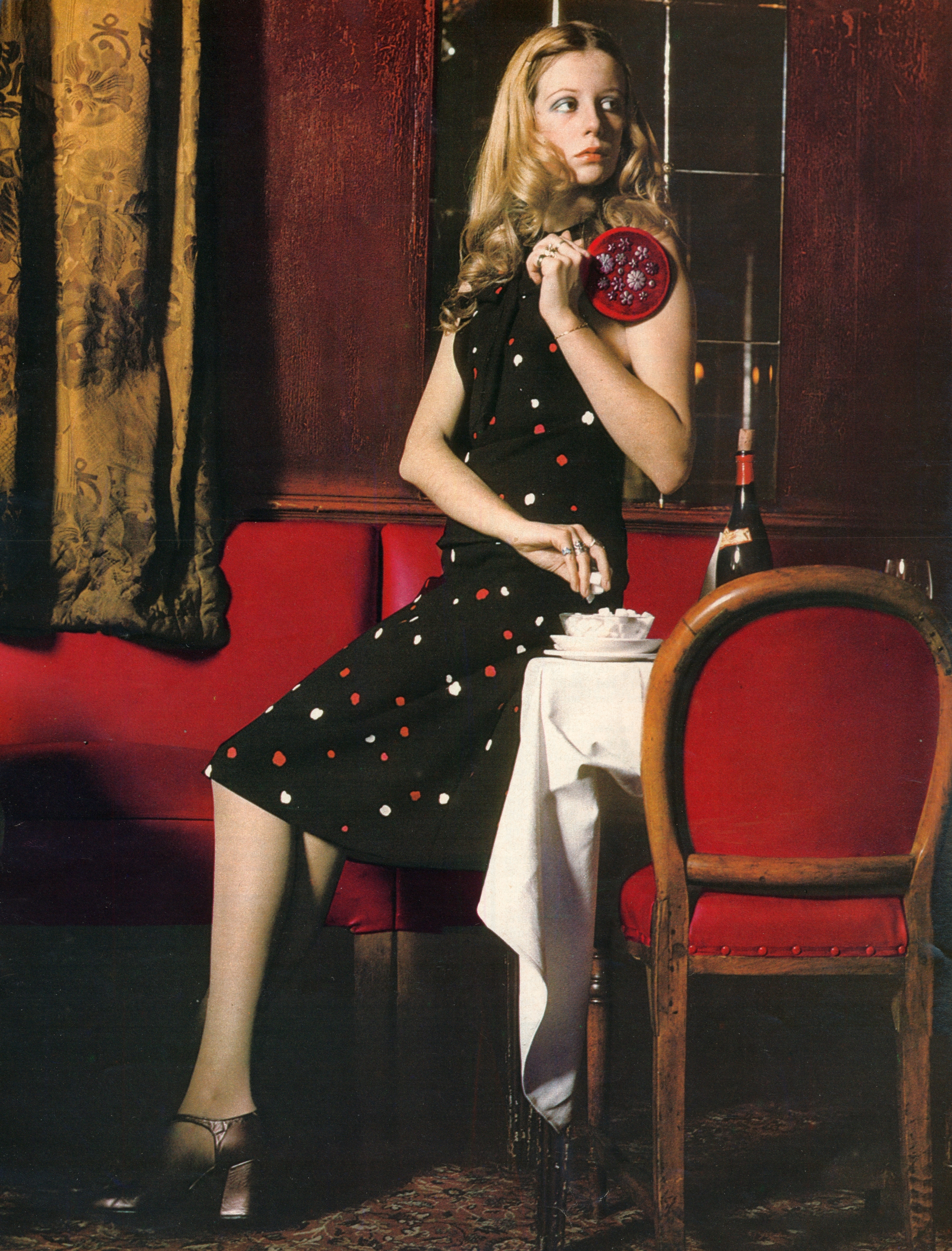
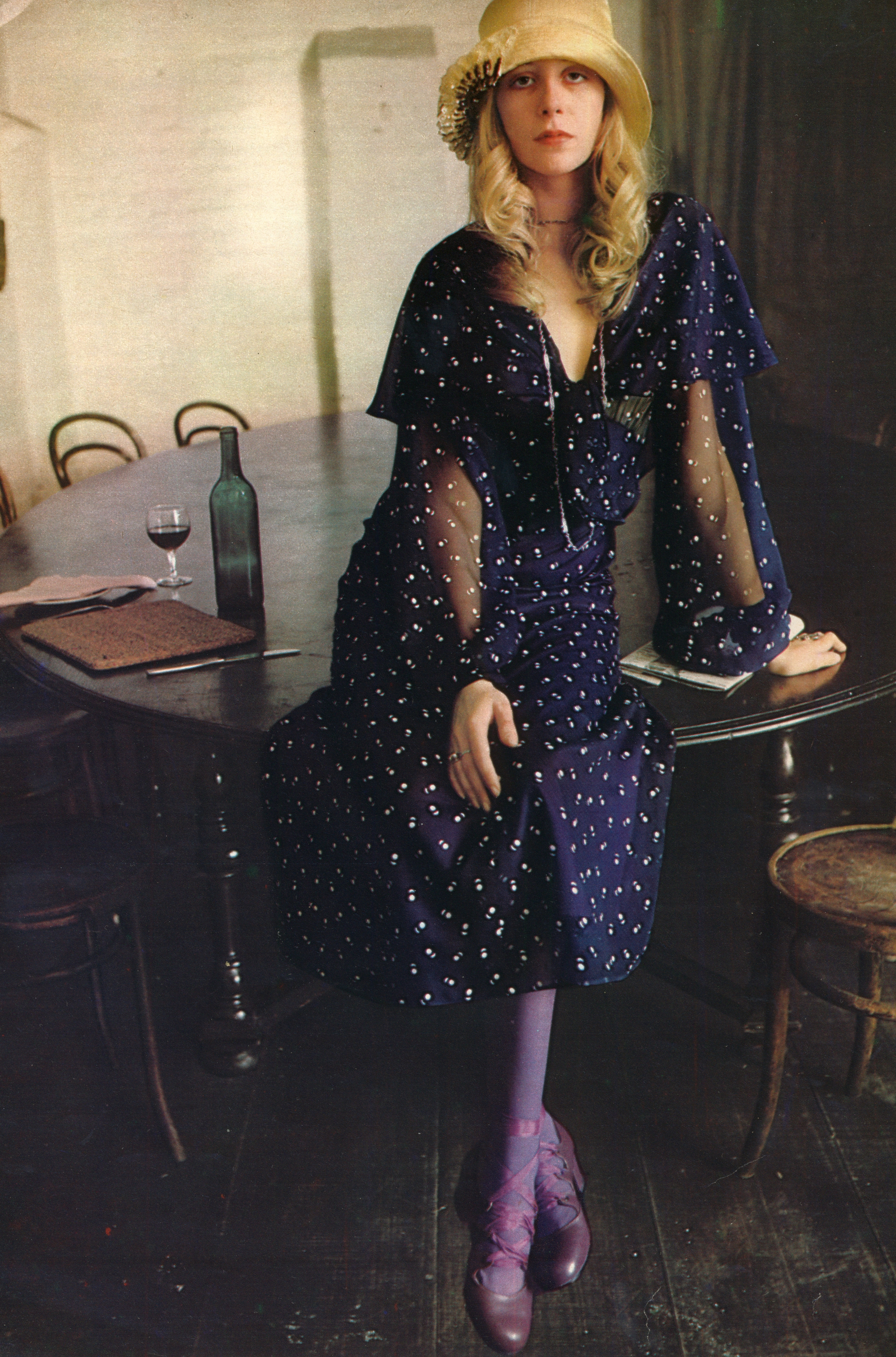
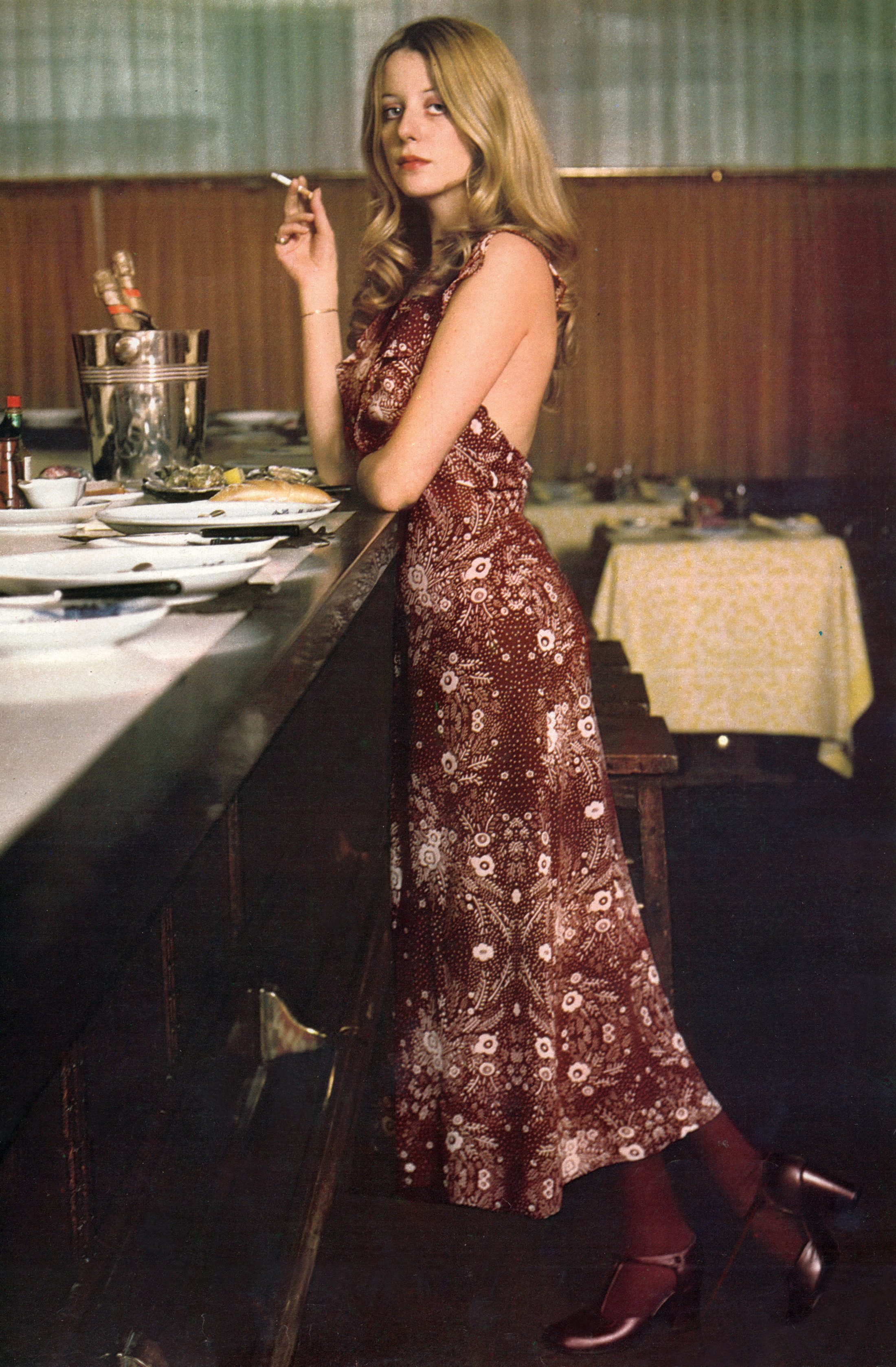
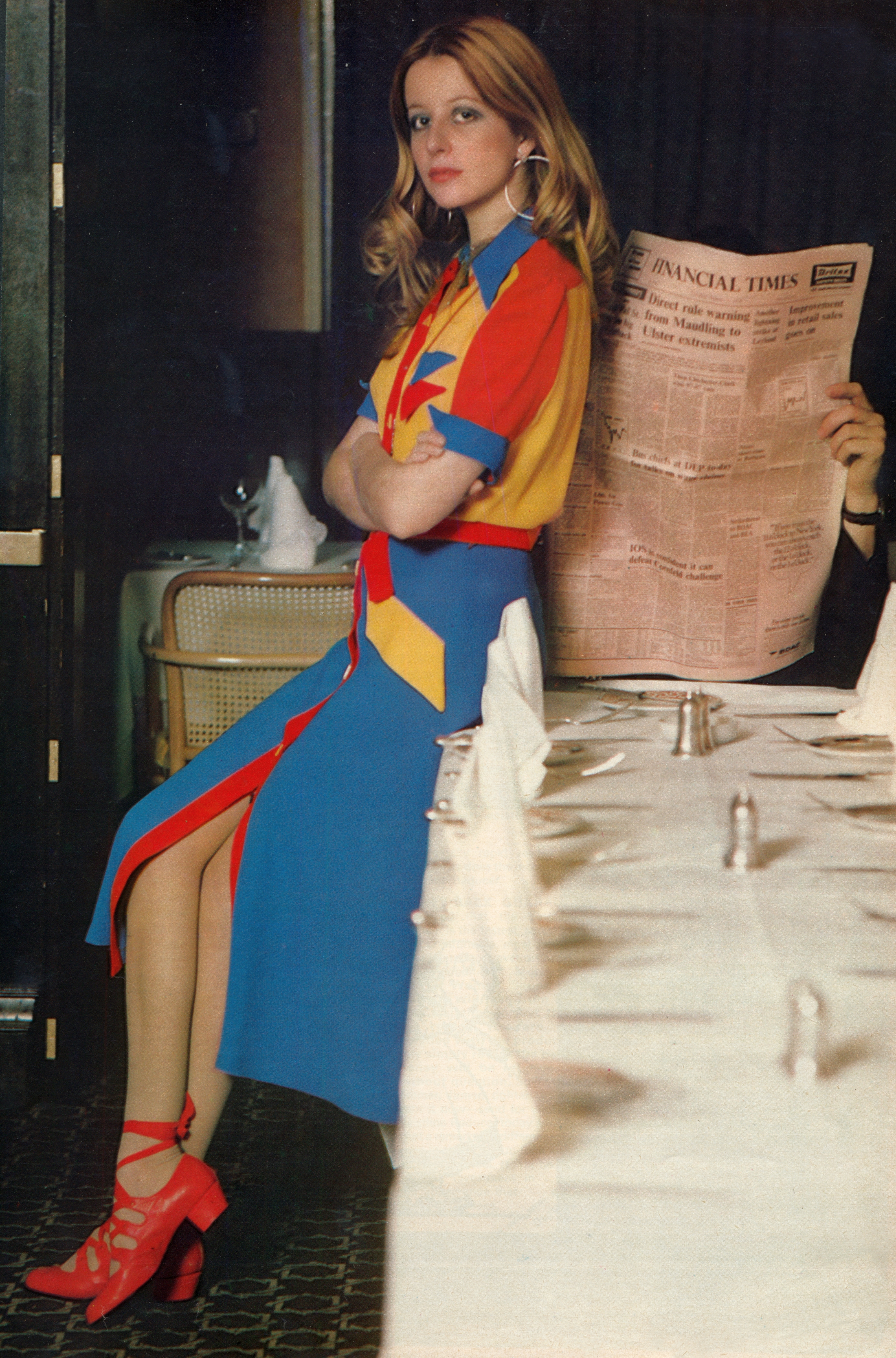
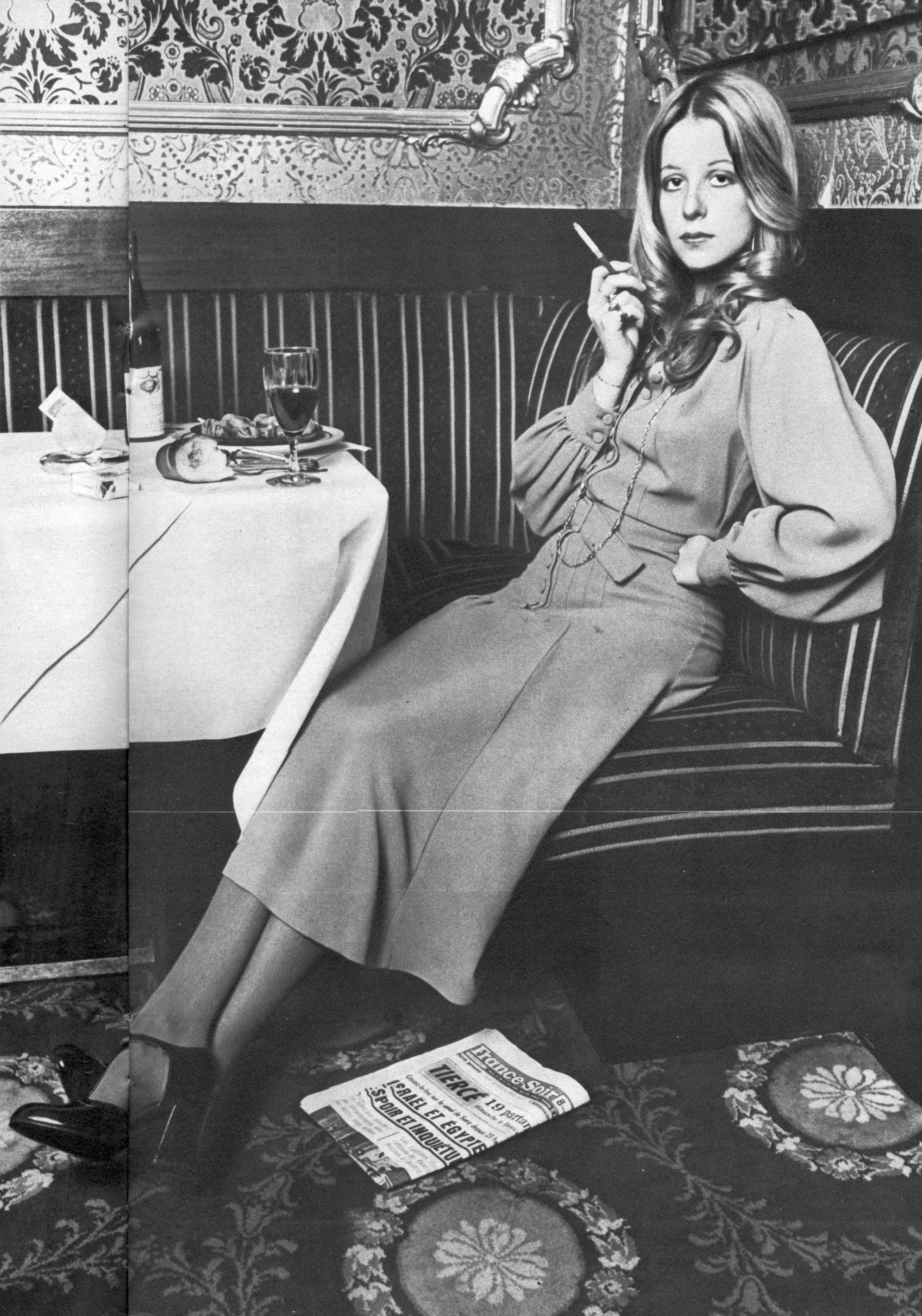
Every girl, if only once in her life, gets the opportunity to eat out at one of London’s smart restaurants. so when the time comes you may as well make the most of it. The main thing is not to feel intimidated by your surroundings. but to be very cool and nonchalant. as if you do it all the time. (No slumping down in your seat or staring around the room with your mouth open.) If you just don’t understand the menu. ask your escort or the waiter. don’t just point to something and hope for the best. Make sure your hair is clean and shiny. and please don’t have it set and lacquered (very uncool). Wear some-thing soft and romantic in crêpe or voile, that moves well when you walk. or a halter-neck dress with a low back to make the most of the remains of your summer tan. Make sure your dress length isn’t mini (it might be the only one in the room. and then they’ll all know you’re from out of town). Don’t spoil the effect of your midi with the wrong accessories—wear a pair of new Granny shoes with the higher heel and bar strap for added authentic ‘Forties’ glamour.
Ignoring the title (which I have, as always, left for posterity) this editorial is pretty damn perfect. On the cusp of what we more clearly think of as ‘Seventies’, just before platforms and the extremes of Glam, but turning its back very determinedly on the ‘Swinging Sixties’ and looking further back with nostalgic eyes. It’s also a delicious, possibly unique, snapshot of the most fashionable restaurants in London at the time.
Model is Charlotte Martin.
Fashion by Norma Moriceau.
Photographed by John Bishop.
Scanned from 19 Magazine, November 1970.

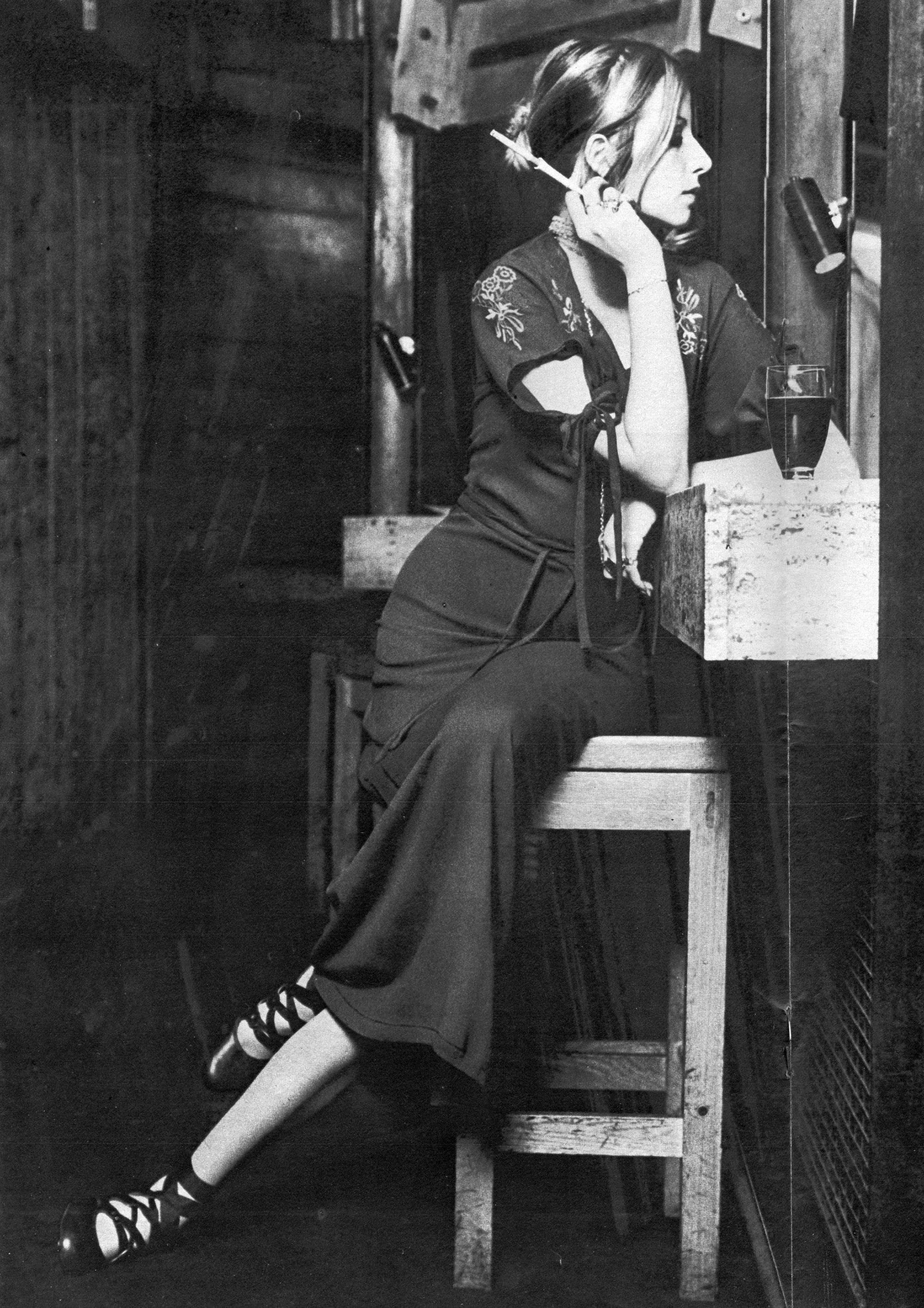
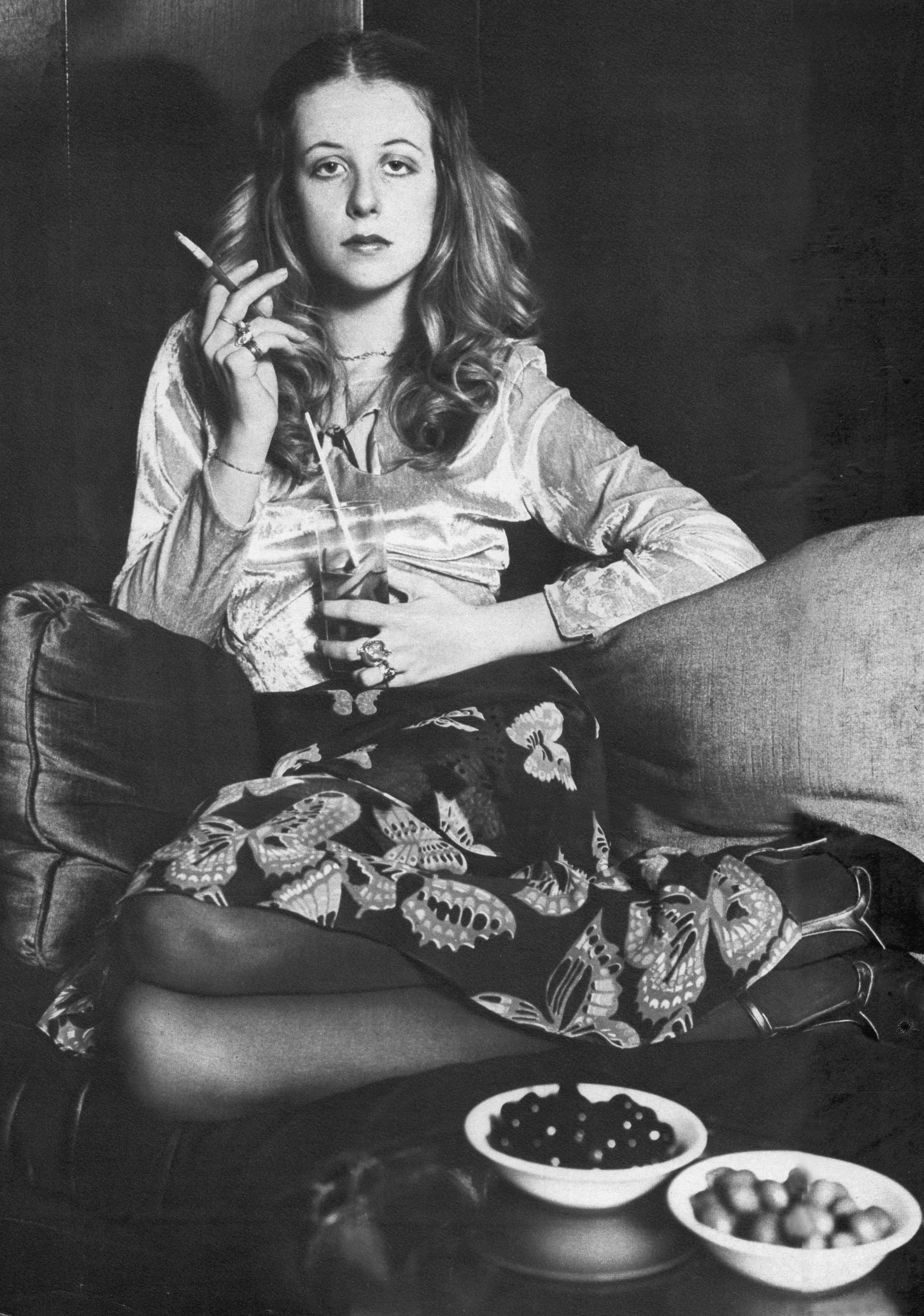
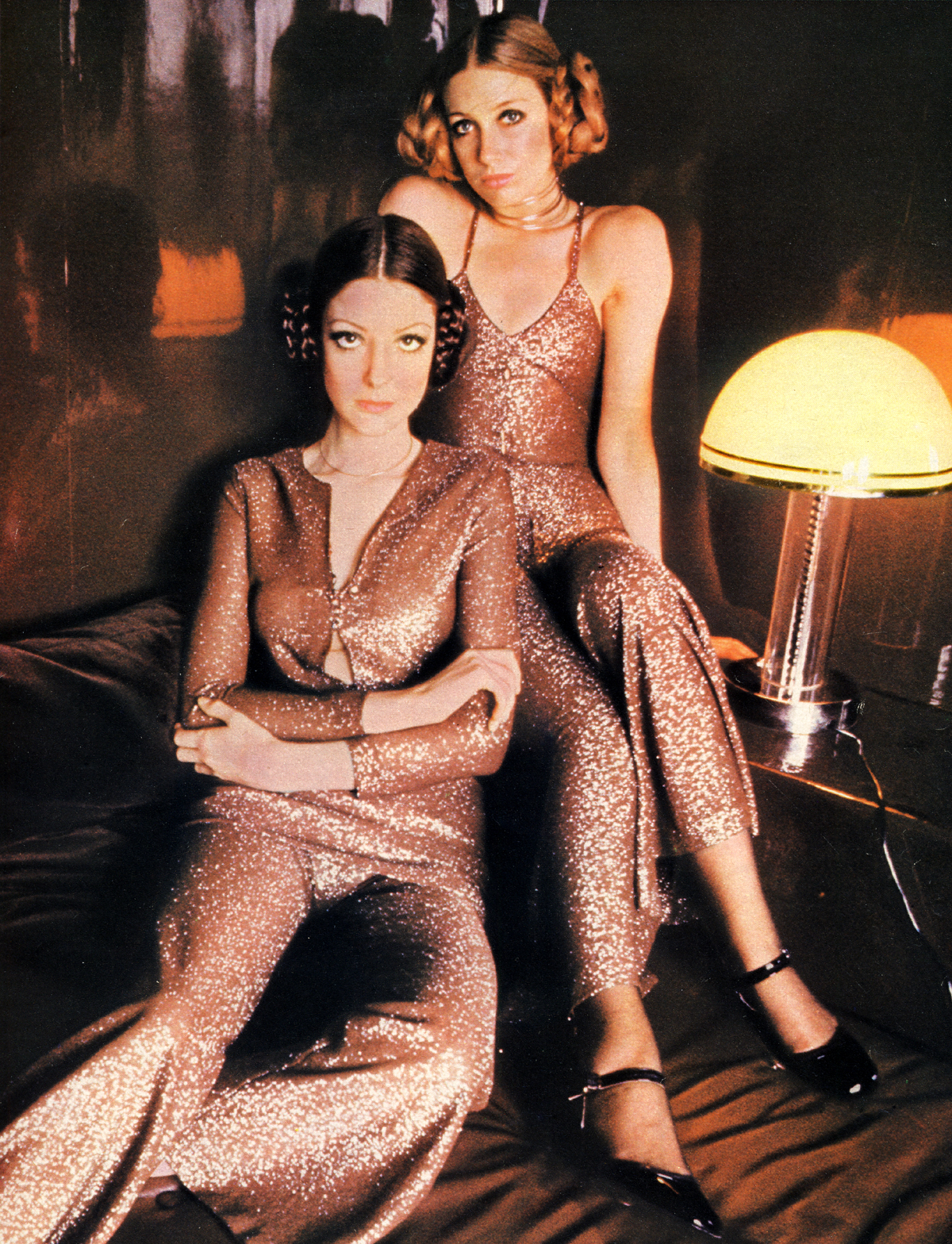
Bitter choc lurex suit by Pourelle, 13gns. Cat suit with fine straps by Pourelle, 12gns. Shoes by Dolcis, 89s 11d
Out of the sombre tones of last year’s black evening dress, emerges the exciting new glitter story for autumn. Light-as-a-feather Lurex, made up into cool, clinging styles, helps you shimmer through those soft, romantic evenings.
Photographed by Stuart Brown in the flat belonging to interior designer John Wright of Walker, Wright and Schofield, and also in Mr Chow’s restaurant.
Scanned by Miss Peelpants from 19 Magazine, September 1969.
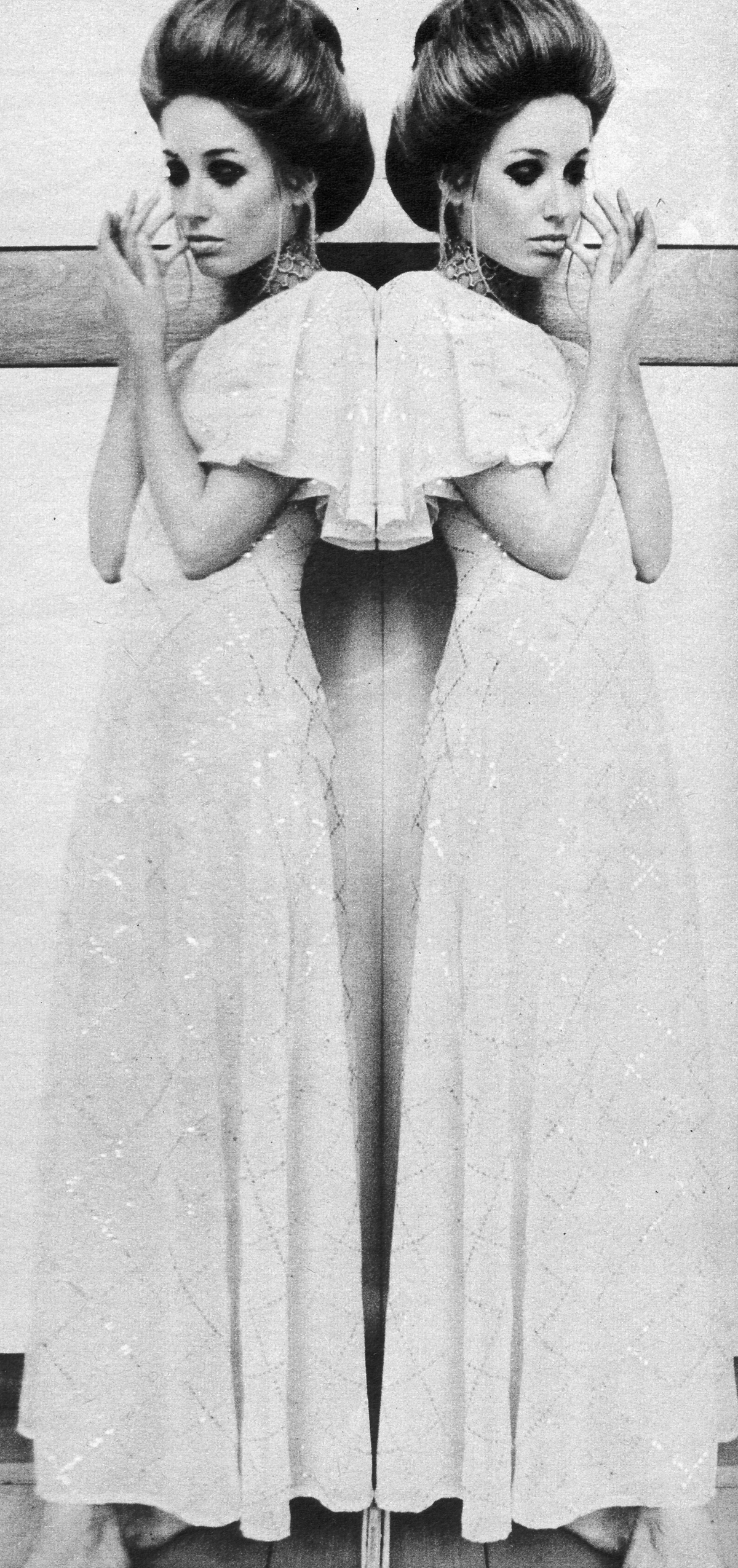
Pink silver-sequined georgette dress by Gillian Richard, 11gns.
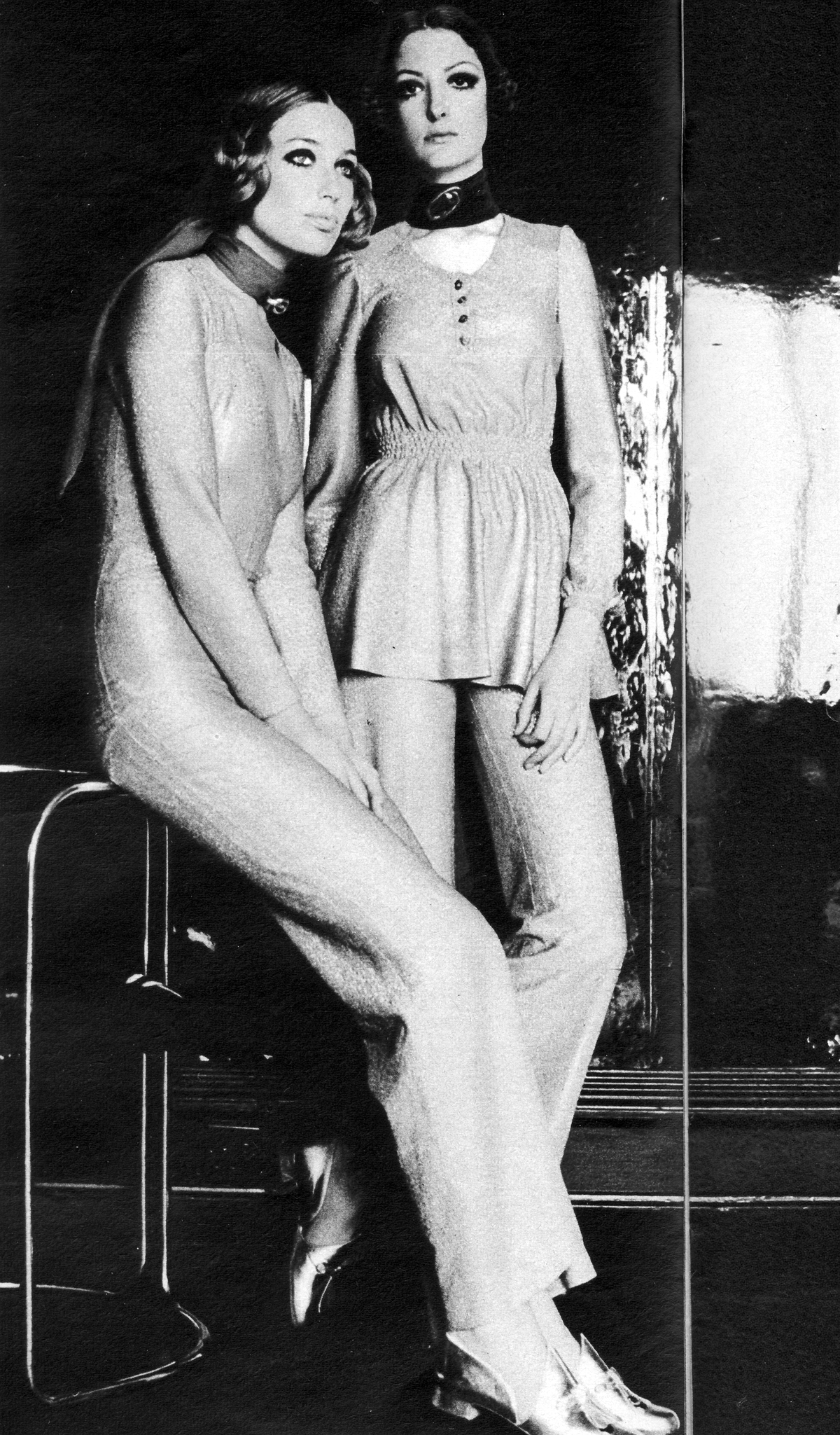
Gold lurex jumpsuit by Pourelle, 13gns. Gold lurex dress and trousers by Pourelle, 13gns. Shoes from Russell and Bromley, £8 9s.
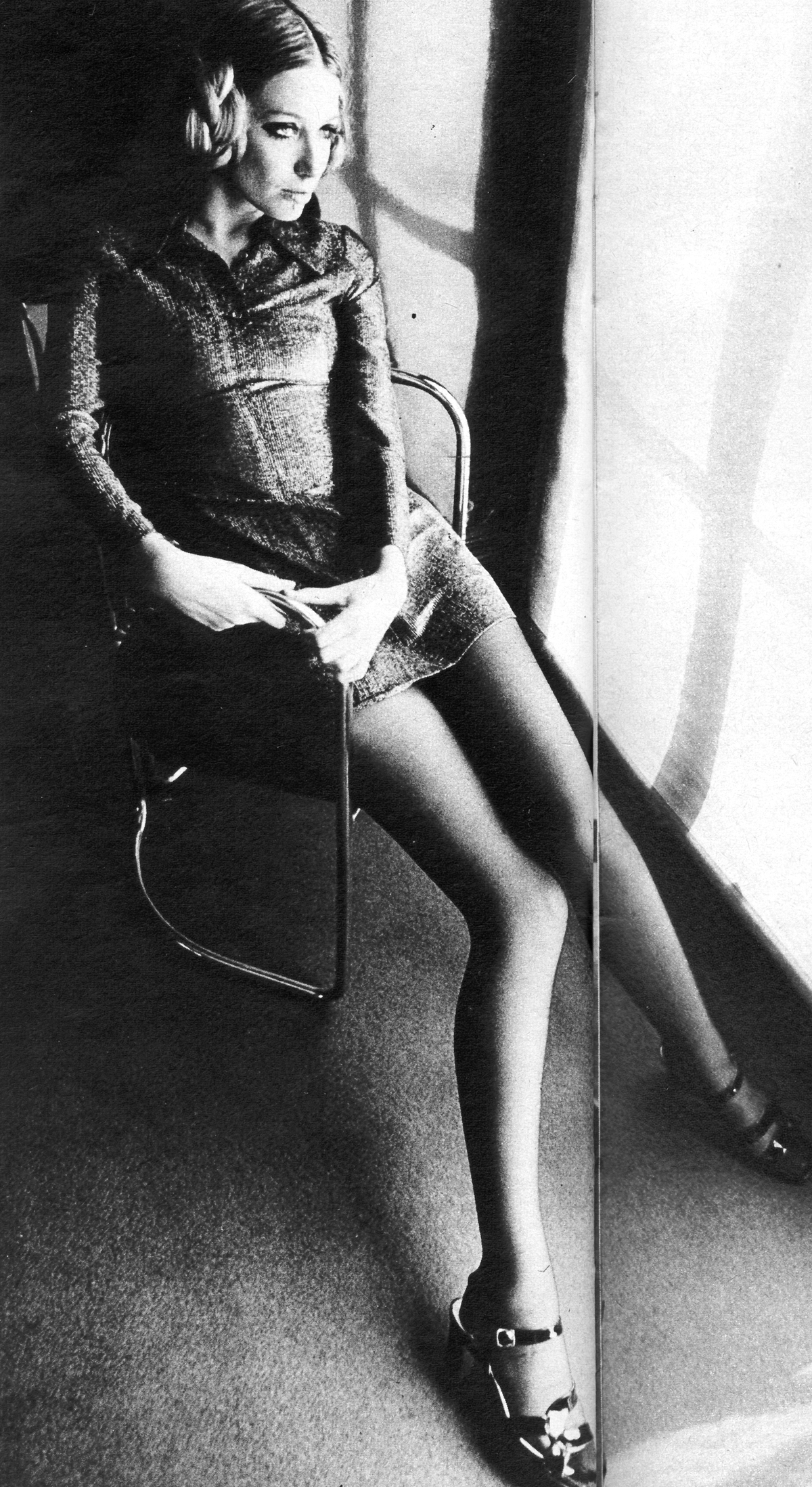
Bitter choc lurex long sleeved dress by Pourelle, 9½gns. Black shoes by Elliott, 7gns.
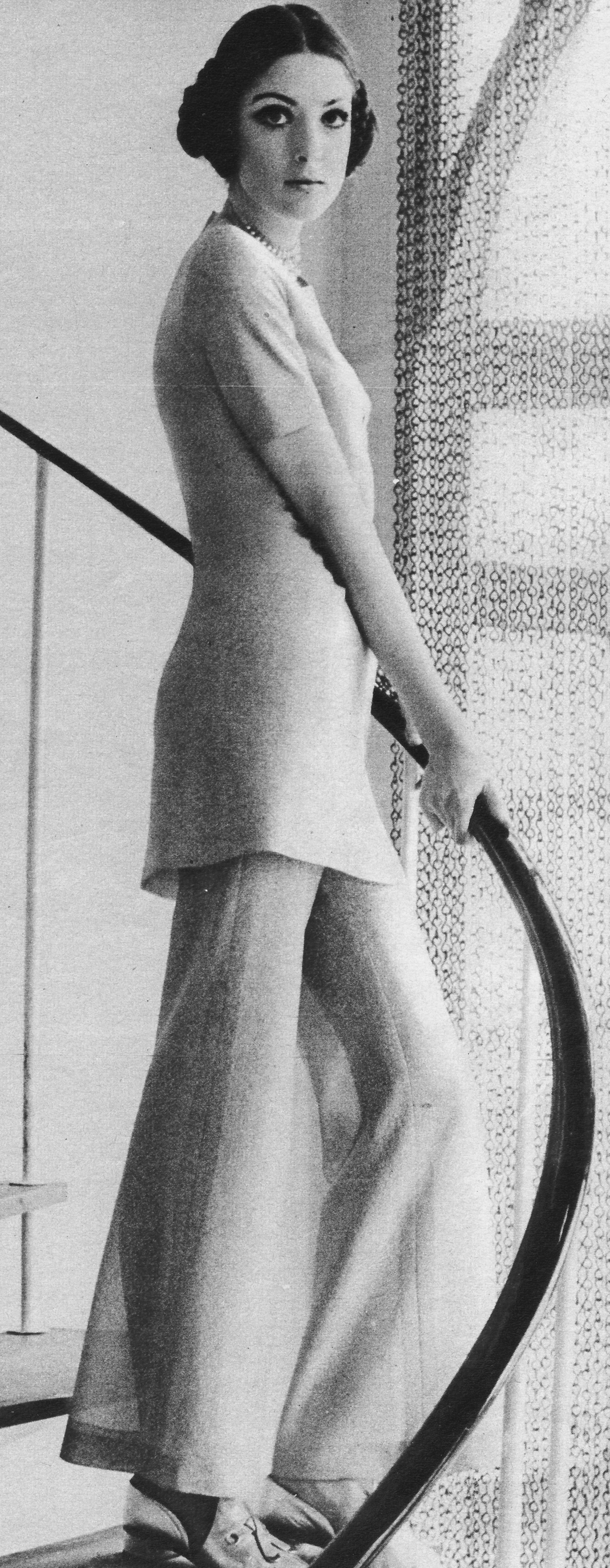
Silver lurex shirt dress worn over matching trousers by Pourelle, 13gns. Silver shoes by Russell and Bromley, 7gns.
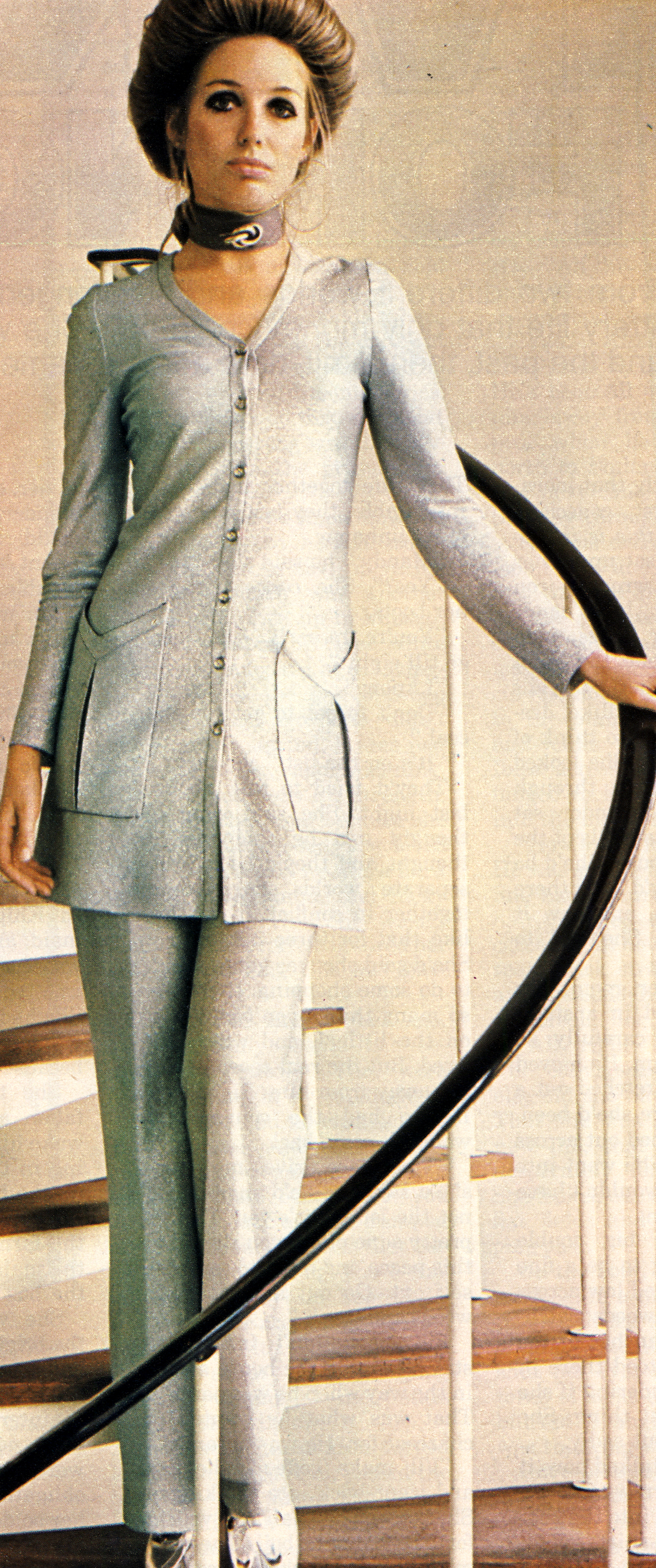
Silver lurex evening suit by Pourelle, 15gns. Silver shoes by Russell and Bromley, £8 19s.
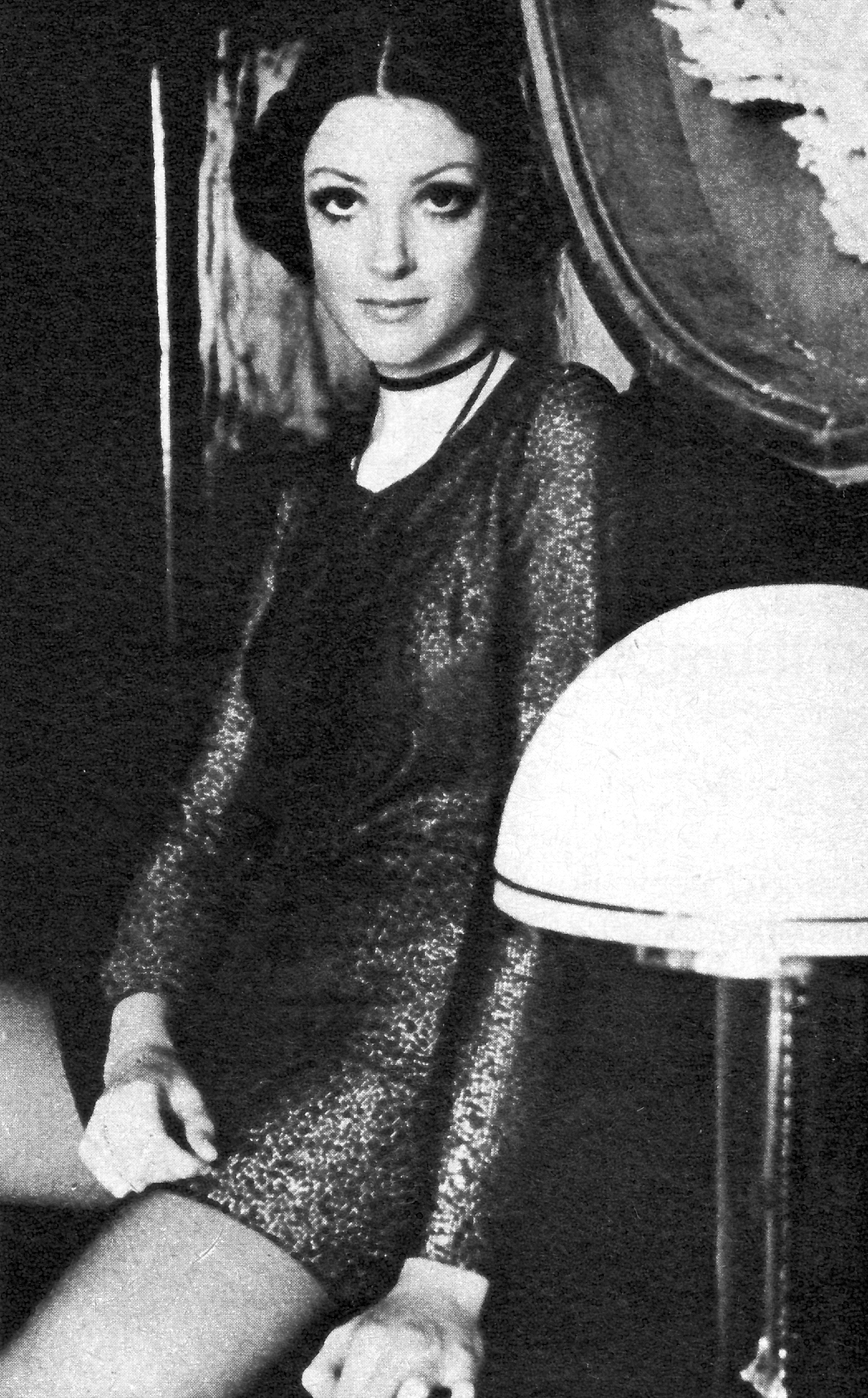
Bitter choc Lurex dress by Pourelle, 7½gns.
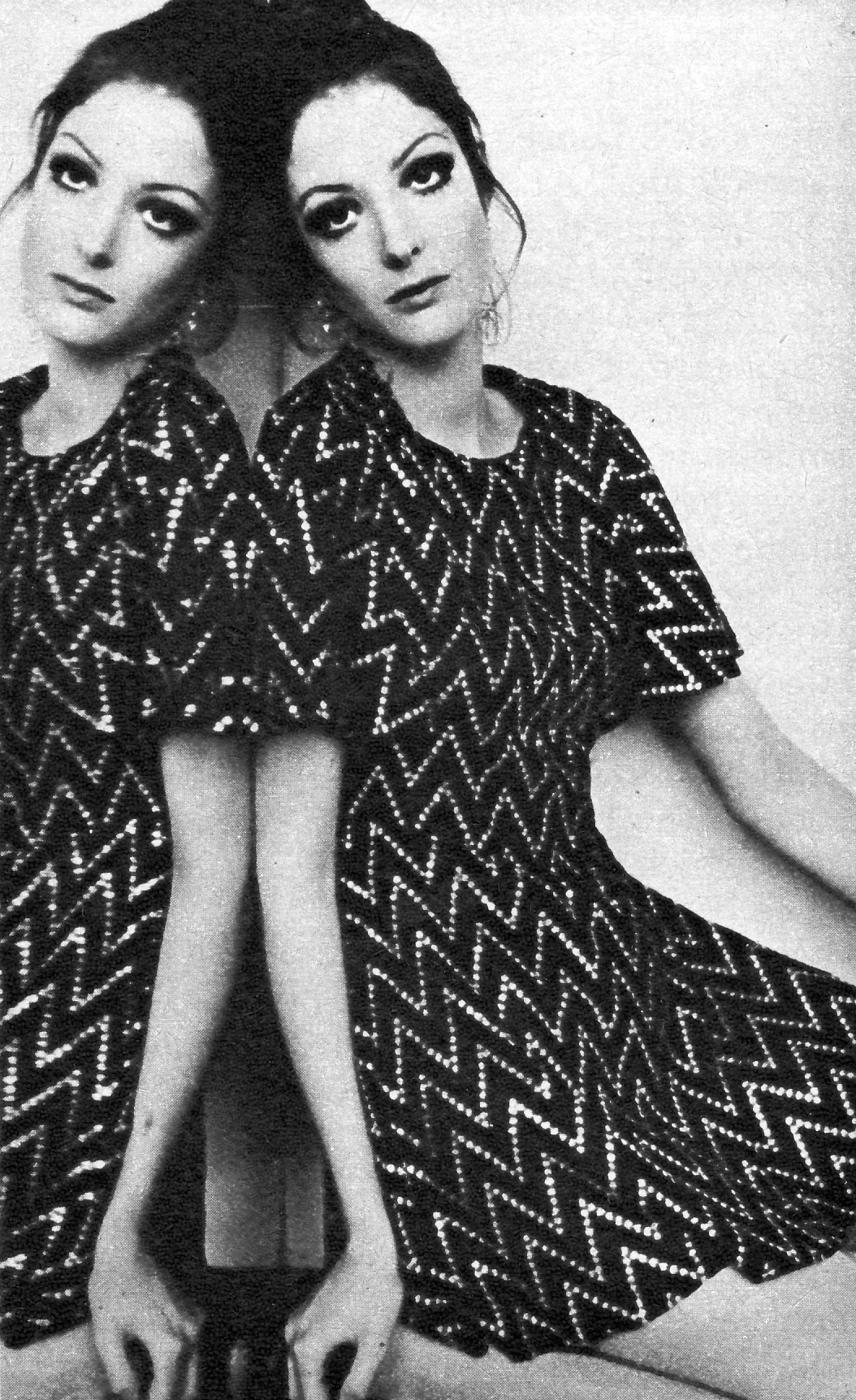
Black sequined georgette dress by Gillian Richard, 8gns.
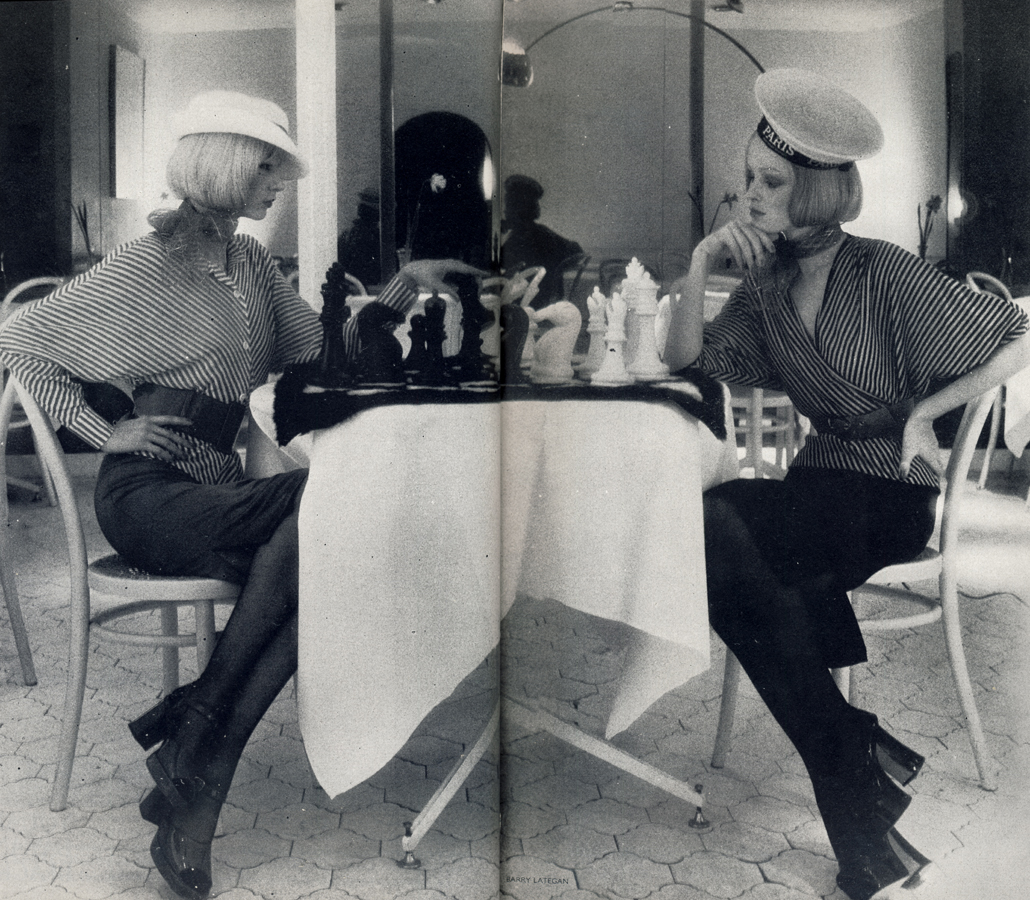
Left: Jersey diamond by Hans Metzen. Red patent platforms by Bata. Hat by Brosseau. / Right: Black and white batwing by Hans Metzen. Platforms by Antonio at Bata International. Sailor hat by Brosseau.
How about that sleeve? Striped jerseys and white silks wider than they’re long.
Satin skirts, all pictures, by Screaming Mini at Reflection, Kensington High Street.
Photographed at Mr Chow’s Montpelier, Knightsbridge. Chess set with fake fur board at Harrods.
I’m always excited to see Alice Pollock anything, anywhere, but this spread features a blouse I have (except mine is in black) in the second image. There’s a good reason why vintage blouses get snapped up so quickly, and this photoshoot proves it…
Photographed by Barry Lategan. Scanned by Miss Peelpants from Vogue, April 1972
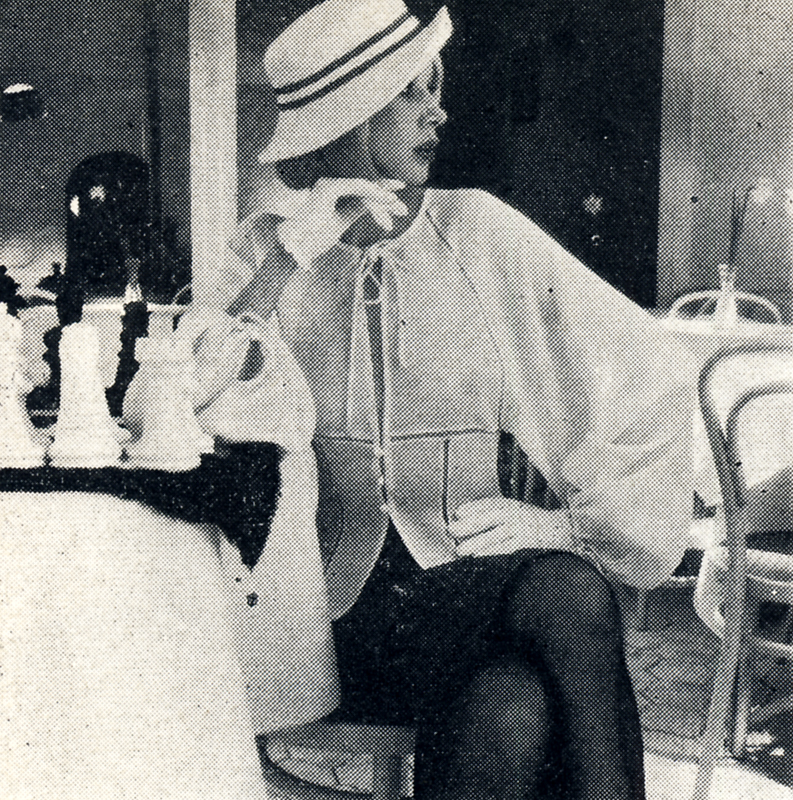
Blouse by Alice Pollock, with fine faggoting instead of seams, at New Quorum and Che Guevara
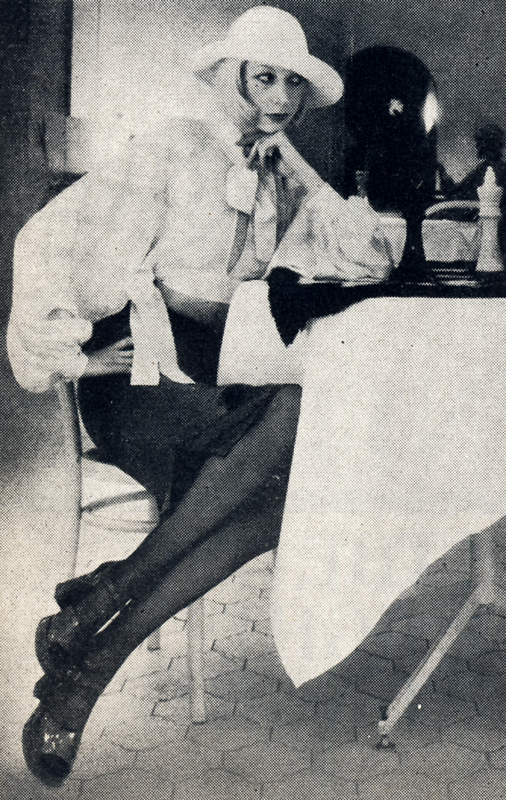
Blouse by Alice Pollock, at New Quorum and Che Guevara
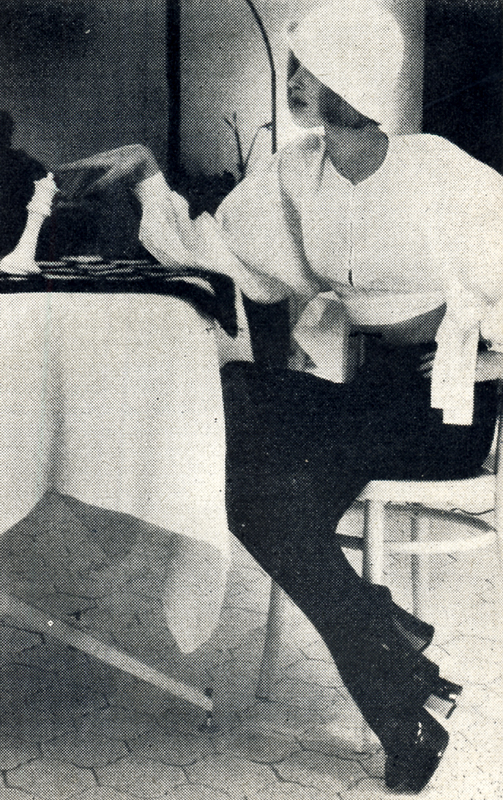
Blouse by Alice Pollock, at Boston 151

Dress by Susan Small. Hat by Jean Charles Brosseau for Sonia Rykiel. Shoes by Kurt Geiger. Photographed in Mr Chow’s Montpelier Restaurant.
I’m not saying my life would be complete if I had this entire outfit – particularly those shoes – but my wardrobe would be a happier place…
Photographed by Alex Chatelain. Scanned by Miss Peelpants from Harpers and Queen, April 1971
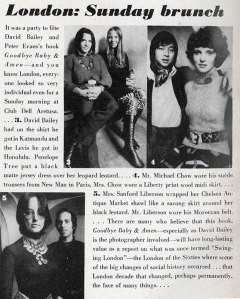 Occasionally I go and gorge myself stupid over at the magnificent Youthquakers site. They make no pretence of scanning perfection, which means they can bombard you with a tonne of amazing Vogue scans at any one time. I feel exhausted just looking at it. It also means that a complete Brit-fashion geek like me (with more magazines than I can cope with) can take a look at copies of US Vogue, which I can rarely justify getting hold of myself.
I spotted this brilliant piece in a February 1970 US Vogue. Mrs Chow was, of course, Grace Coddington and Mrs ‘Liberson’ was, in fact, Marit Allen. Fashion journalism legend and boutique collector extraordinaire. She was the wife of Sandy Lieberson (tsk! tsk!, US Vogue fact checkers…), who was a film producer and to whom I am extremely grateful for bringing That’ll Be The Day, Stardust and Rita, Sue and Bob Too! into my life.
Also, Penelope Tree. Yay!

 Liz Eggleston