What pinafores did next

1970s, anello and davide, Angela at London Town, duc, Gina Fratini, Ginger Group, Herbert Johnson, Inspirational Images, kensington market, kurt geiger, Marielle, mary quant, miss selfridge, Moya Bowler, Titfers, Vintage Editorials, Vogue
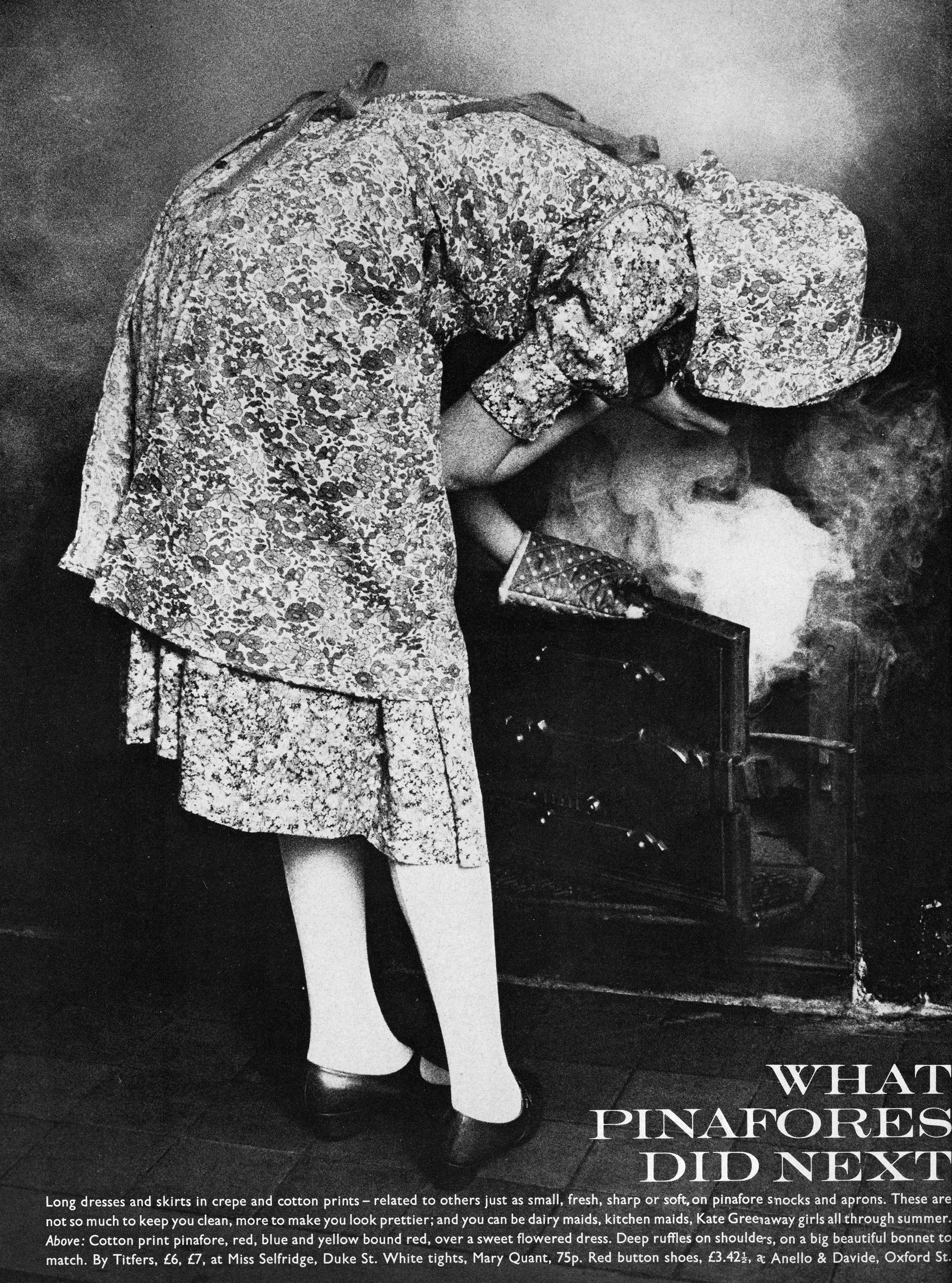
Cotton print pinafore over a sweet flowered dress. Deep ruffles on shoulders and a big beautiful bonnet to match. By Titfers at Miss Selfridge. Red button shoes at Anello & Davide.

Long dresses and skirts in crepe and cotton prints – related to others just as small, fresh, sharp or soft, on pinafore smocks and aprons. These are not so much to keep you clean, more to make you look prettier; and you can be dairy maids, kitchen maids, Kate Greenaway girls all through summer.

And so began the kickback against all things clean, crisp and space age…

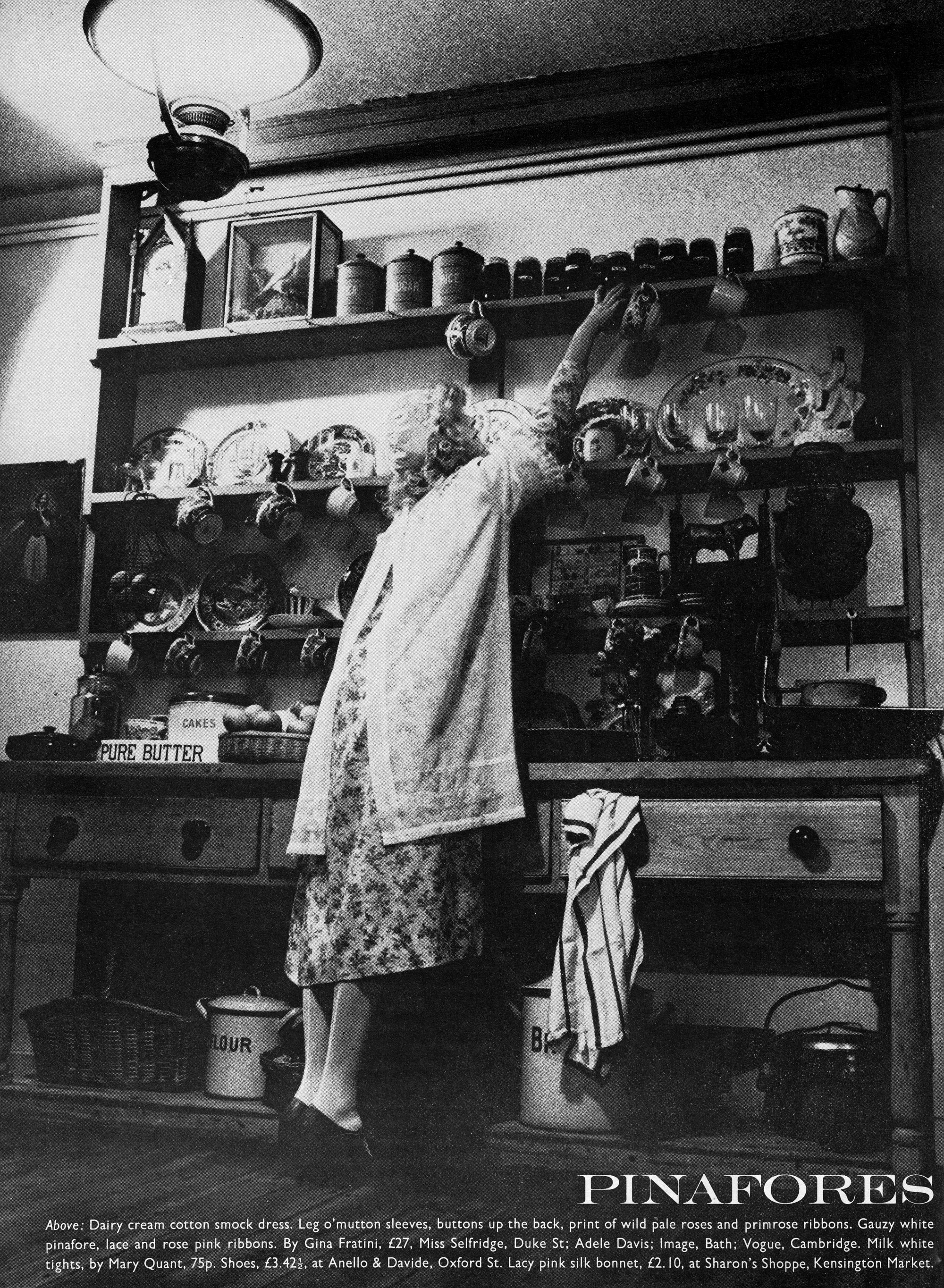
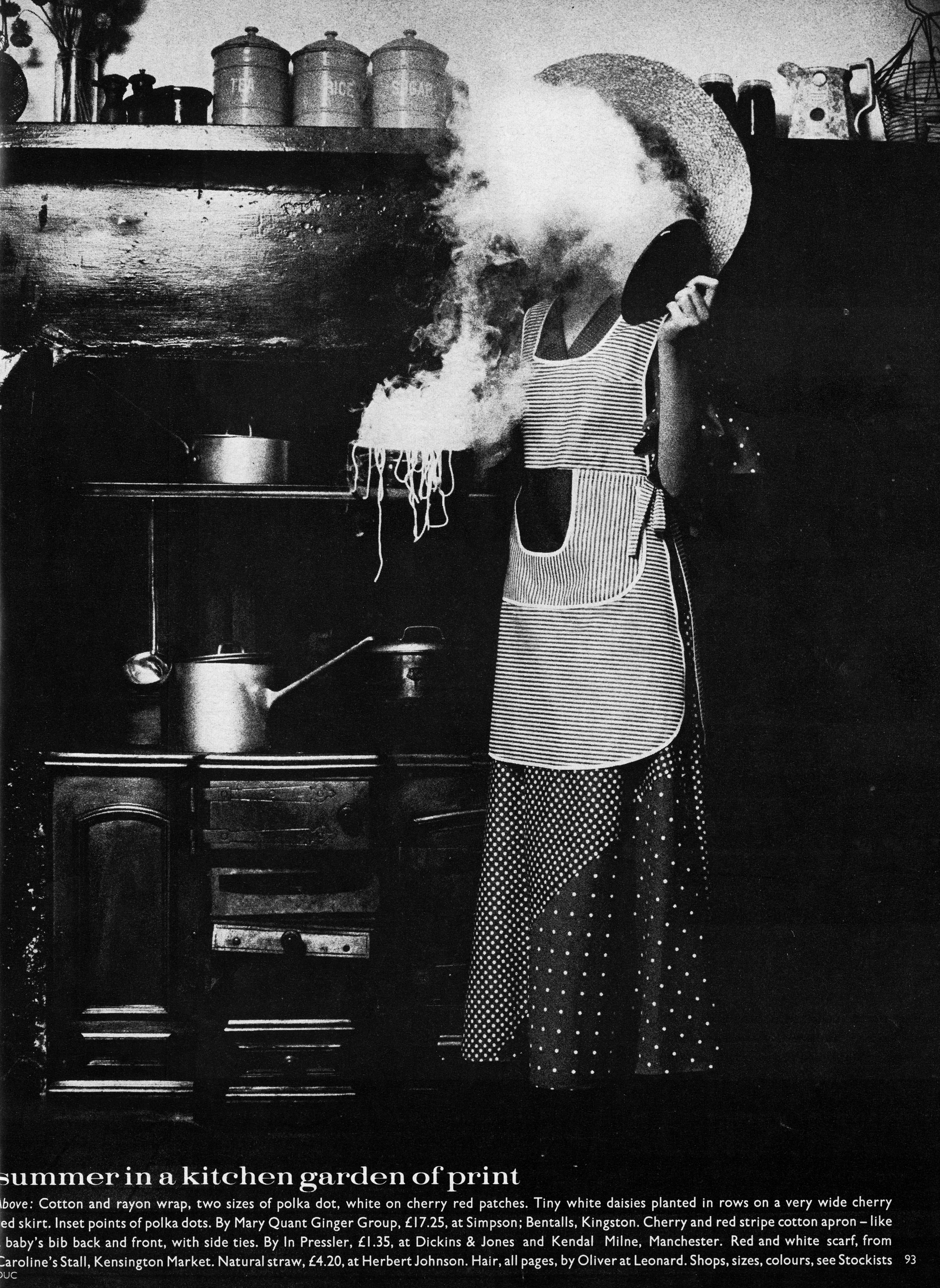
Photographed by Duc.

Scanned from Vogue, April 1971.

Fine floppy fluted crepe de chine dress by Marielle. Liberty lawn pinafore by Angela at London Town. Brown boots by Moya Bowler for Edouard Jerrold at Kurt Geiger.
Dairy cream cotton smock dress. Leg o’mutton sleeves, buttons up the back, print of wild pale roses and primrose ribbons. Gauzy white pinafore, lace and rose pink ribbons. Both by Gina Fratini. Shoes at Anello & Davide. Lacy pink silk bonnet at Sharon’s Shoppe, Kensington Market.
Cotton and rayon wrap, two sizes of polka dot, white on cherry red patches. By Mary Quant Ginger Group. Cherry and red stripe cotton apron by In Pressler. Natural straw hat at Herbert Johnson.

Razzmatadvertising (Pt II)

1970s, brighton, City Lights, Gilles Ben Simon, Honey Magazine, Inspirational Images, marshall lester, miss mouse, Vintage Editorials
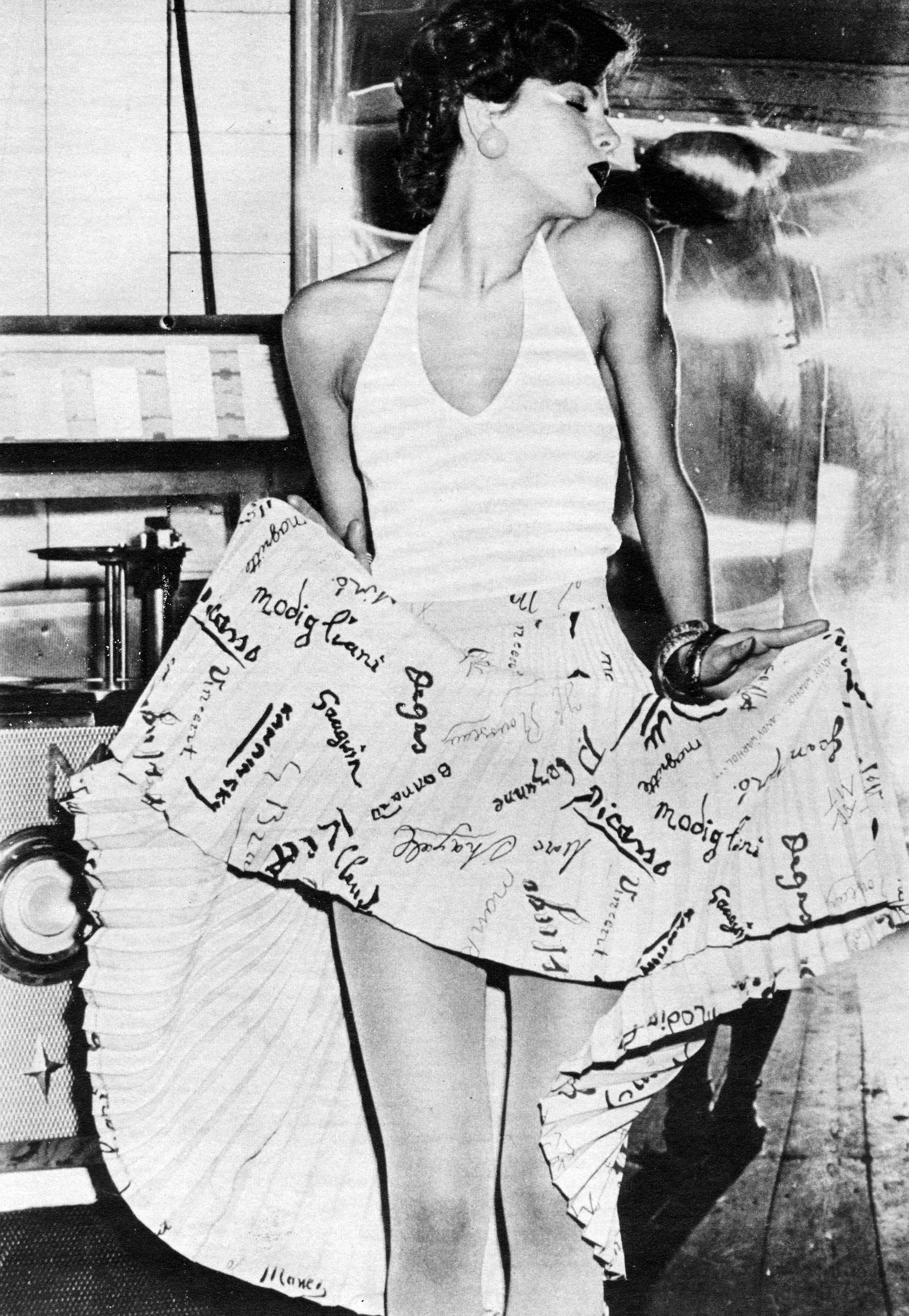
Plunging halter-neck Martini printed waistcoat with white cotton collar and pencil slim button through skirt both by Miss Mouse. South Sea Island printed cotton 50s dress with tight straight skirt by Miss Mouse.

Further to yesterday’s post, and as promised, here are the photos taken on Brighton Pier for the same editorial. With clothes by Miss Mouse and City Lights Studio, they were worth waiting for – weren’t they?

Photographed by Gilles Ben Simon.

Scanned from Honey, May 1973

Swirling peacock blue fan-pleated crepe skirt by City Lights Studio. Sugar pink and white striped halter-neck knit vest by Marshall Lester.

Day Trippers

19 magazine, 1970s, biba, Bilbo, Chelsea Antiques Market, gordon king, Harri Peccinotti, Inspirational Images, jeff banks, Malcolm McLaren, miss mouse, quorum, rae spencer cullen, Sex, sheridan barnett, stirling cooper, strawberry studio, terry de havilland, Uncategorized, Vintage Editorials, Vivienne Lynn, vivienne westwood

day trippers - peccinotti - 1

White dress with music and rose print by Miss Mouse. Snakeskin shoes from Bilbo. Red and white spotted dress with white trimming by Miss Mouse.

Photographed in Singapore by Harri Peccinotti.

Scanned from 19 Magazine, May 1975.

day trippers - peccinotti - 2

Black and green floral print halterneck dress from Biba. Black and gold shoes by Sex. Green floral halterneck dress by Biba. Black and gold brocade shoes by Biba.

day trippers - peccinotti - 3

Shocking pink pintucked cotton dress by Sheridan Barnett at Quorum. Black snakeskin shoes by Bilbo. Red cotton sack dress with hip pockets by Sheridan Barnett at Quorum. Red suede and snakeskin shoes by Terry de Havilland.

day trippers - peccinotti - 4

Dusty pink sun dress with black piping by Strawberry Studio. Grey suede shoes by Terry de Havilland.

day trippers - peccinotti - 5

Blue cotton dress with Dorchester motif. Coffee dress with Savoy motif, both by Jeff Banks.

day trippers - peccinotti - 6

White cotton culotte dress by Stirling Cooper. White shoes from Secondhand Rose, Chelsea Antique Market. White cotton sun dress by Stirling Cooper. White shoes from Secondhand Rose.

day trippers - peccinotti - 7

Navy cotton sundress with cross over straps by Gordon King.

Julie Christie in Fortuny

1970s, Castaldi, Fortuny, Inspirational Images, Julie Christie, Venice, Vintage Editorials, Vogue

julie christie fortuny 1

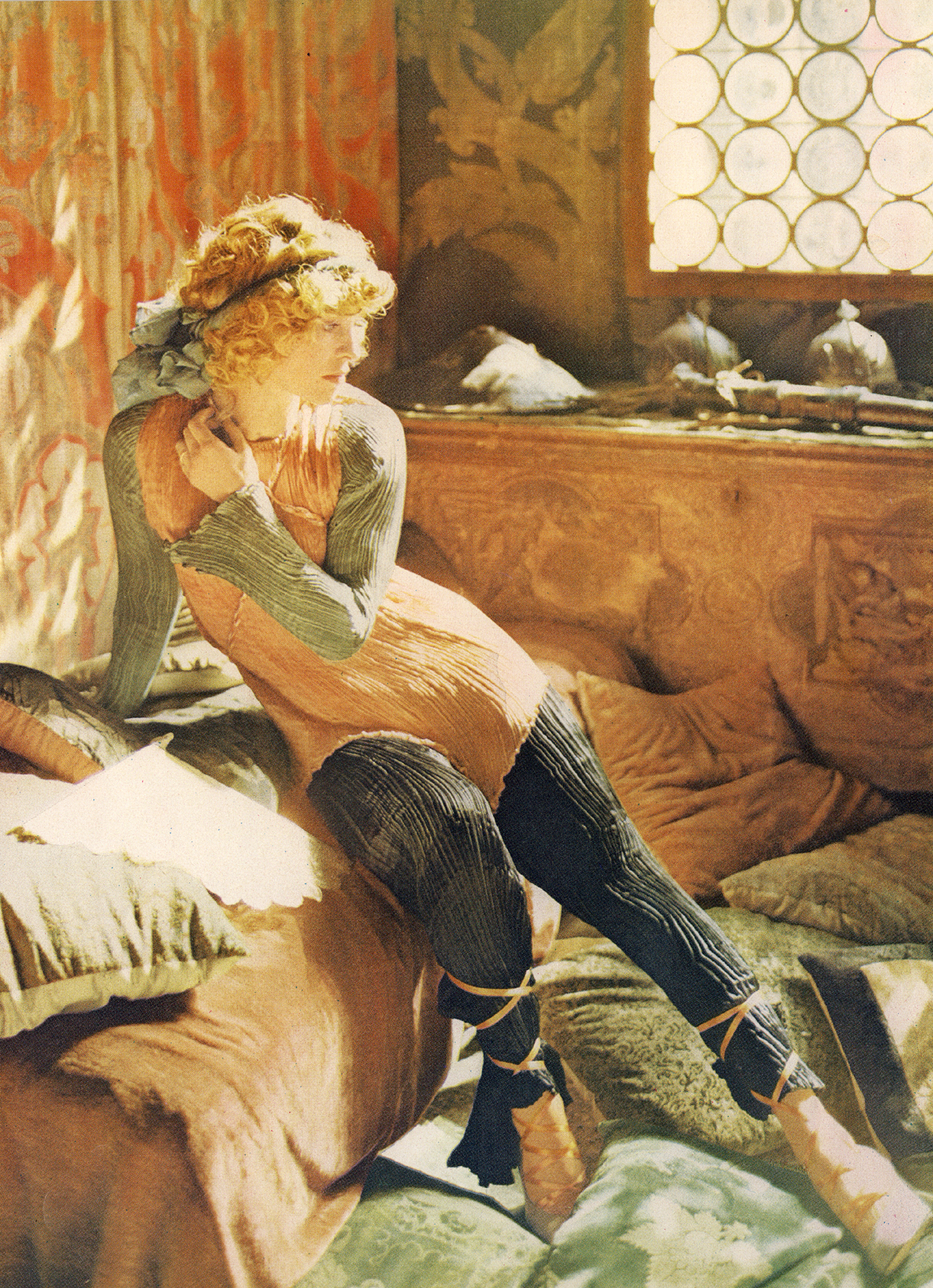
Apricot pleated tunic with green sleeves and cross-gartered leggings. All around, some of Fortuny’s wealth of hand-blocked velvets.

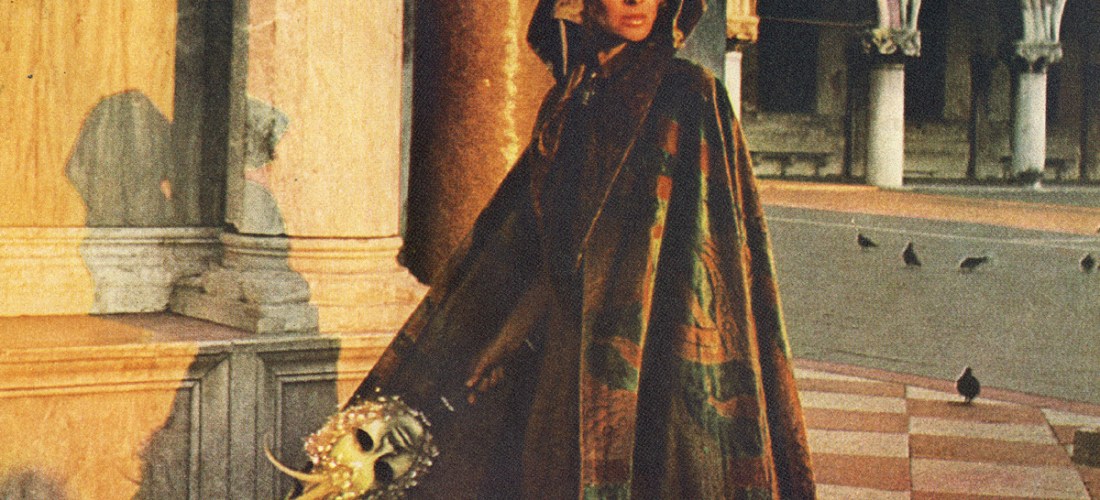
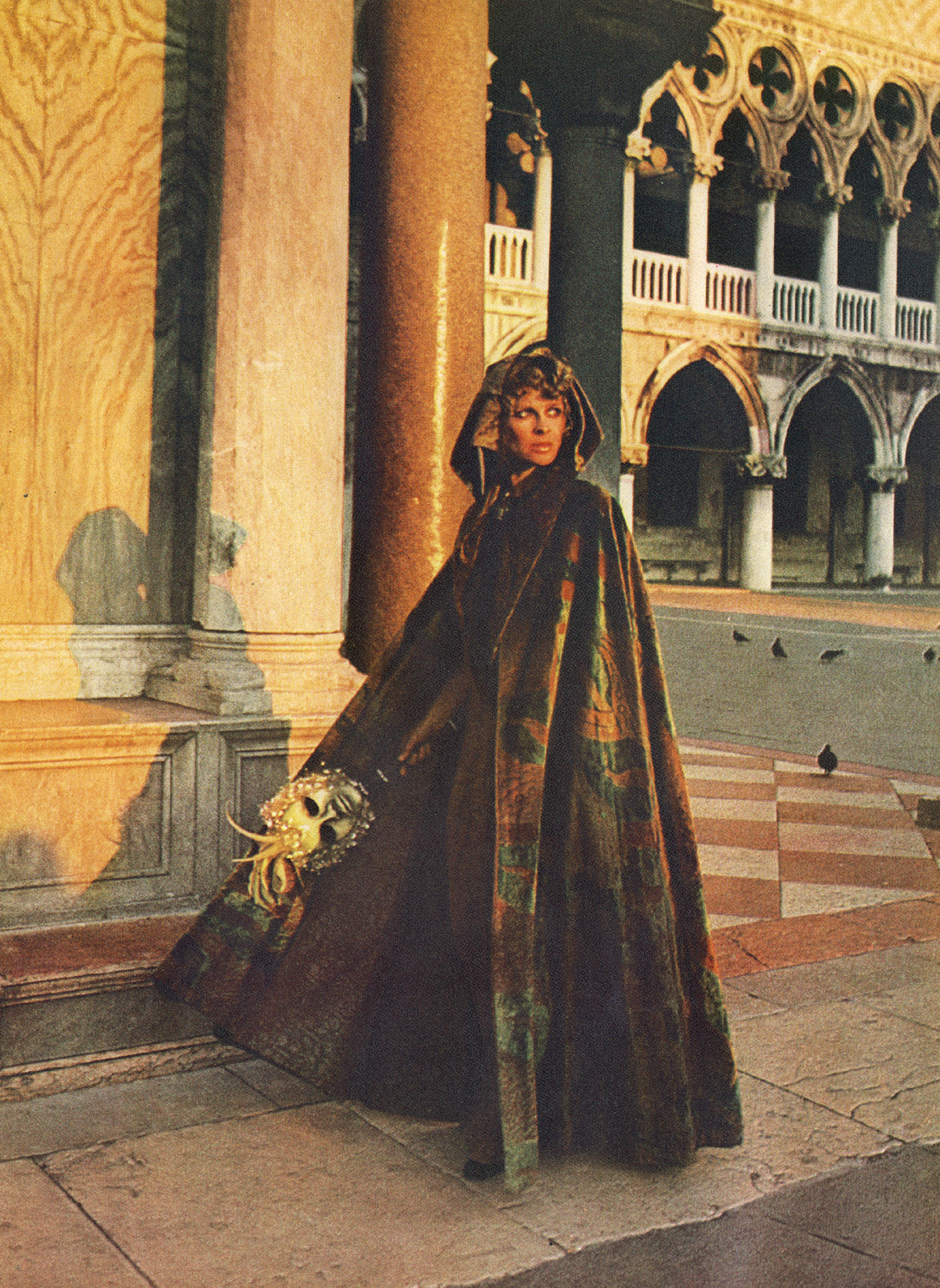
Fortuny dresses have always been collected by women who are beauties and/or intellectuals: Eleanora Duse, Sarah Bernhardt, Isadora Duncan, The Marchesa Casati Stampa, Consuelo, Duchess of Marlborough, Marie-Laure de Noailles, Mrs Gloria Cooper Vanderbilt, Anjelica Huston, Monica Vitti, and now Julie Christie, who bought Fortuny’s pink and silver dress with pleated silk side and glass buttons at a recent auction at Christie’s. Here Julie Christie borrows Fortunys from another collector, Mrs Liselotte Hohs Manera, Austrian painter and ceramist, who is married to an Italian lawyer, and one that belong to Eleanora Duse from Vern Lambert’s collection. Castaldi took the photographs in Venice, where Mariano and Henriette Fortuny lived and worked in the Palazzo Pesaro, which is now the Fortuny Museum, and where Julie Christie has been making the film Don’t Look Now, directed by Nicholas Roeg. She’ll next be seen in Uncle Vanya, on Broadway, an extraordinary production to be directed by Mike Nichols with George C. Scott an Nicol Williamson.

Photographed by Castaldi.

Scanned from Vogue, July 1973.
julie christie fortuny 2

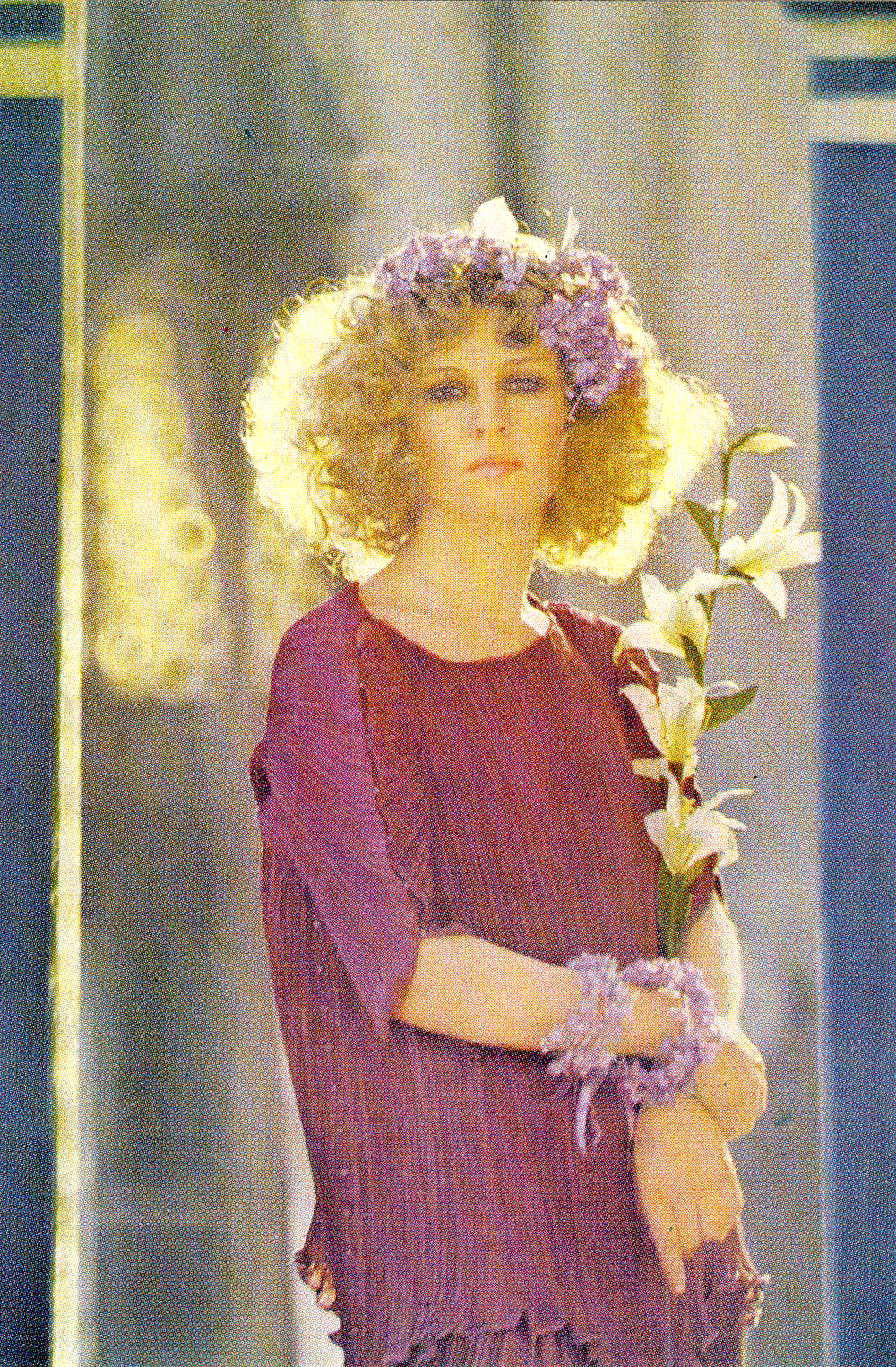
Antique violet tunic and skirt pleated like a mushroom: inspired by a visit to Delphi, Mariano Fortuny and his wife, Henriette, created the fabric: Isadora Duncan was the first customer.
julie christie fortuny 3

Eleanora Duse’s black velvet dress printed in silver with pleated silk side panels.
julie christie fortuny 4

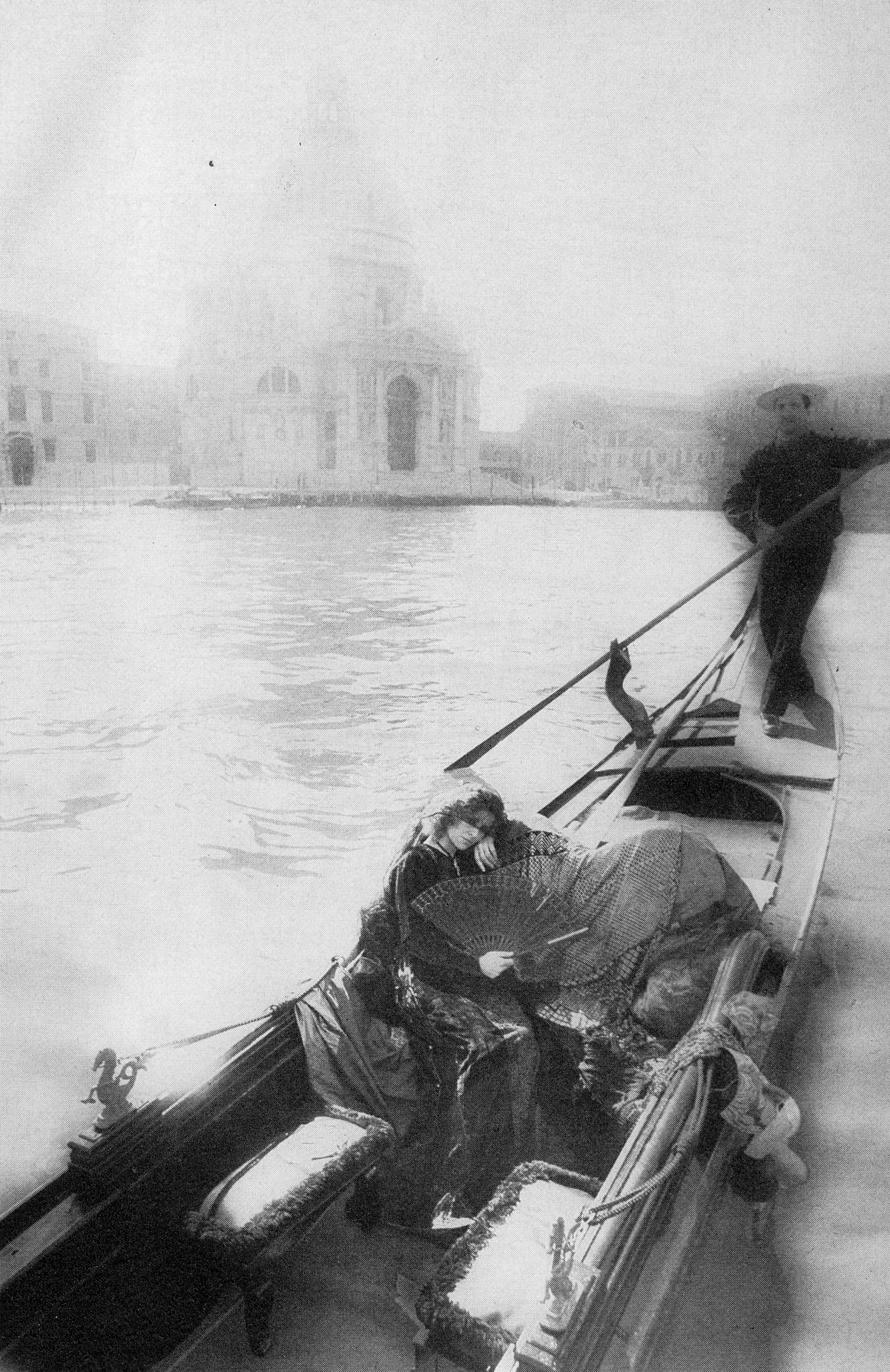
Fortuny’s velvet cloak over a pleated dress of terracotta by St Mark’s and the Doge’s Palace where it must hav swept many times before.

Edina Ronay in Emmerton Lambert

1960s, 1970s, Chelsea Antiques Market, edina ronay, Emmerton and Lambert, hans feurer, Inspirational Images, sunday times magazine, Uncategorized

edina ronay emmerton lambert hans feurer june 1970 a

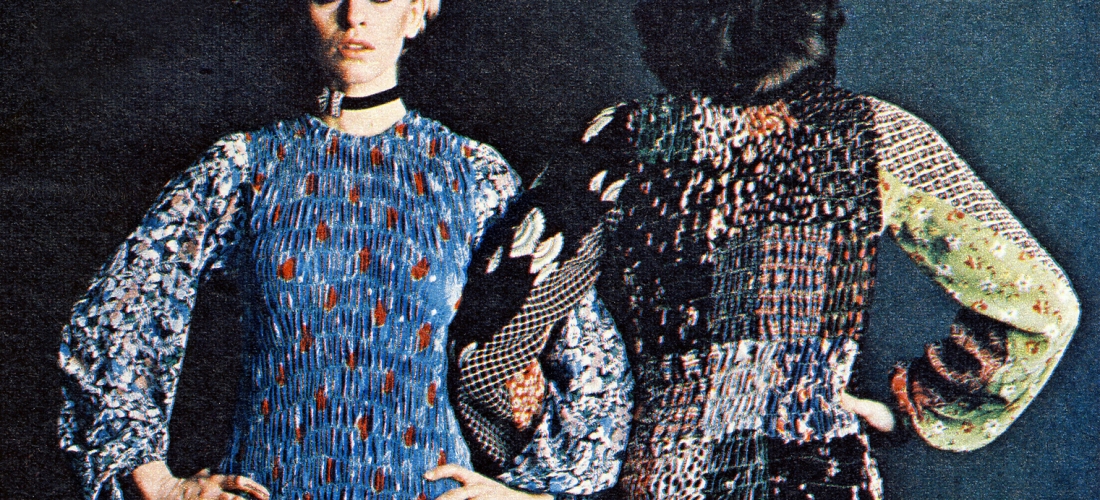
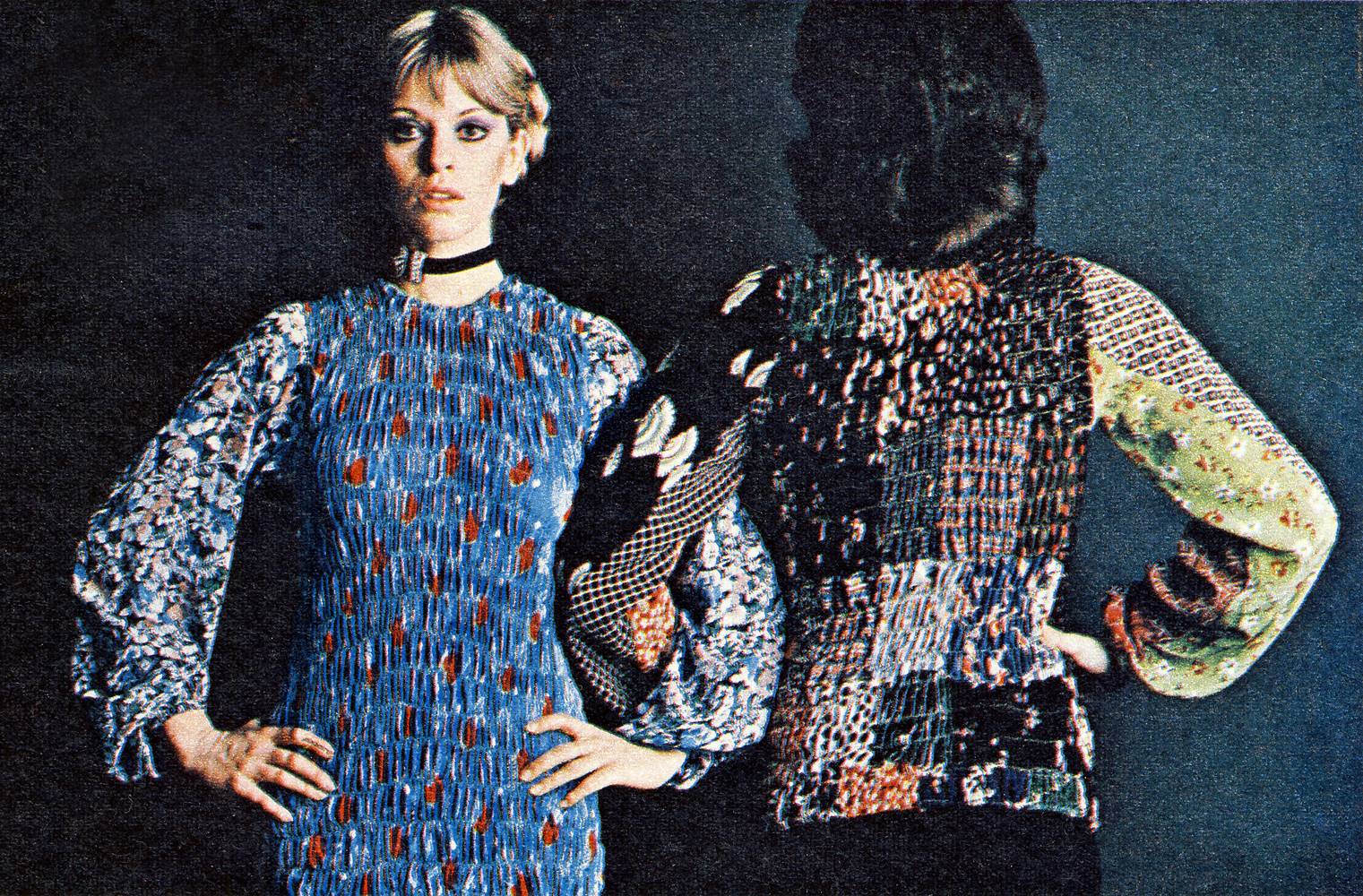
The style’s the same, but no two shirts are identical – they are made from 1930s remnants: £8 10s from Emmerton Lambert, Chelsea Antique Market, 253 King’s Road, London SW3.

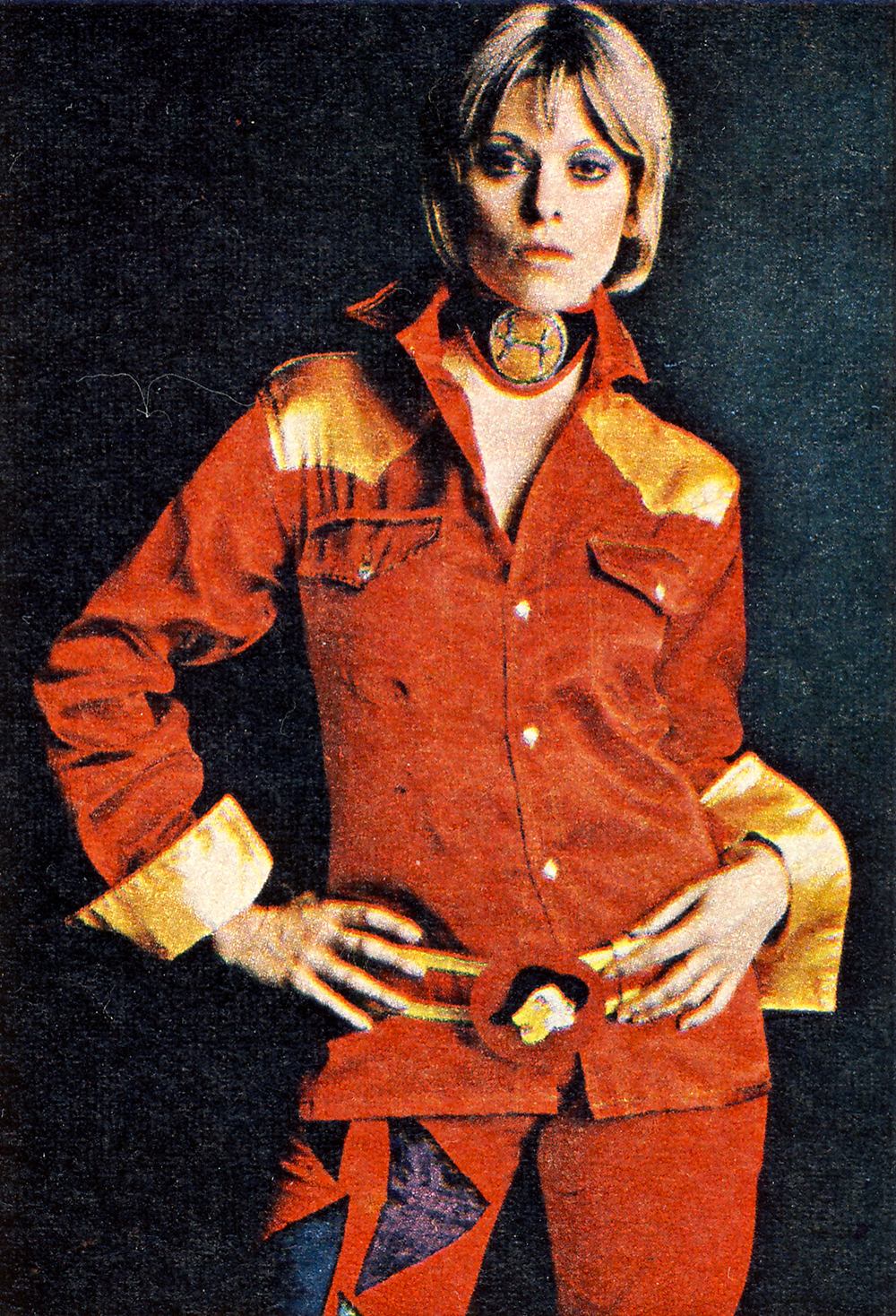
Edina Ronay modelling some incredible pieces by Emmerton Lambert, one of the cult labels which emerged from the Chelsea Antique Market in the late Sixties. A classic example of the plundering of the 1930s by designers of the time but unlike those creating garments ‘in the style of’, they were instead using period fabrics to create a new, thrown together, patchwork kind of look. I think these have become my favourite kinds of pieces in recent years: perhaps because there’s a tangible link to both periods when you handle them.

Photographed by Hans Feurer.

Scanned from The Sunday Times Magazine, June 14th 1970.

edina ronay emmerton lambert hans feurer june 1970 b

Flashy rodeo look: all from Emmerton Lambert, Chelsea Antique Market.

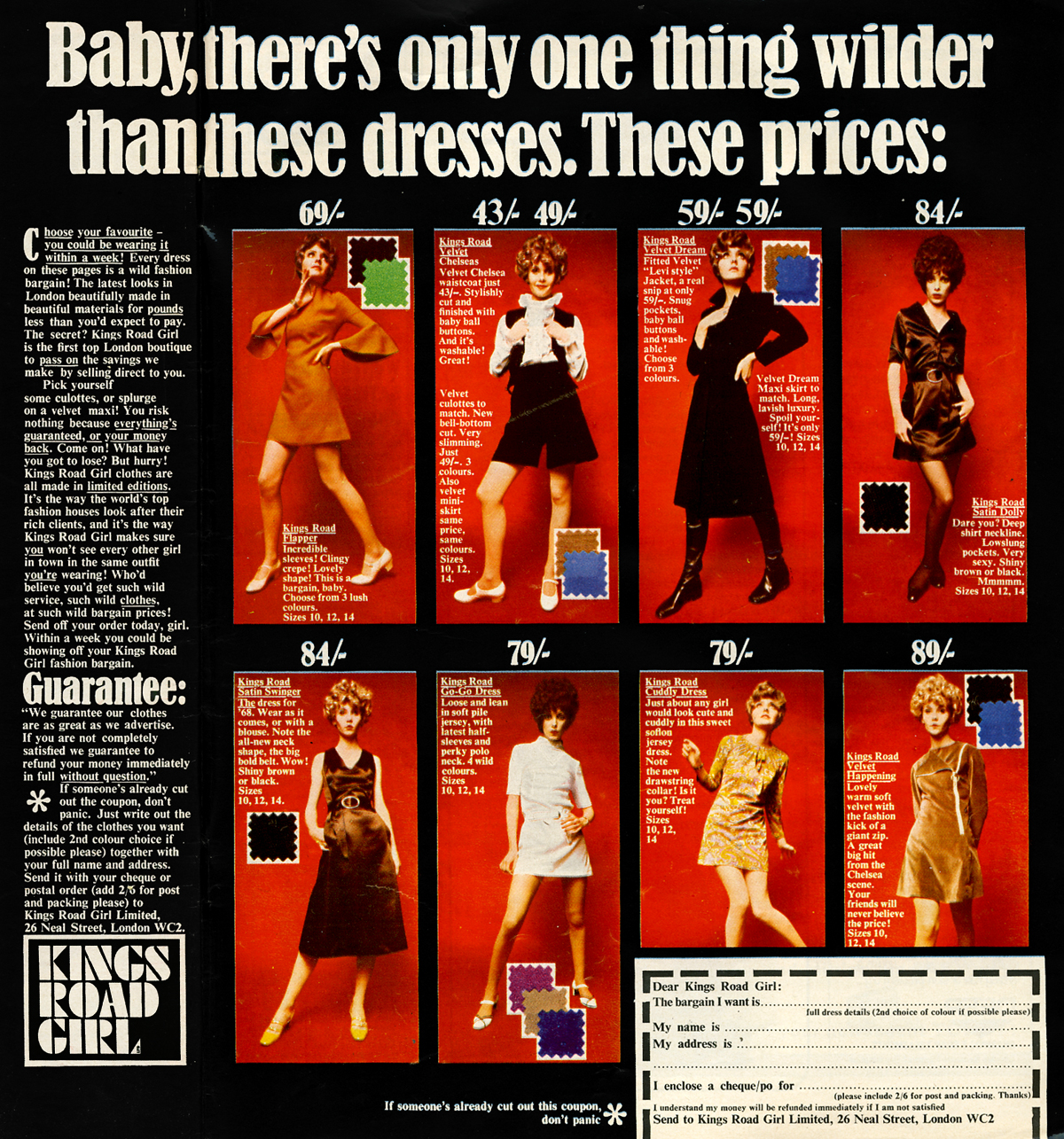
Kings Road Girl

1960s, Boutiques, british boutique movement, Honey Magazine, king's road, Kings Road Girl, Vintage Adverts

kings road girl

I’ll take them all, please and thank you…

Scanned by Miss Peelpants from Honey, March 1968.

The Folk Art Craze

1970s, christian dior, Dress Den, Frank Horvat, Inspirational Images, jeff banks, Jorn Langberg, kensington market, vanity fair

The Folk Art Craze - Frank Horvat - Jan 71 b

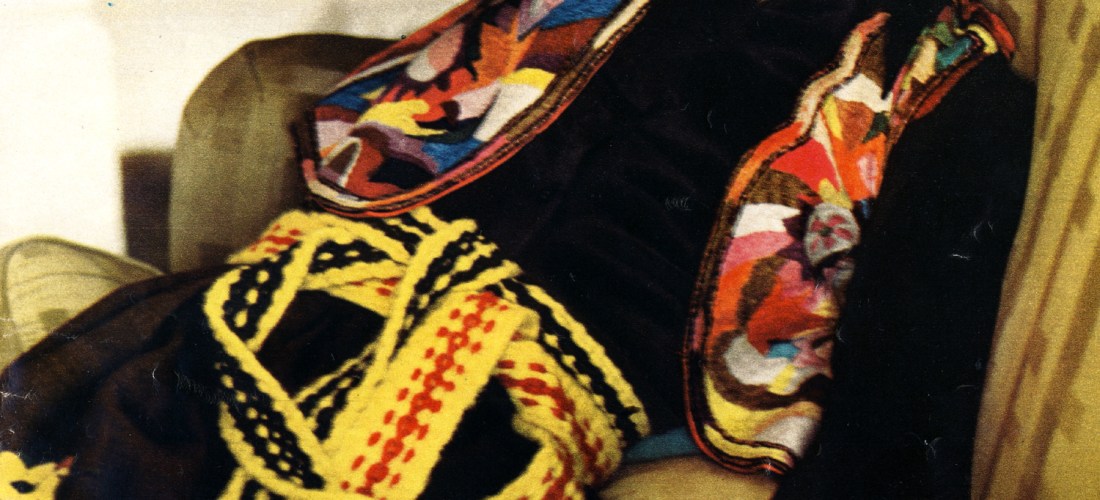
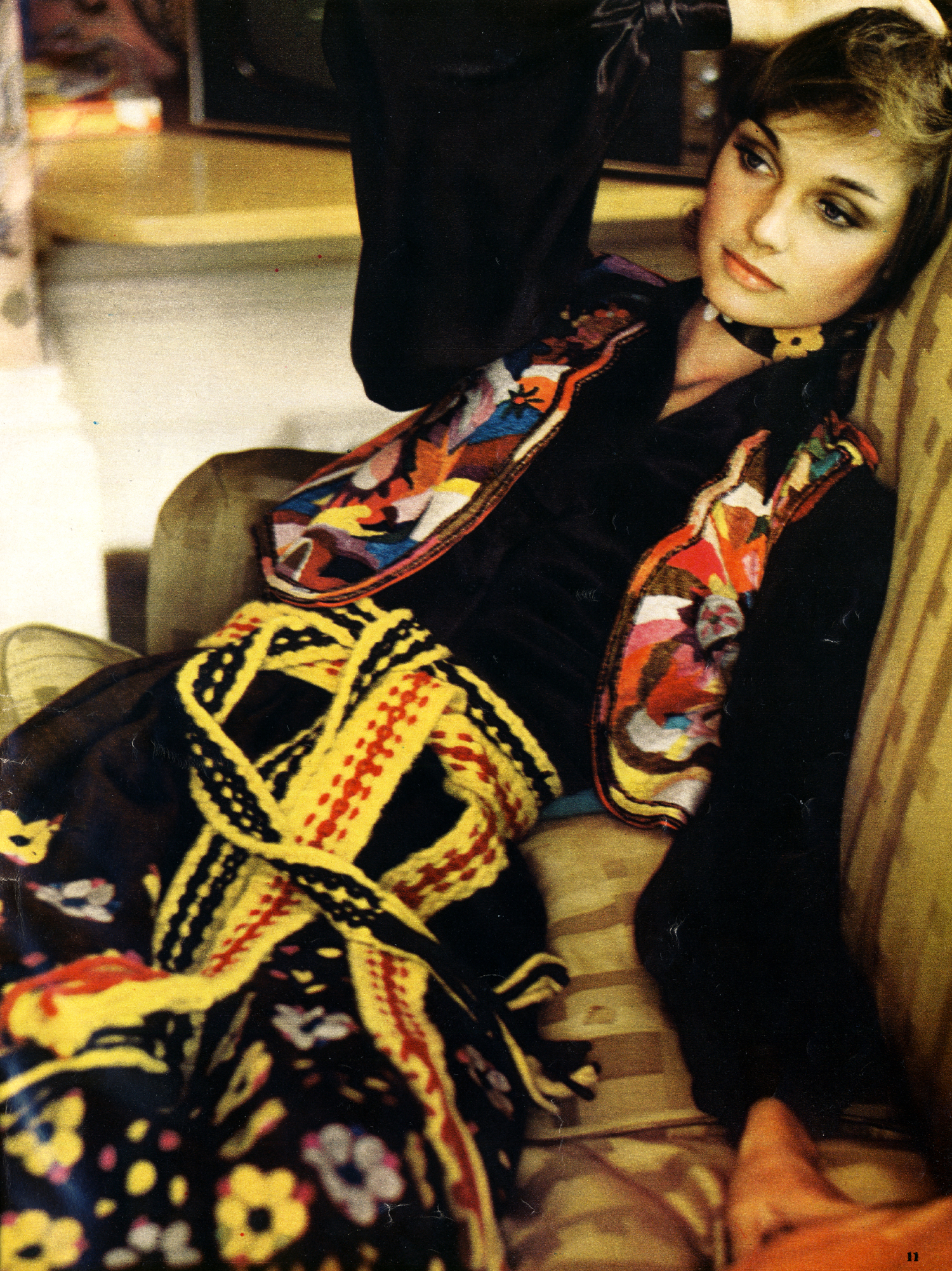
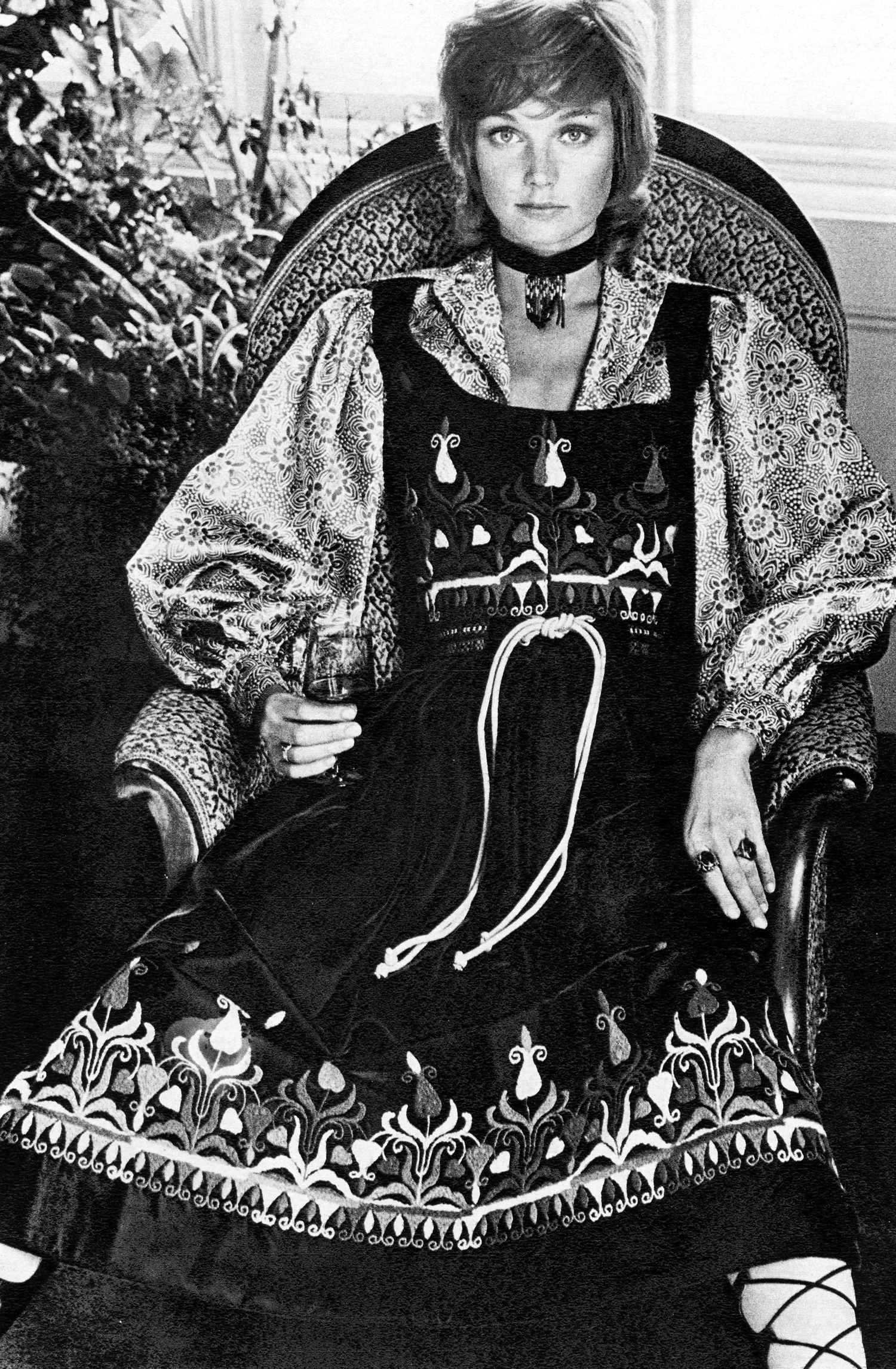
Every designer is saying it loudly, clearly, boldly, prettily… the hand-made look is here. Maybe it started as a reaction against the badly-made, thrown-together, hotch-potched dolly era; maybe this reaction set the tide running for antique markets where painstaking workmanship could be picked up still; maybe it’s that elusive feeling in the air that a designer’s sensitive seismograph picks up and translates in his own distinctive handwriting. Whatever it is – it’s here.

Jorn Langberg of Christian Dior – London plots it out in warm brown velvet, got together with a brief, embroidered waistcoat and a deeply embroidered peasant skirt… at the other end of the scale the Dress Den at Kensington Antique Market tops a thick aubergine cotton skirt spilled with bright wool flowers with a scrap of bolero, pictorially embroidered over every centimetre of the scalloped front. If you’re skilled with a needle, have a good eye for colour and shape there’s no reason why you can’t put yourself ahead of the game. But this is a painstaking look, a one-off original look that can’t be tossed off in an evening by a hopeful but bodgy amateur needlewoman.

Both shirts by Jeff Banks; all accessories from Kensington Antique Market.

Fashion by Lorna Cattell.

Photographed by Frank Horvat.

Scanned by Miss Peelpants from Vanity Fair, January 1971.

The Folk Art Craze - Frank Horvat - Jan 71 a

Beautiful Things

1970s, charles jourdan, christian dior, harpers and queen, Harrods, janet reger, lingerie, mary quant, Paul Harris, underwear, Vintage Editorials

beautifulthings 1

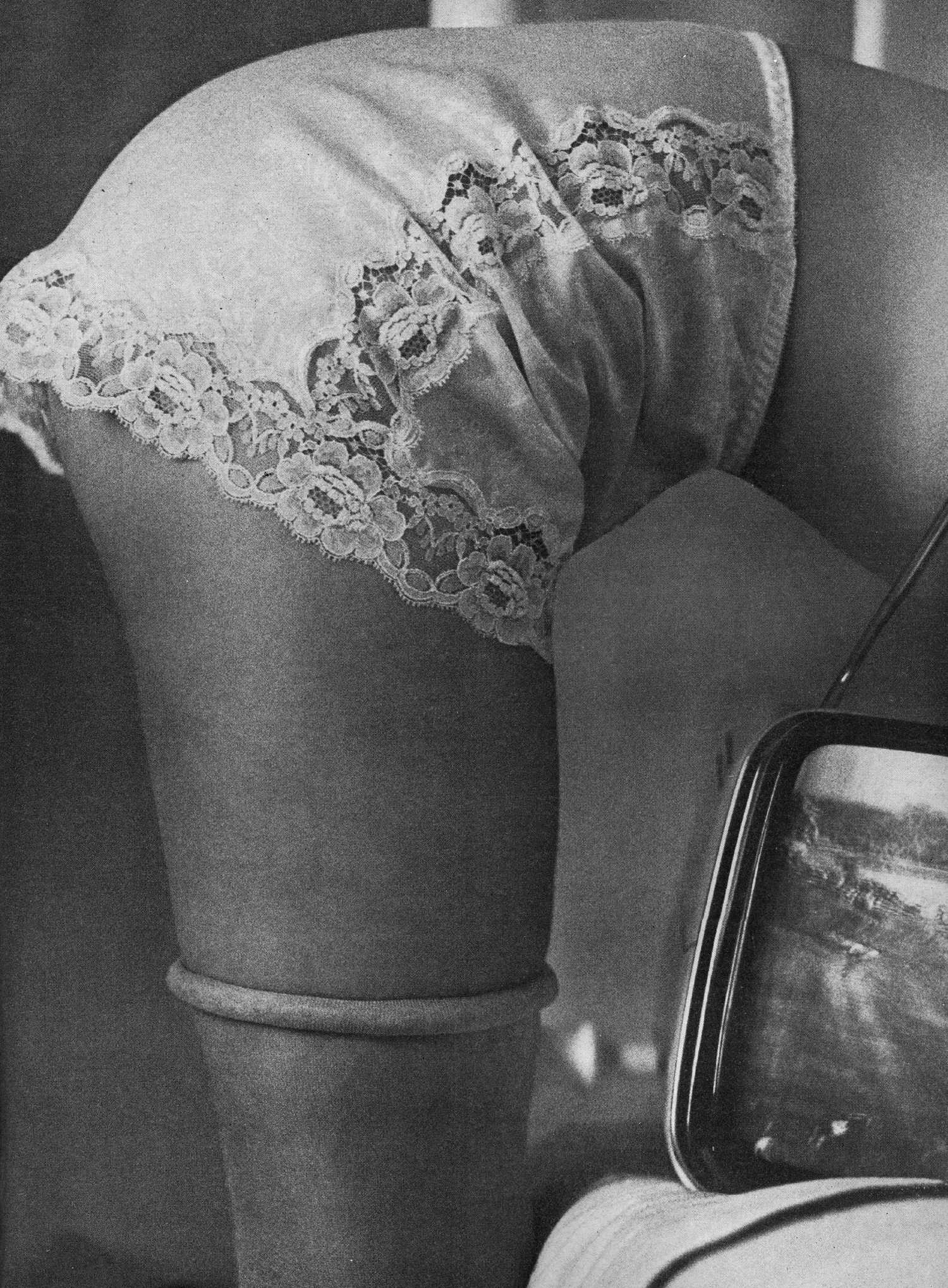
Shorts in cream patterned satin with lace, by Funn.

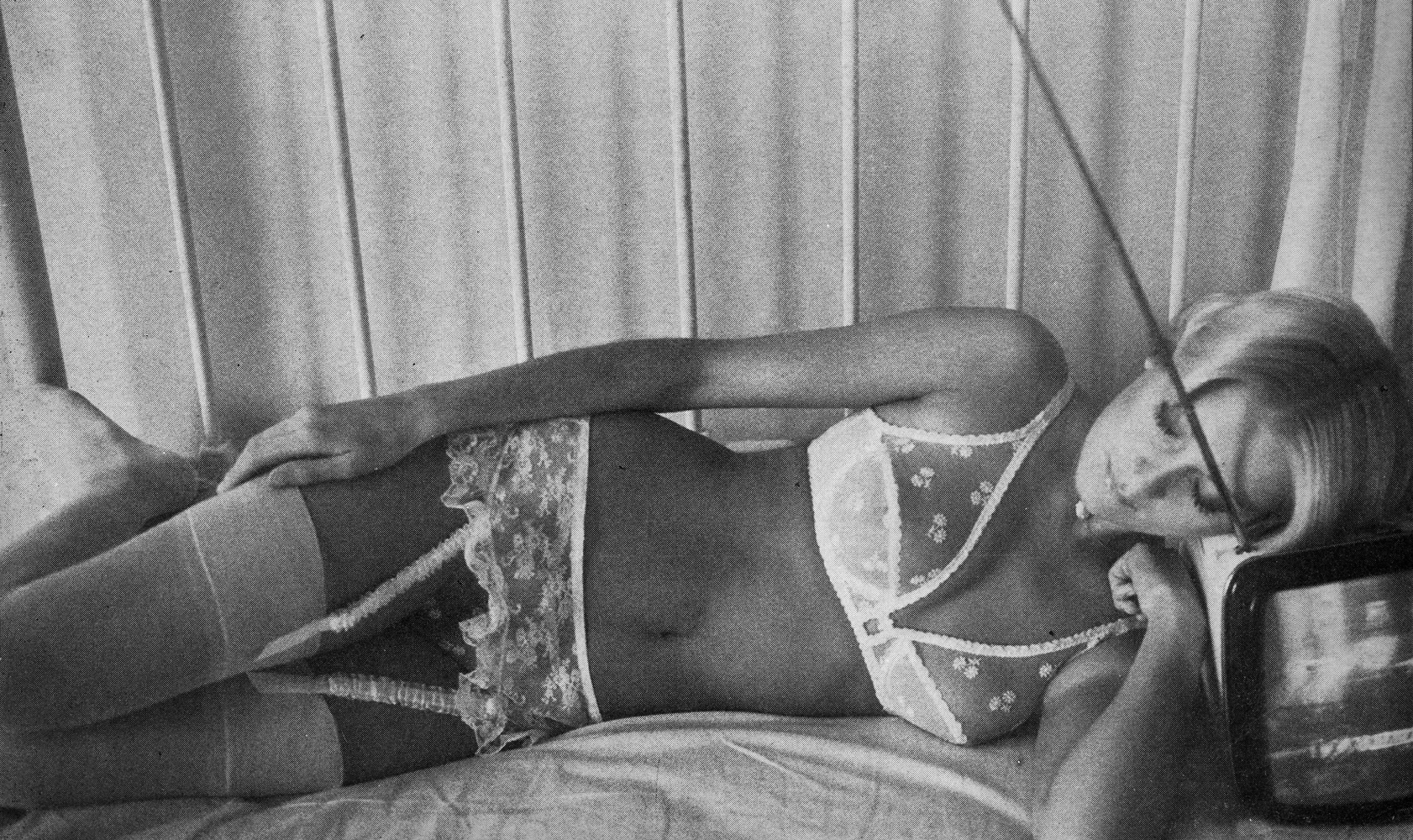
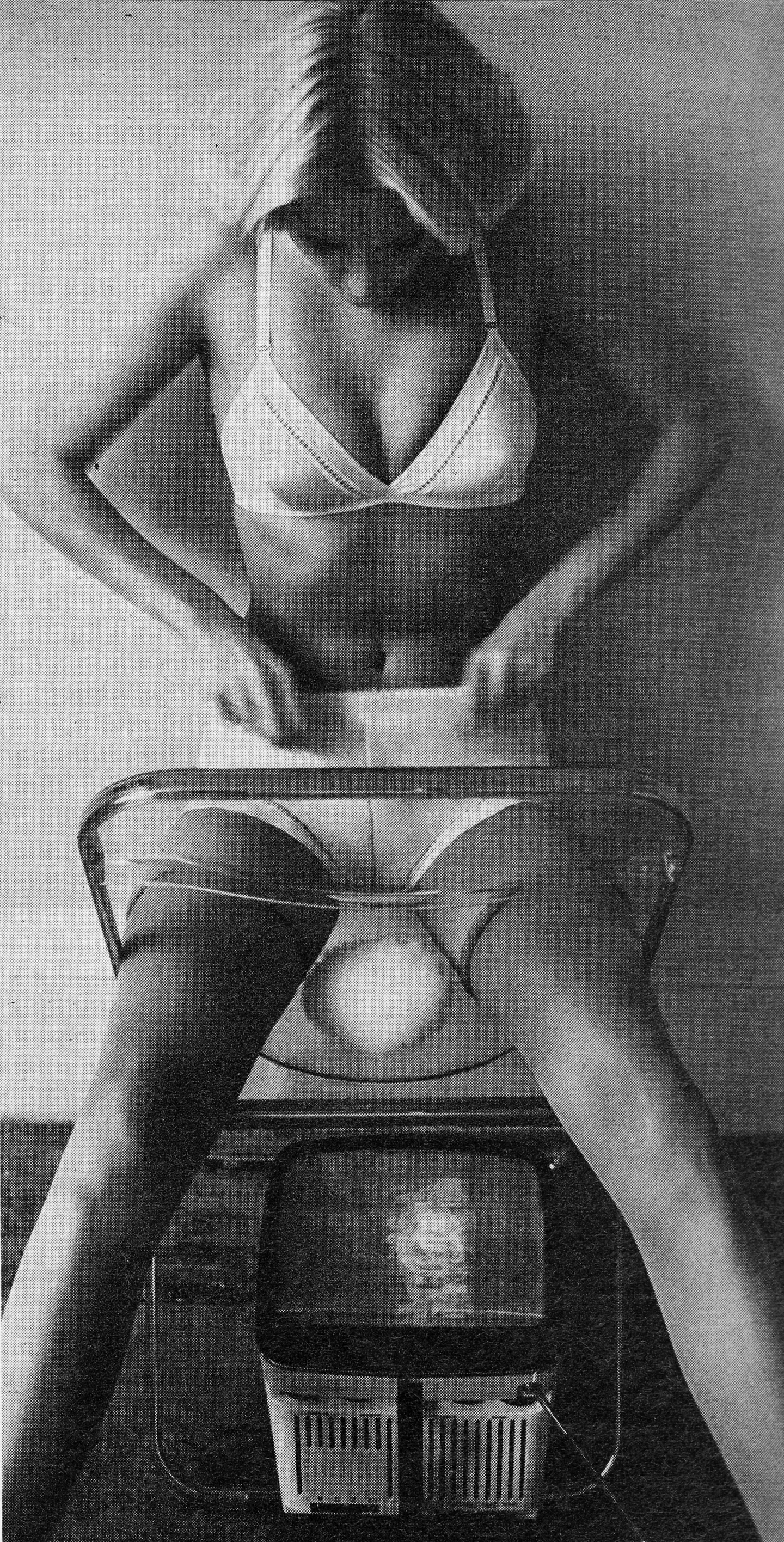
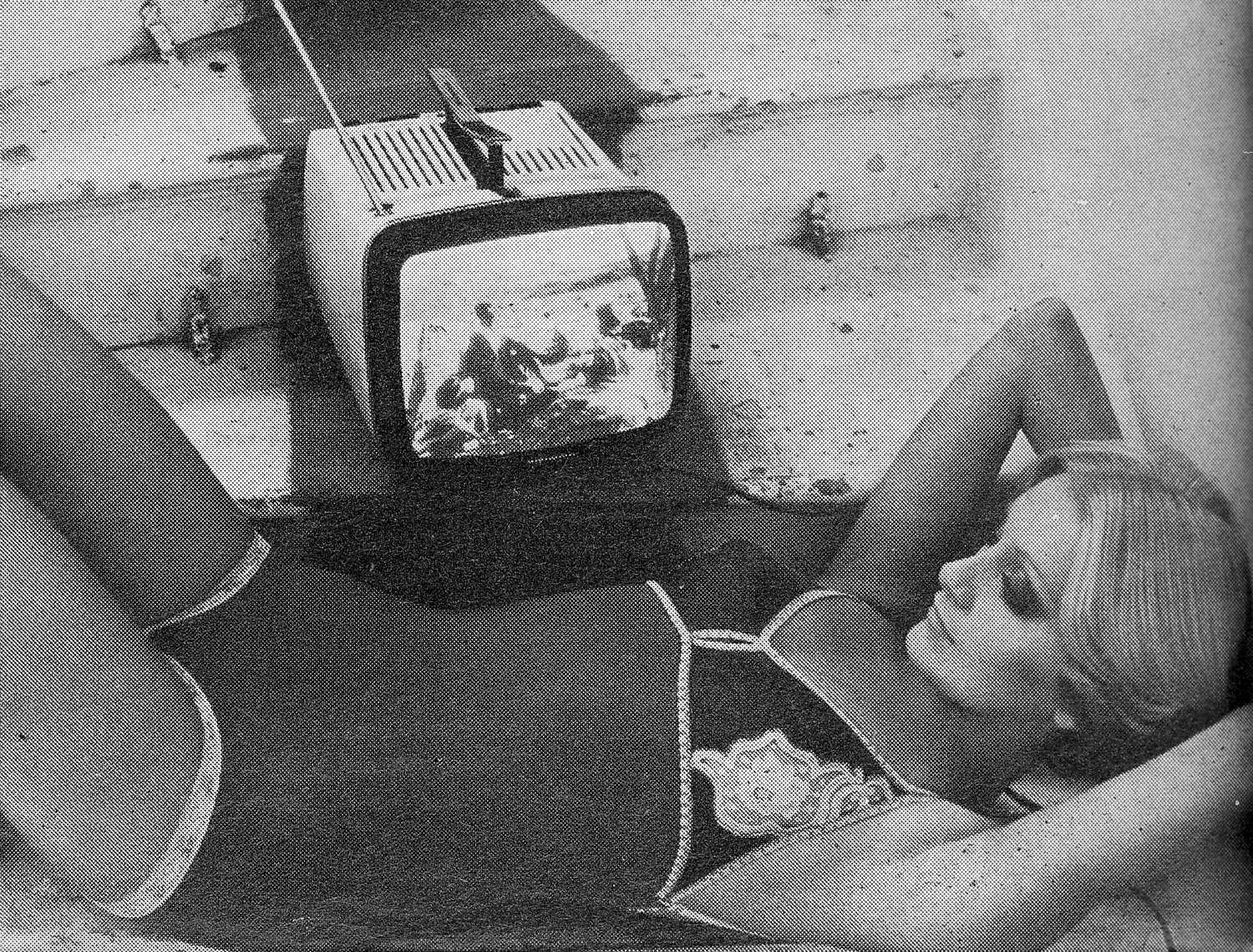
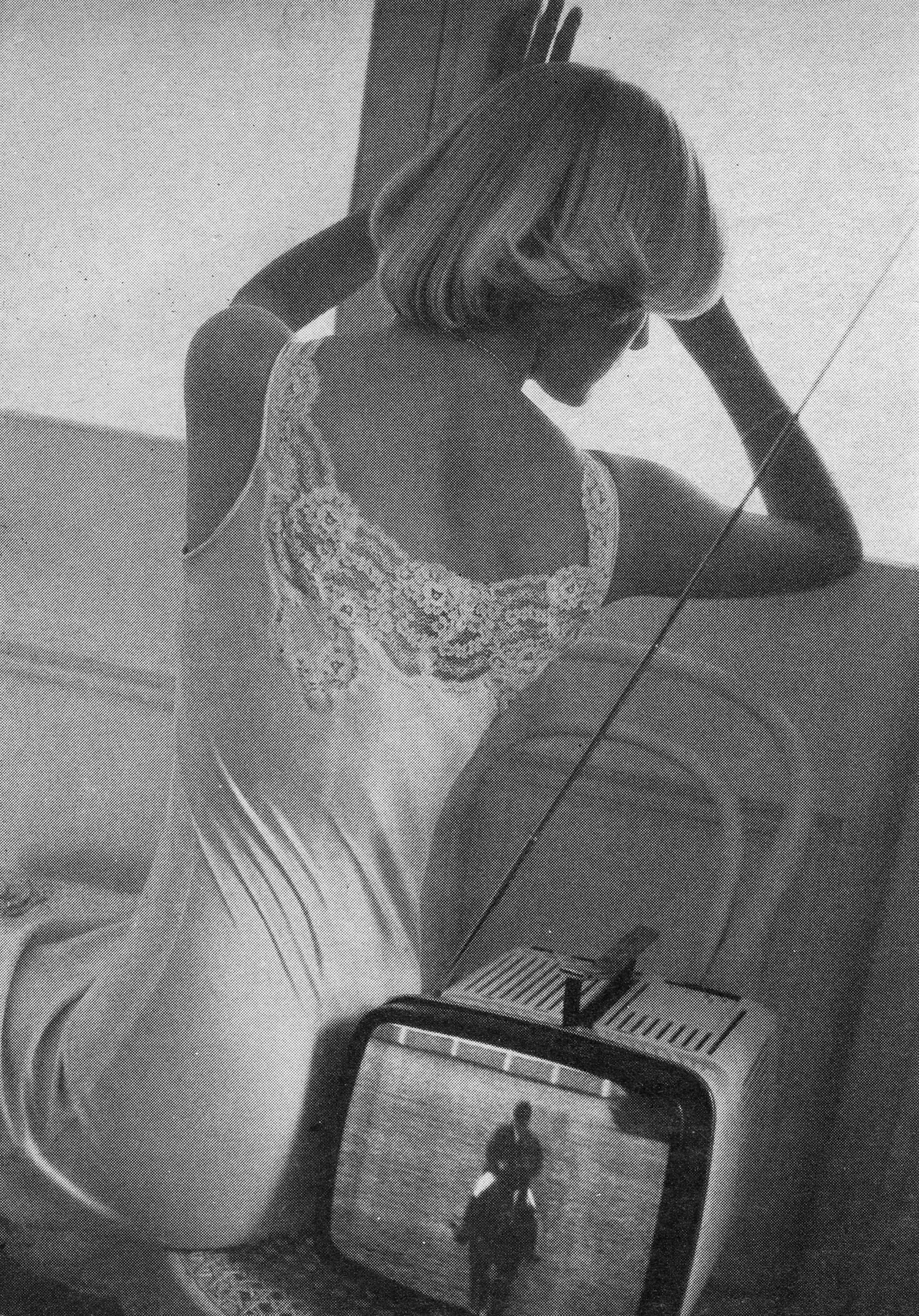
At last, at last, British designers have realised that underwear is worn to be seen – and this season sees the prettiest, sexiest lingerie for some time. Nonsense undies are still with us – those barely-there bras, more supported than supportive, but shapelier ladies can now choose from a wide selection of really beautiful things.

Photographed by Paul Harris.

Scanned by Miss Peelpants from Harpers and Queen, November 1975.

beautifulthings 2

Bra and matching briefs in white lace from Harrods. Suspender belt by Courtenay.

beautifulthings 5

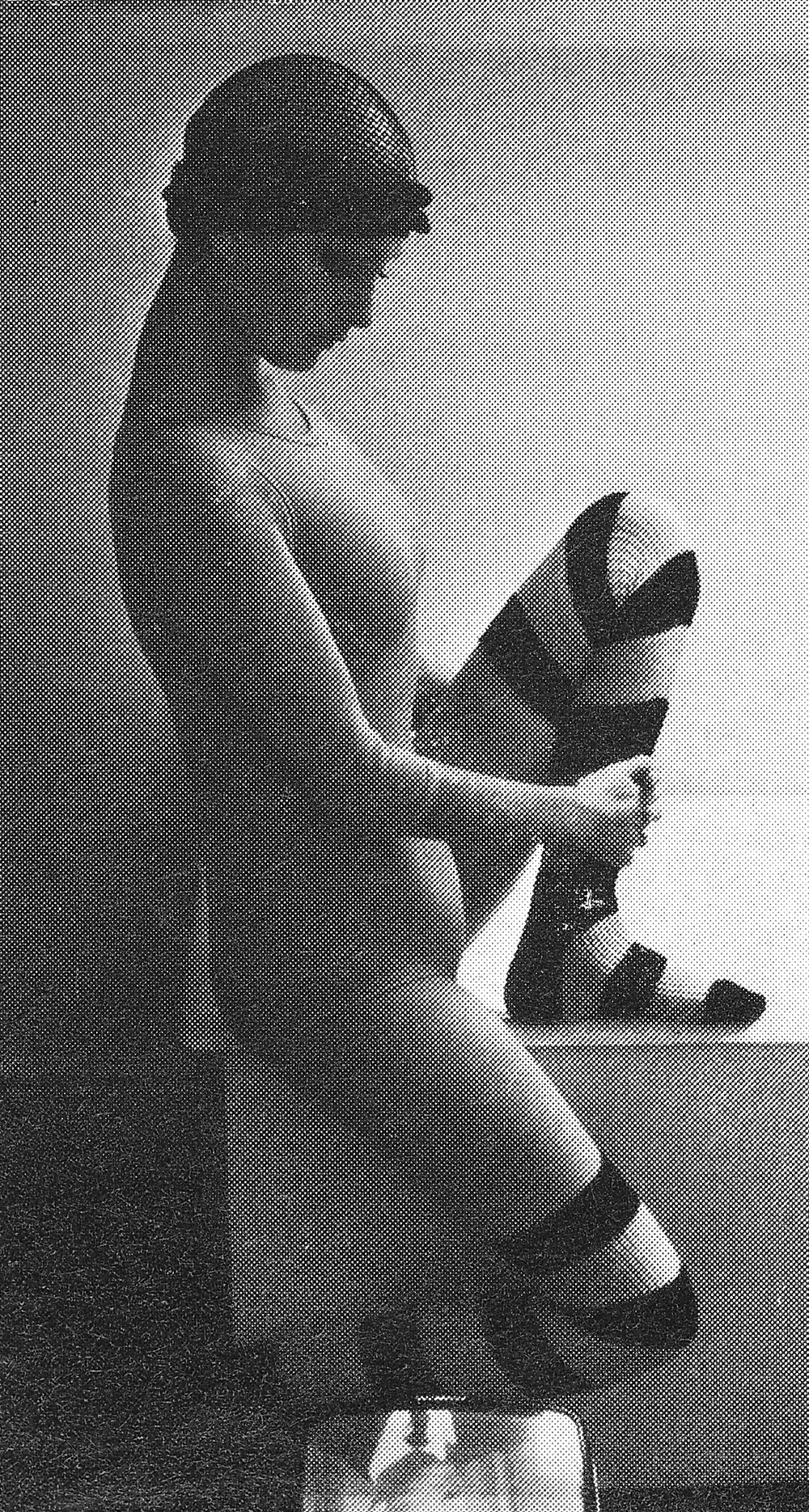
Lithe leotard and tights, both from Fenwick. Socks by Mary Quant. Hairnet from Medina.

beautifulthings 6

Film star petticoat and knickers by Janet Reger. Stockings by Funn. Flat dancing pumps by Charles Jourdan.

beautifulthings 4

Pale pink bra and French knickers by Dior at Fenwick. Stockings by Mary Quant. Powder puff from Harrods. Chair by Plia at Habitat.

beautifulthings 7

Slinky all-in-one set in lavender Lycra by Robin Alexis.

beautifulthings 3

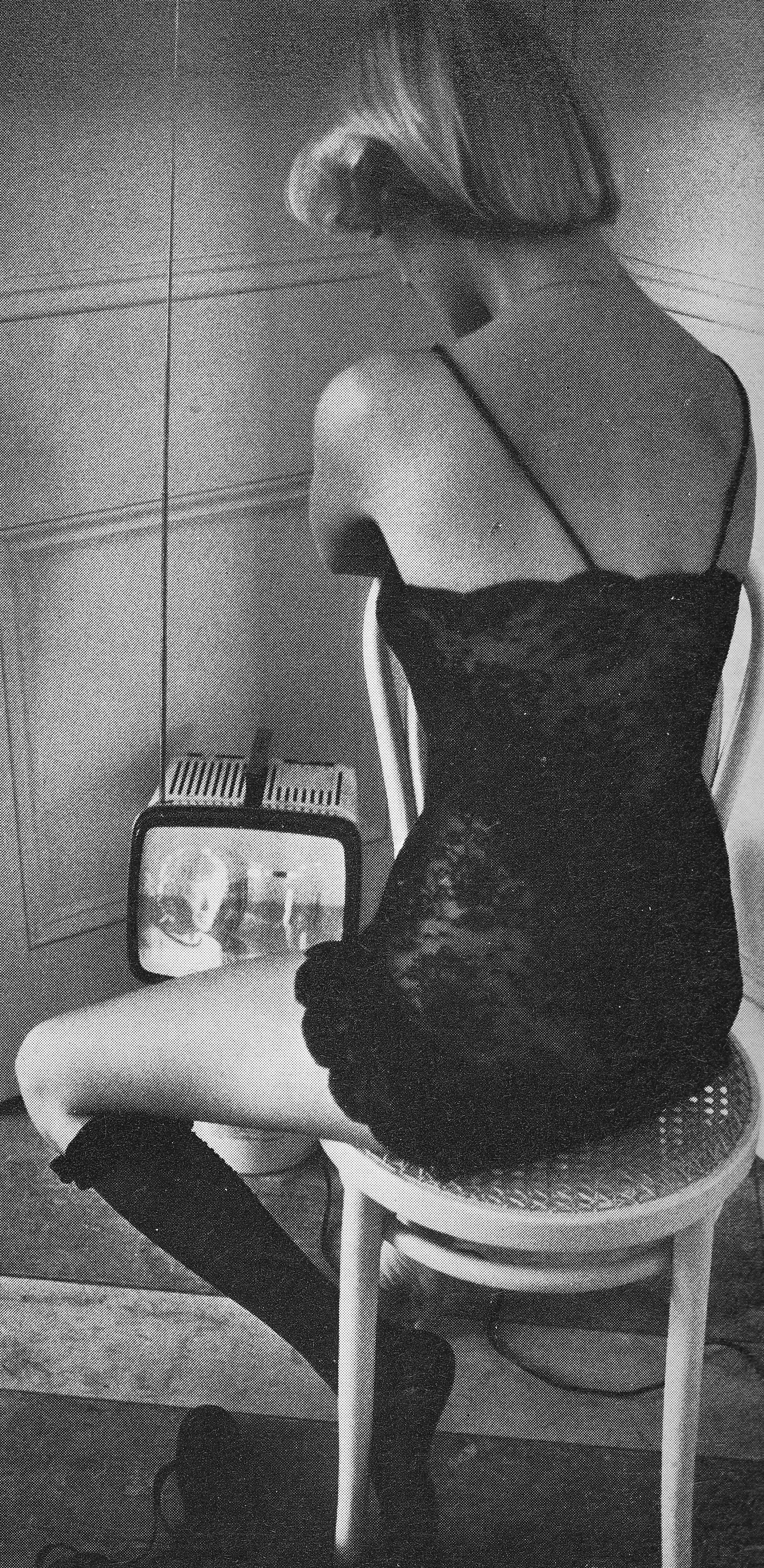
Champagne petticoat by Mrs Hilton for Finewear.

Mother Wouldn’t Like It

1960s, Boutiques, british boutique movement, Heavy Metal Kids, Honey Magazine, Illustrations, kensington market, lloyd johnson, menswear, Mother Wouldn't Like It, wendy buttrose

Mother Wouldn't Like It

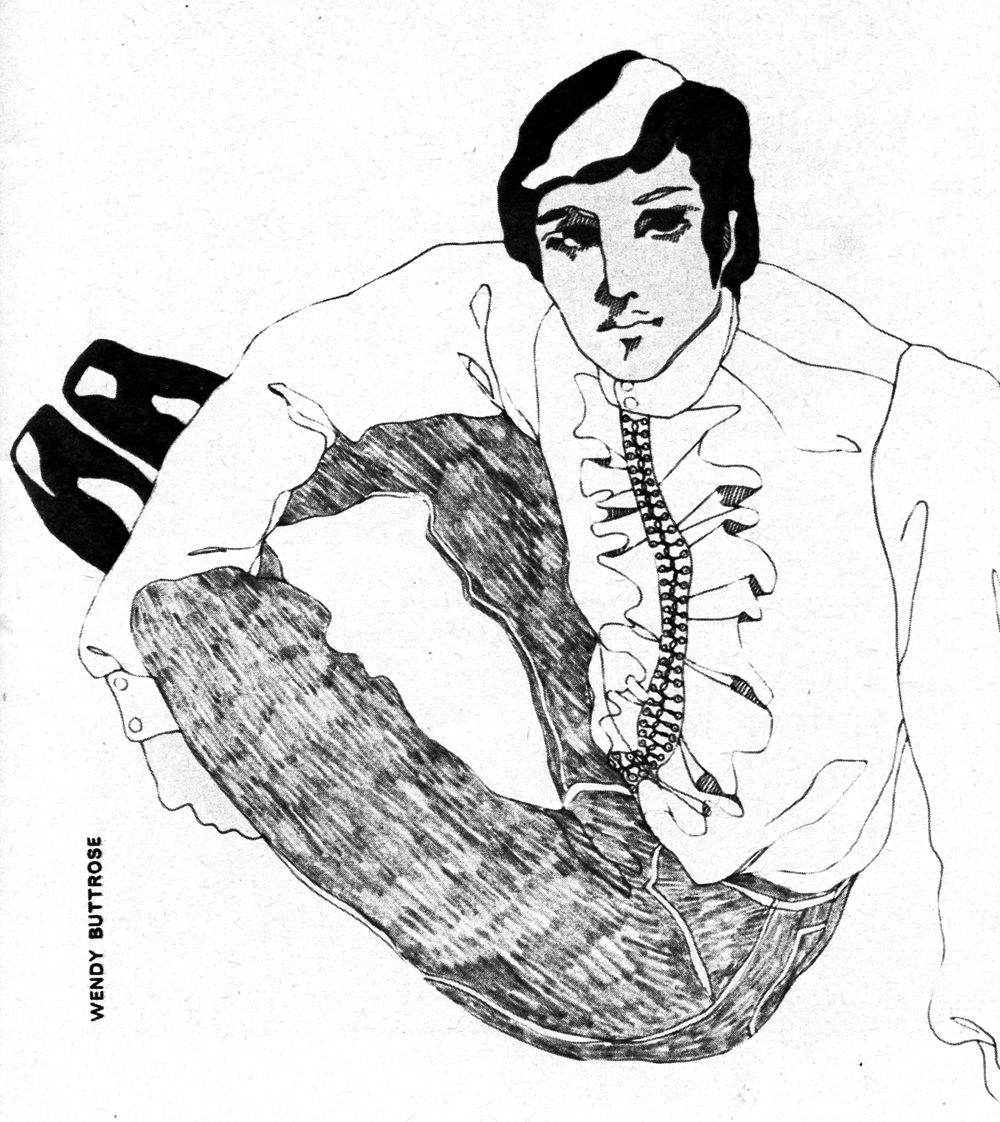
Have just formed a new organisation. It’s called SPOCC or the Society for the Protection of Clothes Customers. Idea came last night when I collected a couple of suits from the cleaners, only to find that the shoulder padding of one jacket was lost somewhere down the sleeve, and the trousers, supposed to be drip dry, were wrinkled like a Dutch dyke. The first suit came from Carnaby Street, the second from the Kings Road. Jose, my flat-mate, tried to pacify me by saying, “I thought you said clothes now are fashionable and short-lived. So what do you expect?” Simply that a suit shouldn’t disappear at the first clean! I accept built-in obsolescence and all those rubbishy excuses for using cheap materials, but I expect a suit to last a year, not a month. How about you? Let me know what you think … it might add up to some interesting revelations. Like the super trousers in the sketch. They’re Newman jeans from France; they cost much more than English or American but, in my view, are twice as good. I got a pair from the Heavy Metal Kids in the Kensington Market for £5. Elsewhere you can pay up to 8 gns. Shirts are another racket. The shirt here looks as if it costs 10 gns., and so it can at some places. In fact, it’s made by a man called Bryan King, who works in a Queensway attic, turning out great shirts handmade, frilled, tapered, for £2—£4, and sells them at his stall, Mother Wouldn’t Like It, also in the Ken Market. The tie-makers have become so ridiculously expensive that ties are out except for the odd occasion, and these shirts are as logical a take-over as the polo sweater. If Bryan can turn them out at this price, why can’t others? Remember—next time you think you’ve been rooked, let Luke SPOCC Jarvis know.

Written by Luke Jarvis.

Illustration by Wendy Buttrose.

Scanned by Miss Peelpants from Honey, March 1968.

Kensington Girl

1970s, barbara hulanicki, Barbara Hulanicki, biba, Gerhard E. Ludwig, Inspirational Images, kensington high street, Uncategorized

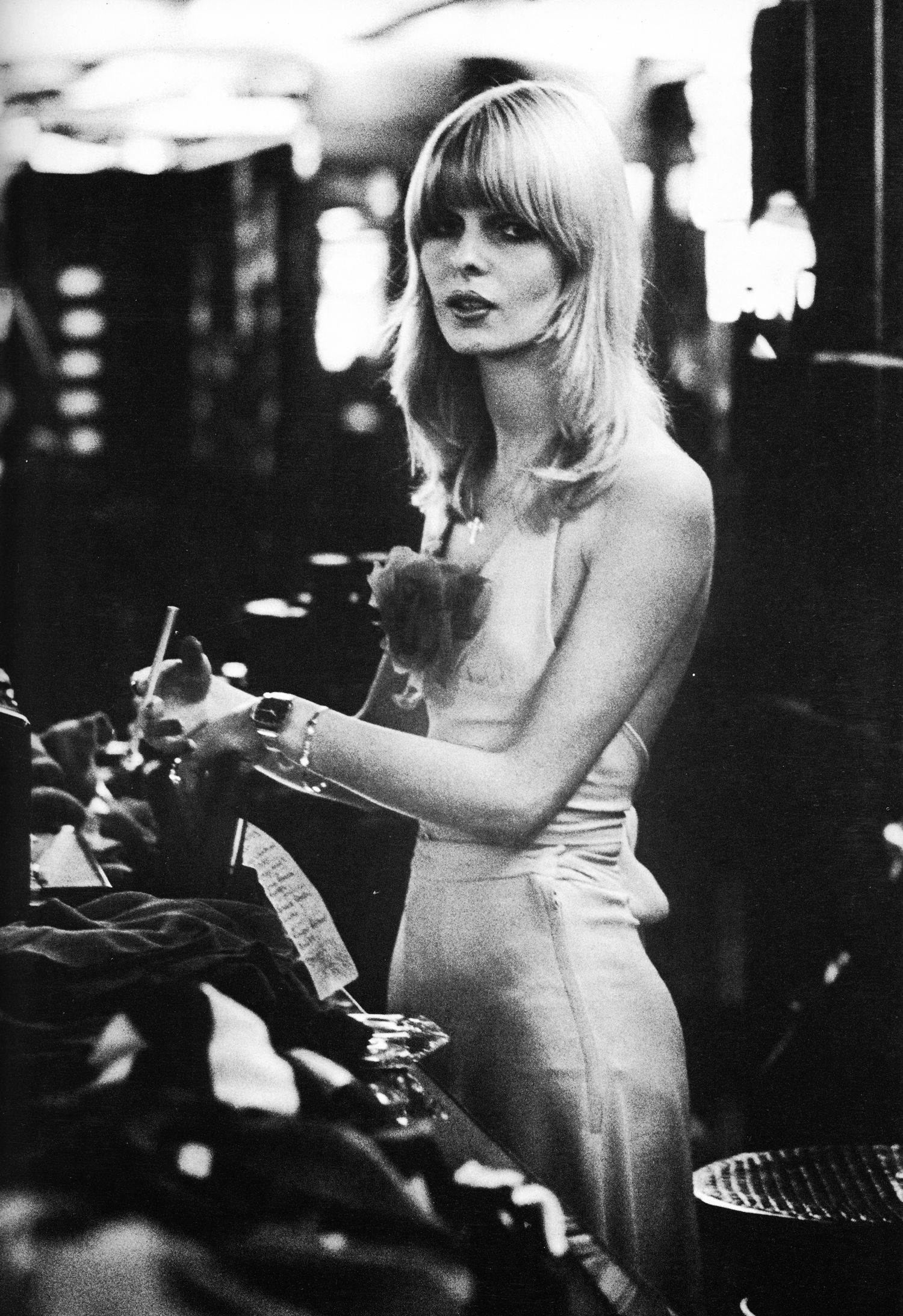
Kensington girl - Gerhard E Ludwig - 1974

While looking for pictures typical of ‘Young Swinging London’ (did such a place ever exist?) Ludwig found this girl in a Kensington shop.

No specific location credit but it looks like it’s probably Biba.

Photographed by Gerhard E. Ludwig.

Scanned by Miss Peelpants from The Photography Year Book 1974