
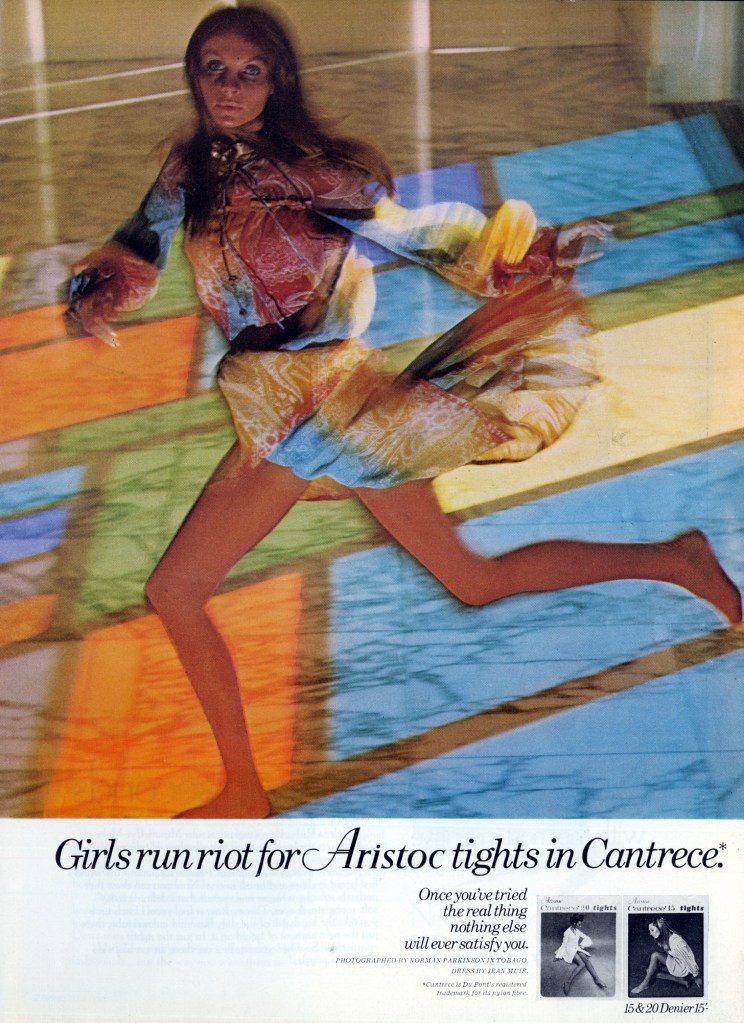
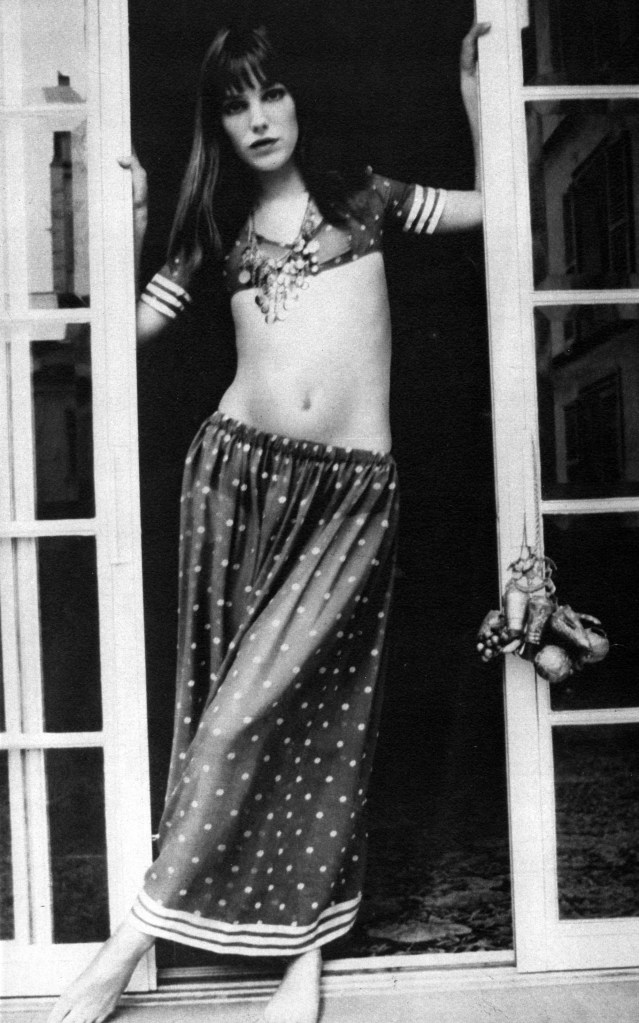
Dress by Jean Muir.
Photographed in Tobago by Norman Parkinson.
Scanned from Vogue, September 1970.
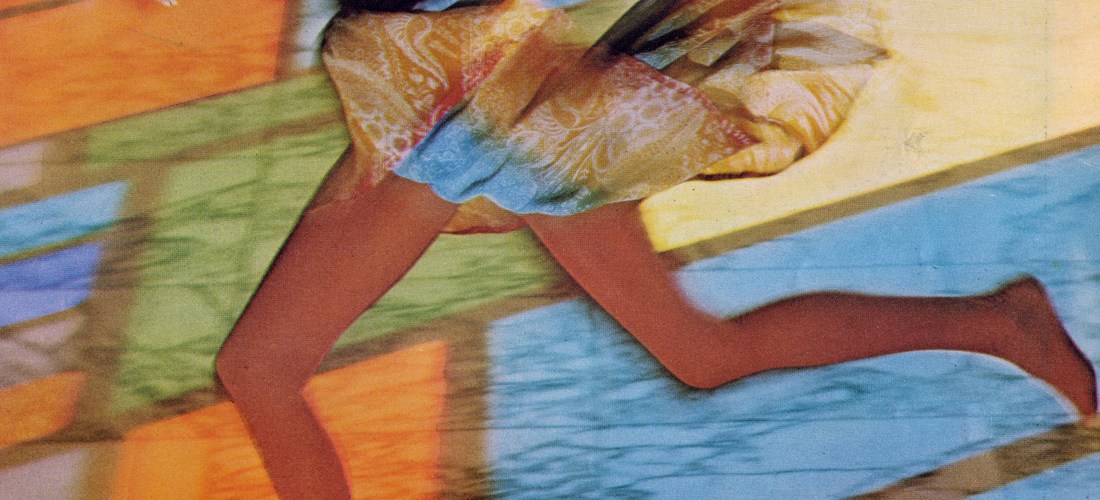
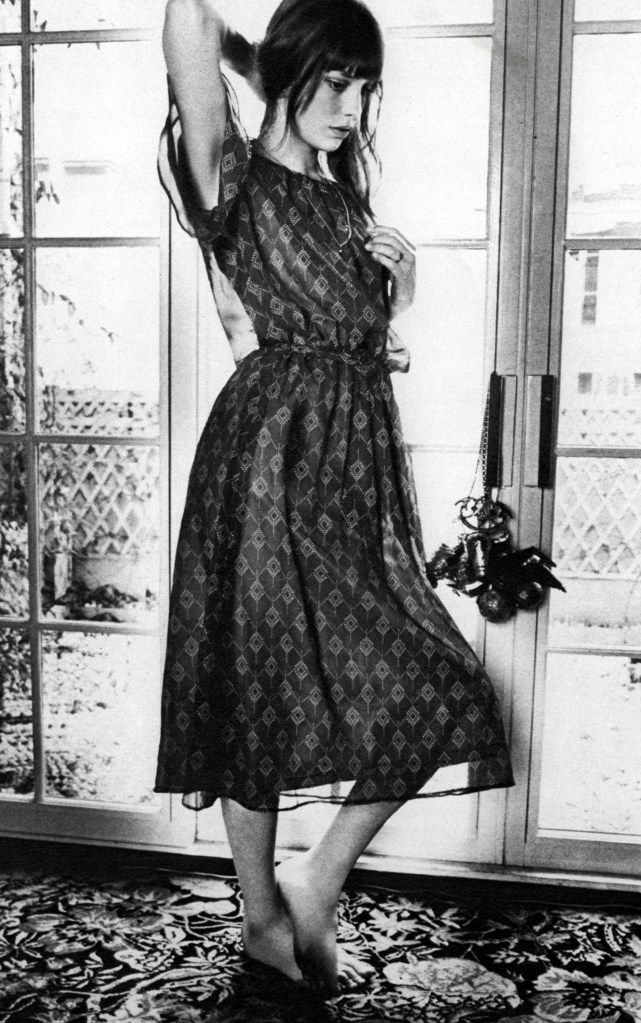
Dress by Jean Muir.
Photographed in Tobago by Norman Parkinson.
Scanned from Vogue, September 1970.
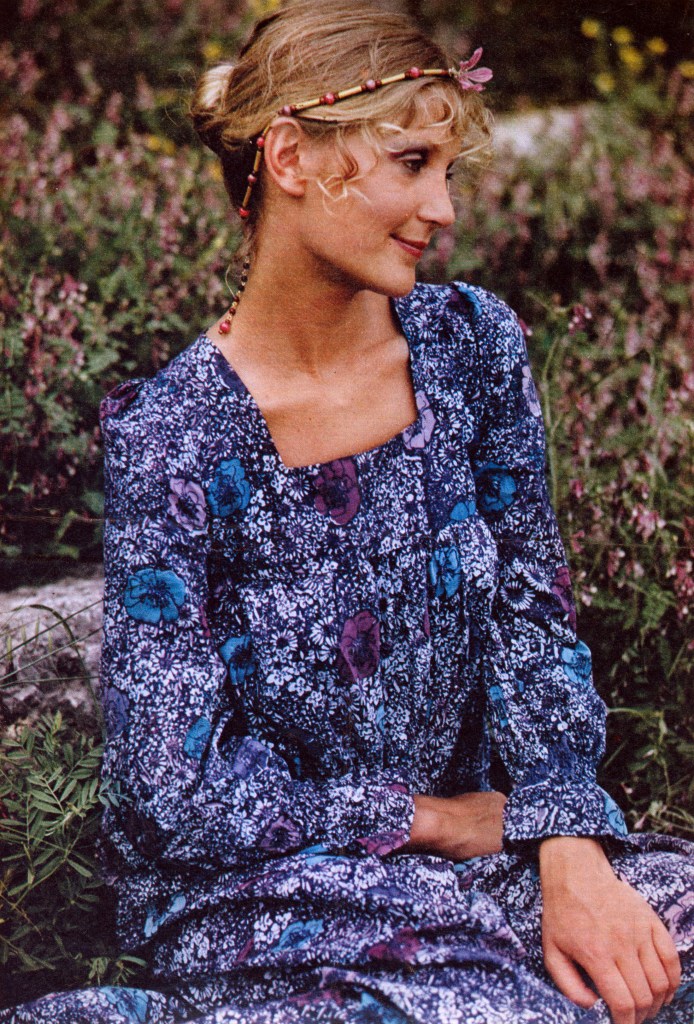
Accompanying an article on keeping cool in a heatwave. As I’m scheduling this post a few days in advance, I apologise if it drops in the middle of a cold snap…
Photographed by John Carter.
Scanned from Petticoat, August 7th 1971.


Summer sundresses can go a long way. They’re so versatile – you can wear them for work and then dress them up for the evening with hats, scarves and jewellery. Here are some of our ideas.
Photographed by David Anthony.
Scanned from 19 Magazine, August 1975.


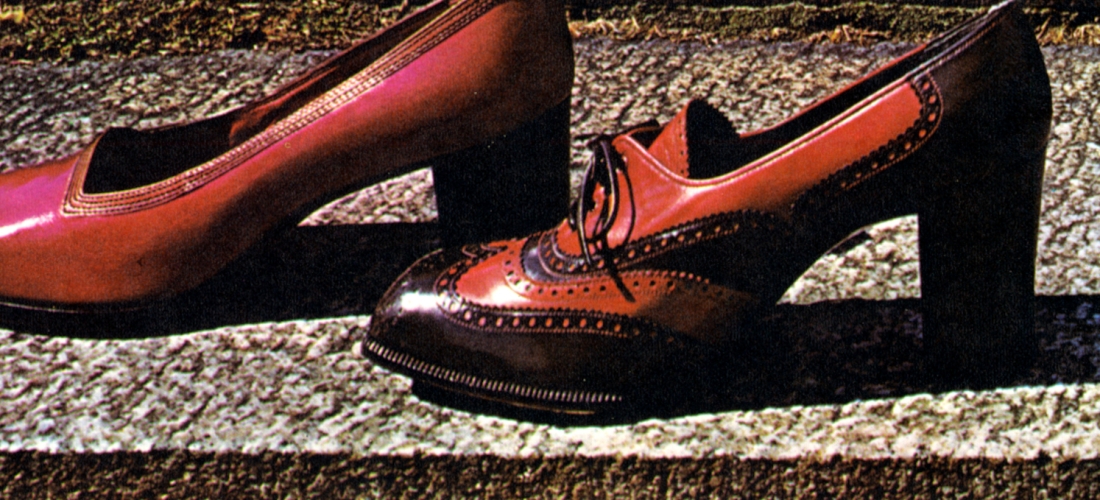
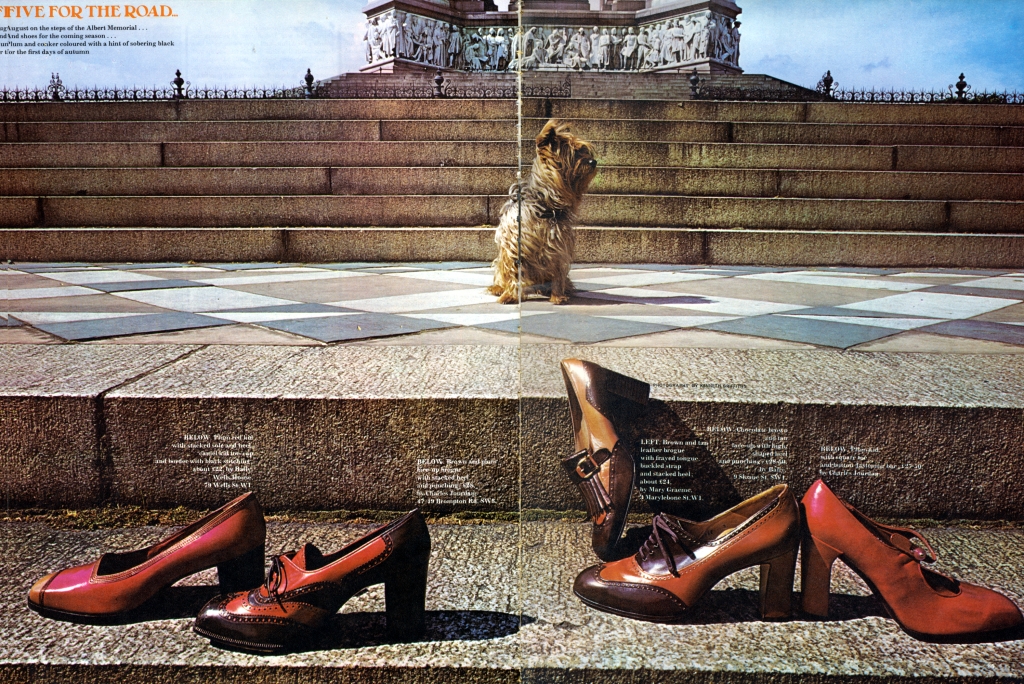
August on the steps of the Albert Memorial…
And shoes for the coming season..
Plum and conker coloured with a hint of sobering black for the first days of autumn.
I know nobody likes to hear THAT word in August, but it seems appropriate on a day when I’ve been forced back into brogues by the miserable weather.
Photographed by Kenneth Griffiths.
Scanned from Harpers and Queen, August 1974.
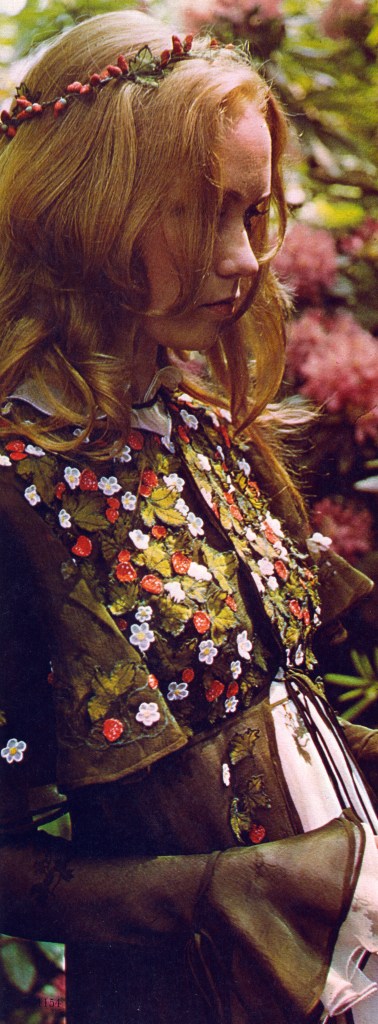
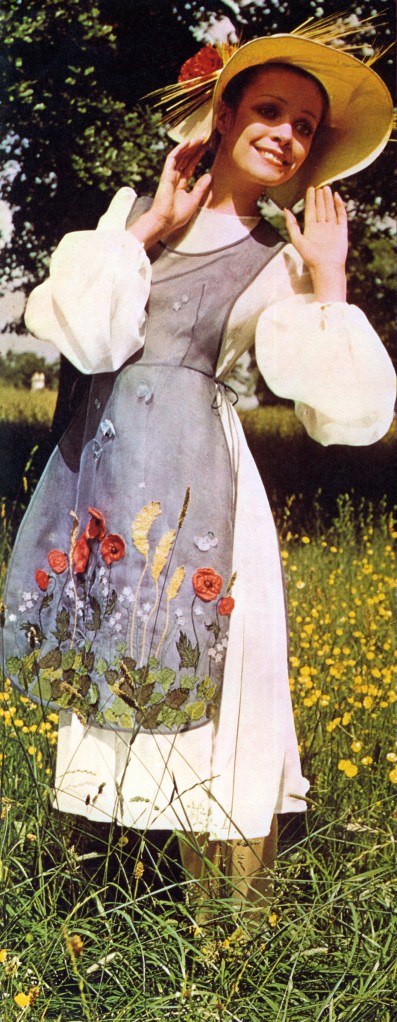
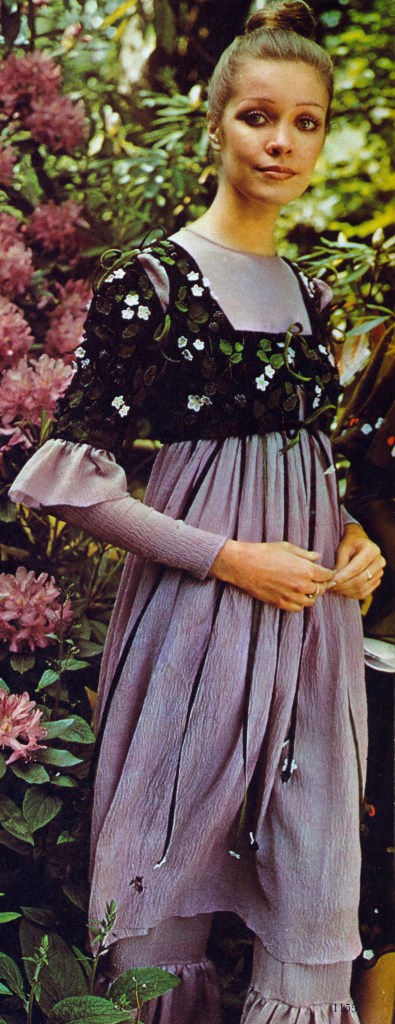
Romantic in concept and evocative of another age, the embroidered clothes illustrated on these pages were designed and made by Angela Salmon, while a design student at London’s St Martin’s School of Art, for her final diploma exhibition. Although painstaking embroideryis not commercially viable in the ready-made clothing industry, it is comforting to know that students of design continue to produce exquisite work such as this, adapting traditional techniques to modern design concepts. The lilac silk and black velvet dress, worn with pantaloons, has flowers and leaves of machine embroidered organza applied to the bodice with realistic-looking plastic blackberries to complete the motif. The caped coat-dress, made of olive-coloured chiffon, is worn over a strawberry printed chiffon dress. Strawberry flowers, leaves and fruit motifs, made of matt satin and machine embroidered organza, are applied with some of the edges lying free of the background fabric. The blue and white ensemble consists of a blue organza apron worn over a full-sleeved chiffon dress. The designer has chosen field flowers for her inspiration—poppies, buttercups, speedwell and wheat heads—embroidered and applied to the background fabric. Surface embroidery has been added to enrich the design.
Photographed by G Murrell.
Scanned from Golden Hands Magazine, Part 58 Vol 4. (1972)
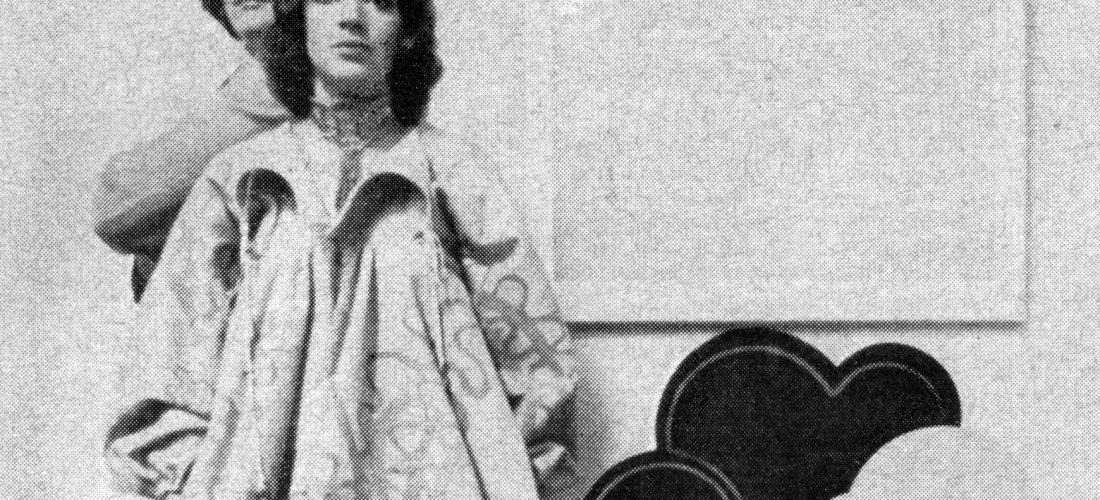
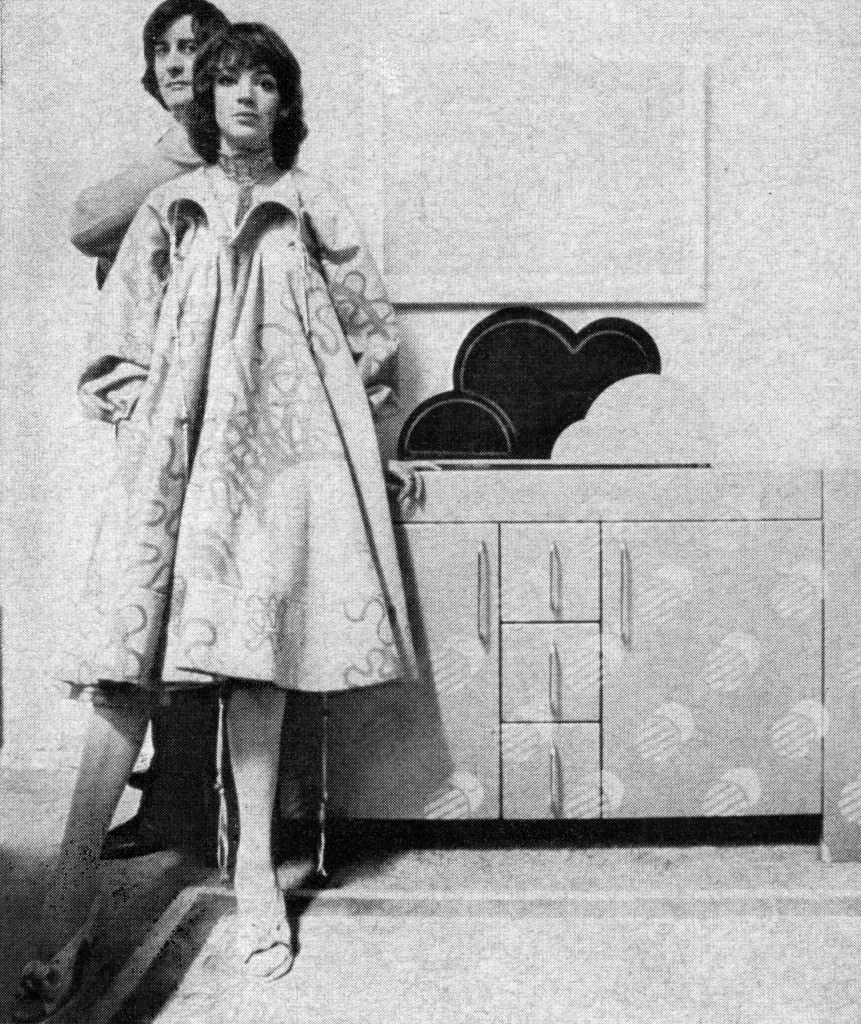
Chester Jones is design director of Colefax & Fowler. He makes furniture of extraordinary craftsmanship, all dependent on handmade techniques, reminiscent of thirties’ decorative skill. Here, with his wife, Sandy, his chest-professionally sprayed silver, bolted together, stencilled in patterns of pinks and blues. Neon cloud scuplture. Gentle pattern carpet made by V’soske. Walls stippled beige on white by hand, stencilled simply, oil paint through heavy paper. Ceiling in silver gilt rubbed by hand. Sandy’s dress is by Zandra Rhodes.
Photographed by Ruan O’Lochlainn.
Scanned from Vogue, July 1970.
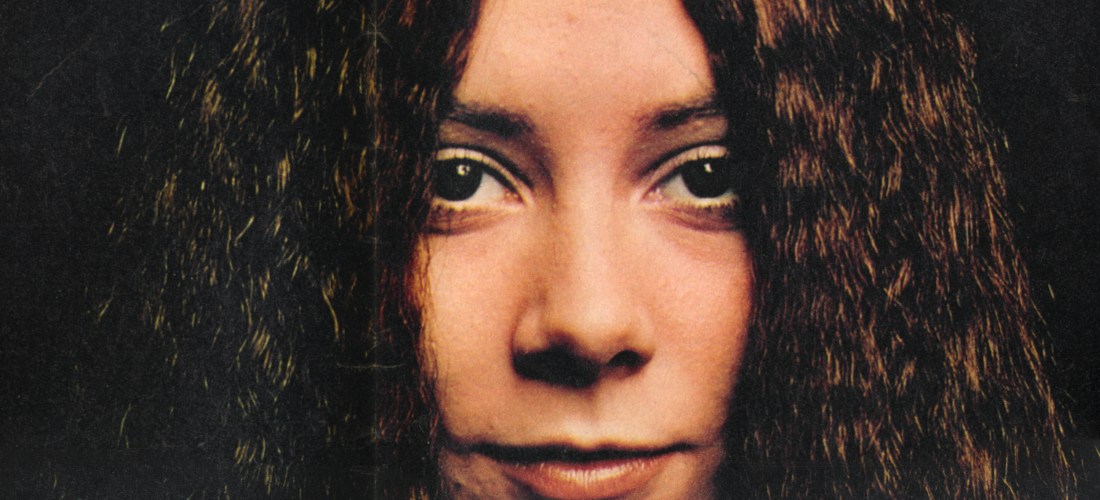
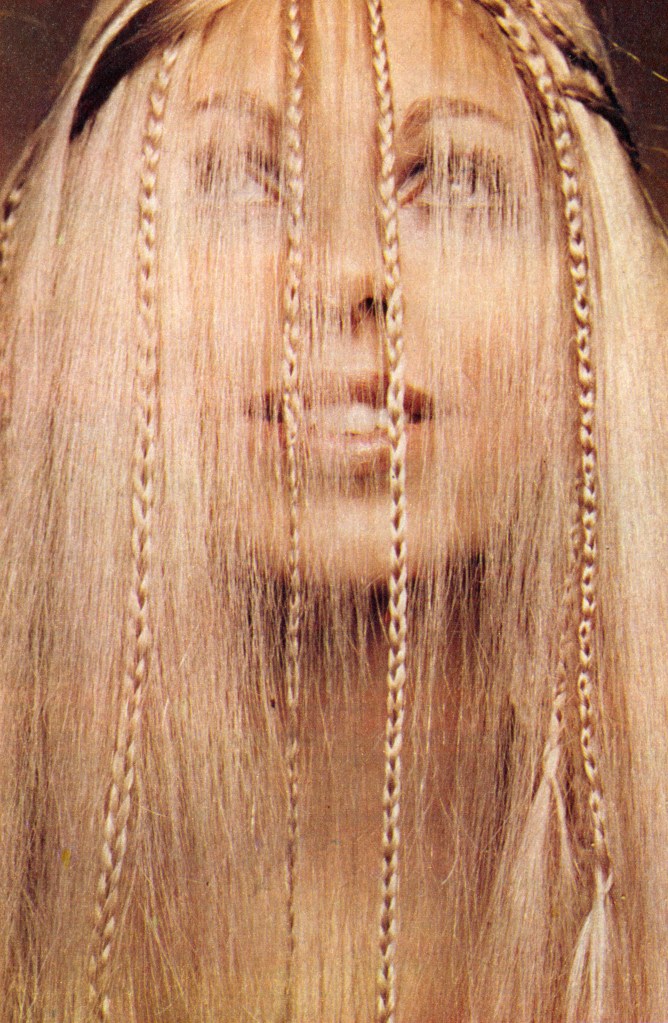
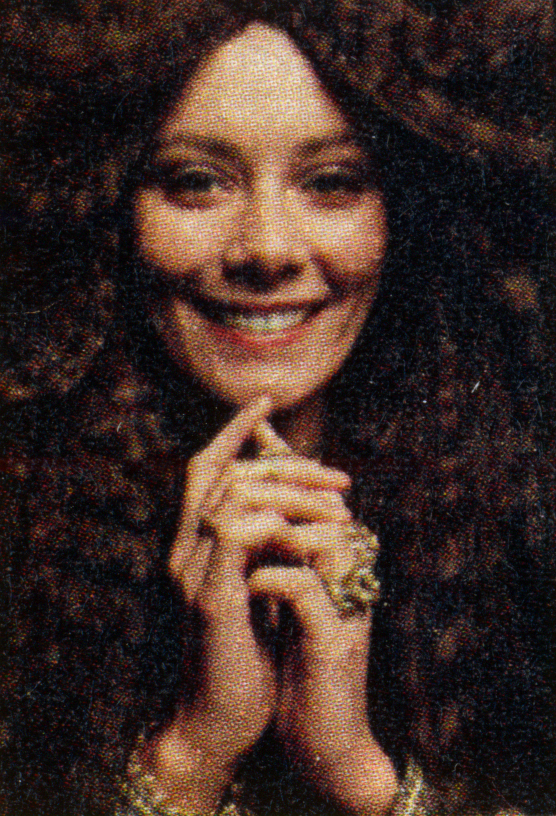
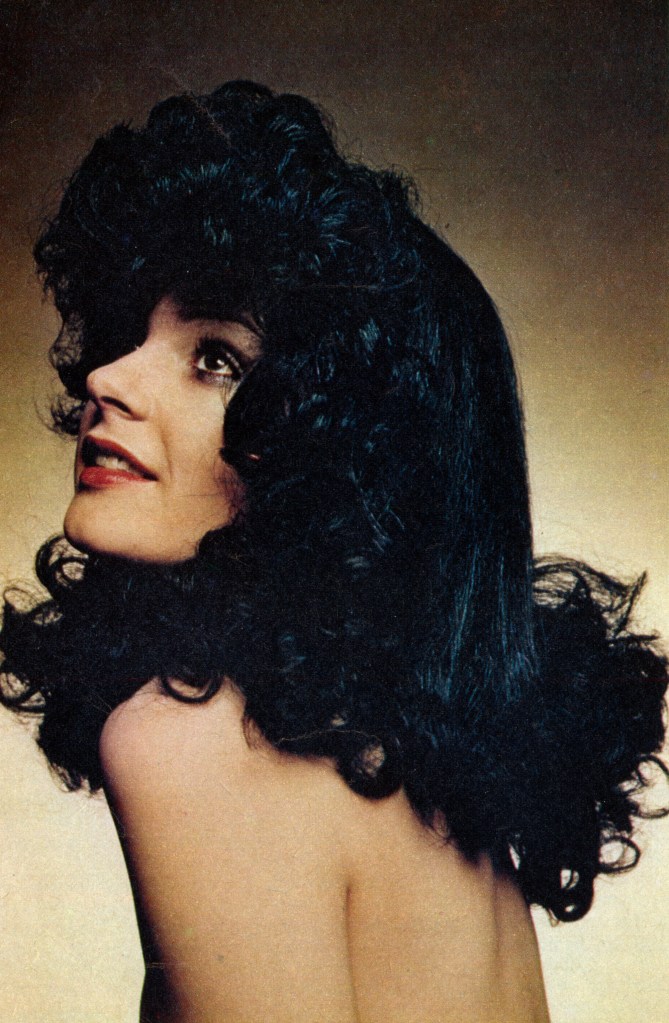
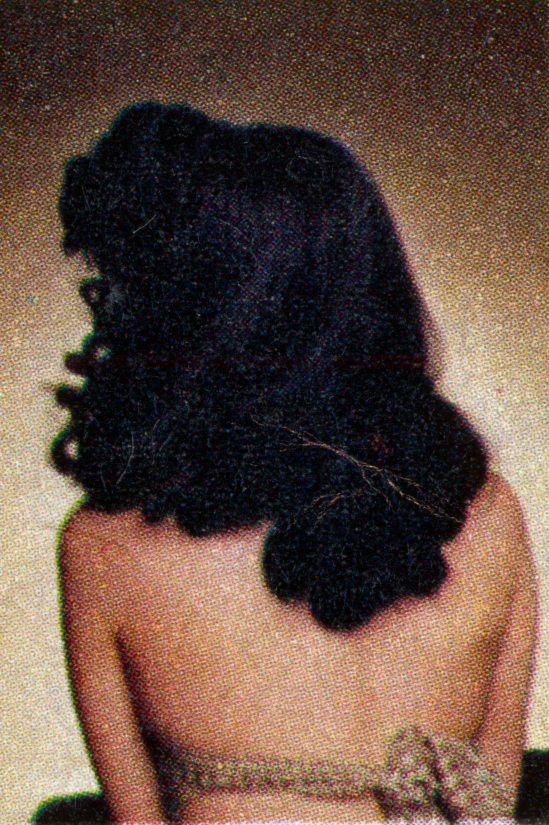
Hairdressers are laying down their scissors saying: “We want to feel hair again – short hair is out”. If you’re growing your hair, you’re in ‘cos long hair is romantic and flattering. These styles show you what we mean.
Photographed by Chris Holland.
Scanned from Petticoat, 9th May 1970
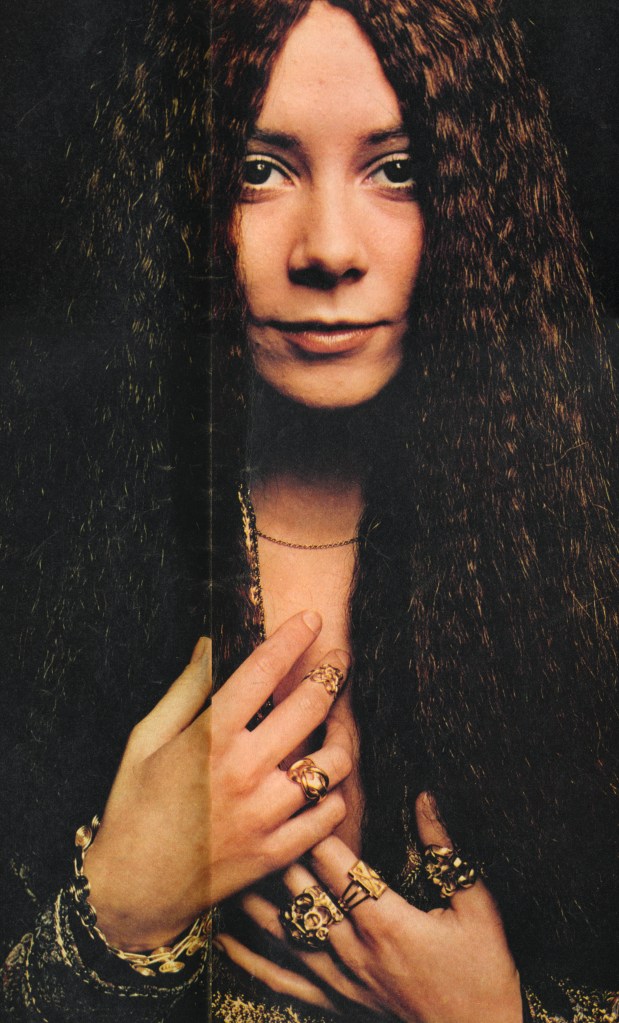
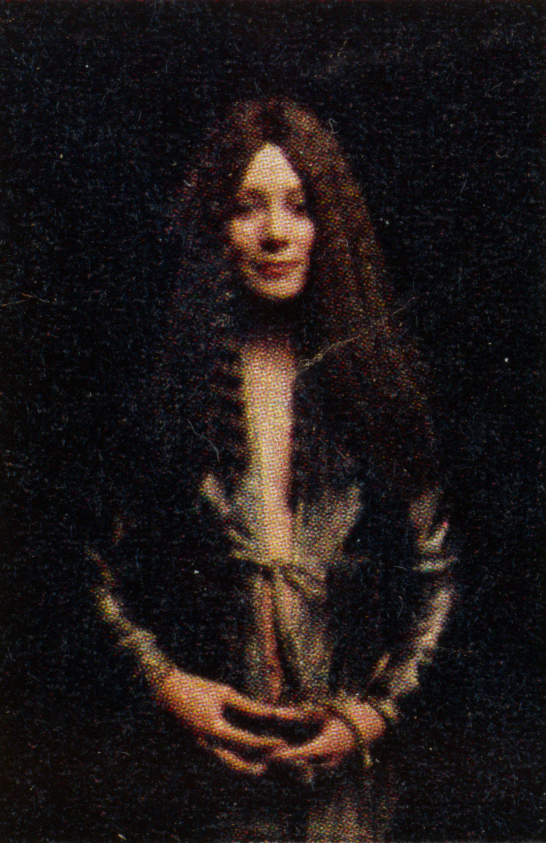
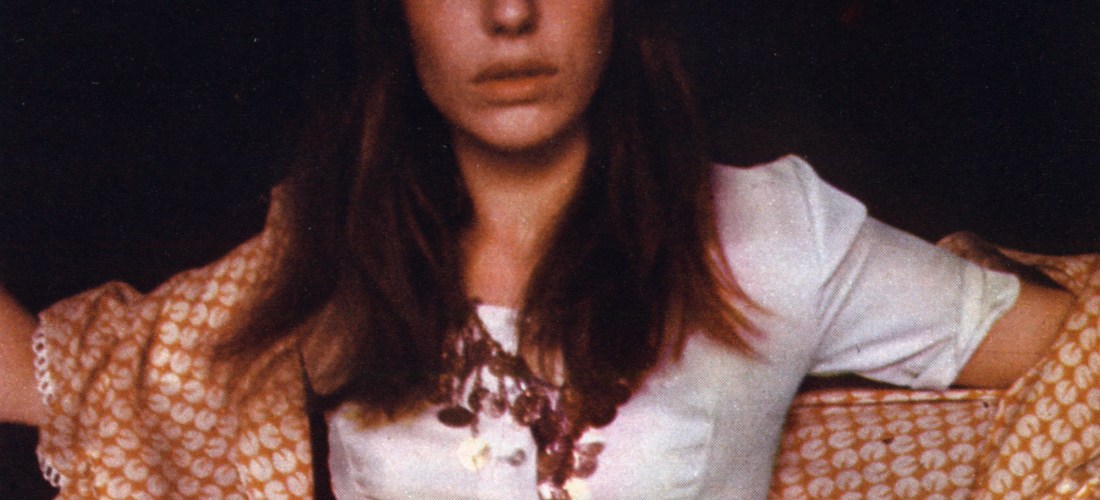
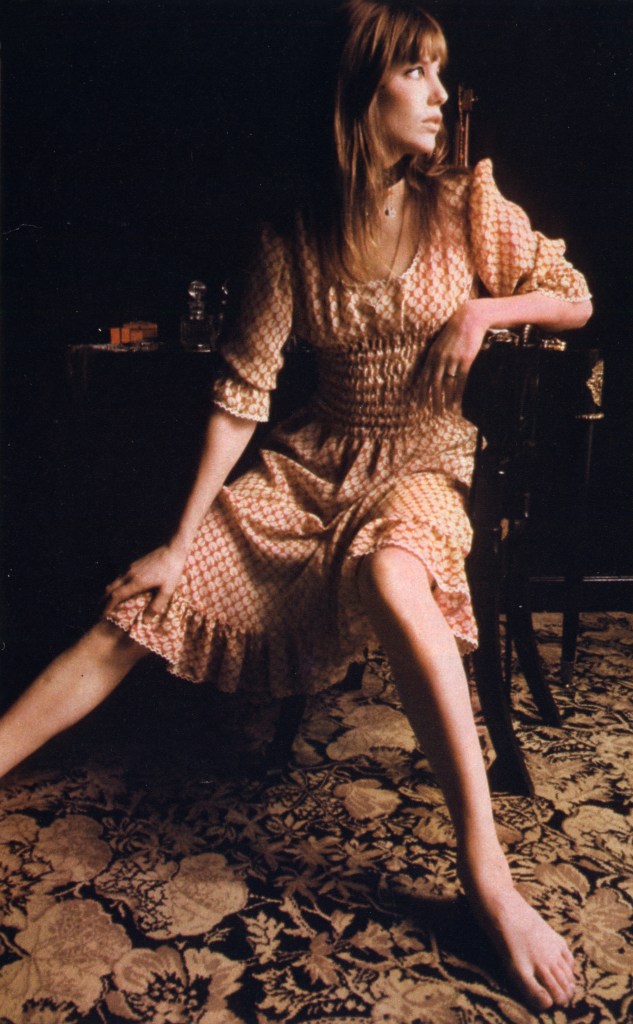
It looks as if England has lost Jane Birkin forever … she is firmly entrenched in Paris with baby Kate, nanny and the lovely Serge Gainsbourg, living in sombre luxury in their newly acquired house. The interior is stark and dramatic, every room is decorated in black and white, with white doors and black marble floors or carpet. The furniture is also black and white—there’s a big black shiny piano in the lounge, and a black mink cover adorns the bed which is raised off the floor on a black perspex dais. Weekends are usually spent at a quiet retreat in the country, making a sharp contrast to the busy social life that they lead during the week. Since Jane landed in France she has never stopped working. Film after film has been completed and the success of the record she made with Serge, which was also written and composed by him, Je T’Aime … Moi Non Plus, has led to an LP also written by Serge. Her life is chaotic and busy, it seems as if the telephone never stops ringing. People phone her every day with offers of interviews and films, the next of which is still a closely guarded secret. It was whilst she was making her first film in France, Slogan, that she met and fell in lovewith Serge, an event which seems to have altered her life but through it all she remains the same—a waif of a girl, tall and lanky, in pullover and jeans, serving tea out of her treasured English teapot. Her wardrobe is noticeably small, consisting mainly of casual clothes like pullovers, T-shirts and jeans; with the occasional gipsy-type dress reserved for the evening and worn with gold chains, loop earrings and gipsy belts. She acquires most of her clothes by chance buying, rarely by intentionally setting out on a spending spree. Usually she just spots something she likes in a shop window and ends up by going in and buying it. In London she shops mainly at Countdown, Foale and Tuffin, and Quorum. She buys her jewellery from the Chelsea Antique Market. In Paris she favours the more trendy designers like Mia and Vicky or Jean Bourquin. Jane is perfectly happy spending hours hunting about in antique shops for interesting little knick-knacks, like the 18th-century doll’s house which she gave to her Serge for Christmas.
Photographed by Michael Berkofsky.
Scanned from 19 Magazine, May 1970.
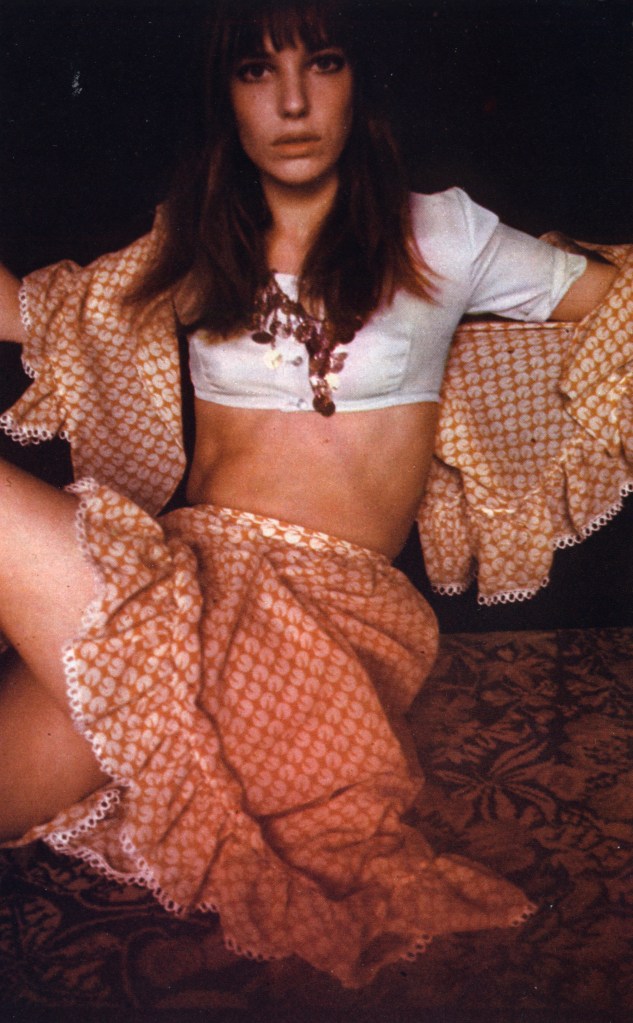
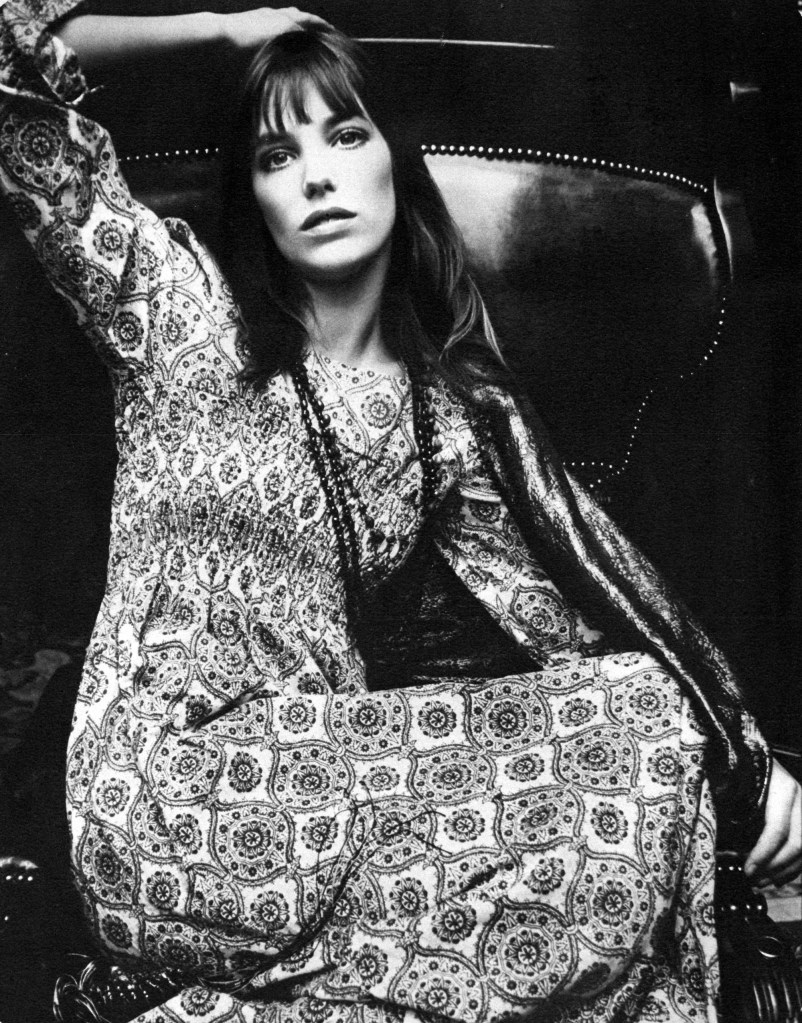

They break boring beauty traditions and riot lip colours go on eyes, eye colours go on lips. Upside down- Quite contrary. And why not? Make-up was getting so dreary. We just stuck to the rules and slicked warm colours—pink, amber, soft orange—on our mouths, and cool colours—grey, green, blue, brown—on our eyes. Till now. Till the anarchists started this new groove. Now things are happening. Putting on a face isn’t a daily chore to be done as quickly as possible. Make-up is something to enjoy. It’s art. Total fun. Total fantasy. After all, painting on warm mobile skin is so much more exciting than .cold fiat paper or canvas. Come, join the anarchy party and experiment with colour. Sit down this evening in front of a well-lit mirror, not the telly, and design surprise eyes.
Alice Pollock (top) says she would like to be invisible (can’t think why) and her favourite perfume is Chanel No. 5. She has tried every hair colour under the sun, including green, but she’s glad it’s her own shade now—”At least I know who I am when I wake up.” Every morning she washes it in the bath with Boots Herbal Shampoo, 2s. 11d. On her eye-lids she paints Leichner’s Ivory Stick No. 5, 5s. 3d., and then an arc of pale green under the brow and round along the cheek-bone. Her lip-colour is a mixture of the same Leichner stick and Christian Dior’s Sepia 61 lipstick, 15s.
Moon (centre left, whose real name is Constance Mullens and who was nicknamed after a South African cartoon character called Moon Mullens) wears Mary Quant’s Citrus Jeepers Peepers, 18s. 7d., on her eye-lids and a purple Caran D’ache water crayon all round the eyes to tone with her hair which is cleverly coloured mauve and butterscotch by Erik and styled by Herta at Vidal Sassoon, Grosvenor House; 01-629 2463. Her favourite perfume is jasmin and, asked what the most vital beauty product is, she said, “a razor.”
Gala Mitchell (centre right) is a beautifully original actress. You may have seen her before in Ken Russell’s television film about the Pre-Raphaelites. Her most treasured beauty product is lipstick. Here she’s wearing Biba’s purple lip-tint, 5s., with black liner round her mouth. She uses more of Revlon’s Natural Wonder Lid Liners, 17s. 6d., to paint intriguing black spots across part of her face to symbolise a veil, and then twists a string of blue curls, tinted by Erik, amongst her copper hair which she keeps in place with two ’40s tortoiseshell hair-combs.
Kari Ann Moller (bottom left) says she wants to look like the wicked witch in fairy tales, yet she loves cosy perfumes like Apple Blossom and Lily of the Valley (Coty’s Muguet des Bois Creamy Skin Parfum, 17s. 6d.), and she couldn’t live without Nivea. “I found an old purple crayon in my boyfriend’s car—he’s a painter—so I’m wearing purple with a dab of lipstick and Leichner silver sparklers on my eyes today, plus tart red lipstick by Elizabeth Arden.” Her soft ginger wig is by Ricci Burns, 151 Kings Rd., S.W.3.
Jill Harley (bottom right) never wears fake eyelashes now, she’s only interested in colour: Chrome stick by Leichner.. 5s. 3d., with Gait orange paint near the socket line and Dorothy Gray’s Light-Up Yellow lipstick, 11s. 6d., as a highlighter for her eyes. Woltz ltaliana’s pale green polish, Laguna, goes on her nails to match up with her pale green wellingtons. Instead of expensive face-shapers, she brushes on Miners’ Frosted Brown Powder Eye Shadow, 2s. 10d. For her lips, she mixes an old red lipstick with Boots 17 Shiny Brown Eye Shadow Stick, 2s. 6d.
Two of my favourite models + one of my favourite designers + some wild 1970 make-up = happy Liz.
Photographed by Steve Hiett.
Scanned from Honey, September 1970.
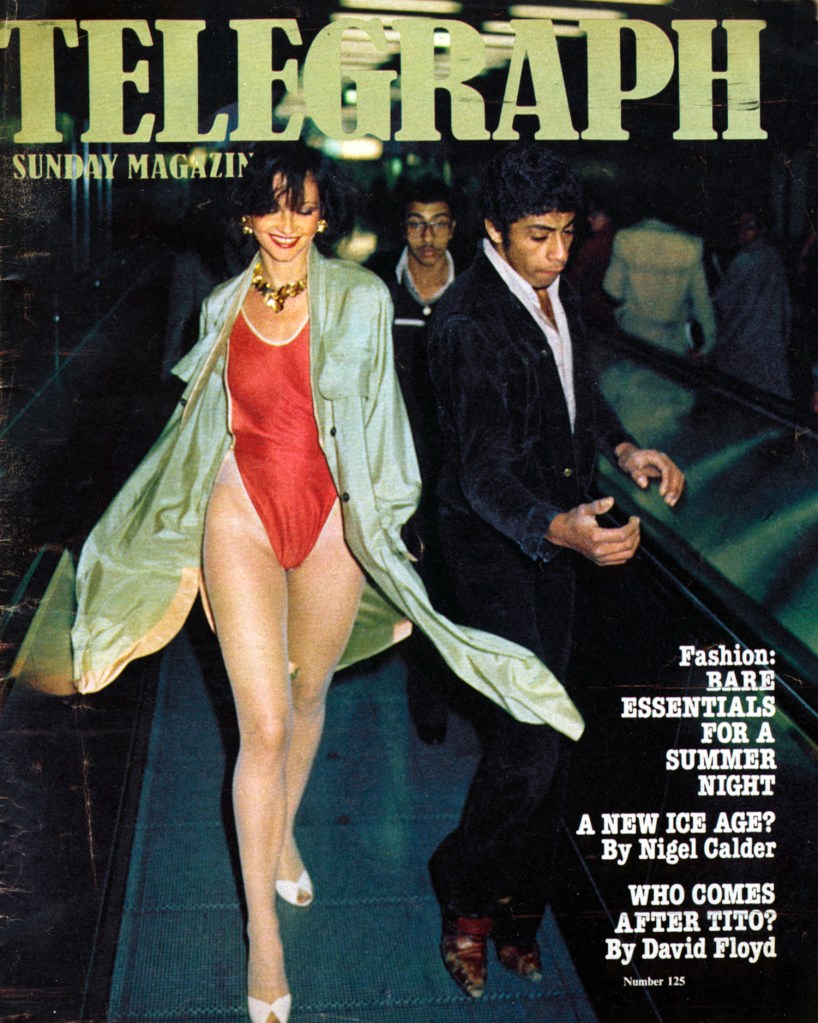
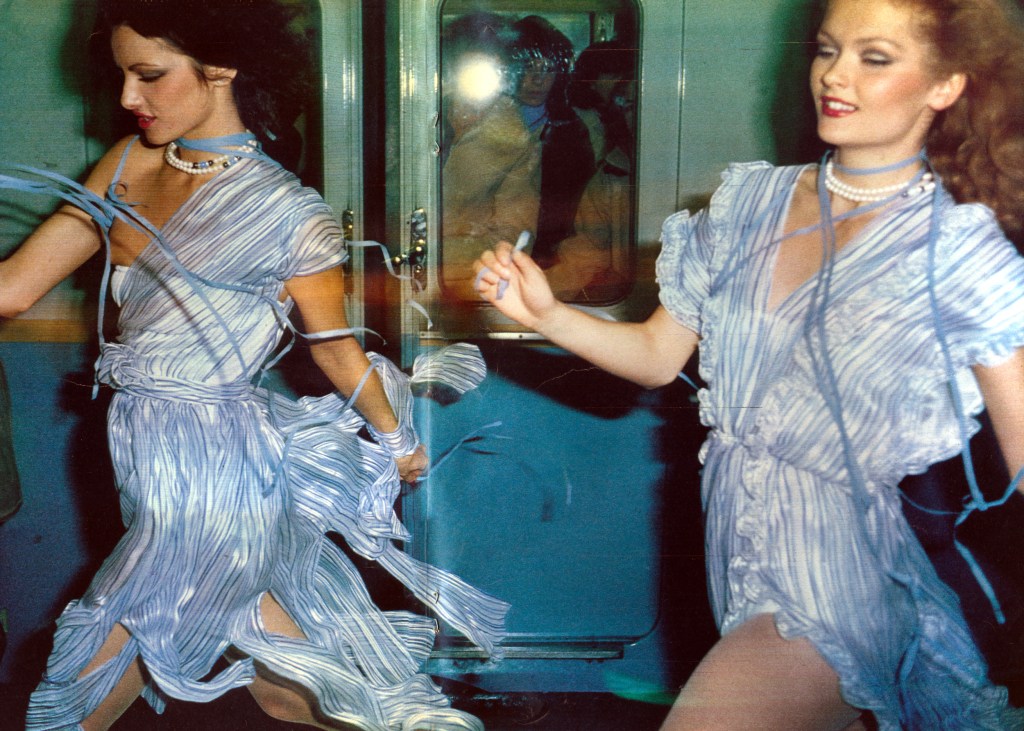
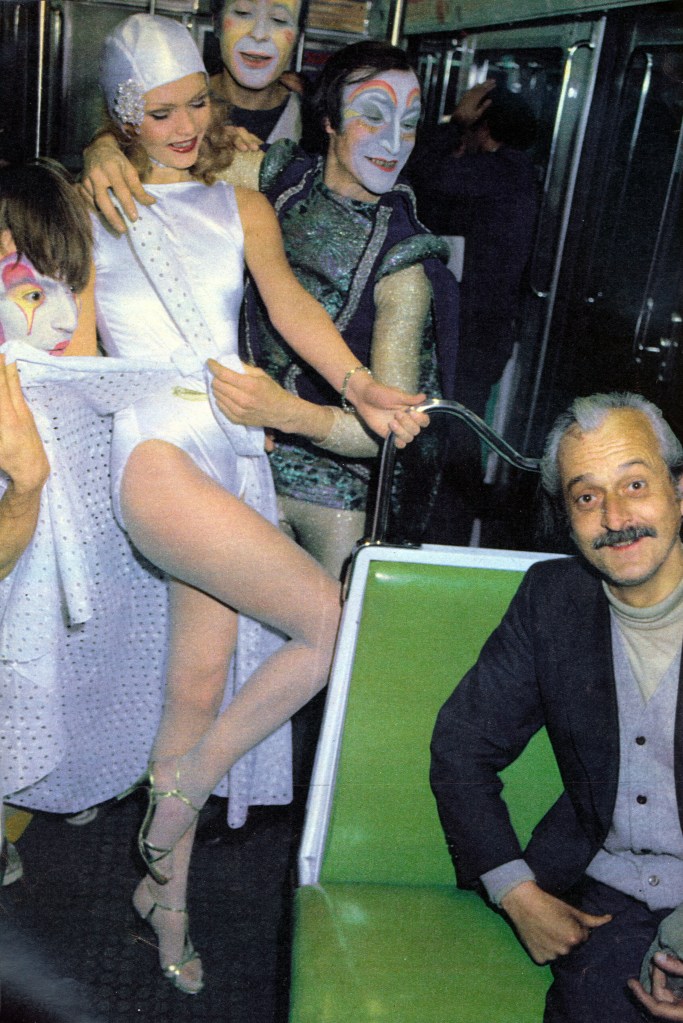
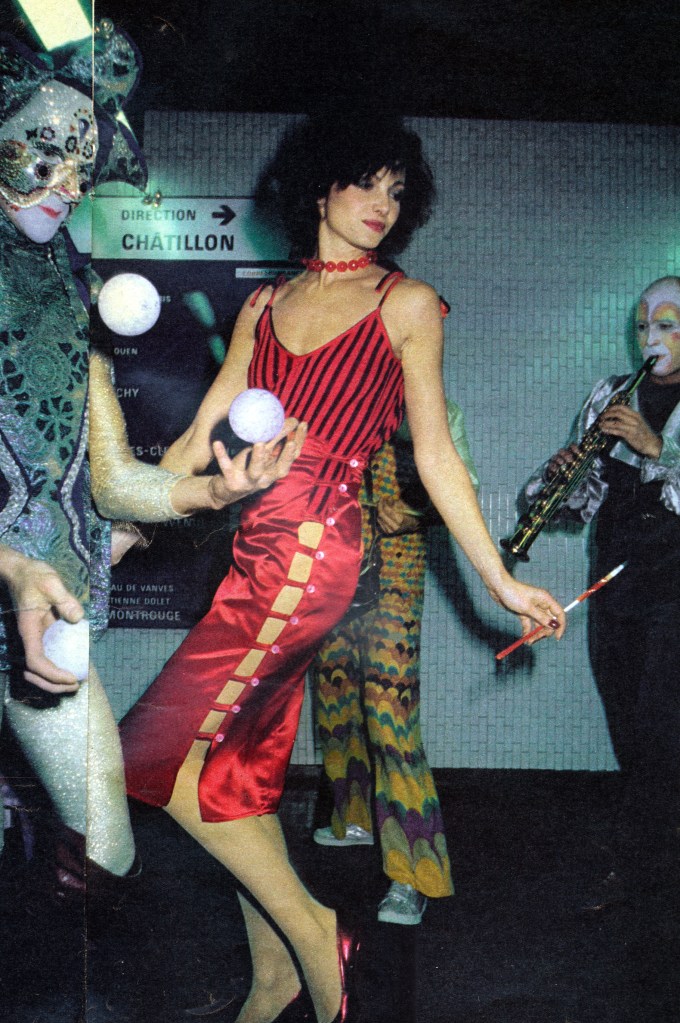
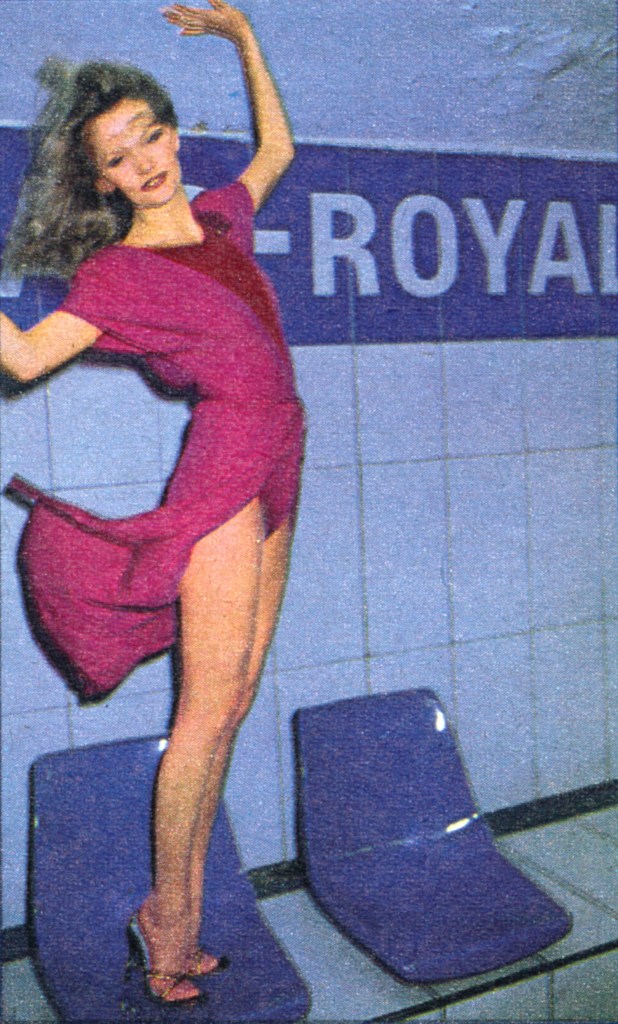
Would you dare to wear it? The body suit is what top designers have dreamed up for dancing this summer – to be worn with the barest excuse of a skirt, or a floating piece of chiffon. Norman Parkinson photographed some of the most exciting ideas in the modernised Paris Metro.
I would never have thought of sweltering on the Paris Metro as some kind of ‘normal’ experience I would aspire to, but here we are.
Shoes from Charles Jourdan and Walkers.
Fashion Editor Penny Knowles.
Photographed by Norman Parkinson.
Scanned from The Telegraph Magazine, Number 125 (February) 1979.
 Liz Eggleston