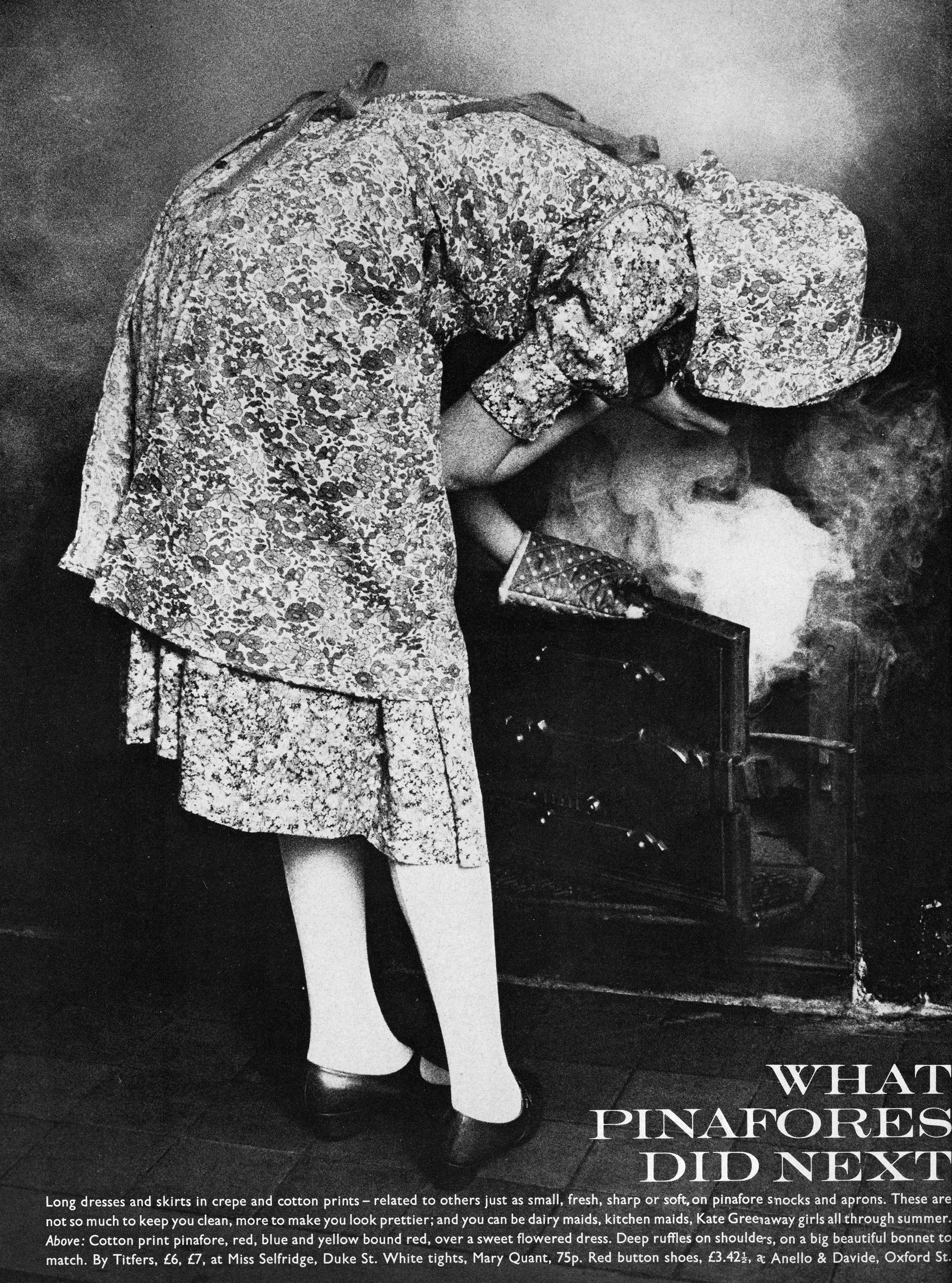
Cotton print pinafore over a sweet flowered dress. Deep ruffles on shoulders and a big beautiful bonnet to match. By Titfers at Miss Selfridge. Red button shoes at Anello & Davide.
Long dresses and skirts in crepe and cotton prints – related to others just as small, fresh, sharp or soft, on pinafore smocks and aprons. These are not so much to keep you clean, more to make you look prettier; and you can be dairy maids, kitchen maids, Kate Greenaway girls all through summer.
And so began the kickback against all things clean, crisp and space age…
Photographed by Duc.
Scanned from Vogue, April 1971.
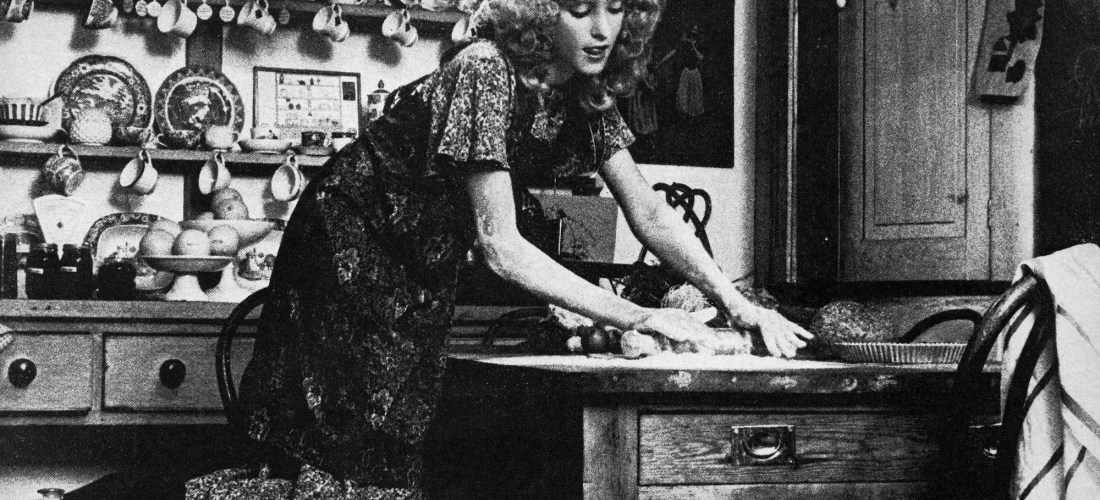
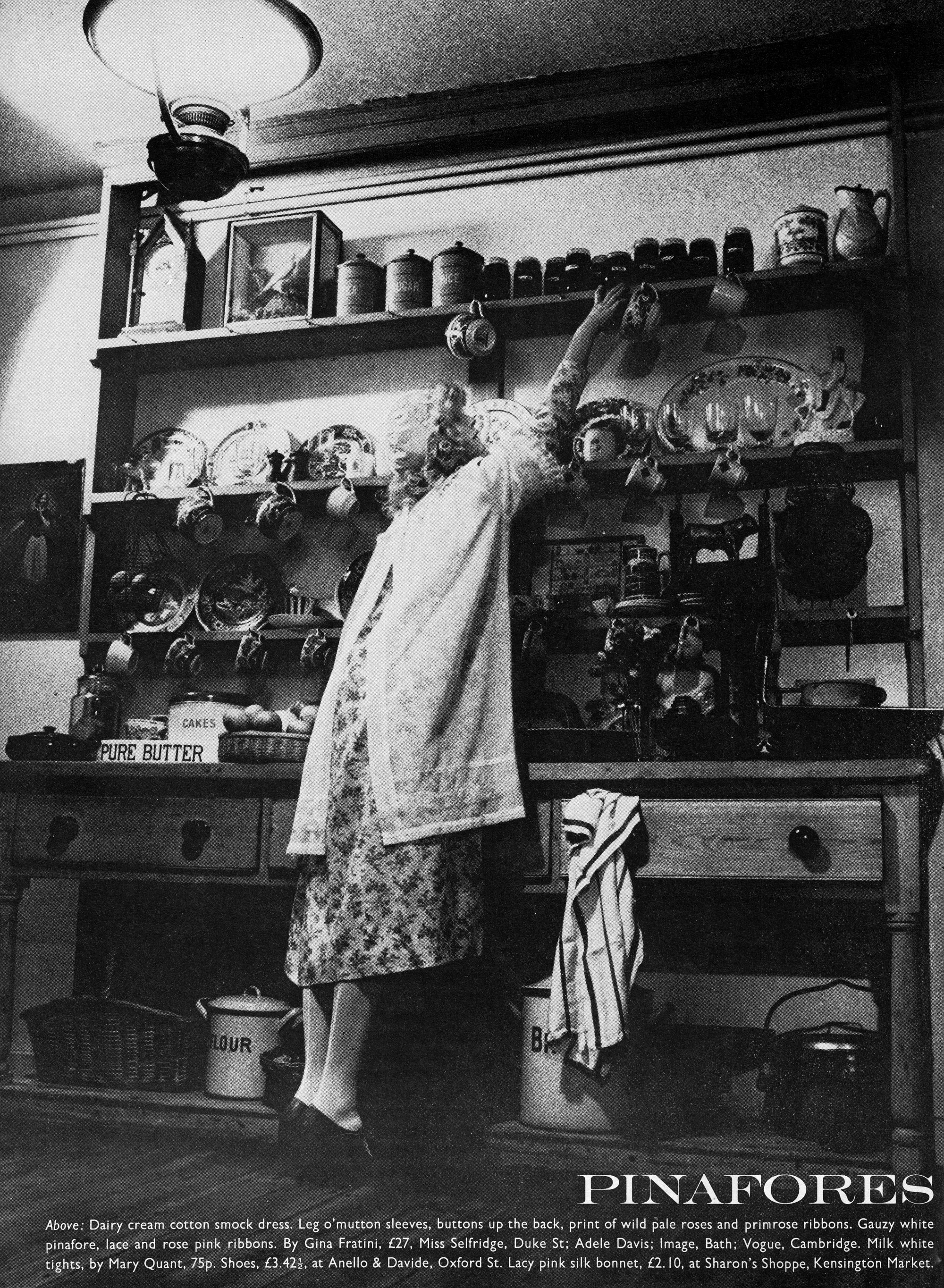
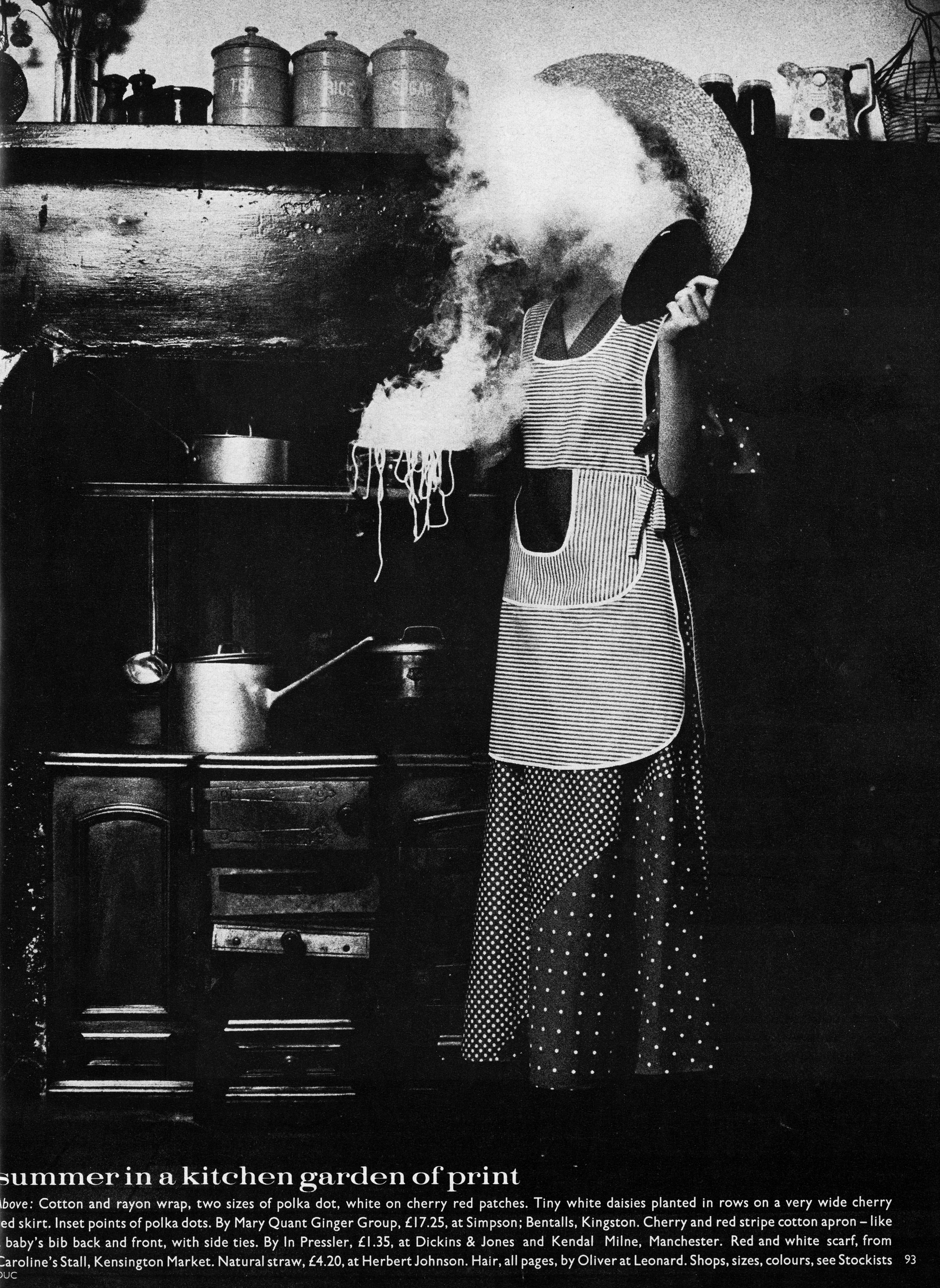
Fine floppy fluted crepe de chine dress by Marielle. Liberty lawn pinafore by Angela at London Town. Brown boots by Moya Bowler for Edouard Jerrold at Kurt Geiger. Dairy cream cotton smock dress. Leg o’mutton sleeves, buttons up the back, print of wild pale roses and primrose ribbons. Gauzy white pinafore, lace and rose pink ribbons. Both by Gina Fratini. Shoes at Anello & Davide. Lacy pink silk bonnet at Sharon’s Shoppe, Kensington Market.Cotton and rayon wrap, two sizes of polka dot, white on cherry red patches. By Mary Quant Ginger Group. Cherry and red stripe cotton apron by In Pressler. Natural straw hat at Herbert Johnson.
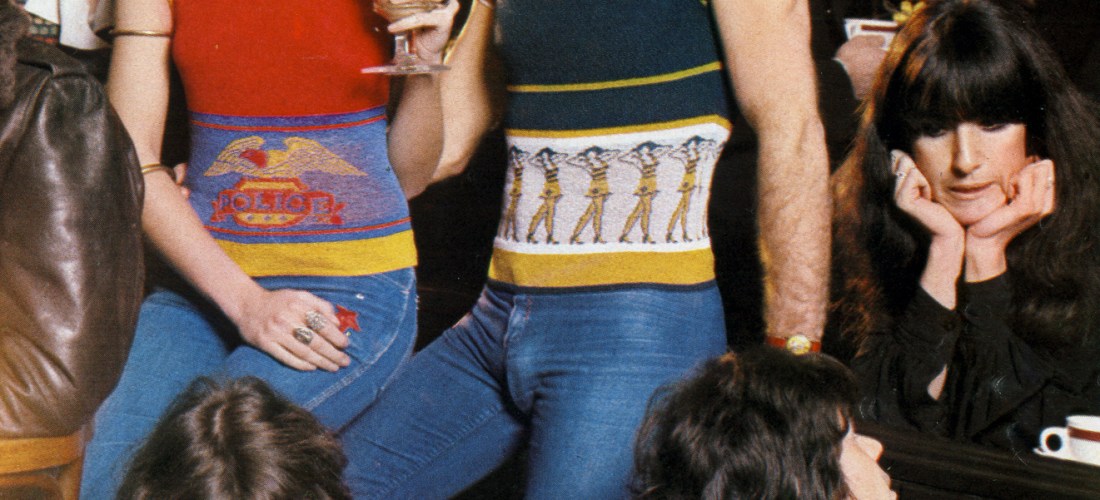
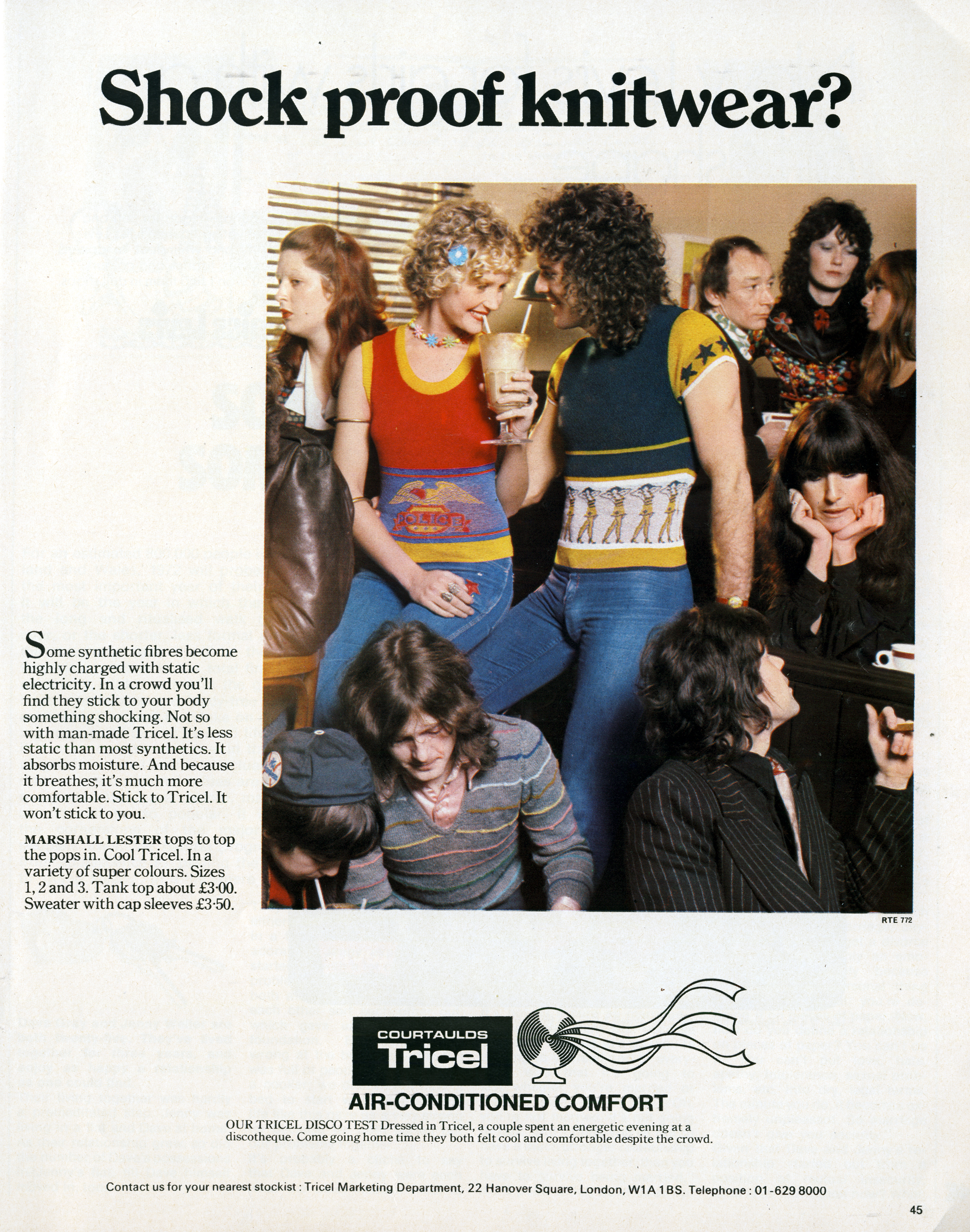
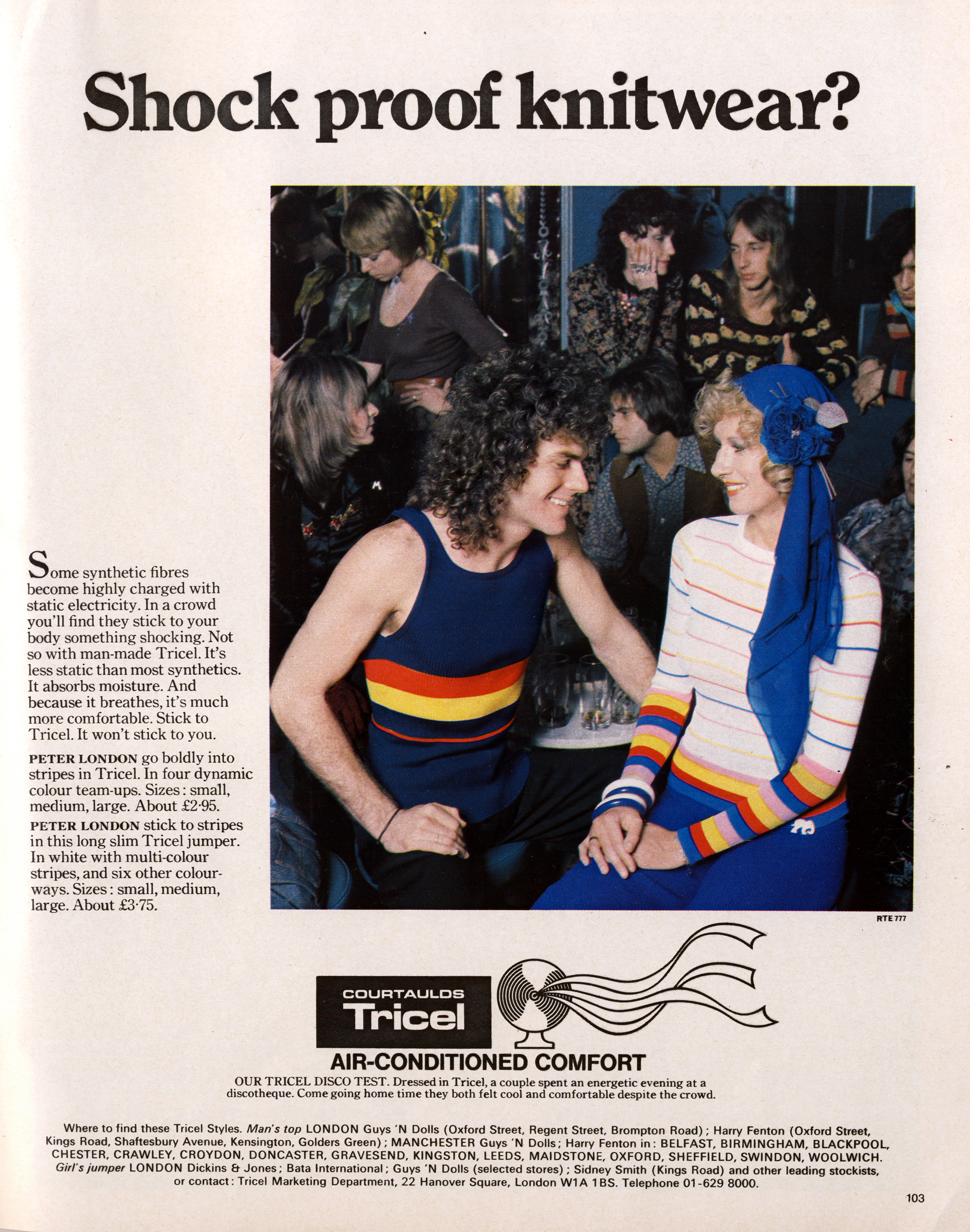
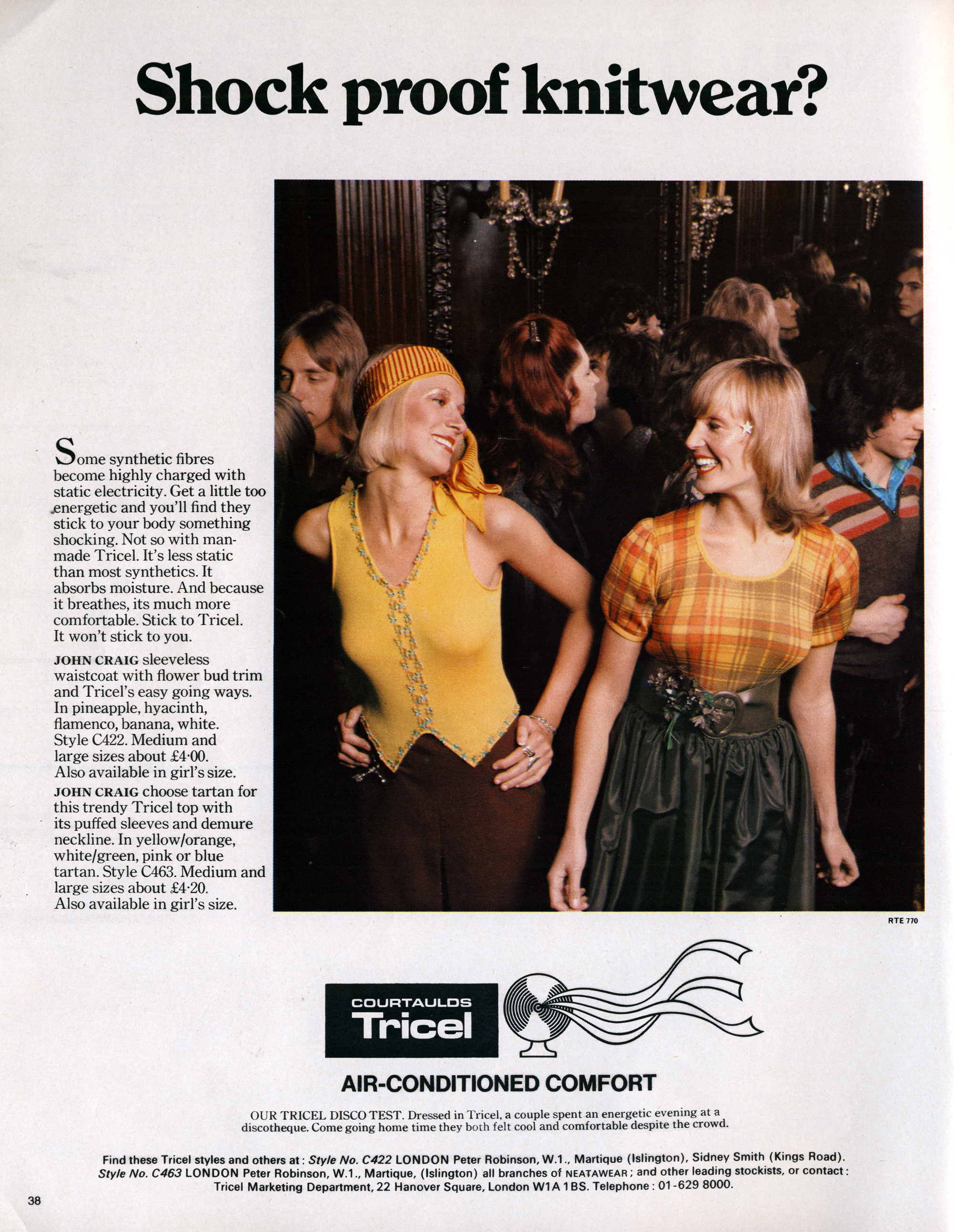
Our Tricel disco test: Dressed in Tricel, a couple spent an energetic evening at a discotheque. Come going home time they both felt cool and comfortable despite the crowd. Marshall Lester tops to top the pops in. In a variety of super colours.
Some synthetic fibres become highly charged with static electricity. In a crowd you’ll find they stick to your body something shocking. Not so with man-made Tricel. It’s less static than most synthetics. It absorbs moisture. And because it breathes, it’s much more comfortable. Stick to Tricel. It won’t stick to you.
There’s little I love more than novelty acrylic knitwear, but novelty acrylic knitwear in a groovy scenario such as these, well I just feel spoilt quite frankly.
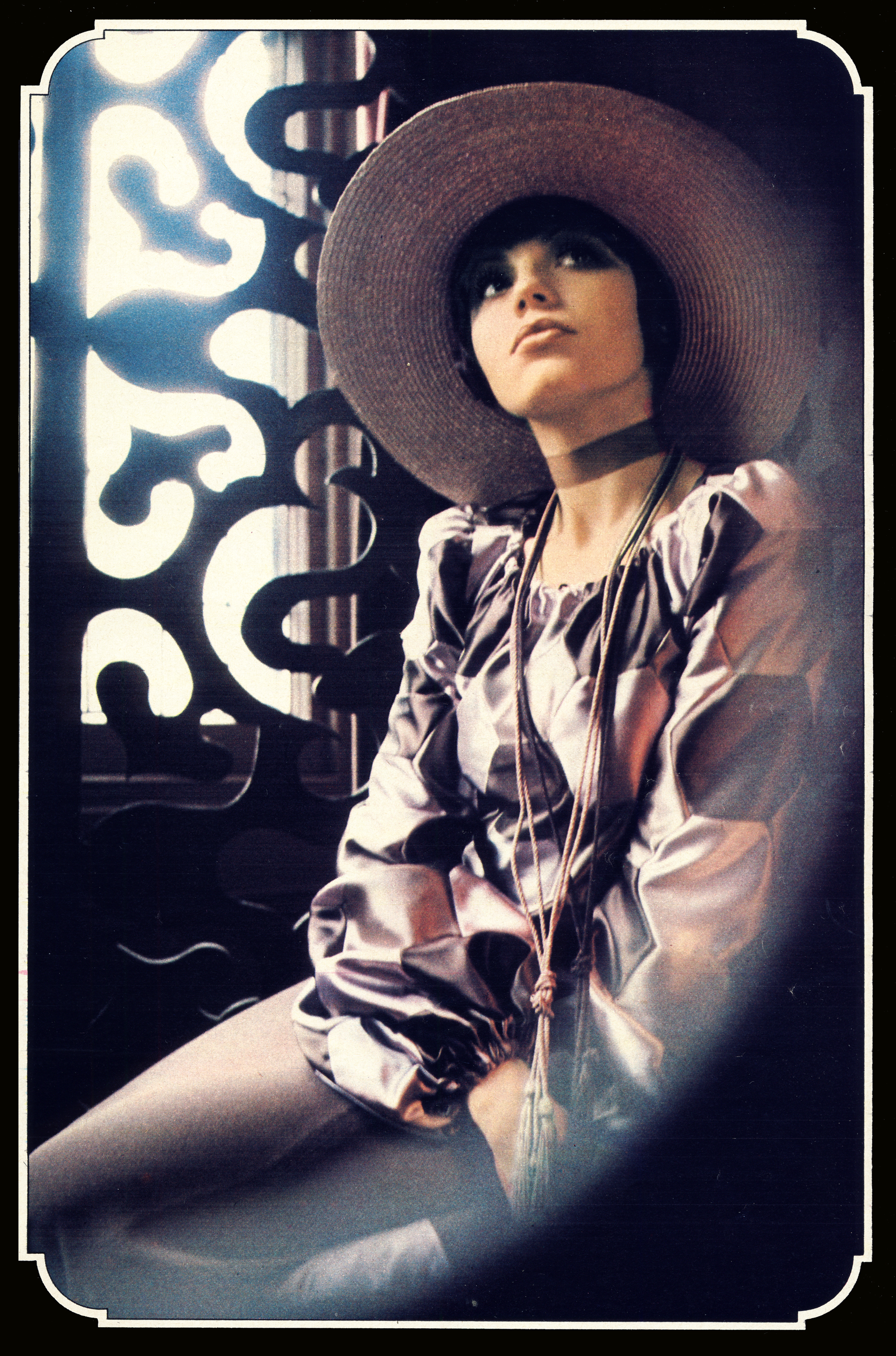
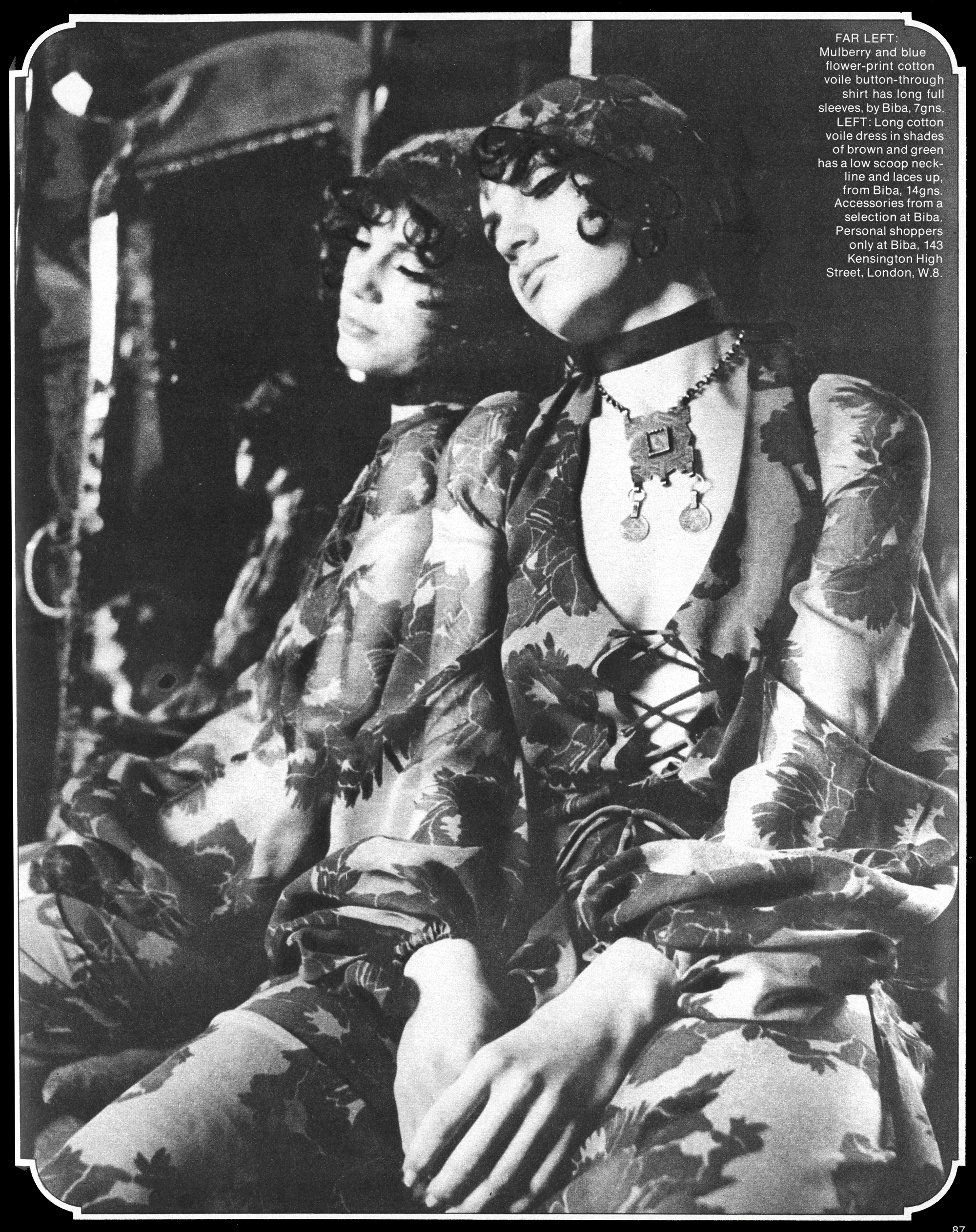
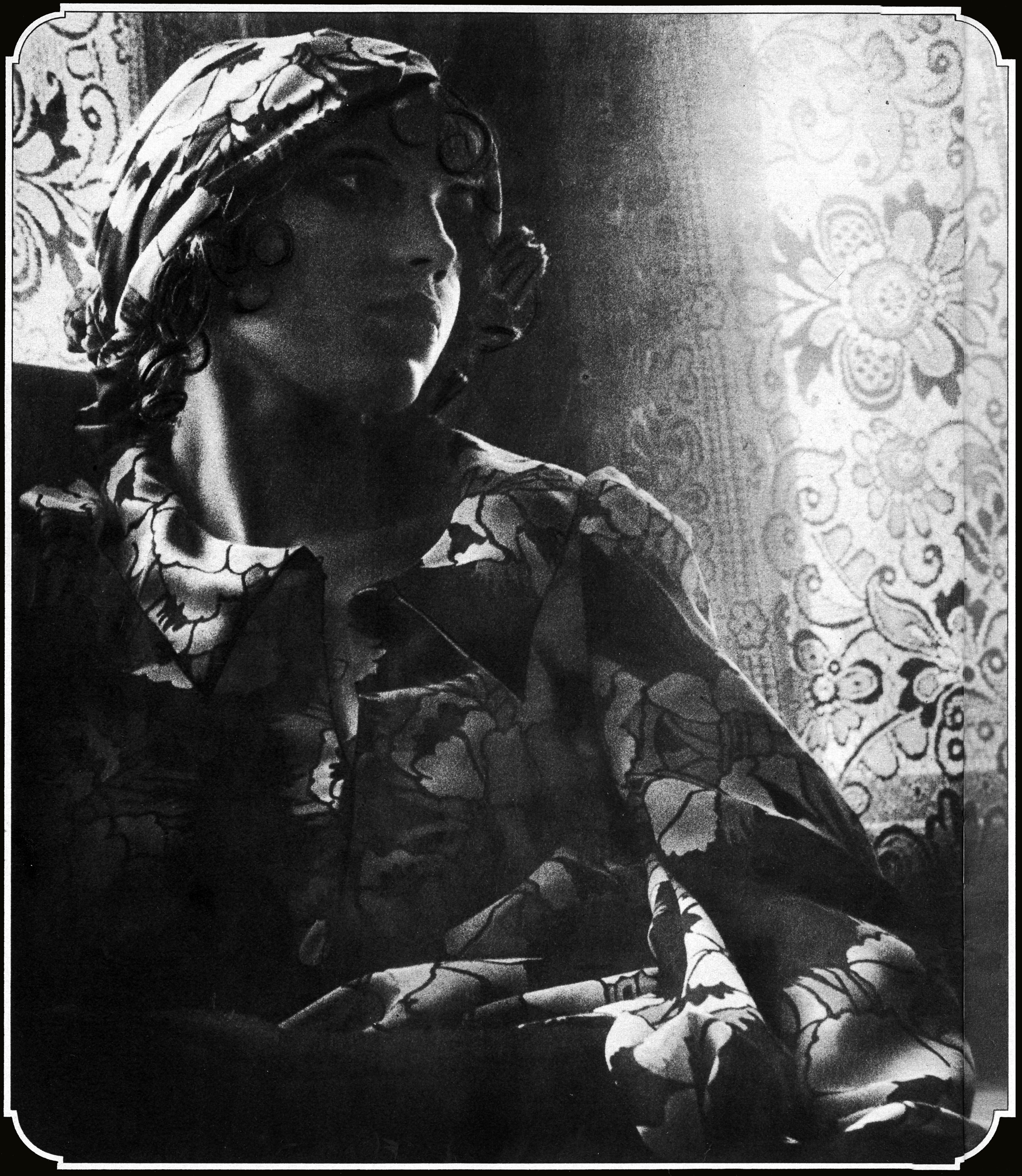
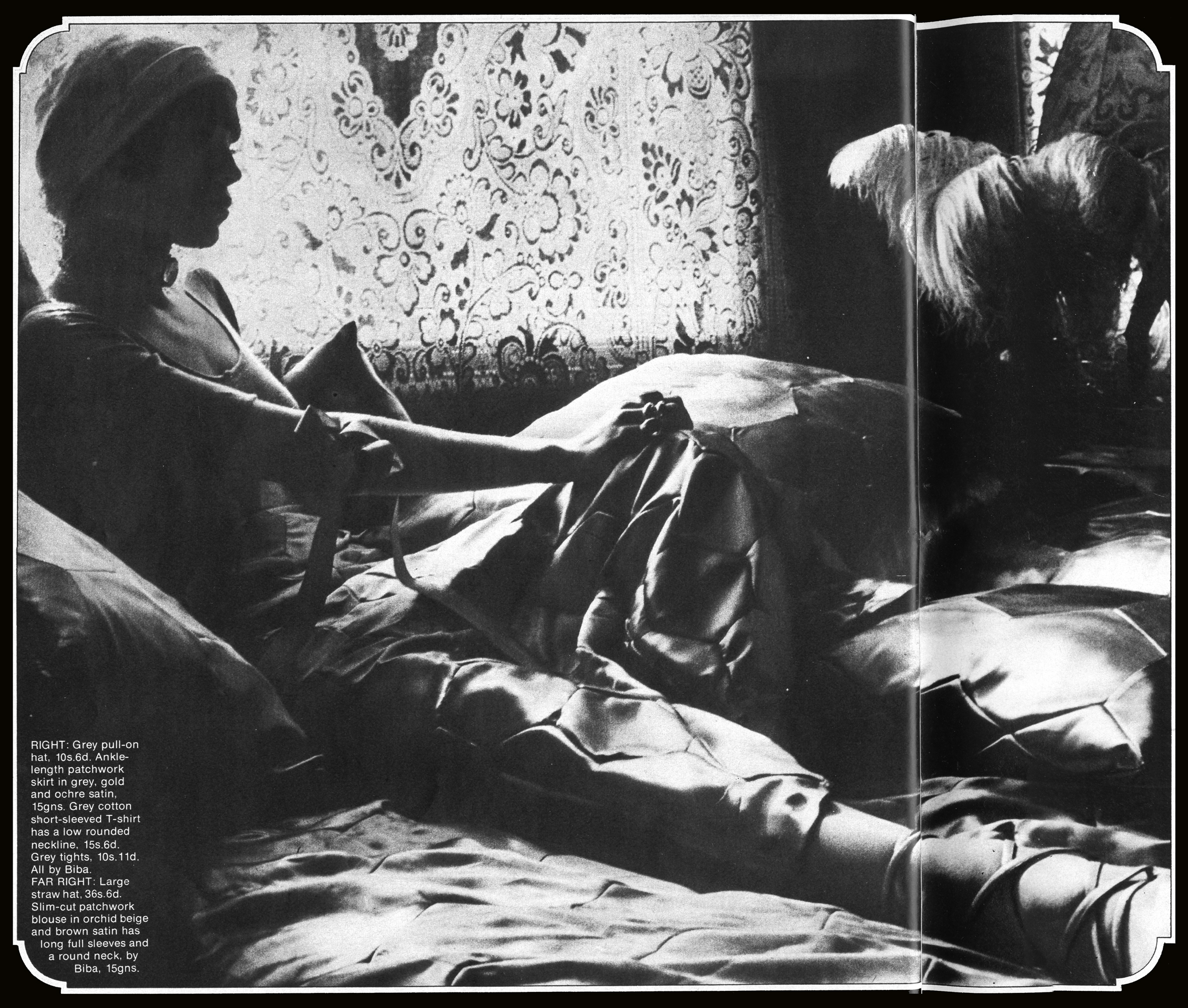
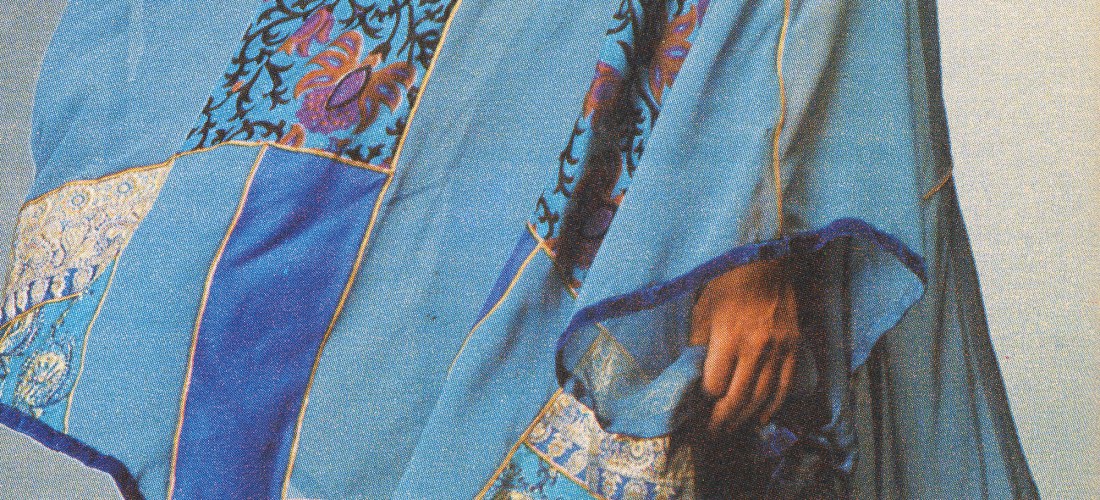
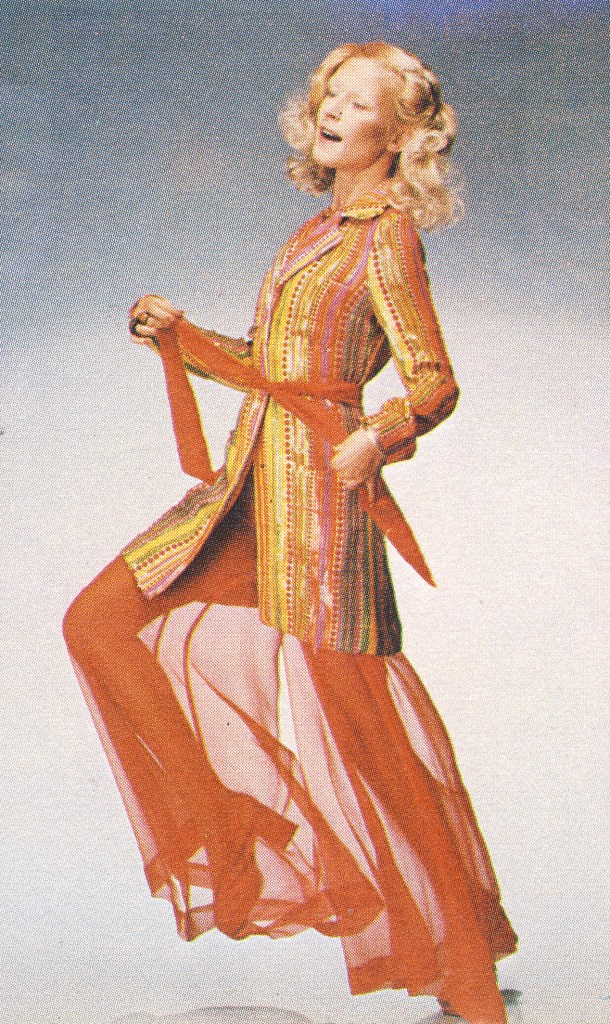
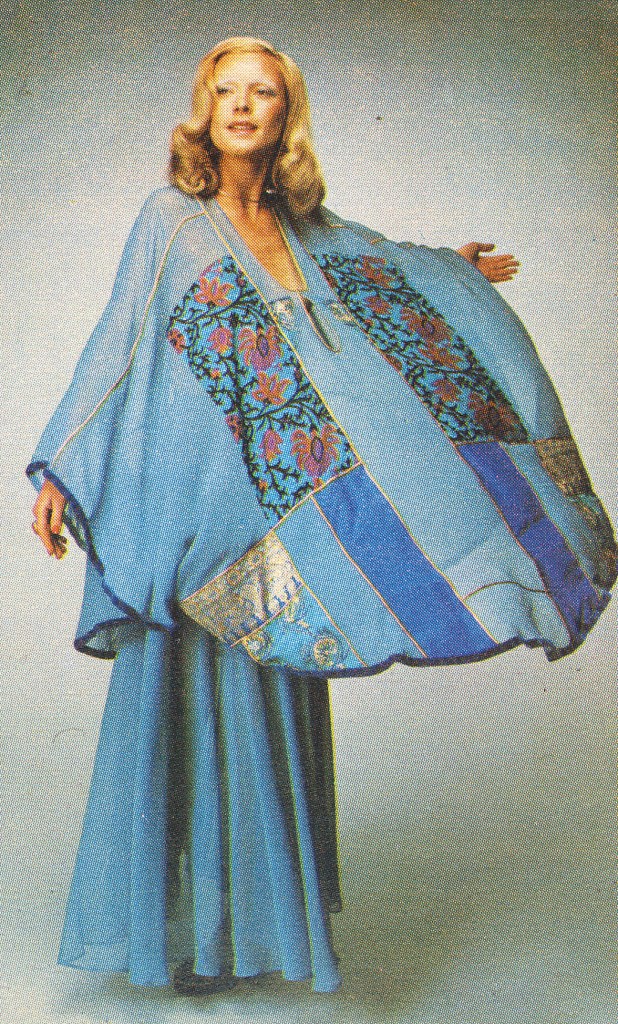
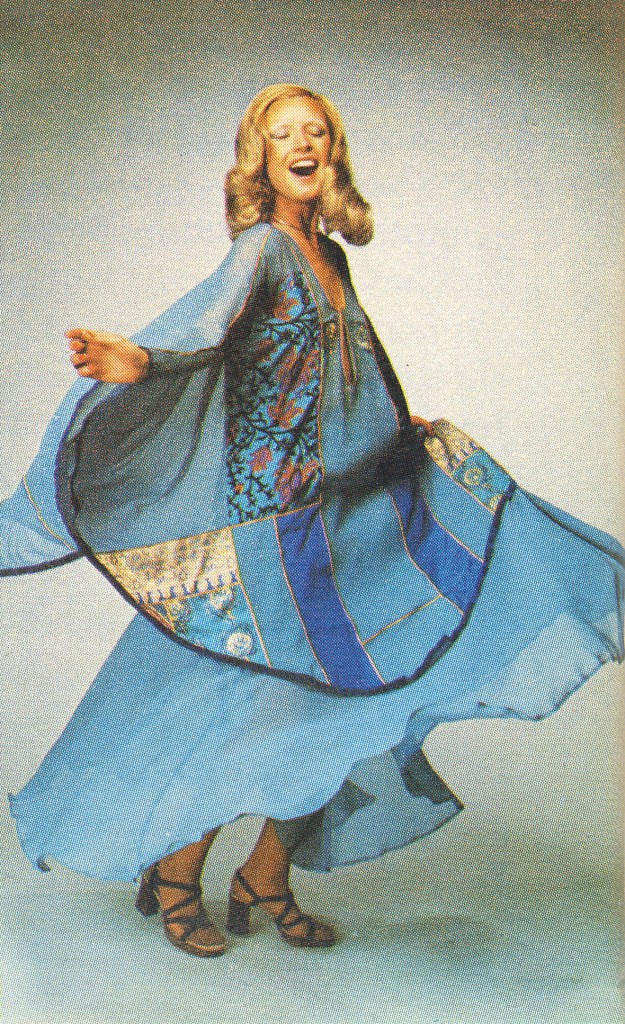
For those dreamy moments when you feel you want to look feminine and pretty, when you want to get out of your casual clothes and wear something floaty and special, Biba have made lovely, plain satin and two-tone patchwork satin skirts and tops which are alluring and very glamorous for the summer. They have also designed long, floating cotton voile dresses in large, dark prints which are flattering to figures still suffering from seasonal over-eating.
All clothes from Biba.
Many thanks to Barbara Hulanicki for letting me know that she took these stunning photos (modelled by Eva from Biba). They were uncredited in the magazine.
Giant pink lily printed cotton dress with swirling flared skirt from Biba
City life heats up when the sidewalks are crowded and the cabs full. Give yourself a break and see the sights. Step out in cotton dresses for a cool look at a hot town.
Photographed by Monty Coles.
Scanned from Honey, August 1975.
Open necked short sleeved printed crepe de chine dress by Radley from Quorum. Fringe scarf from Wardrobe. Hat by Charles Batten.Mint green cotton dress by Strawberry Studio from Che Guevara. Scarf from Fenwick.Cream cotton dress with drawstring waist by Monet. Scarf from Liberty. Hat by Charles Batten.Navy and mauve cotton poplin dress by Monet.
Beige and mulberry flower printed crepe de chine dress by Sujon. Scarf from Fenwick.
Slash neck cotton cheesecloth dress from Crocodile. Scarf from Liberty.Rust cotton open necked baggy dress from Bombacha. Cloche by Diane Logan.Pale pink and white leaf printed dress from Biba. Scarf from Liberty. Hat by Charles Batten.Navy and rust checked and striped crepe de chine dress with matching scarf from Spectrum.
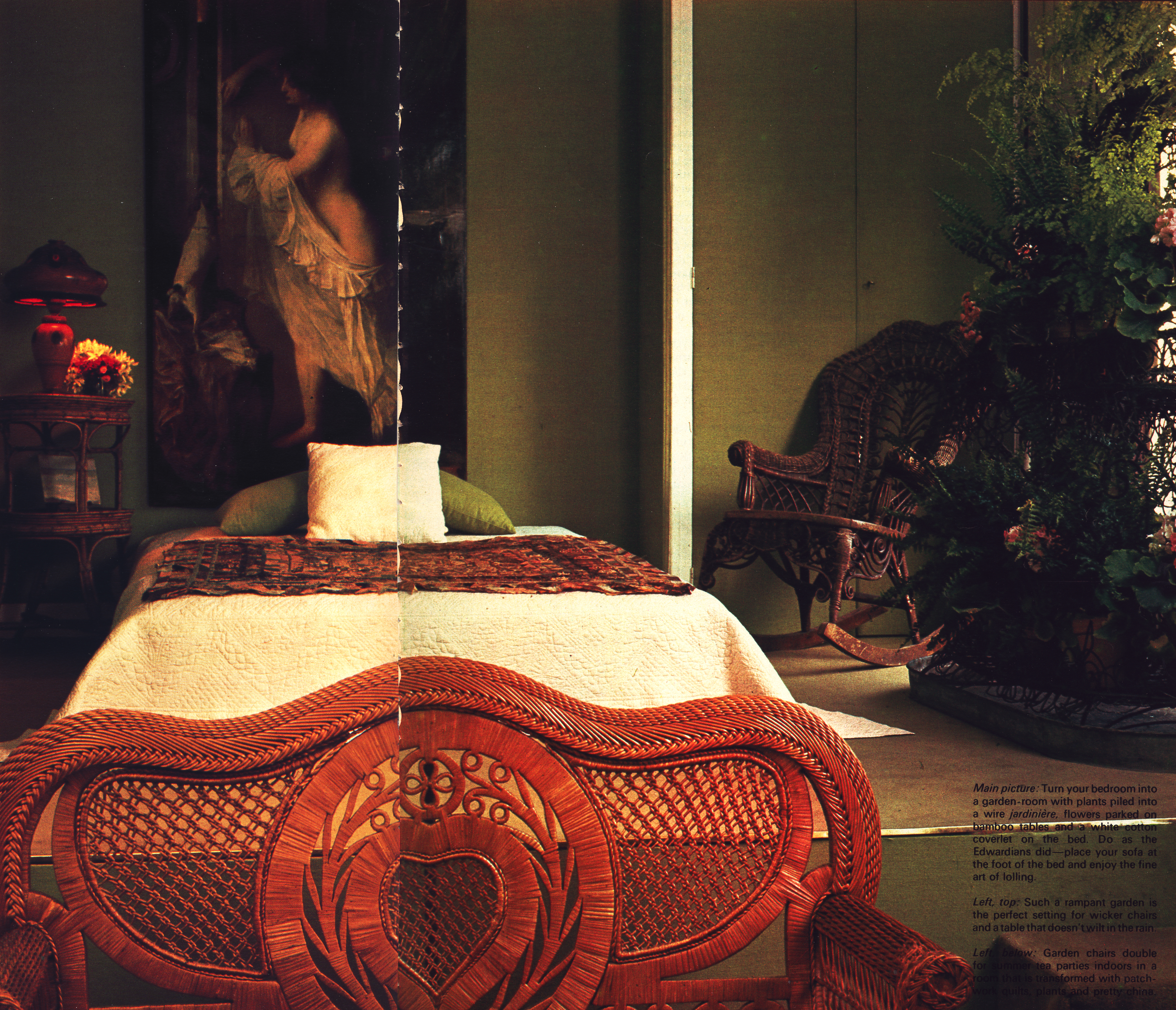
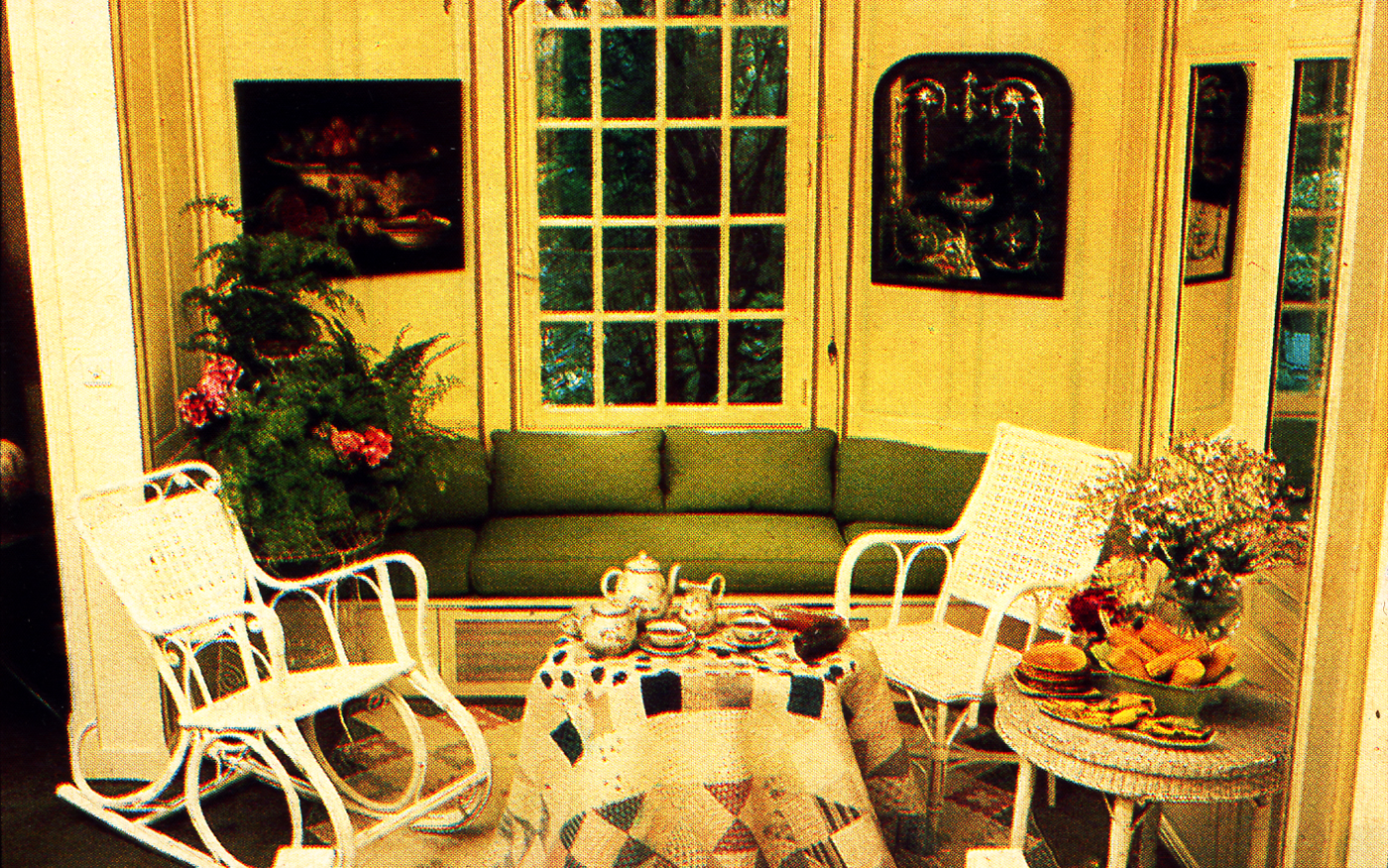
Turn your bedroom into a garden-room with plants piled into a wired jardiniere, flowers parked on bamboo tables and a white cotton coverlet on the bed. Do as the Edwardians did – place your sofa at the foot of the bed and enjoy the fine art of lolling.
Take the summer indoors with conservatory furniture that gives the garden feeling to any room.
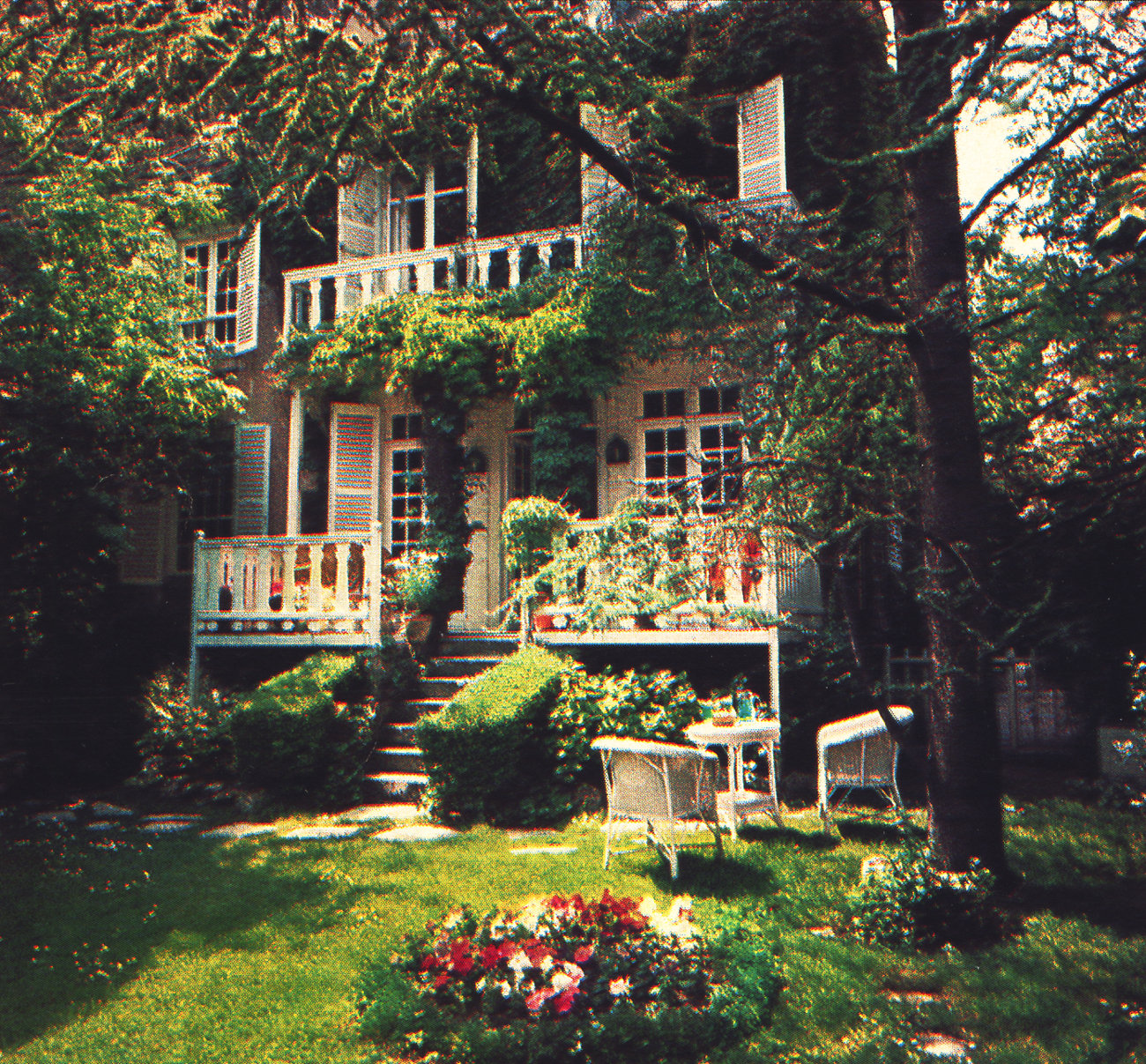
The merest breath of a heat-wave brings out the Southern Belle in our souls. Hot afternoons and long, sunlit evenings make you long to loll about on wicker chaises, sipping lemon tea. The dry, woody smell, the evocative creak of wicker and cane furniture is the essence of summer and, unlike some summer passions, cane and wicker survive and work in winter, too. Annick Clavier, a young French designer, chooses her wicker well—painting some junk-shop finds in white enamel, oiling other pieces of wicker and bamboo to a fine Oriental shine. Her taste runs to airy, lacy furniture and rush matting, set off by many green plants, small jugs of flowers and reproductions of romantic paintings. The fact that she has a garden helps the tropical feeling. Wicker freaks look for decorative pieces in junk shops and markets. They learn to mend broken furniture but avoid bamboo or cane pieces that are very rickety, and watch for the pinholes—a sign that the dreaded woodworm is in residence. Secondhand shops in coastal towns and the remote parts of Scotland and Wales are good places to find Victorian and Edwardian garden and nursery furniture. London has the best selection of shops with modern cane and rattan furniture, mostly imported: Conran, 77 Fulham Road, SW3 imports from China; Cane, 170 Walton Street, SW3 imports from India, as does The Warehouse, 39 Neal Street, London, WC2.
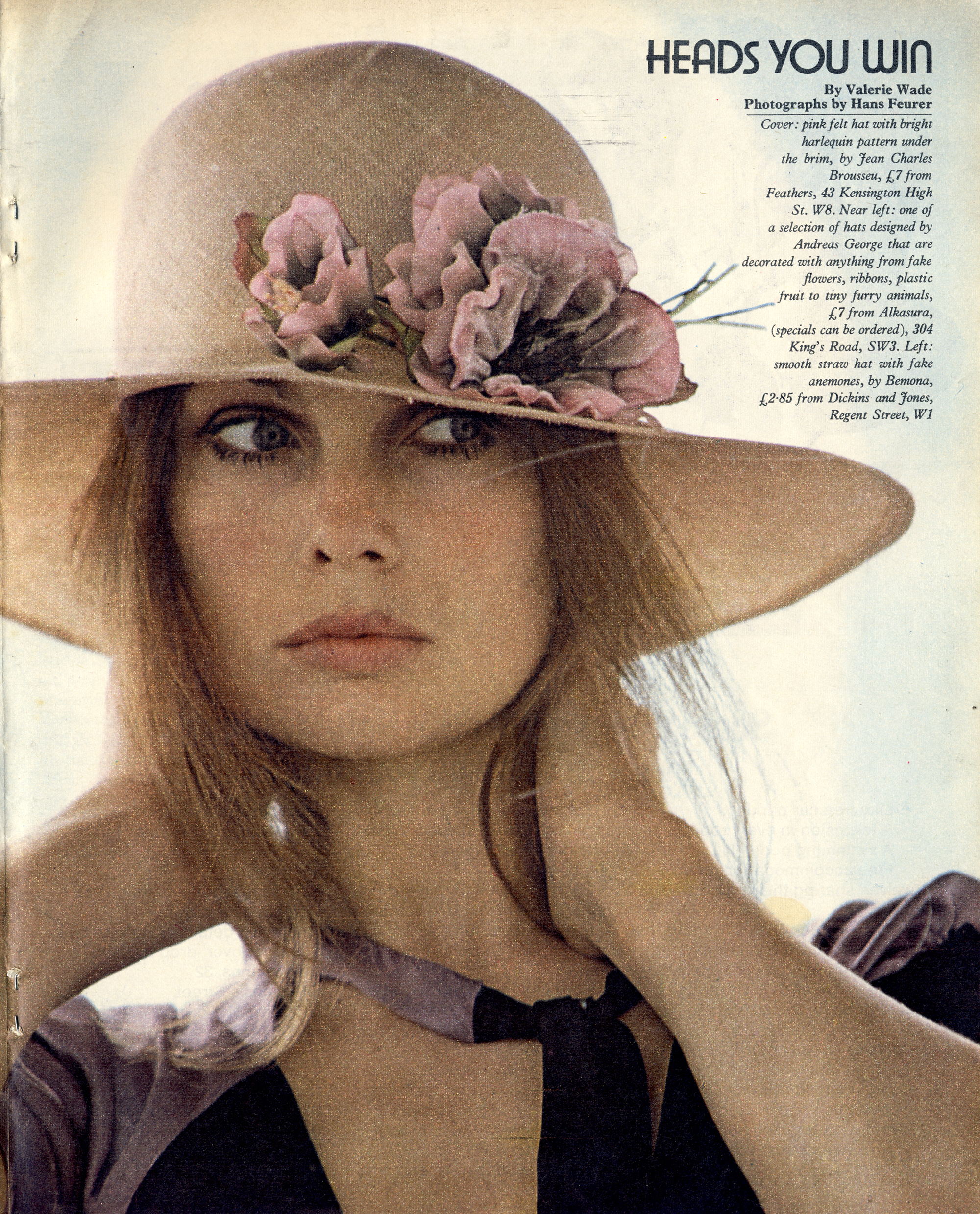
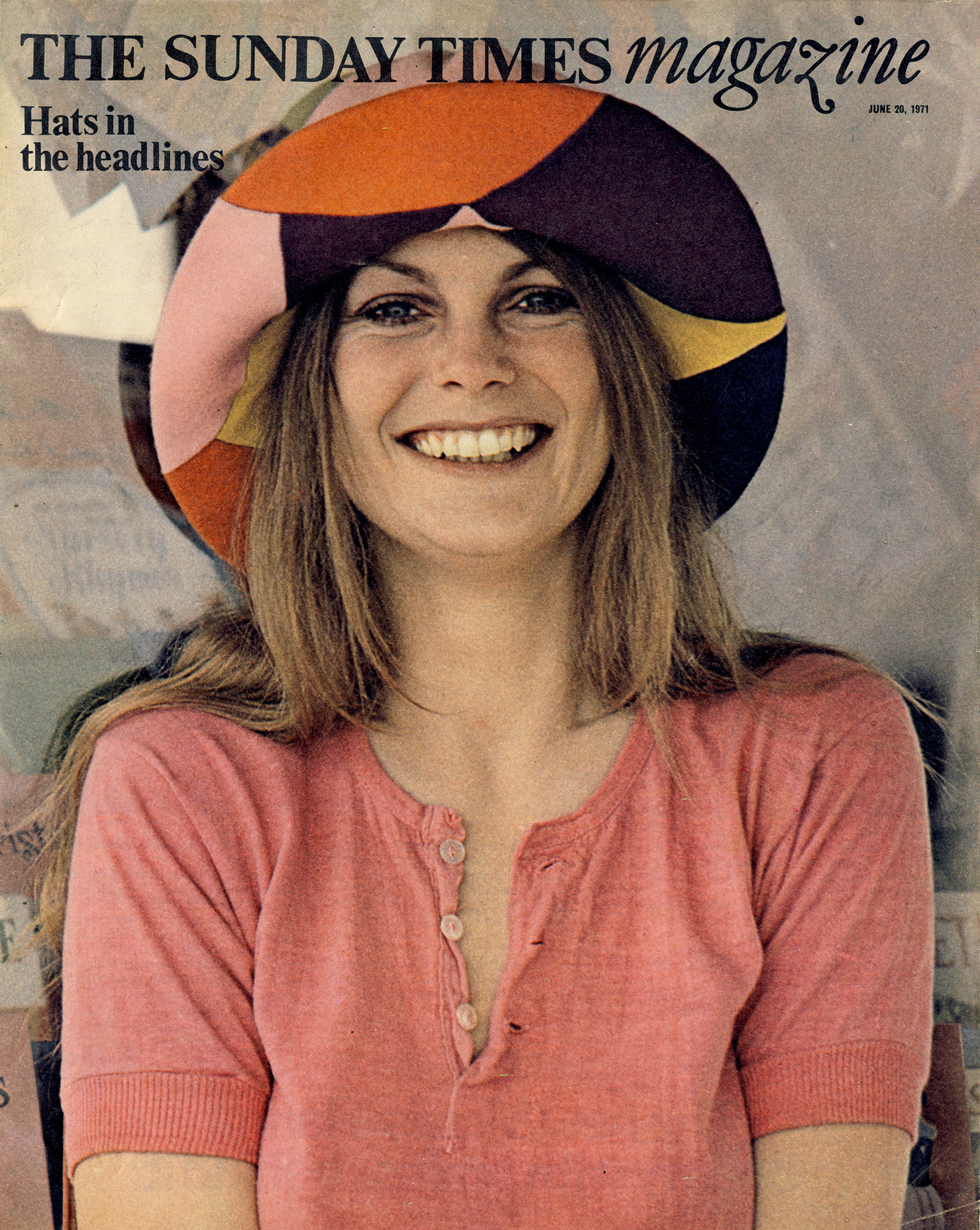
One of a selection of hats designed by Andreas George that are decorated with anything from fake flowers, ribbons, plastic fruit to tiny furry animals. £7 from Alkasura, 304 King’s Road, SW3
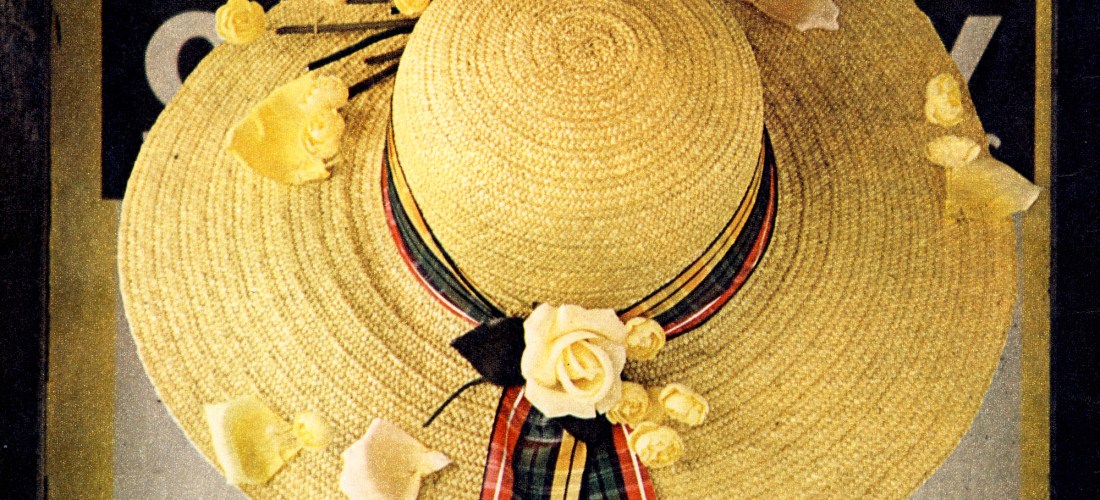
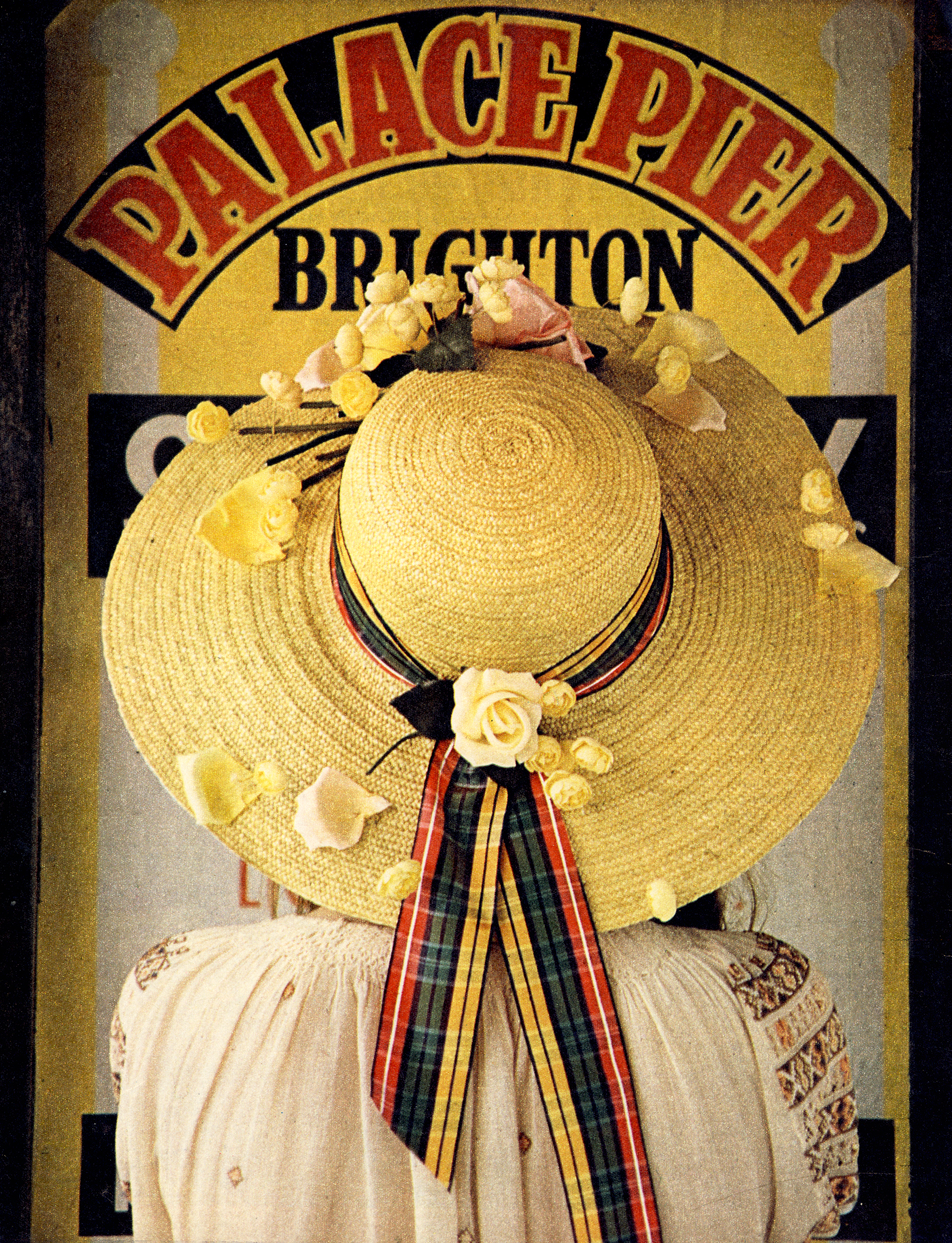
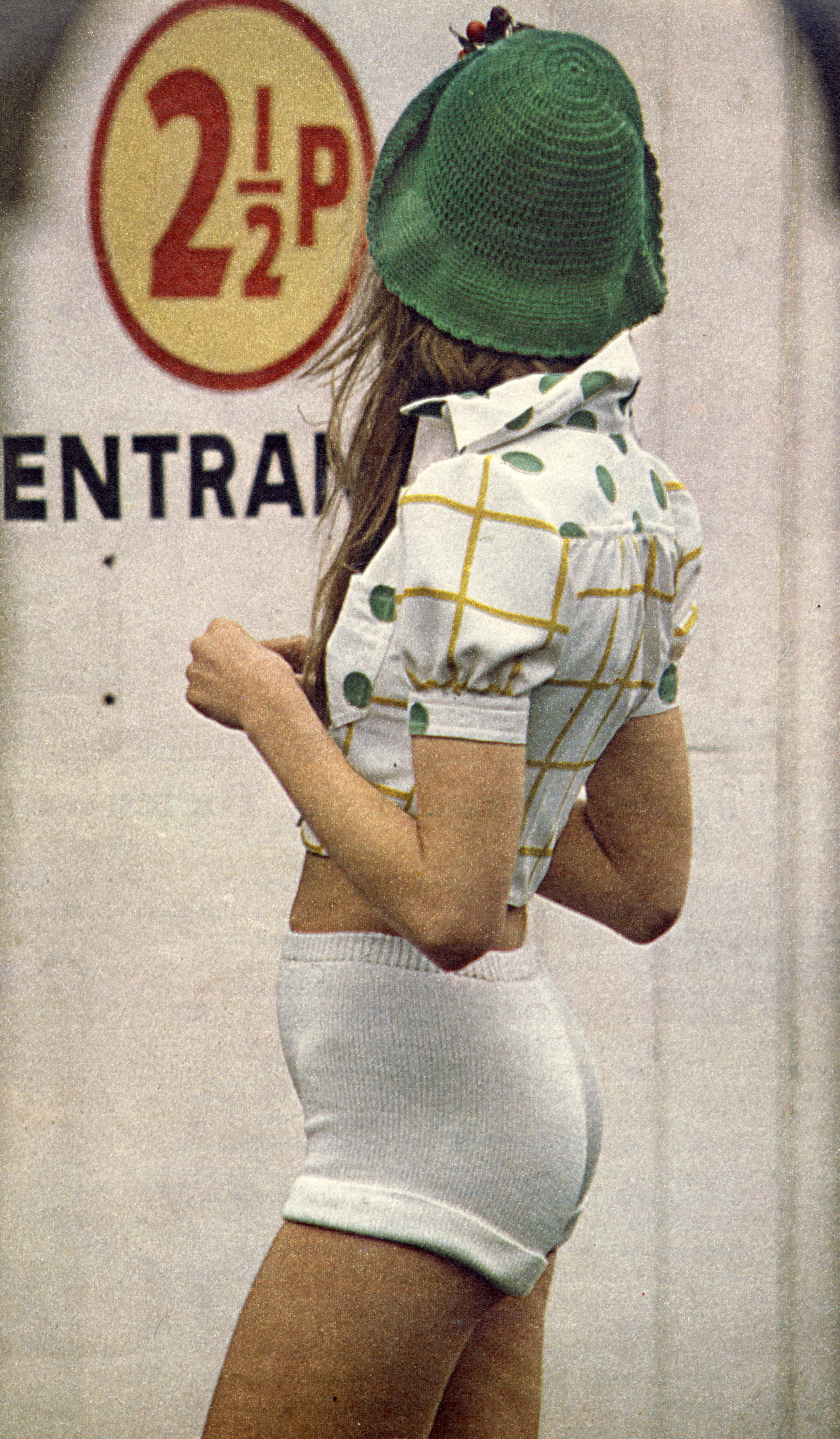
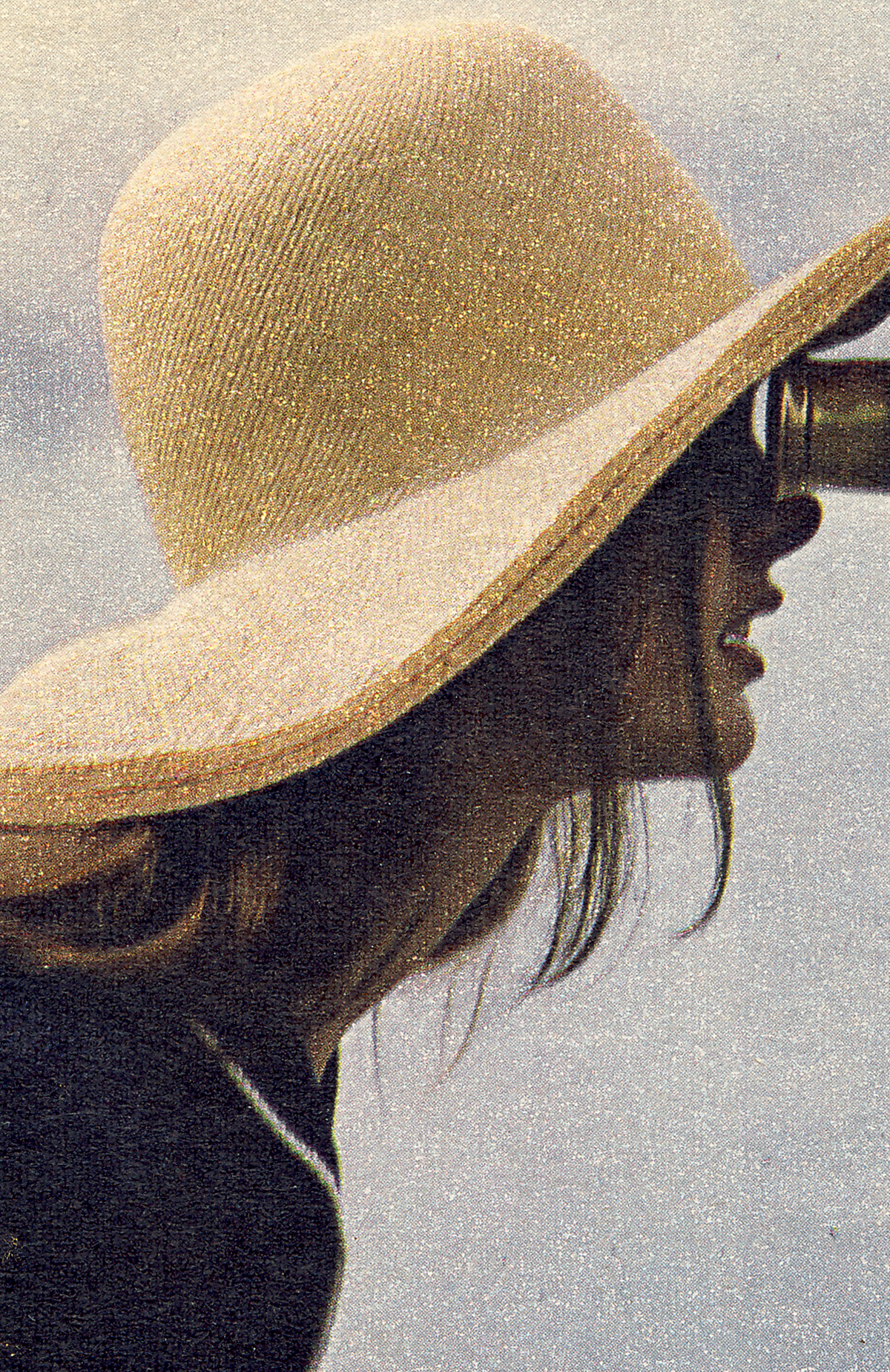
Suddenly this summer the shops are selling masses of hats that before would have only been dug up for garden parties, weddings, sports days or camping it up. For years magazines and designers have shown their clothes with hats, but they don’t usually turn up in the street. Fashion editors often feature ‘picture hats’ like those on the previous page posed in some romantic setting or framing an immaculate new make-up, but one never actually sees them on a number 19 bus. Now hats have gone the way of all clothes; there are no rules; you can wear anything with anything. Any hat, whether it’s wide-brimmed and floppy with half a haberdashery department stuck over it, or a small crocheted cloche pinned with a bunch of plastic fruit, i fine with either nostalgic Forties’ dresses or a dirty old pair of jeans. And you can still wear it to a wedding if you want to.
Modelled by Jean Shrimpton.
Photographed by Hans Feurer.
Scanned from The Sunday Times Magazine, June 20th 1971.
Smooth straw hat with fake anemones, by Bermona, £2.85 from Dickins and Jones.Cotton cloche pinned back with a bunch of cherries if you like, £4.50 from Quorum. Check and spot crepe shirt £4.20 from Mr Freedom, 20 Kensington Church Street. White cotton shorts by Ritva £7.88 from Countdown, 137 King’s Road.Pink felt hat with bright harlequin pattern under the brim by Jean Charles Brosseau, £7 from Feathers, 43 Kensington High Street.Plain wide-brimmed panama hat, £2.85 from Liberty’s.
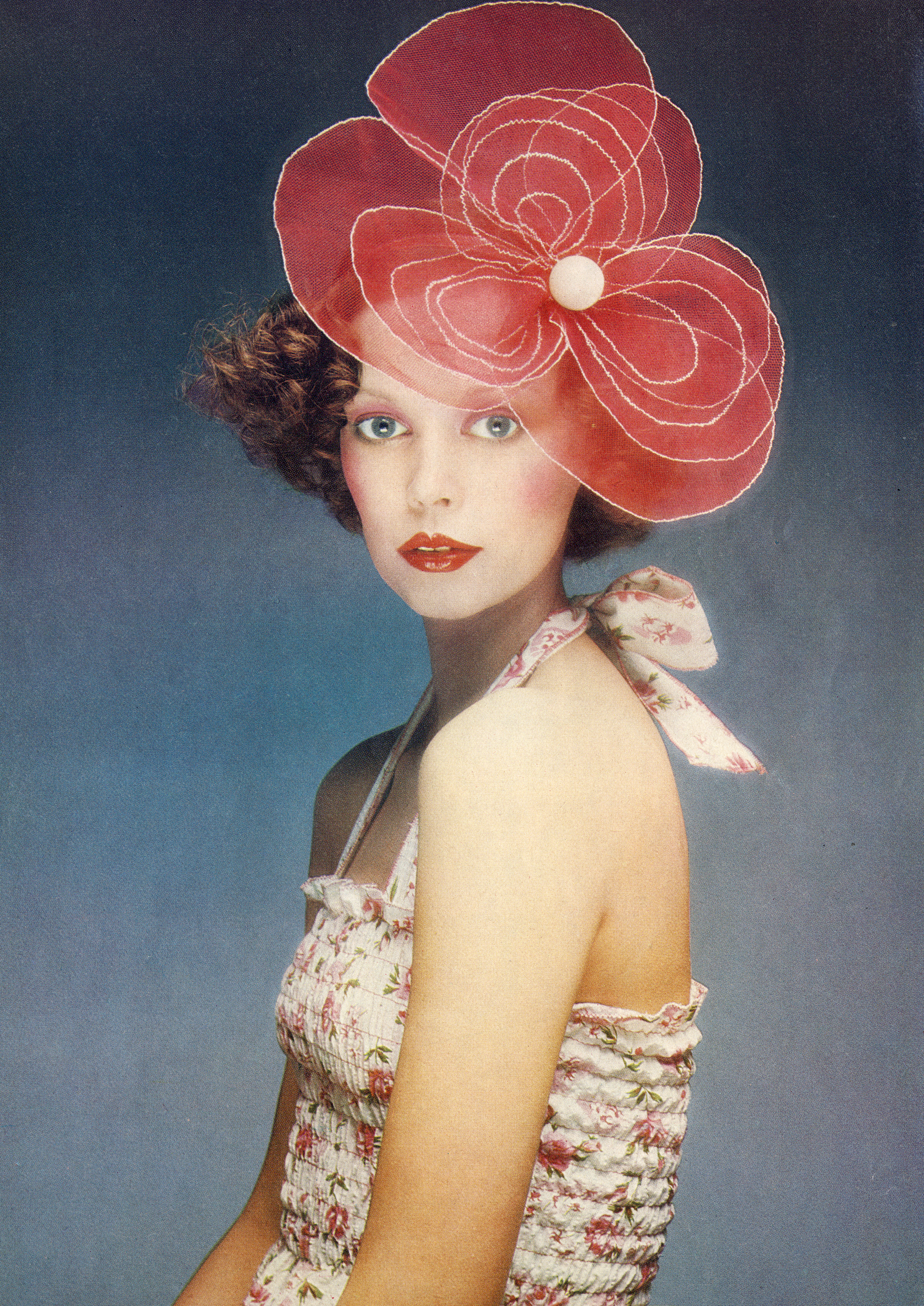
Take a flower for your hair, gather up a halter top, now dust on the glamour…
First flower, airy petals of summer pink net, outlined in white stitching, round white button for stamens. By Pablo and Delia, to order at Browns. Ruched halter top, flower printed seersucker, also by Pablo and Delia.
Make-up by Barbara Daly. Hair by John at Leonard. Model is Mouche.
Thea Porter describes the women she designs for as “thirtyish, tall and slim,” but she laughingly adds that “I design clothes that I know will suit me too, so they do just as well for short, fat people.” Whatever their shape, Thea Porter’s customers live a high-society, jet-set life. Their clothes must be dramatic, brilliant and packable, and Thea Porter designs are exactly what they need; the clothes are among the most coveted in the world. How did Thea break into the rarefied atmosphere of high-fashion design?
In 1965, Thea and a couple of friends launched an interior decorating service. “we started the fashion for enormous cushions, and we were just beginning to make a name for ourselves,”‘ Thea reminisced, “when I happened to bring back an antique caftan from overseas. I wanted to use the material in a decorat-ing scheme. Suddenly caftans came in to vogue but the only ones you could get from abroad were either minute or voluminous. So, with the help of a dressmaker, I started making caftans from lovely old fabrics. Then a photo-graph of Fenella Fielding wearing one of my caftans appeared in the Daily Express. More people began wanting them and eventually I decided to bring out a collection which I showed in a Kensington restaurant. I was still mainly a decorator but from then on things started snowballing. I had designed some jackets with masses and masses of braid which the Beatles bought, for instance. At the end of 1967, I took the plunge and started the shop in Greek Street.”
Without any formal training, Thea Porter became a dress designer. She knows nothing of cutting and sewing, and recalls her only attempt at dress-making as a child when she succeeded in cutting through her own skirt! An assistant takes all her designs to the pattern and cutting stage. The import-ant thing, to Thea, is the designing. She describes her philosophy quite simply. Using her hands to emphasise, she explains “you know how a line of poetry sounds right, as if it has been waiting for someone to write it down. That’s how it must be with a dress. It must be a complete entity and nothing must jar —unless clashing colours are an intrinsic part of the design. The shape, colour and fabric should be in perfect harmony. I put together every detail of the dress myself — down to the last button.”
Thea finds that she designs best away from her Soho shop, and works in spurts according to her mood, but she finds it difficult to describe the sources of her inspiration. “My two absolute standards are that I must like the dress myself, and every season I try to bring out five good shape’s. The collections are different every time. It can take me three weeks to do a collection — or three months. Some-times I get my inspiration from a fabric. Sometimes I do a sketch and then choose a fabric. I often buy fabrics without having the least idea of what I shall do with them.”
“I don’t use a method that you could describe”, she continues thoughtfully. “There are so many influences. For example I got the idea for a nautical theme when I was leafing through a book on Victorian painters. To be a designer I think you need a broad culture — certainly my knowledge of the East has shaped my creative thinking. A conventional art course would have been a waste of time for me.”
Thea Porter specialises in glamorous evening clothes and if there is a theme running through her creations, it is that the materials are almost invariably soft, flimsy and graceful and chosen to reveal the contours of the body. She buys them from all over the world: from India, Italy, Switzerland, France and England. She designs some fabrics herself. “I do a sketch, give it to a textile designer to translate, we work out the colours and we have it made up.” Expensive? “Very,” she agrees.
The tiny Thea Porter shop in Greek Street, London, is full of the exotic feeling she translates so expertly into her clothes. Amid the display of dia-phanous dresses, rolls of richly coloured fabrics are heaped on shelves and piled several deep against the wall in glorious disarray. From a battered cardboard box, a profusion of braids and ribbons tumble like wild flowers. A litter of photos, sketches and other paraphernalia are pinned around her desk. The casual atmosphere is typical of Thea Porter’s spontaneous approach to designing. There is, however, nothing at all naive about her ideas and plans for the future.
Until recently, Thea, was thinking on two planes, Britain and America. “The main difference between the two markets is that American women have such perfect figures and they like waisted clothes with plunging necklines.” Now she is working in yet another dimension — ready-to-wear. Not content with this, she is already planning new outlets. “I would like to do wedding clothes, children’s wear and lingerie. But there would always have to be lots of evening dresses. A woman feels different in the evening, more relaxed and prettier.”
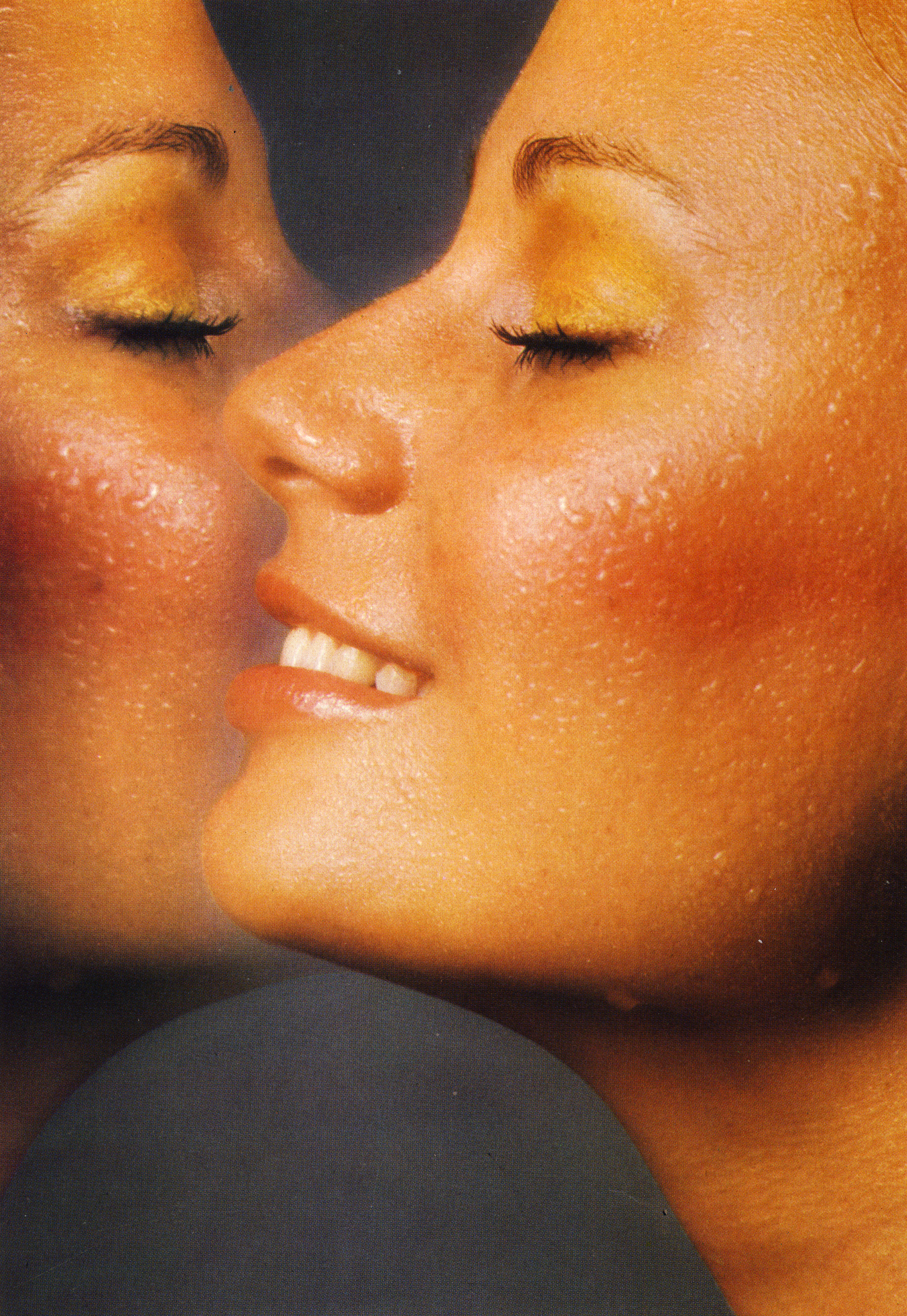
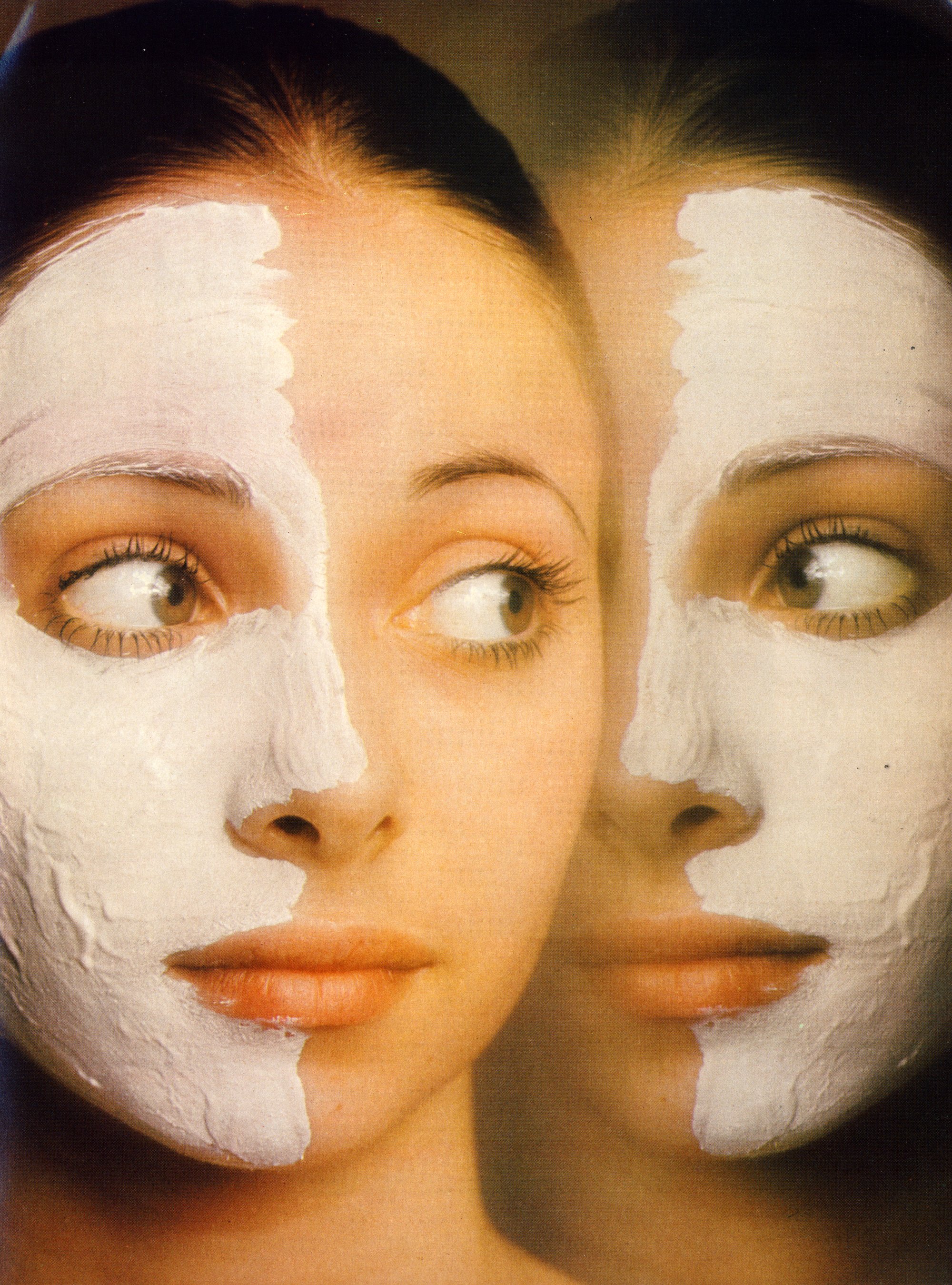
Monday’s Child is Fair of Face. Blue flowers from Novelty Imports. Blue silk blouse by Sujon.
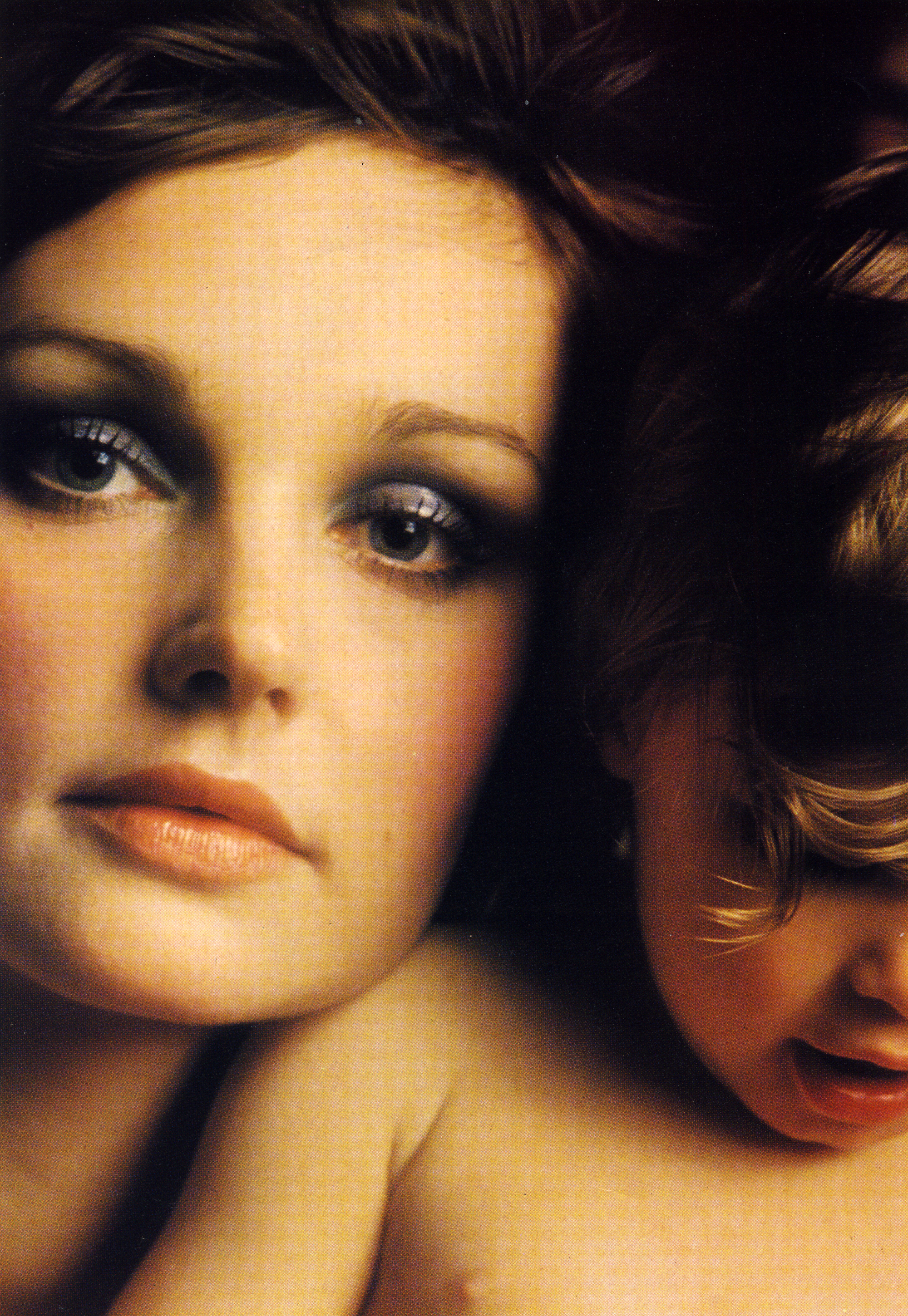
A stunningly styled and photographed advertisement feature for Boots No7 cosmetics, based around the ‘Monday’s Child’ nursery rhyme (although they’ve muddled up Friday and Saturday as far as I remember it). As a Tuesday’s child, I’m pretty happy with my lot although never sure how graceful I am. Which one are you? I particularly love Vivienne Lynn’s mournful Wednesday’s Child.
Photographed by Barry Lategan.
Scanned from Vogue, June 1972.
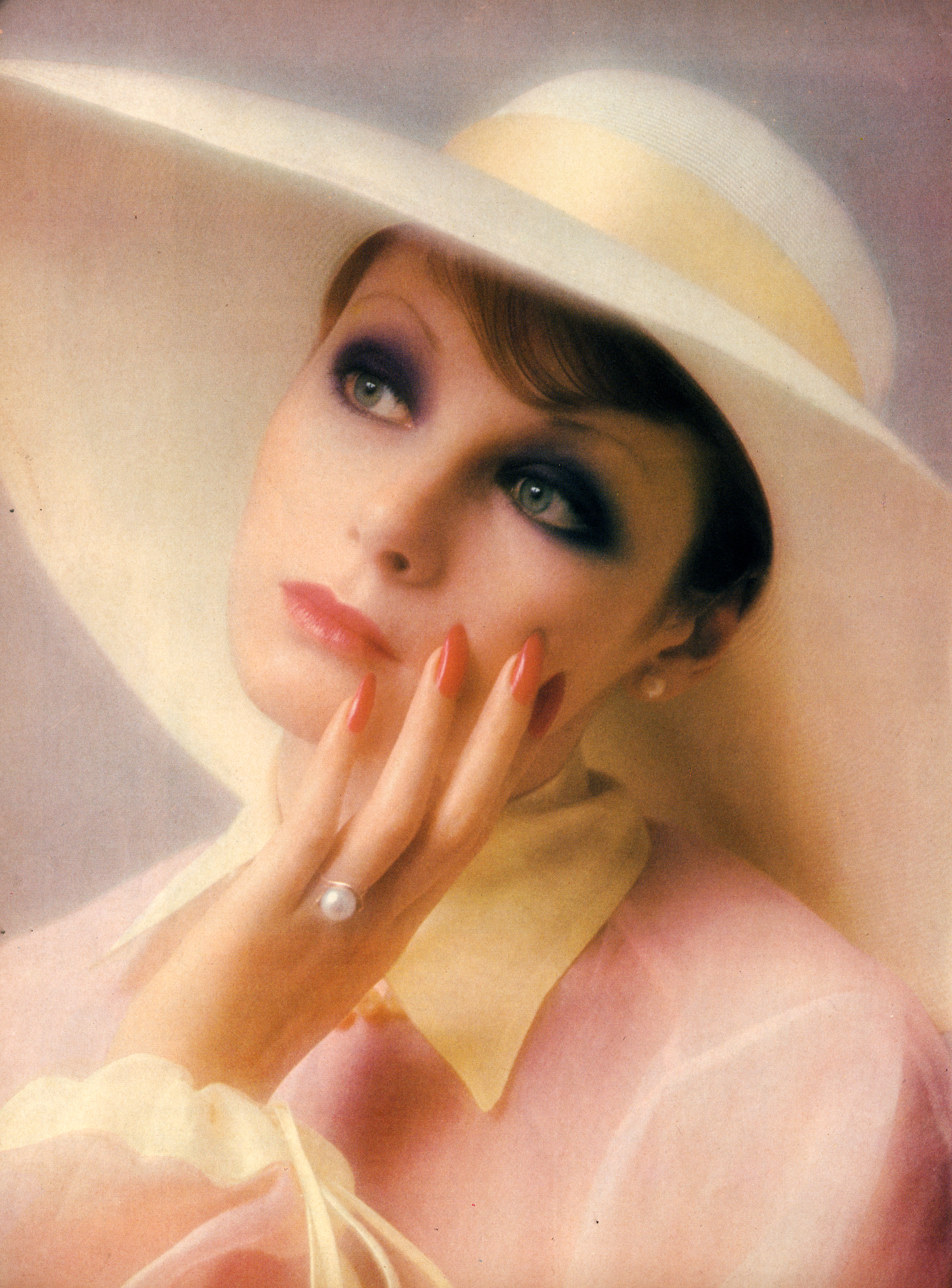
Tuesday’s Child is Full of Grace. Pink voile blouse by Plainclothes. Hat by Herbert Johnson. Wednesday’s Child is Full of Woe. Thursday’s Child has Far to Go Friday’s Child works hard for her living. Saturday’s Child is Loving and Giving.And the child that is born on the Sabbath Day is Bonny and Blithe, Good and Gay. White smock top by Gina Fratini.









 Liz Eggleston