

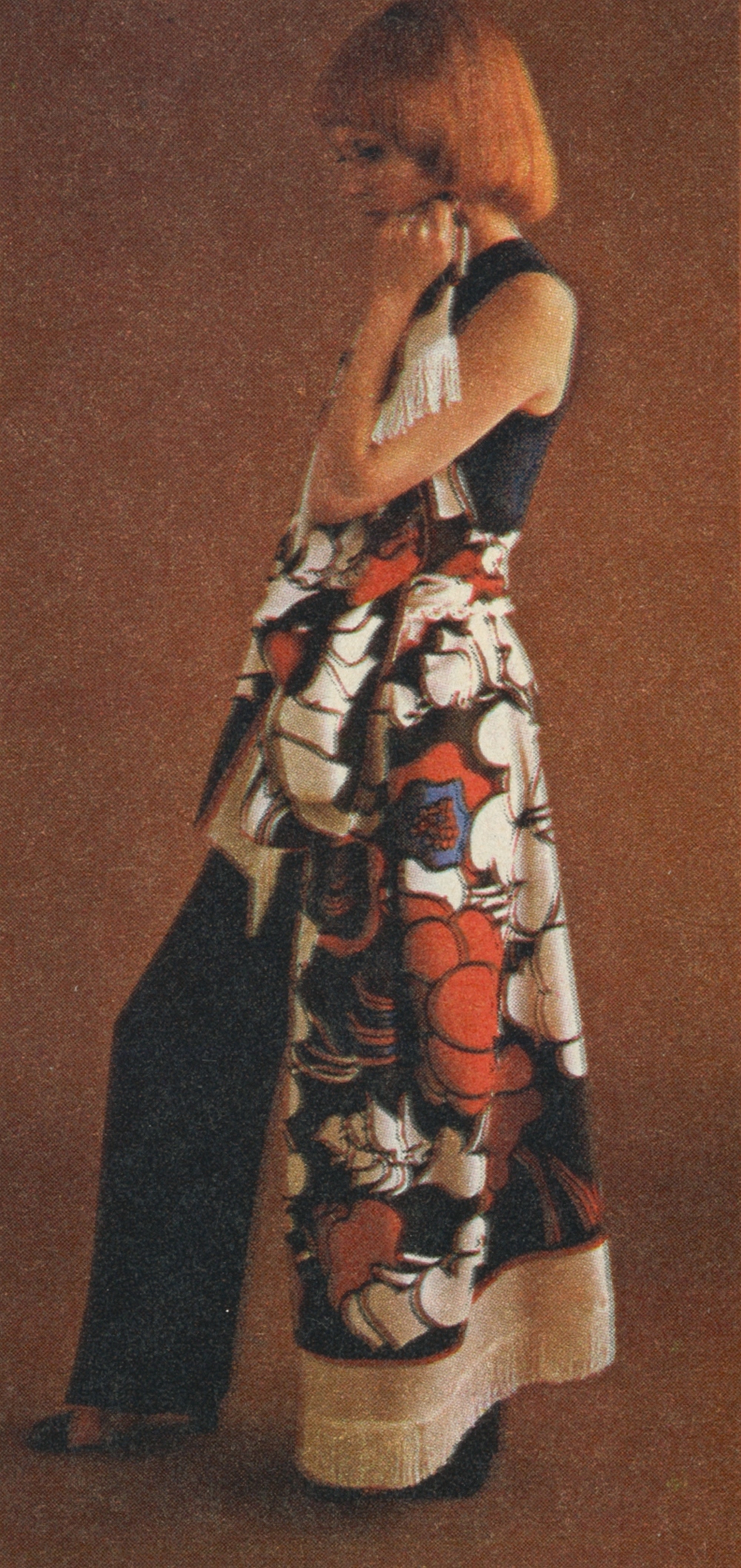
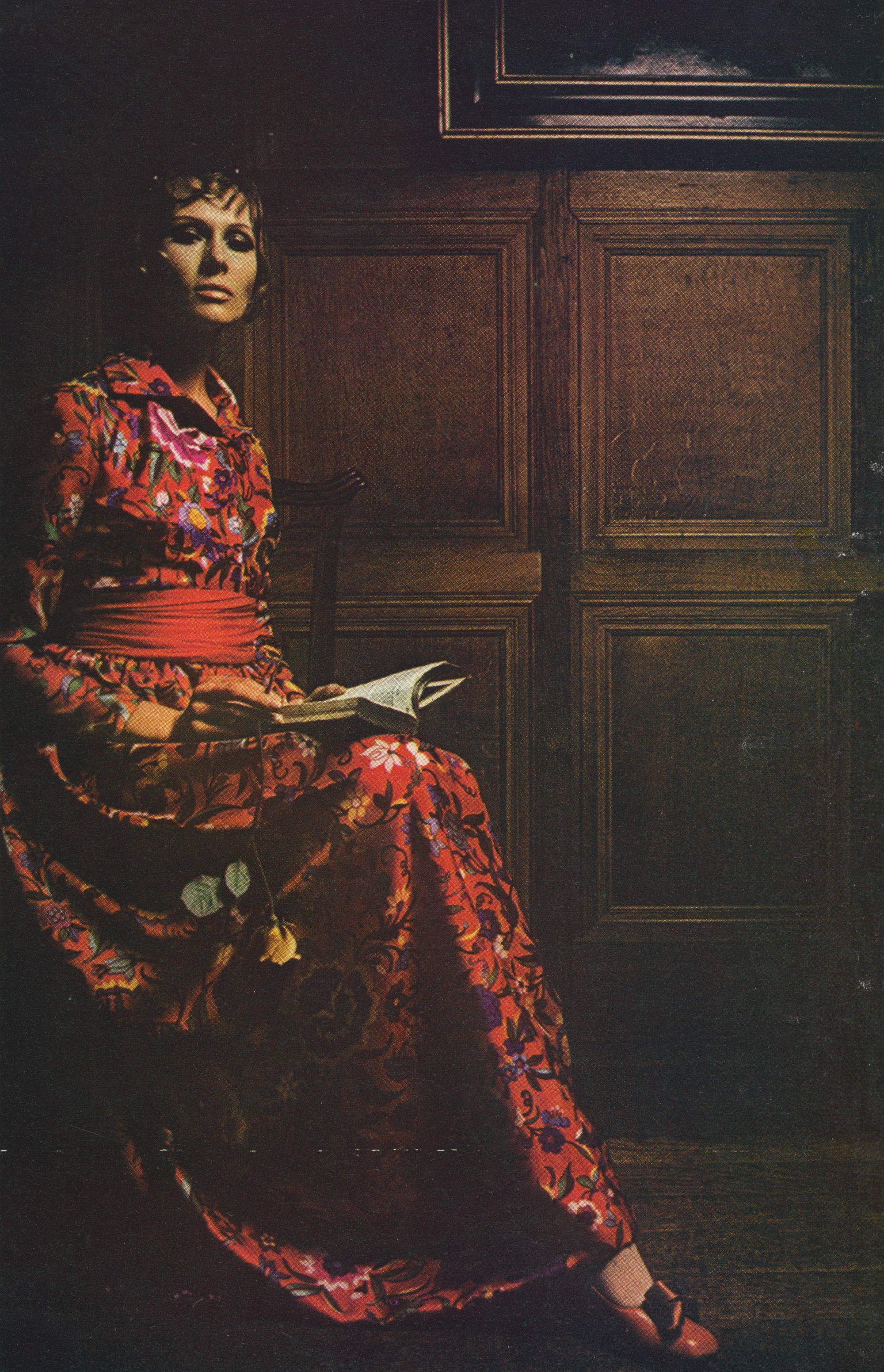
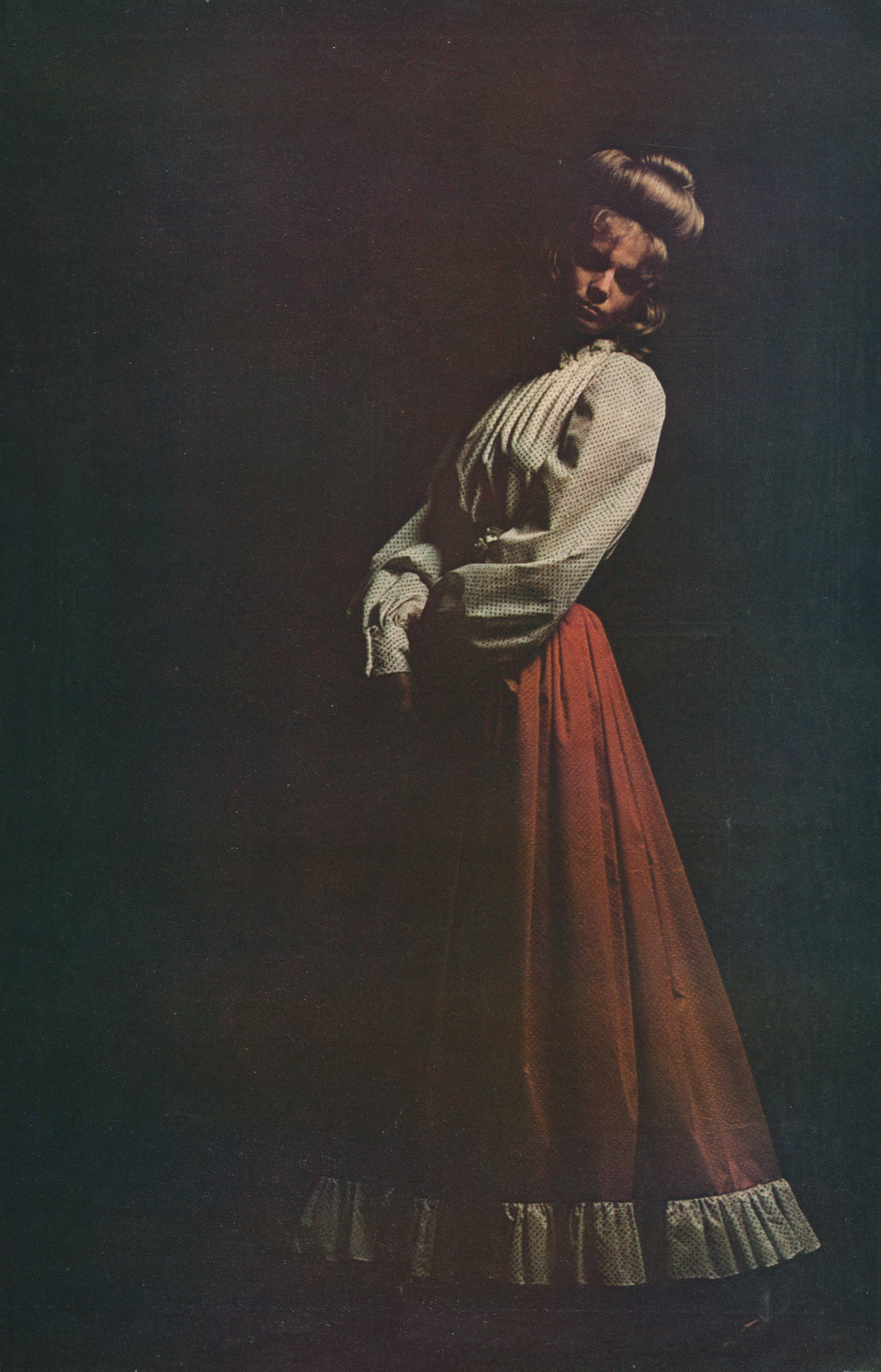
Entice in clothes of clinging silk and flowing crepe de chine, fragile and provocative. Mata Hari knew the secret … try it for yourself.
Photographed by Mike Berkofsky.
Scanned from Honey, September 1974.


Entice in clothes of clinging silk and flowing crepe de chine, fragile and provocative. Mata Hari knew the secret … try it for yourself.
Photographed by Mike Berkofsky.
Scanned from Honey, September 1974.
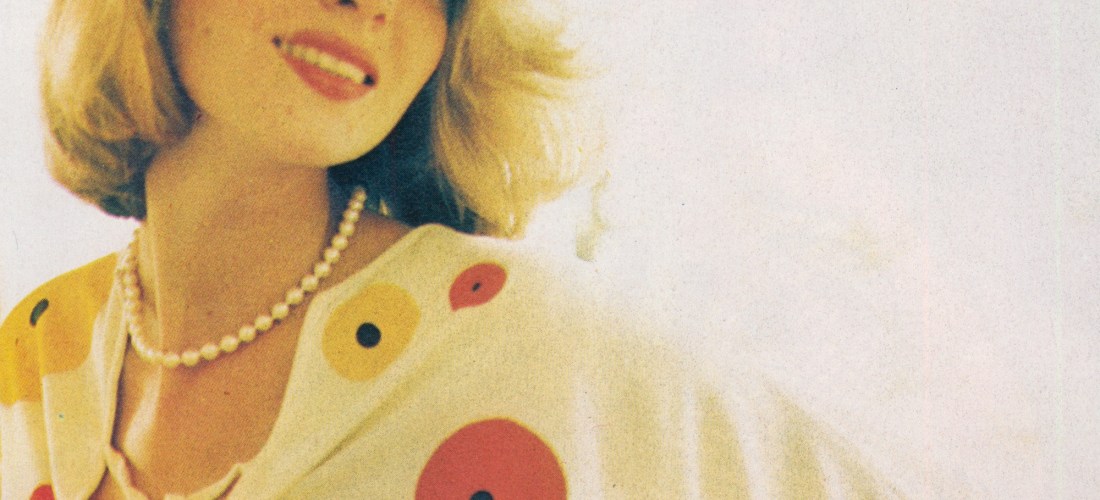
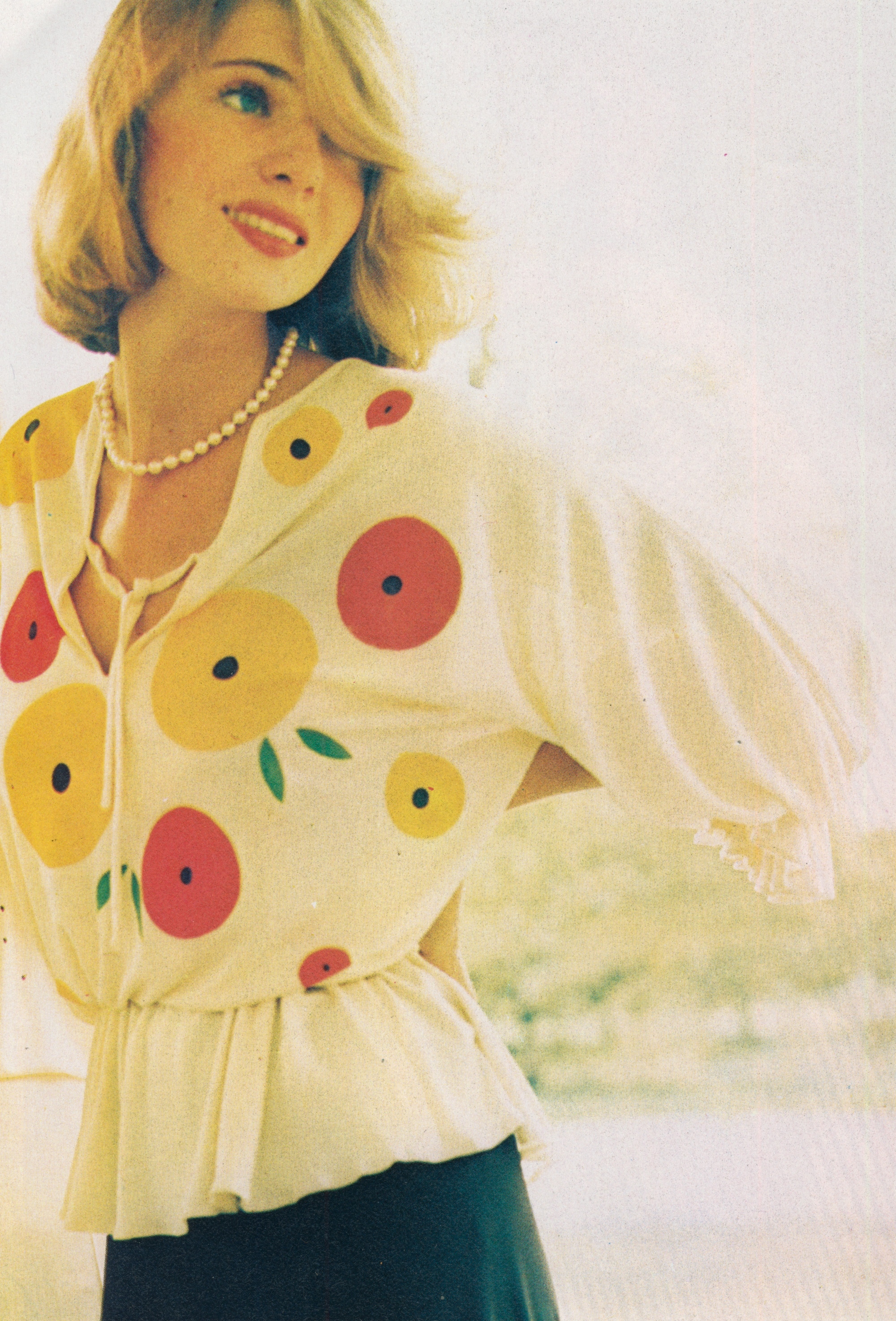
Jane Cattlin deserves them for making a whole clutch of wantable tops in clinging, sexy rayon jersey you wear with pants, long skirts, short skirts and under sober office suits for a straight-on-to-a-rave-up date. Simpsons of Piccadilly have taken the whole beautiful range shown above.
Photographed by Karl Stoecker.
Scanned from Over 21 magazine, August 1972.
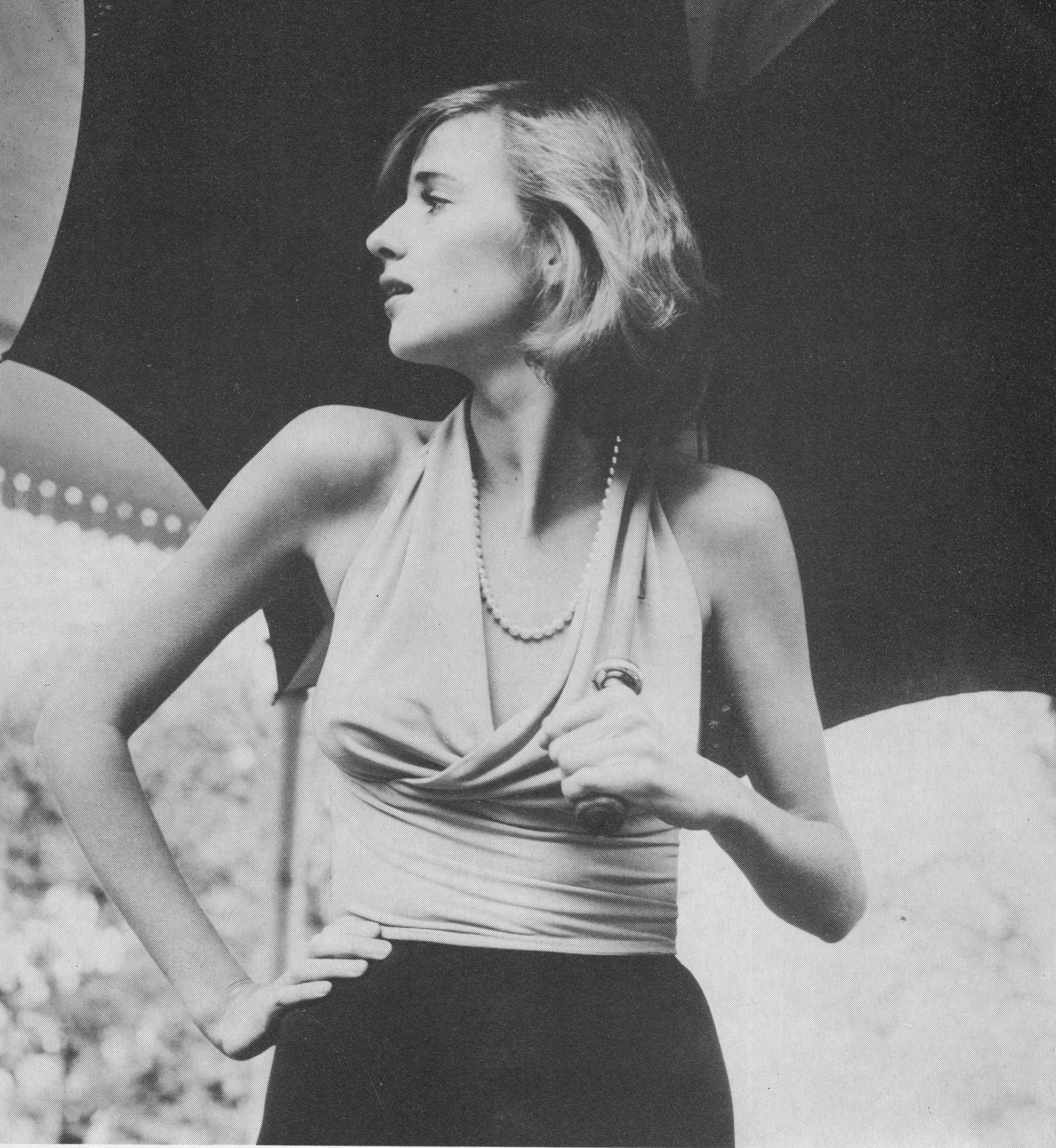
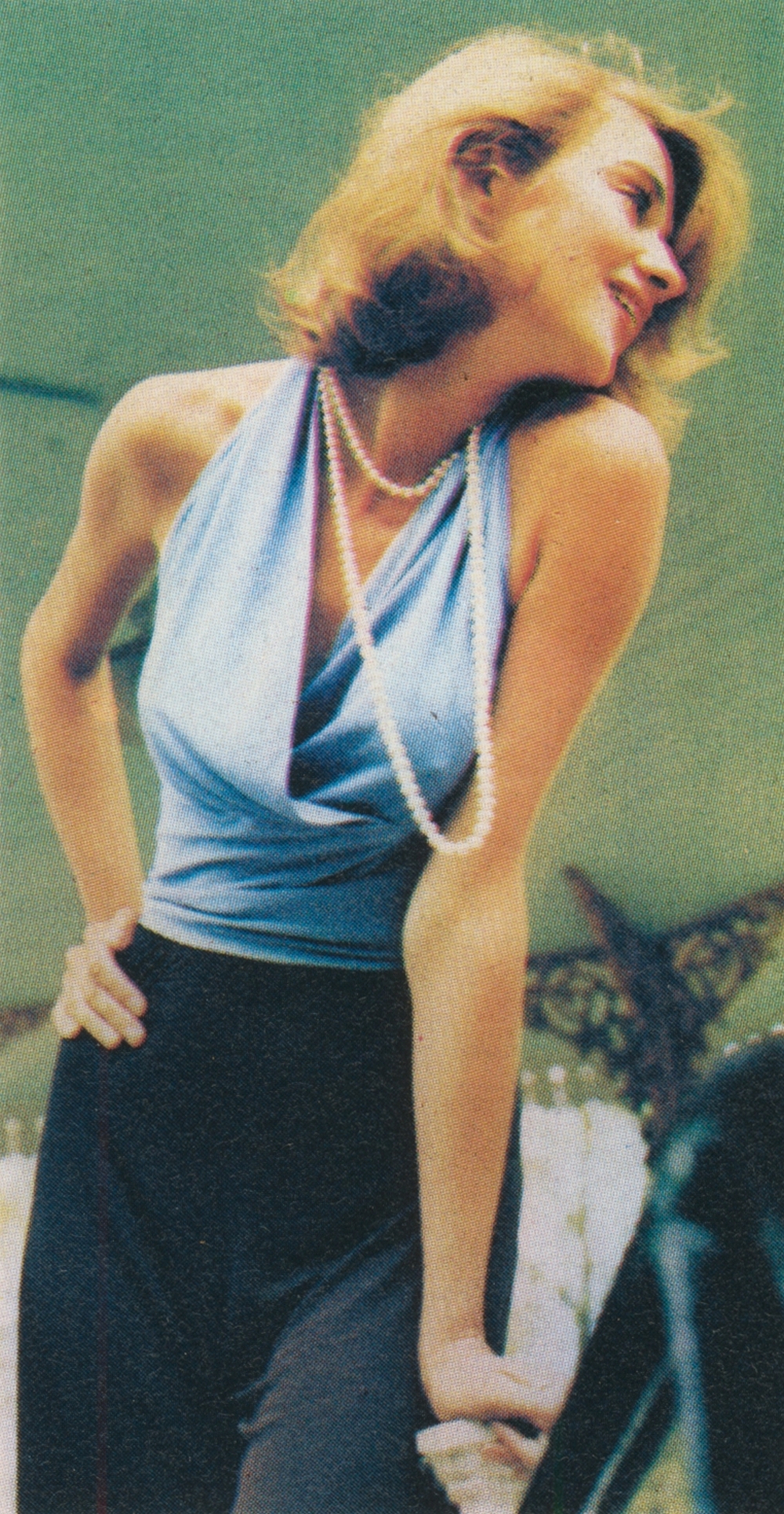
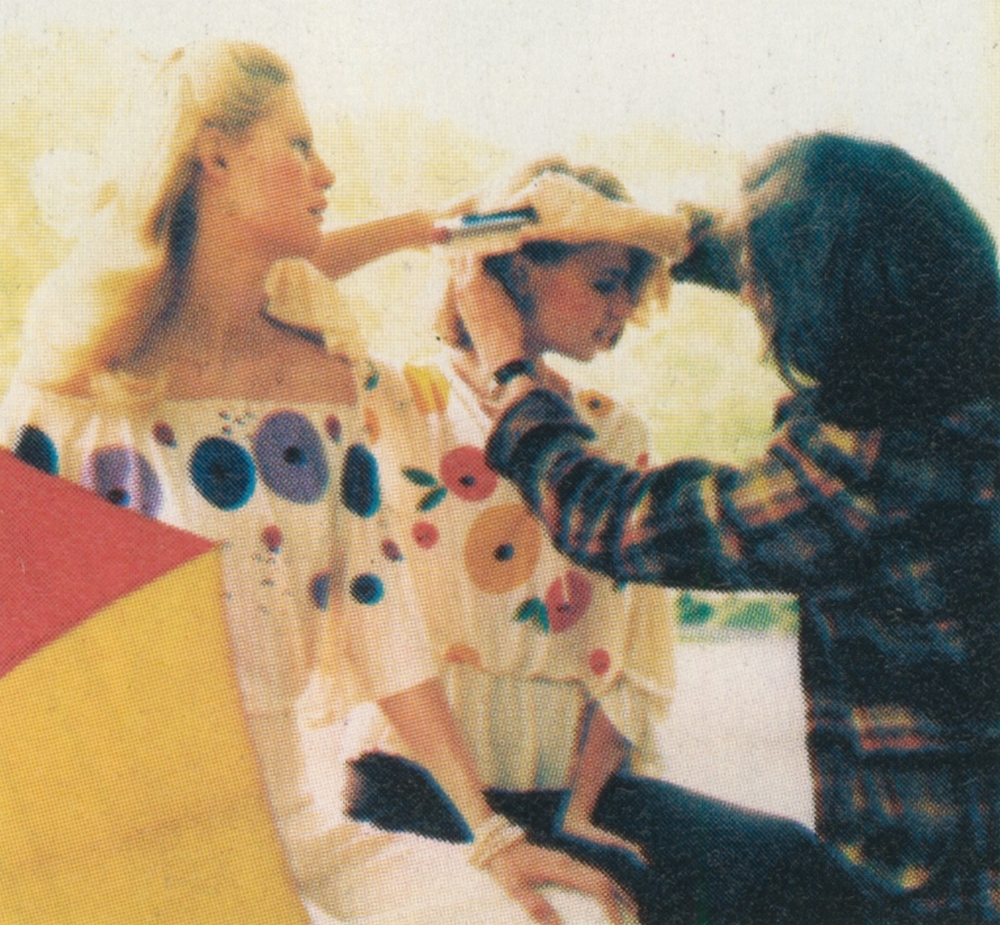
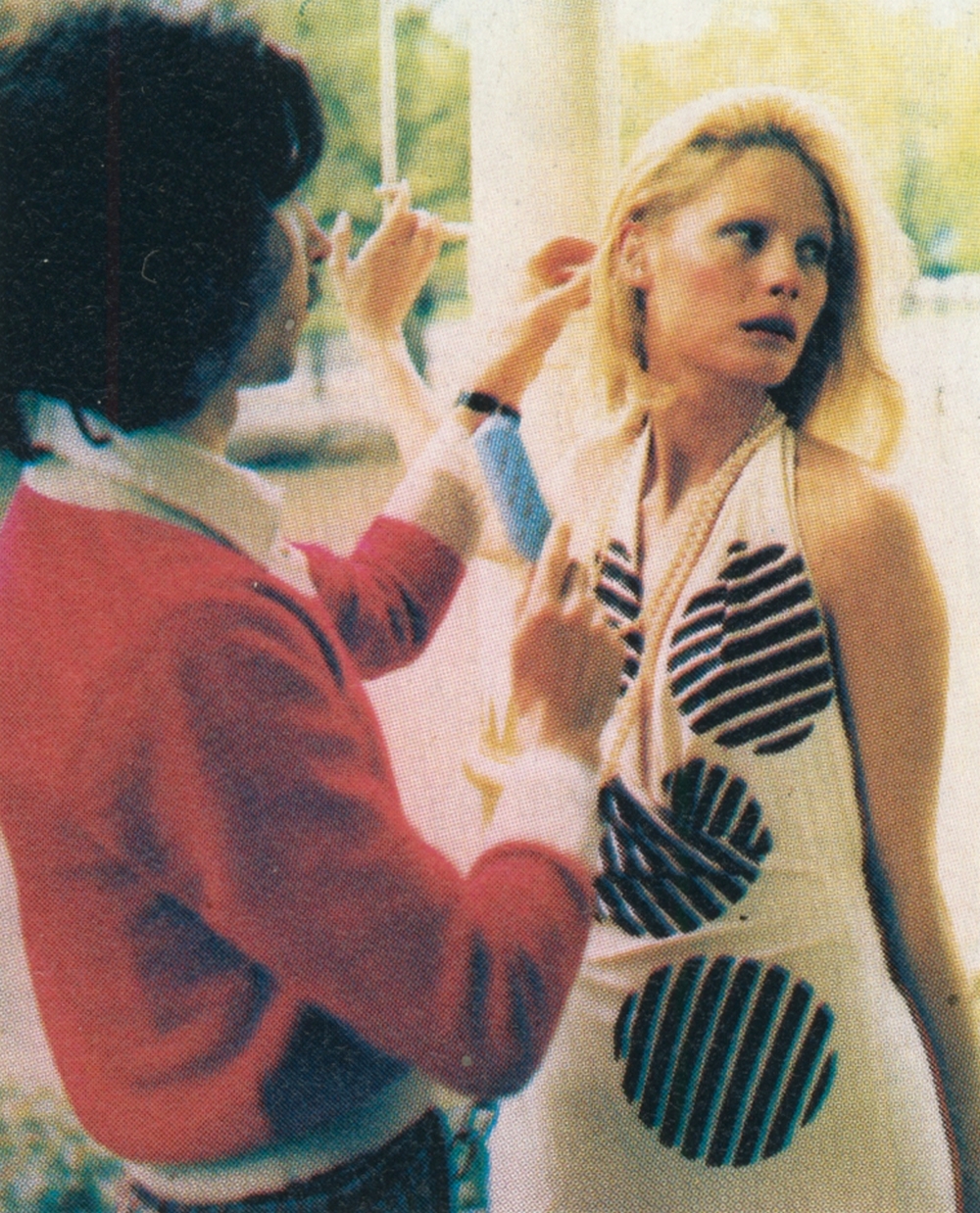
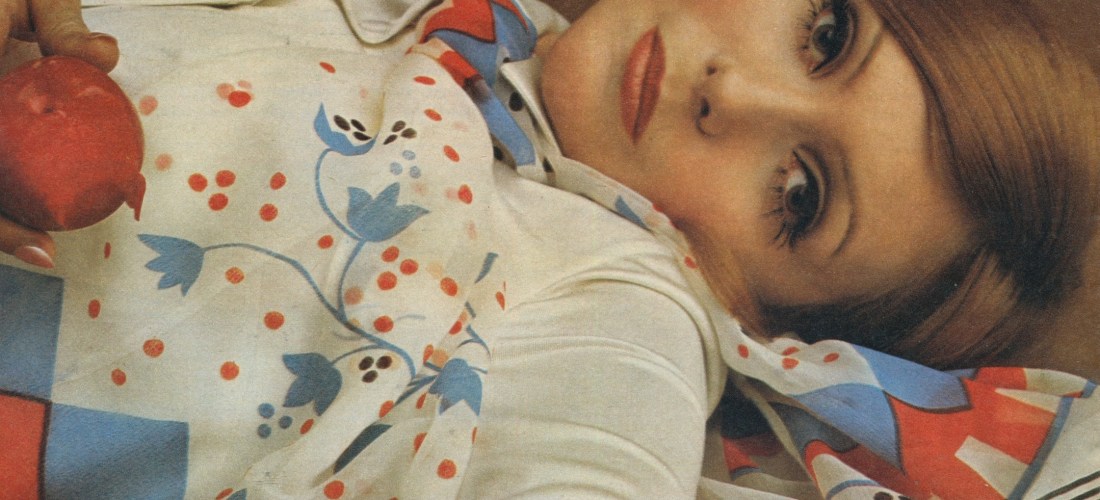

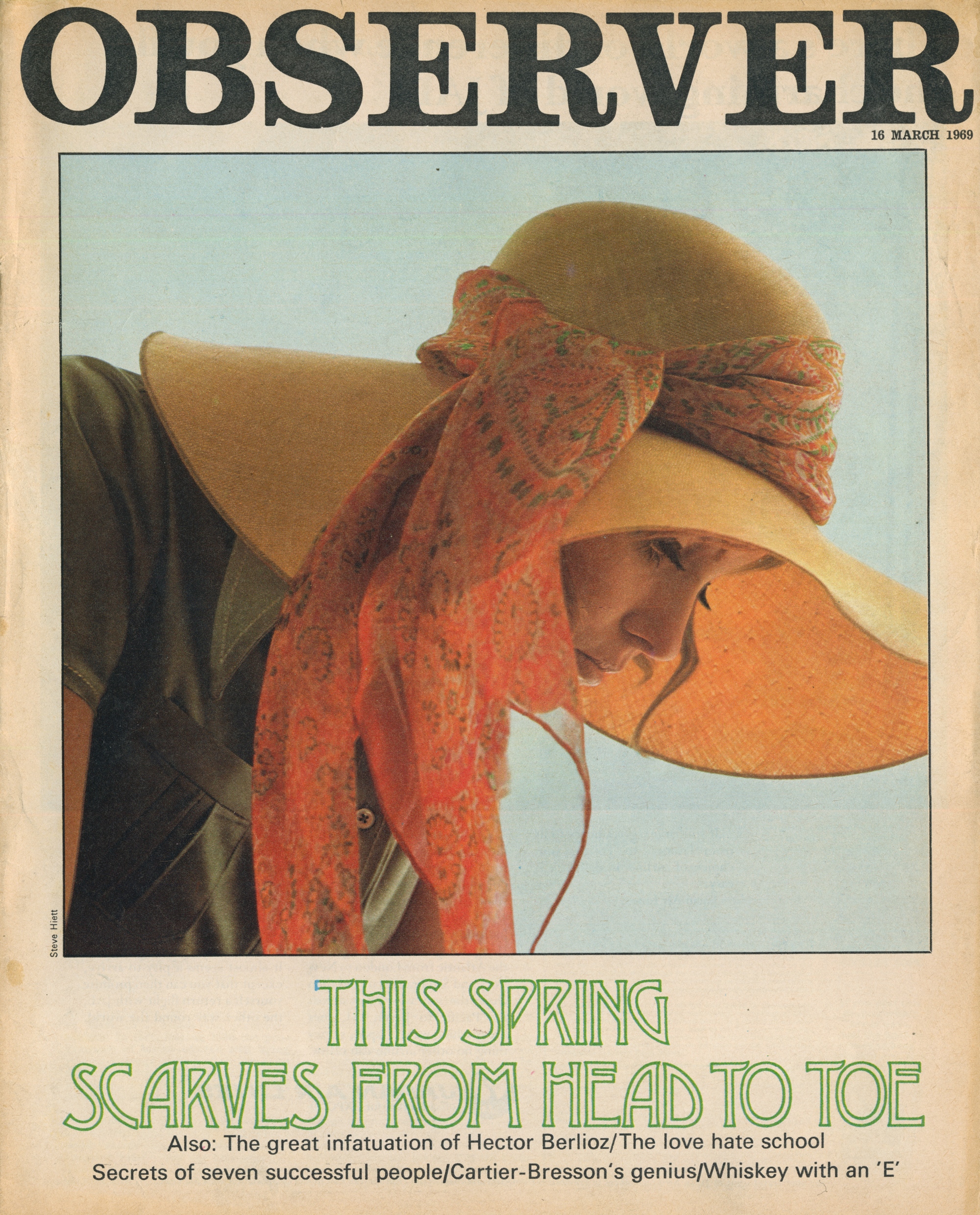
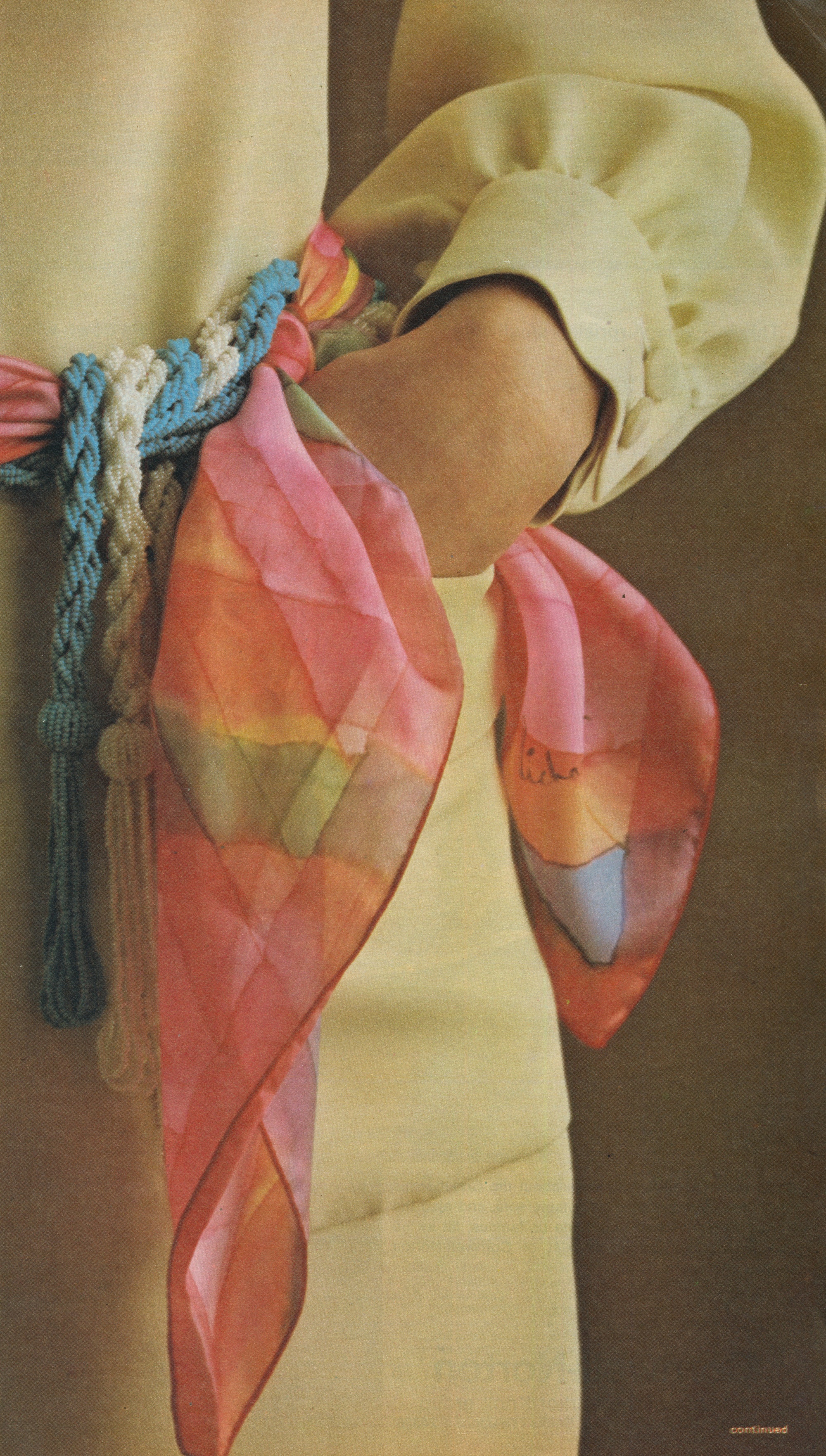
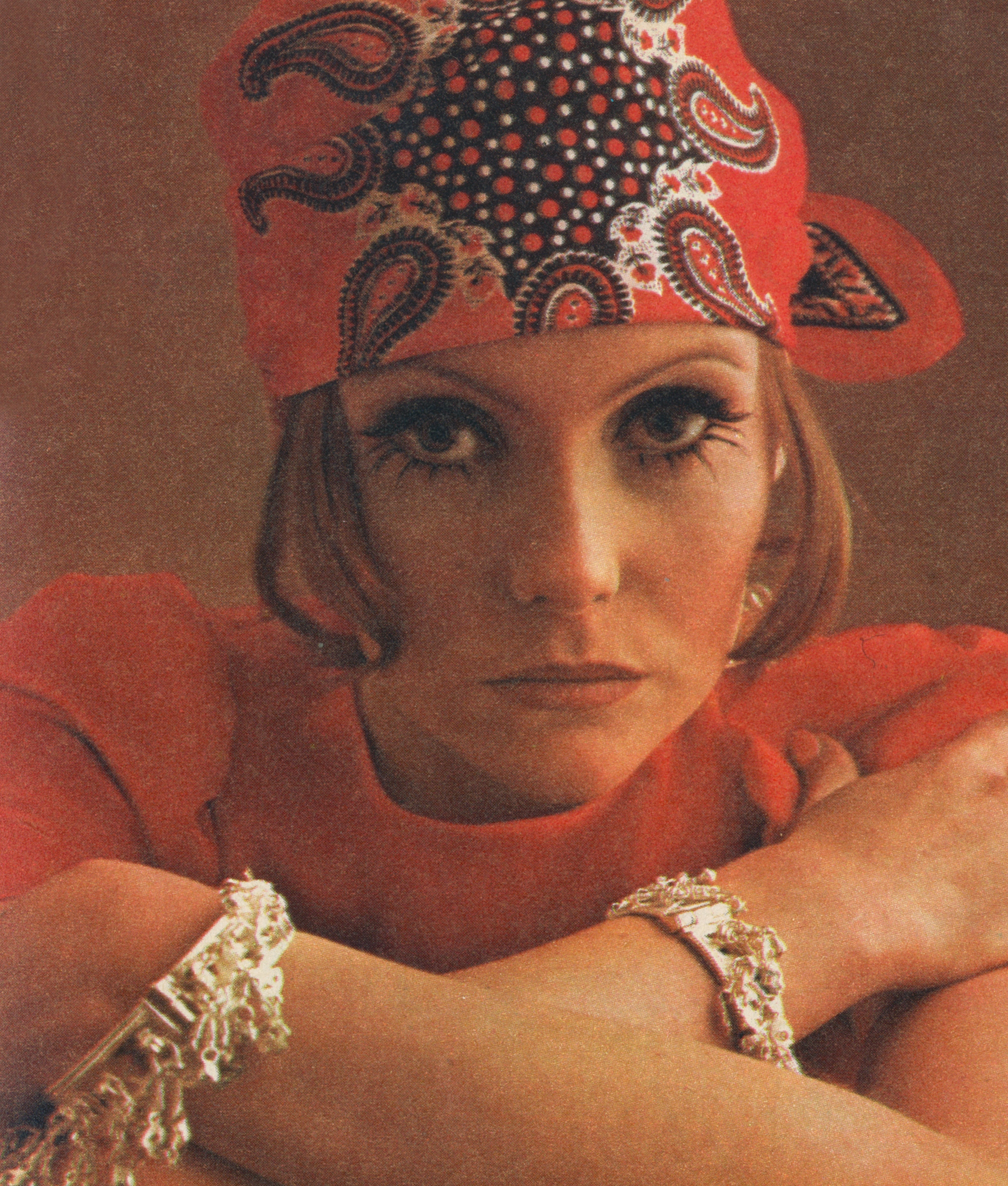
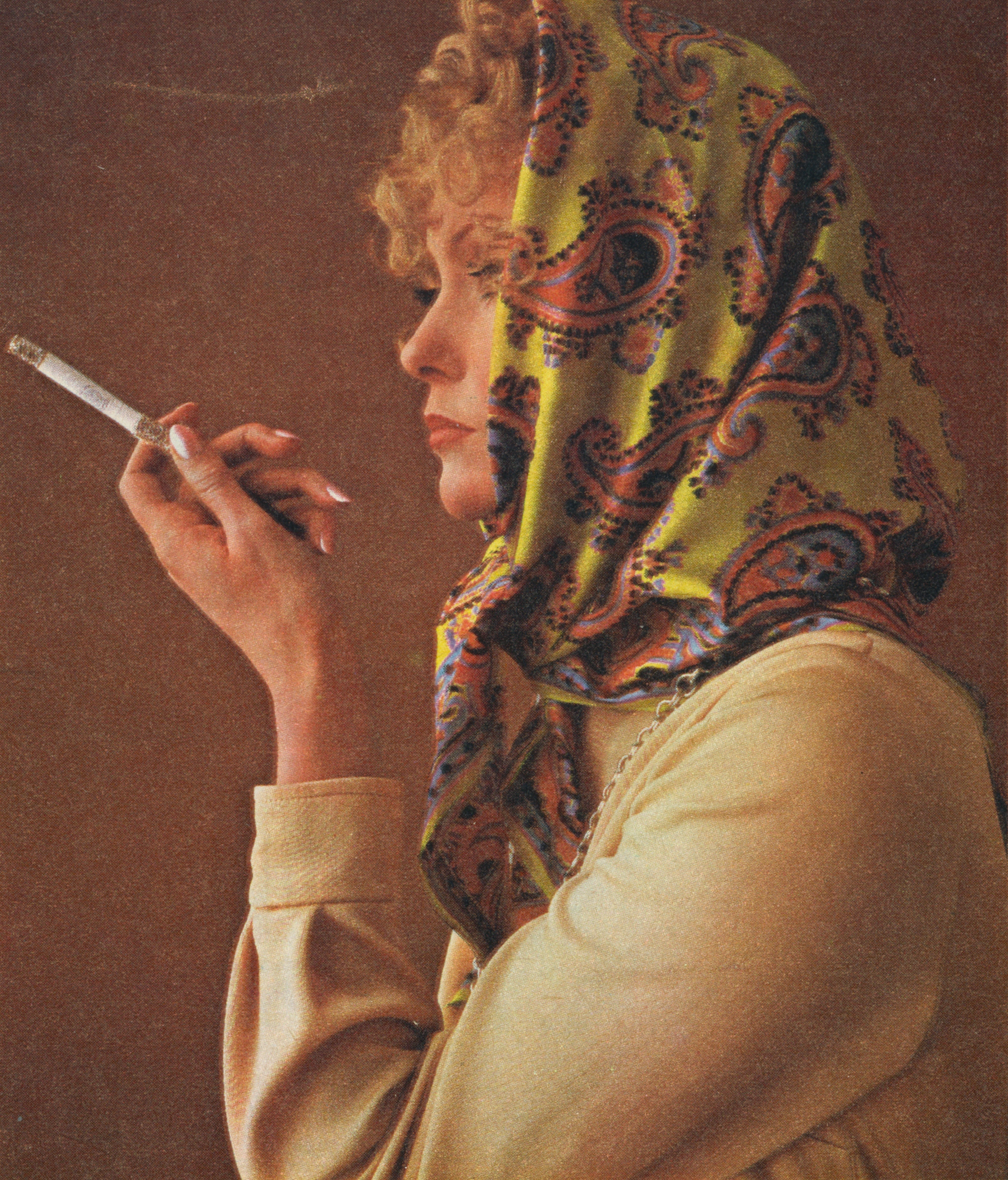
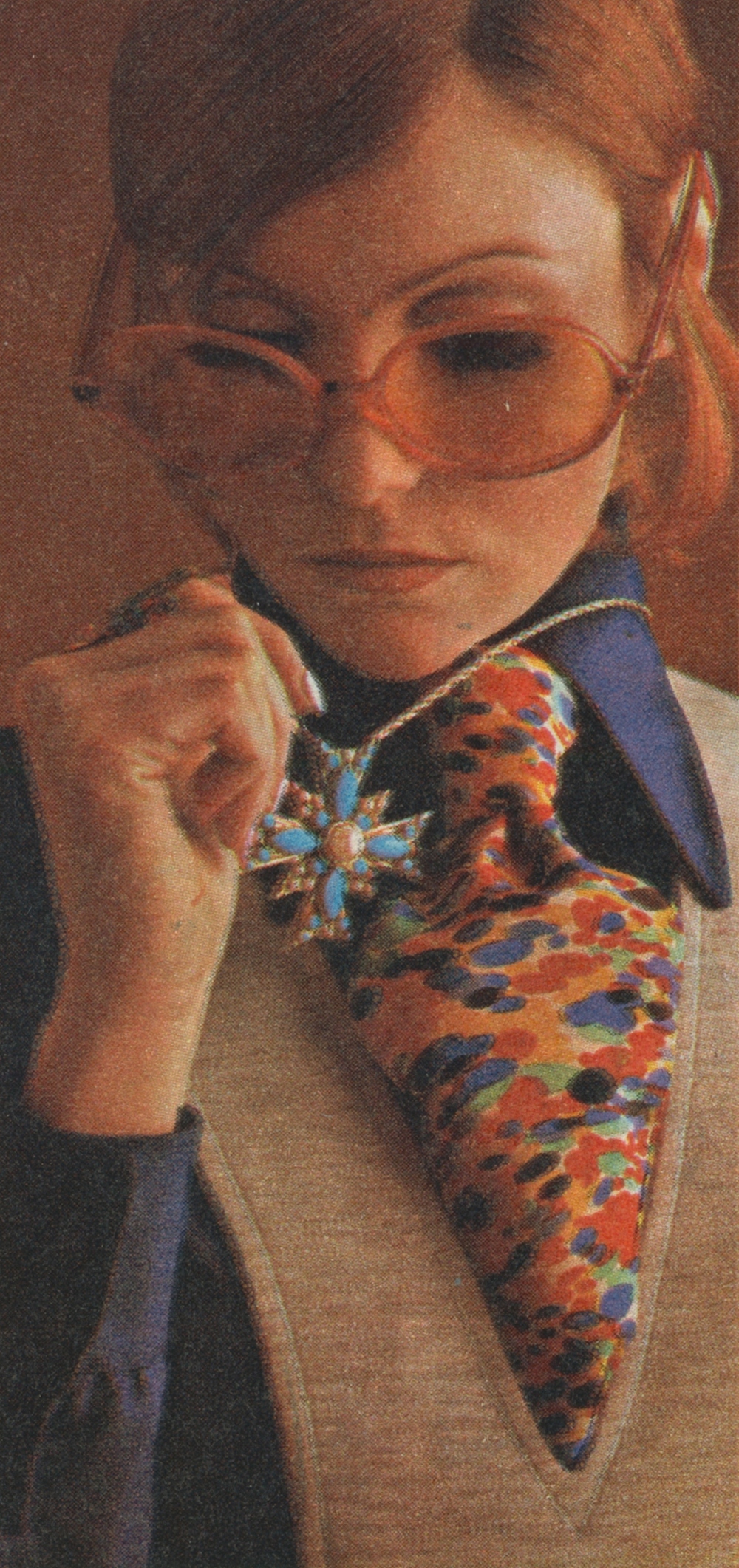
Scarves, instead of being dismissed as last year’s fashion gimmick, are being perpetuated as this year’s most important accessory. Still the simplest way to wear a scarf is to flip a long one casually college-style around the neck. As long as it’s not literally a college scarf this somehow adds enough chic to whatever you wear, without making you look fussily overdressed. There are dozens of different ways to tie a scarf. Smart French girls are tying scarves around their waists, twisted in with chain belts or beads. Marc Bohan at Dior makes headscarves tied pirate-style look young and chic, and shows scarves tied like a man’s tie. Although large squares will still be in demand to wear on the head or folded up as cravats, the big fashion in scarves is still for long ones, preferably fringed. Men will have to accept with a good grace that they have lost their long-established monopoly of fringed silk scarves. Until now almost the only places to find them were men’s departments, antique market stalls or somebody’s attic. (Shawls are the latest craze from jumble sales.) But shopping for scarves is easier this spring, with stocks at last in every shape and size. Hair by Valerie at Cheveux, 15 Abingdon Road, London W8.
Fashion by Liz Smith.
Photographed by Steve Hiett.
Scanned from The Observer Magazine, March 1969.


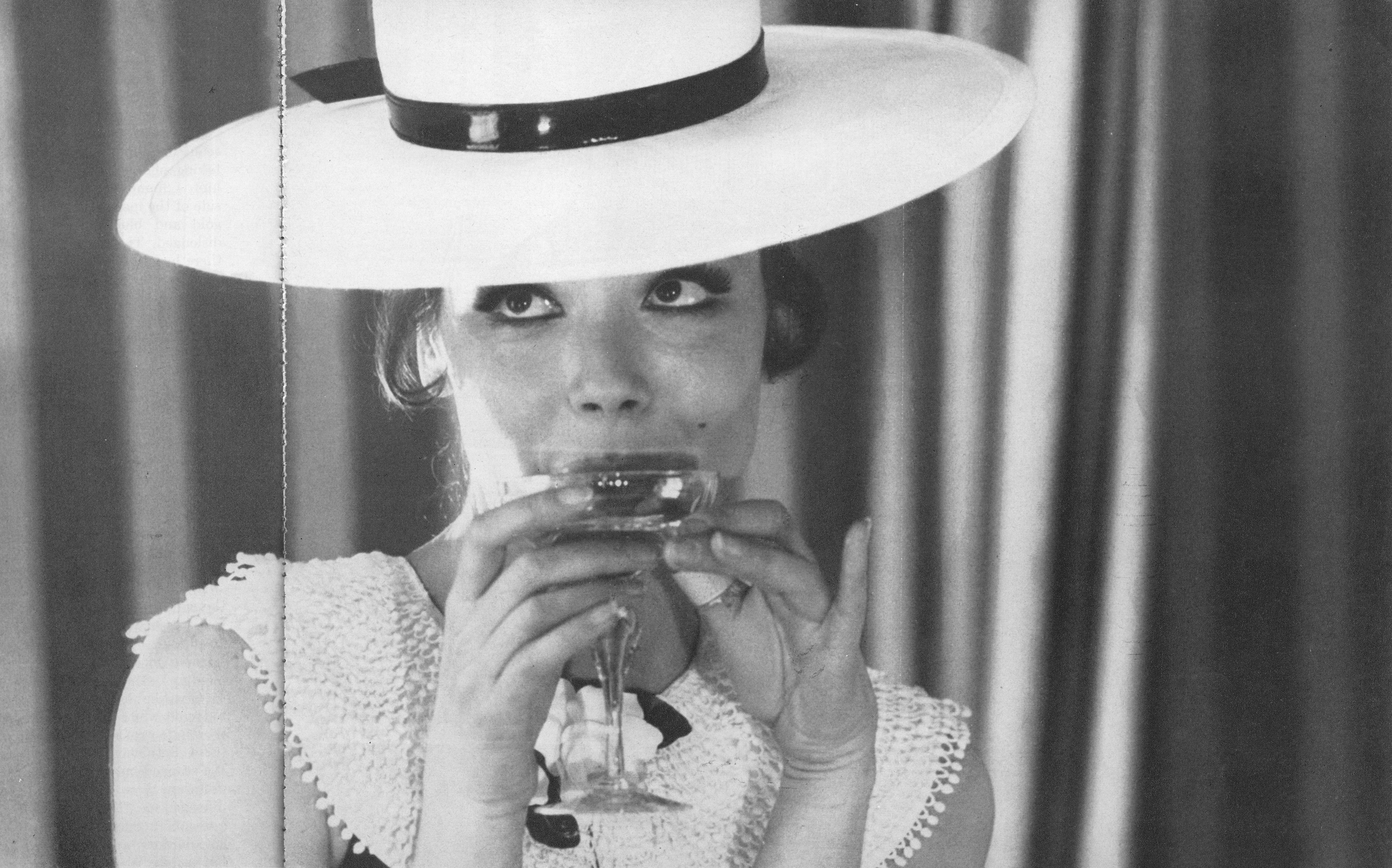
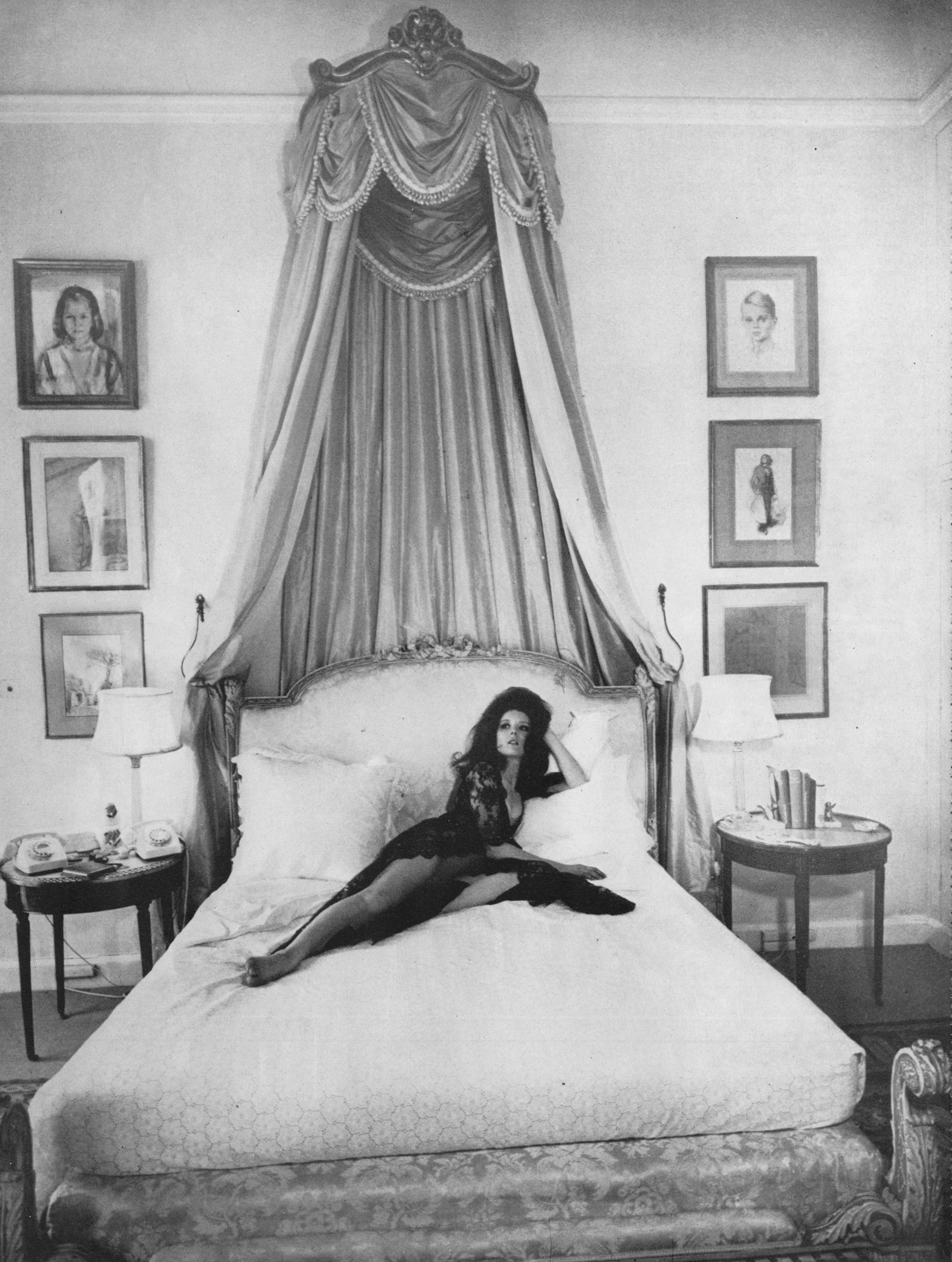
Masques are not new. The Greeks used them in their classical theatre to represent various stereotyped parts such as ‘The Happy Lover’, ‘The Jealous Wife’ and ‘The Benign Father’. Today, most people assume personae to hide their real personalities, though the very characteristics they try to keep hidden, are often quite obvious to others. What is more, it is easy for people to become identified with their masque to the point that it is difficult for them to discard it. The basic reason for assuming a masque is to play a role and, hopefully, to make oneself more attractive than one actually is. It doesn’t always work.
Played by Diana Rigg and Peter Cook
Written by Adelle Donen
Photographed by Stanley Donen
Scanned from Queen, 5th July 1967.
I have been on something of a break from here and social media recently, for personal reasons, but had always planned to post this on Diana Rigg’s birthday so here I am, back a little earlier than intended.
When I found this copy of Queen magazine, appropriate because Diana was and will always be my Queen, I couldn’t believe that I hadn’t seen most of the images before – especially as they were taken by one of my favourite film directors. There’s always a part of me that wants to keep things like this to myself, but the bigger part wants to share the beauty with everyone. So I hope you enjoy!
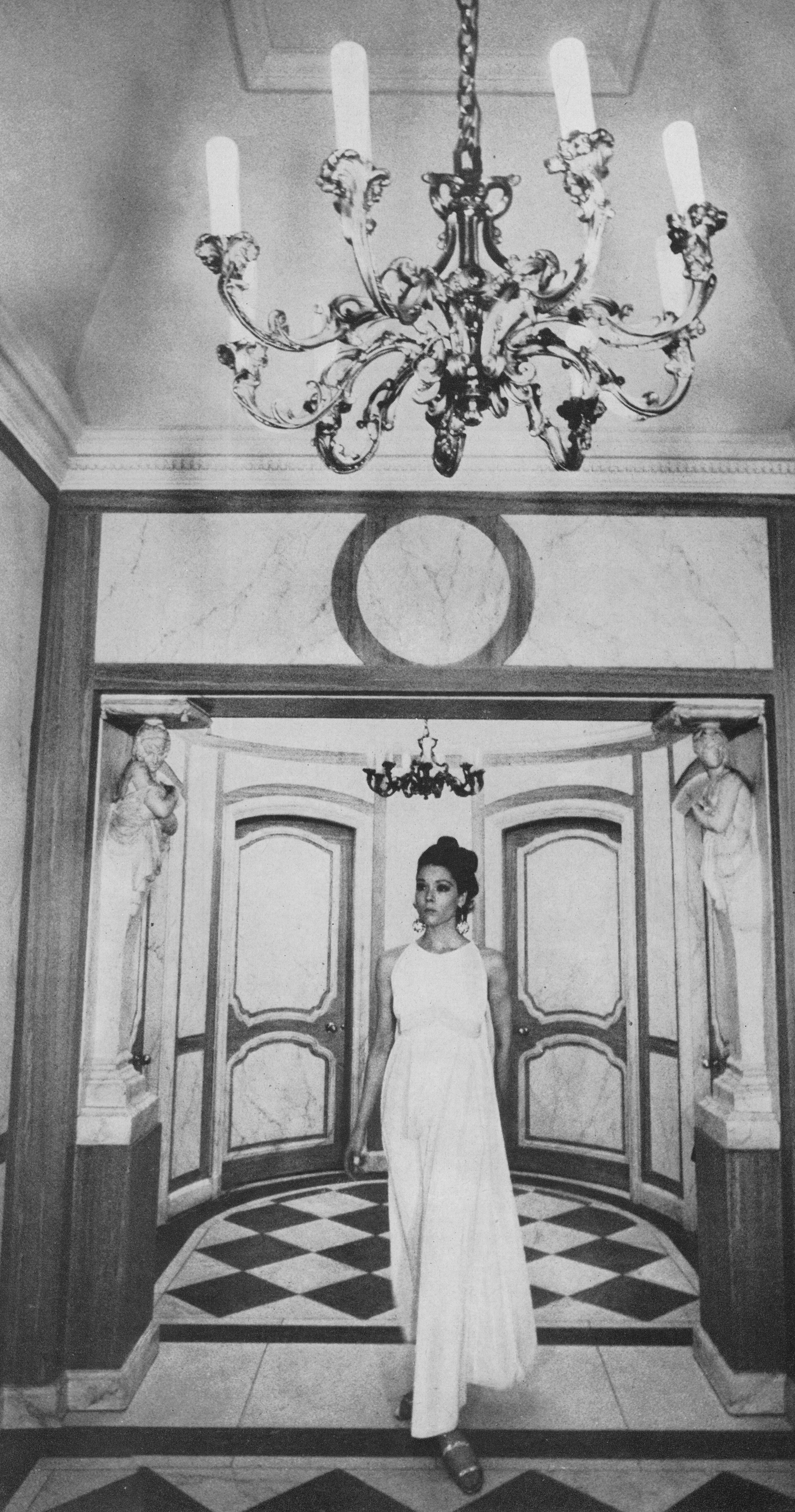
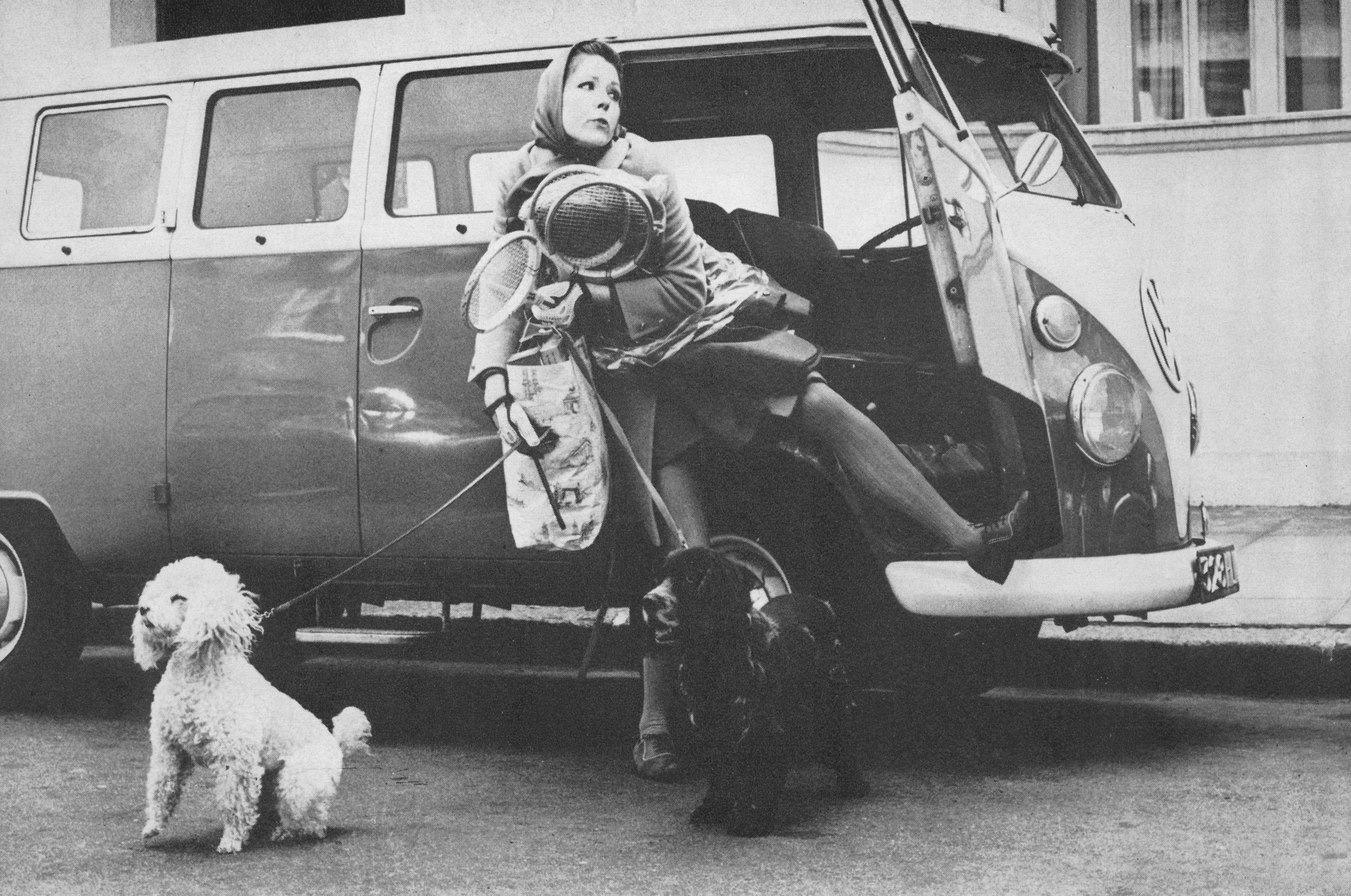
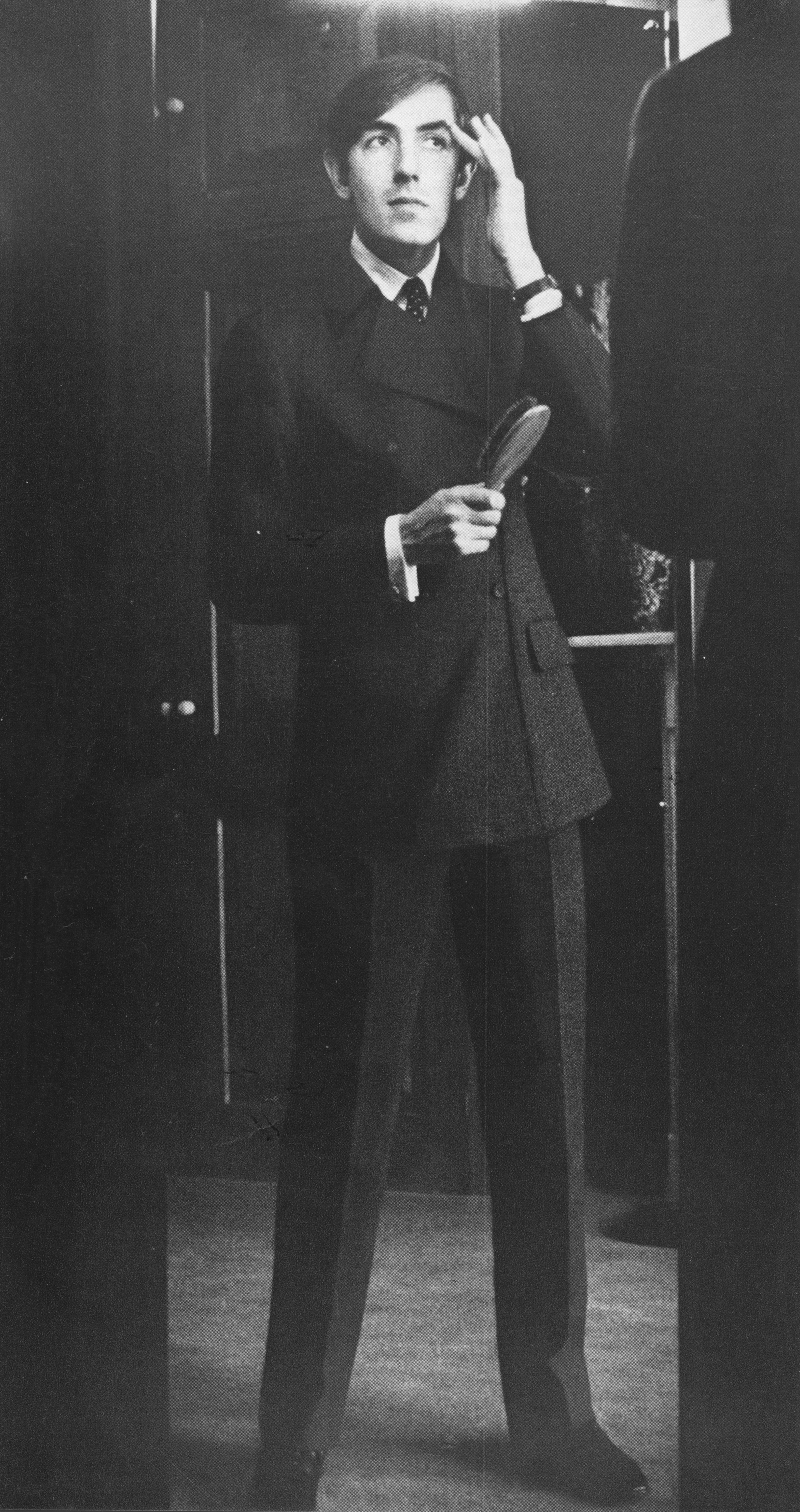


Glyndebourne in summer where the season opened on May 25th with Massenet’s Werther and Mozart’s Cosi fan Tutte. Balls, long, long English summer evenings for wearing fragile chiffon, delicate lace, organdie and brilliant silk; for baring arms and feet and dancing far into the dawn. These photographs were taken in the Organ Room at Glyndebourne.
I worked at Glyndebourne for a few seasons, a few years ago. Whilst it meant I was lucky enough to get to be in the audience several times, and visit the Organ Room, I’m now extremely sad that I didn’t have these dresses to wear!
All the hairstyles, using hair pieces by Toyer Tresses, by Oliver at Leonard, Upper Grosvenor St.
Photographed by John Claridge.
Scanned from Harpers Bazaar, June 1969.
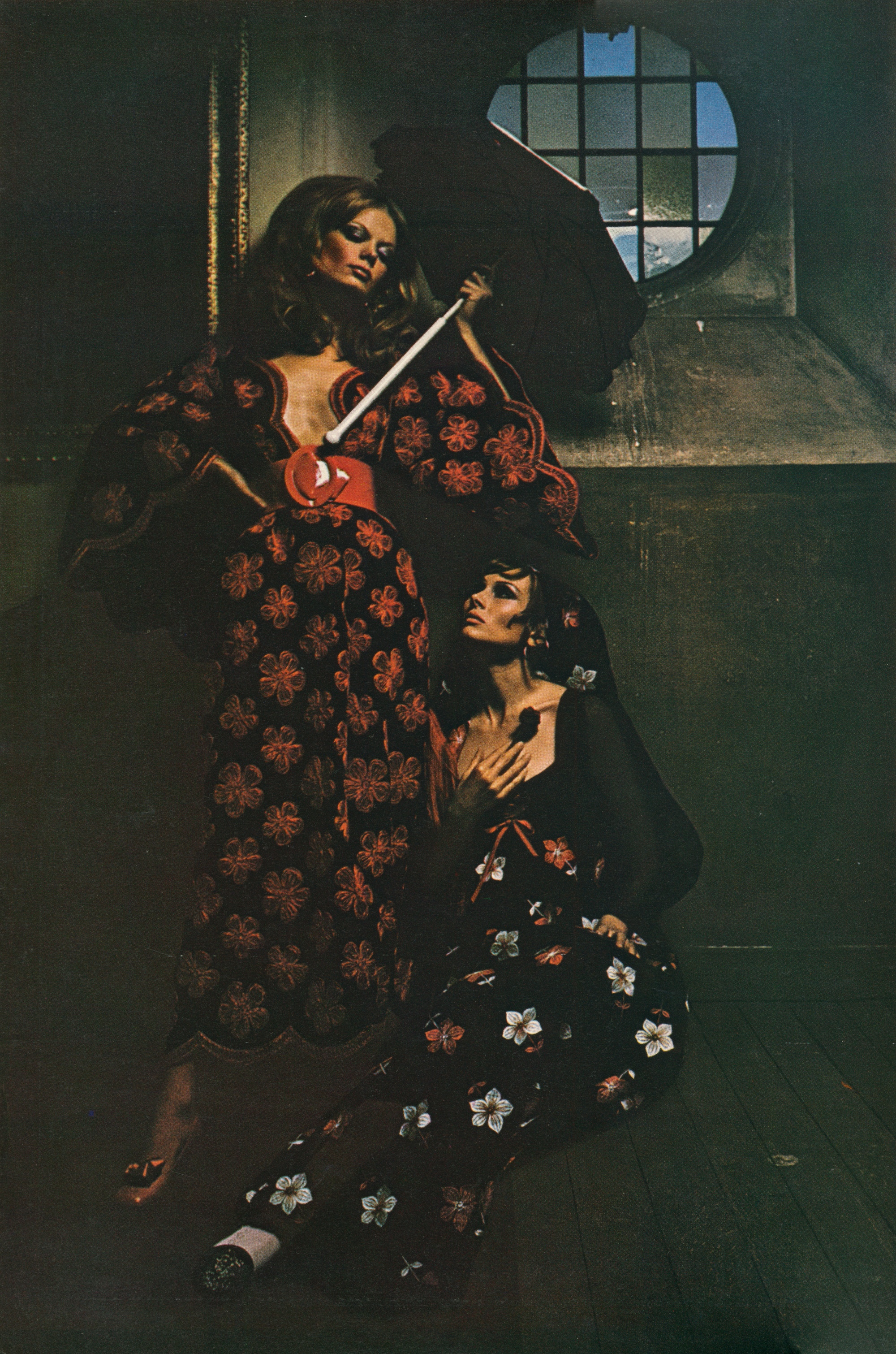
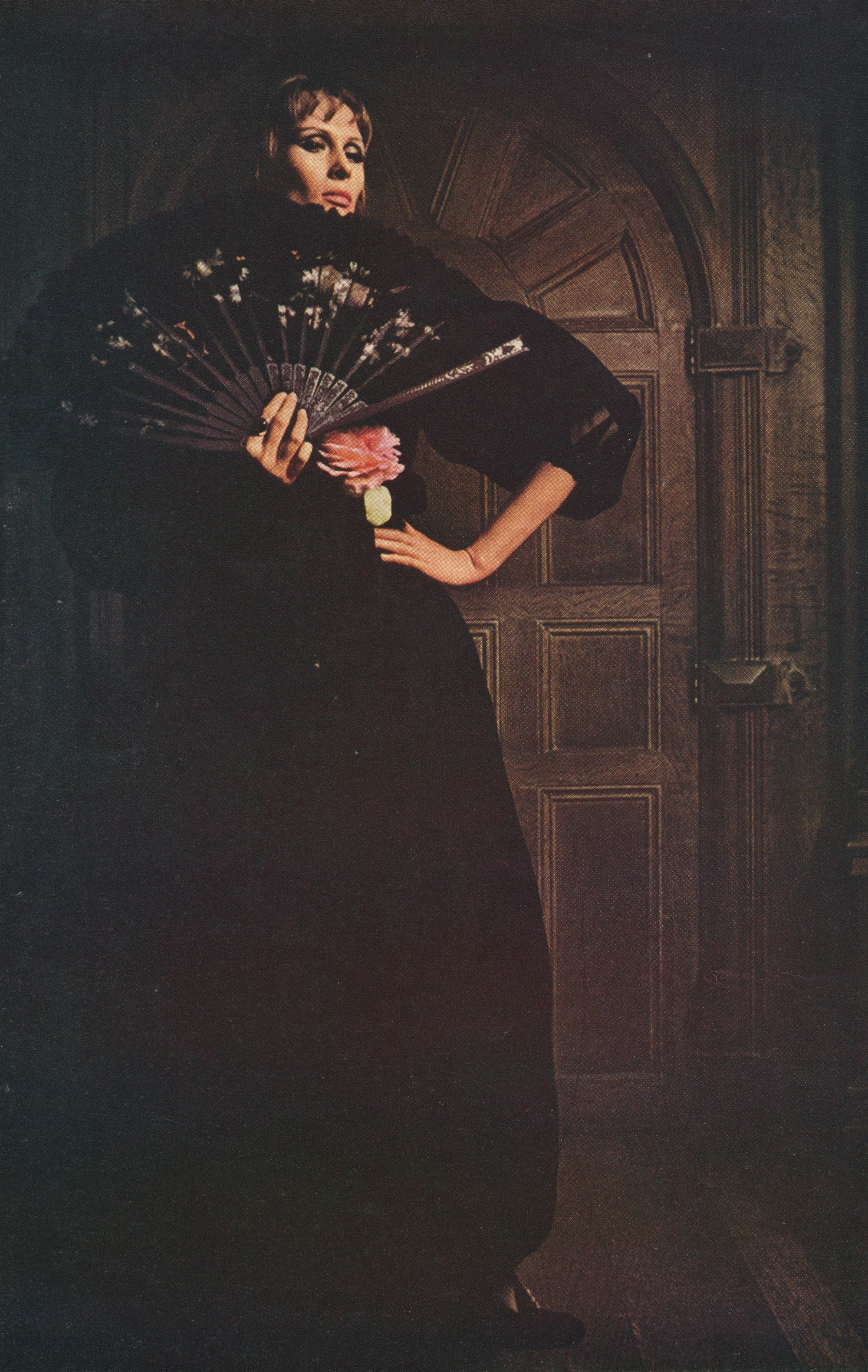
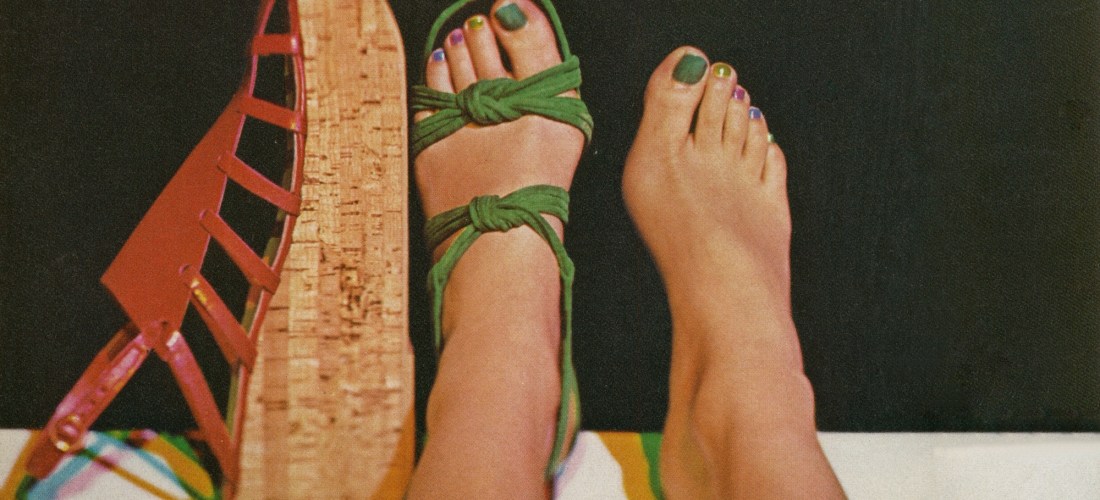

Summer’s sandals have lots of straps and knots and plaits and weaving, they are leather on huge slices of cork, in colours of caramel ice and salads. Toenails are as fresh and bright. Paint yourself a summer foot.
Photographed by Lester Bookbinder.
Scanned from Vogue, June 1972.

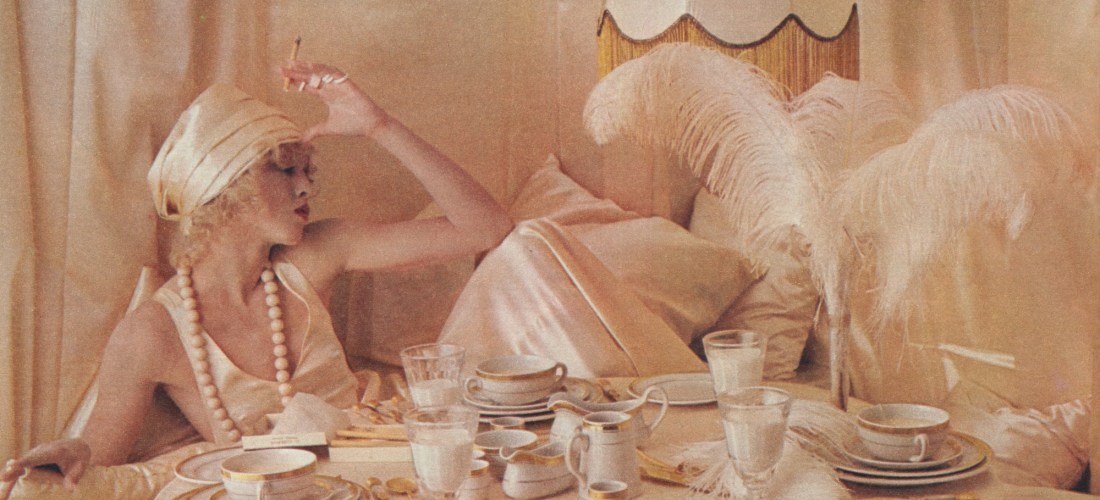

Now there’s hardware and haberdashery, furnishings and fabrics, cosmetics and mens-wear, all carrying the Biba label. Their brave transition from dolly boutique to department store was made last week when Biba opened in Kensington High Street. Although a baby store compared with neighbouring Barker’s, Biba does boast marble floors, a carved gallery from the old St Paul’s school, and a commissionaire at the huge glass doors.
Faithful customers can still find among the familiar palm fronds clothes to wear themselves or put on their children, but everything is on a much bigger scale. Colour-matched underwear and tights are on sale in a special conservatory-style department, and there’s a complete range of Biba makeup and cosmetics, and many more accessories.
But what’s really new, are the clothes for men, and the things for the house.
There’s nothing simple or austere about a Biba home life. The girl whose idea of some-thing comfortable to wear around the house is a slinky satin dress chooses a plush back-ground and hardware that’s softly elegant. Cutlery is rich-looking in gilt and mother of pearl, or silver and ebony. China is white and gold, glasses are chunky goblets. Specially printed wallpapers and furnishing fabrics, plain satins, felts, braids and trimmings, have carefully matched emulsion paints, lamp-shades and cushions, all in a range of 15 colours. Biba are selling the raw materials so that you can make what you want of them. The clue to their own style is Art Nouveau, but the way you choose to use them will be your own.
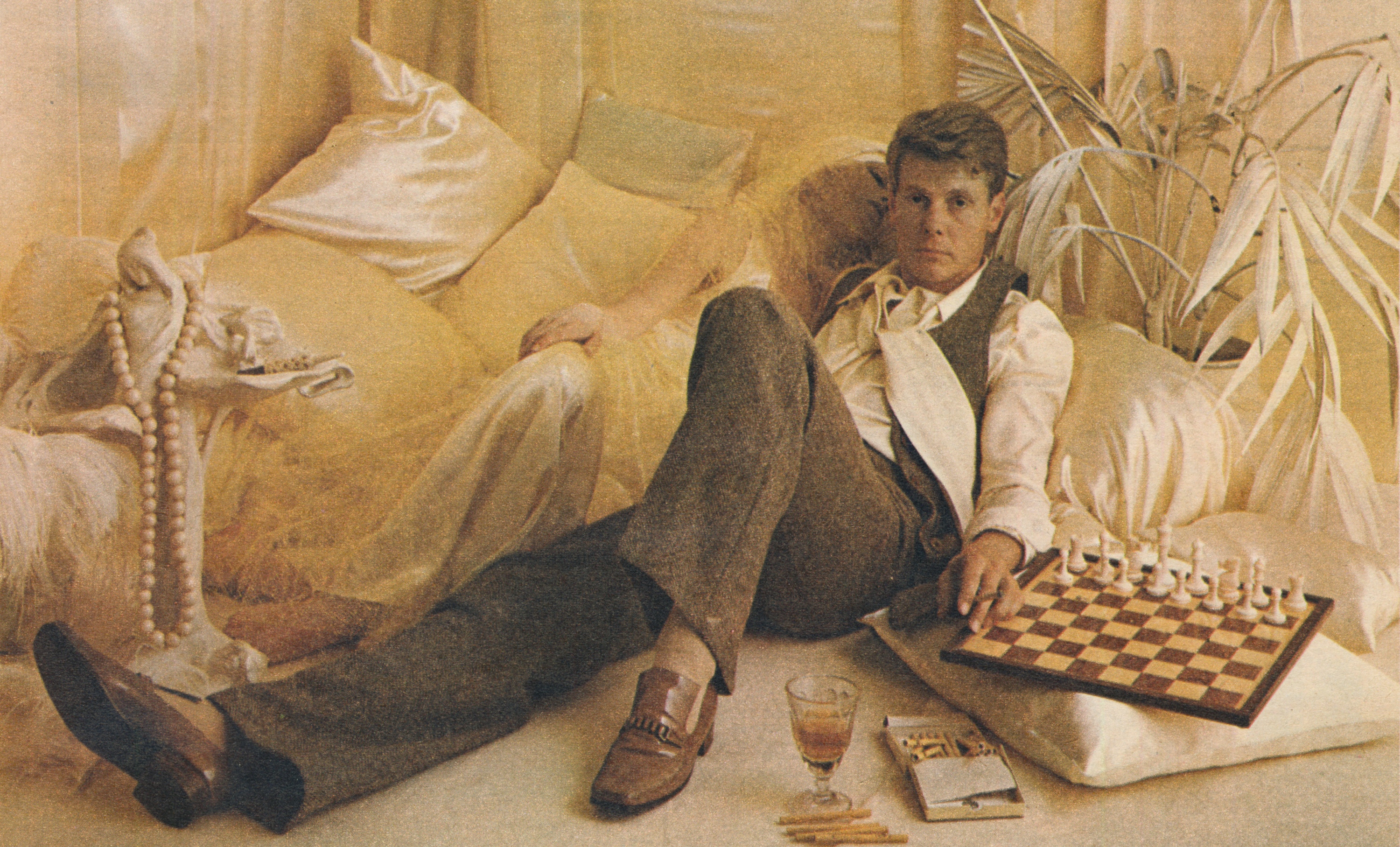
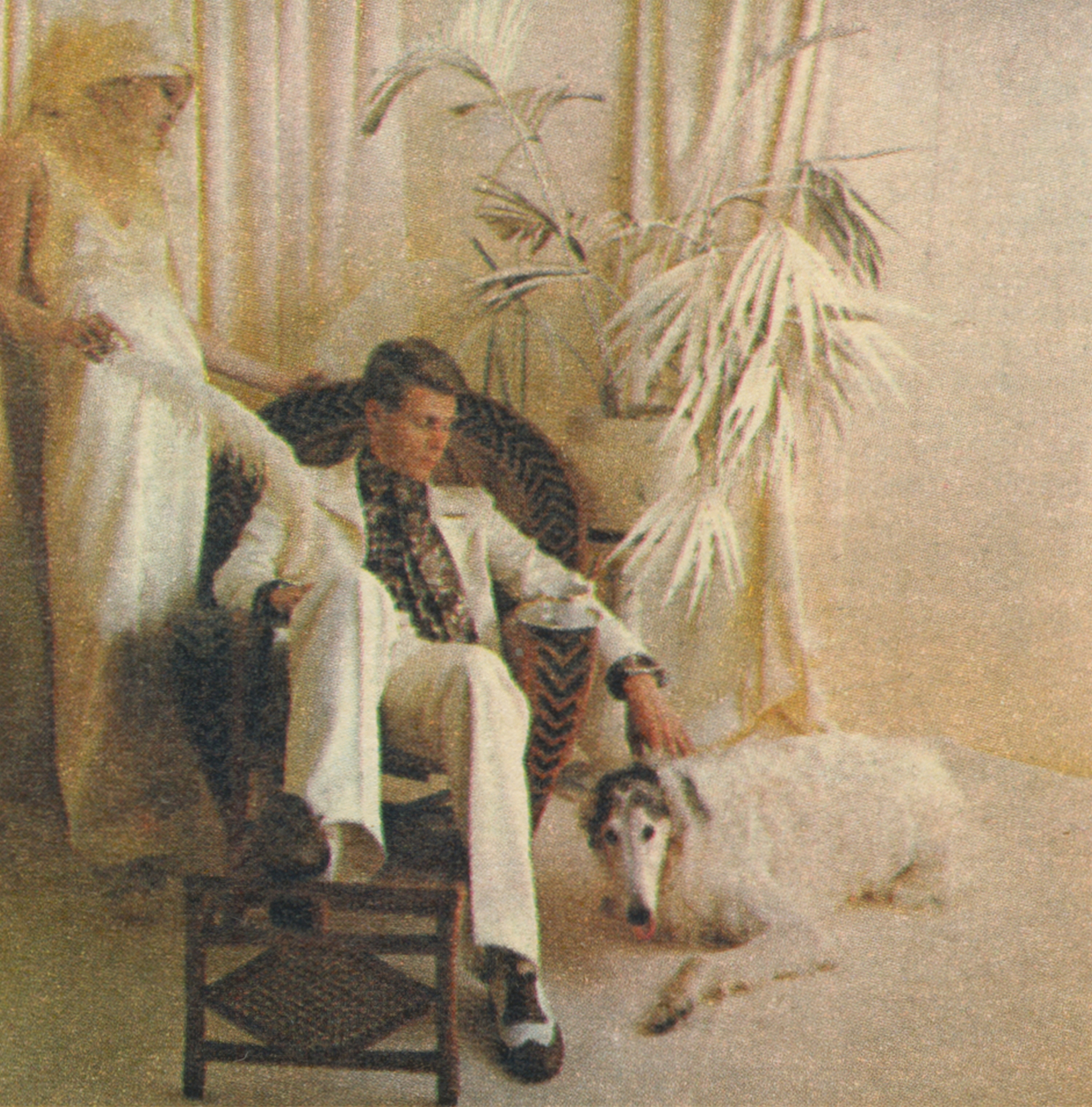
Biba men’s clothes are worn in these pictures by James Fox, who can currently be seen in ‘Isadora’ and whose new film, ‘Performance’, in which he co-stars with Mick Jagger, comes out next month.
Mr Fox is long and slender and can have little problem kitting himself out elegantly, but the clothes he wears here, plus others by Biba in velvets and tweeds, all come in a size range bigger than most. So fatter men can have fun with clothes too, and at a reasonable price.
By Liz Smith.
Photographed by Steve Hiett.
Scanned from The Observer Magazine, 21st September 1969.
Biba 3 is definitely the Biba I’m most captivated by, I think possibly because it was edged out so quickly by the much bigger (and more Deco) Big Biba and yet was, I think, the perfect encapsulation of the aesthetic and the first time the ‘department store’ ideal was manifested. Basically, I wish there were more photos so I do try and scan them when I find them! It’s also nice to see the menswear getting a bit of attention for once.
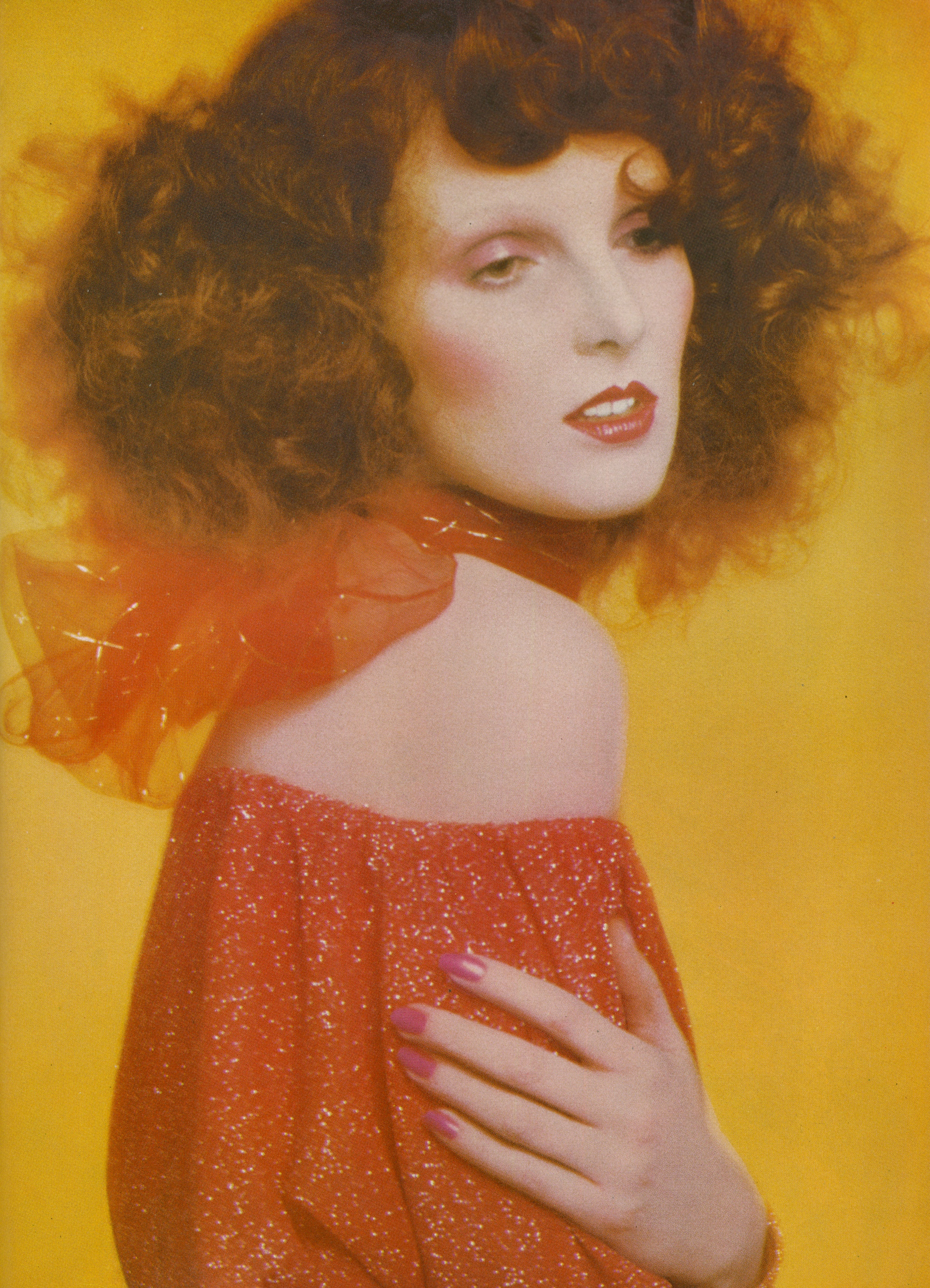
Ablaze with the colour of Leonard’s exclusive vegetable henna, imported from Persia, cold-wave permed with Wella Structurelle and set to frame the face. Palest skin smoothed by Barbara Daly with Angel Face Cameo All-in-One Make-Up, dusted with Translucent Light Fashion Compact, blushed with Soft Rose Blush & Gloss. Cutex Rosy Blinkers colours the eyes with Angel Face Sable Automatic Mascara. Lips shot with Cutex Wineberry Lipstick to match the iridescent Blueberry Schemer nails.
Silver flecked red blouse by Screaming Mimi, scarf by Woolworths.
Hair coloured by Daniel, permed by Sandra, styled by Celine, all at Leonard.
Model is Grace Coddington.
Photographed by Barry Lategan.
Scanned from Beauty in Vogue, Summer 1972.
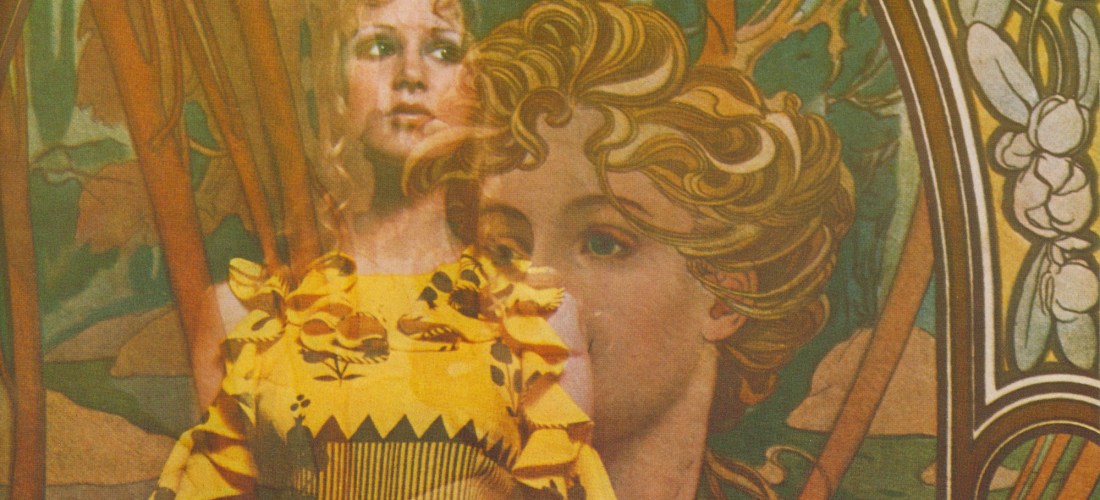

Look at summer through new eyes. Ossie Clark sees you in shepherdess smocks of voile, in long crepe dresses, reed-thin red or printed by Celia Birtwell. Pattie Boyd looks at it her way. All at Quorum.
Photographed by David Bailey.
Scanned from Vogue, June 1969.
I think this editorial might be one of the first I ever scanned, back in even my pre-blog days. I may have posted it on MySpace (don’t judge me, I feel ancient enough as it is). I’ve been meaning to properly rescan for years, but finally the time seemed right. It is the perfect combination of designer, model, photographer and a stunning use of Pre-Raphaelite imagery.
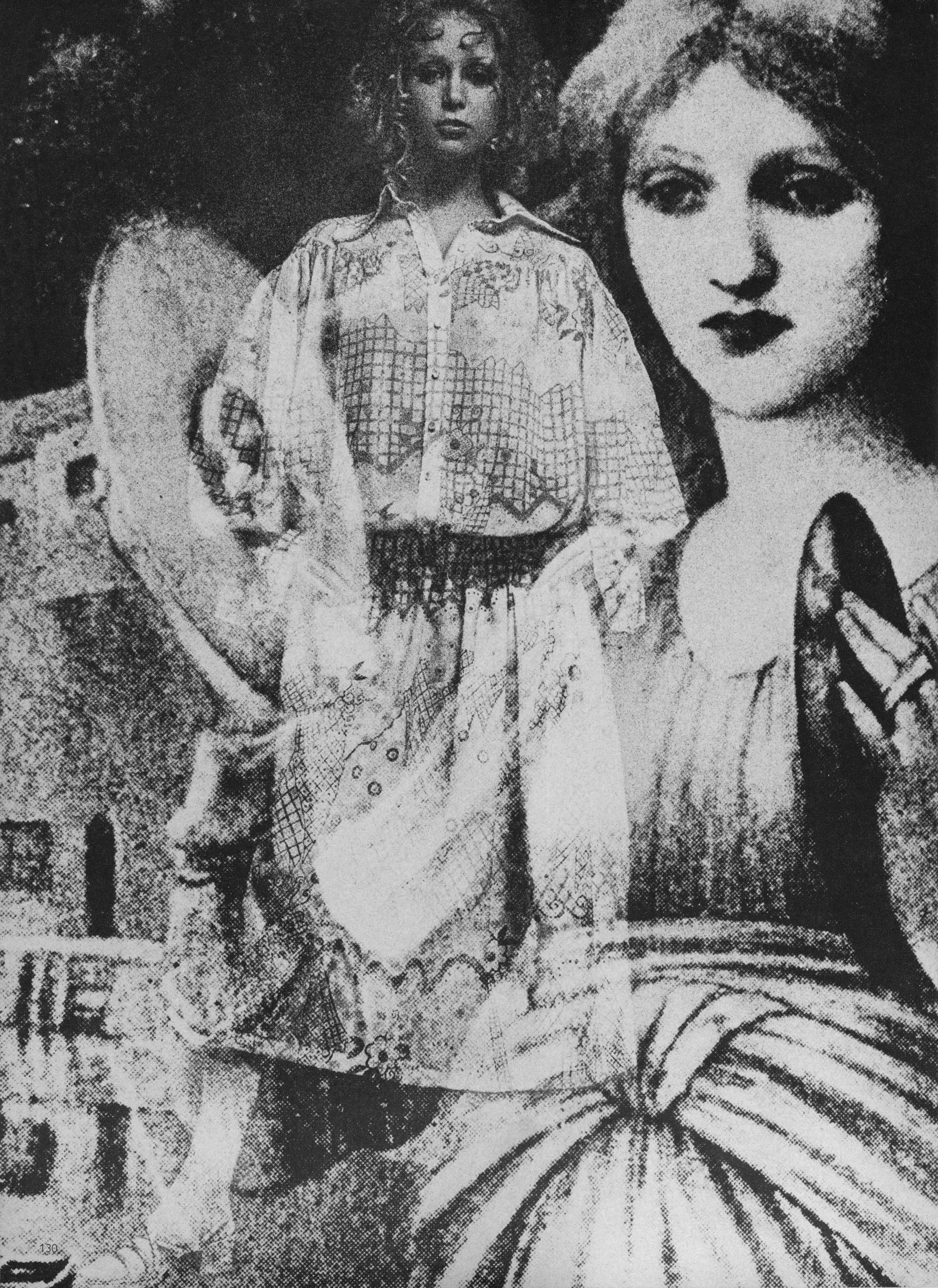

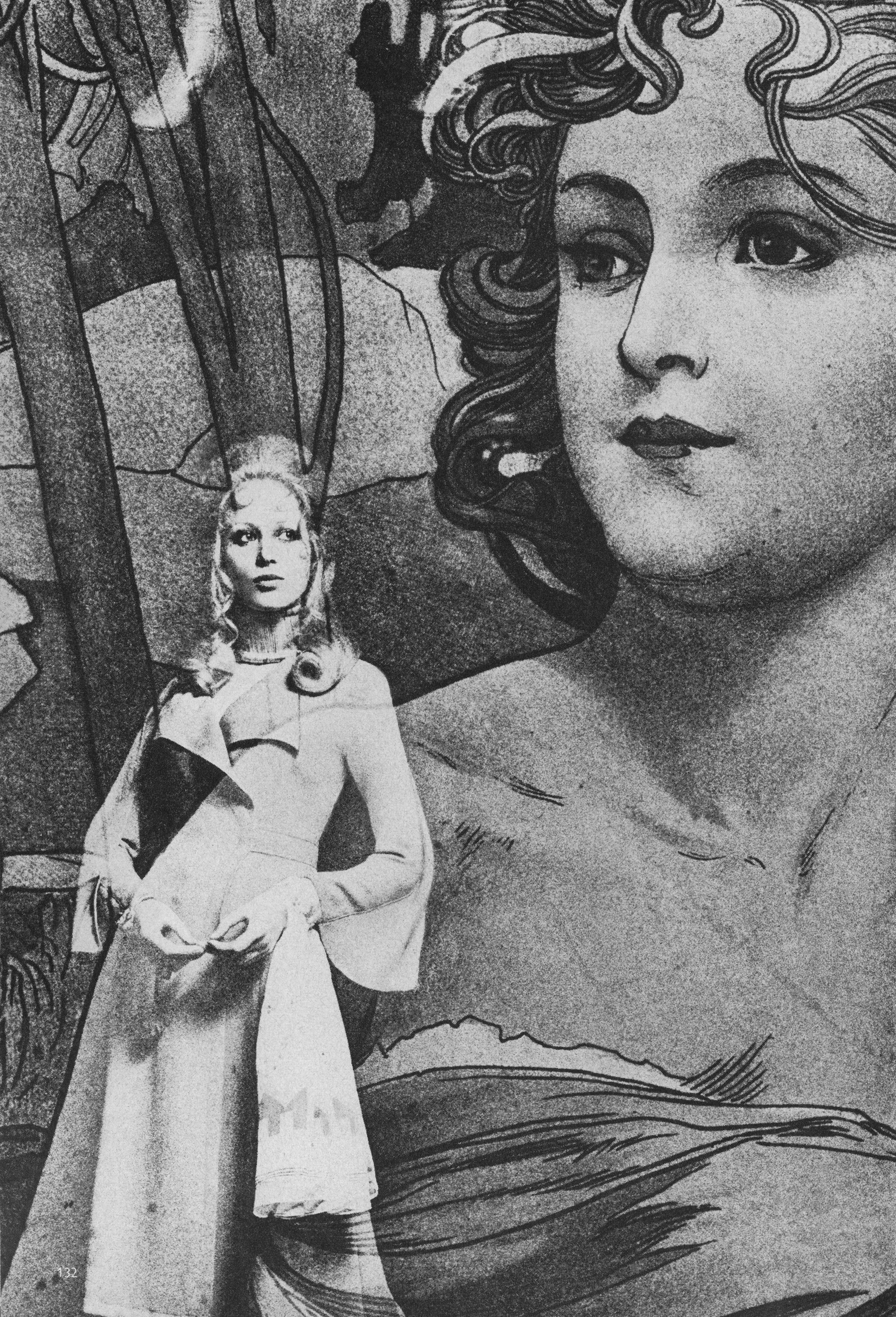

Some of the sexiest women in films are buying underwear like this. It is wildly expensive (the items cost from about £16 to £90), but Liliane Dreyfus, who designed it for Vog, Paris, says that her customers don’t seem to mind the price; with pay-cheques like the ones that Brigitte Bardot, Ursula Andress, Juliette Greco and Jackie Bissett pick up, why should they? On these pages her silk, satin and lace concoctions are worn by Aurore Clement, one of the new stars of Louis Malle‘s most recent — and some say finest — film, Lacombe Lucien. If you have the money and are still interested, they are available to order from Harrods.
Styling and words by Meriel McCooey.
Photographed by Sacha.
Scanned from The Sunday Times Magazine, March 31st 1974.


 Liz Eggleston