Fun To Live With: Jon Wealleans and Jane Hill

19 magazine, 1970s, interiors, jane wealleans, mr freedom
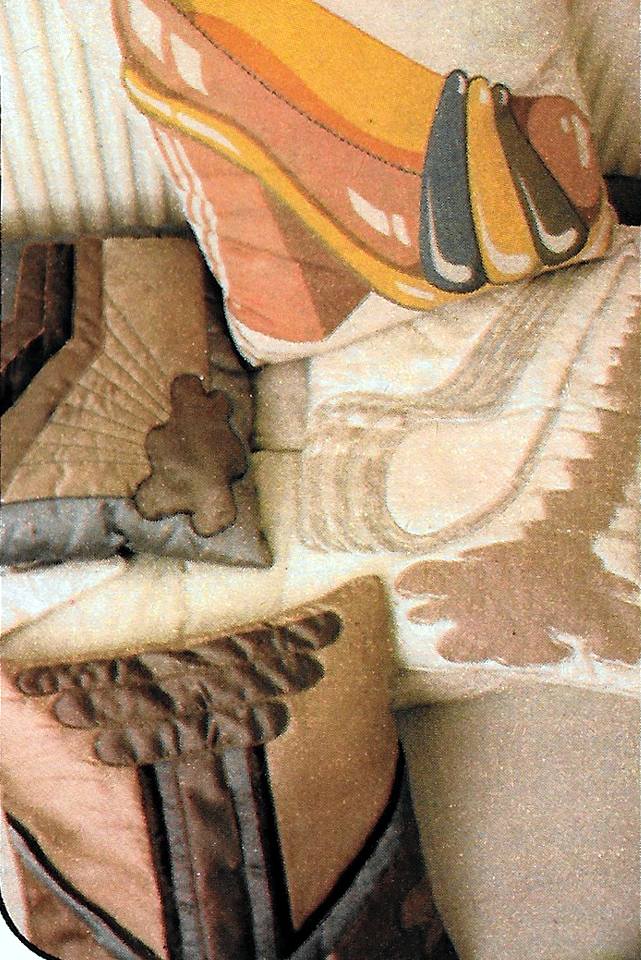
Plump and luxuriously cosy, quilted cushions, with

Plump and luxuriously cosy, quilted cushions, with “Thirties” motifs.

Incredible feature on legendary pop artist and architect Jon Wealleans and his textile designer wife Jane Hill who were heavily involved with the Mr Freedom shops and products.

Photographed by Tim Street-Porter.

Scanned by Miss Peelpants from 19 Magazine, March 1971.
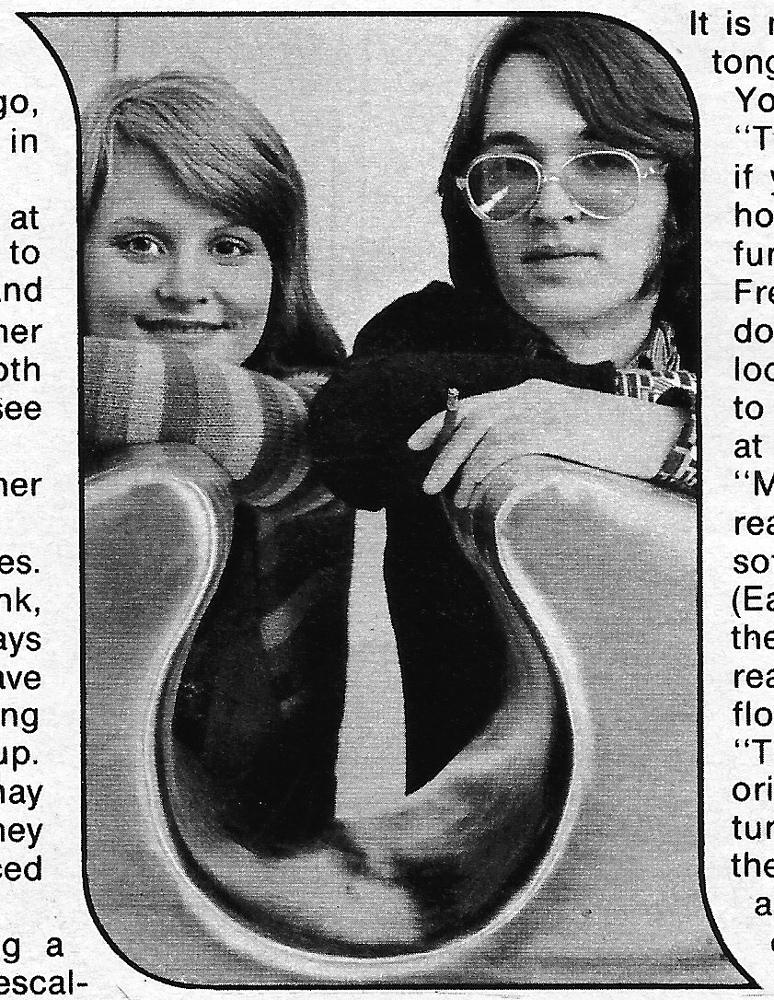
wealleans5Jon Weallans and Jane Hill are two ex-Royal College of Art students, both twenty-four. They were married in San Francisco six months ago, and they live and work in an Edwardian house in London’s Notting Hill Gate.

Both designers, Jane studied textile design at college, and Jon studied interior design; so, to put it simply, Jon designs the furniture, and Jane covers it. They don’t often work together but, whether working alone or together, both produce pretty off-beat stuff, as you can see from the photographs of their living-room.

Jane, who made the escalator blind, says her ideas come from magazines.
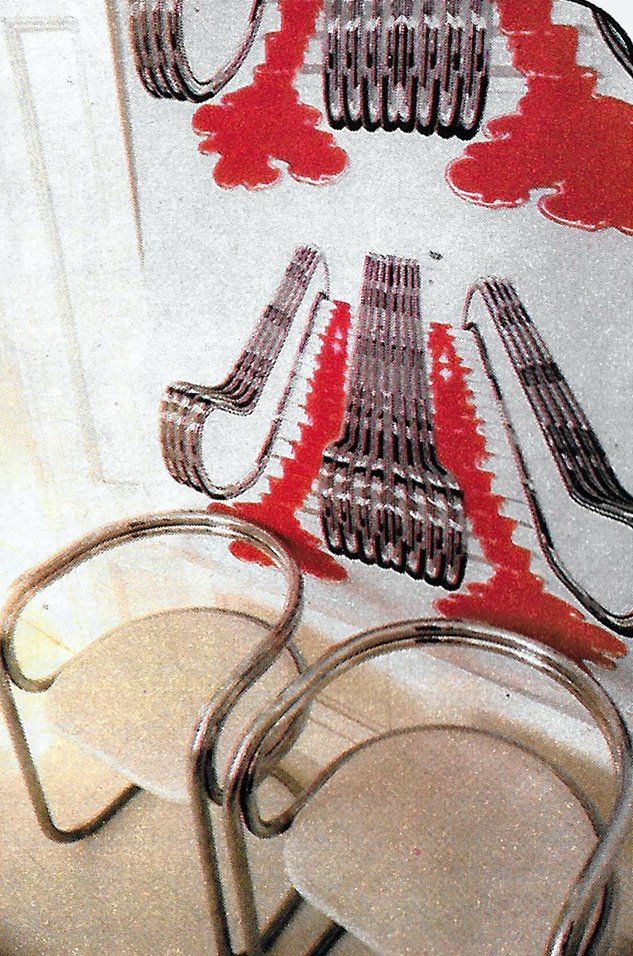
An unusual escalator roller blind, which has been silk-screen printed in red and black, on cotton.

An unusual escalator roller blind, which has been silk-screen printed in red and black, on cotton.

“I’ve just got a huge pile of visual references. Suddenly I see a picture of something and think, I could use that, and start drawing. I’ve always been interested in escalators, anyway – I have recurring dreams about them! The red flowing down these could be blood or it could be ketchup. It’s not really supposed to be morbid. There may be submerged sinister implications, but they weren’t deliberate.” (The blind is to be produced as a poster by Gallery Five.)

Jon’s answer to it is: “It’s all about making a very strange juxtaposition of two things. An escalator is an object you can identify with, and there’s suddenly a strange ooze coming out of it. It’s sinister, but afterwards you can look at escalators in a new way.”

Jane is also responsible for the cushions. She used ‘Thirties’ motifs and giant shoes; silk-screened on to satin, then quilted and made up into cushions. She commented: “I suppose in the ‘Thirties, people said, ‘Why on earth paint a piece of newspaper and a dead fish?’ And perhaps the artist replied: ‘Because people haven’t looked at an old newspaper and a dead fish before.’

“It’s important, because I think a decorative thing usually ends up being around for quite a long time, and I don’t very much like the idea of doing things which you can’t look at, and afterwards think: ‘Ali, I didn’t see it quite like that before.’ ”

“We’re both designers, and that’s all we’re good at,” confeses Jon. “We have no other perks, this is how we make our bread. The people I respect most are the people who have come to terms with the fact that they are making a living, and that they are not arty dilettantes. They are the people who are really on the ball, and who can get up and do a bit of graphic design on their knee, whilst eating beans on toast, or whilst watching television.

“What you need in all forms of art is a sense of humour. I can’t stand people who get all heavy, and take themselves that seriously, be-cause I don’t think anybody should think like this unless they are in a fantastically serious cause.”

Jon was commissioned to design the new Mr. Freedom shop in Ken-sington, London, and it is for this that he designed the false teeth chair. It is made of PVC covered foam, and has a fake fur tongue—a masterpiece of upholstering by Felicity Youett. (It’s sold by Mr. Freedom for £160.)
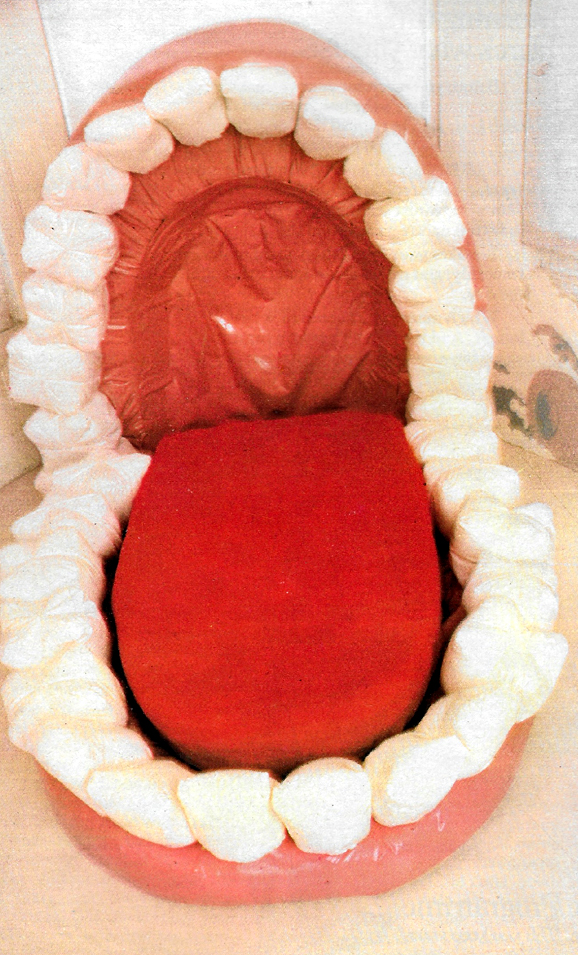
A false teeth sofa, with a soft and life-like tongue for some idle lounging.

A false teeth sofa, with a soft and life-like tongue for some idle lounging.

“The teeth may seem pretty funny,” he says, “but if you go and sit on the Underground in the rush hour and look at those people, they’re pretty funny. I mean, who’s the funniest? Maybe Mr. Freedom are the most honest funny people in Lon-don, because the people who wear their clothes look really happy. And, with my furniture, I’d like to give just a few people a bit of a buzz, by looking at it. I’d like them to think again.

“My ideas usually come in a functional way. I really did want a unit that could make up a bed, sofa or a room, which is what the jigsaw seats do.” (Each unit costs £30 from Mr. Freedom.) “It’s the most obvious thing really, because you can rearrange them to any shape. They are in candy-floss coloured, metallic PVC covered foam.
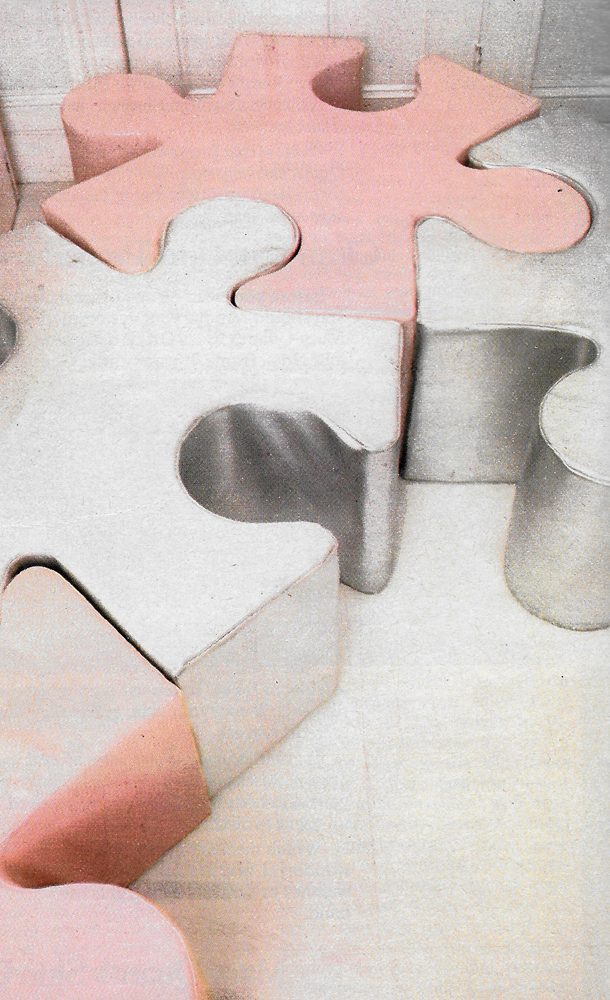
Intriguing foam-filled and interlocking jigsaw seats, can be pieced together or else used separately.

Intriguing foam-filled and interlocking jigsaw seats, can be pieced together or else used separately.

“The false teeth are a bit of a con, because they originally started out as a piece of pop, soft sculp-ture, and we only realised when we opened them, that you could make a seat. It is really a case of taking something perfectly normal and everyday, and blowing it up to giant proportions, so that people will look at it twice and think about the ordinary item again.

“It seems pointless to keep designing the same things. No one need ever design another chair; there are enough for the next fifty years, because there are guys around who have solved the problem completely. After a while, you get an optimum solution and I think Le Corbusier had the optimum solution for a chair in the ‘Thirties, so why carry on now doing Design Centre chain?”

The only furniture he didn’t design in their living-room, are the white plastic stacking chairs by Jo Colombo of Italy, which are sold in this country in Habitat, £11 each. The chrome dining chairs are sold at Habitat shops for £18 each. The floor is covered with white lino tiles, which you can buy in packets, and lay yourself.

They are working on their bedroom. A giant Orson Welles film-set bed, placed on fur-covered Busby Berkeley steps, is planned, and the room will be in navy, scarlet and silver. They are painting stars on the, ceiling and having a neon ‘hello’ sign on the wall. Jon’s designs are certainly different, but he’s not entirely devoted to the freaky. As he says, “I did the main branch of the Bank of England in Leeds, and they were the straightest people. You couldn’t get further away from Mr. Freedom if you tried.

“The acid test would be to do something like a home for the blind, because you couldn’t do anything visual, it would all have to be spot on, and really good. No colour, jokes or imagery. That would really sort out the sheep from the goats. Or if someone living in this road said, ‘Do my bedsitter for £10.’ Now that’s the sort of problem I’d really enjoy working on.”
Vintage Adverts: Diana Crawshaw for Secret Ingredient

1970s, Diana Crawshaw, Mike Goodall, mr freedom, ritz magazine, Vintage Adverts

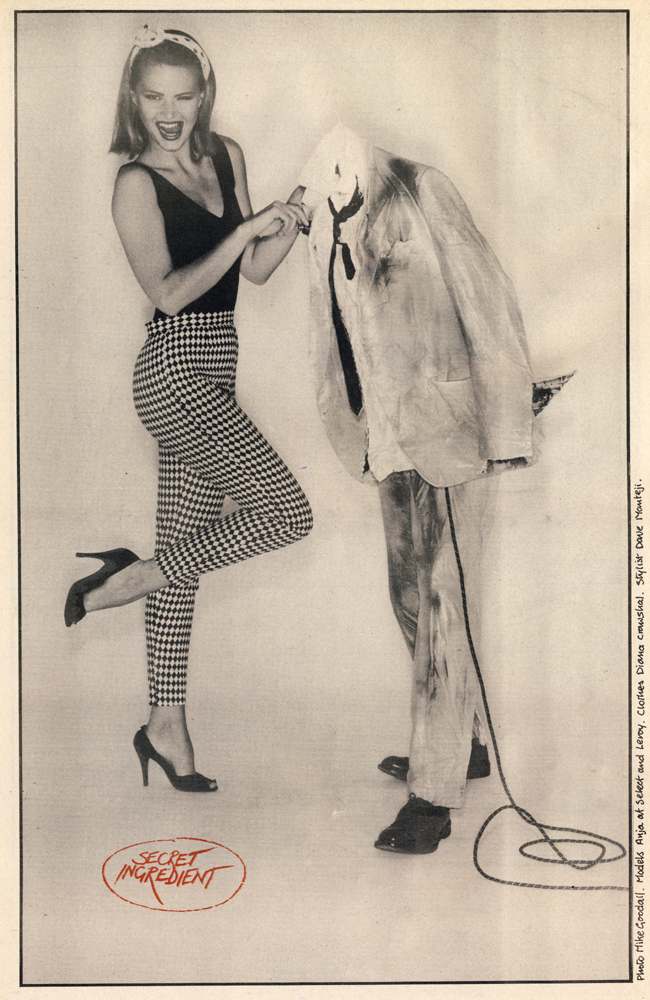
Secret Ingredient Advert Ritz Issue 31 1979

Can’t say I know much about Secret Ingredient, beyond the pieces I’ve seen in Ritz, but I was delighted to see that Diana Crawshaw (who was also one of the key designers for Mr Freedom) designed the clothes featured in this advert.

Photo by Mike Goodall. Scanned by Miss Peelpants from Ritz, Issue 31 1979

Guy Day: Bring your man up to date

1970s, british boutique movement, hard rock cafe, leonard, Marc Leonard, Mensday, menswear, missoni, mr freedom, sonia rykiel, stirling cooper, Tommy Roberts, vanity fair
Look at him. God's gift to women.

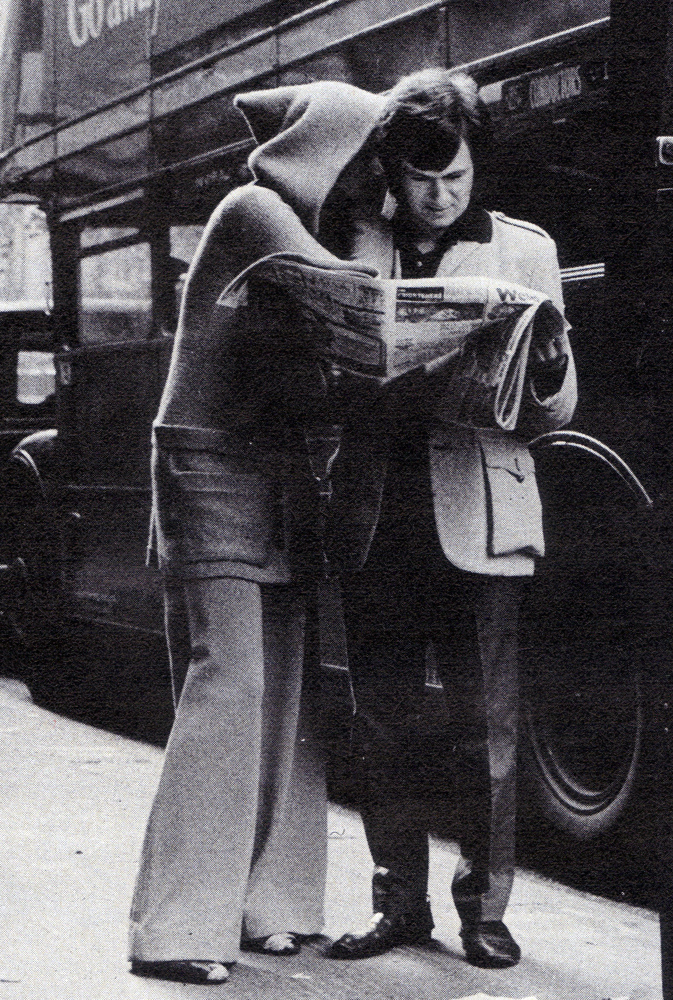
“Look at him. God’s gift to women.

But before you start chucking him back, remember the average British male is all you’ve got to work on. So get working on him. Tell him you think his barber stinks. Say you’ll scream if he turns up in that seedy safari jacket, with those baggy drainpipes, and bunion-hugging shoes again. Meantime, wear this pale blue hooded coat £45, matching poloneck with red chevron front £21, and matching trousers £28. All by Sonia Rykiel at Browns.”

This is a quite-frankly-amazing little photo story from Vanity Fair, which sees our Cinderfella hero being taken from baggy drainpipes to novelty-print-shirted Hard Rock Cafe God, via the Kensington Church Street branch of Mr Freedom and Leonard of Mayfair.

Photographed by Marc Leonard. Scanned by Miss Peelpants from Vanity Fair, January 1972

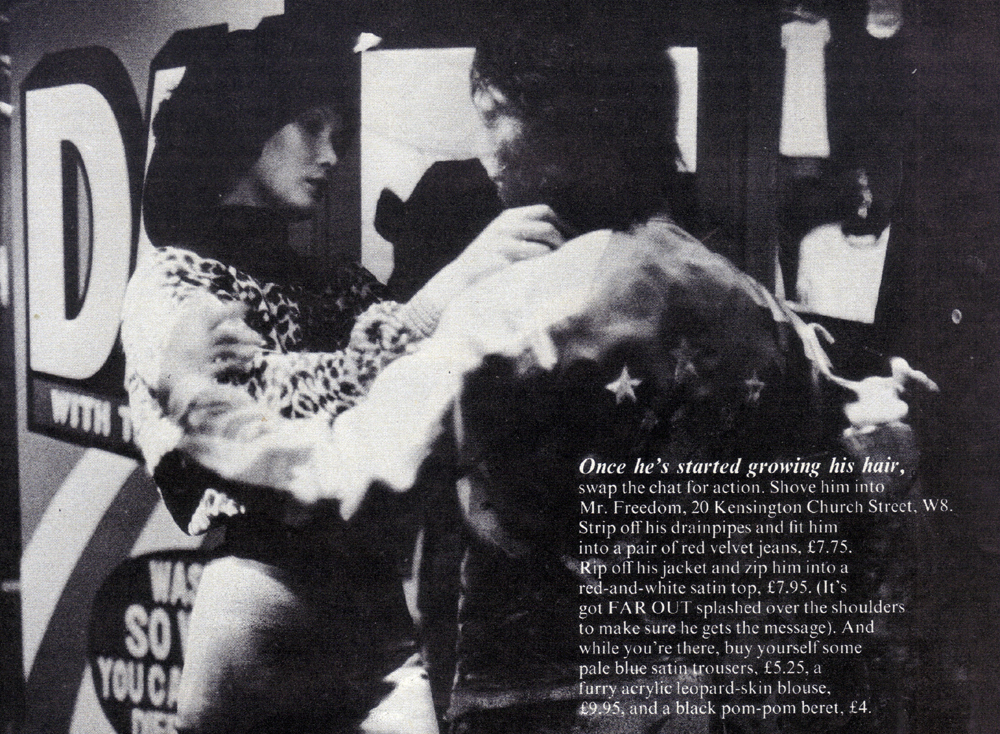
Once he's started growing his hair,

“Once he’s started growing his hair,

…swap the chat for action. Shove him into Mr. Freedom, 2- Kensington Church Street, W8. Strip off his drainpipes and fit him into a pair of red velvet jeans, £7.75. Rip off his jacket and zip him into a red-and-white satin top, £7.95. (It’s got FAR OUT splashed over the shoulders to make sure he gets the message). And while you’re there, buy yourself some pale blue satin trousers, £5.25, a furry acrylic leopard-skin blouse, £9.95, and a black pom-pom beret, £4.”

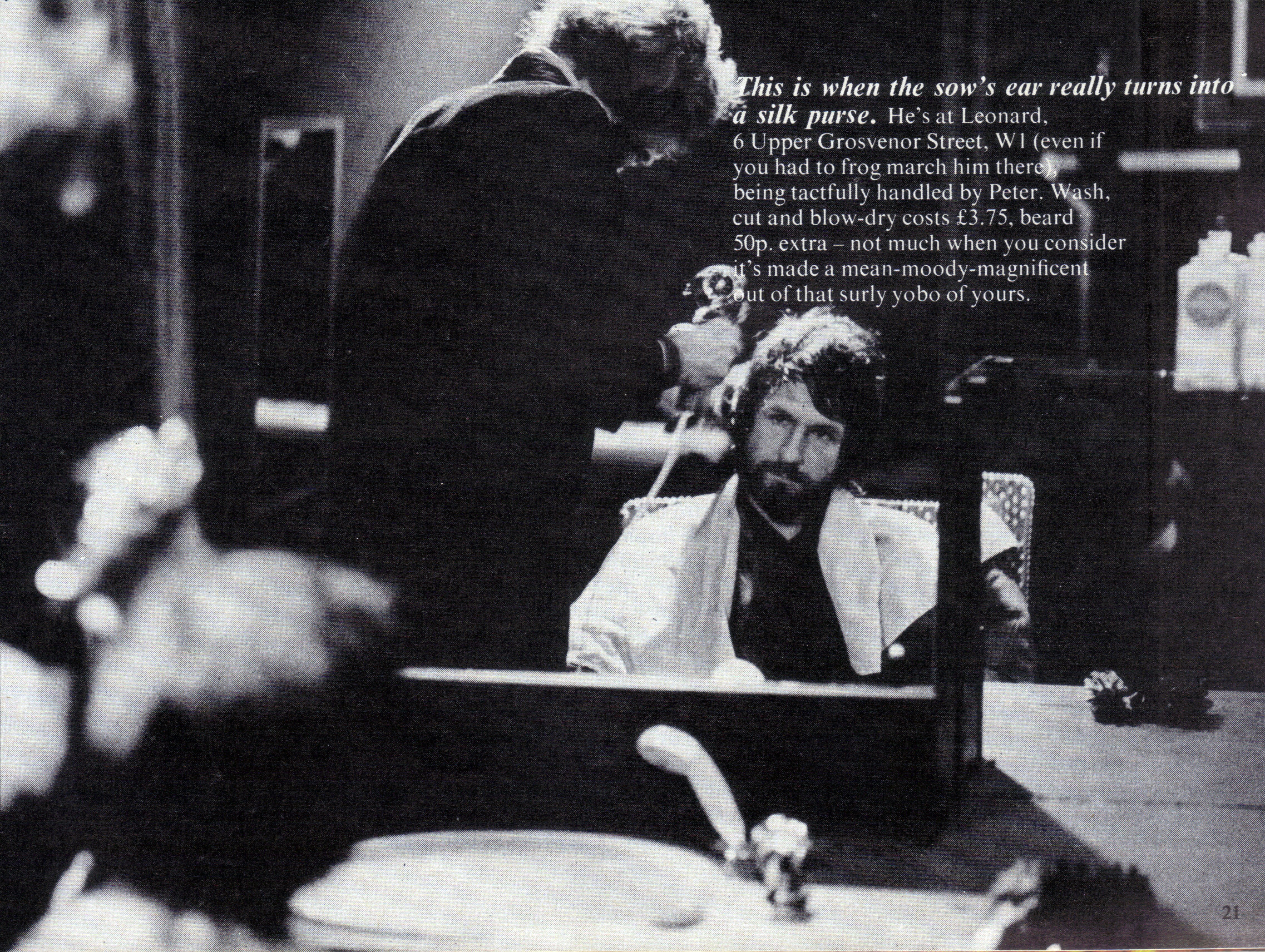
This is when the sow's ear really turns into a silk purse.

“This is when the sow’s ear really turns into a silk purse.

He’s at Leonard, 6 Upper Grosvenor Street, W1 (even if you had to frog march him there), being tactfully handled by Peter. Wash, cut and blow-dry costs £3.75, beard 5-p. extra – not much when you consider it’s made a mean-moody-magnificent out of that surly yobo of yours.”

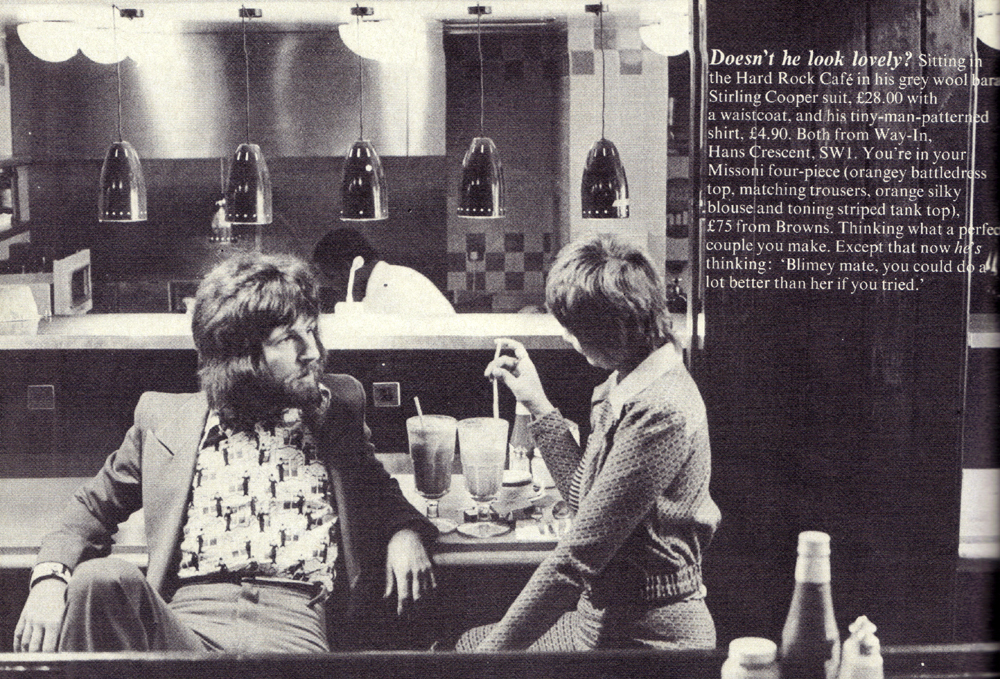
Doesn't he look lovely?

“Doesn’t he look lovely?

Sitting in the Hard Rock Cafe in his grey wool barathea Stirling Cooper suit, £28.00 with a waistcoat, and his tiny-man-patterned shirt, £4.90. Both from Way-In, Hans Crescent, SW1. You’re in your Missoni four-piece (orangey battledress top, matching trousers, orange silky blouse and toning striped tank top). £75 from Browns. Thinking what a perfect couple you make. Except that now he’s thinking: ‘Blimey mate, you could do a lot better than her if you tried.'”

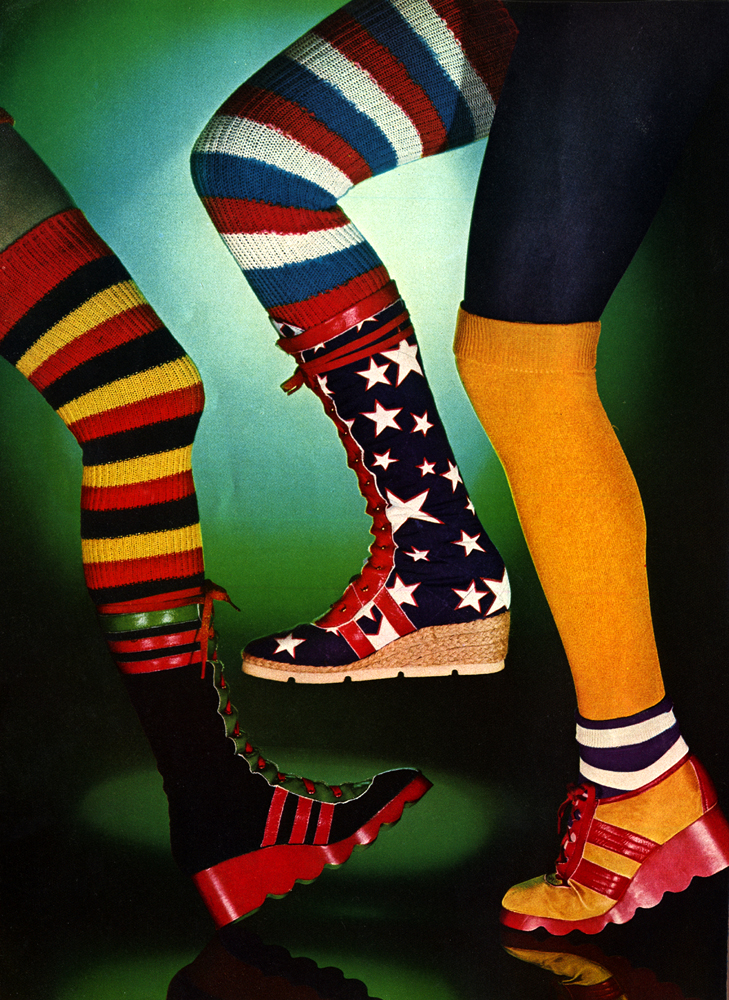
Satin and Cotton, to boot! Rubber, to heel!

1970s, mary quant, Moya Bowler, mr freedom, tessa traeger, Vogue
All footwear by Moya Bowler. Tights by Mary Quant. Socks by Mary Quant and Mr Freedom

All footwear by Moya Bowler. Tights by Mary Quant. Socks by Mary Quant and Mr Freedom

Moya Bowler’s pow-packed new collection of funny boots for Mitsubishi. She designed them in Japan, they’ll be worn on both sides of the world.

Photograph by Tessa Traeger. Scanned by Miss Peelpants from Vogue, January 1972.

Mr Freedom

1970s, album covers, british boutique movement, interesting record sleeves, mr freedom, Tommy Roberts

chartbusters

A trip to the dentist yesterday meant a little bit of time for browsing some different charity shops. Pain/pleasure. The pleasure was definitely finding this glorious Chartbusters lp, complete with blatant Mr Freedom outfitting in brown corduroy. The pain was largely the dentist, but also the reminder that we lost the wonderful Tommy Roberts towards the end of 2012. The intention to blog my respect and condolences at the time was strong, but I really wanted to pay tribute with something we hadn’t seen before. And it has taken almost a month, but it came eventually. Rest in peace Sir! Your vivid, inspirational contribution to the world will not be forgotten in a hurry.

Inspirational Editorials: James Dean Rides Again

1970s, Boston-151, british boutique movement, charles jourdan, countdown, david montgomery, Henry Lehr, Herbert Johnson, Inspirational Images, Kansai Yamamoto, miss selfridge, mr freedom, The Westerner, vanity fair, Vintage Editorials, Wild Mustang Co., yves saint laurent

Jacket by Mr Freedom. Jeans by Male for The Pant House. Shoes at St Laurent, Rive Gauche.

Jeans, reclaimed from the bobby-soxer era, are back. True-blue jeans, given the Fifties treatment, rolled up to mid calf, revealing thick white socks and canvas sneakers, or totteringi high heels, clamped to the ankle with straps. It’s back to popcorn-and-ponytails, with angora sweater and beads or floppy blouses with belts, and shirts knotted self-consciously under Marilyn Monroe bosoms. It’s all fizz and fun and bubble-gum, just like High School kids used to be before politics and pollution, wars and recessions, drugs and permissiveness overwhelmed them.

Photographed by David Montgomery at Battersea Fun Fair and inside Mr Freedom.

Scanned by Miss Peelpants from Vanity Fair, July 1971

Photographed by the jukebox at Mr Freedom. Jacket by Kansai Yamamoto for Boston-151. Denim jeans from Countdown. Green and pink leather shoes by Yamamoto for Boston-151. Badges from Mr Freedom

Jacket by Henry Lehr at Miss Selfridge. Canvas boots at The Westerner. Denim jeans at The Westerner. Handkerchief at Herbert Johnson.

Blouse from Boston-151. Belt from St Laurent. Denim jeans by Wild Mustang Co. White leather shoes by Charles Jourdan.

Far From the Madding Crowd

1970s, Ann Reeves, biba, british boutique movement, bus stop, Inspirational Images, irvine sellars, jeff banks, John Carter, lee bender, miss selfridge, mr freedom, peter robinson, petticoat magazine, topshop

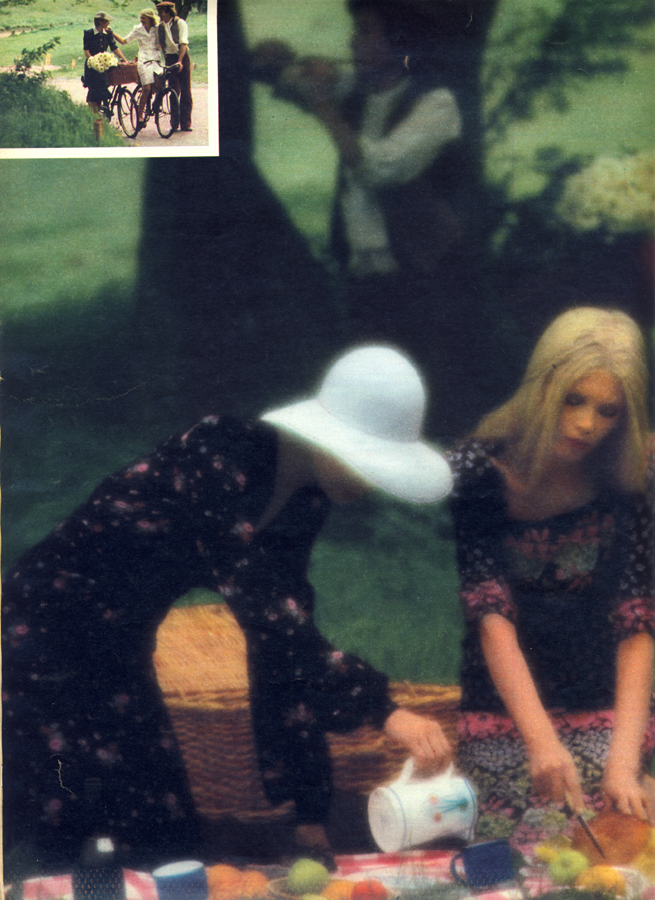
Left to right: Dress, Jeff Banks, £9.90, P.R’s Top Shop. Dress, Ann Reeves, £9.25, Miss Selfridge,

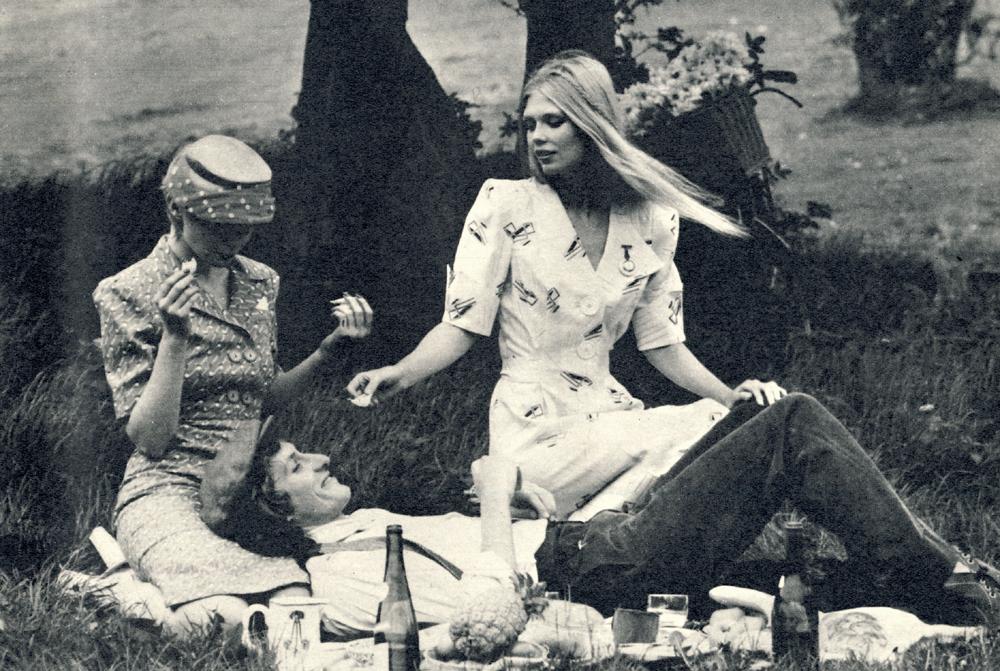
Soft country girl dresses falling just below the knee in dark flowery prints ready for autumn, great for now. Looking sweet and old-fashioned with padded shoulders, sweetheart necklines or rever collars and cuffs – and all they really need is you and some romantic thoughts!

Very David Hamilton/Sarah Moon influenced shoot by John Carter. Scanned from Petticoat, July 1973.

Left to right: Beige dress, Jeff Banks, £9.90, Lady Tramp SW3. Mr Freedom hat, £2.50. Cream dress, Bus Stop, £9.95.

Left to right: Floral dress, Jeff Banks, £15.90, Irvine Sellars, sizal hat £2.50 from Biba. Black print dress, Ann Reeves, £9, Miss Selfridge.


Guide to Feminine London

1970s, biba, Boston-151, british boutique movement, carnaby street, countdown, crowthers, Emmerton and Lambert, Foale and Tuffin, Illustrations, Janet Ibbotson, just looking, laura ashley, marrian mcdonnell, Michael Farrell, mr freedom, rowley and oram, stirling cooper, stop the shop, Suliman, thea porter, universal witness, yves saint laurent

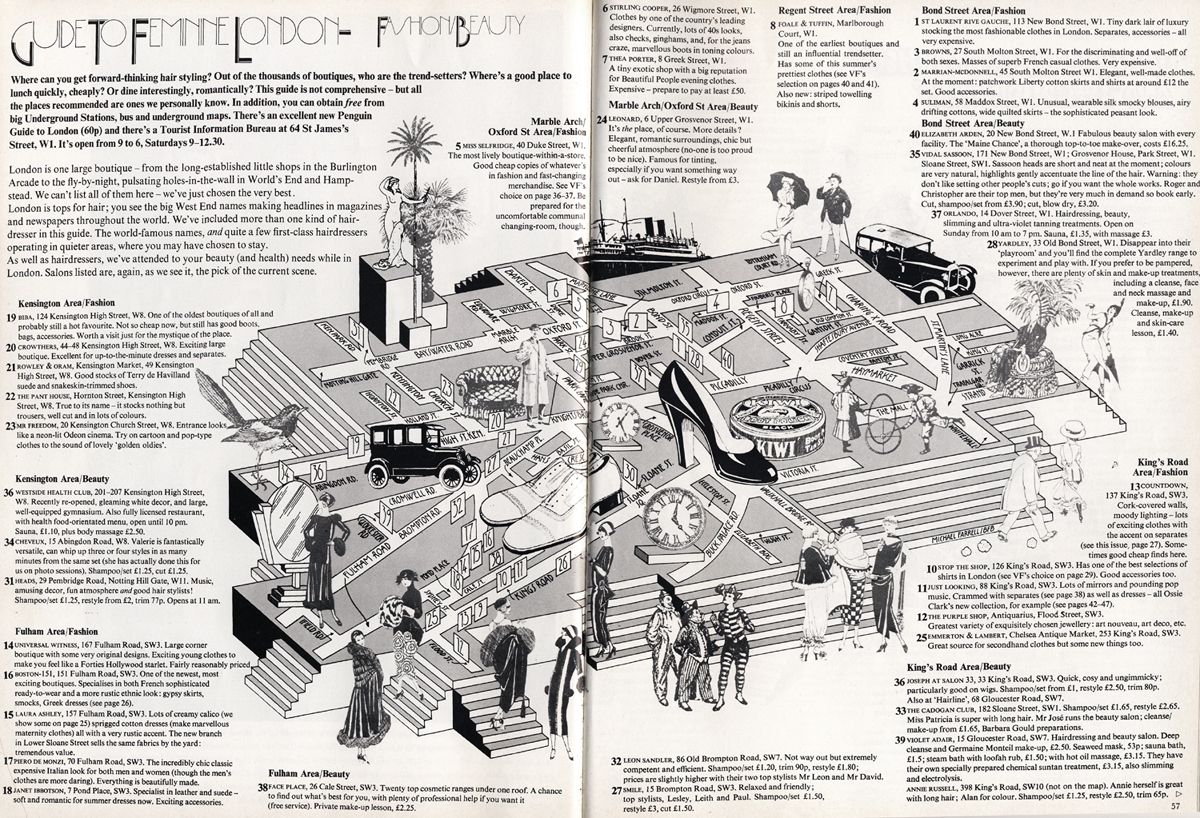
Illustrated by Michael Farrell. Click to enlarge.

Oh I do love a good map. Especially a fantastically illustrated map of all my favourite shops in London in 1971. It is the nearest I will ever come to being able to walk around them. Sadness ensues…

Scanned from Vanity Fair, July 1971.

British Design Hero: Tommy Roberts

1960s, 1970s, british boutique movement, carnaby street, City Lights, glam rock, Inspirational Images, king's road, kleptomania, mr freedom, pop art, Tommy Roberts

Mr Freedom interior. Photograph: JON WEALLEANS

The lovely Paul Gorman very kindly sent me some sneaky peeky previews of his much-awaited new book about Tommy Roberts (Kleptomania, Mr Freedom, City Lights etc). From what I’ve seen and read so far, this is going to be quite a ‘must have’ book for anyone interested in Sixties and Seventies fashion – and specifically, the British Boutique scene in London at the time.

Cheeky and freaky, Mr Freedom clothes are amongst my very favourites of their kind. The bright, brash shapes, colours and logos have long since moved beyond pop-art irony and into the realms of the iconic themselves. This is the first, and I’m sure will remain the only, definitive look at the life of Roberts and his various other boutiques and projects … and I actually cannot wait to have a hard copy in my hands! I will give it a full review eventually, but until then…

Rock on Tommy, rock on…

You can pre-order Mr Freedom direct from Adelita for a mere £20.

Mr Freedom hotpants, 1970. Photo: Stephen Markeson (The Sun/NI Syndication)

Derek Morton suit for City Lights, 1973. Photographed by David Parkinson

Bagged!

1970s, aristos, art of bags, biba, british boutique movement, chelsea girl, countdown, crowthers, irvine sellars, jean varon, john bates, just looking, king's road, laura ashley, mr freedom, ravel, stop the shop, take 6

Aristos © John Hendy

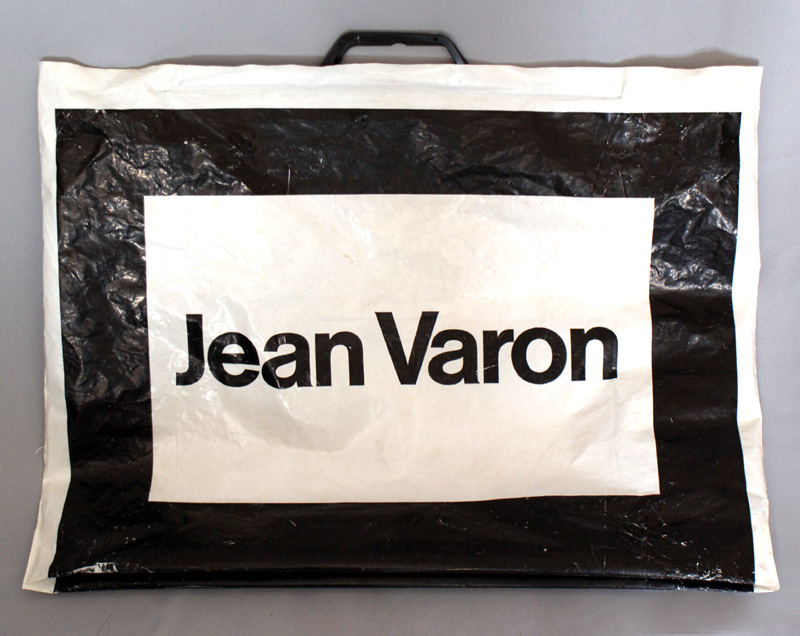
I couldn’t resist following ‘Tagged!’ with ‘Bagged!’. The art of the carrier bag seems even less appreciated than the art of the hang tag, despite its importance in the history of advertising and consumerism.

On Simon Hendy’s incredible website “My Dad’s Photos“, Simon has scanned a mountain of original photos that his father took across six years of fashionable (and not so fashionable) people on the King’s Road in the late Sixties and early Seventies. It is truly a delight to sift your way through them. They are a true time capsule of ‘real’ people wearing ‘real’ clothes in a period where photo opportunities were frequently engineered and crafted (as brilliant as Frank Habicht’s ‘In The Sixties’ is, it’s a very well-crafted form of ‘candid’ photography). I will definitely post about them again, not least because I recognise so many bits of clothing from designers I love.

However, today’s post is about the carrier bag. For, as I was sifting through and starting to get a bit dizzy with the amazingness of it all, I started to notice the bags people were carrying. Biba, Aristos, Stop the Shop, Crowthers… These are truly ephemeral items. How many people bother to keep a plastic bag? You might, if you were lucky, have wrapped something up in one and plonked it in your loft for the past forty years. But these examples are few and far between. The iconic design of the original Biba bags has ensured that they are the most regularly found on eBay, but few of any other kind have slipped through the net.

I did, however, find a ‘Jean Varon’ bag on eBay very recently, which has now taken its place in my collection of weird and wonderful ephemera.

Simon has kindly allowed me to link to his photos from my blog. I know it’s hard to keep such things under control in this age of tumblr etc, but I would appreciate if you would also ask him if you would like to repost his images somewhere else. He has spent many hours scanning these photos, photos which (unlike magazine scans) would not be available otherwise – from anyone else. Thank you!

Unidentified (possibly Mr Freedom at the back?) © John Hendy

Selfridges © John Hendy

Mates by Irvine Sellars © John Hendy

Guys and Dolls and C&A © John Hendy

Unknown © John Hendy

Fancy That © John Hendy

Chelsea Girl © John Hendy

Crowthers © John Hendy

Just Looking © John Hendy

Kids in Gear © John Hendy

Take 6 © John Hendy

Countdown © John Hendy

Ravel © John Hendy

Unknown (Mantra?) © John Hendy

Strides © John Hendy

Stop the Shop © John Hendy

Laura Ashley © John Hendy