Pretty Things

19 magazine, 1970s, Adrian Mann, Arthur Elgort, Bombacha, C&A, carr jones, Crochetta, eddie yap, edward mann, Essences, garilee, Howie, Inspirational Images, jenny hare, johnson and johnson, Jon Elliot, lloyd johnson, Marida, marie france, mushroom, nostalgia, outlander, Sacha, Sacha, strawberry studio, tuttabankem, Vintage Editorials
Pretty Things 3

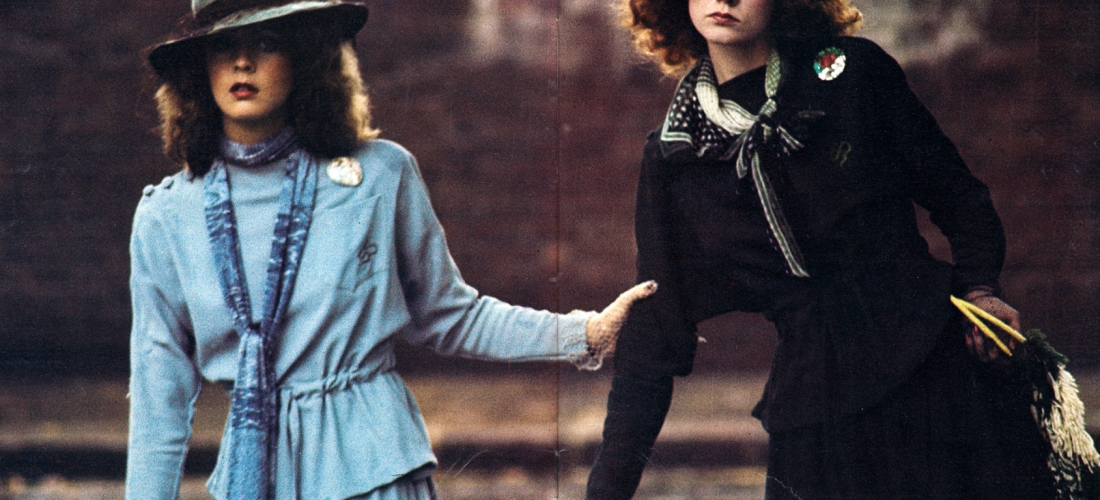
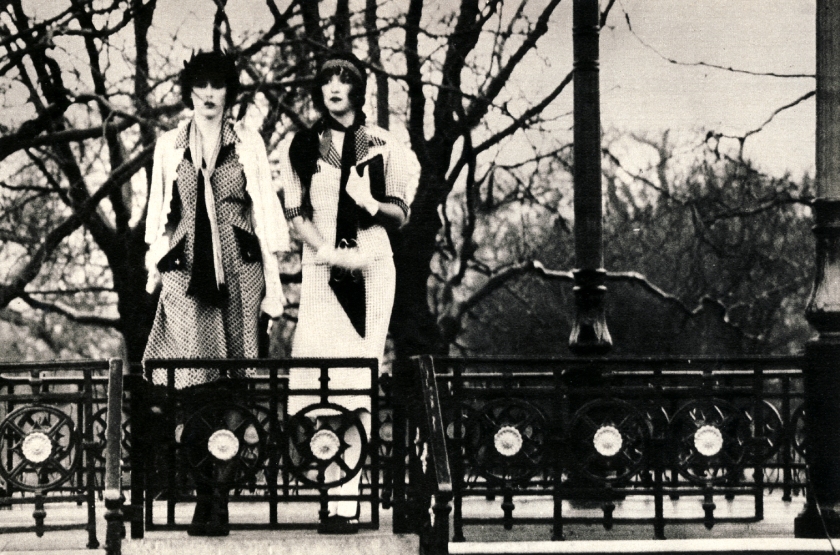
Left: Green felt hat from Bombacha. Grey crepe top and matching skirt both by Strawberry Studio. Gloves by Tuttabankem. Silk scarf by Eddie Yap for Howie. Right: Navy blue hat by Charles Batten. Green crepe top and matching skirt by Strawberry Studio. Gloves by Tuttabankem. Scarf from Essences. Brooch from Bombacha.

Skirts are big news! They come in soft, pretty fabrics like crepe and flanesta. Looks are soft and sweet too. So go feminine. Wear skirts that are full, and keep warm with chunky sweaters and long, knitted scarves.

Photographed by Arthur Elgort.

Scanned by Miss Peelpants from 19 Magazine, October 1974.

Pretty Things 5

Left: Rust felt hat by Marida. Rust crepe de chine suit by Marie France. Mixed tweedy cardigan by Outlander. Brown leather shoes by Bombacha. Scarf by Eddie Yap for Howie. Bag from Nostalgia. Right: Hat by Edward Mann. Cream blouse and grey crepe de chine suit all by Marie France. Huge grey cardigan by Crochetta. Grey lace up shoes from Sacha. Silky scarf by Eddie Yap for Howie. Brooch from Bombacha.

Pretty Things 1

Left: Hat by Edward Mann. Blouse by Garilee. Wool cardigan by Johnson & Johnson. Skirt from C&A. Shoes from Sacha. Right: Hat from Bombacha. Green blouse by Garilee. Wool v-neck top by Outlander. Cardigan by Johnson & Johnson. Skirt from C&A. Shoes by Sacha. Beads from Bombacha. Brooch by Adrien Mann.

Pretty Things 2

Left: Red and white striped wool tank top and matching cardigan by Outlander. Cream crepe skirt by Mushroom. Right: Flannel beret at Essences. Cream crepe blouse by Jon Elliot. Cream tank top and matching cardigan by C&A. Pale pink crepe skirt by Marie France.

Pretty Things 4

Left: Blue felt hat by Charles Batten. White silk shirt by Carr Jones. Blue cord pinafore dress by Strawberry Studio. Leather shoes from Bombacha. Silk scarf from Essences. Right: Hat from Nostalgia. White Chinese shirt by Carr Jones. Blue tweed hacking jacket by Jenny Hare at Bombacha. Skirt by Inega. Shoes from Bombacha. Bag from Essences. Scarf by Eddie Yap for Howie.

Silks and Satins for at least one third of your life

1970s, Browns, charnos, david bailey, Inspirational Images, John Kloss, lingerie, loungewear, marie helvin, Uncategorized, Vintage Editorials, Vogue
silks and satins - bailey - vogue july 74 1

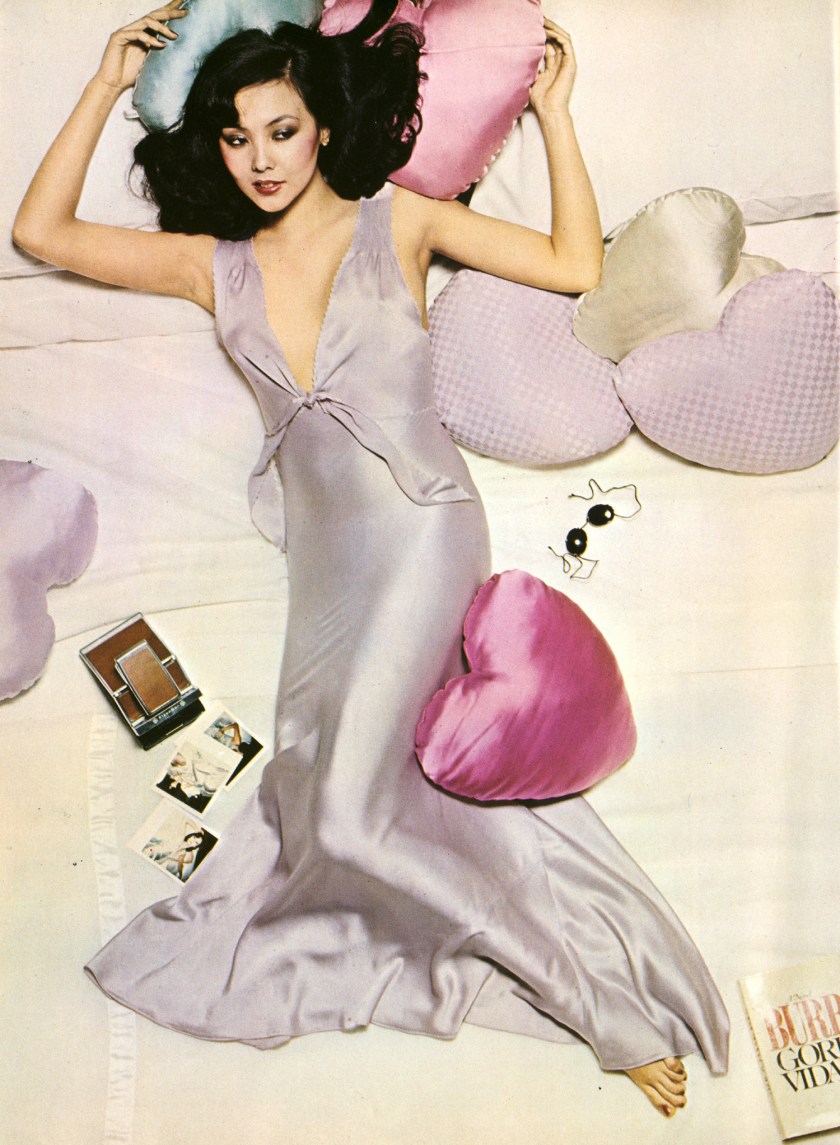
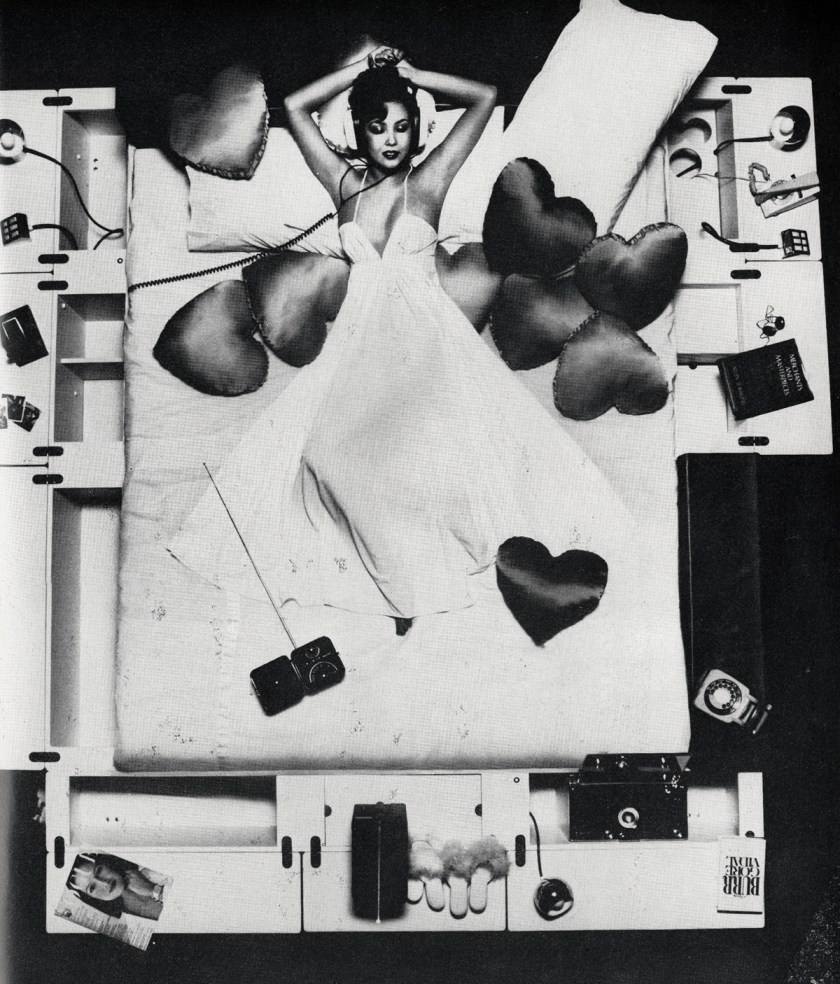
Pale violet nightdress from Browns.

A heavenly combination of slinky nightwear, mid-Seventies tech and a very welcoming looking bed arrangement. Oh, and Marie Helvin of course. This is very much how I would like to spend the next few weeks, months… in fact, a third of my life!

Italian ‘Cifra’ bed by Vittorio Rossi & Luciano Bertoncini from Heal’s.

Photographed by David Bailey.

Scanned by Miss Peelpants from Vogue, July 1974.

silks and satins - bailey - vogue july 74 2

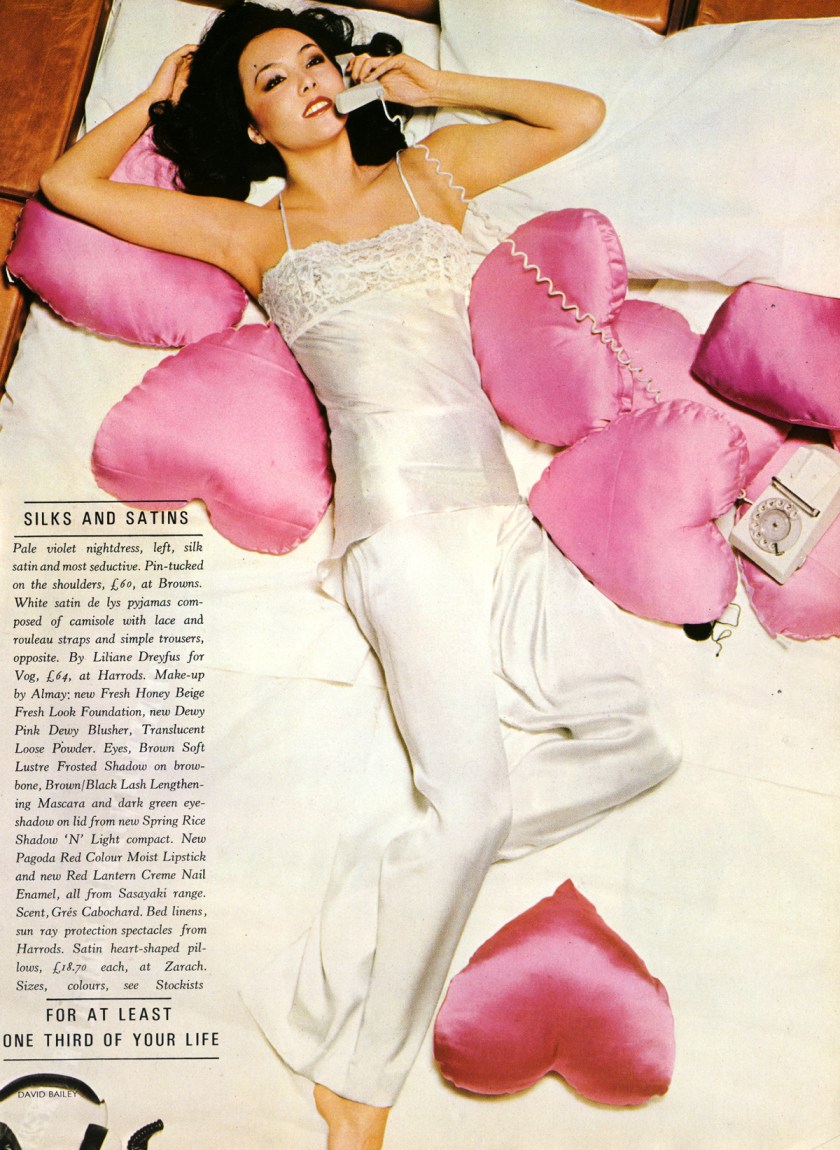
White satin de lys pujamas by Liliane Dreyfus for Vog.

silks and satins - bailey - vogue july 74 3

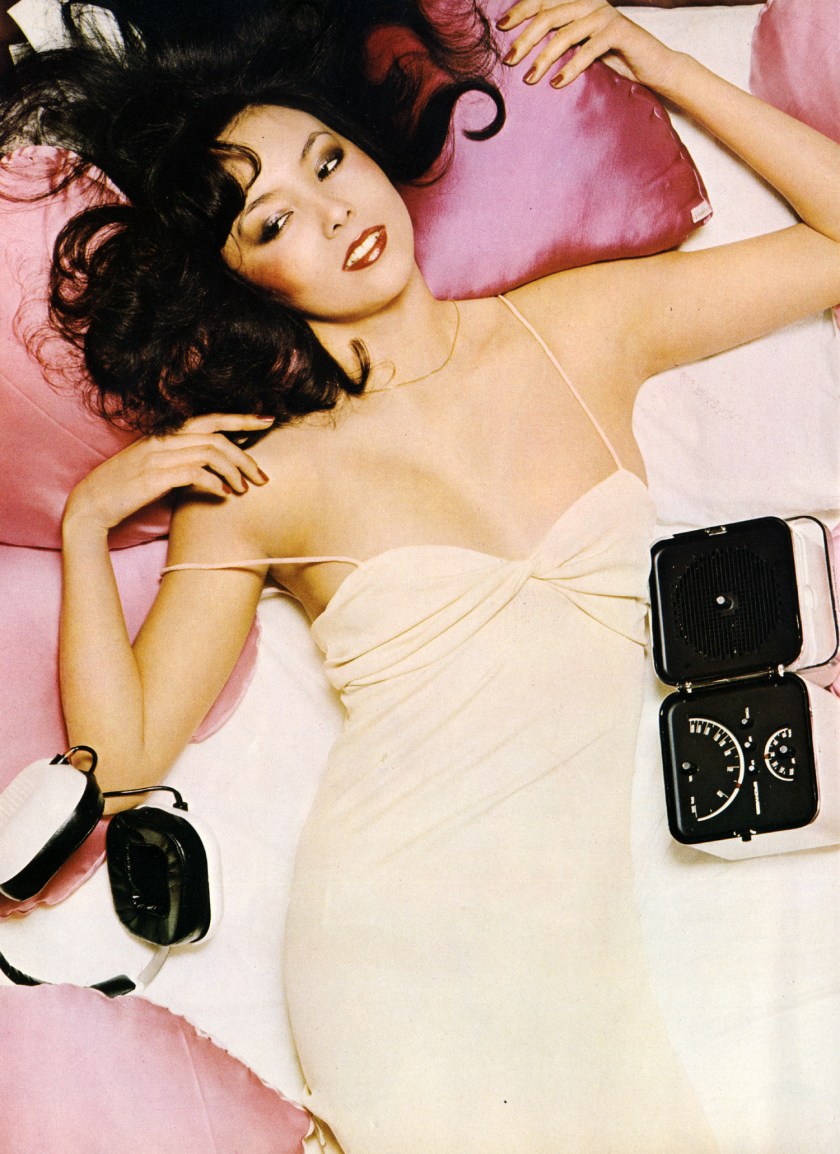
Pale beige crepe nightdress by Stan Herman for Charnos.

silks and satins - bailey - vogue july 74 4

White nightdress by John Kloss for Cira.

Welcome Summer

1970s, Adrian Mann, Angela at London Town, biba, Browns, clobber, Feathers, gillian richard, gladrags, Jean Claude Volpeliere, jeff banks, petticoat magazine, Sacha, Sacha, stop the shop
Welcome Summer - 5 - Jean Claude Volpeliere

Gladrags printed shirt with cotton satin knickerbockers. Plastic and raffia choker by Adrien Mann. Gladrags cotton satin shorts with bib.

Just a quick glance at any of these new mid-year fabrics can lead to all sorts of sunny ideas. Will you take to squashysoft quilting or fall in love with countryside madras printed denim and shiny new satinised cotton? For the romantic there’s beautiful embroidered lawns and more than enough nostalgia in the turn-of-the-century jacquard crepes, woven on precisely the same machines as those of sixty summers past. All ready for you to wear tomorrow — or to keep aside for that long hot summer . . .

Photographed by Jean Claude Volpeliere.

Scanned by Miss Peelpants from Petticoat, April 1971.

Welcome Summer - 7 - Jean Claude Volpeliere

Little bird print shirt and skirt from Biba. Suede wedge shoes from Sacha. Angora brim hat from Browns.

Welcome Summer - 2 - Jean Claude Volpeliere

Blue quilted shorts and shirt, both from Feathers. Blue suede shoes by Sacha.

Welcome Summer - 3 - Jean Claude Volpeliere

Clobber stars and stripes jacket at Stop the Shop. Bermona denim cap.

Welcome Summer - 1 - Jean Claude Volpeliere

Gillian Richard printed dungarees, smock and matching hat from ’27’. Gillian Richard calico smock with matching dungarees from Snob and Irvine Sellars shops. Herbert Johnson hat. .

Welcome Summer - 4 - Jean Claude Volpeliere

Angela smock dress at Stop the Shop.

Welcome Summer - 6 - Jean Claude Volpeliere

Angela calico farmers smock worn with denim jeans, wellington boots and hat.

Sentimental Journey

19 magazine, 1970s, biba, Bombacha, Brave New World, bus stop, chelsea cobbler, Diane Logan, Essences, Essenses, Gian Barberis, gillian richard, Inspirational Images, Jackie Ross, jeff banks, Jon Elliot, Joseph, kangol, lee bender, Lison Bonfils, nostalgia, Ricci Burns, Uncategorized, Vintage Editorials
sentimental journey - gian barberis - 1

Striped top and matching crepe cardigan. Cream crepe trousers, all by Jackie Ross at Jon Elliot. Clutch bag by Biba. Blue and white striped scarf from Essences. Beige straw hat by Diane Logan / Green,, white and black striped cardigan is a 19 Magazine knitting pattern. Long cream gored skirt by Brave New World. Cream strappy straw sandals from Chelsea Cobbler.

back to romance with nostalgia and nostalgic clothes in romantic settings. Long, flowing scarves, mysterious veils and soft, sensuous fabrics for Sunday strolls or super dates — a wardrobe for summer sentimentalists

Hair by Robert at Ricci Burns.

Photographed by Gian Barberis.

Scanned by Miss Peelpants from 19 Magazine, May 1974.

sentimental journey - gian barberis - 2

Green straw hat by Diane Logan. Green and cream printed crepe de chine dress by Gillian Richard. Cream knitted cardigan from Essences. Grey suede shoes from Bombacha. / Dark green chip straw ht by Diane Logan. Green and cream printed crepe de chine dress by Gillian Richard. Navy blue shoes from Bombacha.

sentimental journey - gian barberis - 3

Cream beret by Kangol. Halter top, matching white and blue silk knitted long cardigan. Matching calf-length knitted skirt all by Lison Bonfils at Joseph. Grey suede shoes from Bombacha. / Salmon pink beret by Kangol. Cream crepe sleeveless top with sequin motif. Matching below-the-knee culottes. Both by Jackie Ross for Jon Elliot. Salmon pink silky cardigan from Essences. Sandals from Chelsea Cobbler.

sentimental journey - gian barberis - 4

Brown felt hat from Nostalgia. Black and white crepe de chine dress by Jeff Banks. Cream cardigan by Essences. Shoes from Bombacha. / White suit with black pattern and reverse on cuffs and collar from Essences. Black suede shoes from Bombacha. Black scarf from Bus Stop.

sentimental journey - gian barberis - 5

Pink straw hat by Diane Logan. Crepe crepe jacket and matching mid-calf skirt by Bus Stop. Cream straw shoes by Chelsea Cobbler. / Black and tan cloche from Diane Logan. V neck top and matching crepe jacket and skirt all from Bus Stop. Straw shoes by Chelsea Cobbler. Scarf to match suit from Bus Stop.

Meet Simon and Marijke – Two of The Beautiful People

1960s, Apple Boutique, Barry Finch, Boutiques, british boutique movement, celebrity boutiques, eric clapton, george harrison, granny takes a trip, Josje Leeger, marianne faithfull, Marijke Koger, mick jagger, Pattie Boyd, Rave, Simon Posthuma, The Beatles, The Fool

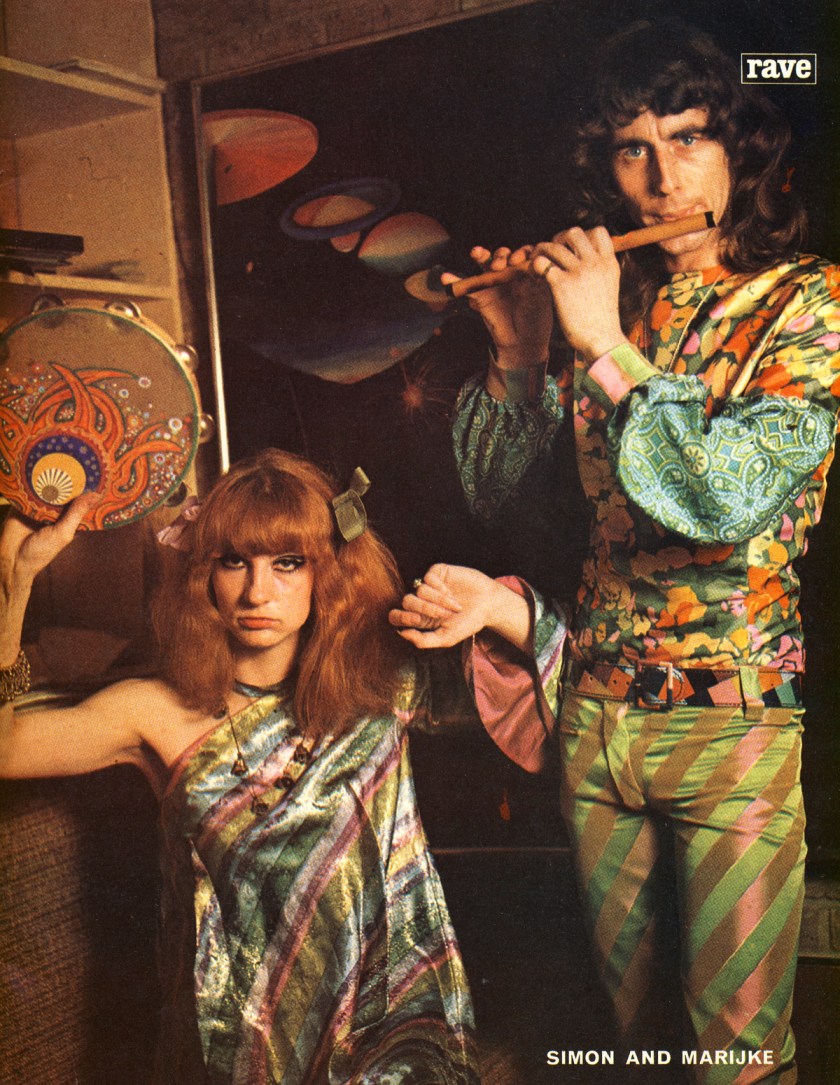
the-fool-1The world of pop artists Simon and Marijke is indeed strange—their philosophy is to spread the influence of art over every aspect of civilized society, to produce a world throbbing with colour, light and beautiful things—but are we ready for them and their way of life? Will they make it, or will they disappear into the realms of history? Jeremy Pascall visited them to find out!

Officially the street nameplate says “Montague Square”. Unofficially it says “George Harrison is the best Beatle” in felt-tip pen. Just up the road Patti Harrison’s orange and yellow mini is parked. Beneath the sun-hot pavement of the quiet London square is a cool basement area. Set into the wall is a blue-painted door with gold stars scattered across it. A small sign says “Love, special delivery!”

Behind the door is a large, calm flat, at the centre of which is a big, open room, bright with rainbow paintings, fragrant with incense and flowers, loud with music, and alive with happy, talking, laughing people.

Here two young Dutch painters, Simon and Marijke, hold court. Their boon companions are Barry and Josje. Their courtiers include the Beatles, Mick Jagger, Graham Nash, the Cream and the rest of London’s most beautiful people.

But this is not just a court, it is a painter’s power-house, a beauty factory. Simon, Marijke, Josje and Barry are part of a new generation of artists. Pop artists who are using pop music and stars and fashion to bring their work before us. If you’ve ever seen the Cream, opened the “Sgt. Pepper” cover, or bought the latest Hollies’ album you’ll have seen their work. And you’ll be seeing a lot more of it in the future.

Simon (pronounced Simone) Posthuma is twenty-eight. He was born the year that war broke out, and remembers the Germans being kind to him. “I turned them on”, he said and smiled. This is Simon’s mission, to turn everyone on to beauty and colour.

The son of a policeman (he admits to this with an ironic chuckle; his later life has shown that he and the police don’t always see eye to eye), Simon was an early drop-out, leaving school because “we didn’t under-stand each other”. He then went through every conceivable job. For a time he was an art student, “but they threw me out because they said I had no talent!”

Despite this set-back he continued to paint. “I’ve always painted, experimented, progressed, tried to find what I want to say.” At first his work was conventional landscapes and portraits, but he soon evolved his own highly individual (and now much copied) style of brilliant rainbow colours and patterns.

Four years ago the gently rebellious artist met Marijke (pronounced Marracca) Koger, than a commercial, but not very happy, artist working in an advertising agency. They clicked in every way and started creating happenings with the help of their growing circle of friends consisting of musicians, writers and artists.

Between them Simon and Marijke really stirred up Amsterdam. “We did some crazy, beautiful things, man,” Simon said in his soft, Dutch accent. “We organised evening happenings when we took over a house, and had music and dancing and action painting. One day we went out into the street and painted it gold. Crazy!”

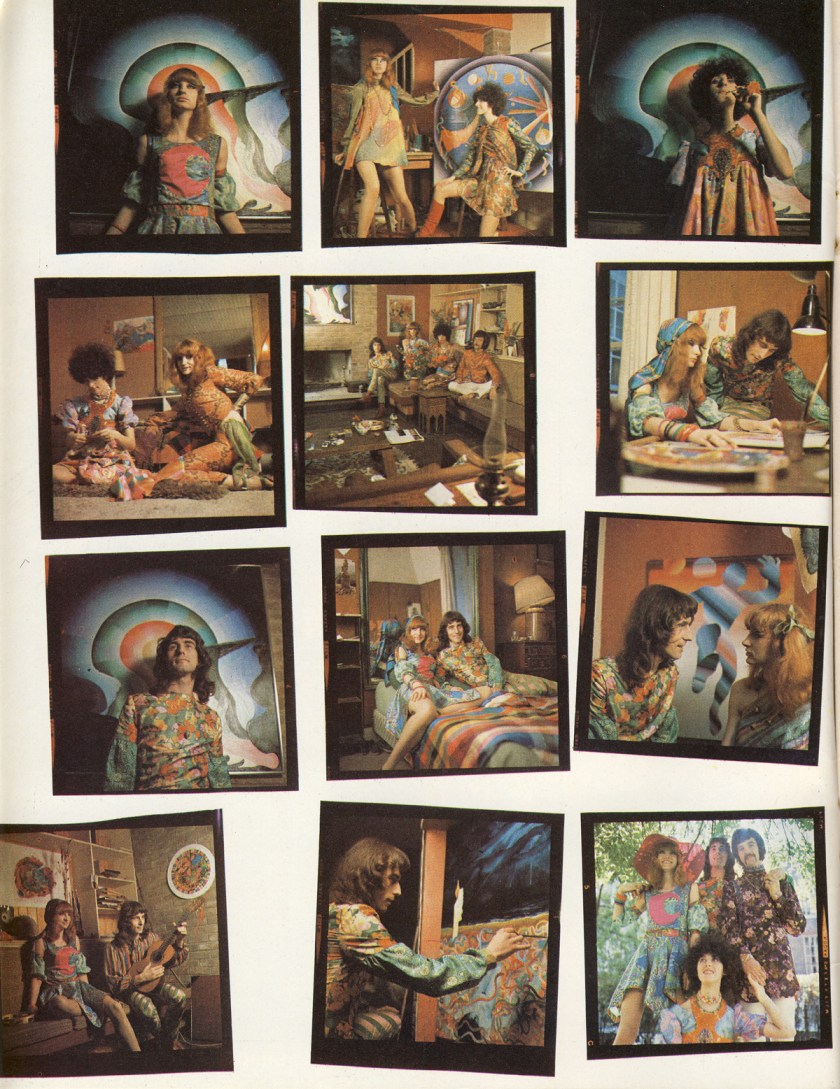
Simon and Marijke were joined in their “rainbow circle” by Josje (pronounced Yosha) Leeger. Josje, an old school friend of Marijke, was already established as a designer in Holland, and her clothes reflect the beautifully bizarre, freely fanciful ideas of the group. The clothes are made of different coloured fabrics and materials. Like styled patchwork quilts and up-dated gypsy costumes, jesters’ motley and troubadours’ shreds and patches.

And so they were three—Simon, Marijke and Josje. They had good things going for them in Amsterdam — a boutique and exhibitions — but they wanted to get out and so Simon and Marijke went to Morocco and Greece and then decided that London was for them.

But at first London wasn’t sure if they were right for it! They weren’t readily accepted. “We got very annoyed about it at first, but then we got to know the people at ‘Granny Takes A Trip’, and through them we met hip P.R. man Barry Finch, who was looking for someone to design the programme for the Saville Theatre.”

Simon and Marijke came, he saw, they conquered, and that was the start! They designed the programme cover for the Saville, started meeting the most influential people in pop, fell under the patronage of the Beatles and never looked back.

Barry became manager of the romantic duo. The Beatles asked them to submit designs for their “Sgt. Pepper” cover. They did the full job, including a fearsome cut-out mask, but only the inner sleeve design was used.

Simon, Marijke, Josje and Barry have created their own little world, a prototype for what they want us all to have. It’s a sprawling, open flat, centred around a long hallway and communal room. Most of the business of living is carried on in this room, where visitors are made welcome. Unlike the classic picture of an artist’s home, the apartment is remarkably clean and tidy.

In the main room, be-decked with samples of their work, Simon and Marijke hold court. A record player in the corner drones Ravi Shankar, “a present from George”. Marijke hands round sweet little Indian cakes—”A present from Ravi”. Somehow the tiny community seems utterly cut off from the bustle of London and it is no surprise when Mick, Marianne and Patti wander in to savour the tranquillity.

Surrounded by the things and the people they love, they gently, persuasively expound their philosophy, and outline their plans.

It is a philosophy based on love. “The essence is love. Love will grow, spread until the whole world is turned on to it. Love will not die. Everybody must turn on.

“There are people who don’t understand and walk away, but the next day they find out a new part of what is happening. To them it appears that it’s all happening at once, but in fact it’s the culmination of years. People react to us; in Paris they shouted rude words at us and we smiled back, but it didn’t happen in London. Anyway we’re in a different society, we mix with people who think like us, we stay in our headquarters all the time, work all the time.

“What is the ultimate? Paradise, living for each other. No dirty cities. We will change back to country communities where money won’t be necessary, we’ll work for each other. Who’ll do all the work? Computers. Eventually computers will show we don’t need computers!

“The old leaders are dying. Soon there will be new leaders. No, not leaders — spiritual mentors. This is the divine plan,” said Simon.

The philosophy sounds muddled and naive but it’s spoken in all sincerity. Simon speaks wonderingly of Eastern mystics who can perform miracles, produce castles out of the air. Charmingly childlike, but they have exciting plans afoot.

There will soon be an exhibition of Simon’s work, followed by the opening of a boutique and a film or theatre venture.

Boutique isn’t quite the word. The shop will be more of an environment. Simon and Marijke think that pop, fashion, art and design have been too separate in the past. They want to bring them all together under one roof. It would be nice to see people walking around in their fabulous clothes, hanging their beautiful paintings on the walls (posters will soon be available) and accepting their philosophy. But are we ready for it yet?

All colour, fun, love, beauty. Gold streets! Why not? That’s how it feels to be one of the beautiful people!

Some wonderful photos of The Fool which I hadn’t seen before. Interesting to read about their plans for their boutique (the-here-unnamed Apple Boutique) which would open only a couple of months after this was published and closed six months later.

Photographer uncredited.

Scanned by Miss Peelpants from Rave Magazine, September 1967.
the-fool-2

Look ravishing, Italian style

1970s, barry lategan, charles jourdan, Inspirational Images, missoni, moyra swan, Pedro Garcia, Russell & Bromley, The Purple Shop, Vintage Editorials, Vogue
missoni-2

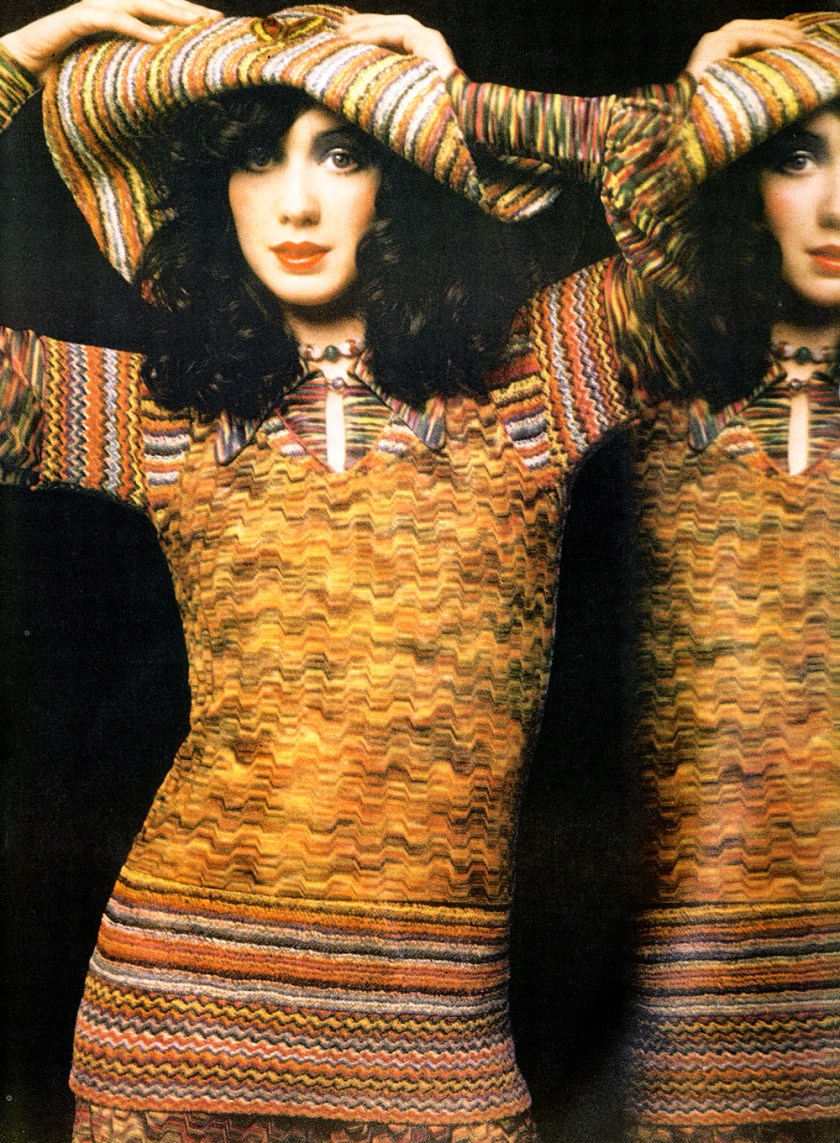
Clothes by Missoni. Butterflies and beads from The Purple Shop.

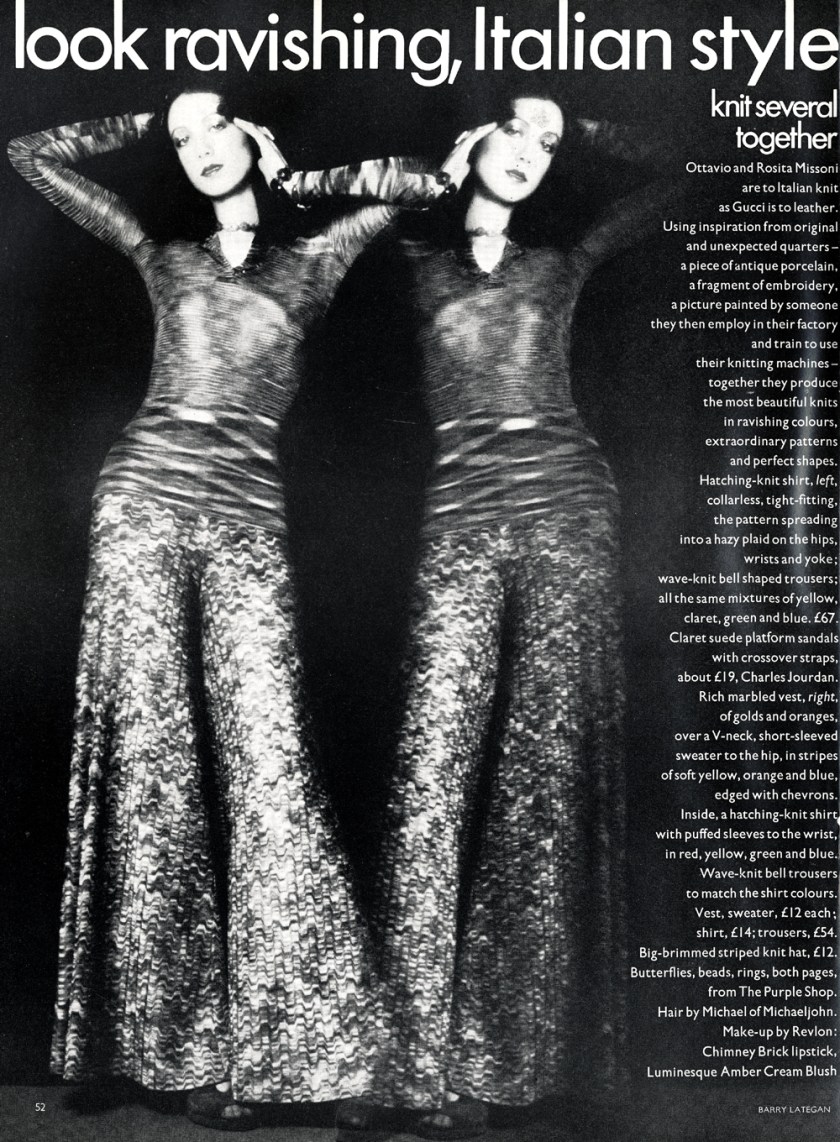
Ottavio and Rosita Missoni are to Italian knit as Gucci is to leather. Using inspiration from original an unexpected quarters – a piece of antique porcelain, a fragment of embroidery, a picture painted by someone they then employ in their factory and train to use their knitting machines – together they produce the most beautiful knits in ravishing colours, extraordinary patterns and perfect shapes.

Photographed by Barry Lategan.

Scanned by Miss Peelpants from Vogue, April 1971.

missoni-3

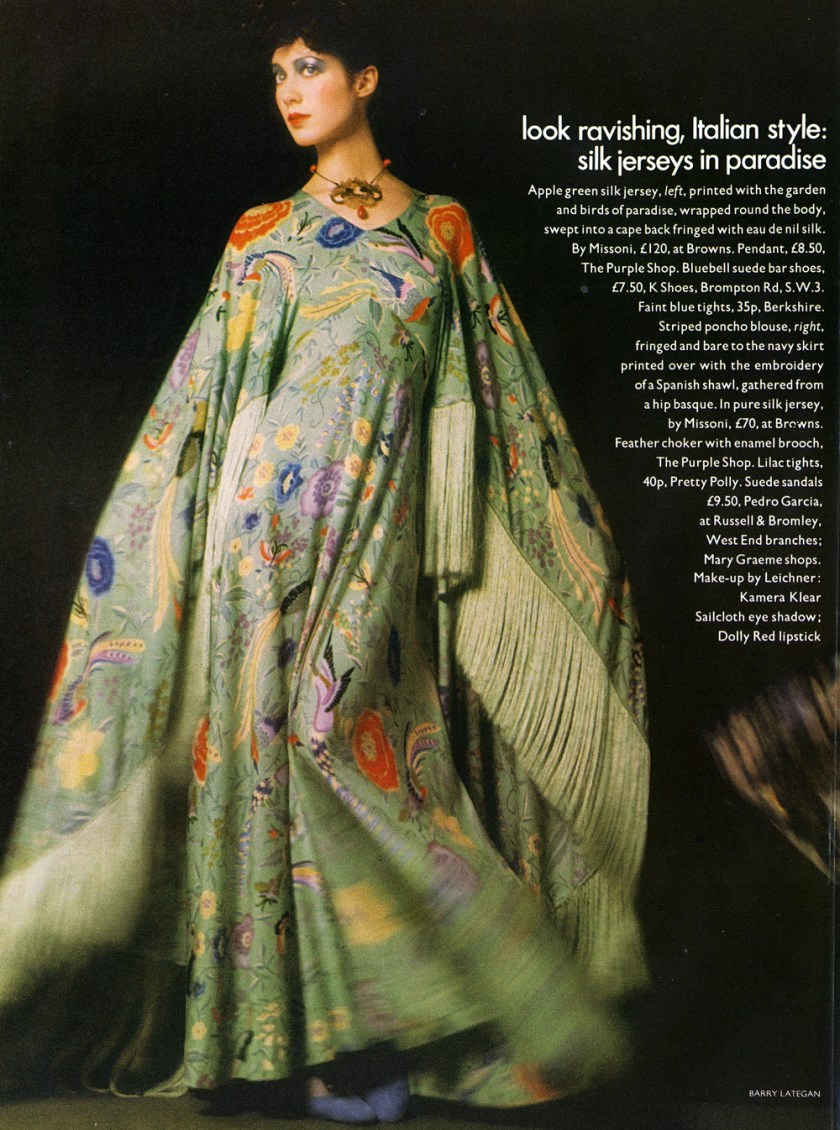
Clothes by Missoni. Pendant from The Purple Shop. Shoes from K Shoes.

missoni-1

Clothes by Missoni. Claret platforms by Charles Jourdan.

missoni-4

Clothes by Missoni. Feather choker from The Purple Shop. Suede sandals by Pedro Garcia for Russell & Bromley.

The Art Galore Scene

1960s, Art Galore, petticoat magazine, Vintage Adverts

the-art-galore-scene

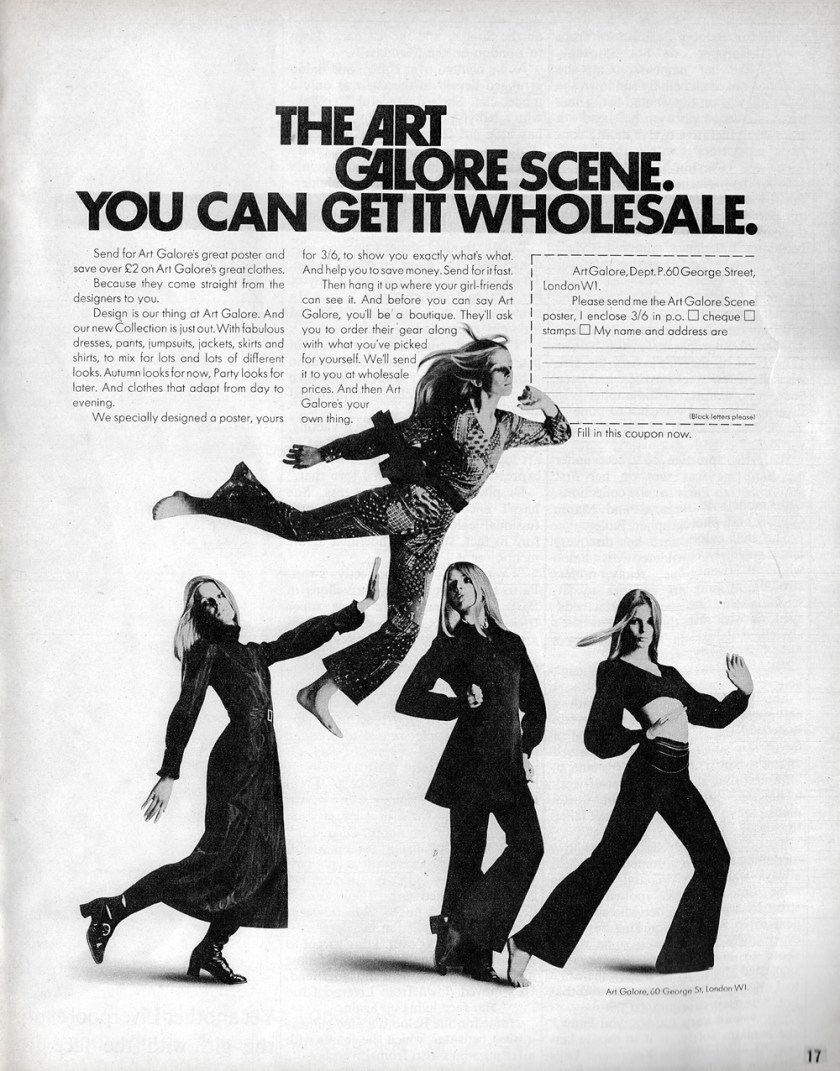
Scanned by Miss Peelpants from Petticoat, November 1969

Contemporary Wardrobe by Sheila Rock

1950s, 1960s, 1980s, Contemporary Wardrobe, Inspirational Images, menswear, Sheila Rock, The Face, Vintage Editorials
Ramona Mo-Dette by Sheila Rock

1959: Ramona/Bright Young Thing. Influences: Vogue, Irving Penn, High Society, Barbara Golan, Paris couture. Ivory plant pot hat; ivory silk abstract rose print dress; ivory leather handbag; ivory leather fake lizard stilettos; tortoise-shell cigarette holder; white make-up and vivid red lipstick. To be seen around town, having tea at Fortnum & Mason or the Savoy.

“Contemporary Wardrobe, run by Roger Burton from a warehouse at London Bridge, fit up the stars of small and big screen. They specialise in clothes from 1945 to the present day, supplying outfits and accessories to customers in movies, TV, video, commercials, theatres and advertising agencies,, with some private hiring for parties, posing and…well, that’s their business. The clothes in Quadrophenia came from Contemporary Wardrobe; others have been on hire to Not The Nine O’Clock News, Minder, The Professionals, Dreams of Leaving, The Kenny Everett Video Show, The History Man, Shoestring and Mackenzie. Thy have also kitted out Freeez, Secret Affair, M, Wings and Judas Priest for Top of the Fops and promotional videos, and clothed the sleeves of Motorhead, Girlschool, Marianne Faithfull and Yellow Magic Orchestra. Most other huge collection is authentic, as are all the clothes and the majority of accessories in these photos commissioned, clothed, posted and photographed specially for The Face by Sheila Rock. CW also offer a research department to assist styling and offer technical advice an an express service to reproduce garment or outfits or specific projects. Couldn’t they do something about Doyle’s jackets an Bodie’s flairs [sic]?”

Before there was vintage, there were just old clothes! Superb shoot by Sheila Rock for The Face, June 1981.

John Cooper Clarke by Sheila Rock

1967: John Cooper Clarke/Regency Beau. Influences: elegance, Beau Brummel, Brian Jones, Town Magazine, LSD. Claret velvet suit hand-tailored; pink frilly shirt by John Stephen; patent spat boots by Bally; paisley cravat, crucifix ,cameo, birds foot brooch, jet beads ,silver top cane ,gloves, white make-up, mascara and back combed hair all essential to create the Look for promenading Carnaby Street and Portobello Road to acquire the odd fairground horse or exotic sign from Trad Alices or Lord Kitchener’s Valet. Photo taken at Trad Antiques in Portobello Road

Ranking Roger by Sheila Rock

1950: Ranking Roger/Zoot. Influences: Charlie Parker, the Zou-Zou movement in France, Puerto Rican chic, Wyatt Earp. Grey bird’s eye double breasted Zoot suit; eau-de-nil impressed cotton shirt; brown velour homburg; slim red bow tie; white buckskin brogues by Lillywhites; silver watch chain, silver key chin. Characters wearing this look could be seen around smoky jazz clubs and pool halls all through the ’40s and early ’50s in Harlem. Now adapted by the Chicanos in South America, who rive around in Low Rider cars of the period.

Celtic Summer

1960s, Elliott, Inspirational Images, Ken Lane, Lida Ascher, norman parkinson, thea porter, Uncategorized, Vogue
Fire Red Paisley - Norman Parkinson

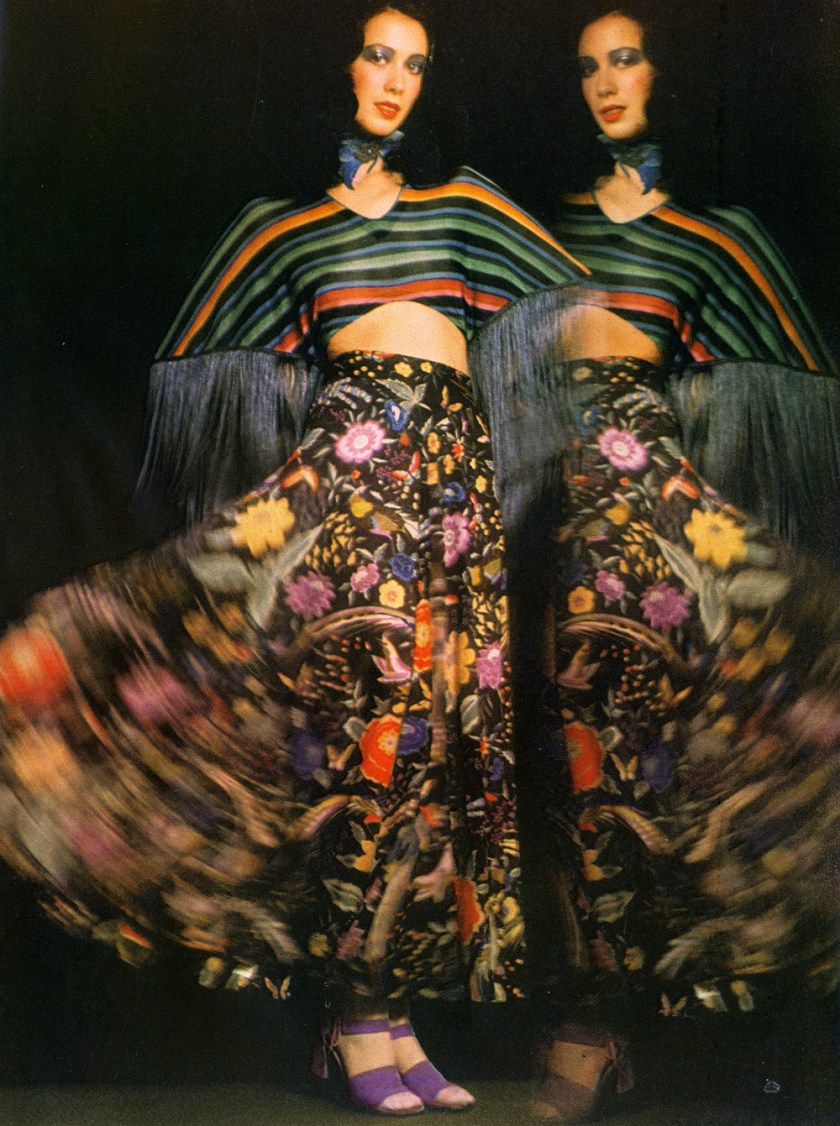
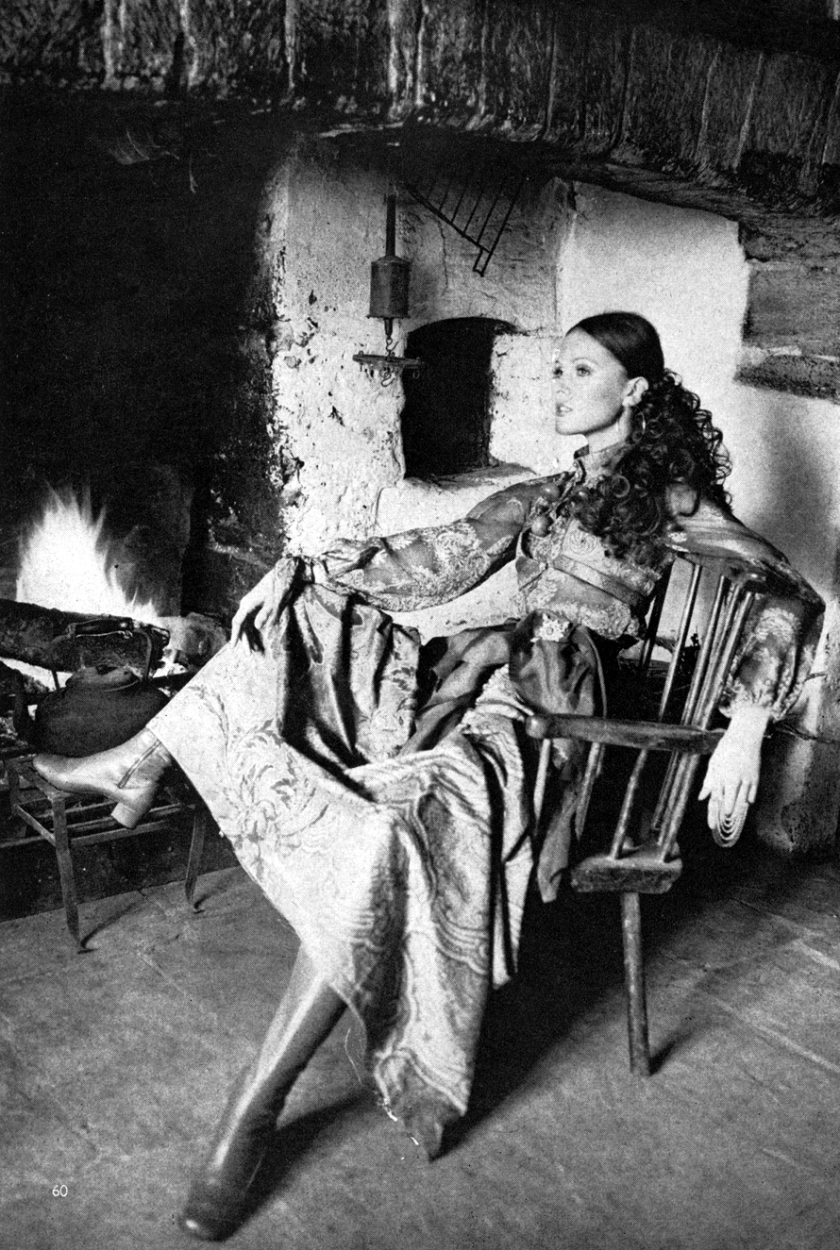
Fire red paisley for a Celtic summer: The haunted house at Parc, near Afon Crosesor, where ghostly things happen all the time. Wild red flickering skirt, paisley and red gold organdie blouse with gold Turkish bodice. Skirt, blouse and top to order from Thea Porter. Fire red boots by Elliott. Sash pin from Ken Lane. Amber beads ,wrist scarf and long red scarf by Ascher.

Photographed by Norman Parkinson.

Scanned by Miss Peelpants from Vogue, July 1969.

The Grand Affair

19 magazine, 1970s, antony price, art deco, barbara hulanicki, Barbara Hulanicki, biba, clobber, David Tack, Inspirational Images, interiors, jeff banks, ossie clark, radley, Sidgreene, stirling cooper, Vintage Editorials

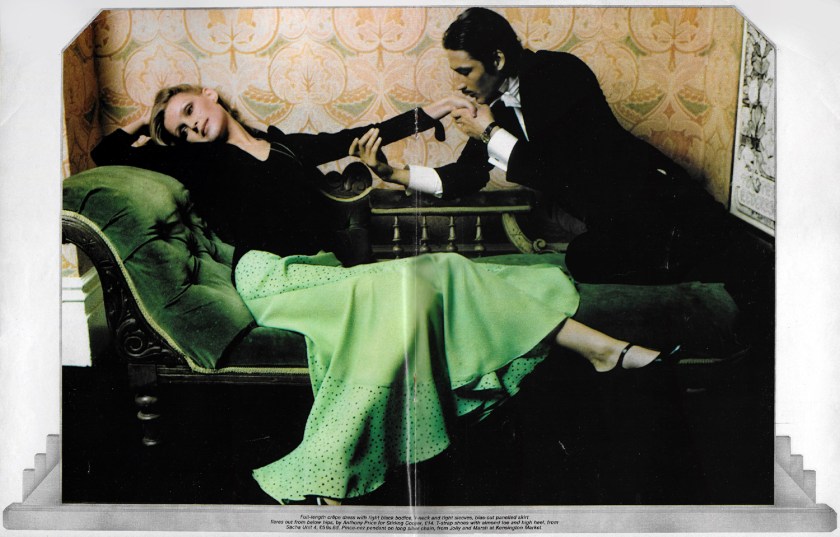
Grand affairs call for grand clothes, and provide a welcome opportunity to get out of our peasant blouses and jeans and dress accordingly. The nicest thing about fashion at the moment is that everyone is so confused as to what they should be wearing, that you can wear exactly what you like. We opt for the romantic Garbo fashion, tarted up in the ’71 style, because girls are beginning to look like girls again and, although we sympathise with Women’s Lib., we don’t believe you have to look like a fella to get equal rights!

Possibly the most perfect encapsulation of the Seventies-does-Thirties aesthetic, this homage to Art Deco features some of the most lust-worthy clothes from my favourite designers and boutiques. Including Biba, Ossie Clark and some rare Antony Price for Stirling Cooper!

Photographed in the home of interior designer Graeme Gibson rather than in a studio, the authenticity is heightened by the location and the props, and then finished with the sweet illustrated photoframes.

Photographed by David Tack.

Scanned by Miss Peelpants from 19 Magazine, January 1971.

grand affair 3

Crepe dress by Antony Price for Stirling Cooper. T-strap shoes from Sacha.