

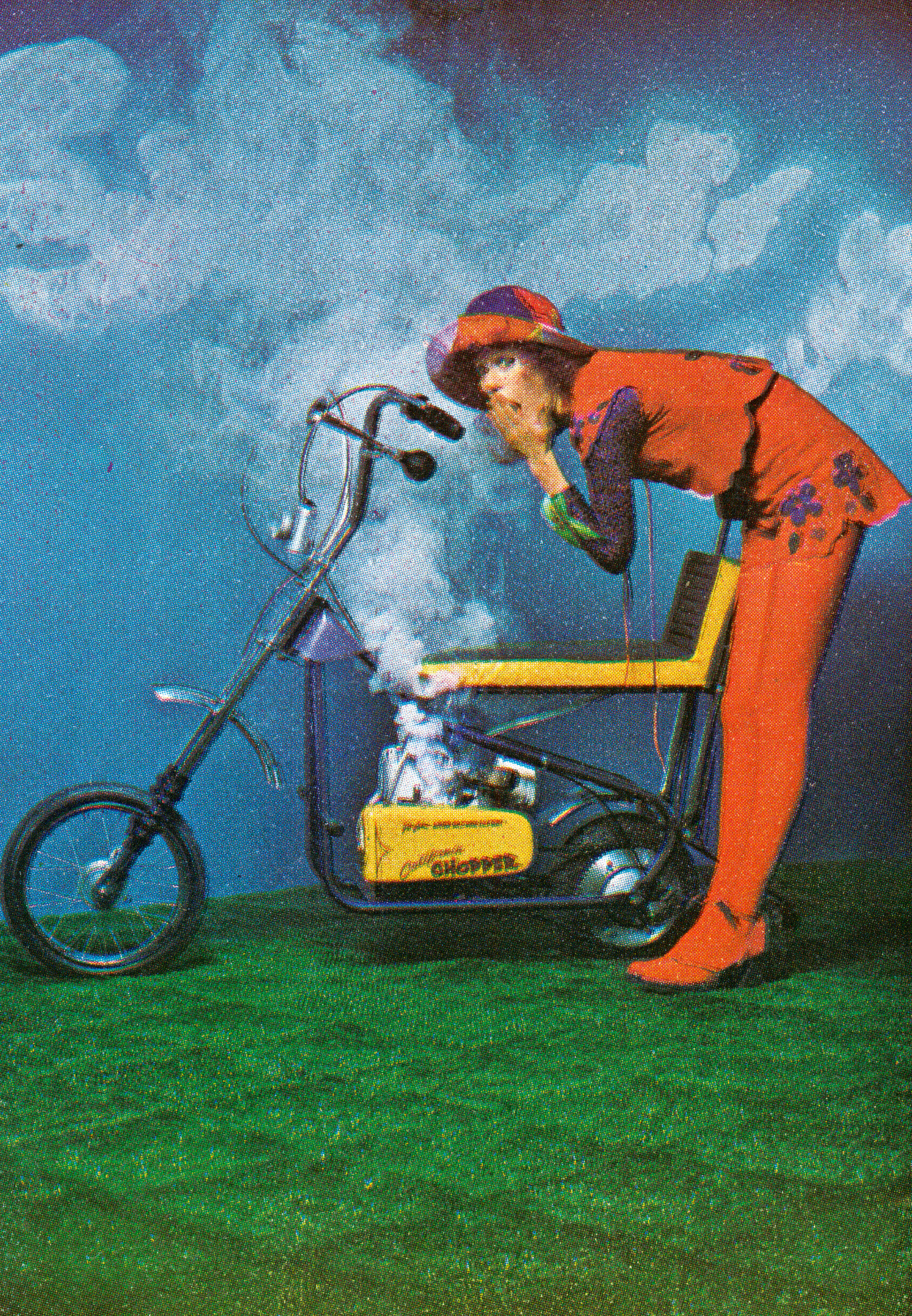
Model is Cathee Dahmen.
Make-up by Barbara Daly.
Scanned from Honey, October 1971.
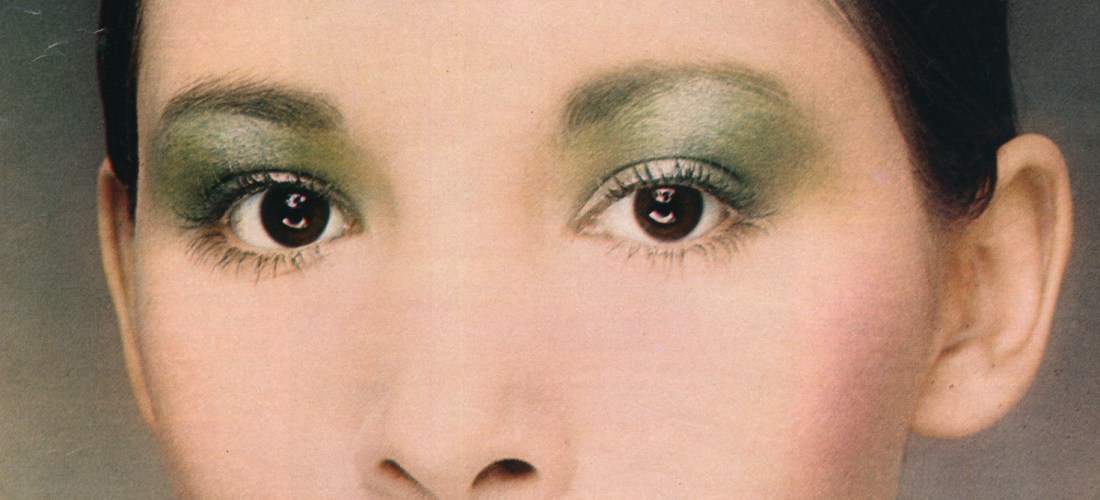
Model is Cathee Dahmen.
Make-up by Barbara Daly.
Scanned from Honey, October 1971.
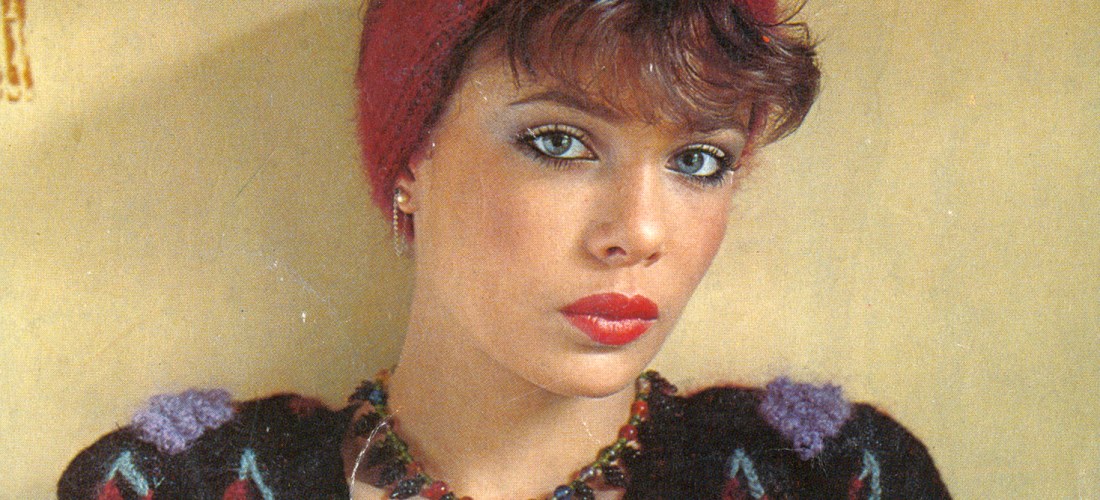
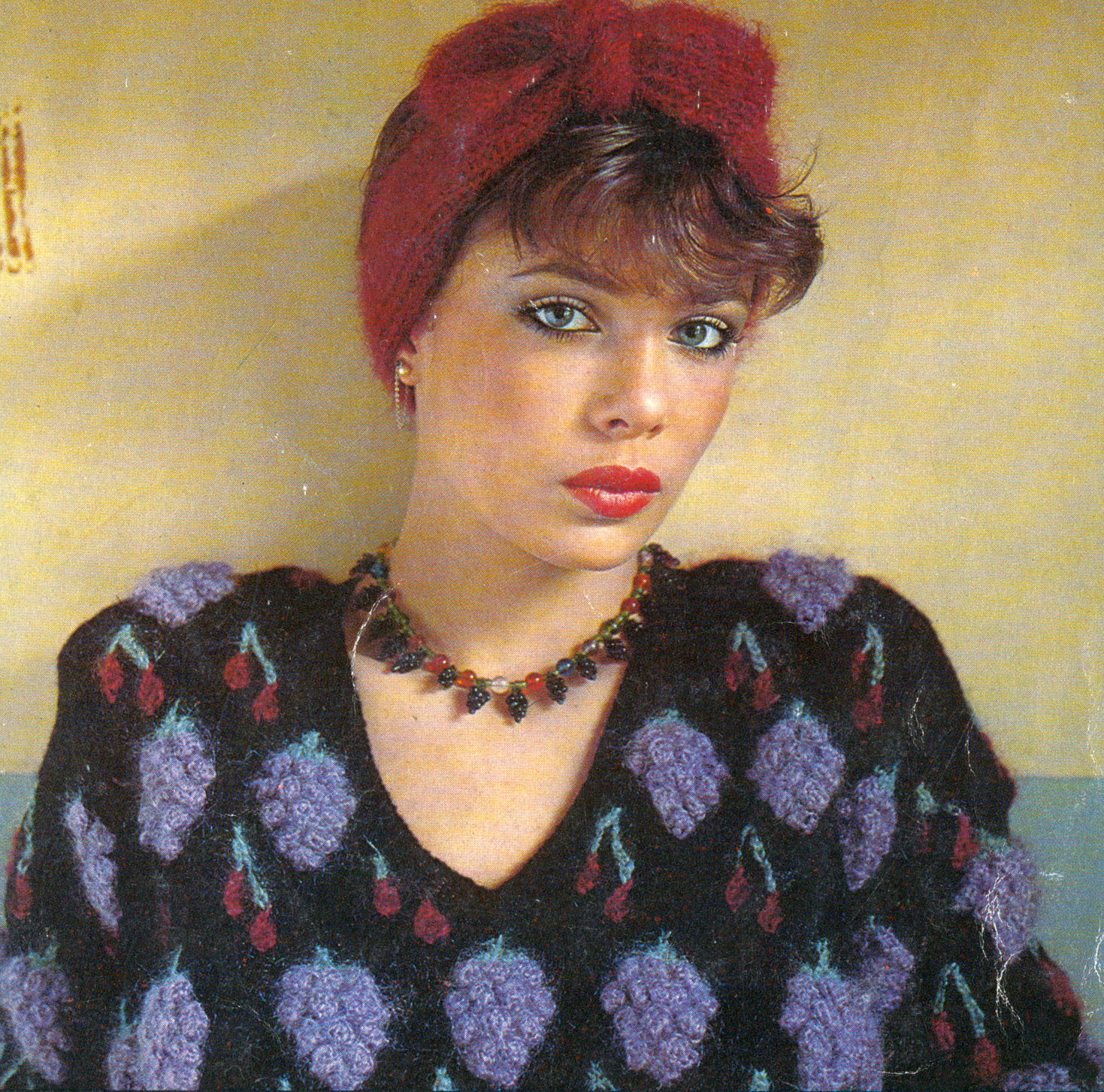
Patricia Roberts designs exclusive hand knits worn by the famous and sold in the most prestigious fashion boutiques in Europe and America.
In 1976 she opened a knitting shop at 60 Kinnerton Street, London S.W.1., selling her own brand of hand knitting wools called “Woollybear Yarns”.
Such was the success of these pure natural yarns dyed in beautiful flattering colours, that buyers from prestige storesthroughout the country were quick to include them in their ranges.
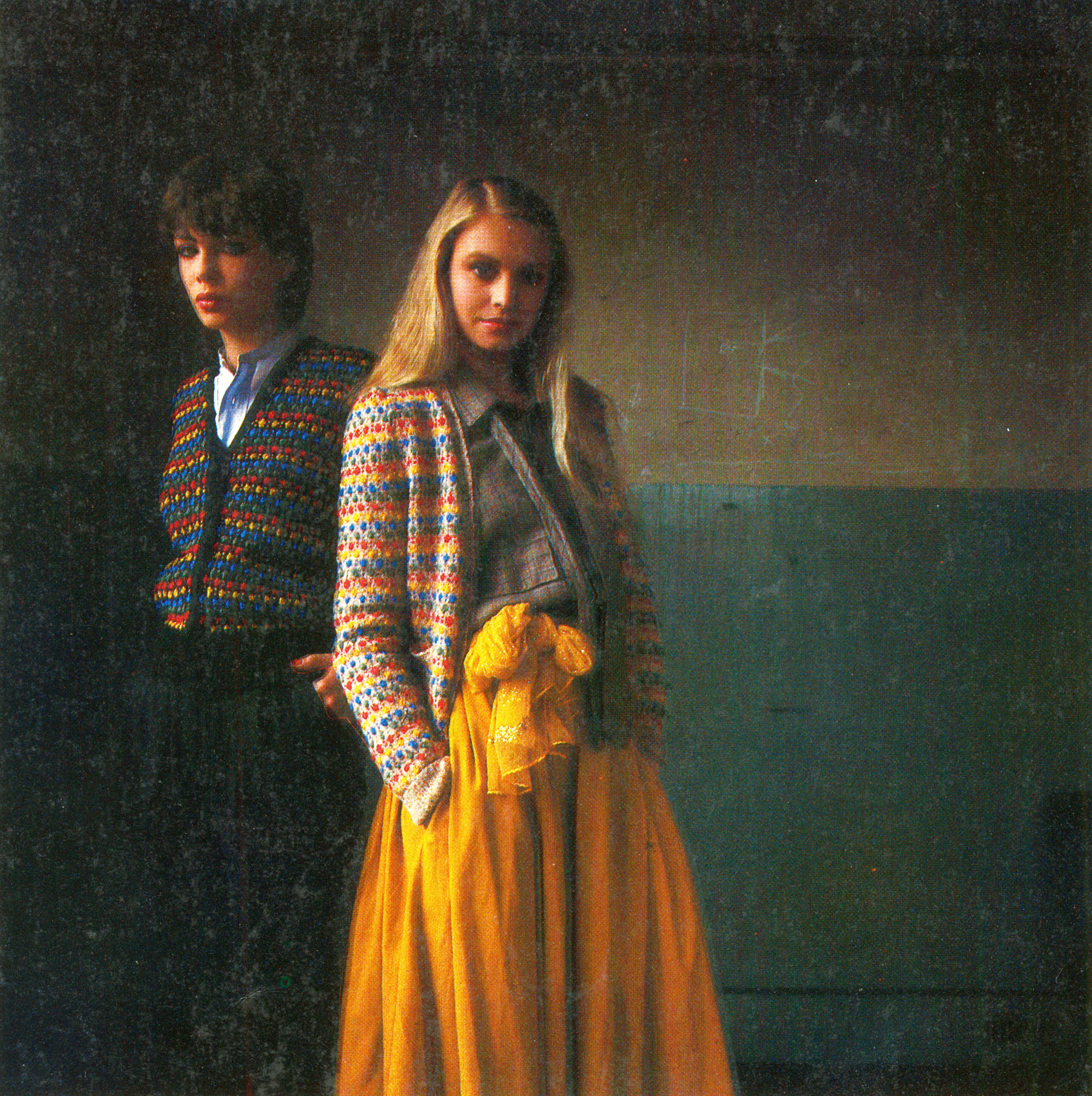
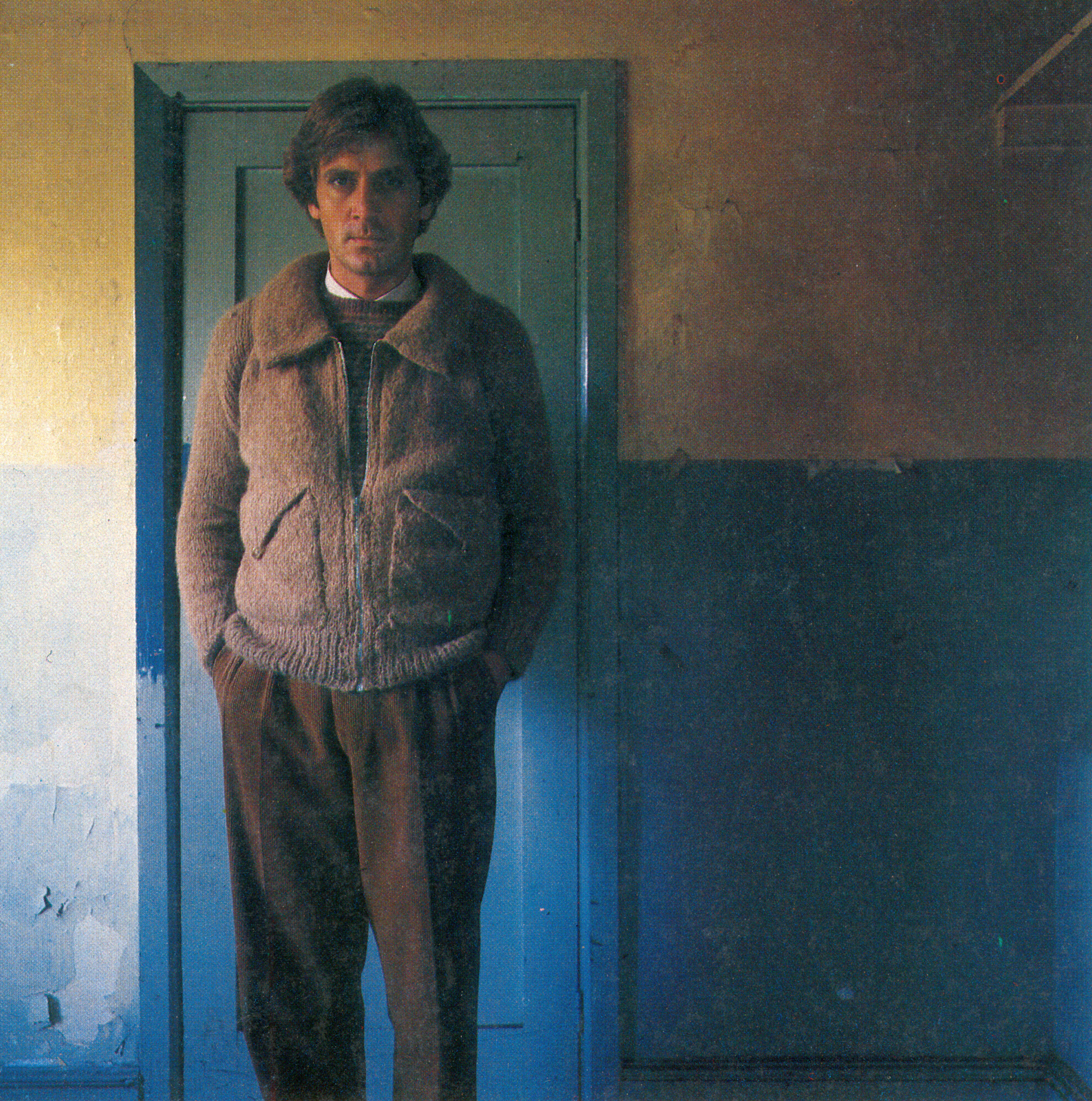
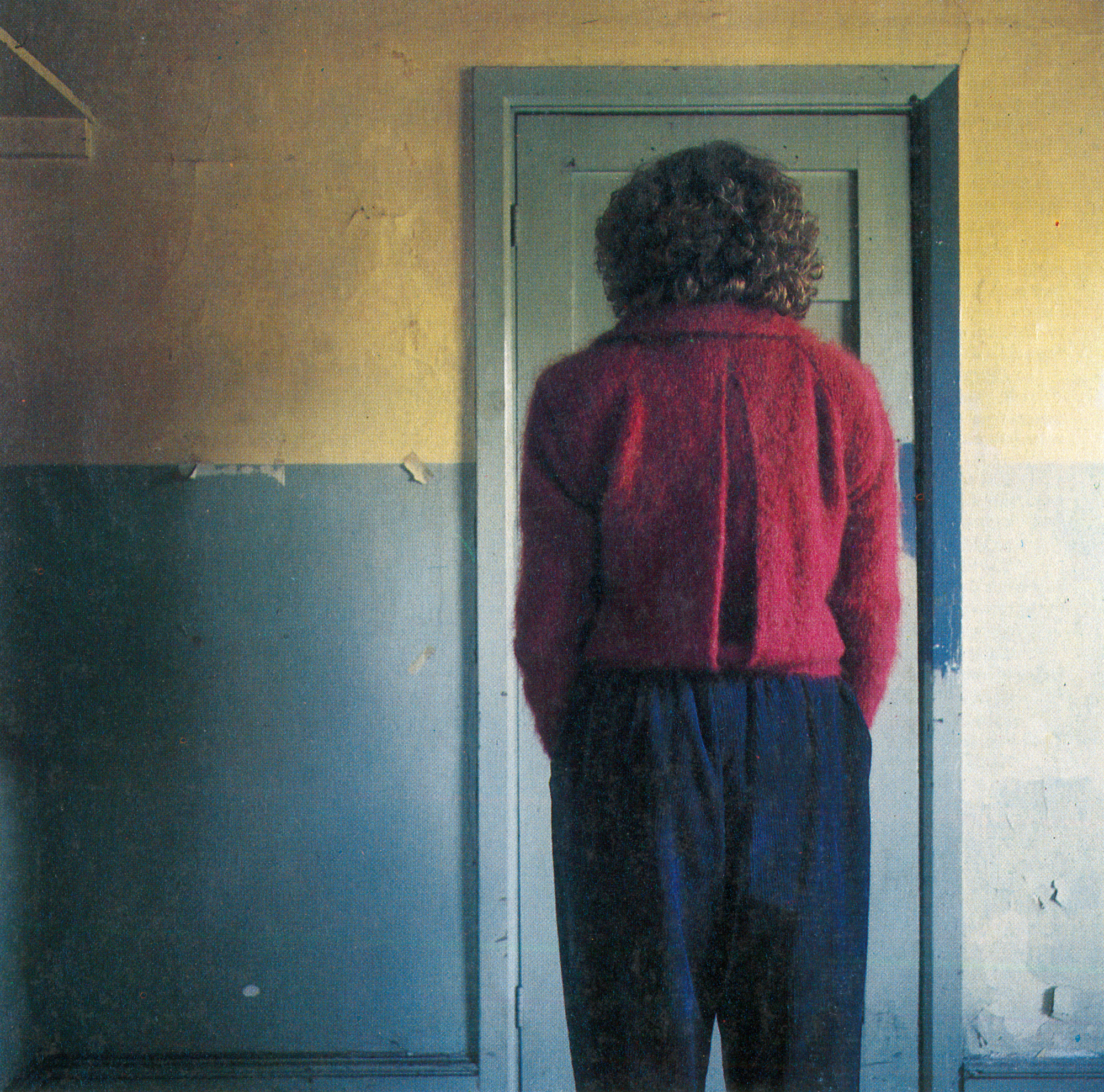
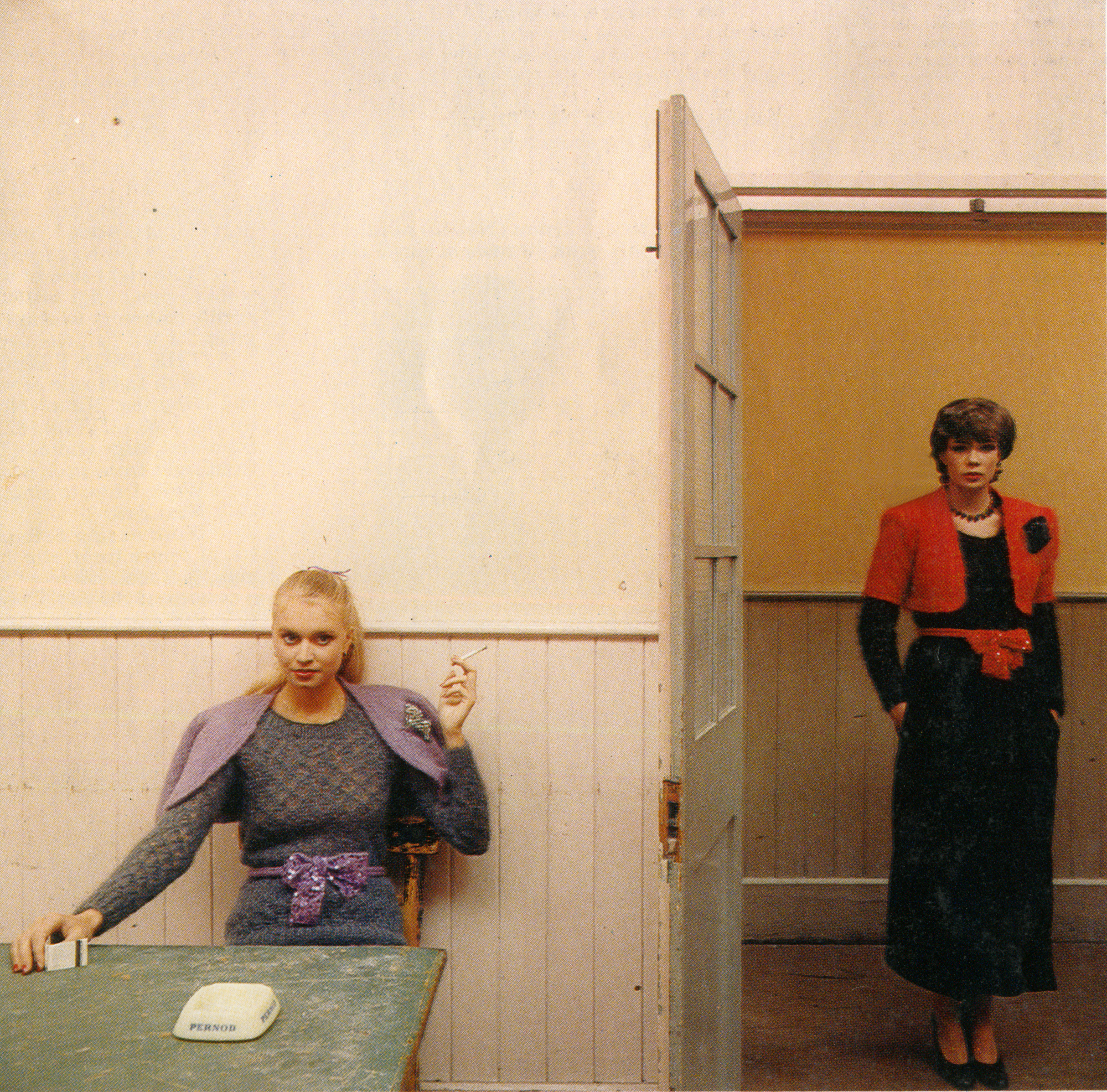
1978 sees the first of Patricia’s magazines to be published independently. All the designs are knitted in Patricia’s “Woollybear Yarns”.
For the first time knitters will have the opportunity to knit these patterns in the luxurious and inexpensive yarns, for which Patricia’s designs are intended.
Happy Knitting!
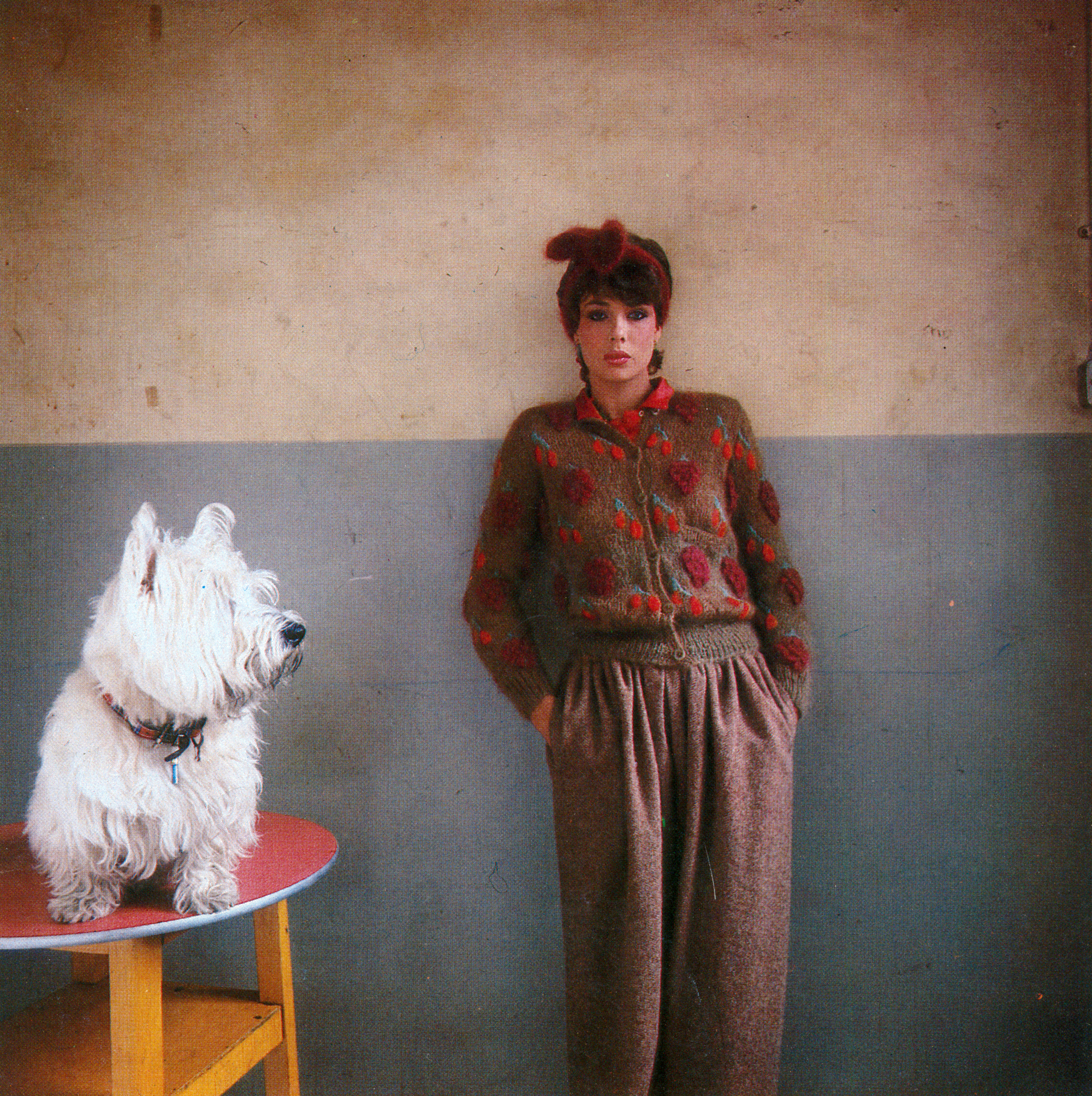
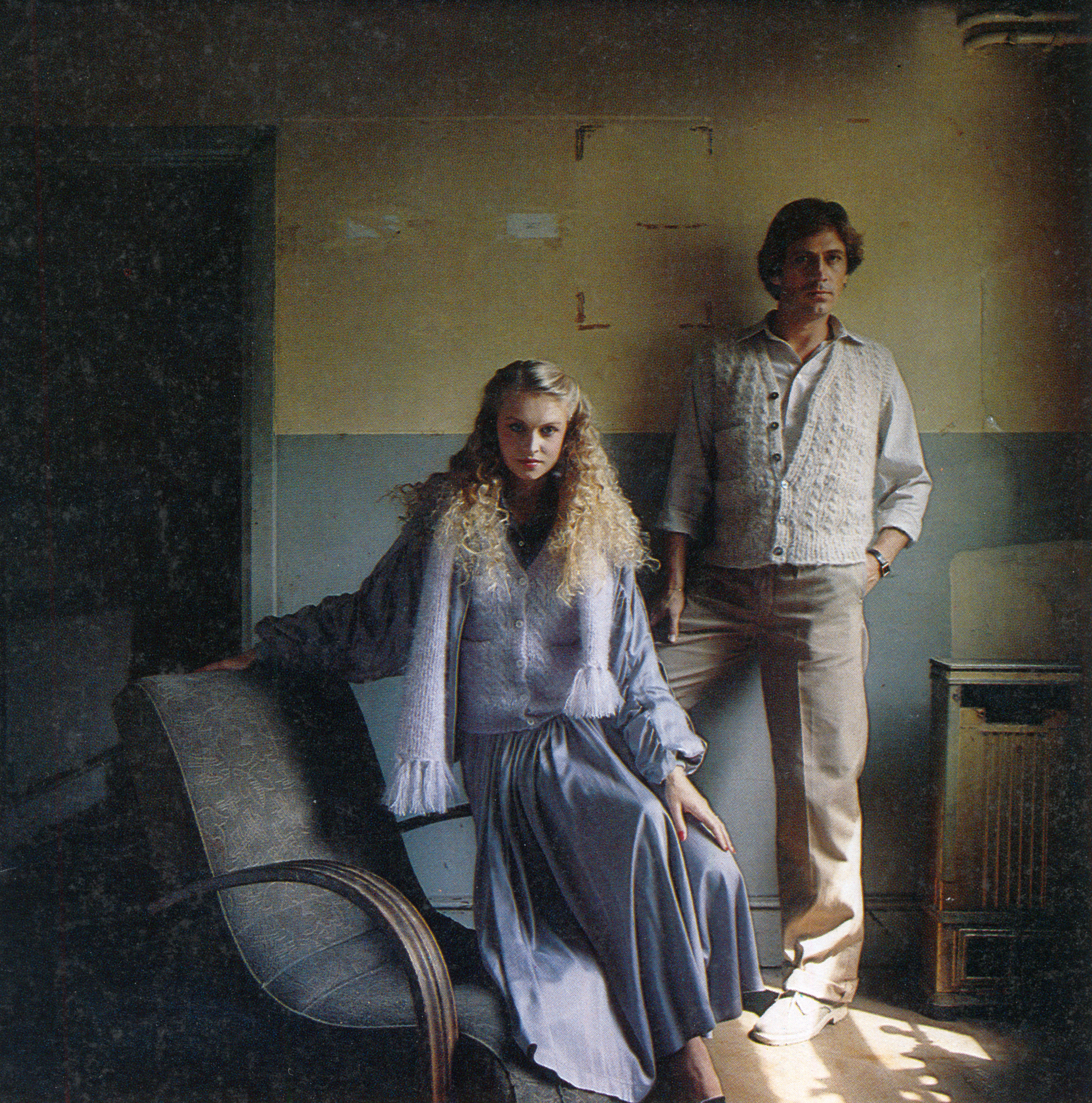
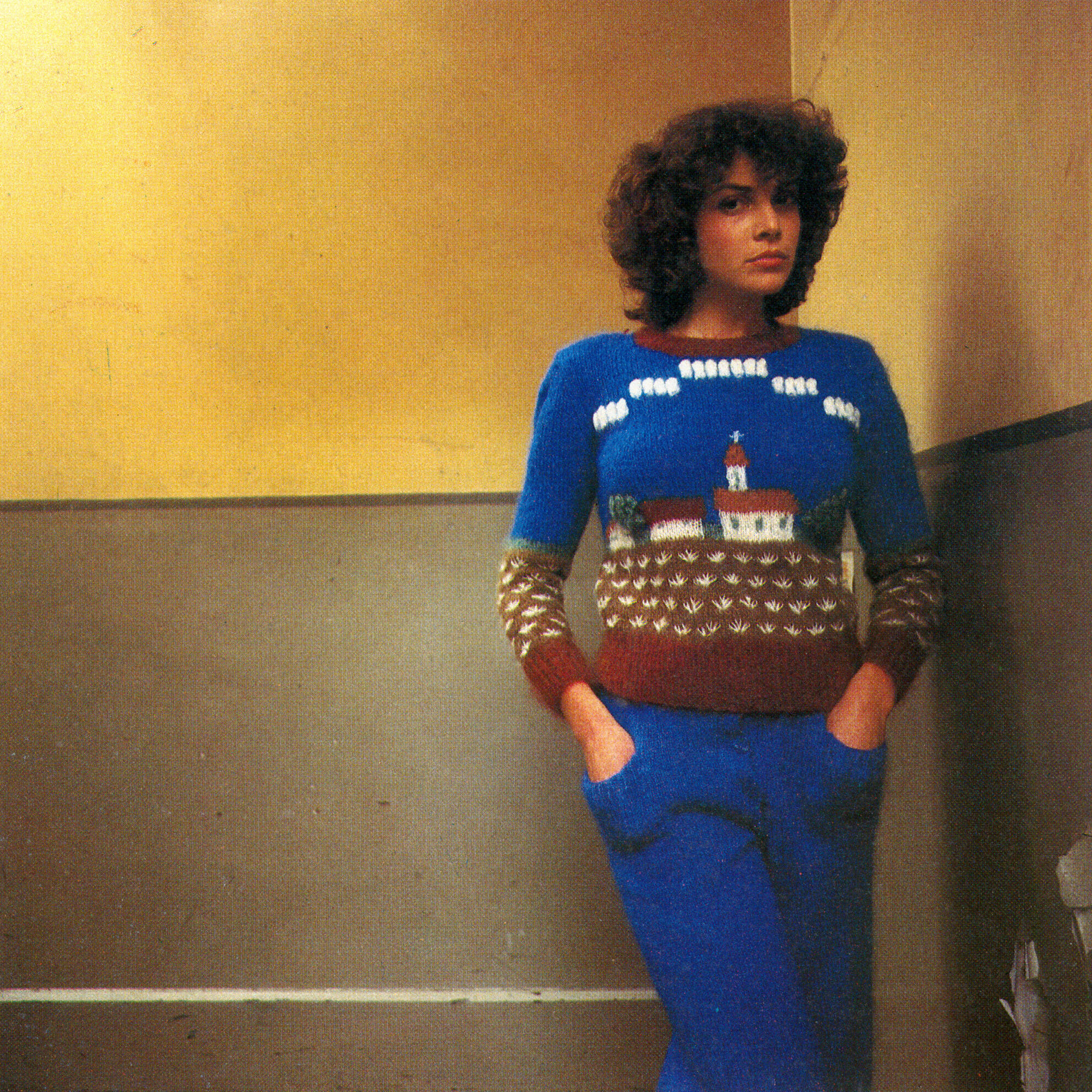
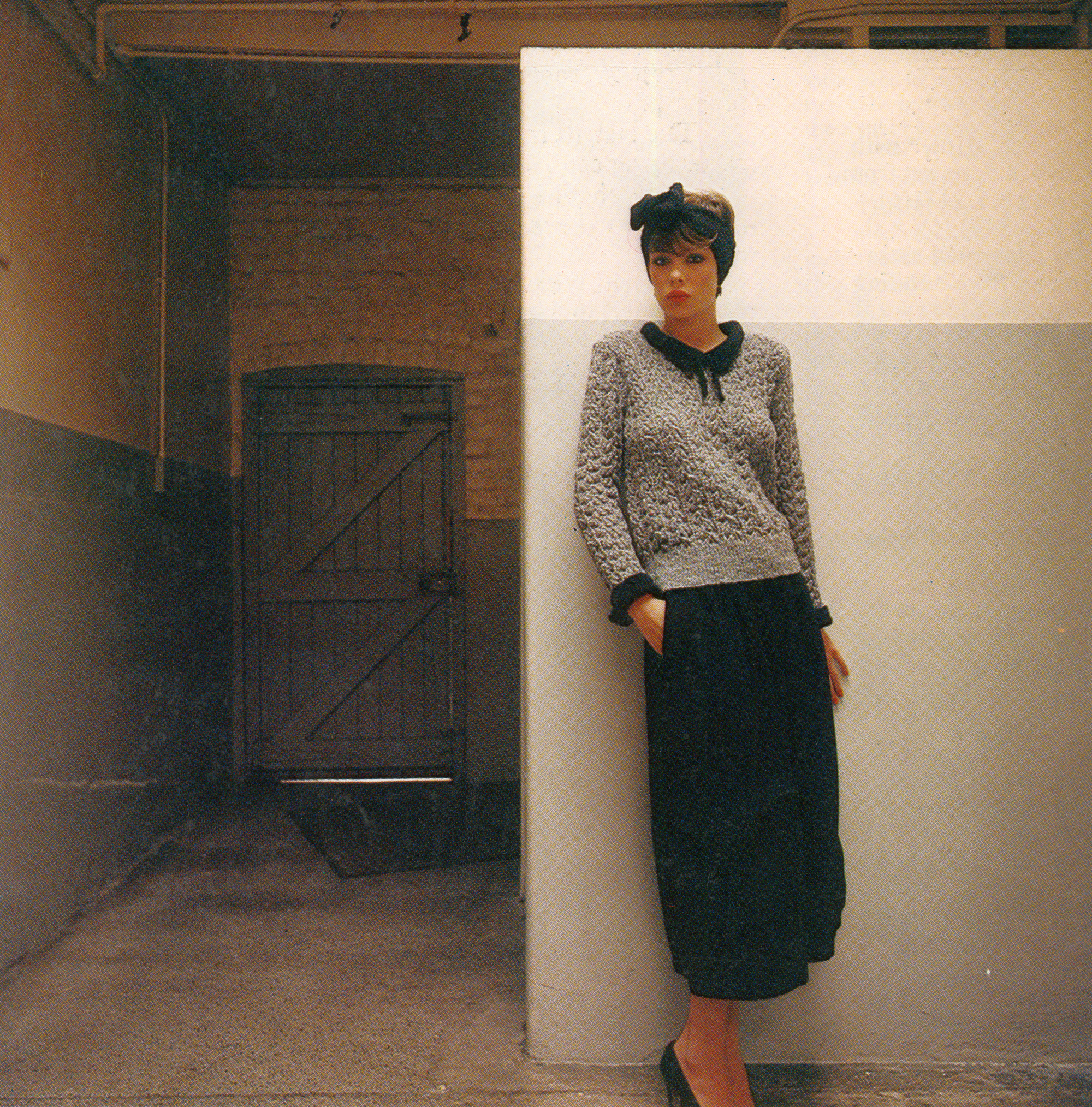
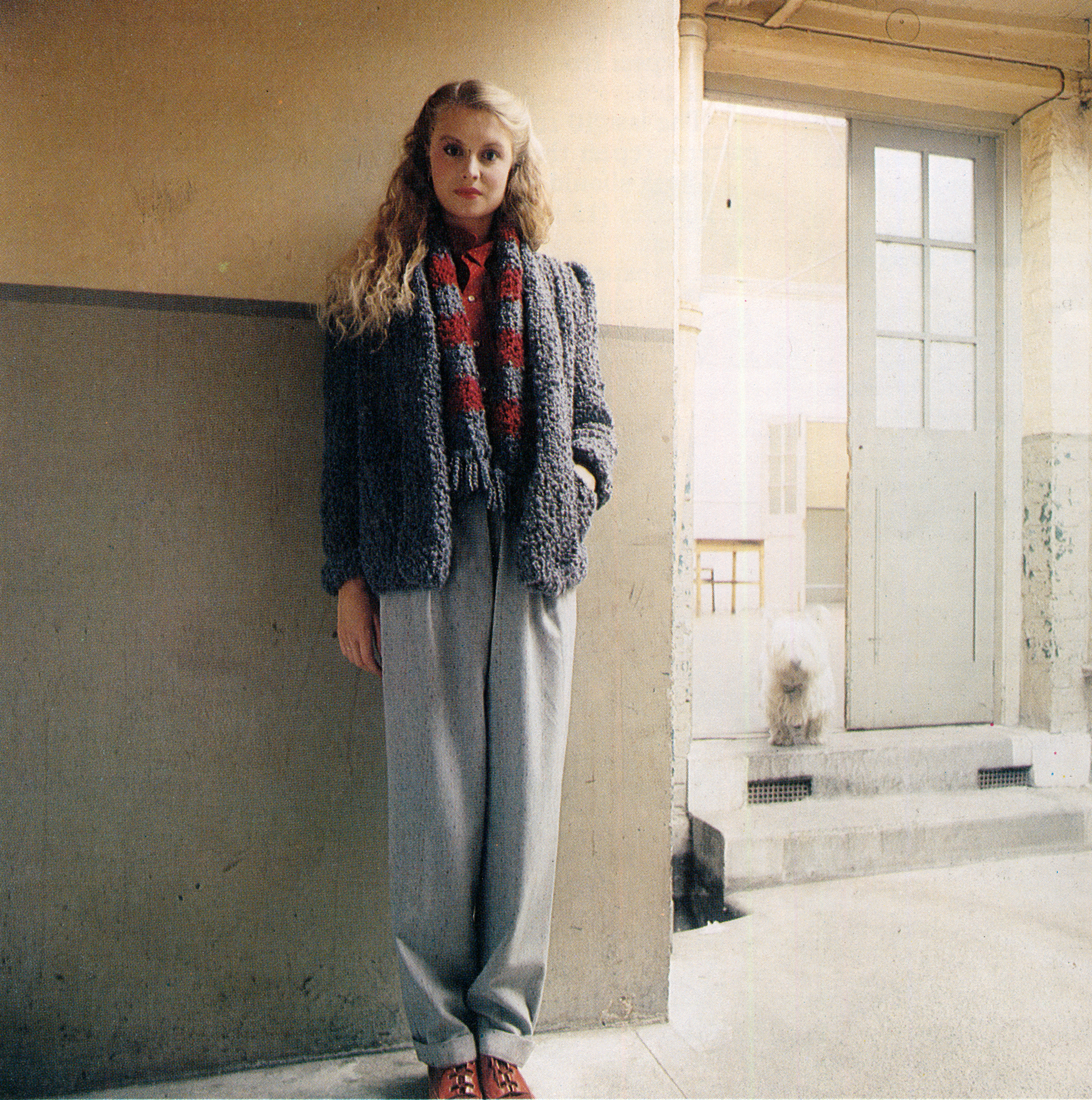
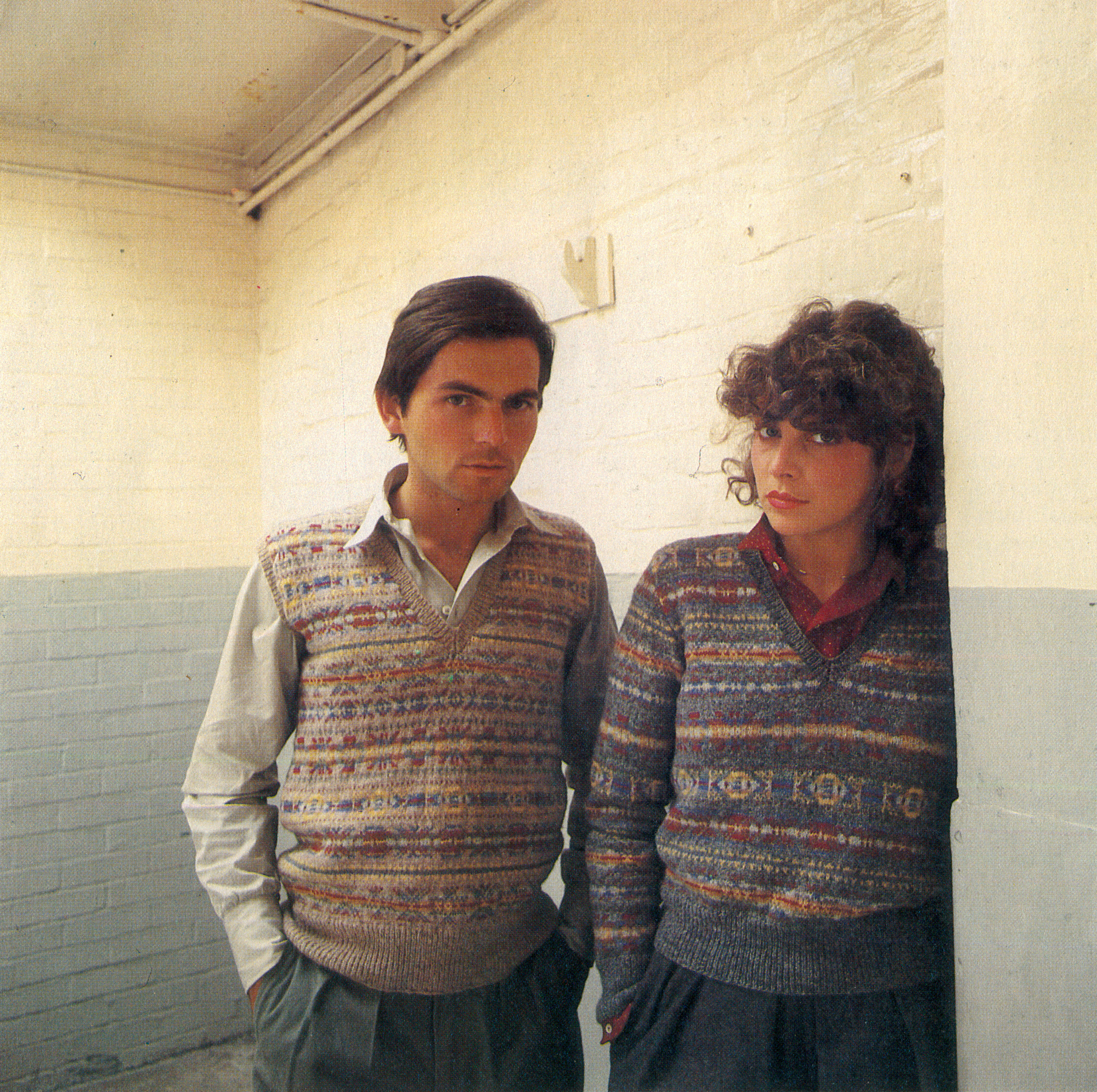
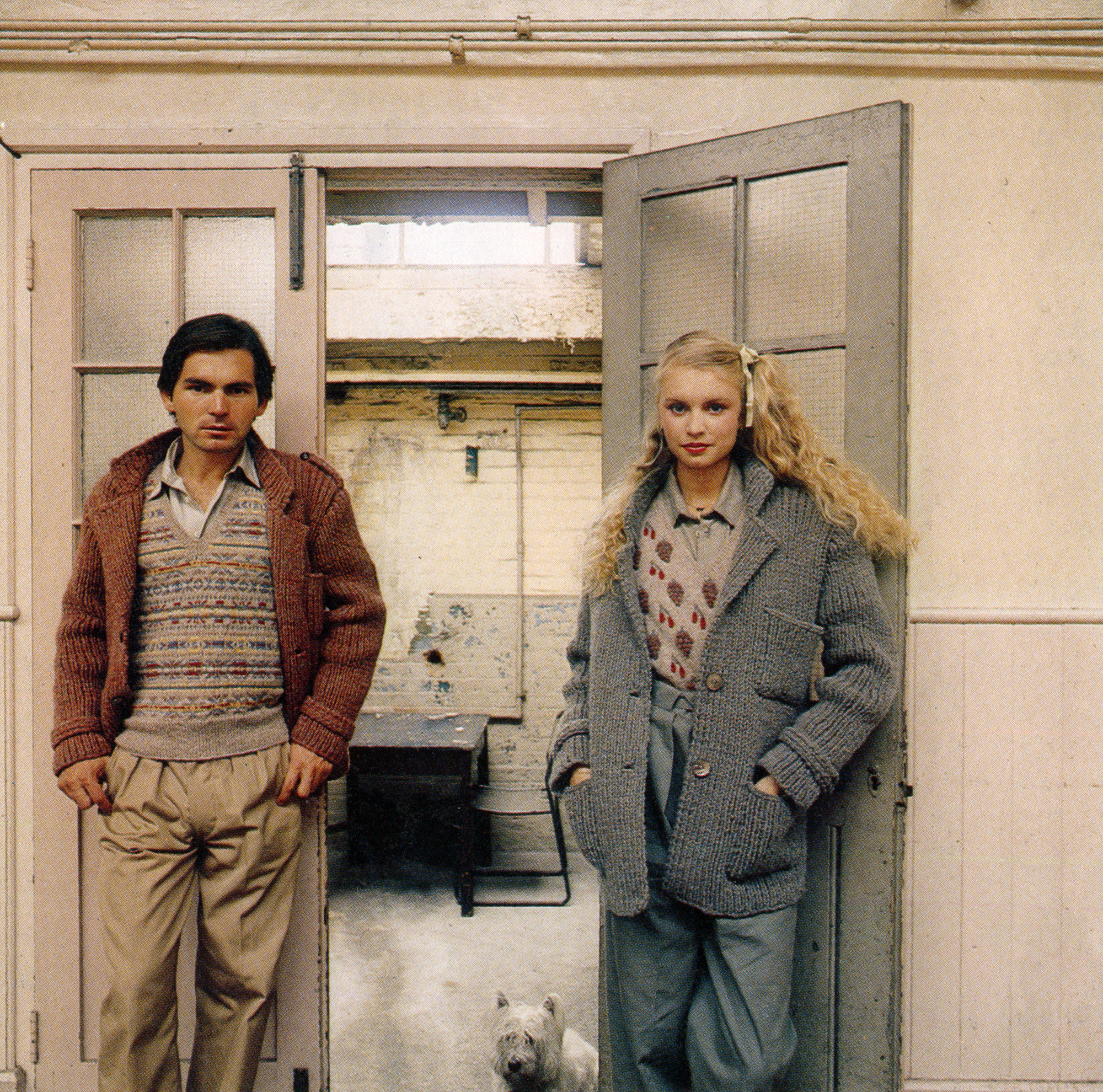
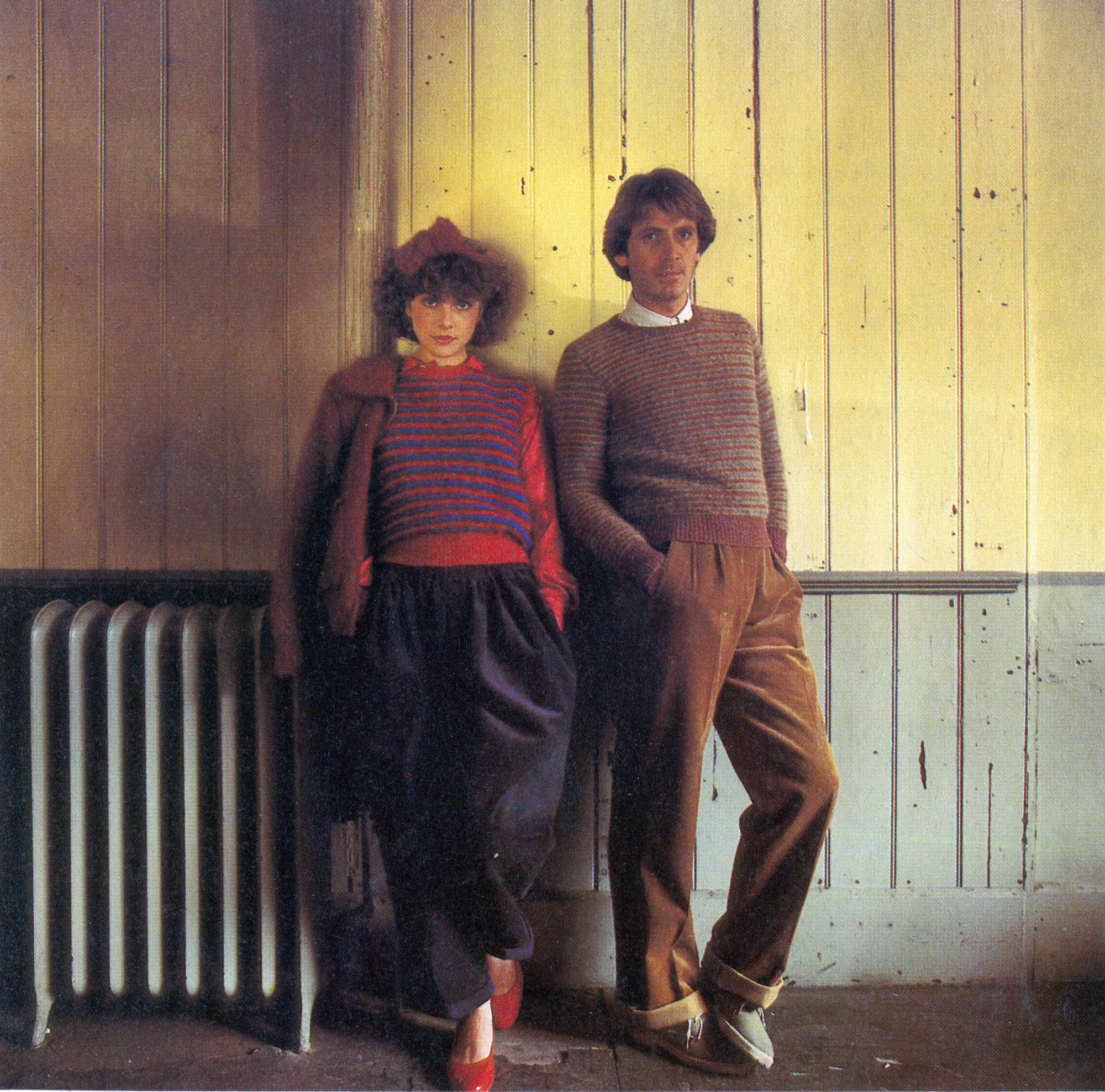
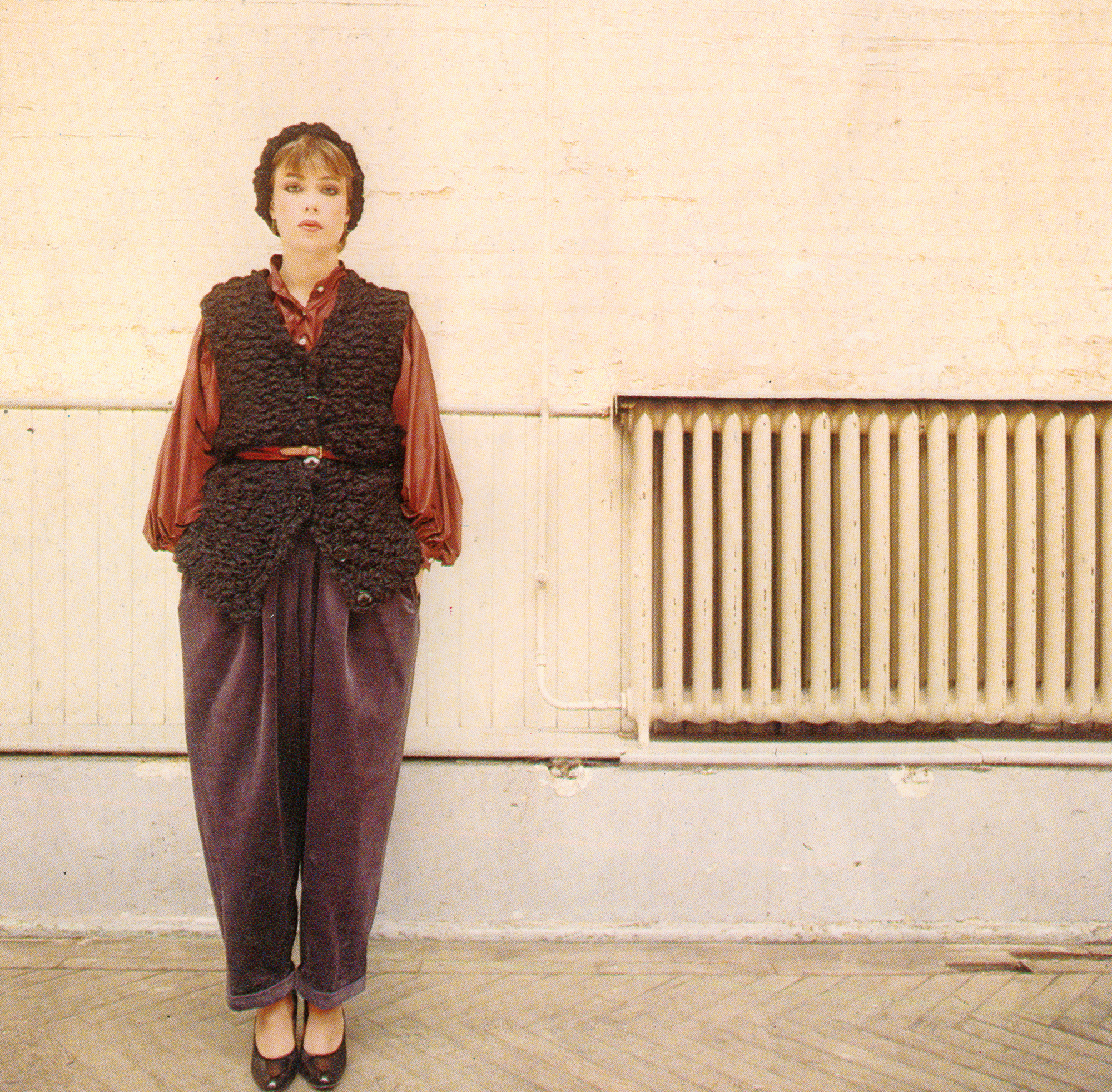
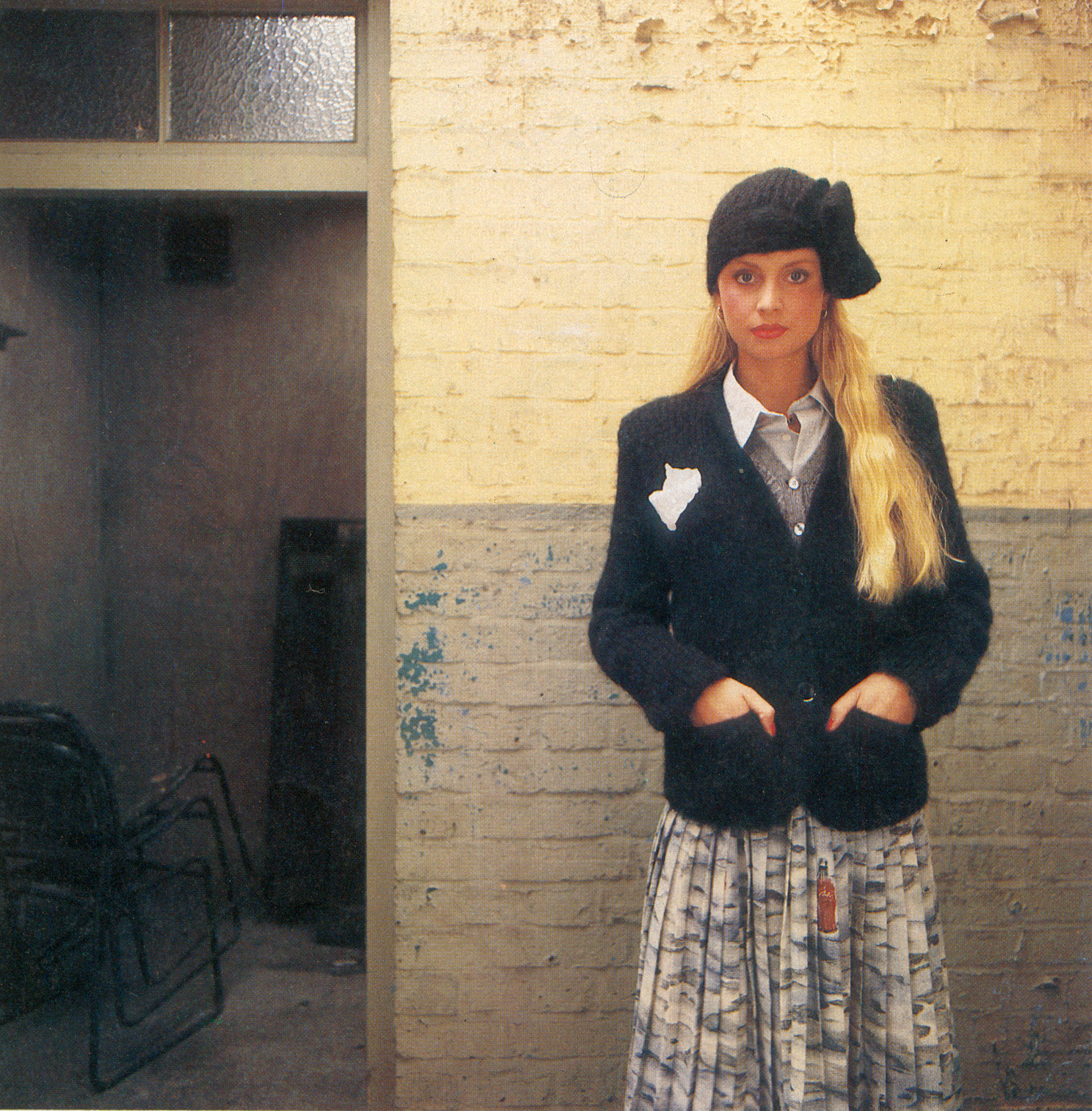
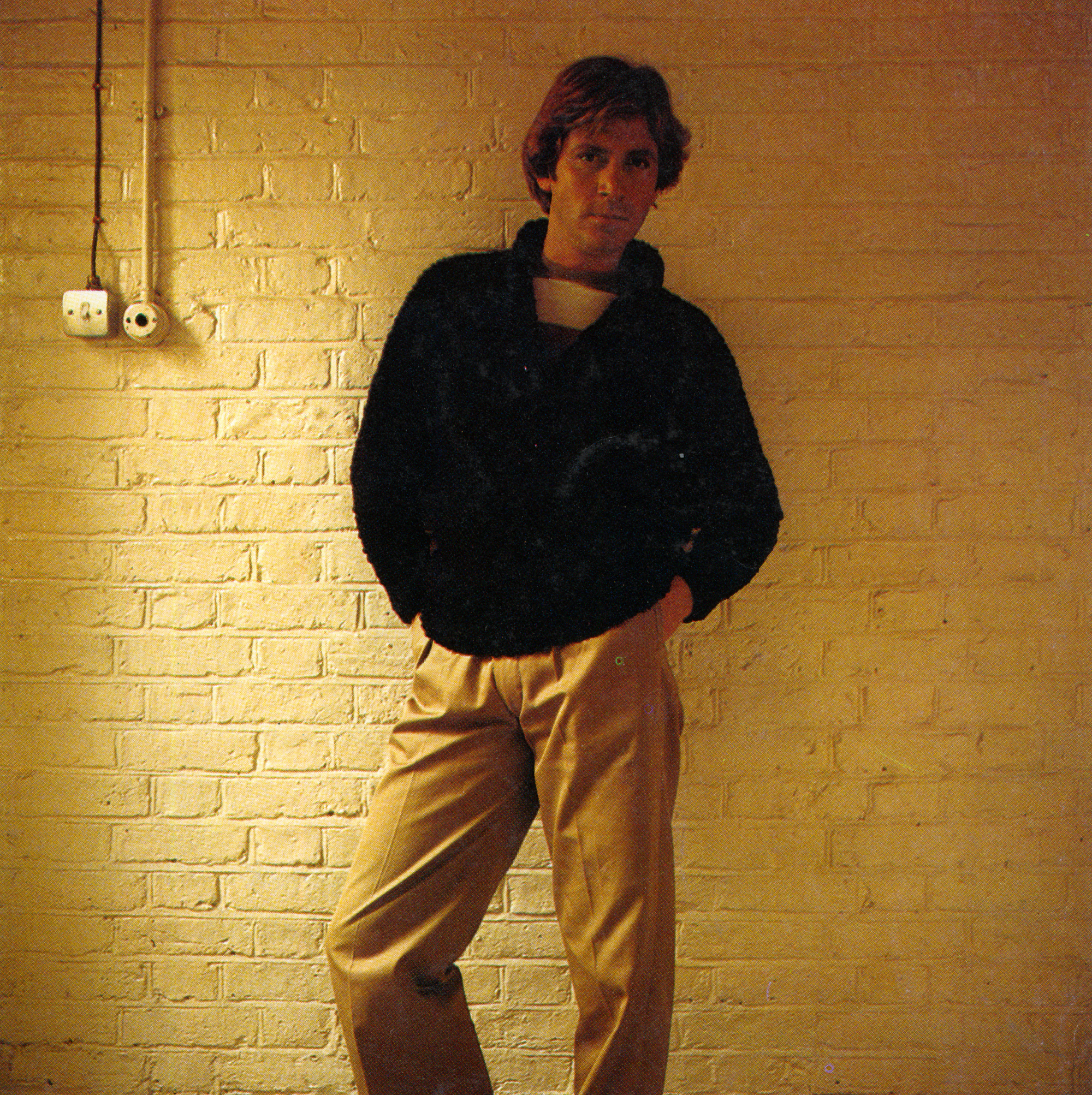
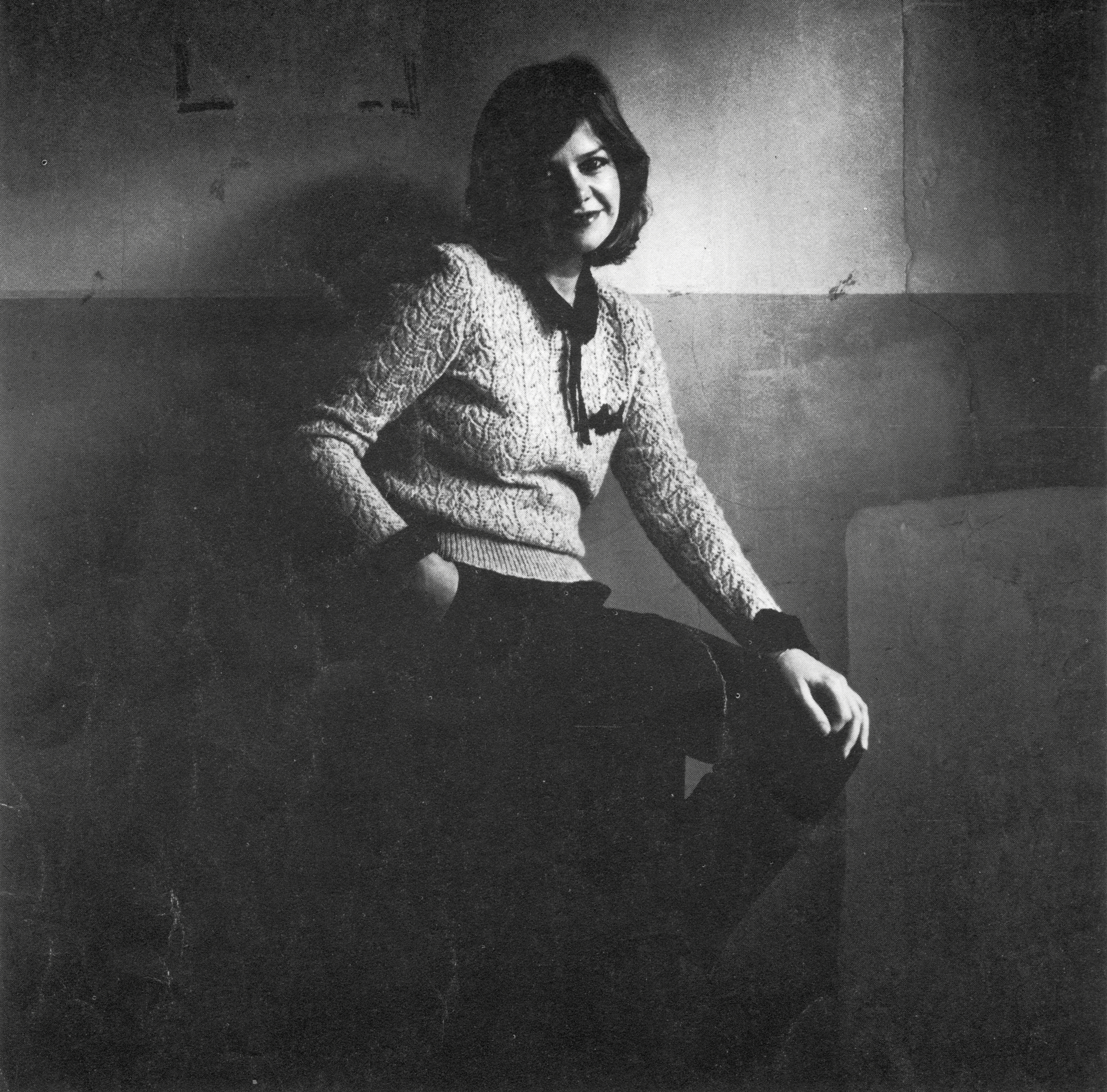
Possibly some of the loveliest photographs I have ever seen in a knitting pattern booklet, but perhaps unsurprising given the designer is Patricia Roberts and the photographer Rolph Gobits.
Art Direction by Desmond Serjeant.
Hair by Smile.
Make-up by Mary Vango.
Models: Joanna Jacobs, Kelly, Jane Rochelle, Kevin Hand, Helmut.
Photographed by Rolph Gobits.
Scanned from Patricia Roberts Knitting Patterns, 1978.



This is definitely the Season of the Midi, which involves a whole new set of fashion rules. Midis look best without an inch of leg showing, which means either long tight-fitting boots to take over where the midi finishes, or coloured tights matching clumpy-heeled shoes. So keep gulping; daily doses will keep you in the pink, fashion wise.
Aside from all the dreamy autumnal clothes and the fact that the blonde model is Charlotte Martin, it’s so lovely to see Terry de Havilland’s early and legendary three-tier wedges. As so often with Terry’s shoes, they are erroneously credited to the stockists (here ‘Jolly Boy’), but it’s still lovely to see them.
Photographed by Elisabeth Novick.
Scanned from Honey, August 1970.


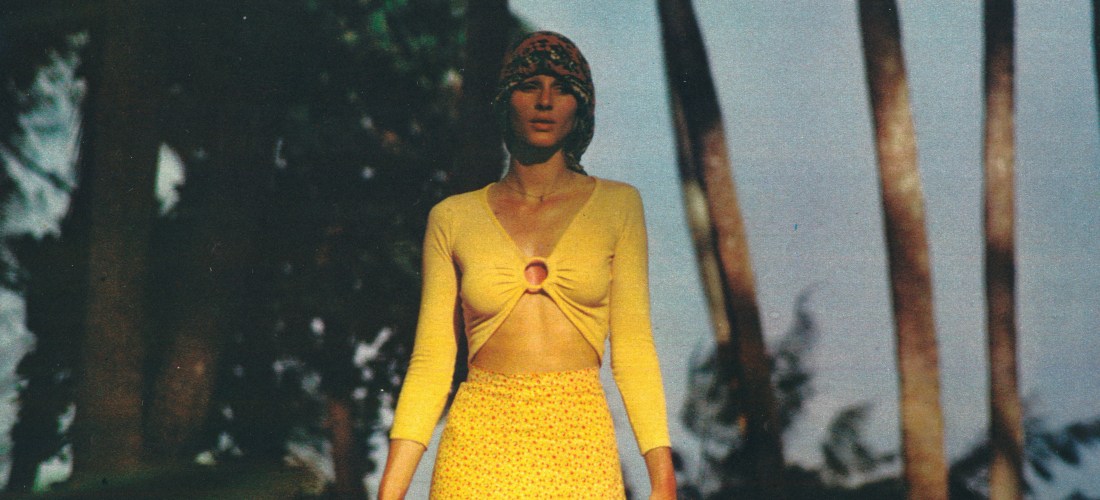
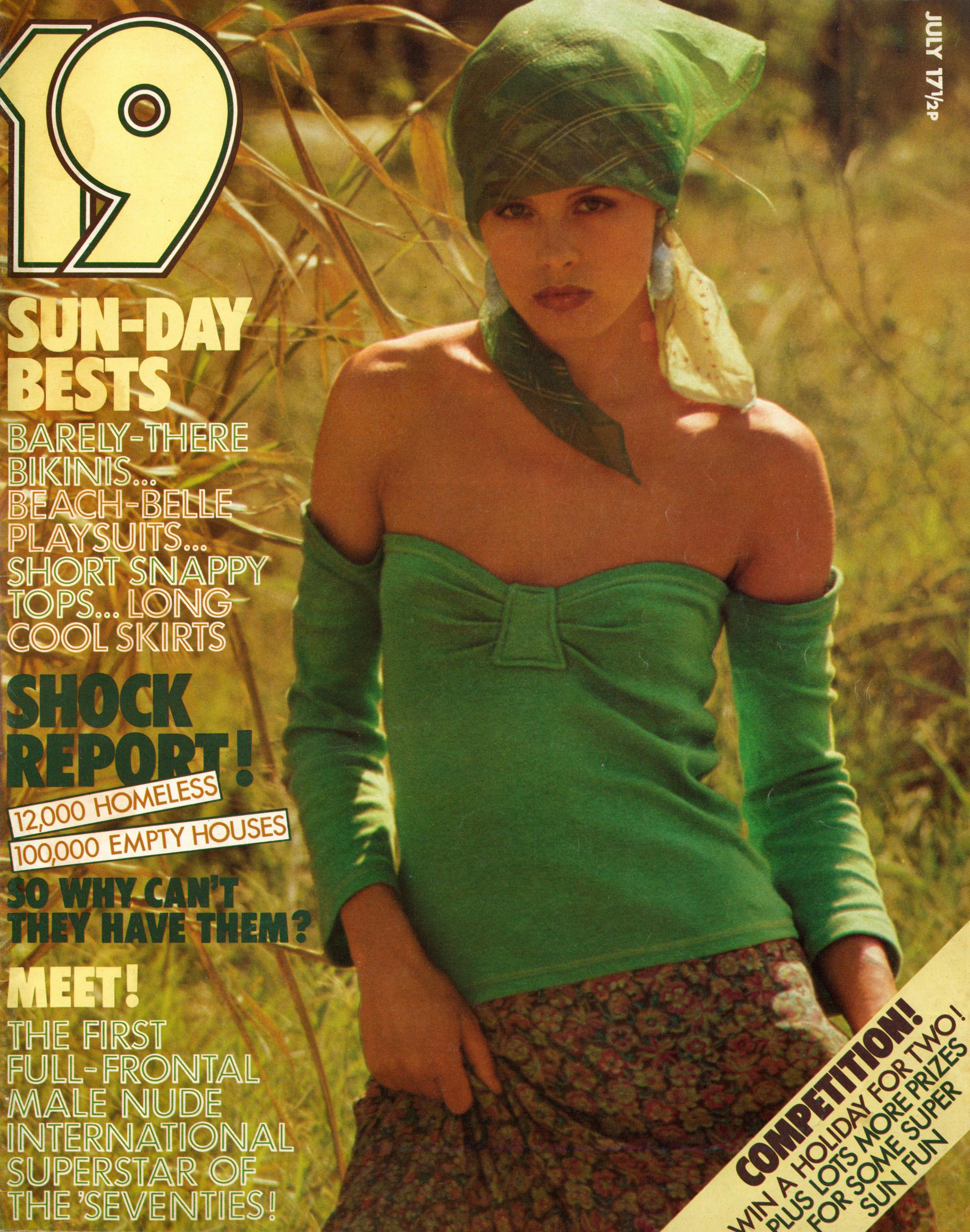
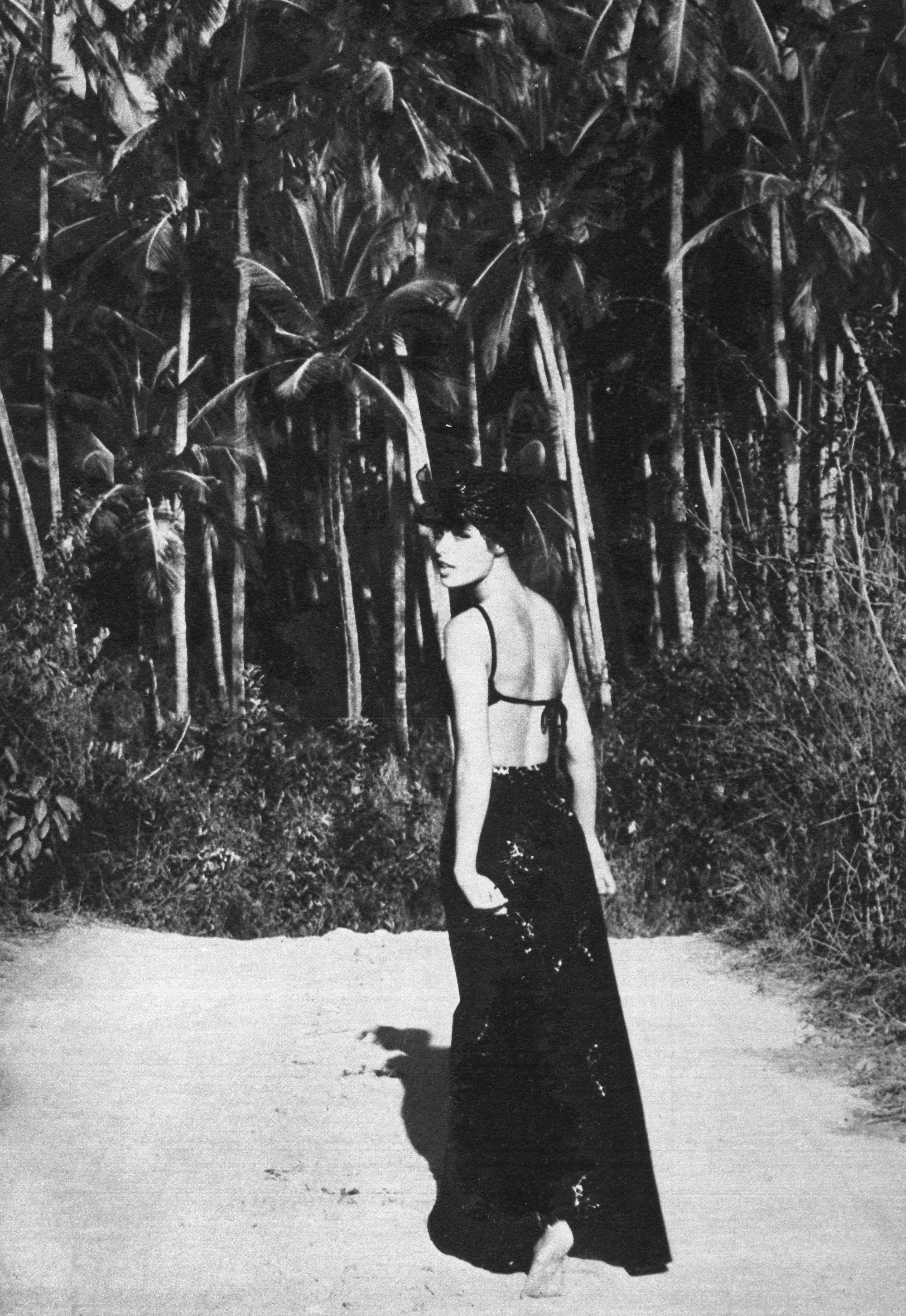
You’re on holiday. It’s evening. You feel like dressing up, but staying casual. Something that’ll take you just anywhere. These skirts are ideal. Right for the beach. Perfect for a rendezvous.
(One of the models I believe is Uschi Obermaier.)
Photographed by Michael Berkofsky.
Scanned from 19 Magazine, July 1973.
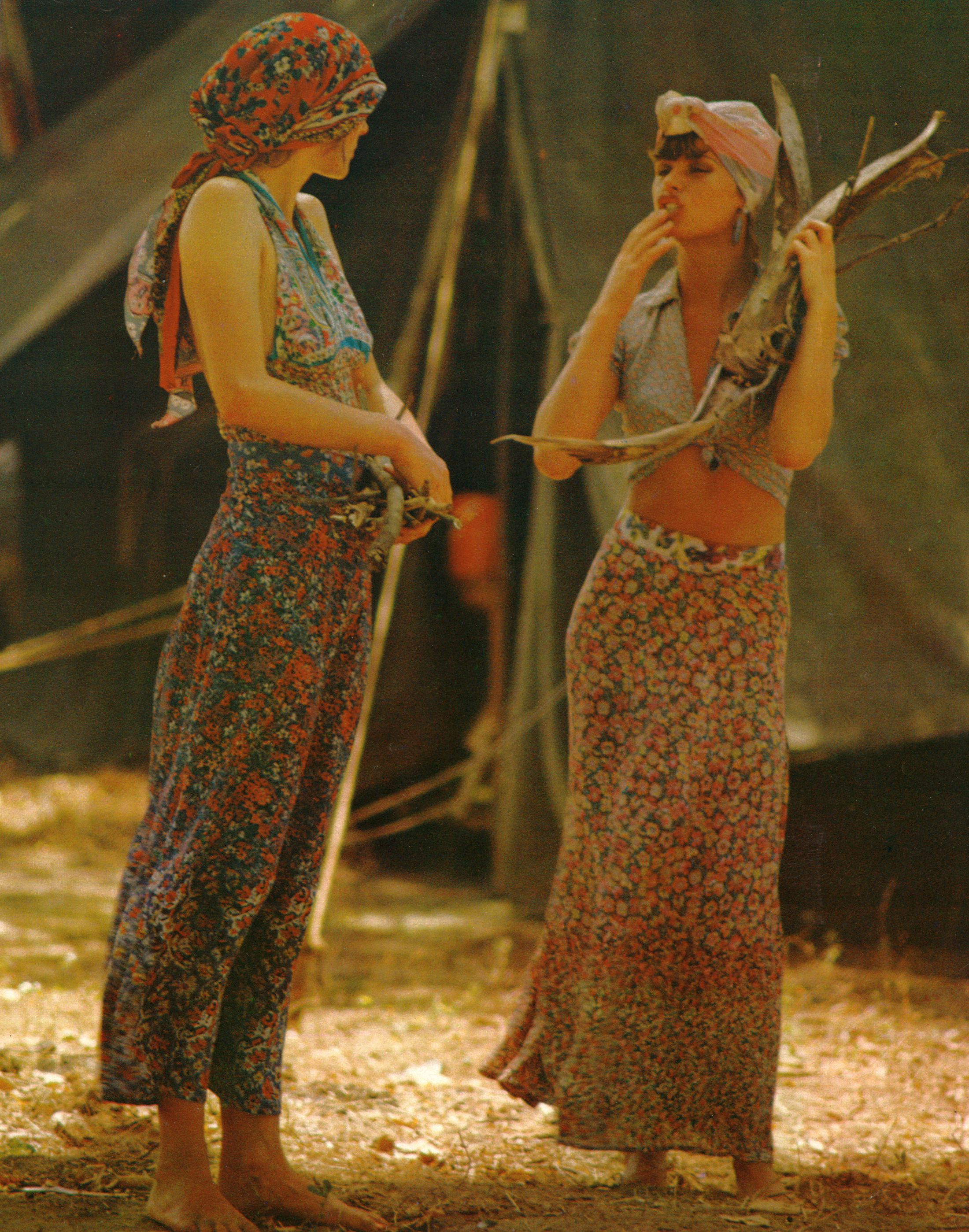
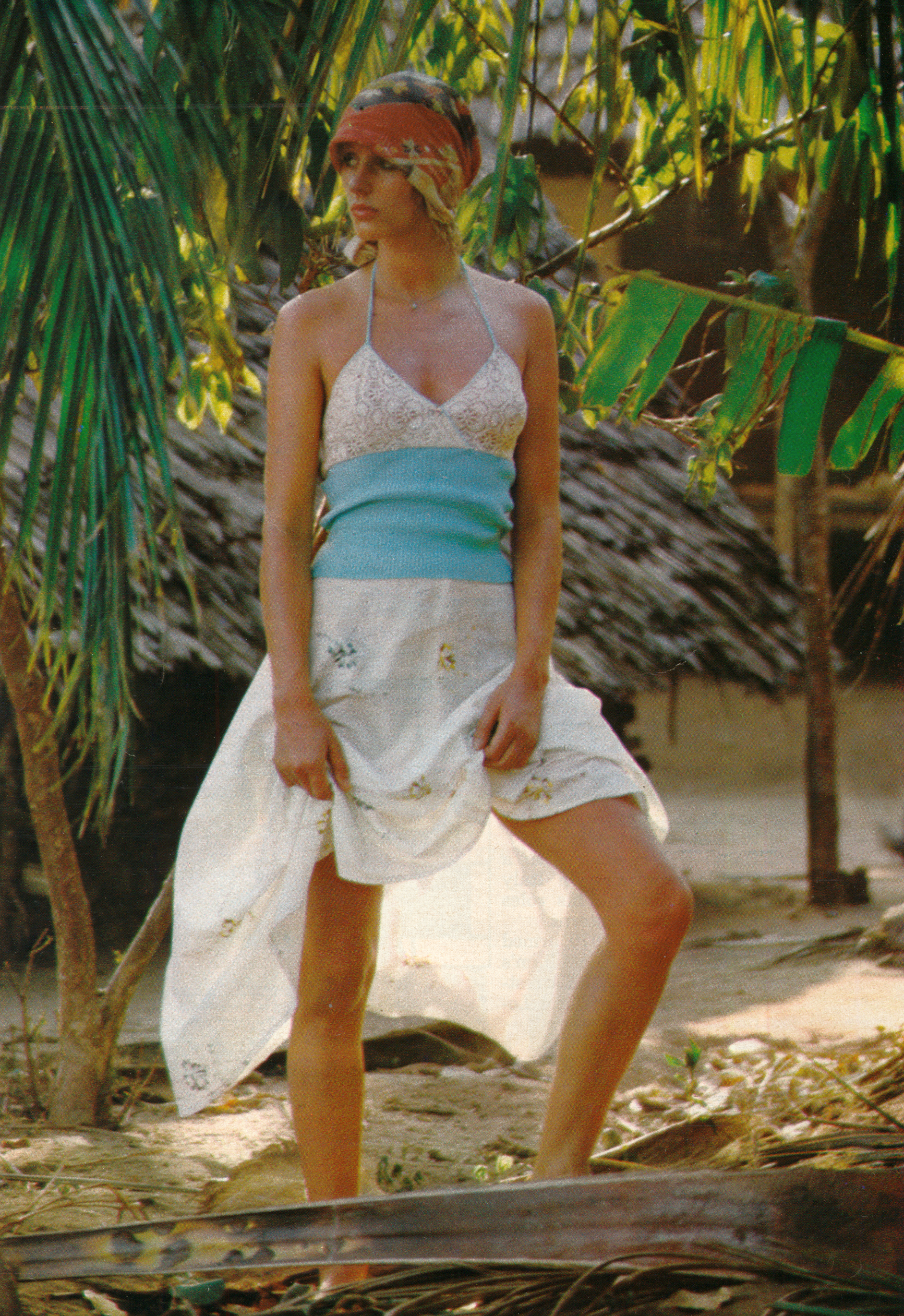
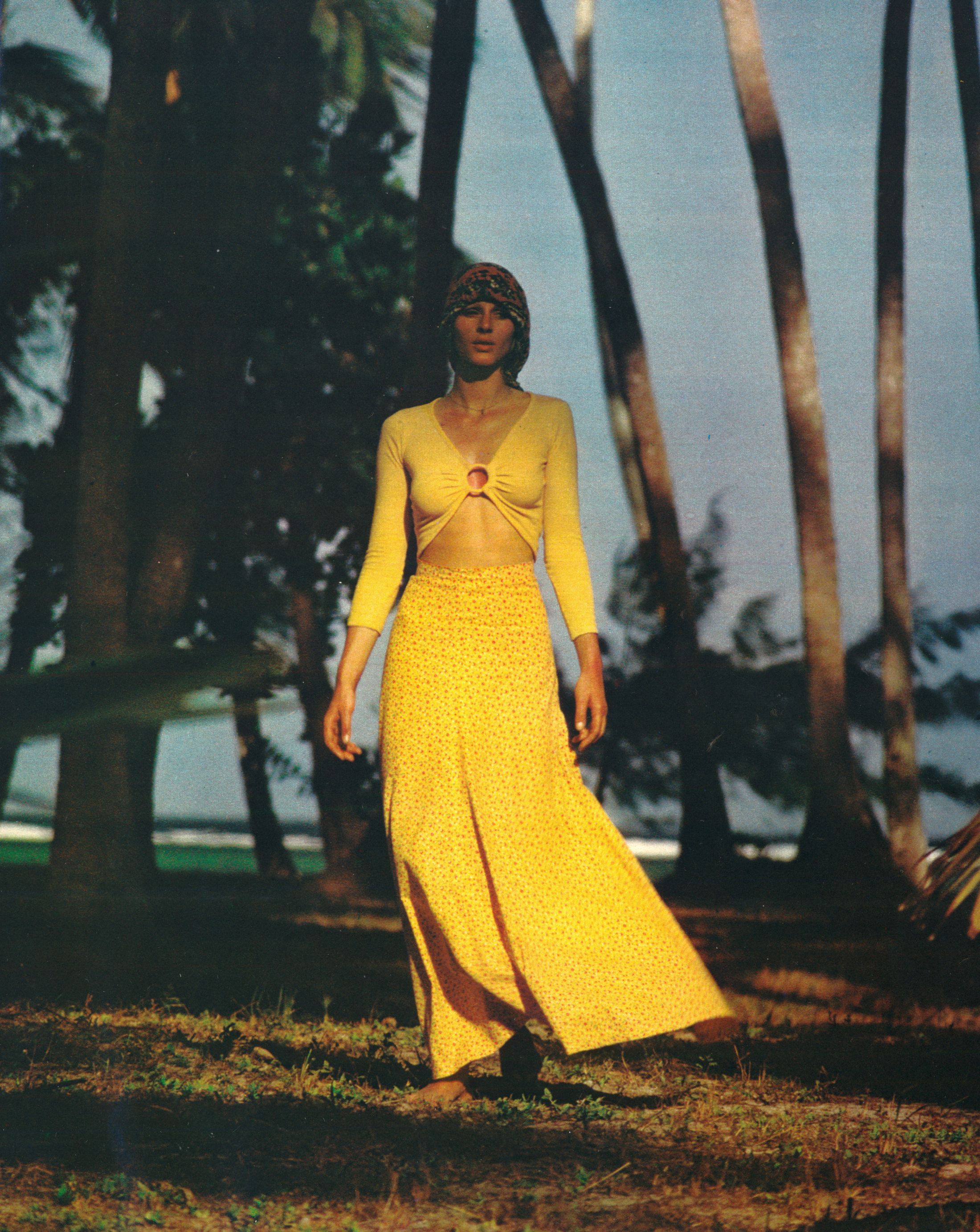
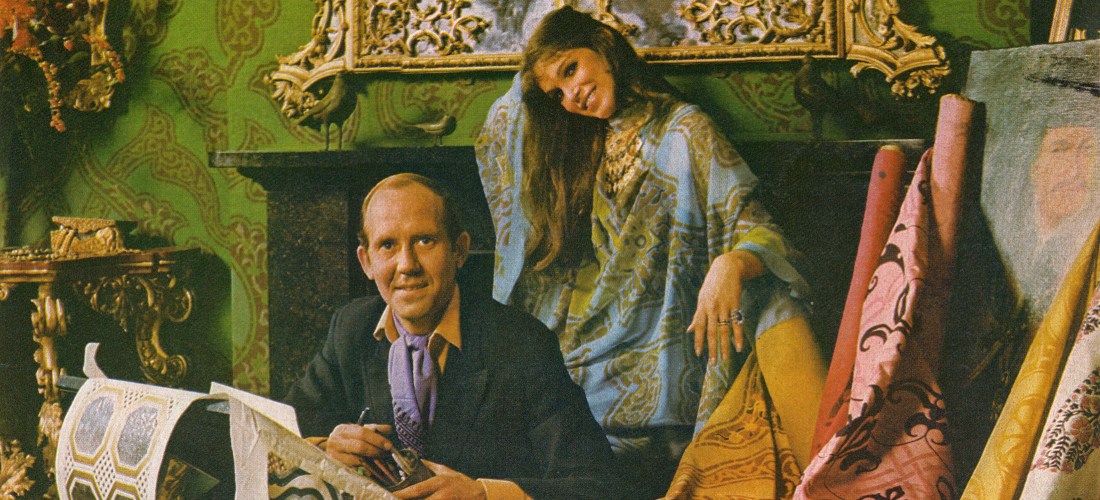
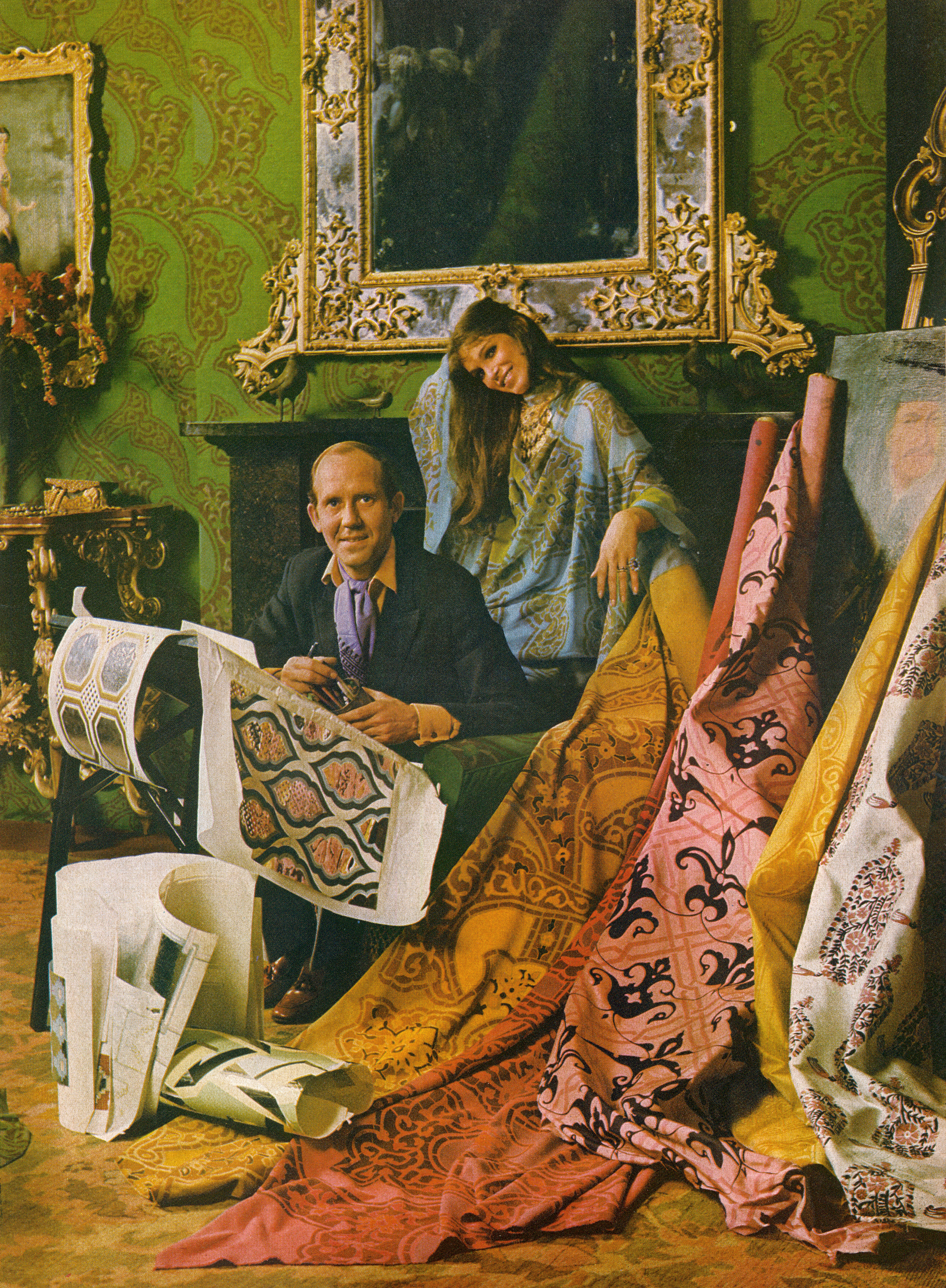
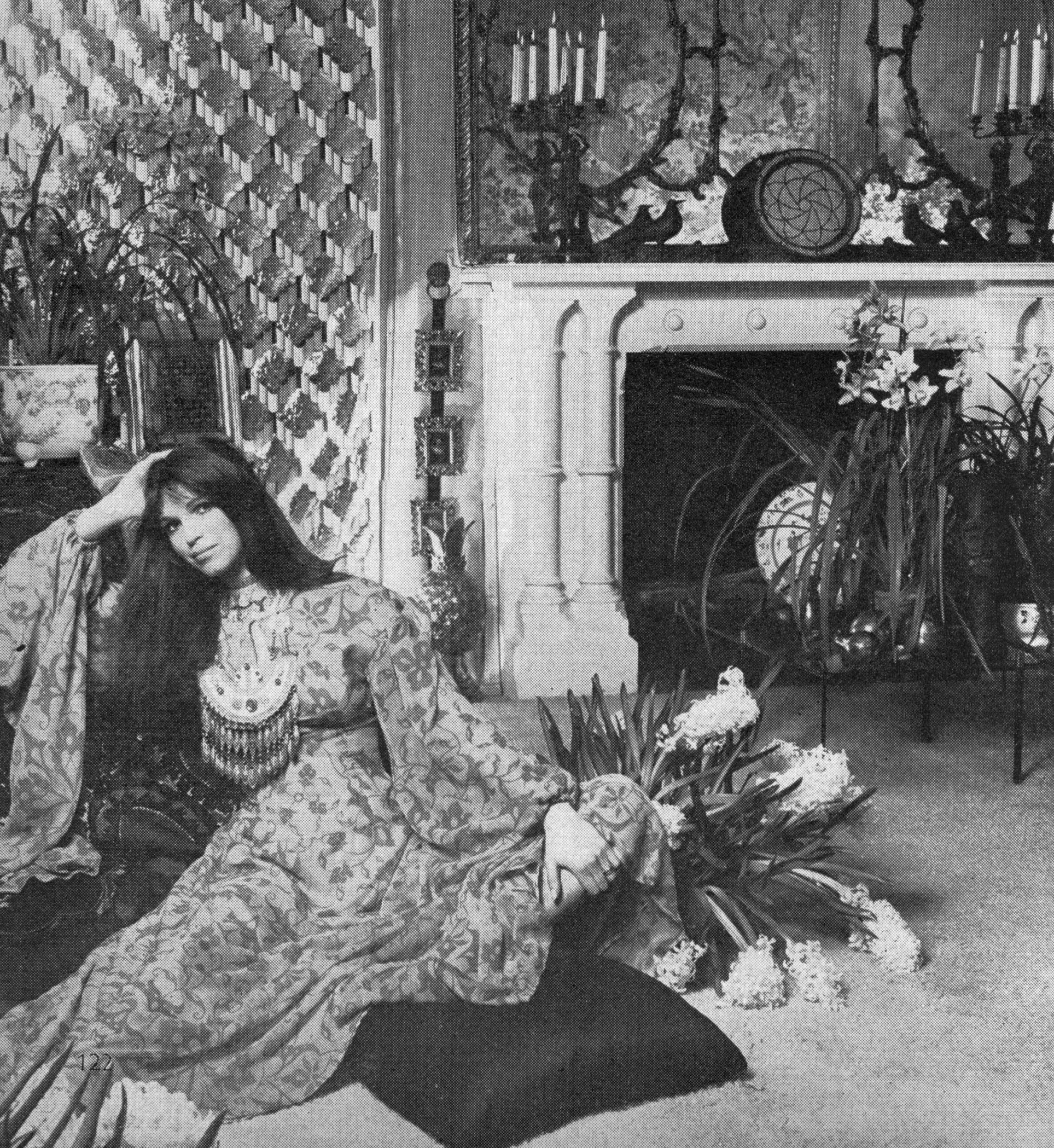
Michael Szell is the Hungarian fabric designer who is introducing Iran to London via a new collection of designs, taken up by Thea Porter for her romantic and ravishing evening dresses. His own bedroom, opposite, is in rich emerald, turquoise and brown arabesqued linen, cool and grand by day but rich and warm by electric light, with 18th-century Eng-lish paintings and mirrors. His drawing-room, below, is turquoise with brilliant Persian prayer mats colouring the walls, 18th-century English botanical china, and a mixed forest of hyacinth and growing orchids, later bluebells and orchids. Iran runs through Michael Szell’s life like a thread. He began to visit friends and connections there while he was still a child, used every possible holiday to get there while he studied economics at Aberystwyth University, and later when he worked with Sir Nicholas Sekers. His love for Persian ceramics, buildings and woven carpets developed into a passion for early Islamic art in its formal, random, asymmetric period before it came to represent life in the 19th-century : a passion culminating in his opening his own furnishing fabric showrooms at 47 Sloane Avenue. He began selling silk signature scarves to Henri Bendel of New York in 1969 and has just produced his new Persian collection of fabrics. Thea Porter asked him to print his designs onto silk chiffon for her and made them in flowing evening dresses with yards of floating sleeve and skirt.
For the coronation of the Shahanshah and the Empress of Iran, Michael Szell designed curtains, chair-fabrics and an entire state banquet for the Golestan Palace. He has been asked again to help with the decorations for the great October celebrations—the twenty-fifth centenary of the founding of the Persian Empire. He will contribute designs for the interiors of houses and for some of the 500 tents that are planned, with their own marble bathrooms, for the royal and distinguished guests who will take part in the celebrations at Persepolis, the ruined city and ancient capital.
Mr Szell has also been asked to provide the fabrics for all the palace sets in the new Universal film Mary, Queen of Scots, starring Vanessa Redgrave as Mary and Glenda Jackson as Elizabeth. He has an unrealised ambition to produce an absolutely modern collection of very cheap fabrics “from chair covers to plastic shower curtains”.
Model is Ann Turkel.
Photographed by Henry Clarke.
Scanned from Vogue, July 1971.
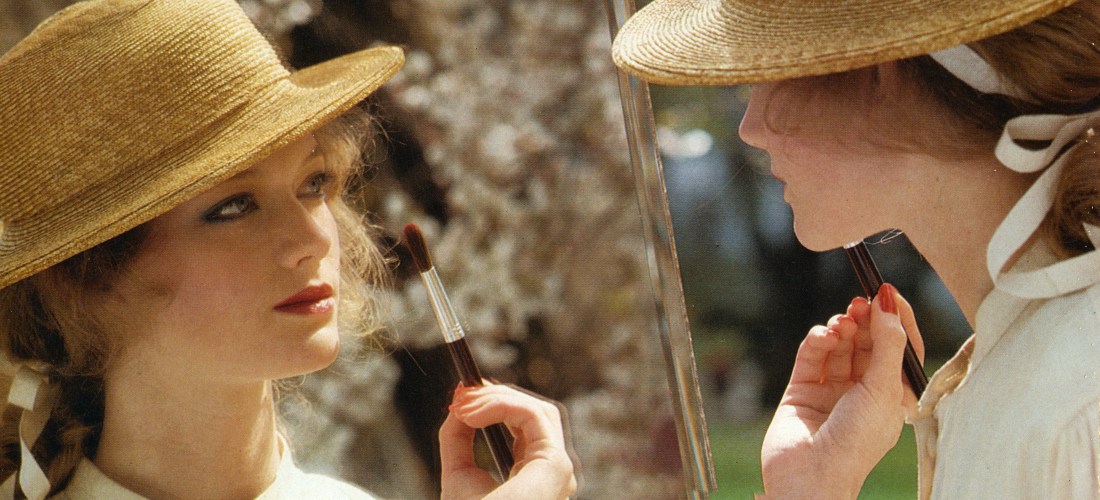

Put aside everything you’ve ever been taught about make-up. Look at colour afresh, not as a consumer of cosmetics but as a painter might.
Oatmeal cotton smock by Ally Capellino, from all branches of Whistles. Straw hat by Extras from Hobbs. Palette and brushes from a selection at George Rowney.
Make-up by Ariane using colours from Yves Saint Laurent’s L’Eté Bleu collection.
Hair by Leonard.
Modelled by Sophie Ward.
Photographed by Sandra Lousada.
Scanned from Harpers and Queen, June 1983.
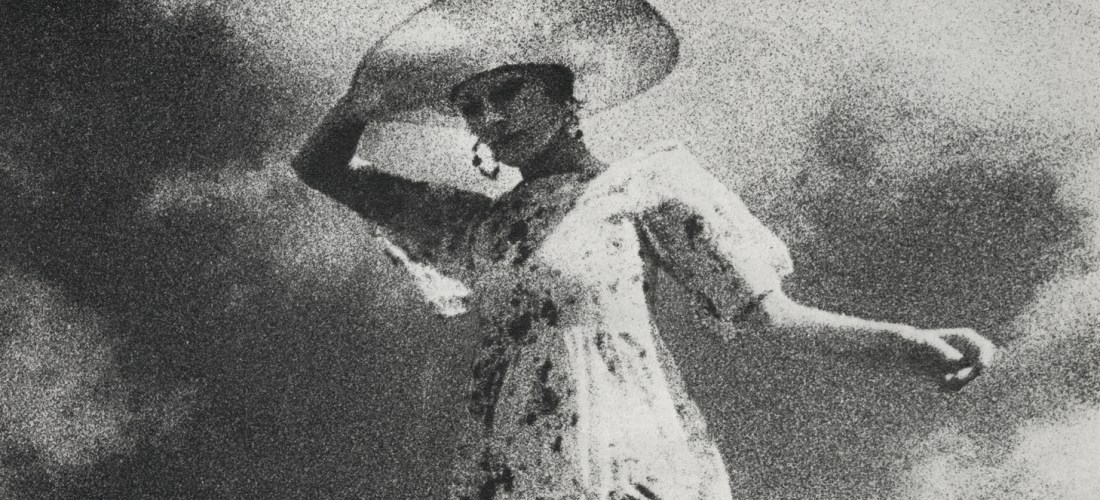
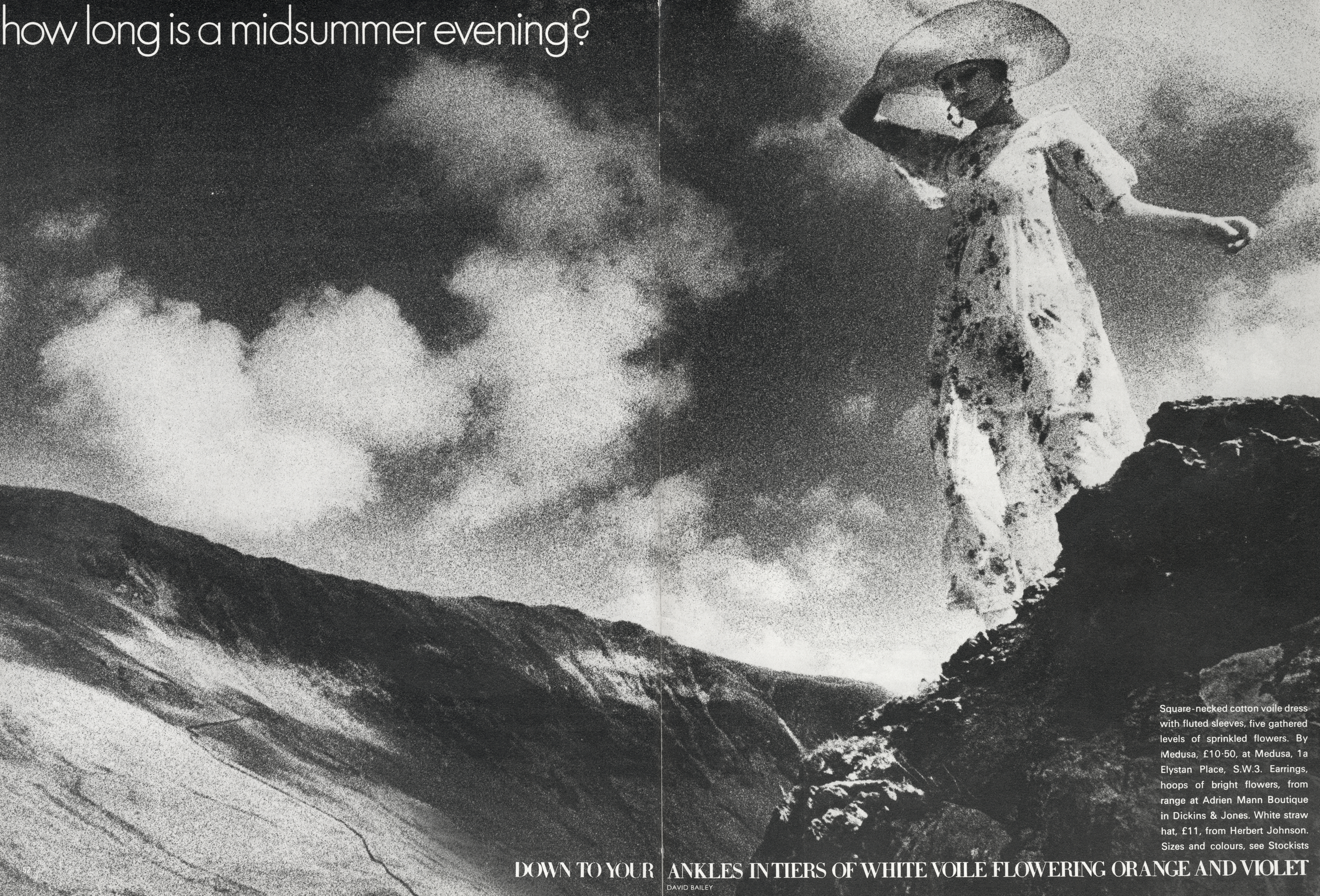
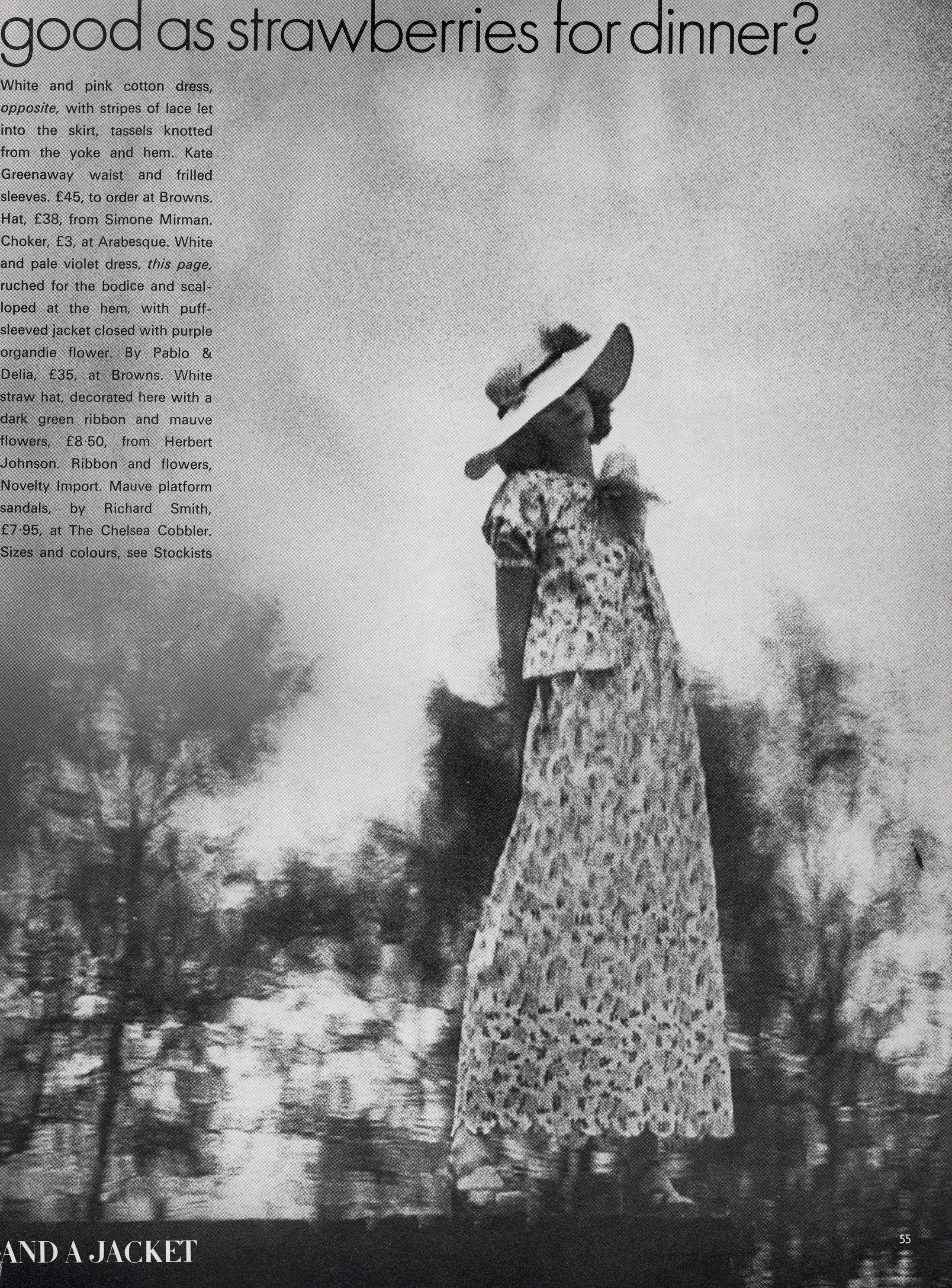
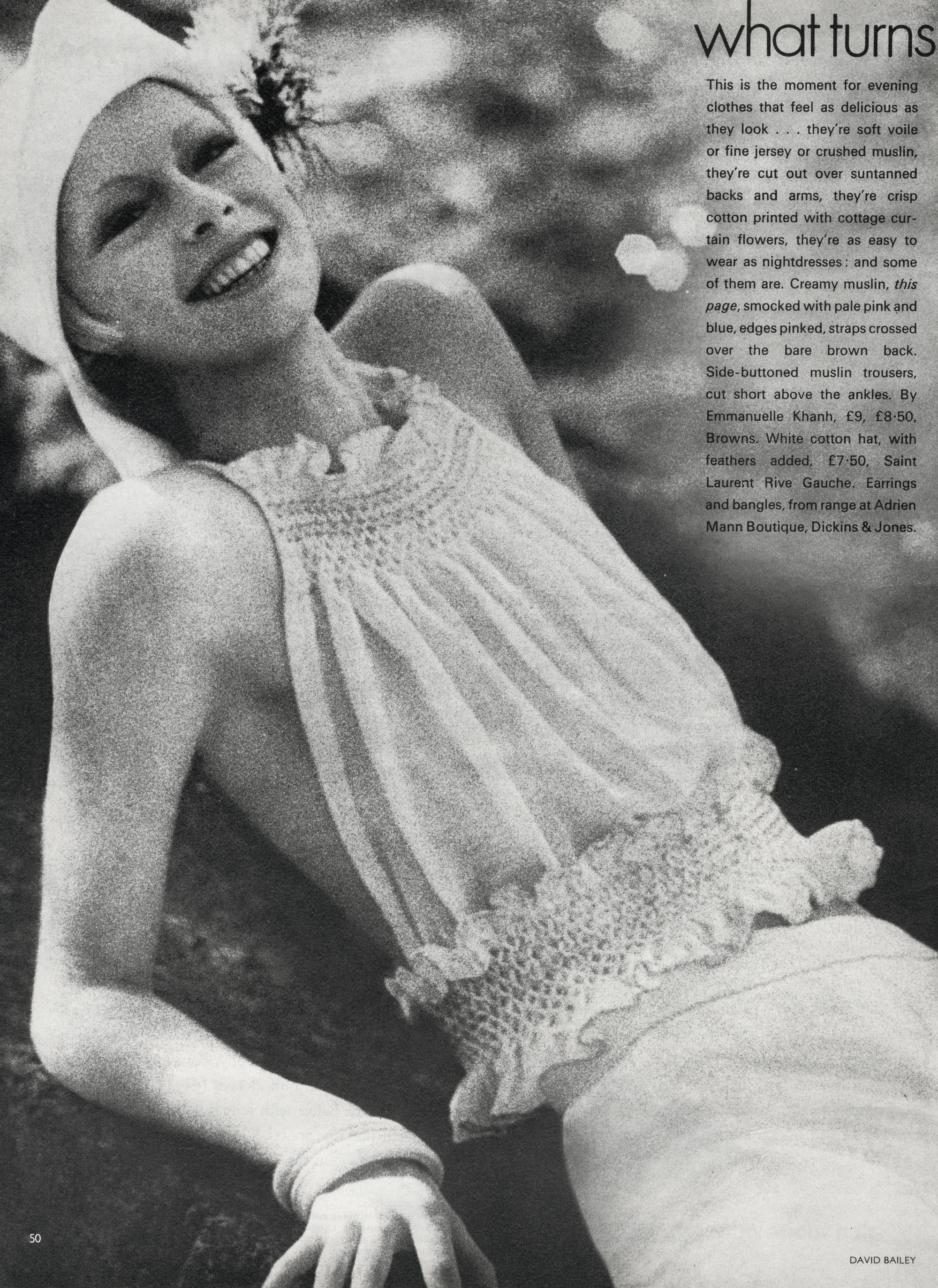
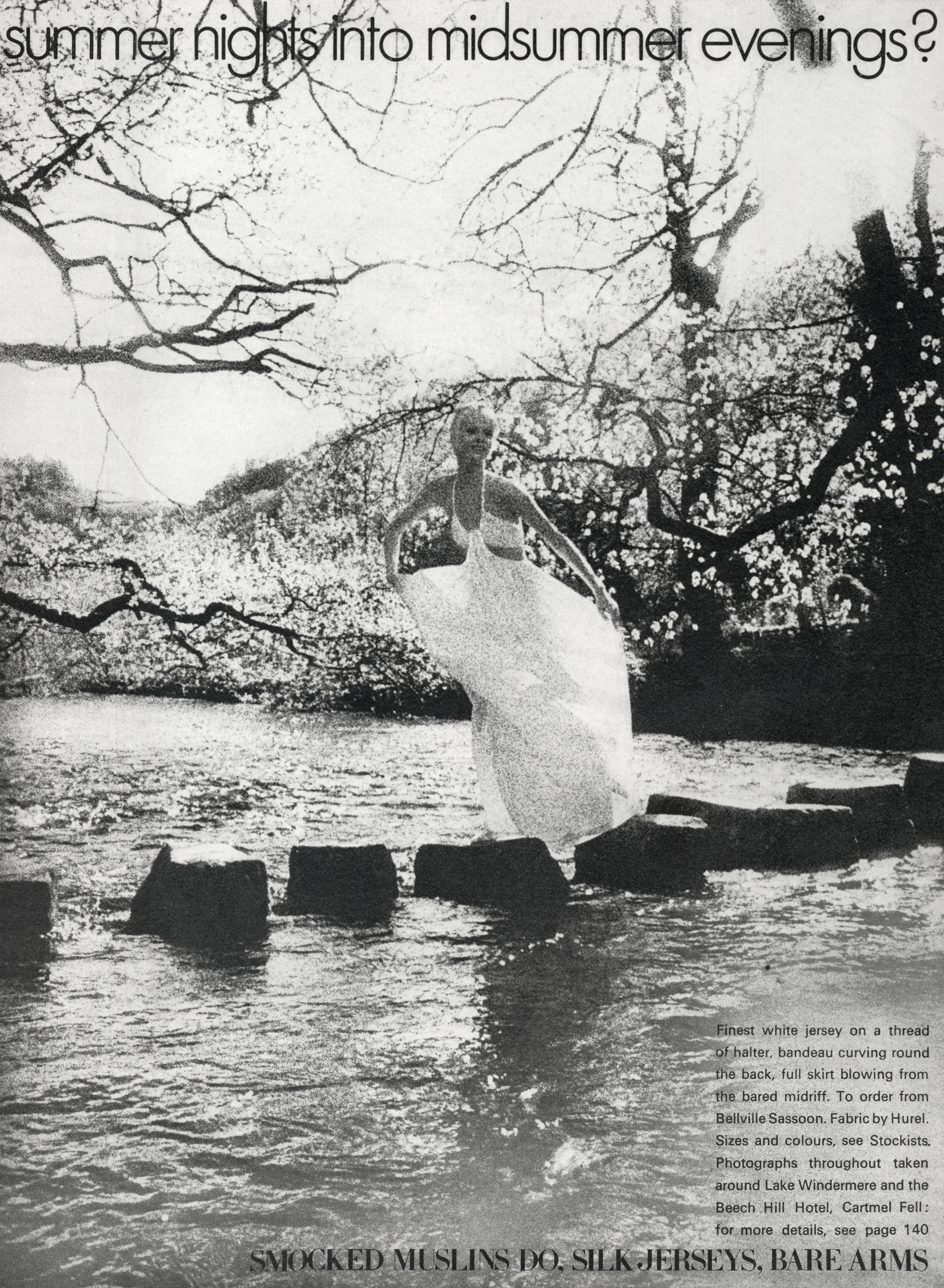
This is the moment for evening clothes that feel as delicious as they look… they’re soft voile or fine jersey or crushed muslin, they’re cut out over suntanned backs and arms, they’re crisp cotton printed with cottage curtain flowers, they’re as easy to wear as nightdresses: and some of them are.
Photographed at Lake Windermere and the Beech Hill Hotel, Cartmel Fell.
Photographed by David Bailey.
Scanned from Vogue, July 1972.
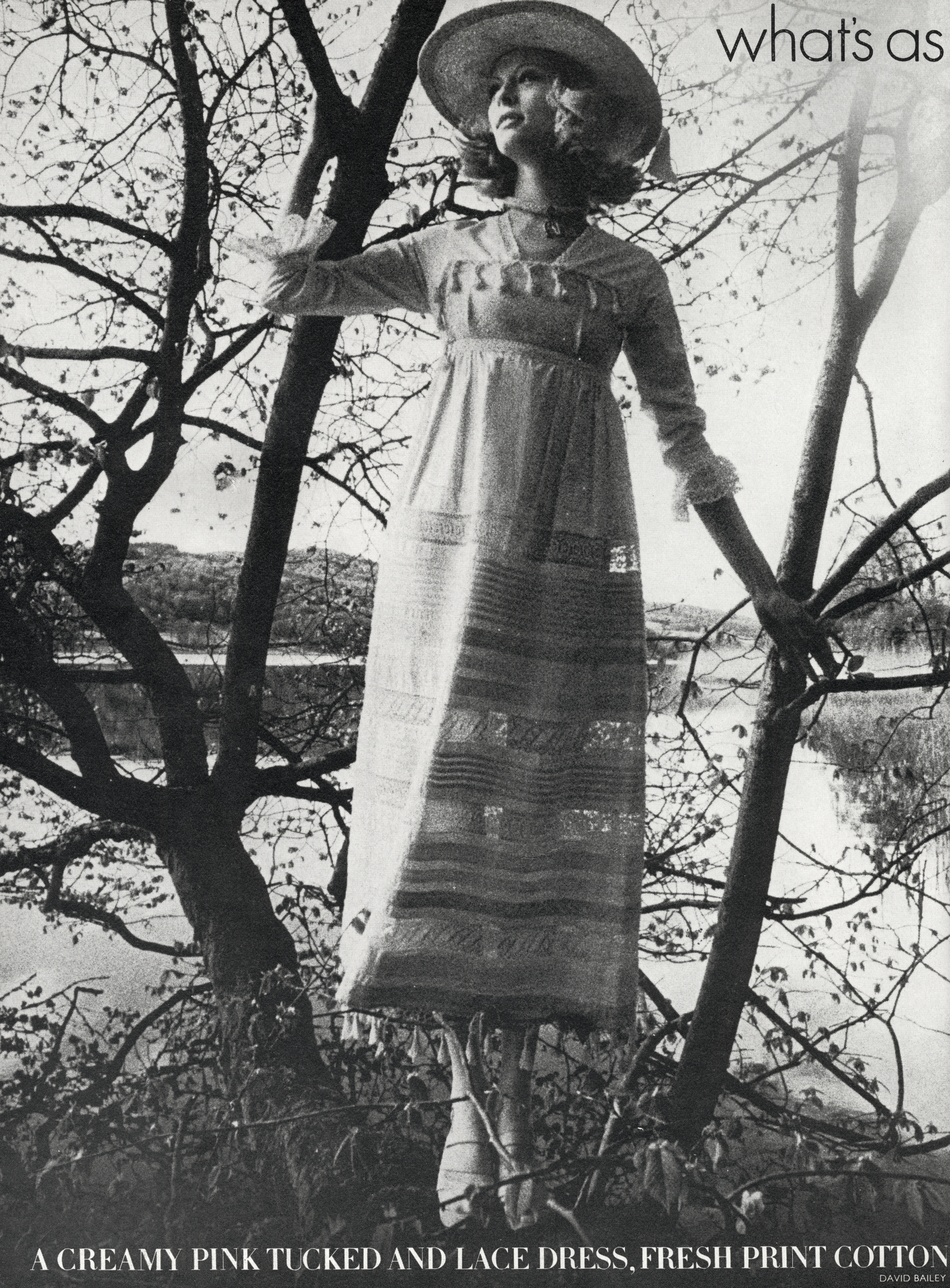
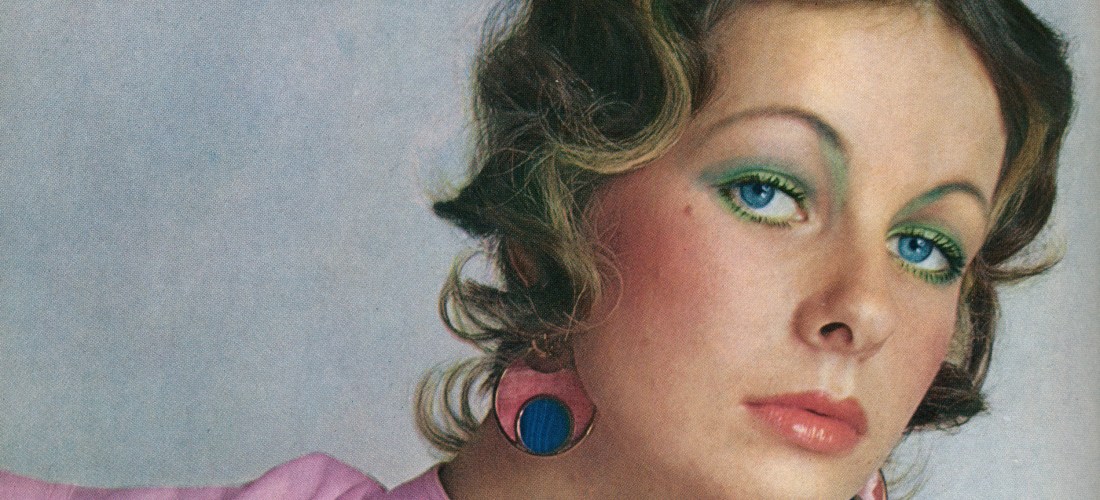
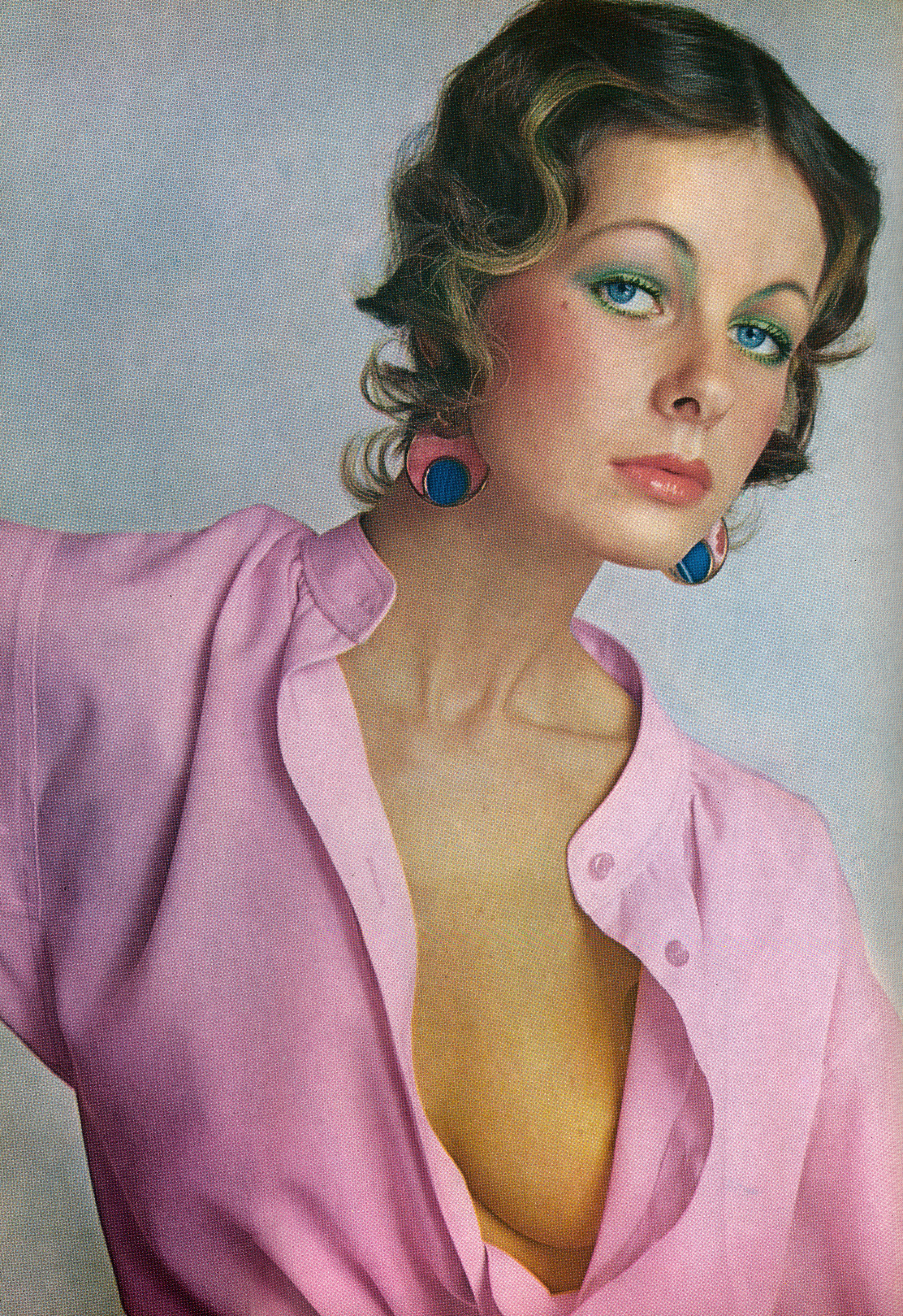
Hair by Ara Gallant, featuring an innovative ‘long-short’ haircut, styled here in a centre-parted frame of soft waves and tendrils.
Model is Susan Forrestal. Make-up by Ultima 11.
Over-sized shirt by Halston. Earrings by Bulgari-Danaos.
Photographed by Avedon.
Scanned from Beauty in Vogue, 1973.
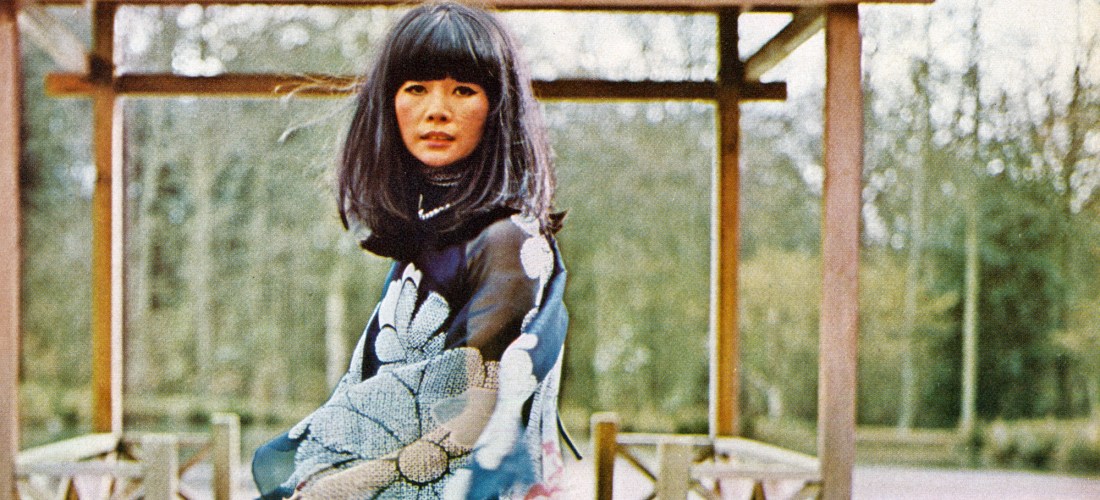

In Japan, land of the blossoming couture, Hanae Mori is a favourite daughter. Her clothes mix European classic design with oriental tradition, the Madame Butterfly fabrics are her on creation, she veils them layer on layer.
Her first boutique opened in 1947, the present score is twenty-five, and seventeen factories, hundreds of delightfully dressed ladies east and west —actresses, embassy wives, even crown princesses.
Since 1962 she has sold in New York. And now, in Harrods’ International Row, a unique few will arrive twice ayear to join Antonellis, Lanvins, Givenchys and others in their global collection.
Flowering in Hanae Mori silks here, tiny Hiroko, ex-Cardin favourite model, beautiful from the top of her black pageboy bob to the soles, of size two-and-a-half geta. Above: Crocus and chrysanthemum sunset chiffon over satin, mandarin coat and slit dress of matching print.
Below: Huge white and rose daisies on inky chiffon over a printed silk slip. Long scarf From £250 each,in a range at Harrods. Pearls by Mikimoto. Hiroko’ s Gala make-up: Orange Dazzle over Poppy Dazzle Super-smooth lipstick, Flame Darle nail polish
Photographed by Snowdon.
Scanned from Vogue, June 1972.

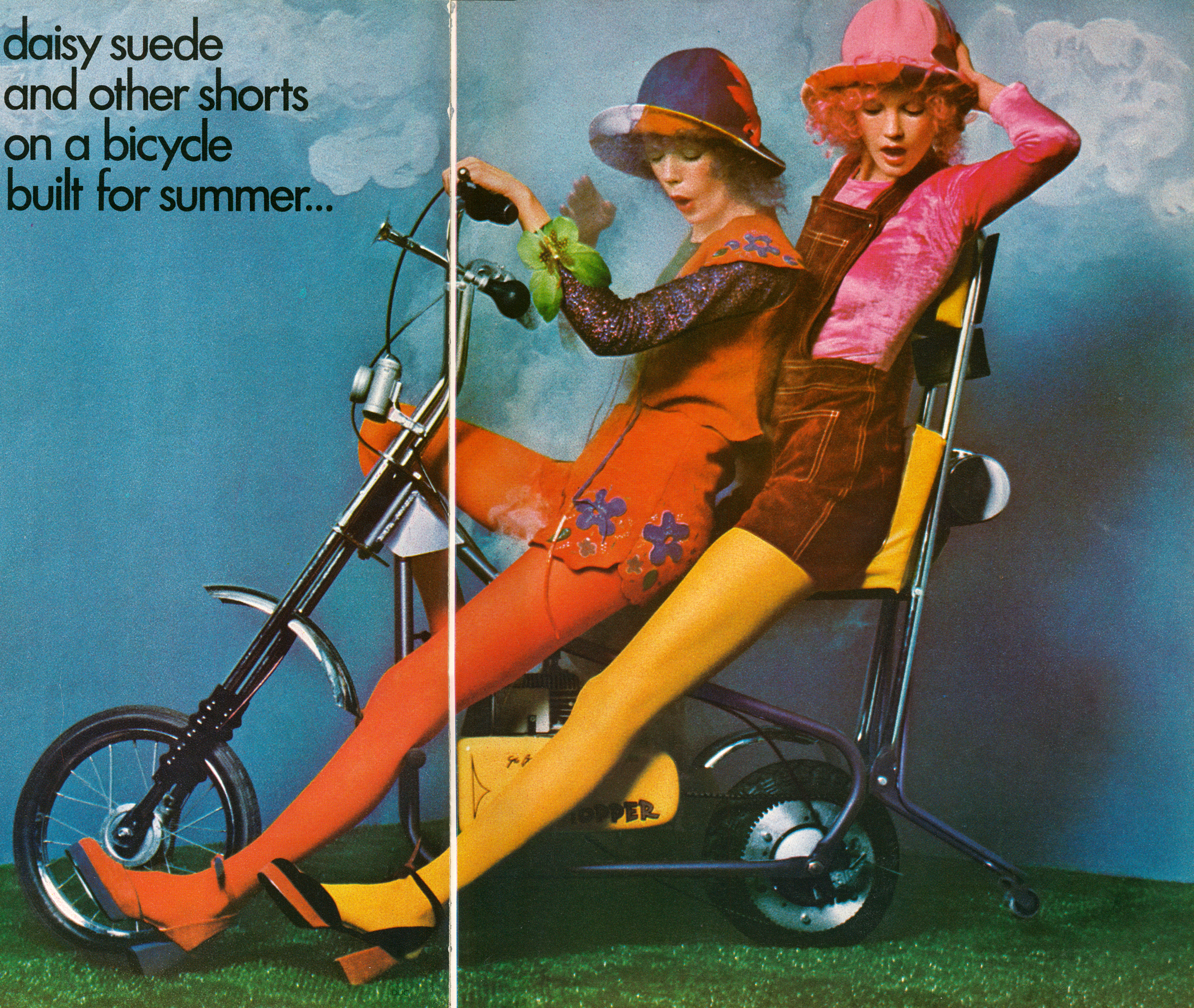
Blue skies, fresh air, freewheeling and summer suede shorts. This way.
Unusually for Vogue, this spread doesn’t credit a photographer. It also credits those amazing shoes to Rowley and Oram, who stocked Terry de Havilland’s shoes, so I suspect that they are by him as well.
Scanned from Vogue, April 15th 1971.
 Liz Eggleston