
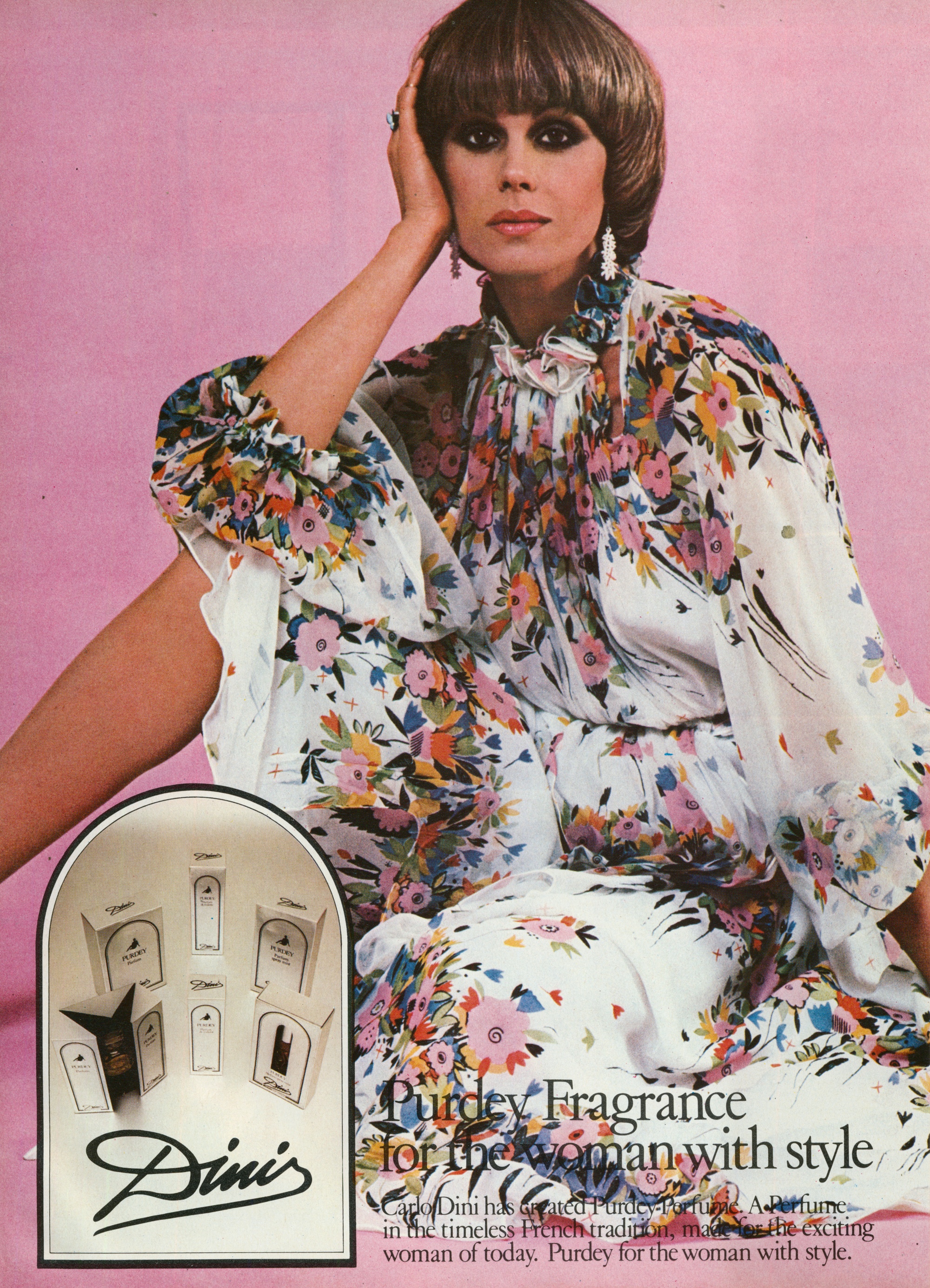
Joanna Lumley giving me the New Avengers and Celia Birtwell-print Ossie Clark crossover I didn’t know I needed. I would dearly love to know what this smelled like, if anyone can remember please let me know!
Scanned from Vogue, January 1978.
Joanna Lumley giving me the New Avengers and Celia Birtwell-print Ossie Clark crossover I didn’t know I needed. I would dearly love to know what this smelled like, if anyone can remember please let me know!
Scanned from Vogue, January 1978.


Short, shiny waves, tight to the head and crowned in a slippery sequin beret add the ritzy touch to oyster satins and champagne silks—daring dresses, glamorous enough for anybody’s Rolls.
Brunette model is Therèse.
Photographed by Brian Downes.
Scanned from Honey, December 1971.


Black, the old enchanter. Bewitching, mysterious, romantic. In velvet, satin and soft silk jersey. Dramatic alone or shouting with colour. That timeless black magic still weaves its ancient spell.
Hair by Leonard.
Photographed by Hiroshi.
Scanned from Flair, November 1971.



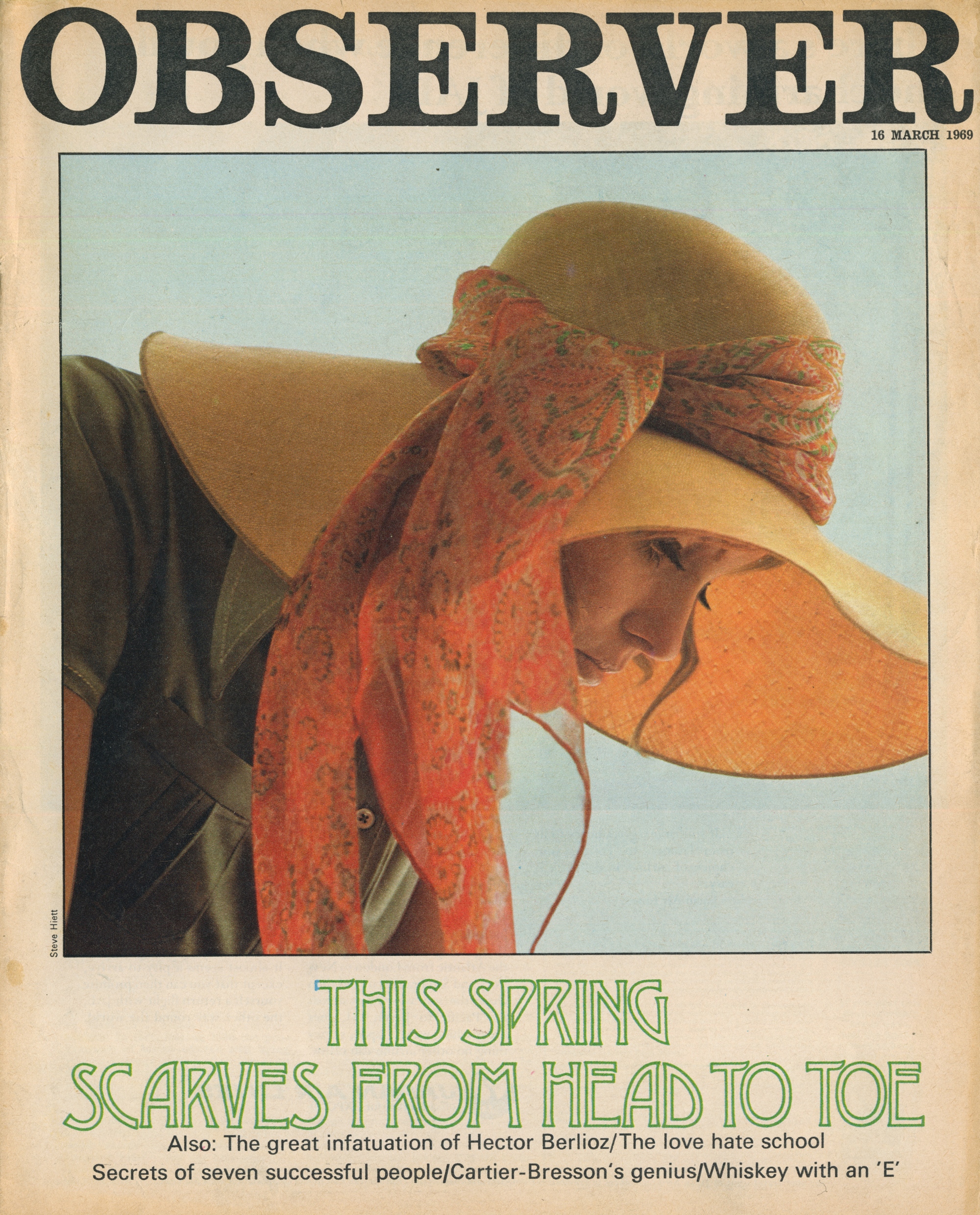
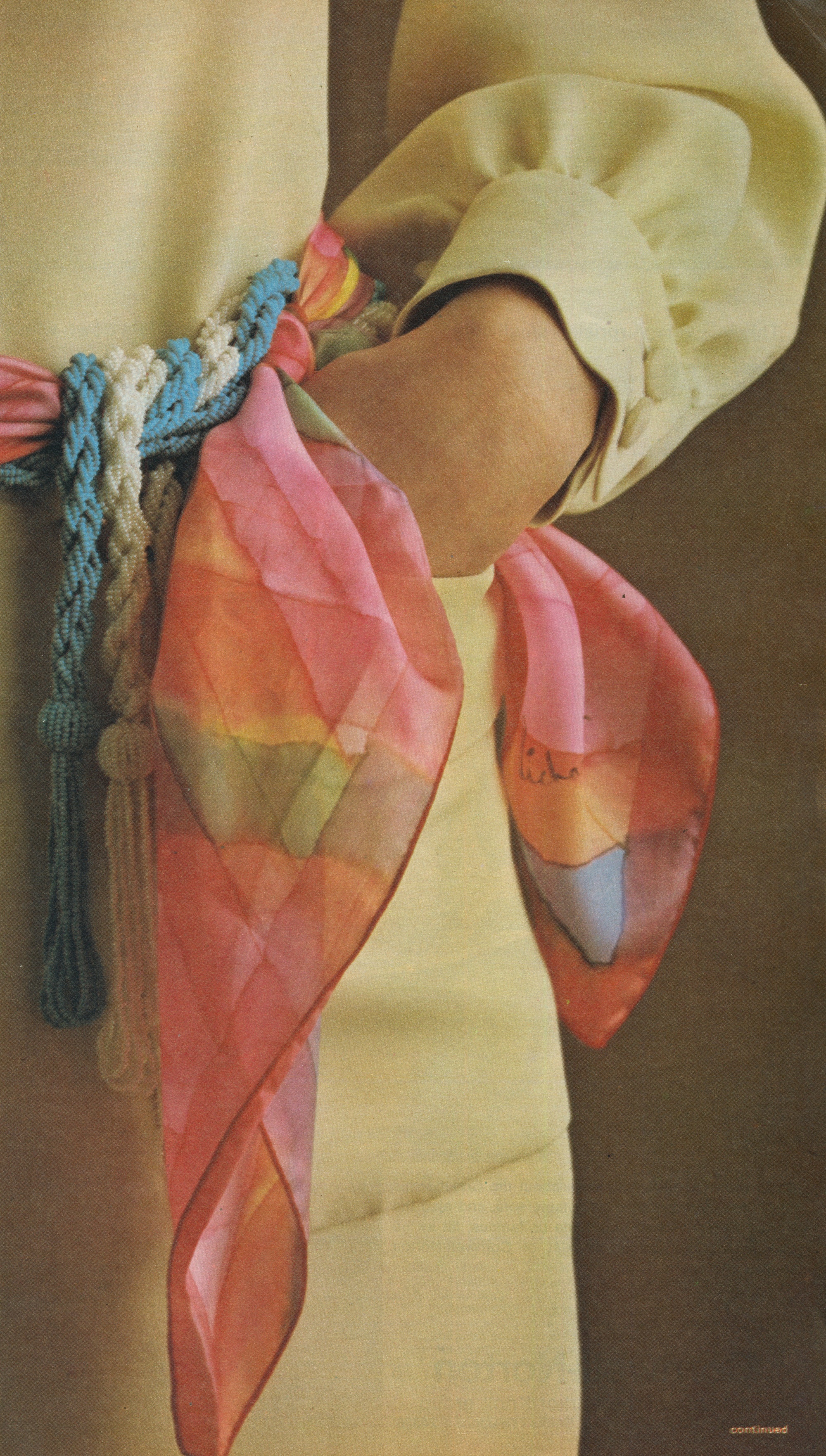
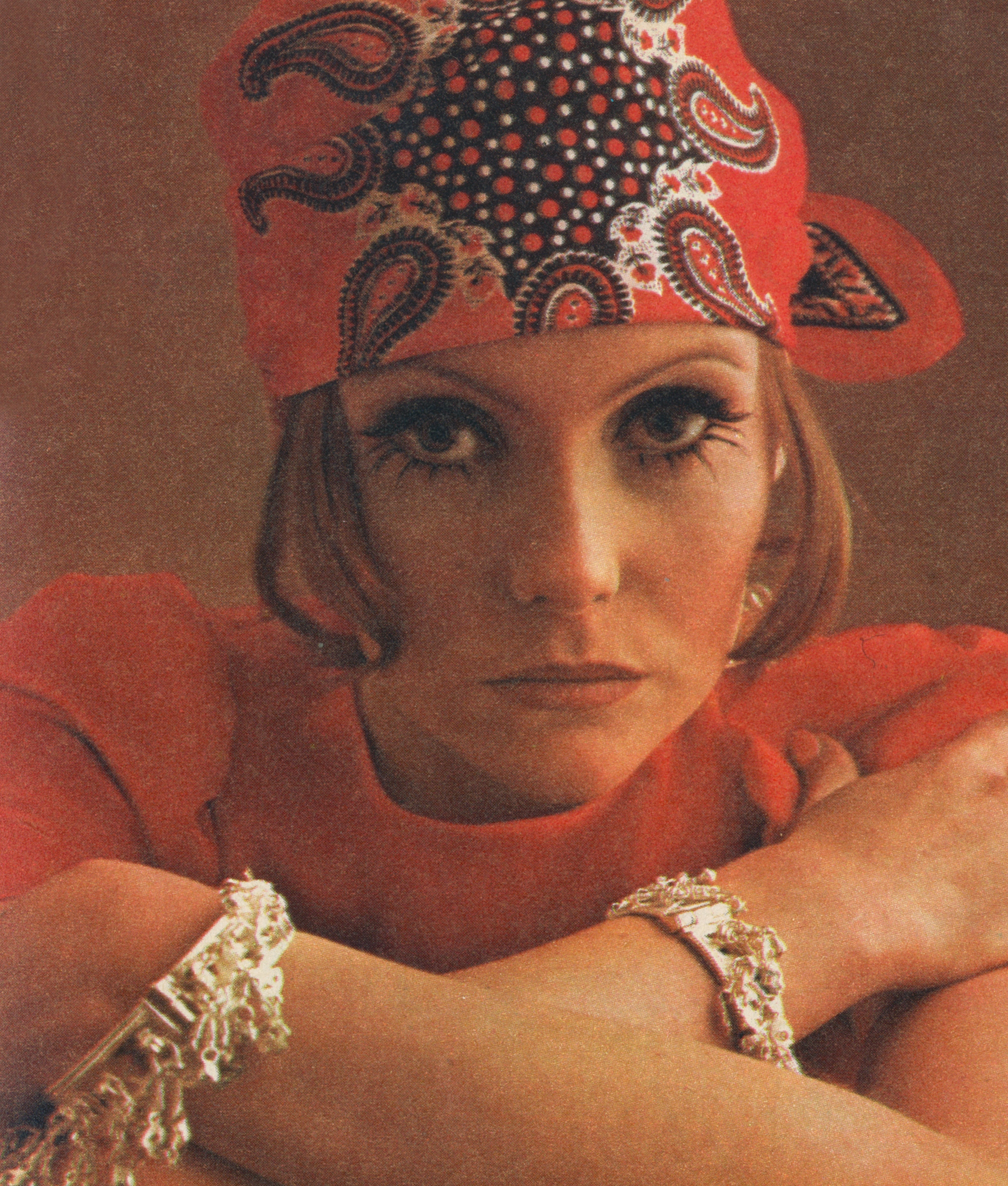
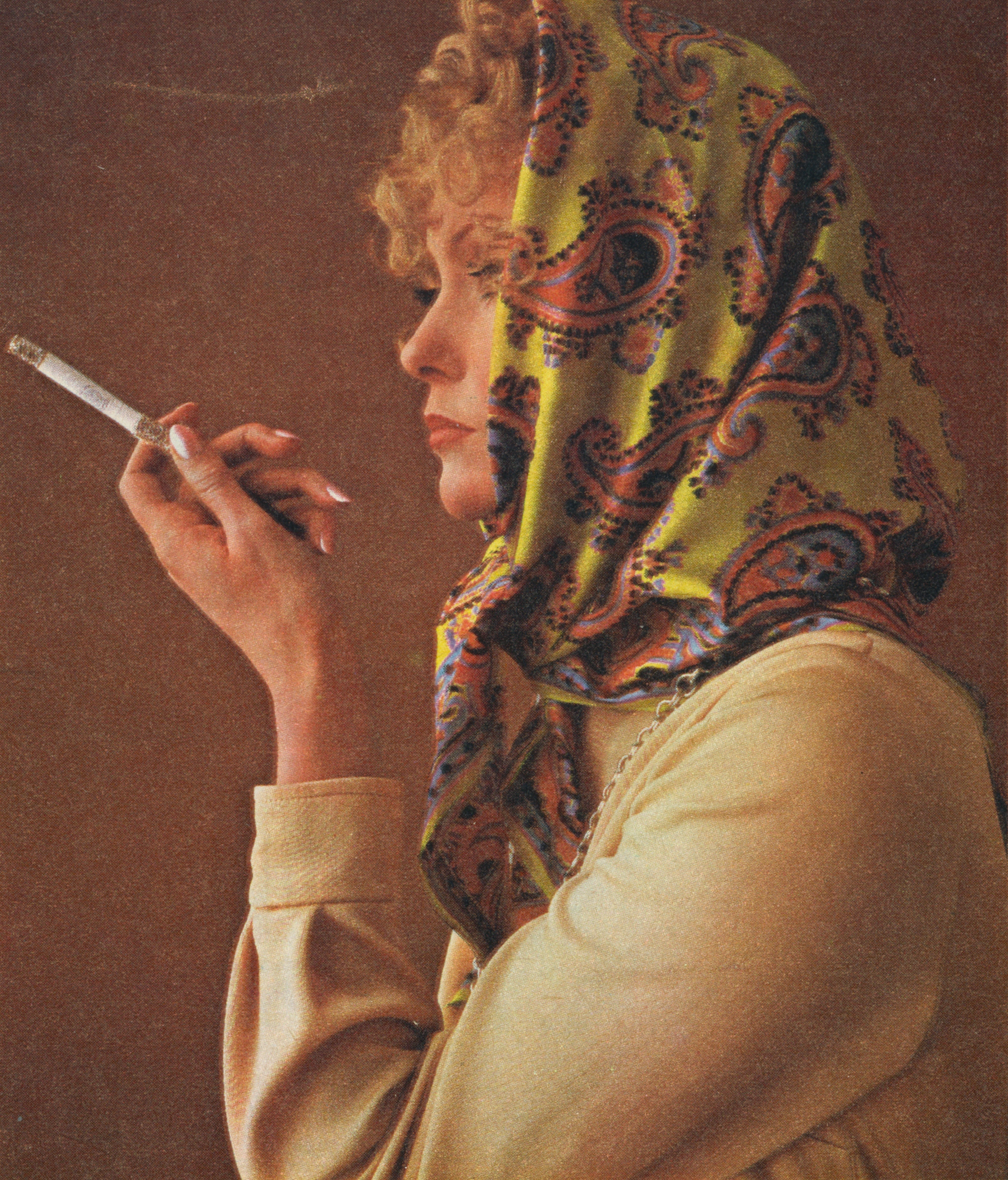
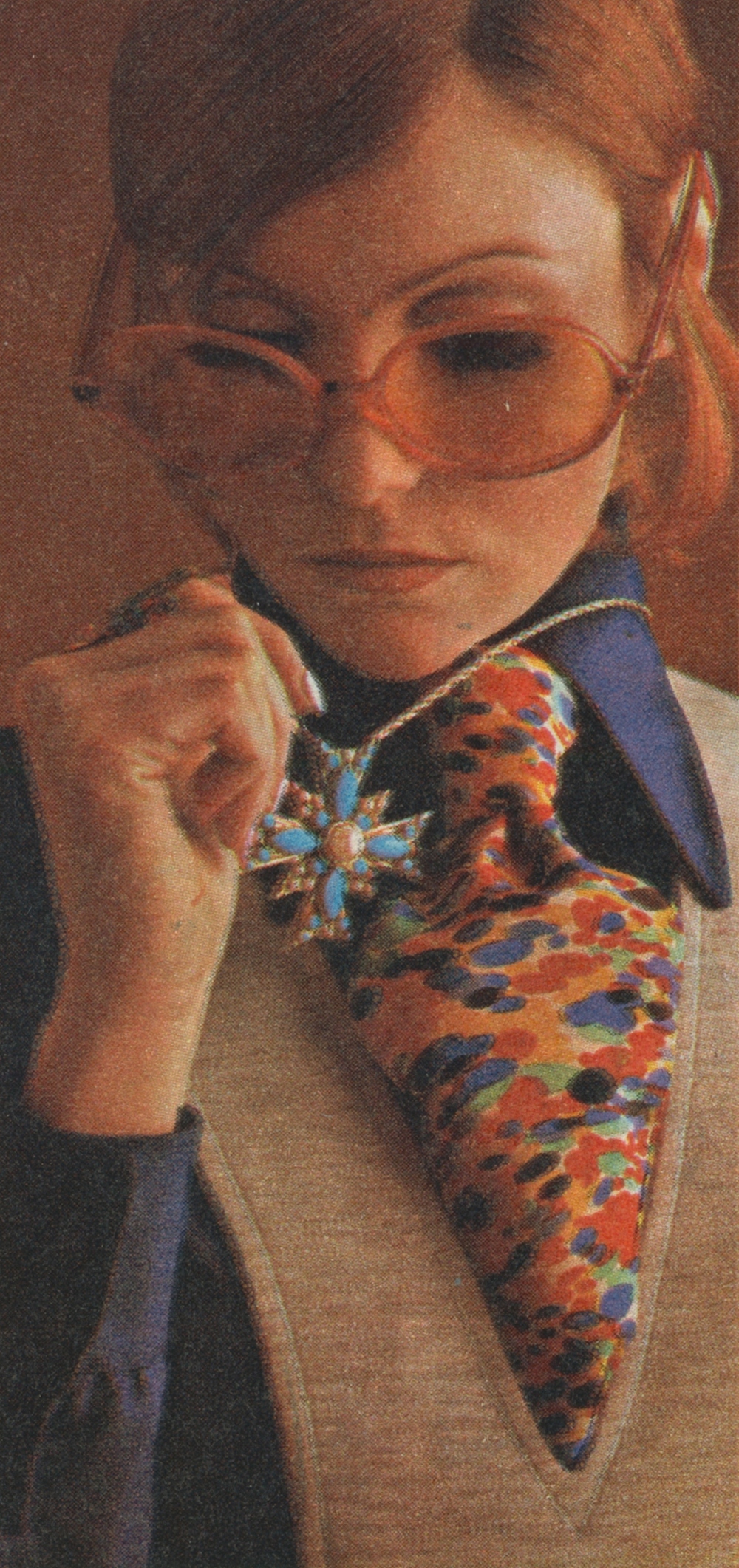
Scarves, instead of being dismissed as last year’s fashion gimmick, are being perpetuated as this year’s most important accessory. Still the simplest way to wear a scarf is to flip a long one casually college-style around the neck. As long as it’s not literally a college scarf this somehow adds enough chic to whatever you wear, without making you look fussily overdressed. There are dozens of different ways to tie a scarf. Smart French girls are tying scarves around their waists, twisted in with chain belts or beads. Marc Bohan at Dior makes headscarves tied pirate-style look young and chic, and shows scarves tied like a man’s tie. Although large squares will still be in demand to wear on the head or folded up as cravats, the big fashion in scarves is still for long ones, preferably fringed. Men will have to accept with a good grace that they have lost their long-established monopoly of fringed silk scarves. Until now almost the only places to find them were men’s departments, antique market stalls or somebody’s attic. (Shawls are the latest craze from jumble sales.) But shopping for scarves is easier this spring, with stocks at last in every shape and size. Hair by Valerie at Cheveux, 15 Abingdon Road, London W8.
Fashion by Liz Smith.
Photographed by Steve Hiett.
Scanned from The Observer Magazine, March 1969.

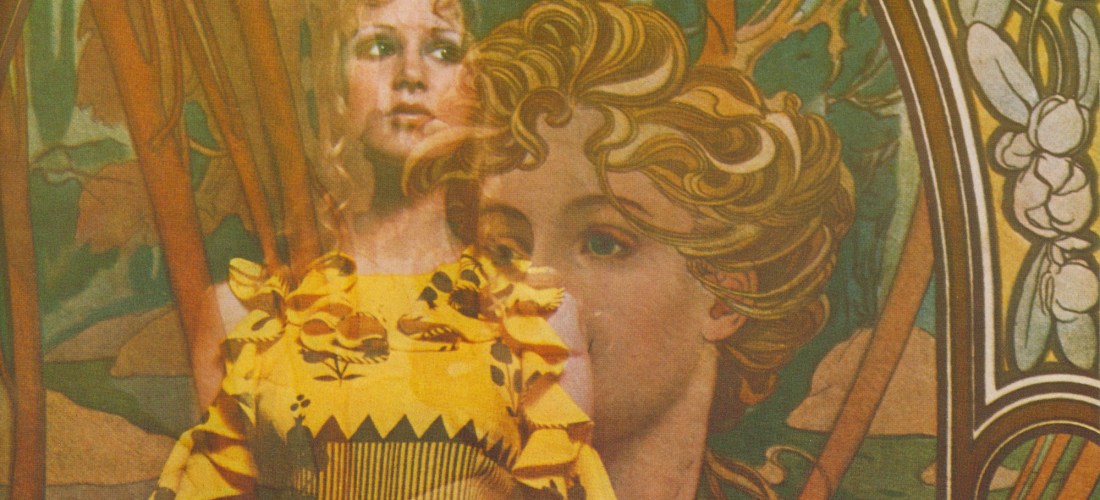

Look at summer through new eyes. Ossie Clark sees you in shepherdess smocks of voile, in long crepe dresses, reed-thin red or printed by Celia Birtwell. Pattie Boyd looks at it her way. All at Quorum.
Photographed by David Bailey.
Scanned from Vogue, June 1969.
I think this editorial might be one of the first I ever scanned, back in even my pre-blog days. I may have posted it on MySpace (don’t judge me, I feel ancient enough as it is). I’ve been meaning to properly rescan for years, but finally the time seemed right. It is the perfect combination of designer, model, photographer and a stunning use of Pre-Raphaelite imagery.
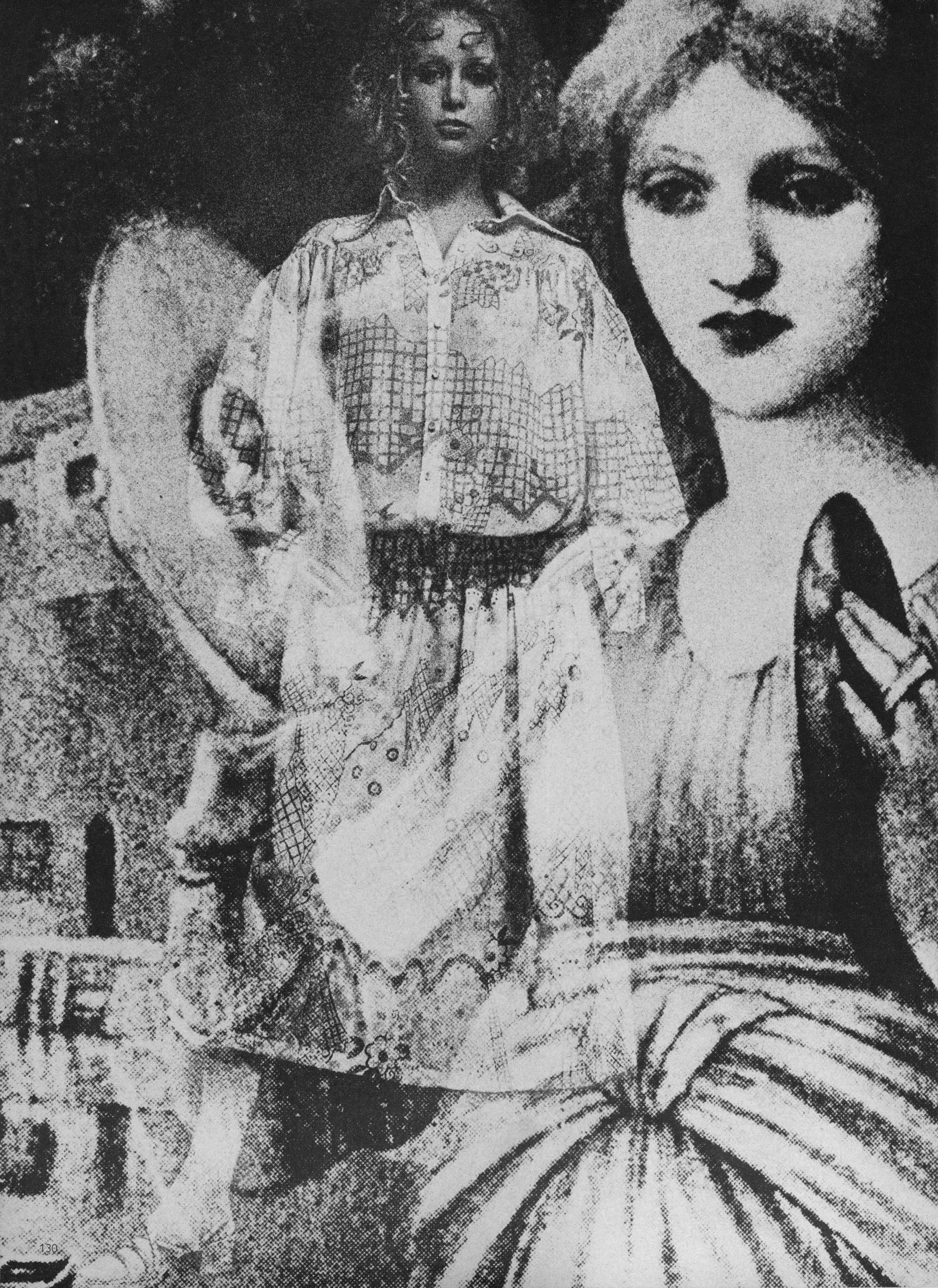

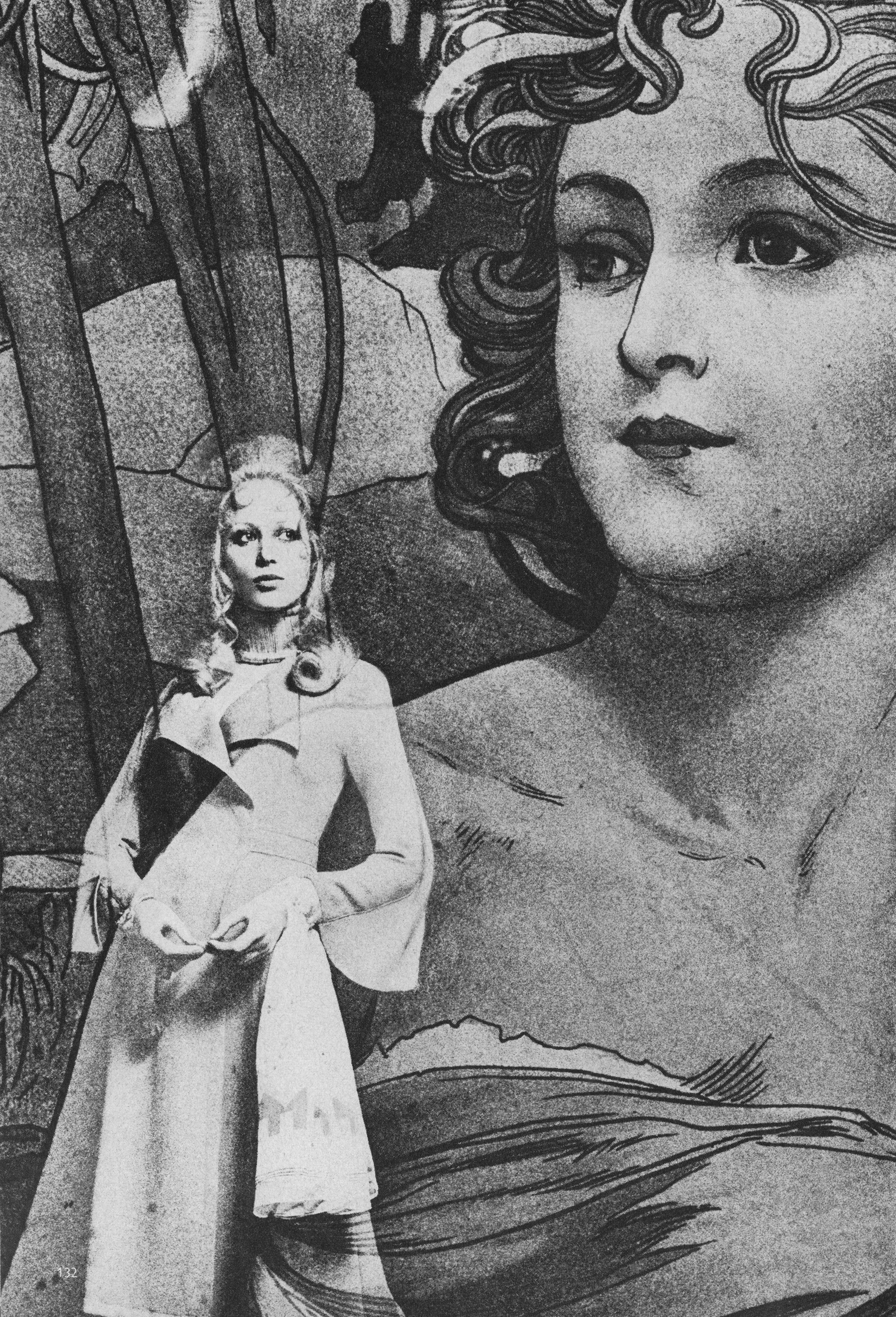
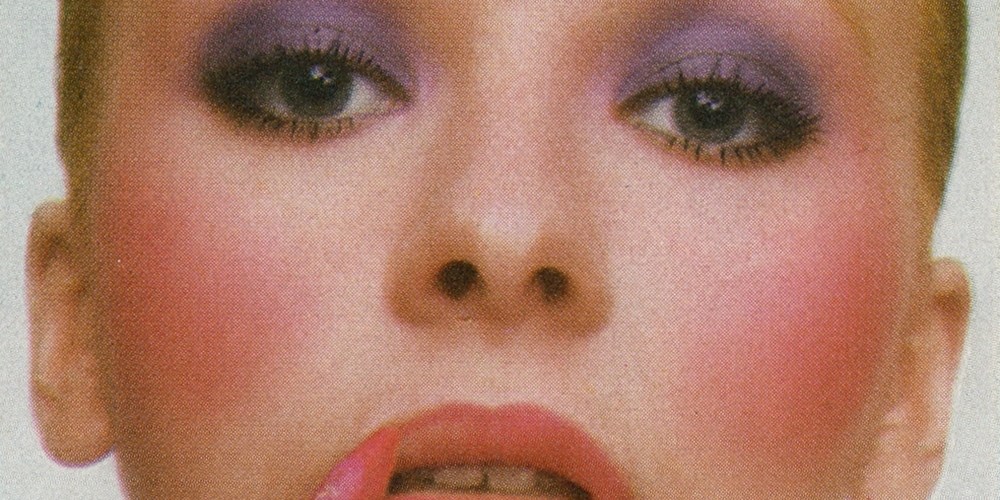
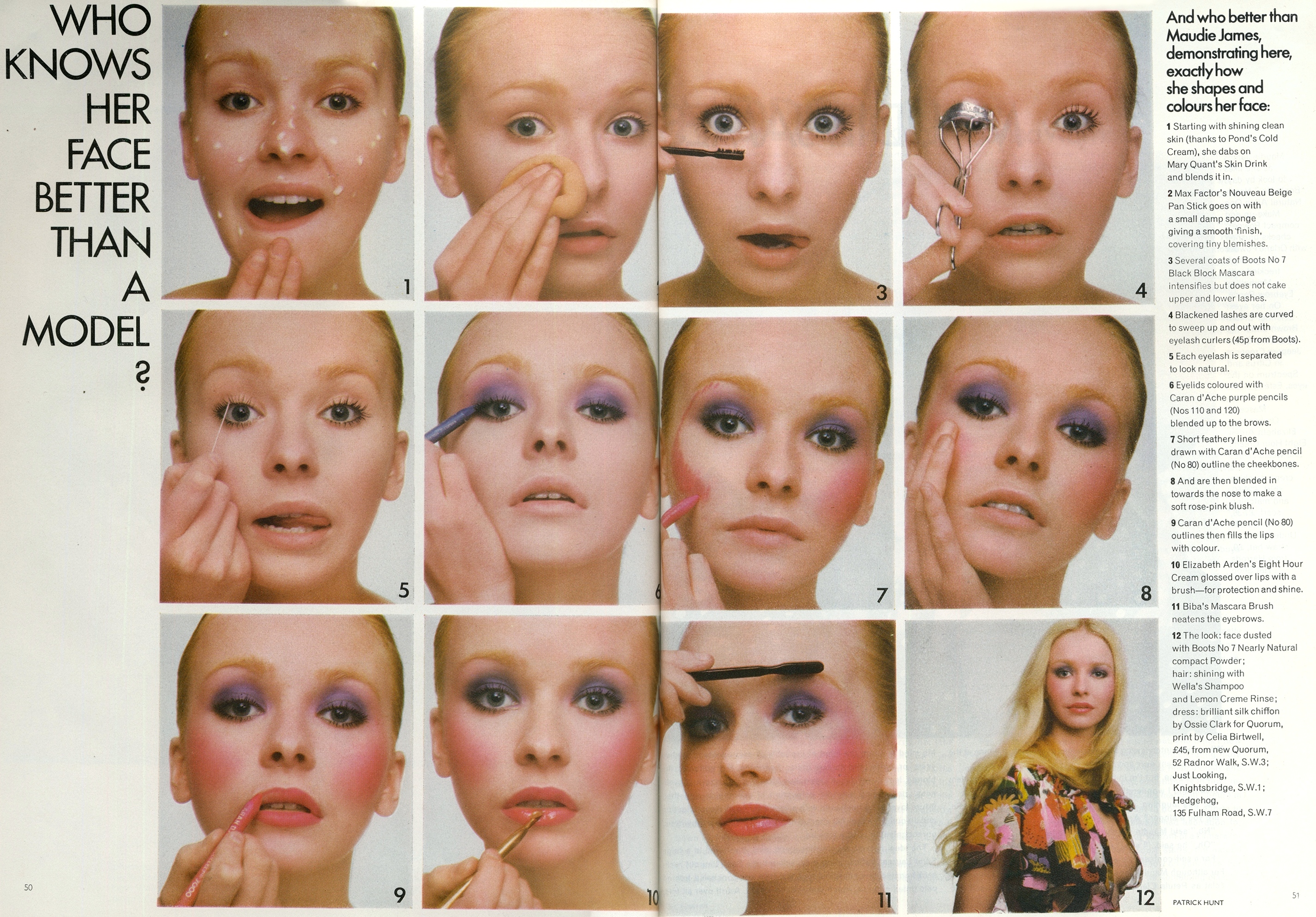
And who better than Maudie James, demonstrating here, exactly how she shapes and colours her face:
1 Starting with shining clean skin (thanks to Pond’s Cold Cream), she dabs on Mary Quant’s Skin Drink and blends it in.
2 Max Factor’s Nouveau Beige Pan Stick goes on with a small damp sponge giving a smooth ‘finish, covering tiny blemishes.
3 Several coats of Boots No 7 Black Block Mascara intensifies but does not cake upper and lower lashes.
4 Blackened lashes are curved to sweep up and out with eyelash curlers (45p from Boots).
5 Each eyelash is separated to look natural.
6 Eyelids coloured with Caran d’Ache purple pencils (Nos 110 and 120) blended up to the brows.
7 Short feathery lines drawn with Caran d’Ache pencil (No 80) outline the cheekbones.
8 And are then blended in towards the nose to make a soft rose-pink blush.
9 Caran d’Ache pencil (No 80) outlines then fills the lips with colour.
10 Elizabeth Arden’s Eight Hour Cream glossed over lips with a brush—for protection and shine.
11 Biba’s Mascara Brush neatens the eyebrows.
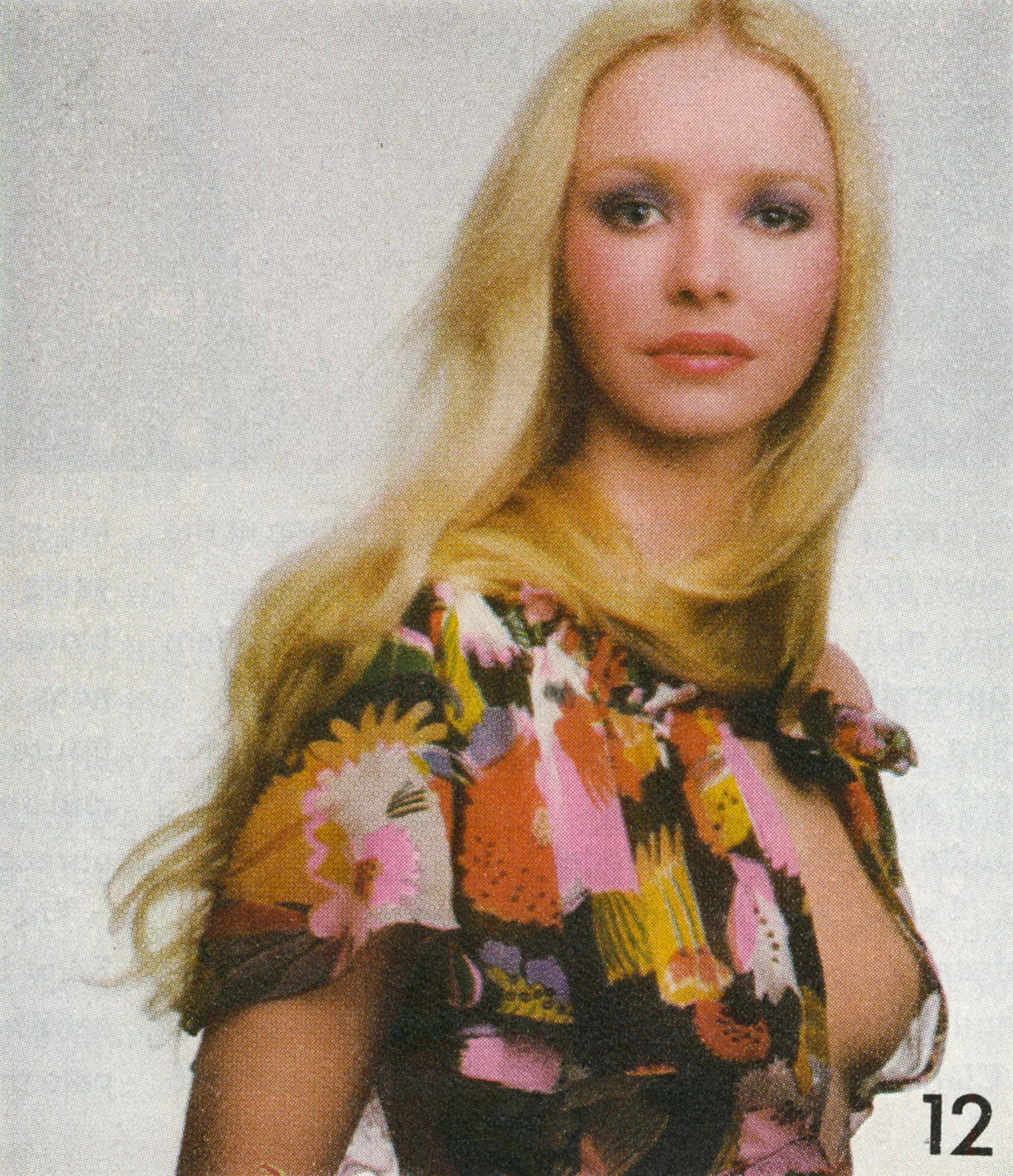
12 The look: face dusted with Boots No 7 Nearly Natural compact Powder; hair: shining with Wella’s Shampoo and Lemon Creme Rinse.
Photographed by Patrick Hunt.
Scanned from Beauty in Vogue, Summer 1972.
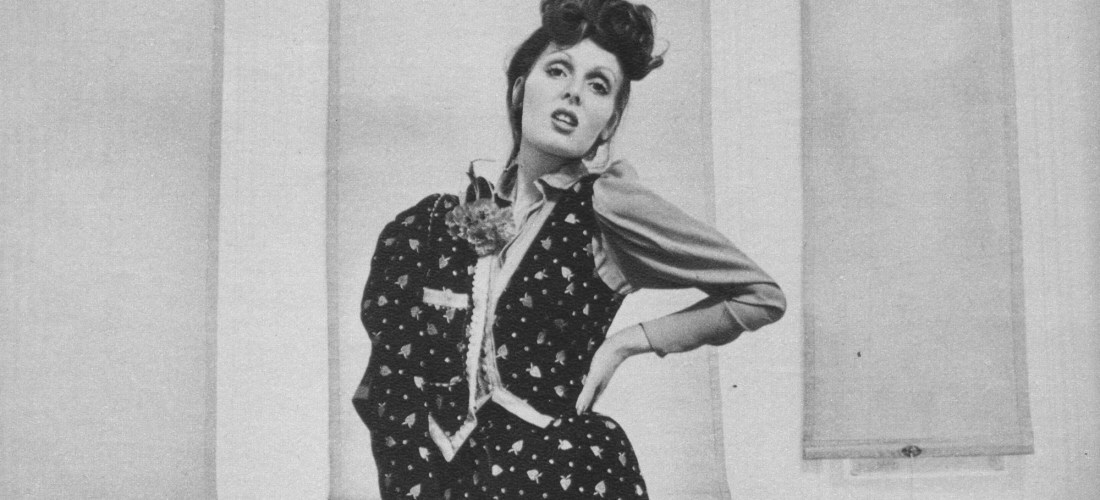
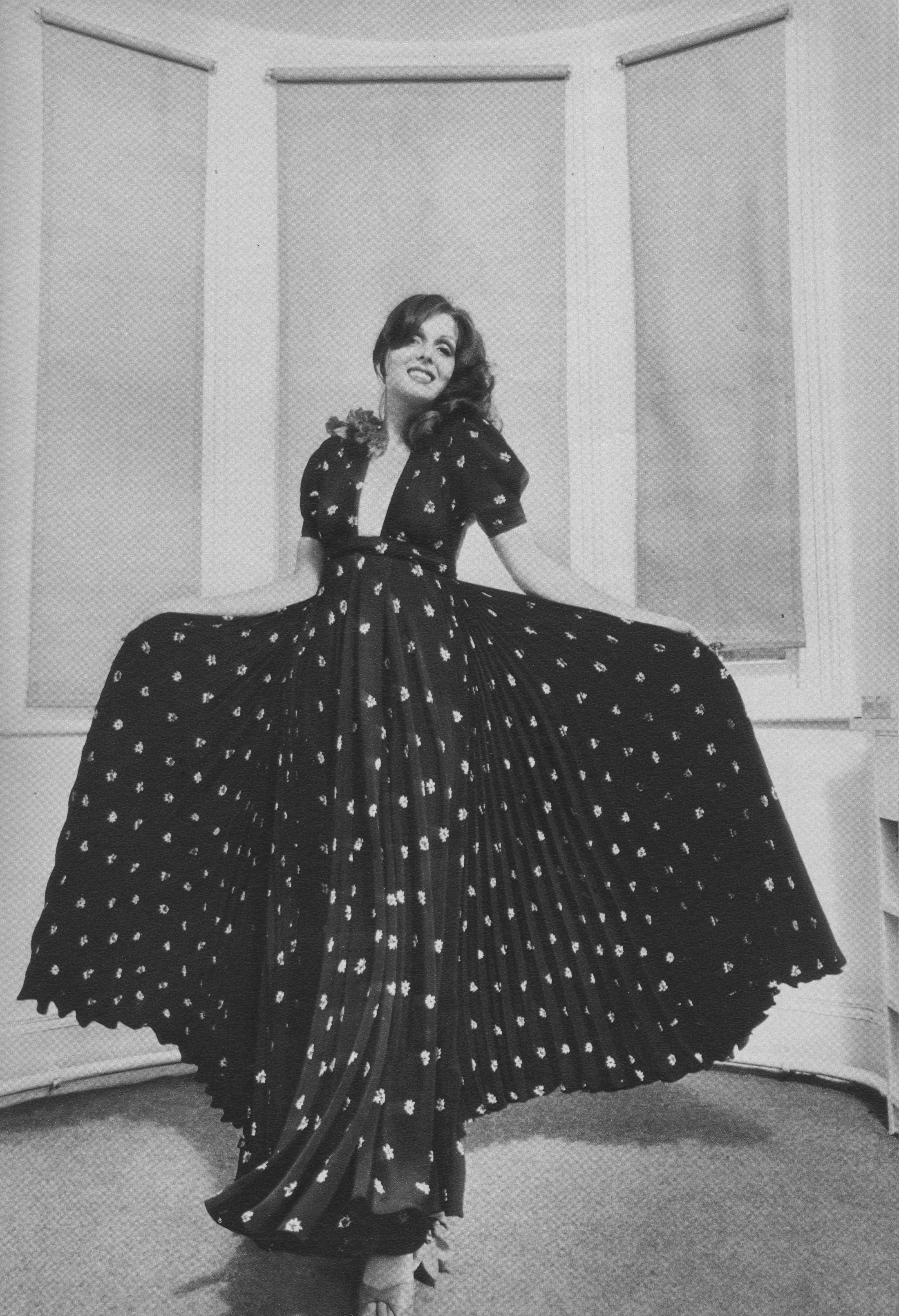
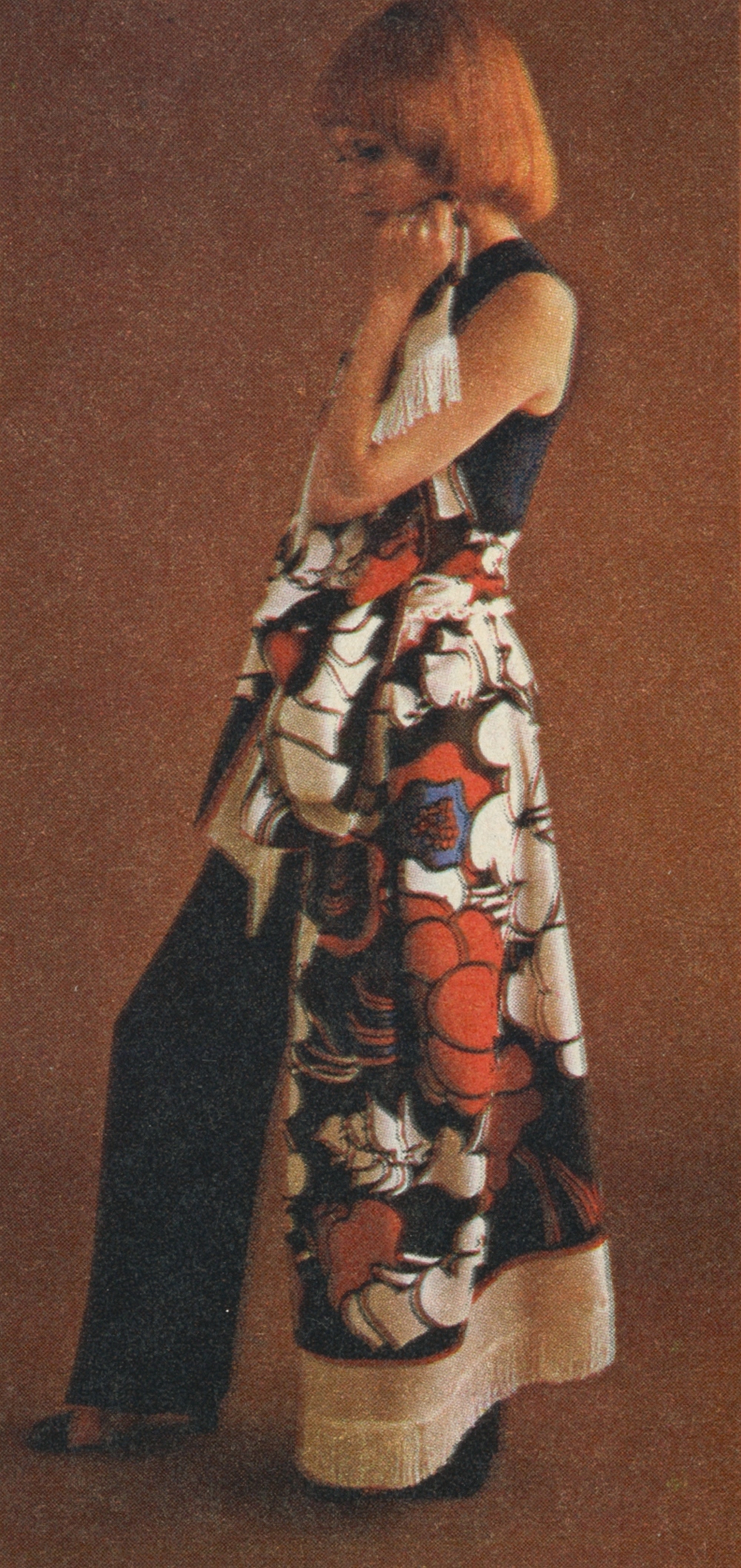
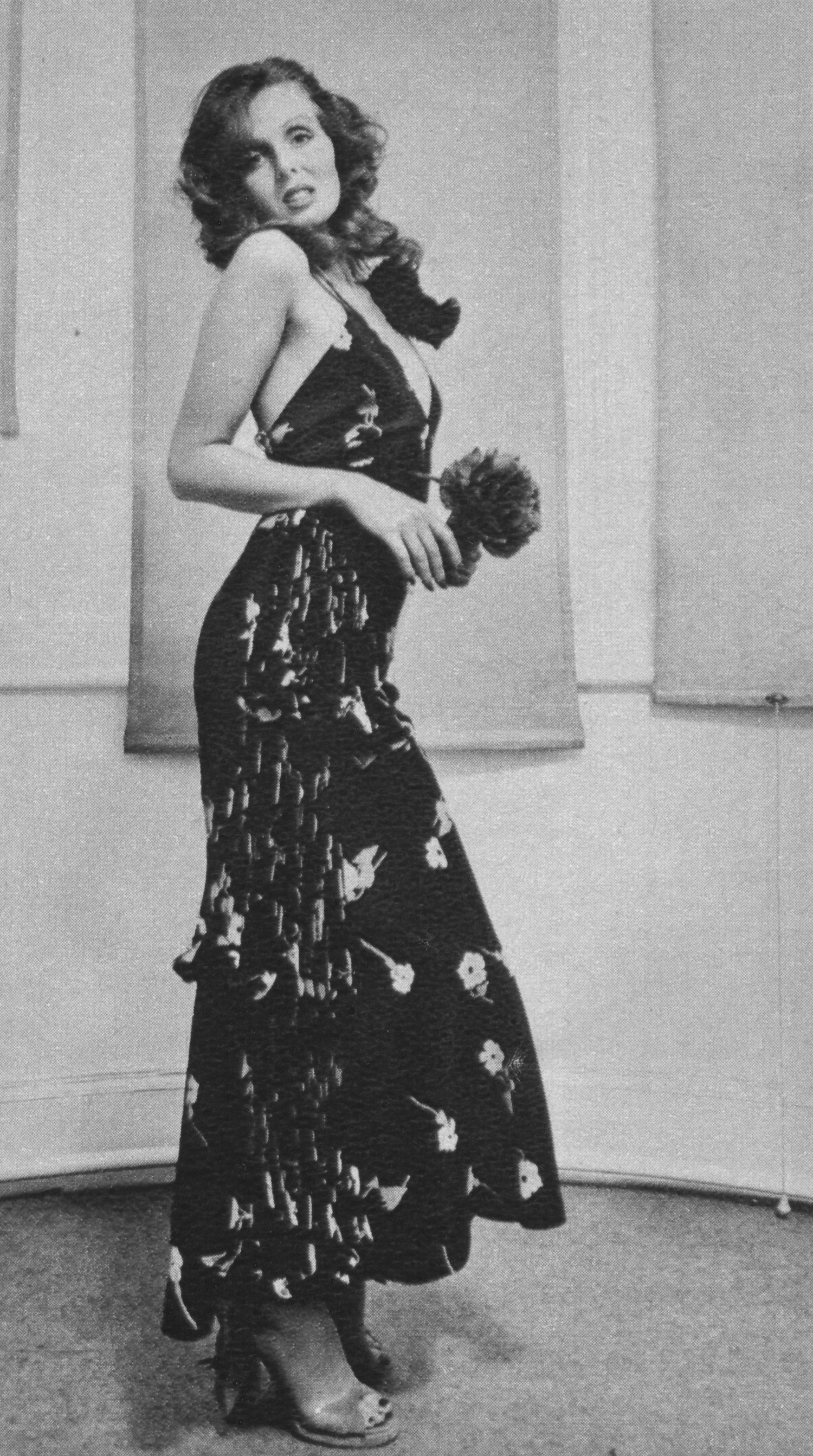
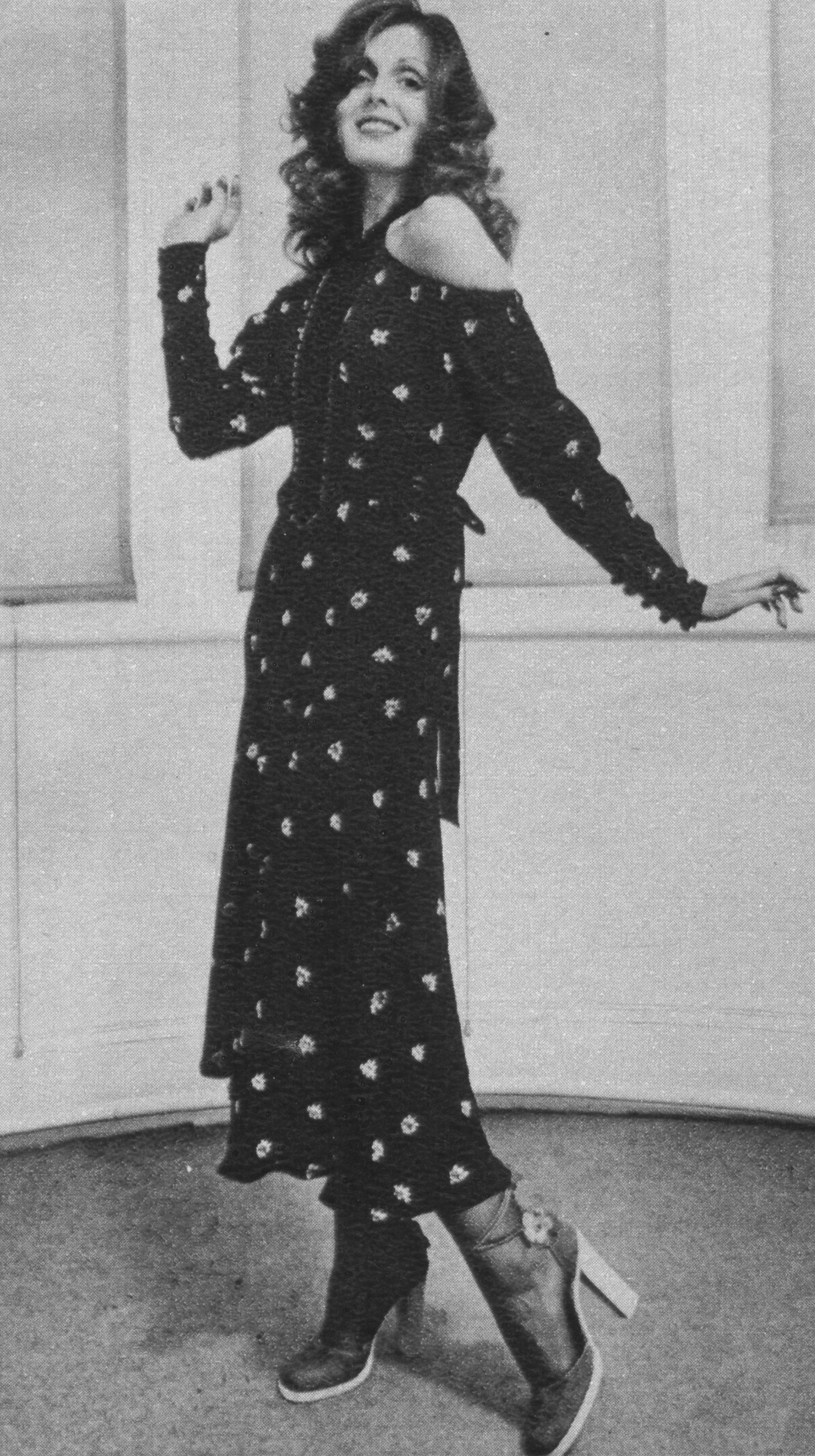
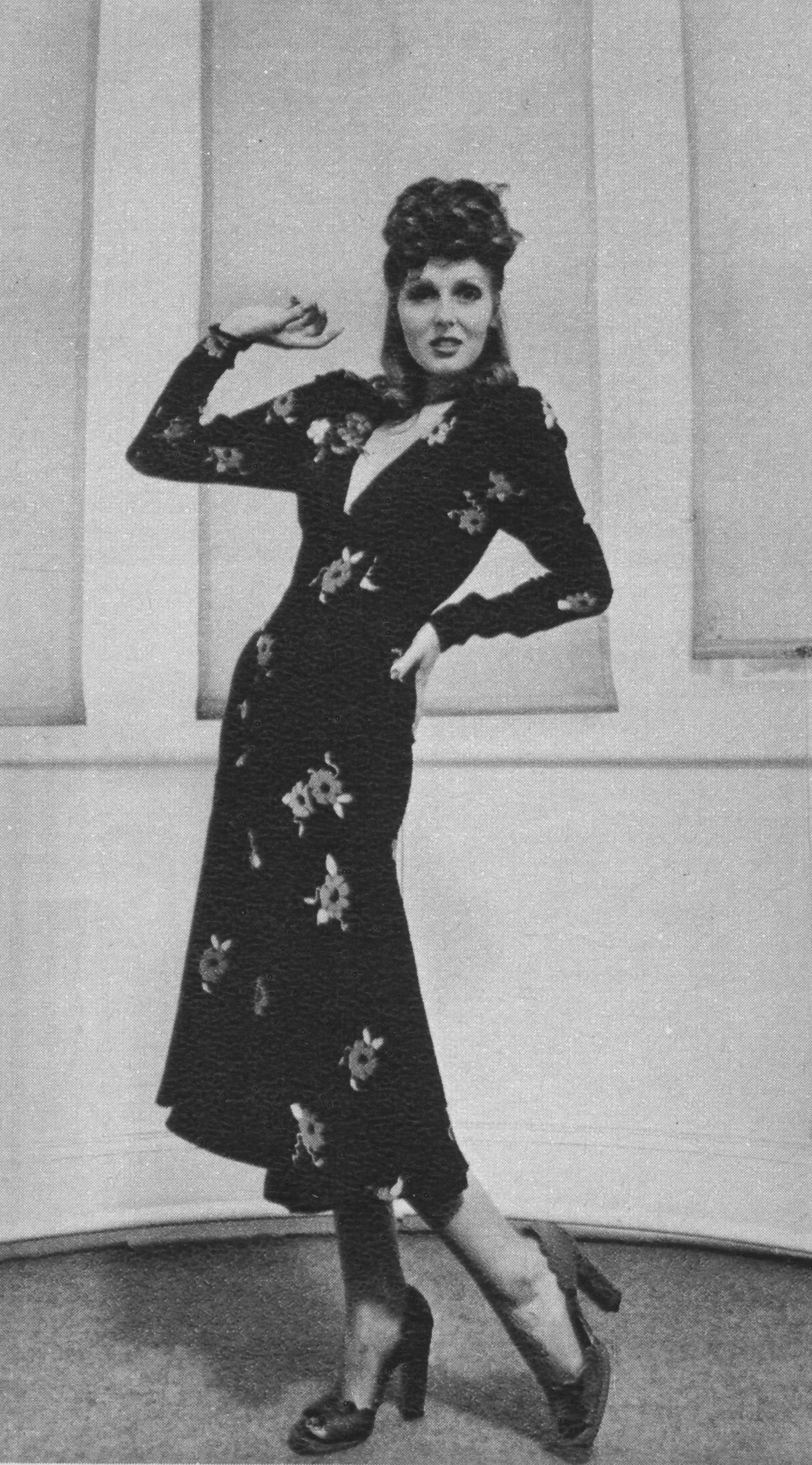
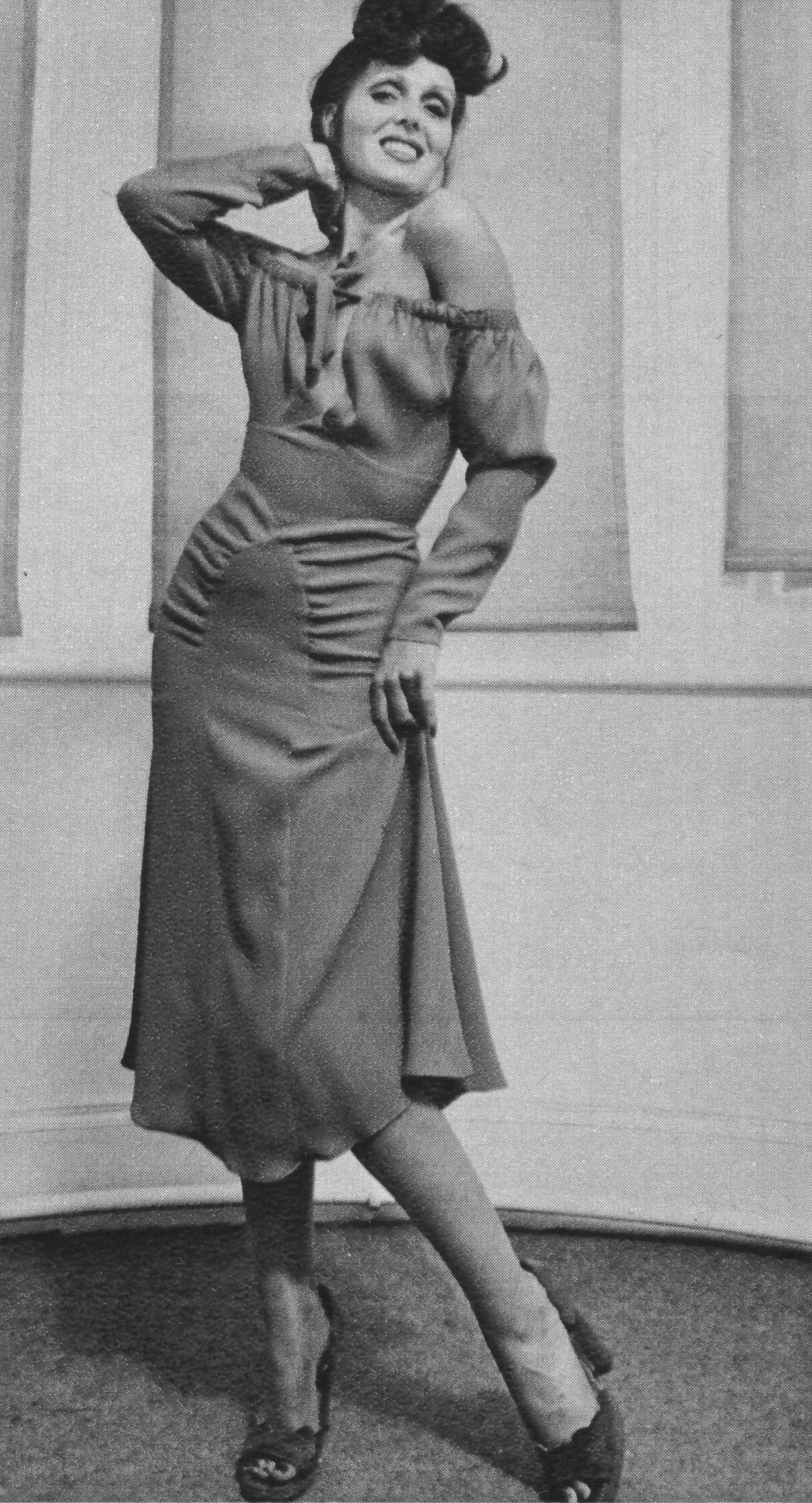
OSSIE CLARK, twenty-nine, designs clothes that would be right up the street for the woman whose profession is the oldest in the world. There’s nothing Woman’s Lib. here, thank you. His twelfth collection is outlandishly, gloriously and candidly tarty. But tarty in the ’40s and early ’50s sense of dressing: brazen, glamorous, passion-ately female. The cut of the clothes is masterful. The old black magic is there. Jazzy sequins. Star insets. High wedge heels. Ankle straps. Bias cut crepe. Oodles of pleats. Blowsy tulips and full-blown poppy prints. Plus black, and lots of it. You name it—it’s there, superbly executed.
Fabrics include new prints on marocain by Ossie’s wife, Celia Birtwell. Hairdos evoke memories of Rita Hayworth & Co. And contours are as they should be: breasts (bra-less), waists, hips and bottoms are all back in their rightful place — and proud of it. Ossie’s new clothes are as scarlet womanish as they are beautiful and witty. When you wear them you automatically adopt a Monroe wiggle.
Top price for a frock from his collection is £150, but around a fiver will buy you a printed crepe shirt. You may not be able to take this look seriously — but it will probably influence the way you dress next season. For Ossie’s secret as a designer is that his tarty vamps keep chic and never look cheap, jaded, or just plain common.
Photographed here are a selection of Ossie’s new clothes.
All enquiries for stockists and prices to Quorum Wholesale, 6 Burnsall Street, SW3.
Modelled by Kari-Ann Muller.
Hair by Richard at Maximillian.
Shoes by Manolo Blahnik for Zapata, 49 Old Church Street, SW3, from £17.75.
Photographed by Peter Rand.
Scanned from Flair, August 1971.

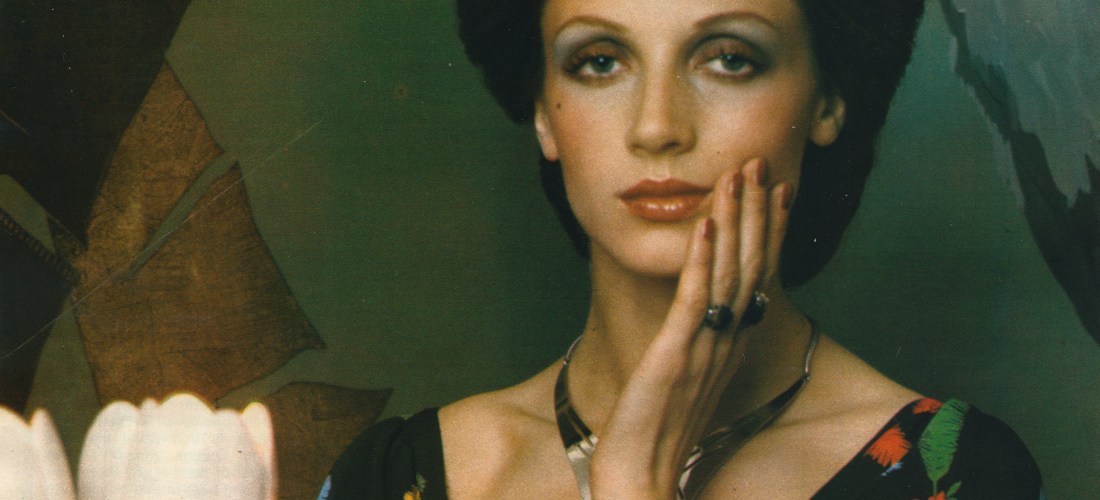
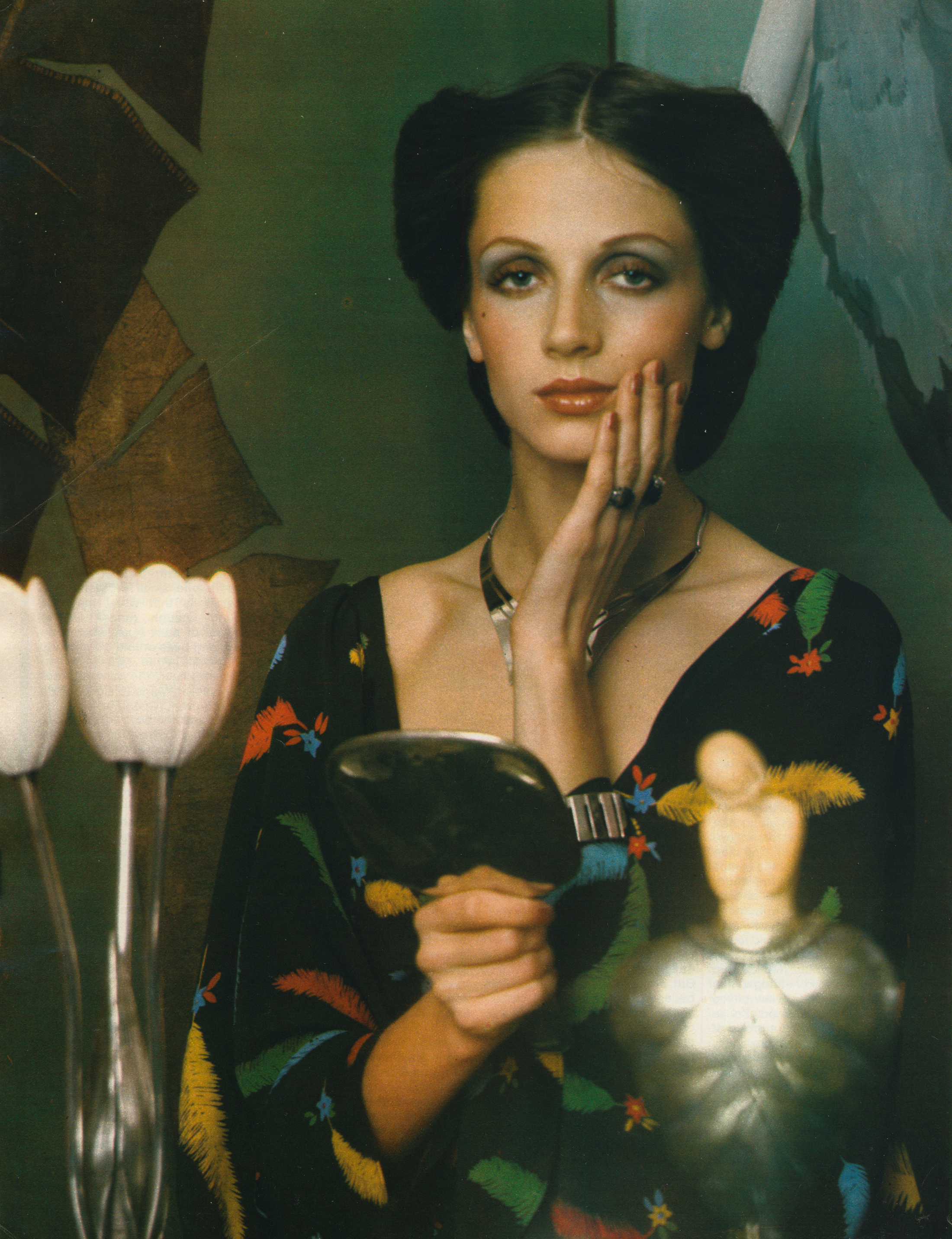
We’ve tried to capture the golden richness and mellow nuances of a well-preserved old oil painting, and create our October face with the new Moody Hues make-up from Revlon’s Natural Wonder collection. Face tone should be warm and tinged with a hint of tan, and we used foundation colour ‘Bisque Beige’, 66p., dusted over very lightly with translucent pressed powder in the ‘Medium’ shade, £1.02. We rouged the cheeks with Cheek Shine in ‘Red’, £1-32. Pursuing the same rustic-toned theme we chose ‘Soulful Plum’ mascara and lashed it on both top and bottom lids, 85p. Eyes are a muted melange of ‘Tortoiseshell’ Eyeshadow Stick, 66p., and the same shade in Lid Lights, the powder version, fading to complementary ‘Minty Green’ powder shadow just under the brows, £1.10 each. We dabbed over the eyelids with ‘Brown Shine’ cream blusher for extra gloss and softness, £1.32. Lips are outlined in ‘Bracken Brown’, 62p.
Model is Ingmari Lamy.
Make-up was applied by visagiste Jean Duval of Revlon, Paris.
The beautiful décolleté dress with huge winged sleeves is in black with a yellow, red and blue feather print, from Quorum, £24.
‘Forties-style hair was dressed by Tina of the Jean-Louis Davide Salon in Paris.
Photographed in the apartment of Karl Lagerfeld, the designer, by Francois Lamy.
Scanned from 19 Magazine, October 1971.
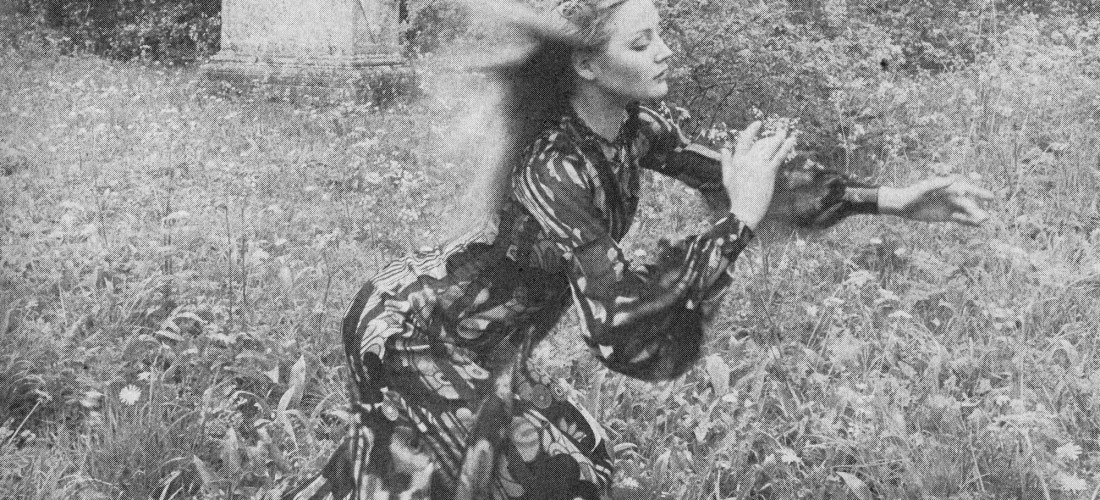
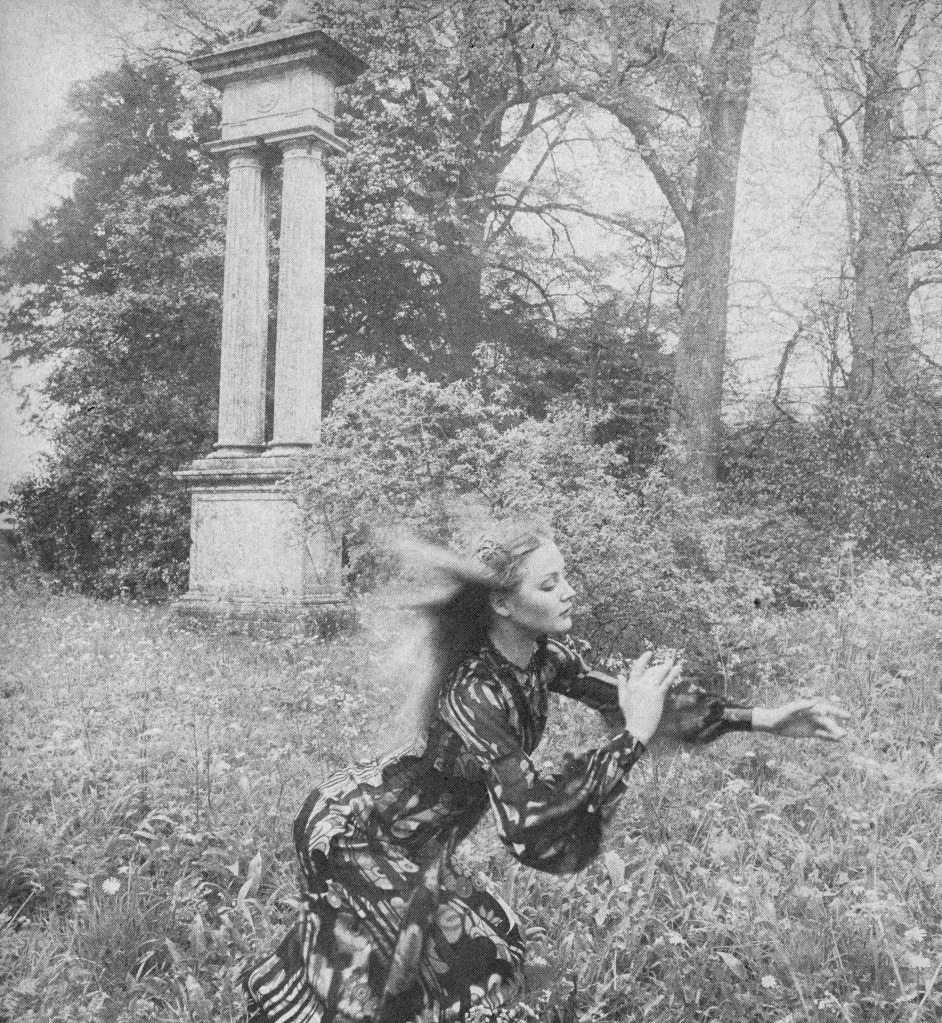
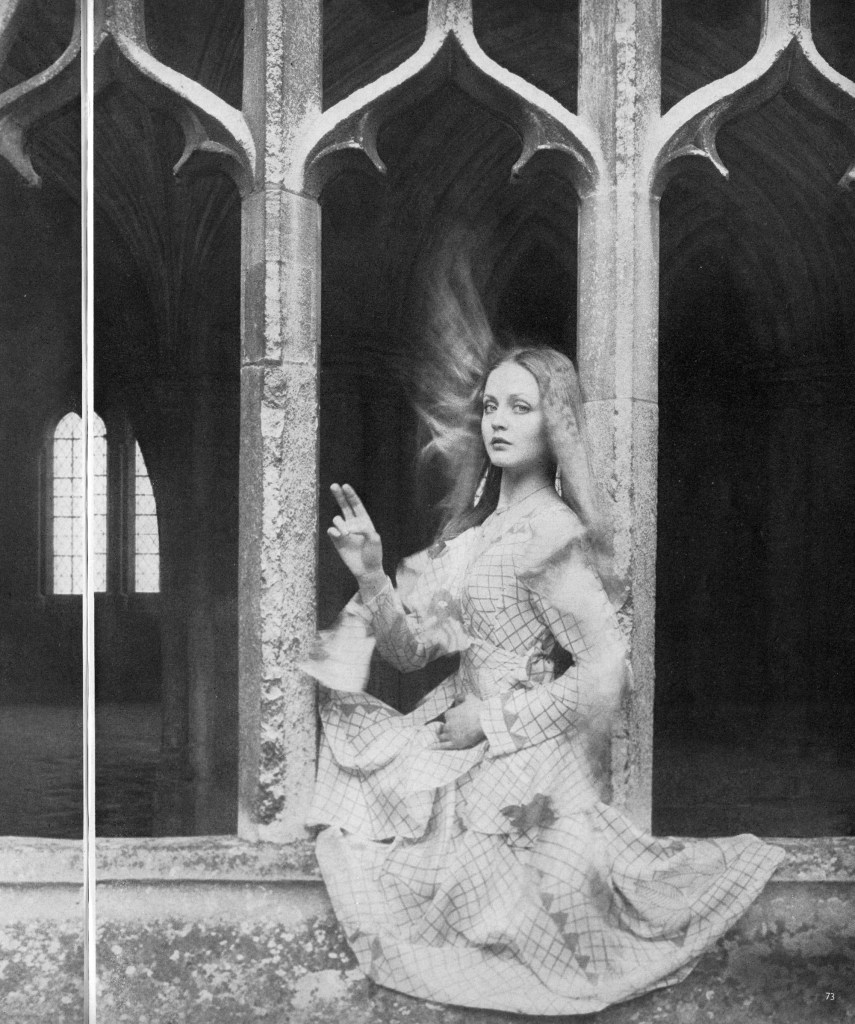
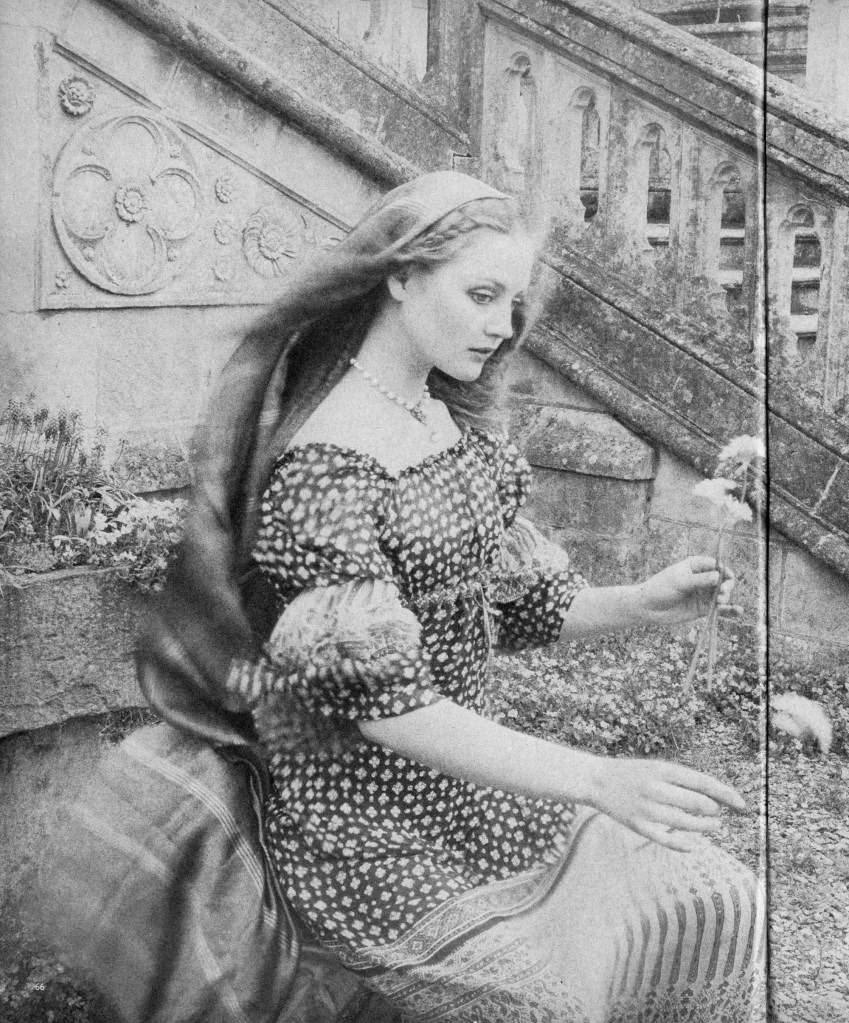
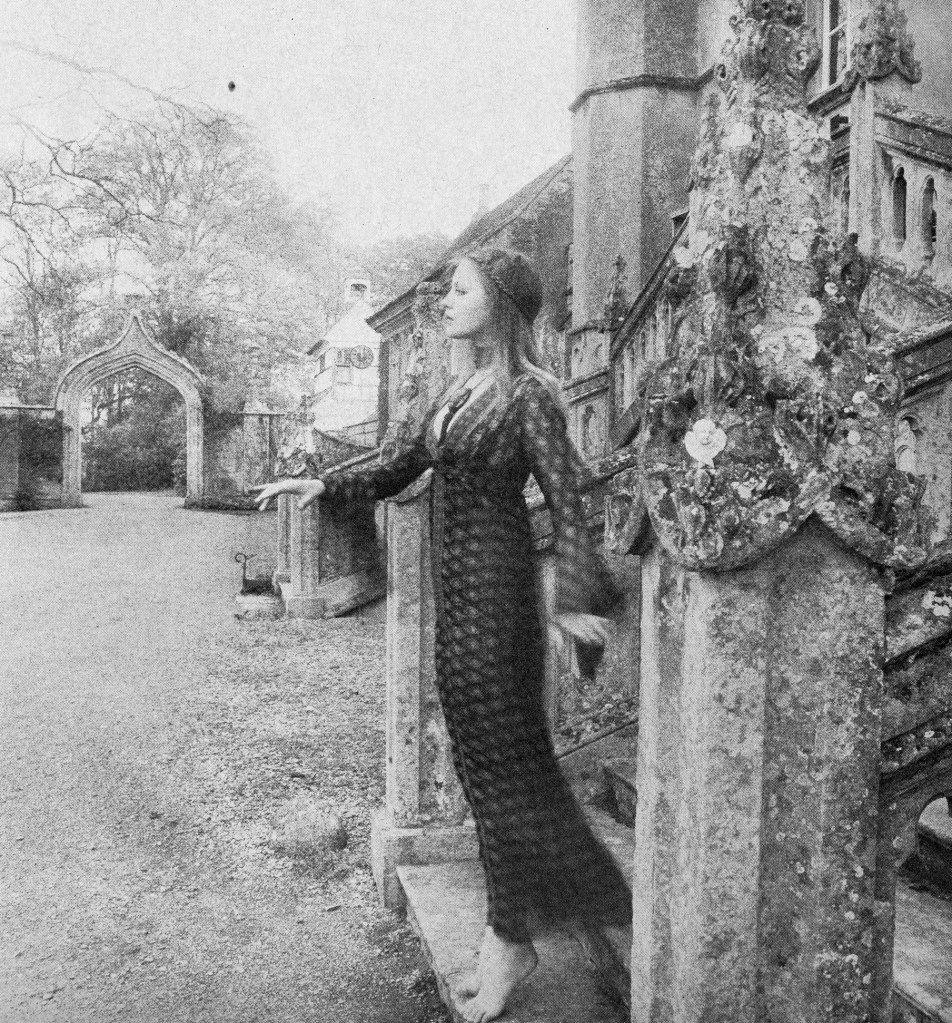
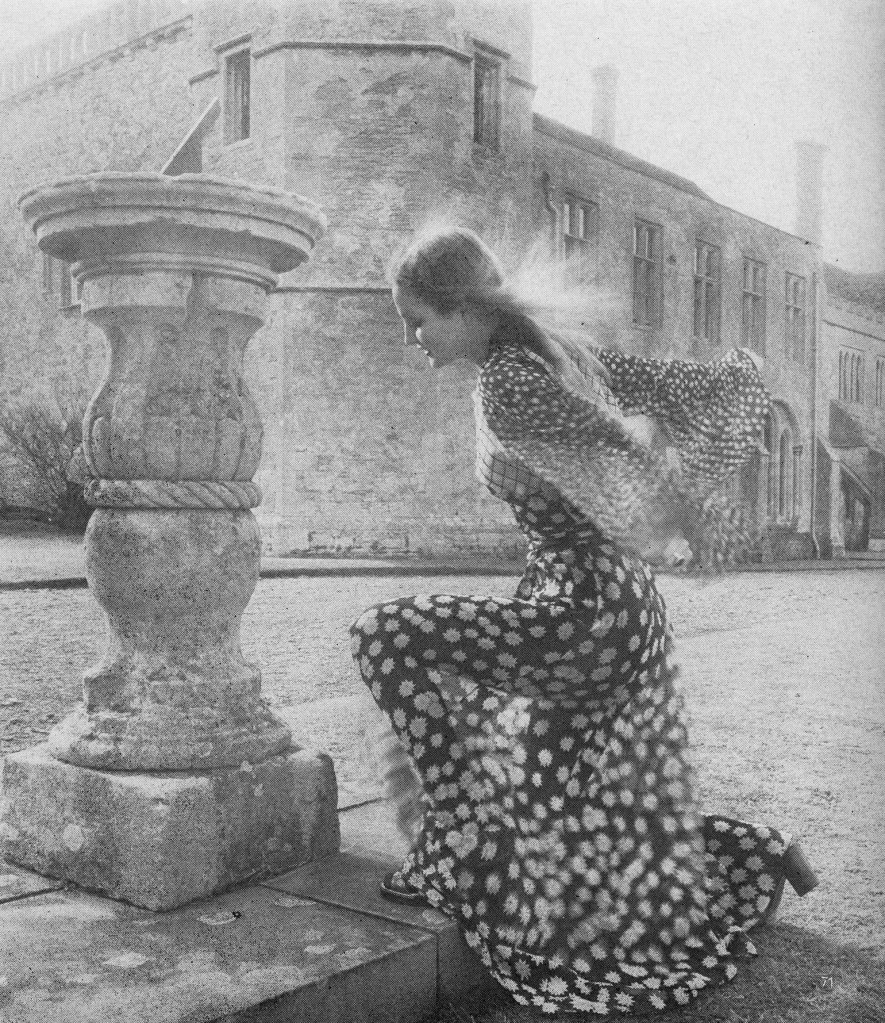
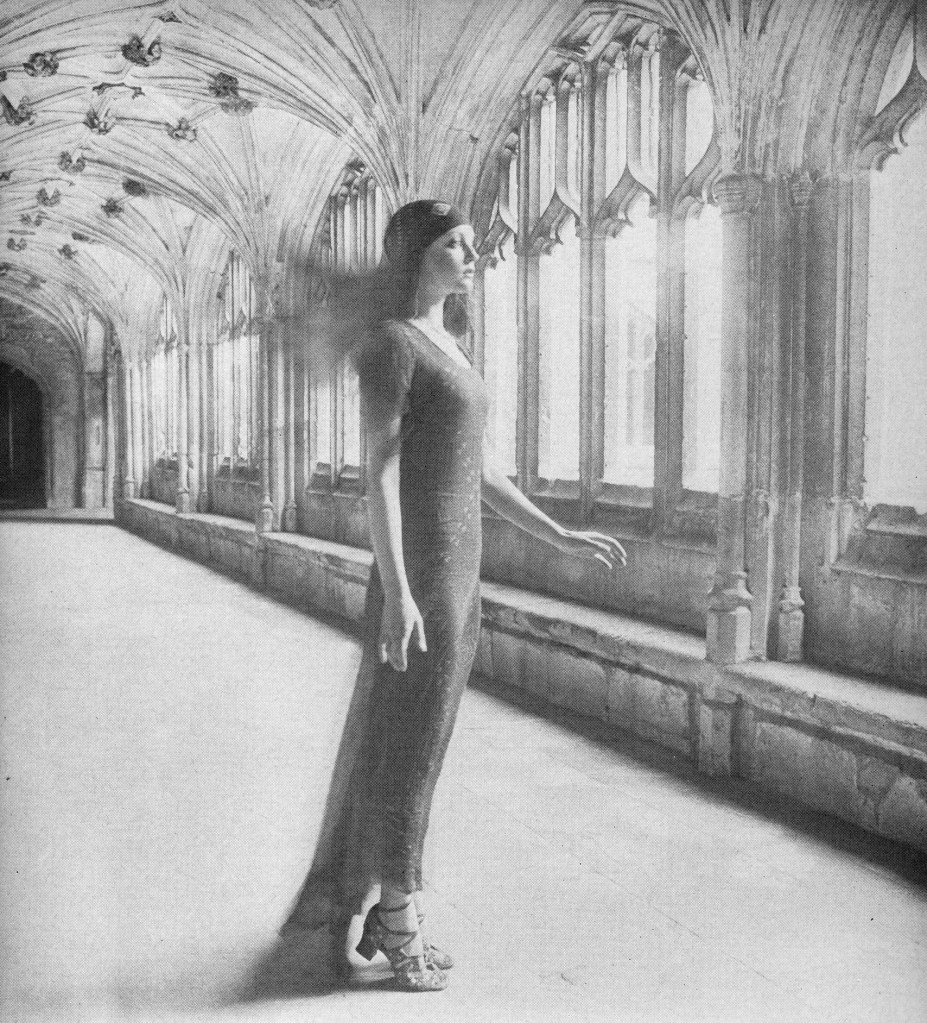
Following Gaudi’s thought “to be original, return to the origin”, following it down to Lacock Abbey in Wiltshire where William Fox Talbot invented the camera, Norman Parkinson photographed eight dresses conjured from pure air and gauze.
This is like an album where every song is a certified banger. From the model, to the frocks, to the photographer, to the photographer he’s referencing, everything is flawless. Except that I don’t own all these dresses.
Photographed by Norman Parkinson.
Modelled by Ingrid Boulting.
Photographed at Lacock Abbey.
Scanned from Vogue, July 1970.
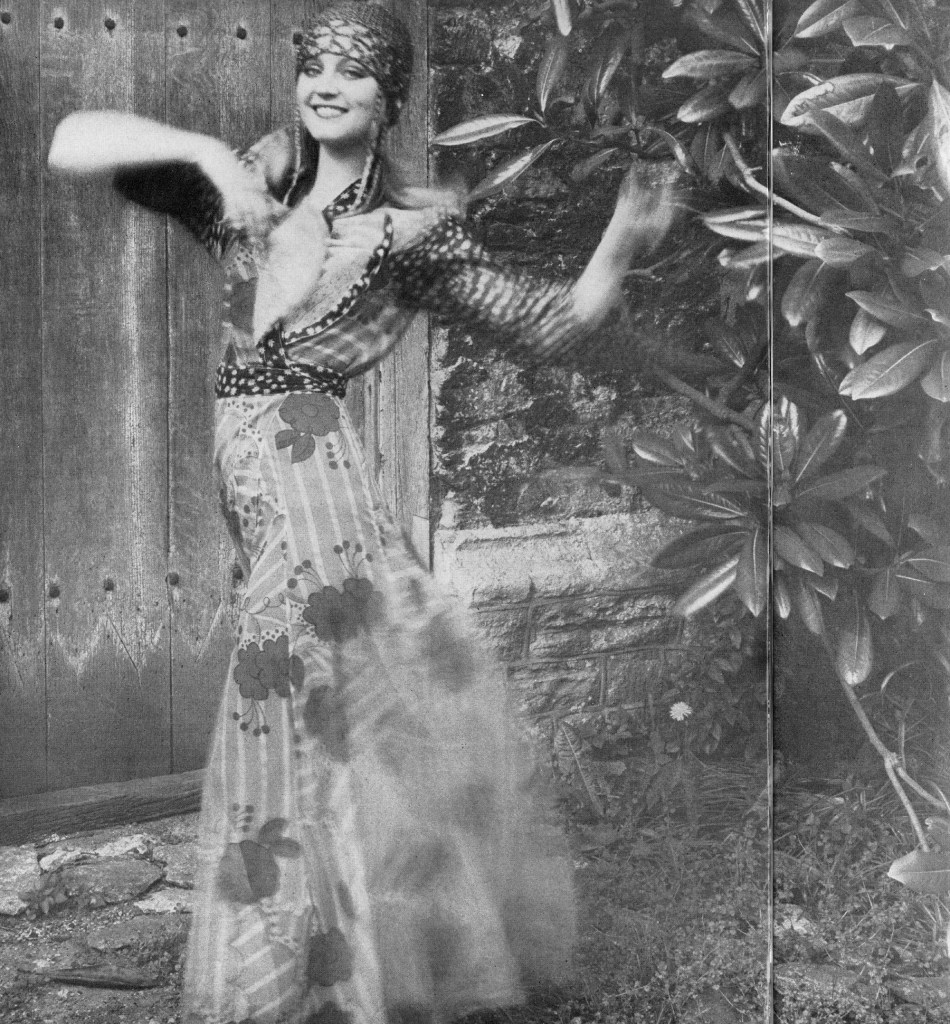
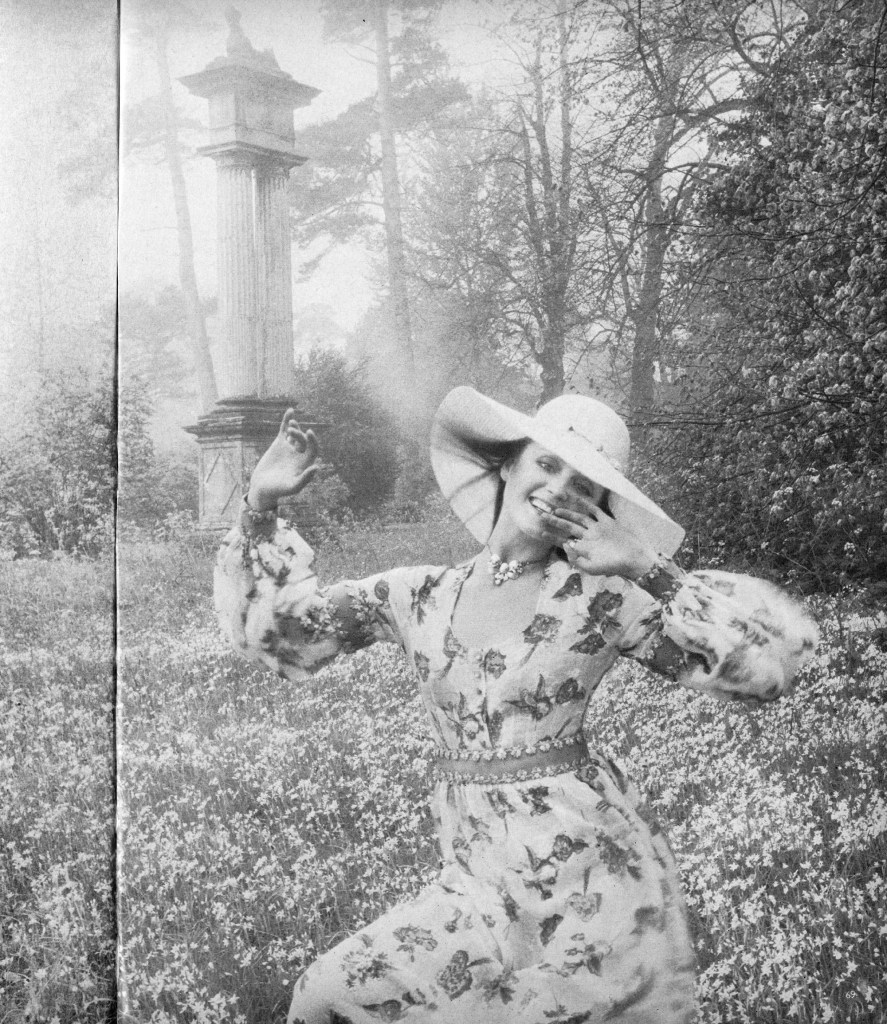
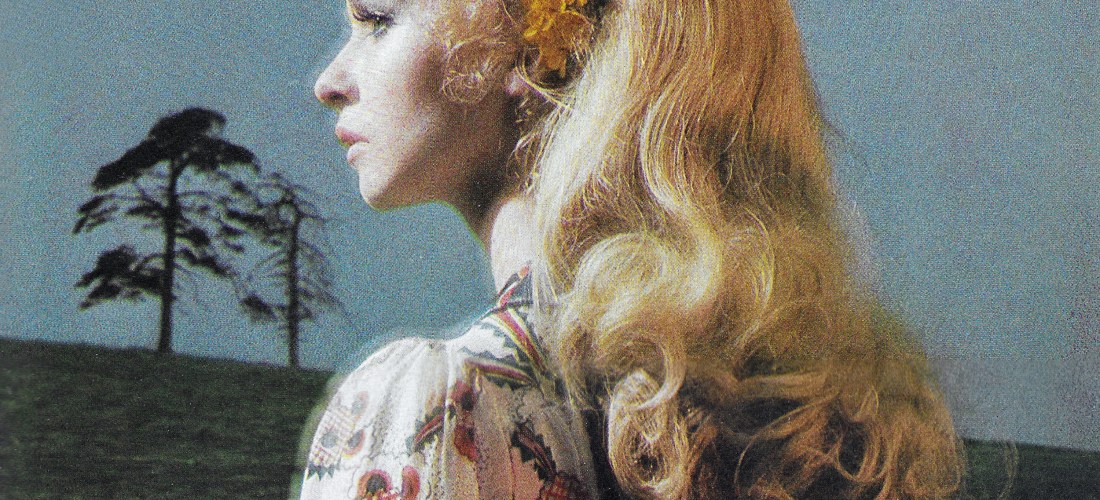
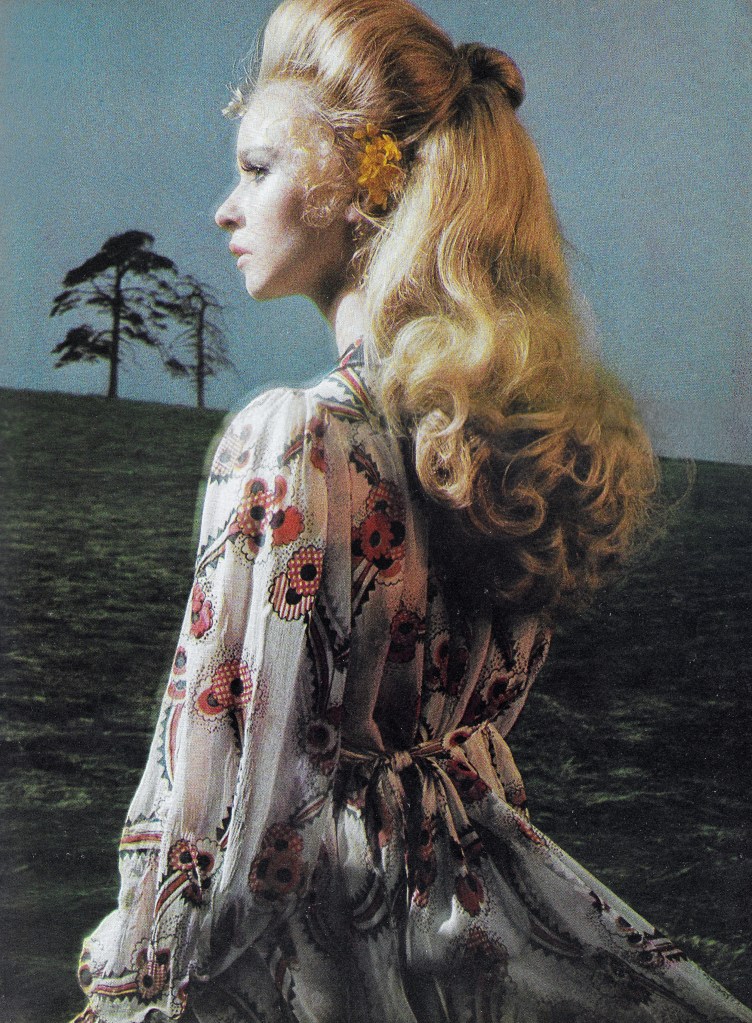
Maudie James in an Ossie Clark for Quorum silk chiffon dress with print by Celia Birtwell.
Illustrating ‘The New Hair Colour Story’ with hair by Christopher of Vidal Sassoon.
Photographed by Barry Lategan.
Scanned from Beauty in Vogue, 1969.
 Liz Eggleston