

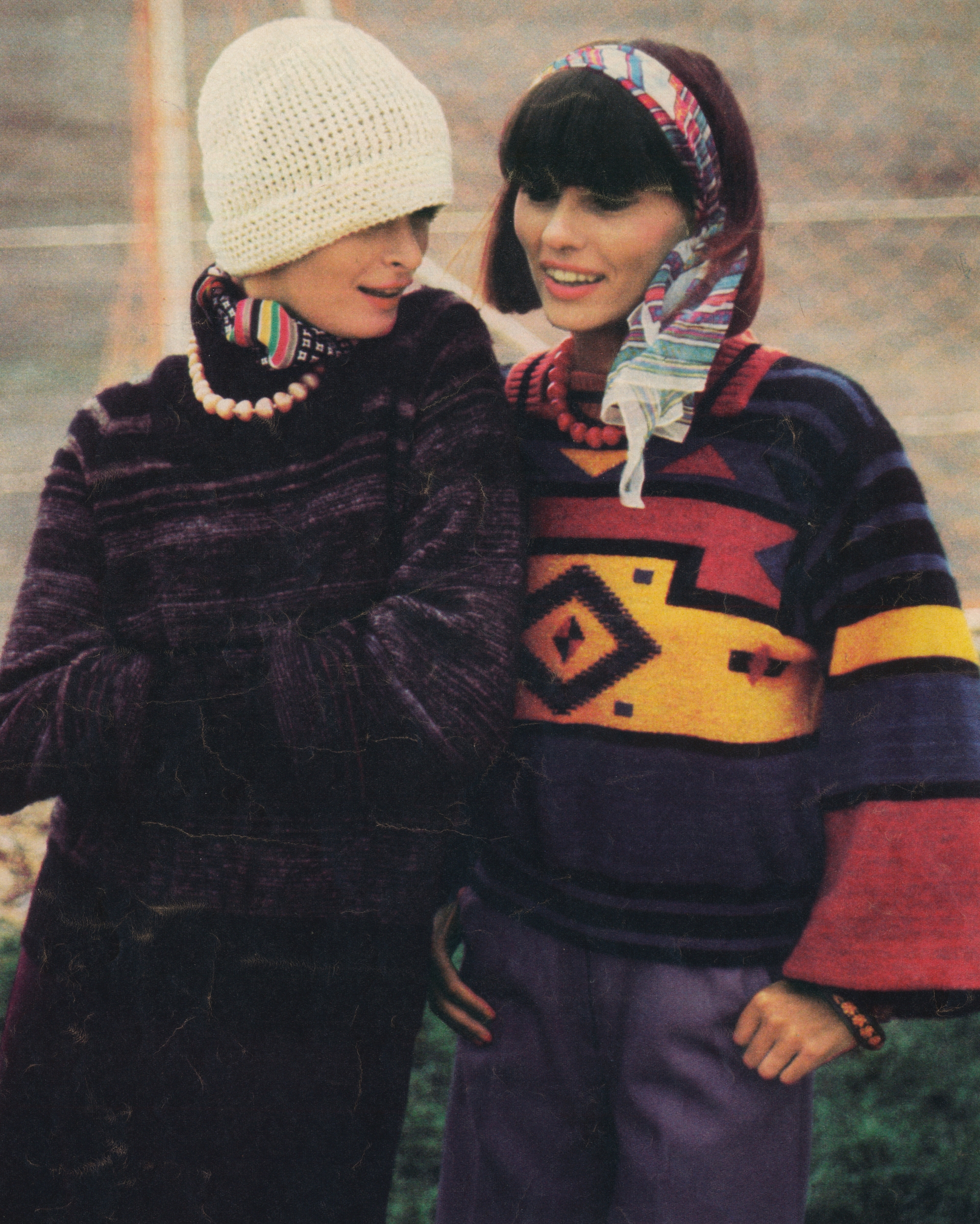
This feels like some kind of ‘Seventies-in-a-nutshell’ image to me…
Photographed by Tessa Traeger.
Scanned from Vogue, March 1st 1976.

This feels like some kind of ‘Seventies-in-a-nutshell’ image to me…
Photographed by Tessa Traeger.
Scanned from Vogue, March 1st 1976.
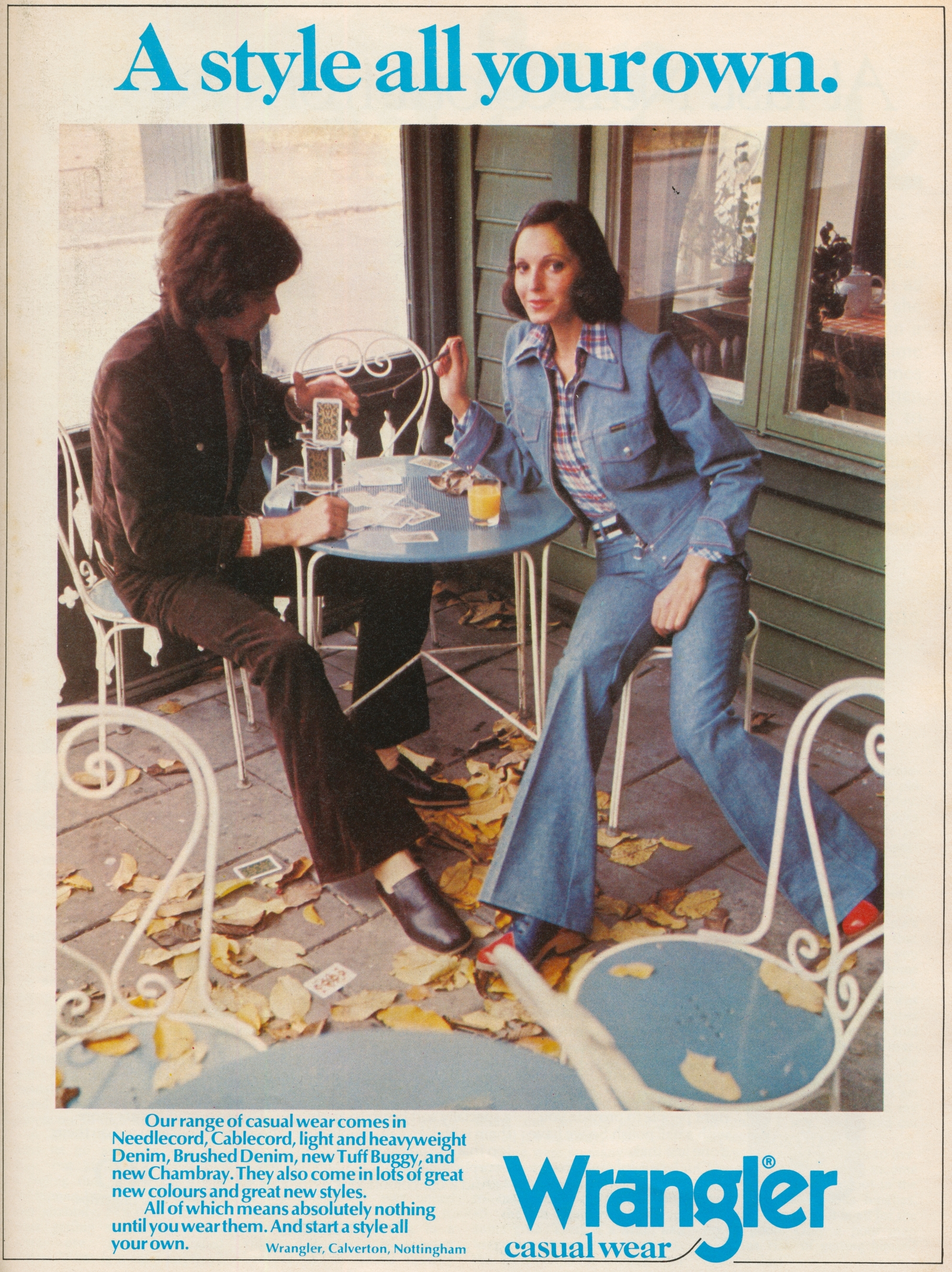
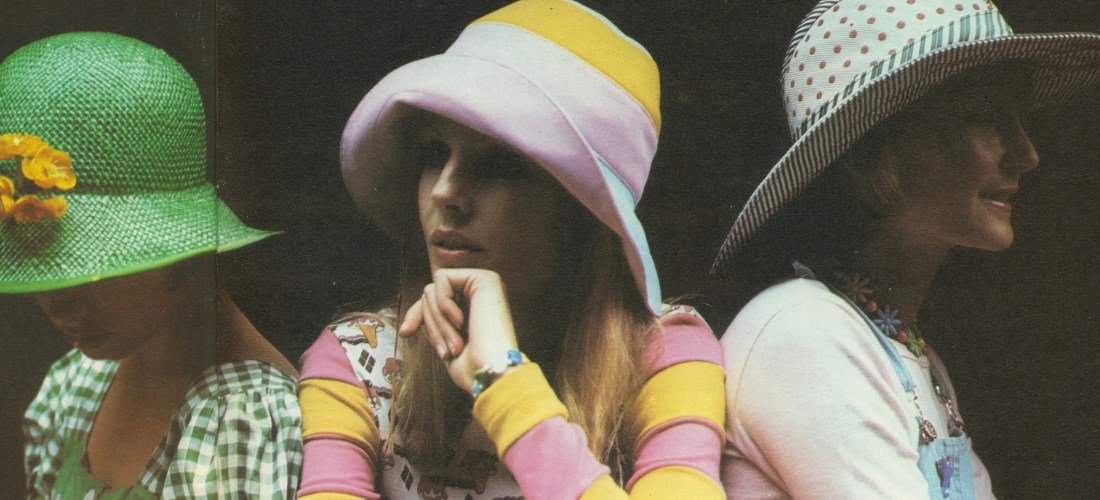
Scanned from Over 21 Magazine, July 1973.

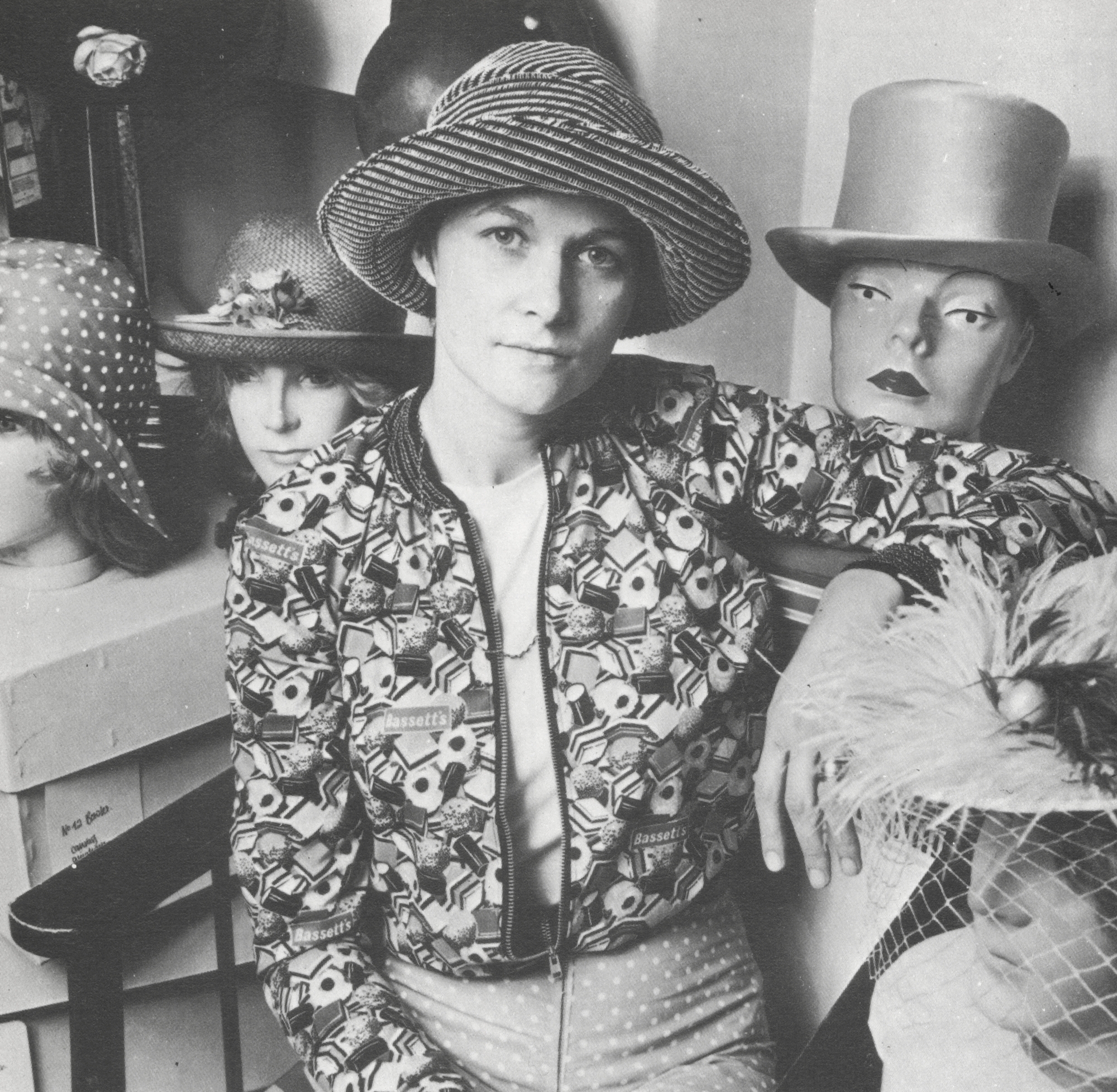
Ten years ago hats stopped being obligatory outdoor wear even for country’ matrons. A whole generation has ignored them since then, but the signs are that times are changing. A minute spent watching the crowds in any major city and one can see that hats are definitely back. Last year there were big mushroom berets. Before that there were costermonger caps and huge stetsons. All three styles were initiated by Diane Logan.
Diane Logan’s original ambition was to become a textile designer. Part of her training for this, at Camberwell Art College in London, included a week at the London College of Fashion where George Malyard, who makes hats for London’s theatreland, was visiting tutor. Diane took some of her printed felts along with her and spent the week making them up into dotty hats. She finished six fast work when the usual student output was one hat a term.
When Diane left art college and discovered that she hated the solitude of being a freelance textile designer, this experience in hat making gave her something to fall back on.
Small beginnings
She began by making big peaked costermonger caps. The first batch shown to the boutiques in London’s King’s Road produced orders for dozens more. She and her husband turned their flat into a work room and Diane did the cutting and stitching at a big table which let down over their bed. For two and a half years they lived in this way and Diane meanwhile built up an enthusiastic clientele. Buyers from New York stores wanted her creations and in the autumn of 1970 she was able to branch out into new premises with a shop and her own work room.
The shop, just behind London’s Baker Street, is also her showroom. Enormous candy pink hat boxes are stacked waist-high along one wall. Hanging on the walls and in the window are her hats, all shapes and colours and sizes. At first sight, it looks as if everything in Diane Logan’s shop has been individually confected. In fact the reverse is true. Diane works with only a few at shapes at a time, but makes them up in an enormous variety of different fabrics.
Fabrics and trims
She is interested first and foremost in shape, often buying up old hats in jumble sales and taking them to pieces. Using rolls and rolls of old millinery materials, some of them made before the war, she puts together her hats, often accentuating the separate sections by mixing different fabrics. A beautiful example is a desert hat with the crown in six sections and a wide brim: one variation incorporated a flocked spot, dapple and leopard smudges on variously coloured grosgrain, with a stitched and colour sprayed brim.
Last year’s floppy beret which she made in poodle pile fabric and big blanket checks is still being reworked. The shape is basically the same, but the construction is altered so that the hat sits a little flatter on the head with a pom pom on the top. Diane Logan has altered the concept of the bowler hat too, by cutting the crown concentrically, enlarging the brim and making it in soft fabrics and gay colours, multi-coloured gingham, plain unbleached canvas which gives it a classic air, and ice cream sundae shades of pink, blue and yellow with an emerald brim. This shape is in her next collection too, the brim slightly enlarged and this time made in soft pigskin, velvet and fine velour.
Diane’s passion for unusual fabrics extends to trimmings. The search for new ones is constant and she quite casually mixes old and new as she does with her fabrics. On top of a stack of blocked straw shapes, waiting to go to the little old lady who does the flower trims is a sample hat, trimmed by Diane herself with exquisite faded silk anemones, at least 40 years old, and with tiny rose buds just arrived from Hong Kong. This was the pattern the outworker was to follow for trimming this style, but Diane was quite prepared to accept that, by the time the hats were finished, the lady’s own modifications would have crept in and no two hats would be alike. In this way, Diane Logan’s customers can buy hats with a distinctive look, but each with their own touch of individuality.
As an arbiter rather than a follower of fashion, Diane’s designs are widely copied: the cheeky costermonger cap was taken up by almost every wholesale manufacturer. With great delight she recounts the story of a fabric salesman who tried to sell her the very poodle cloth she used and introduced for hats, two years ago. As he was shown the door he was still protesting ‘But it’s going to be all the rage…’.
Interview by Caroline Shaw.
Photographed by Roger Charity and Chris Lewis.
Scanned from Golden Hands Monthly, November 1972.
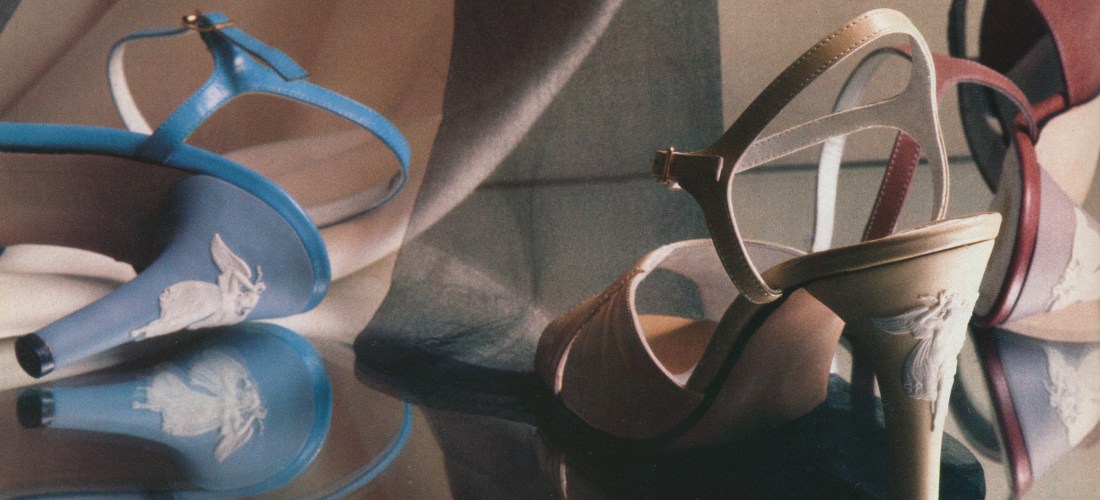
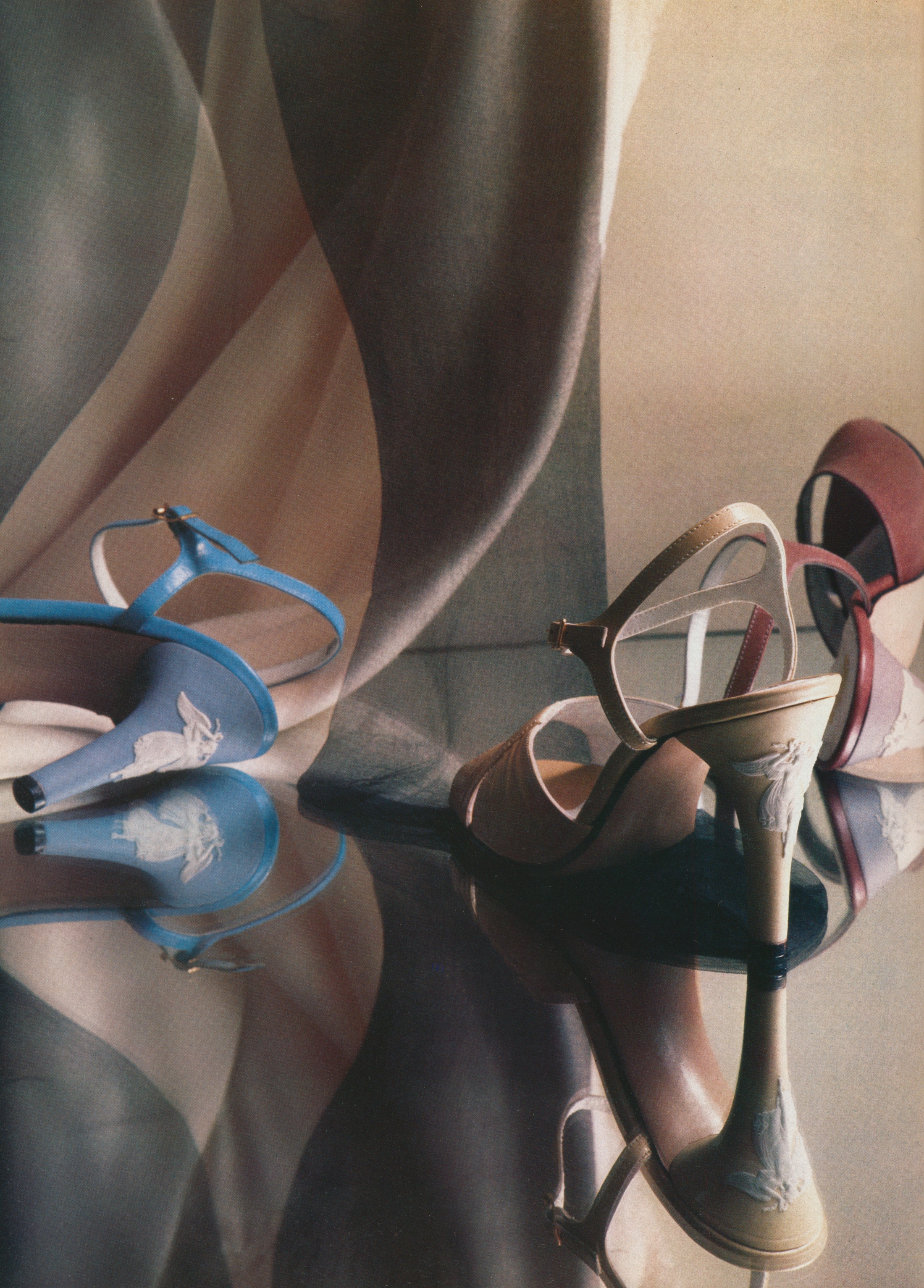
The famous names of Rayne and Wedgwood come together for one prestigious pair of shoes. Rayne’s high-heel sandals, heels decorated by Wedgwood, about £59.50, Rayne branches. Stockings, Christian Dior; satin nightdress, Courtenay.
Photographed by Eric Boman.
Scanned from Vogue, March 1978.


Long-term plan for spring dressing: slither in slim shapes, go sleek in skinny skirts and slink thin in think-slim skintight tops.
Model is Vivienne Lynn.
Styling by Marcia Brackett.
Photographed by Roger Charity.
Scanned from Petticoat, March 23th 1974


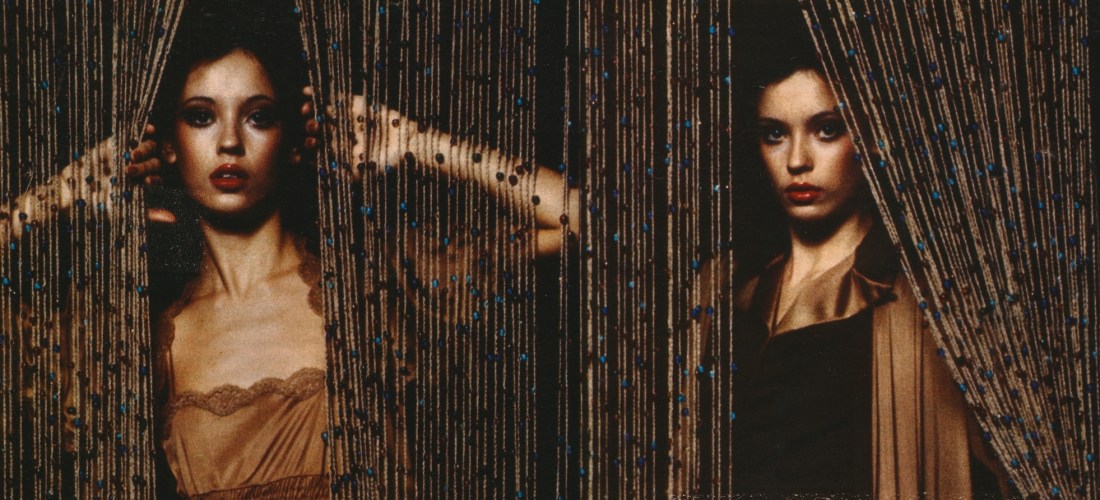
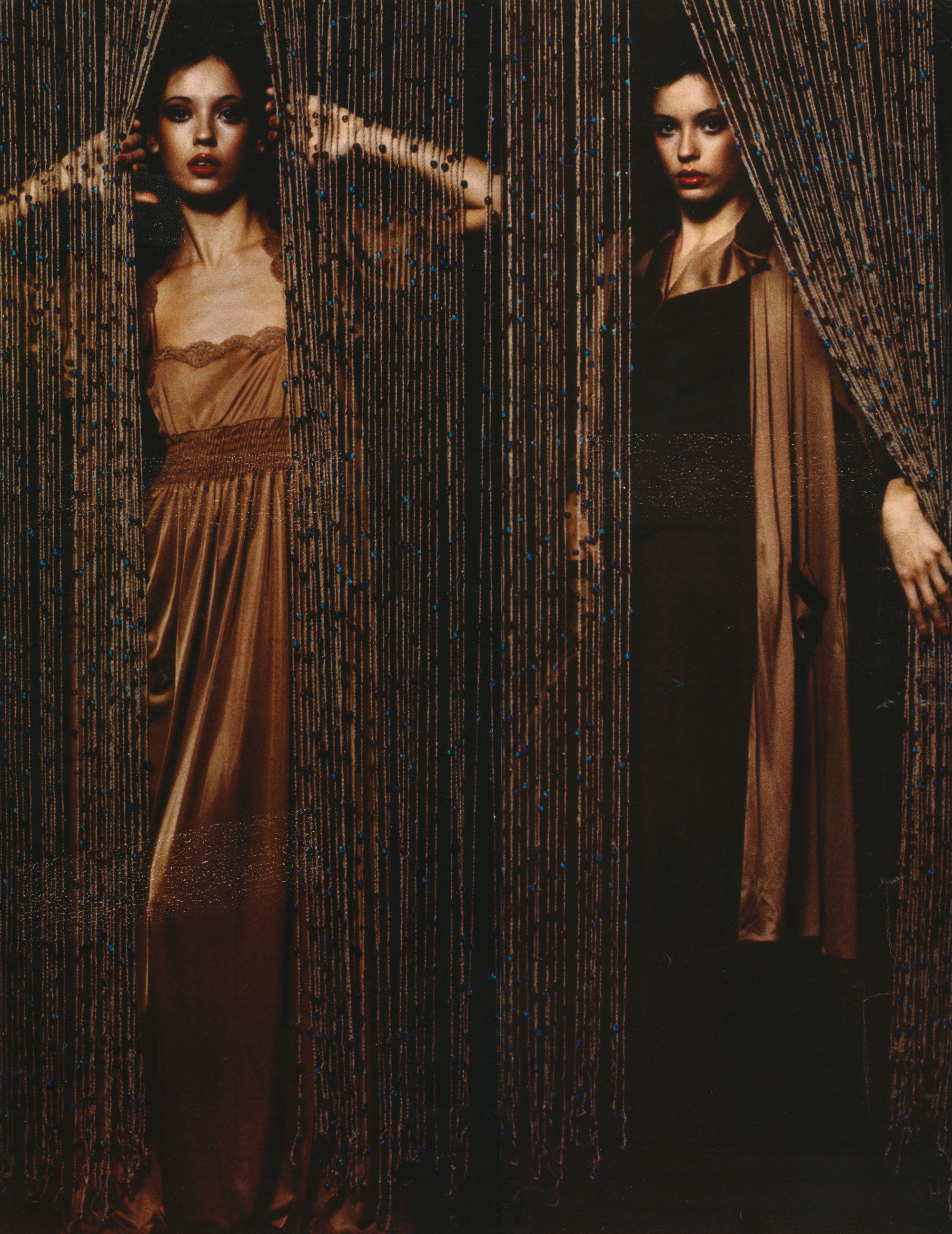
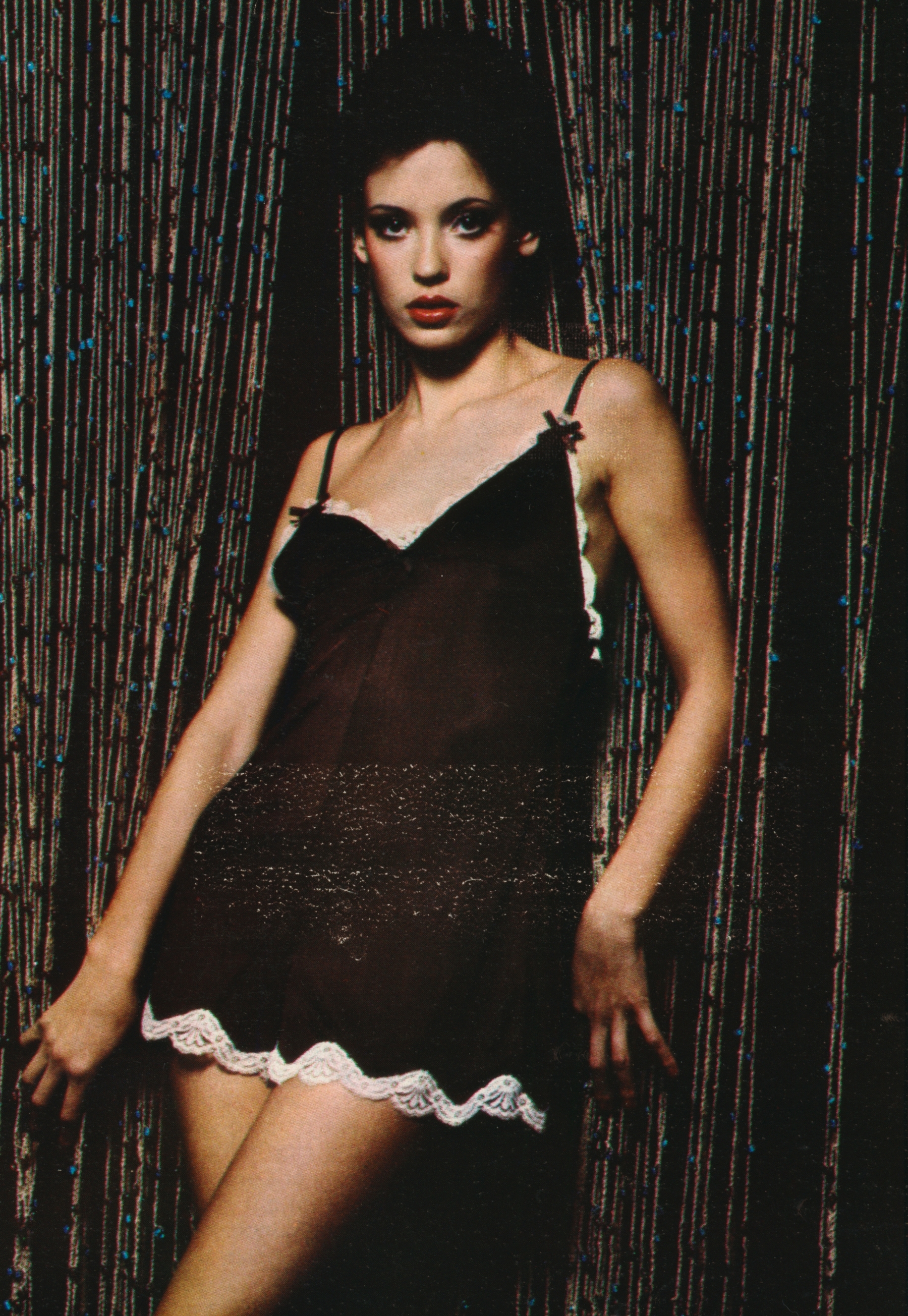
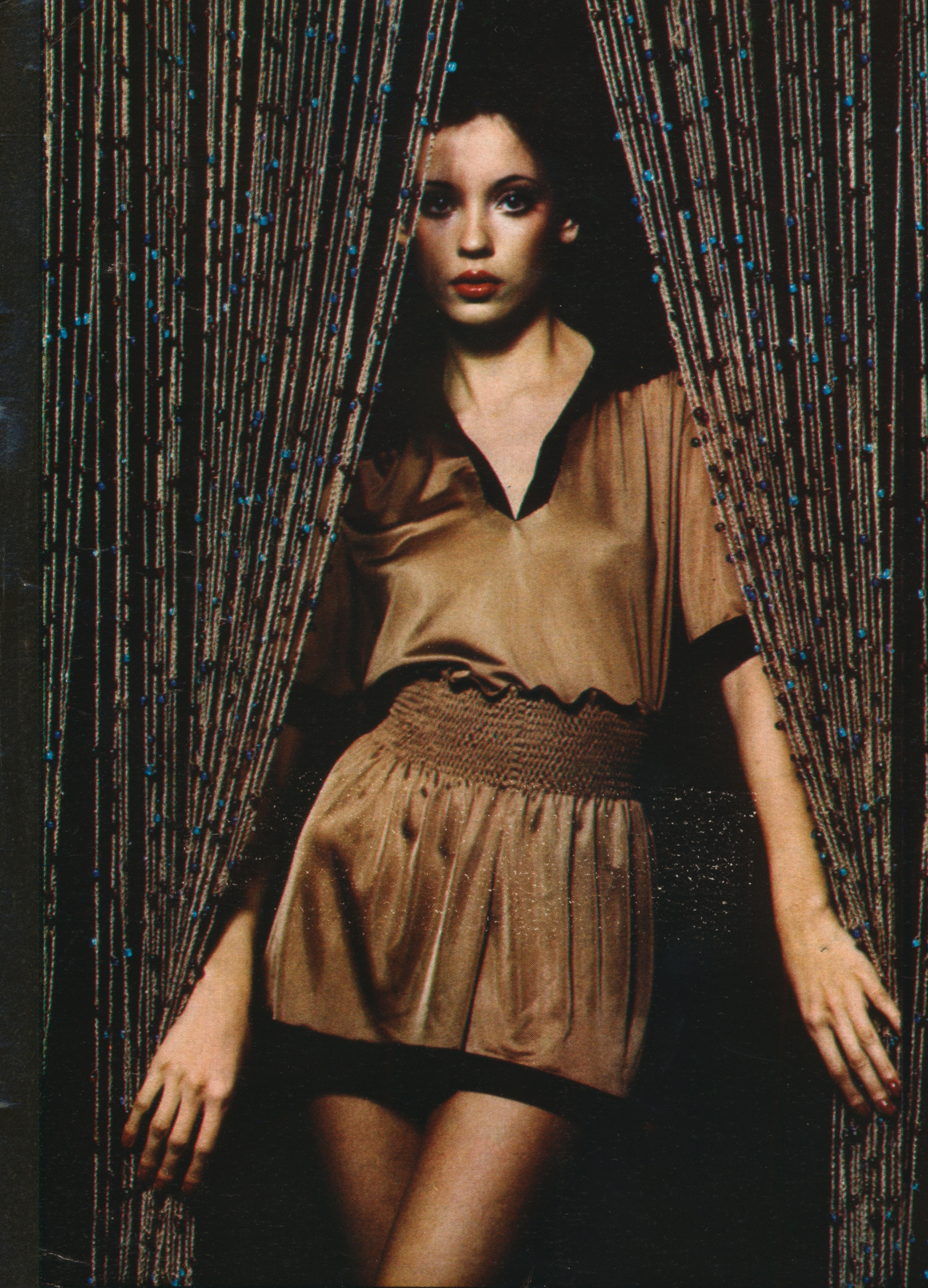
Students at the Kingston College of Art had an interesting assignment set them recently by Miss Selfridge. The store wanted young designs for young people and asked the students to make up a complete wardrobe of clothes, from undies right through to coats, keeping Miss Selfridge and its many branches in mind. The garments had to be commercial in the widest sense, suitable for sale all over the country. From the many beautiful designs sent in, Miss Selfridge chose what it thought were the best for retail. The one to make the most money will win its designer a trip to Paris. We photographed a selection in the lingerie range, all made in Dicel, to show you what’s in store.
Photographed by Peccinotti.
Scanned from 19 Magazine, February 1974.
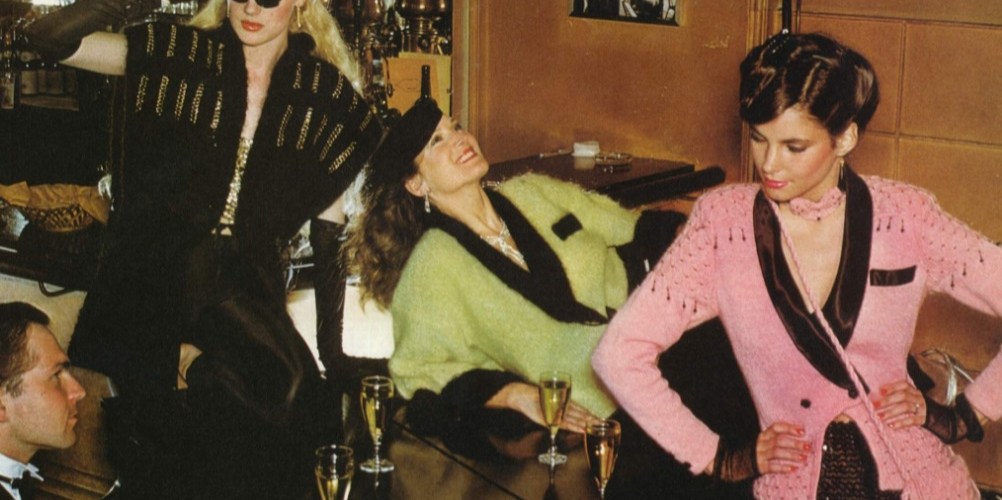
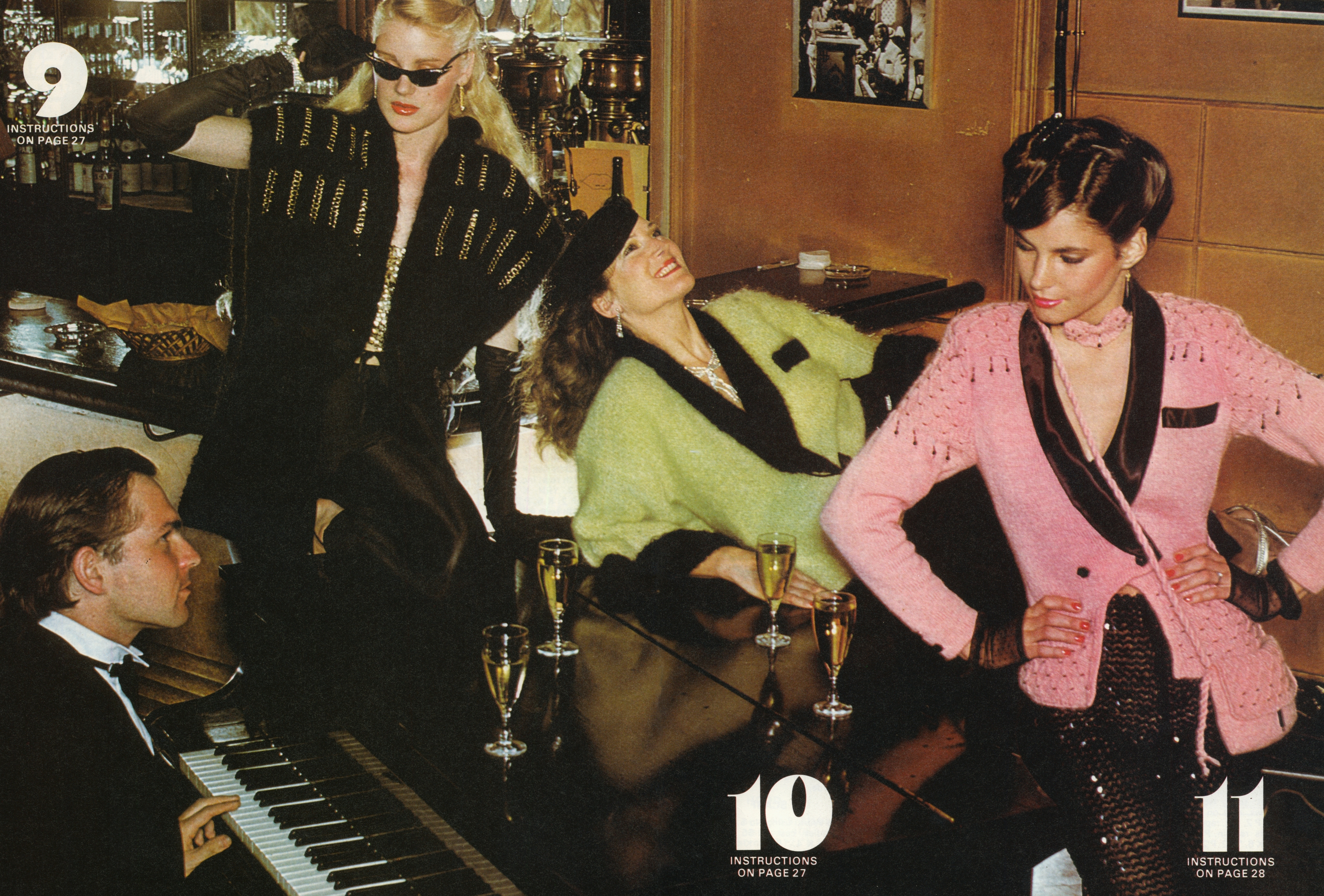
Another supreme example of amazingly styled and photographed late Seventies knitting patterns, further to my earlier Patricia Roberts appreciation post. I also immediately recognised those iconic Terry de Havilland zip-edged satin boots, which I’ve previously had in black and electric blue, seen photographed in pink and am now desperate to find the ice blue version!
Hair by Jane at Schumi.
Evening clothes from a selection at Ace.
Day clothes from a selection at Top Shop.
Shoes by Terry de Havilland and Sacha.
Ballet pumps and legwarmers from Anello & Davide.
Photographed by John Carter.
Not dated but I think c.1978/79.
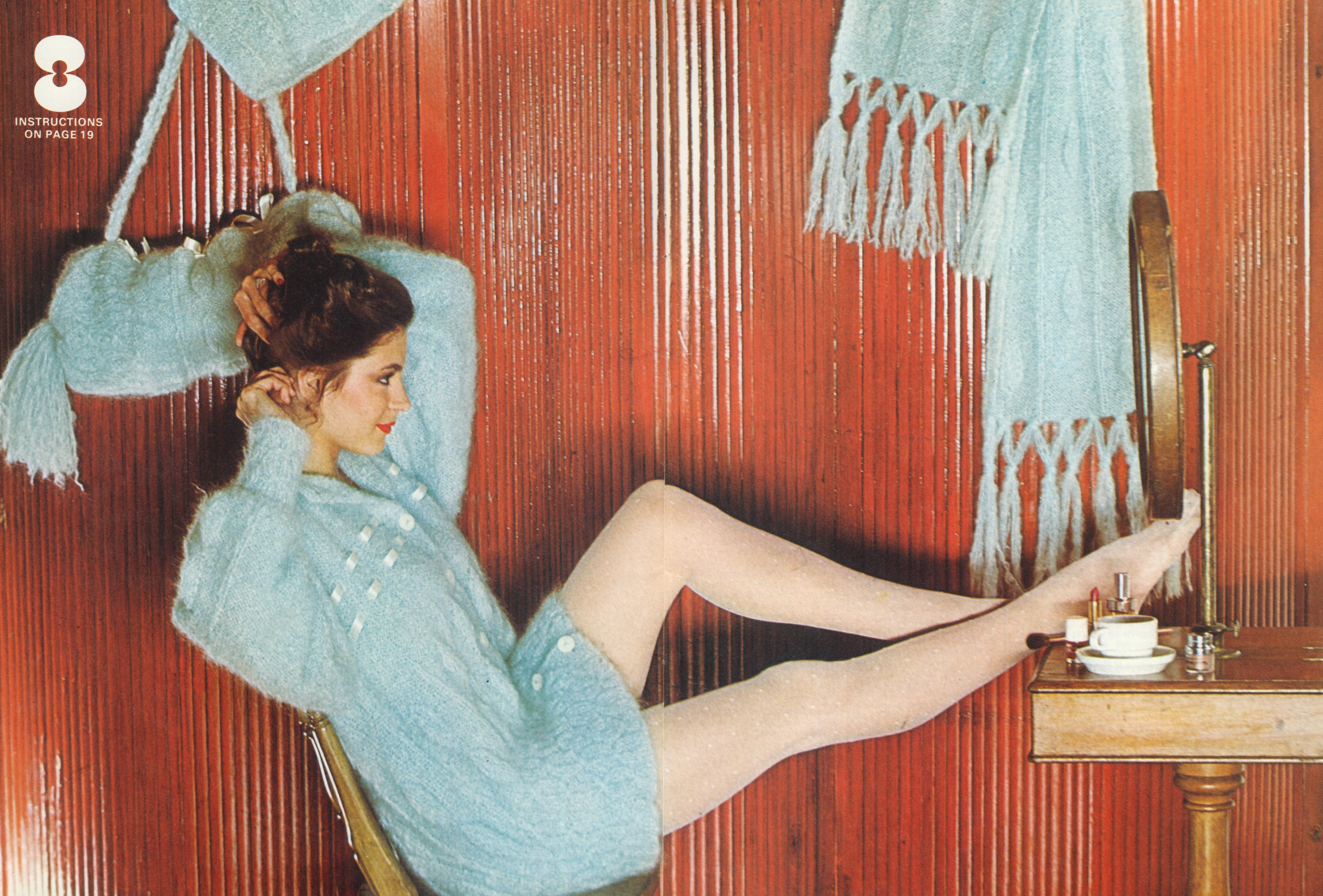
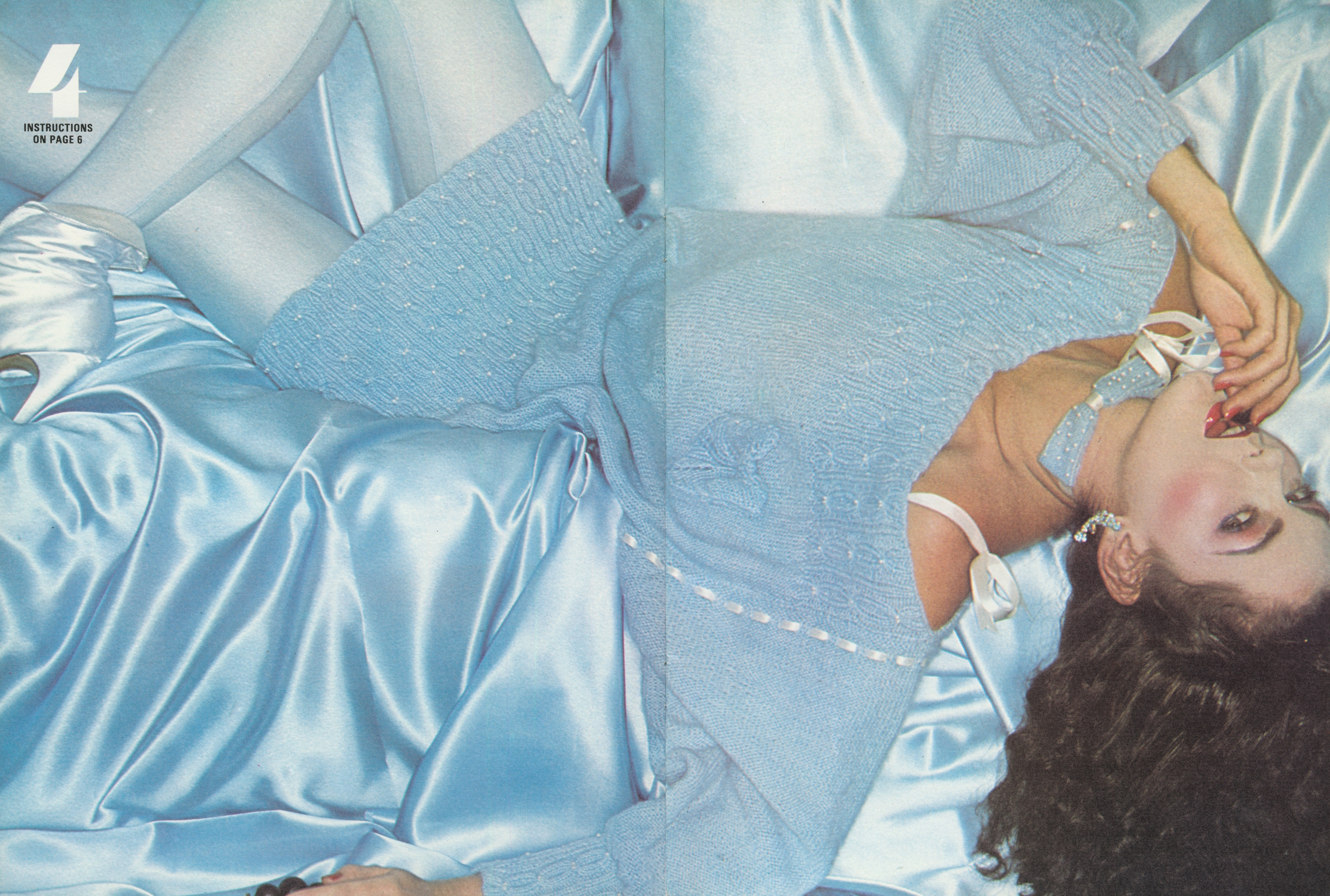
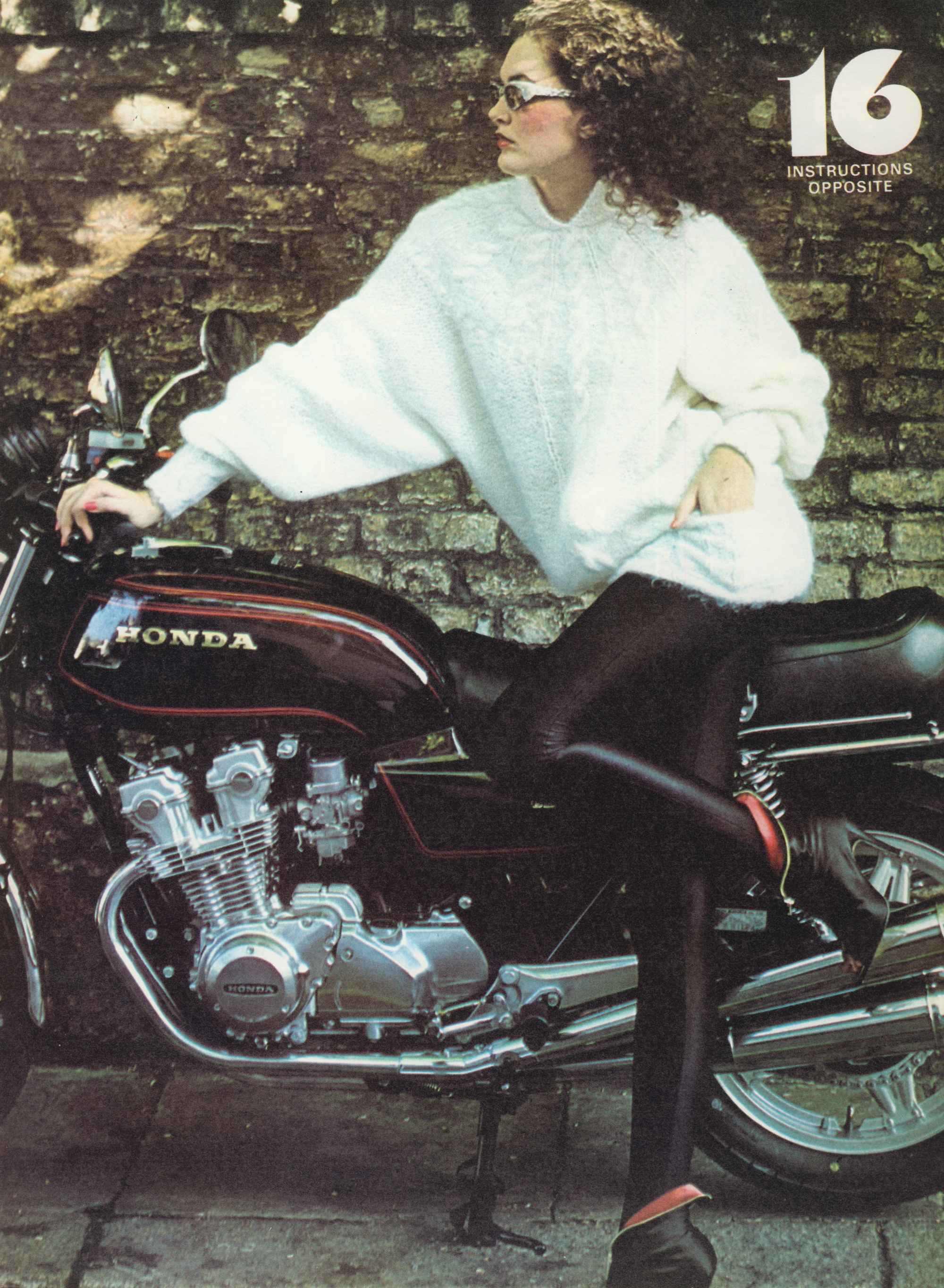
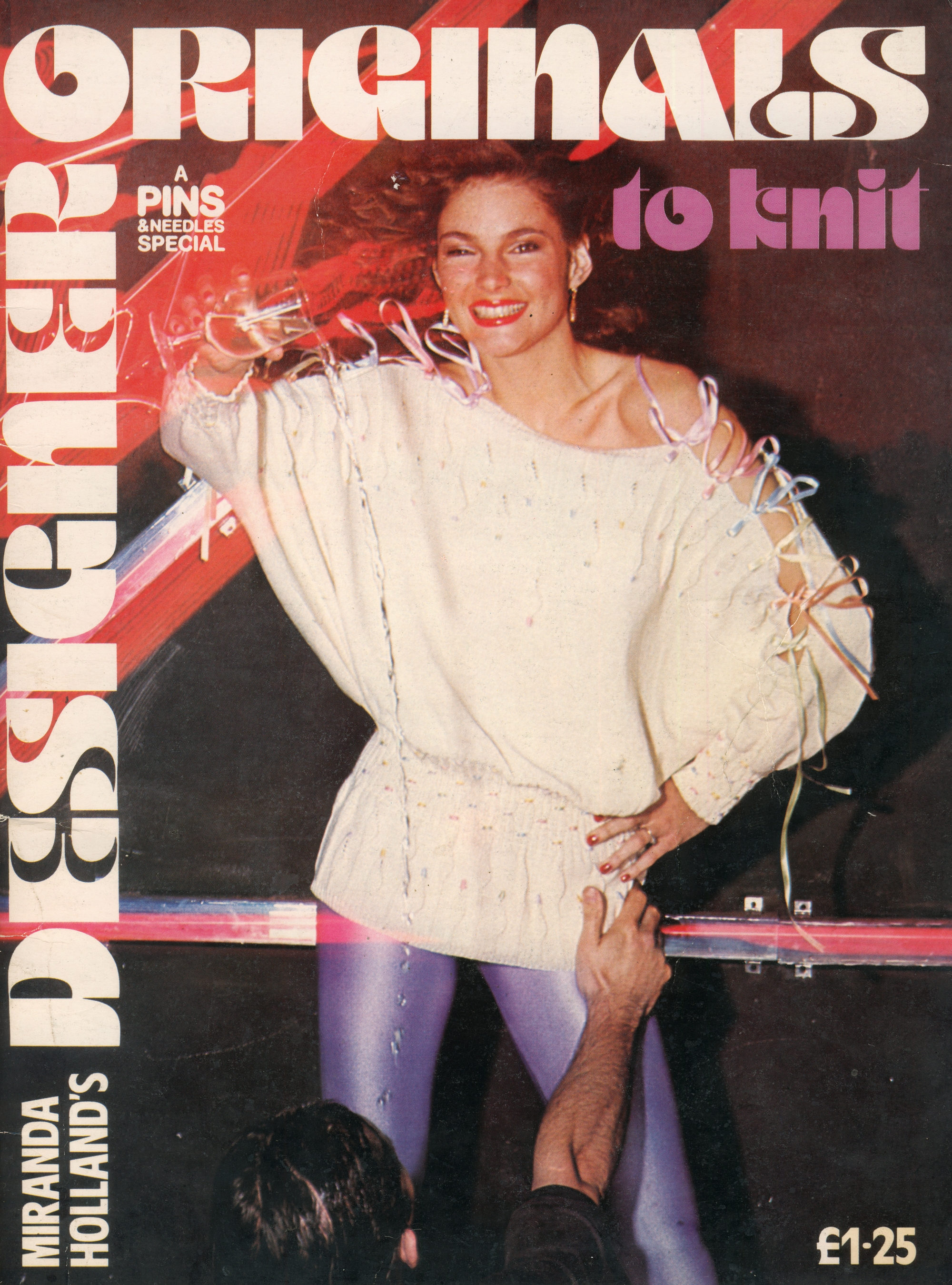
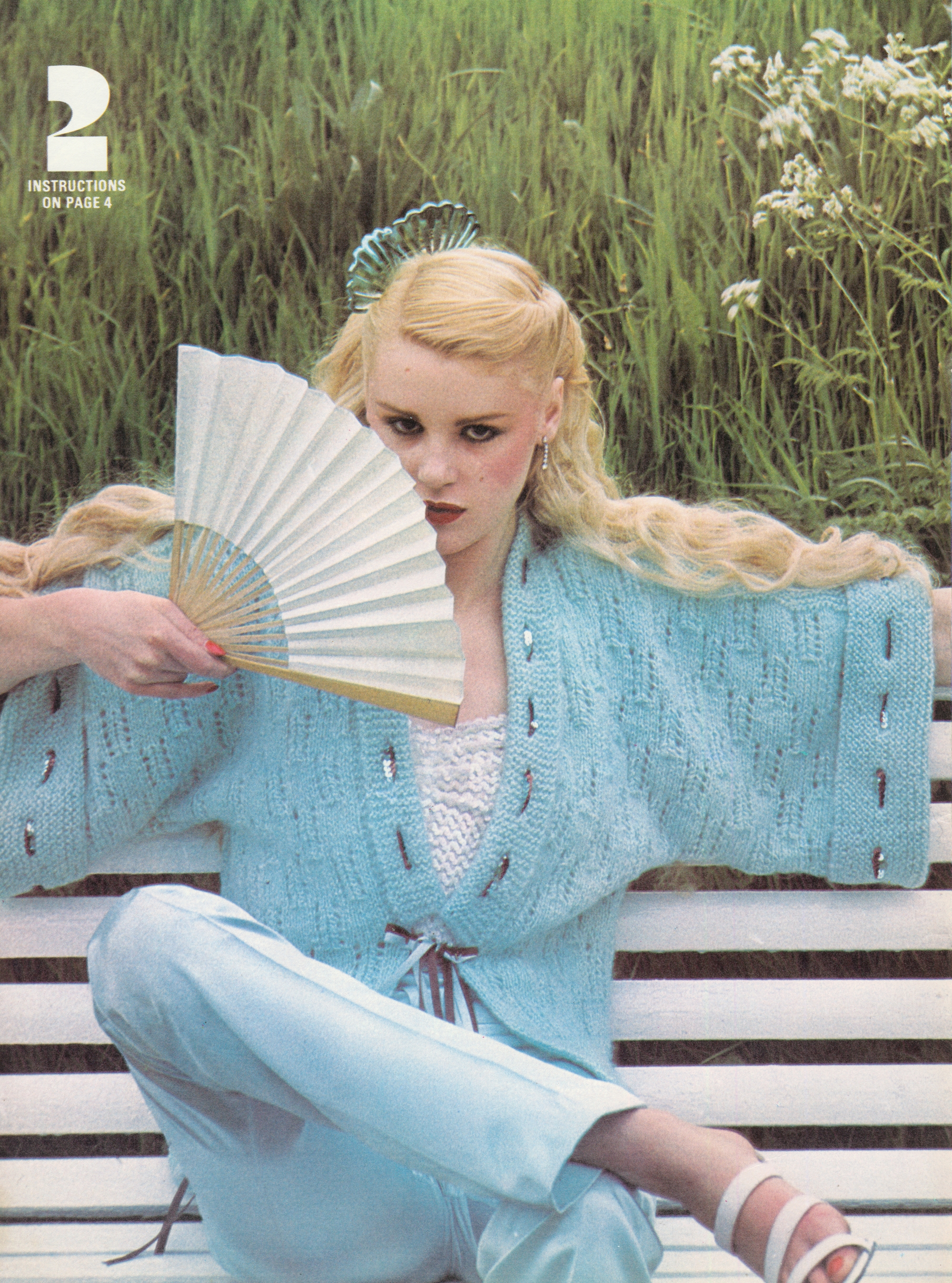
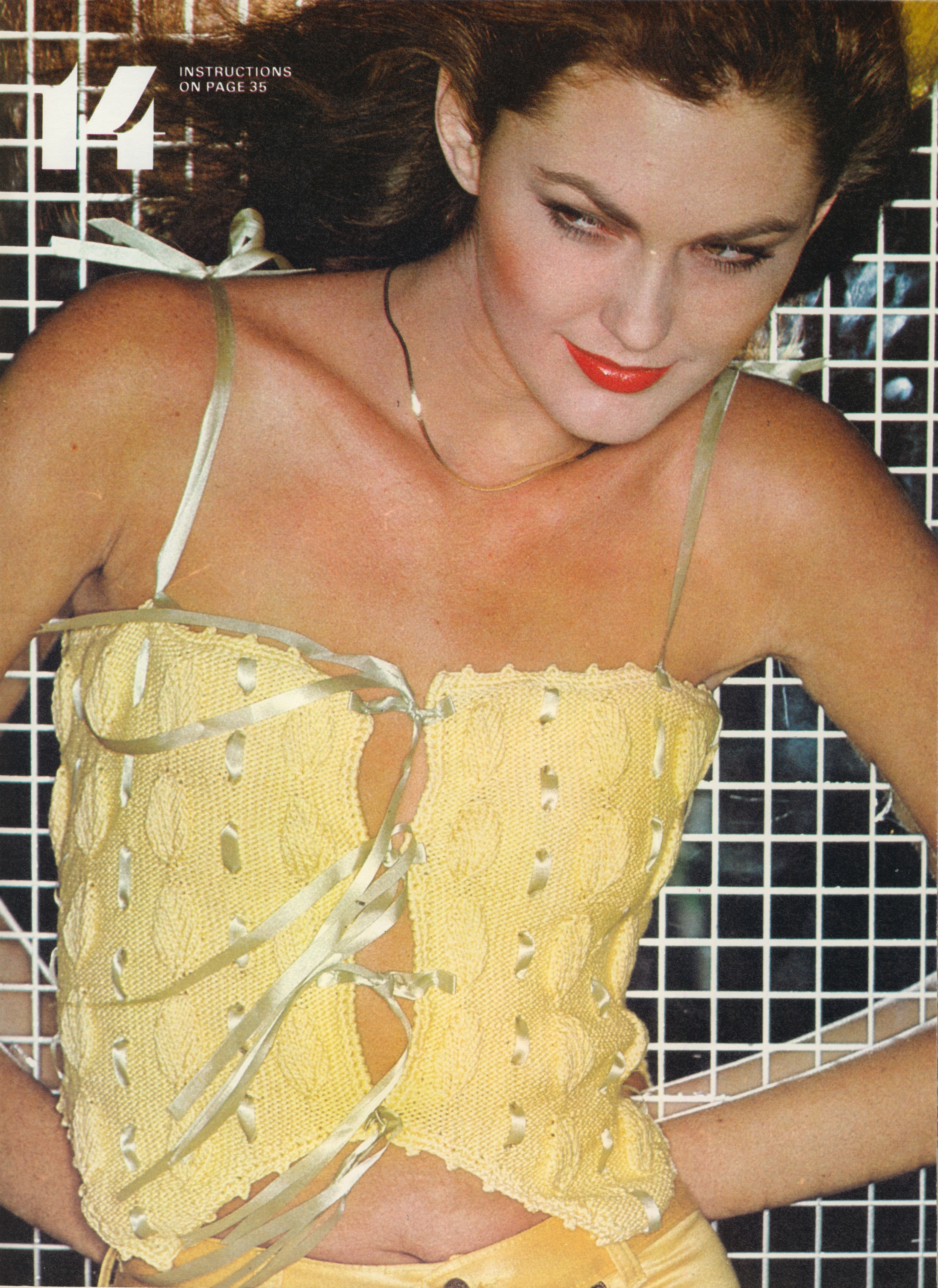
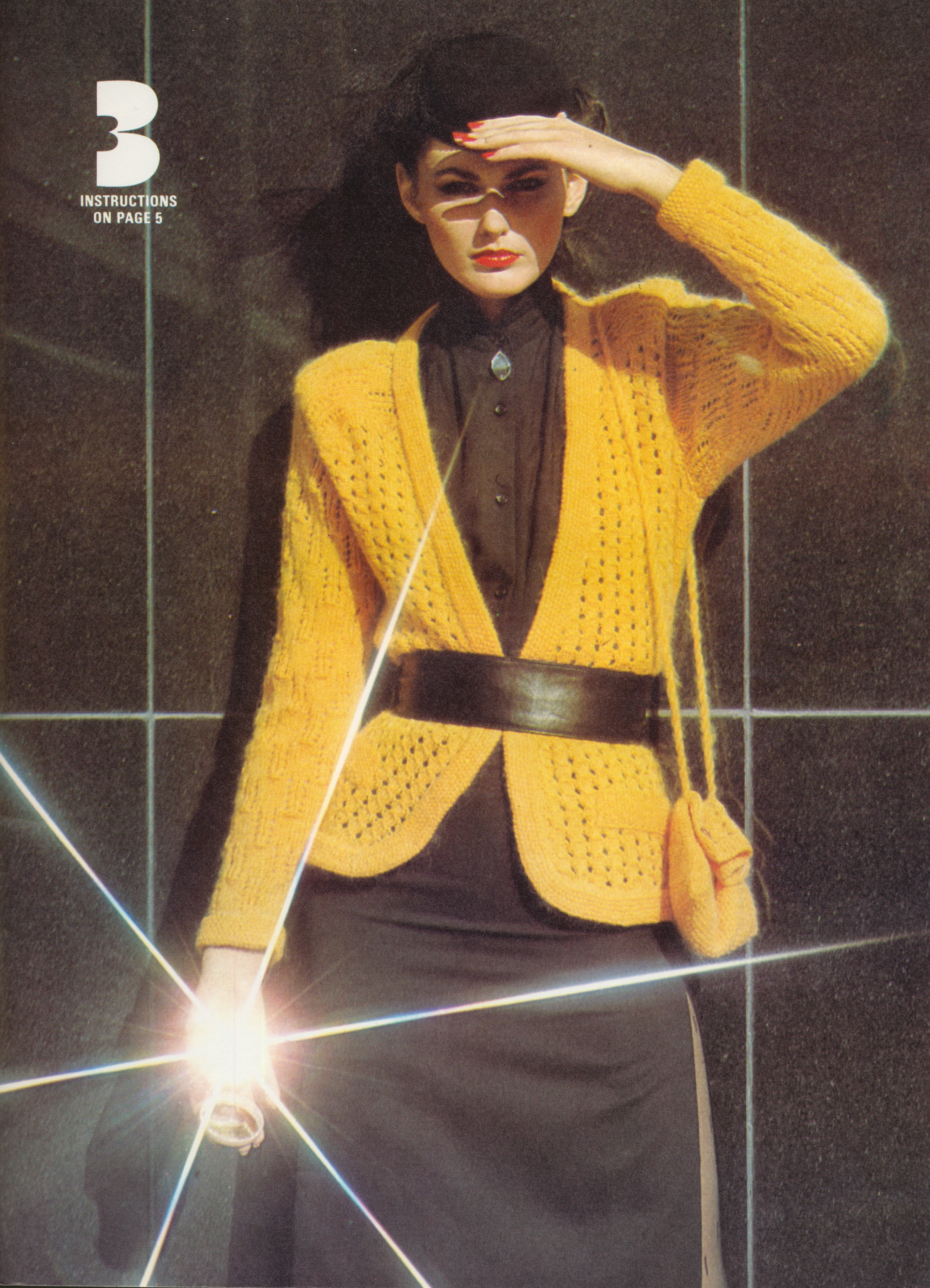
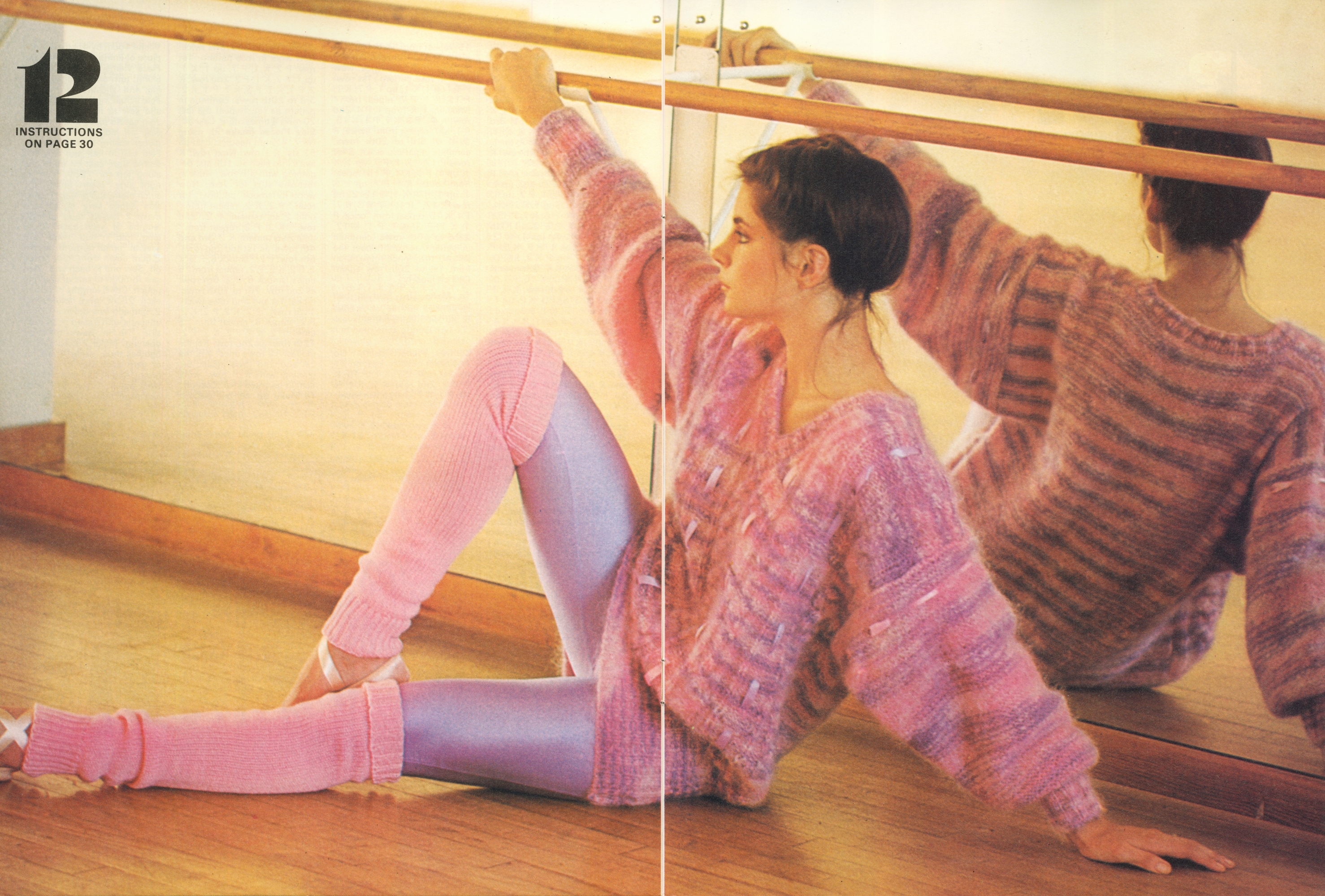
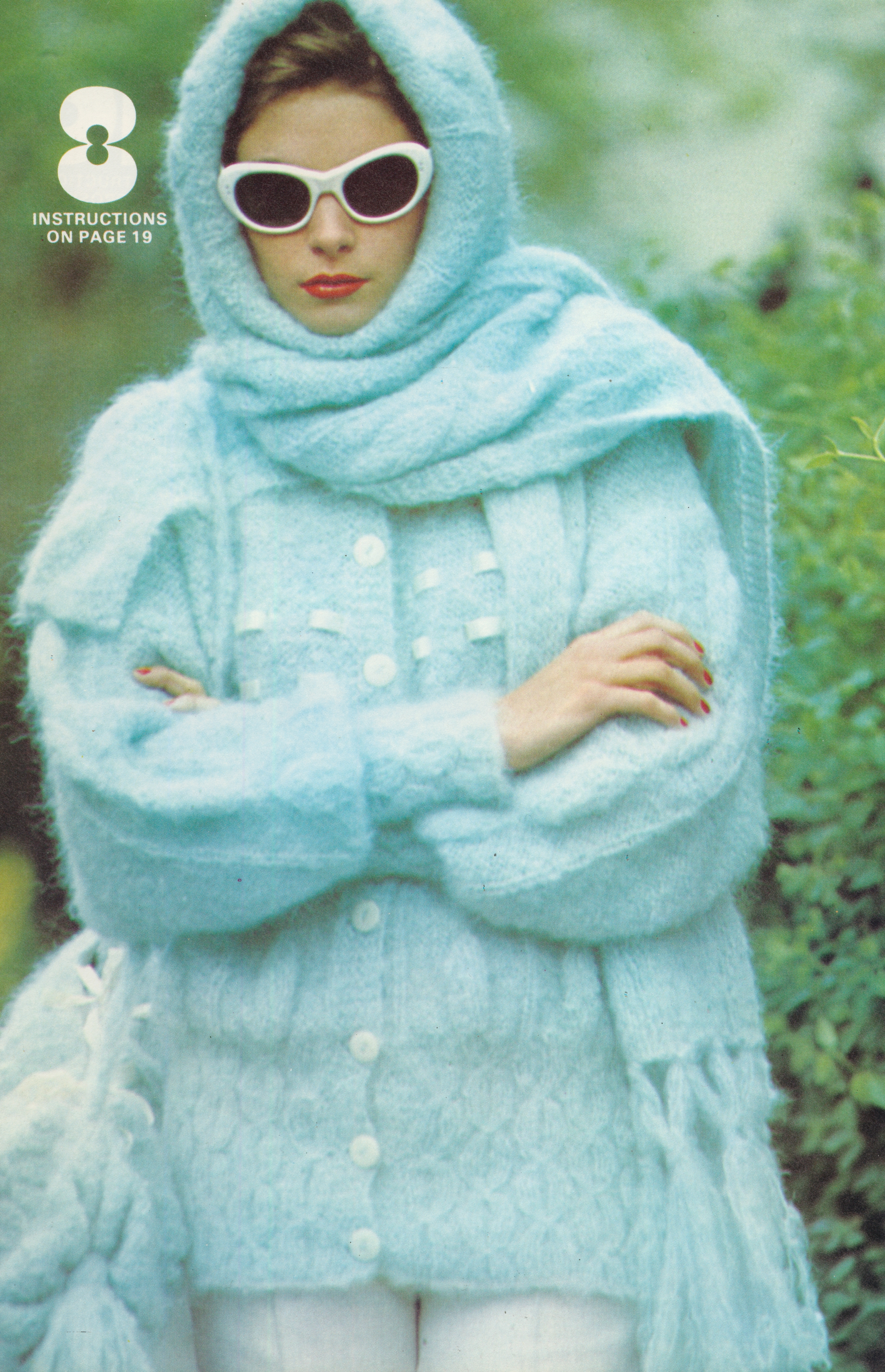
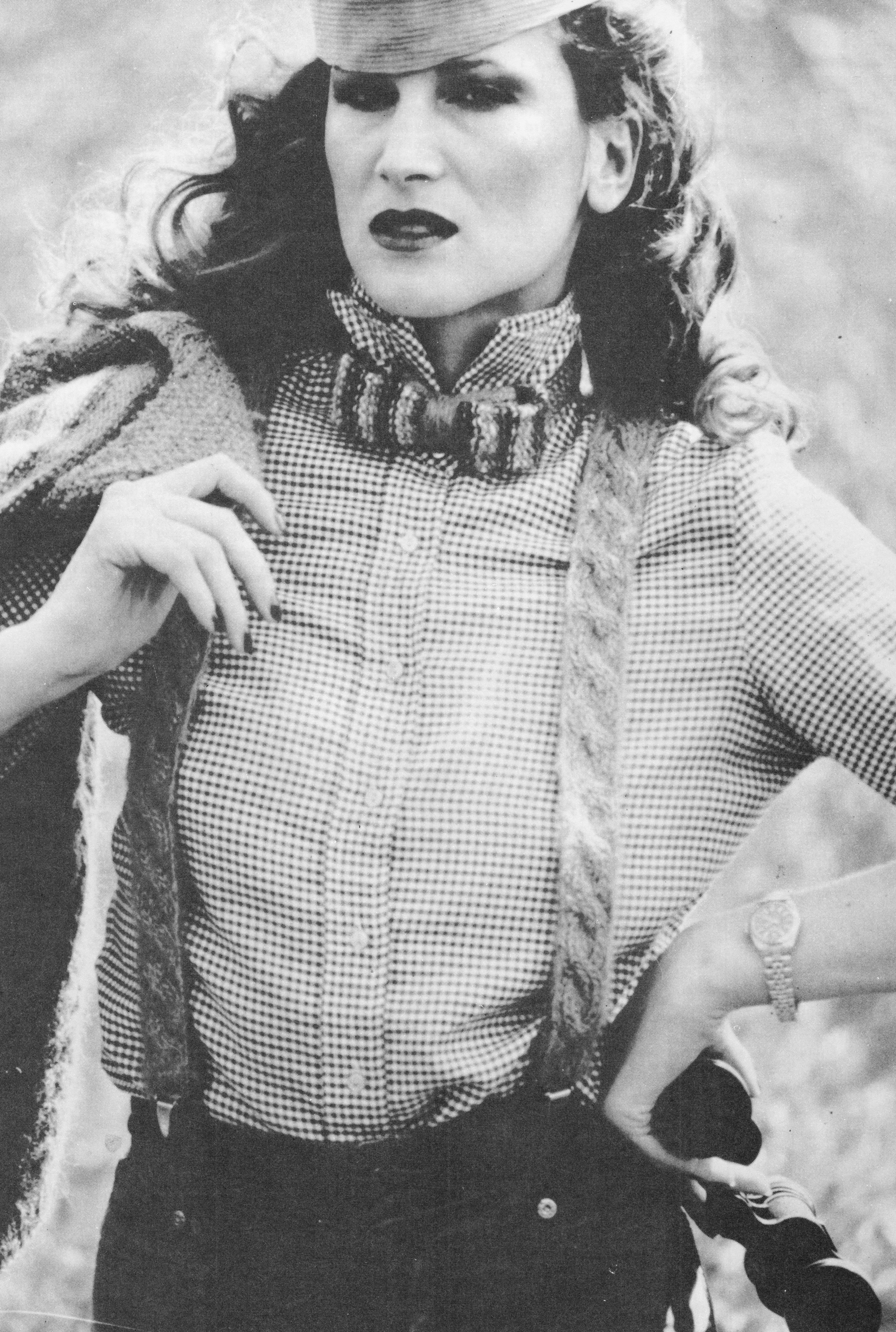
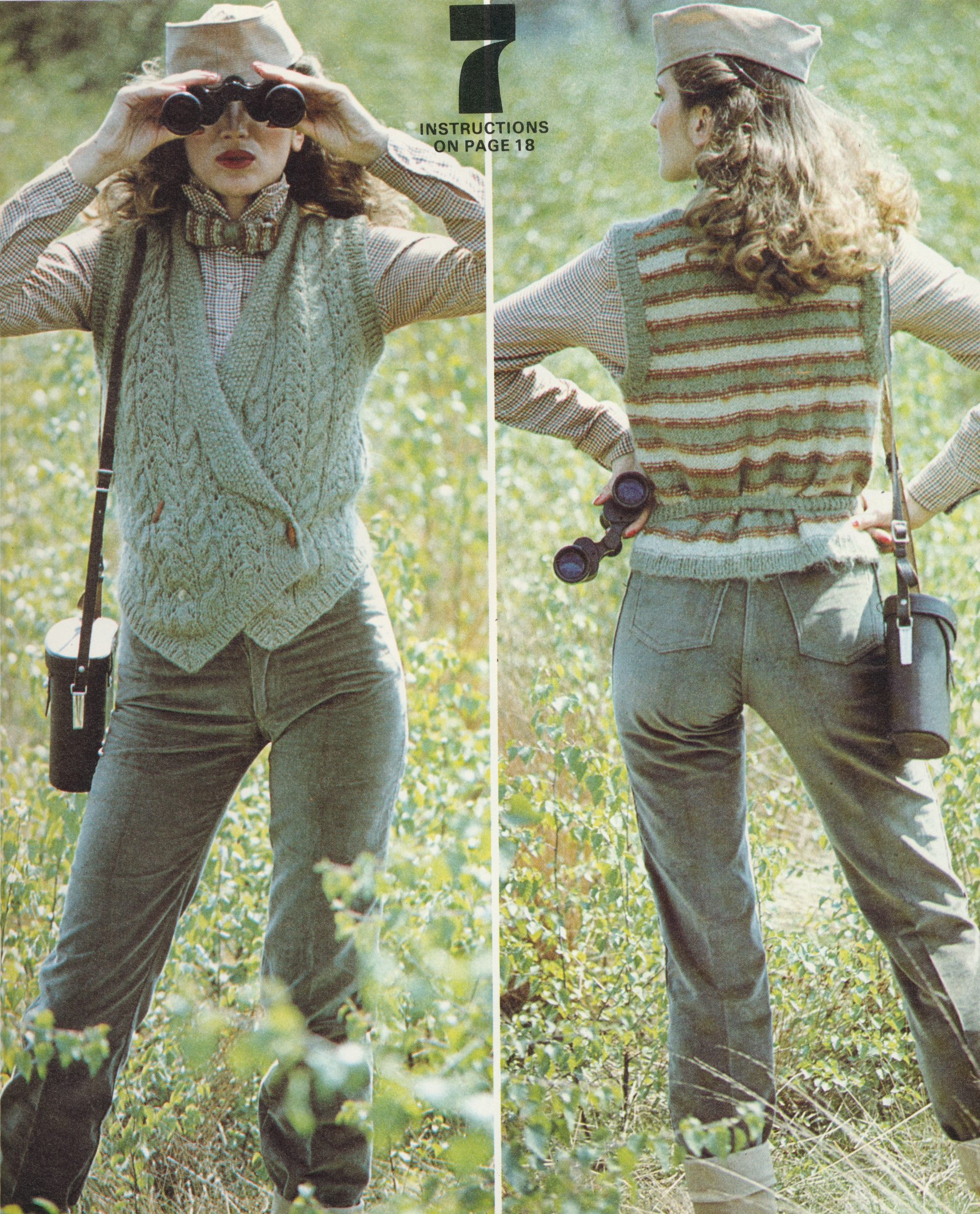
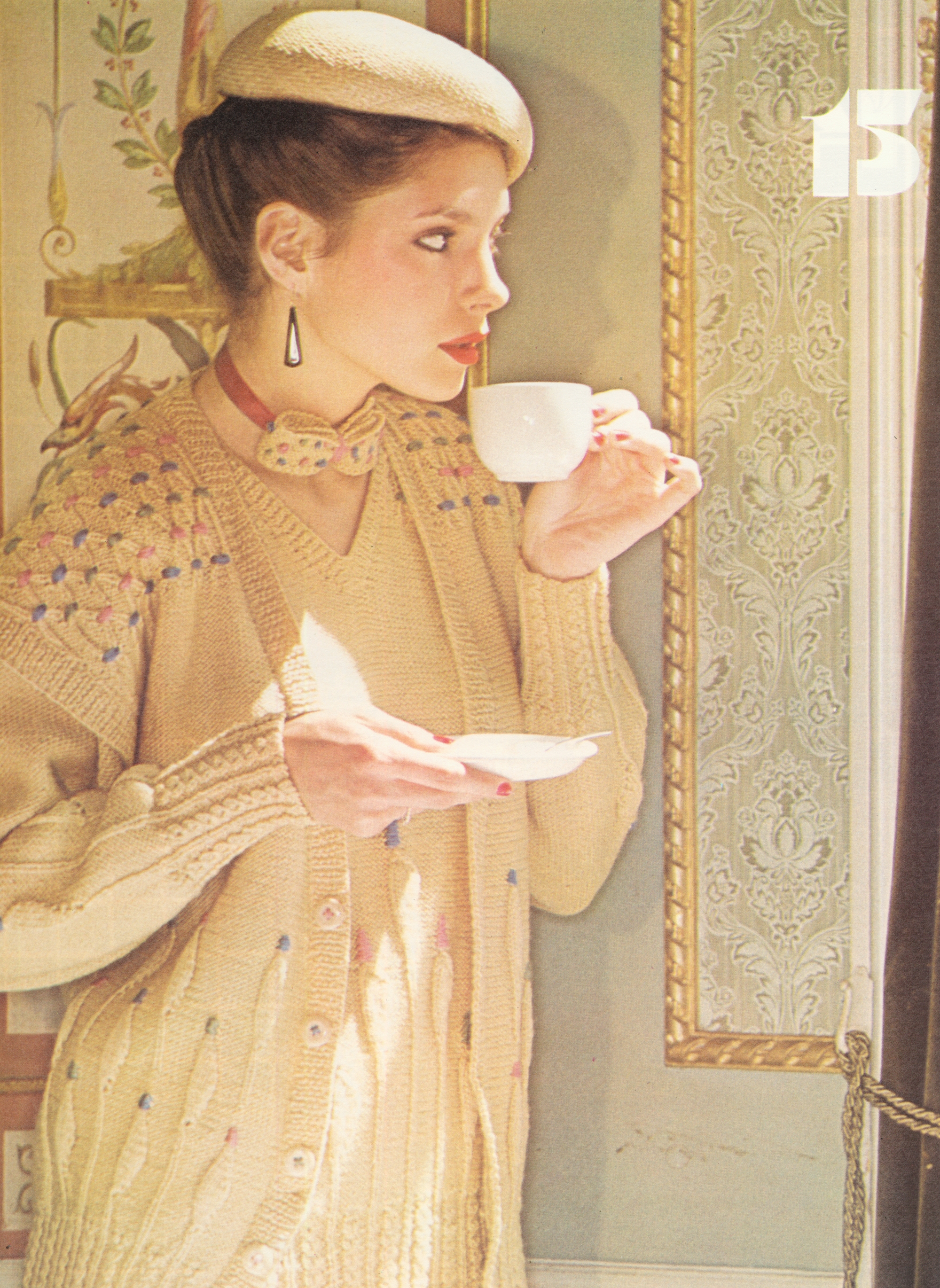
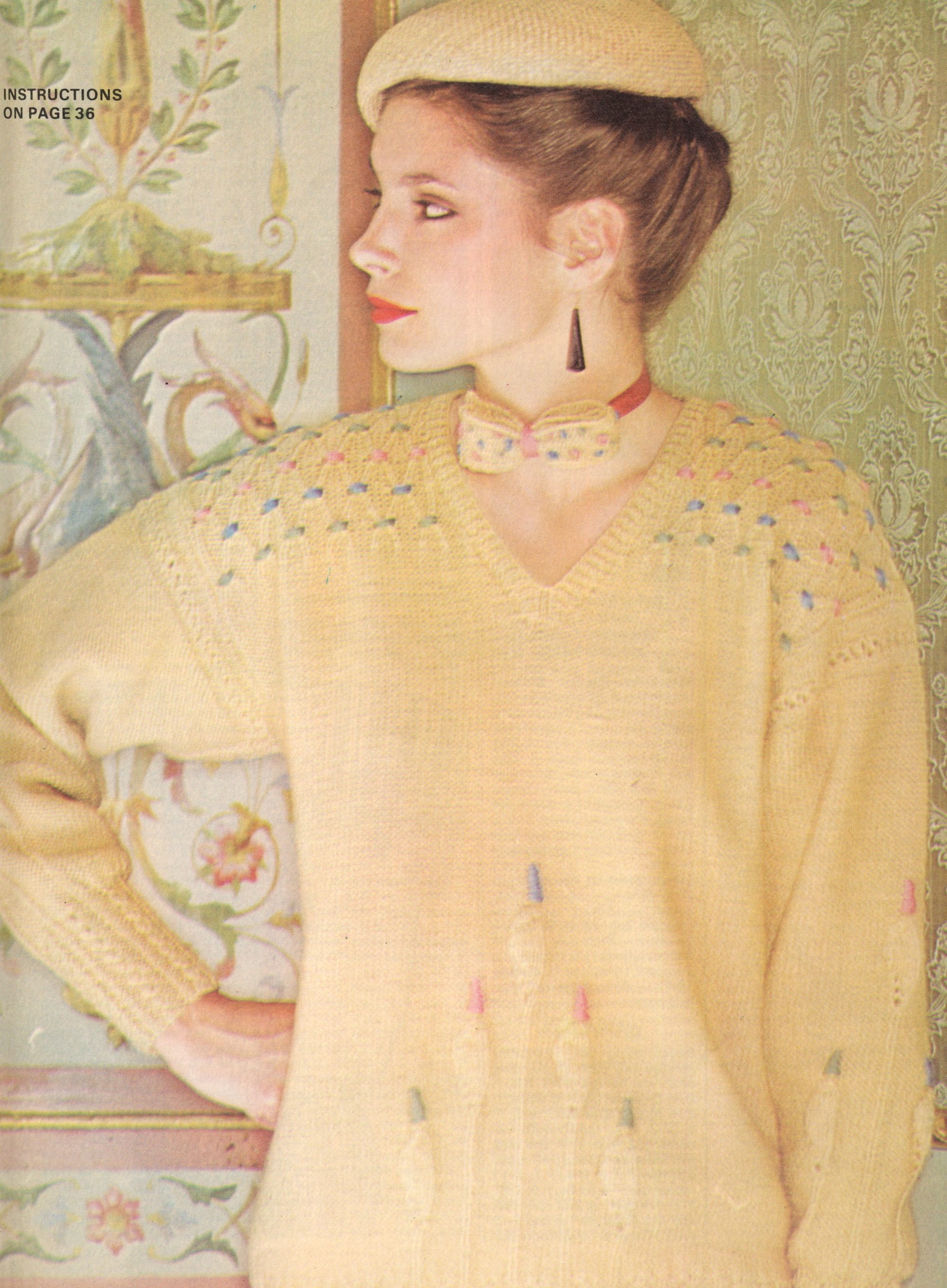
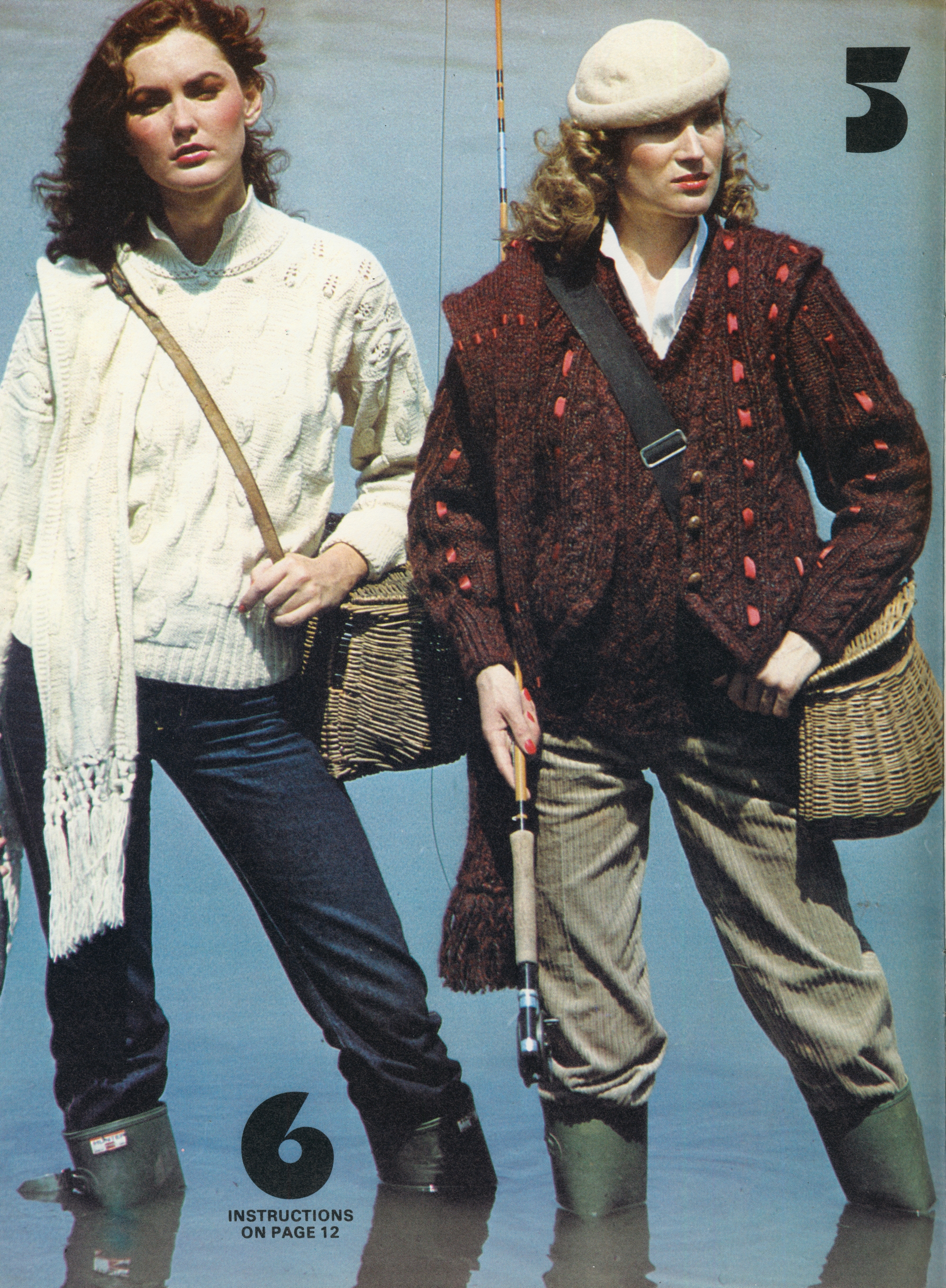
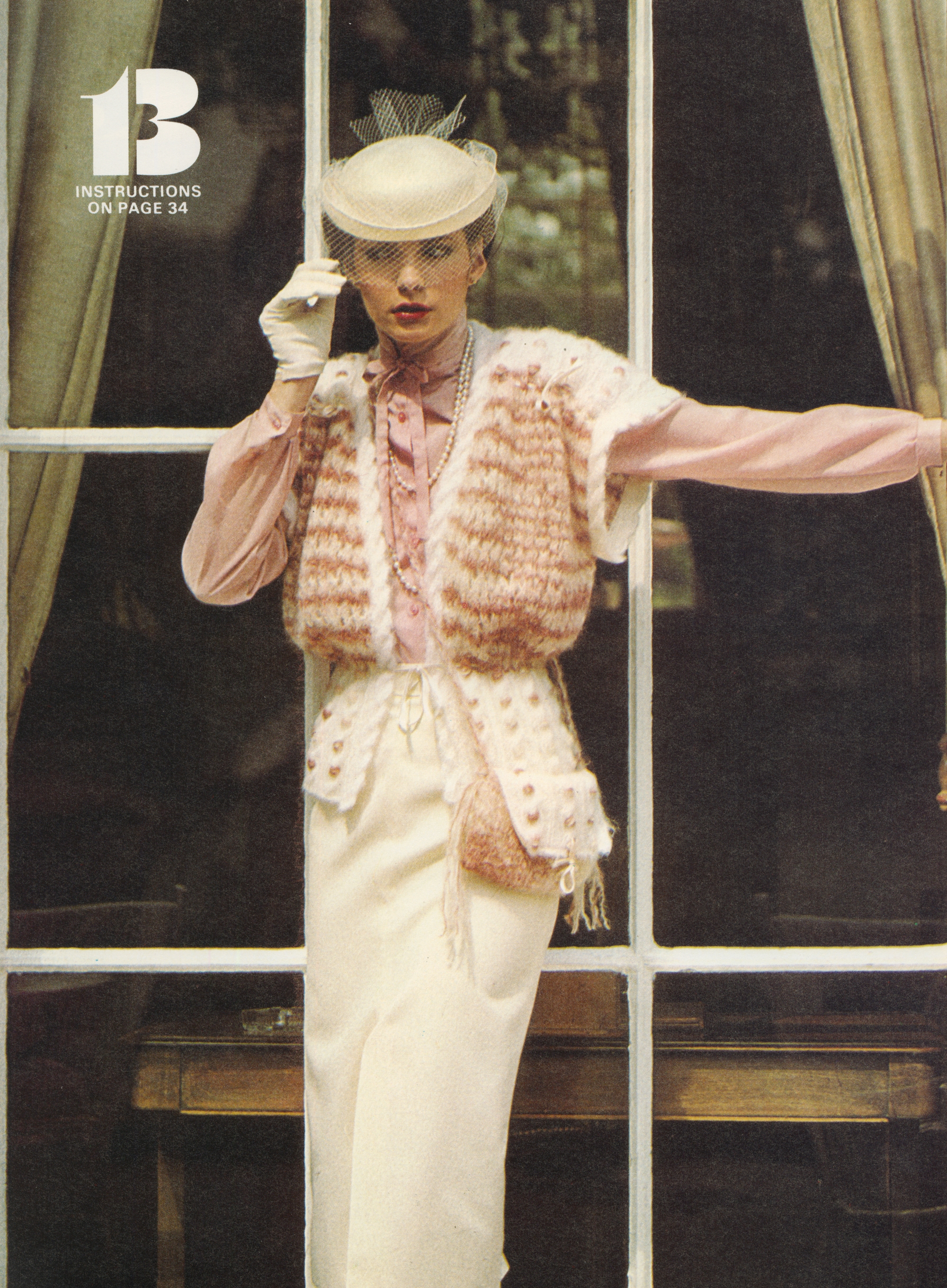


Photographed by Willie Christie.
Scanned from Cosmopolitan, December 1979.

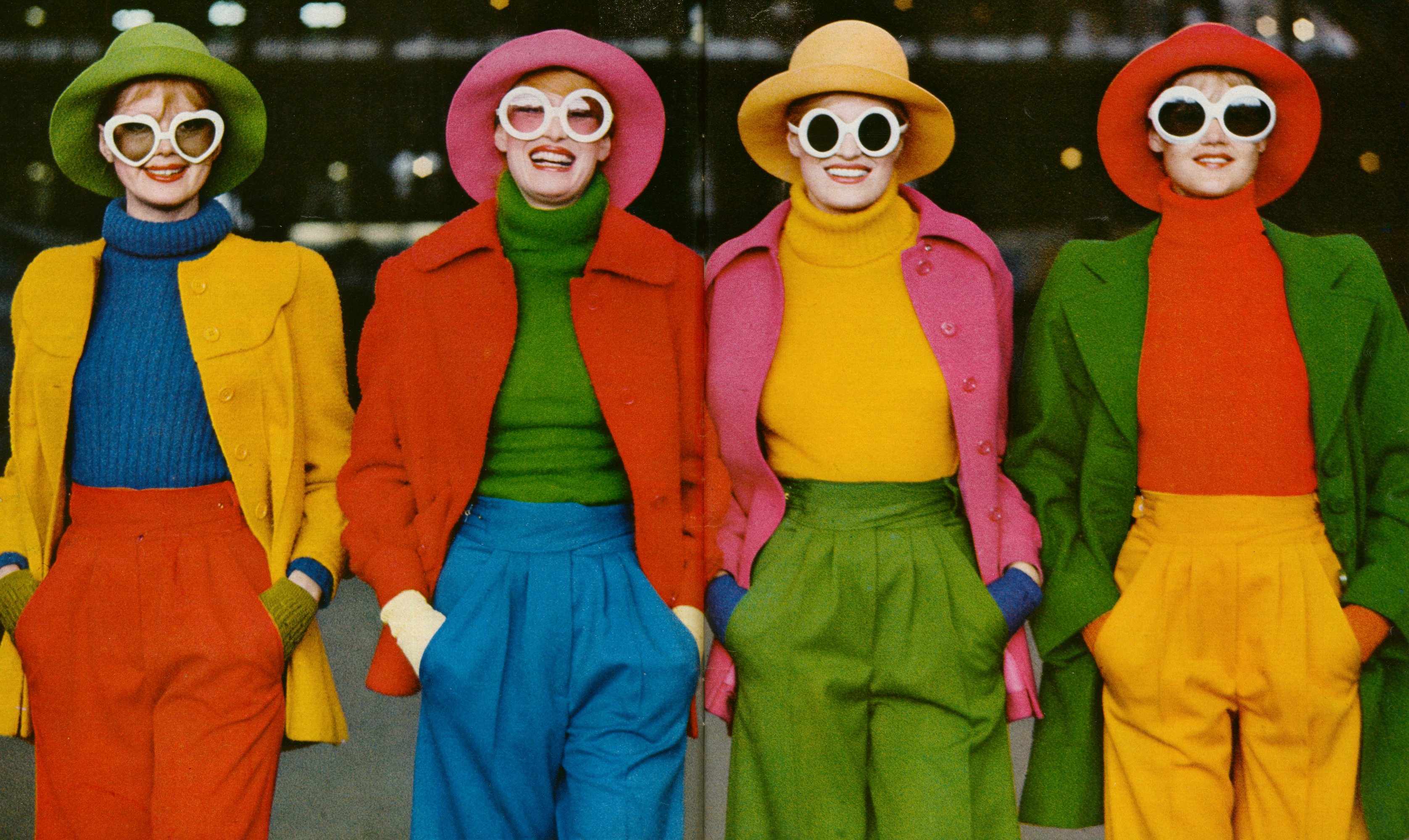
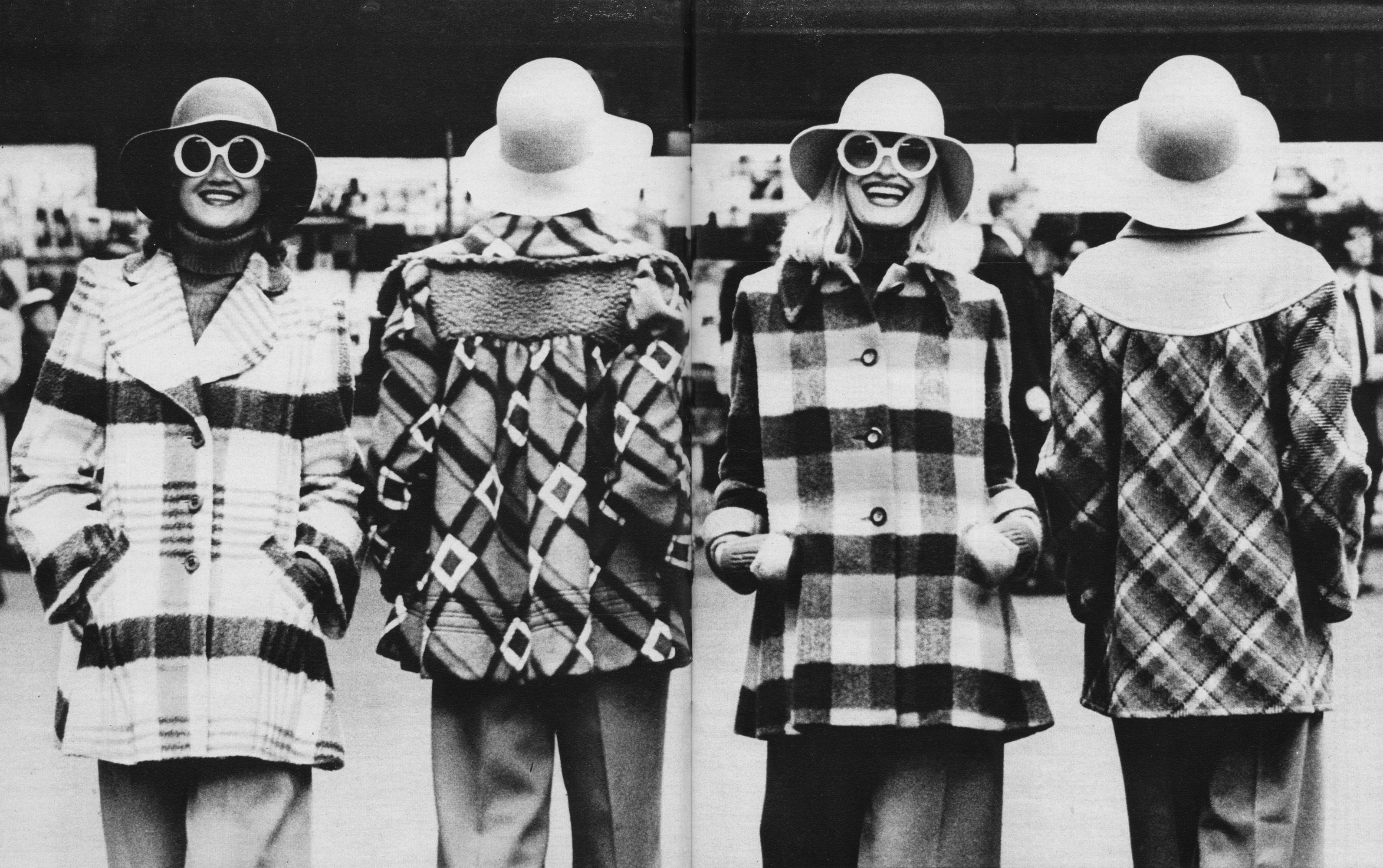
Jackets are the brightest you’ve ever seen, with enormous checks and swirling swingy backs. They go with vivid sweaters and the widest possible Oxford bags, worn shorter than usual to reveal gleaming white lace-ups and tappy 46 two-tone shoes. What a way to get yourself noticed!
Second model from the left in the top image looks to be Ika Hindley.
Photographed by Peter Castellano.
Scanned from Honey, October 1972.


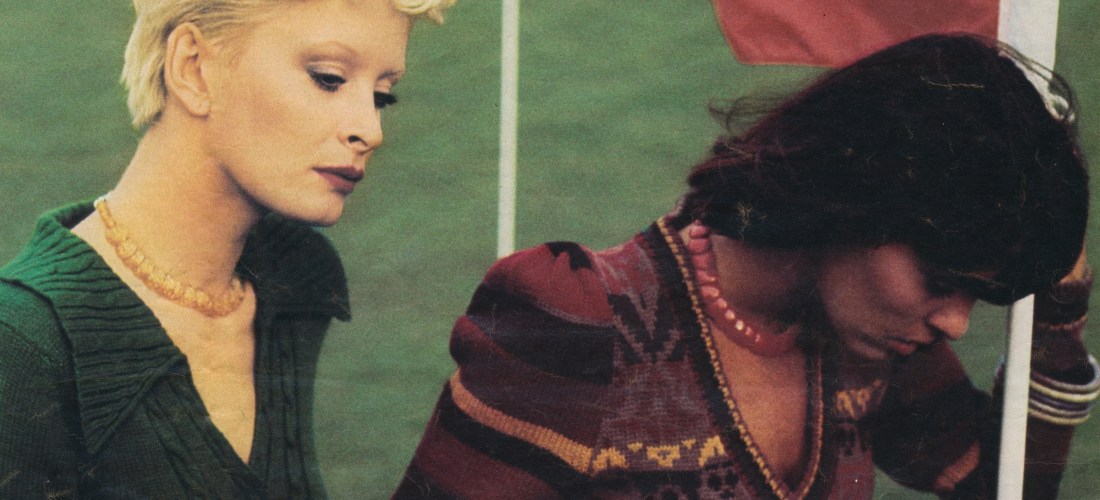
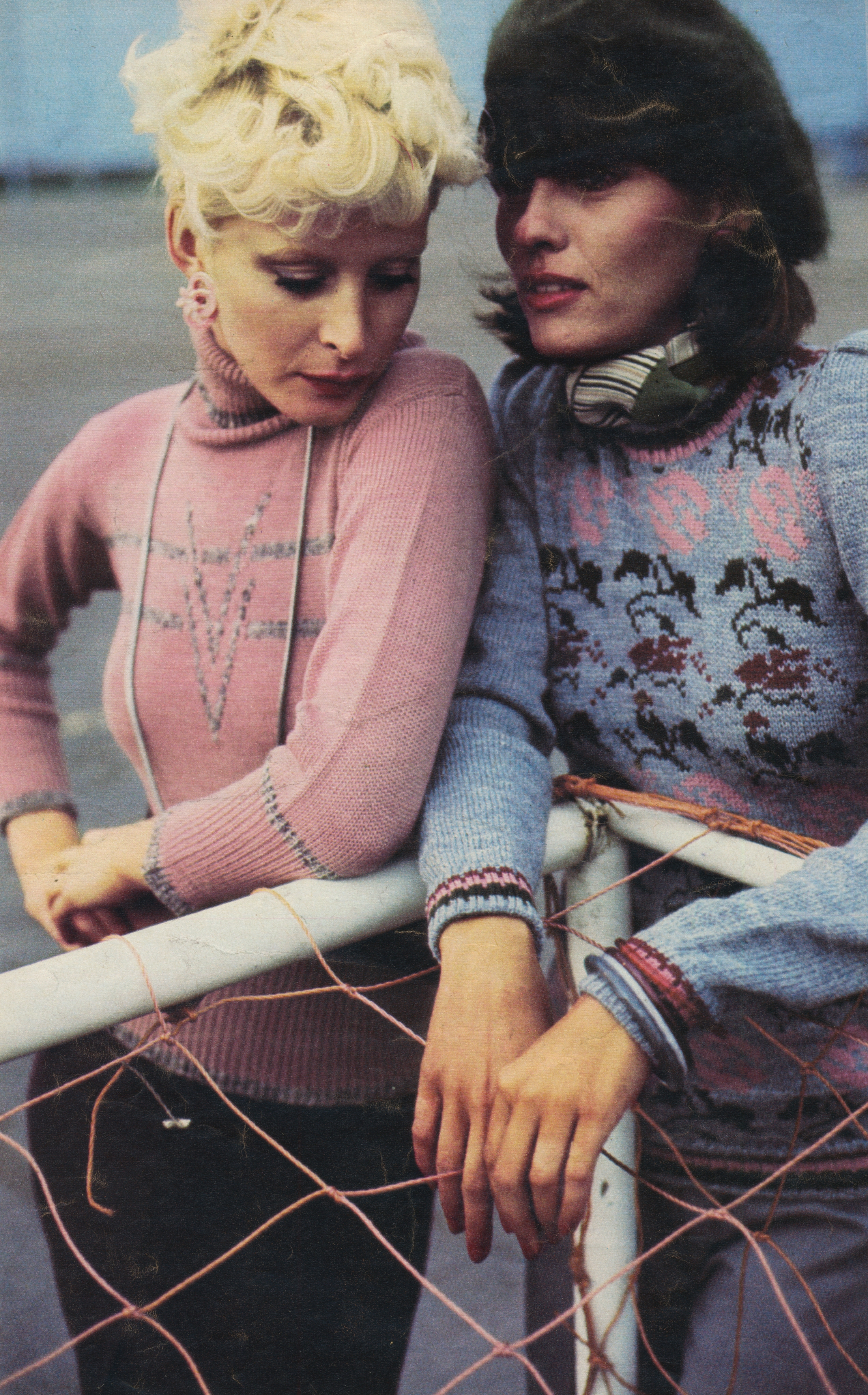
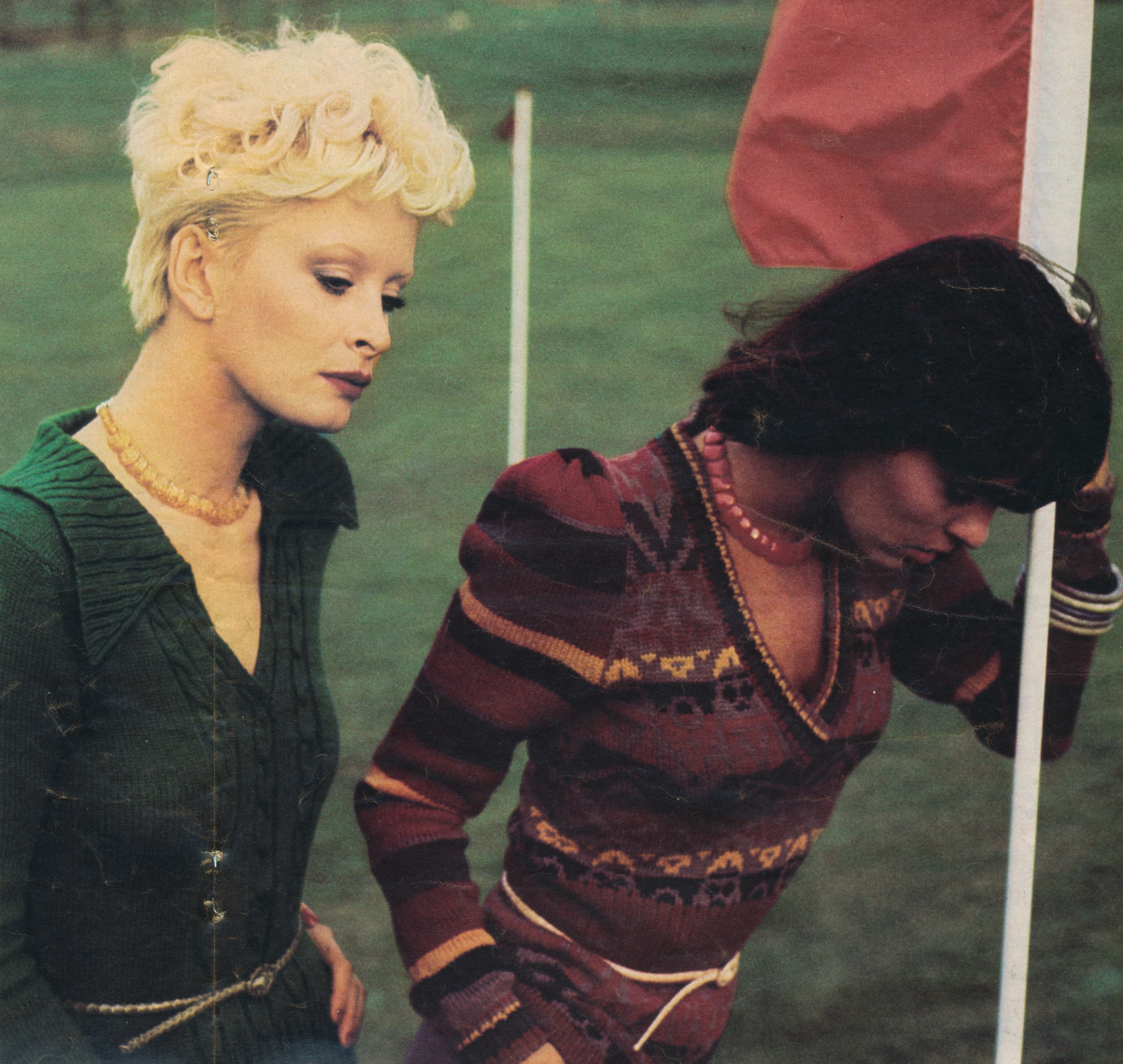
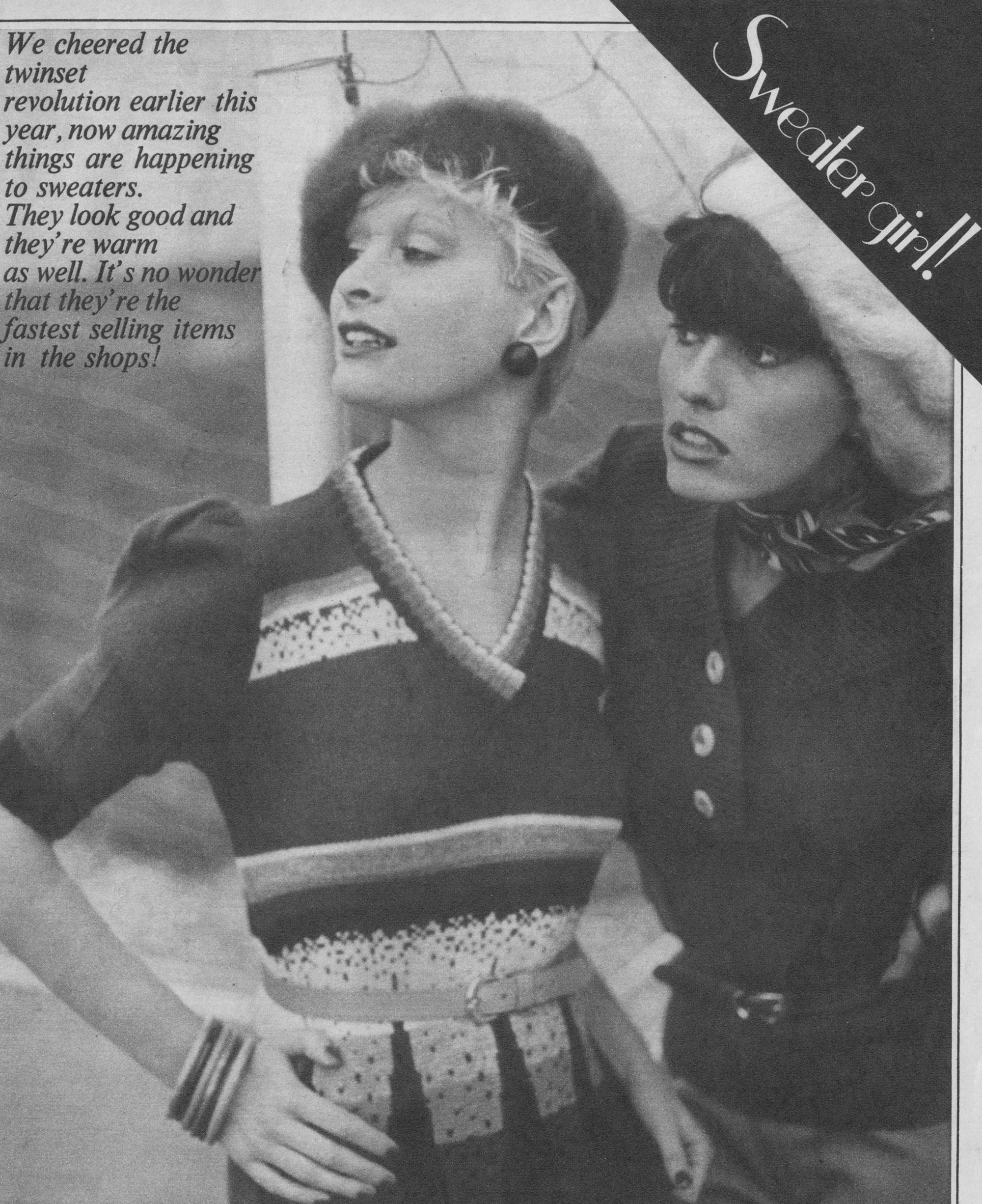
We cheered the twinset revolution earlier this year, now amazing things are happening to sweaters. They look good and they’re warm as well. It’s no wonder that they’re the fastest selling items in the shops!
Pictures taken at Picketts Lock Centre, Picketts Lane, N9. Hair by Christine at Mane Line.
Fashion by Marcia Brackett.
Photographed by Bill Klein.
Scanned from Petticoat, December 8th 1973.
 Liz Eggleston