Inspirational Images: Thea Porter and Pineapple

1970s, british boutique movement, chelsea cobbler, Harpers Bazaar, Inspirational Images, Just Jaeckin, laurakitty, thea porter
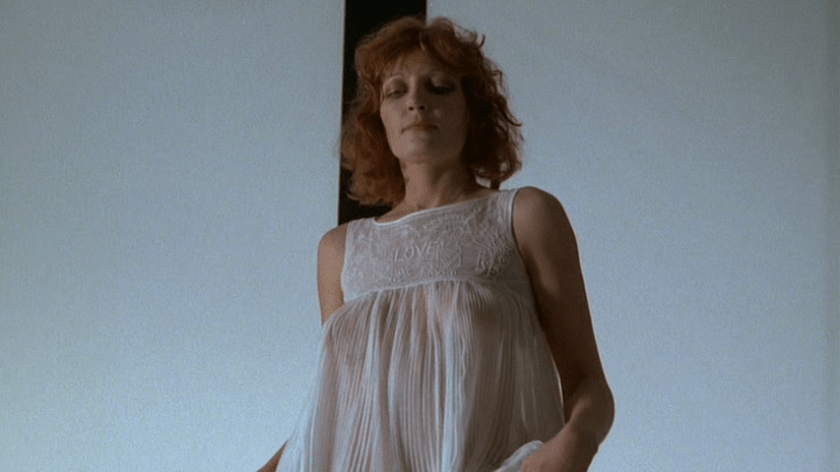
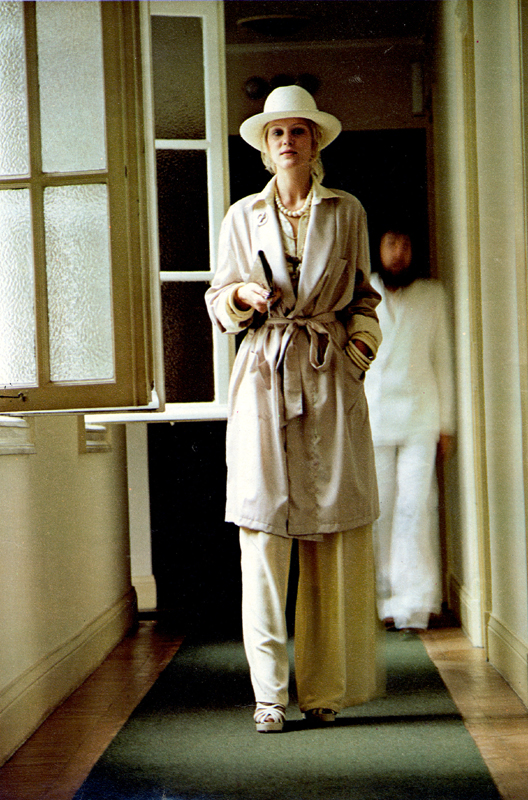
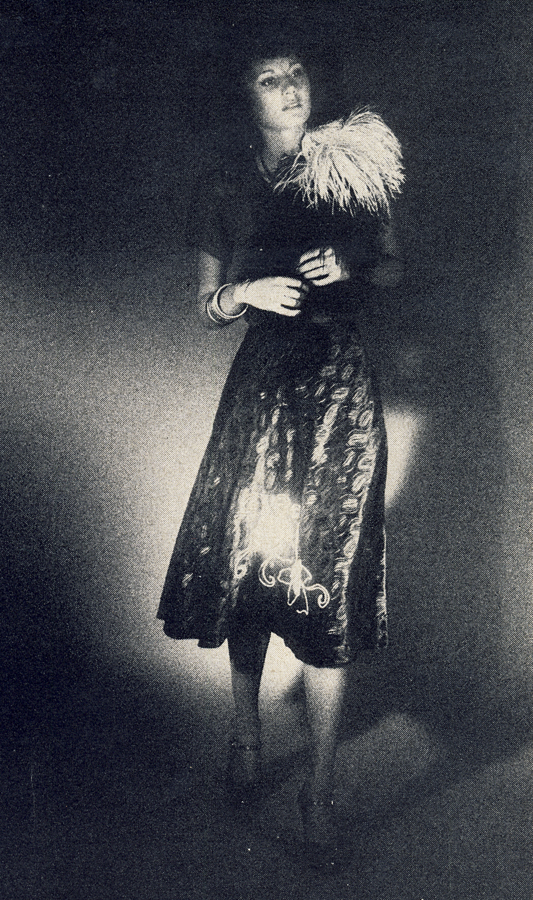
Embroidery from top to toe - pitch black design worked in panels on a natural calico shirt and knee length skirt, narrowly piped with scarlet; £24, Thea Porter. Natural canvas boots embroidered to match; 15gns to order, Chelsea Cobbler.

Embroidery from top to toe – pitch black design worked in panels on a natural calico shirt and knee length skirt, narrowly piped with scarlet; £24, Thea Porter. Natural canvas boots embroidered to match; 15gns to order, Chelsea Cobbler.

Excitement and anticipation is – quite rightly – building for the opening of the Fashion and Textile Museum’s new Thea Porter exhibition (6th February – 3rd May 2015). Guest curated by the lovely Laura McLaws Helms, who has also written the accompanying book, it is surely set to be the exhibition of the year. My Thea gypsy dress is somewhere in there, but having got a sneaky peek last week I can safely say that it will be blown out of the water by the extraordinarily beautiful pieces which have been gathered from a wide variety of sources (as well as ephemera from the archive and a recreation of her glorious dining room).

So to whet your appetite, here’s my dream Thea outfit (well, one of many…) — complete with matching embroidered Chelsea Cobbler boots.

Photographed by Just Jaeckin.

Scanned by Miss Peelpants from Harpers Bazaar, April 1970.

Inspirational Editorials: Wear Crazy Pedal-Pushers

1970s, antony price, british boutique movement, bus stop, che guevara, chelsea cobbler, chelsea girl, david montgomery, erica budd, gillian richard, Inspirational Images, manolo blahnik, vanity fair, zapata
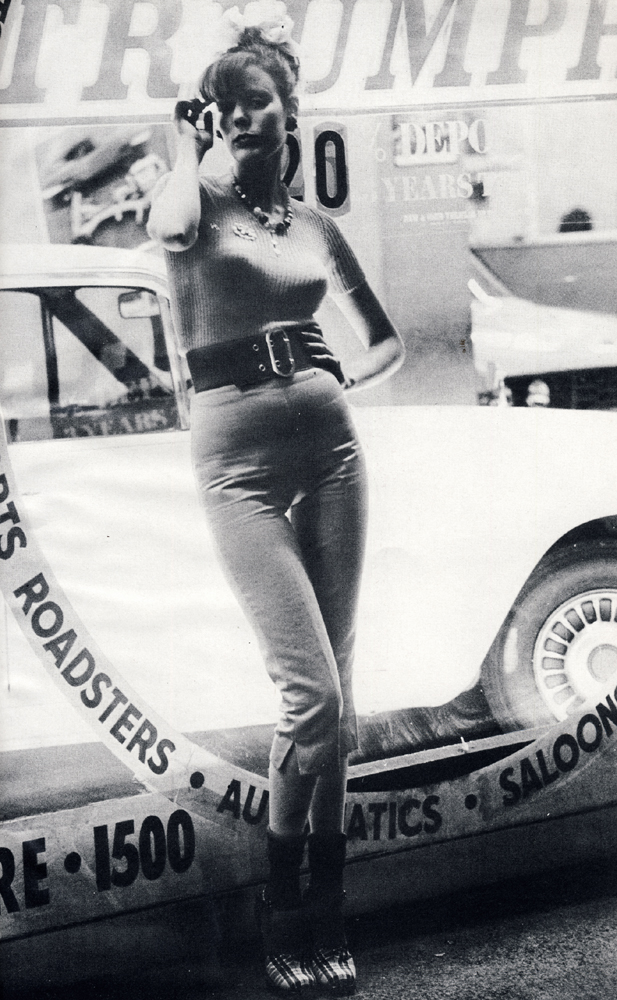
Short sleeved pale lilac sweater by Beckol from Chelsea Girl. Silvery-grey cotton pedal pushers by Antony Price from Che Guevera. Red, white and blue tartan shoes from Zapata. Wide red elasticated belt by Otto Glantz.

Short sleeved pale lilac sweater by Beckol from Chelsea Girl. Silvery-grey cotton pedal pushers by Antony Price from Che Guevara. Red, white and blue tartan shoes from Zapata. Wide red elasticated belt by Otto Glantz.

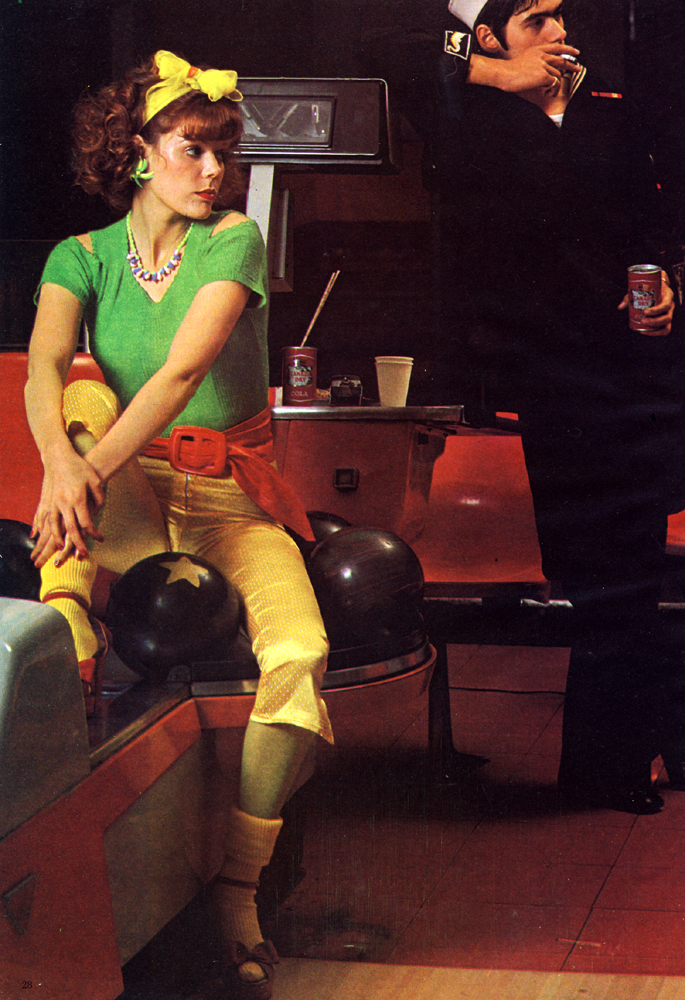
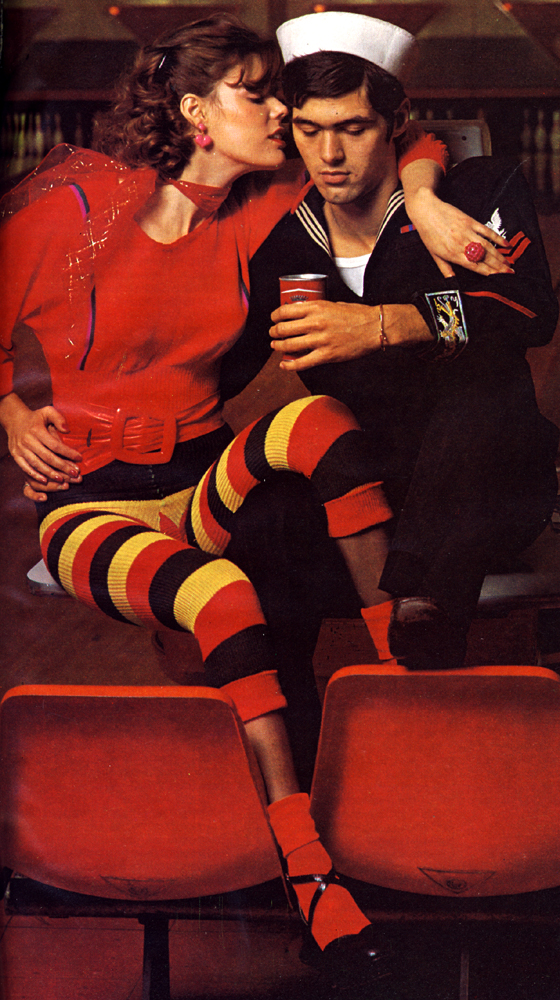
Alright, your curves are generous, and your behind is big, but hooray! This is the look for you. We’re back to the era of pneumatic sweater girls, when clothes fitted like the skin of a peach, waists were pulled in with firm wide belts and everyone teetered on high, high heels. Now it’s all camped up with bright plastic jewellery, headscarves and colourful wooly sox (Twiggy-types will just have to resort to falsies and push up bras ‘cos, baby, it’s our turn now!)

Intriguingly, after all that copy about curves, the model is credited as wearing a padded bra with plastic air-filled falsies by Berlei…

Photographed by David Montgomery.

Photographs by courtesy of the Piccadilly Bowling Centre, 30 Shaftesbury Avenue.

Scanned by Miss Peelpants from Vanity Fair, January 1972

Short sleeved sewater by Beckol from Chelsea Girl. Satin pedal pushers by Gillian Richard. Red suede platform shoes by Chelsea Cobbler. Red leather belt from Bus Stop.

Short sleeved sewater by Beckol from Chelsea Girl. Satin pedal pushers by Gillian Richard. Red suede platform shoes by Chelsea Cobbler. Red leather belt from Bus Stop.

Red dolman sleeved sweater by Erica Budd. Pedal pushers made by rolling up footless tights by Mary Quant. Red leather belt from Bus Stop. Black snake platofmr shoes from the Chelsea Cobbler.

Red dolman sleeved sweater by Erica Budd. Pedal pushers made by rolling up footless tights by Mary Quant. Red leather belt from Bus Stop. Black snake platform shoes from the Chelsea Cobbler.

Inspirational Images: Nile Journey

1970s, british boutique movement, chelsea cobbler, david bailey, Feathers, Inspirational Images, jean shrimpton, ossie clark, quorum, Vogue
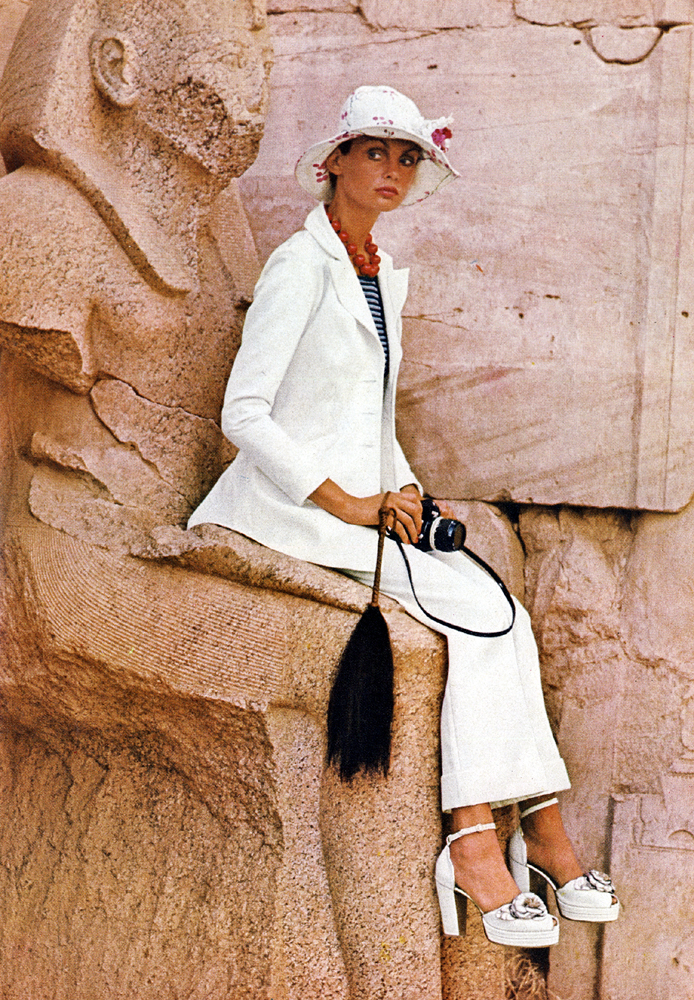
At the temple of Karnak, Jean Shrimpton wears a white Terylene gabardine suit in sharp and beautiful shape. Ossie Clark at Quorum. White hite at Feathers. White platforms shoes with silver roses, by Richard Smith for The Chelsea Cobbler.

At the temple of Karnak, Jean Shrimpton wears a white Terylene gabardine suit in sharp and beautiful shape. Ossie Clark at Quorum. White hat at Feathers. White platform shoes with silver roses, by Richard Smith for The Chelsea Cobbler.

Photographed by Bailey.

Scanned by Miss Peelpants from Vogue, January 1972

Inspirational Editorials: Legs Go Under Cover

1960s, british boutique movement, Browns, celia birtwell, chelsea cobbler, Flora Boutique, fulham road clothes shop, Gina Fratini, Harpers Bazaar, Harri Peccinotti, Inspirational Images, Ken Lane, kurt geiger, molly parkin, mr fish, ossie clark, Piero de Monzi, quorum, sylvia ayton, thea porter, Vintage Editorials, zandra rhodes
Left to right: White crepe bolero and trousers by Gina Fratini. White shoes by Kurt Geiger / Satin trousers and matching chiffon top in print by Celia Birtwell, both by Ossie Clark at Quorum. Red leather shoes by Chrystal of Copenhagen. / Black silk organza shirt and trousers in Bianchini's black silk organza flocked with velvet, both from Thea Porter. Cord belt from Piero de Monzi. Wide jewelled belt and double chain and green stone belt from Ken Lane. Black satin shoes by Kirt Geiger. / Black cire trouser suit from The Fulham Road Clothes Shop. Black letaher boots by Thea Chelsea Cobbler. Black and cream silk scarf from Thea Porter

Left to right: White crepe bolero and trousers by Gina Fratini. White shoes by Kurt Geiger / Satin trousers and matching chiffon top in print by Celia Birtwell, both by Ossie Clark at Quorum. Red leather shoes by Chrystal of Copenhagen. / Black silk organza shirt and trousers in Bianchini’s black silk organza flocked with velvet, both from Thea Porter. Cord belt from Piero de Monzi. Wide jewelled belt and double chain and green stone belt from Ken Lane. Black satin shoes by Kirt Geiger. / Black cire trouser suit from The Fulham Road Clothes Shop. Black leather boots by The Chelsea Cobbler. Black and cream silk scarf from Thea Porter

Everyone is tired of hearing that the mini skirt is on the way out.
Nearly as tired as when they heard it was on the way in.
These things in fashion die a very slow death,
but in this case one reason has been the lack of alternative.
Designers made too great a leap with the maxi,
and too indefinite a move with the midi.
After extremely short skirts,
something flapping around mid calves did feel extremely frumpish.
This was tied in with the fact that no boot manufacturers at
that time were making them with high enough heels,
essential with a longer skirt,
and it was very difficult to find feminine unclumpy
shoes which gave enough of a lift.
Now footwear is changing.
Boots are tall and beautifully fitting.
l-ligh-heeled shoes — very high — are pretty,
well proportioned and extremely flattering.
And so one branch of fashion may well be influencing another.
ln the end everything is a matter of proportions.
When skirts went up, heels came down.
The high stilettos we used to hobble around in so painfully,
not really that long ago,
looked far too tarty with hemlines halfway up the thigh and even
worse with trousers, especially tight ones.
Since most women feel their legs to be too short,
and the wearing of the heel as very necessary to a feeling of femininity,
this cancelled out the wearing of trousers for a very large number.
Until a short time ago trousers were being worn by,.
apart from men of course,
women who looked like men — that is, girls with no curves.
Lean hips. Long legs — in flat shoes.
Now for the first time comes the alternative to the mini skirt. Trousers.
That is, until hemlines decide exactly how far they will drop.
As drop they will.
Footwear has helped provide the solution.
It will comfort many to know that the models in the
pictures which follow, averaging 32″-35″ hips, still have
to choose, very carefully, shapes which suit them.
Their legs are long but still need the added inches that a high
heel gives them. Their shapes are slim, but female.
Still sometimes round enough to need the camouflage of a long jacket,
cardigan or tunic. They show that closely fitting
trousers can be sexier and will also make you look fatter.
They show that a small waist is made smaller by a high
cut rather than a hipster style.
Most of the trousers for evening lit well over the hips but flare out
in a very feminine, flattering way.
They are glittery, shiny, and see-through.
Beautiful in fact; better than ever before.

Alas, now that mini skirts are accepted just about everywhere.
we have to warn that trousers, for women that is, aren’t.
An appalling number of top London hotels
still hold fast to outdated rules about them.
Officially they are not allowed in, even to drink,
let alone to dine or to have lunch.
ln the Dorchester they can’t even have tea!
In the Mirabelle: Ofhcially, trousers are not admitted.
The question does not arise much at lunch—tirne
as there are never very many women there.
ln the evening the rule has now been relaxed and you
would be permitted to dine in trousers.
Talk of the Town: Certainly you may wear trousers.
Savoy: They now allow very dressy evening trousers in public rooms
but no daytime trousers at all.
Wearing them to private functions in private rooms
is left to the discretion of the organisers.
Dorchester: You would not be served anything
when wearing a trouser suit.
This applies to all public rooms,
but for banquets and other private functions it is up to the organisers.
Connaught: Officially not allowed at any time in the bar or restaurant,
but it is a decision left to the manager.
Carlton Tower: Trousers are not encouraged in the Rib or
Chelsea Rooms, but they are coming to accept them.
They prefer lunch-time trousers to evening ones.
Westbury: Trousers are not allowed in the bar or restaurant;
this applies to evenings too.
However, this rule, like others, is relaxed from time to time,
eg, when Brigitte Bardot arrives in trousers from the
airport – or Lord Snowdon arrives for dinner in a roll-neck shirt.
Hilton: Officially no trouser suits in the Roof Restaurant.
Unofficially you could get away with it if it’s
a very beautiful catsuit or something similar.
At private functions it depends on the organisers.
Ritz: No rule for the daytime, it just depends on the trousers!
Usually it is permitted to wear trousers
in the evening, but again it depends . . .
Claridge’s: Very strict,
definitely no trouser suits in the public rooms,
though they say you can wear what you like in private!
Crockford’s: They don’t object to them at all.
Coq d’Or: They much prefer to see a lady dressed as a lady.
During the day they prefer skirts
but don’t object to trousers in the evening at all.
White Tower: lf the woman looks elegant and well-dressed she is let in,
otherwise she may be told that the restaurant is full.
Brown’s: No objections at all for either day or evening
in either restaurant or bar provided the wearer looks neat and tidy.
Les Ambassadeurs: Don’t mind couture—cut or evening trouser suits,
but don’t like anything untidy like blue jeans.
Caprice: Quote from the reservations man:
‘l am sure we can have no objections.
women eat here in trousers all the time’

Words by Molly Parkin. Photographed by Harri Peccinotti.

The eagle-eyed among you may have spotted the Ossie Clark ensemble which won Dress of the Year in 1969. For an item which won such a prestigious award, it’s always amazed me that I haven’t seen more contemporary images of it. I suppose it’s quite ‘out there’, even by late Sixties standards, but thankfully Molly Parkin was always pretty way out there.

If you can make your way through all the text, it’s a pretty impressive and important insight into the attitudes towards women in trousers in late Sixties Britain. It’s easy to forget how scandalous it could be, even in 1969 – a good four years after we first saw Emma Peel in John Bates’s trouser suit designs in The Avengers, for a woman to wear trousers. People obviously did it, you see enough fashion spreads to know that, but the list of swanky hotels and restaurants who still would refuse entry and service to a woman in trousers is quite extraordinary.

Scanned by Miss Peelpants from Harpers Bazaar, April 1969.

legs go under cover 2

Left to right: White voile peasant shirt and wide pink, blue and turquoise brocade belt with gilt buckle, both from Thea Porter. Trousers in shell pink silk chiffon with sequins by Gina Fratini / Cyclamen silk shirt with full extravagant sleeves and purple trousers in Warner’s silk damask furnishing fabric, both by Thea Porter/ Brocade belt with gilt buckle by Swordtex from a selection at Mr Fish. / Gipsy bolero in silk brocade and cream organdy trousers, both from Thea Porter. Long orange and yellow scarf wound around waist from Flora Boutique. Chain belt studded with flowers from Browns. More jewelled belts and chains from a selection at Ken Lane.

Must See Films: The Final Programme

1970s, Austin Garritt, british boutique movement, chelsea cobbler, jean varon, Jenny Runacre, john bates, Jon Finch, Julie Ege, marit allen, ossie clark, Robert Fuest, Sandy Lieberson, The Final Programme, Tommy Nutter, Vogue

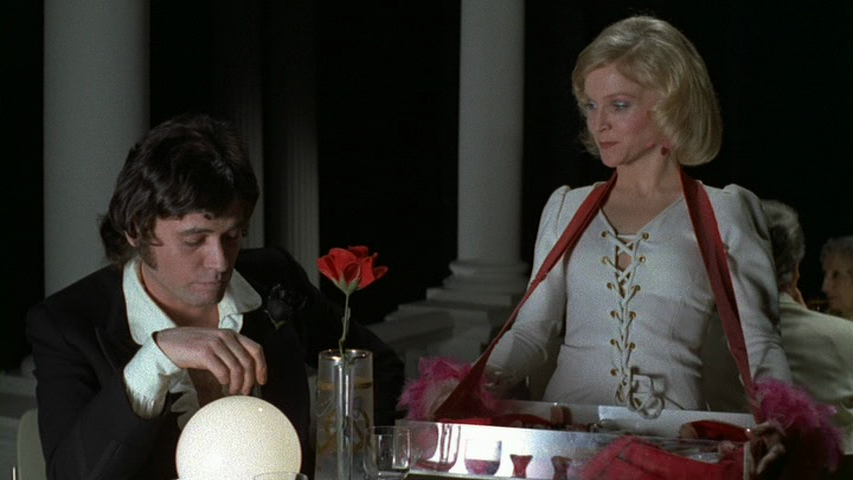
Final Programme 1

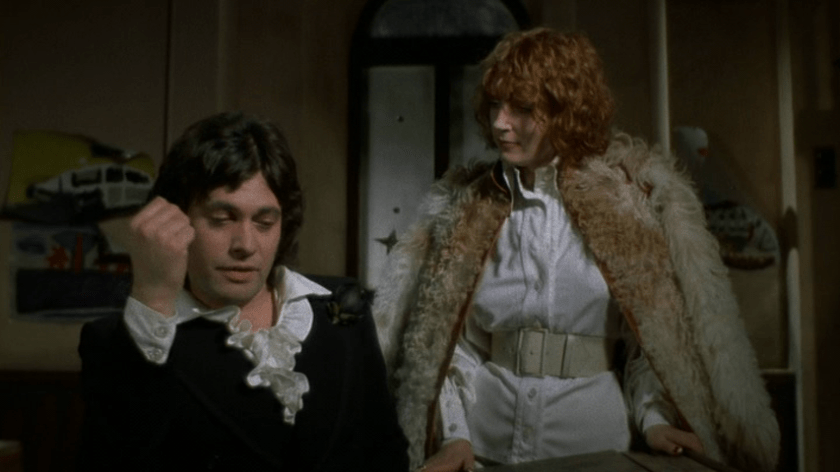
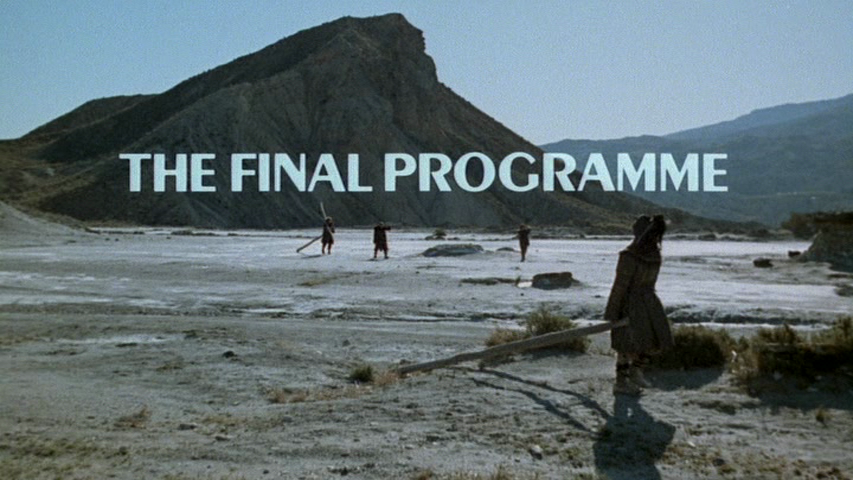
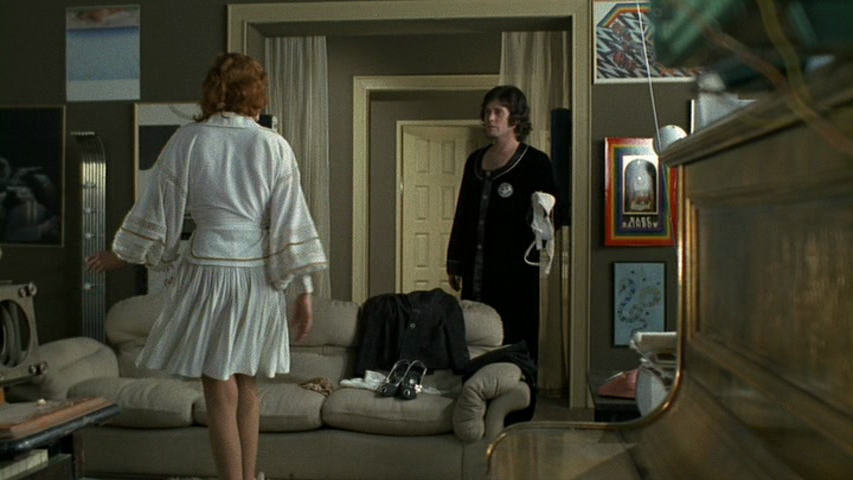
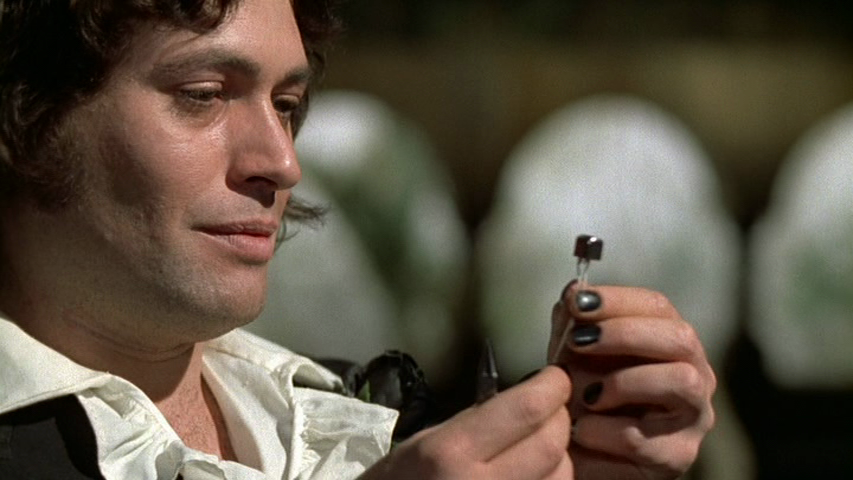
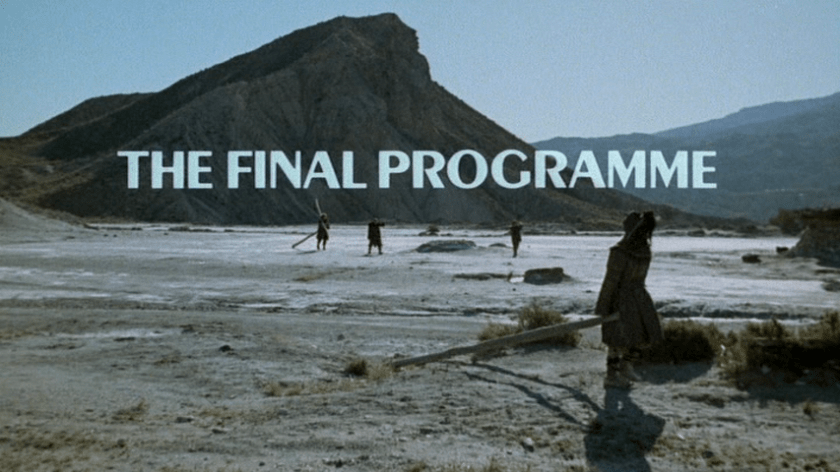
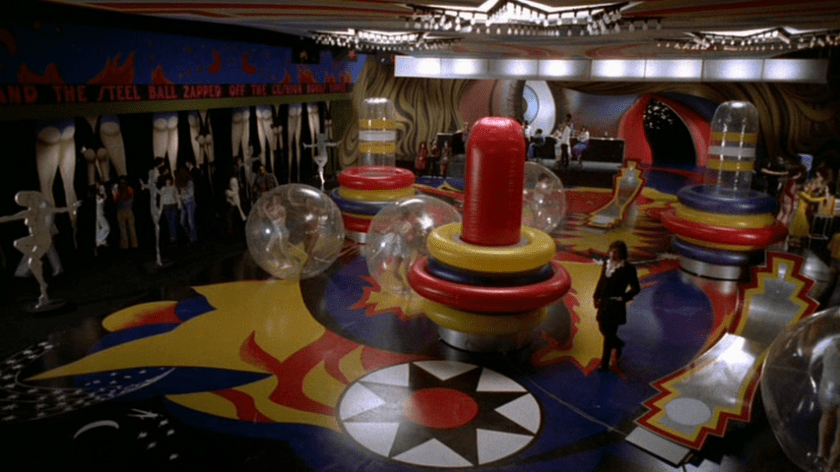
The Final Programme (1973) is a film I must admit I have been desperate to see for many years. Ever since I read that Ossie Clark and John Bates designed clothes for the leading man and lady respectively, but also because of the connection to The Avengers – courtesy of writer, designer and director, Robert Fuest. I am less familiar with the work of Michael Moorcock, so I hope that his fervent fans will forgive me for any ignorance and allow me to mainly rave about the aesthetics of the film.
final programme 20

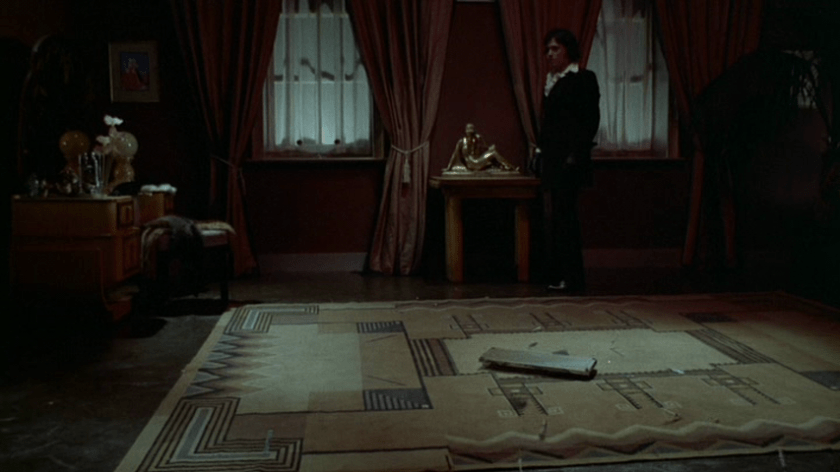
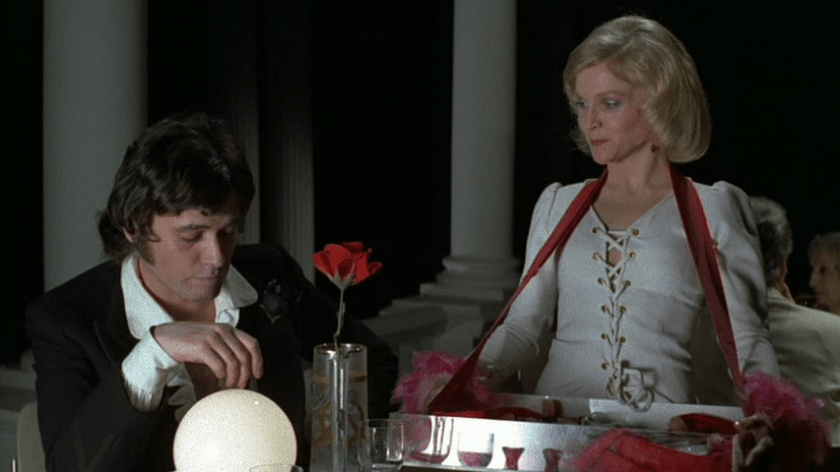
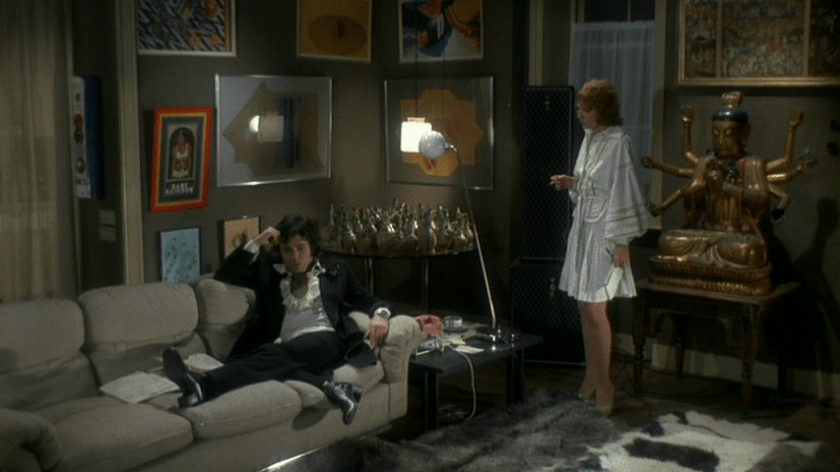
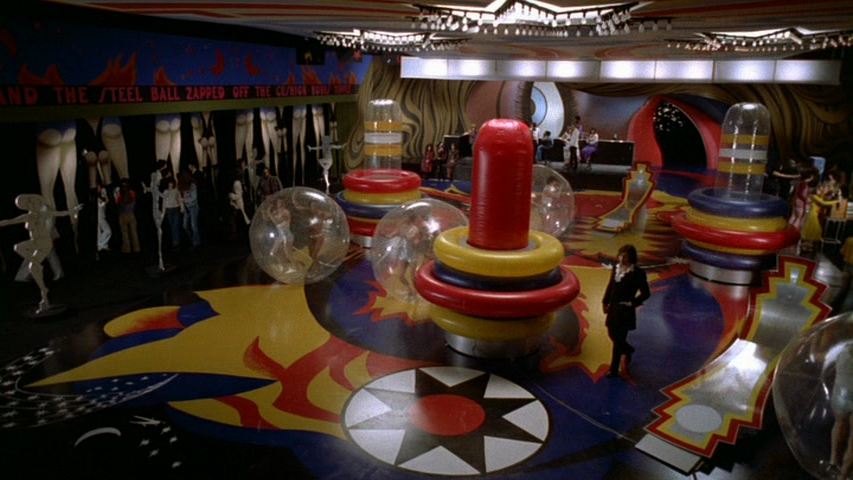
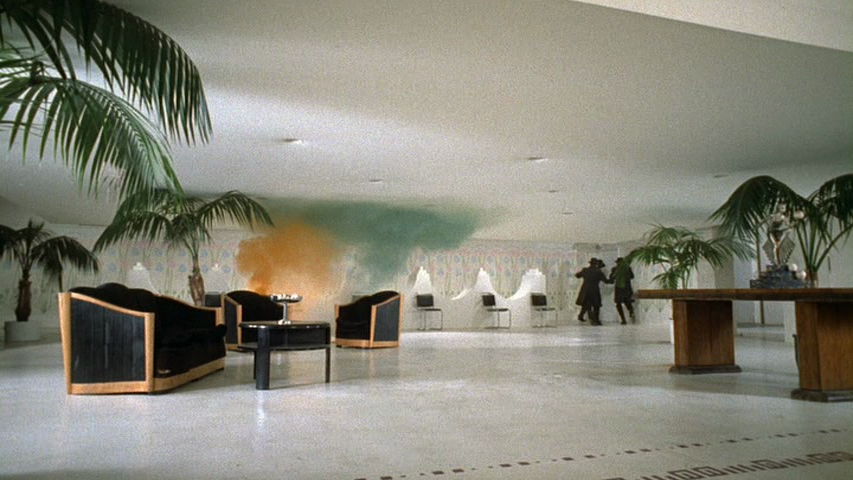
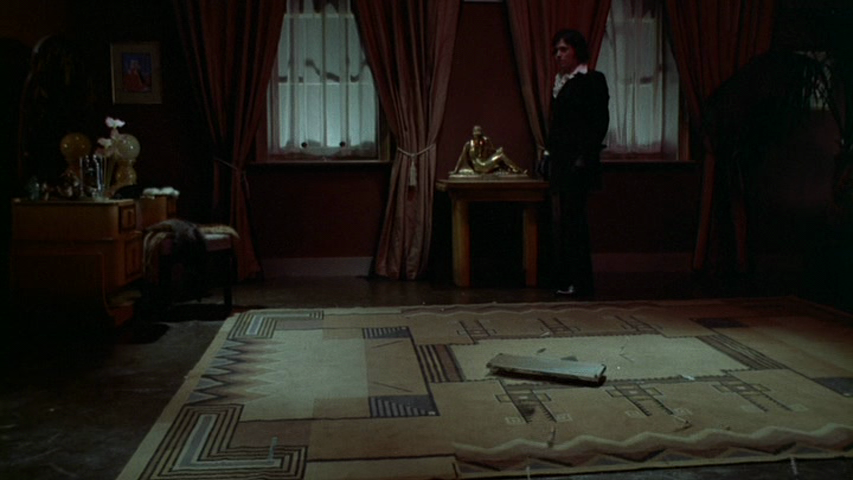
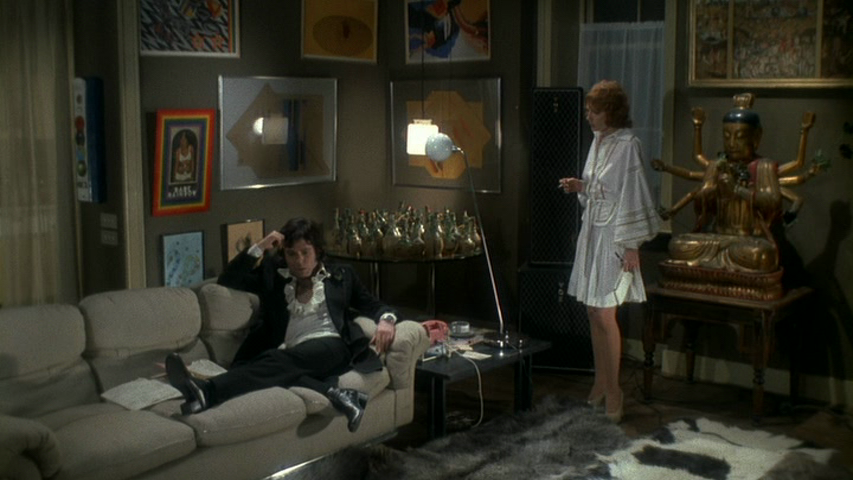
It is a fascinating attempt to look at a future, distant or not – we are never entirely sure, without trying to be futuristic. In design terms, this is approached with an eye towards the Art Deco; which, possibly without realising, actually firmly establishes it as quite thoroughly Seventies in style. The designers chosen, Clark and Bates, are also notorious for their period tendencies, and the set designs are reminiscent of plenty of Vogue interiors features I have seen from the time. But, much like A Clockwork Orange, with a bit of distance (and when, like me, you think something looking ‘a bit Seventies’ can never possibly be a bad thing), this subtle Seventies-does-Thirties version of the future actually works perfectly. While the technology is a tad clunky, it is so highly stylised that you can actually believe that we might return to it someday.

Final Programme 9

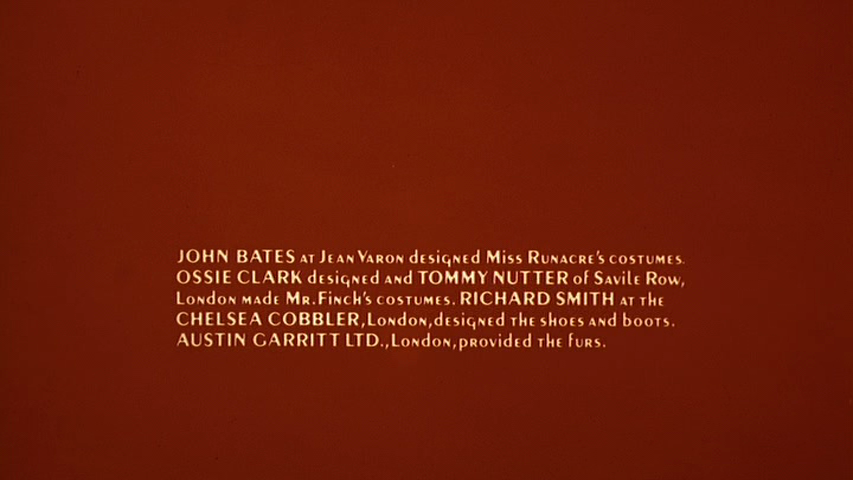
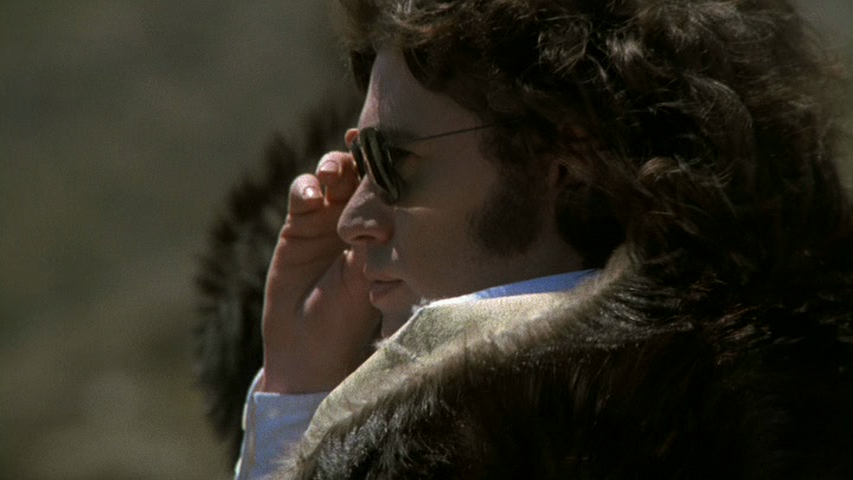
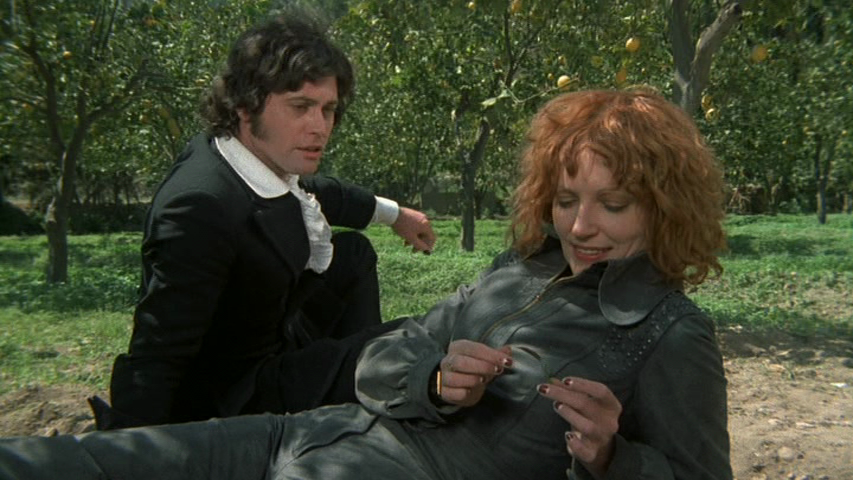
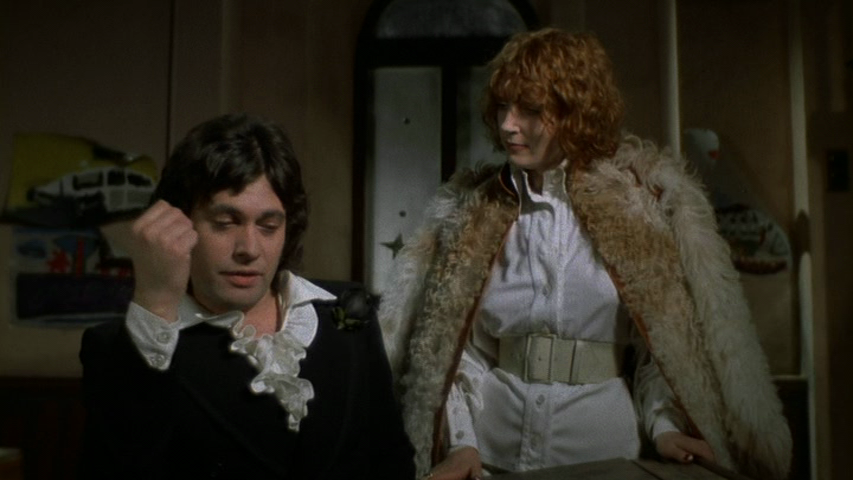
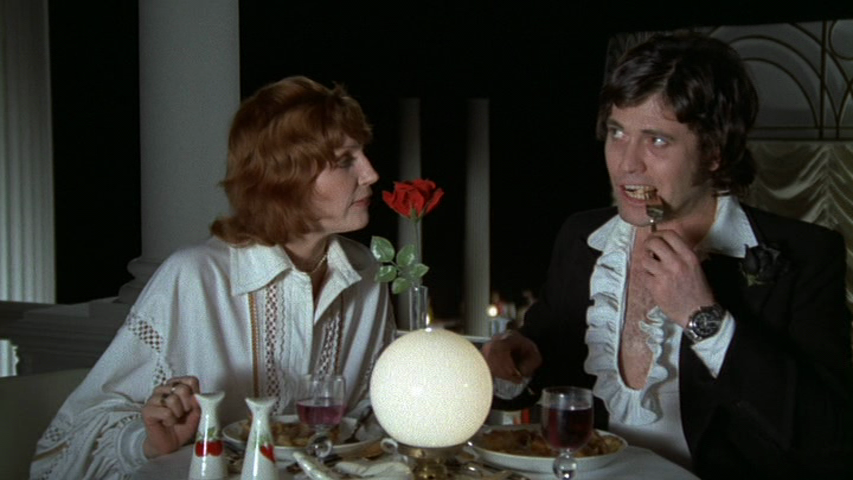
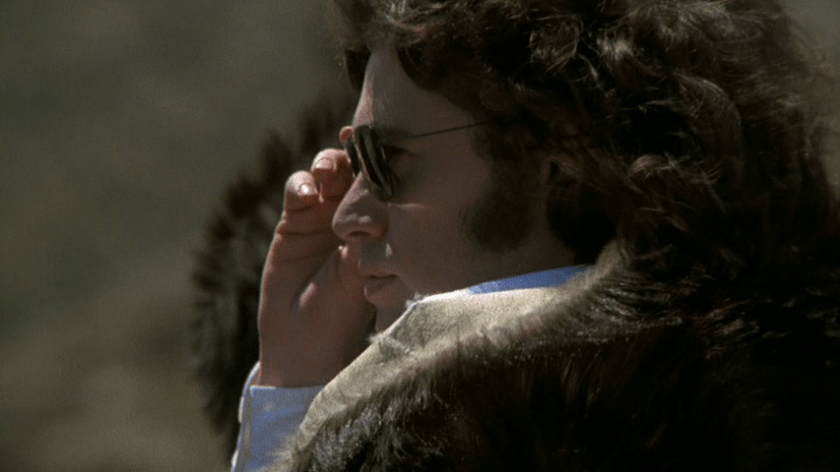
Dressed in Ossie Clark-designed Tommy Nutter-made suits, Finch swaggers around like an elegant hybrid of Ossie himself, Marc Bolan and Jim Morrison. Bouncy curls, sultry lips and just the right amount of chest hair on show. Laconic, cool, and admirably fond of biscuits, he is a perfect off-beat hero. It’s no wonder Jon Finch was considered for the part of James Bond, but it’s also no wonder that he turned it down. Jerry Cornelius is a far more interesting character to play; the humour is quirky and the fight scenes are playful – his movements more catlike. Bond is a thuggish oaf in comparison.
Final Programme 3

Jon Finch in The Final Programme

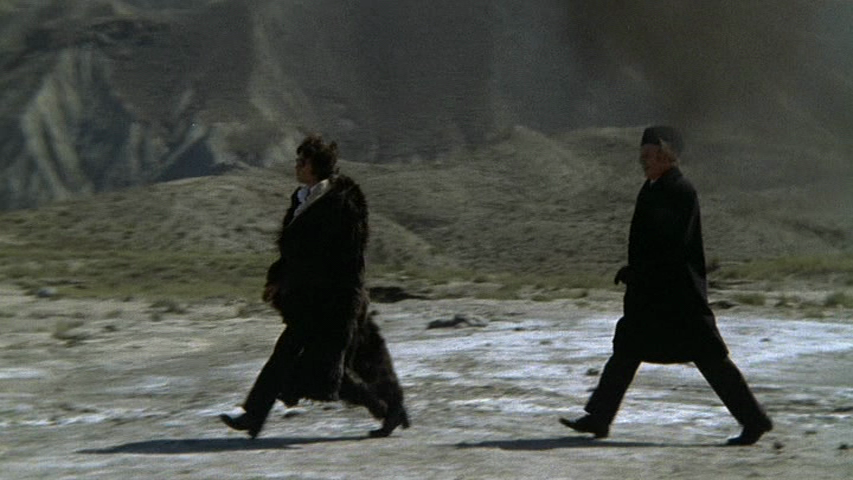
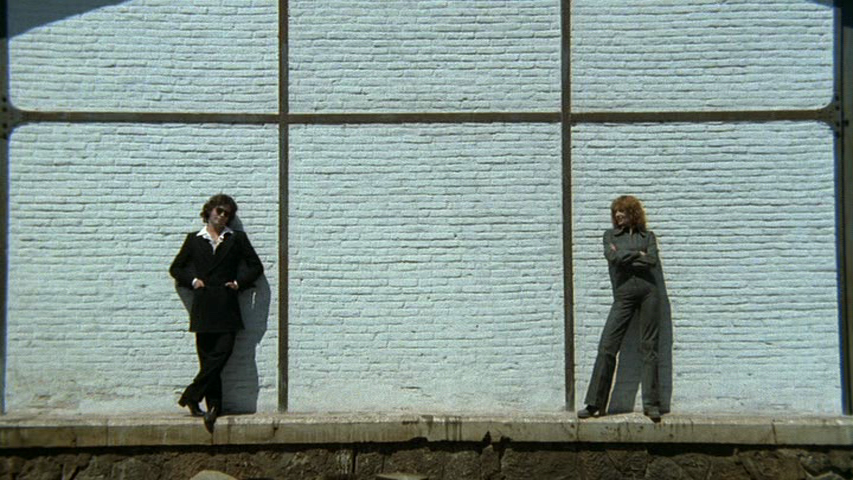
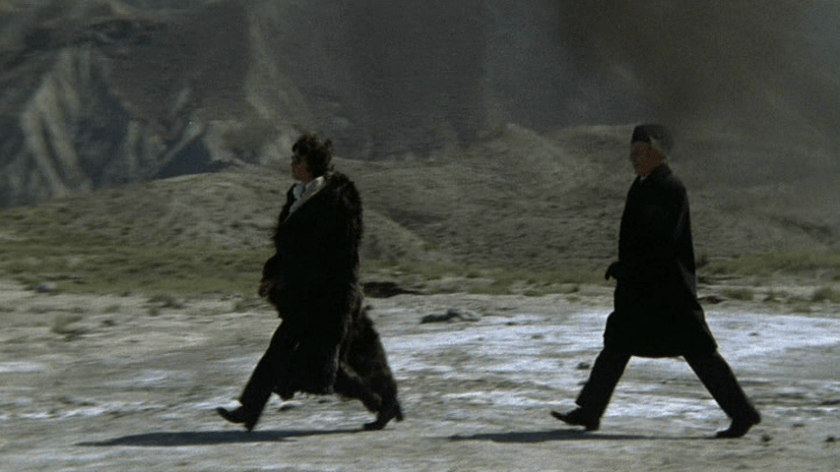
Cornelius is the ultimate Man in Black, slim and sleek. From the beginning, aside from an all-too-brief moment in a kaftan, he really only wears a sharply tailored black suit with a gently ruffled white silk shirt underneath. We first see him with a large fur coat over the top, which again is rather more reminiscent of a rock star than of a ‘hero’ – futuristic or otherwise, and a pair of simple aviator sunglasses. If there are subtle variations in his black suit, they are not made to be noticeable. But it also doesn’t feel like a rigid costume, just a signature choice. In a way, Clark has the harder task in designing a single ‘look’ which must run through and work within the design feel of the entire film: from the wilds of Finland, through his family’s perfectly minimalist Art Deco house and then to rural Turkey.

It is interesting to note that Ossie stated, in an interview from April 1969, that he was originally asked to do costumes for 2001: A Space Odyssey. The collaboration came to nothing, however, thanks to ‘disagreements’ between Clark and (presumably) Kubrick.

“I gave it up partly because the film company didn’t like my ideas, and didn’t think I knew what I was talking about.”

Ossie Clark, 19 Magazine April 1969
Final Programme 2

Of course Hardy Amies ultimately became the designer for 2001: A Space Odyssey, and it reinvigorated his career during a time when the likes of Ossie and John Bates were far more in demand. I see this as interesting, because this ‘futuristic’ film doesn’t attempt space age futurism in the way 2001: A Space Odyssey did. It does make you wonder if Ossie had decided that his brand of period-influenced design and quirky tailoring was the only way he wanted to design 2001: A Space Odyssey, and that – coincidentally – it was very much in keeping with the overall design by Fuest for The Final Programme.
Final Programme 6

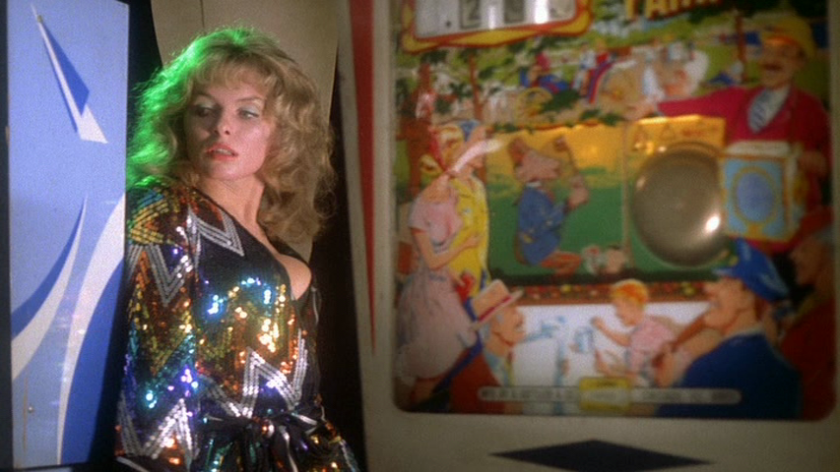
Julie Ege in The Final Programme

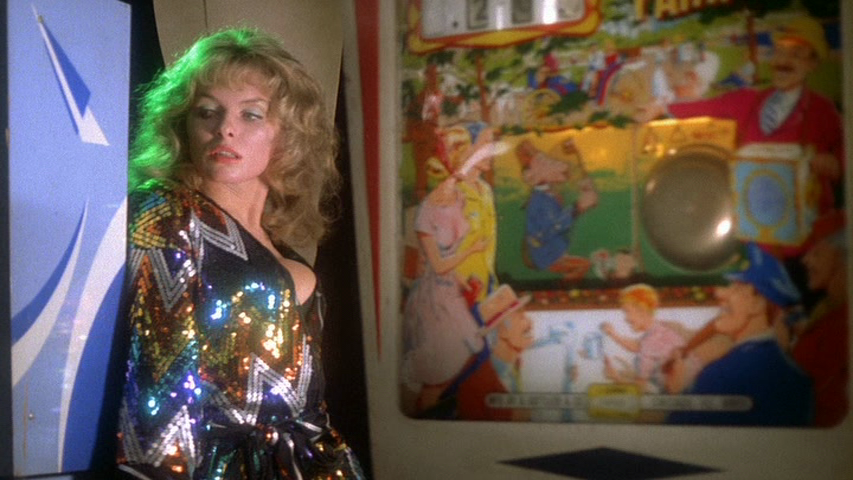
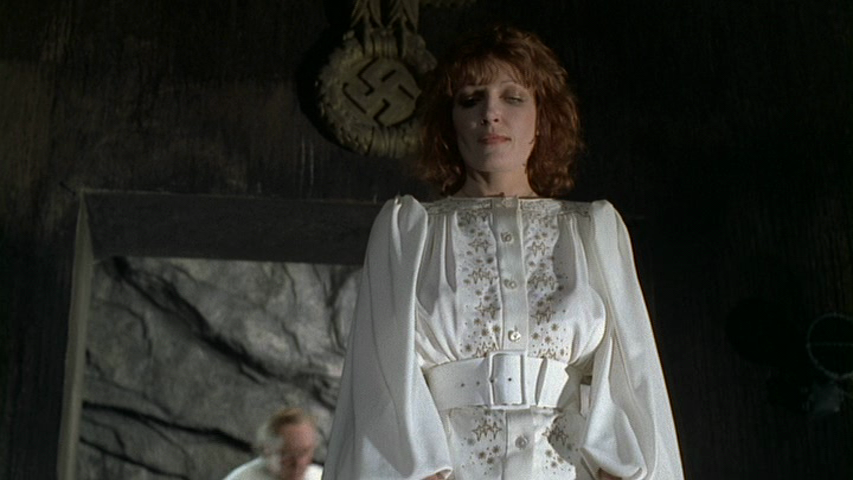
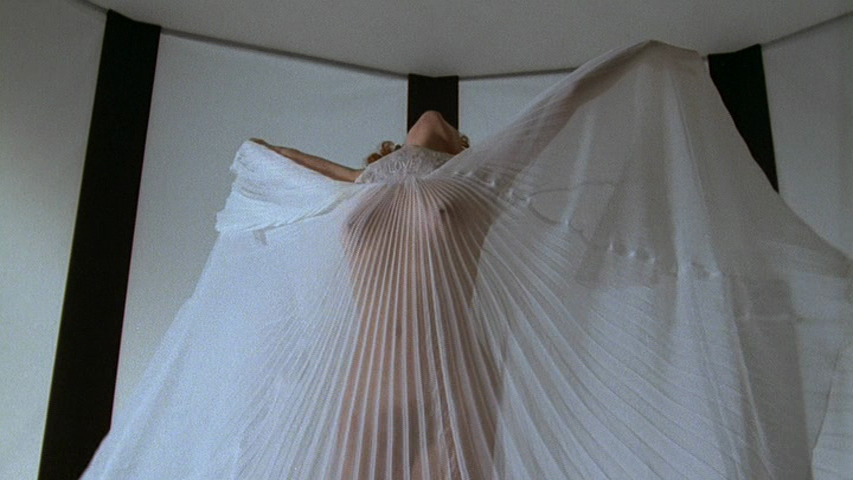
Jenny Runacre (below) is the lucky lady with the impossibly elegant (and predominantly white) couture John Bates wardrobe. Her ‘look’ is strikingly unusual for the time, and a perfect contrast to the brief appearance by Julie Ege (above), who is the perfect early Seventies dolly we see in a Mr Freedom, Pop Art-inspired sequence, and later to Sandra Dickinson’s kitschy, bottle blonde waitress. Runacre looks like a kind of hard bitch version of a Botticelli muse; big eyes and softly curled hair flat around her face, but with a gorgeously sneering voice and a cool air of superiority.

Final Programme 17

Jenny Runacre in The Final Programme

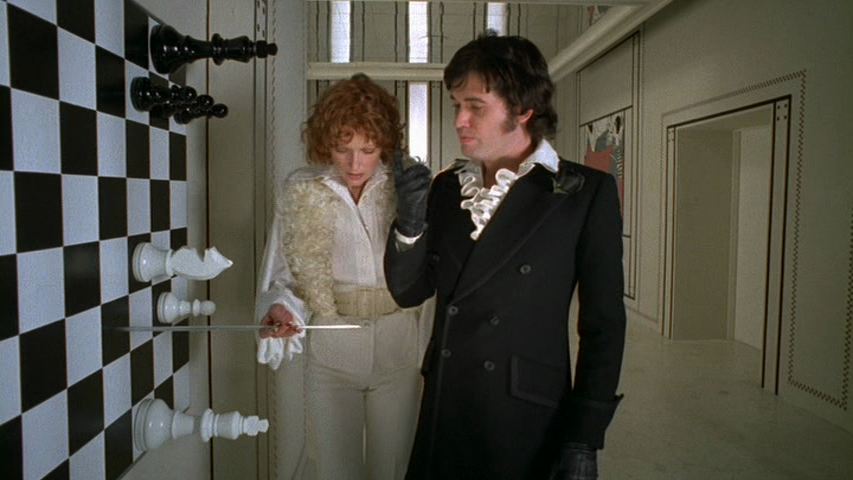
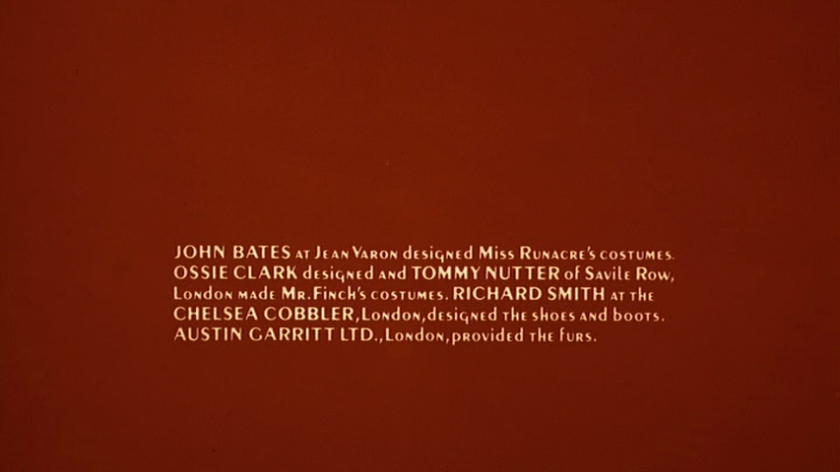
John Bates gets to have a lot more fun with his anti-heroine, who has considerably more costume changes than Finch, with a largely white palette and subtle variations on his billowing batwing shapes of the time. With boots by Richard Smith for The Chelsea Cobbler, and furs by Austin Garritt (with whom Bates often seems to have collaborated on leather, suede and fur designs at the time), her look is flawless from head to toe. The use of white feels like a conscious aspiration on her part, heavily connected to her vision for the future of humanity. But it also contrasts in a very basic way with the head-to-toe black of Cornelius; like a reverse of the black and white, evil and good, yin and yang cliché.
Final Programme 14

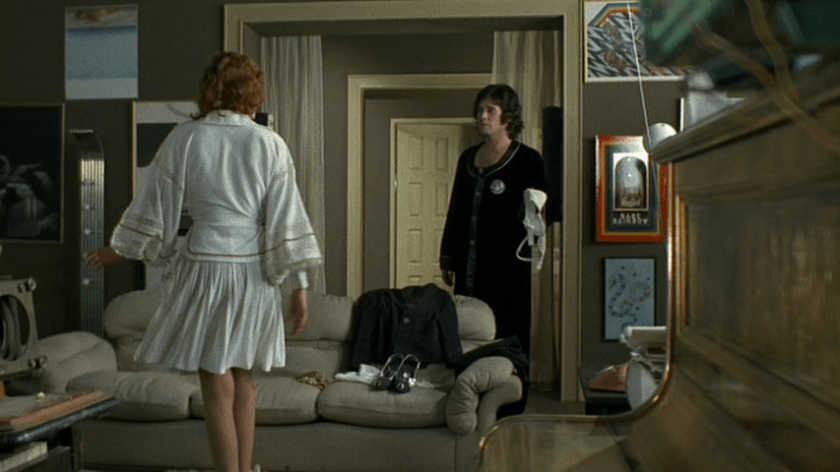
Jenny Runacre and Jon Finch in The Final Programme

It is interesting to contrast Bates’s designs for Miss Brunner with his more famous costume design stint for another strong female character: Emma Peel in The Avengers. Where Emma Peel’s clothes were feline, often cut sparingly and close to the body, Miss Brunner’s are billowing, voluminous and with more feminine detailing in trims and embroidery. Leather is replaced by suede, long-haired sheepskins replace rabbit fur in bold op-art patterns. Prevailing trends of the early Seventies, and a clear design direction by the two designers, mean that the roles are somewhat reversed; where the male protagonist is wearing skin-tight tailoring and revealing flashes of skin, the female is largely concealed until the denouement.

Final Programme 19

Jenny Runacre in The Final Programme

While there is no specific designer credited with the costumes of the more minor characters, the overall costume consultant – I was delighted to note – was one Marit Lieberson. Better known as Marit Allen (formerly of British Vogue and one of the most influential fashion journalists of the 1960s) Allen championed both John Bates and Ossie Clark early in their careers – wearing a design by the former for her wedding to Sandy Lieberson (also producer of this film) in 1966 – so the decision to use them so prominently in the film makes the most perfect sense.

It somehow feels like the combination of Fuest as production designer, Marit as costume consultant and two of the best British designers of the time, was a combination that couldn’t possibly lose. And yet, it did.

Final Programme 16

Despite the fact that The Final Programme has become something of a ‘lost’ film of the otherwise booming British film industry at the time, the overwhelmingly harmonious styling has secured it, for me, as one of the finest films of that period. I don’t see why A Clockwork Orange or Logan’s Run (both films of a very similar aesthetic and calibre) should both be so well-known, while this languishes in obscurity.
Final Programme 5   Final Programme 4   Final Programme 7

Final Programme 8

Final Programme 10

Final Programme 11

Jon Finch and Sandra Dickinson

Final Programme 12

Final Programme 13

Final Programme 15

Final Programme 18

Inspirational Editorials: Perfect Pyjamas by Peccinotti

1970s, alice pollock, biba, british boutique movement, caroline baker, chelsea cobbler, edward mann, Electric Fittings, Harri Peccinotti, Herbert Johnson, Inspirational Images, John Craig, katharine hamnett, marie france, nova magazine, ossie clark, quorum, radley, Sujon, Susie Craker, tuttabankem, universal witness, Vintage Editorials, Virginia, yardley, yves saint laurent
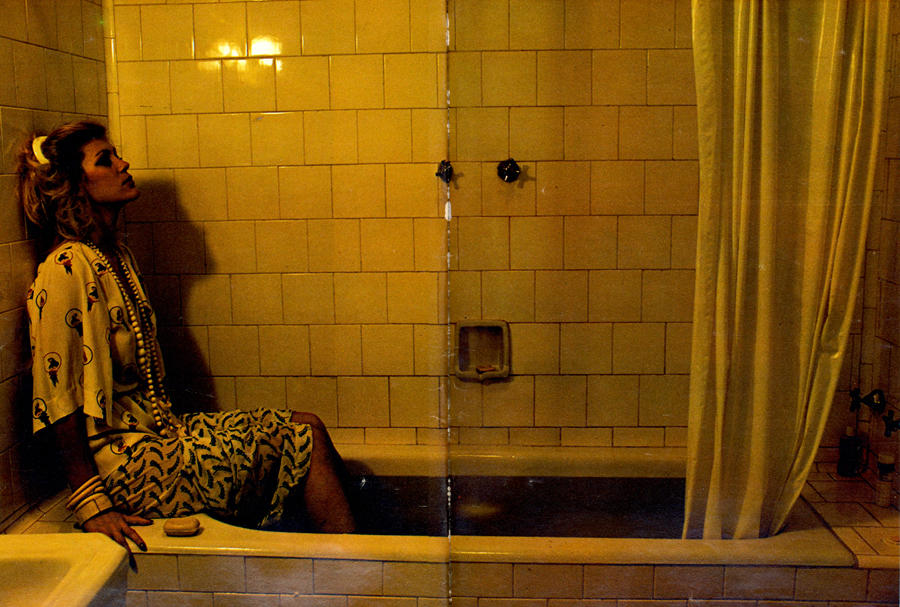
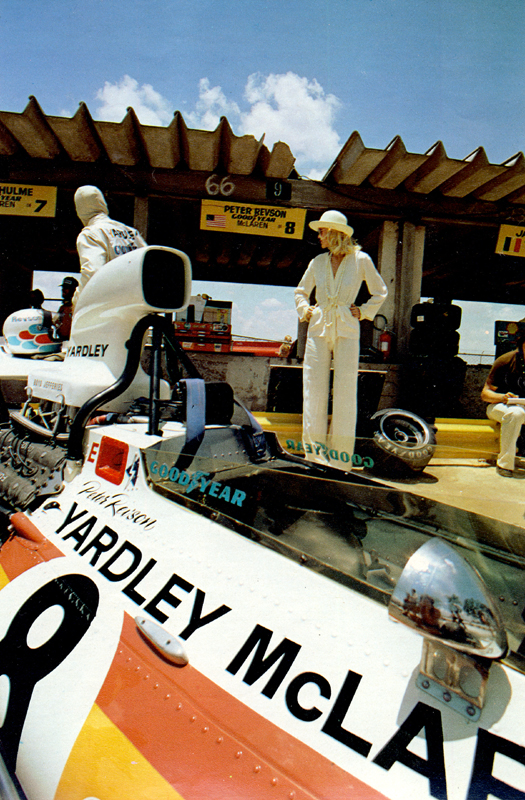
Pyjama suit by Sujon.

Pyjama suit by Sujon.

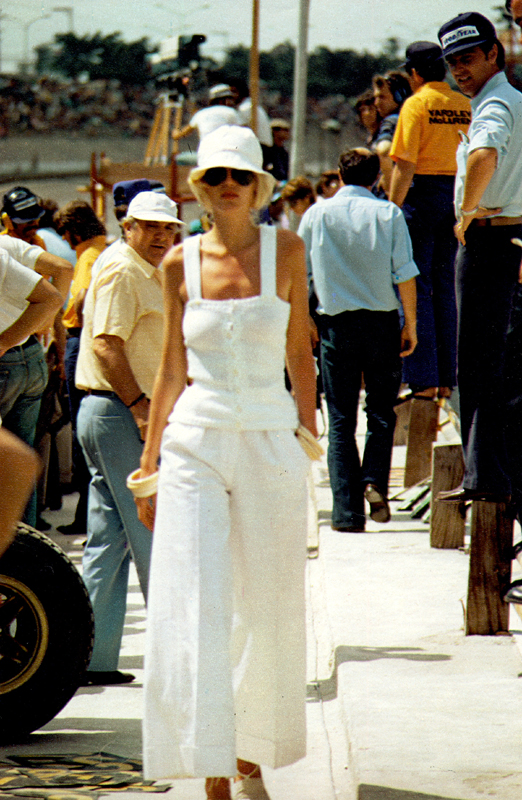
Photographed in Brazil with Yardley, whose Yardley McLaren team took part in the 2nd Grand Prix, 1973

Photographed by Harry Peccinotti. Styled by Caroline Baker.

Scanned by Miss Peelpants from Nova, May 1973

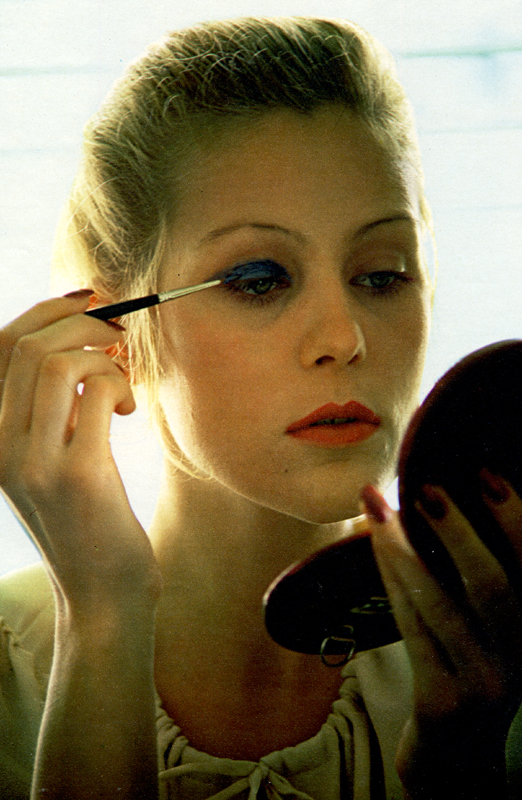
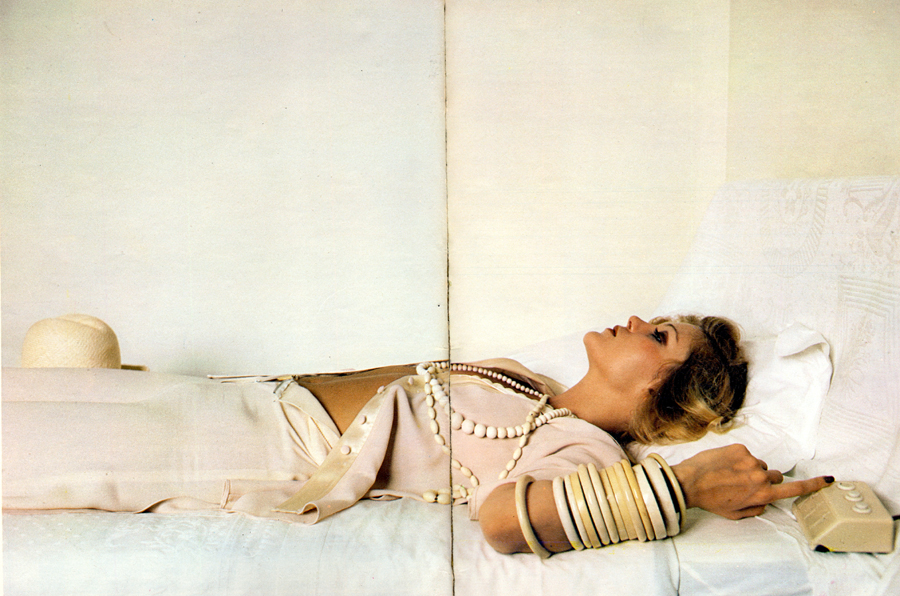
Drawstring neck top (part of a flared Pajama suit) by Ossie Clark for Radley. Compact mirror from Biba.

Drawstring neck top (part of a flared Pajama suit) by Ossie Clark for Radley. Compact mirror from Biba.

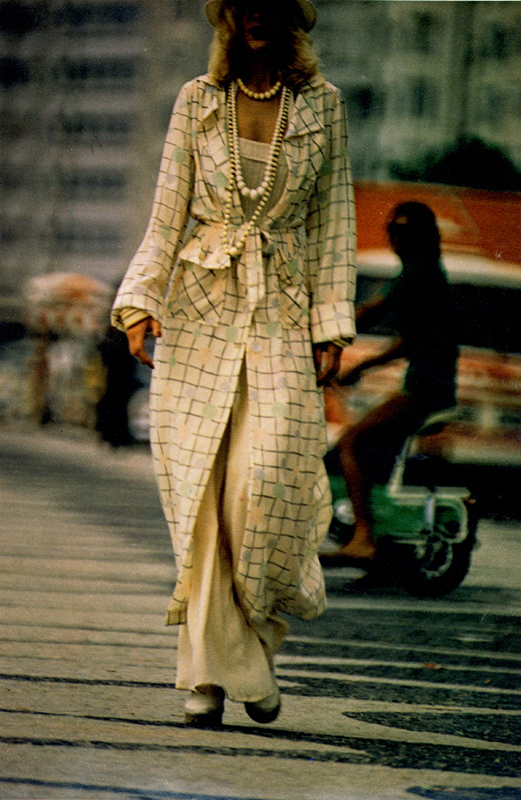
Crêpe de chine printed coat and plain crêpe bags from Electric Fittings. Rib sun top by John Craig. Pique sun hat by Edward Mann. Espadrilles at Ronald Keith.

Crêpe de chine printed coat and plain crêpe bags from Electric Fittings. Rib sun top by John Craig. Pique sun hat by Edward Mann. Espadrilles at Ronald Keith.

Dressing gown from Austin Reed. Silk blouse and baggy pants by Katherine Hamnett for Tuttabankem. Cobweb shoes at Chelsea Cobbler.

Dressing gown from Austin Reed. Silk blouse and baggy pants by Katharine Hamnett for Tuttabankem. Cobweb shoes at Chelsea Cobbler.

Crêpe de chine pyjama suit by Susie Craker. Panama at Paul Craig.

Crêpe de chine pyjama suit by Susie Craker. Panama at Paul Craig.

Sun top sweater by Virginia. Cotton baggy pants by Universal Witness. Hat by Herbert Johnson. Shoes by Yves Saint Laurent.

Sun top sweater by Virginia. Cotton baggy pants by Universal Witness. Hat by Herbert Johnson. Shoes by Yves Saint Laurent.

Crêpe and satin jacket top by Marie France for Quorum. Flared crêpe trousers by Alice Pollock for Quorum.

Crêpe and satin jacket top by Marie France for Quorum. Flared crêpe trousers by Alice Pollock for Quorum.

Mild Sauce: For Two Pins

1970s, Betty Jackson, charles jourdan, chelsea cobbler, christian dior, Inspirational Images, james wedge, janet reger, Janice Bell, mary quant, Meriel McCooey, mild sauce, miss selfridge, quorum, Sacha, sunday times magazine, underwear, Vintage Editorials
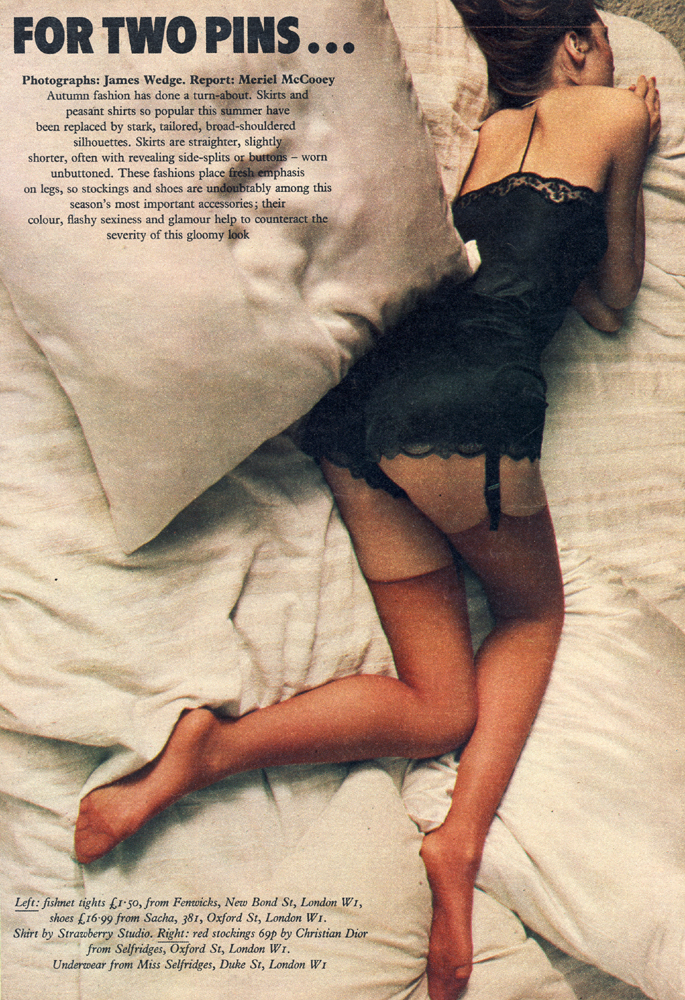
Red stockings by Christian Dior. Underwear from Miss Selfridge

Red stockings by Christian Dior. Underwear from Miss Selfridge

Another glorious underwear editorial by the always saucy, always perfect Mr James Wedge.

Photographed by James Wedge. Scanned by Miss Peelpants from The Sunday Times Magazine, October 1978

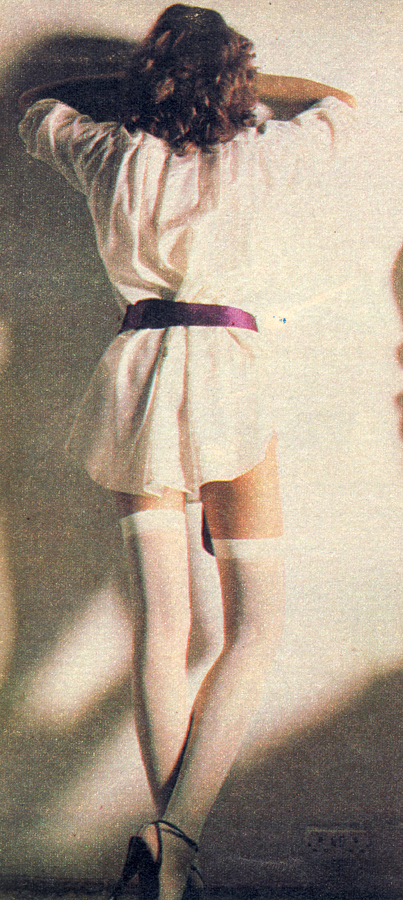
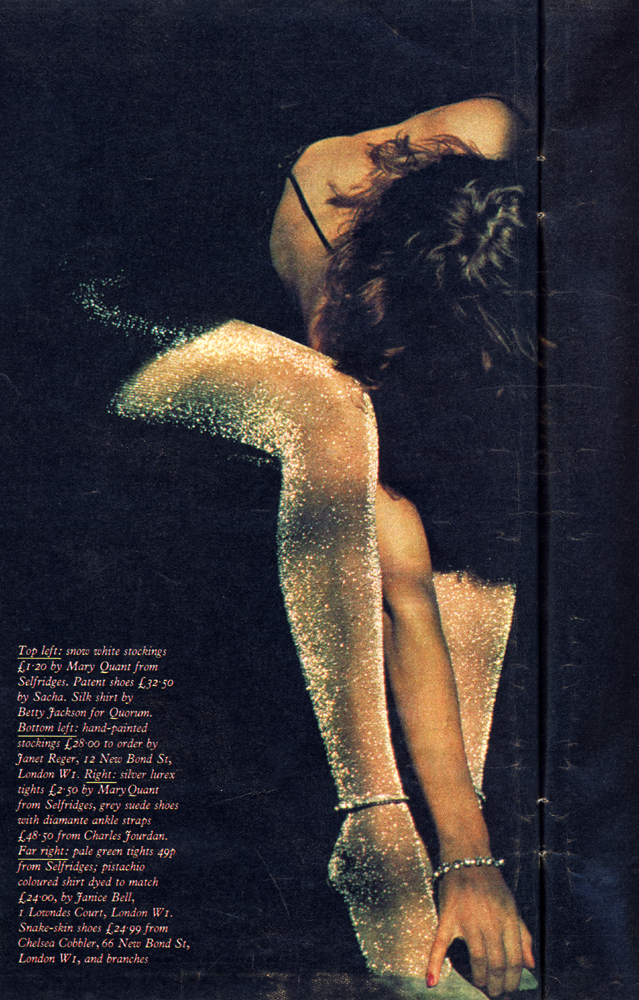
Snow white stockings by Mary Quant. Patent shoes by Sacha. Silk shirt by Betty Jackson for Quorum.
Snow white stockings by Mary Quant. Patent shoes by Sacha. Silk shirt by Betty Jackson for Quorum.
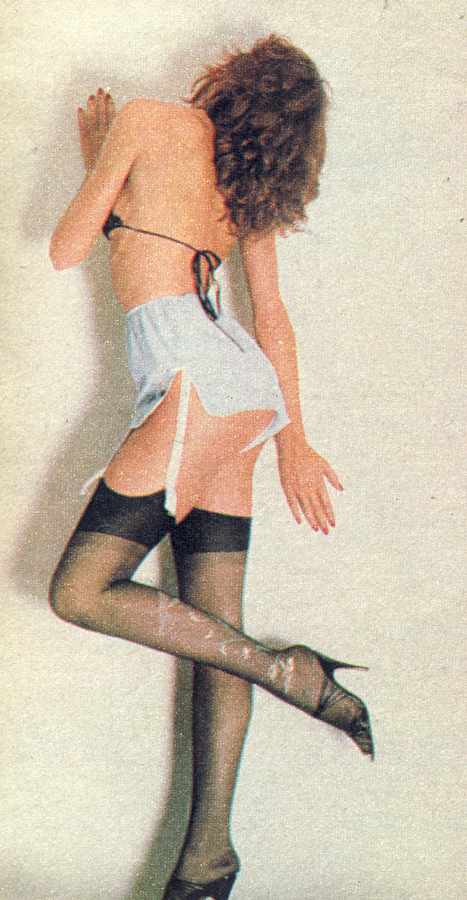
Hand painted stockings by Janet Reger.

Hand painted stockings by Janet Reger.

Silver lurex tights by Mary Quant. Shoes by Charles Jourdan.

Silver lurex tights by Mary Quant. Shoes by Charles Jourdan.

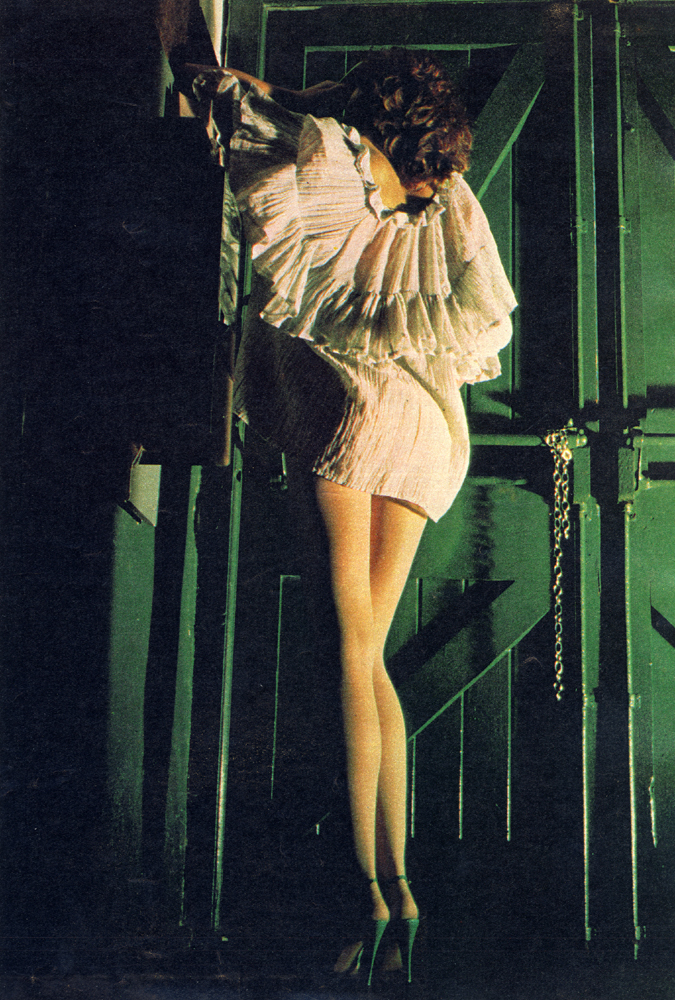
Pale green tights from Selfridges. Shirt dyed to match by Janice Bell. Shoes by The Chelsea Cobbler.
Pale green tights from Selfridges. Shirt dyed to match by Janice Bell. Shoes by The Chelsea Cobbler.

Inspirational Editorials: A Touch of Something Delicious

1970s, Bombacha, british boutique movement, chelsea cobbler, christopher mcdonnell, Electric Fittings, gauchos, Inspirational Images, janice wainwright, jeff banks, katharine hamnett, Mary Graeme, Orte, Palmer Smith, Reldan, Rodier, Sacha, tuttabankem, Vintage Editorials, Vogue, wallis
r

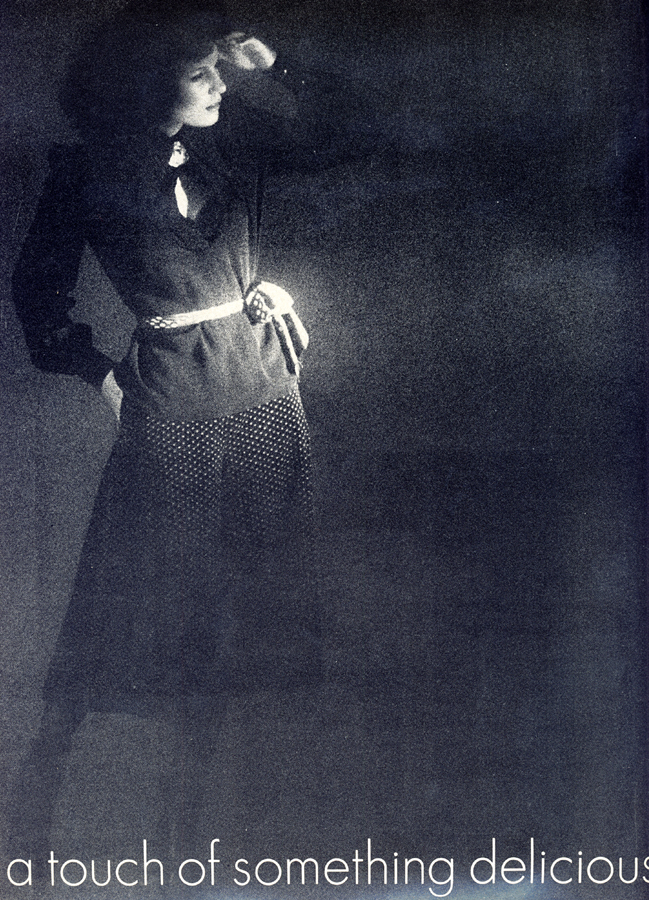
Plum panne velvet skirt with rose pink appliqued flowers by Orte for Bombacha. Boa and beaded chiffon blouse also from Bombacha. Plum shoes by Sacha.

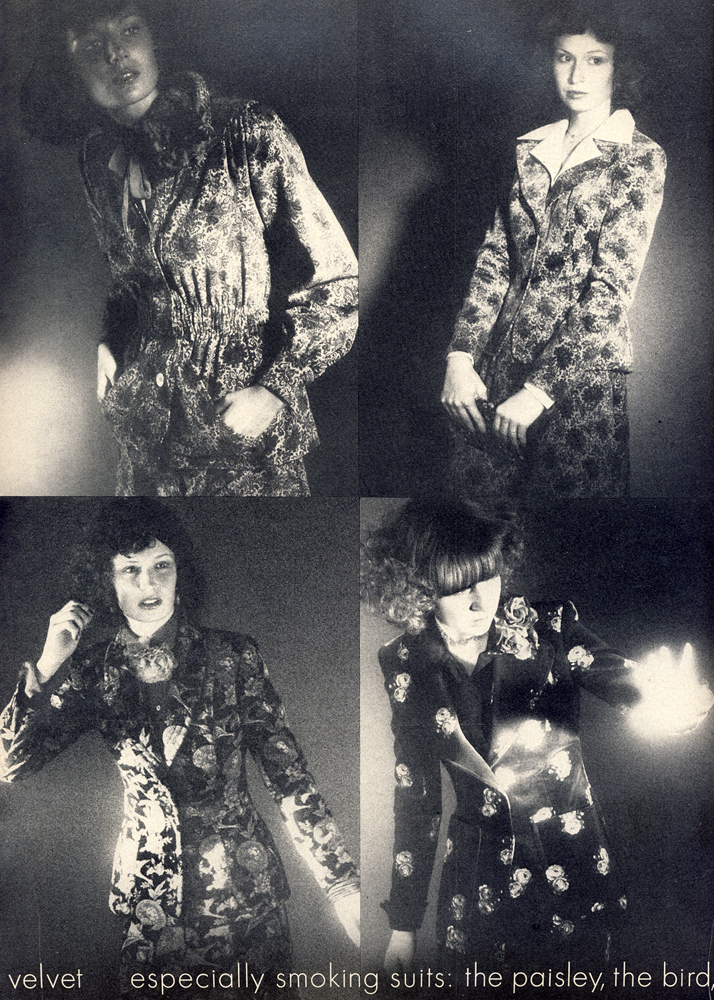
This is possibly one of the most perfect editorials I’ve seen in Vogue. Unshowy, basic, starkly-lit, but the clothes are mouthwatering. Plus, I am delighted to spot a pair of much loved (and much worn recently) velvet culottes from Wallis from my own wardrobe. It just goes to show, with a little bit of patience you can sometimes turn the dream into a reality…

Photographed by Palmer Smith. Scanned by Miss Peelpants from Vogue, November 1974.

r

Grey/green spotted velvet skirt, waistband flowered salmon and turquoise. Deep salmon pink chiffon blouse. Both by Orte for Bombacha.

r

Black flowered culottes and blouse by Wallis. Black ankle boots by Richard Smith for The Chelsea Cobbler.

r

Clockwise from top left: Paisley suit by Jeff Banks. Shirt by Rodier. / Paisley suit and cream blouse by Rue de La Paix by Reldan. / Rose print velvet by Kadix. Silk shirt by Katherine Hamnett for Tuttabankem / Bluebird printed skirt suit and blouse by Christopher McDonnell.

r

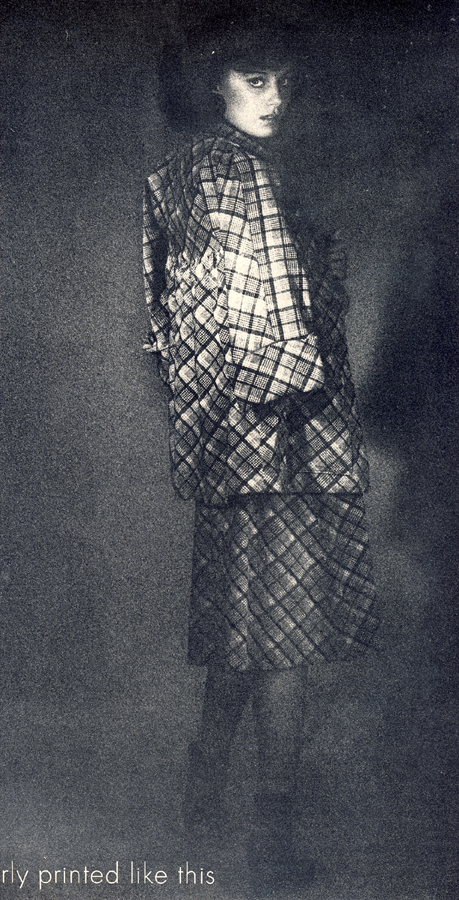
Black checked blue velvet jacket and skirt by Electric Fittings at Bombacha. Boots by Richard Smith for The Chelsea Cobbler.

r

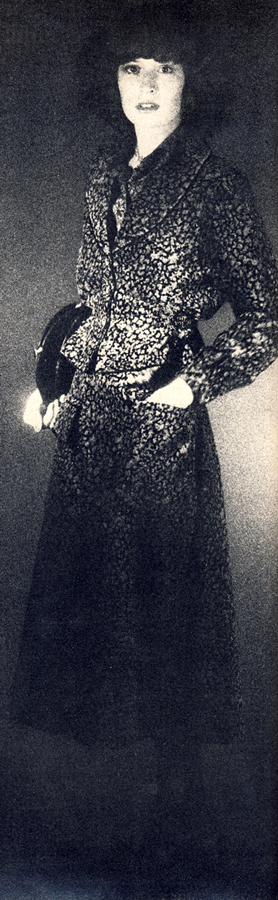
Velvet suit by Janice Wainwright. Shoes by Mary Graeme.

Inspirational Images: Warm and fuzzy

1970s, Angela at London Town, biba, british boutique movement, bus stop, C&A, chelsea cobbler, elisabeth novick, gerald mccann, gordon king, Inspirational Images, Jaeger, James Drew, lee bender, mary farrin, mary quant, Russell & Bromley, vanity fair, Vintage Editorials, wallis, zapata
vanity fair 2

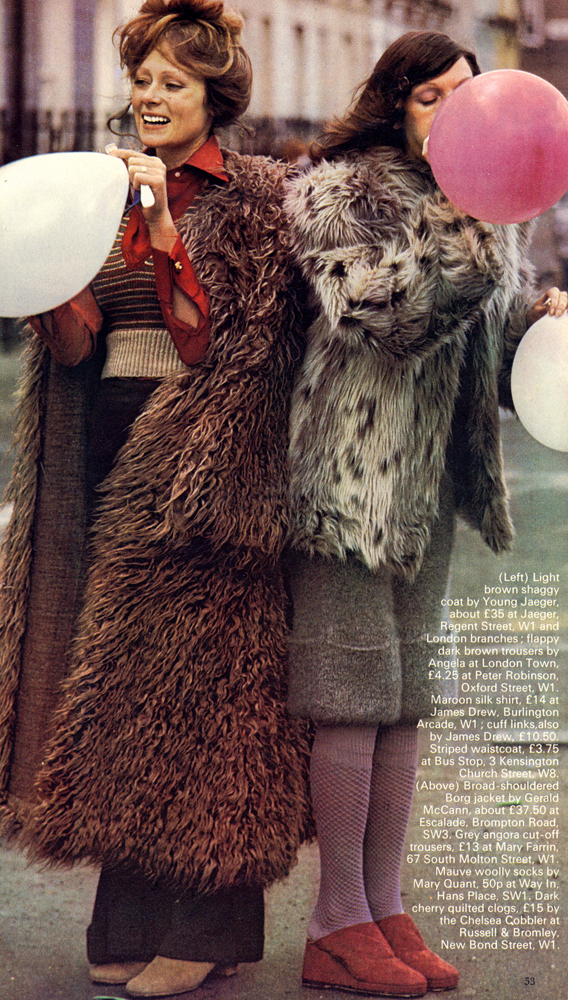
Left: Coat by Young Jaeger. Trousers by Angela at London Town. Shirt by James Drew. Striped waistcoat at Bus Stop. Right: Borg jacket by Gerald McCann. Angora trousers by Mary Farrin. Socks by Mary Quant. Clogs by The Chelsea Cobbler at Russell and Bromley.

Photographed by Elisabeth Novick. Scanned by Miss Peelpants from Vanity Fair, October 1971

vanity fair 1

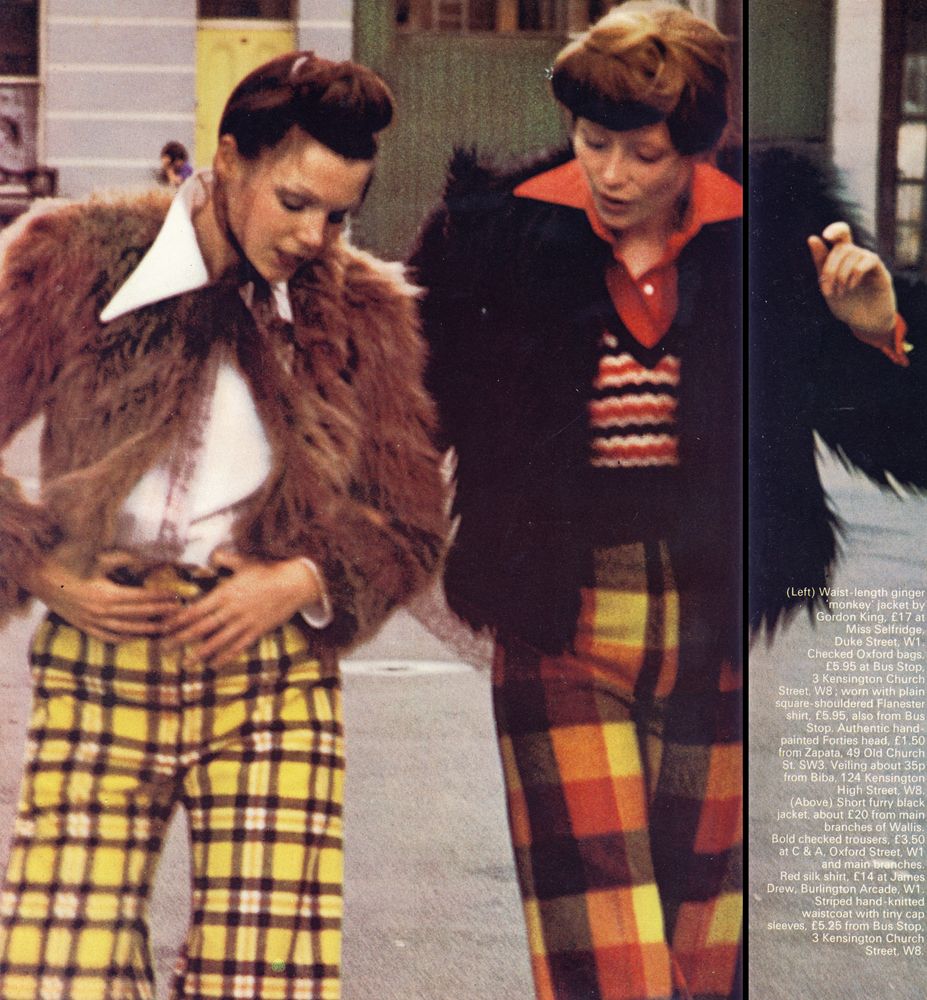
Left: ‘Monkey’ jacket by Gordon King. Checked Oxford bags by Bus Stop. Shirt from Bus Stop. Authentic Forties head by Zapata. Veiling from Biba. Right: Short furry jacket from Wallis. Trousers from C&A. Shirt from James Drew. Hand-knitted waistcoat from Bus Stop.

Inspirational Editorials: The rest of the picture

1970s, accessories, Andreas Heumann, Bags, bill gibb, boots, british boutique movement, che guevara, chelsea cobbler, City Lights, Gloves, Inspirational Images, Marbles, Miloré, Moya Bowler, Nigel Lofthouse, platforms, Rayne, shoes, tights, Uncategorized, Vintage Editorials, Vogue
accessories chelsea cobbler shoes andreas heumann vogue  sept 73

Chestnut leather walking shoes, edged with ocelot-printed calf from The Chelsea Cobbler

There aren’t many accessories shoots worthy of scanning – the majority tend to be fairly static and unimaginative. So kudos to Andreas Heumann for this gorgeous set of pictures which manage to do justice to the contents.

Photographed by Andreas Heumann. Scanned by Miss Peelpants from Vogue, September 1973

accessories nigel lofthouse bag andreas heumann vogue  sept 73

Cream suede handbag with stitched appliques by Nigel Lofthouse at Che Guevara; City Lights Studio. Cream kid gloves by Bill Gibb for Miloré

accessories Clive Shilton bag andreas heumann vogue  sept 73

Cinnamon suede clutch bag by Clive Shilton.

accessories gibb gloves andreas heumann vogue  sept 73

Marbled scarf by Marbles. Marbled leather gloves by Bill Gibb for Miloré

accessories moya bowler boots andreas heumann vogue  sept 73

Black suede ankle boots, furred and laced, by Moya Bowler.

accessories rayne brogues andreas heumann vogue  sept 73

Honey suede crocodile print calf lace-ups from Rayne.