

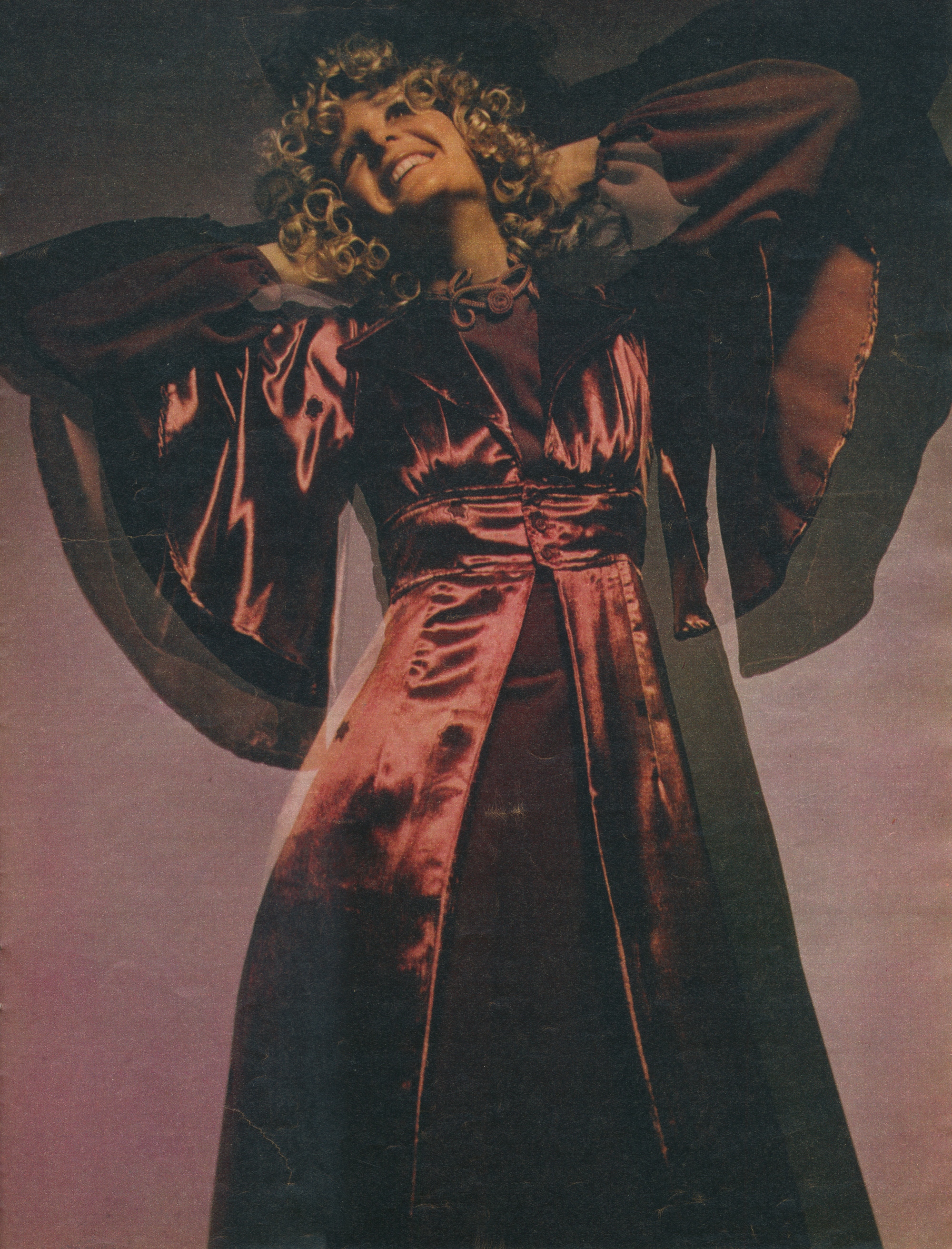
Photographed by Barry Lategan.
Scanned from Vogue, December 1974.
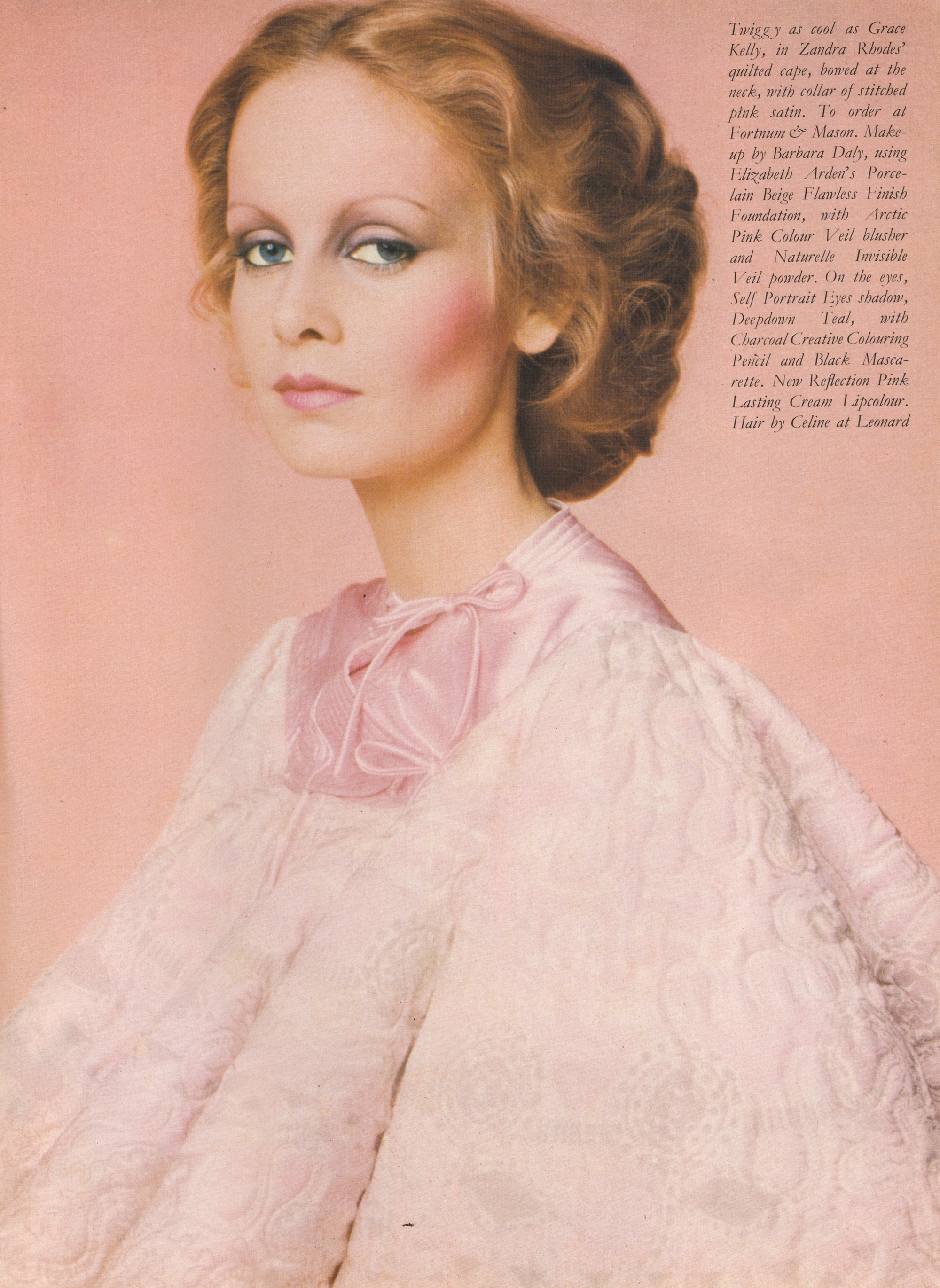

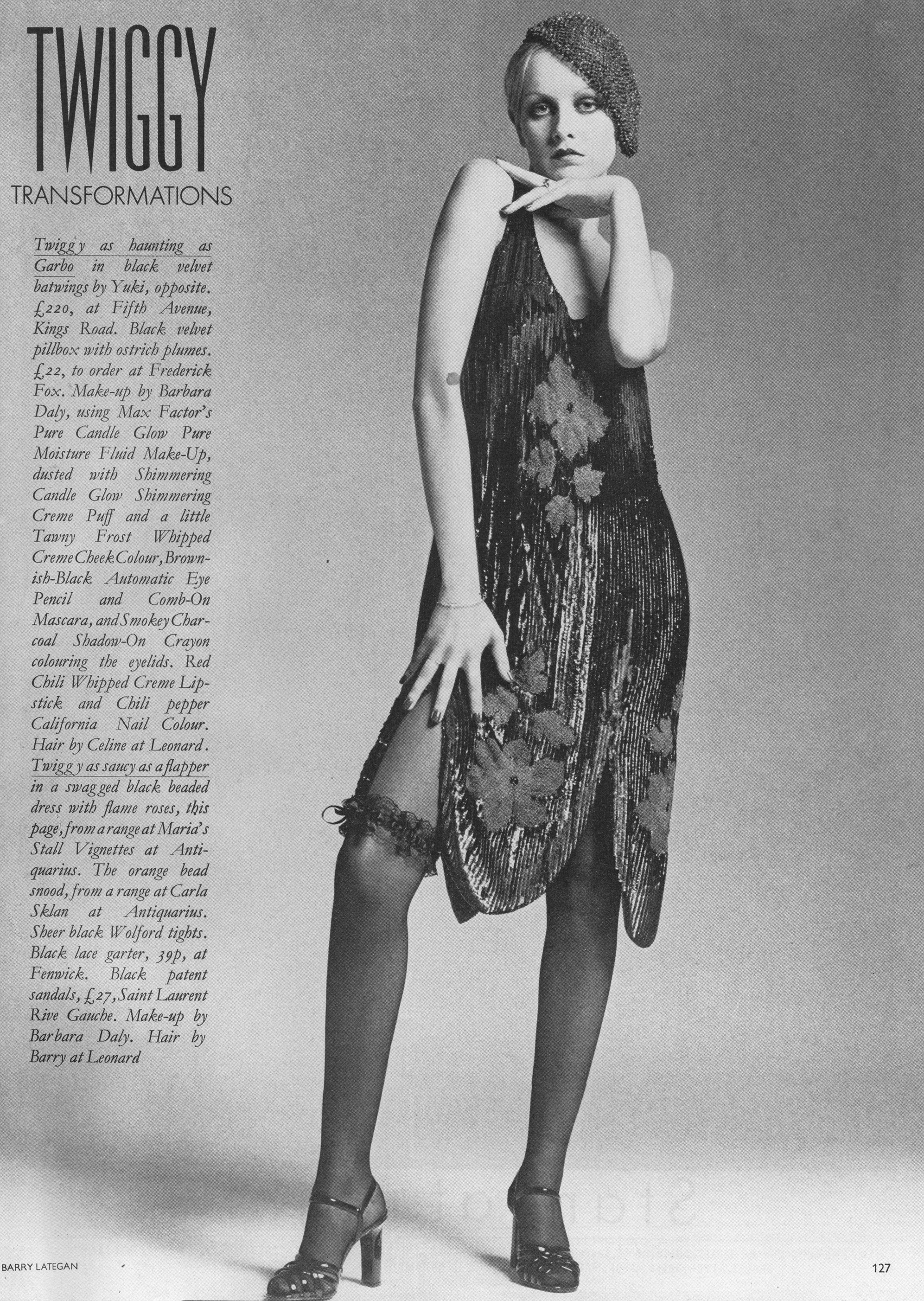
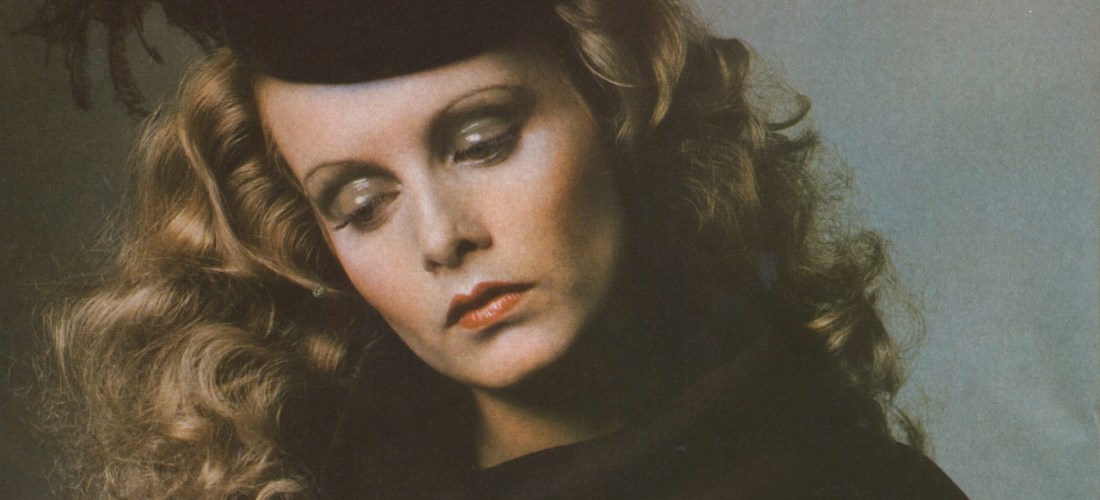
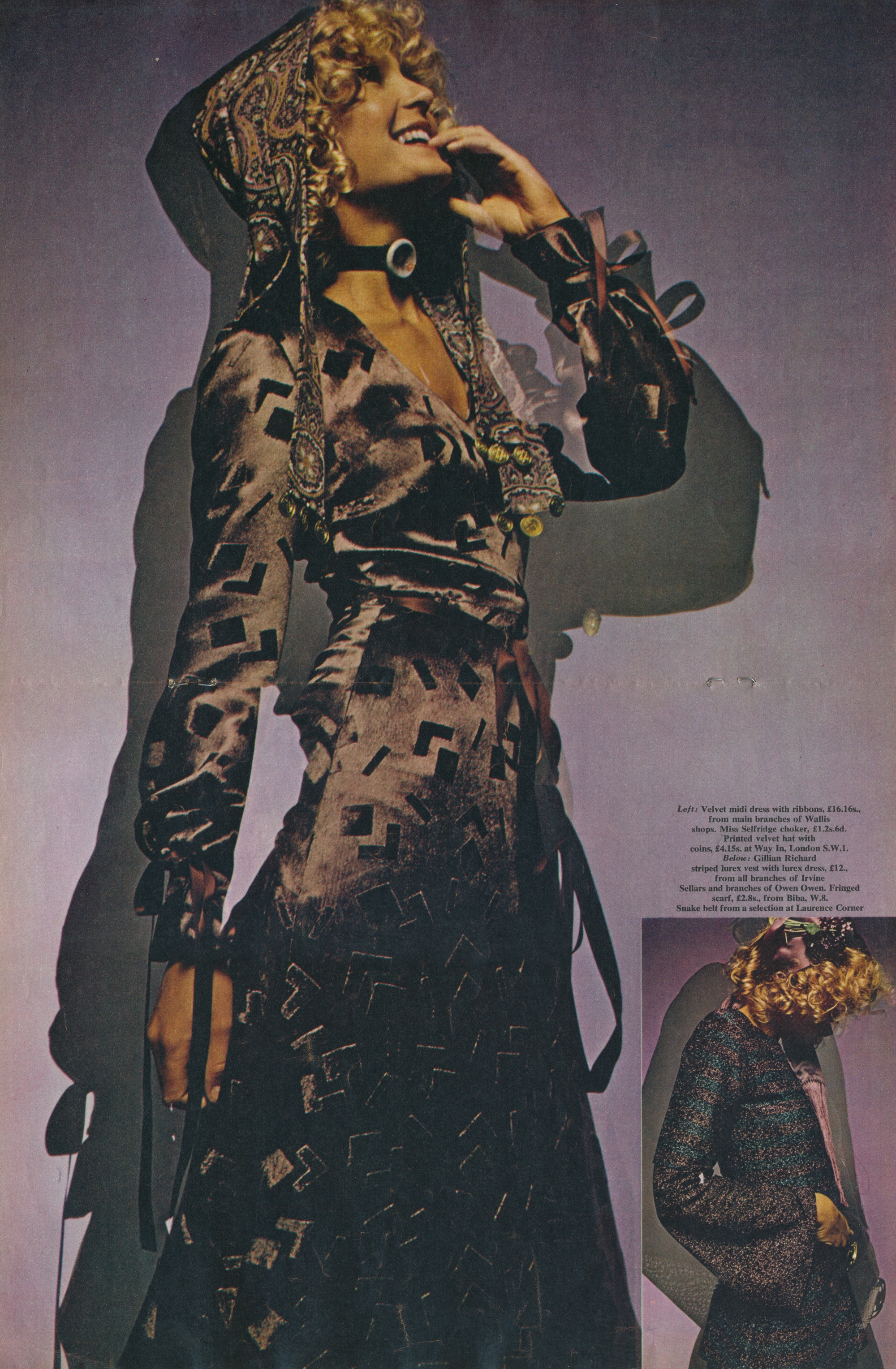
Photographed by Barry Lategan.
Scanned from Vogue, December 1974.

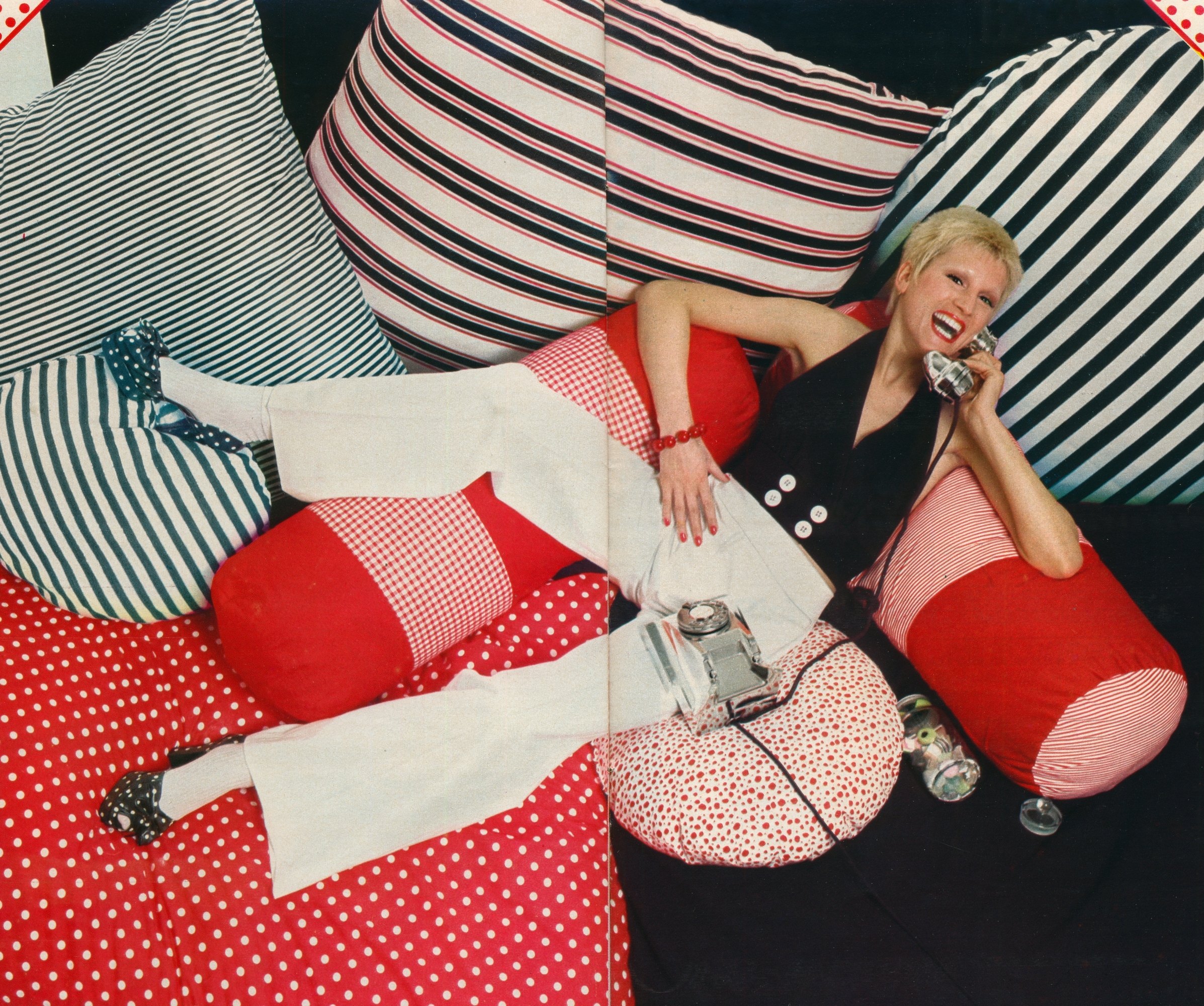
Trying to brighten up your living area with the minimum of cost is a difficult thing to do if it involves buying a cosy sofa or even buying new seat covers (have you noticed the prices lately?). The only way for a poor girl to cope is to think practical and get into the cottage industry kick with some nice fabric, a needle and thread. The simplest and most comfortable way to make a living-room really liveable in—i.e., to plonk around and relax in, as well as providing a soft space for an overnight guest to kip on to go into cushions in a big way.
All cushions, except for our sag bags, came from Pontings. They do a range of foam and feather ones. We covered them in fabrics from a selection at Pontings, Derry and Toms and Barkers. Prices are for cushions only. We filled our sag bags with polystyrene beads and have arranged that 19 readers can buy this lovely stuff at a special price (see overleaf).
BACKGROUND: Huge roly-poly floor cushion, 8ft x 3ft, £13.50, covered in black velvet (13yds. of 36in. fabric). TOP. Left to right: 36in. square cushion, £3.50, covered in narrow black/white striped satin (2¼yds. of 45in. fabric); 45in. square cushion, £4.50, covered in red/black/white striped Tricel jersey (2yds. of 45in. fabric); 45in. round cushion, £4.50, covered in black/white striped satin (2½yds. of 45in. fabric).
CENTRE. Left to right: 16in. round cushion, 70p., covered in black/white striped rayon and lurex (1yd. of 45in. fabric); 36in. x 11in. bolster, £2, covered in cotton poplin and gingham (13/4yds. and lyd. of 36in. fabric); 36in. x 11in. bolster, £2, covered in red cotton poplin and striped Polyster cotton (1¾yds. and 1 yd. of 36in. fabric).
BOTTOM. Left to right: Our expanded polystyrene bead sag bag (polystyrene £2) covered in red/white spot cotton (5yds. of 36in. fabric); 16in. feather cushion, 70p., covered in red/white spot rayon Honan (1 ½yds. of 36in. fabric); our sag bag, covered in 5yds of black cotton sailcloth.
GIRL: Cotton Vincel halter-neck top, £2.95. White cotton bags, £5.95. Both by Lizzie Carr for Plain Clothes. Socks, from Woolworth, 18p. Peep-toe shoes, from Biba, £6.50. Telephone metallised by Ryman Interiors Ltd. (It costs £7.50 to have your phone treated like this.)
Model is Renate Zatsch
Photographed by Karl Stoecker.
Scanned from 19 Magazine, July 1972.


Short, shiny waves, tight to the head and crowned in a slippery sequin beret add the ritzy touch to oyster satins and champagne silks—daring dresses, glamorous enough for anybody’s Rolls.
Brunette model is Therèse.
Photographed by Brian Downes.
Scanned from Honey, December 1971.


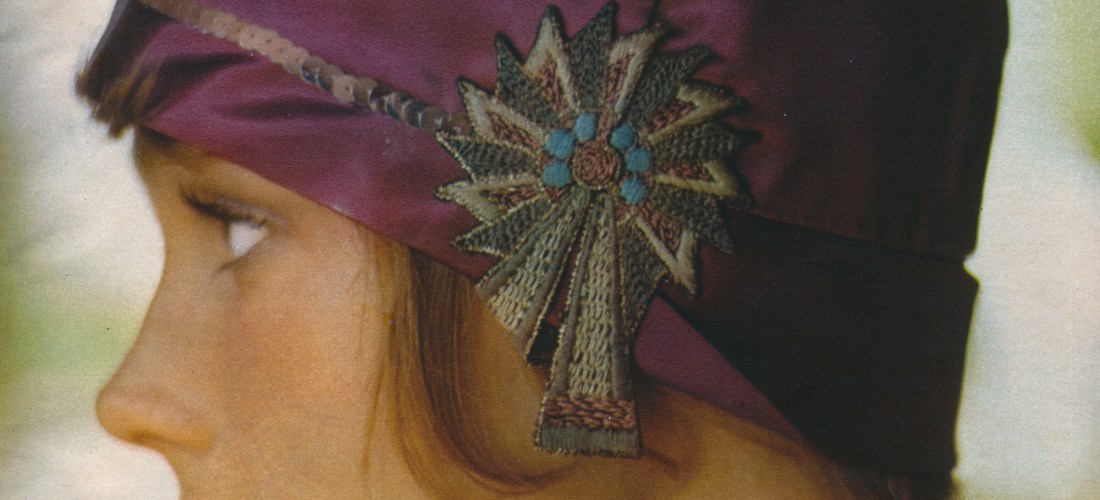
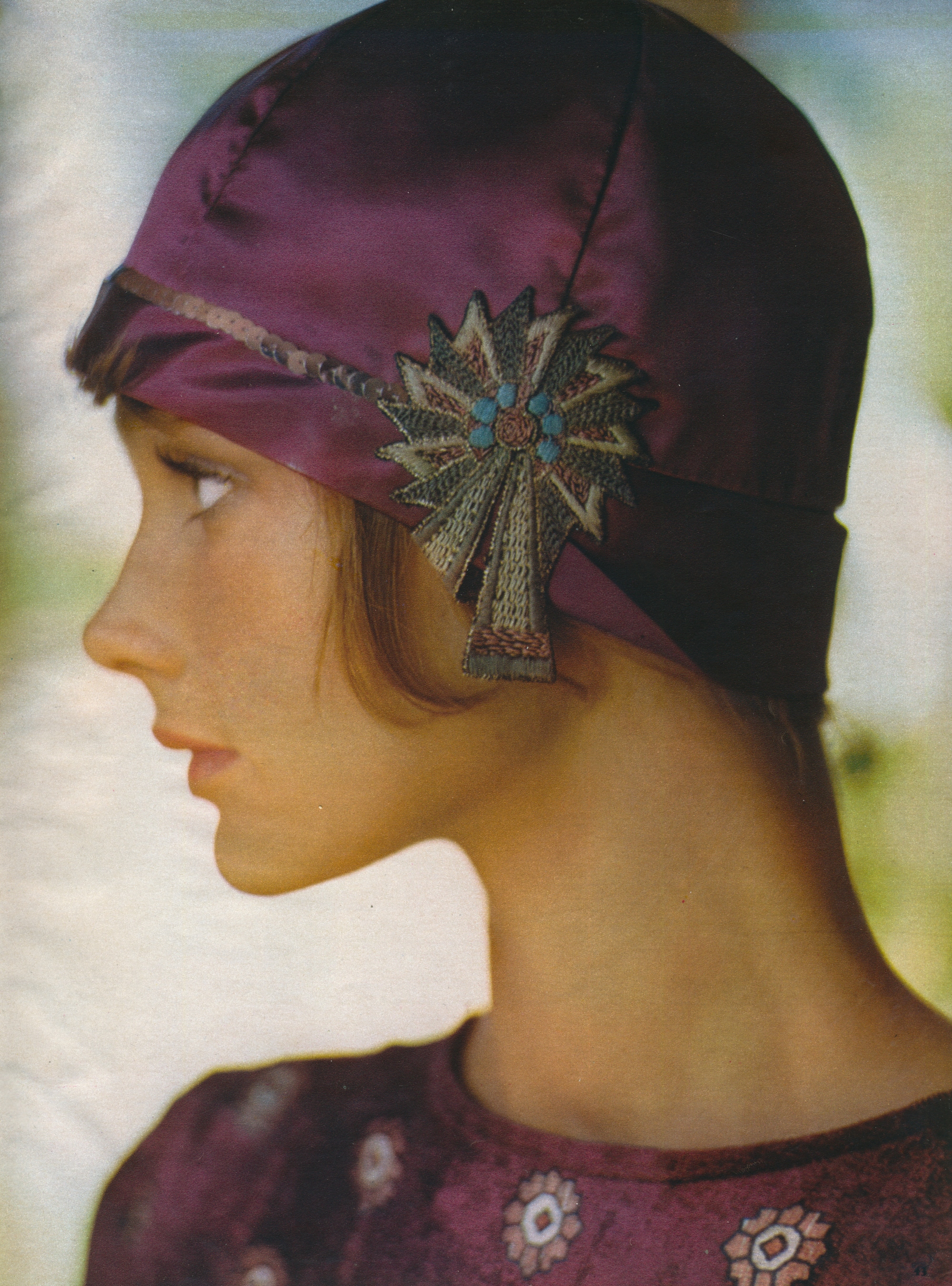
Model is Therèse.
Photographed by Frank Horvat.
Scanned from Vanity Fair, December 1970.
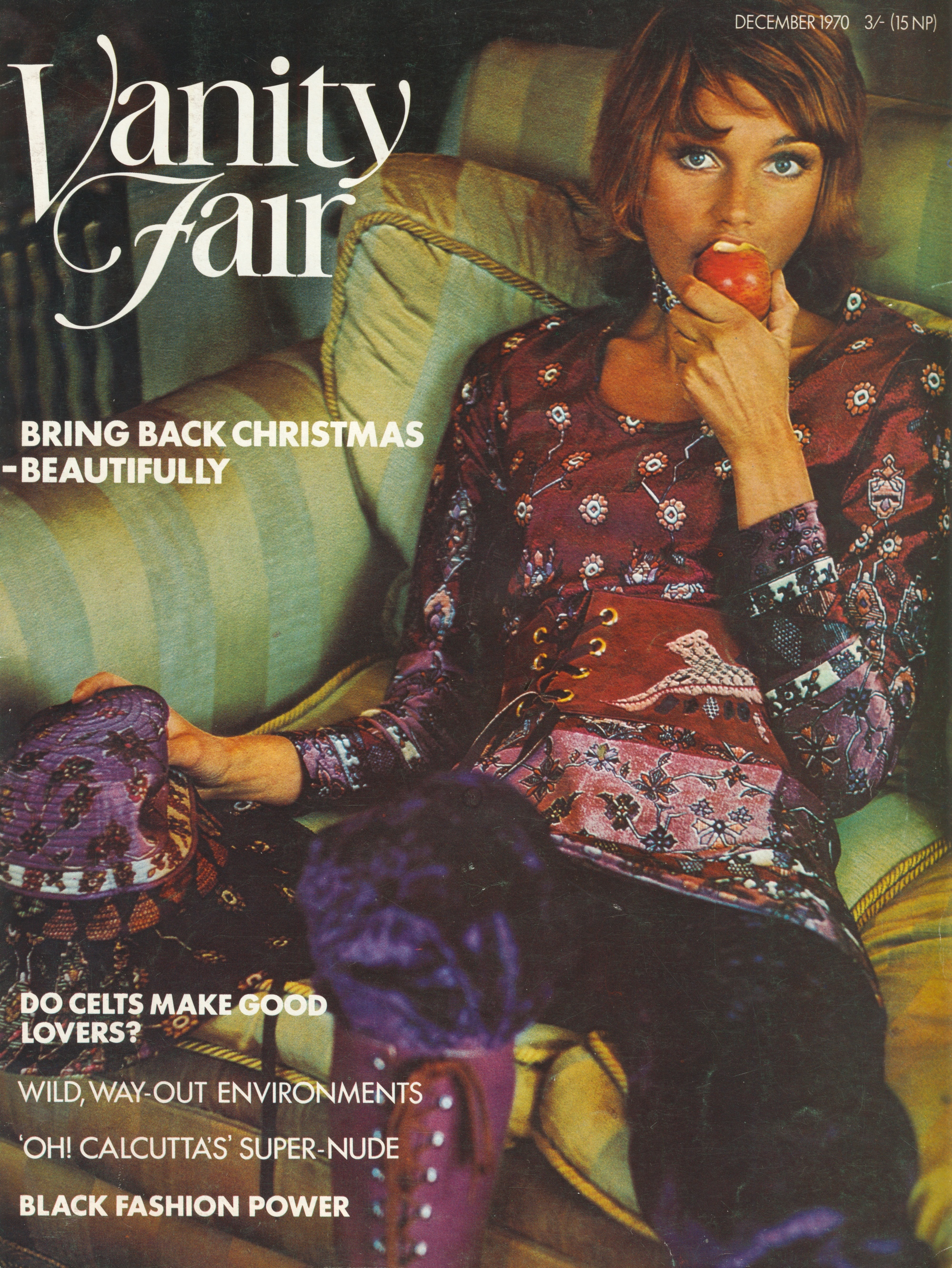
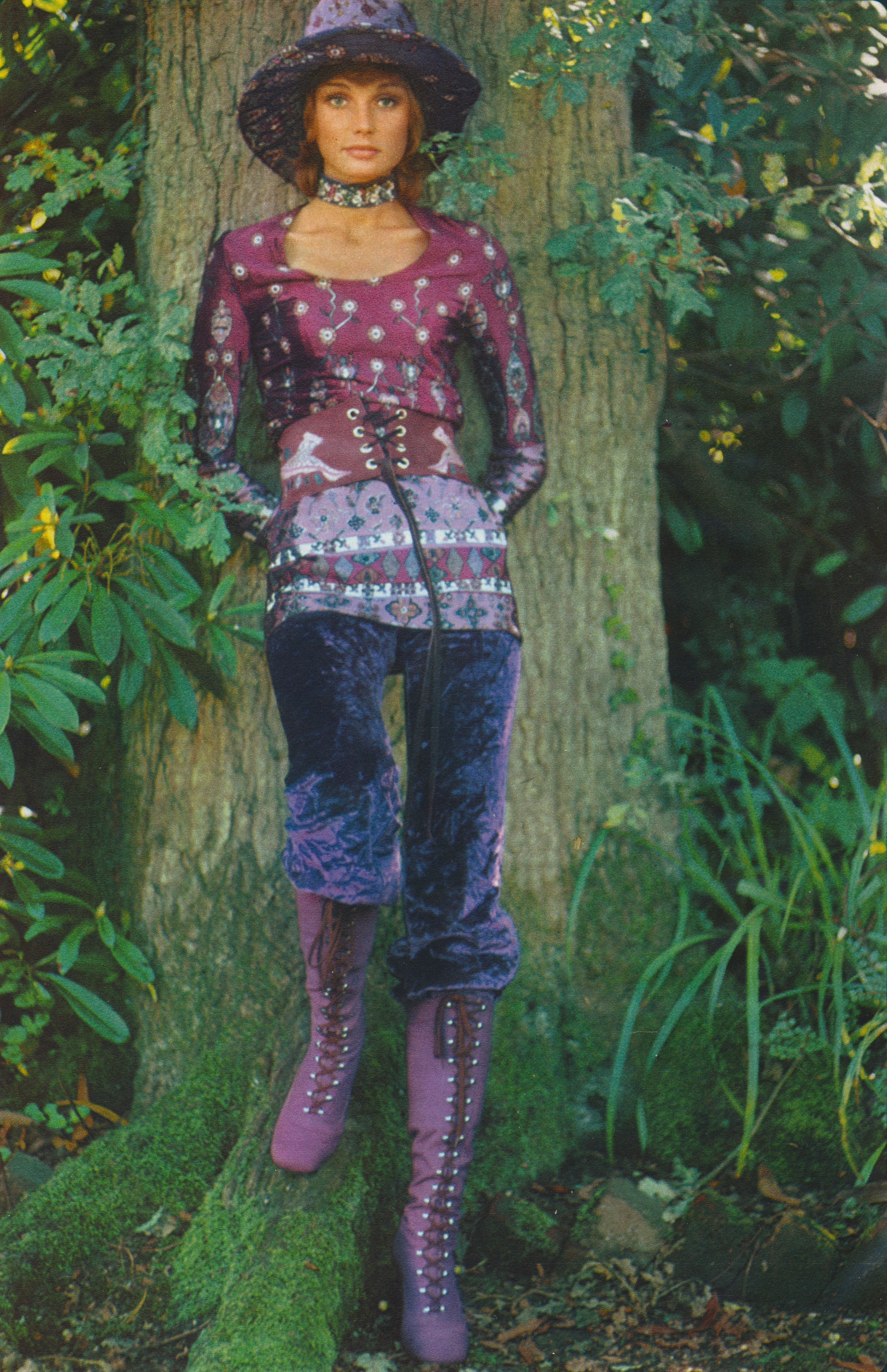
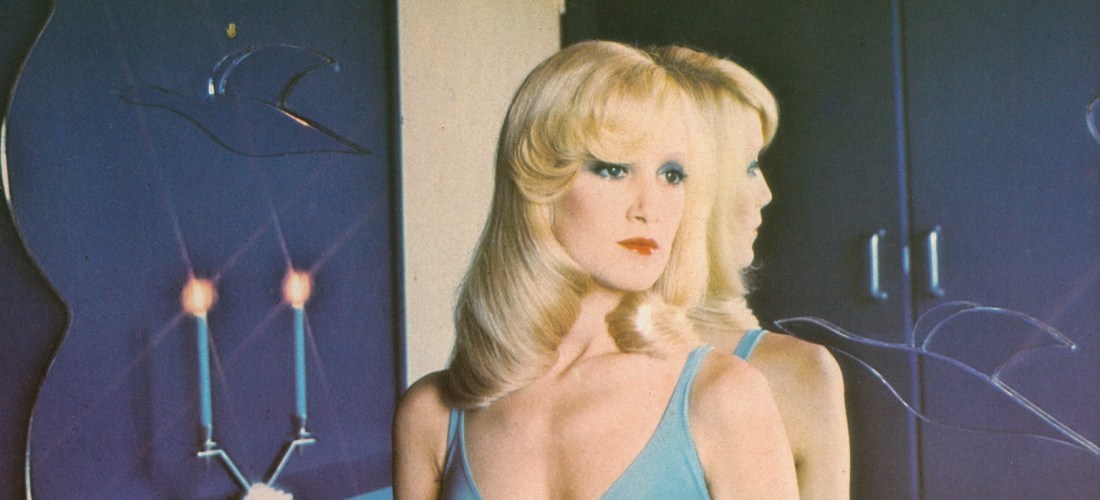
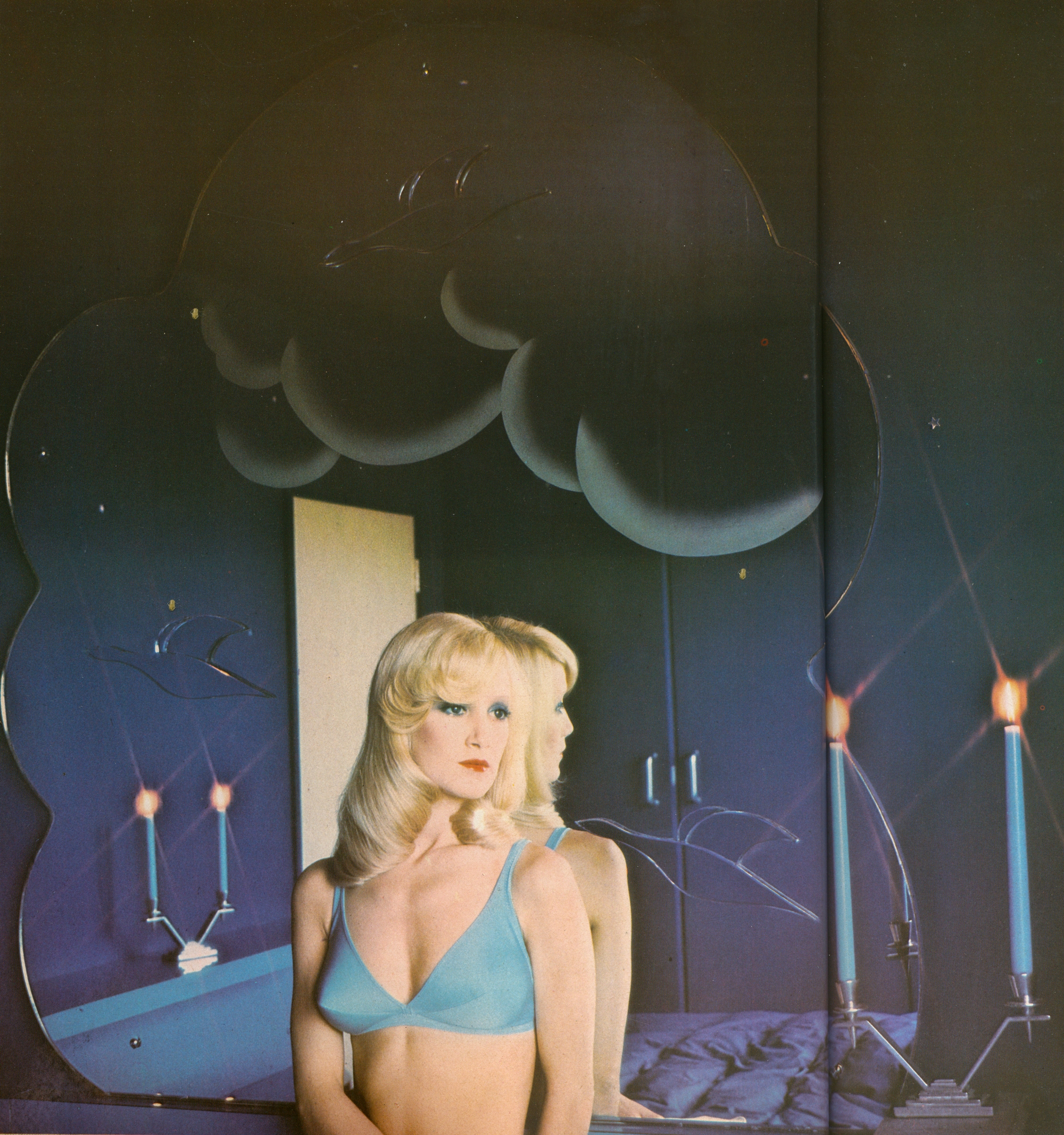
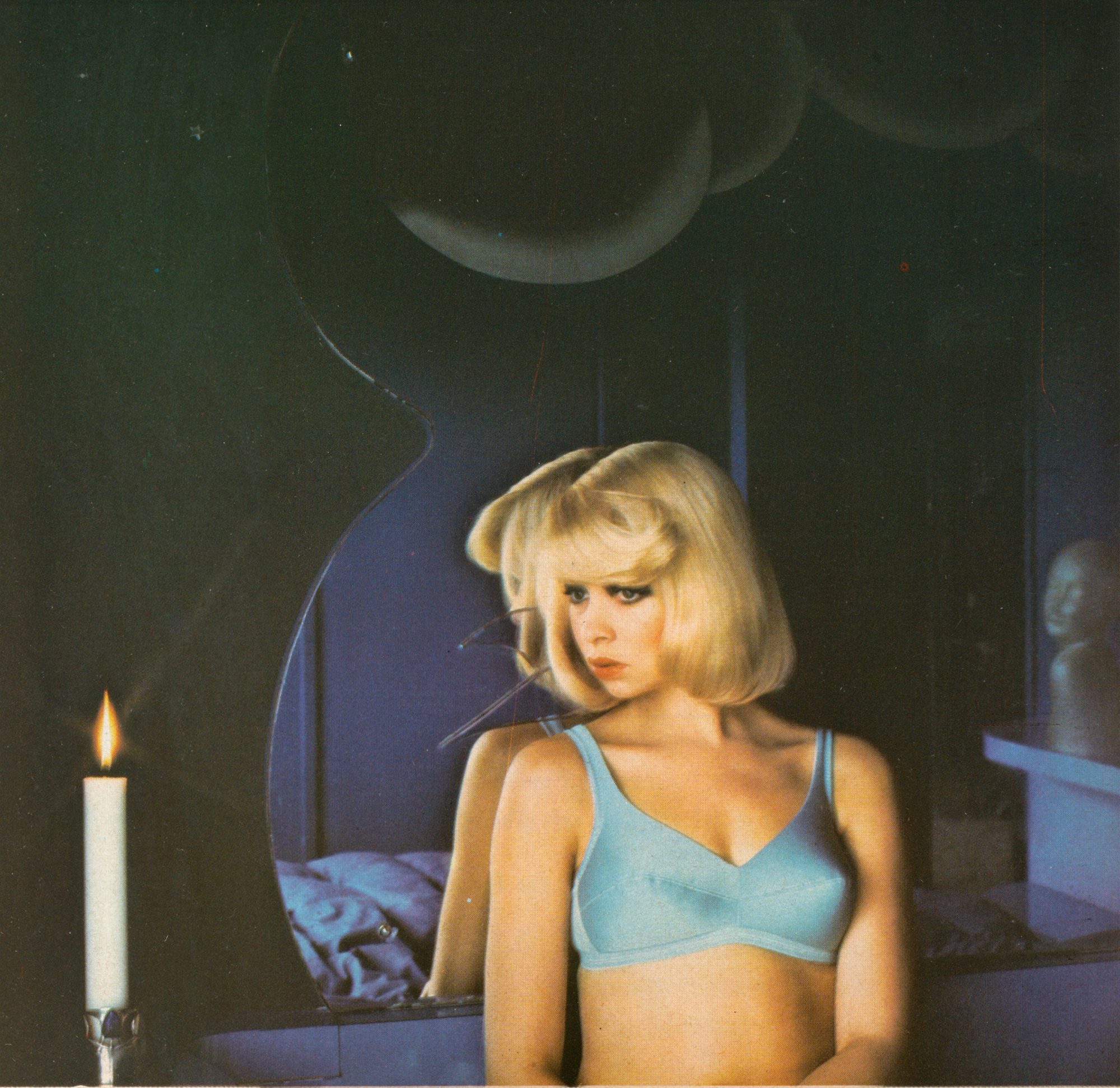
If you have never felt silk next to your skin, Berlei recreates that sensuous feel with a new range of bras called Light Touch. They are made in a luxurious material, Qiana. Silkier than silk, Light Touch gives you that ’30’s feeling; soft, saucy and sure. Price’s candles echo that mood beautifully, with their subtle, caressing light shimmering around you.
A stunner of an advertorial, sadly with no photographer credit, for Berlei bras with a stunning Seventies-does-Deco aesthetic. Which, in turn, signposts something rather more familiar from later Seventies into Eighties imagery. Whoever this photographer was, I think they were very ahead of the curve (if you’ll pardon the pun!).
Scanned from Vogue, October 1st 1973.
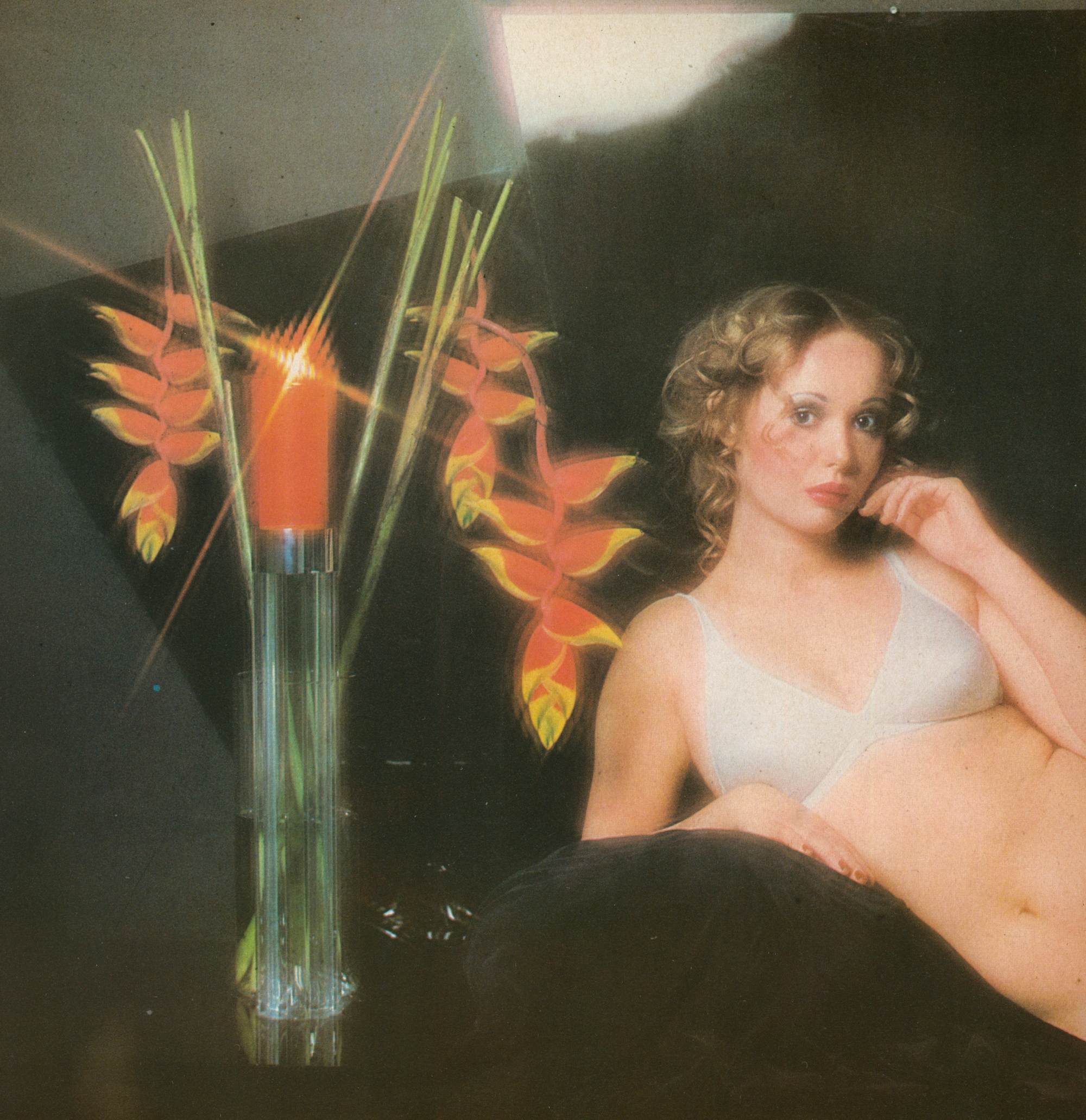
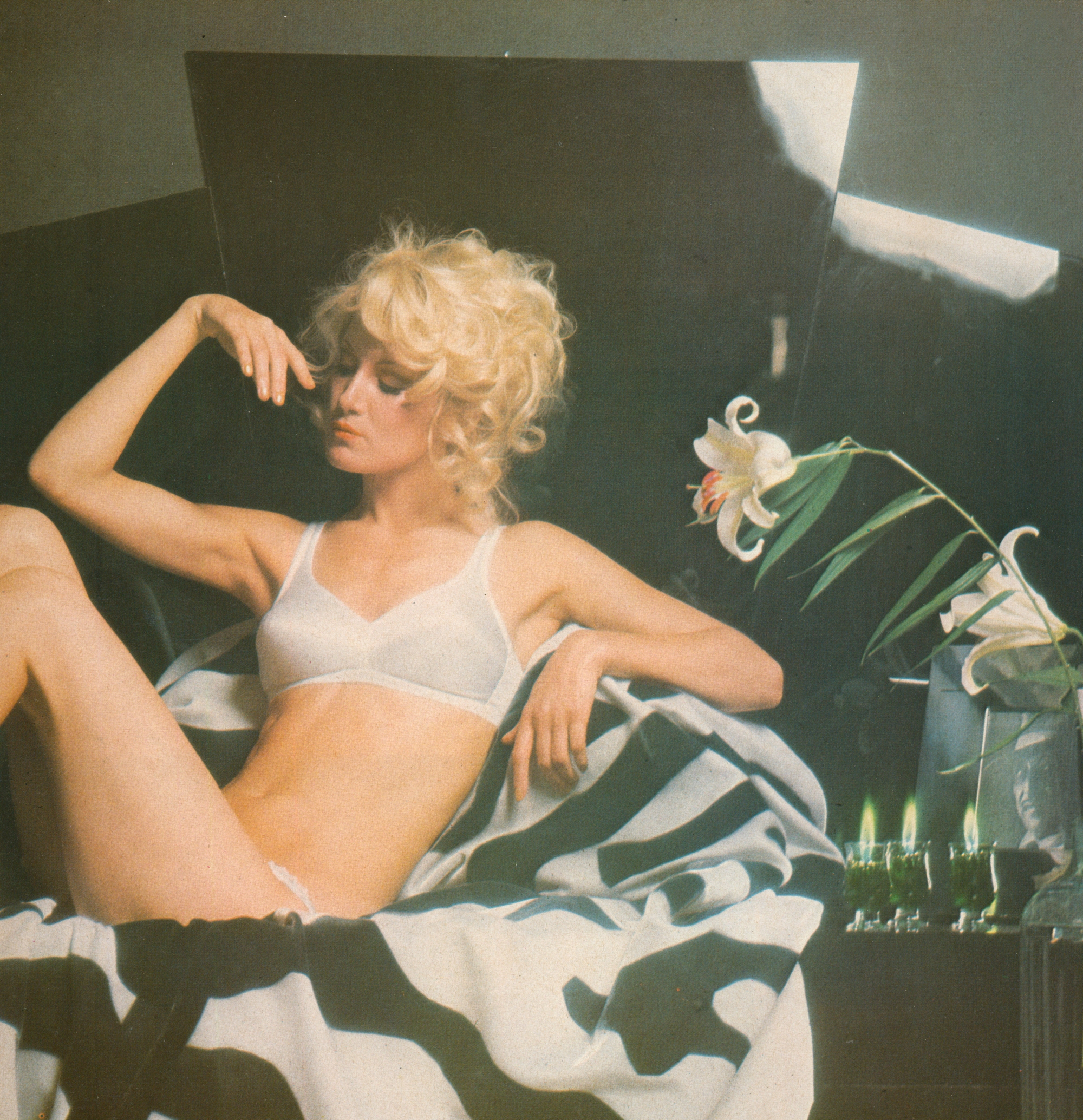
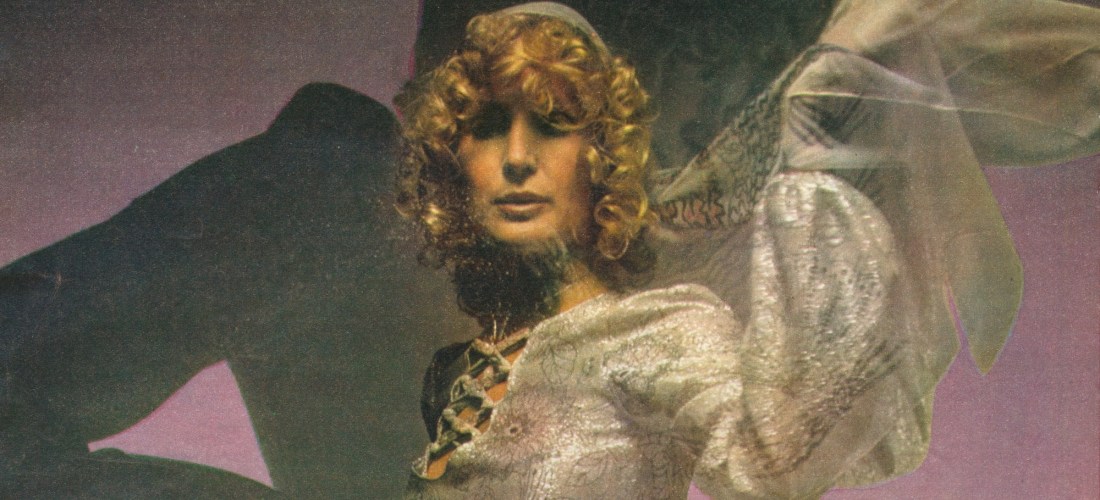
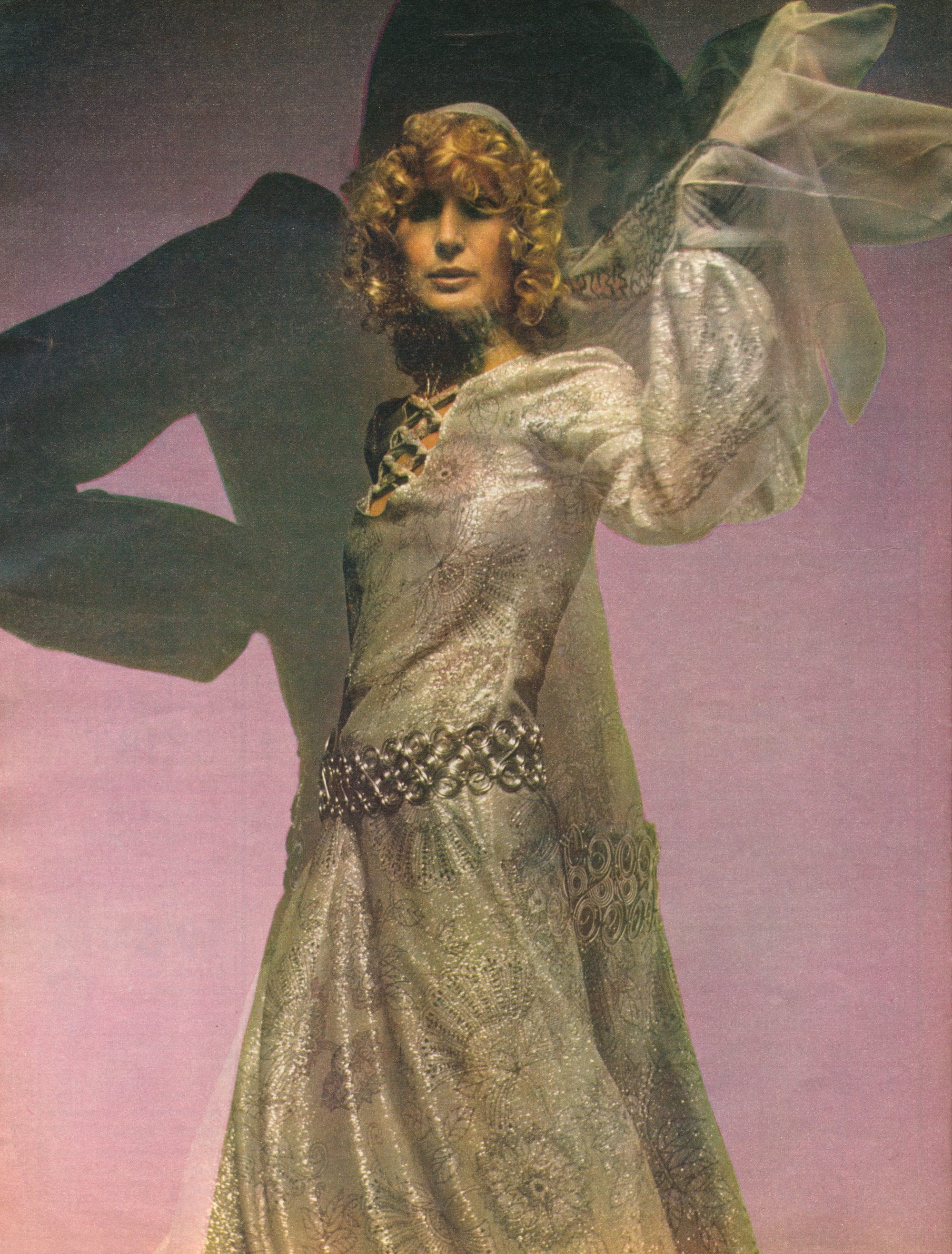
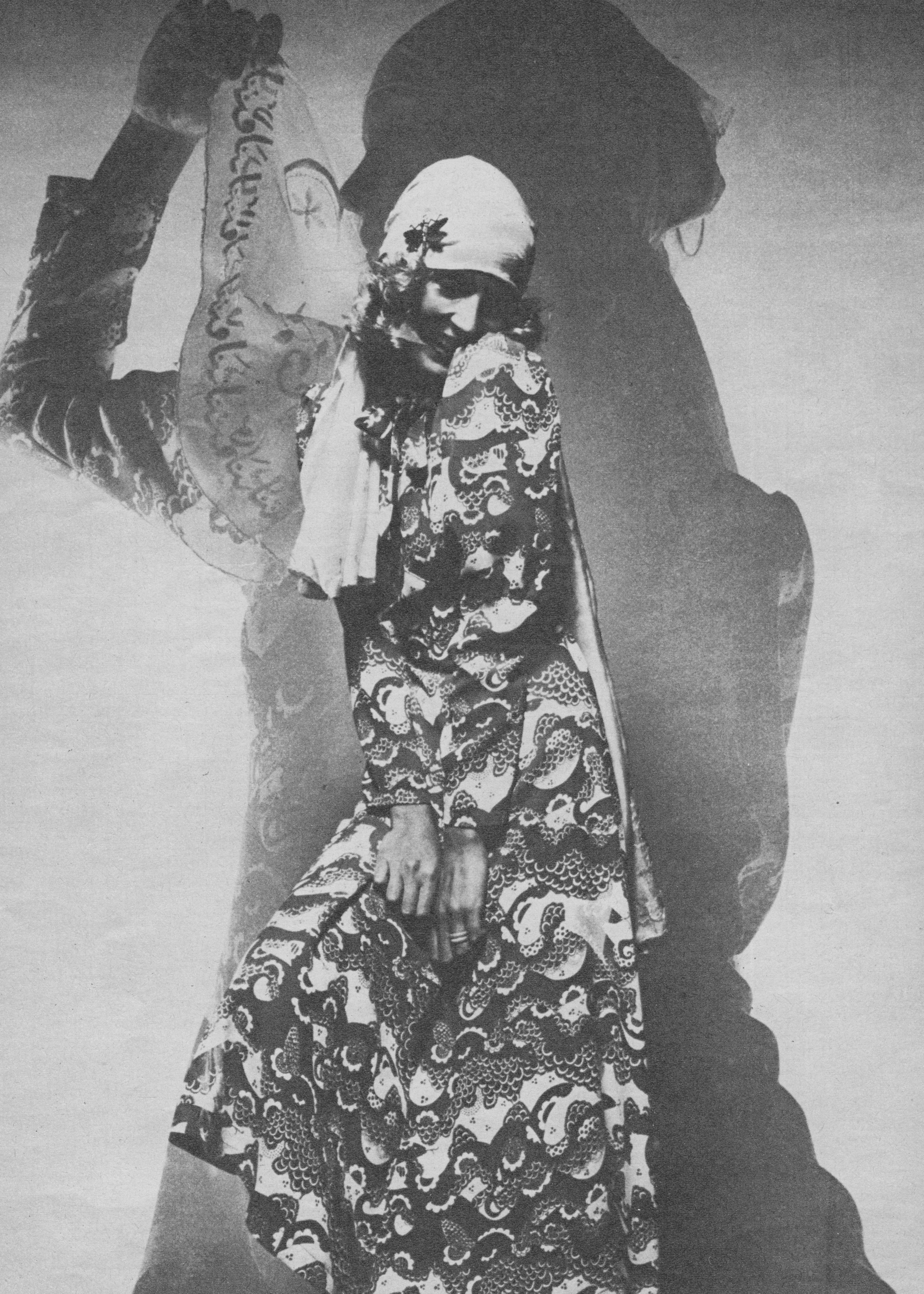
Don’t waste dresses like these by taking them someplace quiet. Give them all the freedom they want and a lot of personality and more besides. Just for once take something really special and show off!
Model is Lena Stengard.
Styled by Sue Hone.
Photographed by Jean-Claude Volpeliere.
Scanned from Petticoat, December 1970.



Swagger around this autumn in one of the most dramatic coats ever. Gone are skimpy shapes, instead there’s a swirling full-cut look, strongly reminiscent of the ‘Fifties. Back comes the walking-out coat and the ‘jigger jacket’. Big checks —the bigger the better—are hot news. Striped ankle socks and tarty high heels complete this new look.
Model is Anjelica Huston.
Photographed by Bob Richardson.
Scanned from 19 Magazine, October 1971


*Coat is an Antony Price design for Stirling Cooper. With thanks to Sheilagh Brown for the information.


To look really beautiful for your own satisfaction, and other peoples’, is one of the pleasures of living—health, dress, make-up, joie de vivre in happy conjunction with each other. Here, the most beautiful of everything, together in beauty.
Model is Marie Helvin.
Make-up by Barbara Daly.
Photographed by Christa Peters.
Scanned from Vogue, December 1971.


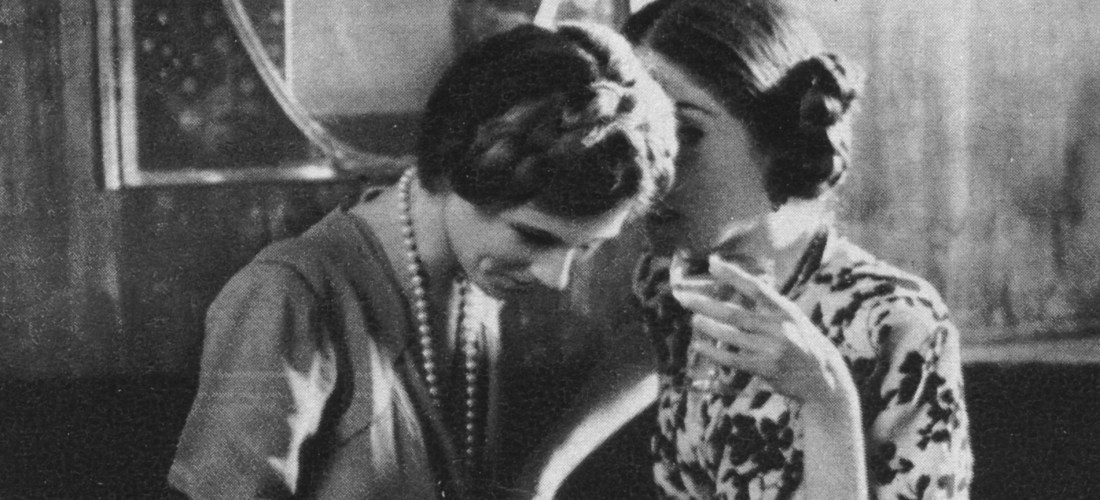
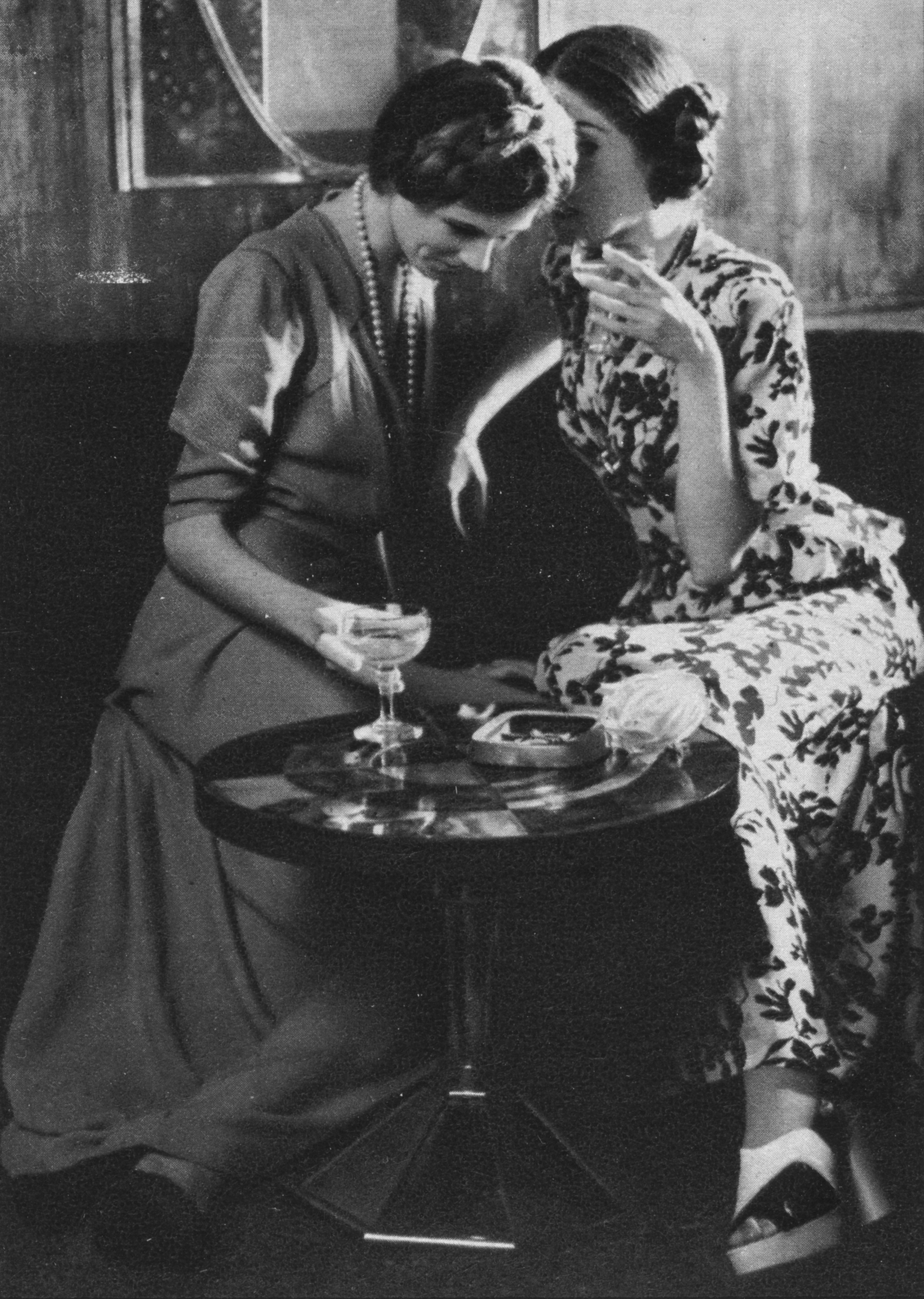
Photographed by John Annunziat.
Scanned from Cosmopolitan, October 1973.
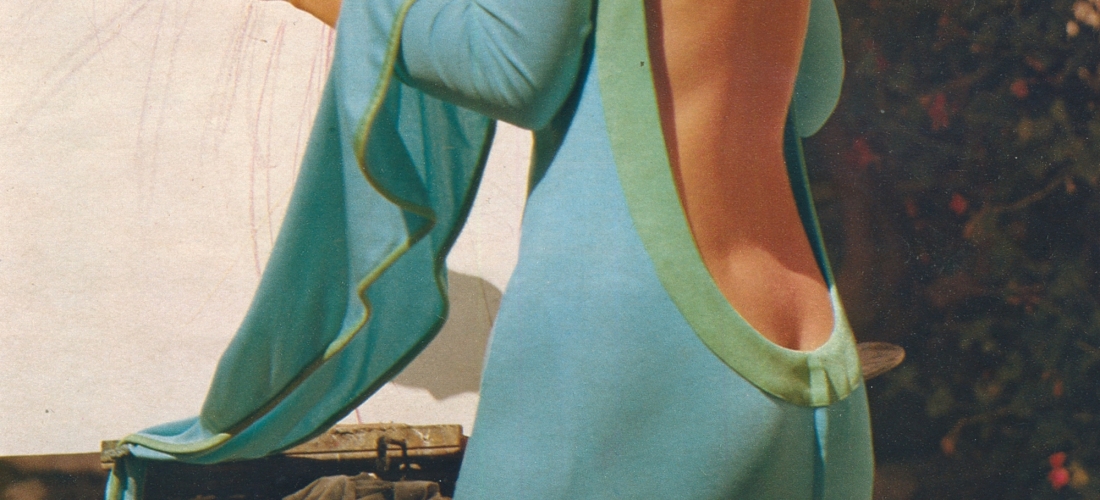
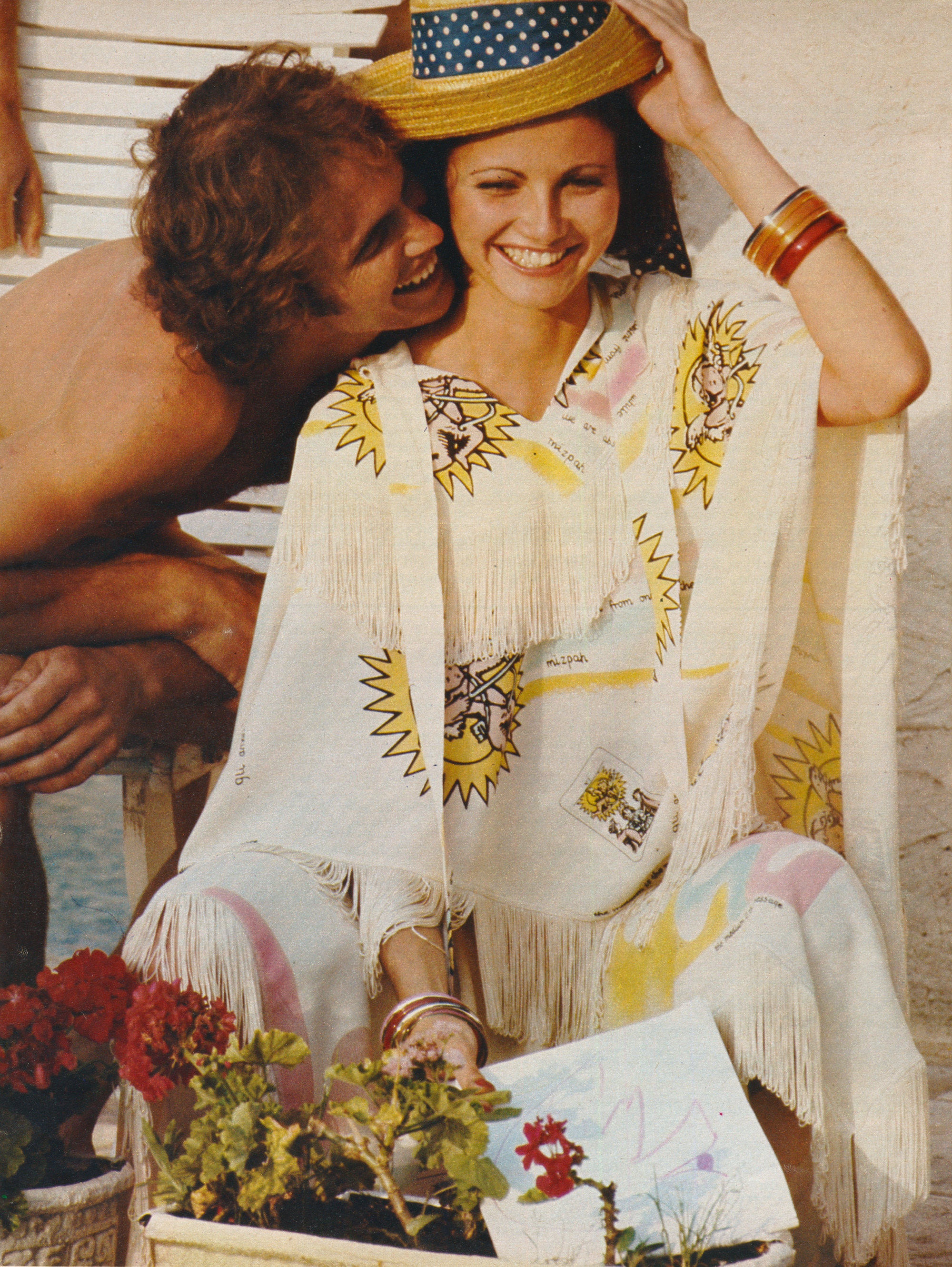
In clothes we dare you to wear!
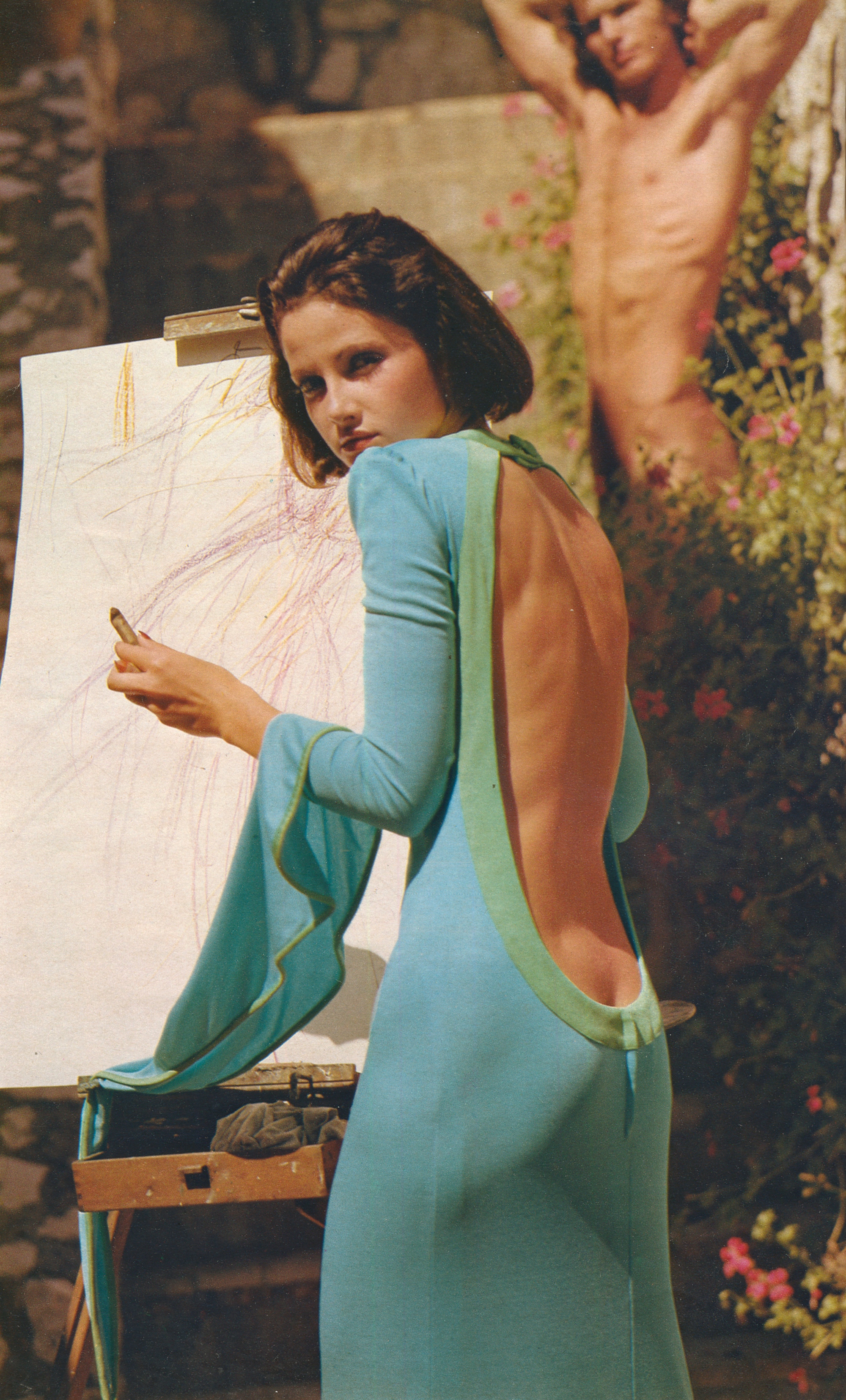
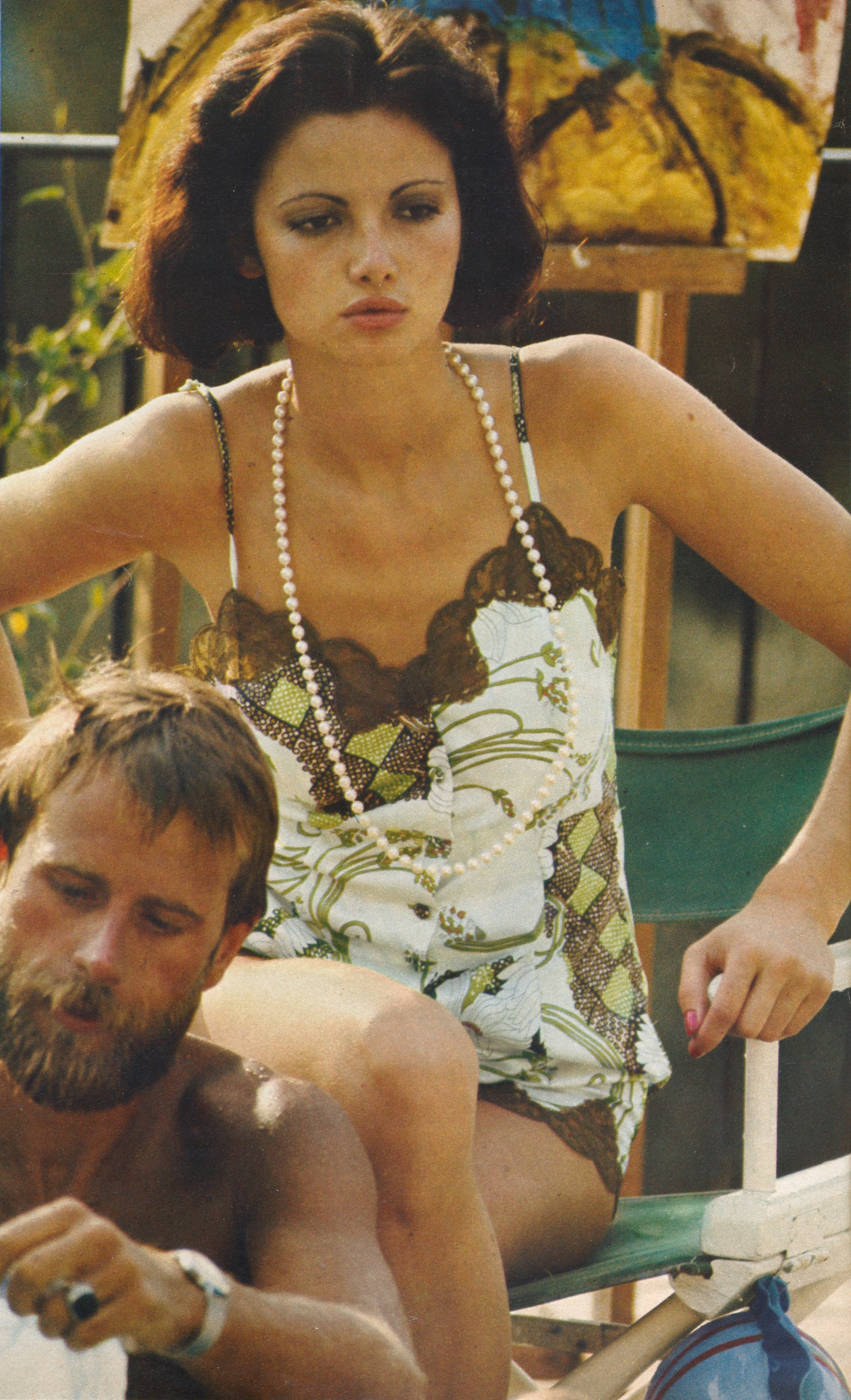
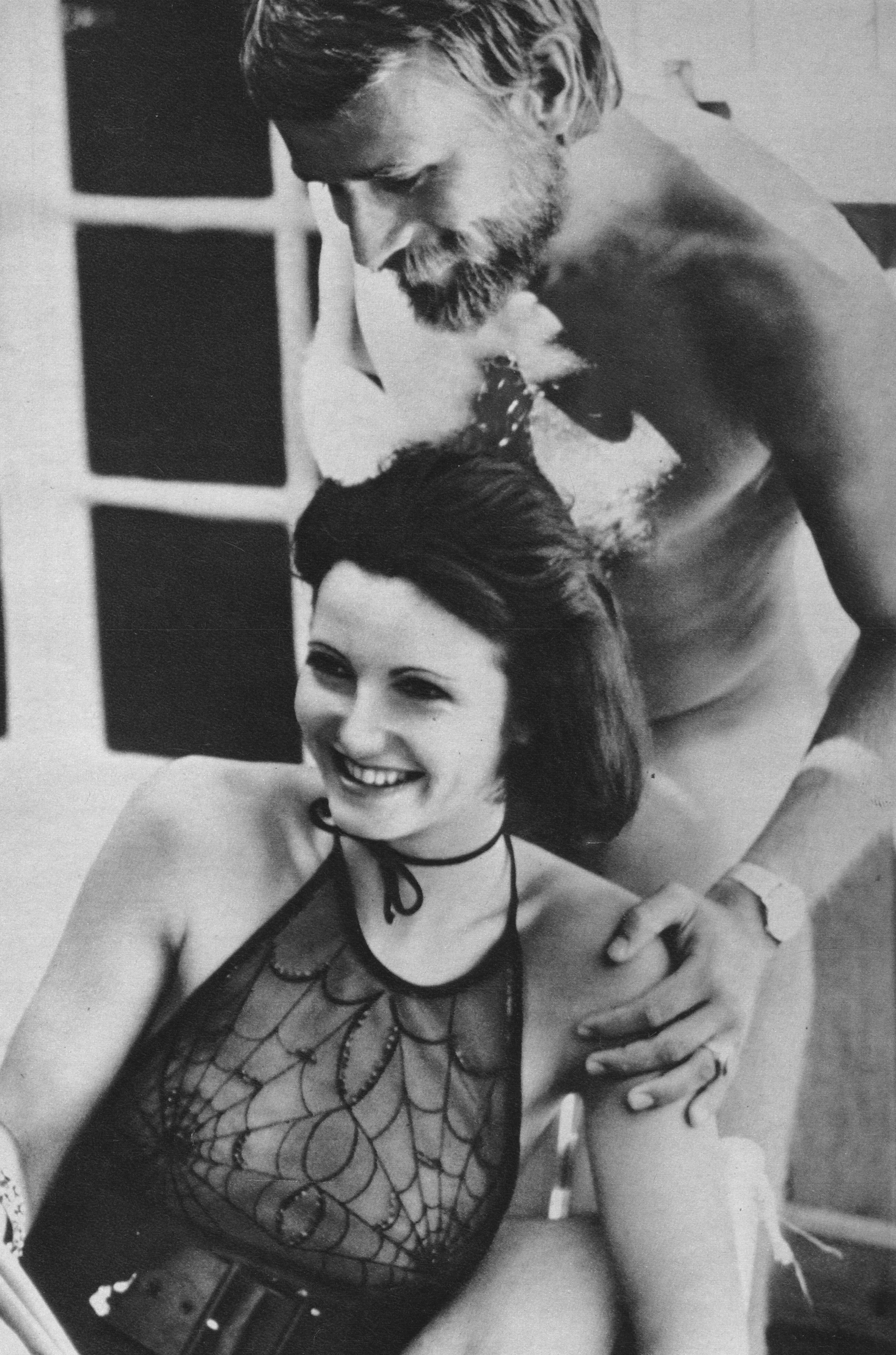
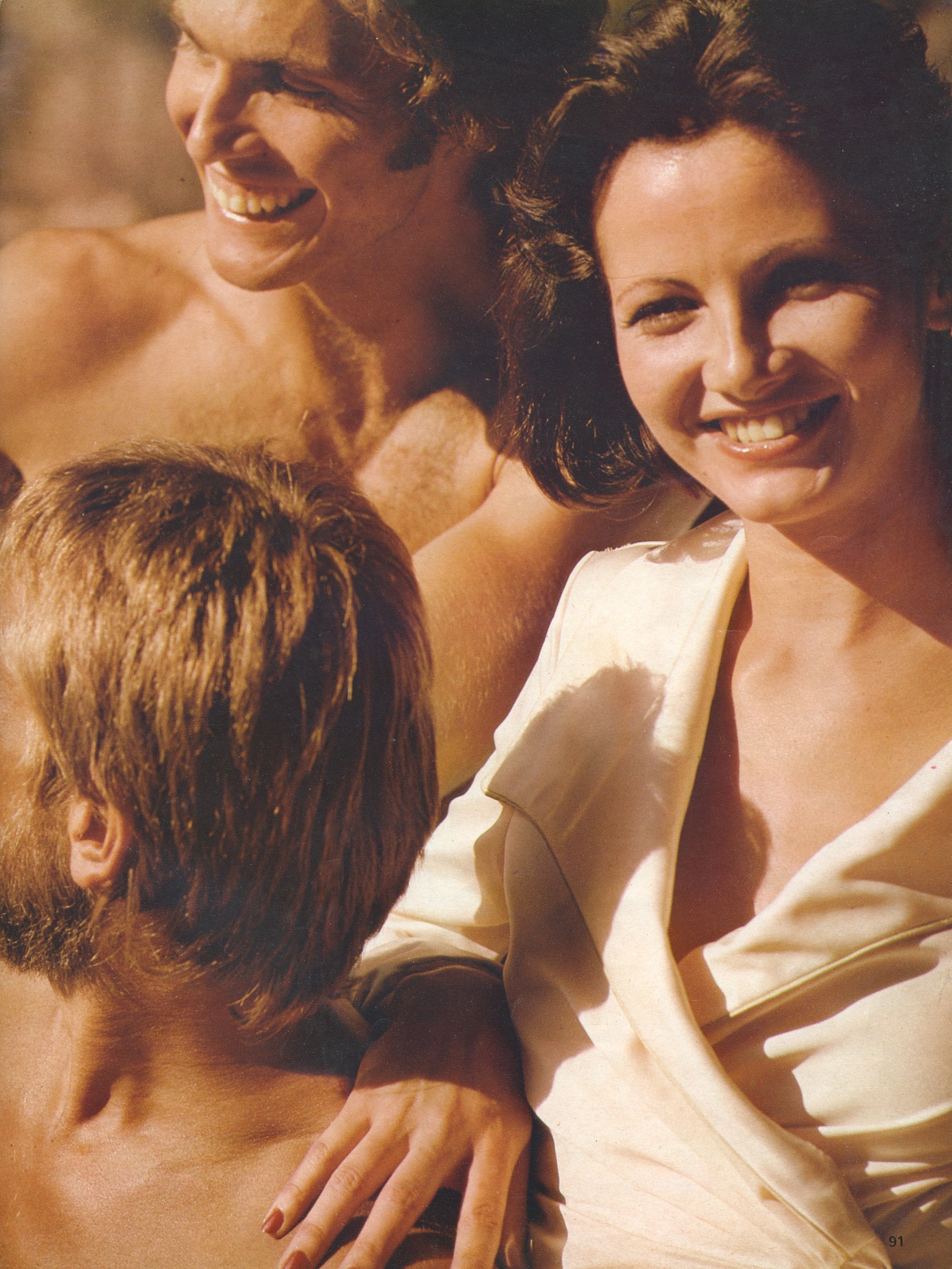
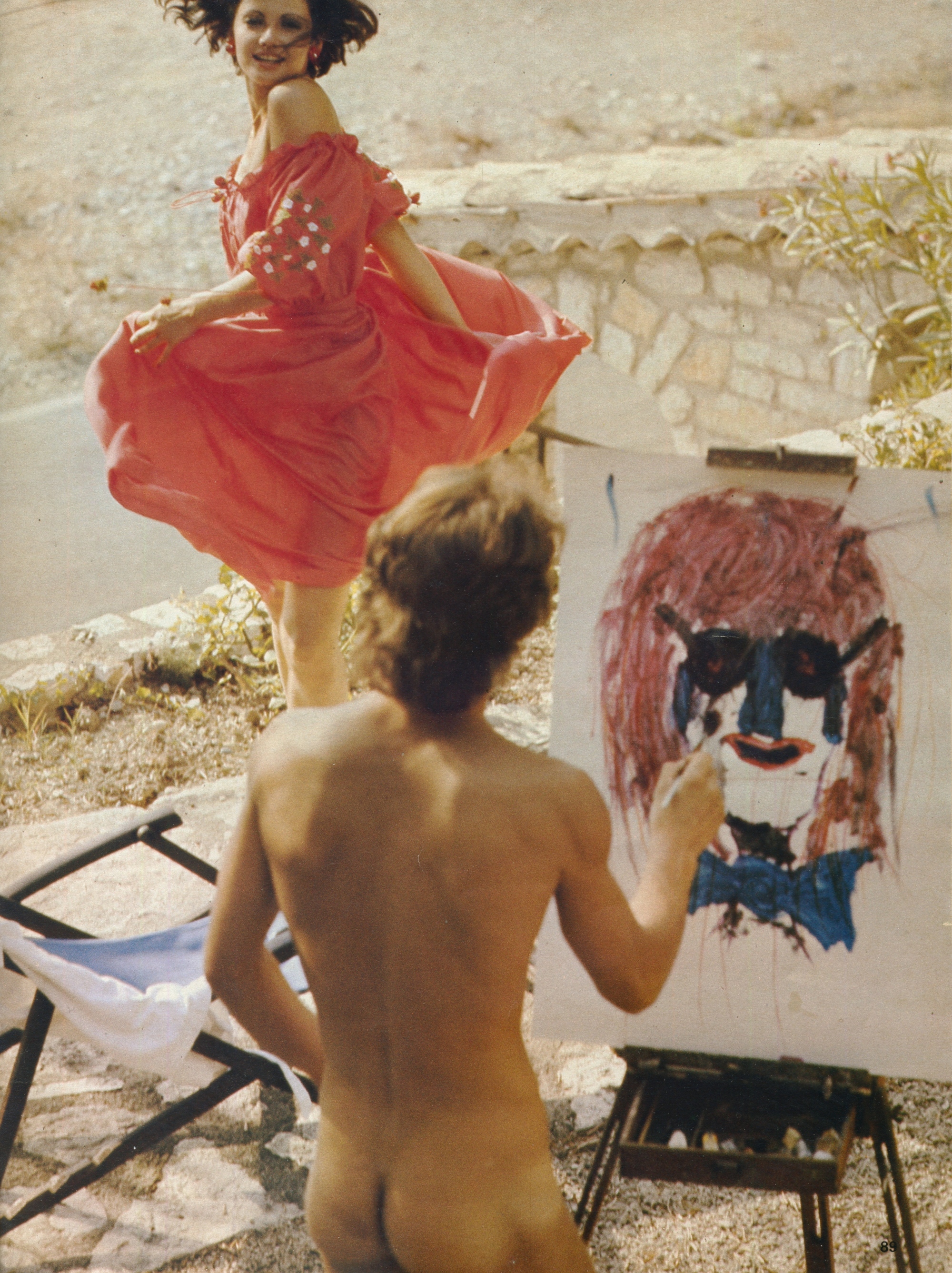
Make a name for yourself in 1974. Be an inspiration, a focal point, an innovator. Paint a positive future and make January a beautiful time. Experiment with colours. Branch out and try some totally different styles. Don’t go along with the rest of the girls—start up your own school, you’ll soon have plenty of followers. Begin by studying your best points, then set about accentuating them. If your skin gleams, show it off; if your waist is small, cinch it; if your legs are great, make certain that they are seen. The clothes here are not cheap, but like every good artist it’s vital to invest in good materials for long-lasting results. They will be appreciated for a long time to come ...
Styling by Penny Graham.
Photographs by Bill King.
Scanned from Cosmopolitan, January 1974.
I do love some equal opportunities Mild Sauce. These clothes are amongst some of my most coveted pieces, especially that outrageously plunging back John Bates dress. If you thought that McQueen invented the ‘bumsters’, remember that someone else has always got there first!
 Liz Eggleston