
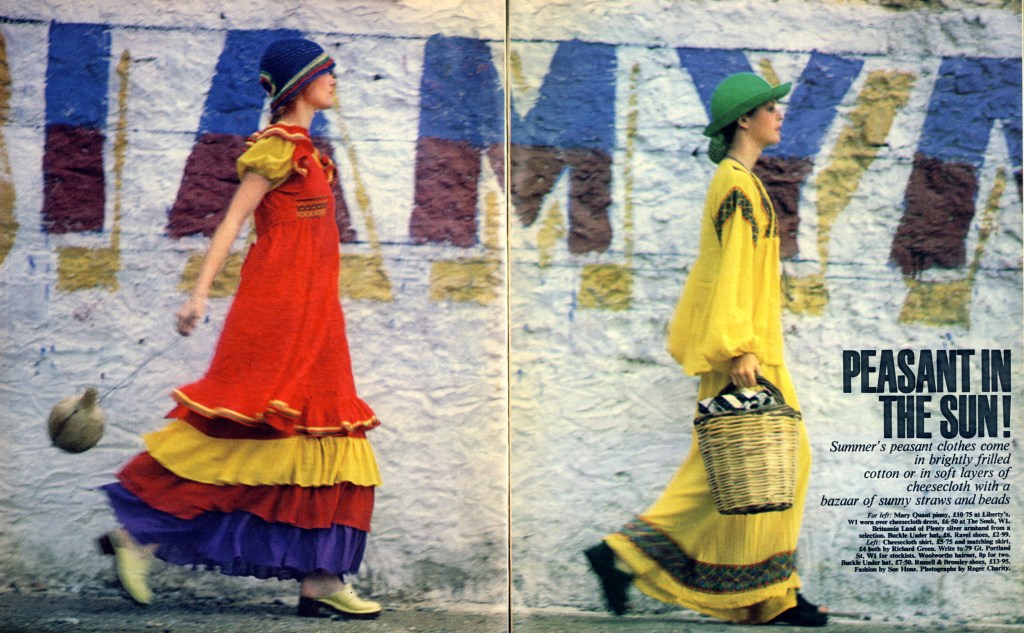
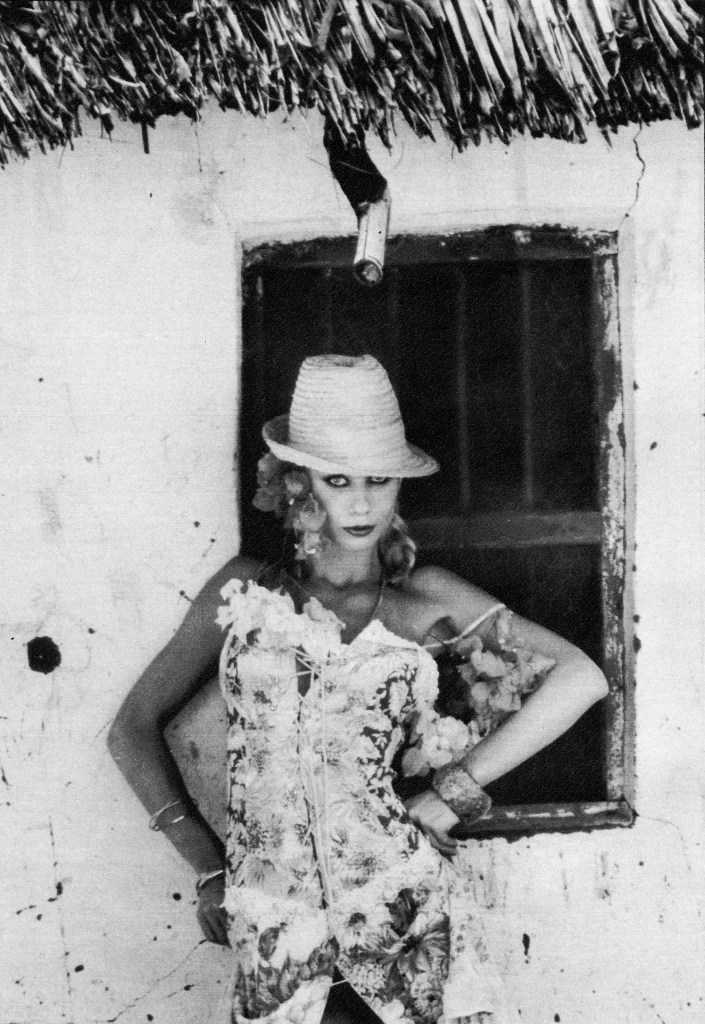
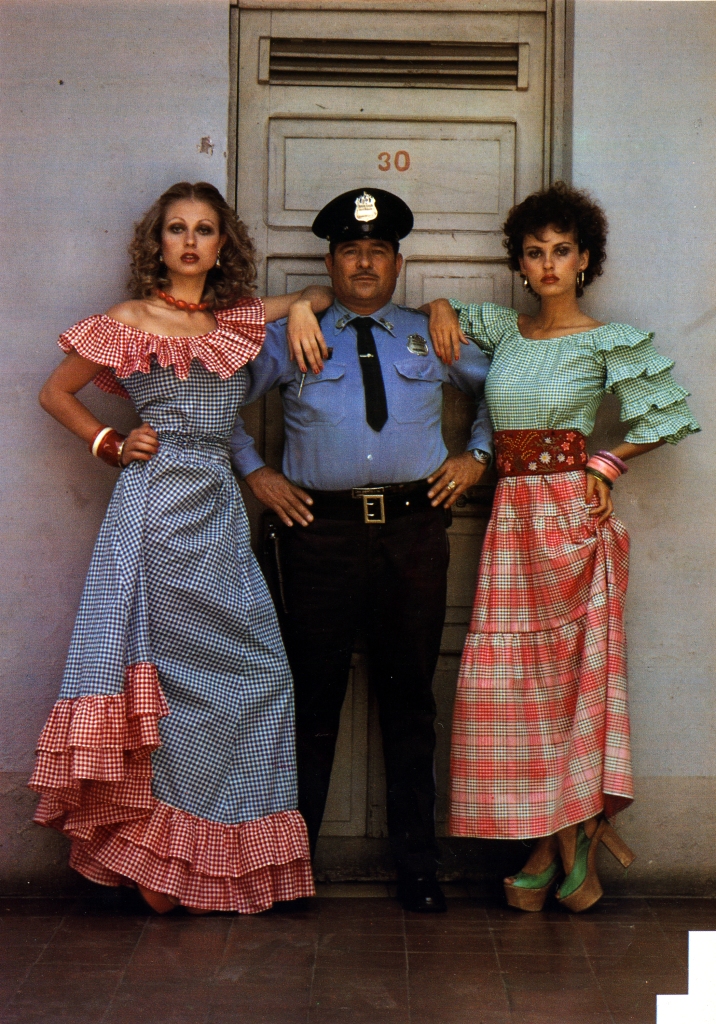
Summer’s peasant clothes come in brightly frilled cotton or in soft layers of cheesecloth with a bazaar of sunny straws and beads.
Fashion by Sue Hone.
Photographed by Roger Charity.
Scanned from Petticoat, 6th June 1972.
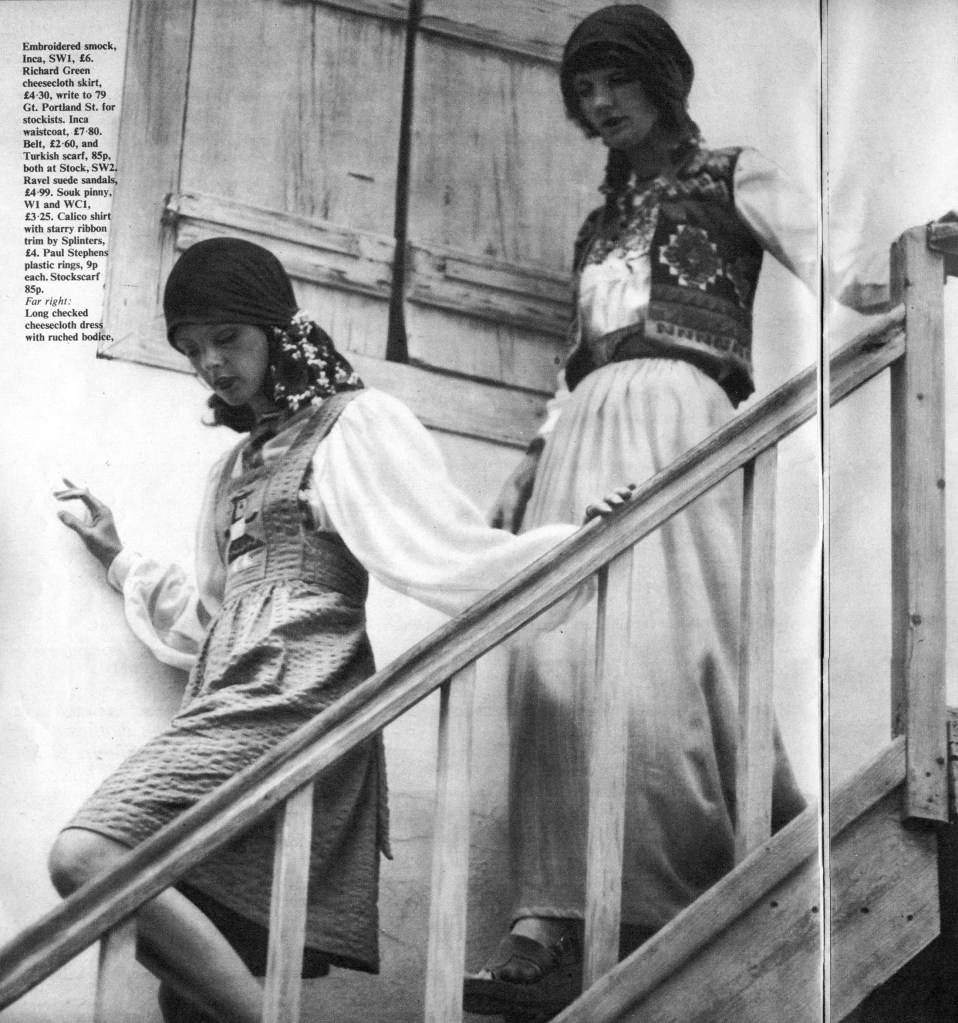
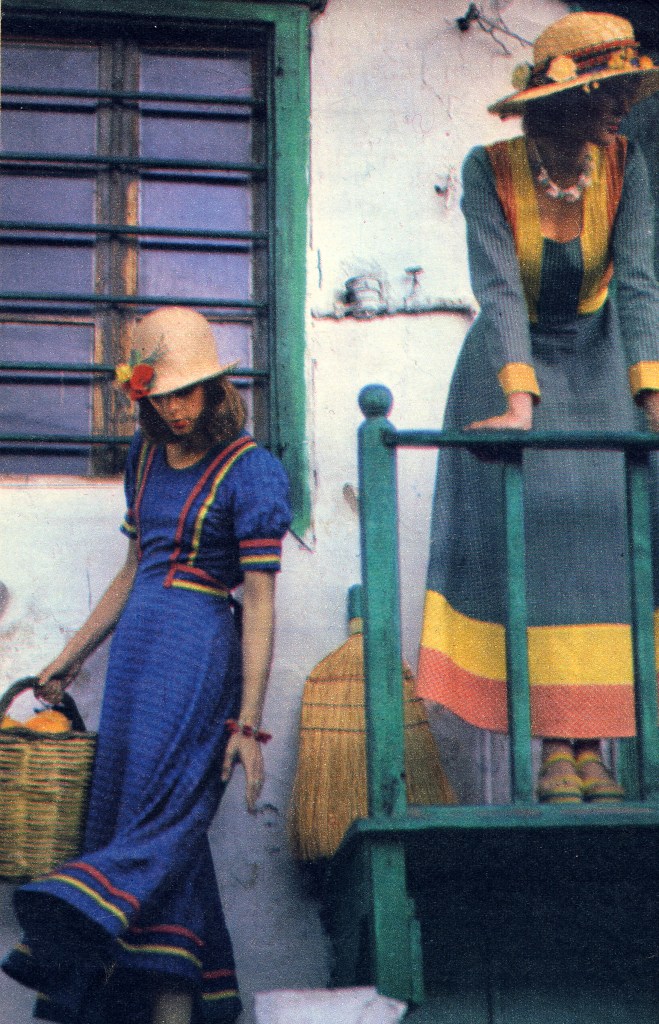
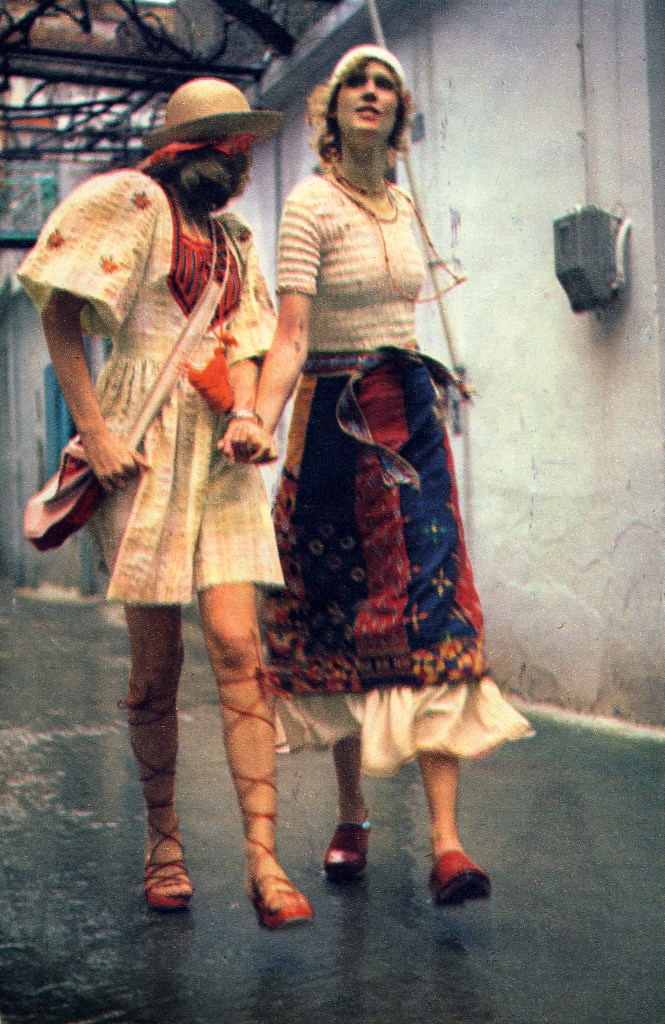
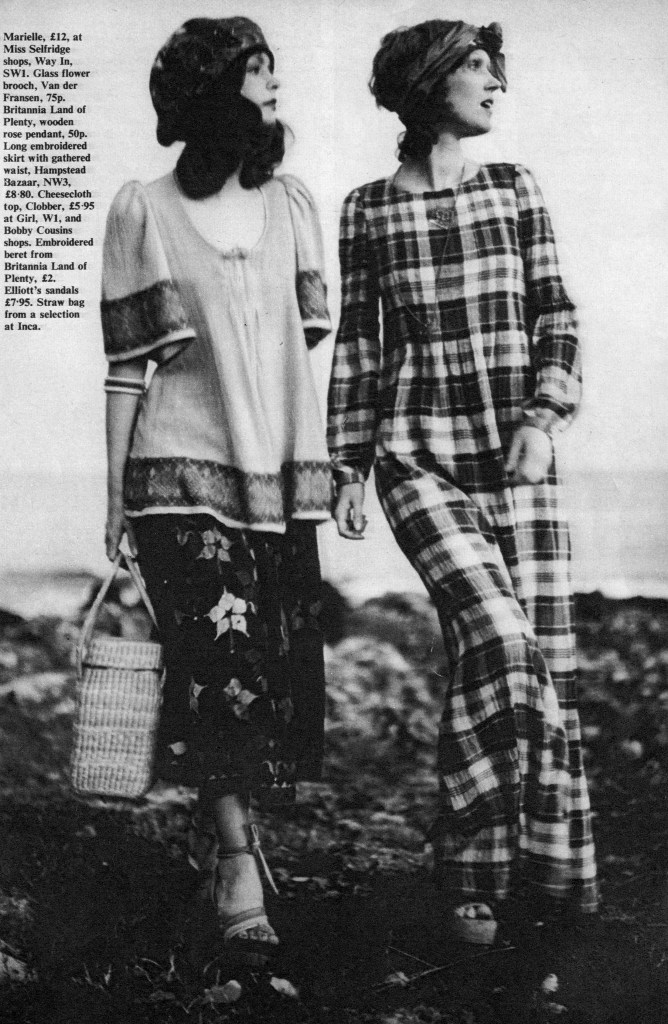
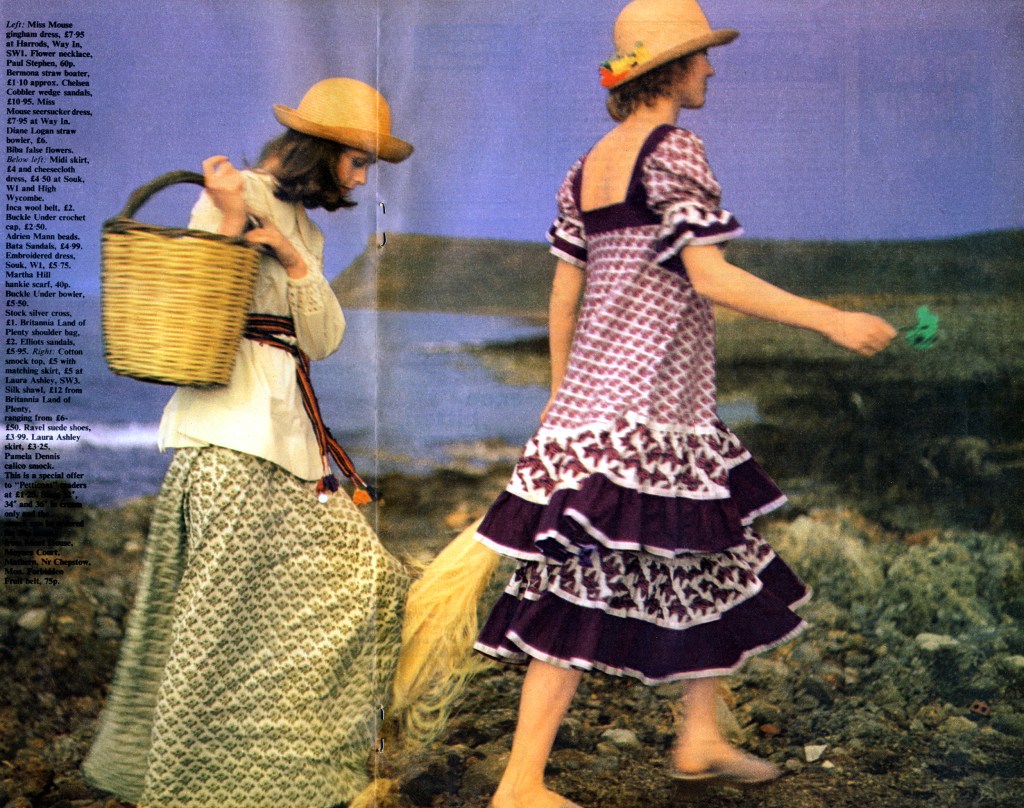
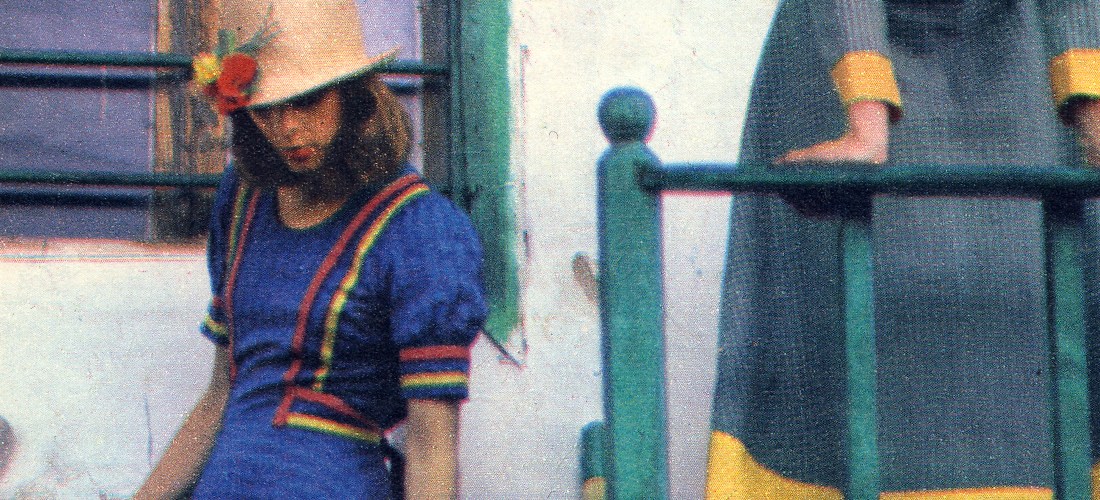
Summer’s peasant clothes come in brightly frilled cotton or in soft layers of cheesecloth with a bazaar of sunny straws and beads.
Fashion by Sue Hone.
Photographed by Roger Charity.
Scanned from Petticoat, 6th June 1972.
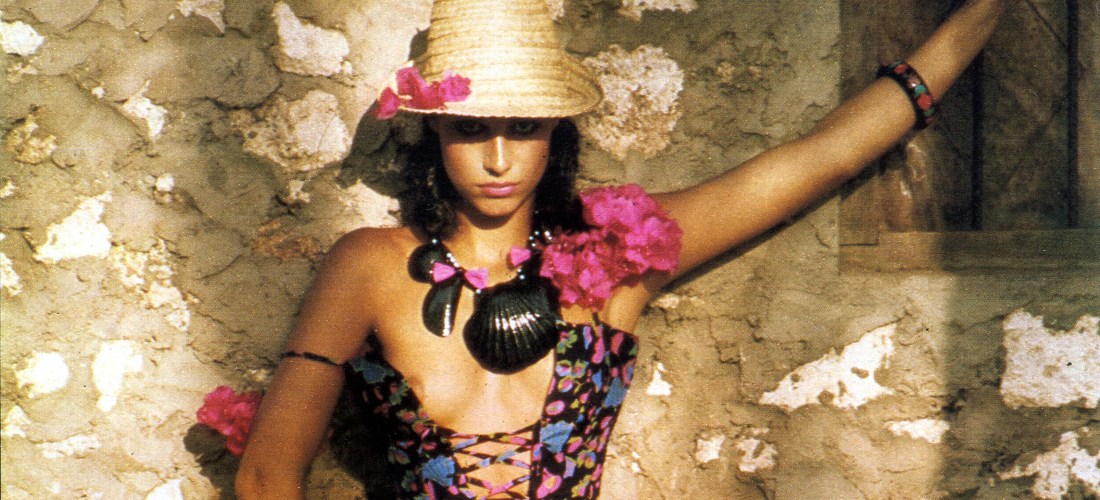
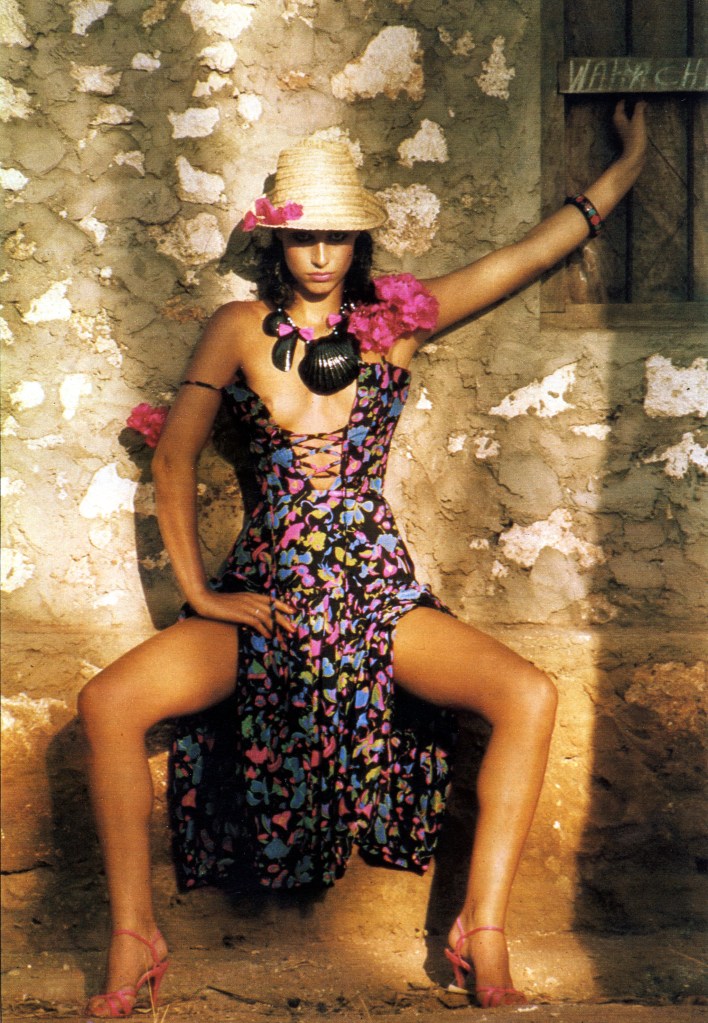
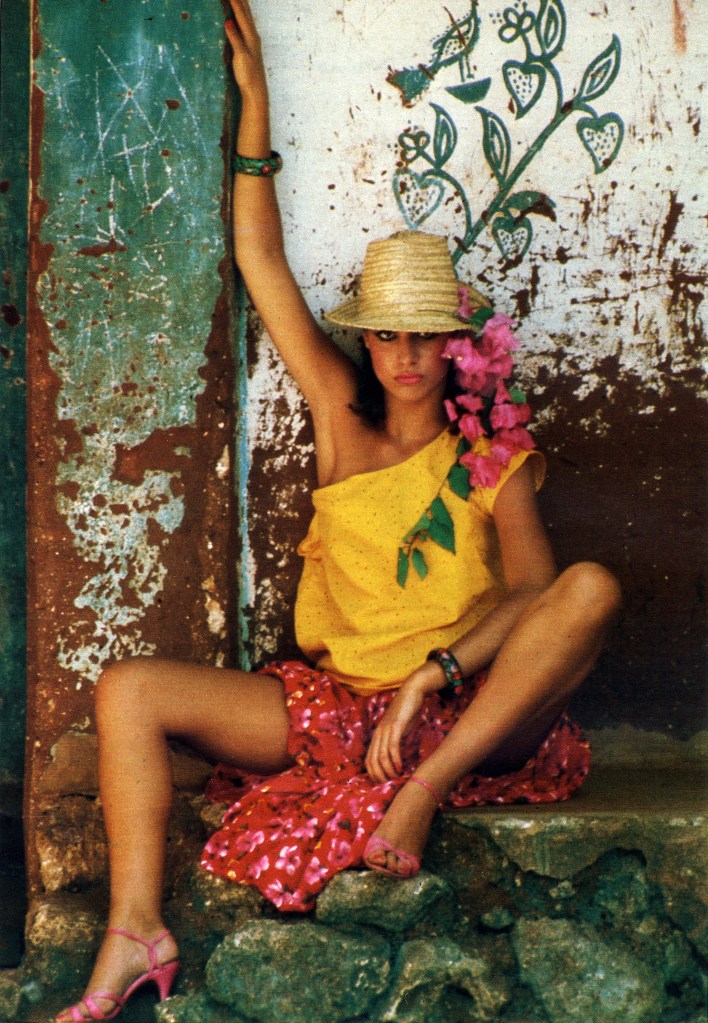
Floral prints are bursting out all over. Add these to crepe de chines, cotton and cotton jerseys and, suddenly, you have the most colourful summer of all.
Photographed by David Anthony.
Scanned from 19 Magazine, June 1977.
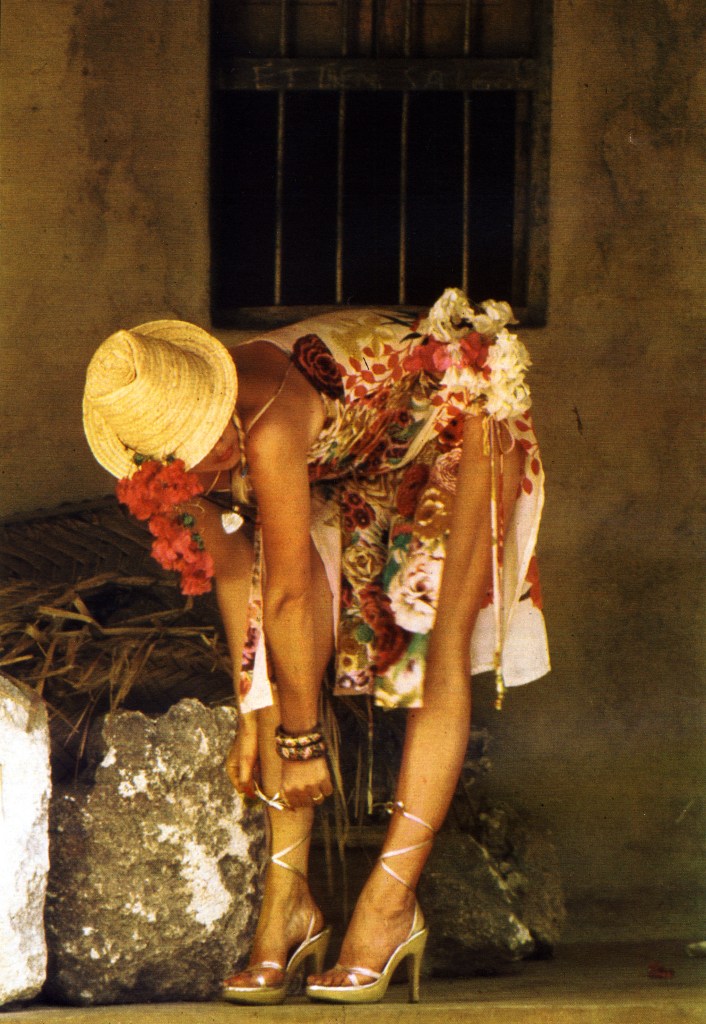
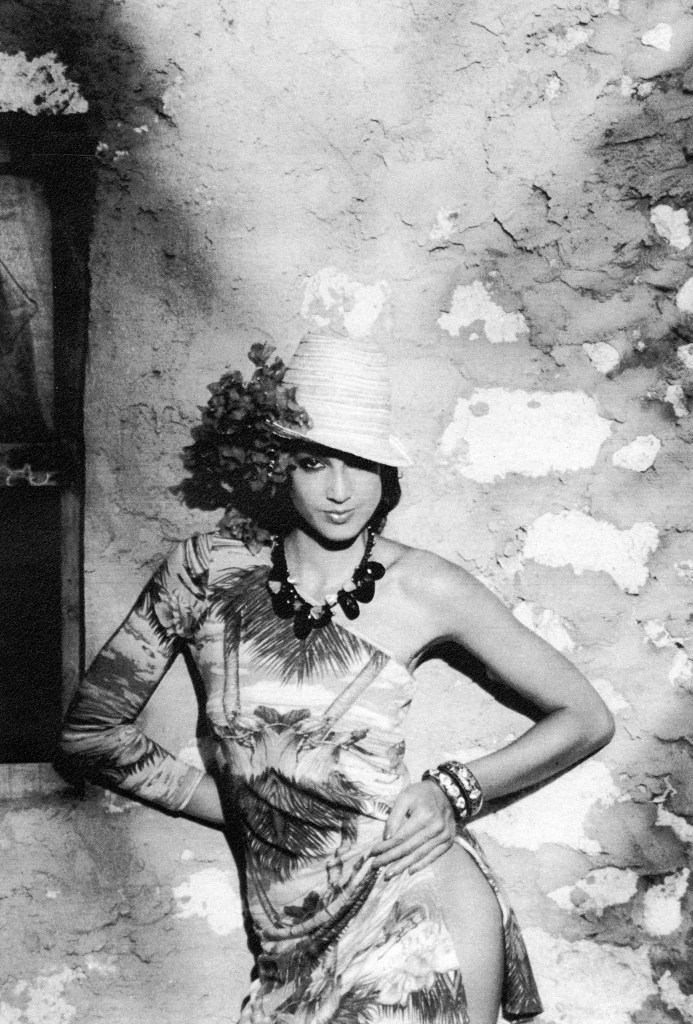
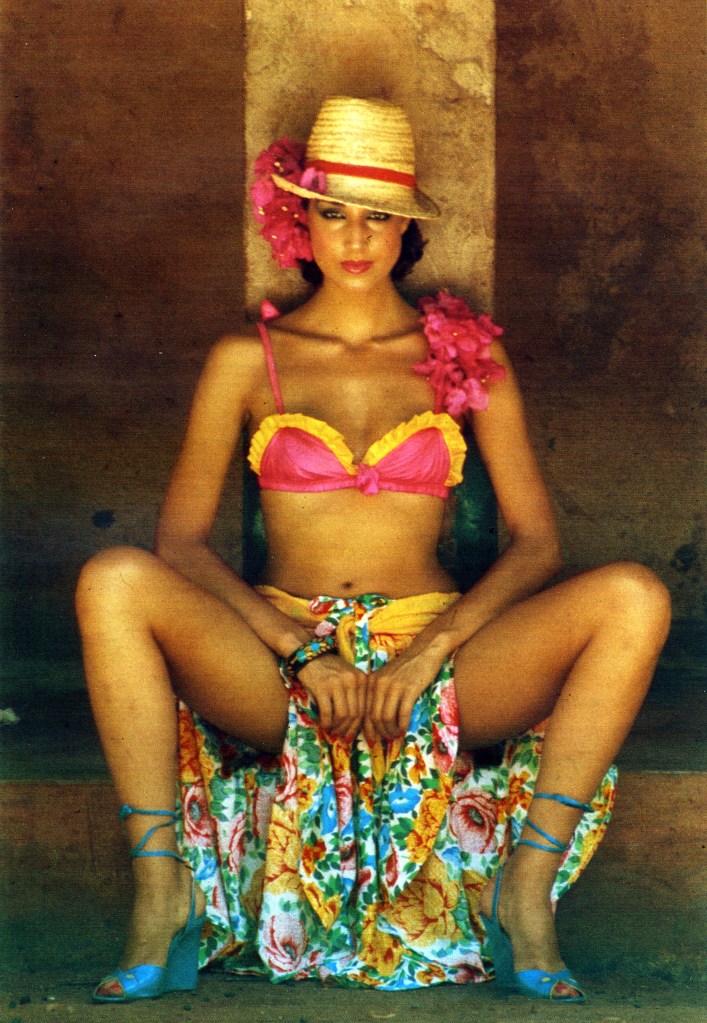
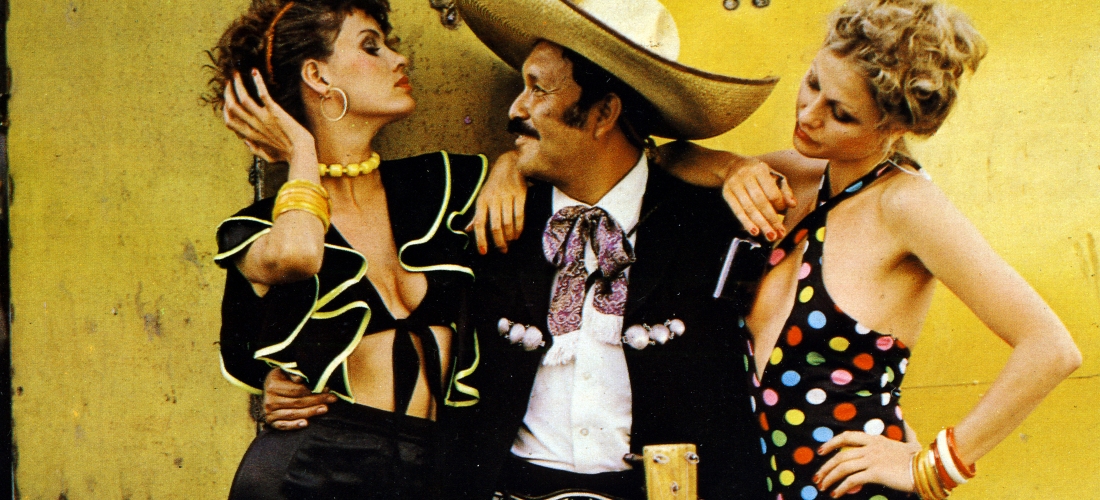
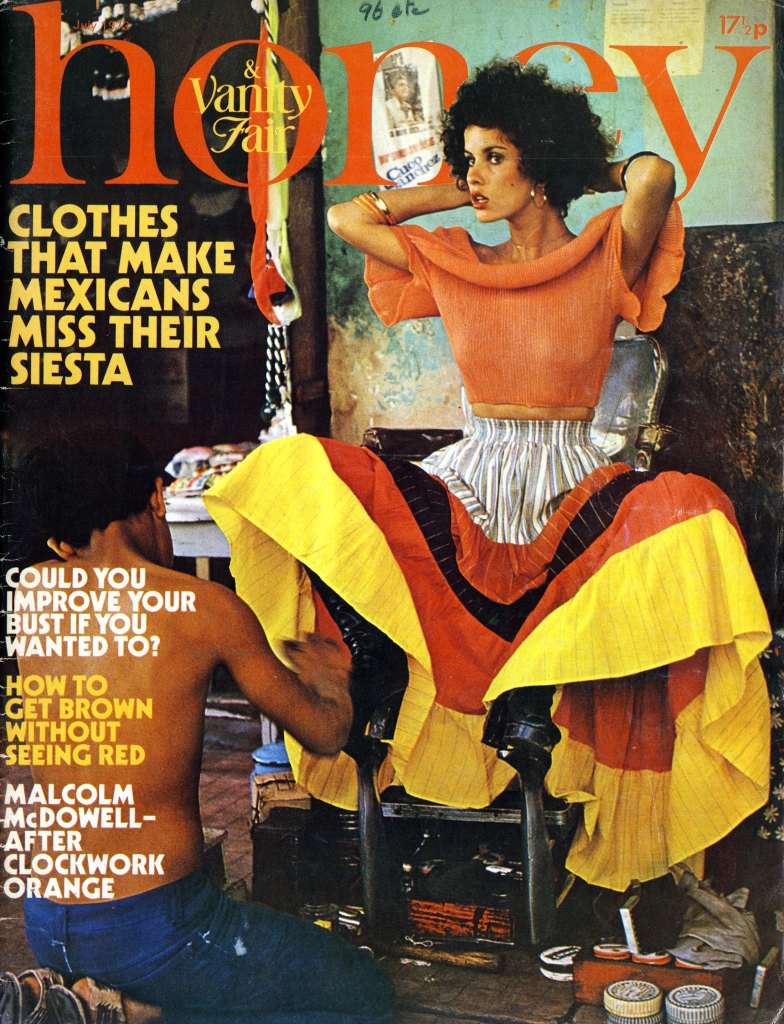
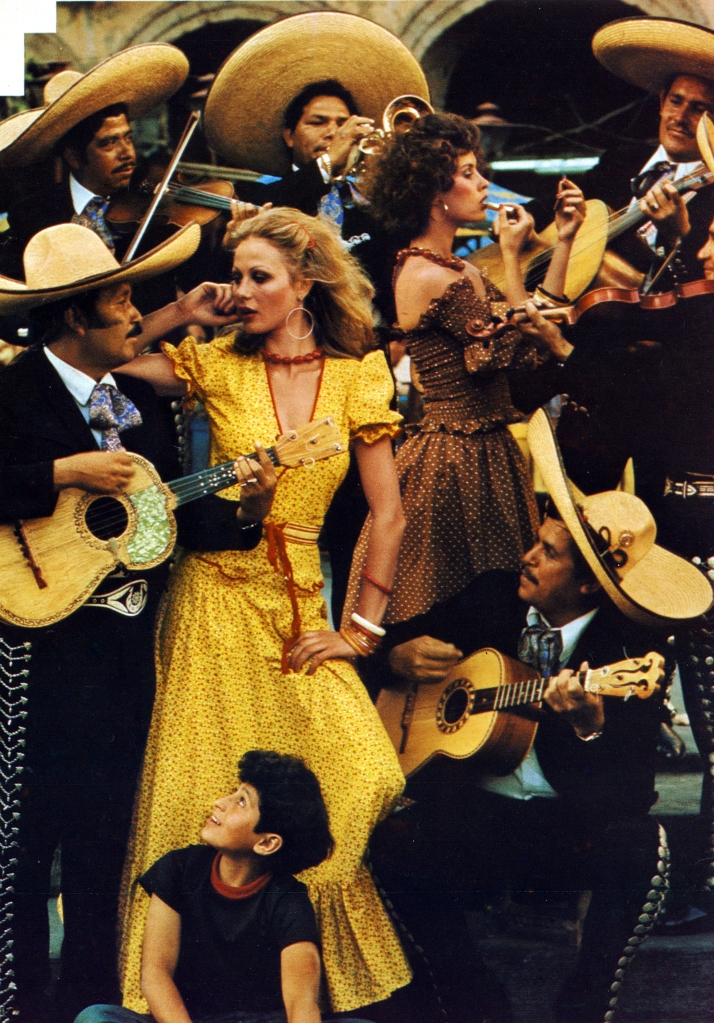
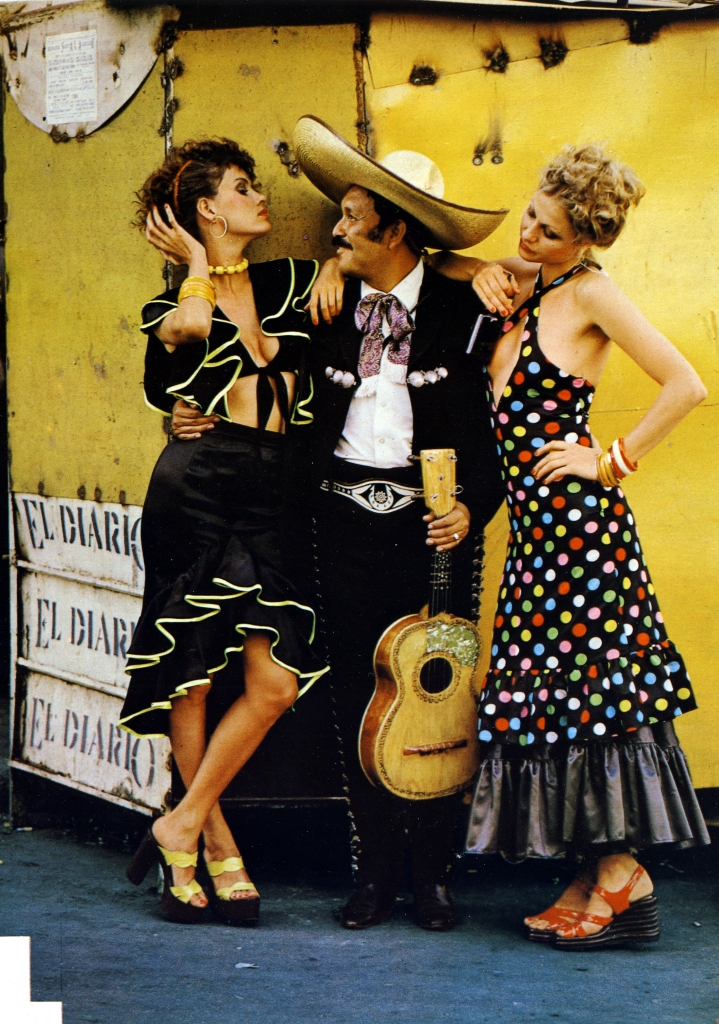
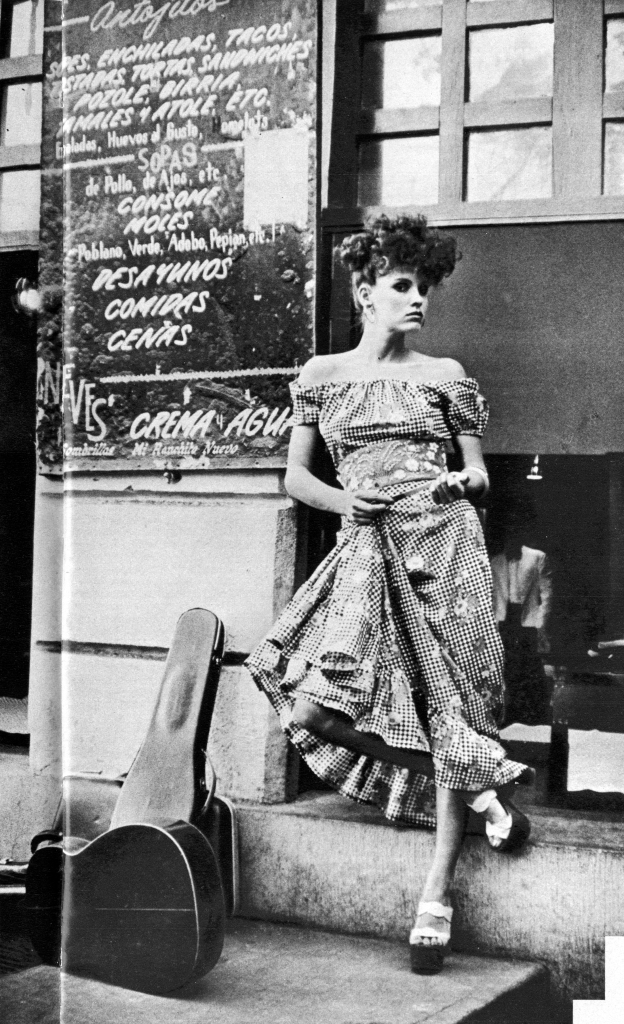
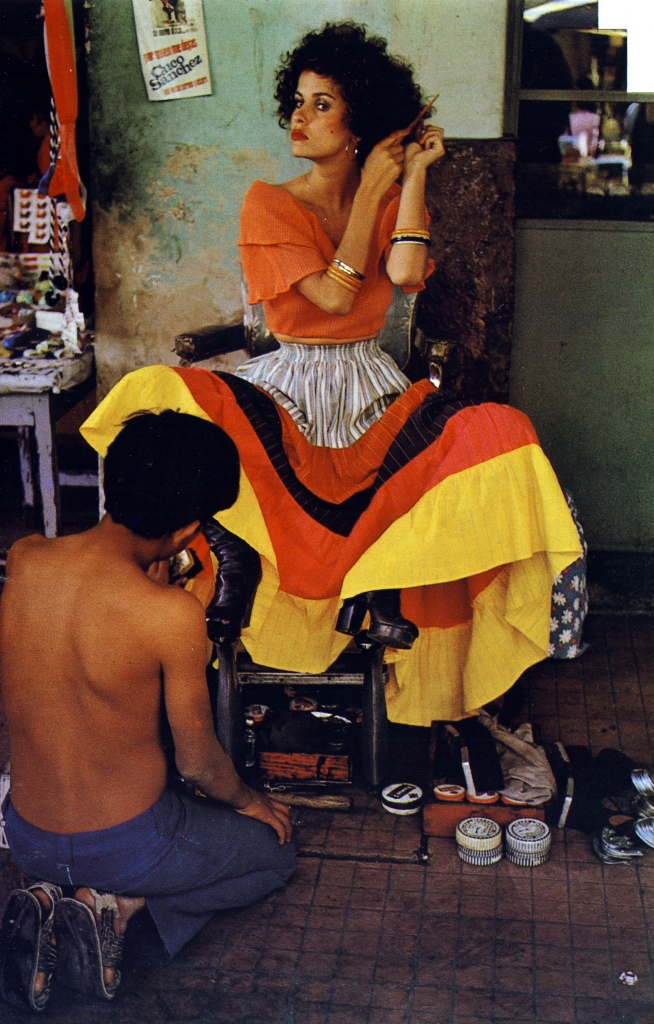
If you can’t tango, simply steal into the spotlight in these flamboyant rumba dresses. The slipped shoulder strap, the bared midriff and the full-blown flouncy skirts all spell out the sexiest numbers for summer.
The main difference between the content of a magazine like Honey, as opposed to Vogue or Queen, is that the designers tend to be the more intriguing and less well-known of the period. If you want names like Miss Mouse, Granny Takes a Trip or Antony Price, these magazines should always be your first port of call. This shoot alone features one of my Holy Grail pieces by Granny Takes a Trip: the ruffled tie front top and skirt ensemble designed by Dinah Adams. Previously a designer for two other cult London boutiques, Mr Freedom and Paradise Garage, painfully little is known about Dinah Adams (misattributed as ‘Diana’ in the original credits). Which is why it’s always lovely to see her work represented anywhere.
Also shown here is a frothy, frilly delight of a frock by Miss Mouse, a.k.a Rae Spencer-Cullen. A personal favourite of mine, the Miss Mouse aesthetic is precisely why this early Seventies period is my favourite for fashion. Her work was heavily Fifties-inspired, quite ahead of the curve in the scheme of things, but always with a novel twist. Spencer-Cullen is yet another designer whose life remains something of a mystery, despite being a part of a hugely influential circle which included artists Duggie Fields and Andrew Logan. It seems that this anonymity was (at least initially) intentional, as an article from the Glasgow Herald in 1976 declared.
“At first, six years ago, when presenting her quirky designs on fashion, she seemed shy and utterly retiring. Miss Mouse could not be contacted easily by the press. She was elusive, hazed in shadows, a real mouse about publicity in fact. The only evidence of her entire existence was her clothes.”
In a world where we are so used to having information at our fingertips, there is something quite enchanting about this; tiny scraps must be stitched together to create a flimsy silhouette of a creative genius.
Photographed by Roy A Giles.
Scanned from Honey, July 1973.
(Please note – this blog originally appeared in 2016 on Shrimpton Couture’s ‘Curated’ blog project which has since been removed. It seemed a shame to let the posts disappear completely so I hope to eventually repost all my work here.)
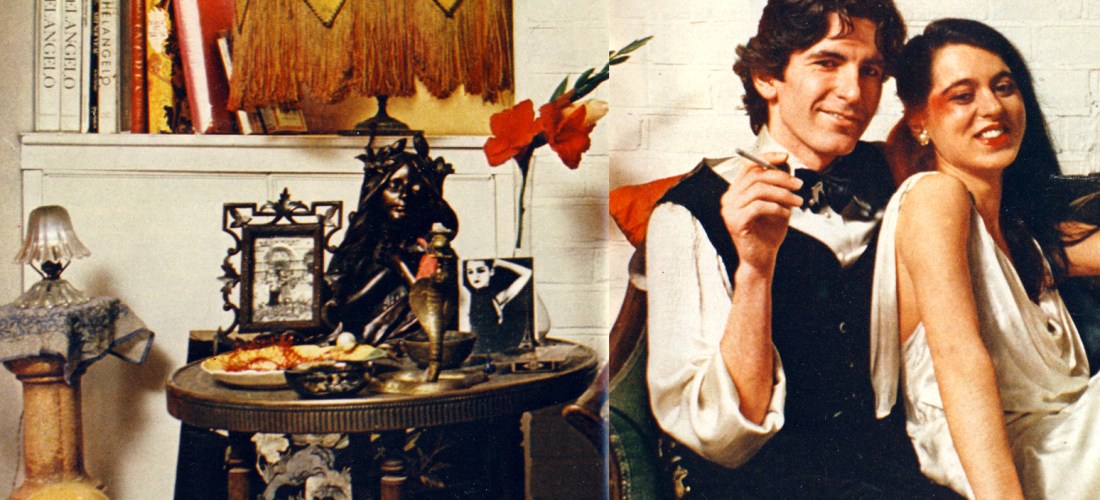
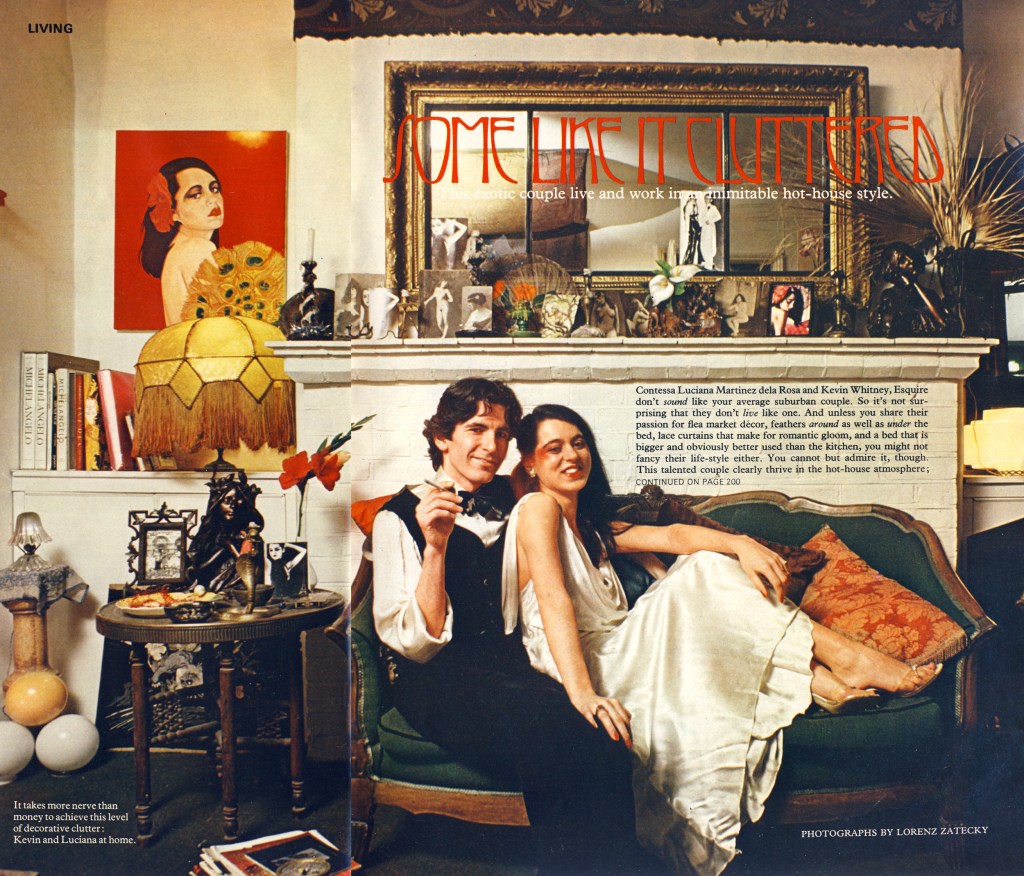
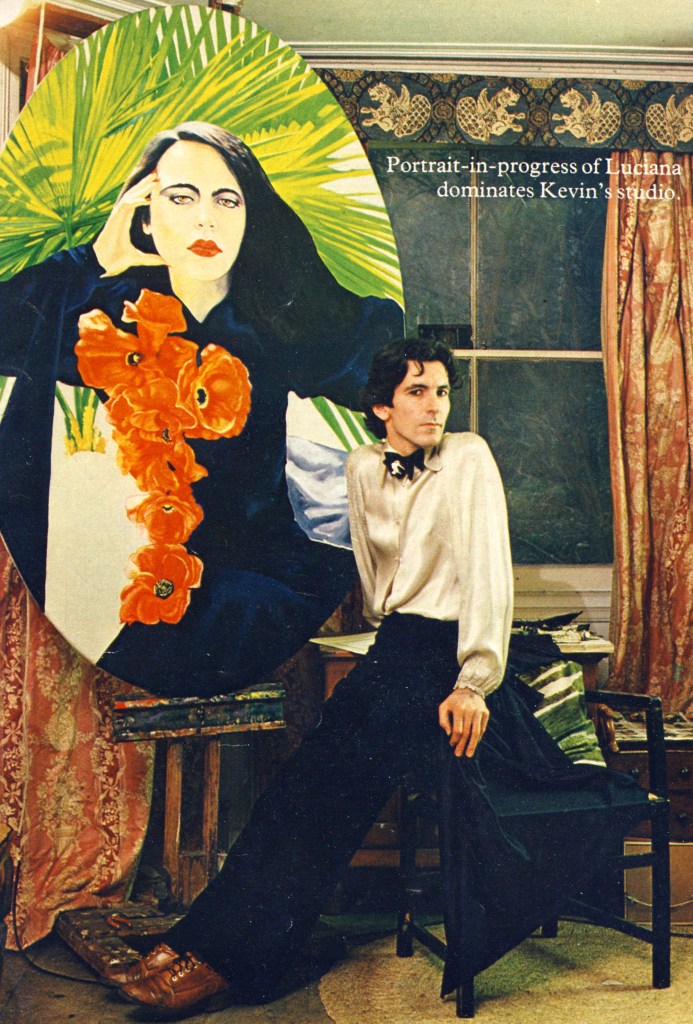
Contessa Luciana Martinez dela Rosa and Kevin Whitney, Esquire don’t sound like your average suburban couple. So it’s not sur-prising that they don’t live like one. And unless you share their passion for flea market decor, feathers around as well as under the bed, lace curtains that make for romantic gloom, and a bed that is bigger and obviously better used than the kitchen, you might not fancy their life-style either. You cannot but admire it, though. This talented couple clearly thrive in the hot-house atmosphere; they are not married, though Kevin couldn’t be more domestic : “He’s the cleaning lady,” says Luciana firmly. Better still, he also does the cooking.
Kevin, a painter, has exhibited in Turin and New York, as well as in London; his pictures are in a vivid, realistic style which fetch approximately £1,500 each. The subject is, as often as not, Luciana; her portrait, ranging from life- to poster-size, is the focal point of every room.
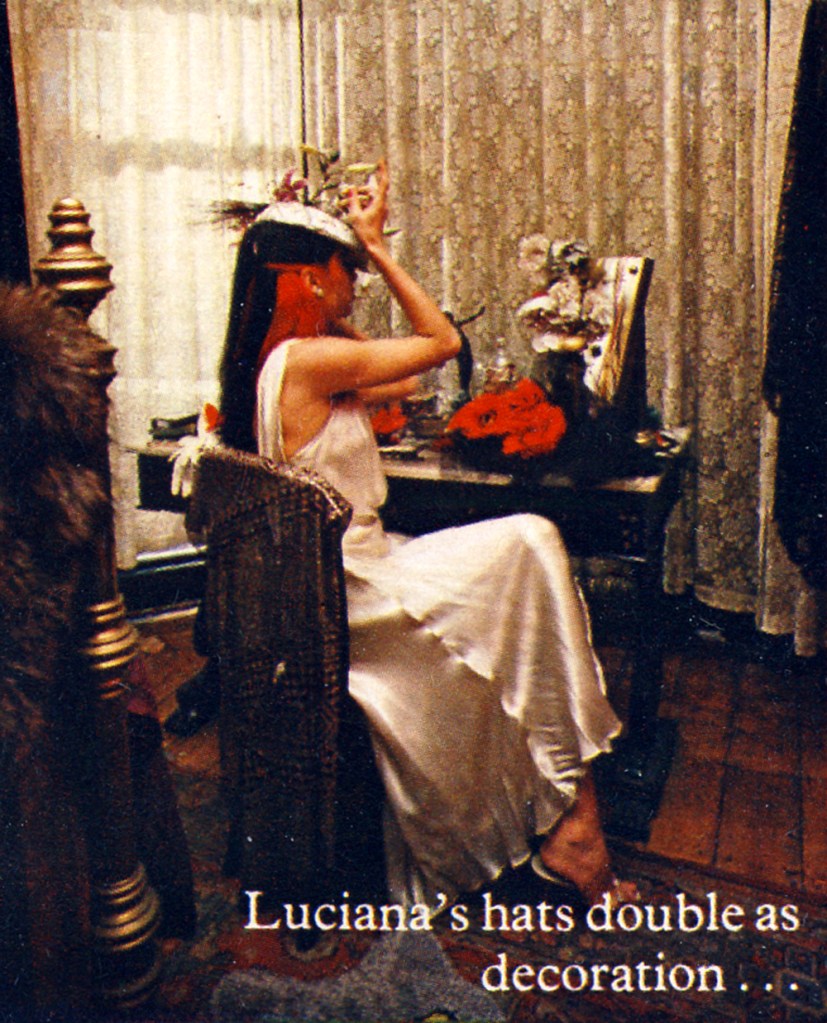
Luciana designs in beads which she makes into shimmering mermaid hats, wigs and exquisite pictures. She also draws in a strong style of her own. “Kevin works in oils, I work in pastels,” she explains. Two people with such a definite life-style clearly have a great deal in common. Kevin says: “We’re each other’s best inspiration.”
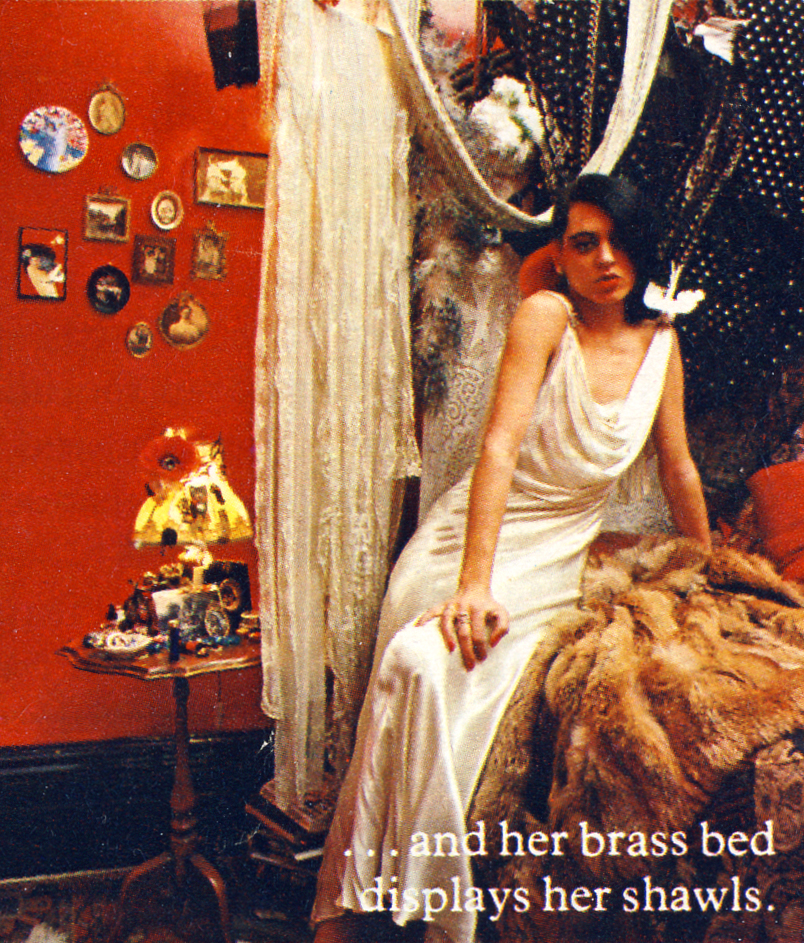
Luciana, as the model-in-residence, can pose at a moment’s notice; her walk-in wardrobe of flea market and second-hand clothes is hung in racks with gloves, scarves and hats carefully arranged on top. Black stockings tangle with lace shawls on the testers of the brass bed. “I wear black or red, turquoise in the summer, and when I’m tanned I’ll wear my purple silk Scarlett O’Hara crinoline gown. I like feathers and poppies in my hair, adore hats, and ‘Thirties satin nightgowns, but I don’t bother with underwear.”
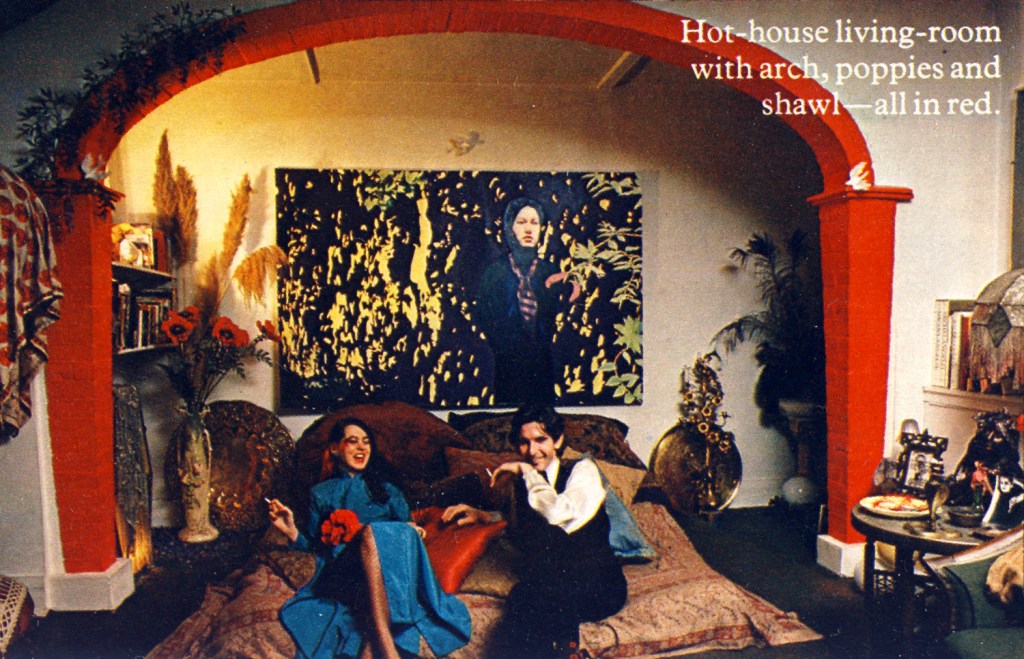
Each room is carefully arranged around its use. Luciana’s museum of clothes forms a shifting collage in the blood-red bed-room (Kevin says: “She woke up one morning and said I’m going red—I got up a ladder . . . and we did”). They have a studio each and the materials of their work are laid out in patterns. On one wall is pinned the front page of the Daily Express showing them making a stylish entrance to an Andy Warhol party.
Everywhere there are notes, scraps and photographs of their almost equally decorative friends; David Bowie, for instance, who is a chum as well as patron. A shell on a shelf, the placing of a peacock feather, the way a length of silk is thrown over a lamp makes a statement. Even when claustrophobia sets in, the eye is caught by new ways of presenting objects. The flat has been put together on a modest budget; Woolworth’s kitsch co-exists with arts deco and nouveau. Nothing costs more than a few pounds, except for the bed which cost £50.
Although Luciana explains the enclosed atmosphere (the lace that keeps out the views of West London) with the remark that she doesn’t much like the world outside, there are times when they long to escape the trendy gloom and clutter. Then they go. He to New York or Italy, she to the Seychelles. Says Luciana: “I need some tropicality in my life. When I’m away I love the out-doors, riding a motor-bike, lying in the sun. But I always come home . . .” Home is where the dust is, even for this exotic pair.
Photographed by Lorenz Zatecky.
Scanned from Cosmopolitan, May 1976.
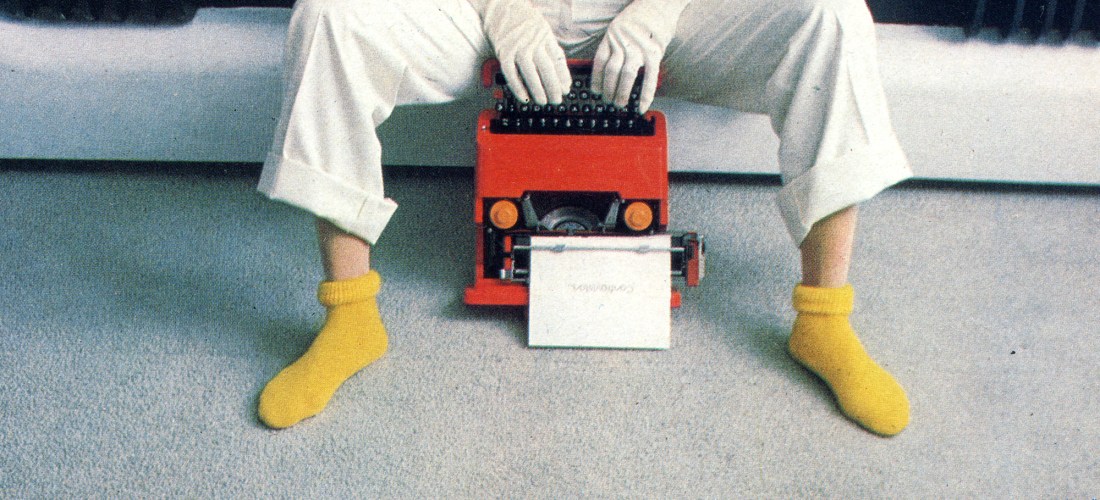
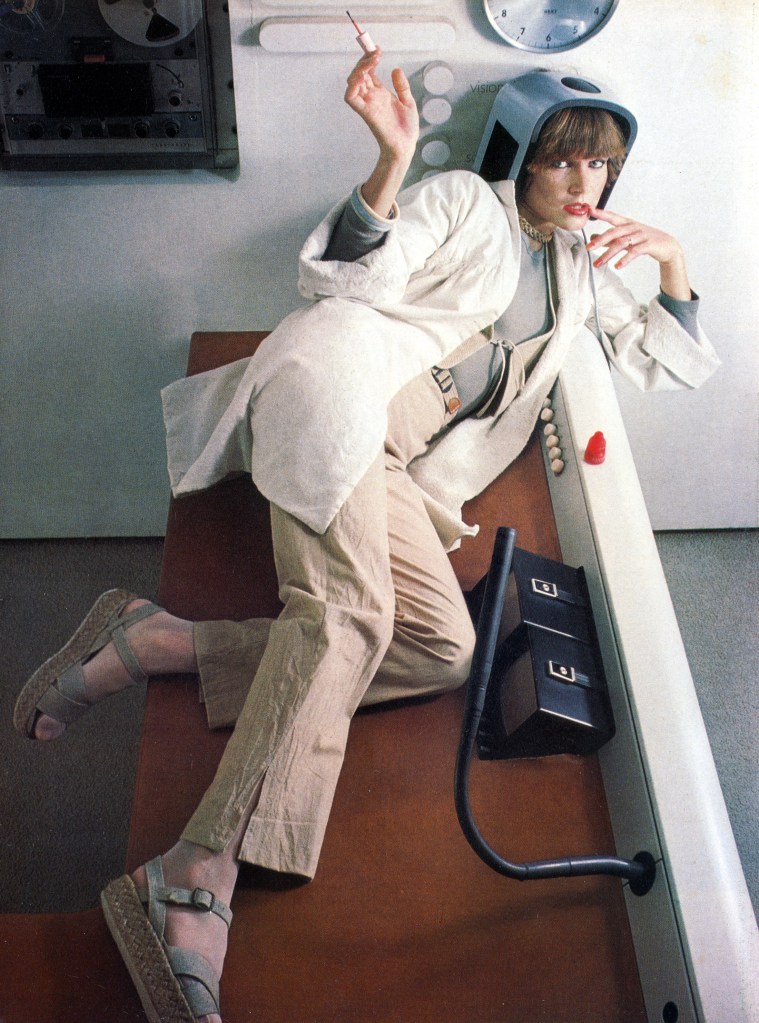
The time: mid-morning coffee-break The place: The Post Office Confravision Studios, Euston Tower* The clothes: At last, working gear (you’ll be delighted to see) to cope with both formal and permissive working environments. The fabric: calico, strong and hard-wearing, cotton-based, so it’s comfortable for over-heated offices. Add a dash of towelling, team it with crocheted string vests, scarves, tights and bags for a little wit. The colour: cream—soothing and harmonious for worn executives. Enliven it with a touch of colour here and there (and to pick you out from beige office walls — remove if you need the camouflage).
* One of five office studios provided by the Post Office for its conference-by-TV service. Designed by Kenneth Grange of Pentagram.
An incredibly apposite photoshoot featuring the Post Office’s futuristic ‘Confravision’ studios. To read an original brochure, click here.
Photographed by Andreas Heumann.
Scanned from Over 21 Magazine, April 1976.
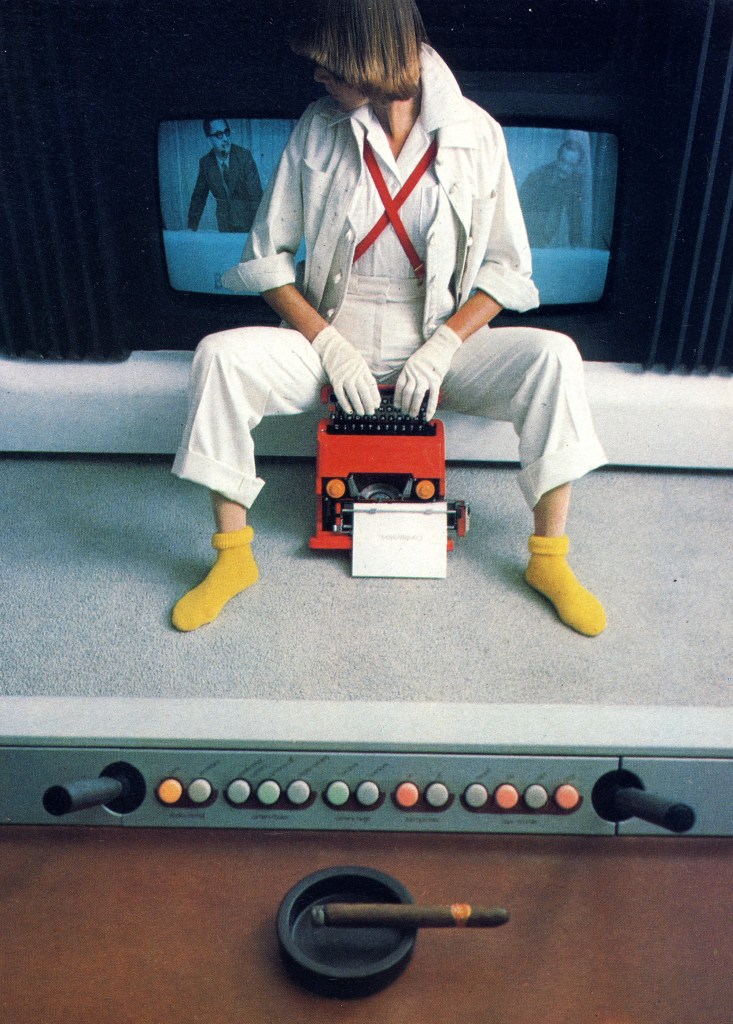
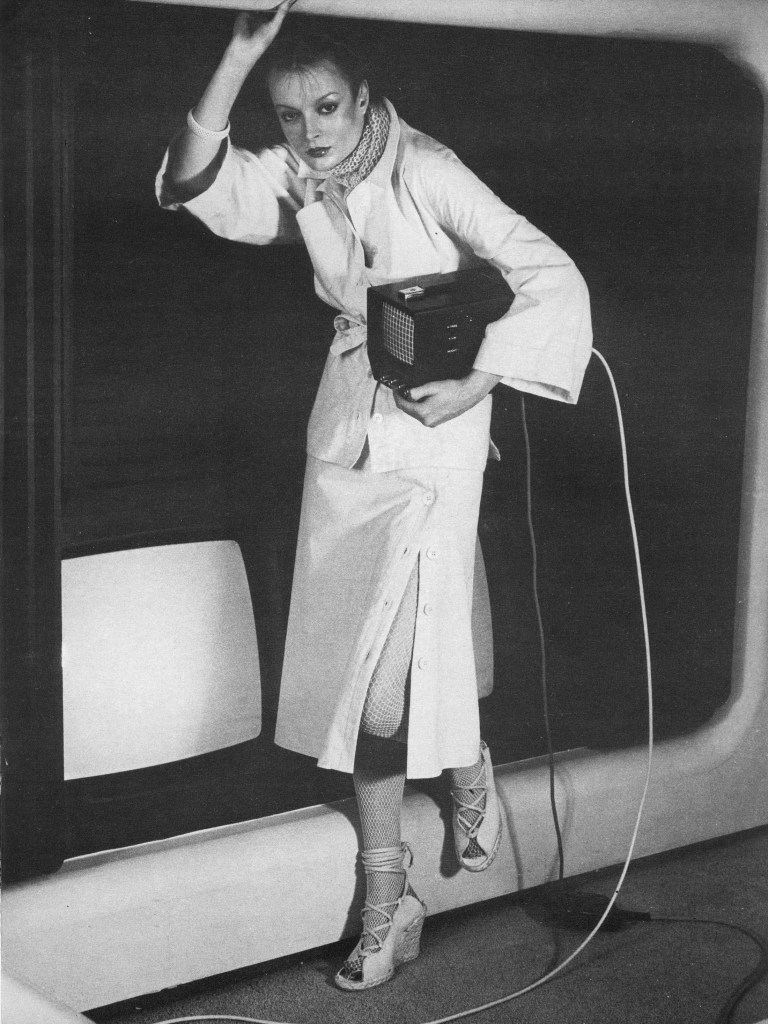
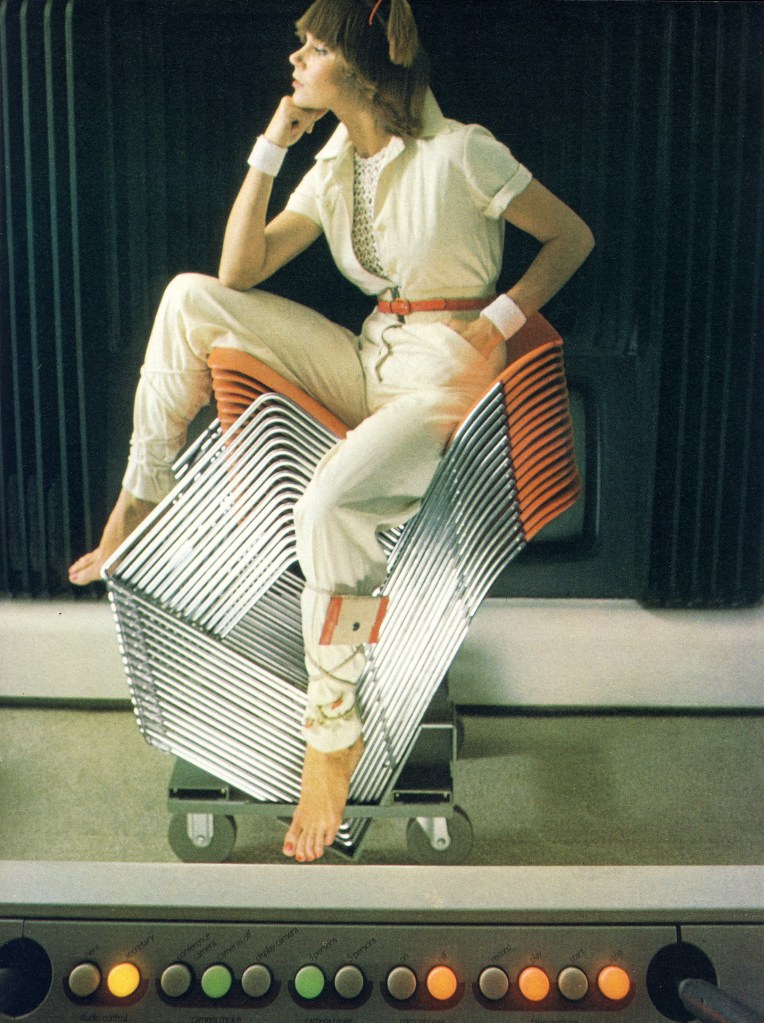
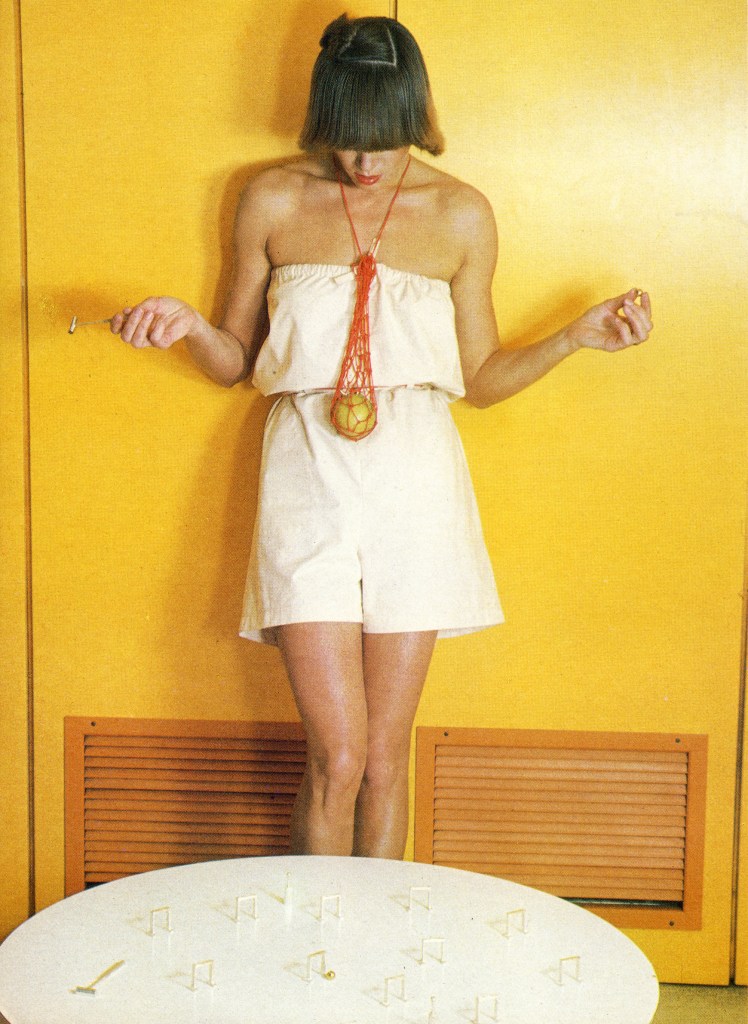
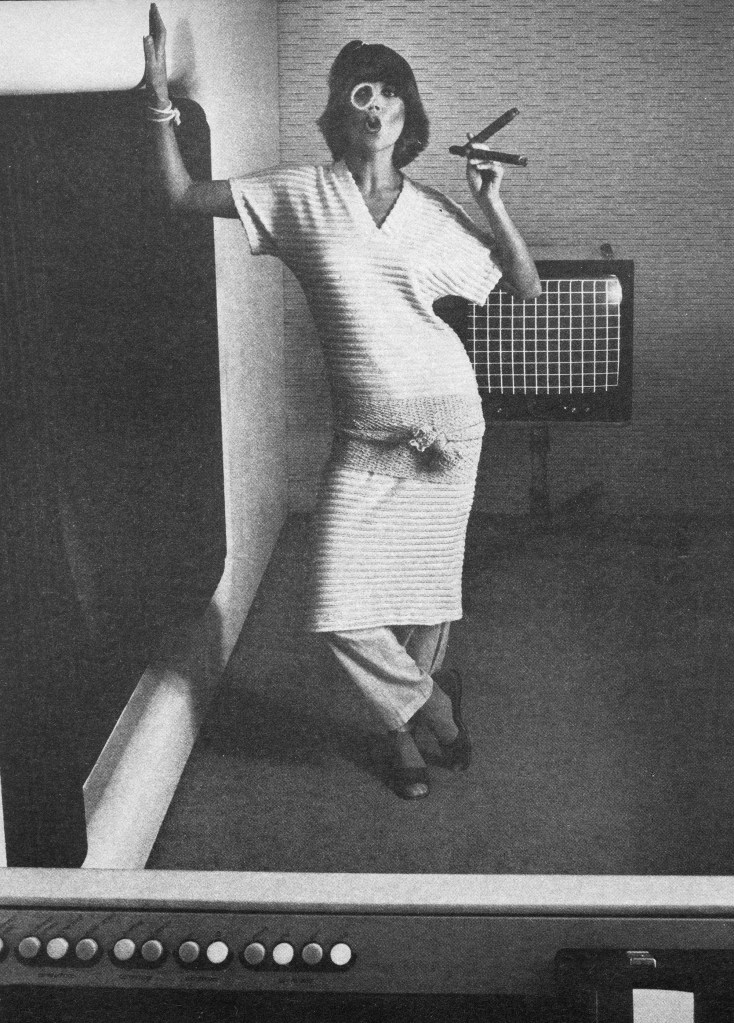
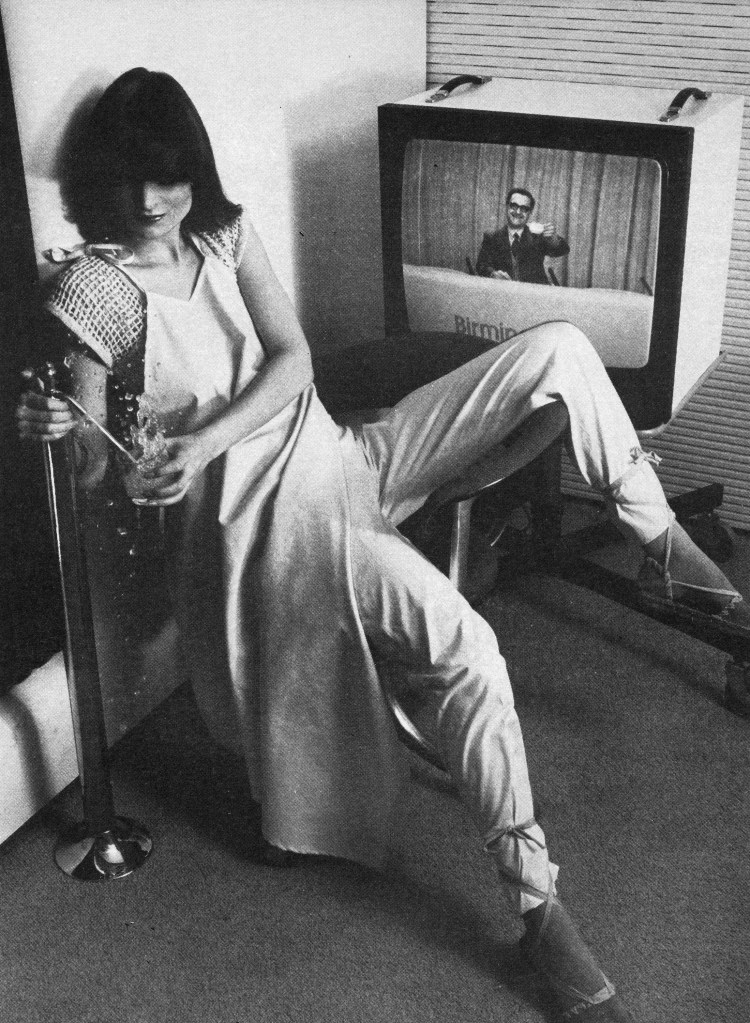
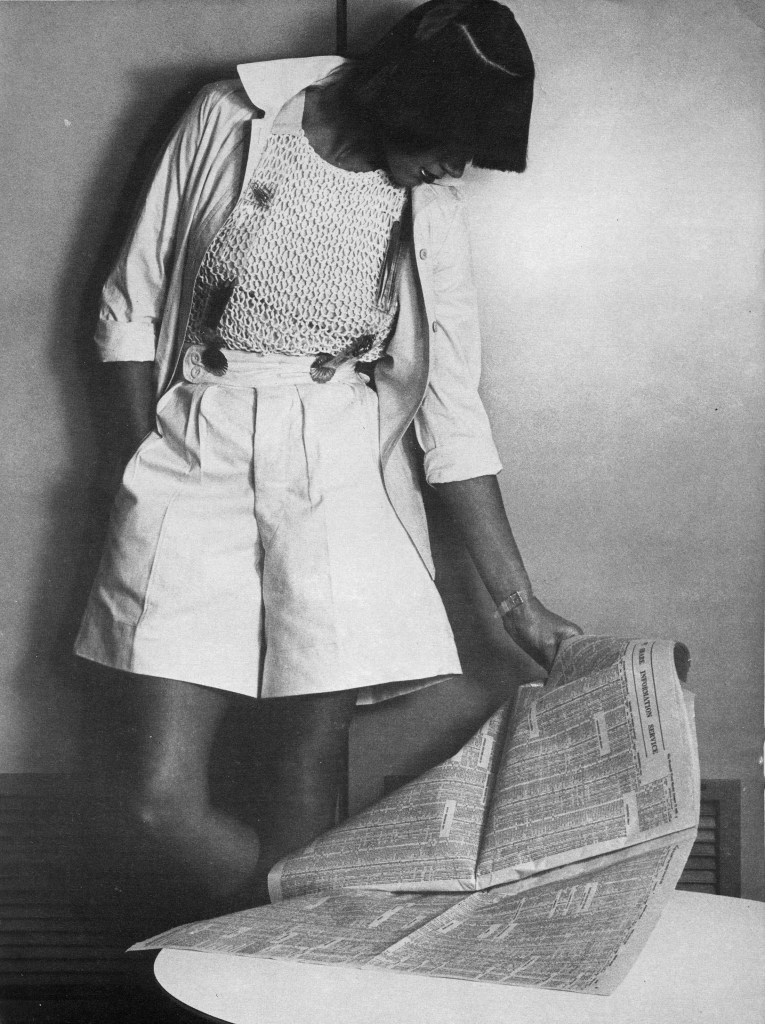
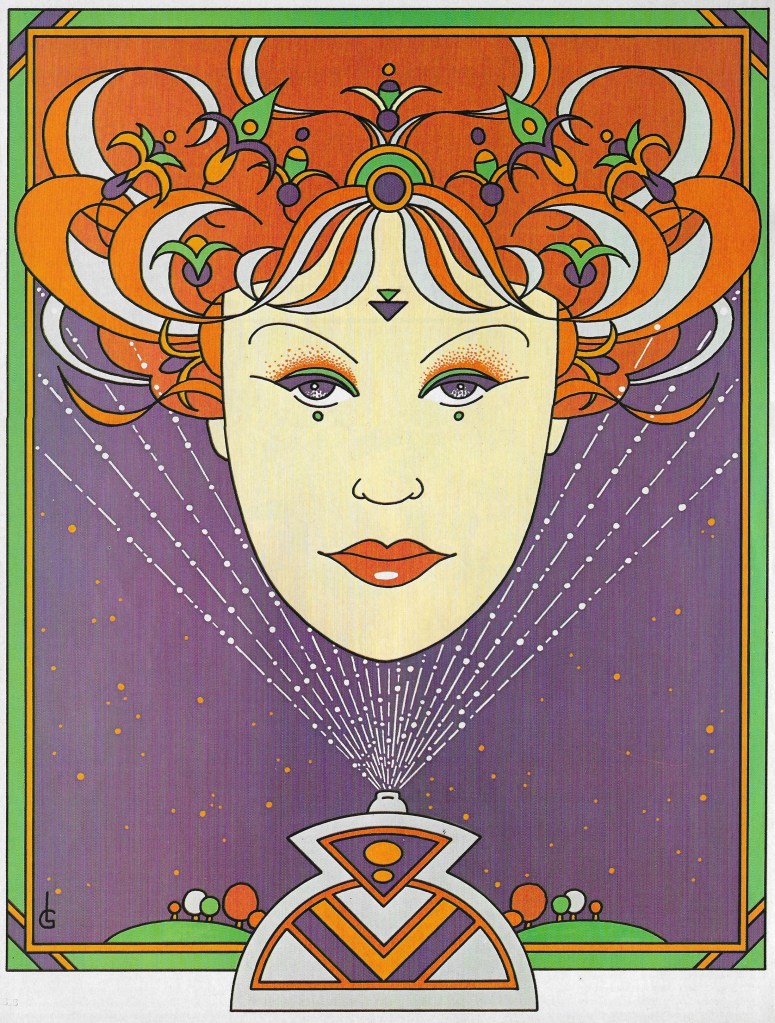
Illustration by Lynn Gray accompanying an article about smell.
Scanned from Honey magazine, May 1975.
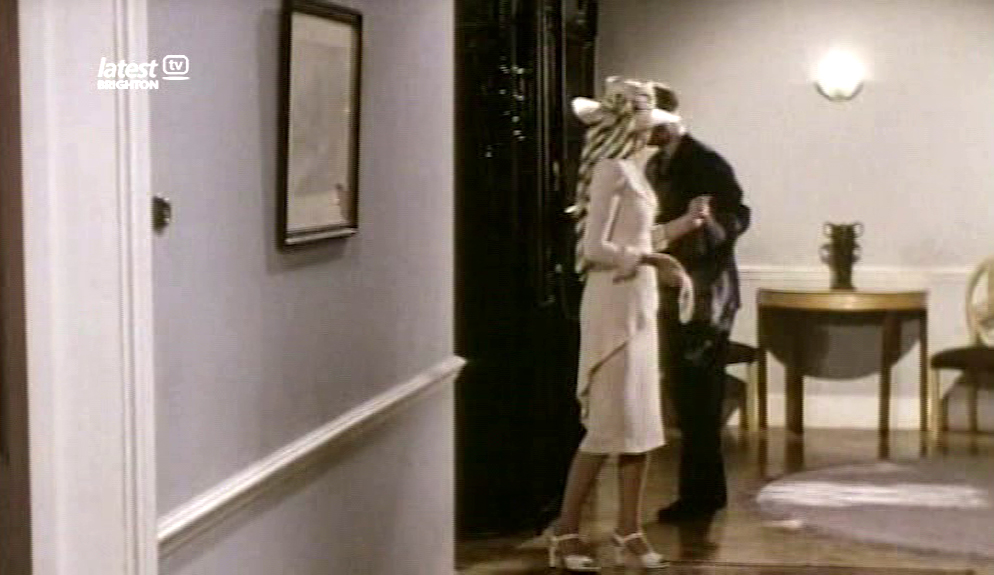
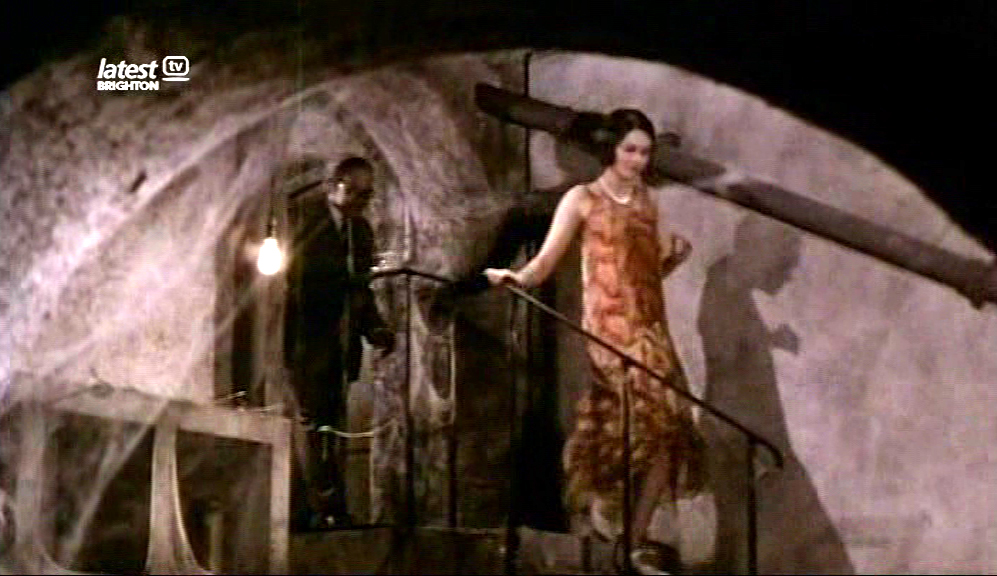
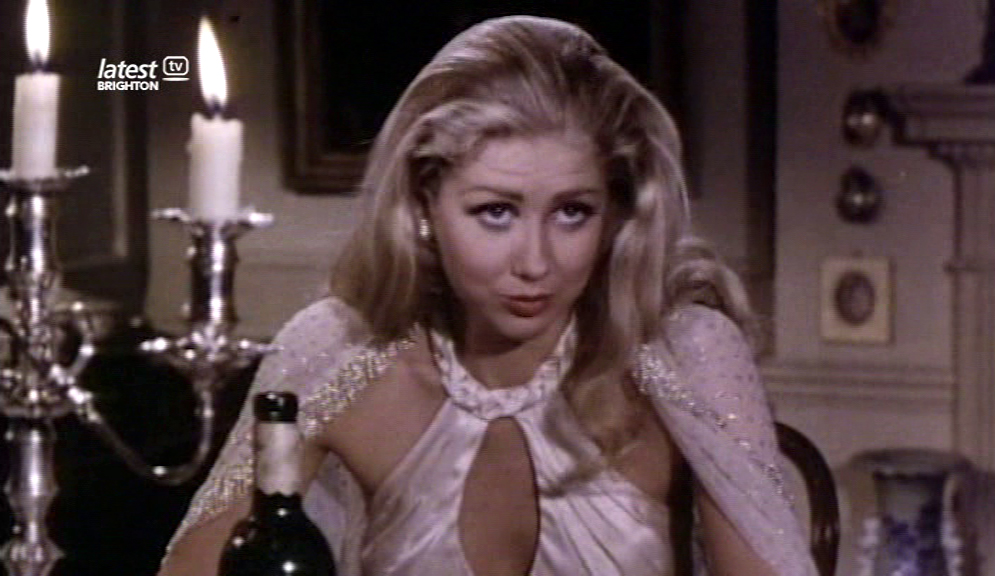
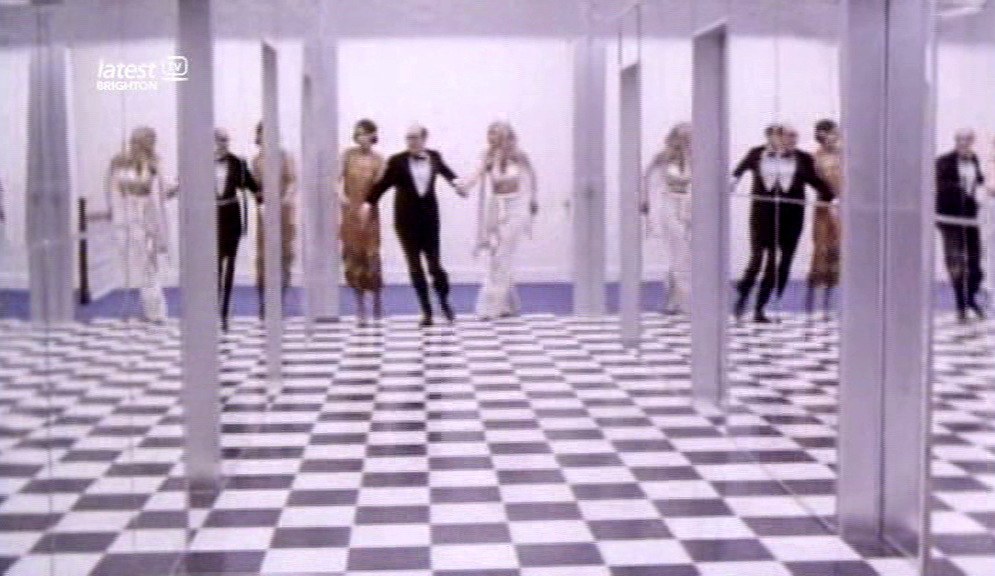
Games That Lovers Play (1970) is one of my favourite types of period films, where the hybrid of period detail in its setting is completely meshed and mangled with the incidental period detail of the year in which it was made. These films must be at least forty years old for me to not rant and rave about the inaccuracies, of course, otherwise I will let rip for eternity. But, much like The Boyfriend, Games That Lovers Play is an homage to the Twenties – with some very Seventies sensibilities. Except it’s even looser than The Boyfriend. And I mean loose in both senses of the word.
It is also a classic example of a film currently held in very low regard, which I maintain would be feted if it was French or Italian. It is kitsch, camp and aesthetically fascinating, even if it is rather a failure as a coherently plotted or acted film. The plot revolves around two rival Madams, who each wager that their ‘best’ girl is the best by challenging them to seduce unseduceable men.
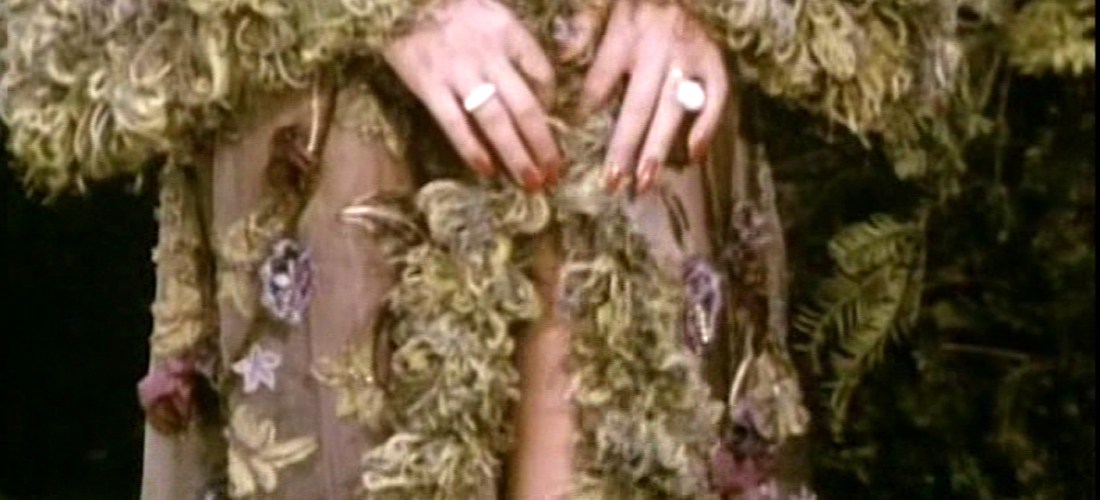
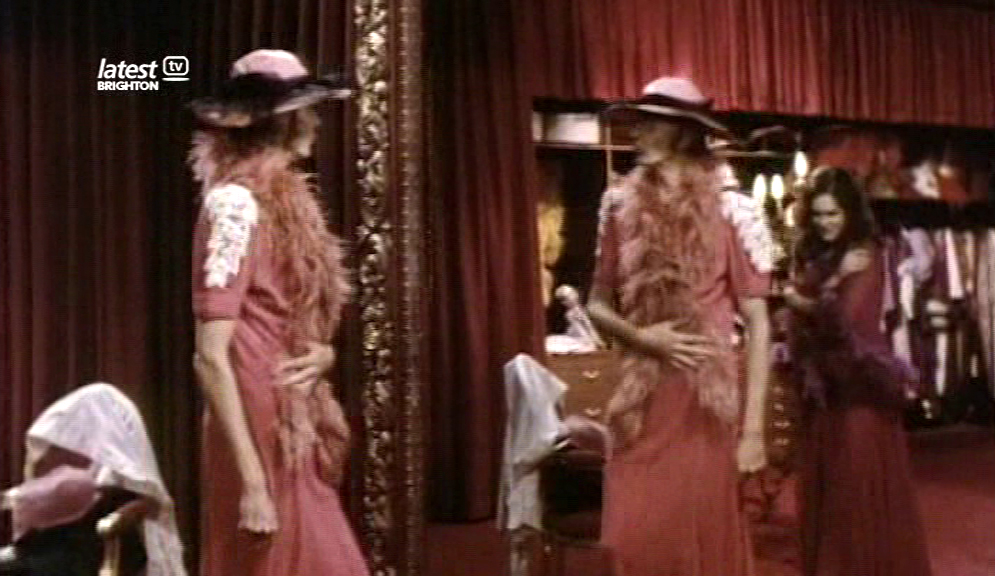
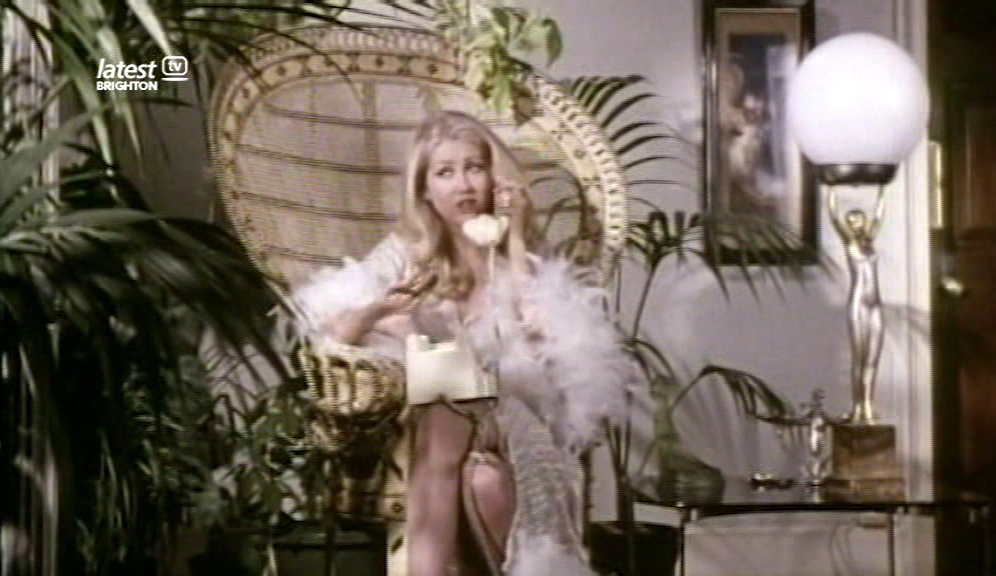
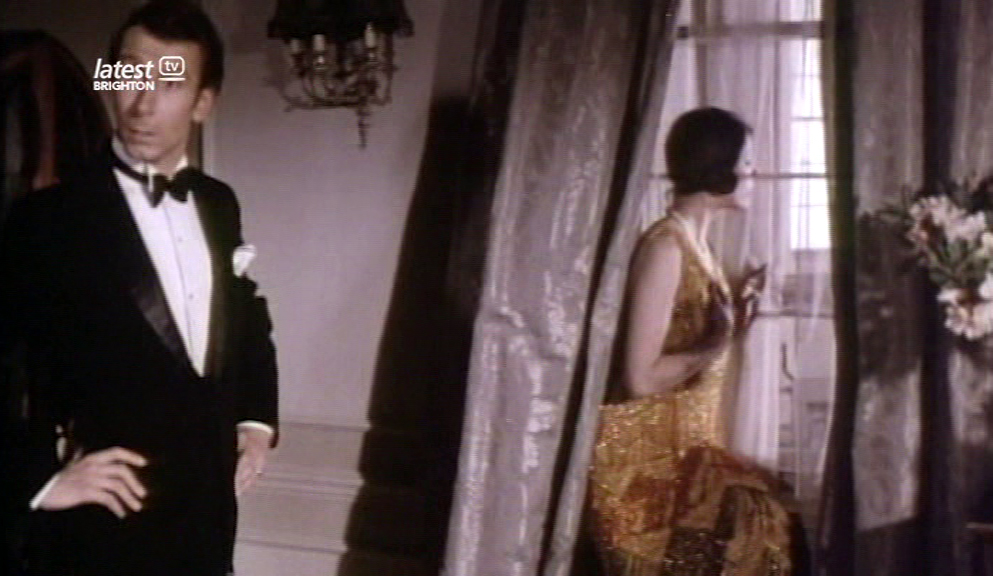
The costumes are, naturally, my main interest. They play extremely fast and loose with the Twenties look, creating a slight difference between the more Edwardian domain of Lady Chatterley (yes, I know) and the more modern Deco feel of Fanny Hill’s residence. (Yes, Fanny Hill…) The costumes are credited as being from Bermans and the ‘Wardrobe’ to one Ray Beck. They are a glorious, glorious mishmash of Edwardian, Twenties, Thirties and definitely plenty of 1970. My particular favourite is Lady Chatterley’s Edwardian wrap dress (possibly house coat), exquisitely embroidered and trimmed with ostrich feathers. She strips it off, puts it back on and generally flounces around the grounds like something out of my wildest sartorial dream. In fact I adore this dress so much that I turned it into a gif.
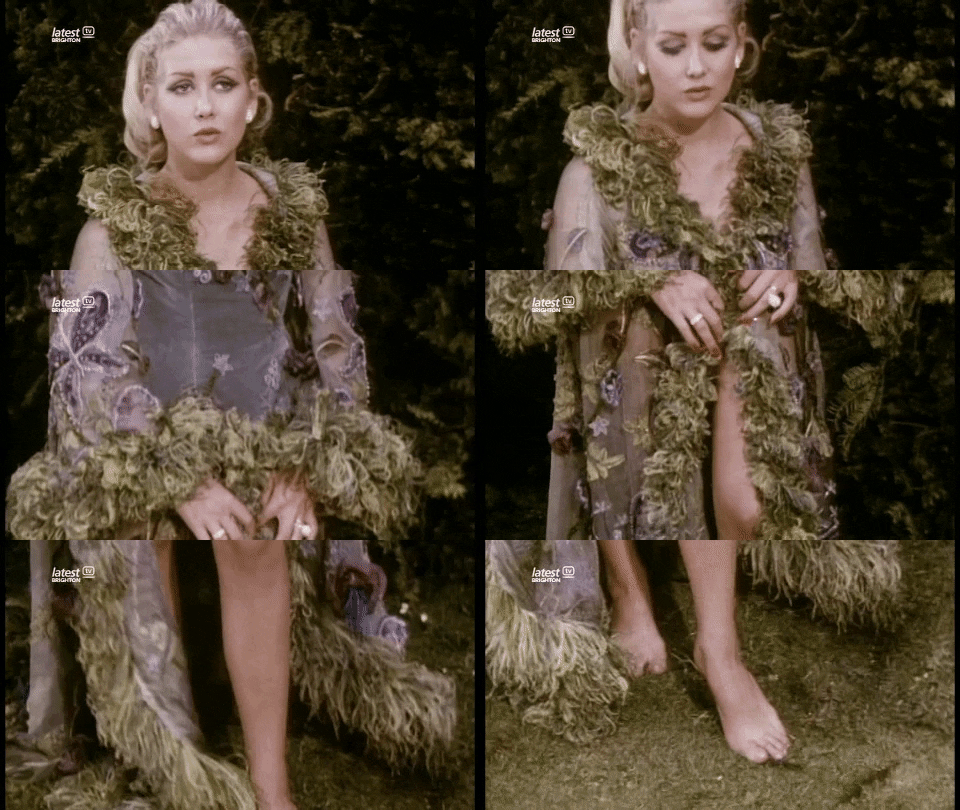
But it also needs to be seen from all angles, so here are some more:
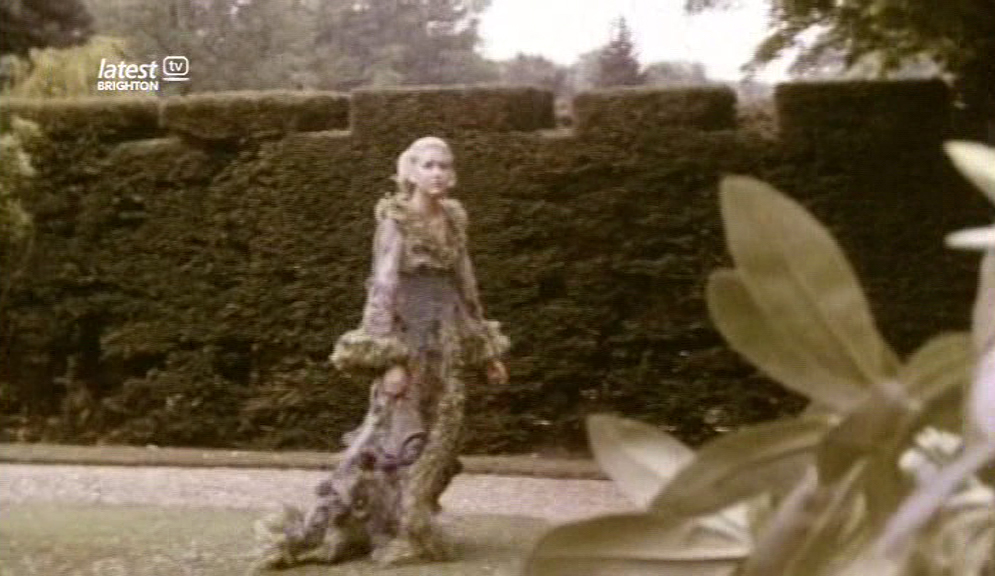
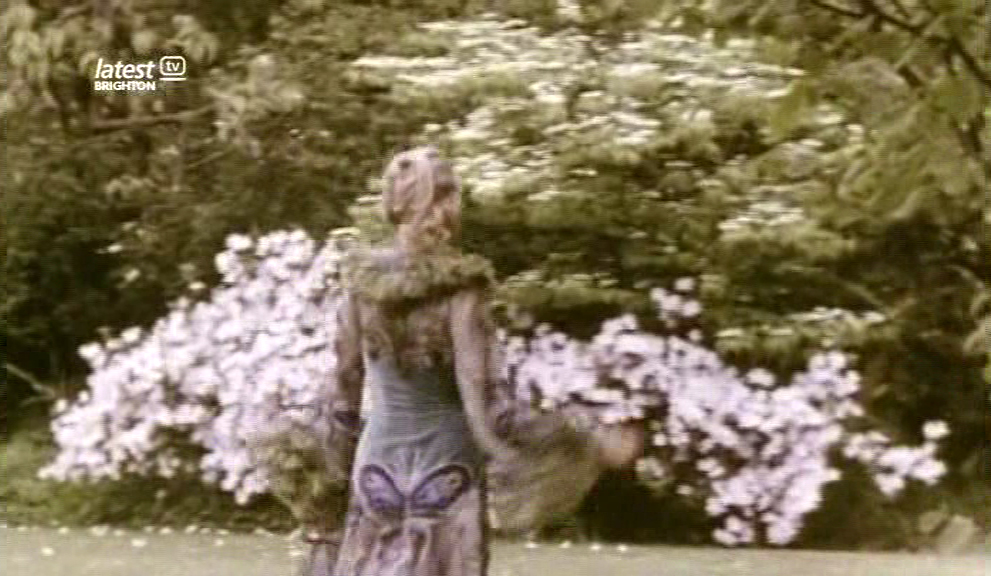
It even has a butterfly on the bum for goodness sake! I really hope this piece still exists somewhere out there. In fact, I might have to make it my life’s work to recreate it.
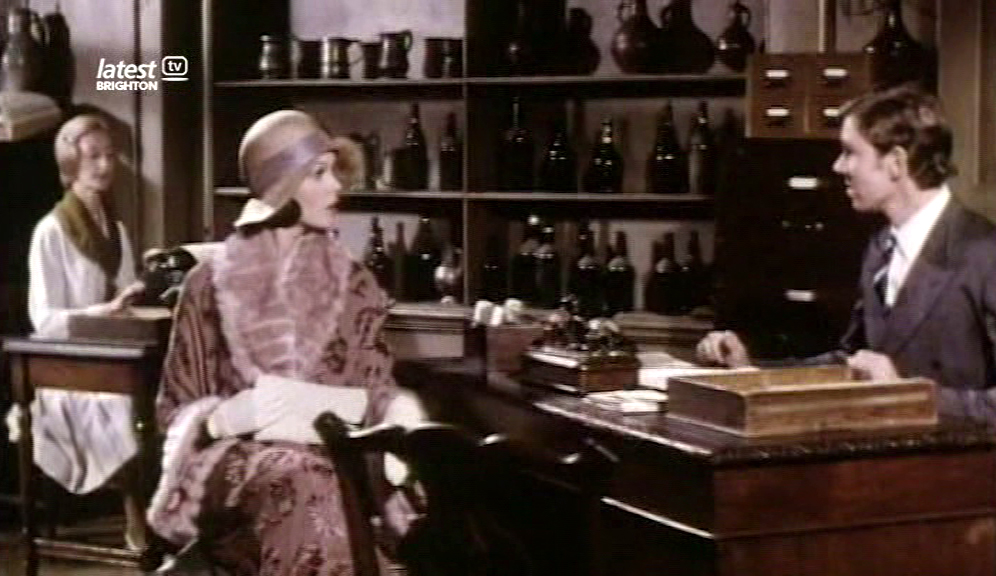
Fanny Hill’s wardrobe is rather more Twenties/Thirties in style and with rich colours:
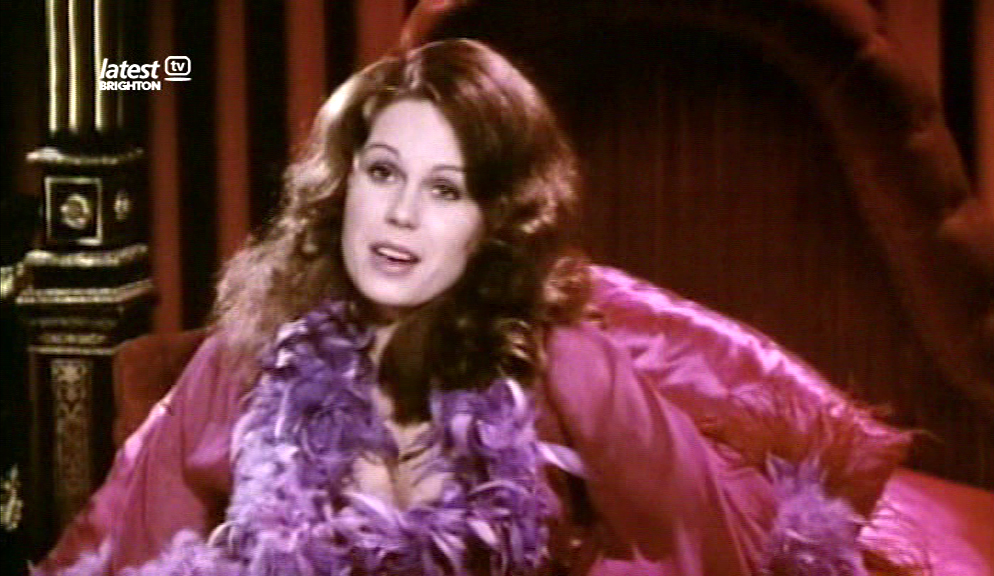
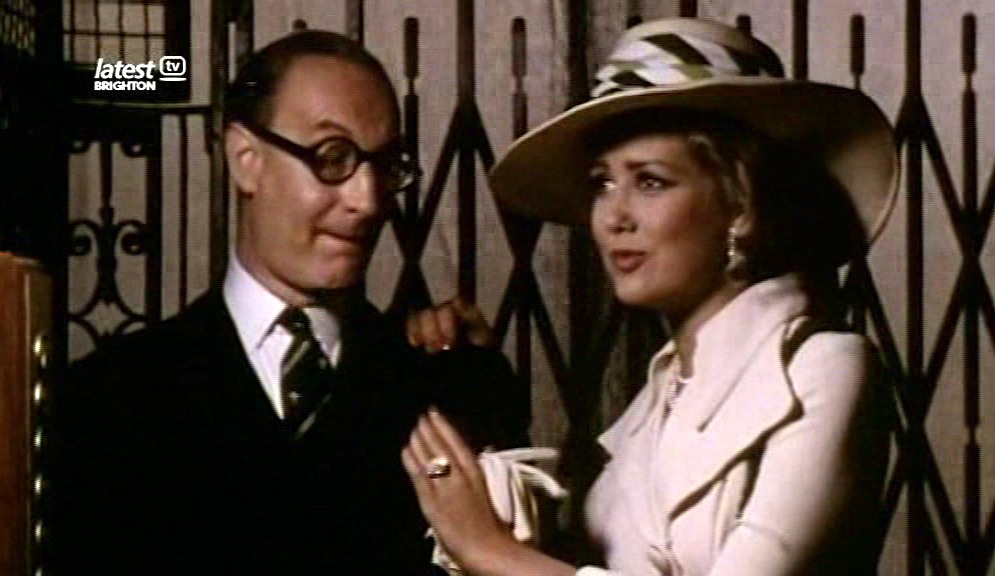
Oh, did I not mention that Fanny Hill is played by Joanna Lumley? To be honest, from what I’ve read I think she’d rather it never saw the light of day but I reckon it’s one of the most interesting things she ever did. She also co-stars with her future husband, Jeremy Lloyd. Incidentally, Lady Chatterley is played by Penny Brahms, and I can’t help but wonder if she was the inspiration behind ‘Miss Brahms’ in Jeremy Lloyd’s Are You Being Served.
Lloyd plays her first seduction target: a gay drag artist, which leads Fanny Hill to pose as a man dressed as a woman – in full Georgian regalia. This party scene is also populated with genuine drag artists of the time and has an incredibly authentic feel. The credits read The “Queens” : Played by Themselves!, and I would dearly love to know who these people were because it must be incredibly ahead of its time in depicting this scene.

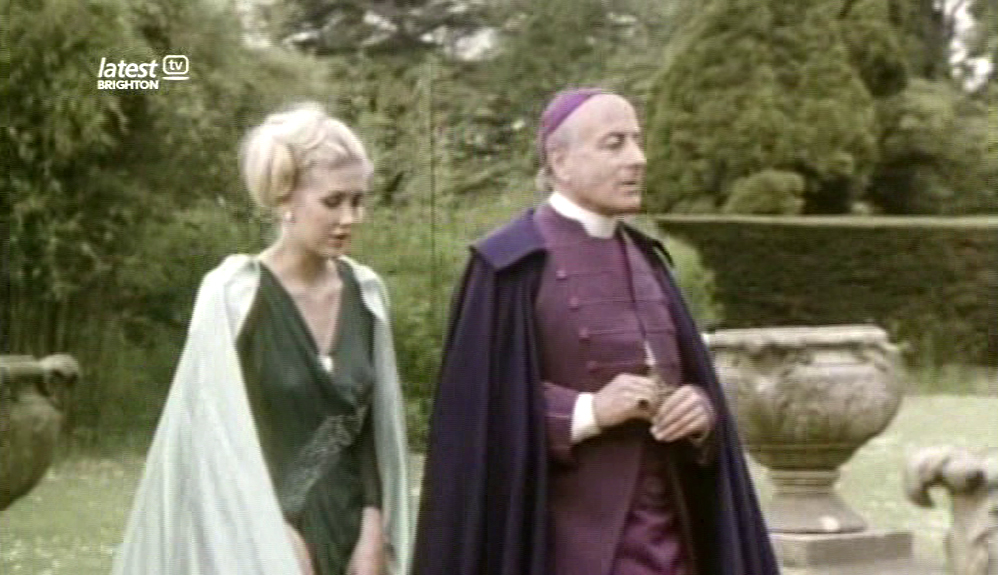
Lady Chatterley’s target is a Bishop, and she starts to look a little more Thirties-does-Seventies at this point.
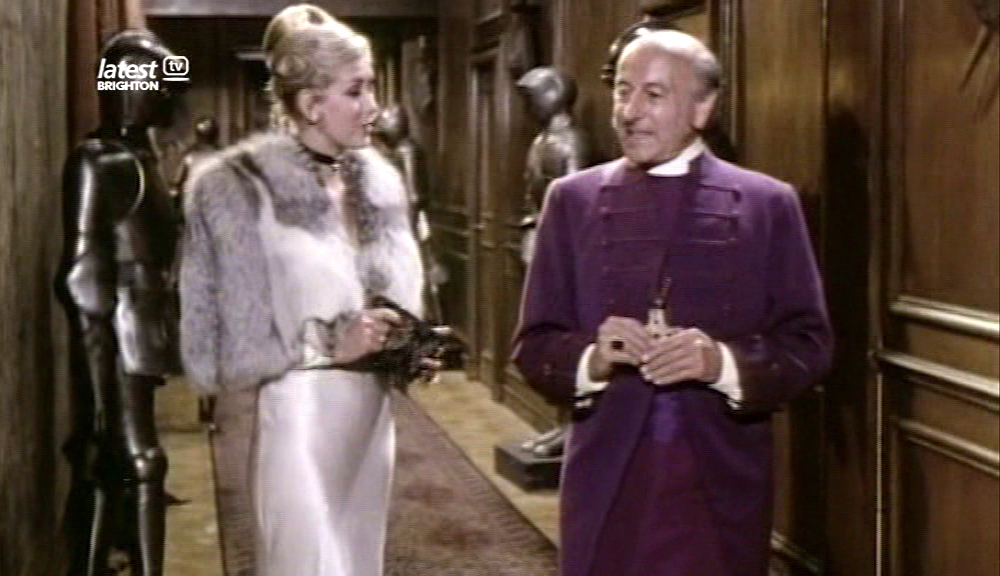
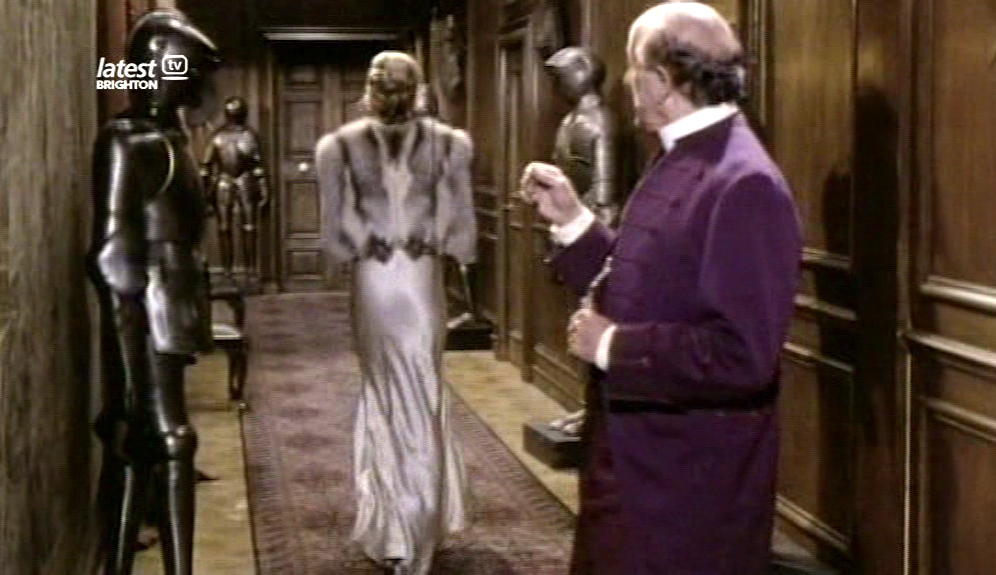
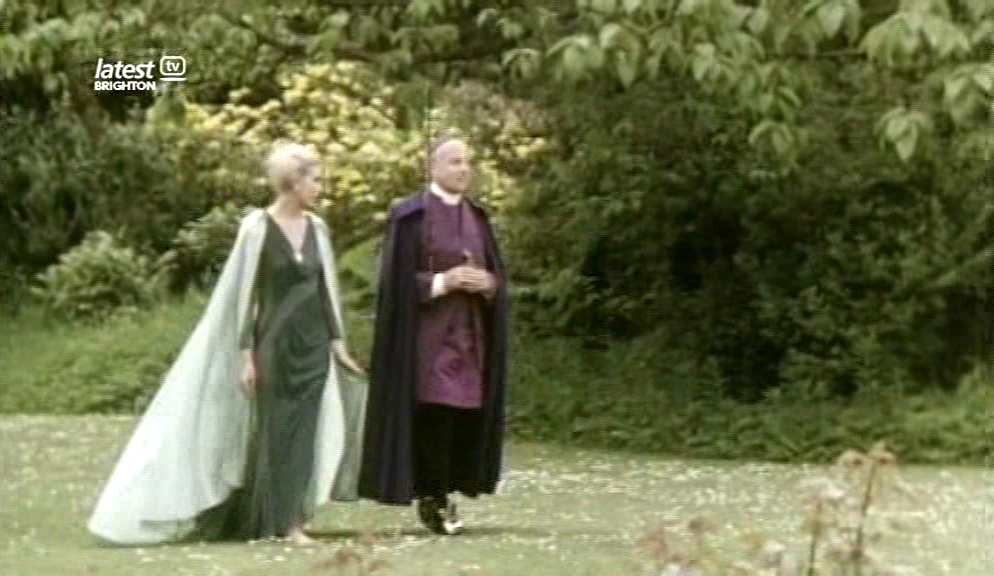
From here on I won’t ruin the plot for you, such as it is, so will just post some more of my favourite outfits and hope that I have whetted your appetite. I appreciate that I have a very high tolerance for weird films, but I did really enjoy it.
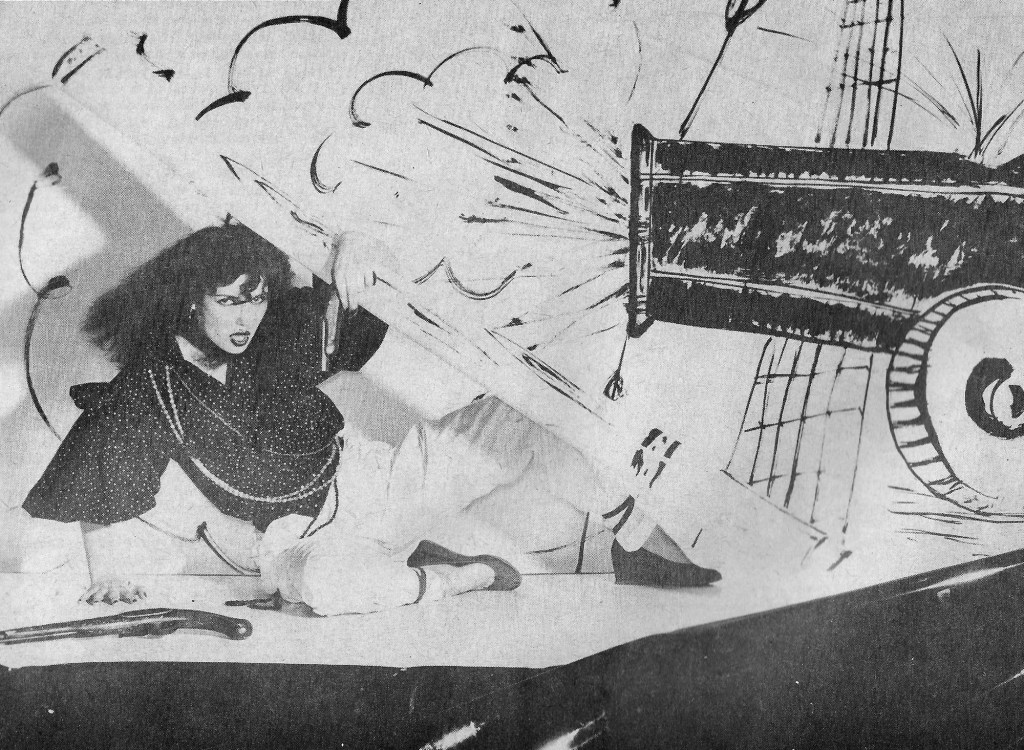
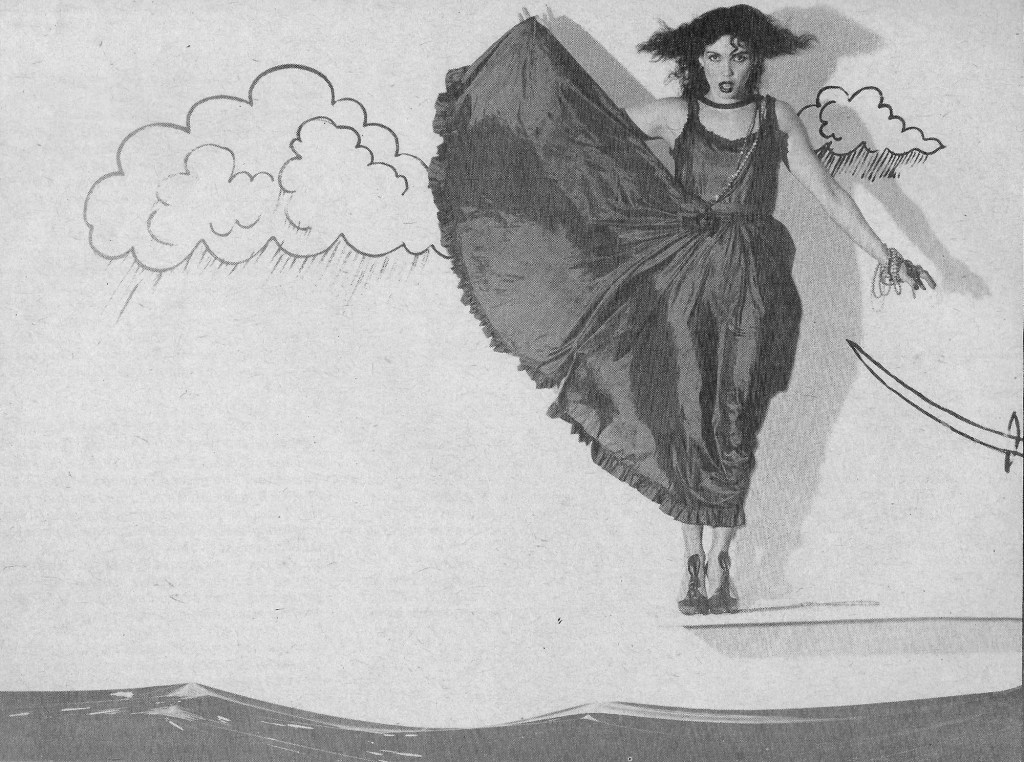
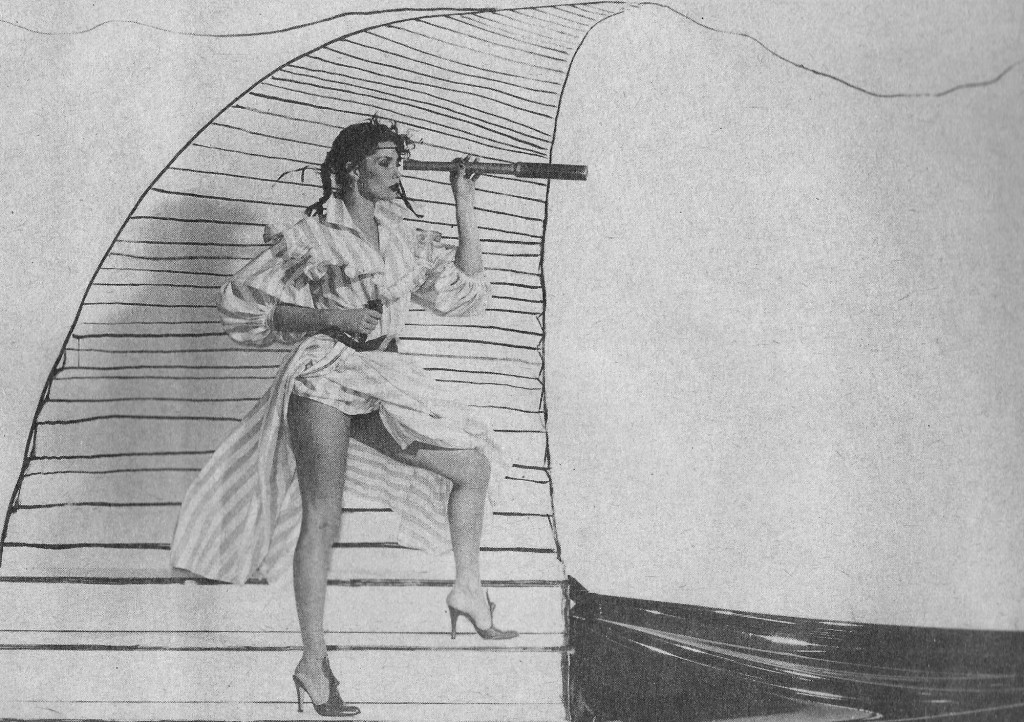
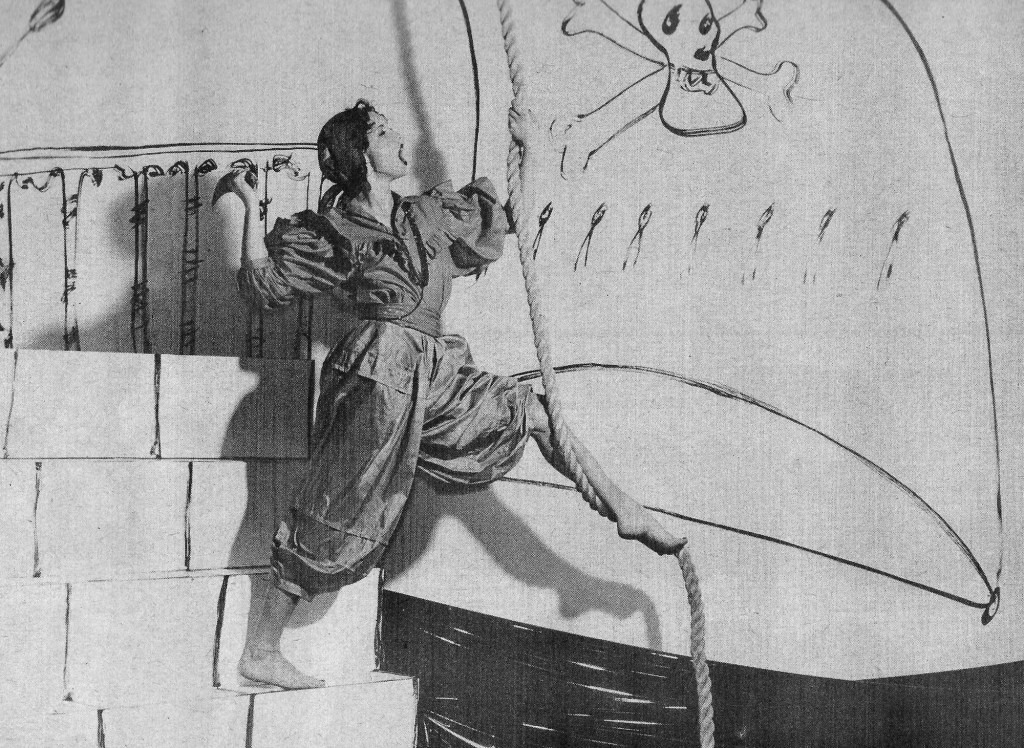
Intriguingly styled editorial from 1978, with the latter two images rather suggestive of the Westwood ‘Pirate’ collection that came a mere three years later. Also featuring some shoes by Manolo Blahnik under his ‘Zapata’ brand. I’m also surprised to see them still using the name ‘Jungle Jap’, which had been changed to Kenzo around 1976 I believe, but perhaps Jungle Jap was still the preferred name in the UK.
Clothes and Jewellery from Jungle Jap.
Shoes from Zapata and Jungle Jap.
Model Dagamar at Laraine Ashton.
Styled by Catkin Villiers.
Hair by Robert at Schumi.
Photographed by Graham Hughes.
Scanned from Ritz, No.18 1978.
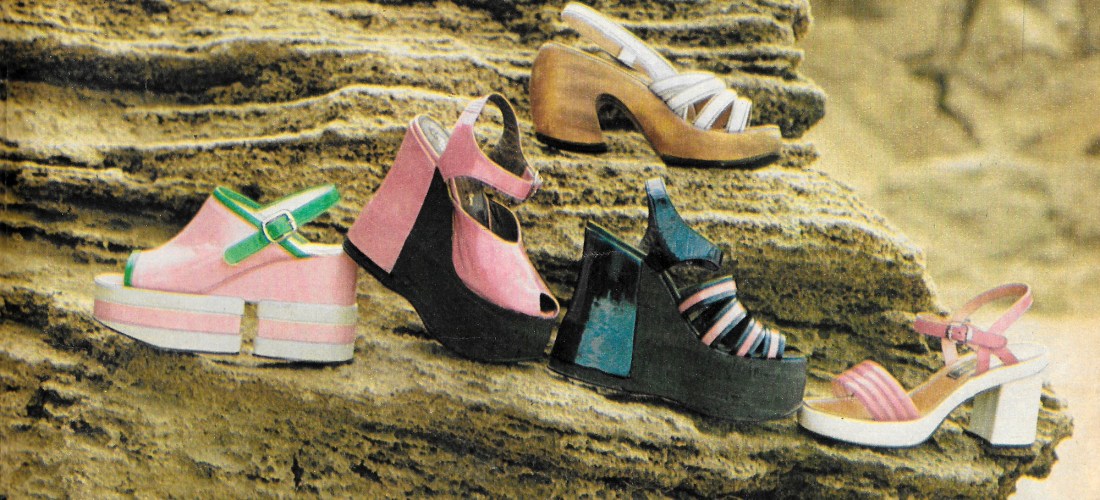
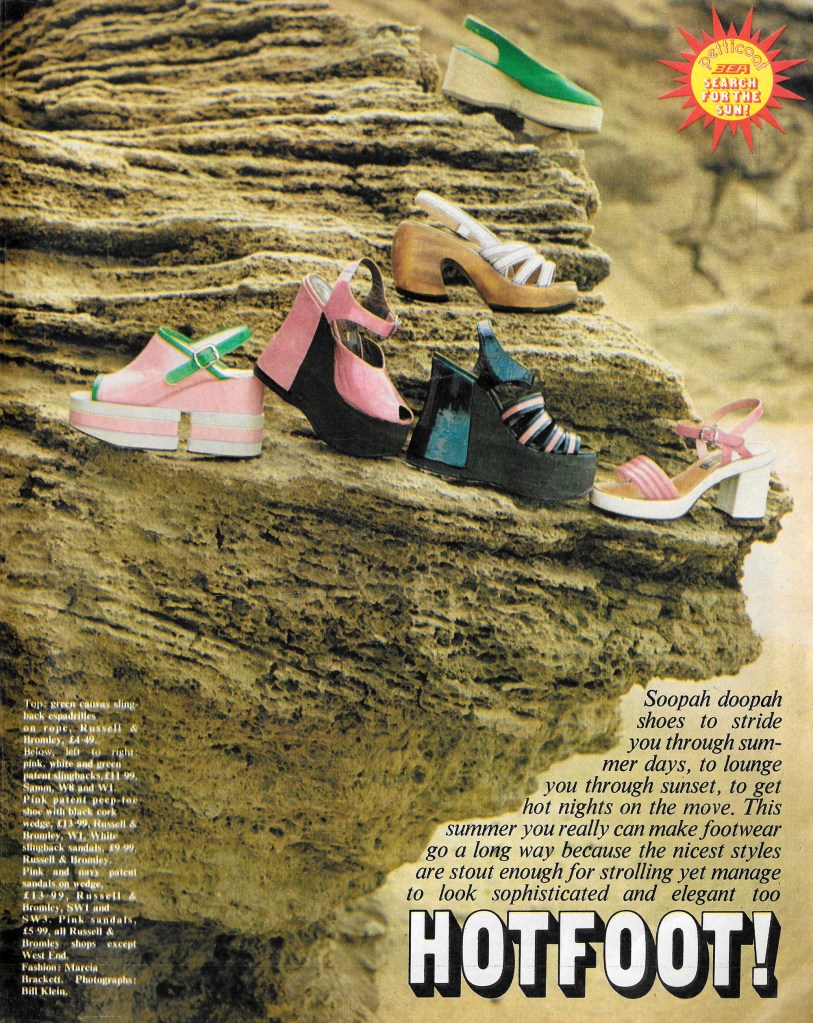
Soopah doopah shoes to stride you through summer days, to lounge you through sunset, to get hot nights on the move. This summer you really can make footwear go a long way because the nicest styles are stout enough for strolling yet manage to look sophisticated and elegant too.
Fashion by Marcia Brackett.
Photographed by Bill Klein.
Scanned from Petticoat, 2nd June 1973.


Oh to be out of England now that April’s here, and whether you are planning on Majorca, the far-flung Bahamas or the Isle of Wight this year, now is the best time to shop for holiday clothes. And having just stepped out of a QANTAS jet that took Cosmo island-hopping via Bermuda to the Bahamas, I have a slight tan and a strong feeling that summer’s fashions will be as refreshing, bittersweet and highly coloured as that tropical drink, Planter’s Punch.
Oh to be anywhere but home, quite frankly. I shall have to recreate these styles on the balcony and dream of even going as far as the Isle of Wight…
All jewellery by Adrien Mann. Fashion by Deirdre McSharry.
Photographed by Norman Eales.
Scanned from Cosmopolitan, April 1973.


 Liz Eggleston