

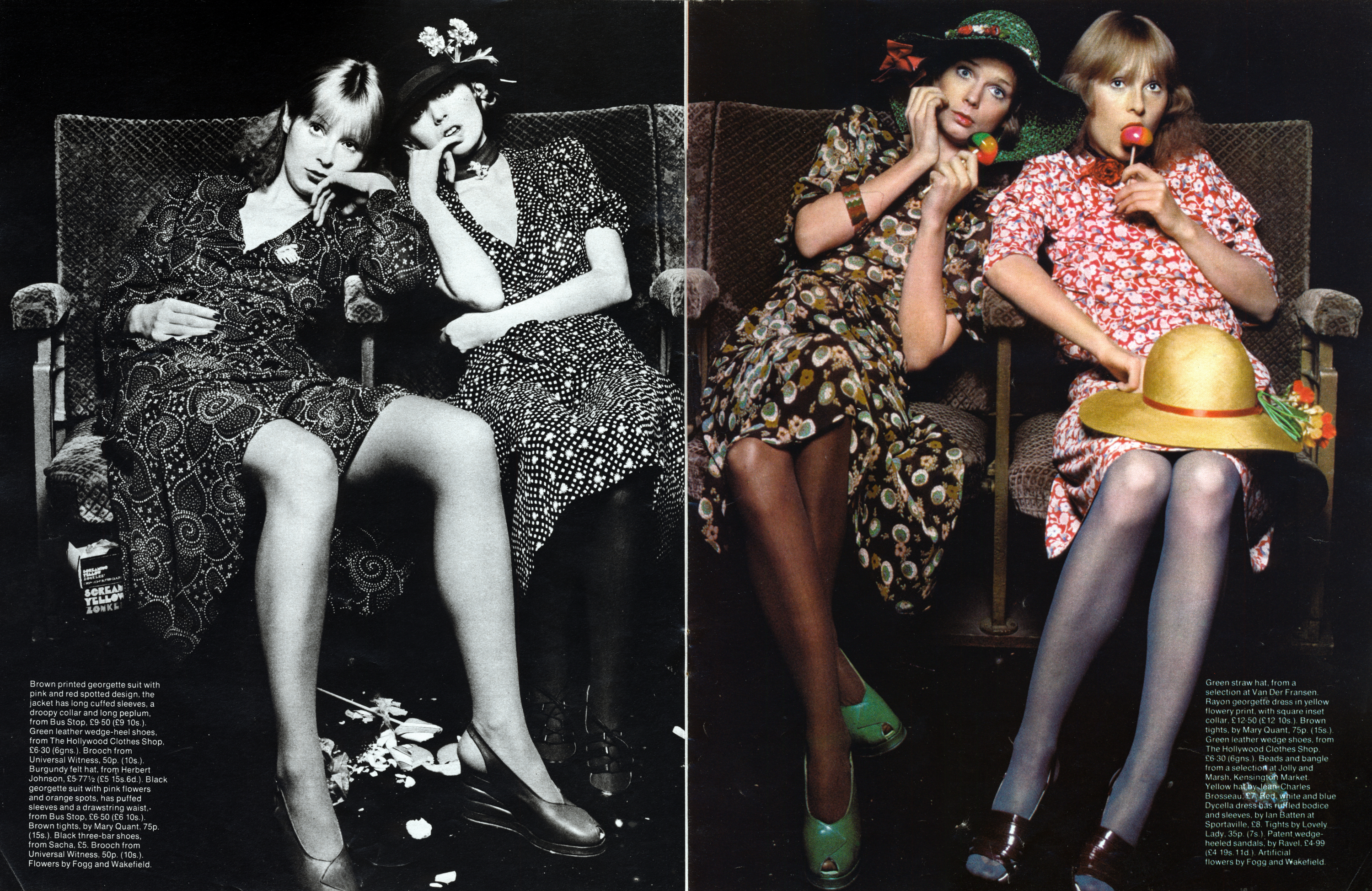
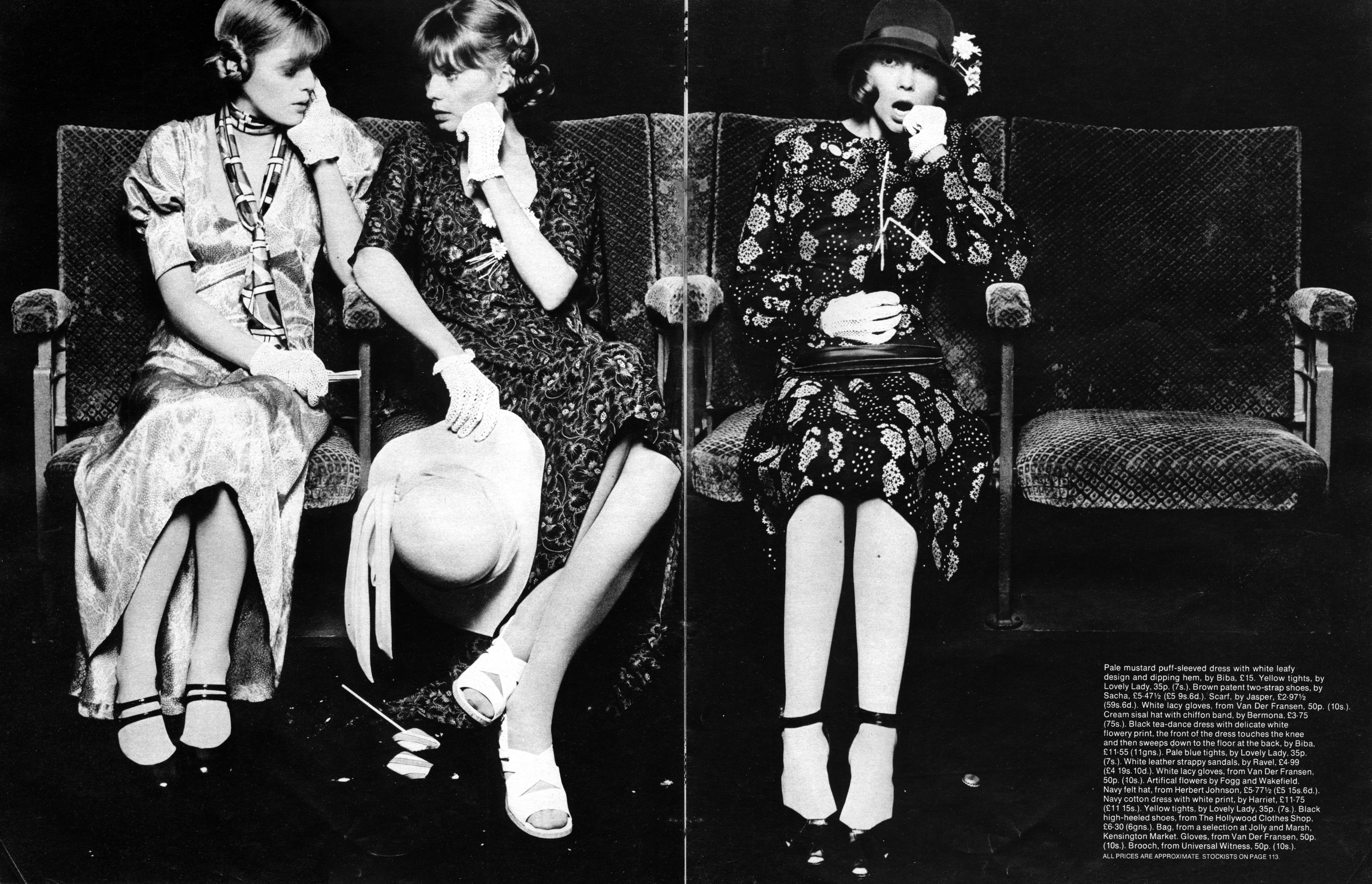
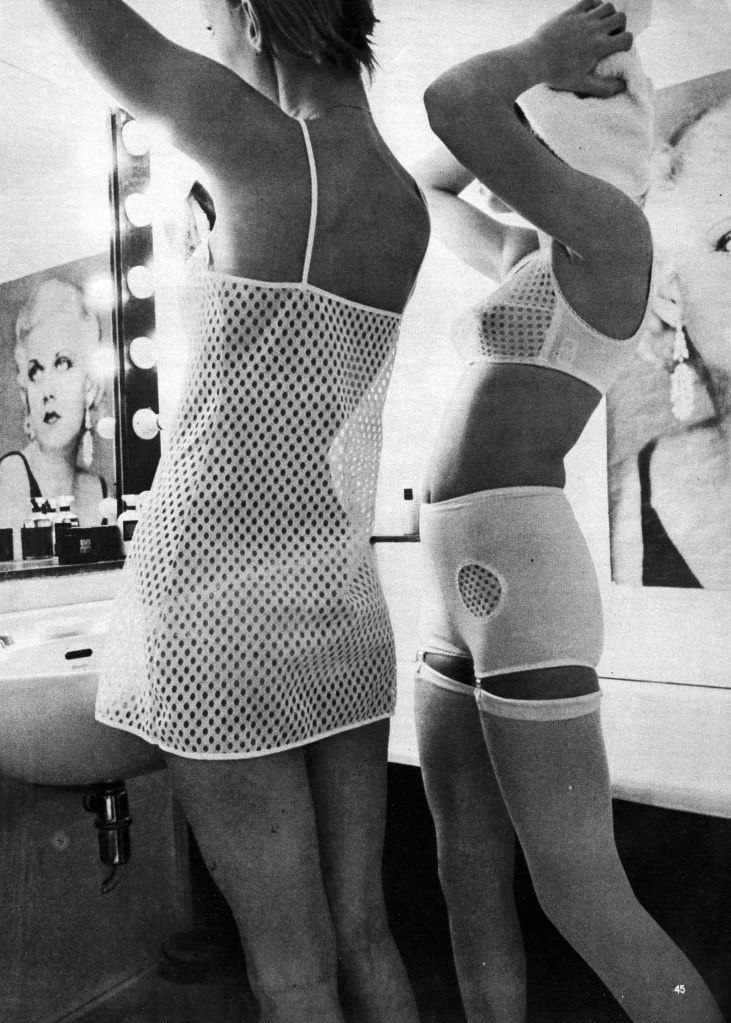
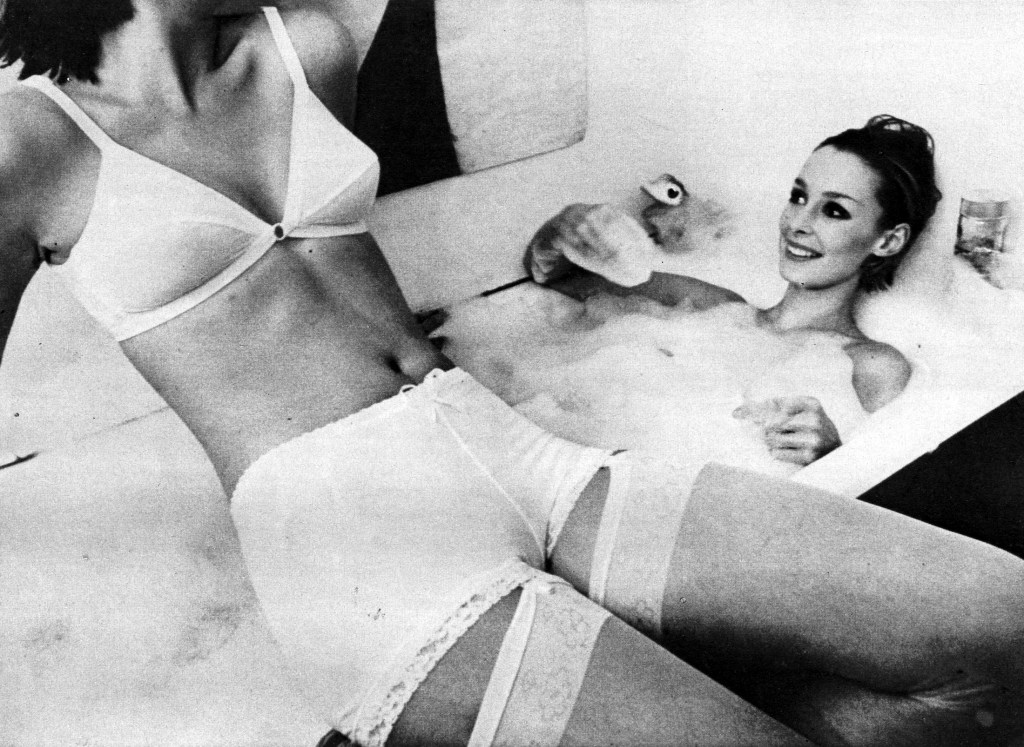
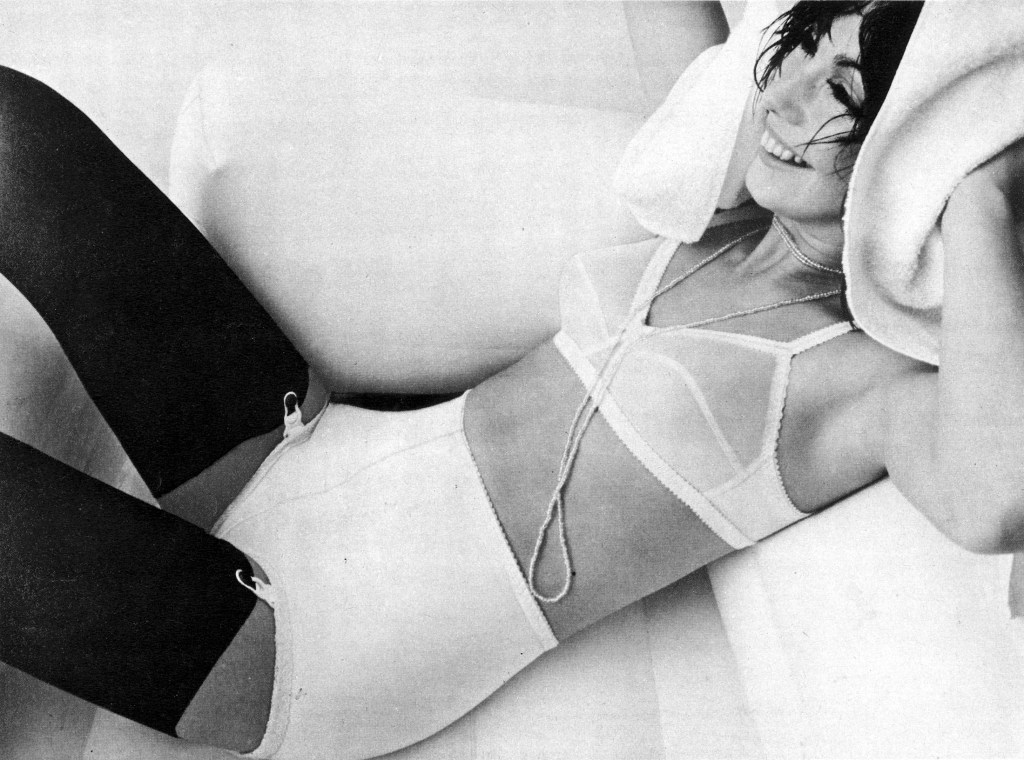
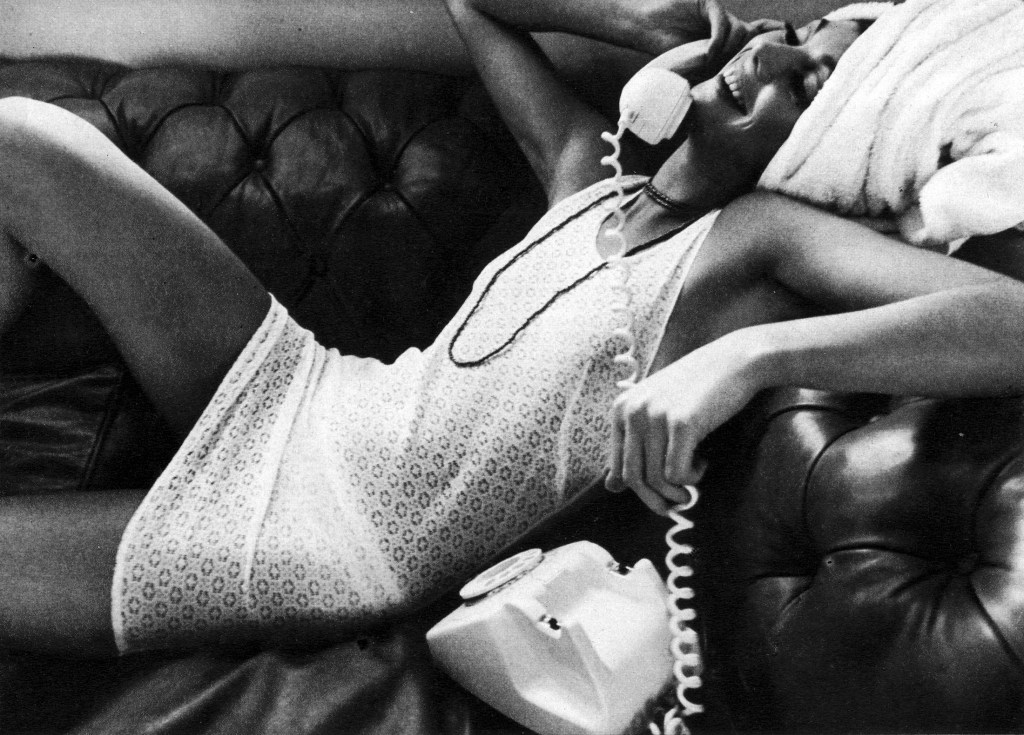
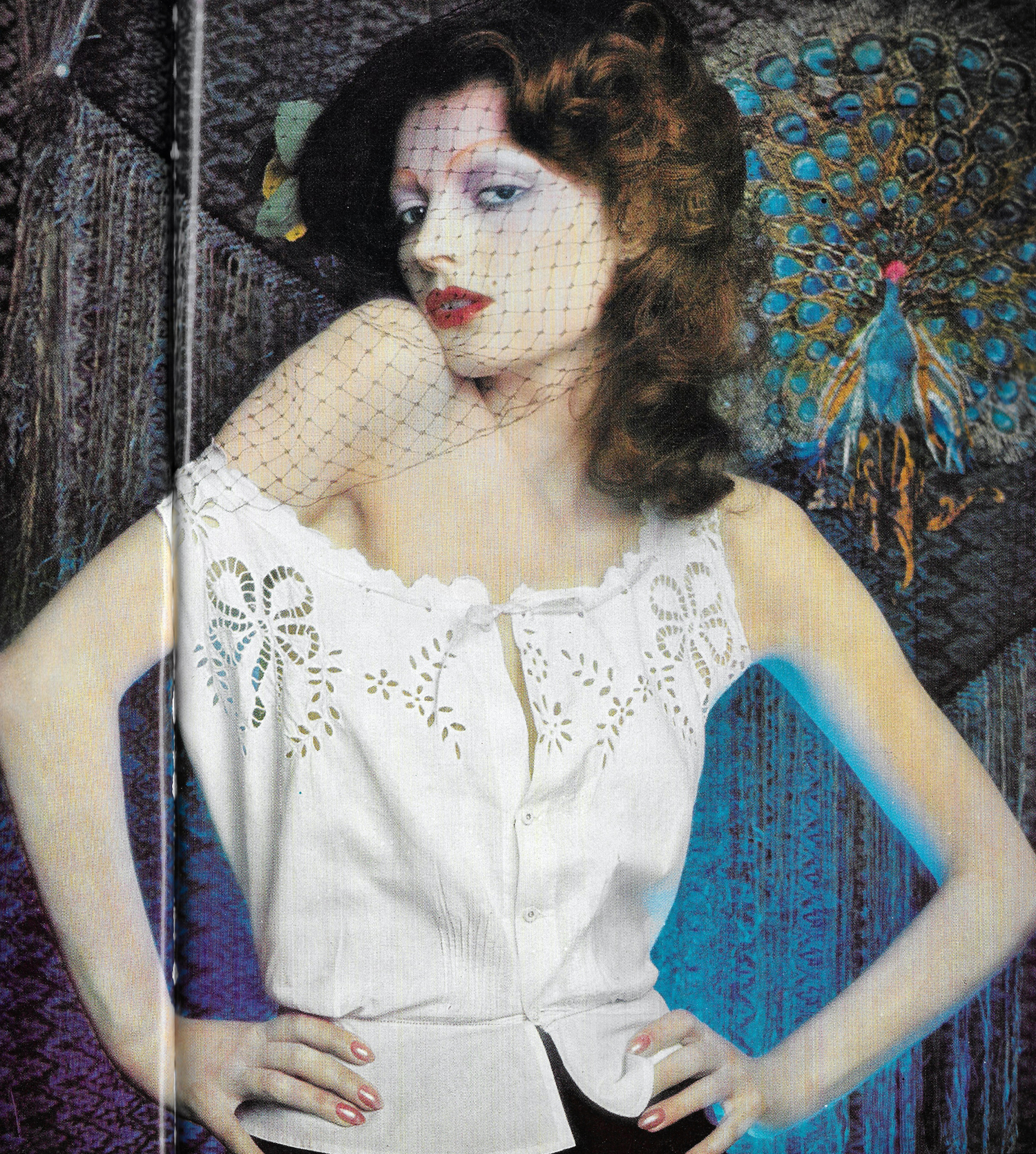
Add a touch of delicate, soft lace trimming to your clothes and accessories this summer for a really feminine, fragile look.
Hair by Colin at Ricci Burns.
Photographed by Roger Charity.
Scanned from Honey, May 1974.


Add a touch of delicate, soft lace trimming to your clothes and accessories this summer for a really feminine, fragile look.
Hair by Colin at Ricci Burns.
Photographed by Roger Charity.
Scanned from Honey, May 1974.
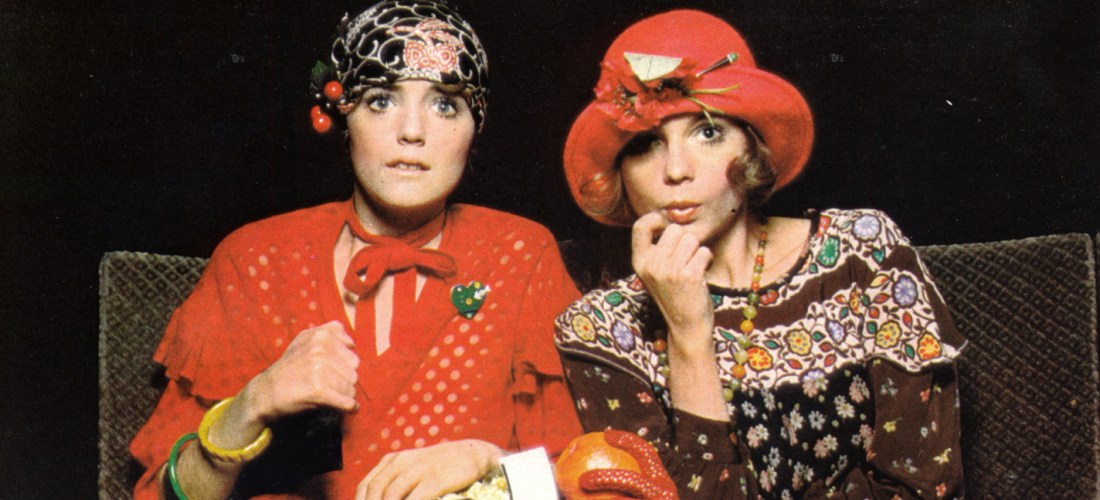
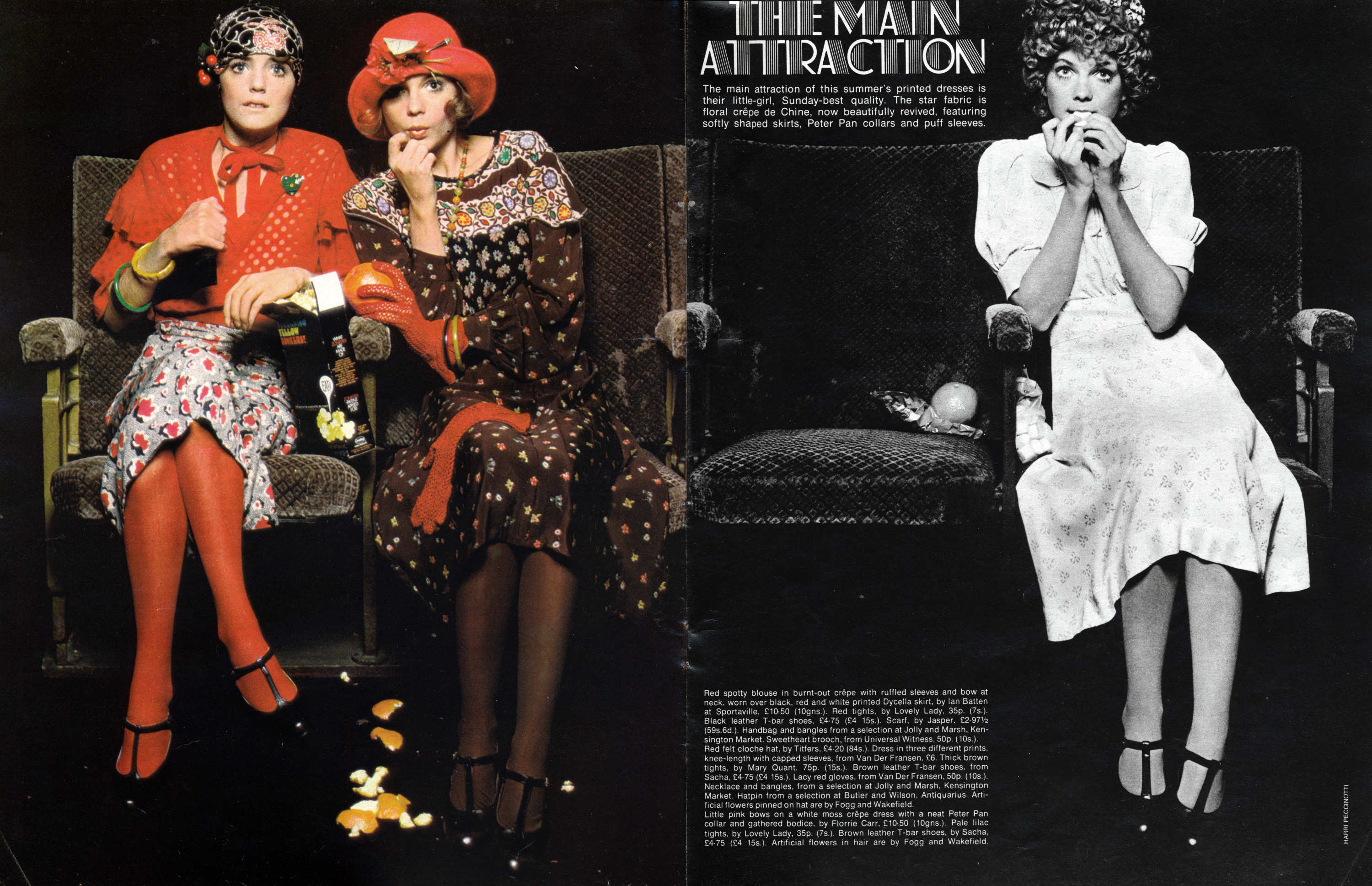
The main attraction of this summer’s printed dress is their little-girl, Sunday-best quality. The star fabric is floral crepe-de-Chine, now beautifully revived, featuring softly shaped skirts, Peter Pan collars and puff sleeves.
Another flawless example of early Seventies nostalgia for the Thirties and Forties, which might seem frivolous or twee if it wasn’t in the talented hands of Mr Peccinotti.
Photographed by Harri Peccinotti.
Scanned from 19 Magazine, March 1971.
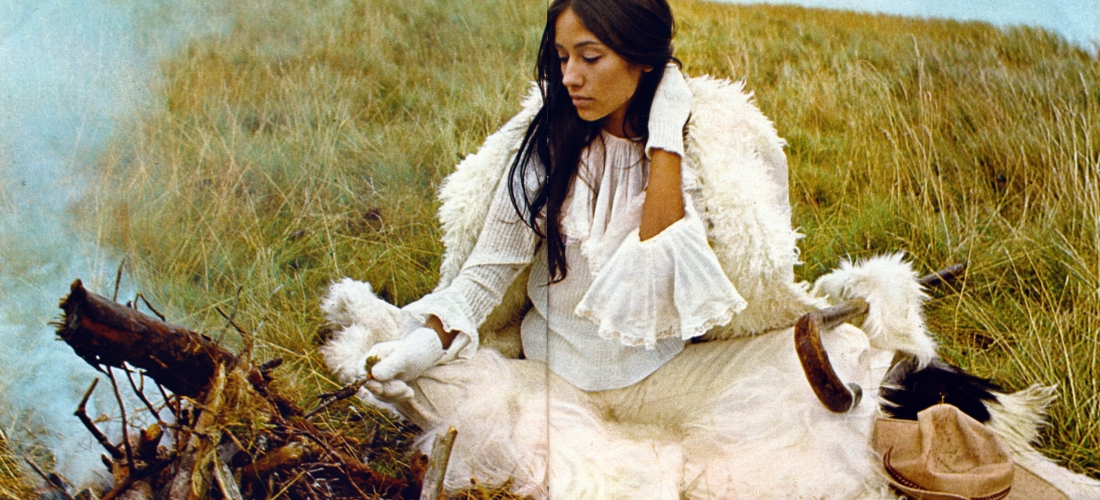
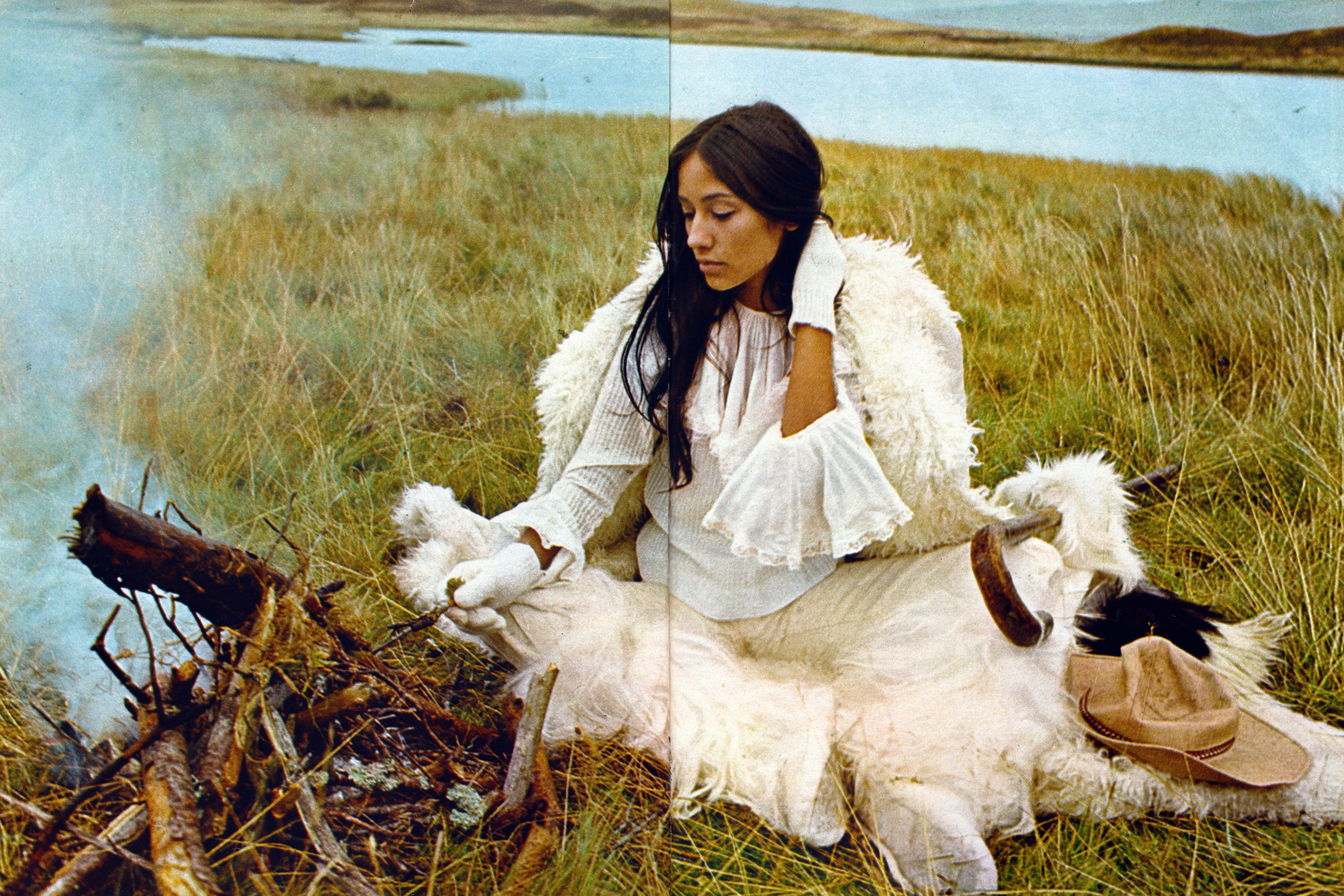
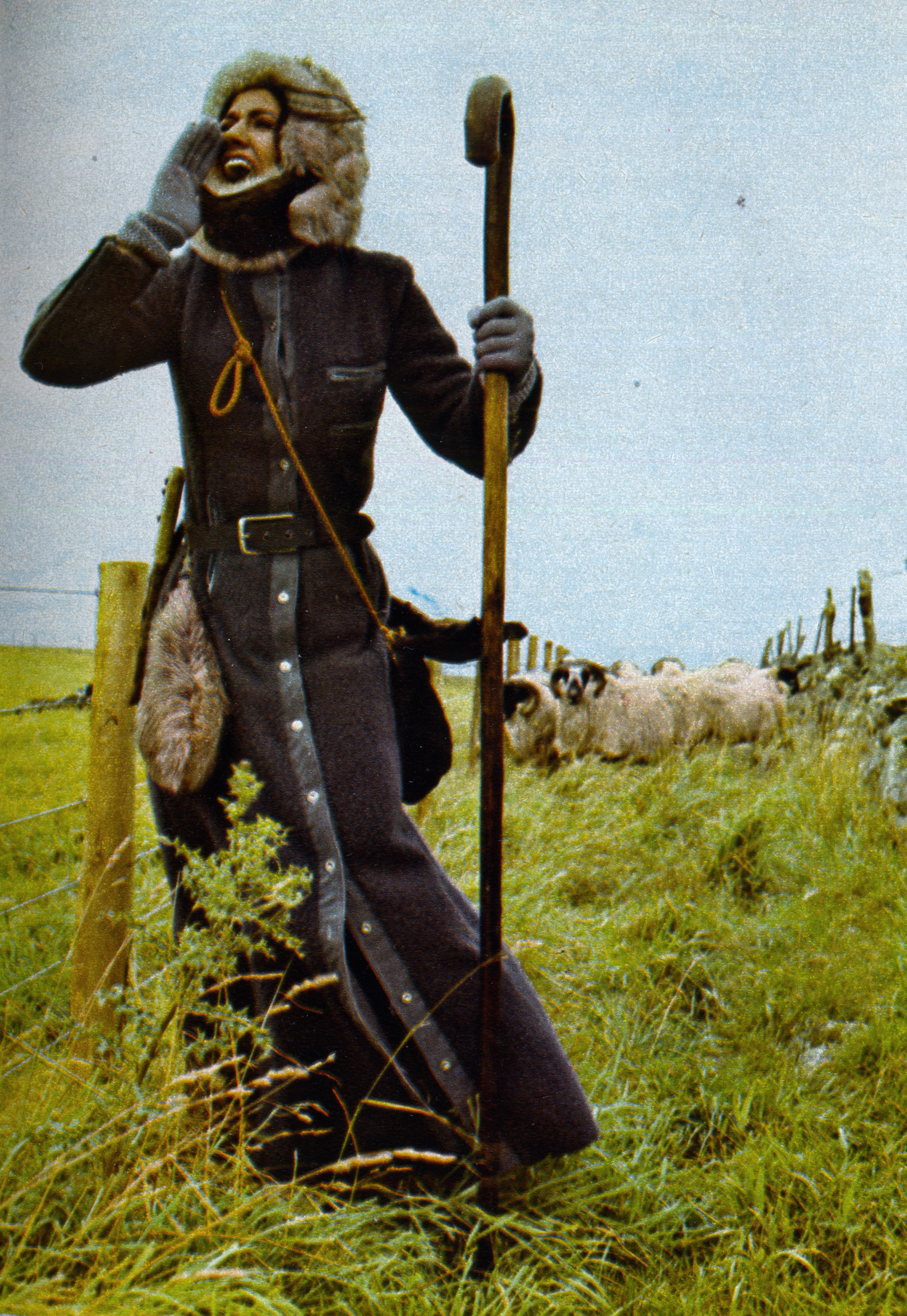
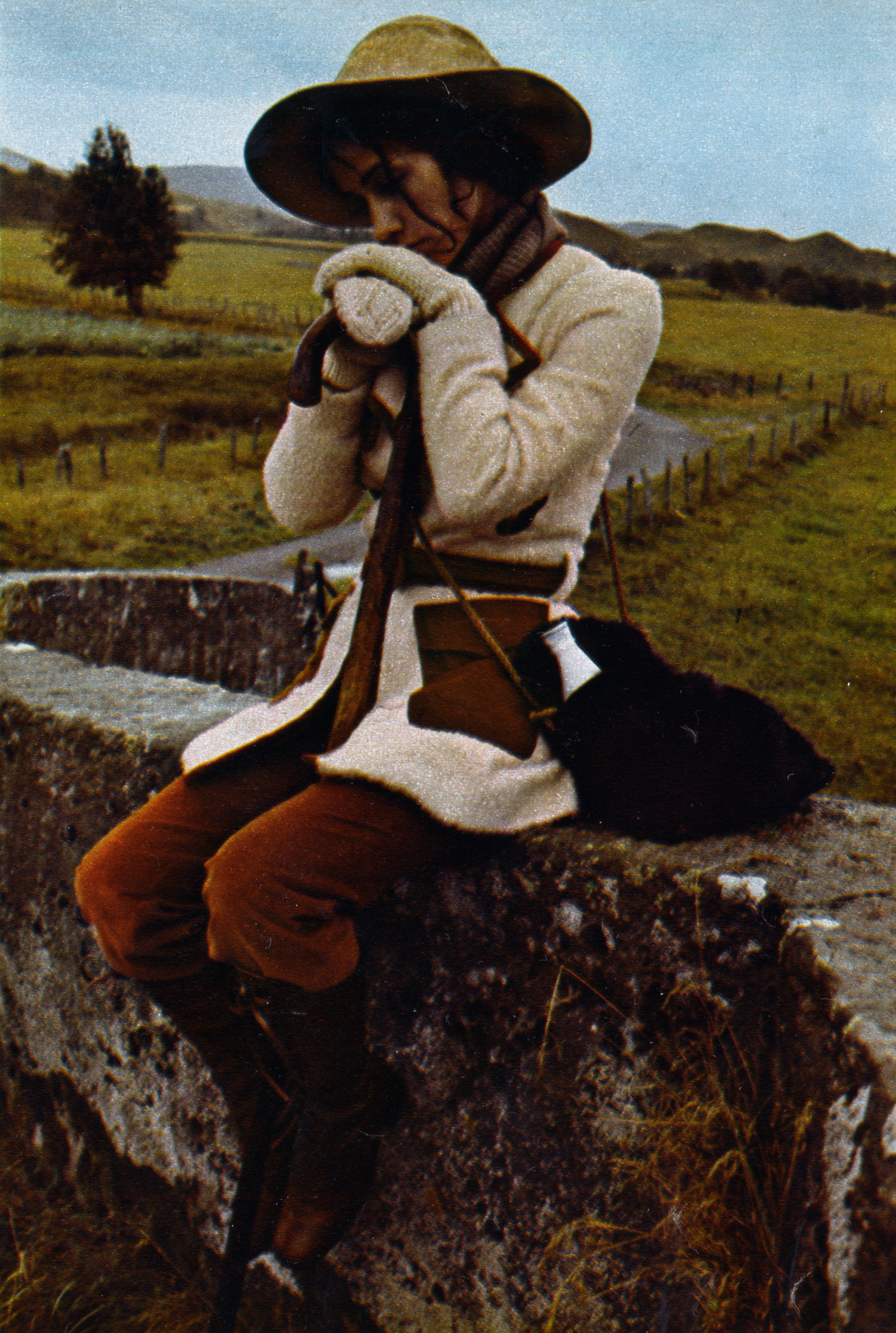
Leather and fur get more expensive every year. It’s not only the taxes and rising costs of production. It’s just that there aren’t enough good animal skins for leather around to meet the consumer demand. Furs are there in quantity for the fabulously rich. Luckily a good substitute has been found – the nylon-spun, man-made sort. Some, especially in the leather field, are so like the real thing the only way you can tell the difference is by the smell. Take the white coat on pages 46 and 47. It’s fake and costs about £50. It has a double in real fur and leather for £270. Made by the same people who have duplicated most of their collection this way and it takes an eagle eye and nose to tell the difference. Others are just furry, woolly fabrics, obviously not imitating some four-legged friend, which is one of the nicest things about them. This fur fabric is now getting the treatment it deserves. Nairn Williamson (more famous for their Vinyl floor and wall coverings) were the first to see its potential and got six designers to use their Velmar fur fabric in their winter collections. Jane Whiteside for Stirling Cooper (new label getting famous fast for their beautiful jersey co-ordinates) was the cleverest of them all. She used the best sludgy colours, mixed it with needlecord to make a group of jackets and coats to go with trousers, skirts and blouses. Borg (American originated and the pioneers in England of this deep pile fabric) has been around for a long time, mostly on the inside of duffle and raincoats but it’s on the outside as a normal fabric that it looks its best. Next winter there will be a lot more of it around, now that designers are getting less snobby about plastics. Not only is it as warm as fur, it is, of course, much cheaper and you don’t smell like a wet dog when you come in from the rain, either. So you can wear it herding sheep on lost weekends, or in town queuing for the cinema without any guilt feelings about ruining your assets.
Insert obligatory ‘I don’t agree with the thrust of the argument for fake furs as just a financial consideration here’ caveat from me, your content provider. Don’t shout at me, basically. But it’s an interesting insight into the mindset of 1970, and the proliferation of fake furs and skins at that time. It’s also a breathtakingly styled and photographed work of art from Caroline Baker and Jonvelle.
Fashion by Caroline Baker.
Photographed by Jonvelle.
Scanned from Nova, January 1970.
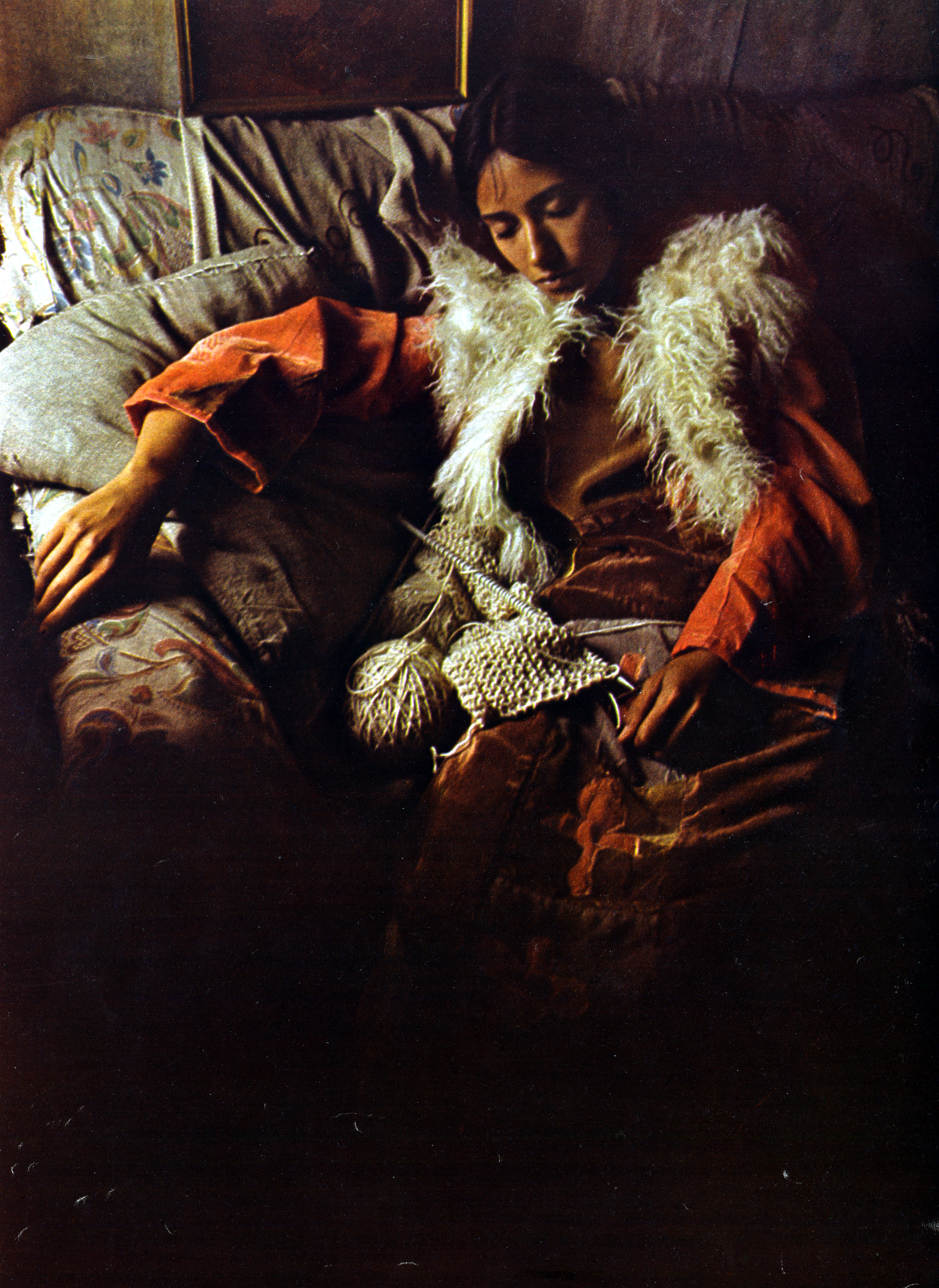

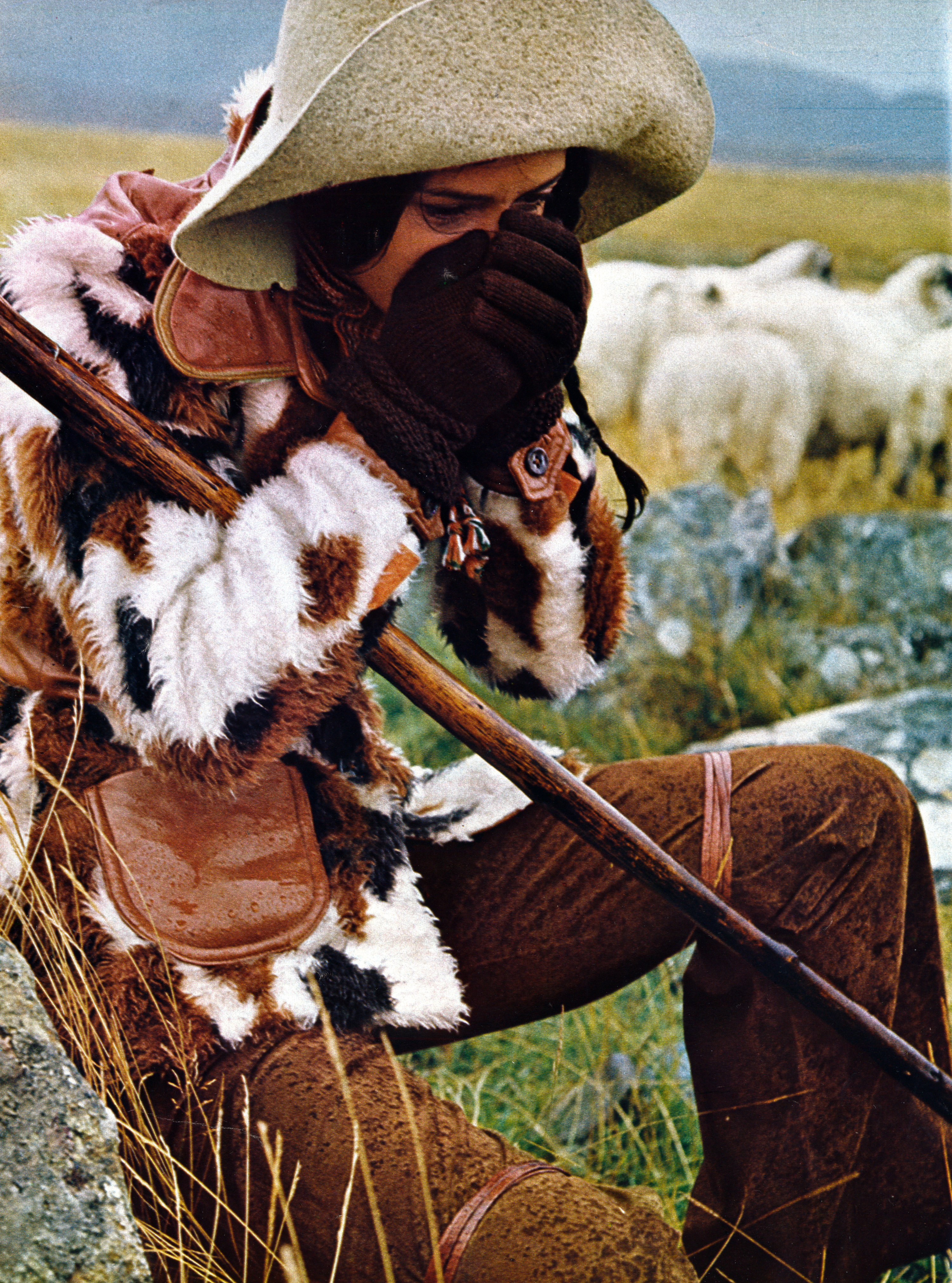
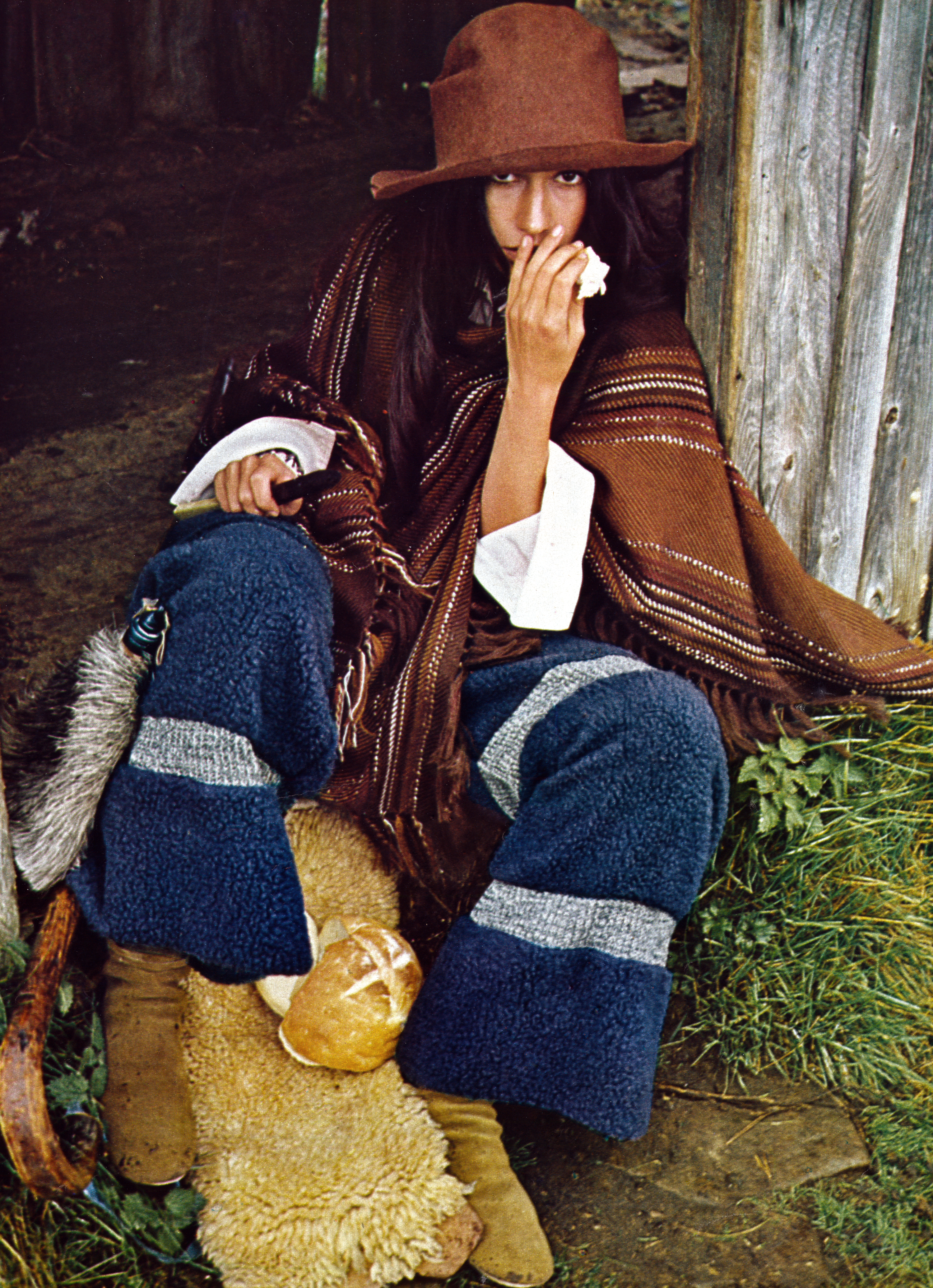
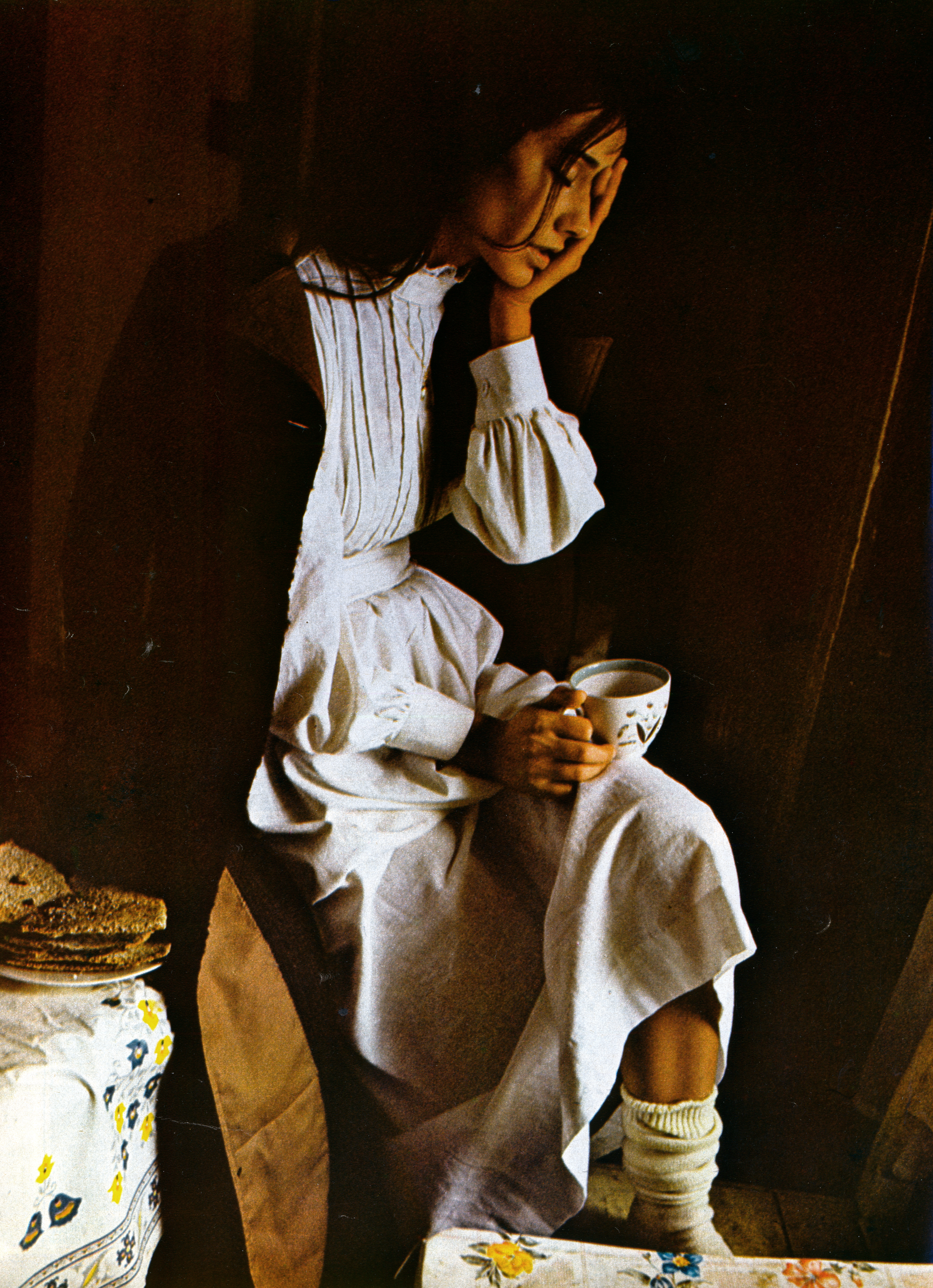

Sunny Spain conjured up visions of hot summer days in picturesque surroundings, ideal settings for 19’s summer fashions. And we had a fantastic oppotunity when 4S Travel arranged a trip to Malaga and Torremolinos. We flew BUA Super Jet to stay at the Hotel Al Andalus, within easy reach of the mountains overlooking the Costa del Sol. Here we discovered quaint villages, sun-drenched and white-washed, their customs and dress crystallised in the past. No cars to be seen, only mules and donkeys. Our clothes echoed the feel of these places – colours stark black and white, brightened with touches of gayer hues, clean hot printed cottons, soft peasant blouses, sandals, light fishnet shawls, casual sun hats. The garments are easy to take care of, and enhance a tan – midi skirts that button to above the knee and give alluring glimpses of brown thigh, and large brightly printed squares of fabric which can be used as shawls, or skirts tied at the side.
Making me yearn for a proper holiday. The closest I’ll get is looking at this editorial whilst sitting on the balcony, trying to avoid all humans for the time being. I hope it brightens your day as well…
Blonde model is Willy van Rooy.
Photographed by John Bishop.
Scanned from 19 Magazine, July 1970.



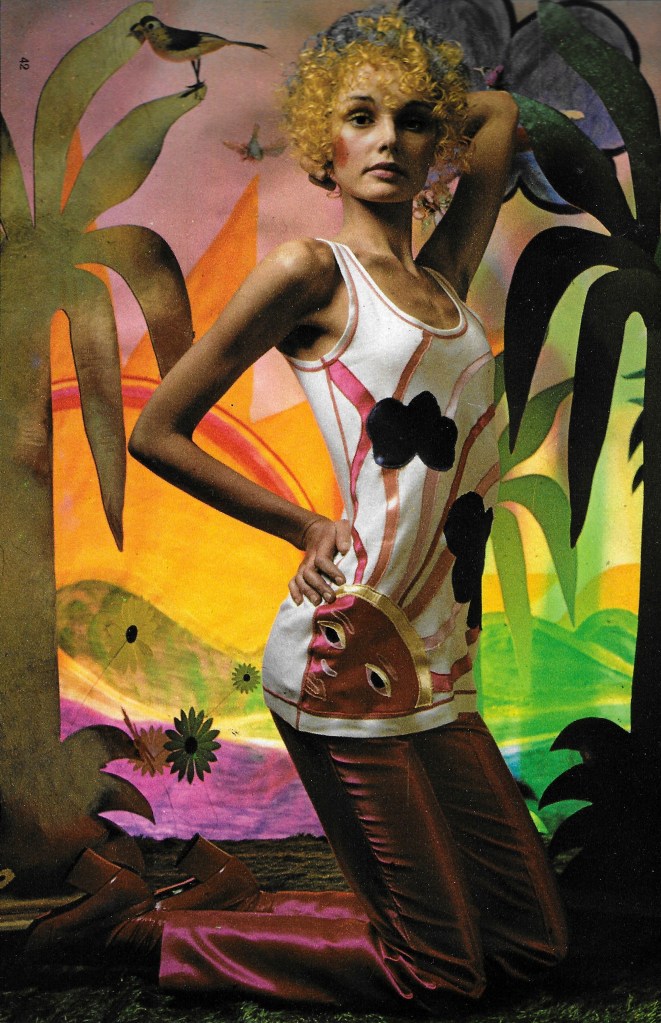
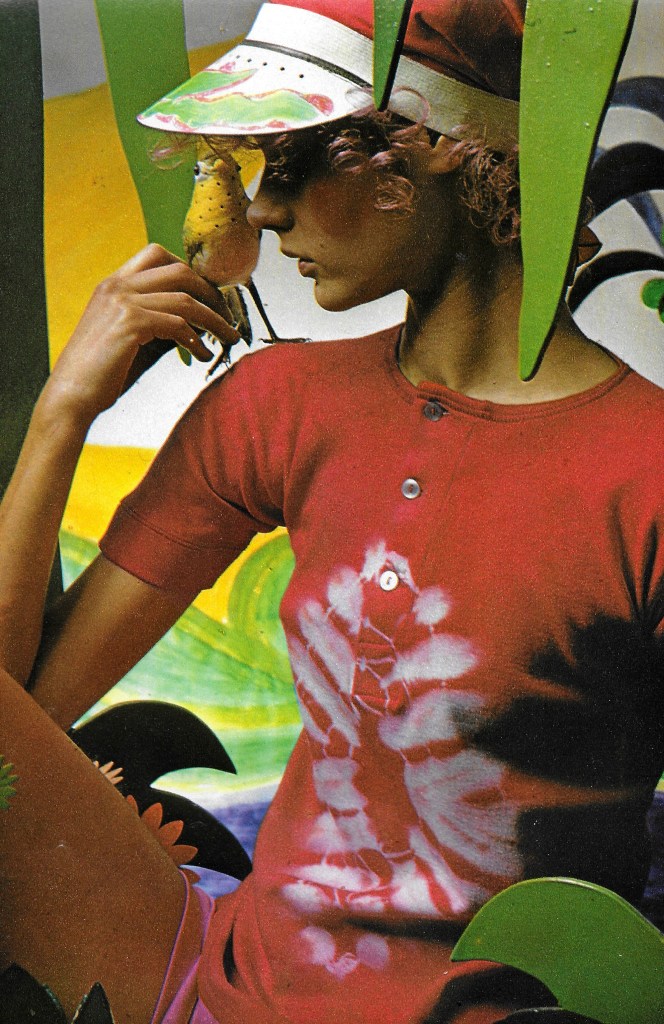
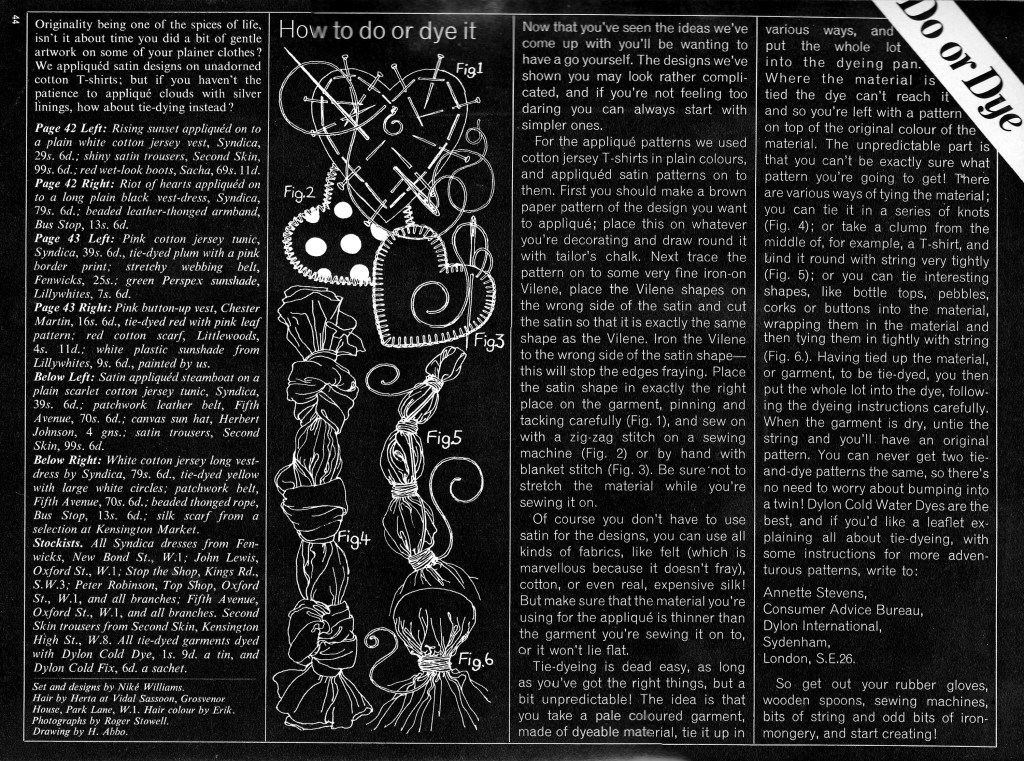
Originality being one of the spices of life, isn’t it about time you did a bit of gentle artwork on some of your plainer clothes? We appliquéd satin designs on unadorned cotton T-shirts, but if you haven’t the patience to appliqué clouds with silver linings, how about tie dye instead?
Hoping this gives some inspiration to keep yourself occupied and looking groovy over the next weeks and months of isolation! In all seriousness, I hope all my dear readers are safe and well. Since my Vintage business is on ice for a little while, I have brought magazines home to scan and hope to keep you entertained and offer some escapism (plus there are years of archives to get through!). There will probably be extra stuff over on my Instagram as well so do go and follow me there.
(Instructions on how to copy these designs are at the bottom of the post.)
Set and designs by Nike Williams.
Photographs by Roger Stowell.
Drawings by H. Abbo.
Scanned from Honey, August 1970.
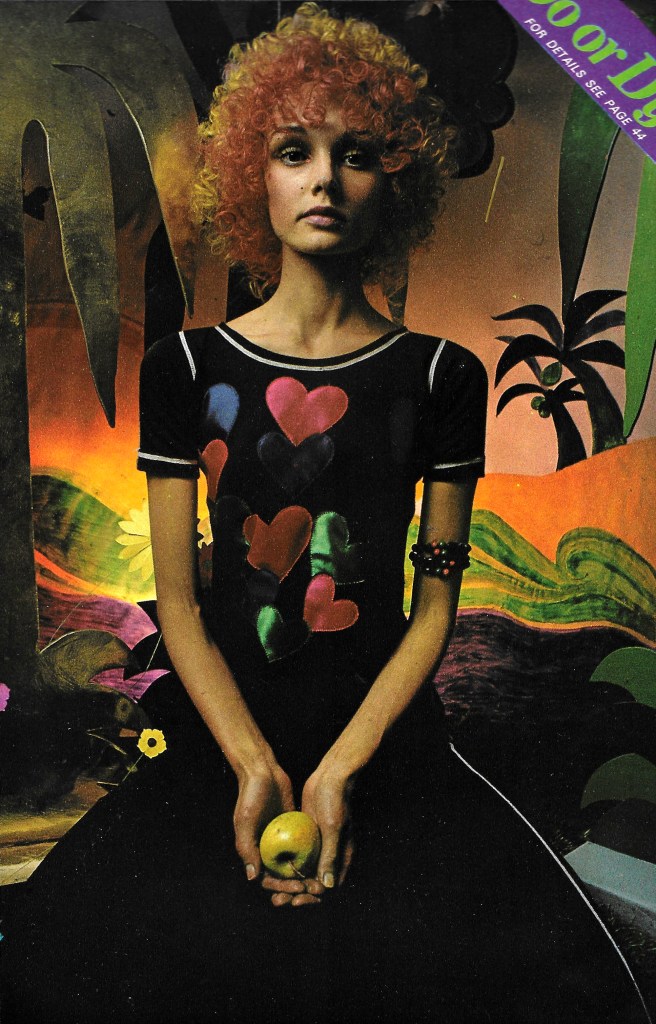
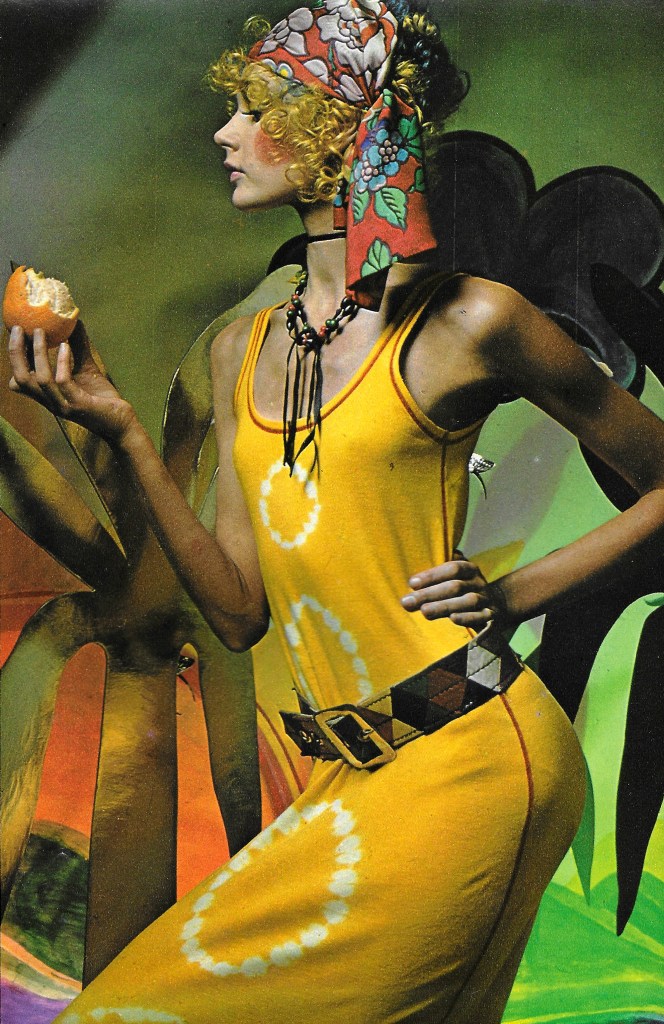
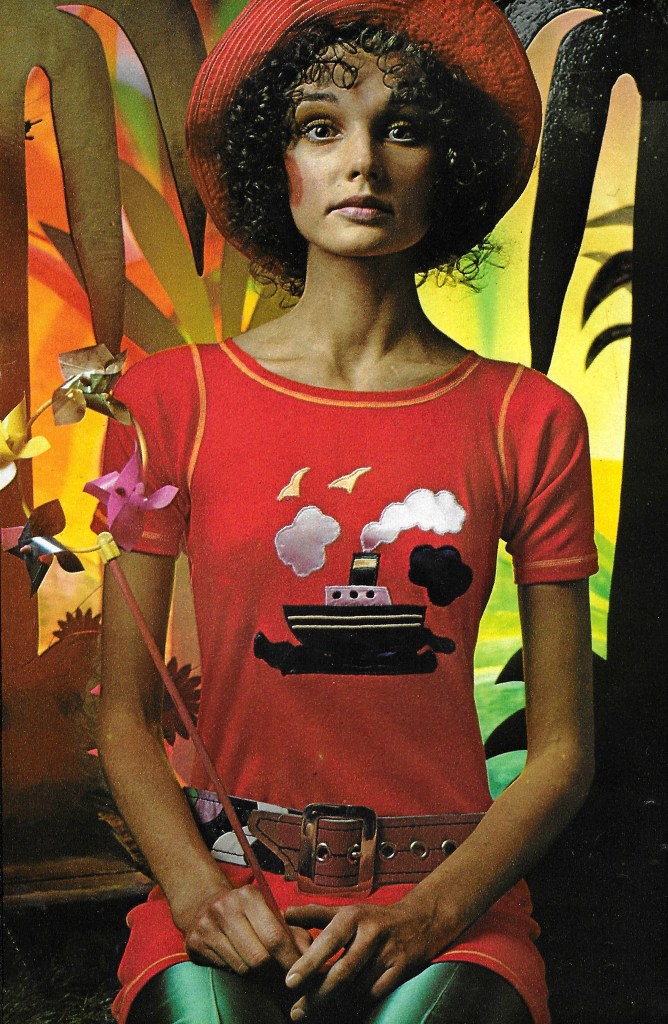
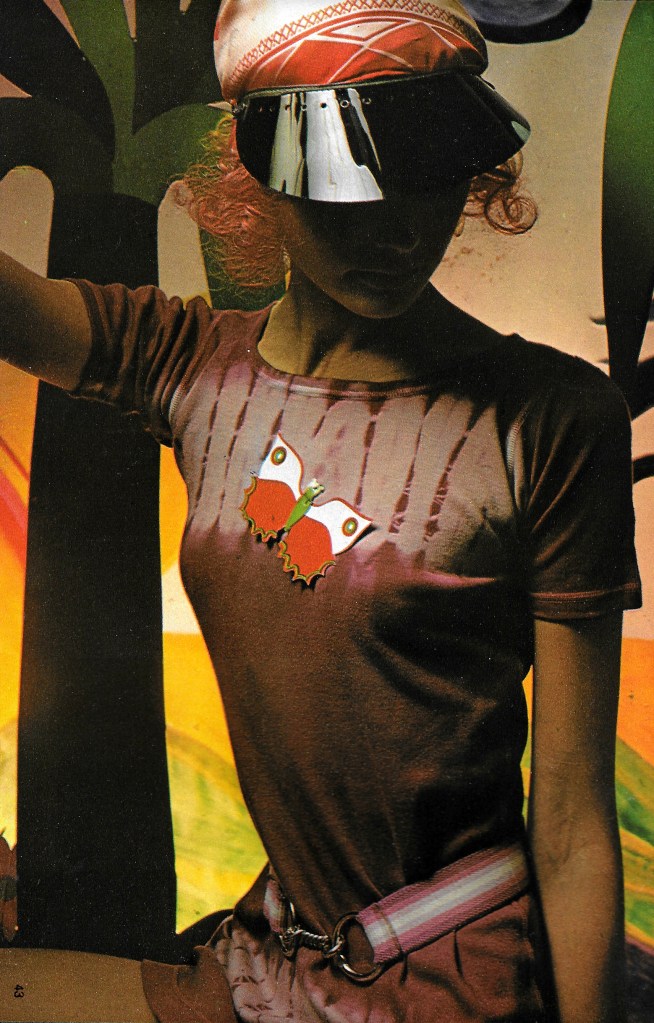
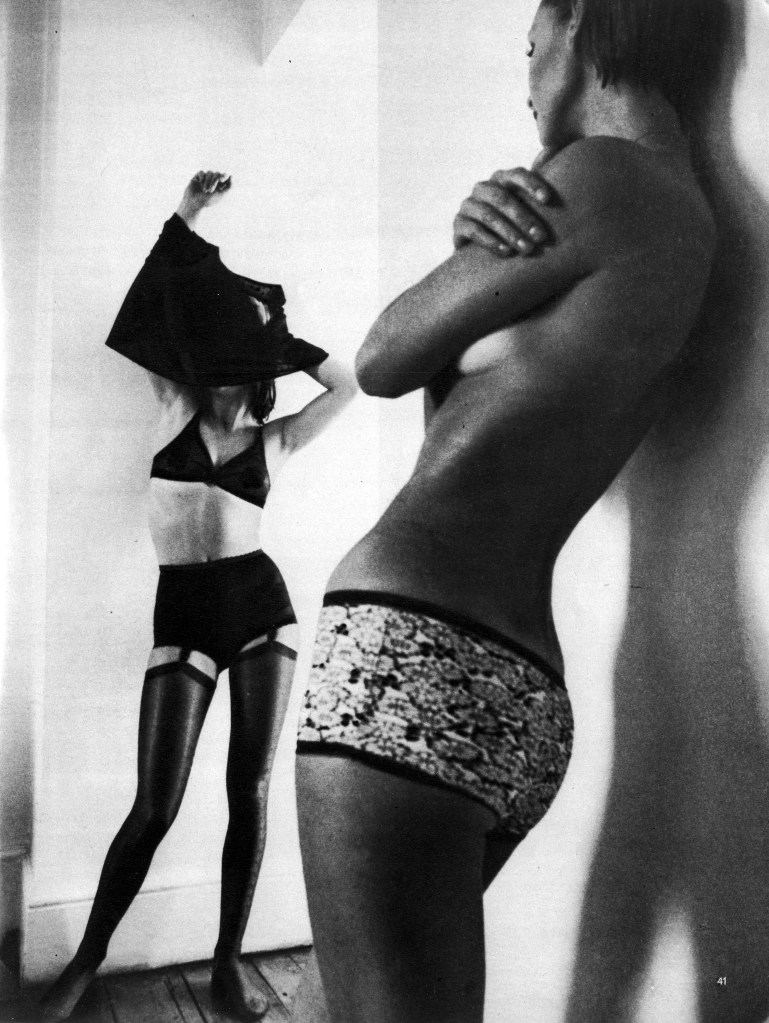
We know a girl… who can’t last the day without lashings of spray. We know a girl… who gets quite high on a bucket of tide. We know a girl… who gets no elation from dusty dehydration. We know a girl… who gets all her kicks from aquatic dips. We know a girl… who can’t get enough of that H20 stuff. We know a girl… who’s got pneumonia.
Stunning editorial shot by Hans Feurer in two parts, half waterproof outerwear and half delicious underwear. Waterproofs next time…
Photographed by Hans Feurer in the Canary Islands.
Scanned from Honey, February 1970.

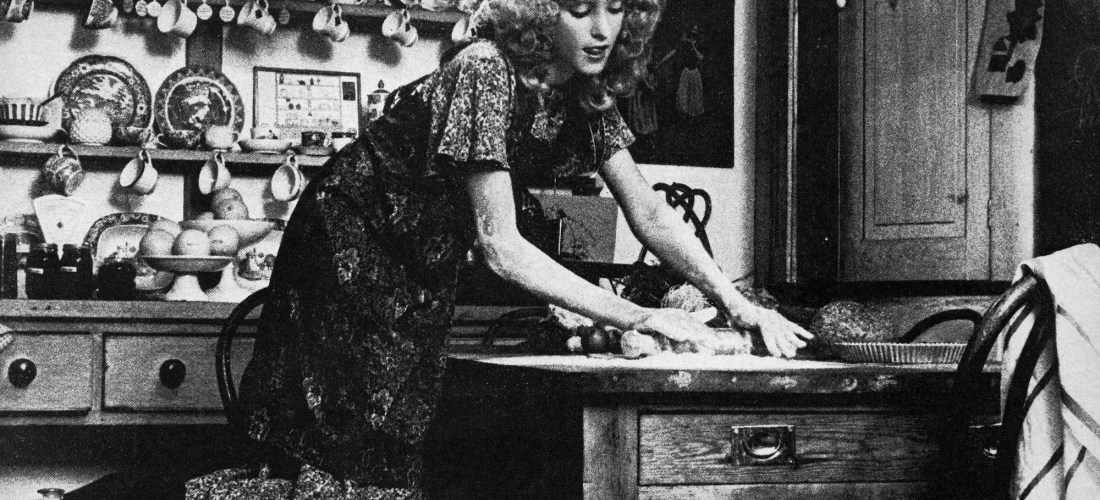
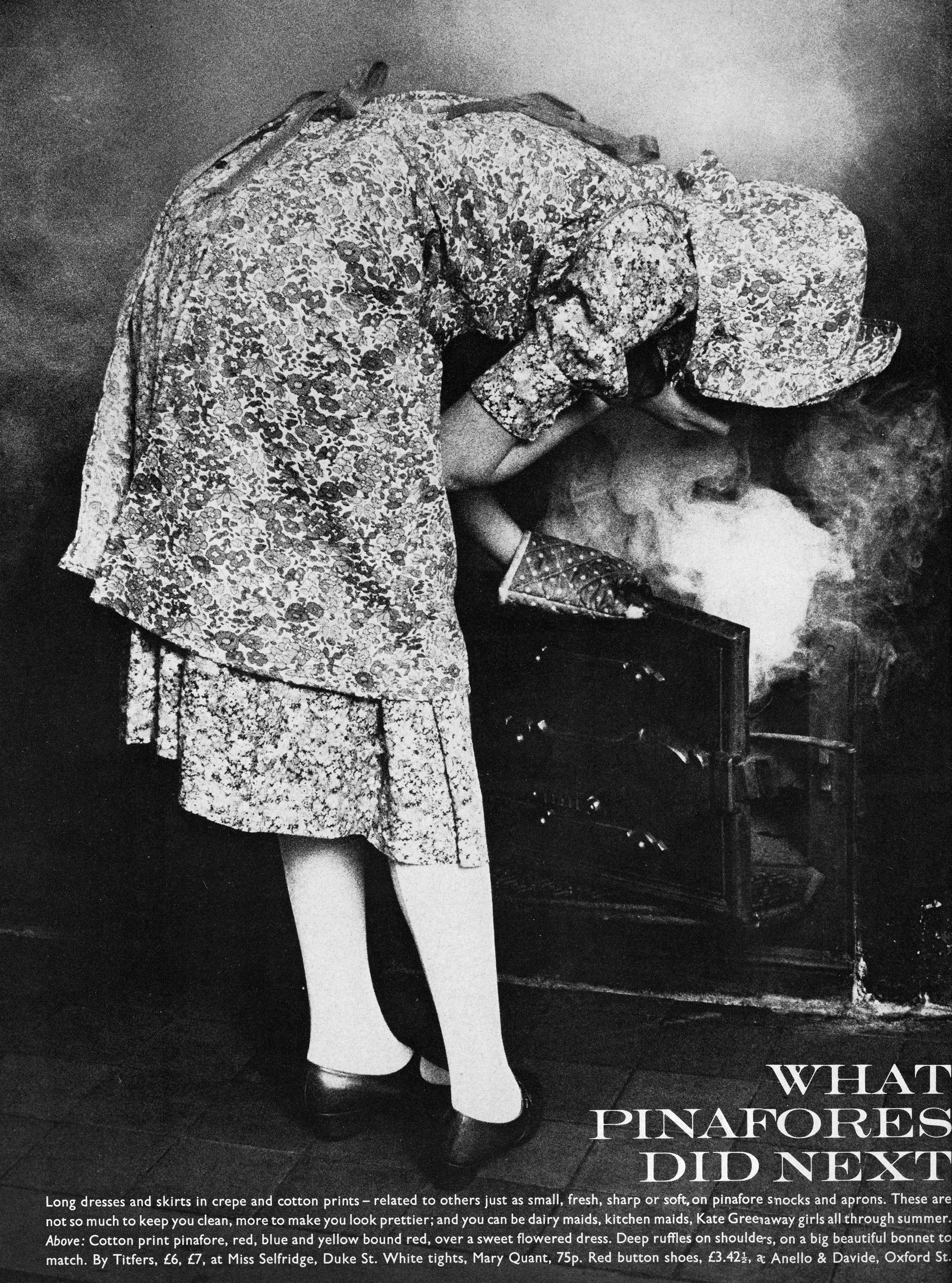
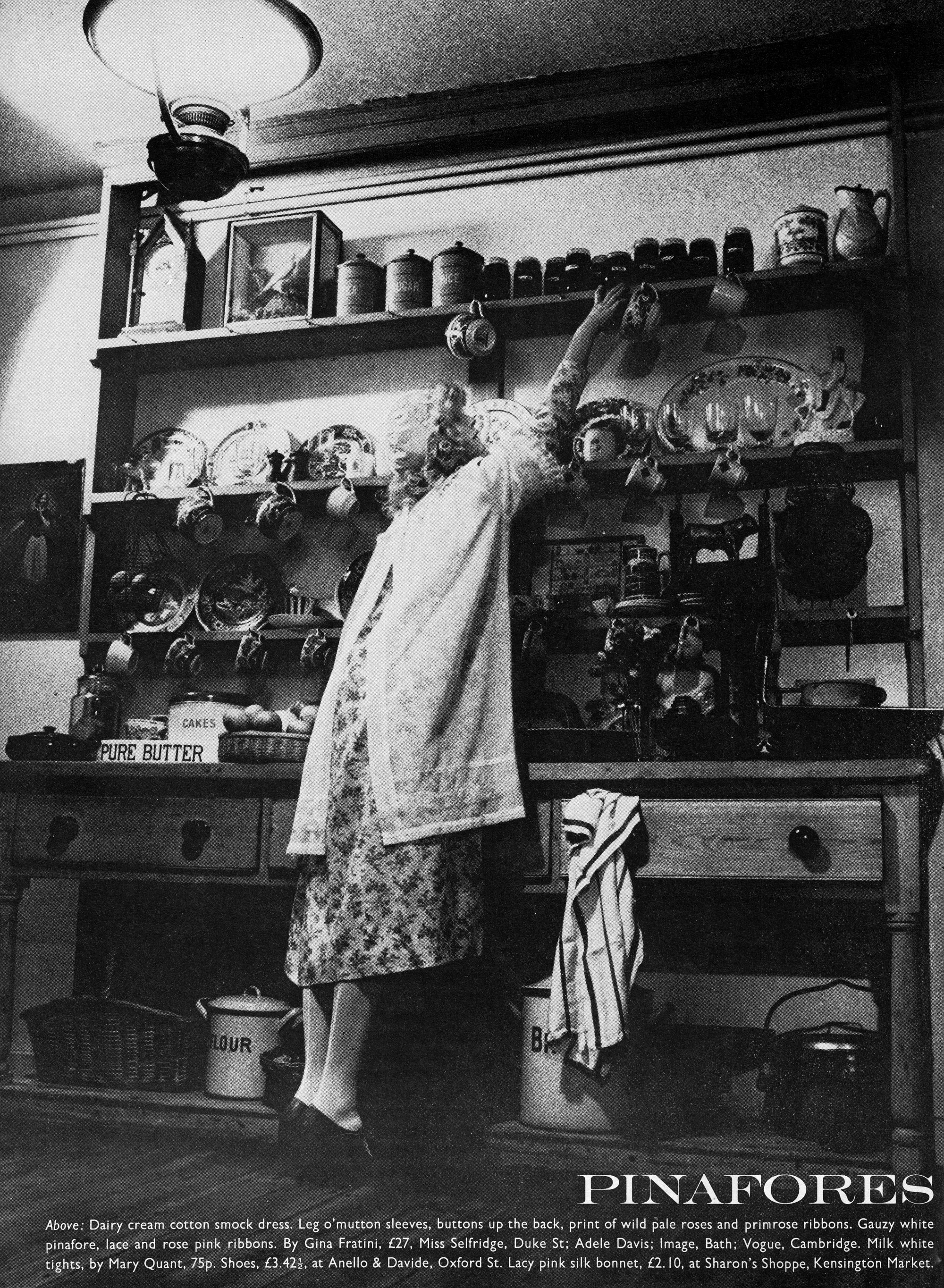
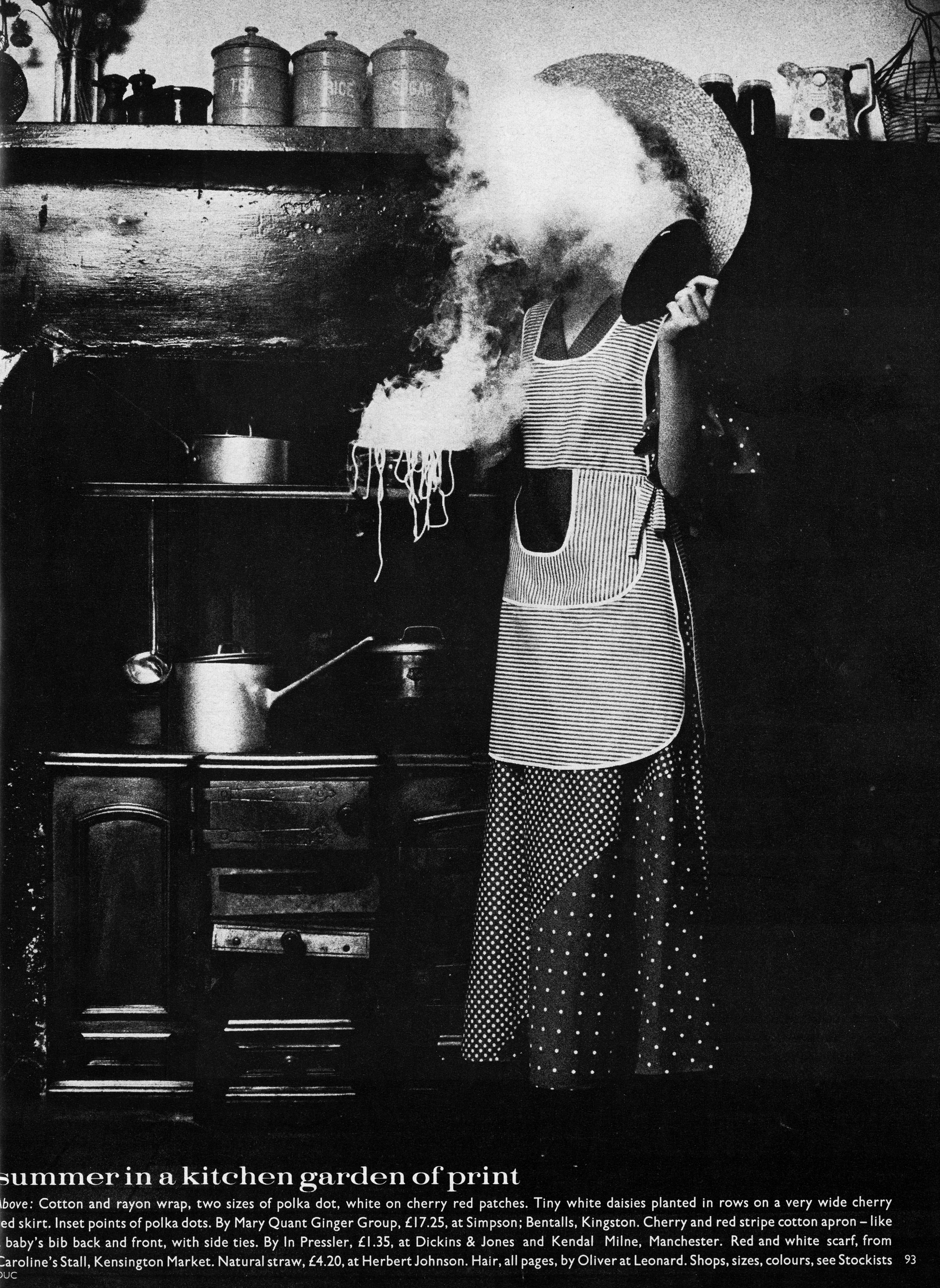
Long dresses and skirts in crepe and cotton prints – related to others just as small, fresh, sharp or soft, on pinafore smocks and aprons. These are not so much to keep you clean, more to make you look prettier; and you can be dairy maids, kitchen maids, Kate Greenaway girls all through summer.
And so began the kickback against all things clean, crisp and space age…
Photographed by Duc.
Scanned from Vogue, April 1971.

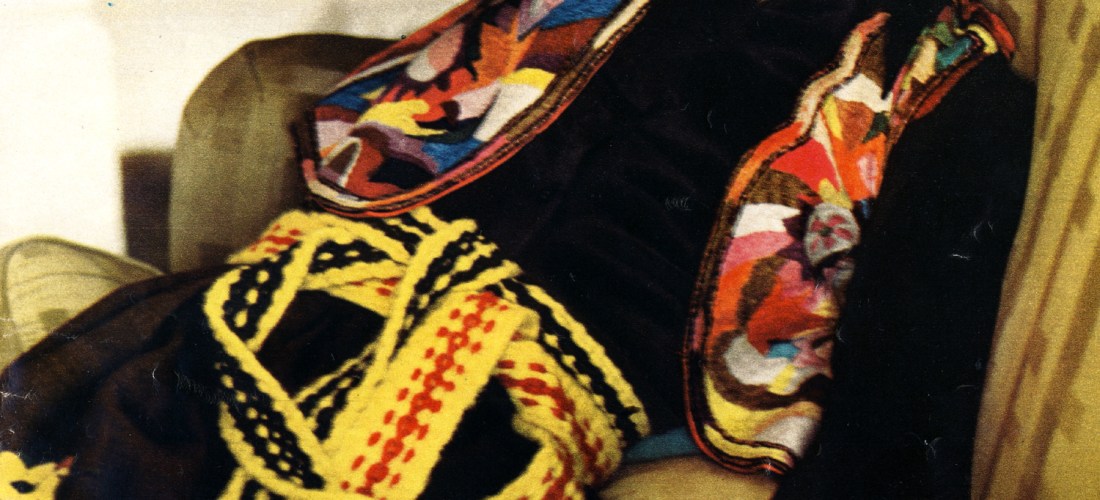
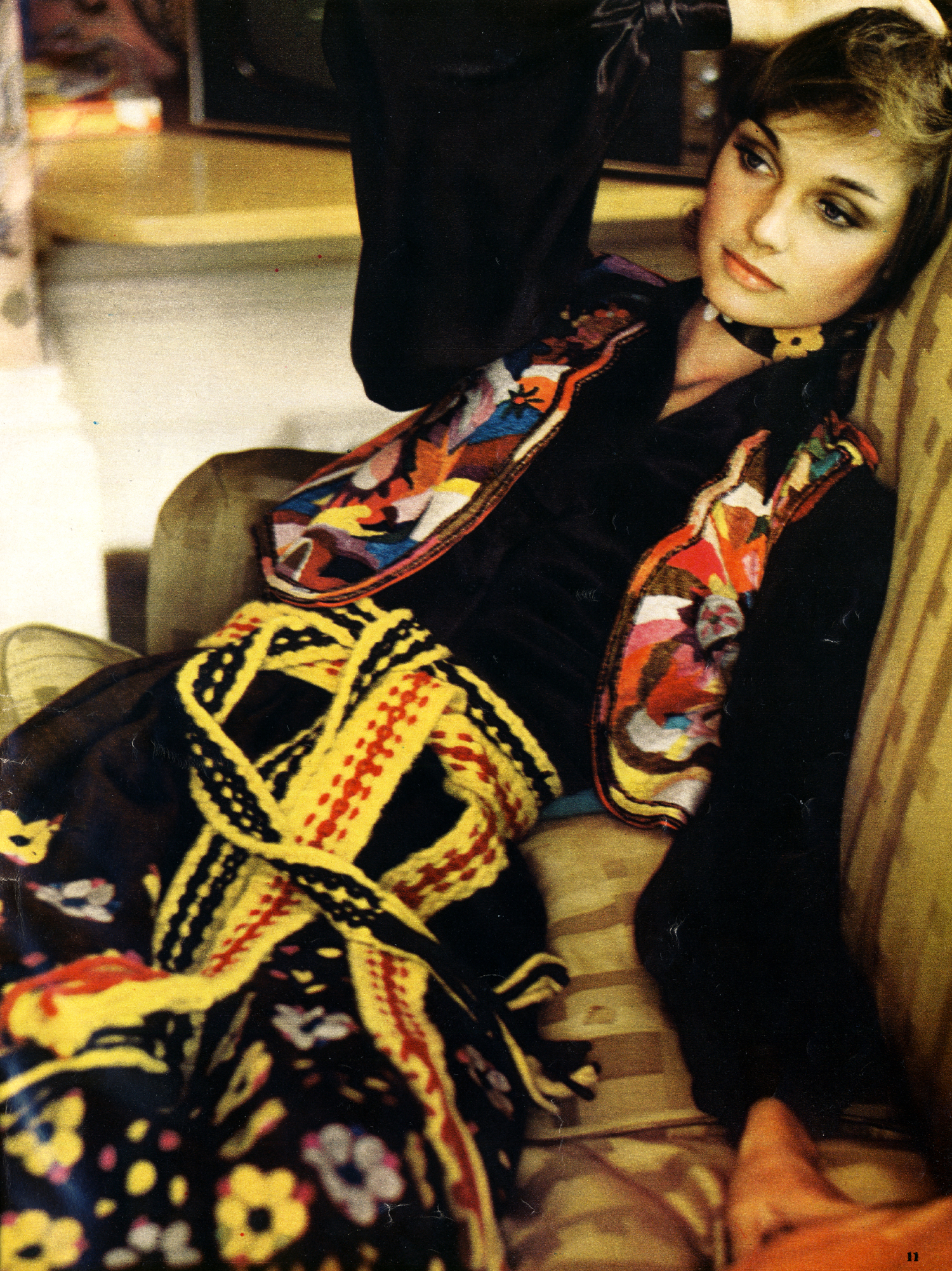
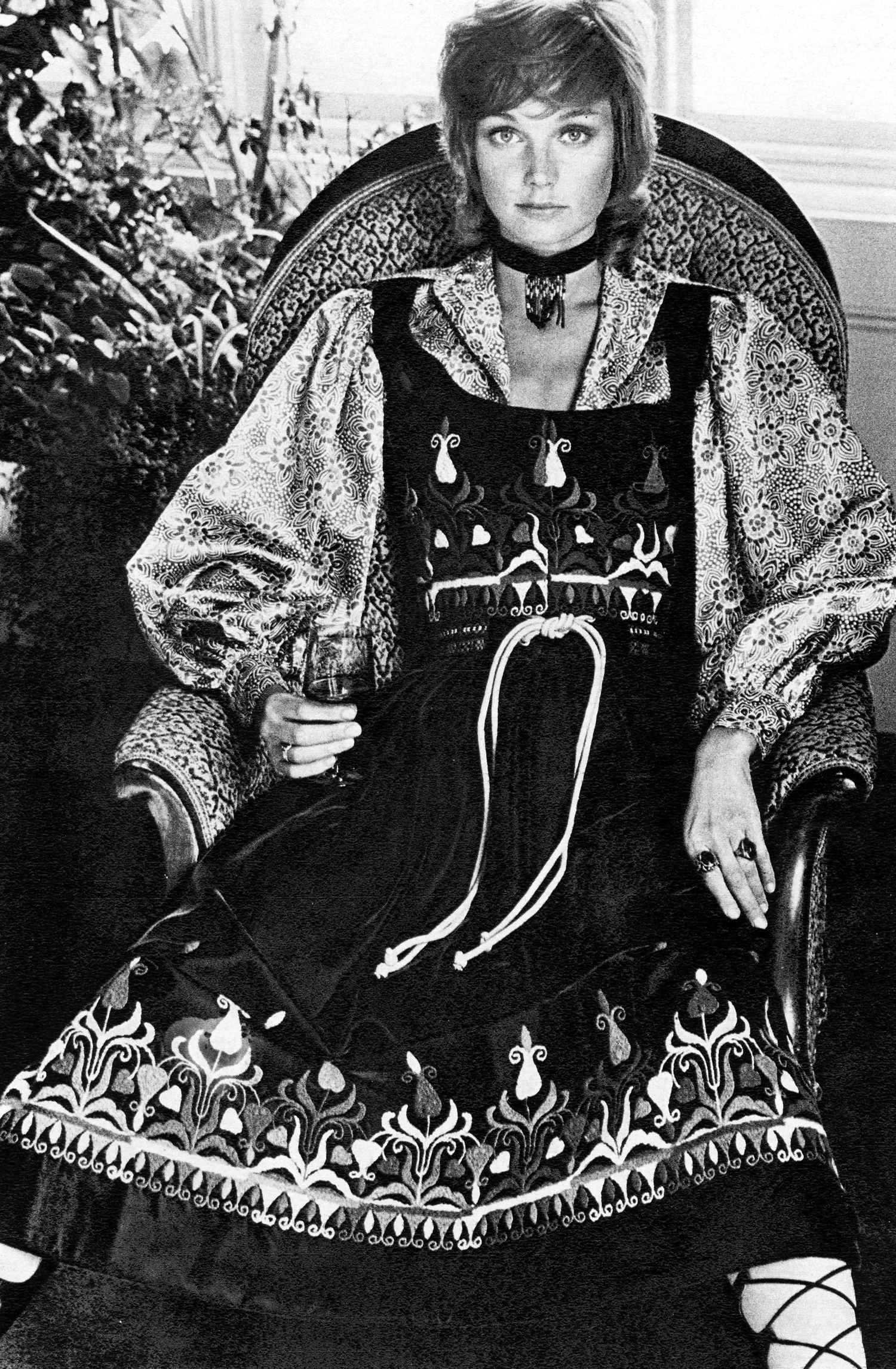
Every designer is saying it loudly, clearly, boldly, prettily… the hand-made look is here. Maybe it started as a reaction against the badly-made, thrown-together, hotch-potched dolly era; maybe this reaction set the tide running for antique markets where painstaking workmanship could be picked up still; maybe it’s that elusive feeling in the air that a designer’s sensitive seismograph picks up and translates in his own distinctive handwriting. Whatever it is – it’s here.
Jorn Langberg of Christian Dior – London plots it out in warm brown velvet, got together with a brief, embroidered waistcoat and a deeply embroidered peasant skirt… at the other end of the scale the Dress Den at Kensington Antique Market tops a thick aubergine cotton skirt spilled with bright wool flowers with a scrap of bolero, pictorially embroidered over every centimetre of the scalloped front. If you’re skilled with a needle, have a good eye for colour and shape there’s no reason why you can’t put yourself ahead of the game. But this is a painstaking look, a one-off original look that can’t be tossed off in an evening by a hopeful but bodgy amateur needlewoman.
Both shirts by Jeff Banks; all accessories from Kensington Antique Market.
Fashion by Lorna Cattell.
Photographed by Frank Horvat.
Scanned by Miss Peelpants from Vanity Fair, January 1971.
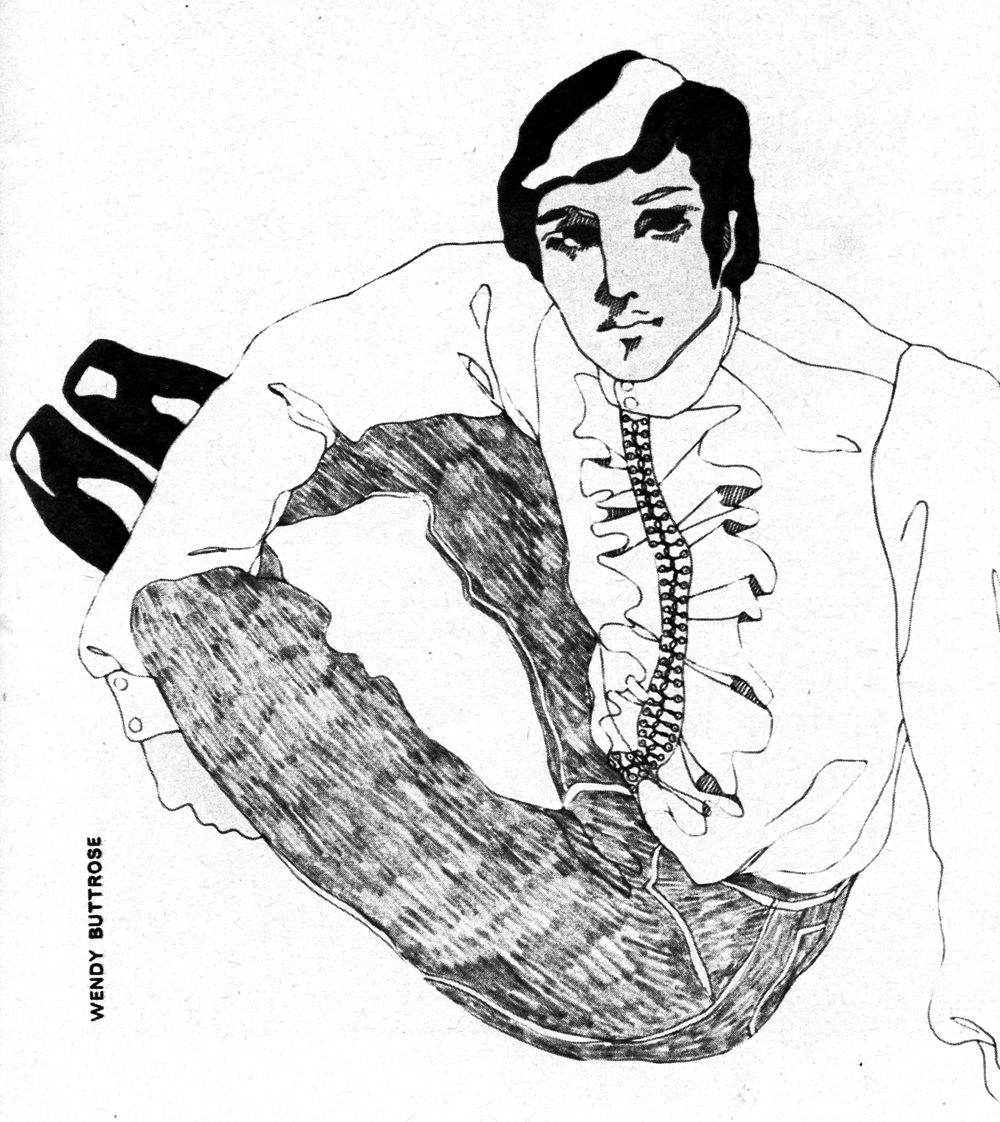
Have just formed a new organisation. It’s called SPOCC or the Society for the Protection of Clothes Customers. Idea came last night when I collected a couple of suits from the cleaners, only to find that the shoulder padding of one jacket was lost somewhere down the sleeve, and the trousers, supposed to be drip dry, were wrinkled like a Dutch dyke. The first suit came from Carnaby Street, the second from the Kings Road. Jose, my flat-mate, tried to pacify me by saying, “I thought you said clothes now are fashionable and short-lived. So what do you expect?” Simply that a suit shouldn’t disappear at the first clean! I accept built-in obsolescence and all those rubbishy excuses for using cheap materials, but I expect a suit to last a year, not a month. How about you? Let me know what you think … it might add up to some interesting revelations. Like the super trousers in the sketch. They’re Newman jeans from France; they cost much more than English or American but, in my view, are twice as good. I got a pair from the Heavy Metal Kids in the Kensington Market for £5. Elsewhere you can pay up to 8 gns. Shirts are another racket. The shirt here looks as if it costs 10 gns., and so it can at some places. In fact, it’s made by a man called Bryan King, who works in a Queensway attic, turning out great shirts handmade, frilled, tapered, for £2—£4, and sells them at his stall, Mother Wouldn’t Like It, also in the Ken Market. The tie-makers have become so ridiculously expensive that ties are out except for the odd occasion, and these shirts are as logical a take-over as the polo sweater. If Bryan can turn them out at this price, why can’t others? Remember—next time you think you’ve been rooked, let Luke SPOCC Jarvis know.
Written by Luke Jarvis.
Illustration by Wendy Buttrose.
Scanned by Miss Peelpants from Honey, March 1968.
…contrived in Van Dongen colours.
Gala Mitchell photographed by Barry Lategan.
Make-up by Estee Lauder. Hair by Daniel and Oliver of Leonard.
Black straw hat and ivory satin-ribboned blouse from Sharron’s Shoppe, Kensington Market.
Scanned by Miss Peelpants from Beauty In Vogue, 1970.
 Liz Eggleston