
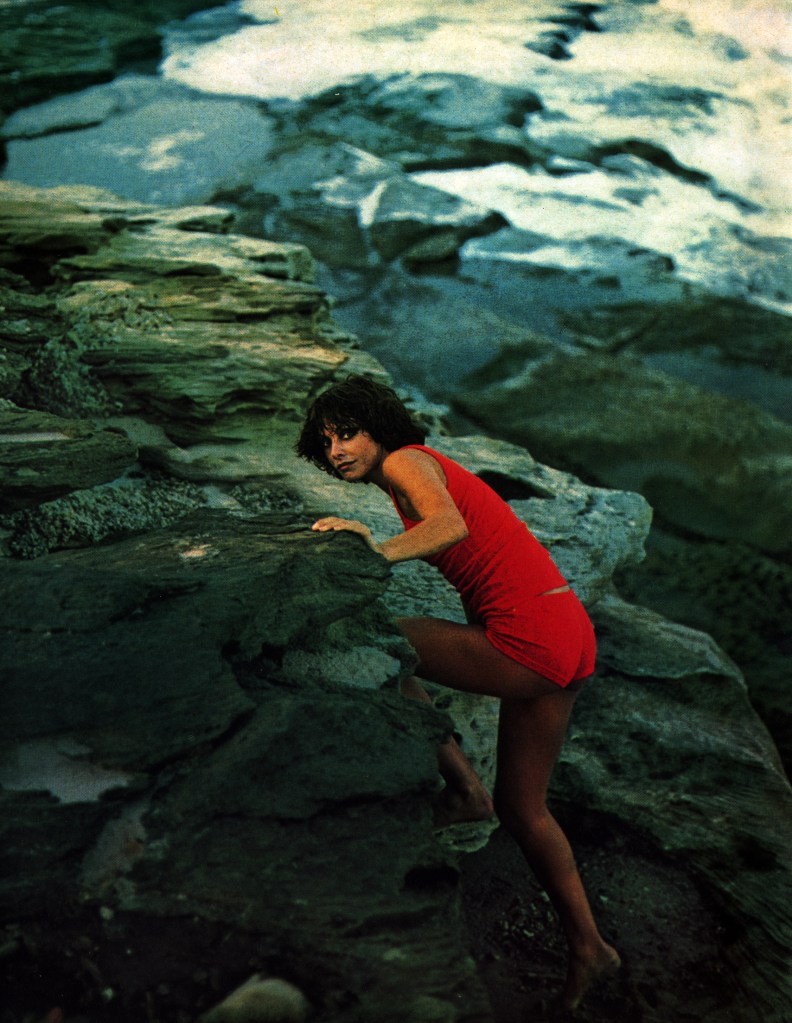
Manly beach, Australia. Rock pools, sea, magnificent scenery. If yours is going to be a clambering holiday, these T-shirts, shorts and fun tops are just the job.
Photographed by Nick Brokensha.
Scanned from 19 Magazine, July 1975.
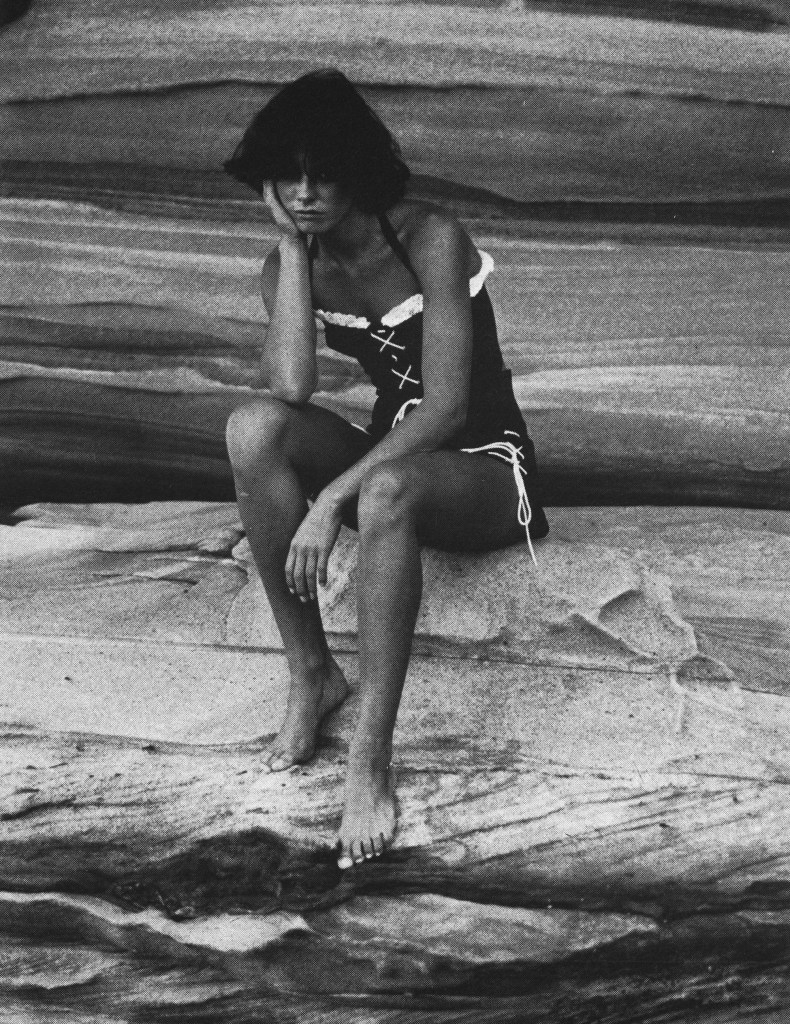
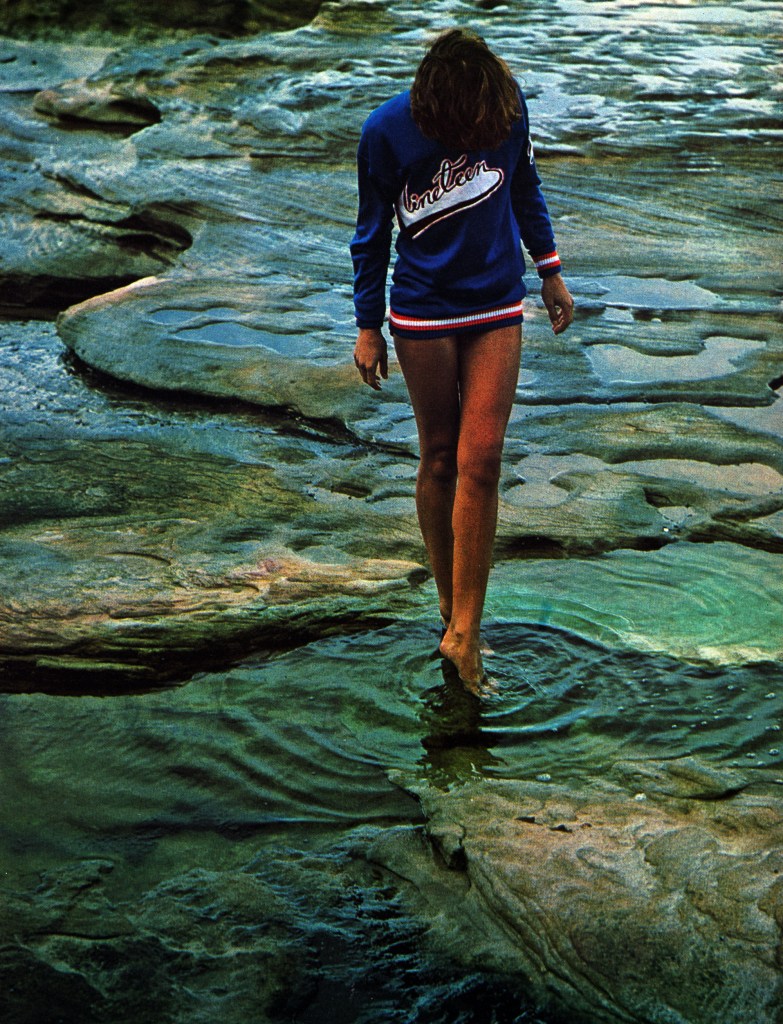
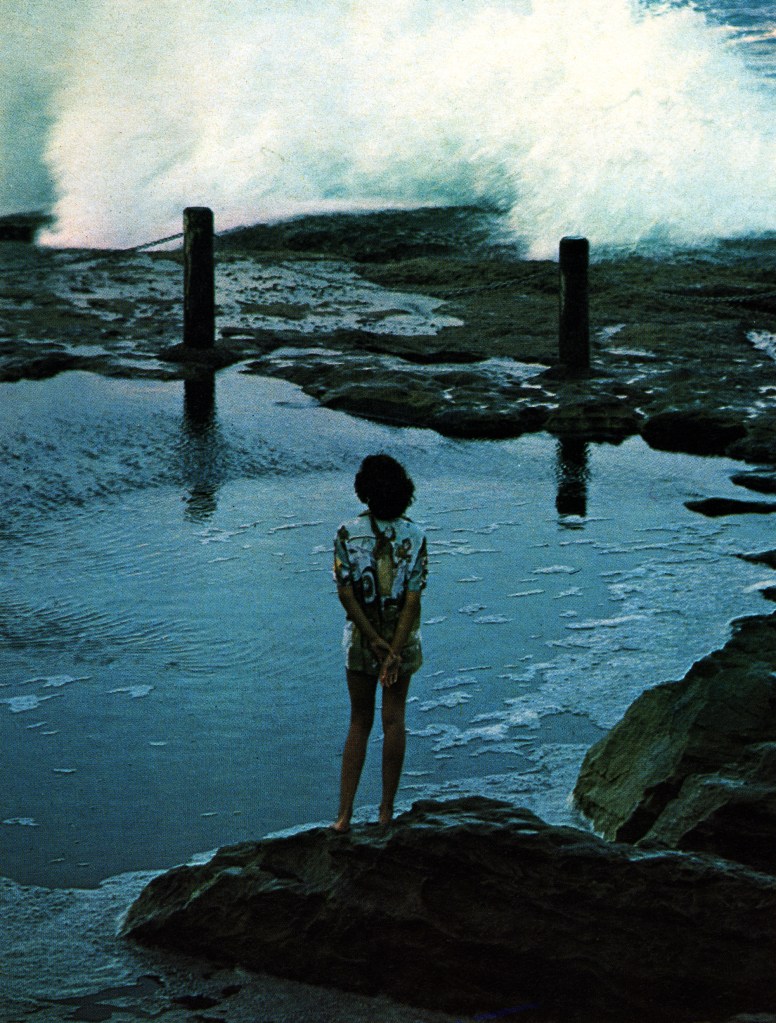
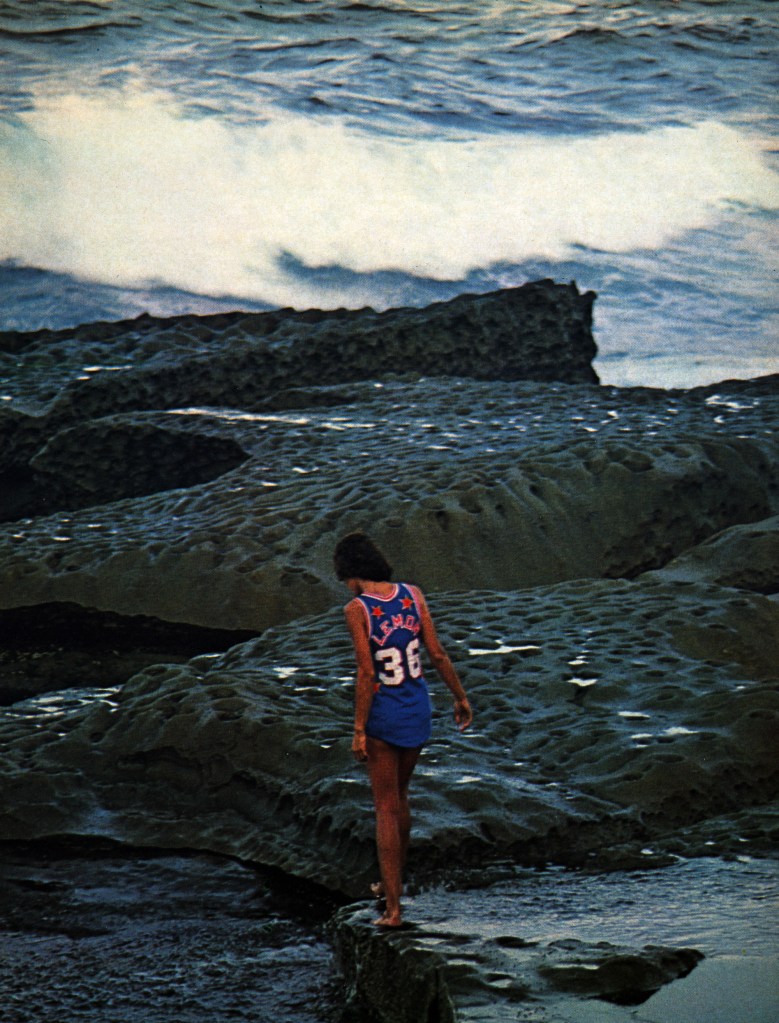
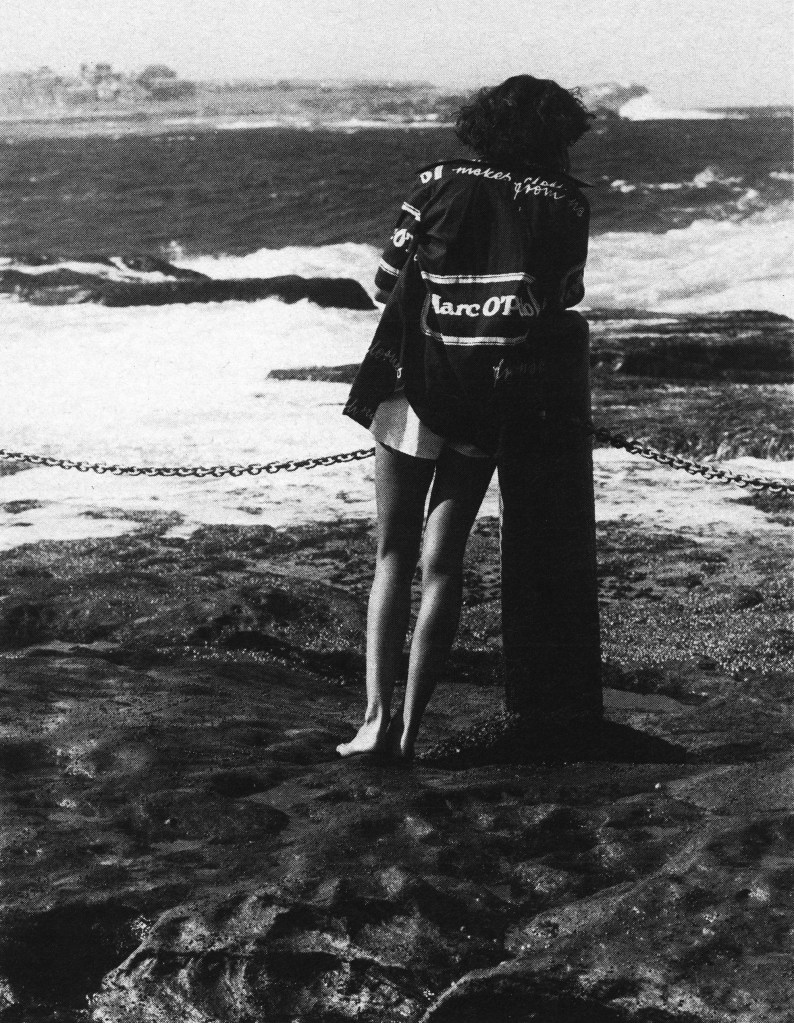
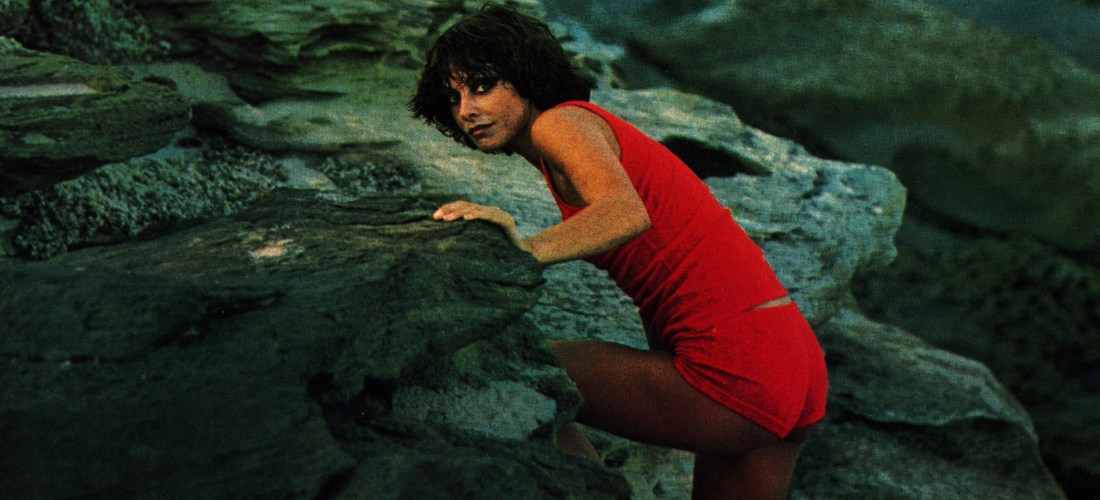
Manly beach, Australia. Rock pools, sea, magnificent scenery. If yours is going to be a clambering holiday, these T-shirts, shorts and fun tops are just the job.
Photographed by Nick Brokensha.
Scanned from 19 Magazine, July 1975.
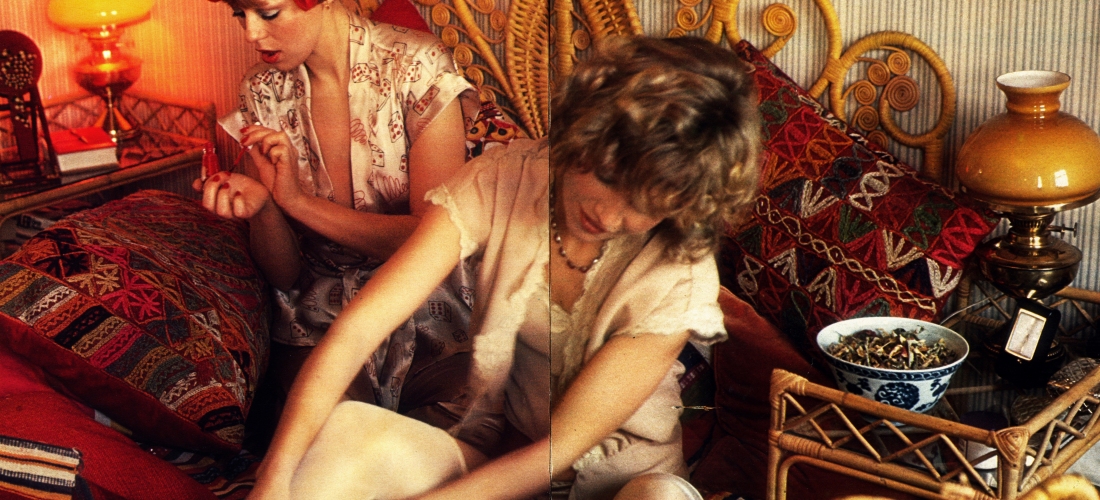
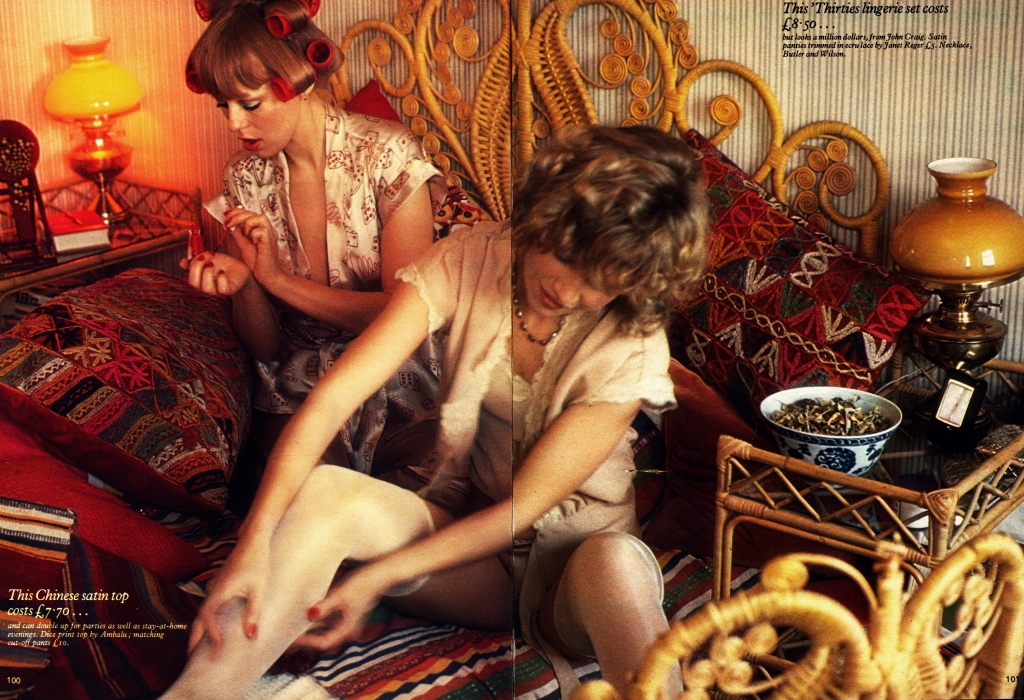
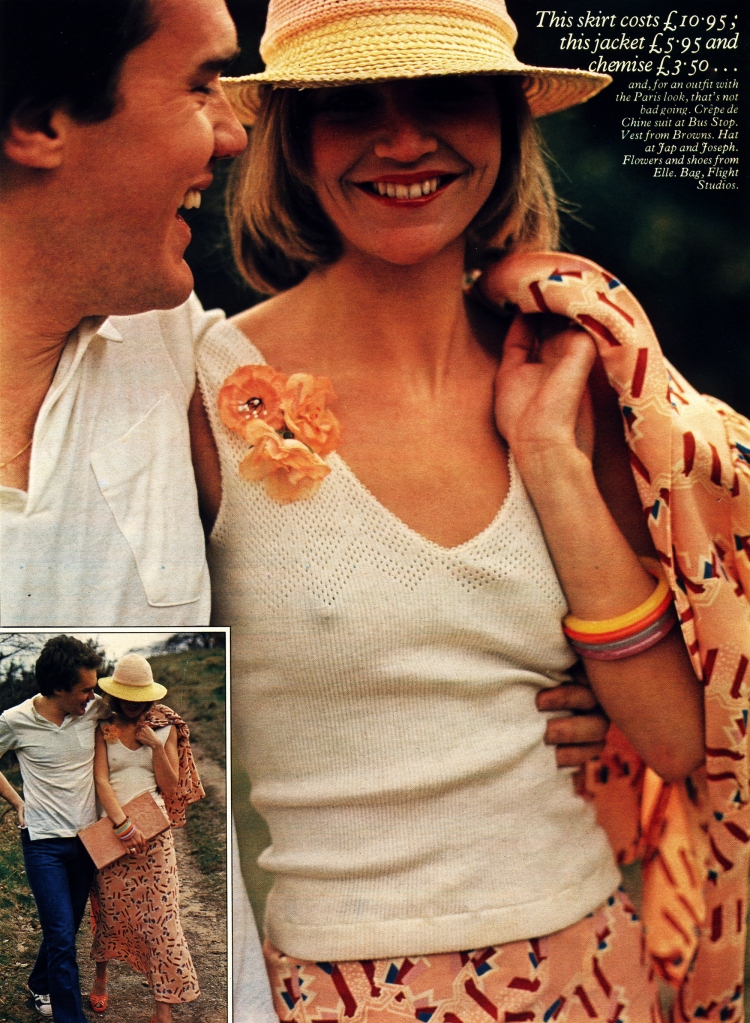
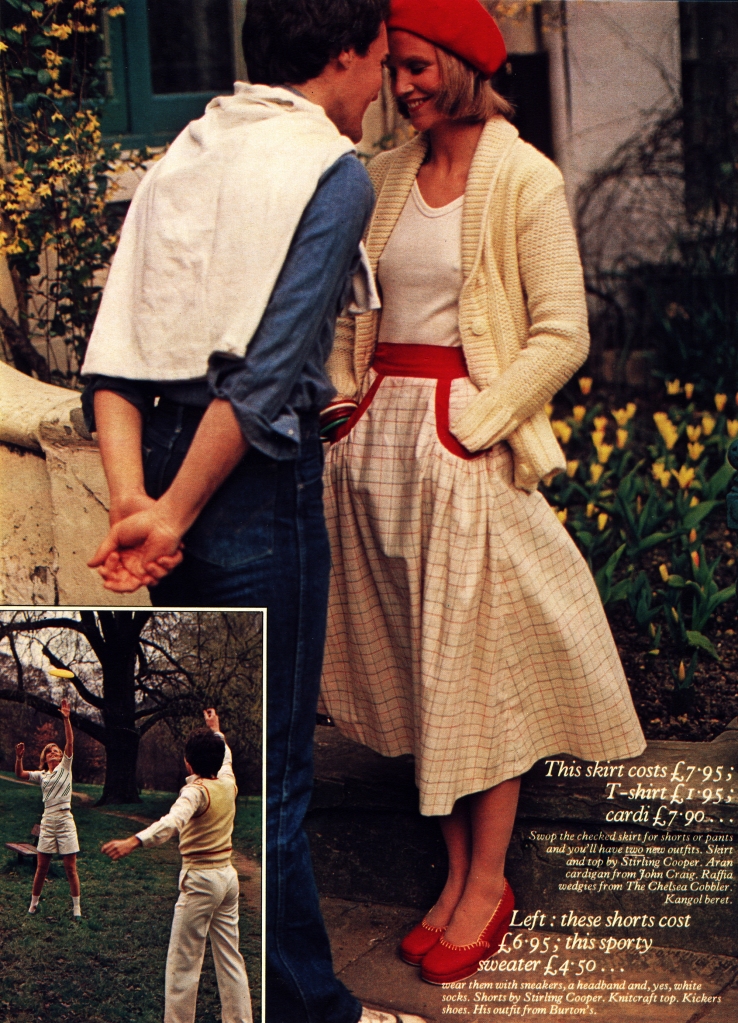
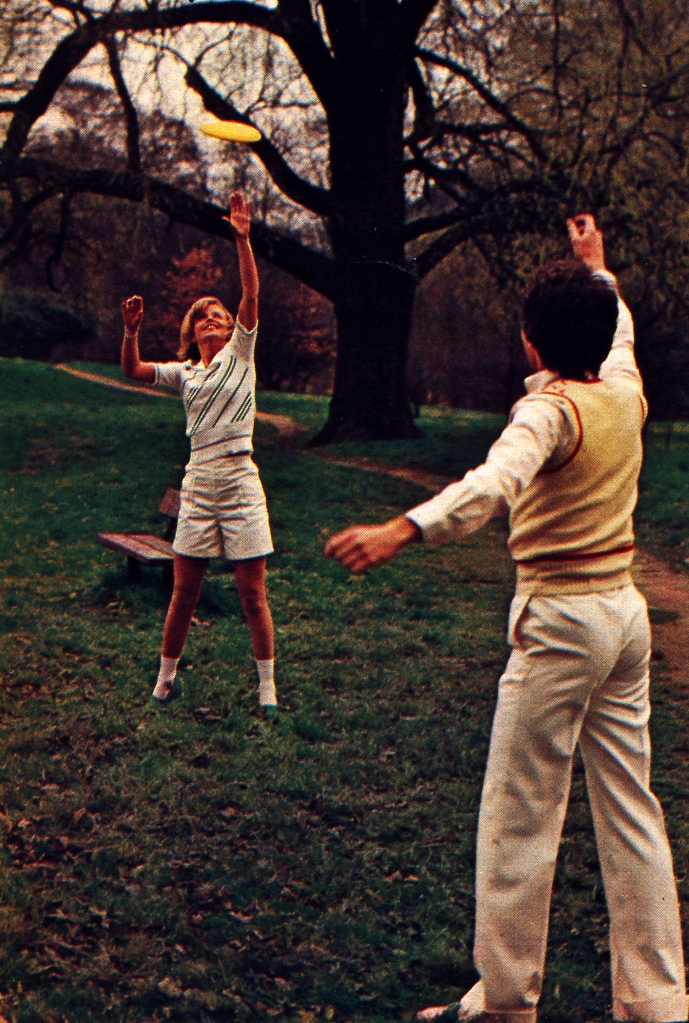
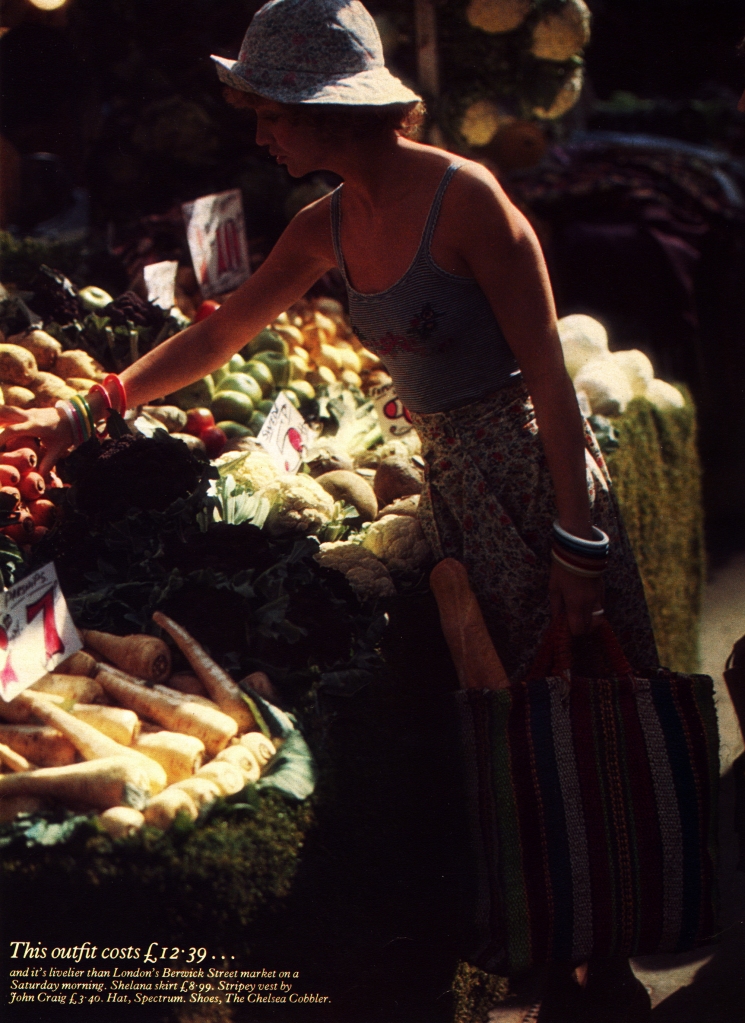
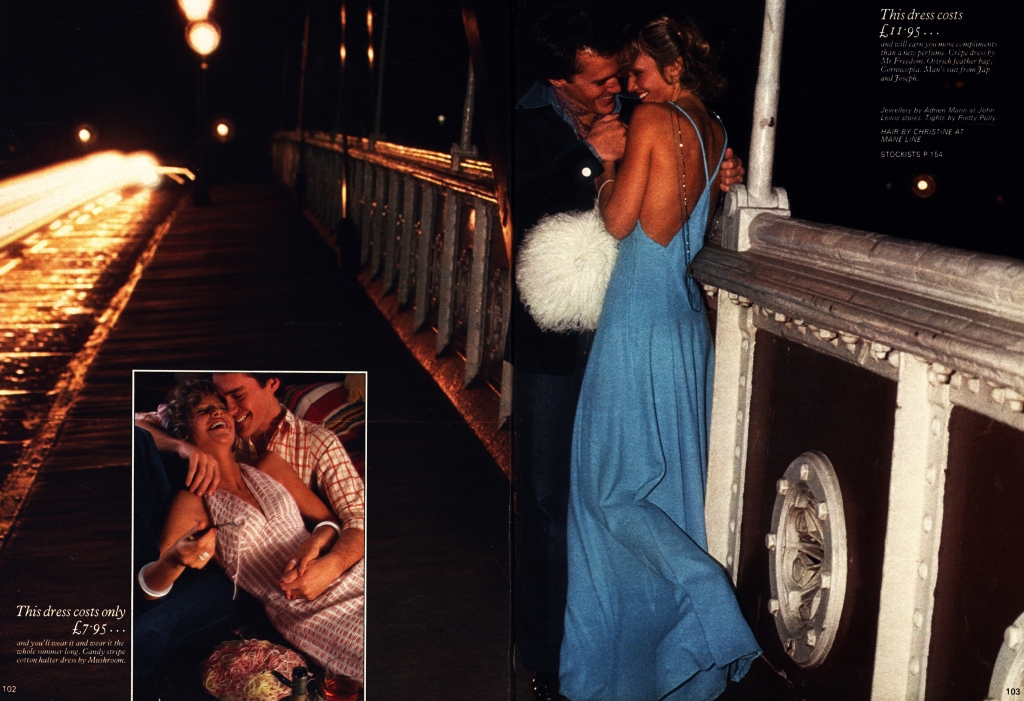
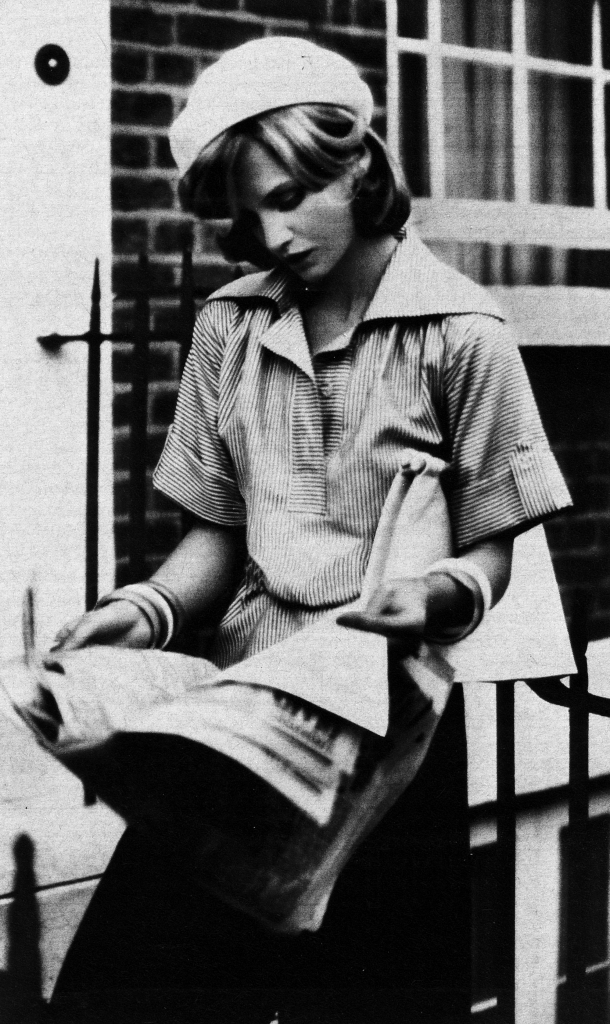
First-job salaries can present problems when you’re not used to juggling the rent around a new skirt or sweater. But there are ways—as you’ll see on these pages—of looking not just good, but positively great on a tight budget. Learn the rules of the “looking-good-on-a-little” game . . . remember that one pair of pants at £10+ will outlive two pairs that split whenever you sit down; that washable fabrics mean you’ll have no cleaning bills. Learn how to bleach and dye, starch and press properly—so you’ll be able to match vest tops and T-shirts to your new longer flowery skirts and keep them looking fresh. Invest in beautiful leather shoes: they last and look good if polished every day. Spend more on accessories —sometimes—than a new dress. Build your wardrobe around two or three colours—as crazy as you like—and find jolly extras to pull it all together. . . . This may be the summer you always wear a hat. Here is my choice of nine outfits . . . chic, very wearable and all cheap at the price. That’s fashion knowhow.
Fashion by Pattie Barron.
Photographed by Alex Chatelain.
Scanned from Cosmopolitan, July 1974.

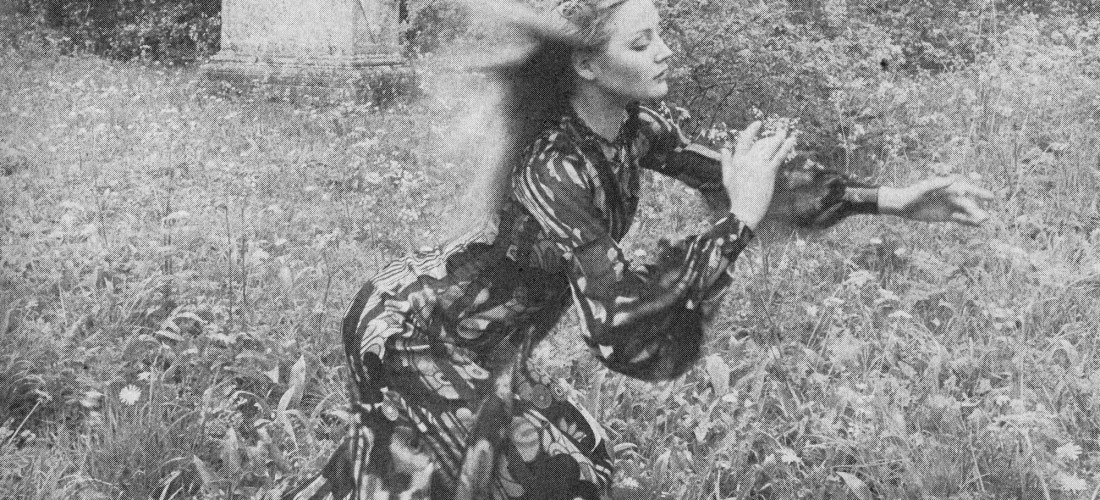
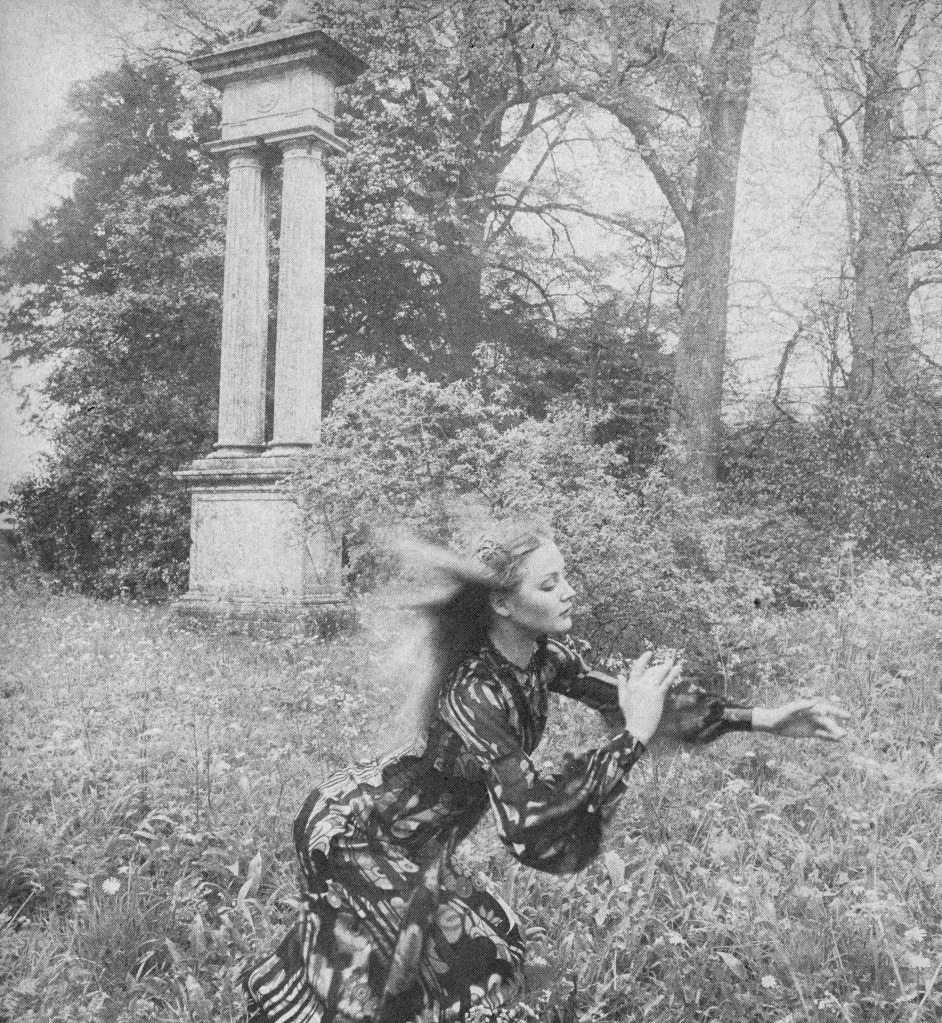
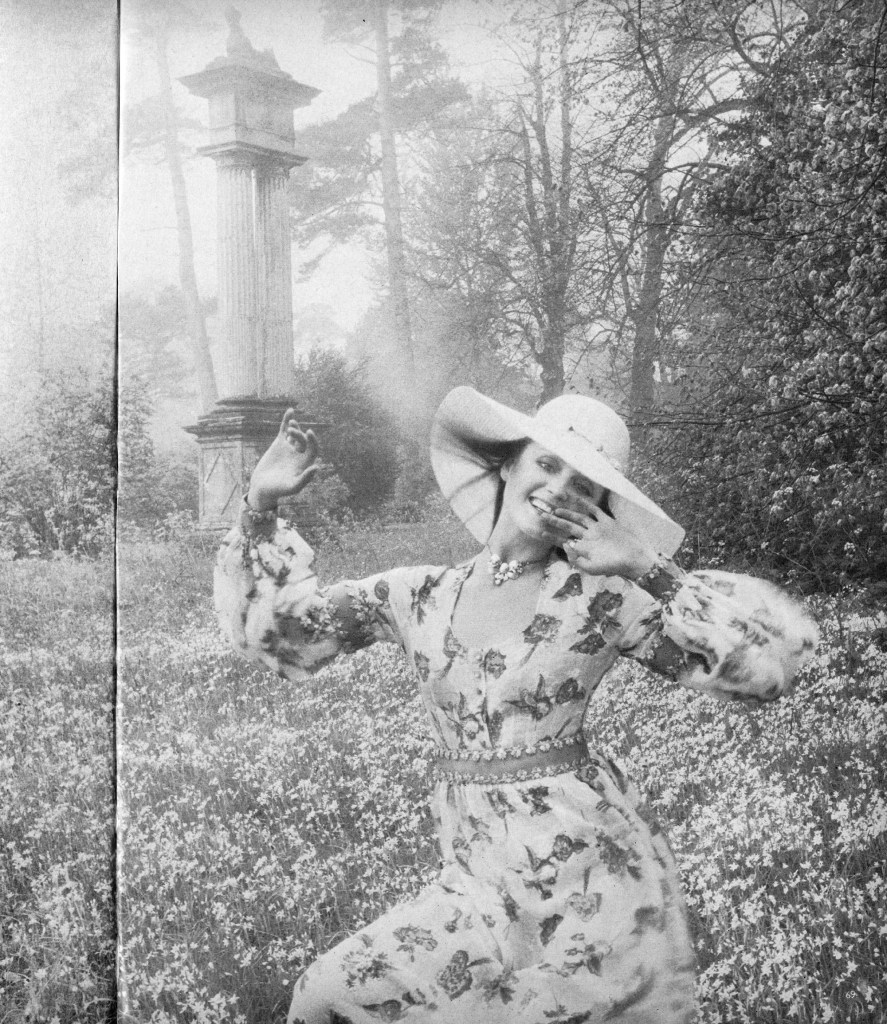
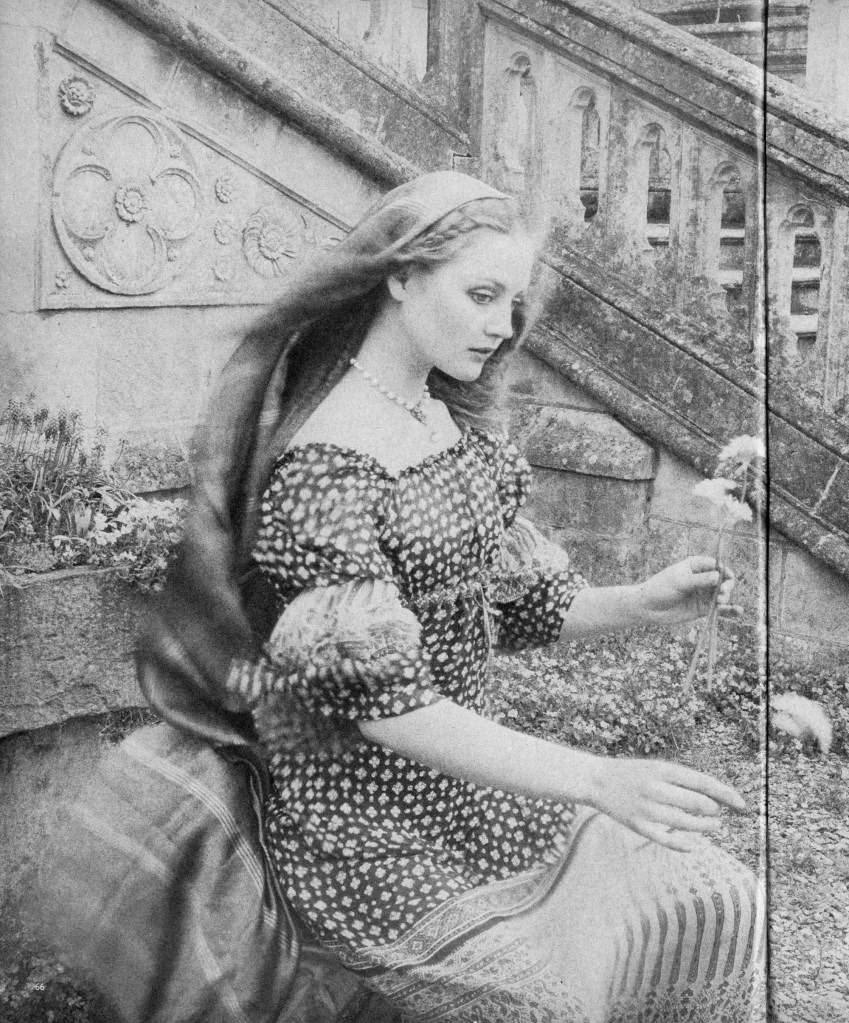
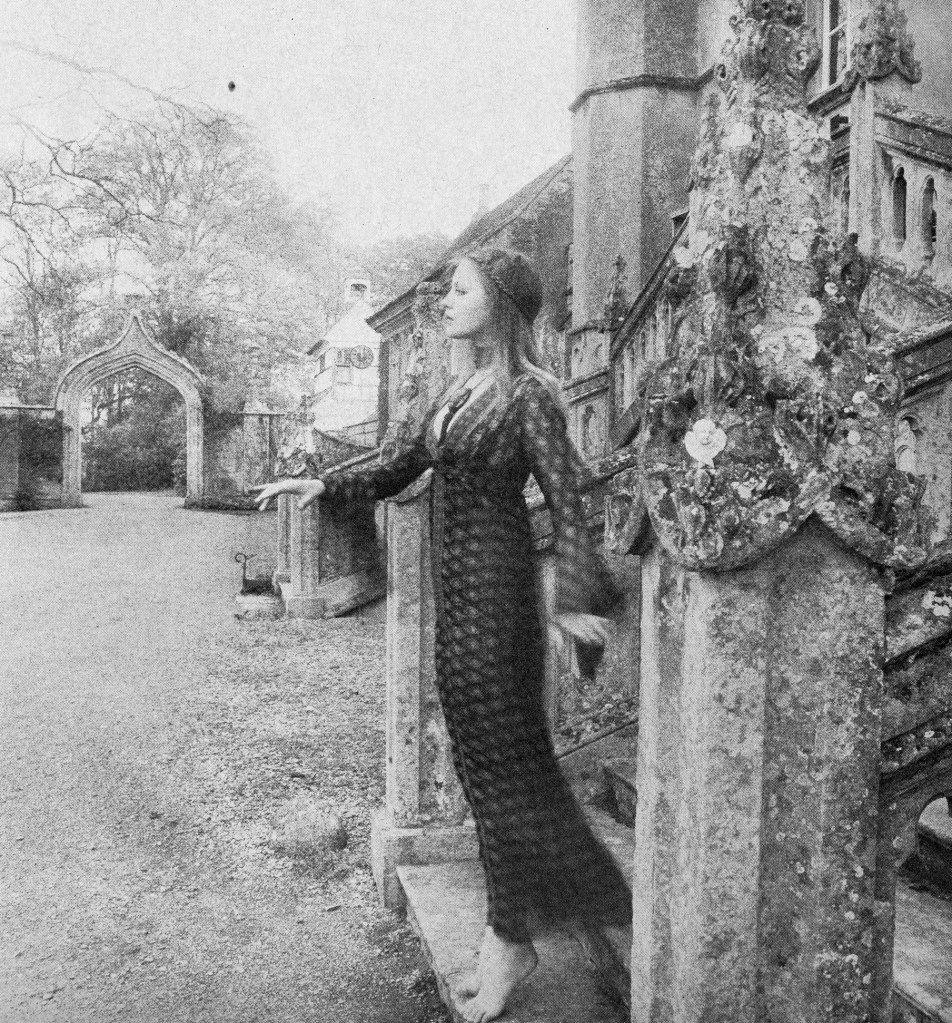
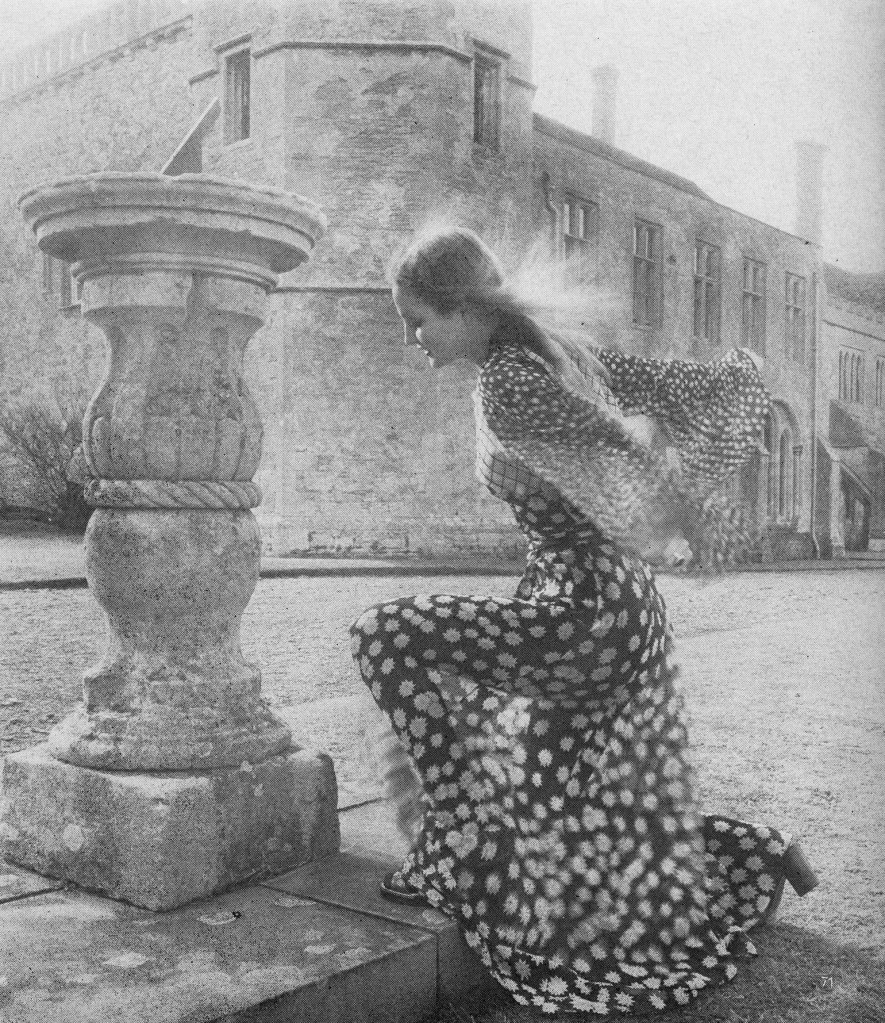
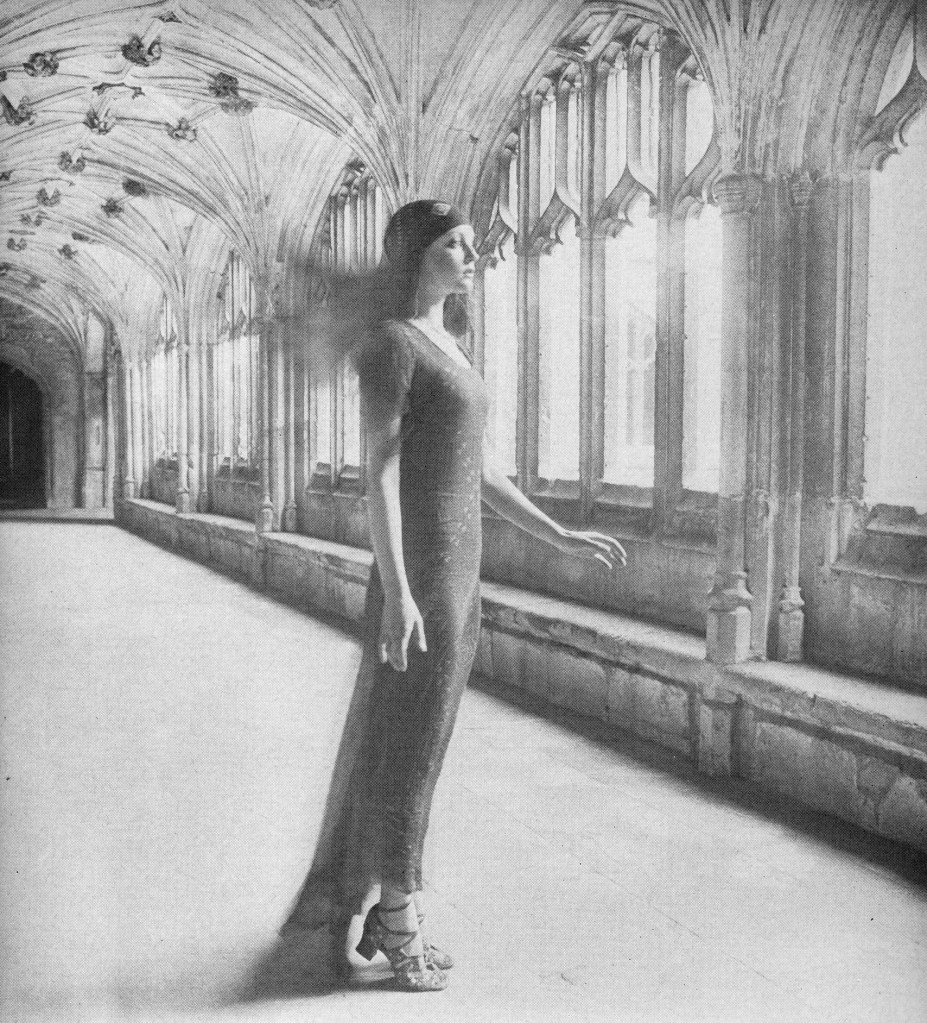
Following Gaudi’s thought “to be original, return to the origin”, following it down to Lacock Abbey in Wiltshire where William Fox Talbot invented the camera, Norman Parkinson photographed eight dresses conjured from pure air and gauze.
This is like an album where every song is a certified banger. From the model, to the frocks, to the photographer, to the photographer he’s referencing, everything is flawless. Except that I don’t own all these dresses.
Photographed by Norman Parkinson.
Modelled by Ingrid Boulting.
Photographed at Lacock Abbey.
Scanned from Vogue, July 1970.
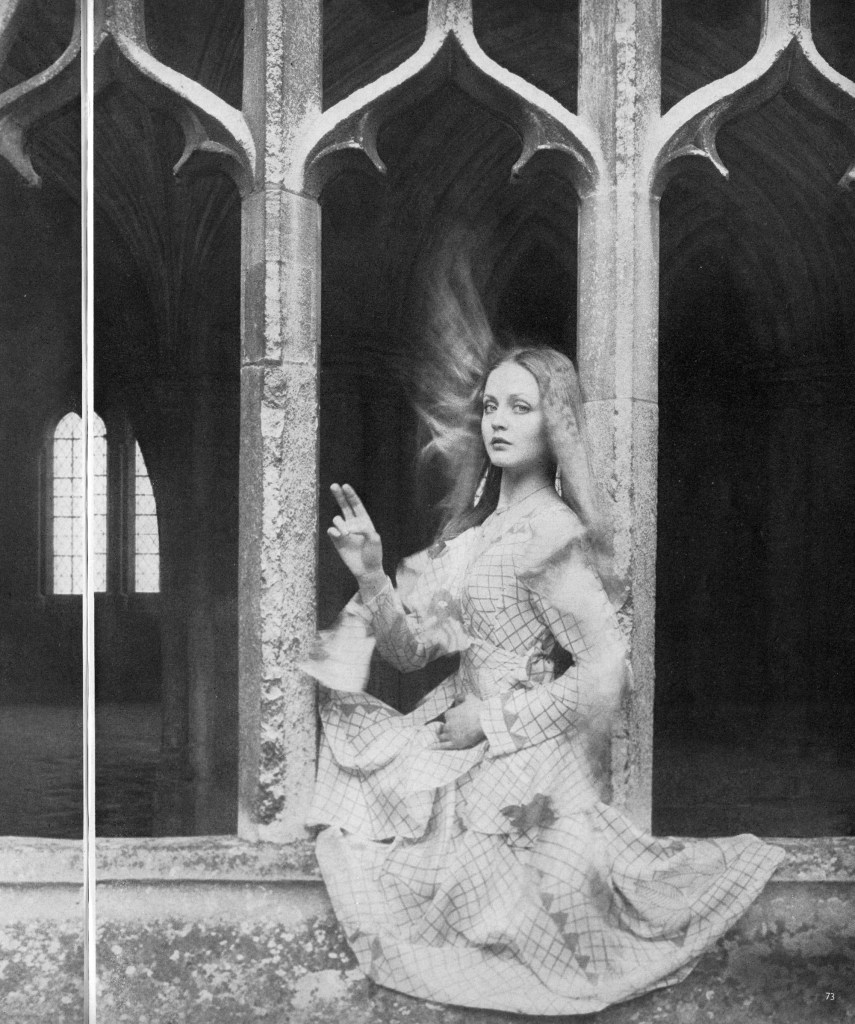
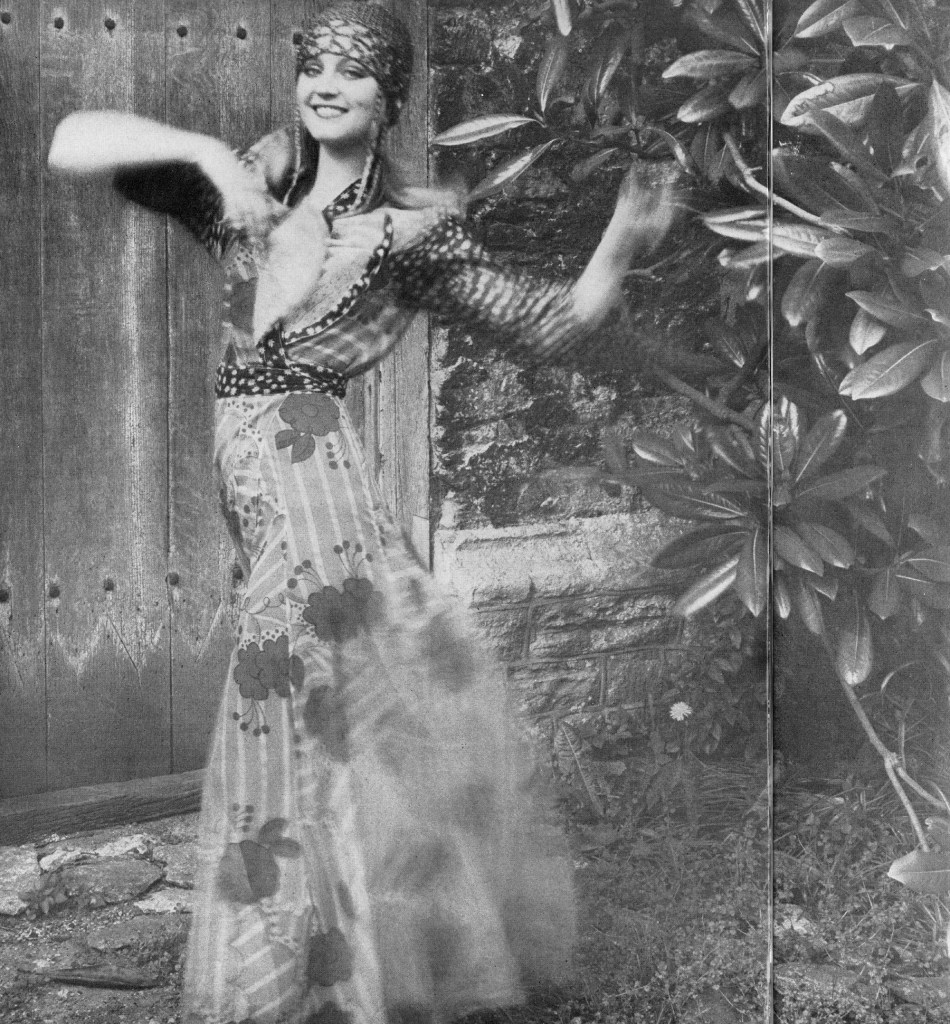

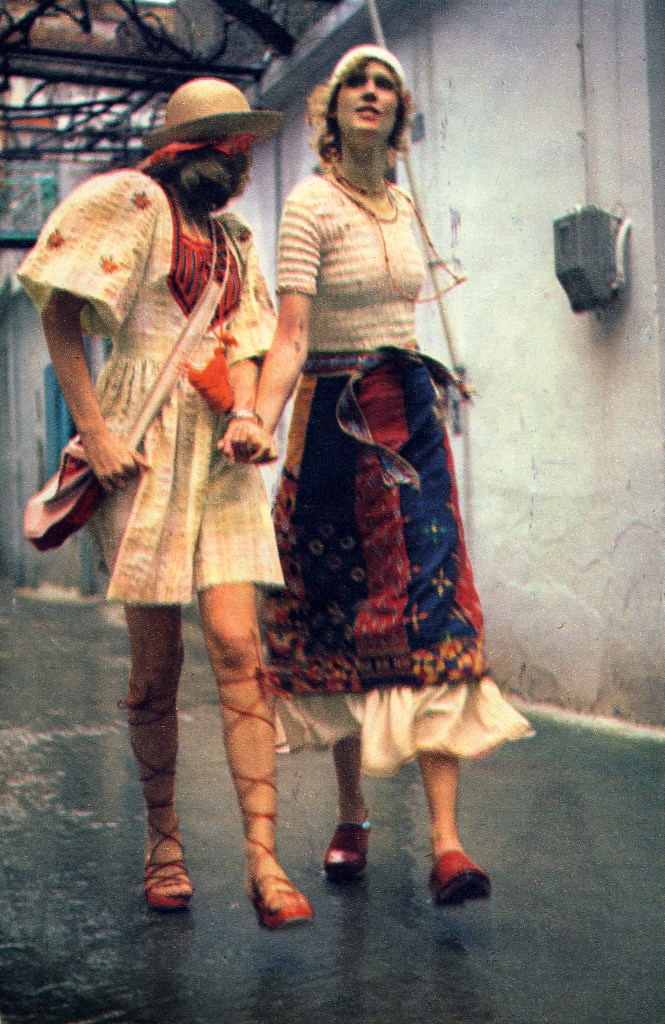
Sunny Spain conjured up visions of hot summer days in picturesque surroundings, ideal settings for 19’s summer fashions. And we had a fantastic oppotunity when 4S Travel arranged a trip to Malaga and Torremolinos. We flew BUA Super Jet to stay at the Hotel Al Andalus, within easy reach of the mountains overlooking the Costa del Sol. Here we discovered quaint villages, sun-drenched and white-washed, their customs and dress crystallised in the past. No cars to be seen, only mules and donkeys. Our clothes echoed the feel of these places – colours stark black and white, brightened with touches of gayer hues, clean hot printed cottons, soft peasant blouses, sandals, light fishnet shawls, casual sun hats. The garments are easy to take care of, and enhance a tan – midi skirts that button to above the knee and give alluring glimpses of brown thigh, and large brightly printed squares of fabric which can be used as shawls, or skirts tied at the side.
Making me yearn for a proper holiday. The closest I’ll get is looking at this editorial whilst sitting on the balcony, trying to avoid all humans for the time being. I hope it brightens your day as well…
Blonde model is Willy van Rooy.
Photographed by John Bishop.
Scanned from 19 Magazine, July 1970.


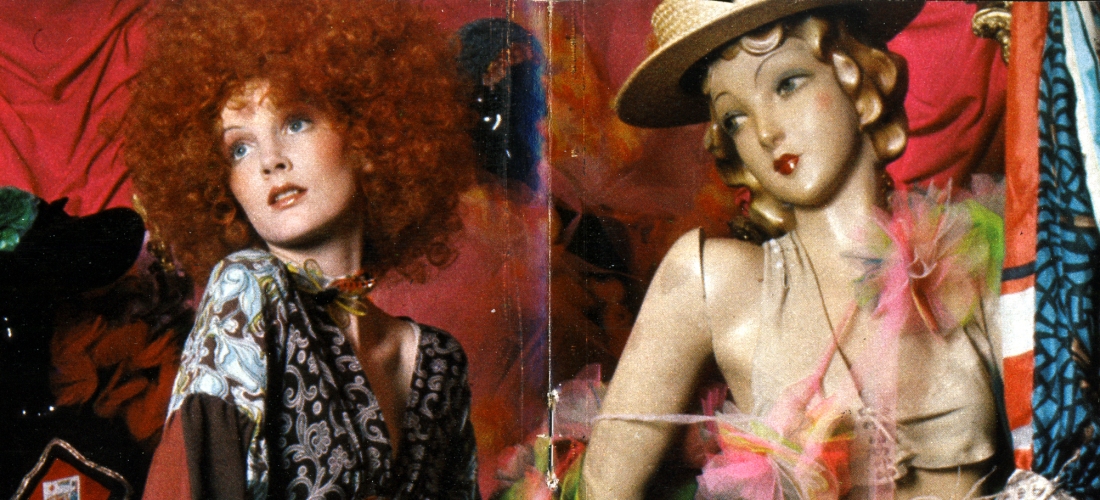
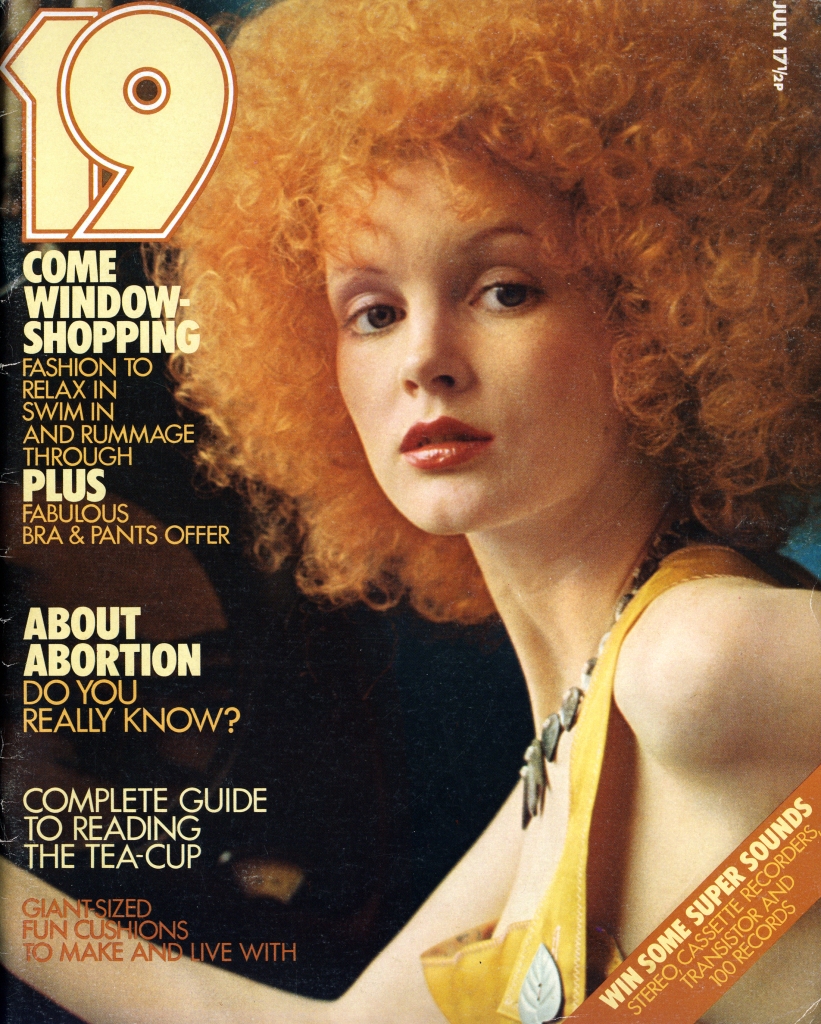
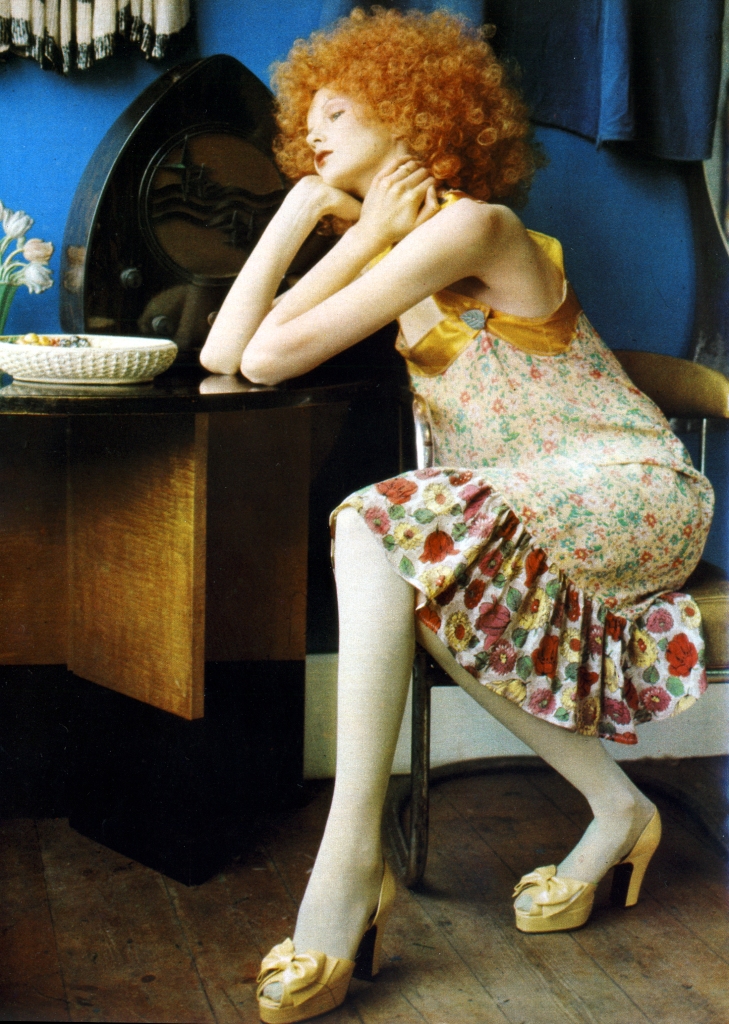
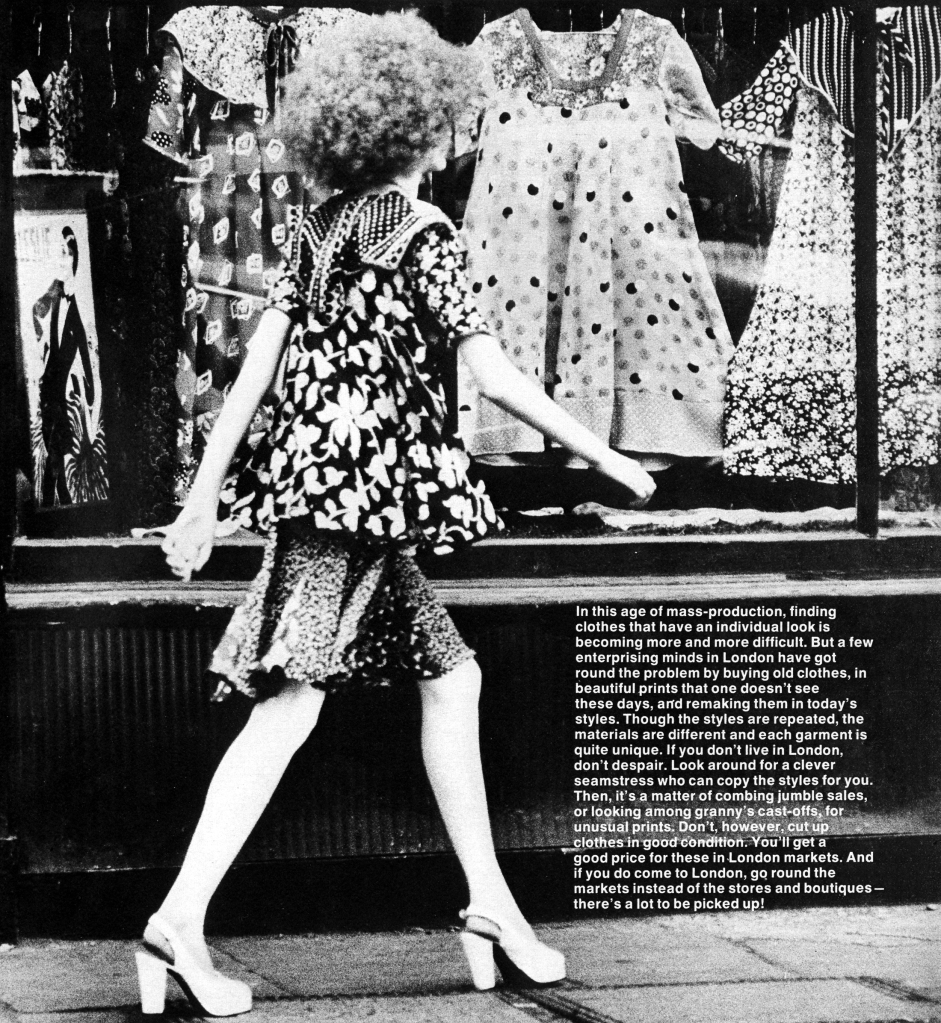
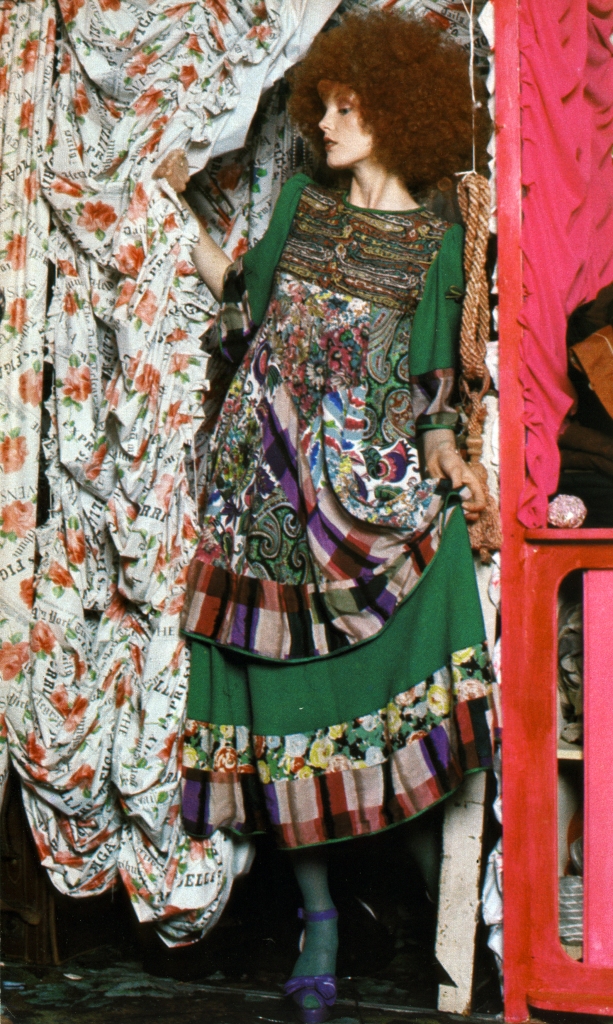
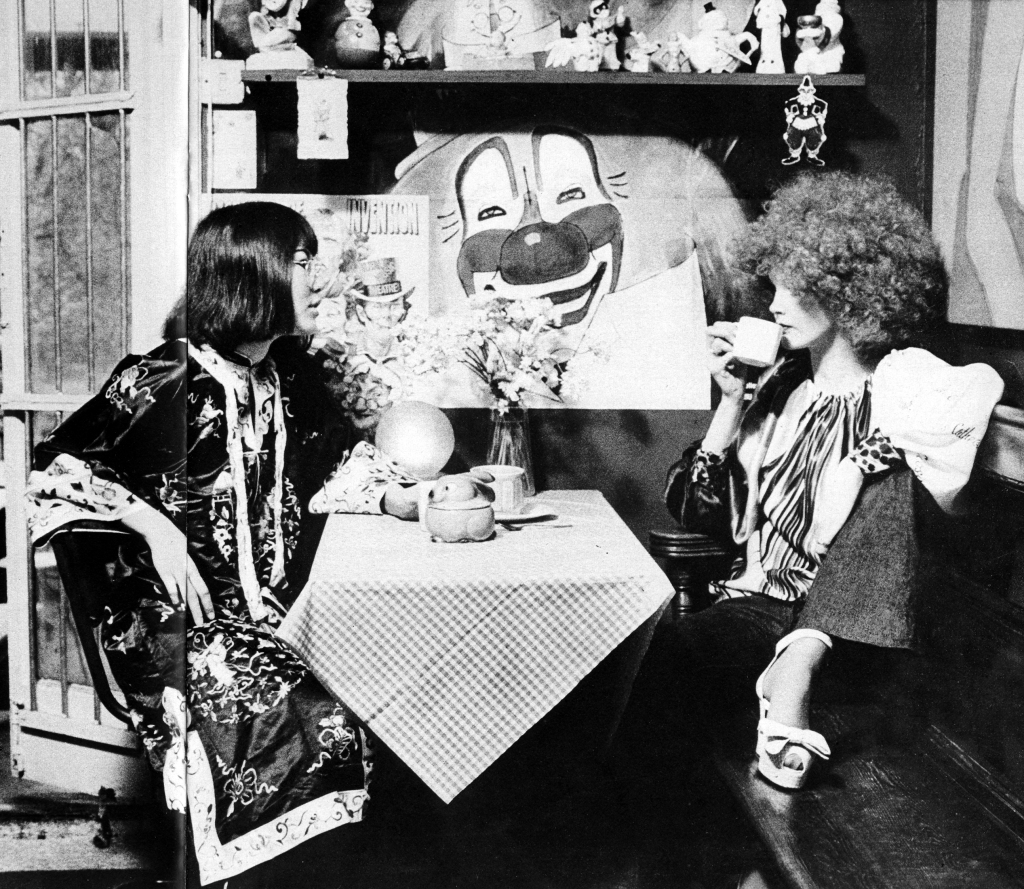
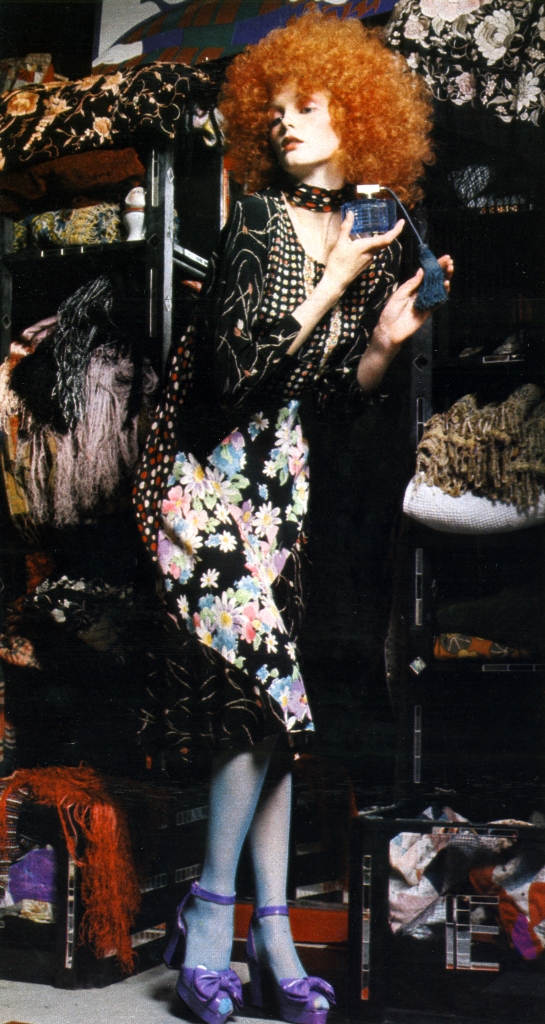
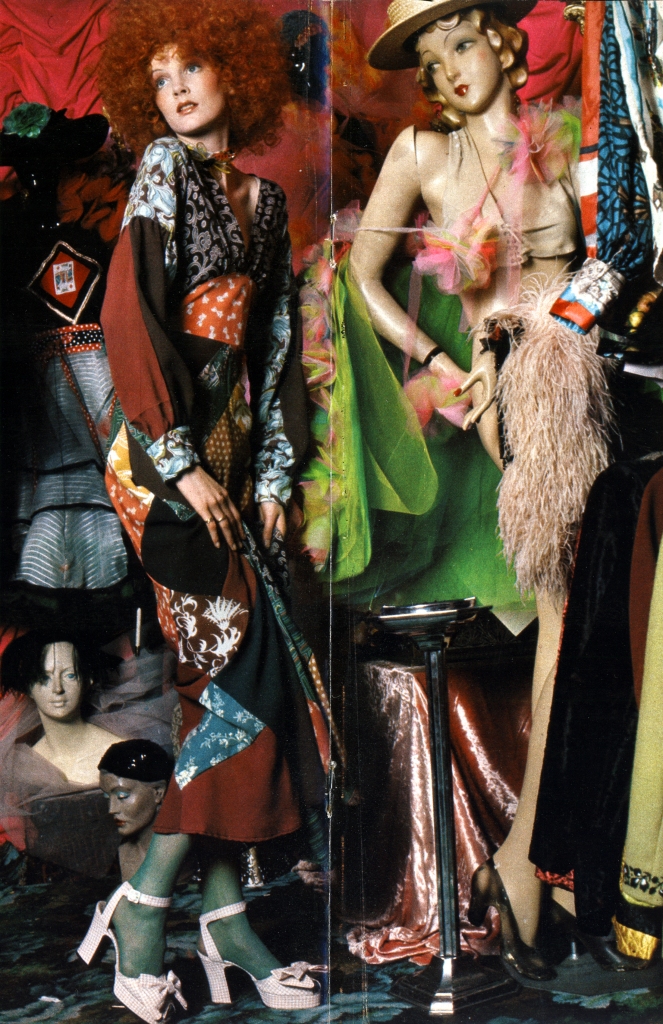
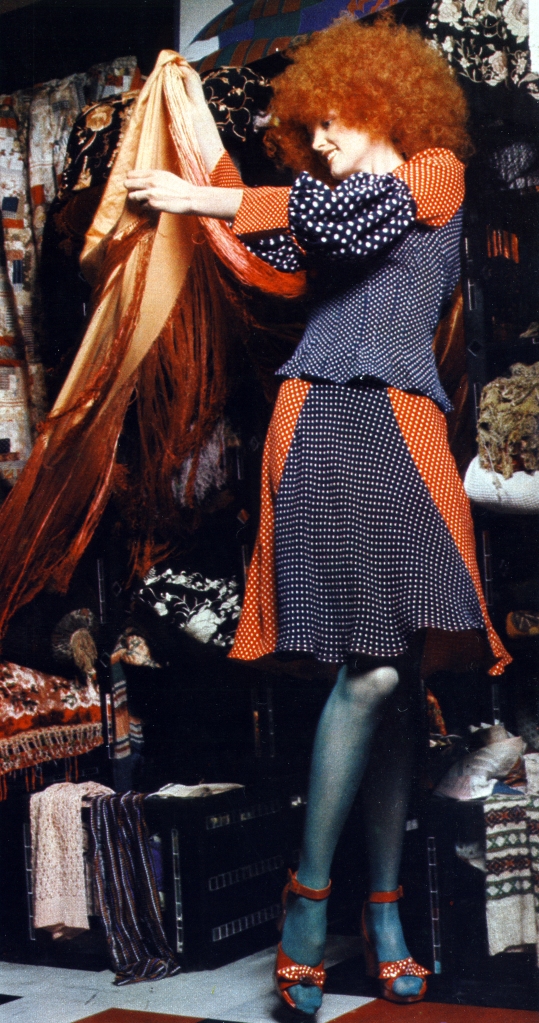
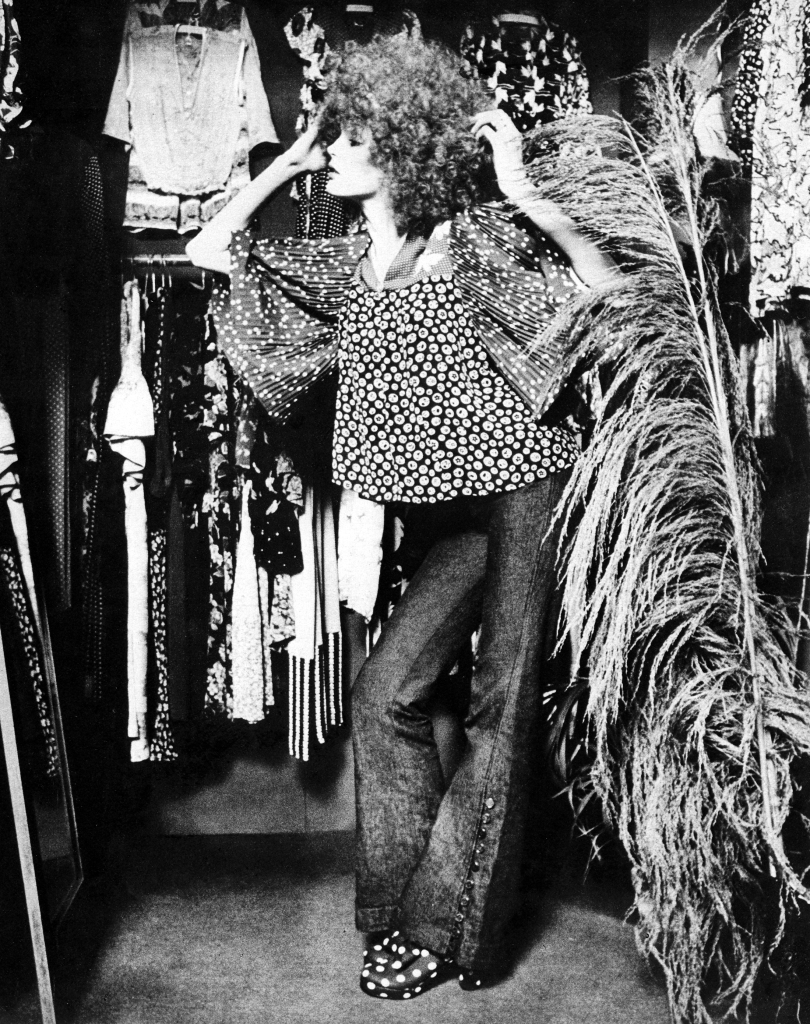
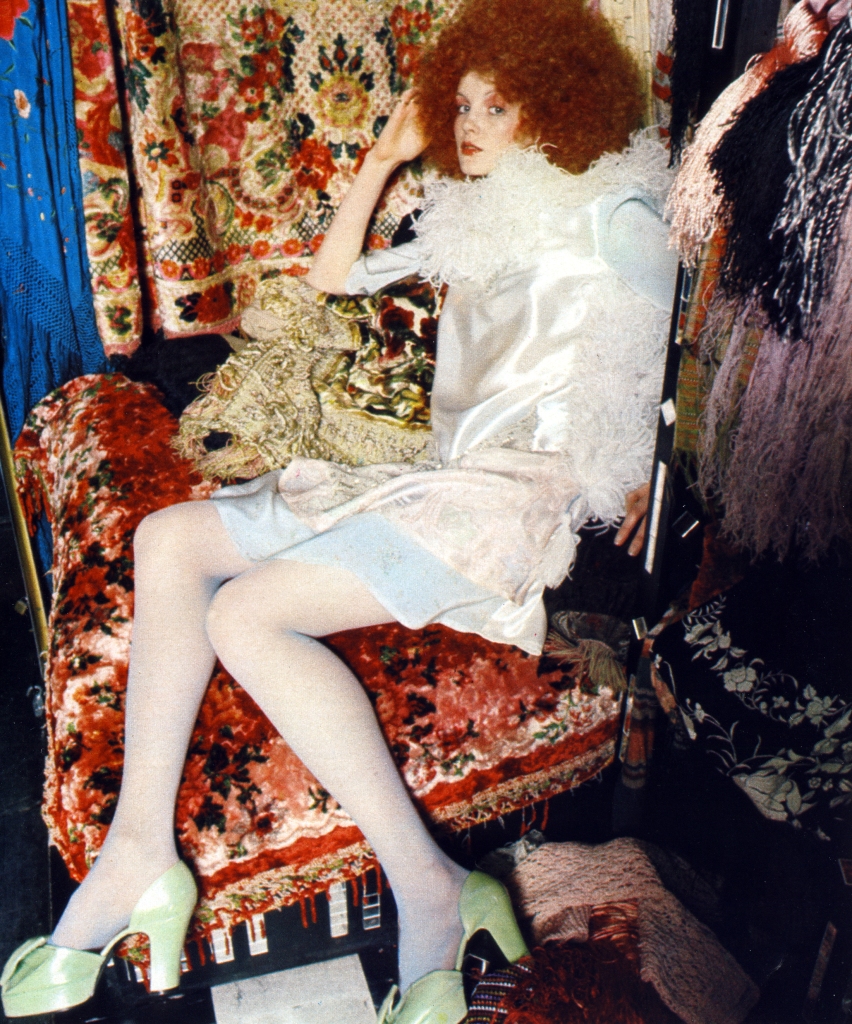
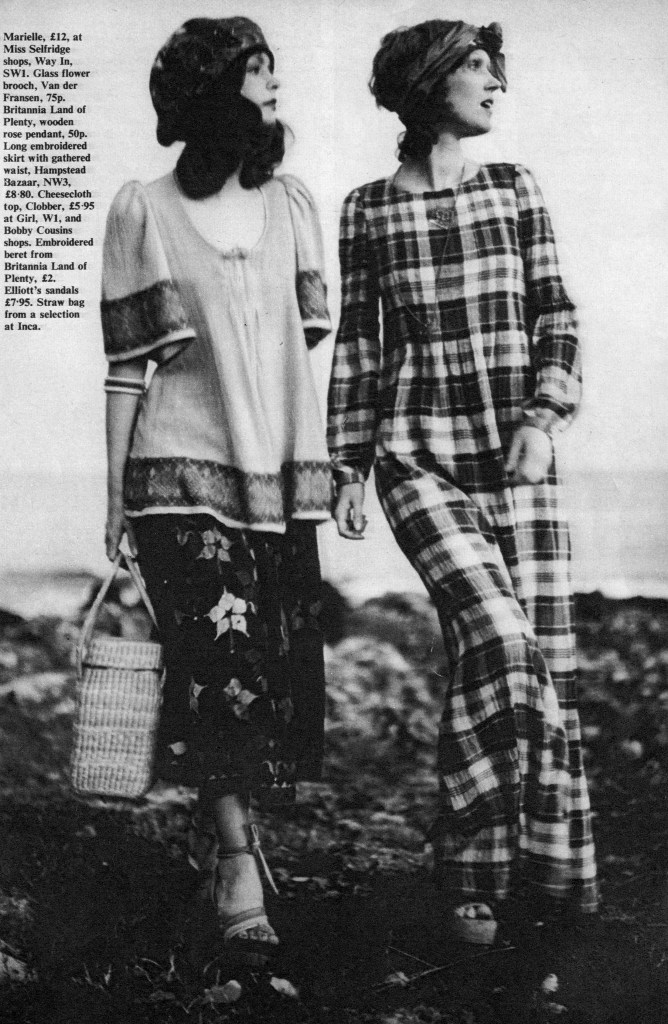
In this age of mass-production, finding clothes that have an individual look is becoming more and more difficult. But a few enterprising minds in London have got round the problem by buying old clothes, in beautiful prints that one doesn’t see these days, and remaking them in today’s styles. Though the styles are repeated, the materials are different and each garment is quite unique. If you don’t live in London, don’t despair. Look around for a clever seamstress who can copy the styles for you. Then, it’s a matter of combing jumble sales, or looking among granny’s cast-offs, for unusual prints. Don’t, however, cut up clothes in good condition. You’ll get a good price for these in London markets. And if you do come to London, go round the markets instead of the stores and boutiques – there’s a lot to be picked up!
An extraordinarily styled and photographed editorial featuring Van der Fransen, Emmerton and Lambert and Essences, all of whom were trailblazers in the world of vintage and recycled fashion.
This shoot also manages to answer two of my most frequently asked questions: what is your favourite editorial and what do you think the future of fashion will be. The former is probably a moveable feast, although this one is definitely up there with my other favourite, but the latter is still something I believe strongly. Especially in a post-pandemic landscape, I am not sure (and definitely hopeful) that we will ever see the same levels of mass production post-2020. Not for want of desire by the high street shops, but because people have maybe recognised that, actually, they don’t need armfuls of cheap synthetic, single-use garments. Perhaps the aesthetics and principles of these recyclers of the Sixties and Seventies will finally be adopted as our default? We could stop producing new clothes and fabrics right now and probably never reach the end of the piles of recyclable materials. And that’s not even taking wearable vintage garments into account. Do you feel your shopping habits have changed permanently?
Red wig by Robert at Ricci Burns.
Photographed by Christian Larroque.
Scanned from 19 Magazine, July 1972.
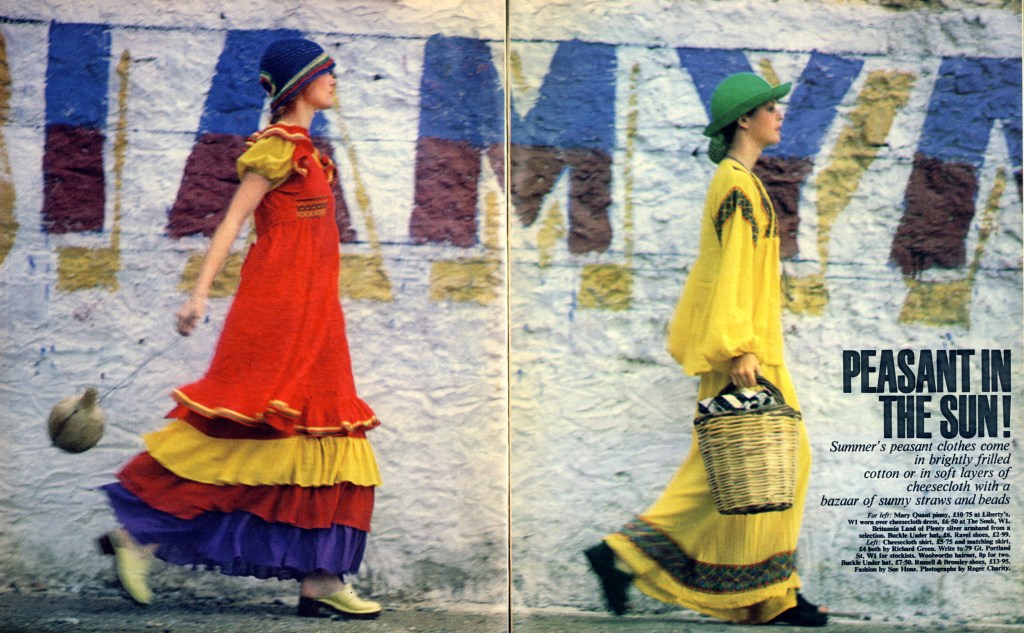
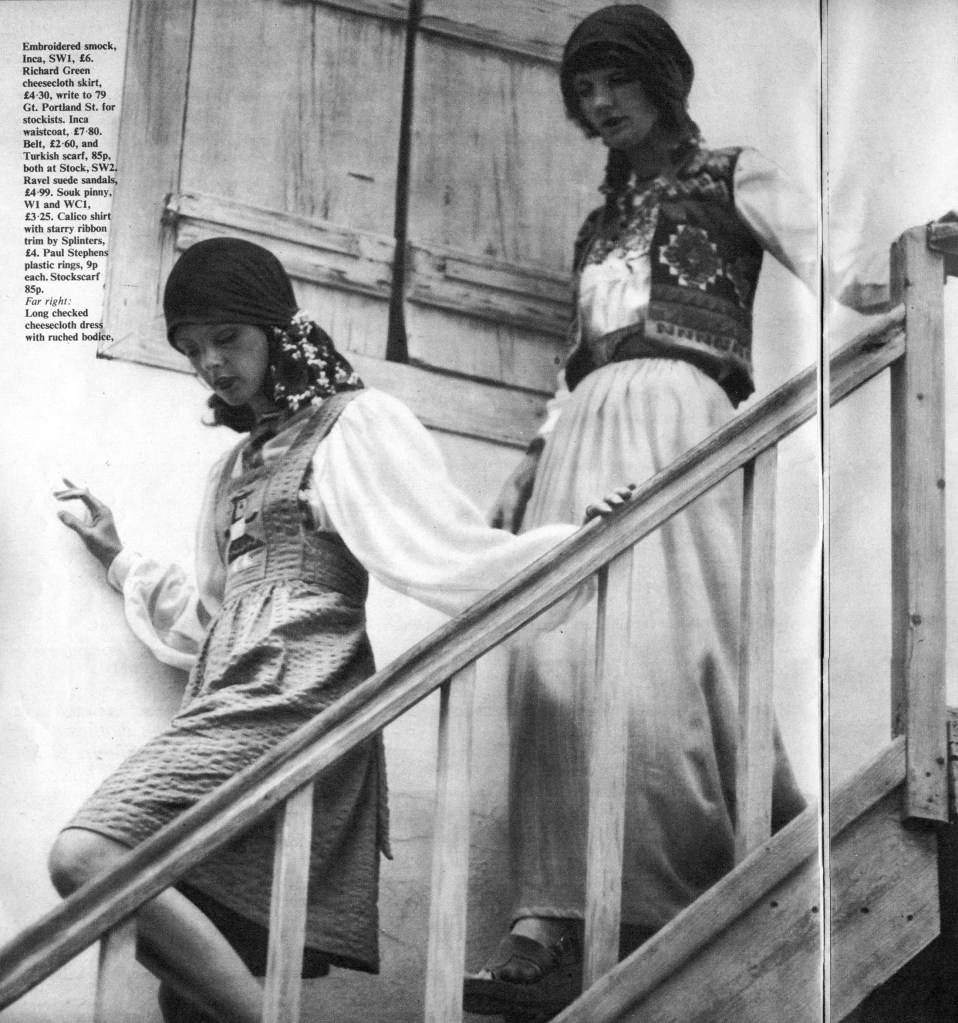
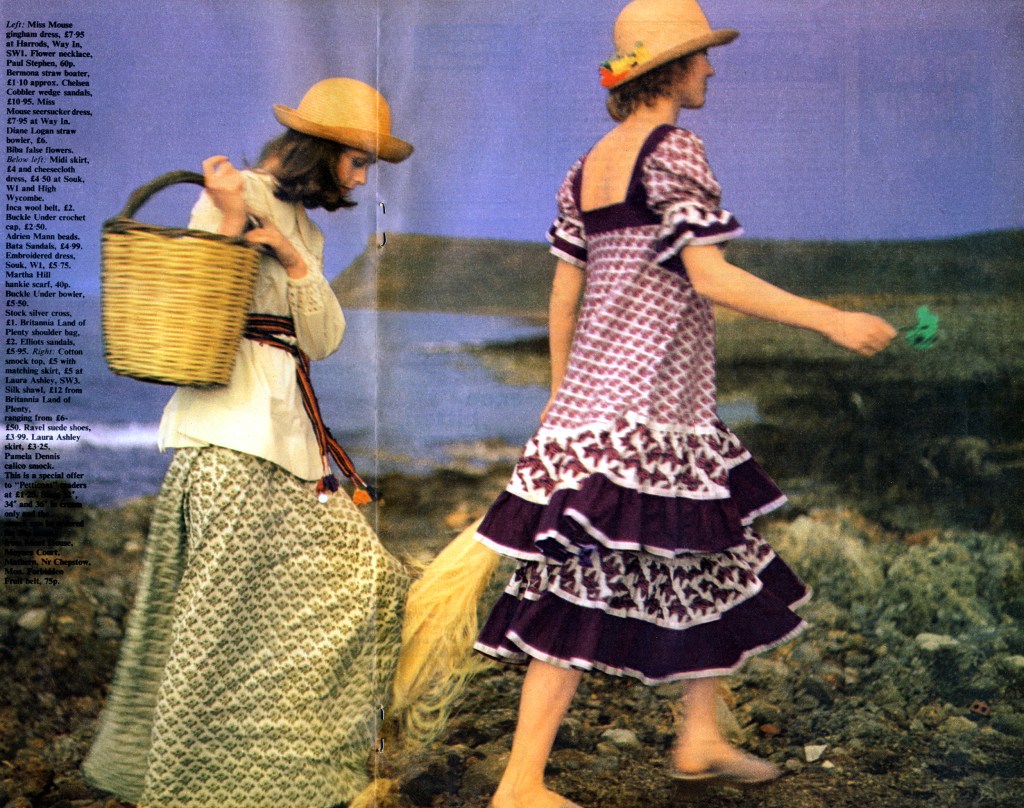
Summer’s peasant clothes come in brightly frilled cotton or in soft layers of cheesecloth with a bazaar of sunny straws and beads.
Fashion by Sue Hone.
Photographed by Roger Charity.
Scanned from Petticoat, 6th June 1972.
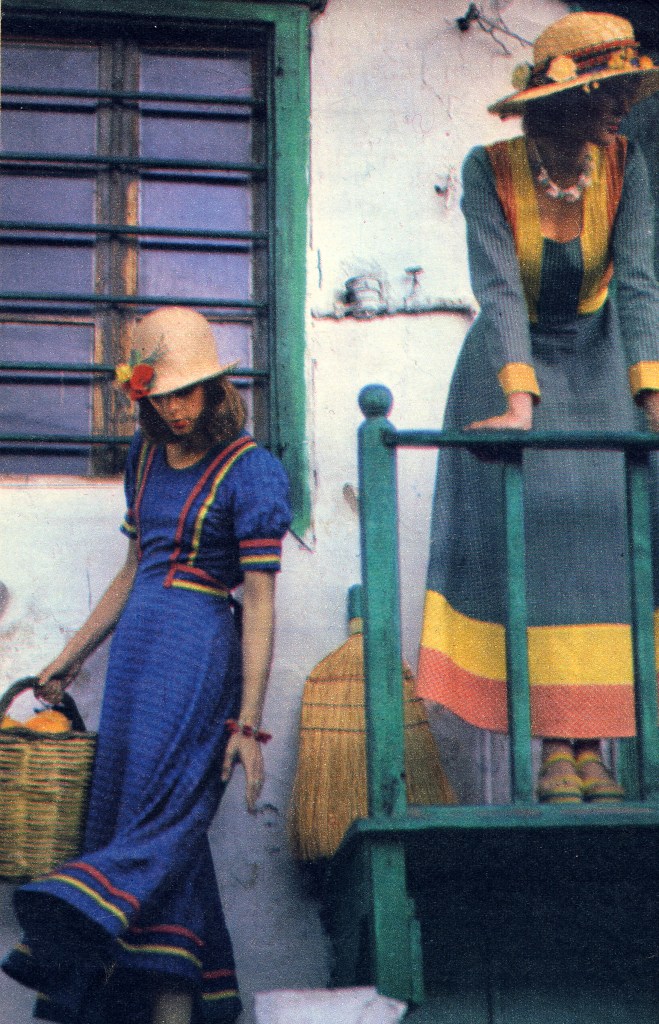
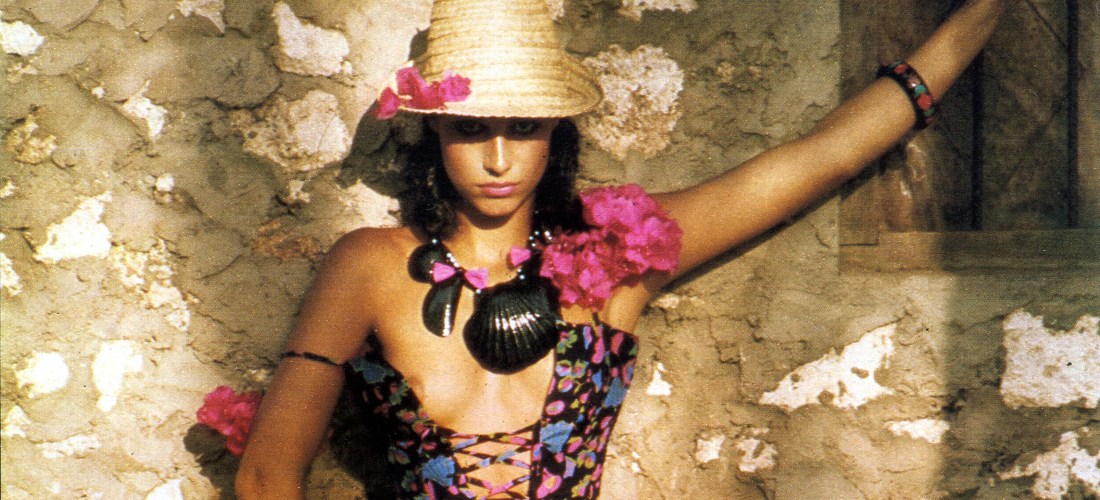
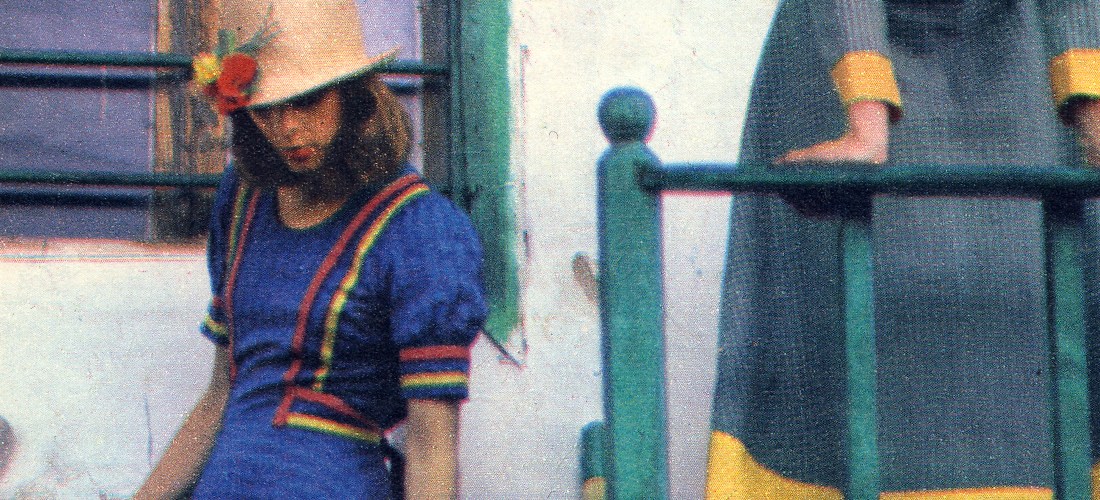
Floral prints are bursting out all over. Add these to crepe de chines, cotton and cotton jerseys and, suddenly, you have the most colourful summer of all.
Photographed by David Anthony.
Scanned from 19 Magazine, June 1977.
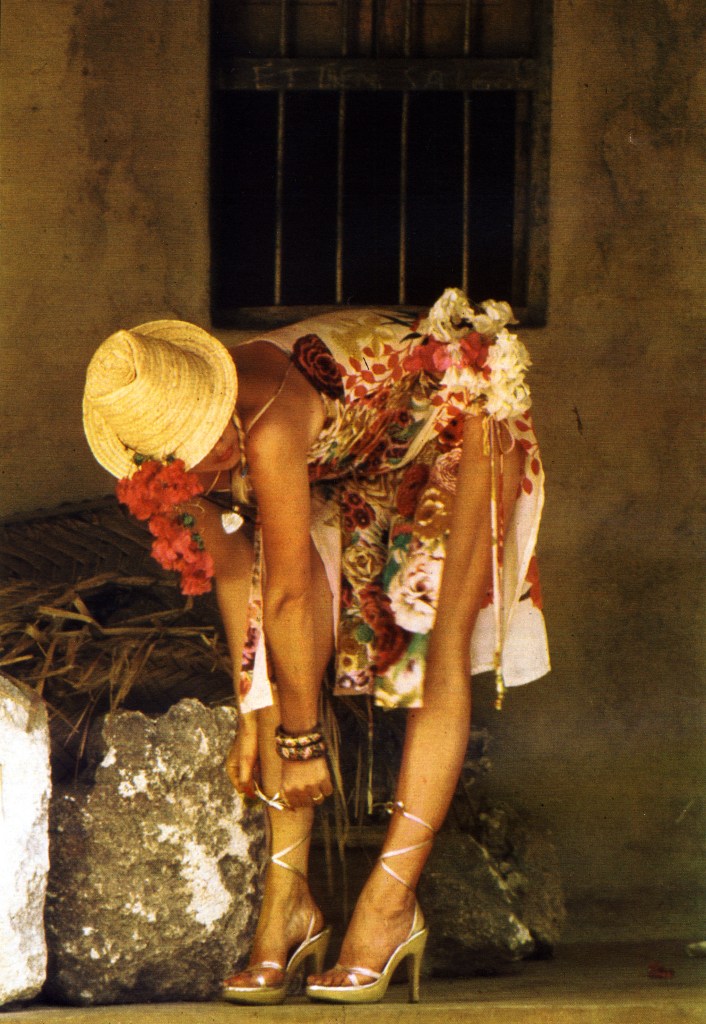
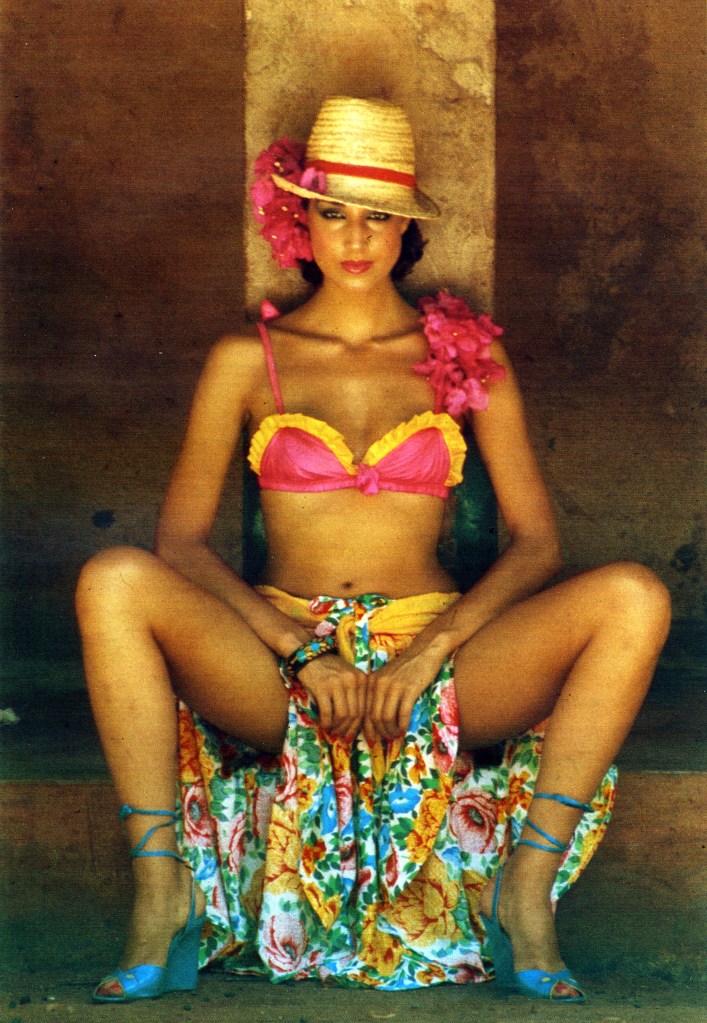
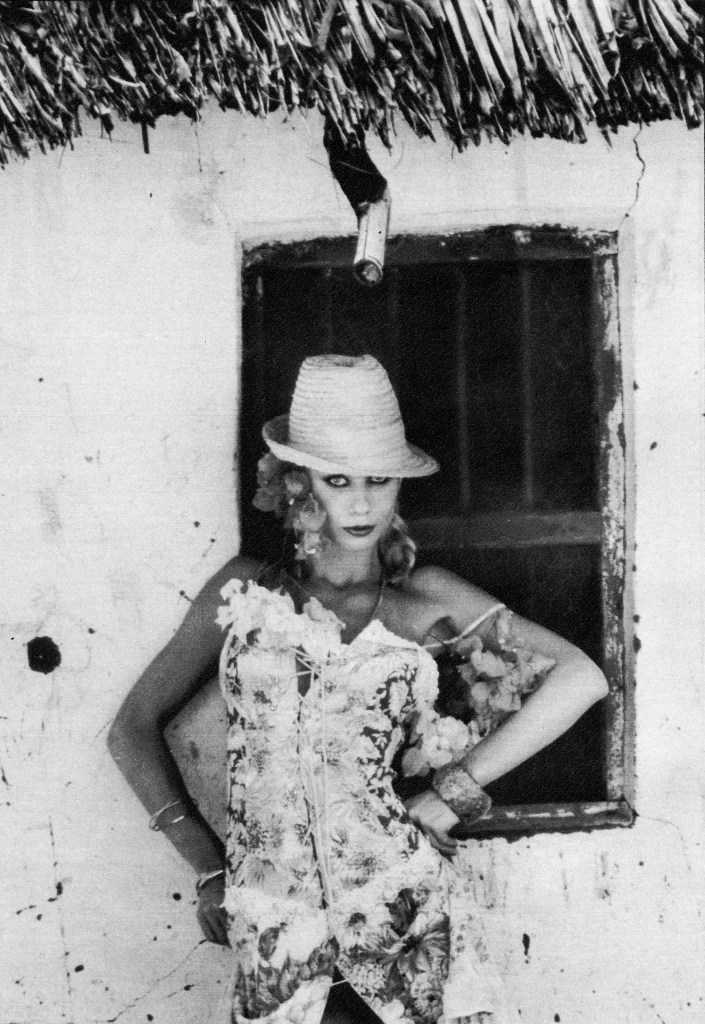
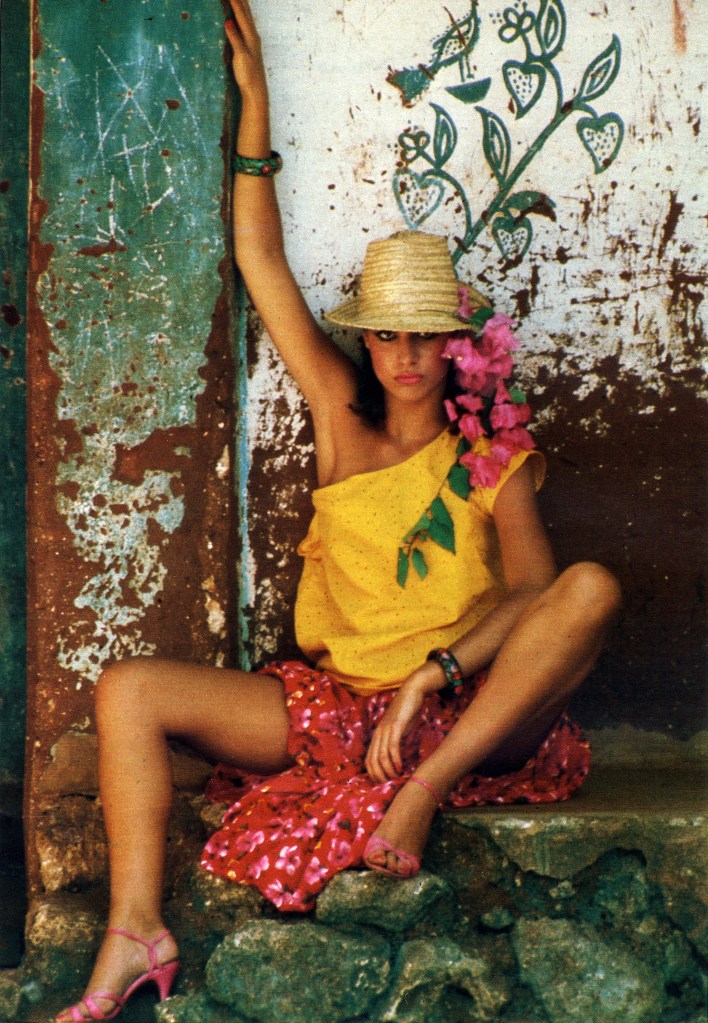
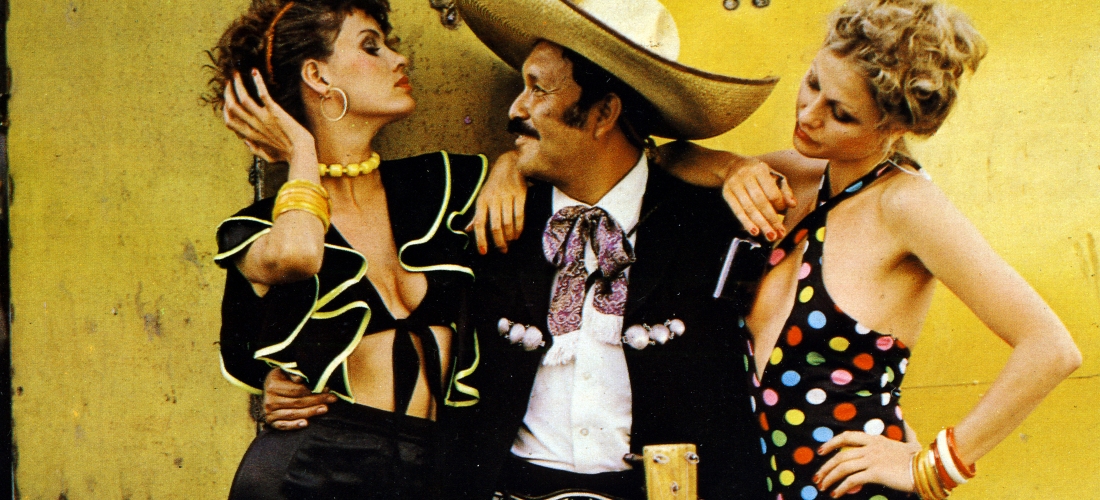
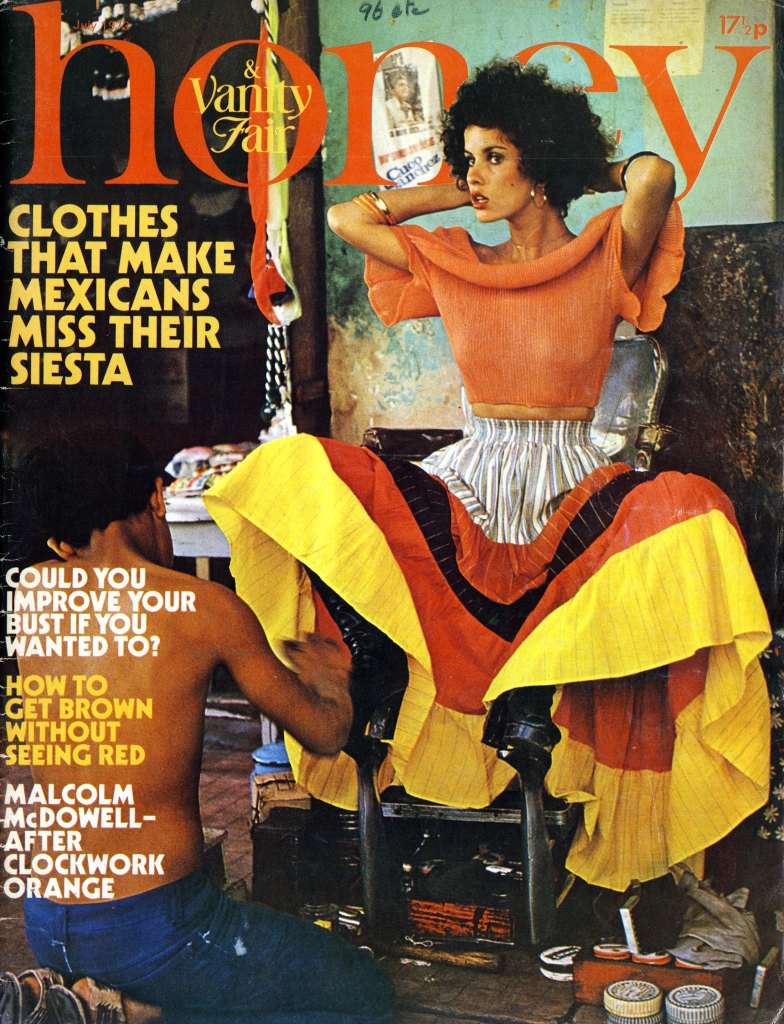
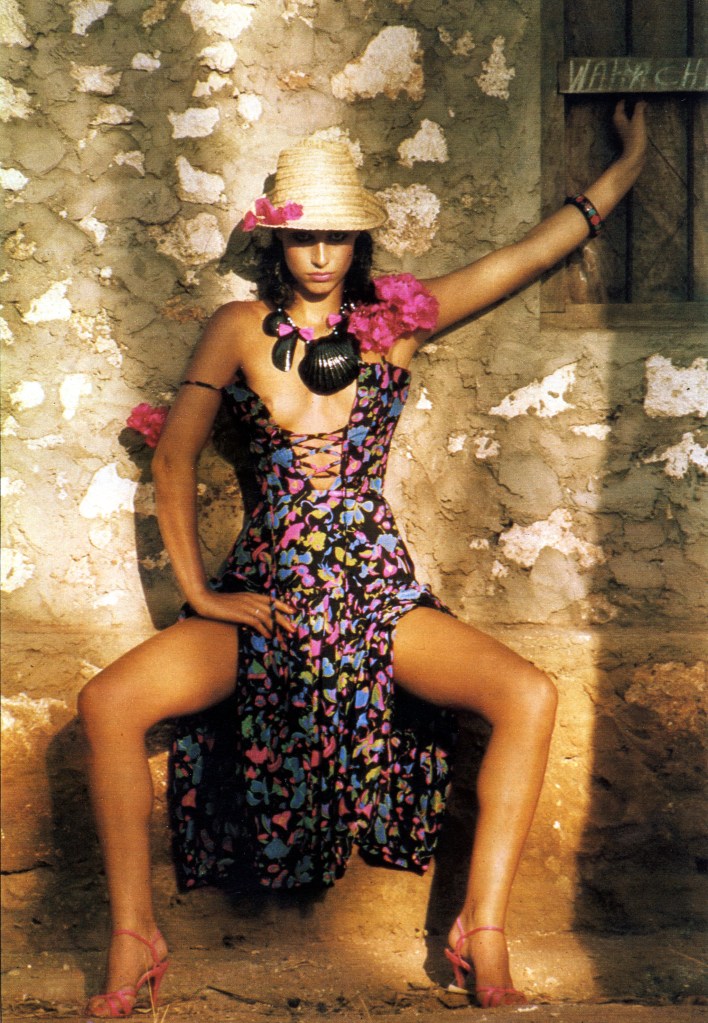
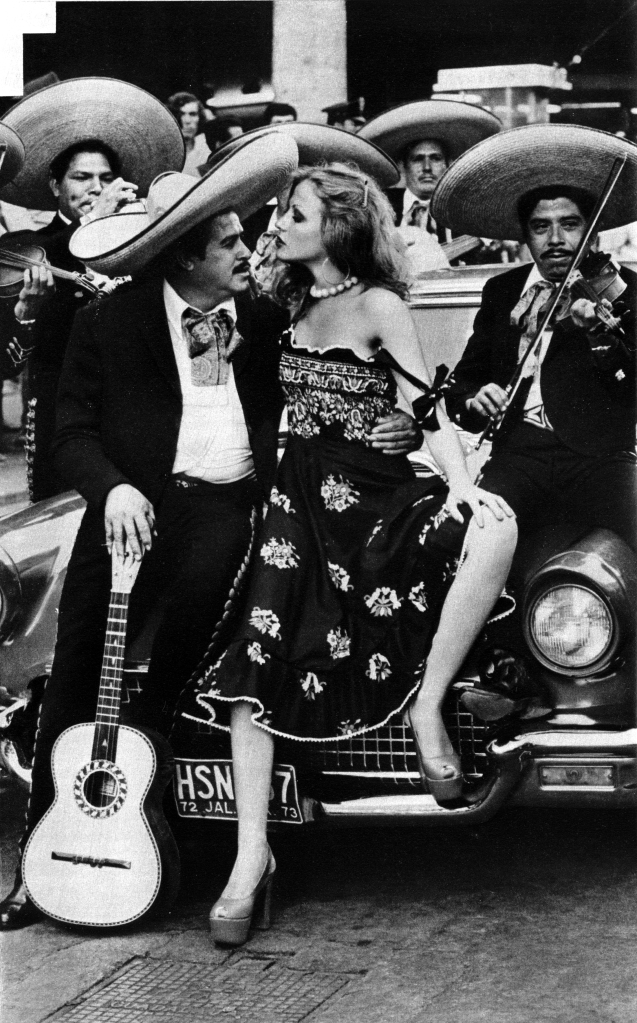
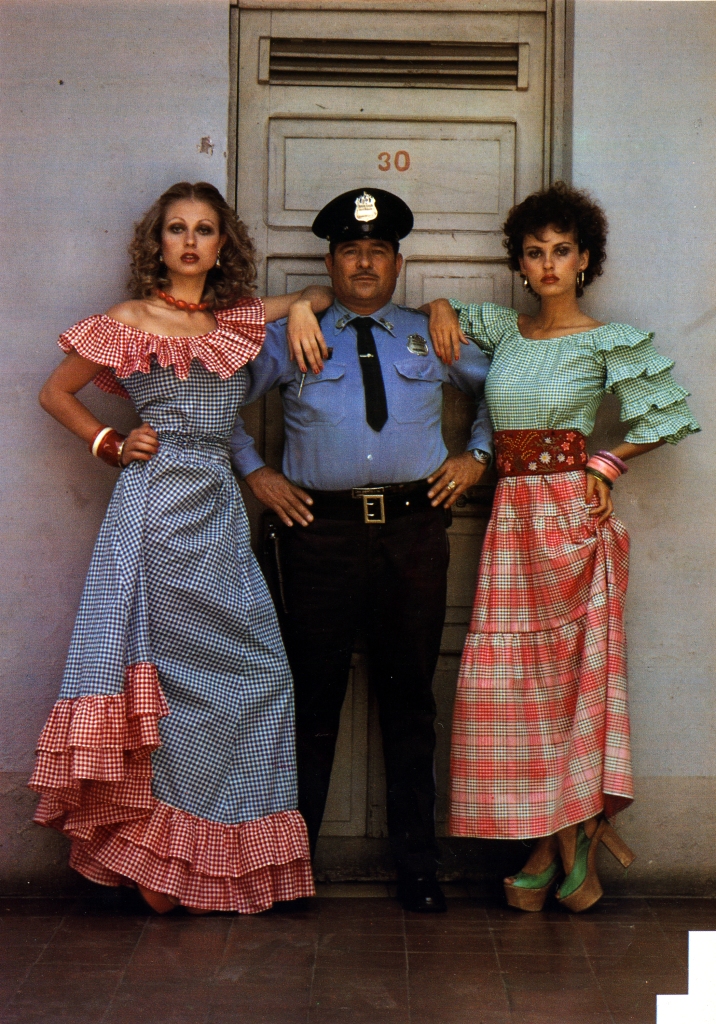
If you can’t tango, simply steal into the spotlight in these flamboyant rumba dresses. The slipped shoulder strap, the bared midriff and the full-blown flouncy skirts all spell out the sexiest numbers for summer.
The main difference between the content of a magazine like Honey, as opposed to Vogue or Queen, is that the designers tend to be the more intriguing and less well-known of the period. If you want names like Miss Mouse, Granny Takes a Trip or Antony Price, these magazines should always be your first port of call. This shoot alone features one of my Holy Grail pieces by Granny Takes a Trip: the ruffled tie front top and skirt ensemble designed by Dinah Adams. Previously a designer for two other cult London boutiques, Mr Freedom and Paradise Garage, painfully little is known about Dinah Adams (misattributed as ‘Diana’ in the original credits). Which is why it’s always lovely to see her work represented anywhere.
Also shown here is a frothy, frilly delight of a frock by Miss Mouse, a.k.a Rae Spencer-Cullen. A personal favourite of mine, the Miss Mouse aesthetic is precisely why this early Seventies period is my favourite for fashion. Her work was heavily Fifties-inspired, quite ahead of the curve in the scheme of things, but always with a novel twist. Spencer-Cullen is yet another designer whose life remains something of a mystery, despite being a part of a hugely influential circle which included artists Duggie Fields and Andrew Logan. It seems that this anonymity was (at least initially) intentional, as an article from the Glasgow Herald in 1976 declared.
“At first, six years ago, when presenting her quirky designs on fashion, she seemed shy and utterly retiring. Miss Mouse could not be contacted easily by the press. She was elusive, hazed in shadows, a real mouse about publicity in fact. The only evidence of her entire existence was her clothes.”
In a world where we are so used to having information at our fingertips, there is something quite enchanting about this; tiny scraps must be stitched together to create a flimsy silhouette of a creative genius.
Photographed by Roy A Giles.
Scanned from Honey, July 1973.
(Please note – this blog originally appeared in 2016 on Shrimpton Couture’s ‘Curated’ blog project which has since been removed. It seemed a shame to let the posts disappear completely so I hope to eventually repost all my work here.)
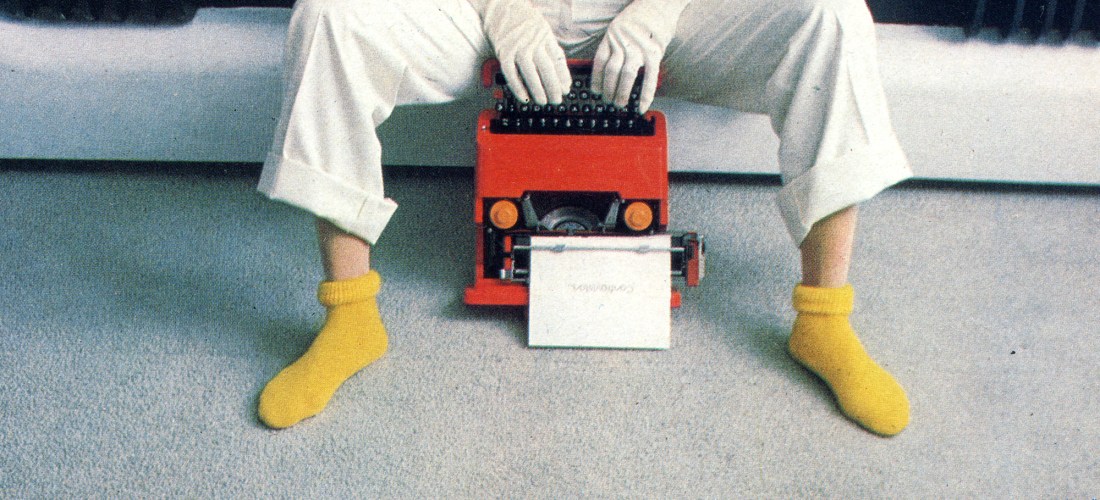
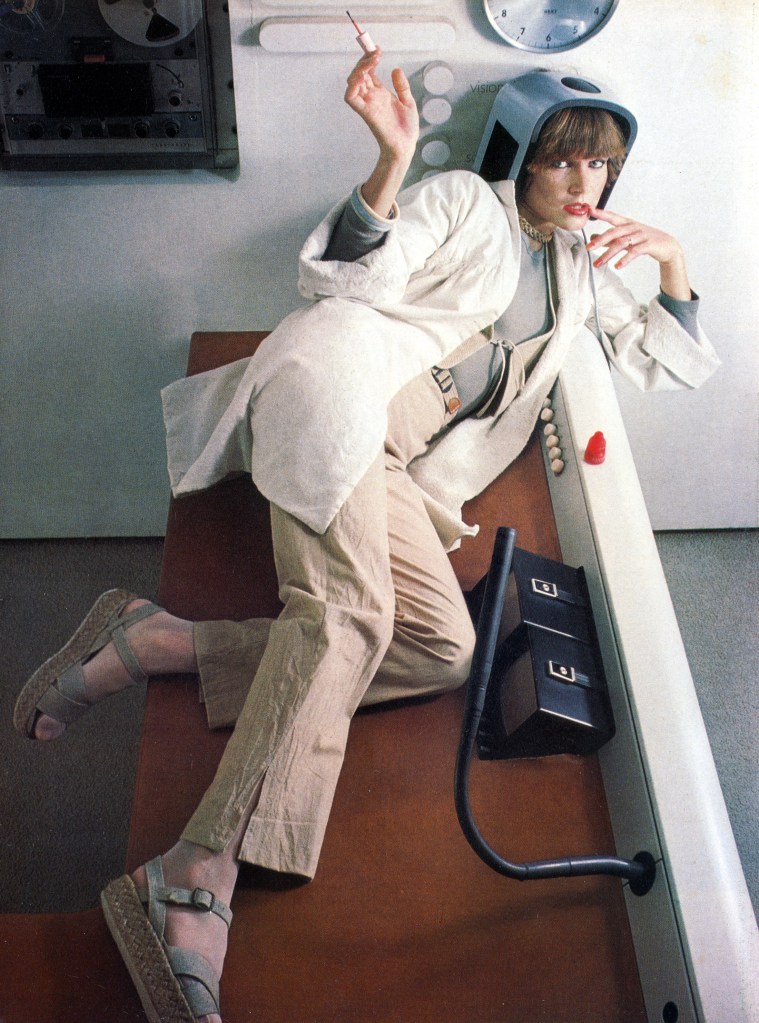
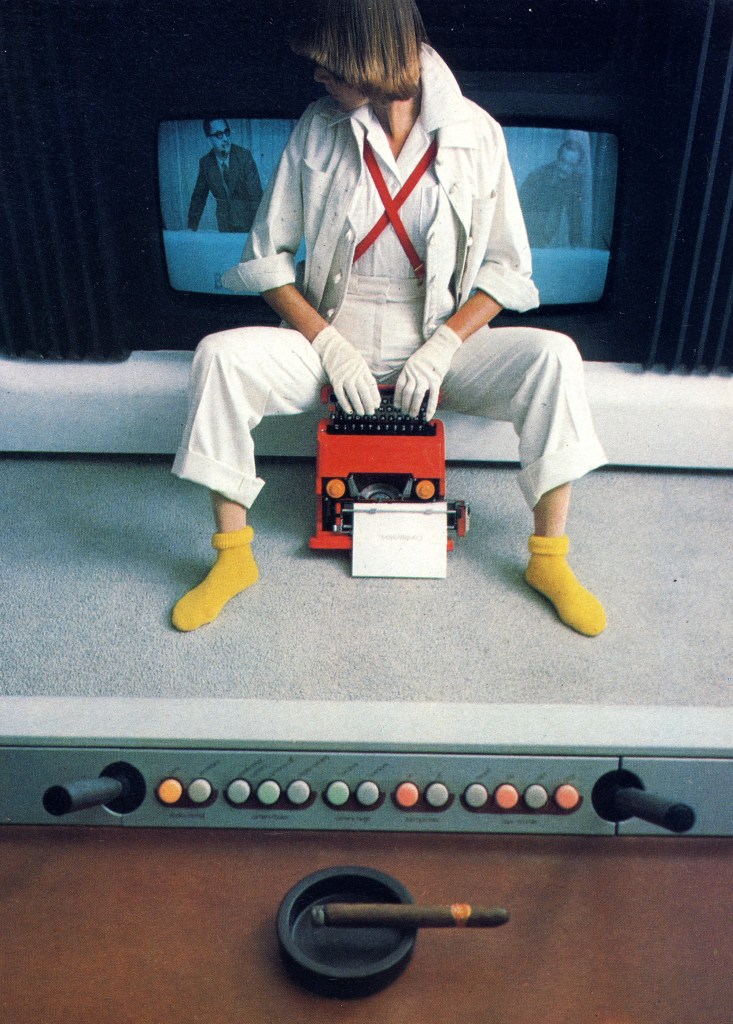
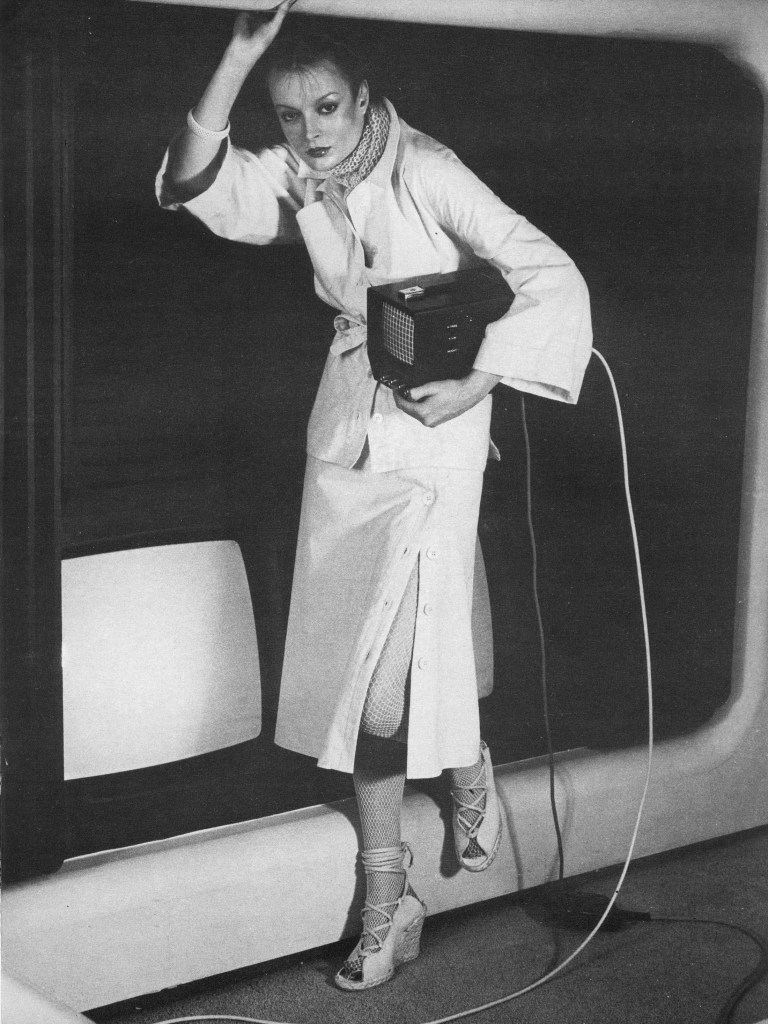
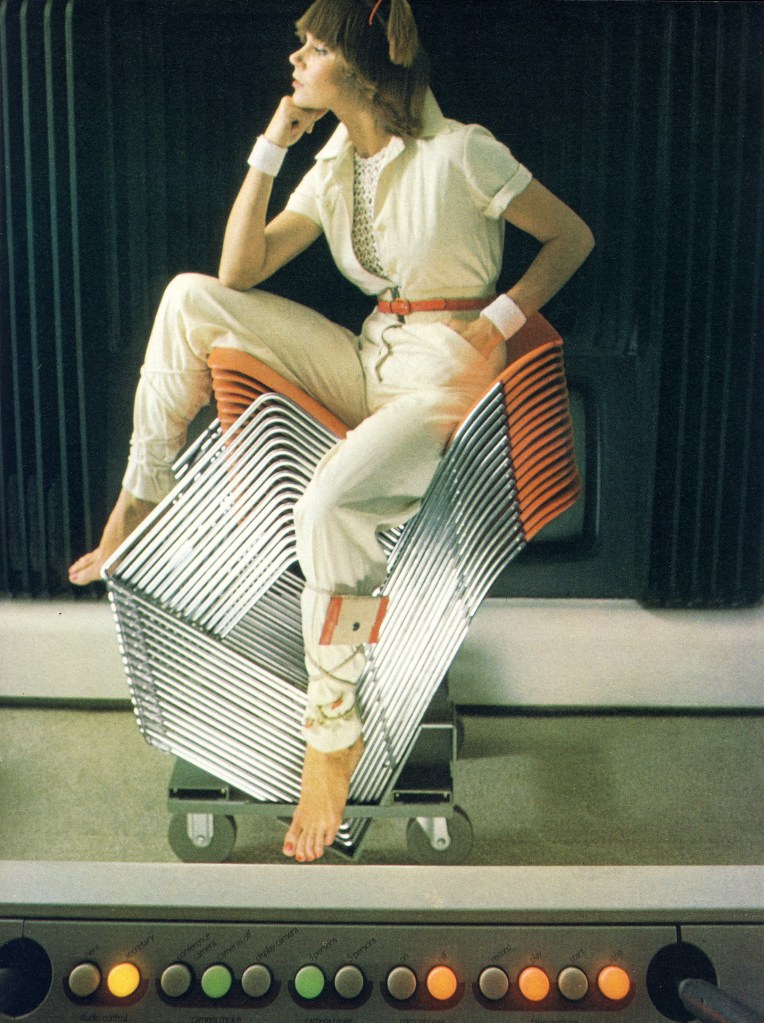
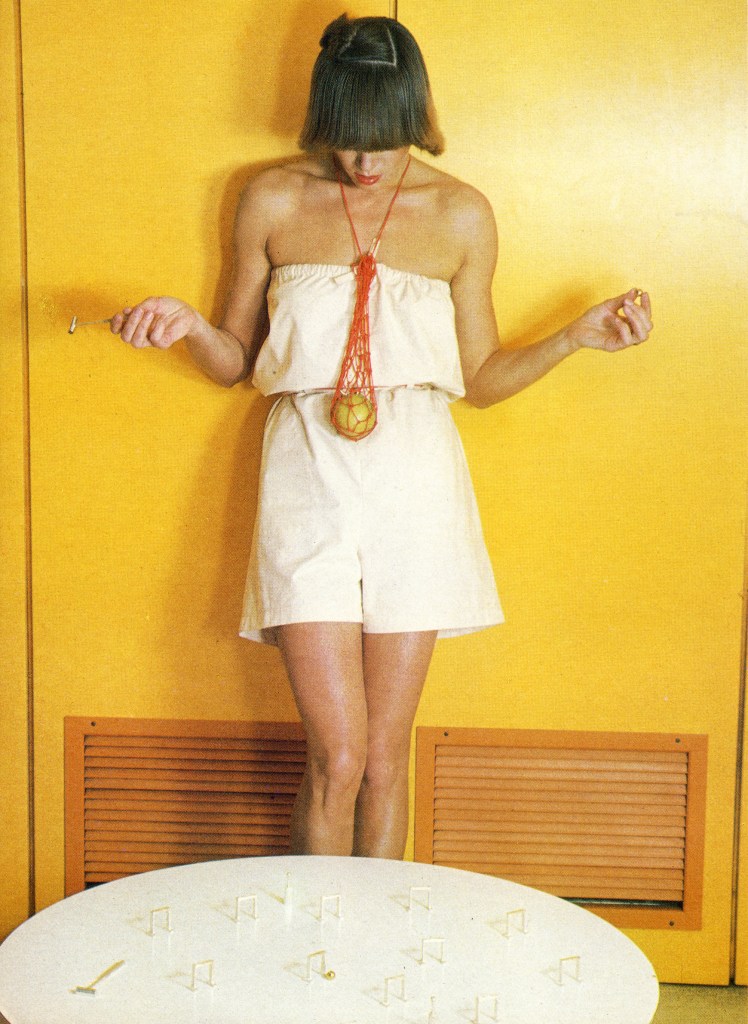
The time: mid-morning coffee-break The place: The Post Office Confravision Studios, Euston Tower* The clothes: At last, working gear (you’ll be delighted to see) to cope with both formal and permissive working environments. The fabric: calico, strong and hard-wearing, cotton-based, so it’s comfortable for over-heated offices. Add a dash of towelling, team it with crocheted string vests, scarves, tights and bags for a little wit. The colour: cream—soothing and harmonious for worn executives. Enliven it with a touch of colour here and there (and to pick you out from beige office walls — remove if you need the camouflage).
* One of five office studios provided by the Post Office for its conference-by-TV service. Designed by Kenneth Grange of Pentagram.
An incredibly apposite photoshoot featuring the Post Office’s futuristic ‘Confravision’ studios. To read an original brochure, click here.
Photographed by Andreas Heumann.
Scanned from Over 21 Magazine, April 1976.
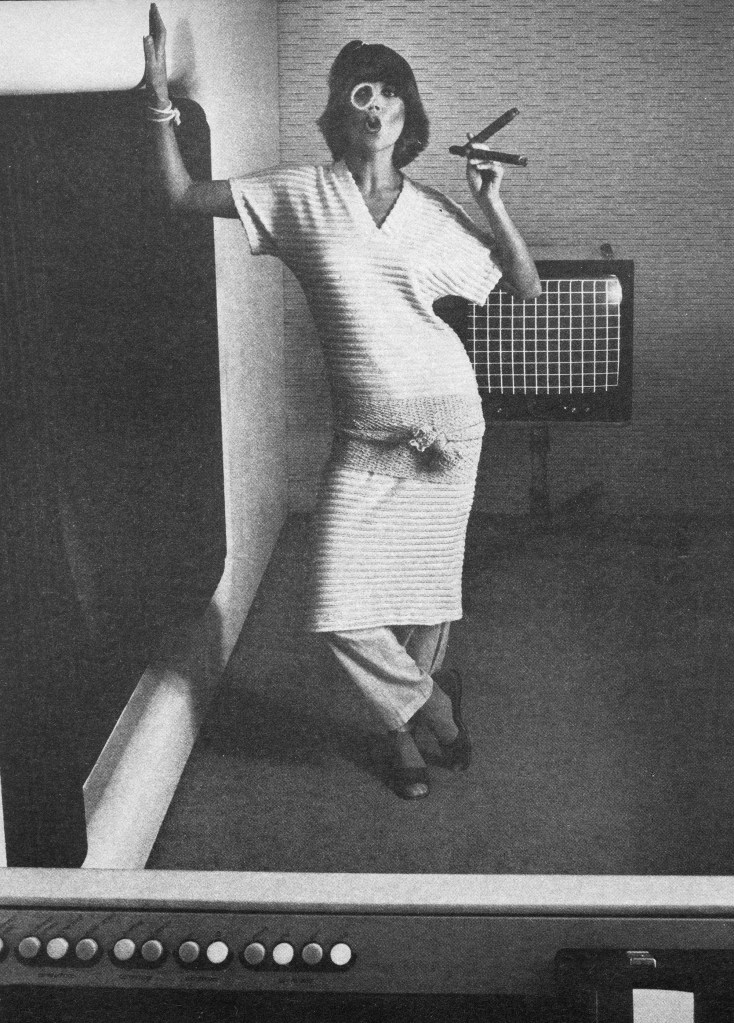
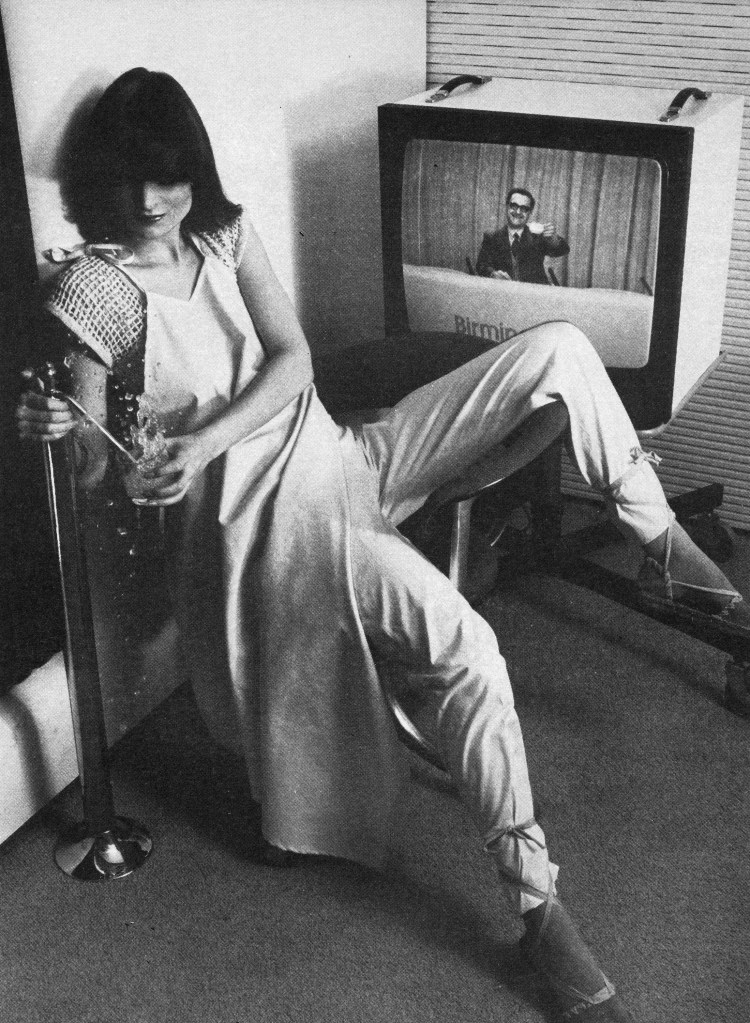
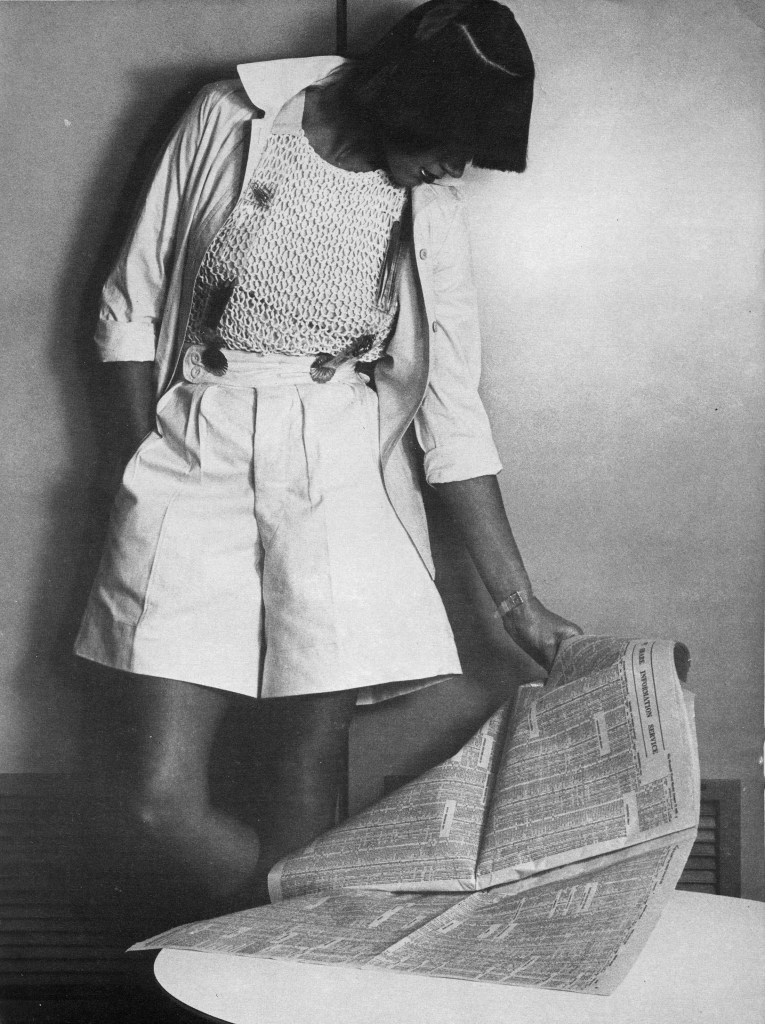
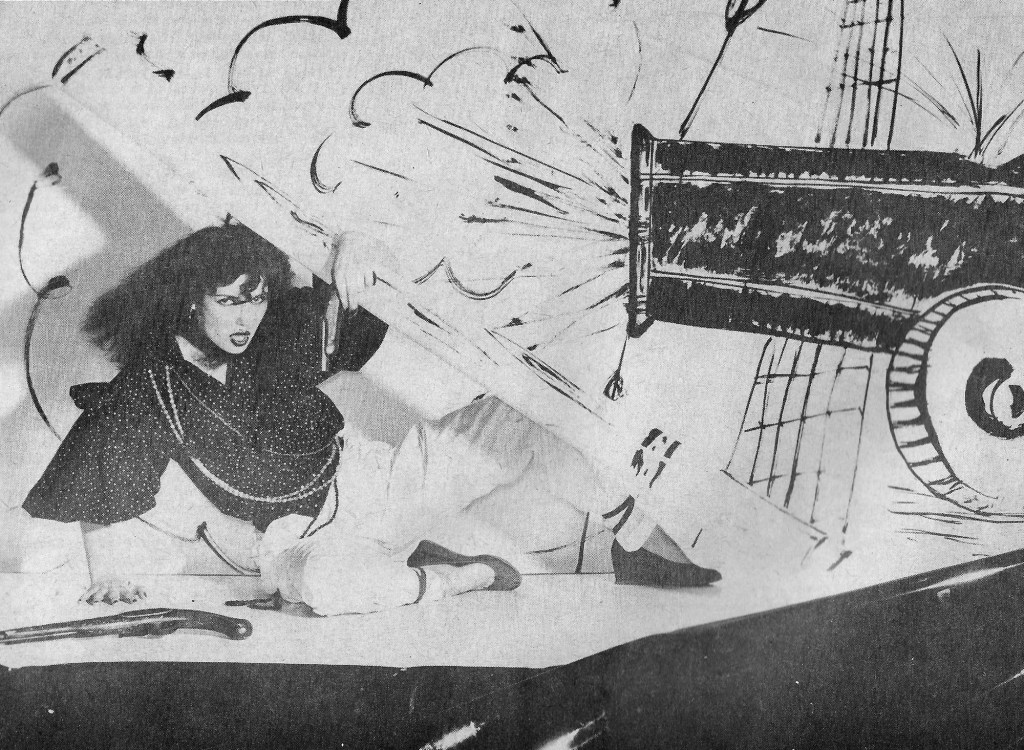
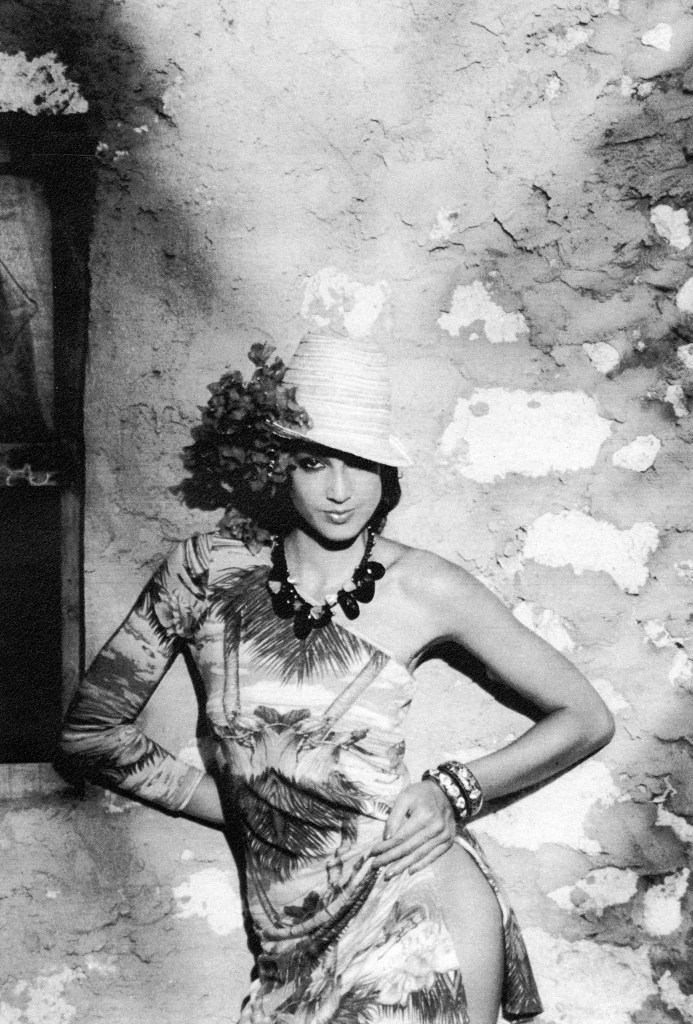
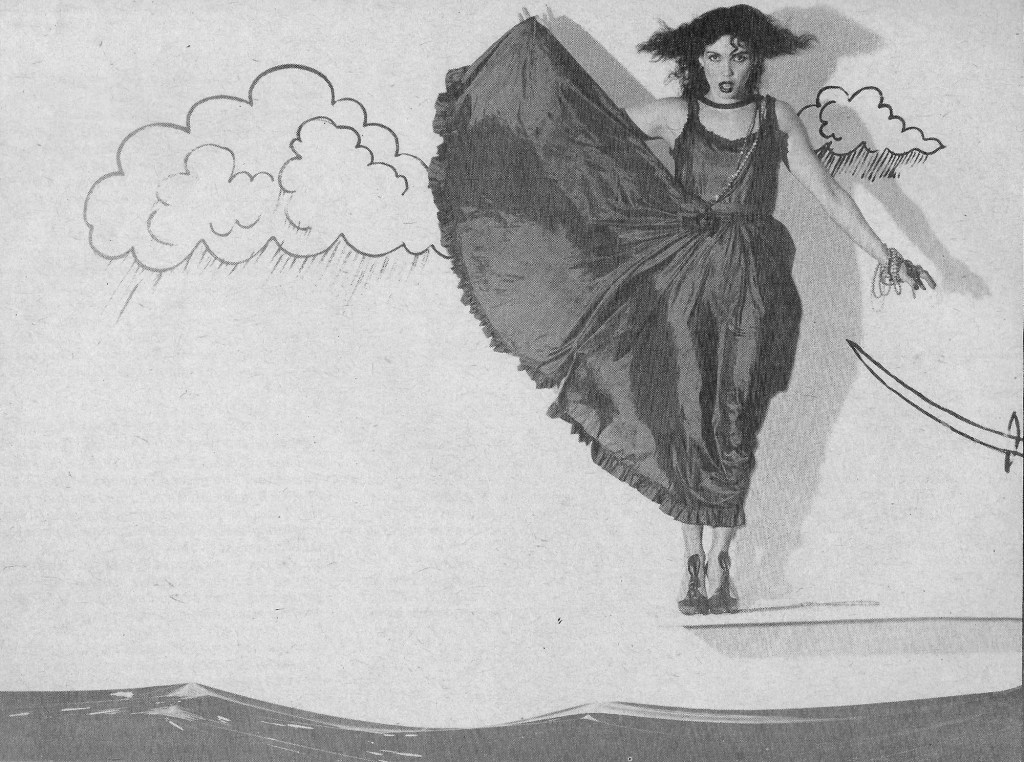
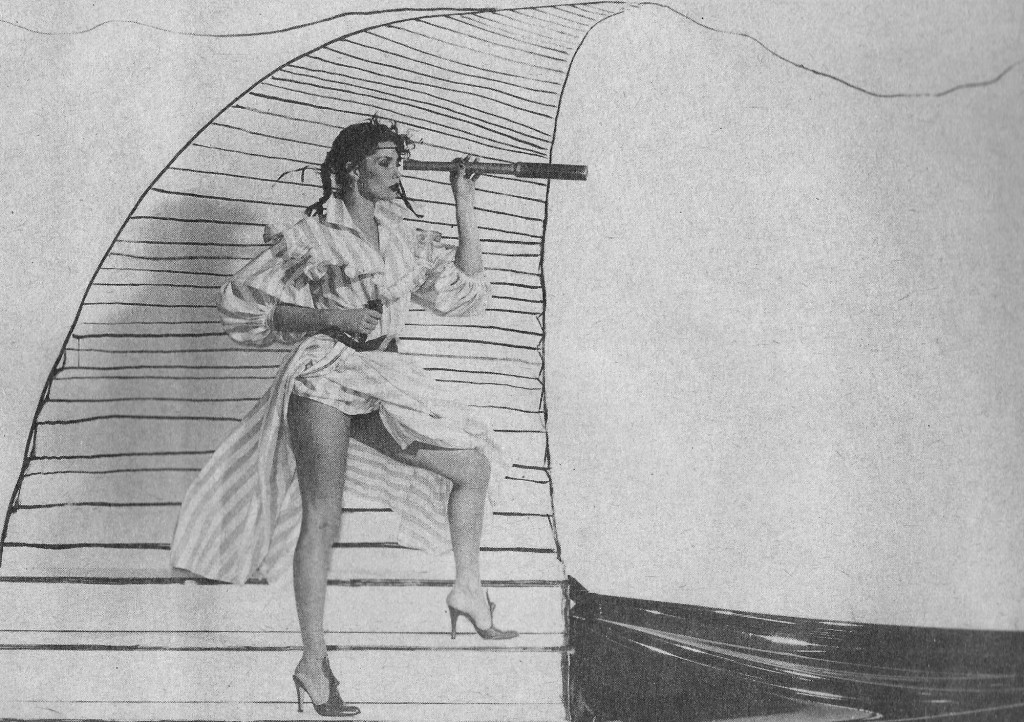
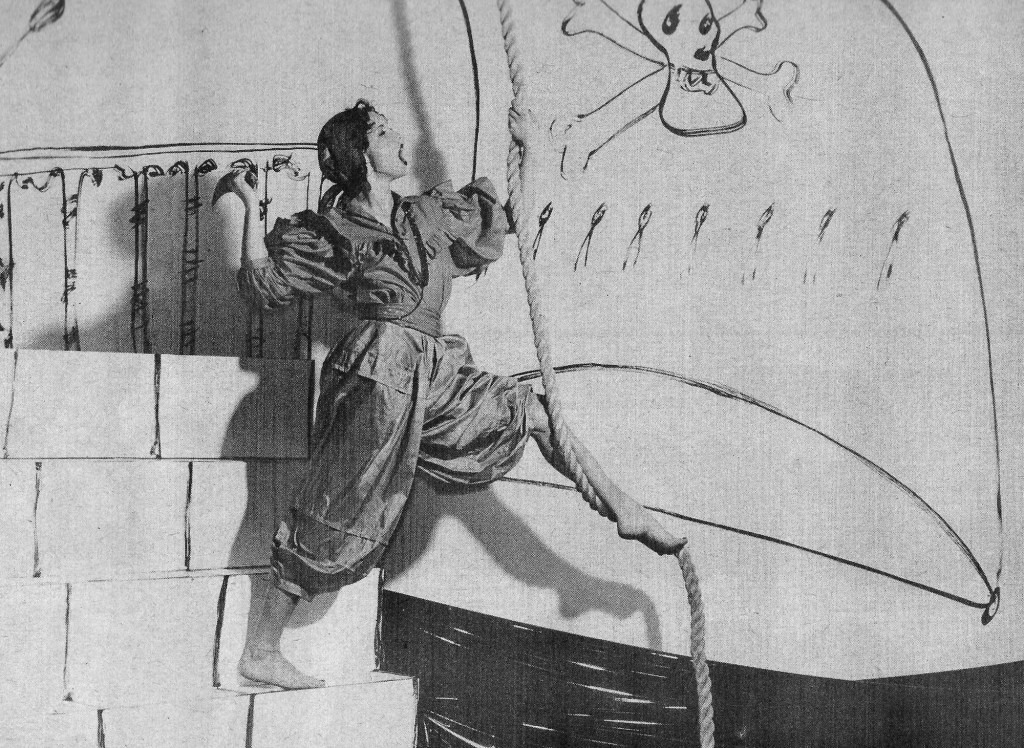
Intriguingly styled editorial from 1978, with the latter two images rather suggestive of the Westwood ‘Pirate’ collection that came a mere three years later. Also featuring some shoes by Manolo Blahnik under his ‘Zapata’ brand. I’m also surprised to see them still using the name ‘Jungle Jap’, which had been changed to Kenzo around 1976 I believe, but perhaps Jungle Jap was still the preferred name in the UK.
Clothes and Jewellery from Jungle Jap.
Shoes from Zapata and Jungle Jap.
Model Dagamar at Laraine Ashton.
Styled by Catkin Villiers.
Hair by Robert at Schumi.
Photographed by Graham Hughes.
Scanned from Ritz, No.18 1978.
 Liz Eggleston